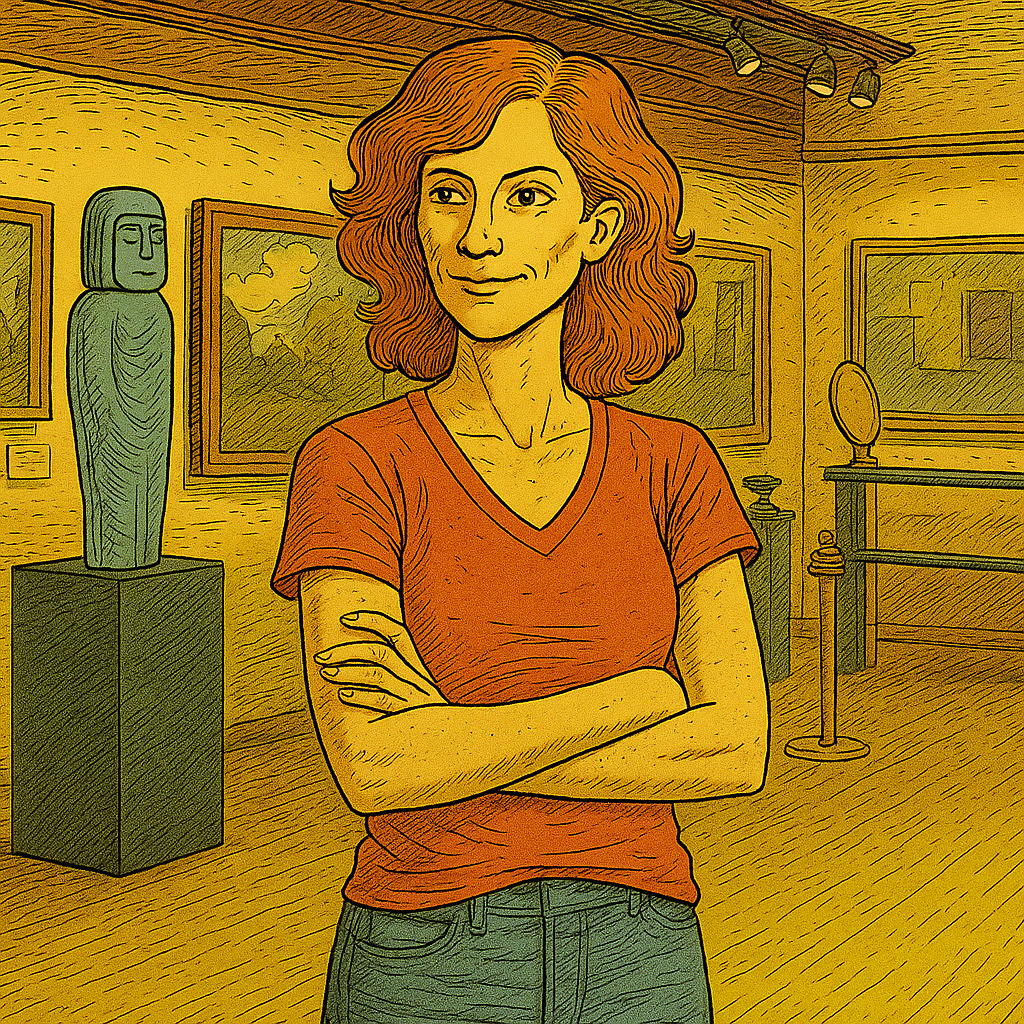
 By the first weekend of September, the city quiets in a way that feels earned. The summer rhythm eases—fewer people at the bakery in the mornings, slower crossings on Main Avenue, a little more space to breathe between conversations. At the gallery, the footfall is light. Visitors linger, but they do not compete for space. The hum of air conditioning, the muted creak of the door, the faint echo when a print is returned to its frame—these are the sounds that remain when the season exhales.
From the window, I watch a single trolley pass with half its seats empty. The last of the license plates from Texas and Arizona are still here, but their drivers already look restless. Vacation has become something transactional—arrive, document, depart. I think of how quickly even leisure now performs itself for proof. The photo comes first, the memory later, if it comes at all.
The silence that follows such a season has its own tension. It is not rest; it is a waiting. The headlines still fill with confrontation, but they sound distant here, like thunder from another valley. That distance is deceptive. The same impatience that moves through the country moves through every small town in quieter form—a tightening, an expectation that something must happen next. The national restlessness has no boundary. It filters down through conversations, posture, even how people park their cars too close together.
A friend stopped in earlier this week, still sunburned from rafting season, and said the tourists were kinder this year—less angry about prices, more relieved simply to be somewhere else. Maybe that’s true, but even relief carries fatigue now. We are living in a kind of collective exhale that never resets, only slows.
In the afternoon, a few regulars stop by. We speak about nothing of consequence—the temperature, the fading flowers along the Animas River, the shift to the shorter runs on the tourist trains. Yet beneath every exchange there is a trace of weariness, the kind that comes from too much sound, too much attention. I recognize it because I carry it too. There is a point when observation itself becomes exhausting.
When I lock the door at five, the street feels like it has been turned down a notch. No music, no engines idling, only the late light bending between buildings. The quiet is not comfort, exactly. It is a reminder that even noise has to stop to hear itself.