Executive Summary
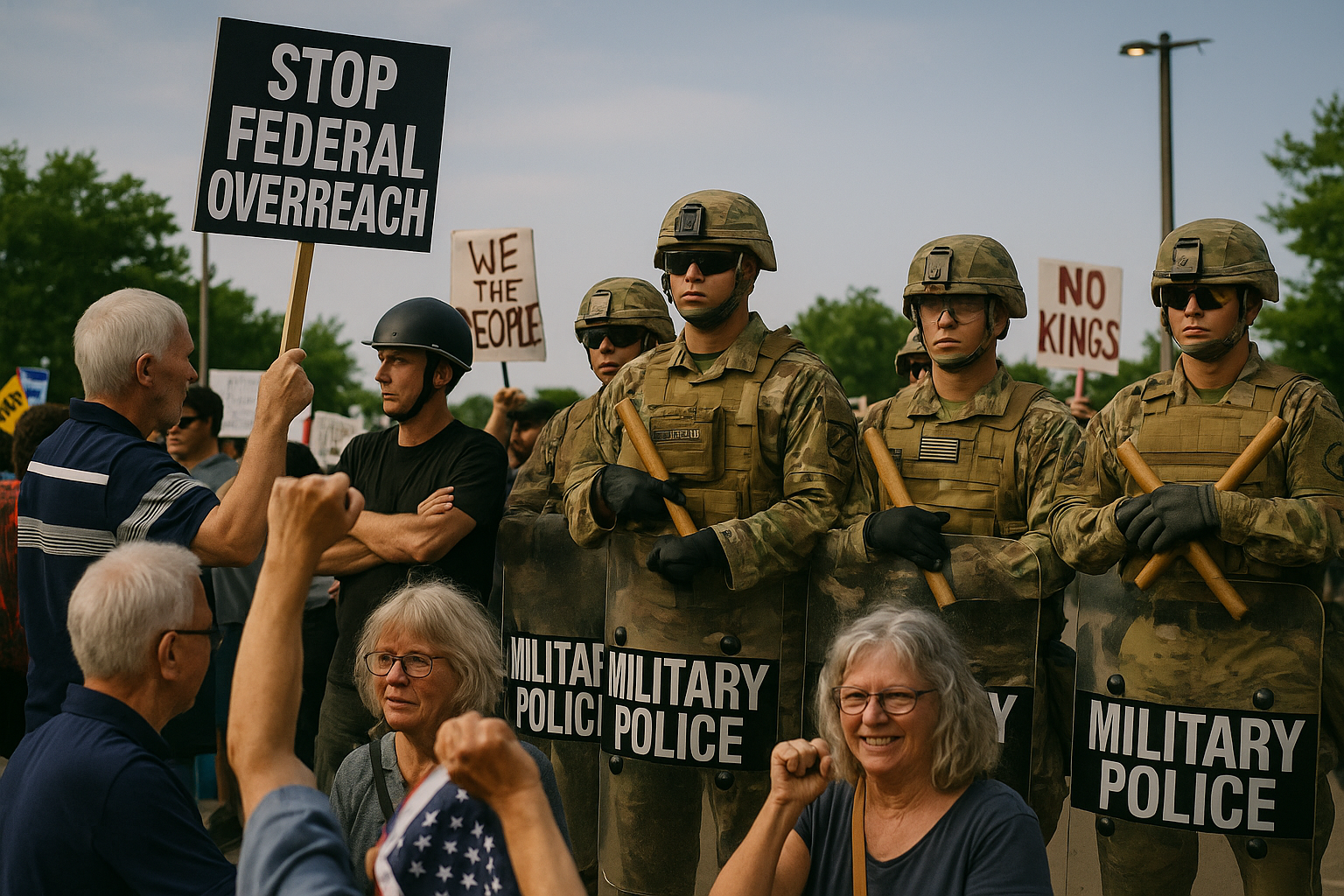
In his second term, beginning January 20, 2025, President Donald Trump has employed a series of emergency declarations, legal maneuvers, and media strategies that critics argue constitute authoritarian overreach. These actions include declaring national emergencies to bypass congressional oversight, deploying federal troops to suppress protests without state consent, arresting prominent protest leaders, and leveraging online disinformation to justify aggressive policies. The deployment of 2,000 National Guard members and 700 Marines to Los Angeles in June 2025, in response to protests against Immigration and Customs Enforcement (ICE) raids, exemplifies these tactics. Legal challenges, particularly from California, highlight concerns about violations of state sovereignty and civil liberties. The spread of disinformation, including fake images and conspiracy theories, has amplified perceptions of crisis, potentially to justify federal intervention. A planned military parade on June 14, 2025, in Washington, D.C., with warnings of force against protesters, further illustrates efforts to project power. The Republican Party’s general support or silence has facilitated these actions, raising alarms about the erosion of democratic norms and the potential for future executive overreach. This report analyzes these developments, their legal and constitutional implications, and their broader impact on American democracy.
Key Points
- Trump declared national emergencies for the southern border (January 22, 2025), energy (January 20, 2025), and trade (April 2025), enabling policy implementation without congressional approval, though legal challenges question their validity.
- Using Title 10, Section 12406, and inherent protective powers, Trump deployed 2,000 National Guard members and 700 Marines to Los Angeles to address protests, bypassing California Governor Gavin Newsom’s authority, prompting a state lawsuit.
- David Huerta, president of SEIU California, was arrested on June 6, 2025, during protests against ICE raids, charged with conspiracy to impede an officer, seen by critics as an attempt to suppress dissent.
- Disinformation campaigns, including fake images and conspiracy theories, have exaggerated protest violence in Los Angeles, potentially to justify federal intervention, though direct administration involvement remains unconfirmed.
- A military parade scheduled for June 14, 2025, in Washington, D.C., with Trump’s warning of “very big force” against protesters, suggests an effort to project strength and deter opposition.
- Many Republicans, including Senators Rand Paul and John Thune, have supported or not opposed Trump’s actions, providing political cover, though some express unease with extreme measures like arresting Newsom.
Detailed Analysis
Emergency Declarations to Circumvent Checks
President Trump has leveraged the National Emergencies Act (50 U.S.C. 1601 et seq.) to declare multiple national emergencies in 2025, enabling him to implement policies without congressional approval. These declarations have raised concerns about bypassing constitutional checks and balances and their impact on civil liberties.
- Border Emergency (January 22, 2025): Trump declared a national emergency at the southern border, citing 8.72 million border encounters from FY21-FY24 and the influx of fentanyl as justification. This allowed the deployment of additional military personnel and resources to complete the border wall and enhance immigration enforcement. The American Civil Liberties Union (ACLU) and other groups have filed lawsuits, arguing that the declaration violates due process and puts asylum seekers at risk by limiting access to protections mandated by Congress. The executive order also attempts to restrict birthright citizenship, a 14th Amendment guarantee, prompting further legal challenges. White House: Border Emergency
- Energy Emergency (January 20, 2025): To address perceived inadequacies in energy supply and infrastructure, Trump declared a national energy emergency. This enables agencies to expedite energy projects, including leasing and production on federal lands, and to use emergency permitting provisions, potentially weakening environmental protections under the Endangered Species Act. Critics argue this prioritizes industry over environmental concerns, bypassing normal regulatory processes. White House: Energy Emergency
- Trade Emergency (April 2025): Invoking the International Emergency Economic Powers Act (IEEPA), Trump declared a trade emergency to address chronic trade deficits, imposing responsive tariffs to protect American workers and national security. This unilateral action bypassed congressional oversight, raising concerns about economic impacts and the concentration of executive power. USTR: Trade Emergency
These declarations have been criticized for stretching legal boundaries. Legal scholars, such as those cited by NPR, warn that they could “upend the constitutional balance of power” by allowing the president to act without legislative or judicial checks. The impact on civil liberties includes potential violations of due process for immigrants and reduced environmental protections, with lawsuits ongoing to challenge these actions.
Misuse of the Insurrection Act & Federalization of Force
While Trump has not invoked the Insurrection Act as of June 11, 2025, he has used other legal authorities to deploy federal troops domestically, raising concerns about the potential misuse of military power. In response to protests in Los Angeles against ICE raids, Trump deployed 2,000 National Guard members under Title 10, Section 12406, and 700 U.S. Marines under the president’s inherent protective power to safeguard federal property and personnel. This action, taken without California Governor Gavin Newsom’s consent, led to a lawsuit filed on June 9, 2025, arguing that it violates state sovereignty and exceeds federal authority. Politico: California Lawsuit
Trump’s comments on June 10, 2025, indicate he may invoke the Insurrection Act if he deems protests an “insurrection,” though he has not done so yet. Legal scholars, such as those at the Brennan Center, argue that the Insurrection Act’s vague language makes it ripe for abuse, as it lacks clear constraints on presidential authority. Reports suggest Pentagon and Department of Homeland Security officials have resisted invoking the Act due to legal uncertainties, but the deployment of troops under alternative authorities has already sparked debate. California’s lawsuit claims the federalization of the National Guard saps state resources and escalates tensions unnecessarily. Brennan Center: Insurrection Act
Suppression of Dissent & Psychological Operations
The Trump administration’s response to protests, particularly in Los Angeles, has been accused of suppressing dissent through arrests and disinformation campaigns.
- Arrest of David Huerta: On June 6, 2025, David Huerta, president of SEIU California, was arrested during a protest against ICE raids in Los Angeles’ Garment District. Charged with conspiracy to impede an officer, Huerta was reportedly injured and tased during his arrest. Released on a $50,000 bond on June 9, his detention drew condemnation from Democratic leaders like Rep. Hakeem Jeffries, who called it “unacceptable” and an attack on First Amendment rights. The arrest is seen as an attempt to intimidate protest leaders and deter further demonstrations. AP News: Huerta Arrest
- DHS/ICE Raids: ICE conducted raids starting June 6, 2025, in Los Angeles, targeting areas with significant Latino populations, arresting 118 individuals. These raids escalated tensions, with federal agents clashing with protesters, leading to the use of tear gas and arrests. Critics argue these actions target peaceful protest zones to suppress opposition to immigration policies. LA Times: ICE Raids
- Disinformation Campaigns: During the Los Angeles protests, social media platforms saw a surge in disinformation, including fake images and videos exaggerating violence. For example, a photo of bricks in New Jersey was falsely claimed to be from Los Angeles, amplifying perceptions of planned unrest. These efforts, noted by outlets like The New York Times, aim to stoke fear and justify federal intervention, though direct administration involvement is unconfirmed. NY Times: Disinformation
- Threats Against Protests: Trump’s warning on June 10, 2025, that protesters at the upcoming Washington, D.C., military parade will face “very big force” suggests an intent to deter dissent through intimidation. NY Times: Parade Warning
These actions are perceived as part of a broader strategy to control the narrative and suppress opposition, with disinformation amplifying the administration’s justification for aggressive measures.
Legitimacy Theater & Perception Warfare
The Trump administration has employed media optics and military imagery to project power and undermine democratic norms under the guise of emergency responses.
- Military Parade: A military parade scheduled for June 14, 2025, in Washington, D.C., is seen as a display of strength to bolster Trump’s image as a decisive leader. His warning that protesters will be met with “very big force” underscores an intent to deter opposition and project dominance. NY Times: Parade Warning
- Troop Deployment: The deployment of National Guard and Marines to Los Angeles serves not only to control protests but also to assert federal authority over resistant states like California. This move, coupled with the lack of state consent, is viewed as a show of dominance to rally Trump’s base and intimidate opponents.
- GOP Complicity: Congressional Republicans, including Senators Rand Paul and John Thune, have signaled support or minimal pushback against Trump’s actions, as noted in an X post by @burgessev. While some Republicans express unease with extreme proposals, such as arresting Governor Newsom, their overall silence or support enables the administration’s tactics. X: GOP Support
These efforts, combined with emergency declarations, create a perception of crisis that justifies expanded executive power, potentially normalizing authoritarian tactics.
Legal and Constitutional Context
The deployment of federal troops and use of emergency powers are governed by several legal frameworks:
| Law/Authority | Description | Application in 2025 |
|---|---|---|
| Posse Comitatus Act (18 U.S.C. § 1385) | Prohibits federal military personnel from enforcing domestic laws, except as authorized by the Constitution or Congress. | Limits the role of Marines in Los Angeles to protecting federal property, as law enforcement duties would require an exception like the Insurrection Act. |
| Insurrection Act (10 U.S.C. §§ 251-255) | Allows the president to deploy federal troops to suppress insurrections, domestic violence, or enforce federal laws when states cannot or will not act. | Not invoked as of June 11, 2025, but Trump’s comments suggest potential future use, raising concerns about its vague criteria. |
| Title 10, Section 12406 | Permits the president to federalize the National Guard in cases of invasion, rebellion, or inability to execute federal laws. | Used to deploy 2,000 National Guard members to Los Angeles, bypassing California’s governor. |
| Protective Power | Inherent constitutional authority to protect federal property and personnel. | Used to justify deploying 700 Marines to Los Angeles to safeguard federal buildings and ICE agents. |
The use of Section 12406 and protective powers, rather than the Insurrection Act, has sparked legal debates. California’s lawsuit argues that these actions exceed federal authority and infringe on state rights. The Insurrection Act’s broad language, as noted by the Brennan Center, lacks clear checks, making it vulnerable to abuse if invoked. Brennan Center: Insurrection Act Explained
Implications
The Trump administration’s actions have significant implications for American democracy:
- Executive Overreach: Frequent use of emergency declarations to bypass Congress could set a precedent for future presidents to concentrate power, weakening the separation of powers. Legal scholars warn this could lead to a more authoritarian executive branch.
- Government Legitimacy: Deploying troops against protesters and arresting leaders may erode public trust in government, particularly if perceived as targeting political opponents or minority communities.
- Protest Rights: The use of military force and intimidation tactics, such as warnings against protesting, could chill free speech and assembly rights, deterring civic engagement.
- Political Polarization: Partisan support from Republicans and opposition from Democrats deepen divisions, complicating efforts to address national issues collaboratively.
These developments underscore the need for reforms to emergency powers and military deployment laws to prevent future abuses and protect democratic institutions.
Key Citations
- White House: Fact Sheet on Border Emergency Declaration
- White House: Presidential Action on Energy Emergency
- USTR: Statement on Trade Emergency Declaration
- Politico: California Sues Over National Guard Deployment
- AP News: Union Leader David Huerta Arrested
- NY Times: Disinformation Surrounding LA Protests
- NY Times: Trump Warns Protesters at Military Parade
- Brennan Center: Insurrection Act Threatens Democracy
- Brennan Center: Explanation of the Insurrection Act
- LA Times: SEIU President Arrested During ICE Raids
- X: Congressional Republicans Support Trump Deployment