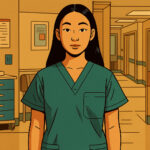
 Burnout is not an individual failing. It is a systemic condition. In July 2022, the nation itself shows the vital signs of exhaustion.
Patients arrive weary, not just from illness but from navigating broken systems. Clinicians are drained, stretched between impossible demands and insufficient resources. Families stagger under financial and emotional burdens. Teachers, truck drivers, warehouse workers, caregivers, and nurses echo the same refrain: I can’t keep this up.
What is called “burnout” in individuals is, at scale, a civic diagnosis. It is the body politic showing symptoms of collapse.
The Clinician’s Fatigue
A nurse on the night shift whispers, “I can’t do another code.” She has worked sixteen hours, then returned for twelve more. Her hands tremble, not from lack of skill but from depletion. She documents endlessly, knowing each keystroke is less about care and more about compliance.
A resident admits, “I wake up and my first thought is not the patient but the pager.” He still gives what he can, but he confesses he has nothing left to restore himself.
A physician tells colleagues, “I thought my training was the hardest part. But this is harder: the constant battle with policy, insurers, shortages. I feel like I’m practicing in a country that doesn’t want me to succeed.”
These are not isolated confessions. They are a collective diagnosis of a workforce collapsing under systemic weight.
The Patient’s Fatigue
Burnout is visible in patients too. A woman with chronic pain says, “I am tired of explaining myself to doctors who don’t believe me.” A man with diabetes sighs, “I can’t keep fighting for my prescriptions every month.”
The exhaustion is not only physical. It is bureaucratic. Patients arrive with folders of denial letters, billing disputes, and eligibility forms. They sit in waiting rooms for hours, drained before the visit even begins.
The Teacher’s Fatigue
A teacher tells me she is grading papers at midnight after attending parent conferences, teaching overcrowded classes, and covering for colleagues who quit midyear. She feels the same symptoms patients describe in clinics: insomnia, headaches, stomach pain, hopelessness. Burnout is not confined to hospitals. It spreads through classrooms, offices, and homes.
The Parent’s Fatigue
Parents carry the weight too. A mother caring for a child with epilepsy describes never sleeping through the night. She manages medications, fights with insurers, coordinates school meetings, and works a job to keep the family insured. “There is no off switch,” she says.
Burnout for families is chronic vigilance. It is the constant fear that a mistake will mean catastrophe.
National Vital Signs
If burnout were charted for the nation, the vital signs would show tachycardia, hypertension, sleep deprivation, chronic stress. Productivity is high but recovery is absent. Workloads increase while support decreases.
The United States runs on extraction: of labor, attention, energy, health. The reservoir is finite. Symptoms of collapse appear everywhere: rising resignations, mental health crises, addiction, and despair.
The Economy of Exhaustion
Burnout is profitable for some. Overtime without benefits saves employers money. Denials save insurers. Families stretched thin buy services they cannot afford, from payday loans to gig deliveries. The economy feeds on exhaustion, turning depletion into revenue.
But the cost is borne in bodies. Clinics fill with stress-related illness. Emergency rooms overflow with preventable crises. The economy calculates profit while patients calculate survival.
Burnout as Contagion
Exhaustion spreads. A burned-out teacher cannot shield her students. A burned-out nurse cannot comfort her patients. A burned-out parent cannot rest enough to be present for their children. Burnout is contagious, transmitted across relationships and institutions.
Historical Context
This is not the first time. In the industrial era, workers collapsed under twelve-hour shifts and unsafe conditions until labor movements demanded change. In the 1980s, teachers spoke of burnout as classrooms grew and resources shrank. In healthcare, the warnings have been raised for decades.
But in 2022, the scale is national. Burnout is no longer sector-specific. It is the atmosphere.
Case Studies Across Work and Life
The Warehouse Worker
A warehouse worker comes to clinic with back pain. He lifts fifty-pound boxes ten hours a day. He works mandatory overtime, monitored by algorithms that measure his “time off task.” He fears taking bathroom breaks. He says, “I am a machine to them. But my body is breaking.”
The Nurse’s Resignation
A nurse leaves after twenty years. She loved the work but could not survive the pace. “I was giving care with hands that shook,” she explains. “That’s not safe for me or the patient.”
Her departure leaves a gap filled by fewer staff, which increases burnout for those who remain. Burnout feeds itself, accelerating collapse.
The College Student
A student in her twenties arrives with panic attacks. She juggles classes, two part-time jobs, and caring for a younger sibling while her parents work night shifts. “I feel like I’m running on empty all the time,” she says.
Her symptoms mirror those of middle-aged patients: insomnia, chest pain, GI upset. Burnout is ageless.
The Gig Worker
A man drives for multiple delivery apps. He works fourteen hours to make ends meet. Each company treats him as “independent,” so no health insurance, no sick leave, no protections. He eats in his car, sleeps four hours, repeats. He arrives at the clinic with high blood pressure and chest pain. Burnout is built into the business model that sustains him.
The Farmworker
A farmworker bends under the sun twelve hours a day. He harvests the produce that feeds the nation but cannot afford the healthcare that could save his body. “We keep going until we can’t,” he says. His joints swell, his back spasms, but he continues. Burnout is the expected cost of his labor.
The Firefighter
A firefighter shows signs of PTSD after years of back-to-back wildfires. He has been on duty for weeks with little rest. His colleagues call in sick; those left behind shoulder more. He admits he is constantly on alert, even when home. The burnout of first responders has direct consequences: slower responses, more errors, less resilience for the next emergency.
The Small Business Owner
A café owner in her fifties works open to close, seven days a week, to keep her business afloat. Supply chain disruptions, staffing shortages, and rising costs push her to exhaustion. She describes chest tightness, insomnia, and constant worry about bills. “I can’t stop, because if I stop, it all collapses,” she says. Burnout in small businesses is as lethal as in hospitals, just less visible.
The Childcare Worker
In a daycare, one worker supervises twelve toddlers. Pay is low, benefits absent, turnover constant. She manages safety, meals, diapers, early education, and constant vigilance. She says, “I go home too tired to take care of my own kids.” The burnout of childcare staff becomes the exhaustion of parents, and the cycle continues.
The Police Officer
A city police officer describes twelve-hour shifts, escalating calls, and dwindling staff. He says, “Every night feels like a coin toss whether I come home.” His heart rate is high, sleep poor, judgment clouded. The risk is not only personal but public: burnout in law enforcement magnifies errors, misjudgments, and violence.
The Flight Crew
Flight attendants describe dealing with unruly passengers, endless delays, and mandatory overtime. Pilots log more hours than regulations once allowed, filling gaps in a strained system. A pilot admits, “I’m making critical decisions on four hours of sleep.” Burnout in the skies becomes a risk for everyone on board.
The Public Defender
A public defender carries more than 150 active cases. She says she cannot meet her clients, let alone prepare defenses. She eats at her desk, sleeps in the office, and knows justice is compromised. Burnout in the courts undermines the rule of law itself.
The Journalist
A journalist covering politics describes relentless deadlines, shrinking staff, and constant harassment online. He admits he no longer reads for pleasure, no longer sleeps without his phone nearby. His reporting is essential, but his body is failing. Burnout erodes the press, and with it, the public’s right to be informed.
The Transit Worker
A subway operator manages crowded trains with aging equipment. Breakdowns are frequent, shifts unpredictable, passengers often hostile. She develops hypertension and insomnia. When she misses work, service collapses further, magnifying public frustration. Infrastructure burnout mirrors personal burnout.
The Military Recruit
A young soldier returns from deployment with fatigue, headaches, and nightmares. He says, “We were expected to keep going no matter what.” His symptoms are ignored until collapse forces attention. Burnout in the armed forces becomes burnout in veterans’ hospitals years later.
Comparative Frames
Other nations recognize burnout as a public health issue. In some, mandatory vacation, limits on work hours, and universal healthcare buffer the load.
- In France, the 35-hour work week is enforced by law, and vacation time is considered a right.
- In Germany, workers are protected by legislation that prevents after-hours employer contact.
- In Japan, the crisis of “karoshi” — death from overwork — prompted reforms that cap overtime and encourage rest.
- In Canada, universal healthcare ensures that illness does not bankrupt families and that preventive care is accessible.
- In Sweden and Norway, subsidized childcare and long parental leave reduce family stress and stabilize work-life balance.
- In Australia, mandated rest periods for transport and emergency workers acknowledge fatigue as a safety hazard.
These systems are imperfect, but they reflect a collective decision that rest is infrastructure, not indulgence. The contrast highlights how deeply U.S. policy accepts burnout as inevitable.
Policy Roots
The Fair Labor Standards Act of 1938 set workweek limits nearly a century ago, but loopholes and exemptions eroded protections. The rise of gig work has pushed millions outside its reach. Healthcare tied to employment forces the sick to keep working. Childcare costs rise while wages stagnate. Paid leave remains rare compared to peer nations.
The Occupational Safety and Health Act of 1970 created protections against hazardous work, but enforcement remains uneven. Psychological strain, though recognized as dangerous, is rarely treated with the same urgency as physical injury.
The Family and Medical Leave Act of 1993 guaranteed unpaid leave for some workers, but only under strict conditions. For many, illness or caregiving still risks job loss.
Union membership once provided a buffer against overwork, but its steady decline has left workers with fewer protections. Where collective bargaining has collapsed, burnout has risen.
Policy can exhaust, but it can also restore. The evidence lies in nations that chose differently.
Staff Testimonies
A scheduler says, “I log on every day and feel dread before I start. Not because of patients, but because I know I’ll spend hours battling insurers.”
A pharmacist says, “Every prescription feels like a fight. Patients think I’m the barrier. But I’m fighting the policy while their health gets worse.”
A respiratory therapist says, “I worked through the pandemic without a break. I’m still working without one. I don’t know how much longer I can do this.”
A case manager says, “I have more spreadsheets than patients. My job feels less like care and more like containment.”
A social worker adds, “I never thought my profession would be about arguing with insurance companies. But every hour I spend on hold is an hour patients don’t get help.”
An educator confesses, “I show up because children need me, but every day I feel less able to give them what they deserve.”
A paramedic concludes, “We are praised as heroes but treated as expendable. That gap is the burnout.”
Closing Analysis
In July 2022, the United States shows the signs of burnout everywhere: in hospitals, schools, warehouses, flights, factories, and homes. The condition is not hidden. It is public, measurable, undeniable.
To call it “individual weakness” is false. To ignore it is dangerous. Burnout is systemic. It is civic. It is national.
The treatment is not more exhortation or productivity. It is rest, recognition, and policy that values people over profit. It is collective belonging. It is restructured work that honors limits. It is healthcare that relieves instead of drains.
Burnout is not a personal flaw. It is a national warning. If unaddressed, it signals a deeper collapse of health, economy, and democracy itself.