Investigative Report
Background
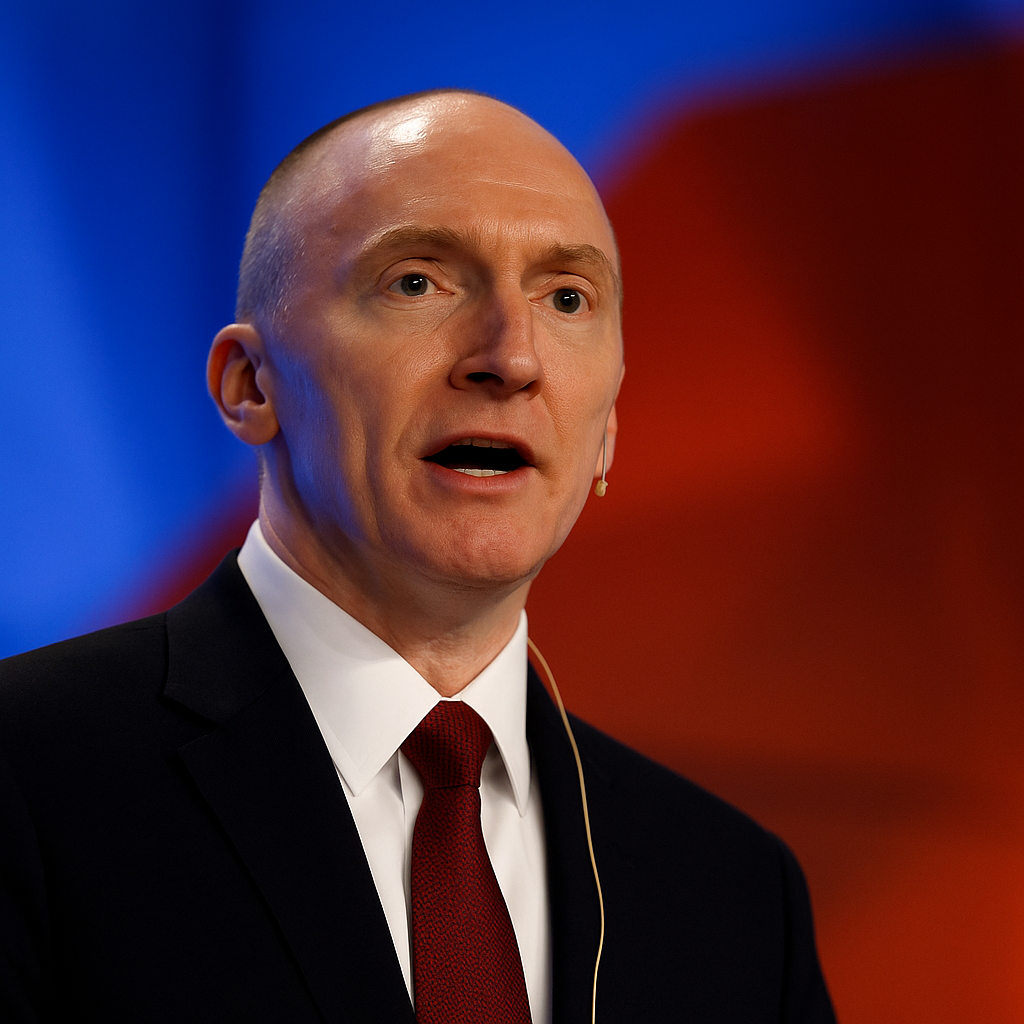 Carter William Page, born June 3, 1971, in Minneapolis, Minnesota, emerged as a polarizing figure due to his brief tenure as a foreign policy adviser to Donald Trump’s 2016 presidential campaign. Raised in Poughkeepsie, New York, by Allan Robert Page, a utility company manager, and Rachel Greenstein Page, he graduated from the United States Naval Academy in 1993, ranking in the top 10% of his class. Page served as a Lieutenant in the U.S. Navy from 1993 to 1998, including a role as an intelligence officer for a UN peacekeeping mission in Morocco. His academic credentials include a Master’s from Georgetown University (1994), an MBA from New York University (2001), a PhD from SOAS, University of London (2012), and an LLM from Fordham University School of Law (2022) (Carter Page Wikipedia Profile).
Page’s career focused on the energy sector, particularly in Russia and Central Asia. From 2004 to 2007, he worked at Merrill Lynch’s Moscow office, advising on major transactions for Gazprom and RAO UES. In 2008, he founded Global Energy Capital, a one-man investment firm targeting Russian and Central Asian oil and gas markets. His pro-Russian views were evident early; in 1998, he briefly joined Eurasia Group but departed after expressing sentiments later described as “edgy Putinist resentment” by colleagues (Carter Page Wikipedia). By 2013, his interactions with Russian intelligence operatives, including Victor Podobnyy, drew FBI attention, leading to a 2014 Foreign Intelligence Surveillance Act (FISA) warrant based on suspicions of his ties to Russian agents (Timeline of Carter Page’s Contacts with Russia).
In March 2016, Donald Trump named Page as one of five foreign policy advisers for his presidential campaign, tasked with advising on energy policy and U.S.-Russia relations. His role ended abruptly in September 2016 after reports of his communications with Russian officials surfaced, prompting the campaign to sever ties and downplay his involvement (Trump’s Washington Post Editorial Board Interview).
Key Points
- Campaign Role: Page served from March to September 2016, focusing on energy and Russia policy, but his influence was limited, with Trump later claiming he never met him (Carter Page Not Substantial).
- FISA Surveillance: The FBI obtained four FISA warrants to monitor Page from October 2016 to September 2017. Two were later deemed invalid due to procedural errors, fueling debates over FBI overreach (Two of Four FISA Warrants Declared Invalid).
- Russian Contacts: Allegations, notably from the Steele dossier, claimed Page met high-ranking Russian officials to discuss sanctions relief. He denied these, and the Mueller report found no corroborating evidence (Carter Page Testimony Attacks Steele Dossier).
- Legal Actions: Page filed multiple lawsuits against the FBI, media, and others, alleging defamation and surveillance abuses. All were dismissed by 2022, with courts citing insufficient grounds or untimely filings (Carter Page Lawsuit Dismissed).
Timeline
| Date | Event |
|---|---|
| 1993-1998 | Served in U.S. Navy, including as intelligence officer in Morocco (Carter Page Wikipedia). |
| 2004-2007 | Worked at Merrill Lynch in Moscow, advising Gazprom and RAO UES (Trump Russia Adviser Carter Page Interview). |
| 2008 | Founded Global Energy Capital, focusing on Russian energy investments (Carter Page Wikipedia). |
| Jan-Jun 2013 | Met Russian operative Victor Podobnyy; shared energy documents; FBI interviewed Page in June (Former Trump Adviser Met Russian Spy). |
| Aug 25, 2013 | Wrote to an academic press, claiming to be an informal Kremlin advisor for the G-20 Summit (Carter Page Touted Russia Contacts). |
| 2014 | FBI obtained initial FISA warrant to monitor Page due to Russian ties (Timeline of Carter Page’s Contacts). |
| Mar 21, 2016 | Named foreign policy adviser to Trump campaign during Washington Post interview (Trump’s Washington Post Interview). |
| Jul 7-8, 2016 | Traveled to Moscow, delivered pro-Russia speech at New Economic School, met Deputy Prime Minister Arkady Dvorkovich (Carter Page Coordinated Russia Trip). |
| Sep 23, 2016 | Yahoo News reported U.S. intelligence investigating Page’s Russian communications (U.S. Intel Probes Trump Adviser Ties). |
| Sep 26, 2016 | Resigned from Trump campaign amid scrutiny (Trump’s Russia Adviser Denies Accusations). |
| Oct 21, 2016 | FBI obtained second FISA warrant to surveil Page (FBI Obtained FISA Warrant). |
| Nov 2, 2017 | Testified before House Intelligence Committee, admitted meeting Russian officials but denied illicit activities (Carter Page Testimony Released). |
| Dec 2019 | Justice Department Inspector General report criticized FBI’s FISA process; two warrants deemed invalid (FISA Warrants Declared Invalid). |
| 2020-2022 | Filed multiple lawsuits against FBI, media, and DNC; all dismissed (Carter Page Lawsuit Dismissed). |
| May 2025 | DC Circuit Court of Appeals upheld dismissal of Page’s lawsuit alleging FISA abuses (DC Circuit Upholds Dismissal). |
Political Influence
Role in Trump Campaign
Page’s appointment as a foreign policy adviser in March 2016 was unexpected, given his lack of prominence in Washington policy circles. During a Washington Post editorial board meeting, Trump named Page among five advisers, alongside names like George Papadopoulos and Keith Kellogg, to bolster his foreign policy credentials (Trump’s Washington Post Interview). Page attended campaign meetings and submitted memos on energy and Russia policy, but senior aides later described his contributions as negligible. Trump himself claimed in 2017, “I don’t think I’ve ever spoken to him,” while campaign manager Corey Lewandowski called Page a low-level volunteer (Carter Page Not Substantial).
Foreign policy experts expressed skepticism about Page’s qualifications, noting his thin public profile compared to traditional advisers. His selection appeared to stem from his energy sector experience and pro-Russia views, which aligned with Trump’s stated interest in improving U.S.-Russia relations (Carter Page Ballotpedia). However, his July 2016 Moscow trip, where he delivered a speech critical of U.S. sanctions and met Russian officials, raised alarms within the campaign. By September 2016, following media reports of his Russian contacts, the campaign distanced itself, with spokesman Jason Miller stating Page had “no role” and was never part of the inner circle (Trump’s Russia Adviser Denies Accusations).
Broader Political Impact
While Page’s direct influence on Trump’s policy was minimal, his controversies amplified debates over Russian interference in the 2016 election. His Moscow trip and alleged contacts fueled suspicions of campaign collusion, prompting investigations by the FBI, Congress, and Special Counsel Robert Mueller. The Steele dossier’s allegations, though unverified, kept Page in the spotlight, shaping public and political narratives about Trump-Russia ties (Carter Page Testimony). His case also became a rallying point for critics of the FBI, who cited the invalid FISA warrants as evidence of government overreach, influencing Republican-led efforts to reform surveillance laws (House Approves FISA Reforms).
Controversies
Russian Contacts and Recruitment Attempts
Page’s interactions with Russian operatives predate his campaign role. In 2013, he met Victor Podobnyy, a Russian intelligence officer posing as a diplomat, at an energy conference in New York. Over several months, Page provided documents about the energy industry, unaware that Podobnyy and his associate Igor Sporyshev were attempting to recruit him as an asset. The FBI, monitoring the Russians, recorded conversations in which Podobnyy described Page as an “idiot” with dreams of lucrative deals but noted his potential usefulness due to his enthusiasm (Former Trump Adviser Met Russian Spy). In June 2013, the FBI interviewed Page, who cooperated and was not charged, though the encounter led to a 2014 FISA warrant targeting him (Timeline of Carter Page’s Contacts).
During his July 2016 Moscow trip, Page spoke at the New Economic School, criticizing U.S. sanctions and advocating closer U.S.-Russia ties. He met Deputy Prime Minister Arkady Dvorkovich and other officials, later confirming these meetings in congressional testimony but denying any discussion of campaign matters (Carter Page Coordinated Russia Trip). The Steele dossier alleged he also met Igor Sechin, a close Putin ally, and Igor Diveykin, a Kremlin intelligence official, to discuss lifting sanctions in exchange for a 19% stake in Rosneft, Russia’s state oil company. Page vehemently denied these meetings, calling the dossier “dodgy” and “unverified” in his 2017 testimony, and the Mueller report found insufficient evidence to substantiate the claims (Carter Page Testimony).
FISA Surveillance
The FBI’s surveillance of Page, authorized by four FISA warrants from October 2016 to September 2017, became a flashpoint. The warrants were based on suspicions that Page was acting as a Russian agent, citing his 2013 Russian contacts, 2016 Moscow trip, and dossier allegations. However, a December 2019 Inspector General report by Michael Horowitz identified 17 “significant errors or omissions” in the FBI’s FISA applications, including failure to disclose exculpatory evidence, such as Page’s prior cooperation with the FBI in 2013 (Justice Department Inspector General Report). In January 2020, the Justice Department declared the final two warrants invalid due to insufficient probable cause, prompting FISA court presiding judge Rosemary Collyer to criticize the FBI’s handling and bar involved agents from future court proceedings (FISA Warrants Declared Invalid).
The controversy intensified partisan divides. Republicans, including then-President Trump, cited the invalid warrants as evidence of a “witch hunt” against the campaign, while Democrats argued the initial warrants were justified given Page’s Russian ties and the broader context of election interference (FBI Use of Steele Dossier Defended). The FBI implemented procedural reforms, including mandatory accuracy reviews for FISA applications, to address the issues (FISA Court Bars FBI Officials).
Steele Dossier
The Steele dossier, compiled by former MI6 officer Christopher Steele and partly funded by the Clinton campaign through Fusion GPS, alleged that Page was a central figure in Trump campaign-Kremlin coordination. It claimed his July 2016 Moscow meetings with Sechin and Diveykin involved offers of sanctions relief and compromising material on Hillary Clinton. Page denied the allegations, testifying in 2017 that he never met either official and had no role in campaign collusion (Carter Page Testimony Released). The Mueller report, released in April 2019, found no evidence to support the dossier’s specific claims about Page, though it noted his Russian contacts warranted scrutiny (Carter Page Testimony).
The dossier’s use in FISA applications sparked significant debate. Critics, including Page and Republican lawmakers, argued it was unverified and improperly influenced the surveillance process. Defenders, including former FBI officials, contended it was one of many sources and that the FBI had independent reasons to monitor Page, such as his 2013 Russian contacts (FBI Use of Steele Dossier Defended). The Inspector General report confirmed the dossier was used but noted the FBI’s failure to clarify its unverified nature to the FISA court, undermining the warrants’ validity (Justice Department Inspector General Report).
Legal Actions
Following his surveillance, Page launched a series of lawsuits seeking redress for alleged defamation and civil rights violations. In 2020, he sued the Democratic National Committee, Perkins Coie, and others, claiming they funded the Steele dossier to smear him. The suit was dismissed for lack of jurisdiction. In 2021, he sued Yahoo! News and HuffPost over articles reporting his Russian ties, but the judge dismissed the case, noting Page admitted the articles’ core claims—his meetings with Russian officials—were true (Carter Page Lawsuit Dismissed). A 2022 suit against the FBI and Justice Department alleged illegal surveillance and leaks about his FISA warrants. The DC District Court dismissed it, citing untimely filing and insufficient evidence of bad faith by officials (Carter Page Lawsuit Dismissed).
In May 2025, the DC Circuit Court of Appeals upheld the 2022 dismissal, affirming that Page’s claims lacked merit and were filed beyond the statute of limitations. The court noted he failed to demonstrate concrete harm from the alleged leaks or surveillance beyond reputational damage, which was insufficient for standing (DC Circuit Upholds Dismissal). Page’s legal efforts have consistently failed to gain traction, with courts citing procedural issues or his inability to disprove the factual basis of reports about his Russian contacts.
Policy Impact
Surveillance Reform
The Page FISA controversy had a tangible impact on U.S. surveillance policy. The Inspector General’s 2019 findings prompted bipartisan calls for reform to prevent future abuses. In March 2020, the House passed the USA FREEDOM Reauthorization Act, which included amendments inspired by the Page case. These required FISA applications to include exculpatory evidence, mandated accuracy reviews, and expanded the role of amicus curiae attorneys to challenge government claims in FISA court proceedings (House Approves FISA Reforms). The FISA court also issued orders in 2020 barring FBI officials involved in the Page warrants from future cases and accepted FBI commitments to improve training and oversight (FISA Court Bars FBI Officials).
Public Trust and Polarization
Page’s case deepened public distrust in federal institutions, particularly among Trump supporters. The invalid FISA warrants were cited in conservative media and by Republican lawmakers as evidence of politicized surveillance, amplifying calls to curtail FISA authority. Conversely, national security experts argued the initial surveillance was justified given Russia’s documented election interference and Page’s history of Russian contacts (FBI Use of Steele Dossier Defended). The controversy thus contributed to polarized debates over balancing national security and civil liberties, with lasting implications for surveillance policy discussions.
Recent Developments
As of June 2025, Page remains a peripheral figure, with no significant public or political role since his campaign tenure. His most recent legal effort, a lawsuit alleging FISA abuses and media leaks, was definitively dismissed by the DC Circuit Court of Appeals in May 2025. The court’s ruling emphasized the lack of actionable evidence and procedural flaws in Page’s claims, effectively closing his legal avenues for redress (DC Circuit Upholds Dismissal).
Public discussions about Page have waned, but his case occasionally resurfaces in debates over FISA and FBI accountability. An X post in June 2025 referenced a “close hold” file in the Inspector General’s report, suggesting undisclosed details about the FISA process, though no primary sources have corroborated this claim (IG Report on FISA Abuse Mentioned). Speculative narratives, such as claims Page wore a wire for the FBI or was a CIA asset, have circulated on platforms like X but lack credible evidence and are contradicted by official records (Speculative Claim Page Wore Wire).
Page has maintained a low profile, occasionally commenting on energy markets or surveillance issues via social media or interviews. His LinkedIn profile, updated in 2024, lists him as a managing director at Global Energy Capital and highlights his LLM from Fordham, suggesting a focus on legal and energy consulting rather than politics (Carter Page LinkedIn). No evidence indicates ongoing involvement with Trump’s political activities or Russian entities as of mid-2025.
Key Citations
- Carter Page Wikipedia Profile and Background
- Timeline of Carter Page’s Contacts with Russia
- Two of Four FISA Warrants Declared Invalid
- Trump’s Washington Post Editorial Board Interview
- Carter Page Not a Substantial Campaign Part
- Carter Page Ballotpedia Campaign Role
- Trump Russia Adviser Carter Page Interview
- Former Trump Adviser Met Russian Spy
- Carter Page Touted Russia Contacts 2013
- Carter Page Coordinated Russia Trip
- U.S. Intel Probes Trump Adviser Ties
- Trump’s Russia Adviser Denies Accusations
- FBI Obtained FISA Warrant for Page
- Carter Page Testimony Released
- Carter Page Attacks Steele Dossier
- Justice Department Inspector General Report
- FBI Use of Steele Dossier Defended
- Carter Page Lawsuit Dismissed 2022
- House Approves FISA Reforms
- FISA Court Bars FBI Officials
- DC Circuit Upholds Page Lawsuit Dismissal
- IG Report on FISA Abuse Mentioned
- Speculative Claim Page Wore Wire
- Carter Page LinkedIn Profile