Background and Context
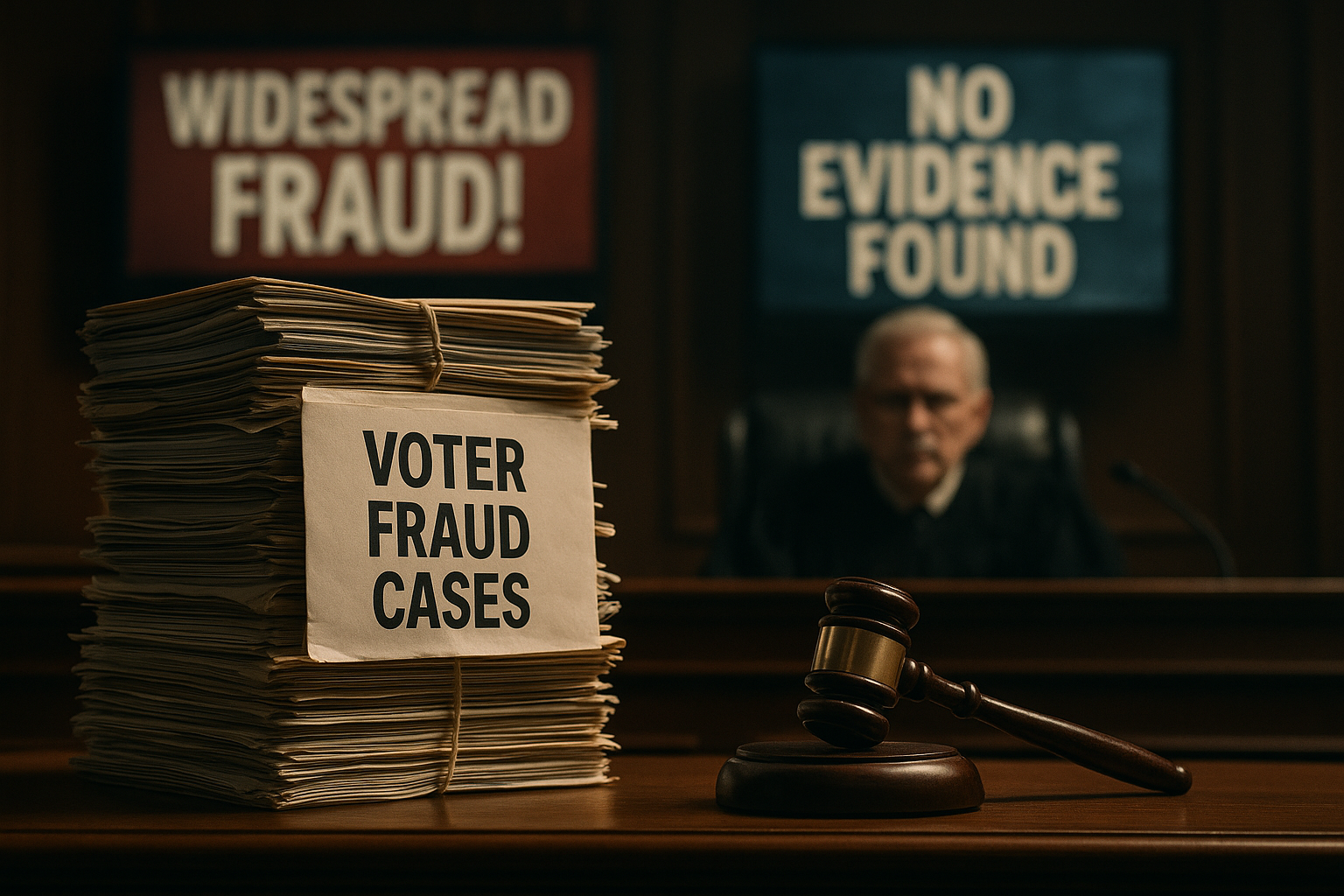
Voter fraud has been a contentious issue in U.S. politics over the past decade (2015–2025), driven by heightened political polarization and close election outcomes. The debate centers on allegations of irregularities in voter registration, ballot casting, and vote counting, often amplified during competitive elections. Historically, fraud claims have emerged in tight races, reflecting distrust in electoral systems or partisan efforts to challenge results. The 2016 presidential election, where Donald Trump claimed millions voted illegally despite winning, marked a significant escalation, followed by even more intense allegations in 2020 and 2024. These claims have fueled legislative efforts to tighten voting laws and counter-efforts to protect voter access, shaping a polarized discourse.
Culturally, voter fraud allegations reflect broader divides over trust in institutions. Some groups, particularly conservatives, argue that fraud undermines democracy, citing rare cases like noncitizen voting or duplicate registrations. Others, including voting rights advocates, contend that fraud is exceedingly rare and that restrictive measures disproportionately disenfranchise marginalized groups, such as minorities and low-income voters. Politically, the issue has been leveraged to mobilize voter bases, with Republicans advocating for stricter election security and Democrats emphasizing access to the ballot. The expansion of mail-in voting during the COVID-19 pandemic and advancements in voting technology have further intensified scrutiny of electoral processes, making voter fraud a focal point of public and policy debates.
Key Points
1. Rarity of Voter Fraud: Extensive research, including studies by the Brennan Center, shows voter fraud occurs in less than 0.0001% of votes cast, with most cases involving isolated errors or minor violations.
2. Noncitizen Voting: Allegations of widespread noncitizen voting lack evidence, though isolated cases, like a 2025 Massachusetts prosecution, have been documented.
3. 2020 Election Litigation: Over 60 lawsuits alleging fraud in the 2020 election were dismissed due to insufficient evidence, with courts affirming the election’s integrity.
4. State Audits: Audits in states like Arizona and Georgia found no systemic fraud, though minor voter roll errors were noted, often due to administrative issues.
5. 2025 Federal Actions: The Trump administration’s 2025 executive order on voter registration and mail-in ballots, partially blocked by courts, reflects ongoing efforts to address perceived fraud.
6. State Legislation: Laws in states like Georgia (SB 202, 2021) and Arizona have tightened voting rules, but critics argue they suppress legitimate voters.
7. Misinformation: Unverified claims on platforms like X, such as alleged noncitizen voting spikes, erode public trust despite lacking substantiation.
8. DOJ Shift: The Department of Justice’s focus on fraud investigations under Trump in 2025 has raised concerns about politicization, diverging from prior voting rights priorities.
Key Developments
2016–2017: Trump’s Claims and Commission
After winning the 2016 election but losing the popular vote, President Trump claimed millions voted illegally, prompting the creation of the Presidential Advisory Commission on Election Integrity in 2017. The commission sought voter data from states but faced resistance and lawsuits over privacy concerns. It was dissolved in 2018 without producing evidence of widespread fraud (Trump Dissolves Voter Fraud Commission, New York Times, Jan. 3, 2018).
2018: North Carolina 9th District Fraud
In 2018, the North Carolina State Board of Elections overturned the 9th congressional district election due to absentee ballot fraud by Republican operative Leslie McCrae Dowless. Dowless was charged with illegally collecting and tampering with ballots, leading to a new election in 2019 (North Carolina GOP Operative Faces Charges, NPR, July 30, 2019).
2020: Extensive Litigation
Following the 2020 election, Trump and allies filed over 60 lawsuits alleging fraud in battleground states. Courts, including those with Trump-appointed judges, dismissed nearly all for lack of evidence. For example, Trump v. Biden (No. 20-CV-13134, E.D. Mich. 2020) was dismissed due to insufficient proof. Audits in Arizona and Georgia confirmed results, finding only minor discrepancies (No Evidence of Voter Fraud, New York Times, Nov. 10, 2020).
2021–2023: State Voting Reforms
States like Georgia and Texas passed restrictive laws citing fraud prevention. Georgia’s SB 202 (2021) limited drop boxes and tightened ID requirements, sparking lawsuits. Critics argued these laws suppressed turnout, while supporters claimed enhanced security. A 2022 Brennan Center study found no significant fraud justifying such measures (Voting Laws Roundup, Brennan Center, May 2021).
2022: Milwaukee Absentee Ballot Case
In 2022, Kimberly Zapata, former Milwaukee Election Commission Deputy Director, was charged with one felony count of misconduct and three misdemeanor counts of absentee ballot fraud for requesting ballots under false names during the 2022 election (Heritage Election Fraud Database, Heritage Foundation, Apr. 28, 2025).
2024: Minnesota and Georgia Cases
In June 2024, two individuals in Minnesota were charged with conspiracy to commit voter registration fraud involving paid registrations, though no illegal votes were cast, highlighting effective safeguards (Voter Fraud Is Rare, NPR, Oct. 11, 2024). In 2024, Samunta Shomine Pittman in Fulton County, Georgia, faced 70 felony counts for fraudulent voter registration entries (Heritage Election Fraud Database, Heritage Foundation, Apr. 28, 2025).
2025: Federal Actions and Massachusetts Case
On March 25, 2025, President Trump signed Executive Order 14248, requiring proof of citizenship for voter registration and restricting mail-in ballots. Federal judges paused key provisions in April and June 2025, citing disenfranchisement risks (Trump’s DOJ Demands Election Data, NPR, June 11, 2025). In May 2025, Lina Maria Orovio-Hernandez, a Colombian national, was charged in Massachusetts with fraudulent voter registration and voting in the 2024 election using a stolen identity (Colombian National Charged, DOJ, May 22, 2025).
Stakeholders and Power Structures
Trump Administration: Under President Trump, the DOJ, led by Attorney General Pam Bondi and officials like Maureen Riordan, prioritizes voter fraud investigations, aligning with a narrative of electoral vulnerabilities. Federal funding supports these efforts, driven by a conservative ideology emphasizing election security.
State Election Officials: Republican officials like Ohio’s Frank LaRose pursue voter roll purges, while Democrats like Minnesota’s Steve Simon highlight robust safeguards. Their influence depends on state laws and political alignment.
Conservative Advocacy Groups: The Public Interest Legal Foundation and Heritage Foundation, funded by conservative donors, sue states to clean voter rolls, driven by the belief that fraud is a significant threat.
Voting Rights Groups: The Brennan Center and ACLU, backed by progressive foundations, challenge restrictive laws, arguing fraud is overstated to justify voter suppression.
Federal Judiciary: Courts act as neutral arbiters, often blocking measures lacking evidence, as in Fish v. Kobach (No. 16-2105, D. Kan. 2018), which struck down Kansas’ proof-of-citizenship law.
Media and Platforms: Outlets like The Gateway Pundit and X posts amplify fraud claims, while NPR and AP provide fact-checking, shaping public perception in opposing directions.
Legal, Political, or Social Impacts
Legal: Restrictive voting laws have triggered litigation, such as Fish v. Kobach, which invalidated Kansas’ proof-of-citizenship requirement for blocking 31,000 eligible voters. In 2025, federal courts paused parts of Trump’s executive order, signaling ongoing legal battles over voter access versus security.
Political: Fraud allegations have deepened partisan divides, with a 2024 NPR poll showing 30% of Republicans believe the 2020 election was stolen, driving support for stricter laws. Democrats counter that these measures target their voter base, escalating political tensions.
Social: Public trust in elections has declined, with a 2025 Gallup poll indicating only 60% of Americans trust electoral integrity. Misinformation on X, such as claims of millions of noncitizen voters, fuels distrust, particularly among conservative audiences.
Controversies and Criticisms
Exaggerated Claims: Critics argue that fraud allegations, like those from Trump and amplified on X, rely on unverified data or statistical anomalies. A June 2025 analysis by Dr. Walter Mebane suggested possible fraud in 25,000–225,440 Pennsylvania votes but noted statistics alone are not proof.
Disenfranchisement Risks: Voting rights groups criticize proof-of-citizenship laws for errors, like Arizona’s 2024 mistake affecting 200,000 eligible voters, arguing they suppress turnout without evidence of widespread fraud.
DOJ Politicization: The DOJ’s shift under Bondi to prioritize fraud investigations, including demands for state election data, has drawn criticism for abandoning voting rights enforcement, with dropped Biden-era lawsuits noted by NPR (Trump’s DOJ Demands Election Data, NPR, June 11, 2025).
Misinformation: X posts, like one from @gatewaypundit on March 31, 2025, claiming millions of noncitizen voters, lack credible evidence and misinterpret data, such as Social Security Number issuances (Elon Musk Confirms Voter Fraud, Gateway Pundit, Mar. 31, 2025).
Current Status (as of June 26, 2025)
As of June 26, 2025, the voter fraud debate remains active. Trump’s March 2025 executive order is partially blocked by federal courts, with a June 13 ruling citing disenfranchisement risks. The DOJ continues to demand election data from states like Colorado, which complied on May 27, 2025, though other states resist. Nevada is investigating over 300 potential fraud cases from the 2024 election, but only one has been referred for further review, representing 0.02% of ballots cast (Nevada Investigates Voter Fraud, News3LV, Mar. 21, 2025). The Massachusetts case against Lina Maria Orovio-Hernandez is ongoing, reinforcing that fraud, while rare, is prosecuted. Claims of widespread fraud, such as 57 noncitizen cases referred to the DOJ, lack corroboration from credible sources.
Forecast and Implications
Short-Term: Legal challenges to Trump’s executive order and DOJ actions will likely continue, with courts scrutinizing voter access impacts. States may pursue further voter roll purges, risking errors like Arizona’s 2024 incident. Misinformation on X will sustain public distrust, particularly among Republicans.
Long-Term: If restrictive measures are upheld, voter turnout could decline, especially among minorities and low-income groups. If blocked, new legislation like the SAVE Act may emerge. Best-case scenario: balanced safeguards enhance security without disenfranchisement. Worst-case scenario: politicized enforcement undermines democratic trust.
Implications: The debate will shape future elections, potentially leading to stricter federal oversight or decentralized state control, depending on judicial and legislative outcomes.
Key Citations and Source Indicators
- Trump Dissolves Voter Fraud Commission, New York Times, Jan. 3, 2018
- North Carolina GOP Operative Faces Charges, NPR, July 30, 2019
- No Evidence of Voter Fraud, New York Times, Nov. 10, 2020
- Voting Laws Roundup, Brennan Center, May 2021
- Heritage Election Fraud Database, Heritage Foundation, Apr. 28, 2025
- Voter Fraud Is Rare, NPR, Oct. 11, 2024
- Colombian National Charged, DOJ, May 22, 2025
- Trump’s DOJ Demands Election Data, NPR, June 11, 2025
- Nevada Investigates Voter Fraud, News3LV, Mar. 21, 2025
- Elon Musk Confirms Voter Fraud, Gateway Pundit, Mar. 31, 2025
| Year | Event | Outcome |
|---|---|---|
| 2016 | Trump claims millions voted illegally | Commission formed, dissolved without evidence |
| 2018 | North Carolina 9th district fraud | Election overturned due to absentee ballot fraud |
| 2020 | Over 60 fraud lawsuits filed | Dismissed for lack of evidence |
| 2022 | Milwaukee absentee ballot fraud | Kimberly Zapata charged |
| 2024 | Minnesota and Georgia fraud cases | Charges filed, no votes cast in Minnesota |
| 2025 | Trump’s executive order, Massachusetts case | Order partially blocked, noncitizen charged |