Overview
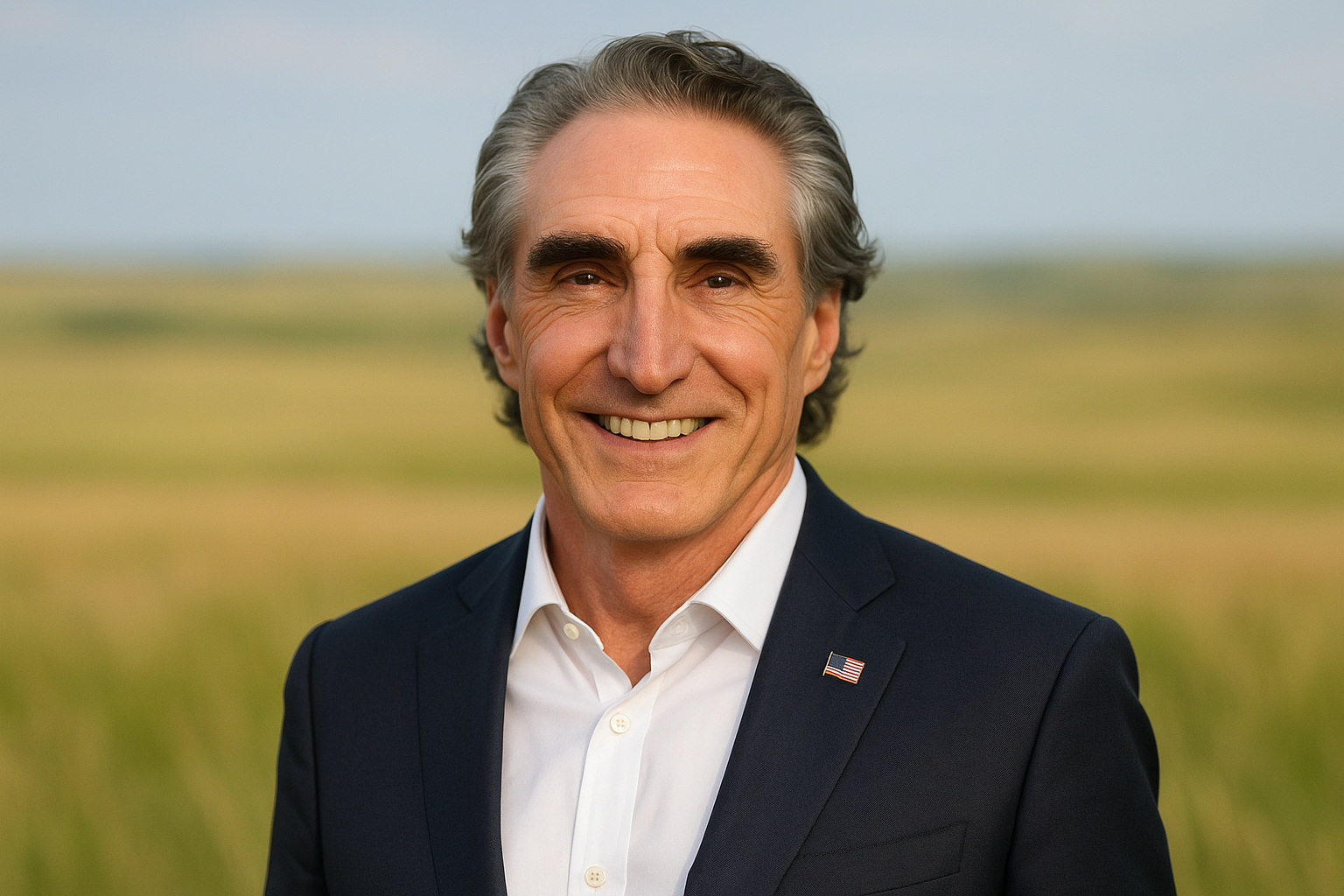 Doug Burgum, born August 1, 1956, in Arthur, North Dakota, is a prominent businessman and politician, currently serving as the U.S. Secretary of the Interior since February 2025. He built Great Plains Software into a major company, selling it to Microsoft for $1.1 billion in 2001, and later founded venture capital and real estate firms. As North Dakota’s governor (2016–2024), he focused on economic growth and carbon neutrality, but his policies on abortion, transgender rights, and fossil fuels sparked controversy. His shift toward fossil fuel advocacy and alignment with conservative policies have drawn criticism from environmentalists and some North Dakotans.
Early Life and Education
Douglas James Burgum was born on August 1, 1956, in Arthur, North Dakota, to Katherine Kilbourne and Joseph Boyd Burgum. Raised on a farm with his brother Bradley and sister Barbara, Burgum grew up in a family with deep ties to North Dakota’s agricultural community. His grandfather established a grain elevator in 1906, which evolved into a family-owned agribusiness, Arthur Companies, Inc. The death of his father, a World War II veteran, from a brain tumor during Burgum’s freshman year of high school profoundly shaped his outlook and resilience.
Burgum attended North Dakota State University (NDSU), graduating in 1978 with a Bachelor of Arts in university studies. At NDSU, he was actively involved in student life, serving as student body president and joining the Sigma Alpha Epsilon fraternity. He also demonstrated early entrepreneurial spirit by starting a chimney-sweeping business. Burgum furthered his education at Stanford University, earning a Master of Business Administration (MBA) in 1980. During his time at Stanford, he formed a friendship with Steve Ballmer, who later became Microsoft’s CEO, a connection that would prove significant in his career.
Business Career
After graduating from Stanford, Burgum worked as a consultant at McKinsey & Company in Chicago, gaining valuable experience in business strategy. In 1983, he returned to North Dakota and made a pivotal decision to mortgage $250,000 of inherited farmland to invest in Great Plains Software, a fledgling technology startup in Fargo. He joined as vice president of marketing in 1984 and later became president. Under his leadership, the company grew to employ about 250 people by 1989, achieved $300 million in annual sales, and went public in 1997. In 2001, Burgum sold Great Plains Software to Microsoft for $1.1 billion in stock, holding a 10% stake in the company at the time.
Post-acquisition, Burgum served as senior vice president of Microsoft’s Business Solutions Group until 2007. After leaving Microsoft, he co-founded Arthur Ventures in 2008, a private equity firm with a $20 million fund that expanded investments to states like Nebraska, Missouri, Arizona, and Iowa by 2013. In 2007, he established Kilbourne Group, a real estate development firm responsible for projects like the RDO Building, a 23-story structure completed in 2020, which became a landmark in Fargo. Burgum also served on the boards of several companies, including SuccessFactors (chair in 2010, sold for $3.4 billion in 2012) and Atlassian (board chair from 2012 to 2016), cementing his influence in the technology and real estate sectors.
Key Business Milestones
| Year | Role/Event | Details |
|---|---|---|
| 1983 | Invested in Great Plains Software | Mortgaged $250,000 of farmland to fund the startup. |
| 1984 | Vice President of Marketing, Great Plains Software | Began leading marketing efforts. |
| 1997 | Took Great Plains Software Public | Company listed on the stock market. |
| 2001 | Sold Great Plains Software to Microsoft | Sold for $1.1 billion in stock; Burgum held 10% stake. |
| 2007 | Left Microsoft | Departed as senior vice president of Business Solutions Group. |
| 2007 | Founded Kilbourne Group | Established real estate development firm. |
| 2008 | Co-founded Arthur Ventures | Launched private equity firm with $20 million fund. |
| 2012–2016 | Board Chair, Atlassian | Served as chairman, contributing to company growth. |
Political Career
Burgum’s entry into politics began with supporting Republican candidates, such as Steve Sydness for U.S. Senate in 1988 and John Hoeven and Jack Dalrymple in their gubernatorial campaigns in 2008 and 2012, respectively. In 2016, with no prior elected office experience, Burgum ran for Governor of North Dakota as a Republican. He defeated Attorney General Wayne Stenehjem in the primary and won the general election with 76.5% of the vote (259,863 votes), taking office on December 15, 2016. He was reelected in 2020 with 65.8% of the vote (235,479 votes).
As governor, Burgum prioritized economic development, announcing $25 billion in private sector investment in 2021. He established the Department of Environmental Quality in 2017 and set a goal for North Dakota to become carbon-neutral by 2030, focusing on carbon capture technology rather than reducing fossil fuel production. In 2023, he vetoed a bill to increase the state’s speed limit to 80 mph, citing safety concerns, and signed a $515 million tax relief package. He did not seek a third term in 2024 and endorsed Tammy Miller, who lost the Republican primary to Kelly Armstrong (see related biography).
Burgum announced his candidacy for the 2024 U.S. presidential election on June 7, 2023, positioning himself as a business-oriented conservative. Despite significant spending on advertisements, he struggled to gain traction and suspended his campaign on December 4, 2023, endorsing Donald Trump (see related biography). He was considered for the vice presidential nomination but was not selected, with Ohio Senator JD Vance chosen instead.
On November 15, 2024, President-elect Donald Trump nominated Burgum as U.S. Secretary of the Interior. The Senate confirmed him on January 30, 2025, with a 79–18 vote, and he was sworn in on February 1, 2025. As Secretary, Burgum chairs the National Energy Council, focusing on energy dominance and deregulation. His notable actions include opening 1.53 million acres in Alaska for oil drilling in March 2025 and halting a $5 billion Equinor offshore wind project in April 2025, reflecting a shift toward fossil fuel prioritization.
Key Political Milestones
| Year | Role/Event | Details |
|---|---|---|
| 2016 | Elected Governor of North Dakota | Won with 76.5% of the vote. |
| 2017 | Established Department of Environmental Quality | Created to address environmental regulations. |
| 2020 | Reelected Governor of North Dakota | Won with 65.8% of the vote. |
| 2021 | Announced $25 Billion Investment | Secured private sector investment for state development. |
| 2023 | Signed Abortion and Transgender Bills | Enacted near-total abortion ban and anti-transgender laws. |
| 2023 | Vetoed 80 mph Speed Limit Bill | Cited safety concerns. |
| 2023 | Signed $515 Million Tax Relief | Provided significant tax cuts. |
| 2023–2024 | Ran for U.S. President | Announced candidacy June 7, 2023; suspended December 4, 2023. |
| 2025 | Appointed U.S. Secretary of the Interior | Confirmed January 30, sworn in February 1. |
| 2025 | Energy Policy Actions | Opened Alaska lands for drilling; halted Equinor wind project. |
- Sources:
Controversies and Criticisms
Burgum’s career has not been without controversy, particularly in his political roles:
- Abortion Stance: In April 2023, Burgum signed a near-total abortion ban, allowing abortions only up to six weeks with proof of rape or incest, a significant shift from his earlier pro-choice stance. Critics viewed this as a political maneuver to align with conservative voters, while supporters saw it as reflecting Republican priorities. Public reaction was polarized, with protests from reproductive rights advocates.
- Transgender Rights: In 2023, Burgum signed veto-proof bills restricting transgender rights, including one prohibiting transgender girls and women from joining female sports teams in most schools. These actions drew criticism from LGBTQ+ advocates, who argued they were discriminatory, while supporters claimed they protected fairness in sports.
- Environmental Policies: As governor, Burgum supported carbon capture pipelines using eminent domain, facing opposition from rural residents over land seizures and leak concerns. He later softened his stance during a 2023 Iowa rally. As Secretary of the Interior, his focus on fossil fuel production, including opening Alaskan lands for drilling, has drawn backlash from environmental groups, who argue it undermines climate goals. His ties to the Lignite Energy Council further fueled criticism.
- Alleged Quid Pro Quo: In April 2024, reports surfaced that Trump asked oil executives, including Harold Hamm, to raise $1 billion for his campaign in exchange for loosening oil regulations, with Burgum allegedly playing a key role. Burgum denied these claims on Face the Nation, but the allegations raised concerns about political favoritism.
- Corporate Influence: Burgum’s relationship with oil magnate Harold Hamm and Continental Resources has been scrutinized. He accepted a $50 million donation from Hamm for the Theodore Roosevelt Presidential Library and supported legislation reducing North Dakota’s oil revenue tax from 11.5% to 10%, benefiting companies like Continental, which donated $250,000 to Burgum’s presidential PAC.
- Political Revenge: In 2020, Burgum funded a PAC that spent $1 million to unseat state Senator Jeff Magrum, who opposed the Roosevelt library project. The campaign, which included up to 17 daily mailings, failed, as Magrum won reelection by 251 votes in 2020 and by over 10 points in 2022.
- Globalist Accusations: Magrum labeled Burgum a “globalist,” citing photos with Bill Gates and expressing concerns that Burgum as president could usher in a “new world order.” Burgum’s spokesperson refuted these claims, emphasizing his alignment with Trump’s America First agenda. These accusations remain speculative and lack substantiation.
Influence and Legacy
Burgum’s influence spans business and politics, reflecting his ability to navigate both sectors effectively. In business, his success with Great Plains Software established him as a visionary entrepreneur, contributing to North Dakota’s emergence as a tech hub. His ventures in real estate and venture capital further enhanced his reputation as a leader in economic development.
As governor, Burgum modernized North Dakota’s economy, securing significant private investment and promoting innovative environmental policies like carbon capture. However, his shift toward fossil fuel advocacy as Secretary of the Interior aligns with the Trump administration’s energy dominance agenda, potentially shaping U.S. resource management for years. This shift has sparked debate about balancing economic growth with environmental sustainability, especially given North Dakota’s role as a major oil producer.
Burgum’s social policies, particularly on abortion and transgender rights, reflect broader cultural and political divides in the U.S. His alignment with conservative policies has both bolstered his standing among Republicans and alienated moderates and progressives. His ties to the oil industry, while economically beneficial for North Dakota, raise questions about corporate influence in governance.
In the historical context, Burgum’s career mirrors the rise of business leaders in politics, similar to figures like Donald Trump. His ability to leverage his wealth and business acumen has made him a significant figure, but his controversies highlight the challenges of balancing economic, social, and environmental priorities.
Personal Life
Burgum is married to Kathryn Burgum, and they have three children: Joe, Tom, and Jesse. Kathryn has been open about her recovery from addiction, and Burgum has shared that he has been sober for 22 years, as noted in a 2024 LinkedIn post. The couple established the Doug Burgum Family Fund, focusing on youth and education initiatives. Burgum maintains ties to his roots through family farm partnerships and a ranching partnership in North Dakota’s Badlands.
Research Gaps and Future Study
While extensive information exists on Burgum’s professional life, several areas warrant further exploration:
- Personal Life: Detailed accounts of his family dynamics, personal motivations, and philanthropy could provide deeper insight into his character.
- Policy Impact: Long-term studies on the economic and environmental effects of his policies in North Dakota and as Secretary of the Interior are needed.
- International Relations: His role in managing public lands may impact international environmental agreements, an area requiring further analysis.
- Public Perception: Tracking shifts in public opinion, particularly regarding his controversial policies, could reveal broader trends in political alignment.
Unverified Claims and Rumors
Speculative claims about Burgum’s personal life or political motivations may circulate on platforms like X, particularly regarding his alleged “globalist” ties or personal wealth. For instance, accusations of a “new world order” agenda, as raised by Jeff Magrum, lack credible evidence and are considered speculative. This biography relies solely on verified sources, and such claims should be approached with skepticism.
- Sources: