Weekly Dispatch
Week of January 2 – 8, 2022
 The year opened like a stress test. Omicron set records that made dashboards look misprinted: the U.S. averaged more than half a million new cases a day, with peaks far higher in major cities. Hospitals absorbed volume unevenly—staff callouts, not ventilators, became the binding constraint. The CDC’s shortened isolation guidance from the prior week settled into practice: five days if symptoms improved, masking after, testing “if available.” The rule sounded like compromise because it was; the labor market wrote it into schedules immediately.
Systems revealed their seams. On January 3, a snowstorm iced over I-95 south of Washington, trapping drivers for more than twenty hours in freezing cars after a tangle of jackknifed trucks, downed trees, and power failures. No one agency controlled the corridor end to end; everyone explained a piece of it. The images—headlights fixed in a white tunnel, families rationing fuel and snacks—felt like a parable for winter governance: capacity is local, consequences are regional.
In New York, Eric Adams took the oath as mayor on January 1 and kept schools open as case counts spiked, betting on testing and staffing to hold. Chicago chose the other path by midweek: the teachers’ union voted to work remotely over safety concerns, the district canceled classes, and parents improvised child care again. Two Americas coexisted inside one variant—one banking on mitigation, the other on pause.
The first Friday brought the December jobs report: a modest 199,000 payroll gain but unemployment down to 3.9%, with prior months revised higher. Markets called it a riddle—soft headline, strong internals. Wages rose, participation lagged, and quits stayed elevated. The Federal Reserve’s minutes, released January 5, leaned hawkish: faster rate hikes and a possible runoff of its balance sheet “sooner or at a faster pace” than the last cycle. Equities sold off, then steadied; bond yields climbed; the word “transitory” was nowhere to be found.
At the Supreme Court on January 7, justices heard arguments over the administration’s vaccine-or-test rule for large employers and a separate mandate for health-care workers at federally funded facilities. The session converted epidemiology into statutory construction: What is a workplace hazard? Who gets to define it? The Court’s questions suggested a split outcome—limits on OSHA’s broad rule, deference to health-care mandates. Employers watched for answers they would have to implement by Monday.
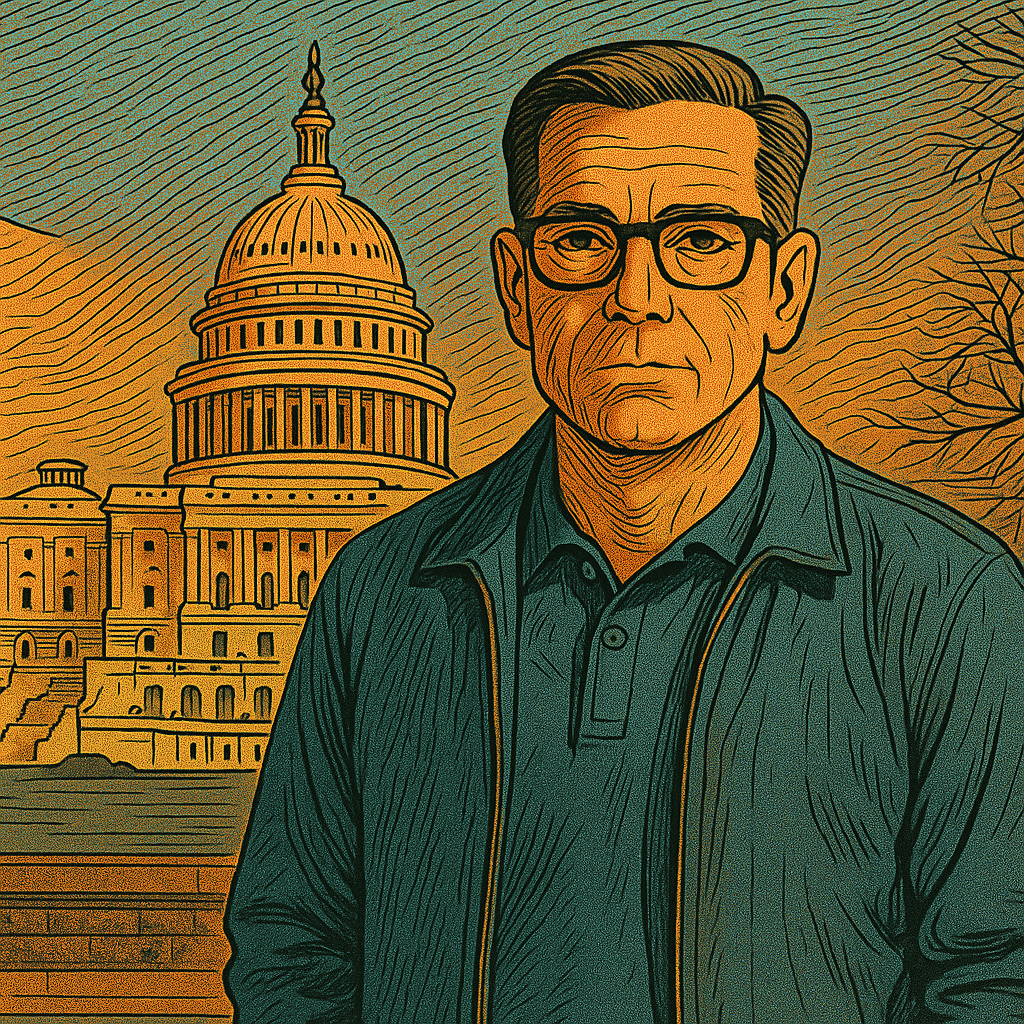
Politics walked with memory. Thursday marked one year since the attack on the U.S. Capitol. The building hosted speeches more solemn than soaring: the President warned that democracy “can be permanently broken” by lies; the Vice President compared January 6 to other dates carved into the civic calendar. Republicans stayed largely offstage, preparing to run this midterm on inflation and schools, not history. The Select Committee issued subpoenas and court filings without ceremony. Security held, not as theater but as procedure.
Abroad, a domestic protest detonated into a regional flare. In Kazakhstan, demonstrations over a New Year’s fuel-price spike widened into anger at corruption and power that had never fully changed hands. By January 5, Almaty’s city hall burned, the airport was overrun, and President Tokayev requested help from the Russia-led CSTO, which deployed troops within hours. The internet went dark; casualty counts blurred. Moscow called it stabilization, critics called it intervention, and energy markets shivered at the reminder that pipelines still run through politics.
The Russia-Ukraine crisis kept its own clock. U.S. and Russian officials confirmed security talks in Geneva for January 10, with NATO and OSCE sessions to follow. Washington described an agenda of “reciprocity and realism,” code for narrow arms-control discussions and warnings about sanctions architecture already drafted. Kyiv asked again for weapons and timelines. The map had not changed; the risk had, simply by enduring.
Public health added new tools and new queues. The first shipments of Paxlovid reached pharmacies in small lots; demand exceeded supply by a magnitude. Monoclonal-antibody playbooks were rewritten as some versions failed against Omicron while others held. Home tests remained scarce; federal mail-out plans were drafted but not yet launched. Schools layered mitigation: pooled testing here, KN95 distribution there, windows open in January where radiators cooperated.
Culture ran on alternates. Broadway kept playing musical chairs with understudies; film releases favored streaming again; sporting leagues adjusted protocols to keep seasons moving. The NFL shortened its isolation rules; the NBA signed a carousel of ten-day contracts; college games moved like weather systems around outbreaks. The unglamorous choreography of persistence—testing vans, HR spreadsheets, nightly group texts—did its work offstage.
Not all news ran downhill. Inflation narratives paused at the gas pump as prices eased from fall highs; supply chains showed faint improvement as West Coast ports cleared backlogs faster than they formed. But the bottleneck had moved inland months ago: warehouses short on labor and trucks short on drivers set the ceiling. Household math remained complicated: higher wages versus higher prices, job openings versus child-care gaps, savings cushions versus rent due.
Commemorations closed the week where it began: on first principles. Self-government requires officials who can count votes and citizens who will accept counts; public health requires rules that people can follow for months, not days; infrastructure requires ownership clear enough that an interstate doesn’t become a long, cold parking lot. The year’s opening argument was simple without being comforting: resilience now means designing for absenteeism, not avoiding it.
By Saturday, airports were still canceling, courts were still deliberating, schools were still deciding, and Geneva was still on the calendar. The curve would peak when it did; the market would price what it could; the state would do what its statutes allowed. The United States entered Week Two with fewer illusions and more procedures—less convinced of control, more practiced at continuing.