 The wind began early, long before the heat. It moved down Main Avenue in uneven bursts, snapping at the strings of flags that had been hung too tightly between lampposts. The sound was constant, the fabric flapping against itself, red and blue folding into white until the pattern lost meaning.
Durango’s fireworks were cancelled again this year. The radio mentioned the decision before dawn — “continued drought, extreme fire risk.” It was the same language as last year, spoken as if it were routine now, another seasonal announcement. I opened the gallery an hour later to find tourists already taking photos of the banners instead.
By mid-morning, the air shimmered with exhaust and the smell of frying dough from a vendor parked near Buckley Park. People in flag-patterned shirts moved from shade to shade, chasing what little relief the trees offered. Across the street, a boy ran ahead of his parents waving a plastic flag on a stick, its handle already bent. His mother called for him to slow down. He didn’t.
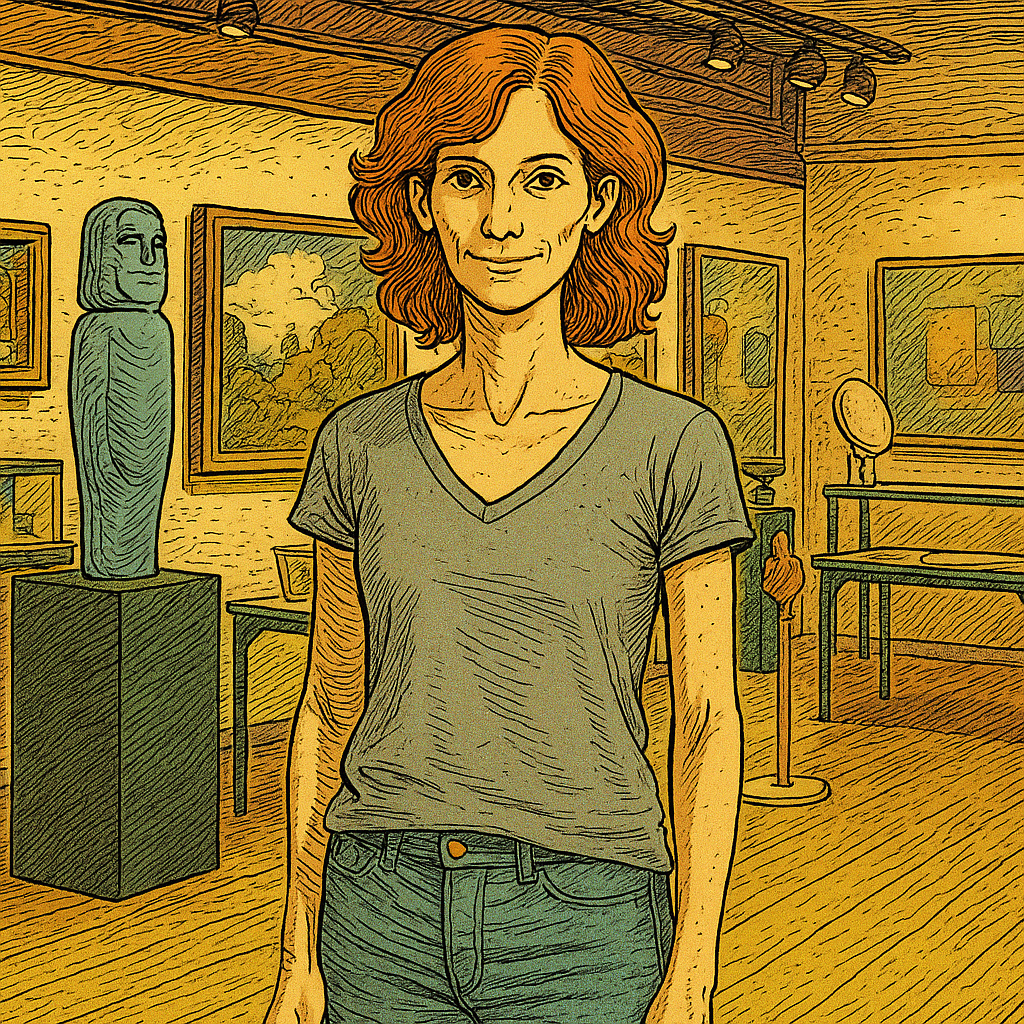
Inside, the gallery felt almost too still. The air-conditioning hummed with the discipline of a well-maintained machine, steady and precise. I switched on only half the track lights; the bright ones made everything too sharp, too sure of itself. The paintings looked calmer this way, their colors less certain.
At noon, a small group stepped inside. They were from Phoenix, escaping the triple-digit temperatures. The youngest pointed at a landscape — distant ridges, no people, no signs of roads.
“Is this local?” he asked.
“Yes,” I said. “Taken from the trail above the river.”
He nodded. “It doesn’t look like America.”
His father laughed softly, not unkindly. “Maybe that’s why she likes it.”
When they left, the gallery door’s bell echoed longer than usual. Outside, the wind had changed direction. Dust rolled low along the pavement, catching sunlight like static. From the flagpoles in front of City Hall, the U.S. and Colorado flags hung heavy, unmoved, while the smaller ones along the street whipped themselves into exhaustion.
In the afternoon, I walked to the café near the train depot. One of the afternoon runs from Silverton had already returned, its passengers still emptying out. Children climbed onto the steps for photos while the engineer waved from the cab. The whistle hadn’t blown this time; perhaps he was sparing the town another echo.
A man at the next table talked loudly into his phone about politics, his sentences ending with certainties — what’s real, who’s right, who’s ruined. No one interrupted him. No one even looked up. I finished my coffee and thought of Munich, of how silence used to fill public spaces differently there. Not comfortable, exactly, but deliberate — an agreement that words should mean something before they were spoken.
On the walk back, I passed a shop window filled with miniature flags and battery-powered candles. A cardboard sign read Freedom Sale. I caught my reflection between the colors and almost didn’t recognize it. The stripes fractured across the glass, bending the image until it looked like motion.
By early evening, clouds had gathered over the ridge. The light shifted from gold to a pale gray, softening the street’s hard edges. Somewhere, someone practiced a trumpet — fragments of “America the Beautiful,” stopping after each uncertain phrase.
Back inside, I turned off the front lights and stood for a moment near the window. The flags outside still moved, though slower now, their colors dulled by dusk. The glass held their reflection against the paintings inside, merging the two until it was impossible to tell which scene was real.
Tomorrow there will be parades, cookouts, and the steady claim that all of this is tradition. Maybe it is. But traditions, like flags, change shape when the wind shifts.
The last note from the trumpet floated across the street, wavered, and faded. The silence that followed felt earned, at least for a moment.