Revision 1
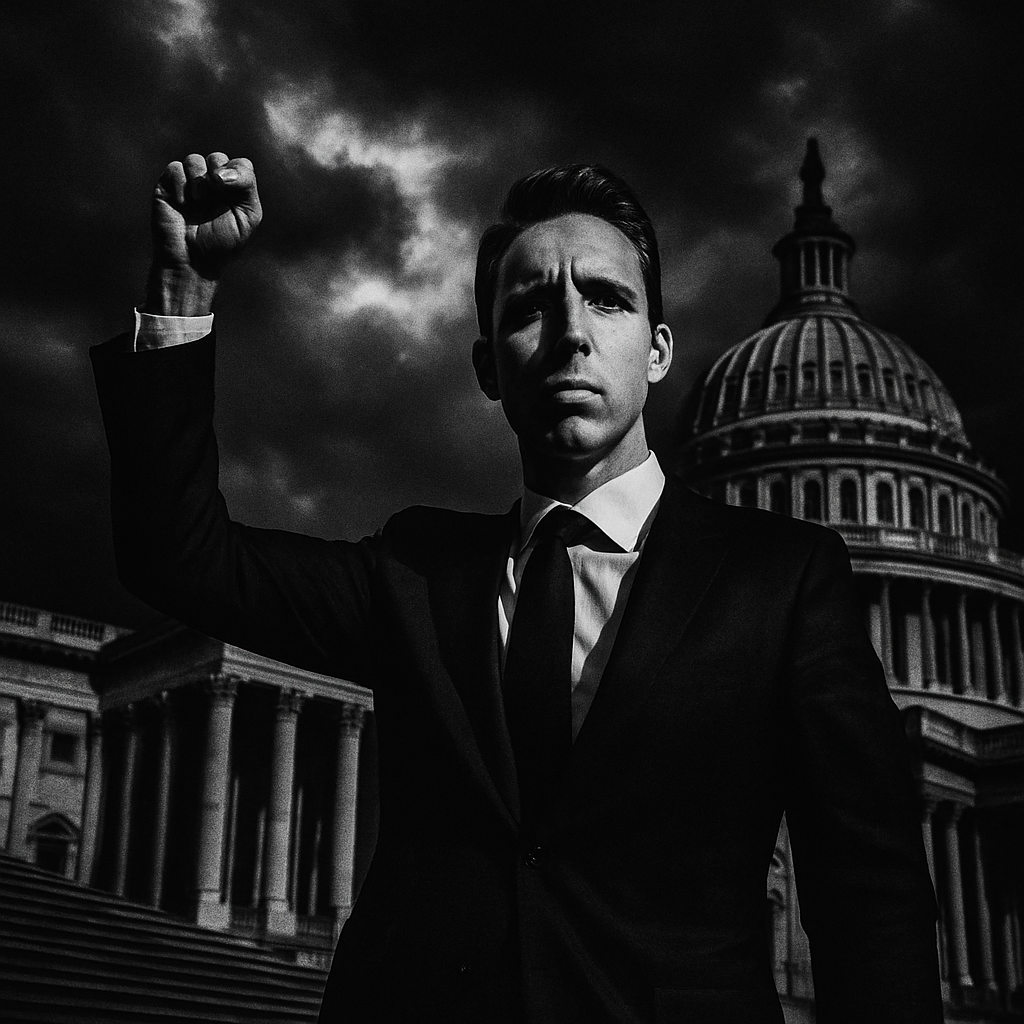 Section 1: Early Life and Education
Joshua David Hawley entered the world on December 31, 1979, in Springdale, Arkansas. His parents—Ronald, a banker, and Virginia, a teacher—represented a pairing of finance and education that gave their son exposure to both professional ambition and civic-minded service. When Josh was still a toddler, the family relocated to Lexington, Missouri, a small town perched on the Missouri River that carried a long, complicated history. Lexington had been a Civil War battleground and later a quiet community tied to agriculture and small-scale commerce. Growing up there, Hawley absorbed a sense of Midwestern rootedness that he has invoked repeatedly in his political rhetoric, even as his career would later place him among America’s legal and political elites.
In Lexington’s schools, Hawley established himself early as an academic standout. Teachers recalled him as focused and driven, a student with a facility for argument and a voracious appetite for reading. His trajectory took him to Rockhurst High School in Kansas City, a Jesuit institution known for rigor and discipline. Rockhurst emphasized moral formation alongside academics, and the Jesuit tradition encouraged students to think critically about justice, service, and the role of faith in public life. For many alumni, that education produced a moderate, socially conscious orientation. Hawley, however, filtered the Jesuit values through a sharply conservative lens. He graduated as valedictorian in 1998, already articulating a worldview in which faith and politics were inseparable.
During his teenage years, Hawley began writing columns for the Lexington News, a small-town paper that provided him with a platform to test his political voice. In these columns, he critiqued affirmative action and government overreach, reflecting an early skepticism of liberal policies. One particularly controversial piece, written in the aftermath of the Oklahoma City bombing, struck a chord for its implicit sympathy with anti-government sentiment, even as it condemned violence. To Hawley’s critics, this foreshadowed the combustible mix of grievance politics and intellectual justification that would later define his career. To supporters, it showed precocious clarity and conviction.
Stanford University, where Hawley enrolled in 1998, broadened his horizons but also reinforced his conservative leanings. As a history major, he studied with some of the university’s most respected faculty, graduating in 2002 with highest honors and Phi Beta Kappa membership. He developed a particular interest in American political and intellectual history, exploring themes of republican virtue, constitutional design, and the tension between liberty and order. Stanford also gave him a larger stage to write and debate. He contributed essays and opinion pieces to campus and regional publications, often challenging what he viewed as the cultural dominance of liberal ideology in academia. These writings painted him as a young conservative intellectual in the making, willing to spar with prevailing norms.
After graduating, Hawley spent a year teaching at St. Paul’s School in London, a prestigious institution that exposed him to British traditions of education and civic life. For many young Americans, such an experience might have nudged them toward cosmopolitanism. Hawley’s time abroad, however, seemed to reinforce his sense of American exceptionalism and sharpen his focus on the nation’s cultural and moral debates.
In 2003, Hawley entered Yale Law School, one of the most competitive legal programs in the world. His years at Yale solidified his identity within the conservative legal movement. He quickly rose within the ranks of student leadership, serving as articles editor of the Yale Law Journal, editor of the Yale Law & Policy Review, and president of the Federalist Society chapter. Each role deepened his exposure to legal theory and connected him with networks that would later prove pivotal. The Federalist Society in particular functioned as an incubator for young conservative lawyers who would go on to clerkships, judicial appointments, and political careers.
Hawley immersed himself in constitutional law, studying with professors who challenged him to wrestle with foundational questions about the balance of powers, individual rights, and the role of the judiciary. His intellectual formation at Yale was not a simple matter of absorbing doctrine; it was about positioning himself within a broader conservative movement that sought to reshape American law from within. He built relationships with classmates and faculty that would serve him throughout his career, including future jurists, policymakers, and legal scholars.
Graduating in 2006, Hawley left Yale not only with a degree but with a carefully cultivated identity: a constitutional conservative, rooted in faith, intellectually trained to navigate the highest levels of American law, and already preparing to translate those skills into public life.
Section 2: Legal Apprenticeship and Early Career
For Josh Hawley, Yale Law School was not the endpoint but the launchpad. By the time he graduated in 2006, he had positioned himself for the most elite opportunities in the American legal world. His first stop was the U.S. Court of Appeals for the Tenth Circuit, where he clerked for Judge Michael W. McConnell. McConnell was a respected conservative scholar, a figure admired for his work on constitutional interpretation and religious liberty. The clerkship introduced Hawley to the inner workings of appellate courts and gave him a mentor whose own intellectual commitments aligned neatly with Hawley’s interests.
From there, Hawley leapt to the pinnacle of American legal apprenticeships: a clerkship with Chief Justice John Roberts at the U.S. Supreme Court during the 2007–2008 term. Clerkships at the Court are scarce and intensely competitive, reserved for graduates with impeccable records and strong networks. For a young conservative lawyer, clerking for Roberts—then still in the early years of his tenure as Chief Justice—was the kind of credential that could open any door. It placed Hawley in the middle of the institution he had studied so closely at Yale, where constitutional theory translated into practice at the highest level.
The Roberts clerkship also shaped Hawley’s self-image. He could now present himself as not only an accomplished scholar but as someone who had served at the apex of American law, rubbing shoulders with the justices who shaped national life. This elite credential, paradoxically, would later sit uneasily alongside his populist political persona, but in the legal profession it carried enormous weight.
After his clerkships, Hawley entered private practice as an appellate litigator at Hogan & Hartson (today Hogan Lovells), a major international law firm. At Hogan, he represented corporate clients, gaining experience in high-stakes litigation and honing his skills in appellate advocacy. Critics would later point to this chapter as evidence of Hawley’s proximity to the very elite institutions he later railed against, but the experience was invaluable: it gave him technical expertise, a Rolodex of connections, and an appreciation for how corporate America wielded its legal power.
In 2011, Hawley pivoted toward the nonprofit legal sector, joining the Becket Fund for Religious Liberty in Washington, D.C. The Becket Fund specialized in cases defending religious rights, often taking on culture-war battles with constitutional implications. Hawley’s work there brought him into the national spotlight. Most significantly, he contributed to the litigation in Burwell v. Hobby Lobby Stores, Inc.—a landmark case in which the Supreme Court ruled that closely held corporations could refuse, on religious grounds, to comply with the Affordable Care Act’s mandate to provide contraceptive coverage in employee health plans. The 2014 decision, celebrated by conservatives and criticized by progressives, became a touchstone for debates over religious freedom and corporate rights.
For Hawley, the case was more than professional experience; it was an ideological confirmation. It fused his legal training, his religious convictions, and his political instincts. It also gave him a credential he could wield in campaigns: he had stood on the front lines of the legal battles over religious liberty, a cause central to many conservative voters.
The Becket Fund years also offered Hawley a platform to cultivate relationships with conservative legal networks beyond the courtroom. The organization worked closely with the Federalist Society and with advocacy groups that would later align with him politically. His involvement in cases involving religious schools, churches, and faith-based institutions burnished his credentials as a defender of traditional values against what he described as government overreach.
While practicing, Hawley also turned to academia. In 2011, he joined the faculty of the University of Missouri School of Law as an associate professor. He taught constitutional law and related subjects, developing a reputation as a sharp but ideologically firm instructor. Students noted his skill as a communicator, though some criticized what they saw as a lack of openness to opposing views. In the classroom, as in his writing and later in politics, Hawley framed constitutional interpretation in terms that emphasized the protection of religious freedom, skepticism of expansive federal power, and the moral underpinnings of the American founding.
The academic role allowed Hawley to blend theory and practice, teaching students while maintaining active litigation work. It also gave him credibility back in Missouri, a state where he would soon seek office. Professors at public universities often cultivate images as disinterested scholars, but Hawley clearly had ambitions beyond the lecture hall. His public commentary, op-eds, and legal advocacy signaled a lawyer whose classroom was only part of his larger mission.
These years of legal apprenticeship—clerkships, corporate practice, nonprofit advocacy, and academia—solidified Hawley’s trajectory. He accumulated elite credentials at the nation’s top court, professional polish in high-stakes corporate litigation, ideological grounding in religious liberty battles, and teaching experience at a major state law school. Together, they created a résumé few Missouri politicians could match.
Yet, the contradictions were already visible. Here was a man who would later brand himself as an anti-elite populist, but whose early career was spent almost entirely inside elite institutions: Stanford, Yale, Supreme Court clerkships, corporate law firms, and national nonprofits. These contradictions did not diminish his appeal among conservative voters once he entered politics; indeed, they gave him the polish of expertise alongside the rhetoric of grievance. But they also seeded the criticisms that would follow him throughout his career—that his populism was more performance than conviction, and that his embrace of cultural battles masked a lifelong ascent through the very power structures he claimed to oppose.
By 2016, Hawley was ready to translate his legal pedigree into political capital. His decision to run for Missouri Attorney General marked the moment when the lawyer became a politician, stepping from the world of legal briefs and courtrooms into the arena of campaigns and elections. The skills and connections he had amassed would serve him well, but they would also frame the central tension of his public life: elite insider and populist outsider, rolled into one ambitious figure.
Section 3: Attorney General of Missouri
When Josh Hawley entered the 2016 race for Missouri Attorney General, he was still a relative newcomer to electoral politics. What he did have was an impeccable résumé, the backing of national conservative networks, and the ability to frame himself as a constitutional crusader who would bring principle and rigor to Missouri’s top legal office. His campaign tagline—positioning himself as an outsider who would fight for Missourians against entrenched interests—reflected a template that would later define his Senate career.
The Campaign
In the Republican primary, Hawley faced Kurt Schaefer, a well-connected state senator with significant backing from Missouri’s political establishment. Hawley’s campaign capitalized on his outsider image, portraying Schaefer as a career politician compromised by ties to lobbyists. Hawley leaned heavily on his background: clerkship for Chief Justice John Roberts, work on the Hobby Lobby case, and his tenure at the University of Missouri. Conservative donors and national groups, particularly those aligned with religious liberty causes, took notice. His sharp message and elite credentials combined to make him a formidable candidate despite limited experience in state politics.
Hawley won the Republican primary handily and faced Democrat Teresa Hensley, a former prosecutor, in the general election. Missouri was already tilting redder in statewide contests, and Hawley’s campaign benefited from national momentum favoring Republicans in the 2016 cycle. His promise to defend constitutional rights, tackle human trafficking, and hold big corporations accountable resonated with voters who saw him as both principled and energetic. He defeated Hensley comfortably, marking the beginning of his political ascent.
Tenure in Office
Sworn in as Missouri’s 42nd Attorney General in January 2017, Hawley quickly set out to shape the office around his constitutionalist themes. His priorities included:
- Human Trafficking: Hawley created a Human Trafficking Task Force, emphasizing his commitment to protecting vulnerable populations. His office pursued prosecutions and publicized efforts to crack down on trafficking networks.
- Consumer Protection: He promised to defend Missouri consumers, targeting fraud and deceptive business practices. This aligned with his populist framing of protecting ordinary citizens against powerful institutions.
- Big Tech Scrutiny: Even before entering the Senate, Hawley signaled his antagonism toward Silicon Valley. He opened an investigation into Google over potential antitrust violations, citing concerns about market dominance and consumer harm. This prefigured his later national crusade against big tech monopolies.
Controversies and Criticisms
Despite these priorities, Hawley’s tenure as Attorney General quickly drew criticism for being more about ambition than administration.
- Open Records Violations: Hawley’s office was accused of violating Missouri’s open records law by withholding emails related to political consultants advising him. A settlement required the Attorney General’s office to pay $12,000 in legal fees, and the episode reinforced suspicions that Hawley was using the office to position himself for higher office rather than focusing on state legal work.
- Ambition Accusations: Critics charged that Hawley’s campaign for Attorney General had been a stepping stone to the Senate all along. Less than a year into his term, speculation mounted that he would challenge Democratic Senator Claire McCaskill in 2018. Hawley had pledged in his AG campaign not to use the position as a political springboard, a promise that came back to haunt him as he prepared for the Senate run.
Achievements and Style
Hawley’s leadership style as Attorney General combined high-profile initiatives with a readiness to court media attention. He emphasized Missouri’s role in national cultural debates, particularly around religious liberty and corporate accountability. Supporters saw this as evidence of his effectiveness, pointing to real initiatives on trafficking and consumer protection. Detractors saw opportunism, noting that Hawley often seemed more focused on raising his profile than on the day-to-day operations of the office.
Nevertheless, his time as Attorney General solidified his image among Missouri Republicans as a defender of conservative values and an ambitious young leader who could take the fight to Washington. His background as a constitutional lawyer gave him credibility, while his willingness to adopt populist rhetoric helped him resonate with grassroots voters.
Path to the Senate
By 2017, whispers had turned into open calls for Hawley to challenge Senator Claire McCaskill in the upcoming 2018 election. McCaskill, a Democrat with a reputation for political survival in a red-trending state, represented one of the GOP’s top targets. Hawley initially resisted speculation, citing his responsibilities as Attorney General. But in August 2017, he officially announced his candidacy, just months into his tenure.
The decision cemented critics’ view of Hawley as opportunistic. Even the Kansas City Star editorial board accused him of breaking promises and using the AG’s office as a mere launching pad. But for Hawley, the calculation was straightforward: the national Republican Party needed a strong candidate to unseat McCaskill, and he had the résumé, donor support, and ideological alignment to fit the role.
Assessment of the AG Period
Hawley’s two years as Attorney General serve as a microcosm of his career: a blend of substantive initiatives, headline-grabbing investigations, and controversies over ambition and transparency. On one hand, he left a record of tackling trafficking and scrutinizing corporate power. On the other, he carried baggage from broken promises and legal missteps.
In retrospect, the Attorney General’s office was less a final destination than a staging ground. It gave Hawley statewide recognition, allowed him to hone his populist messaging, and set him up for a Senate run that would elevate him to national prominence. The very criticisms—that he was climbing too quickly, that he was more interested in ambition than administration—were also proof that he was moving faster than most Missouri politicians ever had.
By late 2017, the stage was set for the next chapter of Hawley’s rise: a high-stakes battle with one of the most seasoned Democrats in the Senate.
Section 4: The 2018 Senate Campaign
By 2018, Josh Hawley had been Missouri’s Attorney General for just over a year. His rapid decision to enter the U.S. Senate race against incumbent Democrat Claire McCaskill underscored both his ambition and the urgency felt by Republicans nationally. McCaskill, long known as a sharp political operator, was considered one of the most vulnerable Democrats in the Senate. Missouri, once a swing state, had moved steadily rightward in presidential elections. For Republicans, defeating McCaskill was a top priority. For Hawley, the race was a chance to cement his role as a rising star on the national stage.
The Decision to Run
Hawley’s decision was controversial from the start. He had promised during his Attorney General campaign not to treat the office as a stepping stone to higher political ambitions. By declaring for the Senate so soon, he was accused of breaking his word. The Kansas City Star and other state outlets blasted him for opportunism. Critics portrayed him as a politician more interested in climbing the ladder than serving the office he had just won.
Yet the national Republican Party leaned heavily on him to run. With a résumé that included Supreme Court clerkship, work on landmark religious liberty cases, and statewide office, Hawley fit the mold of a candidate who could combine intellectual credibility with populist appeal. GOP strategists saw in him someone who could unify conservative voters and benefit from President Trump’s strong support in Missouri.
The McCaskill Factor
Claire McCaskill was no easy target. First elected to the Senate in 2006, she had survived tough cycles before, cultivating an image as a moderate willing to work across the aisle. She was also a seasoned campaigner, adept at retail politics and sharp in debate. But her challenge in 2018 was structural: Missouri had become increasingly inhospitable to Democrats. Trump had won the state by 19 points in 2016, and Republican turnout remained energized.
McCaskill tried to frame Hawley as inexperienced and untrustworthy, highlighting his broken promise about serving a full term as Attorney General. She also leaned on her record of constituent service, emphasizing healthcare protections and bipartisan work. But she faced an uphill battle against both the state’s partisan tilt and a national environment where Democrats had to defend far more Senate seats than Republicans.
The Role of Trump
Donald Trump loomed large over the race. The president held rallies in Missouri specifically to boost Hawley’s campaign. Hawley, for his part, embraced Trump’s backing fully, casting himself as a candidate who would support the president’s agenda in Washington. In a state where Trump remained highly popular, this alignment was strategic. It also demonstrated Hawley’s instinct for marrying his elite credentials with populist rhetoric, presenting himself as both a constitutional lawyer and a champion of Trump’s America-first agenda.
Campaign Messaging
Hawley’s messaging centered on themes that would become staples of his Senate career:
- Big Tech and Corporations: He criticized corporate monopolies, building on his Google investigation as Attorney General, and warned that Silicon Valley threatened free speech and consumer welfare.
- Cultural Issues: He leaned into pro-life positions, opposition to “woke” liberalism, and defense of traditional family values.
- Constitutionalism: He presented himself as a constitutional conservative, ready to defend religious liberty and rein in federal overreach.
At the same time, he hammered McCaskill as out of touch with Missouri voters, tying her to national Democratic leadership and progressive cultural politics. His campaign blended high-minded legal language with sharp-edged populism, allowing him to appeal to both traditional conservatives and Trump loyalists.
Fundraising and Donors
Hawley’s campaign raised significant sums, totaling nearly $12 million, with $9.3 million from individual contributions and over $1 million from PACs. Businessman David Humphreys was a key donor, along with national conservative funds. McCaskill also raised heavily, relying on both in-state support and national Democratic donors. But the fundraising numbers underscored the national importance of the race. Both parties poured resources into Missouri, knowing that the outcome could tip the balance of power in the Senate.
Media Coverage and Strategy
The race was intensely covered, both locally and nationally. Hawley used Fox News appearances to amplify his message beyond Missouri, positioning himself not just as a local candidate but as part of the broader conservative movement. He also leveraged social media, particularly Twitter, to reinforce his culture-war positions and attack McCaskill’s record.
McCaskill, for her part, toured the state extensively, emphasizing her accessibility and constituent work. She tried to contrast her hands-on approach with what she cast as Hawley’s opportunism and absenteeism from his duties as Attorney General.
The Debates
Debates between Hawley and McCaskill were contentious. McCaskill pressed Hawley on healthcare, particularly protections for people with pre-existing conditions, and accused him of siding with lawsuits that would dismantle the Affordable Care Act. Hawley countered that he supported protecting patients but argued that McCaskill’s solutions entrenched government overreach. The exchanges reflected their broader strategies: McCaskill as the defender of healthcare and moderation, Hawley as the insurgent challenging liberal elites.
The Outcome
On Election Day, November 6, 2018, Hawley defeated McCaskill with 51.4% of the vote to her 45.6%. The margin was decisive enough to underscore Missouri’s political shift but close enough to show that McCaskill remained a formidable opponent. The victory flipped a Senate seat, strengthening the Republican majority and elevating Hawley onto the national stage.
Implications
Hawley’s win was more than a personal triumph. It symbolized the consolidation of Missouri as a Republican stronghold, once considered a bellwether state but now firmly aligned with the GOP. It also marked Hawley’s emergence as a figure with both state and national influence. For many conservatives, he was proof that the Republican Party could combine populist energy with elite intellectual credentials. For critics, he was a cautionary tale of ambition unchecked, willing to discard promises and lean into divisive rhetoric for political gain.
Assessment of the Campaign
The 2018 Senate campaign revealed Hawley’s core strengths:
- Ability to align with Trump while maintaining his own brand.
- Skill at framing himself as both a populist outsider and an elite insider.
- Fundraising capacity and national network connections.
It also exposed enduring vulnerabilities:
- Criticism for opportunism.
- Charges of inauthenticity, particularly about his Attorney General promises.
- Reliance on cultural flashpoints rather than policy depth.
For Hawley, however, the calculation had paid off. He entered the Senate not merely as Missouri’s junior senator but as one of the GOP’s most talked-about new figures. His next task would be to turn that momentum into a legislative record, a media presence, and a power base within the Senate itself.
Section 5: First Senate Term (2019–2024)
When Josh Hawley arrived in Washington in January 2019, he entered as the youngest member of the Senate and one of the Republican Party’s most closely watched freshmen. Barely forty years old, with elite credentials and a national profile already forming, he was viewed by many as a potential future leader of the GOP. His first term was marked by high-profile legislation, relentless culture-war positioning, and a growing presence on conservative media platforms.
Committee Assignments and Focus
Hawley quickly secured assignments on the Senate Judiciary Committee and the Small Business and Entrepreneurship Committee, both of which aligned with his interests. The Judiciary Committee gave him a national stage during judicial confirmation battles, especially during the Trump administration’s push to fill federal courts with conservative judges. Hawley used hearings to press nominees on issues ranging from religious liberty to the limits of executive power, often framing his questions in ways that reinforced his constitutional conservative brand.
On the Small Business Committee, he focused on the intersection of corporate power and government regulation. Though nominally a pro-business Republican, Hawley distinguished himself by adopting a populist posture against “big tech” monopolies. This stance set him apart from colleagues more comfortable with traditional pro-corporate orthodoxy.
Legislative Agenda: Big Tech
From the outset, Hawley made regulating technology companies his signature cause. He argued that companies like Google, Facebook, and Twitter exercised dangerous monopolistic power and biased their platforms against conservative voices. His Bust Up Big Tech Act sought to limit market concentration and prohibit companies from operating in multiple lines of business simultaneously. While the bill had no realistic chance of passage in a divided Congress, it positioned Hawley as one of Silicon Valley’s fiercest antagonists.
He also supported the STOP CSAM Act, aimed at combating online child exploitation. Though framed as a bipartisan effort to protect children, Hawley linked the legislation to his broader critique of permissive online platforms. By consistently tying family safety to big tech regulation, he broadened the appeal of his anti-Silicon Valley message beyond partisanship.
Social Conservatism and Pro-Life Advocacy
Hawley entered the Senate as an unflinching opponent of abortion. He supported measures like the Born-Alive Abortion Survivors Protection Act, which required medical care for infants who survived attempted abortions. He opposed Democratic initiatives to expand abortion access and consistently voted against bills that included federal funding for abortion services. His rhetoric was often uncompromising, casting abortion not merely as a policy issue but as a moral crisis.
This stance bolstered his standing among evangelical voters and tied him to the Christian nationalist movement he would later openly embrace. His wife, Erin Hawley, herself a lawyer with the Alliance Defending Freedom, further connected him to networks of organizations advancing socially conservative causes through the courts.
Cultural Issues and Rhetoric
Hawley quickly proved adept at wielding cultural issues as political weapons. He attacked “wokeness” in higher education, denounced critical race theory as “Marxist garbage,” and championed what he described as the defense of traditional American values. On the Senate floor and in public speeches, he cast himself as a tribune of ordinary citizens battling coastal elites who sought to undermine faith, family, and patriotism.
In 2021, following his high-profile role in challenging the 2020 election results, Hawley leaned even harder into cultural combat. He framed himself as a victim of “cancel culture,” claiming that efforts to censure or sideline him for his role on January 6 were evidence of liberal intolerance. This narrative resonated with conservative audiences and turned him into a symbol of resistance against progressive dominance in media, academia, and corporate culture.
Populist Economic Themes
Though best known for cultural conservatism, Hawley also pursued an economic agenda with populist themes. He supported expanding the child tax credit, positioning himself as a champion of working families. He pressed for investigations into major corporations like Tyson Foods, particularly regarding labor practices. These stances allowed him to argue that his conservatism was not just about values but about defending ordinary workers against powerful institutions.
At times, his populist rhetoric put him at odds with traditional business-friendly Republicans. Yet this divergence only heightened his profile, signaling that he was aligned more with Trump-era populism than with older GOP orthodoxy.
Media Strategy and Branding
Hawley’s first term was as much about media presence as it was about legislative achievement. He became a fixture on Fox News and a prolific user of Twitter (later X). His posts attacking liberal institutions and defending traditional values generated significant engagement, cementing him as a culture-warrior senator.
His 2021 book, The Tyranny of Big Tech, reinforced his message. In it, he argued that Silicon Valley companies posed a dire threat to democracy and liberty, wielding monopolistic power to silence dissent and manipulate culture. The book resonated with conservatives skeptical of technology’s influence but was dismissed by critics as opportunistic and alarmist.
Two years later, in 2023, Hawley released Manhood: The Masculine Virtues America Needs. The book argued that America faced a crisis of masculinity and called for a return to traditional gender roles rooted in responsibility, courage, and faith. Supporters praised the book as a defense of timeless virtues, while critics ridiculed it as regressive and out of touch with modern society. Regardless of reception, the books served Hawley’s purpose: they kept him in the spotlight, allowed him to frame his political identity in cultural terms, and generated buzz beyond the Senate floor.
Relationships in the Senate
Hawley’s first term revealed his polarizing effect on colleagues. Among Republicans, he was respected by some for his intellect and admired by many for his alignment with the base. Yet others viewed him as too ambitious and too willing to break norms for political gain. Senator Mitt Romney, among others, openly questioned his credibility after January 6.
Democrats, unsurprisingly, were deeply critical. Many saw him as emblematic of a new breed of Republicans willing to undermine democratic processes in the name of partisanship. His confrontational style in committee hearings and floor speeches reinforced this perception.
The Shadow of January 6
While much of Hawley’s first term predated January 6, the events of that day defined his reputation. His decision to object to certification of Pennsylvania’s electoral votes, coupled with the iconic photograph of him raising his fist to protesters, ensured that he would forever be linked to the Capitol riot.
In the immediate aftermath, some donors withdrew support. Former Senator Jack Danforth, once a mentor, publicly declared that supporting Hawley had been the worst mistake of his life. Editorial boards in Missouri denounced him. Yet Hawley turned the criticism into fuel. He raised $3 million in the first quarter of 2021, demonstrating that for many grassroots conservatives, his stance was a badge of honor rather than a liability.
The contradiction was stark: condemned by elites, embraced by the base. For Hawley, this alignment was precisely the point. It reinforced his populist narrative and deepened his role as a symbol of resistance against what he portrayed as liberal overreach and establishment hypocrisy.
Assessment of the First Term
By the end of his first term, Hawley had established himself as one of the most polarizing figures in the Senate. His record combined substantive legislative initiatives with symbolic culture-war battles. His accomplishments were less about bills passed than about shaping national debates, especially on technology, abortion, and cultural identity.
Strengths included:
- Media mastery: Hawley used Fox News, X, and publishing to dominate attention.
- Alignment with the base: He consistently reflected the priorities of Trump-aligned voters.
- Intellectual pedigree: His elite background gave him credibility, even as he attacked elites.
Weaknesses included:
- Polarization: His rhetoric alienated moderates and Democrats alike.
- Ethical controversies: From open records violations as AG to his January 6 role, critics charged him with undermining democratic norms.
- Limited legislative success: His major bills rarely advanced, raising questions about effectiveness.
For Hawley, though, success was measured less in laws passed than in influence gained. By 2024, as he prepared for re-election, he was no longer just Missouri’s junior senator. He was a national figure whose actions and words reverberated across the Republican Party and the country.
Section 6: January 6, 2021 — Defining Moment
For Josh Hawley, January 6, 2021, is not just an episode in his Senate career; it is the moment that defined him in the eyes of both his supporters and his critics. While other senators may be remembered for legislative achievements or bipartisan coalitions, Hawley’s legacy is tied indelibly to a single image: his clenched fist raised in solidarity with protesters outside the U.S. Capitol, just hours before the building was stormed.
Setting the Stage
The 2020 presidential election placed Hawley at a crossroads. Donald Trump had lost decisively to Joe Biden, but Trump and his allies were promoting false claims of widespread voter fraud. Many Republican leaders were hesitant to embrace those claims outright, even as they avoided directly challenging Trump for fear of alienating the base.
Hawley took a different approach. On December 30, 2020, he became the first senator to announce that he would object to the certification of electoral votes, citing alleged irregularities in Pennsylvania. His decision broke a logjam: once a sitting senator declared intent to object, House Republicans who had planned to contest results gained Senate backing, guaranteeing that the process would be disrupted with floor debates.
Hawley framed his stance as a defense of constituents’ concerns, arguing that millions of voters doubted the legitimacy of the election and that their doubts deserved a hearing in Congress. Critics accused him of legitimizing baseless conspiracy theories and undermining democratic norms. Supporters saw him as a bold truth-teller willing to challenge the establishment.
The Fist and the Riot
On the morning of January 6, as protesters gathered near the Capitol, Hawley walked past the crowd on his way to the Senate chamber. A photographer captured him raising his fist toward the demonstrators in a gesture of solidarity. The image circulated instantly, becoming one of the day’s most iconic symbols. For supporters, it was a sign of courage and alignment with ordinary Americans standing up to Washington elites. For opponents, it was a shocking display of encouragement to those who would shortly turn violent.
As events unfolded, the crowd, incited by Trump’s speech and fueled by weeks of disinformation, marched to the Capitol and broke through security barriers. Rioters stormed the building, forcing lawmakers to evacuate or shelter in place. Offices were ransacked, police officers assaulted, and the certification process halted.
Inside, Hawley was among those hustled away by security. Later footage from the January 6 Committee hearings showed him running through the halls with other lawmakers, an image that clashed sharply with the raised-fist photo. The juxtaposition—defiant solidarity outside, hurried flight inside—became a symbol of perceived cowardice and opportunism.
The Certification Votes
Despite the violence, Hawley proceeded with his planned objections. When Congress reconvened that evening, he voted against certifying Pennsylvania’s electoral votes. He justified his stance by insisting that concerns about election integrity had to be addressed in the official record, even if courts had already rejected claims of widespread fraud.
In total, six senators and 147 House members voted against certifying electoral results in one or more states. Hawley’s participation ensured that his name would be permanently tied to the effort to overturn the election.
Ethics Complaints and Fallout
In the weeks after January 6, Hawley faced a torrent of criticism. Seven Democratic senators filed ethics complaints against him and Senator Ted Cruz, accusing them of lending legitimacy to the mob and endangering the republic. Hawley responded with counter-complaints, dismissing the accusations as partisan attacks. The Senate Ethics Committee ultimately dismissed all complaints, but the episode deepened the perception of Hawley as a divisive figure willing to push constitutional boundaries for political gain.
Major donors reacted swiftly. David Humphreys, a Missouri businessman who had contributed millions, withdrew support. Former Republican Senator Jack Danforth, once a mentor, publicly denounced Hawley, calling his support “the worst mistake of my life.” Danforth’s words carried particular sting, as he had been instrumental in nurturing Hawley’s career.
Editorial boards across Missouri and the nation condemned Hawley. The Kansas City Star labeled him complicit in the attack. Nationally, commentators cast him as emblematic of a Republican Party that had abandoned democratic norms.
Grassroots Response and Fundraising Surge
Yet while elites recoiled, Hawley’s grassroots support surged. Within the first quarter of 2021, his campaign raised $3 million—an extraordinary sum for a non-election year. Small-dollar donations poured in from conservatives who viewed him as a hero persecuted by liberal media and establishment politicians. The fist image, condemned in newspapers, was celebrated on T-shirts and posters by his supporters.
This dual reaction—elite condemnation and grassroots embrace—perfectly encapsulated Hawley’s emerging brand. He could be ostracized by donors and colleagues while simultaneously strengthening his standing with the base. For Hawley, the backlash was less a setback than a pivot point.
Cultural Symbol and Ongoing Legacy
Over time, January 6 came to function as a cultural Rorschach test for Hawley’s political identity. Critics invoked the fist as evidence of his complicity in insurrection. Supporters cited his refusal to back down as proof of courage. In speeches and interviews, Hawley leaned into the controversy, framing himself as a target of “cancel culture” and a victim of liberal intolerance.
The image of him running through the Capitol corridors became a counter-symbol, used in attack ads and late-night comedy routines to portray him as cowardly. The dual imagery—defiance and flight—cemented his place in the nation’s political memory.
Long-Term Implications
For Hawley, the events of January 6 carried profound long-term consequences:
- Political Branding: The fist made him instantly recognizable nationwide, whether as villain or hero.
- Donor Dynamics: He lost traditional big donors but replaced them with a grassroots fundraising machine.
- Collegial Relations: His reputation within the Senate became more strained, with colleagues questioning his judgment.
- Potential Vulnerability: Democrats and even some moderate Republicans framed him as unfit for higher office, a critique that may shadow any presidential ambitions.
Yet the episode also reinforced the trajectory of the Republican Party itself. In aligning with Trump’s challenge to the election, Hawley positioned himself firmly within the dominant wing of the GOP, even as it fractured under the weight of extremism.
Assessment of January 6 and Hawley’s Role
From a purely political standpoint, Hawley’s decision was a gamble. He risked alienating donors, colleagues, and moderate voters. But he gained lasting credibility with the Republican base. The gamble underscored his approach to politics: prioritize alignment with populist sentiment over elite acceptance, even at the cost of deepening polarization.
The ethical and democratic implications are harder to measure. Critics argue that Hawley helped normalize election denial and contributed to an unprecedented attack on the peaceful transfer of power. Supporters contend that he gave voice to legitimate concerns about election administration, however unsubstantiated those concerns may have been.
What is clear is that January 6 transformed Hawley from a promising freshman senator into one of the most polarizing figures in American politics. His name and image became shorthand for the Republican Party’s alignment with Trump, for better or worse.
Section 7: Christian Nationalism and Ideology
Josh Hawley’s political persona cannot be understood apart from the intertwining of faith and politics. While many Republican politicians invoke religion, Hawley has gone further: he has openly embraced the label of “Christian nationalist,” a term most politicians avoid for fear of controversy. His speeches, books, and affiliations show a consistent thread: the belief that the United States was founded on Christian principles, that its survival depends on reaffirming those principles, and that secular liberalism represents an existential threat to national identity.
Roots of His Religious Worldview
Hawley’s formation in Rockhurst High School’s Jesuit tradition emphasized the integration of faith and reason, but he interpreted that tradition through an increasingly conservative lens. His writings as a young man already reflected the idea that religion and public life were inseparable. At Stanford and Yale, while many of his peers leaned toward secular liberalism, Hawley doubled down on his conviction that faith should guide law and politics.
At the Becket Fund for Religious Liberty, Hawley translated this conviction into legal practice. Cases like Burwell v. Hobby Lobby gave him not just experience but a mission: to defend religious institutions against what he and many conservatives saw as government overreach. These battles reinforced his conviction that religious freedom was under siege and that courts had to be reclaimed to preserve it.
The Christian Nationalist Turn
For much of his early career, Hawley avoided the explicit label of “Christian nationalist.” But by the mid-2020s, he embraced it openly. At the 2024 National Conservatism Conference, he declared: “I’m advocating Christian nationalism.” Unlike many conservatives who insisted that America was merely a nation with Christian influences, Hawley argued that Christian principles were the foundation of American democracy itself.
This was more than rhetorical flourish. Hawley’s argument rested on the claim that the founders drew explicitly from Christian ideas about human dignity, moral responsibility, and divine authority. He portrayed secularism as an aberration and insisted that restoring Christian foundations was essential to national renewal.
Key Themes in His Ideology
- Religious Liberty as National Identity
Hawley frames religious liberty not simply as a constitutional right but as the cornerstone of American identity. He portrays efforts to limit religious influence in public institutions as attacks on the nation itself. - Family as the Core of Civic Life
His book Manhood exemplifies his belief that strong families, led by traditionally masculine virtues, are the bedrock of society. For Hawley, challenges to traditional gender roles are not cultural disagreements but assaults on the social order. - Opposition to Secular Liberalism
Hawley consistently argues that liberalism—particularly in its secular, progressive forms—erodes the moral foundations of democracy. Whether addressing higher education, media, or corporations, he casts secularism as corrosive and destabilizing. - Integration of Religion and Nationalism
By tying Christianity to national destiny, Hawley blurs the lines between church and state. He rejects the idea of strict separation, insisting instead that faith is inseparable from governance.
Ties to Conservative Institutions
Hawley’s ideological stance is reinforced by his affiliations. He interned at the Heritage Foundation in 2000, an institution central to the development of conservative policy. He has longstanding ties to the Claremont Institute, whose scholars argue that America’s founding principles require active preservation against multiculturalism and secularism.
Most notably, Hawley’s staff and allies have been linked to Project 2025, a Heritage initiative that lays out a sweeping plan for a potential Republican administration. The project calls for reorganizing federal agencies, limiting progressive influence, and embedding conservative Christian values into governance. Hawley’s alignment with Project 2025 places him squarely in the camp of those seeking to institutionalize Christian nationalist principles at the federal level.
Influence on Policy and Rhetoric
Hawley’s ideology is not abstract; it shapes his policy positions. His opposition to abortion is grounded in the belief that life is sacred and that the state must protect it. His calls for regulating big tech are tied not only to antitrust concerns but to accusations that tech companies suppress religious and conservative voices. His support for expanding the child tax credit reflects a broader agenda to strengthen families as the nucleus of national renewal.
In rhetoric, Hawley frequently invokes biblical imagery and moral absolutes. He presents political battles as moral struggles, casting his opponents not just as wrong but as undermining the very foundations of the republic. This absolutism resonates with segments of the conservative base but alienates moderates and fuels criticism that he seeks to impose religious orthodoxy on a pluralistic nation.
Reception and Criticism
Hawley’s open embrace of Christian nationalism has sparked fierce debate. Supporters argue that he is simply telling the truth about America’s foundations and defending values under siege. They see him as a leader willing to resist secular drift and restore moral clarity.
Critics, however, warn that Christian nationalism undermines pluralism and democratic principles. Scholars note that by tying national identity to a single religious tradition, Hawley marginalizes non-Christians and secular citizens. Editorials in Missouri and national outlets argue that his ideology represents a step toward theocratic governance.
The controversy also extends to within the Republican Party. While many embrace his cultural conservatism, others worry that overt Christian nationalism narrows the party’s appeal and risks alienating independents. Yet Hawley’s calculation appears clear: in a polarized environment, deepening loyalty among the base outweighs broadening appeal.
Comparative Context
Hawley is not alone in advancing Christian nationalist themes. Figures like Representative Marjorie Taylor Greene and organizations like the Family Research Council also promote similar ideas. But Hawley stands out for his elite legal pedigree and Senate platform, which lend a veneer of intellectual respectability to positions often dismissed as fringe. This combination—elite training and populist ideology—makes him uniquely influential.
Assessment of Ideology
Hawley’s embrace of Christian nationalism reflects both conviction and political strategy. It is conviction in that his writings, legal work, and speeches show a consistent belief that faith and governance are inseparable. It is strategy in that this stance galvanizes a core Republican constituency, positioning him as a leader in the culture wars.
The risks are significant. By defining national identity in explicitly Christian terms, Hawley opens himself to charges of exclusion and authoritarianism. Yet the rewards are also significant: he cements his role as a standard-bearer for the segment of the GOP most energized by cultural and religious battles.
In the end, Hawley’s ideology underscores the broader transformation of American conservatism. Where earlier generations emphasized limited government and free markets, Hawley emphasizes faith, family, and cultural struggle. His Christian nationalism is not a side note but the centerpiece of his political identity, shaping how he legislates, campaigns, and envisions America’s future.
Section 8: Books and Public Messaging
For Josh Hawley, political influence is not confined to Senate speeches or television appearances. He has deliberately used books and public messaging as tools to frame his ideology, extend his reach beyond Missouri, and cement his brand as both an intellectual conservative and a populist cultural warrior. His two major works, The Tyranny of Big Tech (2021) and Manhood: The Masculine Virtues America Needs (2023), serve as manifestos for his twin themes: opposition to corporate concentration and defense of traditional values.
The Tyranny of Big Tech (2021)
Published in the wake of January 6, Hawley’s first book was both timely and controversial. Its central thesis was that technology companies like Google, Facebook, Amazon, and Apple had amassed monopolistic power that endangered both democracy and individual liberty. Hawley argued that these firms not only dominated markets but also manipulated public discourse, suppressing conservative voices and shaping culture in ways hostile to traditional values.
The book echoed his legislative agenda. In the Senate, Hawley had already introduced bills aimed at breaking up big tech companies and limiting their market dominance. By publishing The Tyranny of Big Tech, he sought to translate those policy ideas into a populist narrative accessible to voters.
The book’s release was rocky. Simon & Schuster, the original publisher, dropped the project following Hawley’s role in objecting to the 2020 election certification and the events of January 6. Hawley accused the publisher of censorship, claiming he had been “canceled” for his political beliefs. The controversy only heightened interest, and conservative publisher Regnery picked up the book. For Hawley, the episode reinforced his positioning as a victim of liberal intolerance, a theme he would return to repeatedly.
Critics dismissed the book as opportunistic, arguing that Hawley’s populist critique of corporate power was undermined by his reliance on wealthy donors and elite institutions. Supporters, however, saw it as evidence of his willingness to challenge both Silicon Valley and corporate orthodoxy within the Republican Party.
Manhood: The Masculine Virtues America Needs (2023)
Hawley’s second book pivoted from technology to culture. Manhood argued that America faced a crisis of masculinity, with young men adrift in a culture that devalued traditional virtues. Drawing on biblical imagery and historical examples, Hawley outlined what he saw as the core masculine virtues: responsibility, courage, independence, and faith.
The book positioned the decline of masculinity as not just a cultural problem but a national one. Hawley argued that families, communities, and the nation itself depended on strong men living according to timeless principles. His rhetoric painted modern society—particularly progressive cultural norms—as hostile to these virtues.
Reception was sharply divided. Conservative audiences praised the book as a bold defense of values they saw as under attack. Progressive critics ridiculed it as regressive and out of touch with contemporary gender realities. Editorials accused Hawley of promoting an exclusionary vision that marginalized women and LGBTQ+ individuals. The polarized reception reinforced Hawley’s broader political strategy: sharpen cultural divides, draw fire from critics, and consolidate loyalty among supporters.
The Role of Publishing in Hawley’s Brand
These books were not standalone intellectual projects; they were integral to Hawley’s political strategy. Each served several purposes:
- Message Amplification: They translated complex policy or cultural positions into narratives accessible to the public.
- Fundraising and Visibility: Book tours, media appearances, and controversies around publication expanded his reach beyond Missouri and the Senate.
- Cultural Combat: By provoking critics, the books reinforced Hawley’s claim that he was challenging liberal dominance in culture and media.
Broader Media Strategy
Beyond books, Hawley’s media presence has been relentless. He is a fixture on Fox News, where he uses interviews to reinforce his narratives about big tech, cultural decline, and threats to religious liberty. His style is combative and declarative, designed less to persuade opponents than to rally supporters.
On Twitter (now X), Hawley has cultivated a persona that mixes sharp criticism of elites with affirmations of conservative values. His posts denouncing “wokeness,” blasting higher education, or defending traditional families often go viral, generating both outrage and admiration. For Hawley, engagement—positive or negative—is the point.
His use of media also reflects a broader strategy: to position himself not only as a legislator but as a cultural figure. By shaping debates in media as well as in Congress, Hawley amplifies his influence far beyond what his legislative record alone would justify.
Assessment of Public Messaging
Hawley’s books and media strategy reveal a politician acutely aware of the cultural dimensions of power. In The Tyranny of Big Tech, he positioned himself as a populist opponent of monopolies. In Manhood, he cast himself as a cultural guardian of traditional gender roles. In both, he framed political battles as existential struggles, a theme echoed in his media appearances and social media presence.
The risks are obvious: by leaning into polarizing narratives, Hawley deepens criticism and limits appeal among moderates. The rewards are equally clear: he cements his identity with the Republican base, ensures constant visibility, and advances himself as a thought leader in the conservative movement.
In this sense, Hawley’s publishing ventures are less about selling books than about selling an identity: the senator as culture warrior, constitutionalist, and defender of tradition in a nation he portrays as drifting toward secular liberal decline.
Section 9: Donors, PACs, and Money
Money has been central to Josh Hawley’s political rise. From his first statewide campaign in 2016 through his Senate victories in 2018 and 2024, his fundraising base has reflected both his establishment ties and his populist appeal. The trajectory of his donor network illustrates the tension at the heart of Hawley’s brand: he rails against elites and corporate power while relying on wealthy donors and political action committees to fuel his campaigns.
Early Donor Support
In his 2016 race for Missouri Attorney General, Hawley benefited from national conservative networks eager to back a young lawyer with impeccable credentials. His ties to the Federalist Society and the Becket Fund gave him credibility with donors committed to religious liberty causes. Businessman David Humphreys, a Missouri roofing magnate and longtime conservative donor, emerged as a key supporter. Humphreys and his family would contribute millions across Hawley’s campaigns, making them central figures in his early financial base.
2018 Senate Campaign Funding
The Senate race against Claire McCaskill was one of the most expensive in Missouri history. Hawley raised nearly $12 million, with $9.3 million coming from individual contributions and over $1 million from PACs. He drew support from conservative mega-donors aligned with Trump as well as grassroots contributions energized by his alignment with the president.
Super PACs also played a role. National groups poured money into Missouri, seeing McCaskill’s defeat as critical to strengthening the Republican majority. The Senate Leadership Fund, associated with Mitch McConnell, spent heavily on Hawley’s behalf despite tensions between McConnell’s establishment wing and Hawley’s emerging populist brand.
McCaskill matched Hawley’s fundraising with national Democratic money, but Missouri’s partisan tilt and Trump’s popularity tipped the scales. The financial arms race underscored Hawley’s ability to attract big money even while presenting himself as a populist outsider.
Fallout from January 6, 2021
Hawley’s role in objecting to the 2020 election certification and his infamous raised-fist photo triggered a donor crisis. David Humphreys, previously one of his most generous backers, publicly cut ties. Former Senator Jack Danforth, who had raised money for Hawley, denounced him, calling his support “the worst mistake of my life.” Other business leaders followed, pulling financial support to distance themselves from the January 6 controversy.
Yet while elite donors recoiled, small-dollar donations surged. In the first quarter of 2021 alone, Hawley raised $3 million—an extraordinary sum for a senator not up for re-election for three more years. The bulk of this came from grassroots conservatives who viewed him as a martyr to “cancel culture.” The donor shift illustrated a broader Republican trend: reliance on small-dollar online fundraising driven by cultural grievances.
2024 Re-Election Campaign
In his 2024 race against Democrat Lucas Kunce, Hawley again raised heavily. According to OpenSecrets, his campaign pulled in tens of millions across the cycle, with PACs and individual donors both contributing. While Humphreys and other former backers remained absent, national conservative donors and organizations filled the gap.
Grassroots support proved crucial. Small-dollar donations accounted for a significant share of his fundraising, reinforcing Hawley’s claim that he was powered by ordinary voters rather than elites. Conservative PACs aligned with Trump also invested in the race, recognizing Hawley as a reliable ally.
Kunce attempted to match Hawley’s populist rhetoric with his own working-class message, but Hawley’s financial advantage, combined with Missouri’s partisan landscape, proved insurmountable. His victory margin of 56% to 42% underscored both the power of his fundraising machine and the structural advantage Republicans held in the state.
PACs and National Networks
Hawley’s fundraising has consistently drawn from national conservative networks:
- Senate Leadership Fund: Despite his occasional criticisms of Mitch McConnell, Hawley benefited from SLF support in both 2018 and 2024.
- Heritage Action and Claremont-affiliated donors: These networks reflect Hawley’s ideological alignment with conservative think tanks advocating Christian nationalism and regulatory rollback.
- Grassroots Online Fundraising: Platforms like WinRed amplified Hawley’s messaging, turning controversies into fundraising opportunities.
Tension Between Rhetoric and Reality
Hawley’s financial base highlights a tension central to his political identity. He presents himself as a crusader against corporate monopolies and elite influence, yet his campaigns have been bankrolled by wealthy donors, PACs, and national networks. His critics argue this reveals hypocrisy. Supporters counter that his willingness to challenge big donors—even at the cost of losing some—proves his independence.
The January 6 fallout sharpened this dynamic. Losing Humphreys and other major donors might have crippled another politician. For Hawley, it became a turning point. By embracing his grassroots base and weaponizing criticism, he demonstrated that he could thrive without traditional donor support.
Assessment of Donor Strategy
Hawley’s fundraising trajectory reveals three key dynamics:
- Early Elite Support: His career was launched by wealthy donors impressed with his résumé and ideological alignment.
- Post-January 6 Realignment: Elite donors abandoned him, but small-dollar contributions surged, creating a more populist funding base.
- National Integration: His campaigns have been sustained by national conservative PACs and networks, embedding him deeply in the infrastructure of the Republican right.
The result is a senator who can credibly claim grassroots legitimacy while still benefiting from national networks of conservative money. The balance reflects both his contradictions and his effectiveness. His populist rhetoric may sit uneasily with the reality of PAC support, but politically, the model has worked.
Section 10: Second Senate Campaign and 2024 Victory
By the time Josh Hawley faced re-election in 2024, he was no longer an ambitious newcomer. He was a nationally recognized figure — polarizing, infamous for his role on January 6, and firmly entrenched as one of the Senate’s most visible culture warriors. His race against Democrat Lucas Kunce became one of the highest-profile contests in the country, not because Missouri was in play — it wasn’t — but because it offered a test of whether Hawley’s controversial brand could withstand a full-scale, well-funded challenge.
The Challenger: Lucas Kunce
Kunce, a former Marine and populist Democrat, framed himself as a working-class fighter taking on corrupt elites. His biography — military service, economic hardship growing up in Jefferson City — gave him a compelling narrative. Kunce emphasized antitrust enforcement, workers’ rights, and opposition to corporate concentration, themes that overlapped surprisingly with some of Hawley’s populist rhetoric.
Democrats hoped that Kunce could bridge Missouri’s political divide by appealing to rural and working-class voters who had abandoned the party. His campaign leaned heavily on small-dollar donations and grassroots organizing. National Democratic donors also poured money into the race, seeing Hawley as a top target for symbolic defeat.
Hawley’s Strategy
Hawley entered the race with structural advantages. Missouri had shifted decisively Republican: Trump carried the state by double digits in both 2016 and 2020, and statewide Democrats had been losing ground for years. Still, Hawley ran as if he were under siege, portraying himself as a defender of Missourians against elites in Washington, the media, and corporate boardrooms.
His strategy emphasized three pillars:
- Populist Economic Advocacy: Hawley highlighted his support for expanding the child tax credit and his push for investigations into Tyson Foods’ labor practices. He presented himself as the rare Republican willing to confront corporate power on behalf of workers.
- Cultural Conservatism: He doubled down on themes from Manhood, framing the election as a referendum on faith, family, and traditional values. He attacked “woke corporations” and progressive cultural norms, arguing that Democrats sought to dismantle America’s moral foundations.
- Nationalism and Security: Hawley tied his candidacy to broader conservative priorities, warning of threats from China and linking his opposition to big tech with national security concerns.
Trump’s endorsement, expected and delivered, reinforced Hawley’s positioning as an ally of the MAGA movement. While Kunce sought to appeal to disaffected conservatives and independents, Hawley worked to ensure the Republican base remained mobilized.
Fundraising Dynamics
The financial battle was intense. Kunce raised tens of millions from grassroots supporters and national Democratic networks, positioning himself as a viable challenger. But Hawley’s fundraising machine — now powered by a combination of grassroots donors and conservative PACs — proved formidable. His ability to convert controversies into cash gave him a steady financial advantage.
Hawley’s small-dollar fundraising remained robust, reflecting the realignment that followed January 6. At the same time, national conservative groups such as the Senate Leadership Fund invested heavily in the race, ensuring Hawley had ample resources for advertising and outreach.
Campaign Messaging
Hawley’s ads and stump speeches blended biography and ideology. He portrayed himself as a constitutional lawyer who had chosen to stand with ordinary Missourians rather than Washington elites. He highlighted his family, faith, and record on issues like religious liberty and child protection.
Kunce countered by portraying Hawley as an opportunist who abandoned his promises as Attorney General and disgraced himself on January 6. He argued that Hawley’s populism was a façade, masking dependence on national conservative donors and extremist ideology. The contrast was stark: Kunce the populist veteran versus Hawley the culture-warrior senator.
Debates and Public Exchanges
In debates, Kunce pressed Hawley on healthcare, labor rights, and his role in the January 6 crisis. He accused Hawley of undermining democracy and using cultural wedge issues to distract from economic challenges.
Hawley countered by emphasizing family policies, cultural issues, and his opposition to big tech. He dismissed Kunce as aligned with national Democratic elites and insisted that Missouri voters couldn’t trust Democrats to represent their values.
The exchanges were heated, but ultimately they did little to shift the race. Missouri’s partisan lean left Kunce struggling to break through, despite strong fundraising and national attention.
The Outcome
On Election Day, November 5, 2024, Hawley won decisively, defeating Kunce 56% to 42%. The margin was comfortable, reflecting both Missouri’s Republican lean and Hawley’s ability to consolidate conservative voters. Kunce performed well in urban centers and made inroads in some suburban areas, but rural Missouri remained solidly Republican.
Implications of the Victory
Hawley’s re-election carried several implications:
- Validation of Strategy: Despite national controversy, his alignment with Trump and embrace of Christian nationalism did not cost him electorally in Missouri.
- Grassroots Strength: His reliance on small-dollar donations and national conservative PACs demonstrated a durable fundraising model.
- Symbolic Significance: For Democrats, defeating Hawley would have been a symbolic repudiation of election denialism and Christian nationalism. His victory instead underscored the entrenchment of those forces within the Republican base.
Positioning for the Future
Re-elected at age 44, Hawley entered his second term as one of the Senate’s most secure conservative voices. The 2024 victory reinforced his national profile and fueled speculation about his ambitions beyond the Senate. While some viewed him as a potential presidential candidate, others noted his polarizing reputation and argued that his appeal might be limited outside deep-red states.
For Hawley, however, the re-election confirmed his formula: embrace cultural combat, blend populist economics with social conservatism, and rely on grassroots energy rather than elite approval.
Section 11: Current Role and 2025 Activities
By 2025, Josh Hawley had settled into his second Senate term with the confidence of a politician who had survived major controversies, won re-election comfortably, and established himself as one of the most recognizable conservative voices in the country. No longer the youngest senator, but still among the most visible, Hawley has used his platform to push legislation, amplify cultural battles, and align himself with long-term conservative projects like Heritage’s Project 2025.
Legislative Activity in 2025
Hawley’s second term began with a slate of bills that reflected his dual emphasis on populist economics and social conservatism.
- Fort Leonard Wood Housing: He introduced S.1226, a bill aimed at replacing aging military housing at Fort Leonard Wood, a major Army installation in Missouri. Framing the measure as a matter of family welfare and military readiness, Hawley emphasized his commitment to both service members and Missouri’s economic interests.
- STOP CSAM Act: Co-sponsoring the Strengthening Transparency and Obligation to Protect Children from Sexual Abuse Material Act, Hawley renewed his focus on online child exploitation. The bill dovetailed with his broader critique of big tech, portraying tech companies as negligent in policing harmful content.
- Environmental Health Concerns: Hawley called for transparency regarding radioactive contamination in Missouri, pressing federal agencies to release data and commit to cleanup. By tying the issue to public health and accountability, he cast himself as a defender of local families against bureaucratic neglect.
- Corporate Accountability: Hawley urged a federal probe into Tyson Foods, citing concerns over labor practices and corporate concentration. This initiative reflected his willingness to target powerful companies despite Republican orthodoxy, reinforcing his populist economic brand.
- Child Tax Credit Expansion: Continuing his advocacy for working families, Hawley pushed for expanding the child tax credit, a policy area where he has sought to distinguish himself from Republicans primarily focused on corporate tax cuts.
Together, these initiatives painted a picture of a senator who mixes headline-grabbing culture-war rhetoric with tangible proposals tied to families, children, and workers.
Media and Messaging in 2025
Hawley has remained a fixture on conservative media. He continues to appear on Fox News, where he frames his legislative efforts as battles against “woke elites,” “corrupt corporations,” and “out-of-touch bureaucrats.” On X, his posts routinely denounce progressive cultural norms, defend traditional family structures, and attack universities, media outlets, and Democratic leaders.
His 2023 book Manhood still features prominently in his messaging. In speeches, he invokes its themes to argue that America’s future depends on restoring traditional masculine virtues. While critics dismiss this as retrograde, it resonates with his supporters, who see it as a counterpoint to what they perceive as a cultural assault on gender roles.
Alignment with Project 2025
Hawley’s role in Project 2025 has come into sharper focus in his second term. Staffers associated with his office have contributed to Heritage’s blueprint for reshaping federal governance, and his rhetoric frequently mirrors the project’s themes: dismantling the administrative state, embedding conservative Christian values in policy, and rolling back progressive regulations.
This alignment ties him directly to the broader conservative movement’s vision for governing should Republicans reclaim the White House. It also highlights his place in networks like Heritage and Claremont, which provide both ideological framing and personnel pipelines for conservative administrations.
Relations in the Senate
Within the Senate, Hawley remains polarizing. Among Republicans, he is admired by Trump-aligned conservatives who see him as a bold culture warrior. Establishment Republicans, however, remain wary of his ambition and confrontational style. Democrats continue to view him as a dangerous figure who undermined democratic norms on January 6 and who now seeks to entrench Christian nationalism into federal policy.
Despite strained relationships, Hawley’s committee roles and media presence ensure he remains influential. His ability to raise money and mobilize grassroots supporters gives him leverage that outweighs his limited success in passing legislation.
Criticism and Vulnerability
Critics argue that Hawley’s focus on culture wars and populist branding comes at the expense of substantive legislative achievement. They note that his most ambitious proposals, such as breaking up big tech, have gained little traction. His close ties to Christian nationalism and Project 2025 fuel warnings that he represents an authoritarian drift within American conservatism.
Editorial boards in Missouri remain skeptical, often highlighting the gap between his populist rhetoric and his elite background. Nationally, his name still evokes the image of January 6, an association that critics insist permanently tarnishes his credibility.
Strengths and Outlook
Yet Hawley’s strengths are undeniable. He is an articulate speaker, adept at framing issues in ways that resonate with conservative audiences. He has built a durable fundraising base that combines grassroots small-dollar donors with national PAC support. He has a clear ideological identity that fuses populism, social conservatism, and Christian nationalism.
At 45, Hawley is young by Senate standards, with decades of political life ahead of him. His re-election in 2024 ensured he will remain a fixture of Missouri and national politics for years. Speculation continues about whether he harbors presidential ambitions, though his polarizing reputation and the enduring shadow of January 6 could limit his viability in a general election.
Assessment of Current Role
As of 2025, Hawley stands as both a symbol and a strategist of America’s polarized politics. He has become a touchstone figure: celebrated by conservative Christians as a defender of faith and family, condemned by critics as an architect of authoritarian drift. His current activities — legislative, rhetorical, and ideological — reflect a politician not content to be a backbencher but determined to shape the national agenda.
Whether Hawley ultimately remains a senator, ascends to higher office, or becomes a long-term culture warrior in Congress, his trajectory reflects the deeper currents transforming American conservatism: the fusion of populist grievance, religious nationalism, and combative media politics into a coherent, if polarizing, brand of leadership.
Section 12: Critics, Supporters, and Trajectory
Josh Hawley’s place in American politics is defined as much by the intensity of his critics as by the loyalty of his supporters. His actions, rhetoric, and ideological commitments make him one of the most polarizing figures in the Senate.
Critics
Hawley’s critics span the political spectrum, though their objections differ in emphasis.
- Democrats and Progressives: For Democrats, Hawley is synonymous with January 6 and the normalization of election denial. His raised fist and subsequent vote against certification are seen as disqualifying acts that place him outside the bounds of democratic legitimacy. His embrace of Christian nationalism is viewed as exclusionary and authoritarian, undermining pluralism and constitutional norms. Editorial boards like the Kansas City Star have repeatedly denounced him as opportunistic and dangerous.
- Moderate Republicans: Within the GOP, some moderates and establishment figures distrust Hawley’s ambition and style. Former Senator Jack Danforth’s denunciation of Hawley after January 6 symbolized elite disillusionment. Senators like Mitt Romney have openly questioned his judgment and sincerity. Even those who agree with his policy positions often see him as more focused on branding than legislating.
- Academics and Analysts: Political scientists and legal scholars have criticized Hawley for distorting constitutional principles to justify partisan positions. His linkage of democracy to explicitly Christian foundations has been described as historically inaccurate and politically reckless.
Supporters
Despite elite criticism, Hawley commands strong loyalty among grassroots conservatives.
- MAGA Base: For Trump-aligned voters, Hawley is a warrior who stood firm when others wavered. His refusal to back down on January 6, even after the violence, is interpreted as proof of conviction. His alignment with Trump and opposition to “woke elites” make him a hero in populist circles.
- Religious Conservatives: Evangelicals and Christian nationalist groups embrace Hawley’s unapologetic defense of faith in public life. His speeches and writings resonate deeply with those who believe America’s future depends on reasserting Christian values.
- Populist Republicans: By targeting big tech and corporate monopolies, Hawley appeals to conservatives who distrust both government and corporations. His willingness to investigate Tyson Foods and push for child tax credit expansion has broadened his support among working-class Republicans.
Trajectory
At 45, Hawley is positioned for a long career. His re-election in 2024 demonstrated that Missouri remains firmly in his corner, giving him security through at least 2030. His future trajectory could take several forms:
- Senate Power Broker: Hawley could continue to build influence within the Senate, using his media profile to shape debates even if his legislative record remains thin.
- Presidential Ambitions: Speculation about Hawley as a potential presidential candidate persists. His age, ideology, and national recognition make him plausible. But his polarizing image and January 6 baggage may hinder him in a general election.
- Movement Leader: Even if he never ascends to the presidency, Hawley could serve as a long-term intellectual and political leader of the Christian nationalist and populist right, shaping policy and rhetoric for decades.
For both supporters and opponents, Hawley’s trajectory represents the broader battle over America’s political future. He embodies the shift from establishment conservatism to populist nationalism, a shift that has reshaped the Republican Party since 2016.
Conclusion
Josh Hawley’s career is a study in ambition, contradiction, and transformation. From his upbringing in Missouri to his education at Stanford and Yale, from his clerkship at the Supreme Court to his tenure as Attorney General, and from his Senate victories to his defining role on January 6, Hawley has consistently positioned himself at the nexus of law, politics, and culture.
His legislative record blends populist economics, pro-life advocacy, and cultural conservatism. His ideological trajectory culminates in an unapologetic embrace of Christian nationalism. His public messaging, through books and media appearances, amplifies these themes and cements his identity as a cultural combatant.
Critics see him as opportunistic and dangerous, a man who undermined democracy and seeks to impose religious orthodoxy on a pluralistic nation. Supporters see him as courageous and principled, a leader willing to stand against elites and defend the nation’s moral foundations.
What cannot be denied is Hawley’s influence. He has helped define the contours of contemporary conservatism: skeptical of corporations, hostile to liberal cultural norms, rooted in religious nationalism, and willing to challenge democratic norms in the name of populist legitimacy. His career illuminates both the possibilities and perils of America’s political trajectory in the 21st century.
At 45, with a secure Senate seat and a national platform, Josh Hawley’s story is far from over. Whether he becomes a long-term Senate power, a presidential contender, or a cultural figurehead, his impact will endure. The fist raised on January 6 will remain part of his legacy — celebrated by some, condemned by others, but emblematic of a politician whose career has become a lightning rod for the nation’s deepest divides.