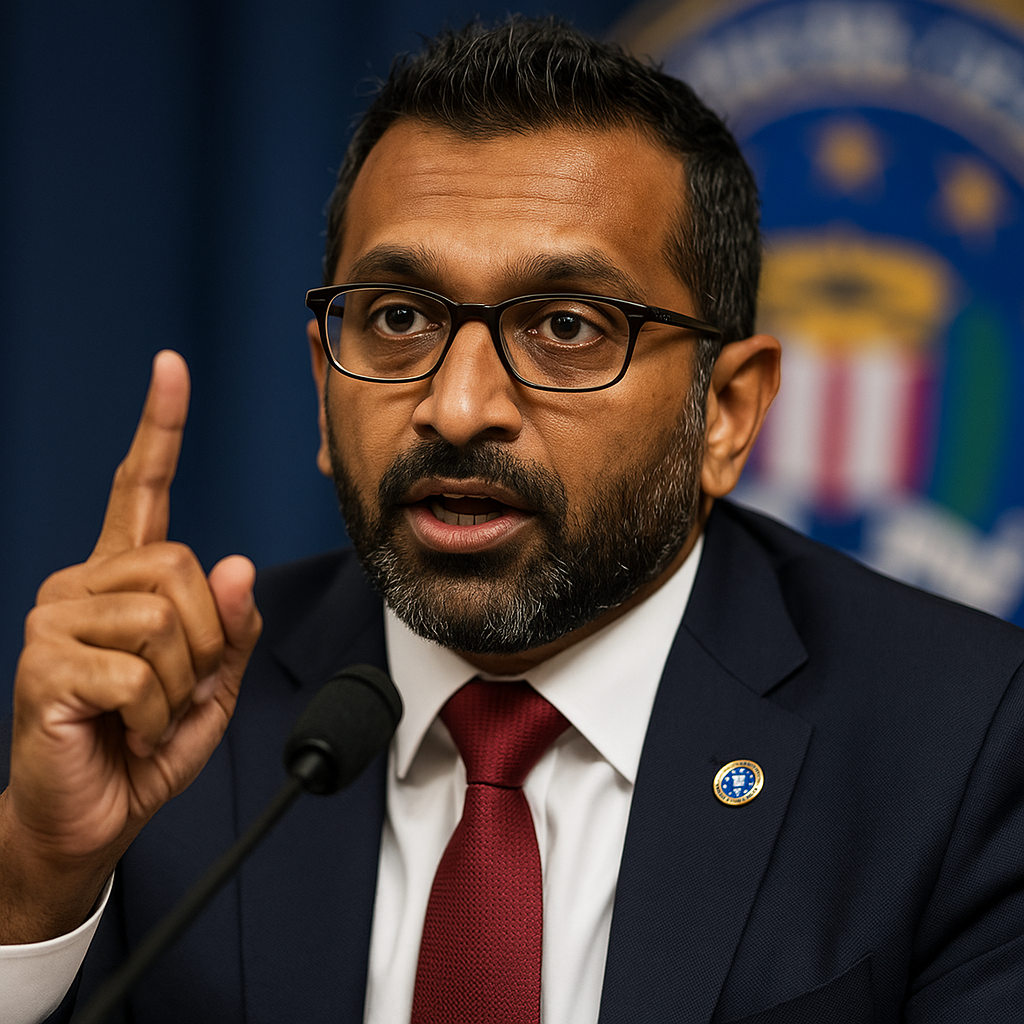
 Kashyap “Kash” Patel, born February 25, 1980, in Garden City, New York, is a prominent figure in U.S. politics, currently serving as the Director of the Federal Bureau of Investigation (FBI) since February 20, 2025 (FBI Director). His career spans roles as a federal prosecutor, senior aide to Devin Nunes, and key positions in the Trump administration, including Chief of Staff to the Acting Secretary of Defense (Wikipedia). Patel gained significant attention as the primary author of the 2018 Nunes memo, which alleged FBI misconduct in the Trump-Russia investigation, a document that remains controversial for its selective declassification (New York Times). His leadership at the FBI has raised concerns, with reports of senior executives being pushed out and increased use of polygraph tests to prevent leaks, prompting debates about internal morale and politicization (New York Times). Patel’s book, Government Gangsters, articulates his belief in a “Deep State” undermining elected leaders, shaping his policy views (Barnes & Noble). Recent developments include a major drug bust in Atlanta, a swatting incident at his home, and ongoing controversies over the release of Jeffrey Epstein files, reflecting the polarizing nature of his tenure (Fox News, Fox News).
Background
Kashyap Pramod Patel was born on February 25, 1980, in Garden City, New York, to Pramod Patel, a Ugandan of Indian descent expelled by Idi Amin in 1972 (Wikipedia). His family, part of the Patidar community from Bhadran, Gujarat, India, briefly returned to India before seeking asylum in the U.S., UK, and Canada, eventually settling in the U.S. after a stint in Canada. Raised in a Hindu household with his father’s eight siblings, Patel grew up in a tight-knit community. He attended Garden City High School, where his senior quote, “Racism is man’s gravest threat—the maximum of hatred for a minimum reason” by Abraham Joshua Heschel, reflected early social awareness. During summers, he worked as a caddie at the Garden City Country Club, an experience that influenced his interest in law after interactions with defense lawyers (Wikipedia).
Patel graduated from the University of Richmond in 2002 with a bachelor’s degree in criminal justice and history. He earned a certificate in international law from University College London and a juris doctor from Pace University School of Law in 2005. In 2003, he participated in the American Bar Association’s Judicial Intern Opportunity Program, a diversity initiative (Wikipedia). His early career began in 2005 as a public defender in Miami-Dade County, Florida, handling cases involving violent crimes and drug trafficking. He later served as a federal public defender for the Southern District of Florida. In 2012, Patel joined the Department of Justice (DOJ) as a junior staff member, routing arrest warrants, before becoming a prosecutor in the National Security Division in 2013 and working in the Counterterrorism Division in 2014. He also served as a board member of the South Asian Bar Association of North America and briefly represented the Criminal Division in the 2012 Benghazi attack case, though he was removed due to disagreements with the U.S. Attorney’s Office for the District of Columbia (Wikipedia).
Timeline
| Year | Event |
|---|---|
| 2002 | Graduated from University of Richmond with a degree in criminal justice and history (FBI Director). |
| 2005 | Earned juris doctor from Pace University School of Law; began as public defender in Miami-Dade County, Florida (Wikipedia). |
| 2005–2012 | Served as federal public defender for Southern District of Florida (Wikipedia). |
| 2012 | Joined Department of Justice as junior staff member, routing arrest warrants (Wikipedia). |
| 2013 | Became prosecutor in DOJ’s National Security Division (Wikipedia). |
| 2014 | Worked in DOJ’s Counterterrorism Division (Wikipedia). |
| 2017 | Left DOJ; became senior aide to Devin Nunes, authored Nunes memo (New York Times). |
| 2019 | Joined National Security Council as director for International Organizations and Alliances, later Senior Director for Counterterrorism (CNN). |
| 2020 | Served as Senior Advisor to Acting Director of National Intelligence (Feb–May); Chief of Staff to Acting Secretary of Defense (Nov 2020–Jan 2021) (Wikipedia). |
| 2022 | Joined board of Trump Media & Technology Group; founded The Kash Foundation to support January 6 defendants (Wikipedia). |
| 2024 | Nominated by Trump for FBI Director in November (Britannica). |
| 2025 | Confirmed as FBI Director (Feb 20); served as Acting ATF Director (Feb 24–Apr 10) (FBI Director, Reuters). |
Political Influence
Nunes Memo and Trump Administration
Patel’s most notable political influence stems from his role as the primary author of the Nunes memo, released in February 2018, which alleged that the FBI and DOJ abused surveillance authority in the Trump-Russia investigation (New York Times). The memo, crafted under Devin Nunes’ leadership, claimed that the FBI’s use of the Steele dossier to obtain a warrant on Carter Page was flawed, fueling Republican narratives of a biased investigation. Critics, including Democrats and intelligence professionals, argued it relied on selective declassification, omitting key details like initial funding from the Washington Free Beacon (Rolling Stone). The memo elevated Patel’s profile, leading to his appointment to the National Security Council in 2019, where he influenced policies on international organizations and counterterrorism (CNN).
During the Trump administration, Patel held roles that amplified his influence, including Senior Director for Counterterrorism and Chief of Staff to Acting Secretary of Defense Christopher Miller. His actions, such as advocating for Trump’s agenda and challenging perceived disloyalty, aligned with the administration’s priorities (New York Times). His book, Government Gangsters, furthered his influence by promoting the narrative of a “Deep State” undermining elected leaders, a view endorsed by Trump (Barnes & Noble).
FBI Directorship
As FBI Director, Patel’s influence is evident in his push for reforms aligned with his anti-“Deep State” stance. His nomination, confirmed by a narrow 51-49 Senate vote, reflected his polarizing influence, with some Republicans like Susan Collins opposing him (Britannica). His leadership has focused on high-profile operations, such as combating drug trafficking, but has also drawn scrutiny for internal changes, discussed below.
Controversies
Nunes Memo
The Nunes memo remains a central controversy, criticized for its selective presentation and alleged distortions. Democrats, led by Adam Schiff, called it a misleading attempt to discredit the Mueller probe (New York Times). Patel’s unauthorized trip to London to question Christopher Steele further fueled criticism for bypassing protocol (The Atlantic).
FBI Leadership
Patel’s tenure as FBI Director has been contentious, with reports of senior executives being pushed out and increased polygraph use to prevent leaks, raising concerns about morale and politicization (New York Times). Senator Dick Durbin accused Patel of secretly orchestrating firings, amplifying fears of retribution (NBC News).
Confirmation Process
Patel’s nomination faced opposition from civil rights groups and some Republicans, citing his lack of law enforcement experience and past conspiracy theory endorsements (Civil Rights). His confirmation hearing saw him downplay past statements, such as those in Government Gangsters, where he listed 60 officials as part of a “Deep State” (CNN).
January 6 Involvement
Patel’s founding of The Kash Foundation to support January 6 Capitol attack defendants drew criticism, especially as he later opposed Trump’s clemency for over 1,200 rioters, citing violence against law enforcement (Wikipedia, CNN).
Epstein Files
Patel has faced scrutiny over the FBI’s handling of Jeffrey Epstein files, with Attorney General Pam Bondi accusing the FBI of withholding thousands of documents. Democrats have questioned whether political motives, including Trump’s alleged involvement, are delaying releases (Fox News, Times of India).
Policy Impact
Patel’s policy impact as FBI Director, though in its early stages, reflects his priorities outlined during his confirmation hearing: combating drug trafficking, gangs, and foreign terrorism (CNN). The June 2025 Atlanta drug bust, “Operation Take Back America,” seized 252 kilograms of drugs, including Georgia’s largest fentanyl haul, valued at $9 million, and 33 firearms, demonstrating his focus on organized crime (Fox News). His book, Government Gangsters, suggests a broader agenda of reforming federal agencies by removing perceived “Deep State” elements, advocating for firing top FBI ranks and charging leakers (Hindustan Times). However, specific policy changes within the FBI remain unclear due to his short tenure.
Recent Developments
In June 2025, Patel announced his Las Vegas home was swatted, a dangerous prank involving false emergency calls, during a Joe Rogan podcast interview, highlighting personal risks tied to his role (Fox News). In April 2025, he was removed as acting ATF Director, replaced by Daniel Driscoll, with no specific reason provided, though he continued as FBI Director (Reuters). The Atlanta drug bust in June 2025 marked a significant achievement, targeting Mexican cartels (Fox News). Controversy persists over the Epstein files, with accusations of withheld documents fueling political tensions (Fox News).
Key Citations
- FBI Official Biography of Director Kash Patel
- Wikipedia Profile of Kash Patel
- New York Times on Kash Patel and Nunes Memo
- New York Times on FBI Leadership Unease Under Patel
- Barnes & Noble: Government Gangsters Book Description
- Fox News on Atlanta Drug Bust
- Reuters on Patel’s Removal as ATF Director
- CNN on Patel Joining National Security Council
- The Atlantic on Nunes Memo Authors
- Rolling Stone on Nunes Memo Criticisms
- New York Times on Patel’s Role in Trump Administration
- Britannica Biography of Kash Patel
- CNN on Patel’s FBI Confirmation Hearing
- Civil Rights Organizations Oppose Patel’s Nomination
- NBC News on Alleged FBI Firings by Patel
- Hindustan Times on Government Gangsters Targets
- Fox News on Patel’s Swatting Incident
- Fox News on Epstein Files Controversy
- Times of India on Epstein Files and Trump Allegations