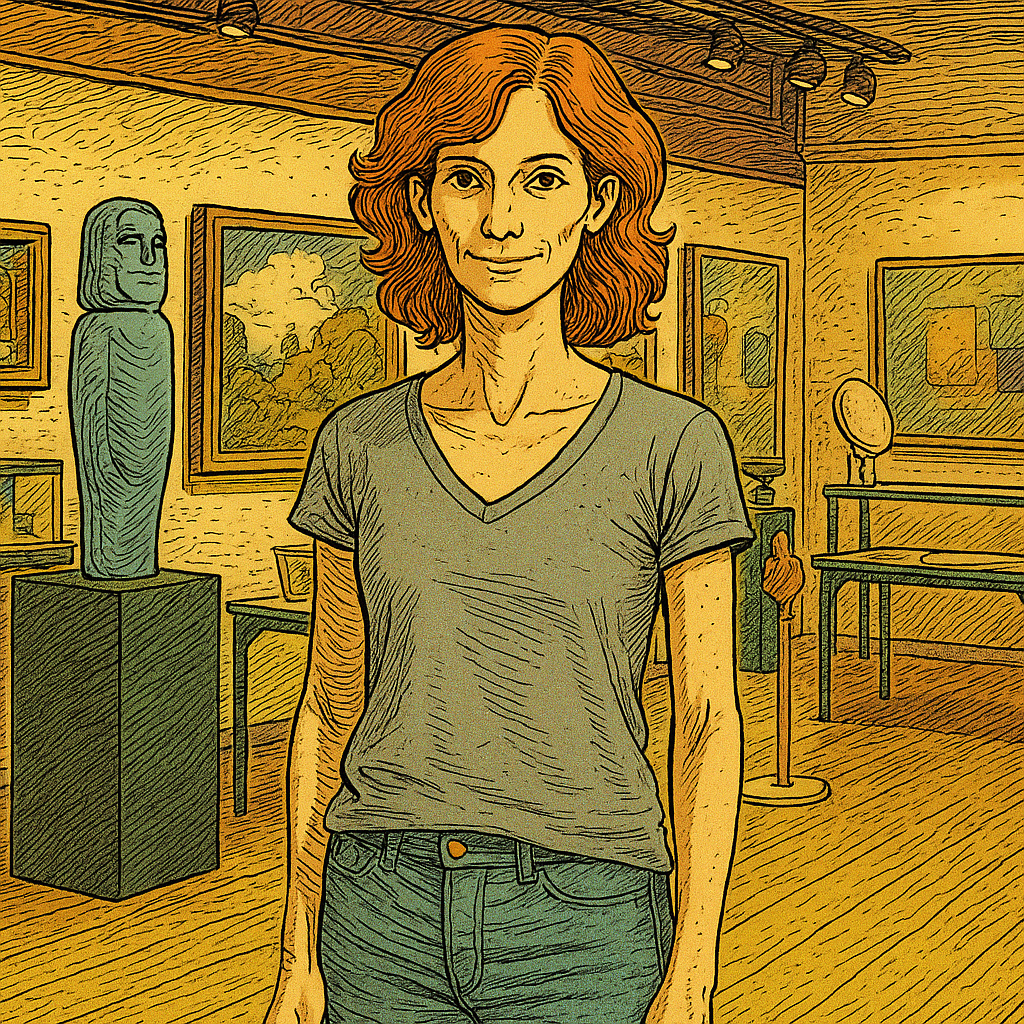
 Rain again. It started before dawn, drumming softly on the roof above the gallery and running down the window in thin, undecided lines. Durango in June never seems sure what it wants to be—half desert, half mountain, each storm a brief negotiation. I opened the gallery early anyway, even though no one comes in when the sidewalks gleam like oilskin.
Between customers that never arrived, I wrote another letter I will not send. This one was to Anna, who still lives in Munich. She and I used to meet for coffee in the back of the old gallery, near the high windows that turned every color cold. We argued about art and memory—how one shapes the other, how nations lie to themselves in paint. When I left Germany, we promised to stay in touch. We didn’t.
I tried to explain what it feels like here now. The mood in the country has grown restless, and the noise never stops. People fill the air with slogans until there’s no room left for truth to breathe. The flags in town are sagging with rain. They look tired, as if loyalty itself were wearing thin.
I told her that sometimes I think Germany’s great mistake wasn’t memory but how it turned remembrance into ritual. Every year, more ceremonies, more language about never forgetting, until the words become as mechanical as the gestures. America is doing something opposite but just as dangerous—forgetting while insisting it remembers. History is treated like a visitor who overstayed, polite at first, then ignored until it finally leaves on its own.
Outside, a truck rattled down Main Avenue, dragging the sound of thunder with it. I paused, watching drops chase one another down the glass. I remembered Anna saying that guilt is like weather—it changes, but it never clears. Back then, I thought she was being melodramatic. Now I’m not so sure.
I wrote that the hardest part isn’t seeing the parallels; it’s recognizing how easy they are to ignore. Here, people still believe in exceptionalism like it’s oxygen. They think arrogance can’t turn to cruelty because it smiles first. In Germany, we learned what smiling cruelty looks like, though even now many prefer not to remember that lesson.
At noon, the lights flickered. The power stayed, but the internet dropped for an hour, and with it, my sense of connection. I folded the letter and left it on the counter, beside a stack of unsent ones. Some are to Anna, others to no one. They form a small archive of things I can’t say aloud—small histories too quiet to be shared.
The rain eased by midafternoon. A couple wandered in, dripping and cheerful, asking whether any of the landscapes were local. I said yes to be polite, though most were from memory, not geography. They bought a print and left smiling, leaving behind the faint smell of wet cotton.
I sat again at the counter, unfolded the letter, and read the last line: Maybe remembering isn’t the burden. Maybe pretending it’s done is. Then I put it away.
I thought of my father on the balcony of our old apartment, tuning the radio to the evening news, the static a soft curtain between us and what he didn’t want to hear. Afterward he would smoke in silence, the ash bending but never falling, and my mother would close the window against the draft. We all learned to live with what wasn’t said.
By evening the sky had cleared, the air washed clean enough to see the hills in new light. The gallery lights hummed softly overhead. I locked the door and stood for a moment before turning them off. The sound of the rain was gone, but the silence that replaced it had weight—like something waiting to be spoken but never quite finding the right address.
Outside, puddles caught the light from the shopfronts across the street, turning the asphalt into a shallow mirror. The flags hung limp in the cooling air, their colors muted but still visible. I stood there until the motion sensor tripped and the gallery light came back on behind me—an empty room glowing through glass, quiet and watchful, as if waiting for someone to finish the letter.