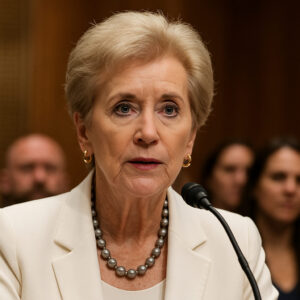
 Key Points
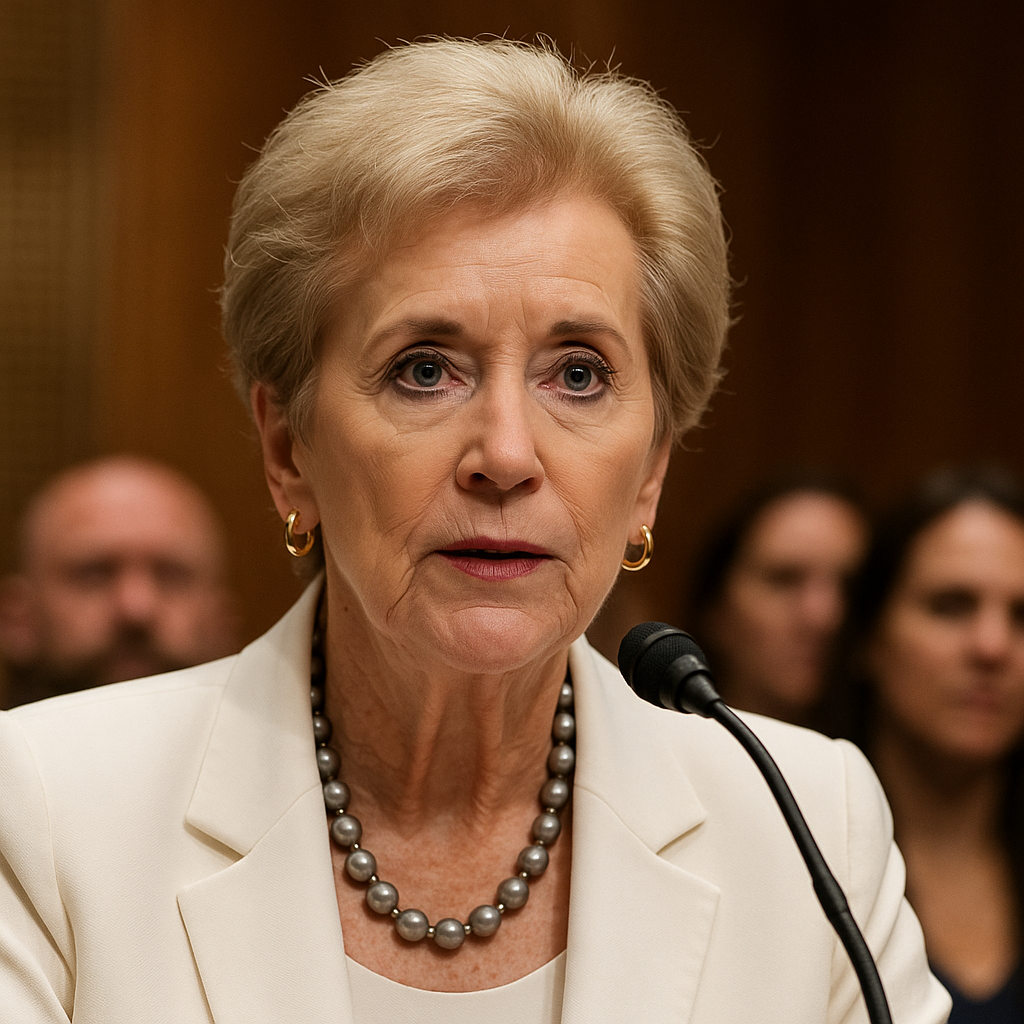
Linda McMahon, sworn in as the 13th U.S. Secretary of Education on March 3, 2025, is a polarizing figure due to her limited experience in education and her alignment with President Donald Trump’s agenda to dismantle the Department of Education (U.S. Department of Education). Her background as a business executive, primarily as CEO of World Wrestling Entertainment (WWE), contrasts with the traditional qualifications expected for the role, sparking debates about her suitability (NPR). McMahon’s policy priorities include promoting school choice, reducing federal oversight, and eliminating diversity, equity, and inclusion (DEI) initiatives, which have drawn both support and criticism (ABC News). Her tenure has seen significant actions, such as mass layoffs at the Department of Education and an executive order to prepare for its potential closure, raising concerns about the future of federal education programs (Forbes). While supporters praise her business acumen and focus on parental rights, critics argue her policies may undermine public education and exacerbate inequities (New York Times).
Background
Linda Marie McMahon (née Edwards) was born on October 4, 1948, in New Bern, North Carolina. She graduated from East Carolina University in 1969 with a bachelor’s degree in French, initially aspiring to become a schoolteacher, a goal that reflects her early interest in education (U.S. Department of Education). After college, she worked as a receptionist and trained as a paralegal before entering the business world. In 1979, she and her husband, Vince McMahon, purchased the Cape Cod Coliseum and the Cape Cod Buccaneers hockey team, marking the beginning of their entrepreneurial ventures. In 1980, they co-founded Titan Sports, Inc., which later became World Wrestling Entertainment (WWE), a global entertainment company. McMahon served as president and later CEO of WWE from 1980 to 2009, overseeing its growth into a publicly traded, multibillion-dollar enterprise (Wikipedia).
McMahon’s direct involvement in education is limited but notable. In 2009, she was appointed to the Connecticut State Board of Education by Governor Jodi Rell, serving for approximately one year until 2010, when she resigned to run for the U.S. Senate (Connecticut Public). During her tenure, she advocated for policies to empower teachers and enhance student outcomes, though her brief stint drew criticism for lacking depth in educational expertise (Wikipedia). Since 2004, McMahon has been a member of the Board of Trustees at Sacred Heart University in Fairfield, Connecticut, where she made a significant $5 million donation in 2012, leading to the naming of the student commons in her honor (CT Post).
Before her current role, McMahon served as the Administrator of the U.S. Small Business Administration (SBA) from 2017 to 2019 under President Trump, where she focused on supporting small businesses and contributing to initiatives like the Pledge to America’s Workers, which created millions of education and training opportunities (U.S. Department of Education). Her business background and political activities have shaped her approach to public service, culminating in her appointment as Secretary of Education in 2025.
Early Life and Education
Growing up in a middle-class family in North Carolina, McMahon developed an early interest in education, influenced by her mother’s work as a schoolteacher. She attended Havelock High School, where she was an active student, participating in extracurricular activities such as the French club and student government (EdNC). Her decision to major in French at East Carolina University was driven by her fascination with language and culture, though she later expressed regret for not pursuing a degree in education, as she had initially planned (USA Today). Her early career as a paralegal provided her with organizational and administrative skills, which she later applied to her business ventures.
Business Career
McMahon’s business career began in earnest with the founding of Titan Sports, Inc., alongside her husband, Vince McMahon. The couple transformed the regional wrestling promotion into WWE, a global entertainment powerhouse. As CEO, McMahon was responsible for strategic planning, marketing, and financial oversight, navigating challenges such as labor disputes and regulatory scrutiny (Wikipedia). Her leadership helped WWE expand into television, film, and digital media, with annual revenues reaching over $500 million by the time she stepped down in 2009. Her business experience, while extensive, has been a point of contention, with critics arguing it does not translate directly to the complexities of education policy (19th News).
Timeline
| Year | Event |
|---|---|
| 1948 | Born in New Bern, North Carolina. |
| 1966 | Married Vince McMahon. |
| 1969 | Graduated from East Carolina University with a bachelor’s degree in French. |
| 1979 | Purchased Cape Cod Coliseum and Cape Cod Buccaneers with Vince McMahon. |
| 1980 | Co-founded Titan Sports, Inc., later World Wrestling Entertainment (WWE). |
| 1980-2009 | Served as president and CEO of WWE. |
| 2004-present | Member of the Board of Trustees at Sacred Heart University. |
| 2009 | Appointed to Connecticut State Board of Education. |
| 2010 | Resigned from Connecticut State Board to run for U.S. Senate; lost to Richard Blumenthal. |
| 2012 | Ran for U.S. Senate; lost to Chris Murphy. |
| 2017-2019 | Served as Administrator of the U.S. Small Business Administration. |
| 2019 | Chaired America First Action PAC. |
| 2024 | Co-chaired Trump’s transition team; involved in America First Policy Institute. |
| 2025 | Appointed and confirmed as U.S. Secretary of Education on March 3. |
Political Influence
Linda McMahon’s political influence is rooted in her substantial financial contributions and close alignment with President Donald Trump. During her 2010 and 2012 U.S. Senate campaigns in Connecticut, she spent approximately $100 million of her own fortune, allowing her to forgo donations from special interest groups and emphasizing her independence (Wikipedia). Although both campaigns were unsuccessful, her financial clout established her as a significant player in Republican politics. In 2016, she donated $6 million to a super PAC supporting Trump’s presidential campaign, further solidifying her role as a key ally (Wikipedia).
McMahon’s appointment as Administrator of the U.S. Small Business Administration from 2017 to 2019 marked her entry into Trump’s administration, where she oversaw programs that supported small businesses and job creation (U.S. Department of Education). After leaving the SBA, she chaired the America First Action PAC, a pro-Trump super PAC, and held leadership roles at the America First Policy Institute (AFPI), a conservative think tank that promotes Trump’s policy agenda (NPR). Her involvement with AFPI included advocating for education policies such as school choice and parental rights, which have shaped her current role as Secretary of Education (Whiteboard Advisors).
McMahon’s political activities extend beyond financial contributions and leadership roles. Her visibility in conservative circles, including speaking engagements and her role as co-chair of Trump’s 2024 transition team, has amplified her influence within the Republican Party (CT Insider). Her alignment with Trump’s agenda, particularly his push to decentralize education, positions her as a central figure in advancing his education reform priorities, though this has also made her a target of criticism from opponents who view her as prioritizing political loyalty over educational expertise (19th News).
Relationship with Trump
McMahon’s relationship with Trump dates back decades, rooted in their shared history in the entertainment industry. Trump appeared in WWE events, including WrestleMania, and the McMahons supported his early political endeavors. This connection deepened during Trump’s 2016 campaign, with McMahon and her husband donating millions to his cause. Her loyalty to Trump has been a key factor in her appointments, first to the SBA and now to the Department of Education, though it has also fueled accusations of cronyism (NPR).
Controversies
Lack of Education Experience
One of the most significant controversies surrounding McMahon’s appointment is her limited background in education. Critics, including Democratic senators and education advocates, argue that her brief tenure on the Connecticut State Board of Education (2009-2010) and her role as a trustee at Sacred Heart University do not provide the depth of expertise needed to lead the Department of Education (19th News). During her Senate confirmation hearing, Senator Bernie Sanders and others expressed concerns that her business-oriented perspective may not adequately address the complexities of public education, drawing comparisons to former Secretary Betsy DeVos, whose tenure was similarly controversial (NEA).
Incorrect Degree Disclosure
McMahon faced scrutiny for incorrectly stating in the past that she held a degree in education, when her actual degree is in French from East Carolina University. This issue, first reported a decade ago, resurfaced during her nomination process, raising questions about her transparency and qualifications (EdNC). A Trump transition spokesman dismissed the controversy as resolved years ago, but it has contributed to skepticism about her suitability for the role (USA Today).
WWE-Related Lawsuits
McMahon’s tenure at WWE has been linked to several controversies, including allegations of negligence in the “ring boy scandal” of the early 1990s, where WWE personnel were accused of sexually assaulting young boys. A lawsuit filed in October 2024 named McMahon and her husband as defendants, alleging they fostered a culture of abuse within WWE. Although McMahon has denied the claims and filed a motion to dismiss the lawsuit in April 2025, the case has drawn renewed attention to her past leadership at WWE (Wikipedia). Other WWE-related issues, such as steroid use among wrestlers and labor disputes over classifying wrestlers as independent contractors, have also been cited as points of contention, though they are less directly tied to her current role (Wikipedia).
Plans to Dismantle the Department of Education
Perhaps the most contentious aspect of McMahon’s tenure is her alignment with President Trump’s goal to dismantle the Department of Education. Critics, including Representative Rosa DeLauro, have accused her of unlawfully freezing congressionally appropriated funds by slashing grants, programs, and staff, actions seen as undermining the department’s ability to function (New York Times). The National Education Association (NEA) and other groups have expressed alarm that her policies, particularly the push for privatization through vouchers, could lead to a “coordinated resegregation” of public schools by diverting funds from underserved communities (19th News). Supporters, however, argue that her focus on reducing bureaucracy and empowering states aligns with a broader movement to reform education (Washington Examiner).
Policy Impact
Since taking office in March 2025, McMahon has outlined several policy priorities that reflect the Trump administration’s education agenda. Her primary focus is on promoting school choice and voucher programs, which allow parents to use taxpayer funds to send their children to private or charter schools. In a memo released shortly after her confirmation, she emphasized empowering parents to make educational decisions and eliminating “divisive DEI” curricula, which she views as detracting from core academic subjects like math and reading (Business Insider). She has also advocated for career-oriented postsecondary education, supporting initiatives like the Bipartisan Workforce Pell Act, which would expand Pell Grant funding to short-term training programs in fields such as cosmetology and construction (USA Today).
McMahon’s policies aim to reduce the federal government’s role in education, aligning with Trump’s campaign promise to devolve power to the states. In her March 3, 2025, speech, she stated that the Department of Education’s role is to “restore the rightful role of state oversight in education and to end the overreach from Washington” (U.S. Department of Education). To this end, she has supported increasing charter school funding and providing federal block grants to states, allowing state leaders to determine how best to allocate resources (K-12 Dive). Her emphasis on “evidence-based learning” in core subjects and career and technical education programs reflects a shift toward practical, job-focused education (NPR).
However, her policies have faced significant opposition. Critics argue that voucher programs and reduced federal oversight could exacerbate educational inequities, particularly for students in low-income communities or those with special needs. The elimination of DEI initiatives has also drawn criticism for potentially undermining efforts to address systemic discrimination in schools (19th News). McMahon has acknowledged that dismantling the Department of Education requires congressional approval, but her actions, such as staff cuts and program reductions, suggest a proactive approach to shrinking the department’s footprint (Education Week).
School Choice and Vouchers
McMahon’s advocacy for school choice is central to her policy agenda. She has proposed expanding federal tax credits and block grants to support voucher programs, citing successful models in states like Florida and Arizona. In a May 2025 address to the Heritage Foundation, she argued that school choice “empowers parents to choose the best educational environment for their children, whether public, private, or charter” (Heritage Foundation). However, studies from the National Education Policy Center indicate that voucher programs often benefit higher-income families and may not improve academic outcomes for low-income students, raising concerns about their broader impact (NEPC).
DEI and Curriculum Changes
McMahon’s push to eliminate DEI initiatives has included directives to review and revise federal guidelines on school curricula. In April 2025, she issued a policy memo instructing states to prioritize “core academic subjects” and eliminate programs perceived as promoting “divisive ideologies” (U.S. Department of Education). This move has been praised by conservative groups like Parents Defending Education but criticized by civil rights organizations, who argue it could weaken protections for marginalized students (NAACP).
Recent Developments
In March 2025, McMahon announced significant layoffs at the Department of Education, reducing its workforce from over 4,100 to approximately 2,200 employees through a combination of voluntary buyouts and a reduction in force. She described these cuts as the “first step” toward fulfilling Trump’s mandate to shut down the department, a move that has raised concerns about the agency’s ability to maintain operations (Forbes). The layoffs, announced on March 11, 2025, included terminating leases on department buildings in cities like New York and Chicago, further signaling a reduction in the agency’s infrastructure (TIME).
On March 20, 2025, President Trump signed an executive order directing McMahon to “take all necessary steps to facilitate the closure of the Department of Education,” a bold but symbolic step, as actual dissolution requires congressional approval (Education Week). McMahon has acknowledged this limitation, stating in her confirmation hearing that she will work with Congress to “reorient the department” and potentially transfer programs like the Individuals with Disabilities Education Act to other agencies (CT Mirror).
These actions have sparked significant pushback. On May 21, 2025, during a House Appropriations Committee hearing, Representative Rosa DeLauro accused McMahon of “unlawfully freezing and stealing congressionally appropriated funds” by slashing grants and programs, arguing that her actions infringe on Congress’s authority (New York Times). Education advocates, including the NEA, have expressed alarm that the layoffs and proposed closure could disrupt critical services, such as student aid and civil rights enforcement (NEA). Meanwhile, McMahon has defended the cuts as necessary to eliminate “bureaucratic bloat” and has highlighted successful state-led education models in Florida and Arkansas as examples to emulate (Education Week).
Additionally, McMahon’s involvement in a lawsuit related to the WWE “ring boy scandal” continues to draw attention. The lawsuit, which alleges negligence during her time as CEO, was allowed to proceed in February 2025, with McMahon filing a motion to dismiss in April 2025. While she has denied the allegations, the case adds to the scrutiny of her leadership and past business practices (Wikipedia).
Public and Congressional Response
Public reaction to McMahon’s tenure has been sharply divided. A June 2025 Gallup poll found that 42% of Americans support her school choice initiatives, while 55% express concern about the potential closure of the Department of Education, particularly among parents of public school students (Gallup). Congressional Democrats have vowed to challenge her actions, with the House Education and Workforce Committee planning oversight hearings in July 2025 to examine the department’s budget cuts (Politico). Conversely, Republican lawmakers, including Senator Ted Cruz, have praised McMahon’s efforts to “return education to the states,” citing her as a reformer willing to tackle entrenched interests (Washington Examiner).
Key Citations
- U.S. Department of Education: Linda E. McMahon Biography
- NPR: Linda McMahon Confirmed as U.S. Secretary of Education
- ABC News: Linda McMahon Announces Education Department’s Final Mission
- Forbes: Education Department Layoffs First Step to Shutdown
- New York Times: Democrats Criticize Linda McMahon Over Education Cuts
- Wikipedia: Linda McMahon Biography and Career
- Connecticut Public: Linda McMahon’s Education Experience
- 19th News: Linda McMahon Confirmed as Education Secretary
- NEA: Reasons Linda McMahon Should Not Be Secretary of Education
- Education Week: Trump Order on Department of Education Closure