Weekly Dispatch
Week of January 16 – 22, 2022
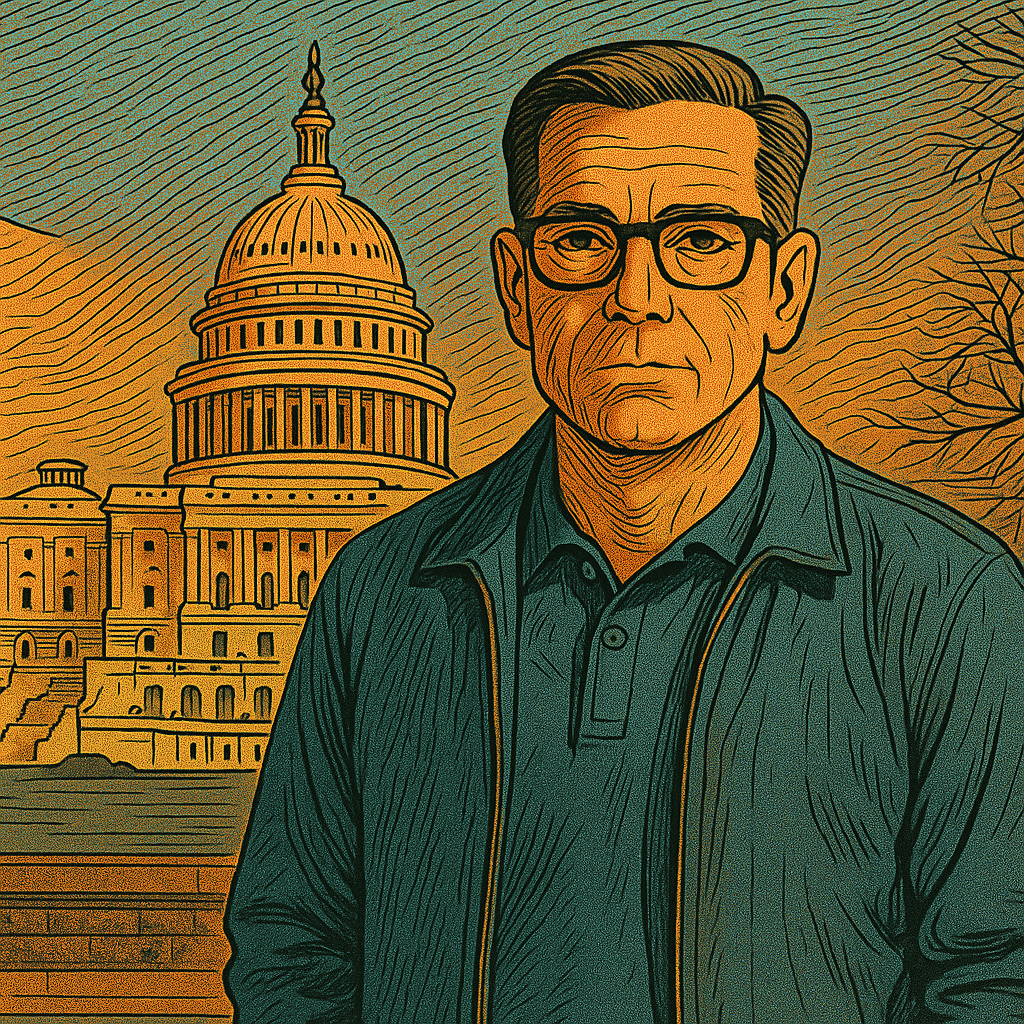 The week started at the edge of two shock waves—one viral, one volcanic. On Saturday the 15th, an undersea eruption near Tonga threw ash 20 miles into the atmosphere and triggered Pacific-wide tsunami advisories. By Sunday, images showed a kingdom dusted grey and mostly silent after the blast severed undersea cables. Relief flights queued while engineers tried to knit the islands back to the world one satellite link at a time. The scale felt antique and planetary—no culture war attached, only logistics, distance, and weather.
In the United States, Omicron finally looked like a curve, not a wall. Hospital admissions remained high, but wastewater and case data in multiple cities bent downward. The administration shifted from scarcity to distribution. On Tuesday, January 18, the federal website to order free rapid tests went live ahead of schedule; by week’s end, tens of millions of households had placed requests. On Wednesday, officials announced that 400 million free N95 masks from the strategic stockpile would ship to pharmacies and community health centers, an admission that cloth and convenience could no longer carry the winter. The policy line hardened: vaccines to reduce severity, boosters for durability, tests and respirators for the gaps. Execution would rely on supply chains already thin at the joints.
Airlines met telecoms in a last-minute truce. The planned launch of expanded 5G C-band service near airports ran into a wall of flight-safety warnings about interference with radar altimeters. On Tuesday, carriers agreed to delay activation around key runways; airlines, which had begun canceling long-haul flights, rolled back the worst of the disruptions. The episode boiled down to a familiar lesson: the United States remains excellent at building pieces and bad at coordinating systems. Everyone promised to coordinate next time; everyone meant it until the next deadline.
Markets re-priced reality the old-fashioned way: quickly. By midweek the major indices were off double digits from their peaks, with the Nasdaq flirting with correction territory. Treasury yields climbed, tech sold off, and investors rotated to energy as crude topped $85 a barrel. Crypto traced a sharper version of the chart and reminded late adopters why it is called risk. The proximate cause was the Federal Reserve’s hawkish minutes and the expectation of faster balance-sheet runoff; the deeper cause was a year of narratives meeting a year of invoices. Cash was no longer free and the calendar said so.
Corporate news added an exclamation point. Microsoft announced it would acquire Activision Blizzard for nearly $69 billion in an all-cash deal, a scale that doubled as an antitrust provocation. The company framed the purchase as a bet on gaming and the metaverse; critics read it as consolidation dressed as vision. Labor and harassment scandals at Activision put a governance asterisk on the headline. Regulators suddenly had a case study for the year’s other question: how to referee giants without freezing motion.
Politics marked an anniversary and a defeat. The week opened with Martin Luther King Jr. Day and ended with a failed Senate push on voting legislation. A narrow Democratic majority tried to carve out an exception to the filibuster to pass a package merging the Freedom to Vote Act with the John Lewis Voting Rights Advancement Act. Senators Manchin and Sinema said no, again, and the effort died on Wednesday night with a vote that was more arithmetic than surprise. The President argued that federal standards were necessary against a wave of state-level restrictions; Republicans called the bill federal overreach. Activists heard a familiar echo: promises framed as destiny, stopped by math.
The country’s attention turned briefly, starkly, to a synagogue outside Fort Worth. On Saturday the 15th, a man took hostages during services in Colleyville, Texas, demanding the release of a federal prisoner. After nearly eleven hours, all four hostages escaped unharmed; the assailant was killed. Law enforcement agencies called the outcome a success and a map for training that had accelerated after Pittsburgh and Poway. Congregations around the country re-checked doors that had been checked already. There was gratitude, and there was the knowledge that contingency had become ritual.
Abroad, deterrence kept its countdown. Secretary of State Antony Blinken met Ukrainian leaders in Kyiv, then the German foreign minister in Berlin, and on Friday sat down with Russia’s Sergei Lavrov in Geneva. The choreography aimed to demonstrate unity while leaving a door marked de-escalation ajar. Moscow repeated its demands—no NATO expansion, rollback of deployments in Eastern Europe, security guarantees with signatures. Washington repeated its answers—no veto over alliances, yes to reciprocal arms-control talks. The maps on cable looked the same as last week; the satellite photos had more armor in the frame. Diplomats spoke of “weeks, not months.”
In London, the Prime Minister apologized again for lockdown-era gatherings at Downing Street as the “Partygate” scandal moved from ridicule to police referrals. On Wednesday the government also announced the end of “Plan B” measures—no more work-from-home guidance, masks off indoors, passports lifted—arguing that England had crested the Omicron wave. Critics called the timing convenient; supporters called it overdue. The United Kingdom continued to serve as a pandemic bellwether: first in, first out, and often first to test the edge of tolerance.
Culture kept adjusting to absences. Award shows postponed, Broadway re-cast from the bench, and professional leagues shuffled schedules while pretending nothing had changed. Teachers took on lunch duty to keep cafeterias open; bus routes merged; hospital administrators picked up night shifts. The daily improvisations of a large country ran on the invisible generosity of small teams. It looked like competence from a distance and like endurance up close.
By Saturday, the week’s ledger read like a checklist with no totals. Tonga waited for cables and fresh water. U.S. households refreshed tracking emails for tests that would arrive after the current colds had ended. Senators returned to their corners. The stock market found a new floor that might not hold. The diplomacy clock kept time for a crisis everyone could describe but no one could stop alone. And winter rolled on—cold, short, and honest about what it takes to keep systems from failing.
The lesson, again, was load bearing. Institutions do not solve shocks; they absorb them until behavior changes or resources run out. This week they held—barely in some places, admirably in others—long enough for next week to have a chance to be easier. That can count as progress without pretending it is victory.