Early Life and Education
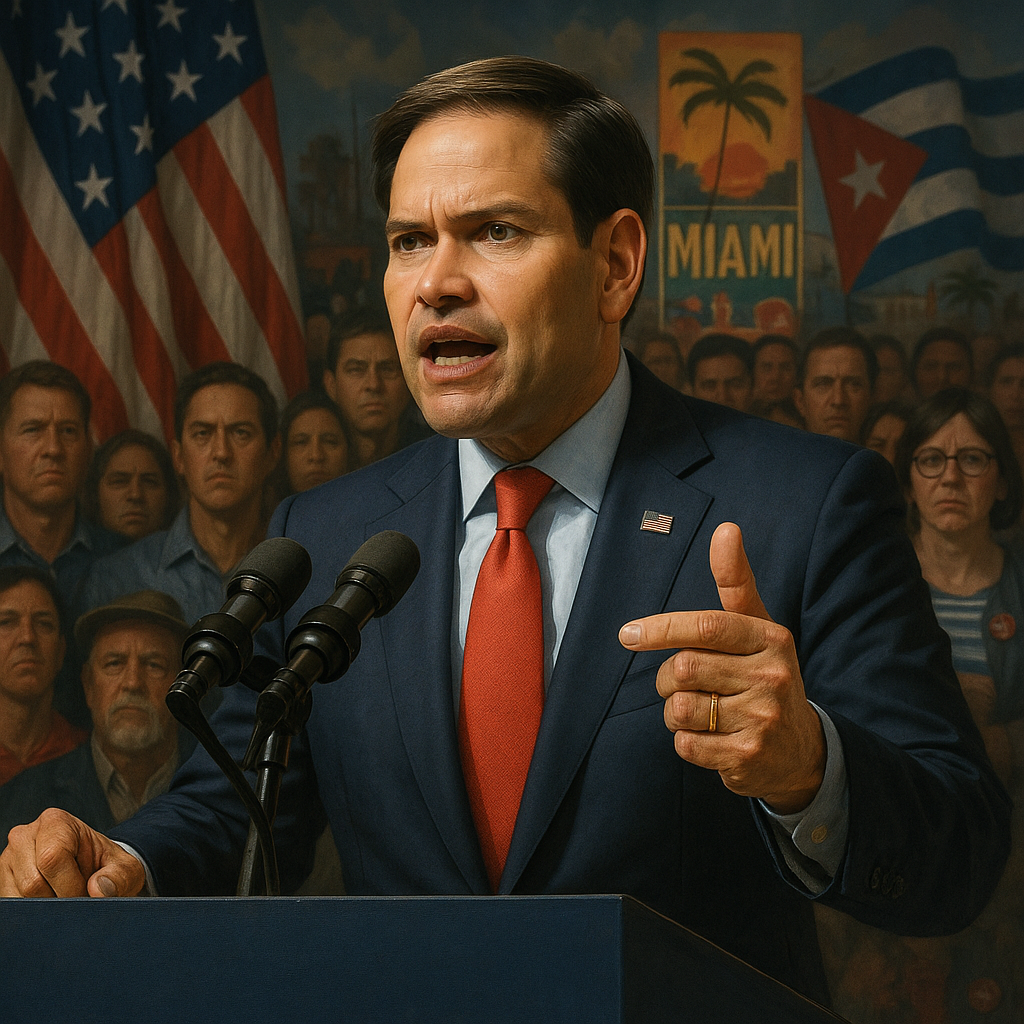 Marco Antonio Rubio was born on May 28, 1971, in Miami, Florida, to Cuban immigrant parents. His father Mario and mother Oriales left Cuba in 1956, during the Fulgencio Batista regime, and eventually settled in the U.S., becoming naturalized American citizens in 1975. Rubio frequently references his family’s immigrant story as inspiration for his public service, though in 2011 it came to light that his parents had left Cuba before Fidel Castro’s revolution (contrary to Rubio’s earlier claims that they fled Castro’s regime). He was raised Catholic (with a brief childhood stint in the Mormon church when his family lived in Las Vegas) and remains a practicing Roman Catholic today.
Rubio attended South Miami Senior High School, graduating in 1989. An avid football player, he attended one year of college on a football scholarship before transferring to the University of Florida, where he earned a B.A. in political science in 1993. He went on to receive his Juris Doctor cum laude from the University of Miami School of Law in 1996. Rubio financed his education through loans (about $100,000, which he eventually paid off in 2012) and began his career with a deep appreciation of the American Dream his parents sought.
Career Achievements
Rubio’s political career began at the local level and rapidly accelerated. In 1998, at age 26, he was elected to the City Commission of West Miami, marking his first entry into public office. Just two years later, in 2000, he won a special election to the Florida House of Representatives, representing Miami’s 111th district. Rubio quickly rose through Florida’s legislative ranks: he served as Majority Leader of the Florida House from 2003 to 2006 and became Speaker of the Florida House for the 2007–2008 term.
In 2010, capitalizing on anti-establishment sentiment and support from the Tea Party movement, Rubio was elected to the U.S. Senate from Florida. His underdog Senate campaign famously defeated a sitting Republican governor, and Rubio took office in 2011 as one of the youngest members of the Senate. He soon gained national prominence, delivering the Republican response to President Obama’s State of the Union address in 2013 and co-authoring the bipartisan “Gang of Eight” comprehensive immigration reform bill that passed the Senate.
Political and Social Influence
Throughout his career, Rubio’s political influence has evolved from that of a conservative insurgent to a Republican Party mainstay and now a Cabinet-level statesman. He gained national attention as a charismatic young Cuban-American leader riding the 2010 Tea Party wave. His 2010 Senate victory sent a signal that grassroots conservative energy could elevate new voices. Early on, Rubio was often framed as a potential bridge between the Republican Party and minority communities, and even hailed on a 2013 Time magazine cover as “The Republican Savior” who could broaden the GOP’s appeal and modernize its image.
Rubio’s influence on policy debate has been most pronounced in foreign affairs and immigration. He served on the Senate Foreign Relations and Intelligence Committees, emerging as a hawkish voice on international issues, particularly on Latin America and China. His persistence helped mainstream a more confrontational China policy within the GOP, and he co-authored key legislation like the Hong Kong Human Rights and Democracy Act and the Uyghur Human Rights Policy Act.
Controversies
Despite his generally polished image, Rubio has faced multiple controversies throughout his career. Key issues include the embellishment of his family’s immigration history, financial misconduct allegations, shifts in immigration stances, campaign trail gaffes, and shifts in political alignment. These controversies have sometimes challenged Rubio’s reputation for authenticity and consistency, drawing both media scrutiny and political backlash.
Public Perception
Public perception of Marco Rubio has evolved significantly over time. Initially seen as a rising star and potential savior of the GOP, his political journey has had highs and lows. His alignment with Trump in recent years has solidified his standing with the conservative base but also sparked criticism from moderates. His role as Secretary of State has opened new avenues for diplomatic influence, reflecting a return to political prominence.
Personal Life
Marco Rubio is married to Jeanette Dousdebes Rubio, a former Miami Dolphins cheerleader. They have four children and live in West Miami, Florida. Rubio is a practicing Roman Catholic and often cites his faith as a cornerstone of his political philosophy. He is bilingual, speaking both English and Spanish fluently, which has bolstered his connections with Hispanic communities, particularly in Florida.
Future Outlook
Marco Rubio is widely viewed as a likely contender for the 2028 presidential race. His role as Secretary of State and Acting National Security Advisor has elevated his profile, positioning him as a key figure in U.S. foreign policy. His alignment with Trump and successful navigation of major international issues could set the stage for a powerful campaign in the coming years.
Timeline of Key Events
- 1971: Born in Miami, Florida.
- 1998: Elected to the City Commission of West Miami.
- 2000: Wins a special election to the Florida House of Representatives.
- 2010: Elected to the U.S. Senate from Florida.
- 2016: Runs for President of the United States, suspending campaign after Florida primary loss.
- 2025: Appointed U.S. Secretary of State and Acting National Security Advisor under President Trump.
- 2028: Potential frontrunner for the Republican presidential nomination.
Key Citations:
- Marco Rubio – Wikipedia
- Marco Rubio – United States Department of State
- Marco Rubio | Education, Trump, Nationality, & Facts | Britannica
- Marco Rubio | FIU Steven J. Green School of International & Public Affairs
- Marco Rubio – Simple English Wikipedia
- About | Senator Rubio
- POL: Marco Rubio in Profile – POLITICO Magazine
- Marco Rubio Adds a New Title Under Trump: Interim National Security Adviser – The New York Times
- Inside Marco Rubio’s meteoric — and precarious — rise in Trumpworld – The Washington Post
- Few Major U.S. Political Figures Rated Positively on Balance – Gallup
- Rubio Campaign Press Release – Here’s What Marco Rubio Did for Florida When He Was House Speaker
- Accomplishments | Senator Rubio
- Marco Rubio’s house of horrors – POLITICO
- Marco Rubio haunted by allegations over Florida ‘slush fund’ and spending | The Guardian
- HRC | Sen. Marco Rubio Earns a 0 out of 100 on Human Rights
- Time to worry? Marco Rubio slides below 50% approval in new poll
- What Marco Rubio Has Said About Latin America
- ‘He’s Cuban. I’m Mexican.’: Can Rubio and Cruz connect with Latino voters? – The Washington Post
- Opinion | Marco Rubio’s humiliating transformation into a Trump fan-boy is complete – The Washington Post