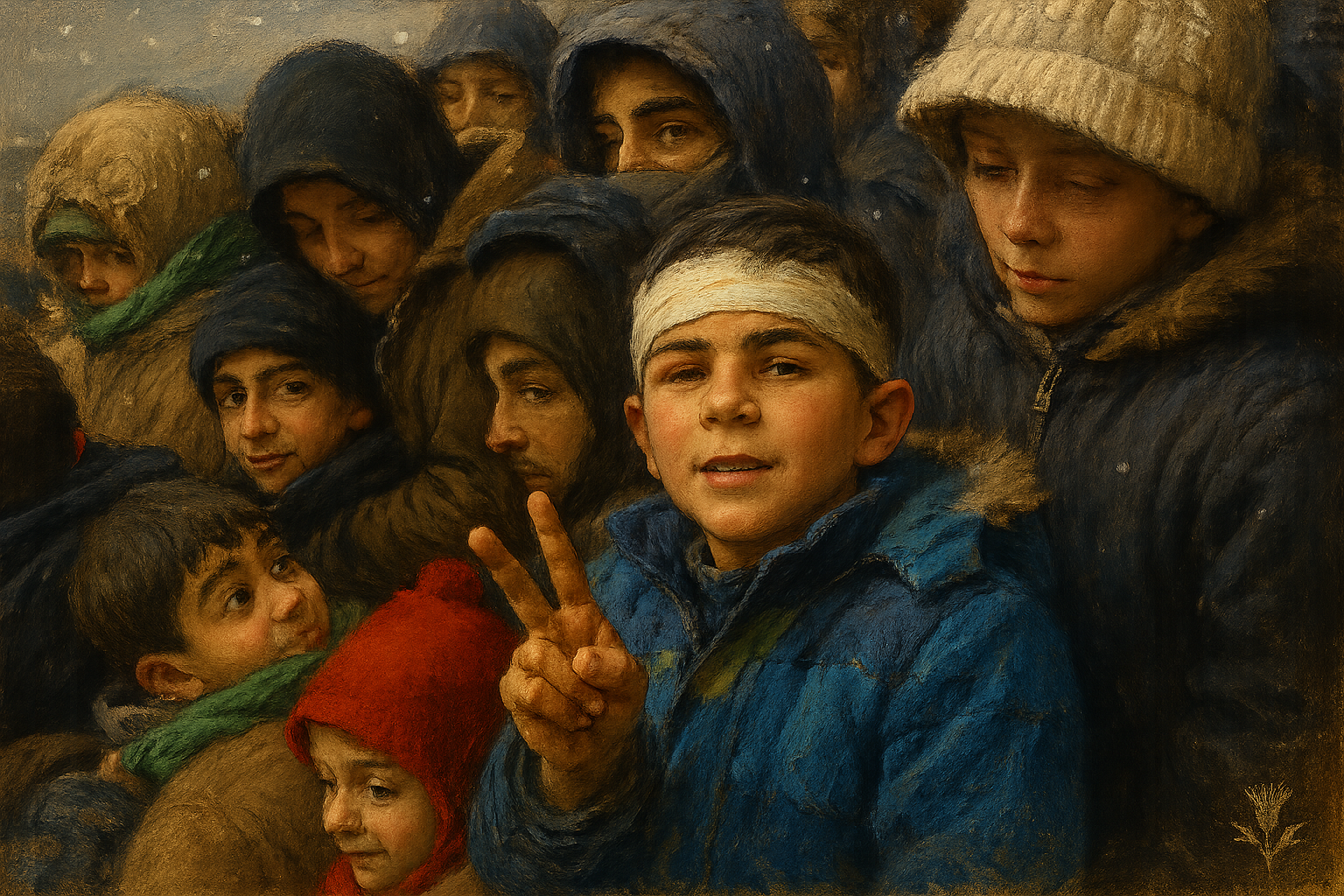
In November 2021, the European Union faced a severe migrant crisis along its eastern frontier, particularly at the border between Belarus and Poland. Thousands of migrants, most from Iraq, Syria, and Afghanistan, had been lured to Belarus with the promise of easy entry into the EU. Once there, they were directed toward the borders with Poland, Lithuania, and Latvia. European leaders accused Belarusian President Alexander Lukashenko of orchestrating the influx as retaliation for Western sanctions imposed after his disputed 2020 re-election and the violent crackdown on protesters.
As temperatures dropped, the situation turned dire. Families, including young children, were stranded for weeks in the freezing forests that separate Belarus from Poland. Caught between armed border guards on both sides, many lacked food, medical care, or shelter; at least a dozen people were reported dead. Polish security forces reinforced the border with thousands of troops, razor wire, and tear gas, preventing crossings. Belarusian troops, meanwhile, refused to let the migrants retreat inland, effectively trapping them in a no-man’s-land.
Humanitarian organizations demanded access to deliver aid, but both governments restricted movement and coverage. The EU denounced Belarus’s actions as a “hybrid attack,” accusing it of using human lives as leverage to destabilize Europe. In response, the EU expanded sanctions against Belarusian officials and airlines involved in transporting migrants. Poland and Lithuania declared states of emergency and announced plans for permanent border barriers. The episode became a defining moment in Europe’s struggle to balance border security with humanitarian responsibility.