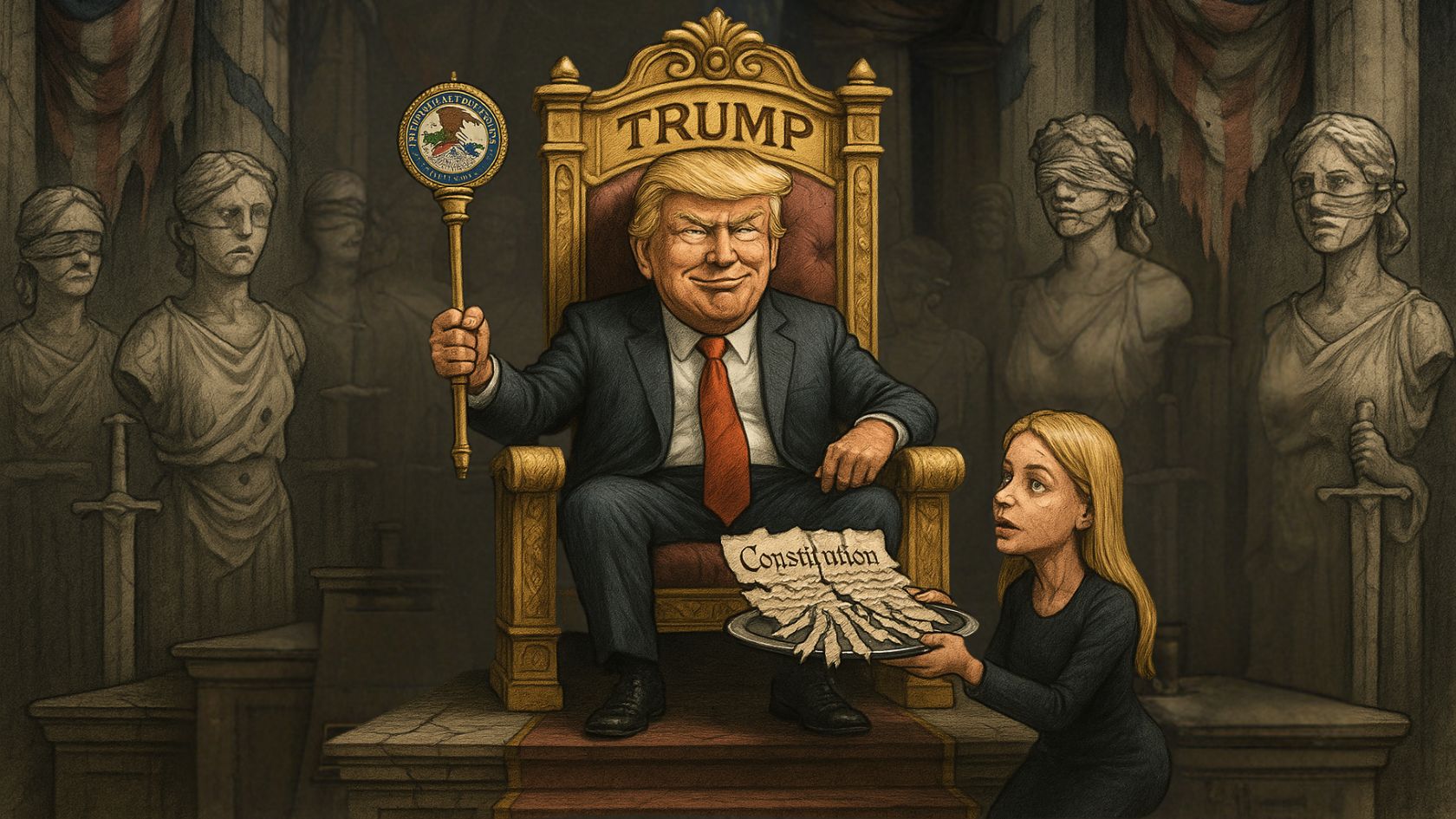
 Pam Bondi’s relationship with Donald Trump has been a subject of intense scrutiny, particularly during her tenure as U.S. Attorney General, where critics argue she exhibits a “slavish, almost blind subservience” to the former president. This perception stems from her consistent alignment with Trump’s interests, often at the expense of the traditional independence expected of her office. The U.S. Attorney General is historically regarded as the nation’s chief law enforcement officer, tasked with upholding the rule of law impartially, free from political influence. However, Bondi’s actions—ranging from her early political ties to Trump to her policy decisions as Attorney General—have raised significant concerns about her ability to maintain this independence. Below, the nature of Bondi’s relationship with Trump, specific examples of her perceived subservience, and why this behavior is seen as inappropriate given the traditional expectations of her role are explored.
Background: A Longstanding Alliance
Pam Bondi’s connection to Donald Trump predates her appointment as U.S. Attorney General in 2025, tracing back to her time as Florida’s Attorney General (2011–2019). A notable early incident occurred in 2013 when Trump’s foundation donated $25,000 to Bondi’s re-election campaign. Shortly thereafter, her office declined to join a lawsuit against Trump University despite consumer complaints, citing “insufficient grounds” (New York Times). This decision drew widespread criticism as a potential conflict of interest, especially after the donation was later ruled illegal, resulting in a $2,500 fine for Trump. Although Bondi denied any quid pro quo, the episode established a pattern of mutual support that deepened over time.
Bondi’s loyalty became more pronounced during Trump’s presidency. She served on his 2020 impeachment defense team, a role that underscored her willingness to defend him publicly and legally (NBC News). By 2024, she led the legal arm of the Trump-aligned America First Policy Institute, further cementing her status as a close ally (America First Policy Institute). When Trump nominated her for U.S. Attorney General following his 2025 re-election, her confirmation hearing highlighted these ties. Democrats pressed her on her ability to act independently, to which she pledged, “Every case will be prosecuted based on the facts and the law that is applied in good faith—period” (Miami Herald). Yet, her subsequent actions as Attorney General have fueled skepticism about that commitment.
Evidence of Subservience
Bondi’s tenure as U.S. Attorney General has been marked by decisions and policies that closely mirror Trump’s agenda, often prioritizing his political goals over the Justice Department’s traditional impartiality. Below are key examples that critics cite as evidence of her subservience:
1. Implementation of Trump’s Policy Priorities
From her first day in office on February 5, 2025, Bondi issued 14 directives that directly reflected Trump’s campaign promises. These included banning diversity, equity, and inclusion (DEI) programs in DOJ hiring, intensifying immigration enforcement, and disbanding the FBI’s Foreign Influence Task Force (Gibson Dunn, NBC News). Such moves were widely interpreted as executing Trump’s will rather than independently assessing the department’s needs. Critics argue that an independent Attorney General would evaluate such policies based on legal merit and public interest, not simply adopt a president’s platform wholesale.
2. Immigration Enforcement and Lack of Accountability
Bondi aggressively pursued Trump’s immigration policies, filing lawsuits against sanctuary cities like Chicago and San Francisco and supporting mass deportation efforts (DHS). Her response to reports of masked ICE agents during raids—denying knowledge despite evidence—drew accusations of evading accountability to shield Trump’s administration from scrutiny (The Guardian). This contrasts with the expectation that an Attorney General would ensure transparency and uphold the law, even when it might embarrass the president.
3. Targeting Trump’s Critics
Perhaps the most striking evidence of Bondi’s loyalty is her use of the Justice Department to pursue Trump’s political adversaries. She launched investigations into figures like Chris Krebs and Miles Taylor, who had criticized Trump, and pushed legal action against ActBlue, a Democratic fundraising platform, based on unverified claims (Mother Jones). These actions have led to perceptions that the DOJ under Bondi serves as Trump’s “personal law firm,” a far cry from its role as an impartial enforcer of justice (The Guardian).
4. Reversal of Civil Liberties Protections
In April 2025, Bondi overturned Biden-era protections for journalists, allowing federal investigators to access reporters’ communications in leak probes. This move aligned with Trump’s well-documented hostility toward the media and was condemned by press freedom advocates as an assault on civil liberties (Washington Post, New York Times). An independent Attorney General might have weighed the public interest in a free press against security concerns, but Bondi’s decision appeared to prioritize Trump’s preferences.
5. Public Statements Echoing Trump
Bondi’s rhetoric often mirrors Trump’s, reinforcing the perception of subservience. During her confirmation hearing, she avoided acknowledging the legitimacy of the 2020 election results—a stance Trump has long maintained—saying only, “Joe Biden is the president” (Miami Herald). She also claimed the Justice Department had been “weaponized” against Trump, adopting his narrative over an objective assessment of the department’s prior actions (The Guardian). This alignment in language and framing suggests a lack of independent judgment.
The Traditional Independence of the Attorney General’s Office
The U.S. Attorney General’s role is rooted in a tradition of independence, designed to ensure the Justice Department serves the public and the Constitution, not the president’s personal or political interests. This expectation dates back to the office’s creation in 1789 and was reinforced by post-Watergate reforms emphasizing impartiality. Attorneys General like Edward Levi (1975–1977) exemplified this by restoring DOJ credibility through neutral enforcement of the law, even under political pressure.
Bondi’s behavior starkly contrasts with this ideal. Her financial ties to Trump—such as selling over $1 million in Trump Media stock in 2025—further complicate her ability to act impartially (CBS News). Critics argue that her actions erode the separation between the Justice Department and the White House, turning a check on executive power into an extension of it. This subservience is seen as inappropriate because it undermines public trust in the legal system, a cornerstone of democratic governance.
Bondi’s Defense and Counterarguments
Bondi has consistently defended her actions, asserting that they align with the administration’s lawful priorities and serve the country’s best interests. She has denied politicizing the DOJ, stating during her confirmation hearing, “I will not target people simply because of their political affiliation” (Miami Herald). Supporters argue that her focus on crime and immigration enforcement addresses pressing national issues neglected by prior administrations, and that her loyalty to Trump reflects a unified executive branch, not blind subservience.
However, these defenses ring hollow to critics. The pattern of targeting Trump’s foes, reversing civil liberties protections, and implementing his agenda without apparent independent scrutiny suggests a prioritization of loyalty over law. As former prosecutor Paul Rosenzweig remarked, Bondi’s tenure “radically transforms and politicizes [the DOJ] in a way that not even the worst who have gone before them ever contemplated” (The Guardian).
Broader Implications
Bondi’s perceived subservience has far-reaching consequences. It erodes public confidence in the Justice Department, making it harder to enforce laws credibly. Her targeting of critics and threats to discipline dissenting DOJ employees create a chilling effect, stifling internal dissent and independent action. Most alarmingly, her tenure sets a precedent that future Attorneys General could exploit, normalizing the politicization of justice and weakening democratic checks and balances.
Conclusion
Pam Bondi’s relationship with Donald Trump exemplifies what critics describe as “slavish almost blind subservience,” characterized by unwavering loyalty and a willingness to align the Justice Department with his personal and political interests. From her early ties in Florida to her policy decisions as U.S. Attorney General, Bondi has consistently prioritized Trump’s agenda over the impartiality expected of her office. This behavior is inappropriate given the traditional independence of the Attorney General’s role, which demands allegiance to the rule of law above any individual. While Bondi defends her actions as lawful and necessary, the evidence—her targeting of critics, implementation of Trump’s policies, and erosion of DOJ autonomy—suggests a troubling departure from that tradition, with lasting implications for the integrity of American justice.