Overview
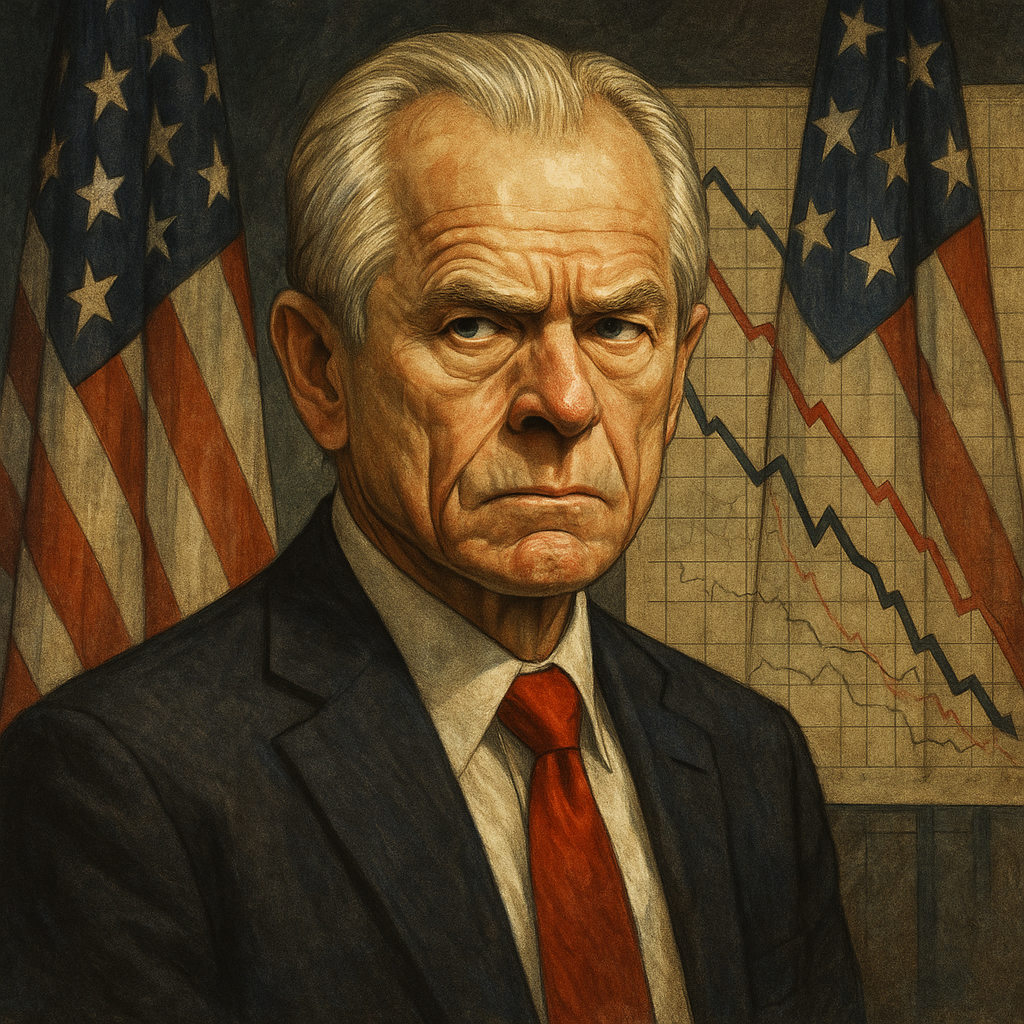 Peter Navarro, a prominent economist and political figure, has significantly shaped U.S. trade policy under President Donald Trump. Currently serving as senior counselor for trade and manufacturing in Trump’s second term, Navarro’s career spans academia, policy advising, and controversial political actions. His protectionist economic stance, particularly against China, has made him a polarizing figure, celebrated by Trump supporters but criticized by mainstream economists for his unconventional methods, such as citing a fictional source in his publications.
Key Contributions and Controversies
Navarro’s influence in Trump’s first administration focused on implementing tariffs and trade barriers, notably against China, which some credit for protecting American industries, while others argue it disrupted global markets. His involvement in the COVID-19 response included early warnings about the virus’s severity, yet his advocacy for unproven treatments like hydroxychloroquine drew scrutiny. Navarro’s role in the “Green Bay Sweep,” a plan to challenge the 2020 election results, led to legal consequences, including a contempt of Congress conviction and a four-month prison sentence in 2024. Despite this, his return to a senior role in 2025 underscores his enduring influence within the MAGA movement.
Current Role and Influence
As of June 2025, Navarro continues to advocate for protectionist policies, influencing Trump’s trade agenda, including reciprocal tariffs. His public feud with Elon Musk highlights internal tensions within the administration, yet his contributions to Project 2025 suggest a lasting impact on conservative policy. While Navarro’s supporters view him as a defender of American workers, critics point to his legal troubles and questionable academic practices as evidence of overreach.
Biographical Background
Peter Kent Navarro was born on July 15, 1949, in Cambridge, Massachusetts. He earned a Bachelor’s degree from Tufts University and later pursued a Master of Public Administration and a Ph.D. in economics at Harvard University. His early career included a three-year stint in the U.S. Peace Corps in Southeast Asia, followed by roles as a policy analyst for the Urban Services Group, the Massachusetts Energy Office, and the U.S. Department of Energy. In 1981, Navarro joined Harvard’s Energy and Environmental Policy Center as a research associate, marking the start of his academic journey.
Navarro taught as a professor of economics and public policy at the University of California, San Diego, and later at UC Irvine, where he achieved professor emeritus status after over two decades. He authored several books, including Death by China, which critiques China’s trade practices. Despite his academic success, Navarro’s five unsuccessful political campaigns in San Diego highlight his limited electoral appeal, though his policy influence grew significantly under Trump.
Academic and Economic Views
Navarro’s economic ideology centers on economic nationalism and protectionism, with a particular focus on countering China’s trade practices. He advocates for tariffs on Chinese exports, cracking down on intellectual property theft, and policies to bring manufacturing jobs back to the U.S. His books, such as Death by China, often feature a fictional character, Ron Vara (an anagram of Navarro), to reinforce his anti-China stance, a practice criticized by economists like Glenn Hubbard for lacking academic integrity (Peter Navarro Wikipedia).
Navarro opposes multilateral trade agreements like the Trans-Pacific Partnership (TPP), arguing they harm U.S. economic interests by reducing domestic investment and net exports. His protectionist views extend to allies, as seen in his criticism of Australia’s aluminum exports, which he claimed flooded U.S. markets (Navarro on TPP). Critics, including Lee Branstetter of Carnegie Mellon, argue Navarro’s ideas deviate from mainstream economic research, noting his lack of peer-reviewed publications (Navarro Wikipedia).
White House Role
In Trump’s first administration, Navarro served as Director of the Office of Trade and Manufacturing Policy, a role created to strengthen U.S. manufacturing and reduce trade deficits. He was a key architect of the trade war with China, pushing for tariffs that led to China imposing sanctions on him post-tenure. During the COVID-19 pandemic, Navarro issued memos in January and February 2020 warning of the virus’s potential to infect millions and cost trillions, though these were initially dismissed by other officials (NYT on Navarro’s Warnings). As the national Defense Production Act policy coordinator, he oversaw medical supply production.
Navarro’s pandemic role was controversial due to his advocacy for hydroxychloroquine, an unproven treatment, leading to public clashes with Dr. Anthony Fauci (Guardian on Navarro’s COVID Role). His actions drew scrutiny for overstepping his expertise, with critics noting his lack of medical qualifications (Washington Post on Navarro’s Tactics).
2020 Election and Coup Involvement
Navarro played a central role in efforts to overturn the 2020 presidential election through the “Green Bay Sweep,” a strategy devised with Steve Bannon. The plan aimed to delay certification by having Republican lawmakers challenge electoral votes from six battleground states—Arizona, Michigan, Pennsylvania, Georgia, Wisconsin, and Nevada—hoping to pressure state legislatures to decertify results. Navarro claimed over 100 congressmen and senators supported the plan, which he detailed in his book In Trump Time and interviews (Rolling Stone on Green Bay Sweep). The effort failed after the January 6 Capitol riot disrupted proceedings, but Navarro’s public defense of the plan as constitutional has been widely criticized (Washington Post on Navarro’s Plot).
Contempt of Congress and Legal Proceedings
In February 2022, the House Select Committee investigating the January 6 attack subpoenaed Navarro for documents and testimony about his election-related activities. He refused to comply, citing executive privilege invoked by Trump, leading to his indictment on two counts of contempt of Congress in June 2022. Navarro was convicted in September 2023 and sentenced to four months in prison and a $9,500 fine in January 2024. His appeals, including to the Supreme Court, were denied, and he served his sentence from March to July 2024 at a Miami federal prison, becoming the first former White House official imprisoned for contempt (Justice Department on Navarro’s Sentencing; CNN on Navarro’s Imprisonment).
Public Persona and Media Strategy
Navarro’s public persona is marked by combative rhetoric and frequent media appearances, particularly on conservative outlets like Fox News, where he defends Trump’s policies and attacks critics. His active presence on X involves direct engagement with supporters and adversaries, exemplified by his 2025 feud with Elon Musk over trade tariffs, where Musk called him “dumber than a sack of bricks” (Navarro Wikipedia). Navarro’s provocative style resonates with Trump’s base but draws mainstream criticism for its divisiveness. His media strategy amplifies his influence, positioning him as a vocal advocate for MAGA policies.
Affiliations and Networks
Navarro is closely aligned with MAGA figures like Steve Bannon, with whom he collaborated on the Green Bay Sweep, and has ties to Michael Flynn, who supported Navarro’s legal fund (Raw Story on Flynn’s Support). He is a contributor to Project 2025, a Heritage Foundation-led initiative, authoring a chapter on “fair trade” that advocates for tariffs on China, the EU, and India (NBC News on Project 2025). These affiliations place Navarro at the core of the post-Trump authoritarian movement, influencing conservative policy agendas.
Recent Developments
Released from prison on July 17, 2024, Navarro was appointed senior counselor for trade and manufacturing in Trump’s second term, starting January 20, 2025 (CBS News on Navarro’s Appointment). He continues to push protectionist policies, including reciprocal tariffs, aligning with his Project 2025 contributions. His public spat with Musk underscores internal administration tensions, yet Navarro’s influence on Trump’s trade agenda remains strong, as seen in policies targeting global trade imbalances (Guardian on Navarro’s Influence).
Key Points
- Peter Navarro serves as a senior counselor for trade and manufacturing in Donald Trump’s second term, starting January 2025.
- He has a background in economics with a Ph.D. from Harvard and was a professor at UC Irvine.
- Navarro’s economic views emphasize protectionism, particularly targeting China’s trade practices.
- He played a pivotal role in Trump’s first-term trade war with China, advocating for tariffs.
- During the COVID-19 pandemic, Navarro issued early warnings but controversially promoted unproven treatments like hydroxychloroquine.
- He was a key figure in the “Green Bay Sweep,” an attempt to overturn the 2020 election results.
- Navarro was convicted of contempt of Congress for defying the January 6 Committee and served a four-month prison sentence in 2024.
- He contributes to Project 2025, shaping conservative trade policy with a focus on tariffs.
- His influence persists despite public disputes, including a high-profile feud with Elon Musk over trade strategy.
- Navarro frequently appears in right-wing media and is highly active on X to amplify MAGA-aligned views.
- He has faced credibility issues due to creating fictional sources in his books, including the invented “Ron Vara.”
- Navarro remains a divisive but central figure in Trump’s administration and broader nationalist economic agenda.
| Event | Date | Details |
|---|---|---|
| Birth | July 15, 1949 | Born in Cambridge, Massachusetts |
| Education | 1970s–1980s | BA from Tufts, MPA and Ph.D. from Harvard |
| First Trump Administration Role | January 2017 | Director of Office of Trade and Manufacturing Policy |
| COVID-19 Memos | January–February 2020 | Warned of pandemic’s potential severity |
| Green Bay Sweep | 2020–2021 | Plan to challenge 2020 election results |
| Contempt Indictment | June 2, 2022 | Charged for defying January 6 Committee subpoena |
| Conviction | September 7, 2023 | Guilty on two counts of contempt of Congress |
| Sentencing | January 25, 2024 | Four months in prison, $9,500 fine |
| Prison Term | March–July 2024 | Served at Miami federal prison |
| Second Term Appointment | January 20, 2025 | Senior counselor for trade and manufacturing |
Key Citations
- Peter Navarro Wikipedia Page Comprehensive Overview
- Investopedia Profile on Peter Navarro’s Background
- Guardian Analysis of Navarro’s COVID-19 Role
- New York Times on Navarro’s COVID-19 Warnings
- Axios on Navarro’s Coronavirus Memos
- Washington Post on Navarro’s Pandemic Tactics
- Wikipedia on Green Bay Sweep Strategy
- Rolling Stone on Navarro’s Election Plot
- Washington Post on Navarro’s Jan. 6 Role
- Justice Department on Navarro’s Contempt Sentencing
- CNN on Navarro’s Prison Sentence
- NBC News on Project 2025 Contributors
- Raw Story on Flynn’s Support for Navarro
- CBS News on Navarro’s 2025 Appointment
- Guardian on Navarro’s Influence in 2025