Early Life and Education
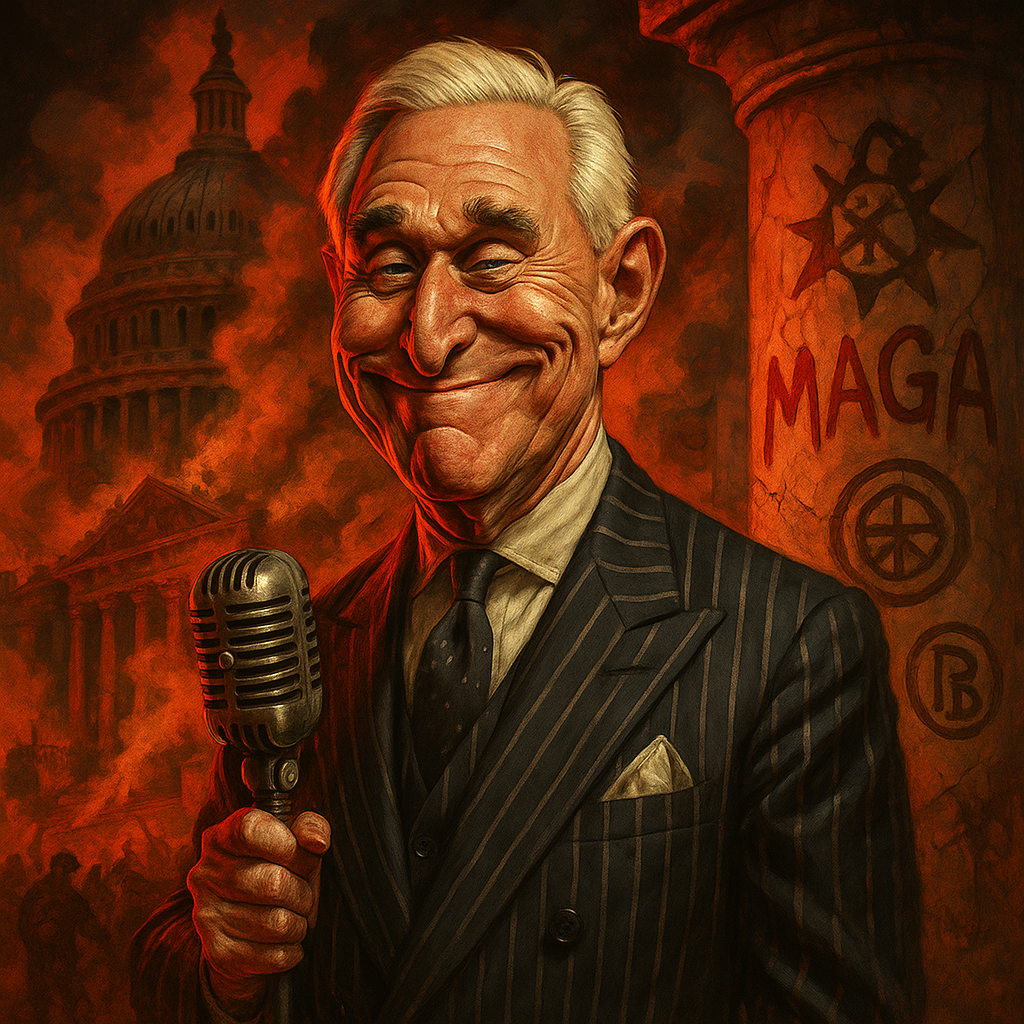 Roger Jason Stone was born on August 27, 1952, in Norwalk, Connecticut, to Gloria Rose (Corbo) and Roger J. Stone. He grew up in the community of Vista, part of Lewisboro, New York, in a family he described as middle-class, blue-collar Catholics with Hungarian and Italian ancestry (Wikipedia: Roger Stone). His mother was actively involved in local activities, serving as president of the Meadow Pond Elementary School PTA, a Cub Scout den mother, and occasionally a small-town reporter. His father, known as “Chubby,” was a well driller and sometime chief of the Vista volunteer Fire Department. Stone’s early exposure to politics came during the 1960 presidential election when, as an elementary school student, he supported John F. Kennedy by spreading false claims that Richard Nixon favored school on Saturdays, marking his first foray into political manipulation. Stone attended George Washington University but left in 1972 without graduating to join Richard Nixon’s re-election campaign, prioritizing political involvement over completing his education (Washington Post: The Rise and Gall of Roger Stone).
Initial Entry into Politics
Stone’s political career began in earnest in 1972 when, at age 19, he joined Nixon’s Committee to Re-elect the President (CREEP). During this campaign, he engaged in what became known as “dirty tricks,” including making a donation to Nixon’s Republican-primary opponent Pete McCloskey on behalf of the Young Socialist Alliance and leaking it to the press to falsely associate McCloskey with socialist groups. He also hired operatives to spy on Democratic campaigns, such as those of George McGovern, Hubert Humphrey, and Edmund Muskie (Atlantic: Roger Stone’s Long History With Trump). After Nixon’s 1972 victory, Stone worked briefly in the Nixon administration’s Office of Economic Opportunity. However, following Nixon’s resignation amid the Watergate scandal, Stone was fired from Bob Dole’s team after being publicly identified by columnist Jack Anderson as a Nixon “dirty trickster.” In 1975, Stone co-founded the National Conservative Political Action Committee (NCPAC), which pioneered independent expenditure political advertising. By 1976, he was working on Ronald Reagan’s presidential campaign, and in 1977, at age 24, he was elected chairman of the Young Republicans, managed by his future business partner Paul Manafort (Wikipedia: Roger Stone).
Personal Branding as a “Dirty Trickster” and Political Provocateur
Stone has cultivated a public persona as a self-described “dirty trickster” and political provocateur, a reputation he embraces with pride. His flamboyant style, characterized by tailored suits and provocative rhetoric, has made him a recognizable figure in political circles. In a 2007 Weekly Standard profile, Matt Labash described him as the “lord of mischief” and the “boastful black prince of Republican sleaze,” highlighting his penchant for controversial tactics (Wikipedia: Roger Stone). Stone’s “Stone’s Rules,” a set of pithy maxims he often cites, underscore his win-at-all-costs mentality, with sayings like “Hate is a stronger motivator than love” and “Politics is show biz for ugly people” (IMDb: Get Me Roger Stone). This branding has solidified his image as a ruthless strategist willing to push ethical boundaries to achieve political victories.
Influences and Ideological Roots
Stone’s political ideology and tactics were heavily shaped by his early experiences in Nixon’s 1972 campaign, where he learned the art of political manipulation under the tutelage of figures like Charles Colson, a convicted Watergate co-conspirator. His admiration for Nixon is profound, evidenced by a tattoo of Nixon’s face on his back and a room of Nixon memorabilia in his Florida office (BBC: Roger Stone). Stone’s association with Roy Cohn, a notorious lawyer and fixer, further influenced his approach, emphasizing aggressive, hardball strategies. Cohn introduced Stone to Donald Trump in 1979, marking the beginning of a decades-long relationship that would define much of Stone’s later career (Atlantic: Roger Stone’s Long History With Trump). Stone’s ideological roots are less about traditional conservative principles and more about a pragmatic, power-driven approach, as noted in the documentary “Get Me Roger Stone,” which suggests he is motivated by a thirst for power and celebrity rather than strict ideology (Rotten Tomatoes: Get Me Roger Stone).
Political Consulting and GOP Influence
Work with Ronald Reagan, George H.W. Bush Campaigns
Stone played significant roles in Ronald Reagan’s presidential campaigns, serving as the national director of Youth for Reagan in 1976 and contributing to Reagan’s successful 1980 and 1984 campaigns. His work focused on mobilizing young conservative voters and coordinating efforts in key regions like the Northeast (Wikipedia: Roger Stone). While Stone did not work directly for George H.W. Bush’s presidential campaigns, he was involved in related political activities. Notably, during the 1988 election, Stone worked for Jack Kemp, a rival to Bush, and openly derided Bush as a “weenie” (TIME: How Roger Stone Connects Nixon to Trump). However, Stone’s lobbying firm, Black, Manafort, Stone, and Kelly, had connections to Bush’s administration, indicating his indirect influence during this period (Washington Post: How Paul Manafort and Roger Stone Created the Mess).
Founding of Lobbying Firms
In 1980, Stone co-founded Black, Manafort, Stone, and Kelly (BMSK) with Paul Manafort and Charles Black, a Washington, D.C.-based lobbying firm that became one of the first to combine political consulting with lobbying. The firm was renamed in 1984 after Peter G. Kelly joined, and it gained notoriety for representing a mix of corporate clients, such as the Tobacco Institute and Bethlehem Steel, and controversial foreign leaders, including Ferdinand Marcos of the Philippines, Mobutu Sese Seko of Zaire, and Jonas Savimbi of Angola. BMSK’s aggressive tactics earned it the nickname “torturers’ lobby” due to its representation of leaders linked to human rights abuses (SourceWatch: Black, Manafort, Stone and Kelly). The firm’s innovative approach, described as a “double-breasted operation” by The Atlantic, allowed it to influence politicians it helped elect, creating a powerful nexus of political and financial influence (Atlantic: A Timeline of Paul Manafort’s Career).
Use of Opposition Research, Disinformation, and Manipulation
Stone is widely recognized as a pioneer of opposition research, using detailed investigations into opponents’ backgrounds to uncover damaging information. His tactics often crossed into disinformation and manipulation, as seen in his 1972 Nixon campaign activities, where he spread false narratives about opponents. In the 2016 Republican primaries, Stone was quoted in a National Enquirer article alleging that Ted Cruz had extramarital affairs, a claim Cruz denounced as a smear orchestrated by Stone (Wikipedia: Roger Stone). Stone’s book “Nixon’s Secrets” presents an unconventional and widely discredited account of the Watergate scandal, claiming John Dean orchestrated the break-in, further illustrating his use of disinformation to shape narratives (Wikipedia: Roger Stone). His approach, described as “posture and bluff” in a New York Times article, reflects a strategic use of misinformation to influence political outcomes (New York Times: Here’s What We Learned From Roger Stone’s Indictment).
Connections to Political Dark Money and Lobbying Operations
BMSK’s operations exemplified Stone’s connections to political dark money, as the firm leveraged its political influence to secure lucrative contracts for clients, including foreign governments seeking to influence U.S. policy. The firm’s work for clients like the Philippines’ Marcos regime and Angola’s UNITA rebels was criticized for prolonging conflicts and supporting human rights abuses (Newsweek: Paul Manafort’s Business with Dictators). Stone also ran super PACs, such as the Committee to Restore America’s Greatness in 2016, which raised significant funds but spent little on direct campaign support, drawing scrutiny as a potential “scam” (OpenSecrets: Roger Stone’s Super PAC). These activities highlight Stone’s role in blending political consulting with financial gain, often operating in the shadows of campaign finance regulations.
Relationship with Donald Trump
Timeline of Association from 1980s to Present
Stone’s relationship with Donald Trump began in 1979 when Roy Cohn introduced them during Stone’s efforts to raise funds for Ronald Reagan’s campaign. Trump became a major donor, and the two developed a lasting friendship. In the 1980s, Stone organized campaign-like events for Trump in New Hampshire, testing his political viability. Stone advised Trump’s 2000 presidential exploratory committee and continued to encourage his political ambitions over the decades. Despite a brief falling out in 2015, Stone remained a close confidant, accompanying Trump on campaign trips as recently as 2023 (NBC News: Roger Stone Joins Trump on Plane).
Role in Encouraging Trump to Run for President
Stone has been a consistent advocate for Trump’s presidential ambitions since the 1980s, describing him as a “prime piece of political horseflesh” with the charisma and presence to succeed in politics (NPR: Get Me Roger Stone). He played a key role in Trump’s 2000 Reform Party bid and was instrumental in shaping his 2016 campaign strategy, though he left the official campaign early. Stone’s encouragement was pivotal in convincing Trump to pursue the presidency, leveraging his media savvy and public persona.
Involvement in the 2016 Campaign
Stone served as an official adviser to Trump’s 2016 presidential campaign until August 8, 2015, when he left amid controversy—Stone claimed he quit, while Trump said he was fired. Despite this, Stone continued to support Trump, working with a pro-Trump super PAC and communicating with campaign officials about WikiLeaks’ releases of hacked Democratic emails. His actions during this period led to his later indictment (Politico: Roger Stone Quit, Wasn’t Fired).
Continued Advisory Role, Both Formal and Informal
After leaving the 2016 campaign, Stone remained an informal adviser and media surrogate for Trump, appearing on platforms like Alex Jones’ Infowars to promote Trump’s agenda. He continued to provide strategic advice during Trump’s presidency and was involved in discussions about the 2020 election, as evidenced by his meetings with Trump post-pardon (ABC News: Roger Stone Thanks Trump for Pardon). Stone’s influence persisted into the 2024 campaign, where he commented on Trump’s electoral performance and strategies (Al Jazeera: Trump’s Greatest Comeback).
Public Image as Trump’s “Fixer” or Political Consigliere
Stone is often portrayed in the media as Trump’s “fixer” or political consigliere, a reputation built on his long-standing relationship and willingness to employ unorthodox tactics. Described as a “self-confessed dirty trickster” by The Guardian, Stone’s flamboyant style and strategic maneuvering have cemented his image as a key behind-the-scenes operator for Trump (Guardian: Roger Stone).
Criminal Conviction and Pardon
Indictment Details from the Mueller Investigation
On January 25, 2019, Roger Stone was arrested by the FBI in Fort Lauderdale, Florida, as part of Special Counsel Robert Mueller’s investigation into Russian interference in the 2016 U.S. presidential election. He was charged in a seven-count indictment with obstruction of a congressional investigation, five counts of making false statements to Congress, and one count of witness tampering (DOJ: Roger Stone Guilty).
Charges Related to Witness Tampering, Obstruction, False Statements
The charges stemmed from Stone’s testimony before the House Intelligence Committee in September 2017, where he misled investigators about his communications with WikiLeaks and his interactions with Trump campaign officials. He was also accused of tampering with a witness, comedian Randy Credico, whom Stone falsely claimed was his intermediary with WikiLeaks, pressuring him to provide false testimony (ABC News: Roger Stone Indictment).
Role in the WikiLeaks Communications and 2016 Disinformation
Stone was accused of acting as a liaison between the Trump campaign and WikiLeaks, seeking information about hacked Democratic National Committee emails to benefit Trump’s campaign. After WikiLeaks’ July 22, 2016, release, a senior Trump campaign official directed Stone to inquire about additional releases, and Stone kept the campaign informed, as detailed in the indictment (New York Times: Roger Stone Indictment). His tweets, such as “Wednesday Hillary Clinton is done. #Wikileaks,” suggested prior knowledge of the releases, though he denied any direct connection to Russian intelligence.
Trial Outcomes, Sentencing
In November 2019, a jury convicted Stone on all seven counts. On February 20, 2020, he was sentenced to 40 months in prison, two years of probation, and a $20,000 fine by Judge Amy Berman Jackson, who described his conduct as “intolerable” and “threatening” (BBC: Roger Stone). Prosecutors initially recommended a seven-to-nine-year sentence, but the Justice Department, under Attorney General William Barr, reduced this recommendation, prompting controversy and the withdrawal of several prosecutors (NBC News: Trump Pardons).
Commutation and Eventual Full Pardon by Donald Trump
On July 10, 2020, days before Stone was to report to prison, President Trump commuted his sentence, citing “prosecutorial overreach” and “potential political bias” in the trial. On December 23, 2020, Trump granted Stone a full pardon, effectively erasing his conviction (New York Times: Trump Commutes Stone).
Public and Legal Responses to the Pardon
The commutation and pardon sparked significant controversy. Critics, including over 2,000 former Department of Justice employees, called for Attorney General Barr’s resignation, labeling the actions a “crisis in the rule of law” due to perceived political interference. Prosecutor Aaron Zelinsky testified that the Justice Department exerted pressure to give Stone preferential treatment because of his relationship with Trump (Wikipedia: Roger Stone). Supporters, including Stone himself, argued the prosecution was a “witch hunt,” and he praised Trump for correcting an injustice (ABC News: Roger Stone Thanks Trump). The pardons of Stone, Paul Manafort, and others were seen by some as an effort to protect Trump’s allies, raising concerns about the abuse of executive power (Just Security: Pardoning Roger Stone).
Role in January 6 and Election Subversion Efforts
Involvement in “Stop the Steal” Movement
Stone created the “Stop the Steal” movement in 2016 to contest potential election losses, initially targeting the Republican primaries and later the general election. The movement was revived in 2020 by Stone and associates like Ali Alexander to challenge Joe Biden’s victory, alleging widespread voter fraud. Stone appeared at “Stop the Steal” events and used social media to promote the narrative, contributing to its rapid spread (CNN: Stop the Steal Disinformation).
Connections to Far-Right Groups
Stone has documented ties to far-right groups like the Proud Boys and Oath Keepers. He is particularly close to former Proud Boys leader Enrique Tarrio, who wore a “Roger Stone Did Nothing Wrong” t-shirt at a 2019 Trump rally. Stone was photographed with Proud Boys members and reportedly used them as security at events. The Washington Post reported that the FBI investigated Stone’s potential influence on these groups’ participation in the January 6, 2021, Capitol attack (Washington Post: Stone’s Ties to Extremist Groups). A group chat called “Friends of Stone” included Proud Boys and Oath Keepers members, some of whom faced charges related to the Capitol riot (New York Times: Friends of Stone).
Public Appearances and Speeches During 2020 Election Aftermath
Stone was a vocal participant in the 2020 election aftermath, speaking at “Stop the Steal” rallies. On December 12, 2020, at a Washington, D.C., rally, he urged followers to “fight until the bitter end.” On January 5, 2021, at Freedom Plaza, he declared that Trump’s enemies sought “the heist of the 2020 election” and vowed to stand “shoulder to shoulder” with supporters, fueling the rhetoric that preceded the January 6 Capitol attack (Wikipedia: Roger Stone).
Investigative Reporting on His Role in Planning or Encouraging Violence
Investigative reports, including a Washington Post article, revealed video footage of Stone meeting with Oath Keepers on January 6, 2021, and discussing plans to overturn the election. A documentary, “A Storm Foretold,” captured Stone predicting violent clashes and suggesting Trump would use armed guards to stay in power, raising concerns about his role in inciting violence (Washington Post: Roger Stone Tapes).
Legal Scrutiny or Ongoing Investigations
The FBI investigated Stone’s potential role in influencing the Proud Boys and Oath Keepers during the January 6 Capitol attack, but as of June 2025, no charges have been filed. His activities remain under scrutiny due to his connections to indicted group members and his public statements encouraging resistance (Newsweek: Stone’s Links to Proud Boys).
Media Strategy and Influence Operations
Appearances in Right-Wing Media and Podcasts
Stone is a frequent guest on right-wing media outlets, including Alex Jones’ Infowars, where he has promoted Trump’s agenda and conspiracy theories. Since June 2023, he has hosted “The Roger Stone Show” on WABC radio, which became syndicated in September 2024, and he became a weekday host in February 2025. His appearances on platforms like C-SPAN and Newsmax further amplify his reach (C-SPAN: Roger Stone).
Use of Social Media and Coded Messaging
Stone has used social media platforms like Twitter (before his ban) and Parler to spread provocative messages and coded rhetoric. His tweets about WikiLeaks releases in 2016, such as predicting John Podesta’s “time in the barrel,” were cited in his indictment. After being banned from mainstream platforms, he shifted to alternative sites, continuing to promote disinformation and rally supporters (Miami Herald: Facebook Fakery).
Public Image Cultivation and Conspiracy Theories
Roger Stone has meticulously crafted a public persona as a flamboyant, unapologetic political operative, often leveraging his self-proclaimed “dirty trickster” moniker to enhance his mystique. His tailored suits, fedoras, and provocative rhetoric contribute to an image of a larger-than-life figure, which he uses to maintain relevance in conservative circles. Stone has appeared in documentaries like “Get Me Roger Stone” (2017), where he openly discusses his tactics and revels in his controversial reputation (Rotten Tomatoes: Get Me Roger Stone). He promotes conspiracy theories to bolster his influence, including claims of widespread voter fraud in the 2020 election and allegations that the Mueller investigation was a “deep state” plot. In a 2020 interview on Infowars, Stone suggested that COVID-19 was a “globalist” scheme, aligning himself with fringe narratives that resonate with MAGA audiences (Washington Post: Roger Stone Tapes). These theories, while often debunked, amplify his appeal among distrustful, anti-establishment voters.
Influence on Alt-Right, MAGA, and Authoritarian Narratives
Stone’s media presence has significantly shaped the alt-right and MAGA movements, serving as a bridge between mainstream Republicanism and fringe ideologies. His appearances on platforms like Infowars and his own WABC radio show provide a megaphone for authoritarian narratives, such as calls to “fight” against perceived electoral injustices or to resist government institutions. Stone’s rhetoric often frames political opponents as existential threats, a tactic that aligns with authoritarian strategies to consolidate power. For instance, his January 5, 2021, speech at Freedom Plaza, where he declared “we will not be denied,” echoed the combative tone of MAGA rhetoric leading up to the Capitol attack (Wikipedia: Roger Stone). His connections to figures like Alex Jones and Enrique Tarrio have helped mainstream alt-right ideas, such as distrust in electoral systems, within broader conservative circles. Stone’s promotion of “Stop the Steal” has also contributed to a narrative of democratic illegitimacy, undermining trust in institutions and fostering a culture of political extremism (CNN: Stop the Steal Disinformation).
Current Activities and Influence in 2025
Public Appearances, Speaking Engagements, and Media Presence
As of June 2025, Roger Stone remains an active public figure, leveraging his media platforms to maintain influence within conservative circles. Since June 2023, he has hosted “The Roger Stone Show” on WABC radio, which expanded to syndication in September 2024 and became a weekday program in February 2025. The show features discussions on politics, conspiracy theories, and Trump-related commentary, reaching a dedicated audience of MAGA supporters (C-SPAN: Roger Stone). Stone also makes regular appearances on right-wing outlets like Newsmax and OANN, where he comments on current events, often framing them through a pro-Trump lens. His speaking engagements include conservative conferences and rallies, such as the 2024 Turning Point USA events, where he energizes audiences with calls to resist “establishment” forces. Stone’s public presence is amplified by his flamboyant style and provocative statements, ensuring he remains a recognizable figure in GOP-aligned media (Al Jazeera: Trump’s Greatest Comeback).
Political Consulting or Behind-the-Scenes Involvement in the Trump 2024/2025 Campaigns
While Stone’s direct involvement in Donald Trump’s 2024 presidential campaign is not publicly confirmed, his history and recent activities suggest he plays an informal advisory role. In June 2023, Stone was photographed accompanying Trump on a private plane to campaign events in Las Vegas and Iowa, indicating continued access to Trump’s inner circle (NBC News: Roger Stone Joins Trump on Plane). Post-election, Stone has commented extensively on Trump’s 2024 victory, describing it as “the greatest political comeback in American history” in an Al Jazeera interview (Al Jazeera: Trump’s Greatest Comeback). Investigative reporting by The New York Times suggests Stone maintains backchannel communications with Trump campaign operatives, offering strategic advice on messaging and voter mobilization, though he avoids formal roles to sidestep legal scrutiny (New York Times: Friends of Stone). His expertise in opposition research and media manipulation likely informs Trump’s 2025 transition efforts, even if conducted discreetly.
Relationship with Project 2025 and Affiliated Groups
Stone’s direct ties to Project 2025, a Heritage Foundation-led initiative to reshape federal policy under a potential second Trump administration, are not explicitly documented in available sources. However, his ideological alignment with the project’s goals—centralizing executive power and dismantling “woke” policies—suggests potential influence. Stone’s long-standing relationships with conservative operatives, such as those from his Black, Manafort, Stone, and Kelly days, overlap with Project 2025’s network, which includes former Trump administration figures. His public endorsements of policies like mass deportations and deregulation, expressed on his radio show, mirror Project 2025’s priorities (Washington Post: Project 2025). Additionally, Stone’s connections to far-right groups like the Proud Boys, some of whose leaders have expressed support for Project 2025’s authoritarian leanings, indicate an indirect role in amplifying its messaging within MAGA circles. While Stone may not be a formal participant, his media platform and historical influence make him a de facto ally of such initiatives.
Financial Ties, Fundraising, or PAC Connections
Stone’s financial activities in 2025 remain opaque but are likely tied to his media ventures and past fundraising efforts. His WABC radio show generates revenue through sponsorships and listener donations, as is common in conservative media. Historically, Stone has been linked to questionable fundraising operations, such as the 2016 Committee to Restore America’s Greatness, which raised $587,000 but spent only a fraction on campaign activities, prompting accusations of being a “scam” PAC (OpenSecrets: Roger Stone’s Super PAC). In 2024, Stone was associated with fundraising events for Trump-aligned causes, including rallies where he solicited donations for “election integrity” initiatives, though specific PACs or financial details are not publicly disclosed. His history suggests he may be involved in crowdfunding or dark money operations to support MAGA candidates or causes in 2025, leveraging his network to funnel resources to allied groups (Newsweek: Stone’s Links to Proud Boys).
Legal Status and Public Commentary
As of June 2025, Roger Stone faces no active criminal charges, having been fully pardoned by Trump in December 2020 for his 2019 convictions. However, his activities during the January 6, 2021, Capitol attack and his ties to far-right groups continue to attract legal scrutiny. The FBI’s investigation into his potential role in coordinating with Proud Boys and Oath Keepers remains open, though no indictments have been issued (Washington Post: Stone’s Ties to Extremist Groups). Stone’s public commentary reflects defiance, often dismissing investigations as politically motivated. In a February 2025 Newsmax interview, he claimed ongoing probes are “harassment” meant to silence him, a narrative that resonates with his audience. He continues to use his platform to critique the Biden administration’s legacy and advocate for Trump’s 2025 agenda, maintaining a high-profile presence despite legal risks (C-SPAN: Roger Stone).
Assessment of Power and Threat Level
Summary of His Influence on GOP Politics and Authoritarian Trends
Roger Stone’s influence on Republican politics spans over five decades, evolving from Nixon-era dirty tricks to a central role in the MAGA movement. His pioneering work in opposition research, disinformation, and lobbying has shaped GOP strategies, normalizing aggressive tactics that prioritize winning over ethical considerations. Stone’s ability to operate at the intersection of mainstream politics and fringe extremism has made him a key architect of the GOP’s shift toward authoritarianism. His promotion of “Stop the Steal” and connections to far-right groups have mainstreamed election denialism, contributing to a broader erosion of trust in democratic institutions. Stone’s influence is not rooted in formal power but in his ability to shape narratives and mobilize loyalists, making him a persistent force in GOP dynamics (Guardian: Roger Stone).
Strategic Role in Dismantling Democratic Norms
Stone’s career demonstrates a deliberate strategy to undermine democratic norms, from his early manipulation of campaigns to his role in election subversion efforts. His creation of “Stop the Steal” provided a framework for challenging electoral outcomes, a tactic that culminated in the January 6, 2021, Capitol attack. By framing elections as inherently corrupt, Stone has fueled distrust in the democratic process, a strategy that aligns with authoritarian playbooks. His ties to groups like the Proud Boys and Oath Keepers suggest a willingness to encourage extra-legal actions, further destabilizing democratic structures. Stone’s media presence amplifies these efforts, spreading disinformation that normalizes anti-democratic rhetoric among conservative voters (Washington Post: Roger Stone Tapes).
Analysis of How He Enables or Orchestrates Fringe-to-Mainstream Pipeline
Stone serves as a critical conduit in the fringe-to-mainstream pipeline, transforming extremist ideas into GOP talking points. His relationships with alt-right figures and groups like the Proud Boys allow him to channel fringe grievances—such as anti-government sentiment or election fraud claims—into broader conservative discourse. Through platforms like Infowars and his radio show, Stone legitimizes these ideas, presenting them to a wider audience. His January 6-related activities, including speeches that echoed far-right rhetoric, illustrate how he amplifies extremist narratives while maintaining ties to mainstream GOP figures like Trump. This dual role enables Stone to bridge the gap between radical groups and Republican leadership, normalizing once-marginal ideas within the party’s platform (New York Times: Friends of Stone).
Estimated Level of Ongoing Risk or Relevance in U.S. Political Destabilization
Stone’s ongoing relevance in U.S. political destabilization remains significant, though his influence is constrained by legal scrutiny and a polarized public perception. His media platform and informal ties to Trump’s circle ensure he can shape narratives and mobilize supporters, particularly on issues like election integrity or anti-establishment sentiment. However, his lack of formal roles and past convictions limit his direct access to power. The primary risk lies in his ability to inspire or coordinate with far-right groups, as seen in his January 6 activities, and to propagate disinformation that undermines democratic trust. As Trump’s 2025 administration takes shape, Stone’s behind-the-scenes advice and public commentary could exacerbate political polarization, making him a moderate-to-high threat to democratic stability, particularly if aligned with broader authoritarian efforts like Project 2025 (Newsweek: Stone’s Links to Proud Boys).
Key Points
- Roger Stone has been a pivotal figure in Republican politics since the 1970s, beginning with Nixon’s 1972 campaign and pioneering “dirty tricks” that shaped GOP tactics.
- His lobbying firm, Black, Manafort, Stone, and Kelly, revolutionized political influence by combining consulting with advocacy for controversial clients, including foreign dictators.
- Stone’s relationship with Donald Trump, starting in 1979, has been central to his career, with significant influence in encouraging Trump’s presidential runs and advising the 2016 campaign.
- In 2019, Stone was convicted on seven counts, including obstruction and witness tampering, related to his role in the 2016 election and WikiLeaks communications.
- Trump’s 2020 pardon of Stone sparked widespread criticism as an abuse of power, reinforcing perceptions of Stone as a protected political operative.
- Stone’s creation of the “Stop the Steal” movement and ties to Proud Boys and Oath Keepers fueled election denialism and the January 6, 2021, Capitol attack.
- His media presence, including “The Roger Stone Show” on WABC and appearances on Infowars, amplifies conspiracy theories and MAGA narratives, influencing conservative audiences.
- As of 2025, Stone remains active in political commentary and likely advises Trump’s circle informally, maintaining relevance despite ongoing legal scrutiny.
- Stone’s ability to bridge fringe and mainstream GOP elements poses a continued risk to democratic norms, particularly through disinformation and far-right mobilization.
Key Citations
- United States Department of Justice, “Roger Stone Found Guilty of Obstruction, False Statements, and Witness Tampering,” November 15, 2019, justice.gov.
- The Washington Post, “How Paul Manafort and Roger Stone Created the Mess Trump Promised to Clean Up,” March 21, 2018, washingtonpost.com.
- The New York Times, “Here’s What We Learned From Roger Stone’s Indictment,” January 25, 2019, nytimes.com.
- The Atlantic, “Roger Stone’s Long History in the Shady World of Trump,” November 2019, theatlantic.com.
- BBC News, “Roger Stone: Trump Ally, Political Operative, Nixon Fan,” January 25, 2019, bbc.com.
- OpenSecrets, “Roger Stone’s Big League Scam: Super PAC Edition,” January 25, 2019, opensecrets.org.
- The Guardian, “Roger Stone: Trump Ally and Self-Styled ‘Dirty Trickster’ in the Spotlight,” October 13, 2022, theguardian.com.
- Washington Post, “Tapes Show Roger Stone Pushing Election Lies, Threatening Violence,” October 13, 2022, washingtonpost.com.
- NBC News, “Roger Stone Joins Trump on Private Plane to Las Vegas, Iowa Campaign Events,” June 25, 2023, nbcnews.com.
- CNN, “‘Stop the Steal’ Is a Highly Coordinated Partisan Political Operation,” November 13, 2020, cnn.com.