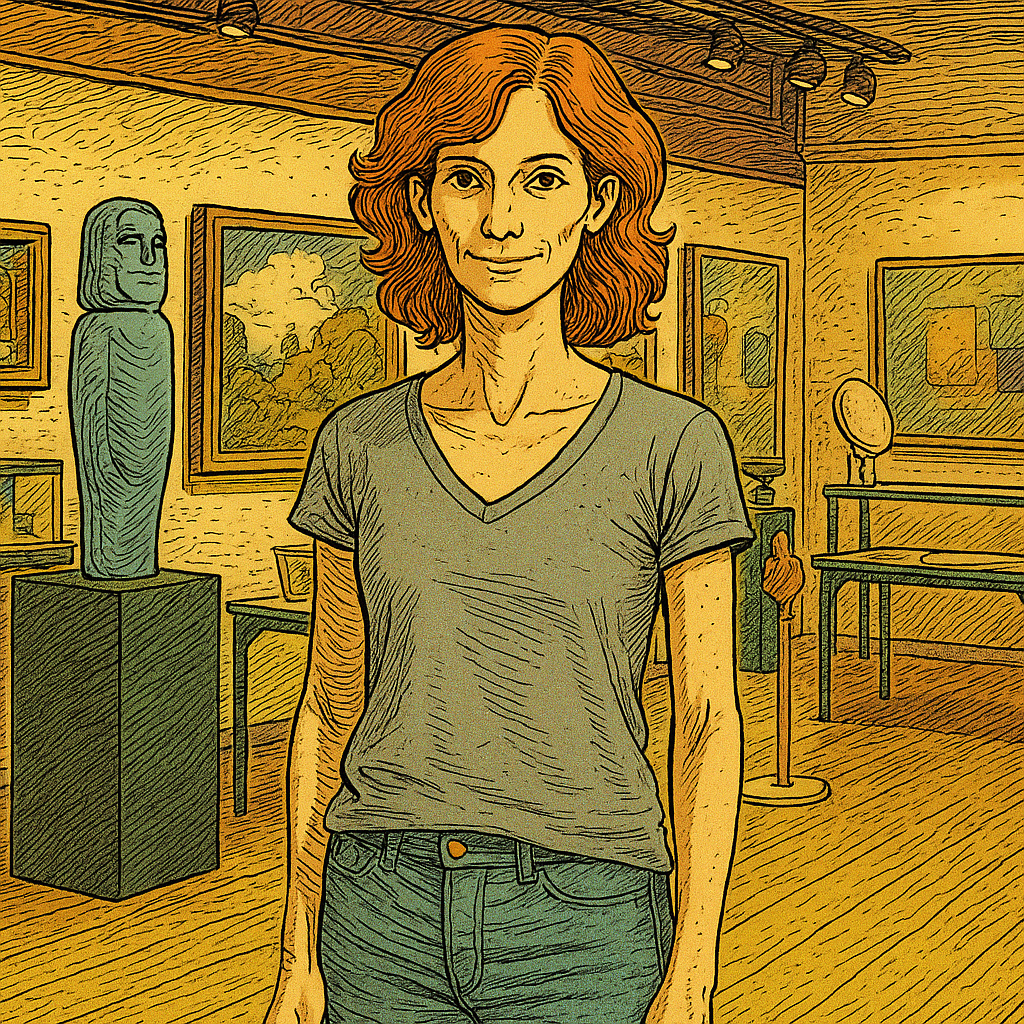
 By morning the mountains were gone again. The air turned the color of ash—soft at first, then thick enough that even the streetlights looked jaundiced. It wasn’t our fire; it never is. The weather report traced it to Arizona, maybe Utah. Every summer brings a different source, the way bad news rotates through regions.
I propped the gallery door open anyway. Tourists still came, slower now, moving like swimmers through a heavy current. A man asked if the paintings on the back wall were “meant to look that hazy,” and I said they weren’t. He smiled, then coughed. Another couple lingered near the window and asked if the train was still running. I told them yes, though the views would be different today. They nodded, glanced at the brown sky, and said they might wait for a clearer one.
The smell drifted in—pine, plastic, distance. I kept wiping the glass even though nothing stayed clear. The hum of the air conditioner sounded uneven, a mechanical reminder that filtered air is still borrowed from the same sky. Somewhere beyond town, the ridgeline was only a rumor.
At noon, someone mentioned evacuation routes on the local radio, not for here but for towns we pass through on the way to somewhere else. I thought about how often the danger feels adjacent now—like a neighbor’s dog that never stops barking but never crosses the fence.
By afternoon, the light had turned orange and sharp, flattening everything it touched. Even the shadows looked exhausted. I watched two cyclists ride through the haze, heads down, trusting the road to hold. The smoke thickened again at sunset, the horizon closing like a shutter.
When I locked up, a thin layer of ash had settled on the welcome mat. I brushed it away and it came back immediately, the gesture itself feeling like ritual. The gallery smelled faintly of solvents and burnt pine. Somewhere far off, people were still counting acres. Here, we only counted hours until the wind shifted—until the mountains remembered to reappear.