 The banners went up over Main Avenue this morning. Red, white, and blue triangles strung from lamppost to lamppost, light enough to move with every car that passed. They were a little early—almost a week before the Fourth—but the tourism office never likes to wait. By noon, the air itself seemed colored by them, every reflection taking on the same sharp hues.
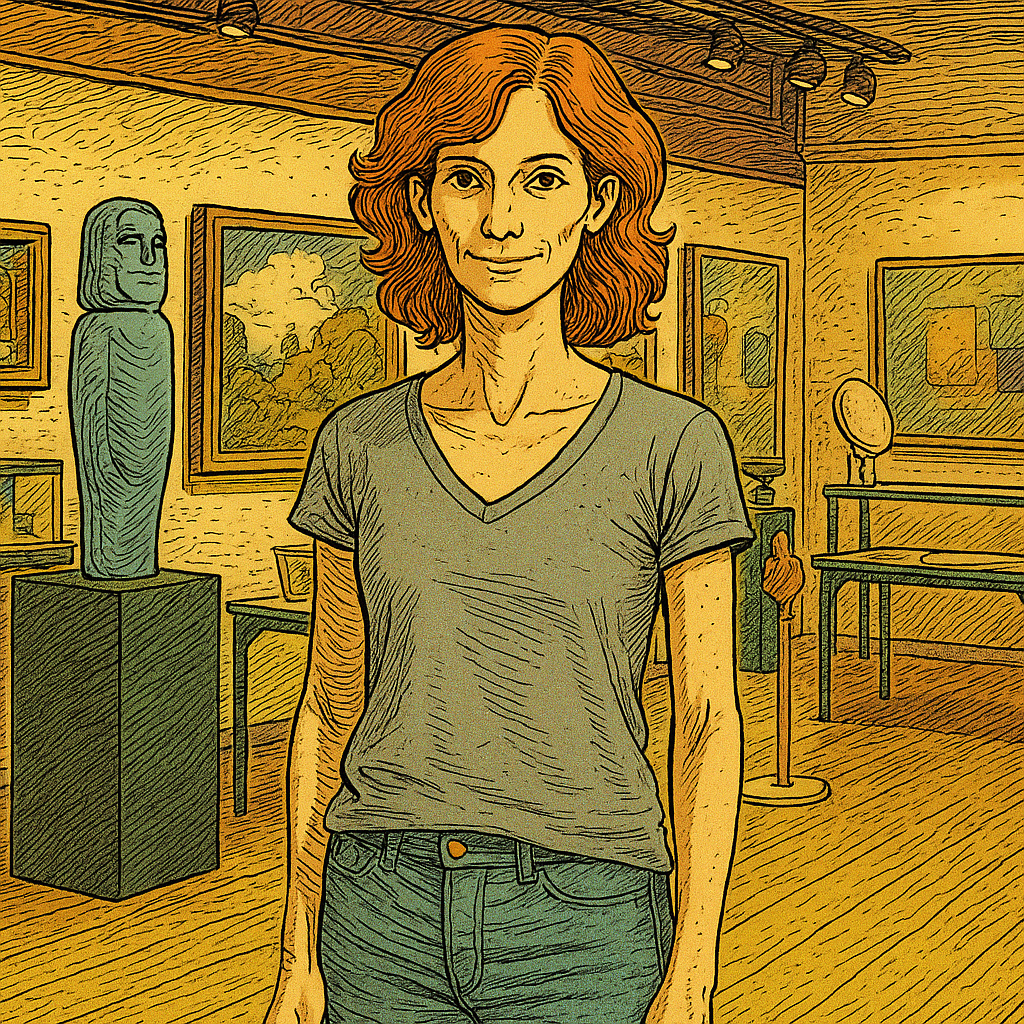
Inside the gallery, the filtered light from the front windows made the canvases look almost theatrical. Even the quiet pieces—the monochromes and the still photographs—felt louder under it. I tried dimming the lights, but it didn’t change much. Color has a way of insisting on itself once it starts to dominate a town.
Outside, the street was crowded again. Families with sunhats, cyclists moving in twos, a tour group stopping for an unscheduled lecture about the old hotel. They carried the heat with them, leaving behind the smell of sunscreen and diesel. The flags in front of City Hall hung heavy, their edges stiffened by dust.
I watched for a moment, then returned to sorting a new shipment of prints. The boxes had arrived two days late, supposedly held up by a temporary power outage at the distribution hub in Albuquerque. The driver said everything was “back to normal now,” which didn’t sound like reassurance so much as habit.
When the doorbell rang, I expected another tourist looking for water or air-conditioning. Instead, it was one of the artists who’d shown work here last fall. He was on his way to Arizona, chasing the light before the monsoon season started. We talked about how the haze from those fires down south sometimes reaches this far, turning the mountains into silhouettes. “It’s a strange beauty,” he said. “All that ruin in the sky.” I agreed, though not entirely. Beauty isn’t the right word for smoke.
After he left, I stepped outside. The sun had started its slow drift toward the west, and the wind was shifting. From somewhere above the tracks, the tourist train gave its single whistle before heading back from Silverton. It’s an echo more than a sound—something that seems to pass through time instead of space.
A child pointed at the engine as it crossed the bridge. “That’s America!” she shouted, and her parents laughed. The moment was innocent, even charming. But something in the certainty of that sentence stayed with me.
In Germany, patriotism was handled like a fragile object—taken down only when the reason was clear and the memory accounted for. Here, it arrives annually, automatic as the seasons, uninspected and unexamined. Sometimes I envy the ease of it; sometimes I worry about what it allows.
Back inside, I turned the lights down again and opened the back door to let the air move through. A faint smell of rain drifted in—just enough to raise the dust but not to settle it. The strings of banners outside tapped softly against their wires, small percussive notes in the larger hum of traffic.
I thought of the conversations that will fill this week: fireworks, parades, who’s “doing what for the Fourth.” All of it familiar, all of it harmless until it isn’t. Pride is a useful thing until it asks for silence.
A couple came in near closing, looking for something “local.” They chose a small print of the Animas River in early spring—brown water, thin light, no banners. “It reminds me of the real place,” the woman said. That felt like enough.
When they left, I switched off the gallery lights one row at a time. The remaining glow from the windows carried the red and blue reflections of the street. I waited until they softened into a muted gray before locking the door.
The wind picked up again, moving the banners so they snapped lightly in rhythm. Above them, the sky had begun to pale toward evening. The haze from the fires was faint but visible, tinting the air in shades no flag could name.
Somewhere beyond the mountains, thunder rolled once and stopped. I stood there for a moment longer, listening for the echo that never came.