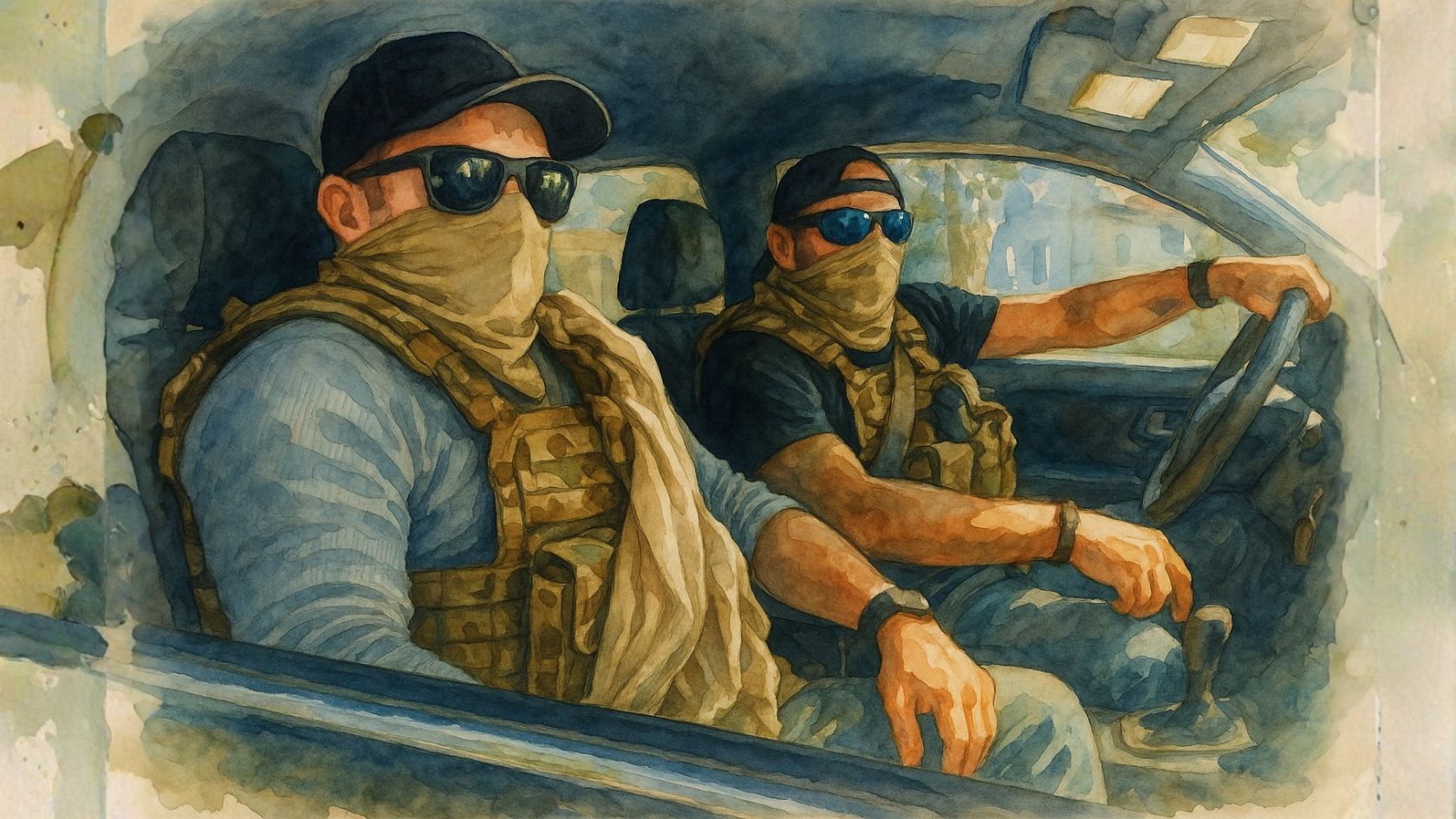
They sit there in the truck, mirrored shades and masks, tactical vests that look halfway between deployment and cosplay. The image would pass for law enforcement if you didn’t look too long. That’s the point. It’s not about what they’re doing; it’s about how they look doing it.
America has gotten good at looking official. The gear is easy to find—milspec webbing, desert-tone cloth, body armor that fits over a hoodie. The trick is to wear it with confidence, to give off the impression of sanctioned power without needing the burden of a badge. Every region has a few like this now—self-styled protectors, contractors, task forces with initials no one checks. The costume has become a credential.
We built this theater ourselves. Decades of movies and recruitment ads taught us that authority wears tan and black, drives a truck, and keeps its face covered for “security reasons.” Add a radio mic, a wristwatch with a chunky bezel, and a steady squint—instant legitimacy. It doesn’t matter if they answer to anyone. They look like they do.
That’s what unsettles me. Real authority used to come with accountability—policies, procedures, reports, oversight. It was a burden, not a brand. What’s left now is a visual language of intimidation dressed up as preparedness. The gear says I’m in charge. The reality says I bought this online.
There’s a quiet line between vigilance and performance, and we keep crossing it. We’ve turned fear into an aesthetic. These men in the truck aren’t breaking any law by existing, but they’re wearing the uniform of a culture that’s stopped trusting laws to keep it safe.
Maybe that’s why the image sticks: it’s what happens when a country stops believing in institutions but still craves the look of order. Authority, reduced to costume.