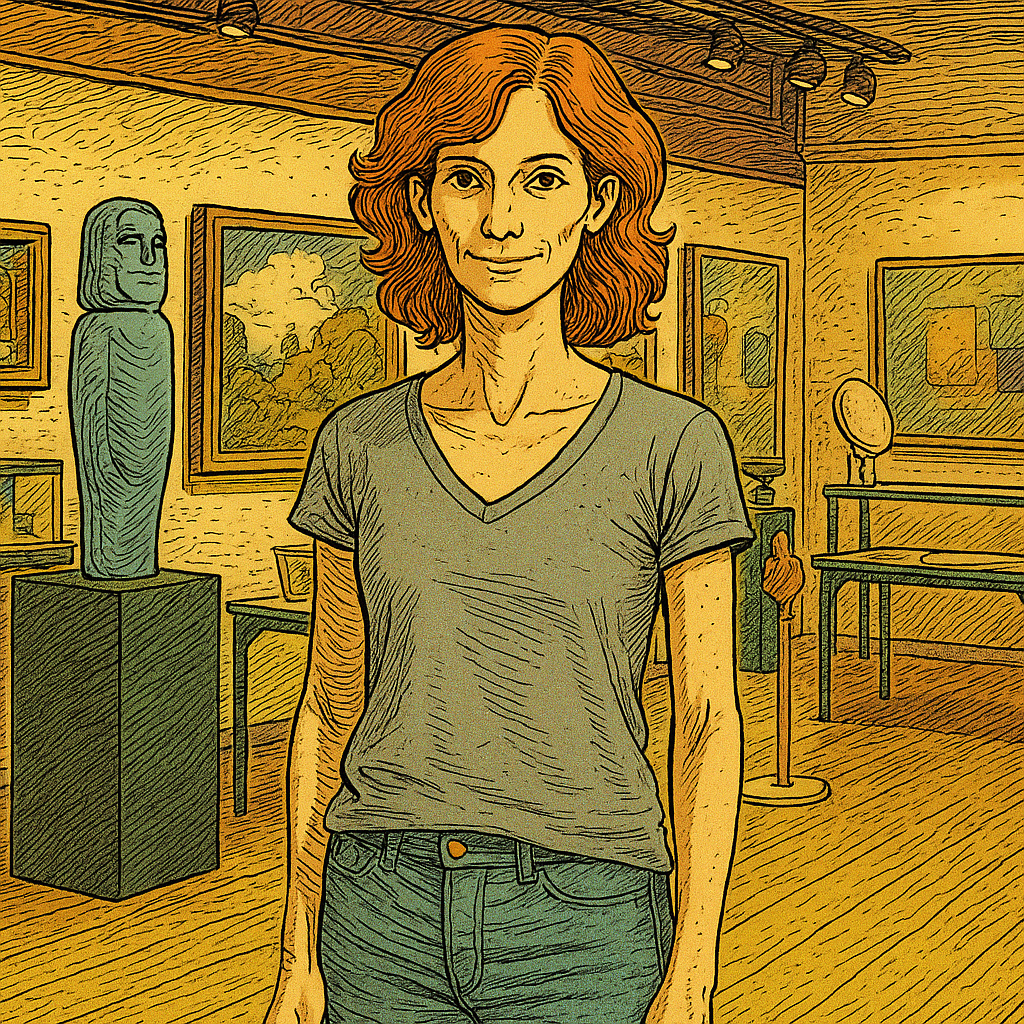
 The man came in just before noon, wearing a red shirt with the flag printed across his chest. He said he was looking for something “American”—something that would remind people what this country stands for. He glanced around the gallery and frowned, as though the quiet colors had failed some test.
I showed him a painting by a local artist—a mountain ridge at dusk, the light thinning until the shapes were almost memory. He tilted his head. “Beautiful,” he said, “but it doesn’t say America.”
I asked him what would.
He laughed, embarrassed. “You know—freedom, courage, all that.”
Outside, a child’s voice carried from the street, singing the last lines of the anthem before her mother hushed her. I thought of how, in theatre, the fourth wall keeps the actors from seeing the audience. Patriotism feels like that sometimes—an endless performance where everyone knows their lines but no one looks out.
The man thanked me politely and left without deciding. I watched him cross Main Avenue, sunlight catching the small flag stitched to his sleeve. For a moment it looked like it was waving to itself.
When I turned back, my reflection stared from the glass of the nearest frame—half my face beside the painted mountain. I adjusted the angle until the glare faded, wondering which of us was supposed to be the audience now. The light outside kept shifting, and for once, I didn’t move to correct it.