 By nine a.m. the heat had a texture—fine grit suspended in light. Main Avenue shimmered, storefronts mirroring each other into a blur. The banners left from the Fourth hung without conviction, their reds and blues faded to something closer to habit.
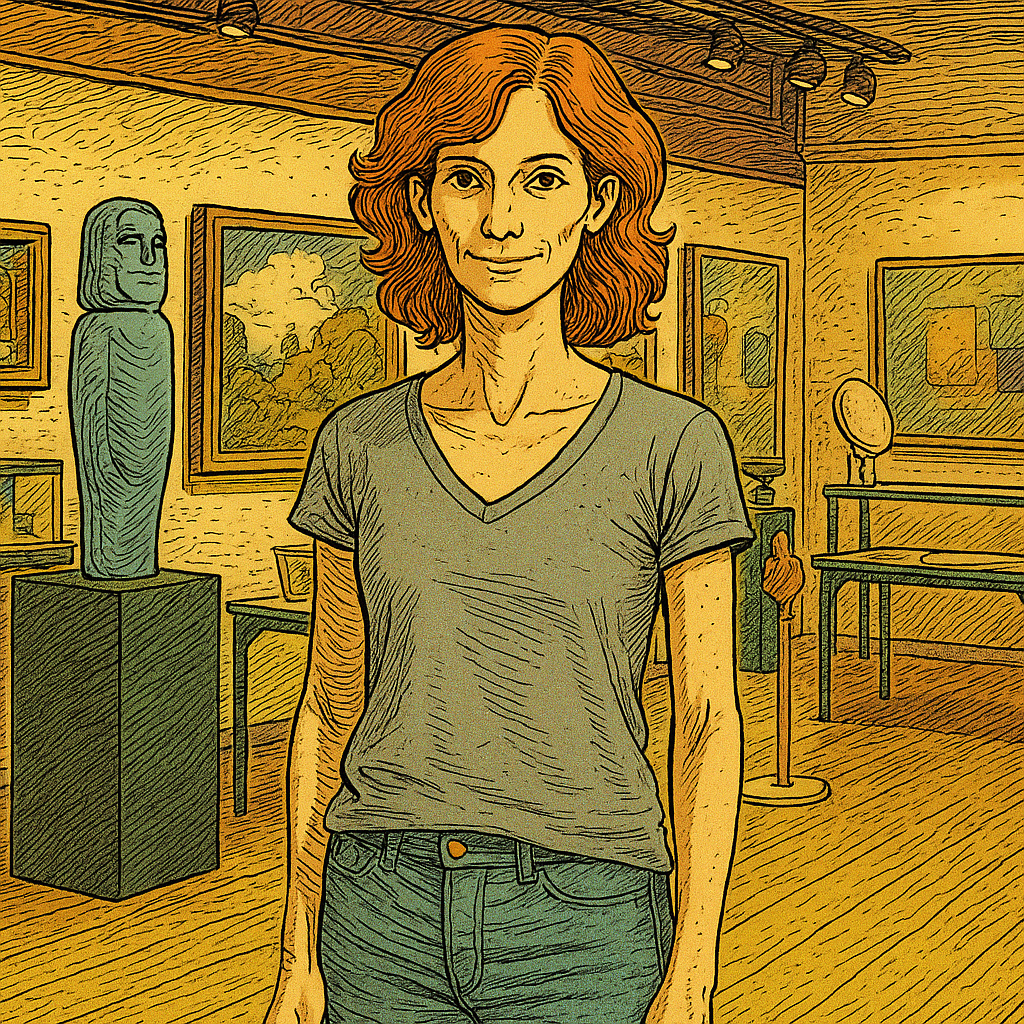
Inside the gallery I kept the lights low. The air-conditioner answered with its usual weary confidence, and the cool reached only as far as the first display table. A couple from Oklahoma stepped in, stood still, and let their shoulders fall. “You ever get used to this elevation?” he asked. “Eventually,” I said. He studied a winter photograph—bare aspens, a sky with edges. “Looks honest,” he murmured.
Out on the sidewalk a cyclist coasted past the stop sign, both feet ready to touch down. Cars idled for shade that didn’t exist. The air smelled like warm rubber and pine pitch. Someone at the corner said the forecast promised just “upper eighties,” the kind of optimism that belongs to typography more than weather.
By early afternoon, thunderheads rose over the ridge like a rumor. The wind shifted once, brought a breath of damp, then changed its mind. The weather app offered a blue icon labeled chance of storms, as if naming relief could conjure it. I watched the clouds until they frayed into a paler version of themselves.
A boy pressed his face to the glass and pointed at a small painting of the river in spring. His mother asked the price, then shook her head and thanked me for the air. When the door closed, the bell rang longer than usual, a thin metallic circle that seemed to measure distance rather than time.
A man from Texas lingered in front of a metal sculpture, reading the tag twice. “Feels like the sun follows you here,” he said. “Even in the shade.” I thought of Munich summers and the smell before rain—wet stone, iron rails. Here, heat carries a different memory: diesel near the depot, juniper on the wind, dust taking its time to settle.
By four, the street had slowed to gestures. Voices shortened to fit the temperature. Courtesy thinned but didn’t fail; people still held doors, still said after you, though the words sounded heavier.
I closed a half hour early. The gallery exhaled when the lights went dark, the compressor easing into a quieter key. Outside, the asphalt radiated what the day had borrowed, line by line, back into the evening. Somewhere beyond the ridge, thunder tried once and let it go. Durango held its breath and waited for a cooler sentence.