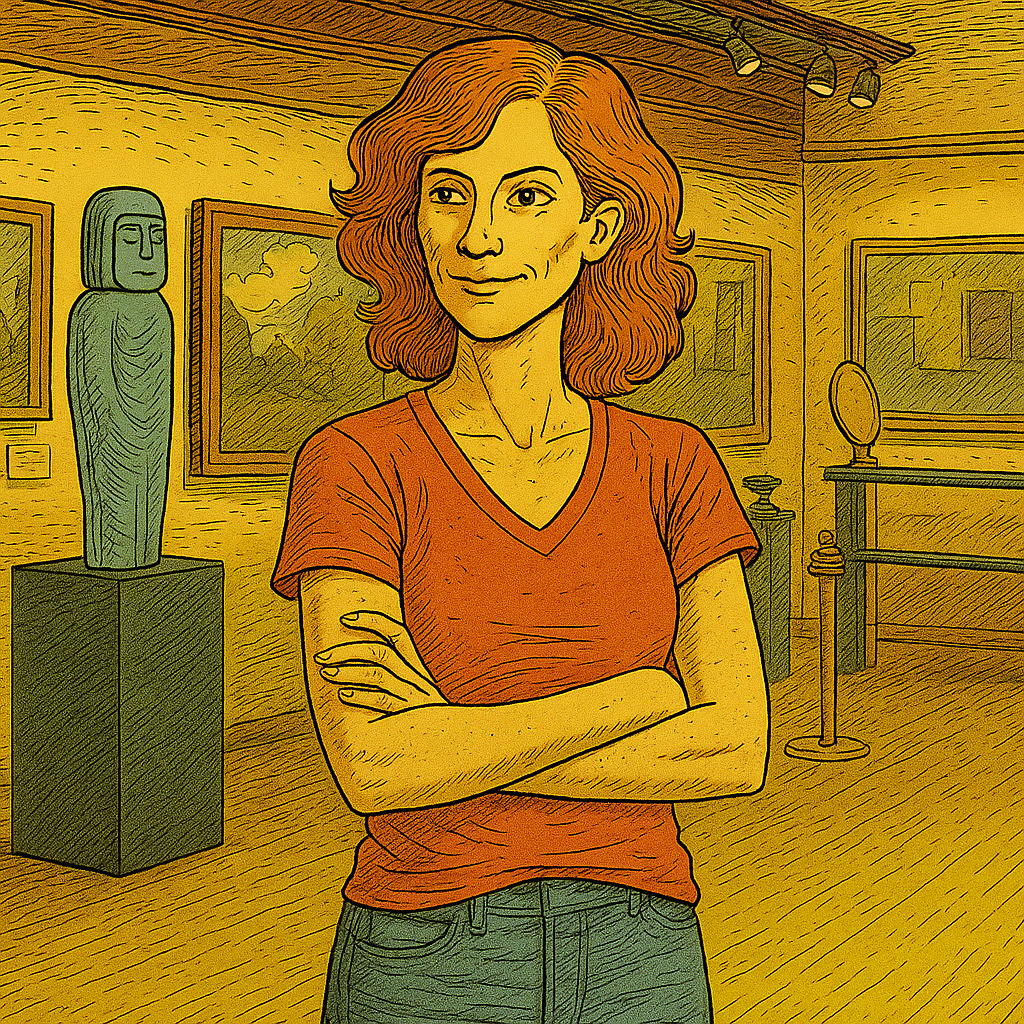
 The mornings have turned sharper. The air above the river carries a thin chill that wasn’t there a week ago, and the sunlight over the ridgeline feels filtered, as if it has already traveled too far. A few aspen patches high on the slopes north of town have started to yellow. It happens almost imperceptibly, one leaf, one branch at a time, until suddenly the hills look different.
Downtown, the pace has shifted again. Visitors still come, but in smaller groups—retired couples, road-trippers headed toward the passes, photographers looking for early color. The buses that once stopped at every corner now pass half-empty. Even the train whistles sound less certain, echoing through more space than they fill.
At the gallery, I’ve started leaving the door open during the day. The air is cool enough to move without help. When the breeze comes through, the canvases tremble slightly on their wires, each one giving off a faint sound that isn’t quite a rattle. I’ve learned to listen to it. It tells me when the air has changed direction.
In town meetings and on the local radio, the talk is of budgets and repairs—drainage, sidewalks, winter maintenance. It’s the kind of conversation that returns every year once the tourists thin out. Still, beneath the practical language, there’s a restlessness that mirrors the headlines from Washington: another shutdown threat, another argument that feels too familiar to notice. I hear it in voices even here, three states and a mountain range away from the capital.
The quiet that comes after the season isn’t peace. It’s a waiting room. Everyone exhales, but no one fully rests. We live in pauses now, measuring the distance between one disruption and the next.