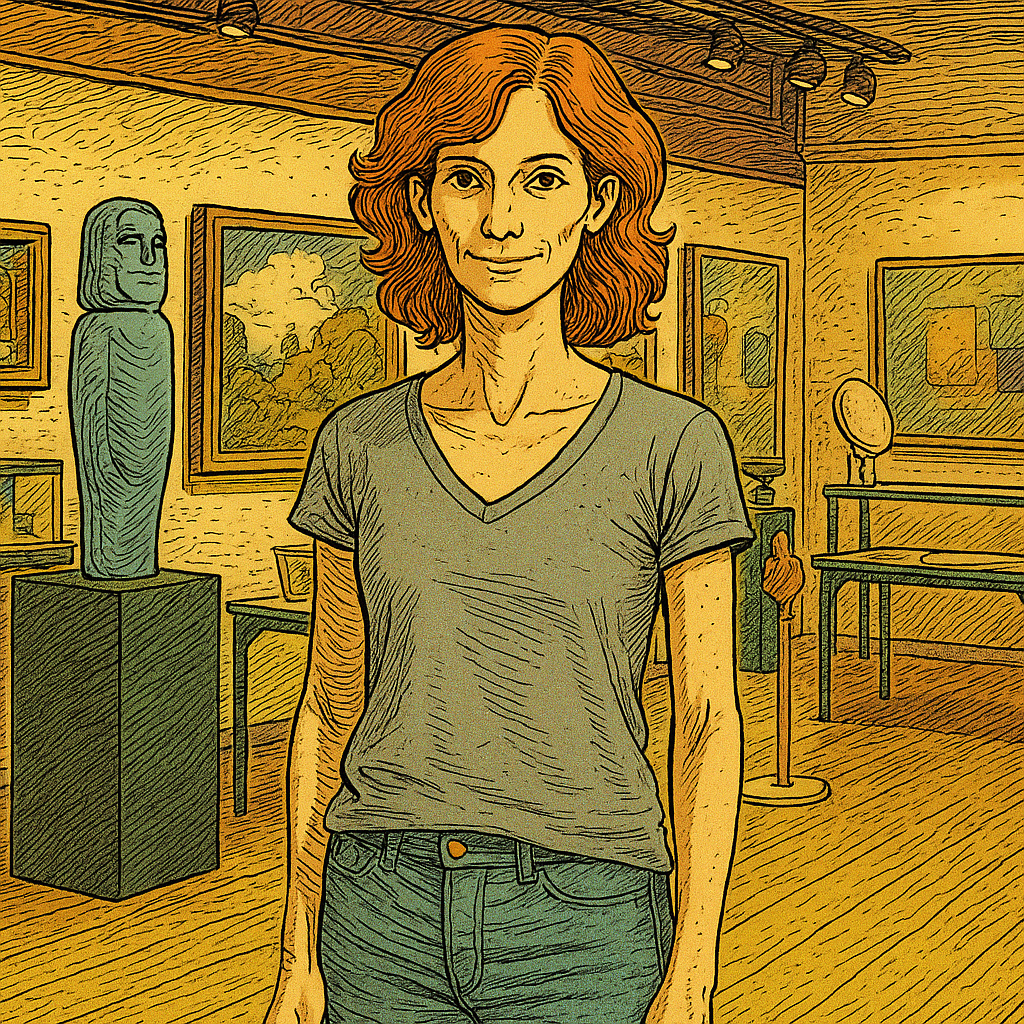
 The week began without an argument. No weather warnings, no freight delays, no calls from customs. Even the radio seemed calmer, as if the country had run out of adjectives. I left it off and listened to the faint hum that fills every space once the noise withdraws.
Outside, the street had dried to a pale memory of salt. People moved slower, not from fatigue but from the first warmth that didn’t need explanation. Across from the gallery, a man painted the trim on an upstairs window. He dipped the brush like a ritual, careful, deliberate, the color indistinguishable from last year’s. Continuity has a tone; it’s lower than I remembered.
Inside, I rearranged the small things—stacked books, brushed sawdust from a shelf, straightened a frame that hadn’t asked to be straightened. The heater finally stayed silent. I could hear the faint creak of the building settling, the same way I imagine language settles after translation—edges losing urgency. Dust floated in a narrow beam of light, turning the ordinary into proof of presence. Even the clock seemed to hesitate before ticking again.
At noon, I opened the door for air. A car passed slowly enough that I caught the driver’s face: neutral, unhurried, already turning toward whatever came next. The wind that followed lifted a receipt from the gutter and carried it halfway up the block before letting it drop. Somewhere down the street, a child laughed once and stopped, like punctuation.
I closed the door and watched the paper rest against the curb. Stillness, it turns out, weighs more than motion. And silence, if you wait long enough, starts to sound like trust.