 The week settled like dust after motion. The sidewalks were quieter, but not empty. You could still hear the rumble of engines from the highway, still see the steady flow of trucks, cars/SUVs, and RVs circling for parking, their drivers deciding whether to stay another night or push on toward the next stop in the mountains.
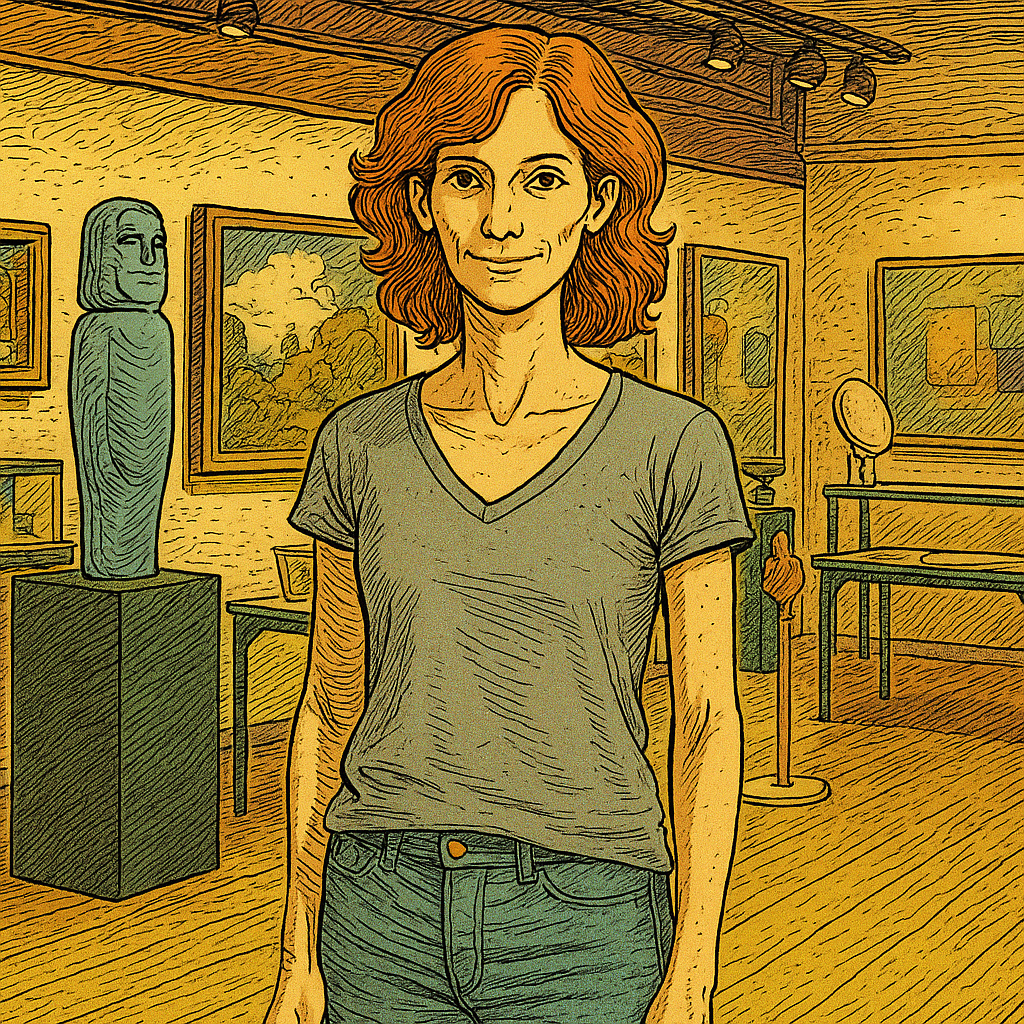
Inside the gallery, the air had that in-between feel—half memory, half waiting. I rearranged a few pieces on the wall, not because they needed it, but because stillness never stays long. The hum of the air conditioner was the only sound for an hour, then a small group stepped in, blinking at the light as though the town had surprised them by continuing to exist.
This was supposed to be the slow stretch, but it hasn’t been slow in years. Even in the quiet weeks, the crowds are heavier than before the lockdowns. People are making up for lost time. You can feel it in the way they linger at the counter, in the quick questions that turn into long conversations about nothing in particular. It’s as if movement itself had become a cure.
Outside, the afternoon light turned the street pale gold. Two cyclists coasted by, the sound of their tires almost lost in the steady hum of traffic. From the river came the faint echo of children yelling, that kind of open joy that doesn’t belong to any one season. A delivery truck idled near the corner, the driver scrolling his phone. Even the ordinary seemed deliberate, as if everyone were trying to prove that life had resumed and meant to stay that way.
By evening, the town returned to its slow rhythm. The guitar player on the corner packed up without applause. The last of the visitors drifted toward their cars, leaving a silence made from footsteps and soft doors closing.
Every year brings this pause before the turn toward autumn, when the light shifts earlier and the town exhales. You think it’s rest, but it’s really only intermission. The movement always returns.