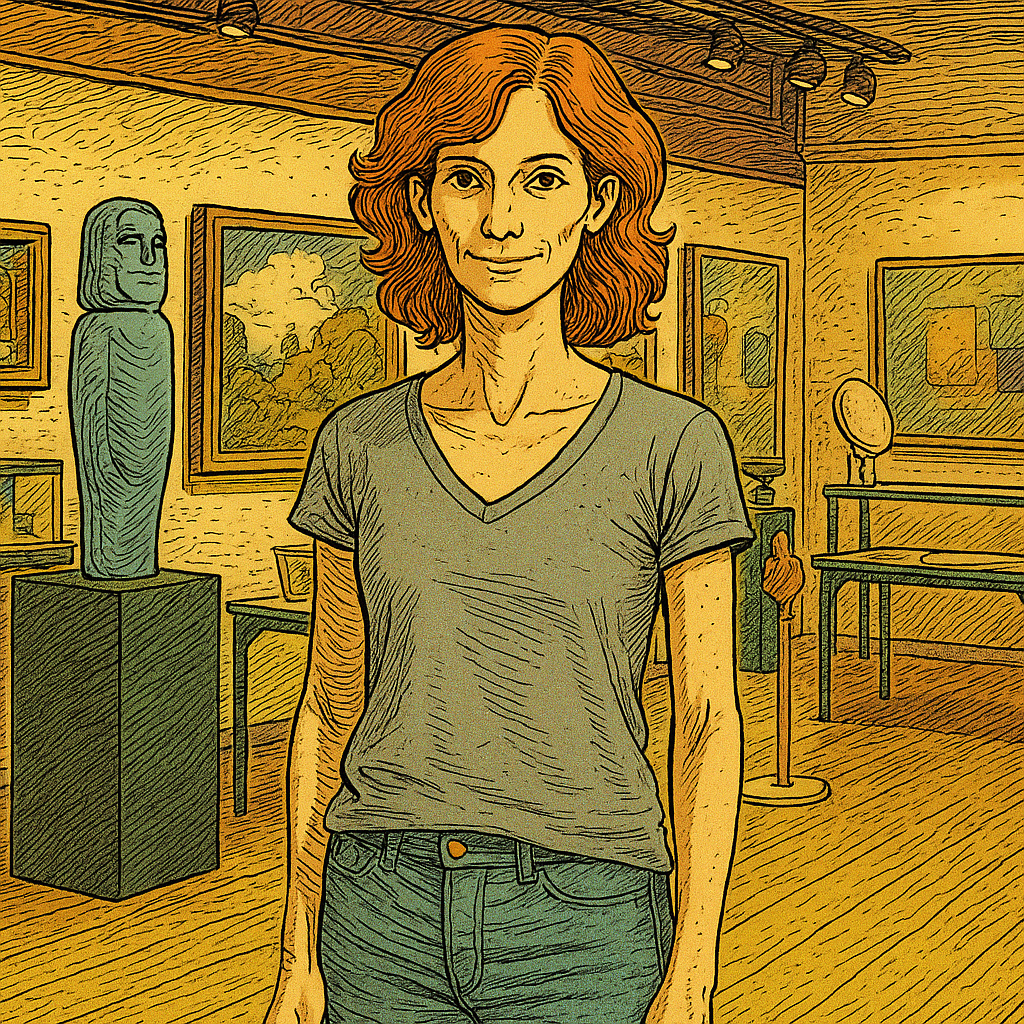
 In the gallery, silence takes on different weights. The one that follows a question is lighter than the one that follows an answer. Some days, even the hum of the lights feels like a kind of hesitation.
A man stopped in this morning and asked where I was from. He tilted his head when I said Germany, as if waiting for a confession. I’ve learned to fill that pause gently—something about the Rhine, about the mountains, about light. Anything that doesn’t invite politics. But his next words did anyway. “You must think we’ve lost our minds here.”
He smiled as he said it, the way people do when they want reassurance. I told him that countries don’t lose their minds; they forget their memories. He laughed, uncertain whether it was a joke. Then he looked around, complimented the lighting, and left without buying anything.
After he was gone, the quiet settled like dust. I turned the radio on low, just to give the air somewhere to go. The news was the same as yesterday—people shouting into microphones, voices sharpened by certainty. I switched it off again.
In Germany, silence once meant survival. Here, it feels like denial with better manners. Both have a shape you can feel if you stand still long enough. One presses down, the other drifts—but neither leaves room for truth to breathe. I turned the lights back on, and the hum returned, reshaping the silence into something I could live with.