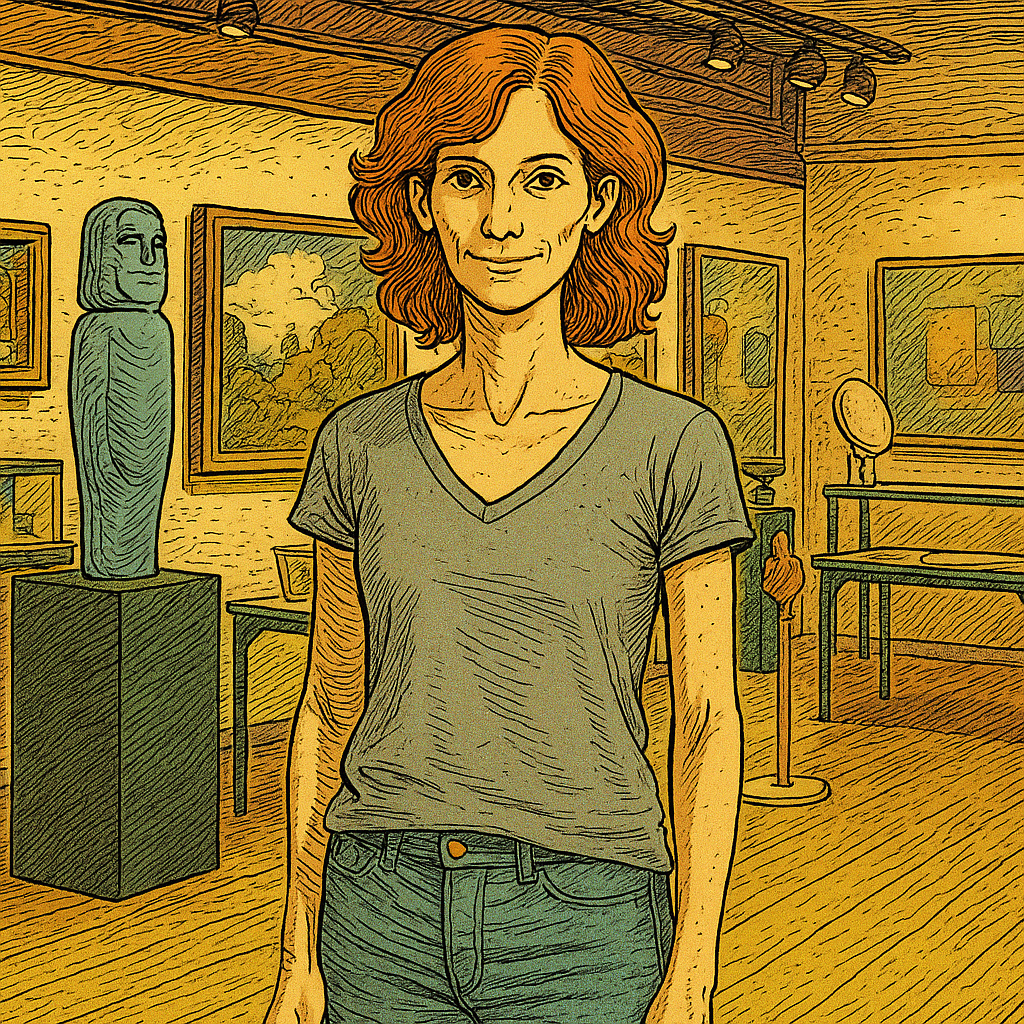
 The week after the Fourth feels like an exhale. Main Avenue looks the same, but the air has loosened. Banners still hang between lampposts, though one near the gallery has torn loose at a corner and flaps like a tired wing.
Tourists drift in smaller numbers now. They stand in front of the window displays, squinting against the sun, deciding whether the price of admission to quiet is worth a few minutes of cool air. Inside, the hum of the air-conditioner has become part of the rhythm—steady, invisible labor.
A couple from Kansas looked through the photography section this morning. The woman studied a print of storm clouds over Red Mountain Pass. “It looks like it’s listening,” she said. Her husband frowned. “To what?” She shrugged. “To everything that came before.” They left without another word.
Around noon, the light took on that thin midsummer quality that flattens color. I turned off two rows of fixtures and let the shadows lengthen across the floor. In the quiet, I could hear the faint echo of a street musician outside, his guitar bending through fragments of familiar songs. Every so often a chord would land just right, and for a second the space between notes felt deliberate.
Across the street, a shopkeeper propped open her door to let the wind move through. I caught pieces of conversation—directions to the train depot, a complaint about parking, a laugh that dissolved into coughing from the smoke drifting up from somewhere south.
People were still showing each other photos from Tuesday night’s drone show—pixel constellations, red-white-blue in perfect symmetry. “Better for the environment,” someone said. “Safer,” another added. No one mentioned that it left nothing behind—no ash, no smell of powder, no residue to remind anyone that something had actually happened.
By afternoon, the street settled into its ordinary murmur. A dog barked once, sharp and immediate, and then the sound of footsteps filled the gap.
I thought about how every city has its own pitch—Durango’s somewhere between the ring of bicycle chains and the low diesel hum of the tourist buses. Between those tones, the human voice still finds room to argue, to sell, to ask for directions.
The gallery closed at five. When I stepped outside, the air had cooled just enough to carry the faintest smell of rain. For a moment, everything held still—the flags, the people, the noise. Then the wind started again, rearranging the silence back into sound.