Weekly Dispatch
Week of July 25 – 31, 2021
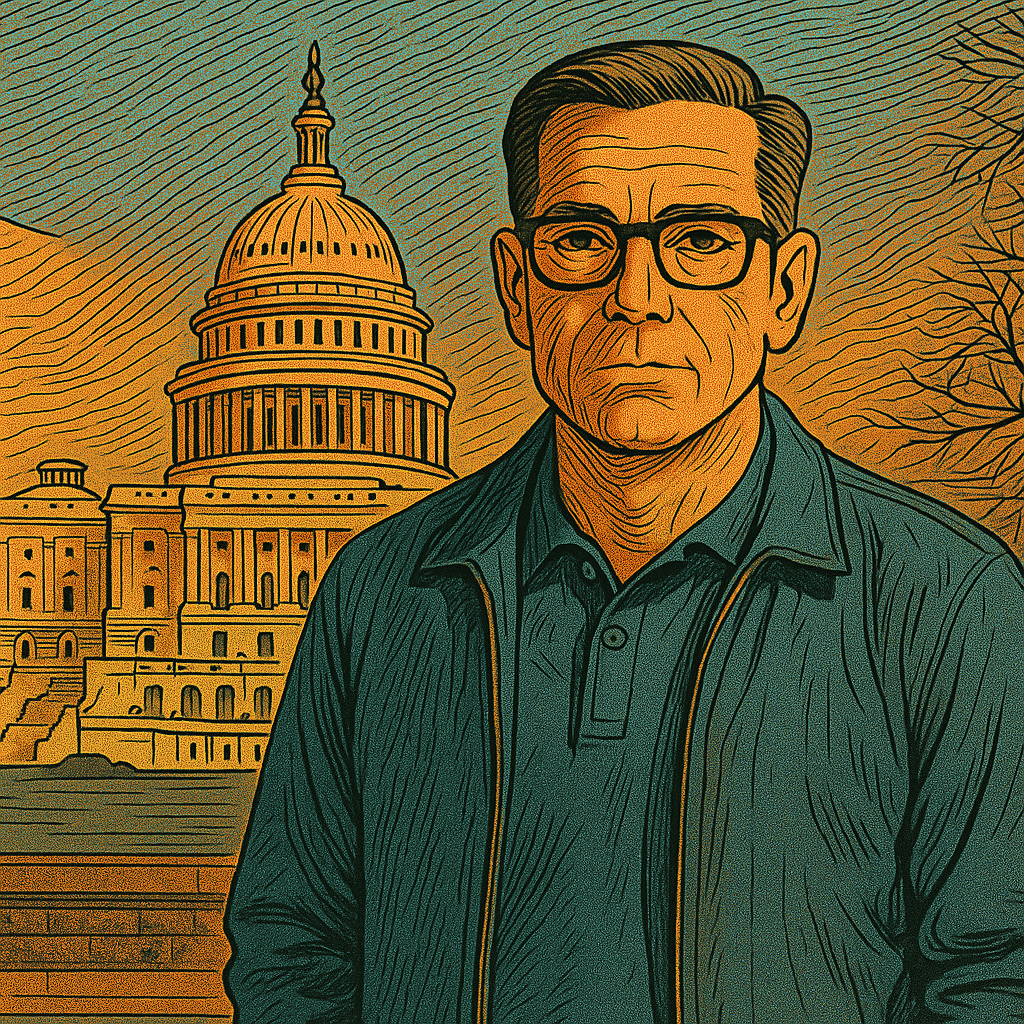 The final week of July reopened the old arguments of a pandemic that refused to end. On July 27, the Centers for Disease Control and Prevention reinstated indoor masking guidance for vaccinated people in regions of high Delta transmission, citing data from a Provincetown, Massachusetts outbreak that showed vaccinated carriers could still transmit the virus efficiently. The reversal punctured the summer illusion of normalcy and set off another round of political defiance. Governors in Florida and Texas doubled down on bans against local mandates, while Los Angeles, St. Louis, and Kansas City reimposed mask orders. Retail chains debated policy in real time, unsure whether to follow science, state law, or public mood. A year and a half into the crisis, the country remained divided over the meaning of freedom and the cost of endurance.
Inside the White House, the tone hardened. Federal employees were ordered to vaccinate or undergo weekly testing and travel limits. President Biden framed it as a moral obligation rather than a policy preference: “We’ve been patient, but our patience is wearing thin.” The phrase was deliberate, aimed at shifting national psychology from individual choice to collective duty. Conservatives called it coercive. Unions warned about enforcement gaps. Privately, aides described the move as a test of whether moral resolve could outweigh political gravity. It marked the administration’s pivot from persuasion to paternalism—a bet that exhaustion would breed compliance. Within days, several states and major employers followed suit, signaling that federal resolve could still ripple outward even in an era of deep polarization.
Economic figures offered mixed validation. The Commerce Department reported second-quarter GDP growth of 6.5 percent, strong but below forecasts, driven by consumer spending and business investment. Supply bottlenecks, inflation above five percent, and labor shortages dampened the mood. The S&P 500 reached record highs while small businesses struggled to fill shifts. Economists called it an “asynchronous recovery”—a boom for some, an endurance test for others. The phrase captured not just the economy but the culture itself: acceleration and paralysis occupying the same space. In service industries from Atlanta to Phoenix, “Help Wanted” signs stayed up as long as “Now Hiring” banners. The numbers showed growth; the sidewalks told another story.
Abroad, diplomacy replayed its own stalemate. Deputy Secretary of State Wendy Sherman met Chinese officials in Tianjin on July 26, the first senior-level contact since the tense Anchorage talks in March. Beijing delivered two lists of demands: lift sanctions and stop labeling China as adversary. Sherman described the exchange as “frank and direct,” diplomatic shorthand for unresolved. Days later, Beijing intensified crackdowns on its technology and private-education sectors, erasing hundreds of billions in market value and signaling that private power would again yield to state control. The contrast between Washington’s political gridlock and Beijing’s command efficiency did not go unnoticed by markets already jittery over inflation and supply shortages.
Elsewhere, the Arab Spring’s last surviving democracy trembled. On July 25, Tunisian President Kais Saied suspended parliament, dismissed the prime minister, and invoked emergency powers. Crowds cheered in Tunis as critics called it a coup. The United States urged restraint, mindful that words carry weight. Tunisia’s crisis fit a global pattern: democracies eroding not through sudden collapse but through gradual surrender to fatigue. Western diplomats privately admitted that the story sounded familiar—a nation that mistook exhaustion for stability until the center gave way.
Back in Washington, Congress confronted the same pattern of erosion. The House Select Committee on January 6 held its first hearing July 27, with four Capitol Police officers recounting beatings, slurs, and betrayal. Representative Liz Cheney condemned attempts to rewrite the event; former President Trump mocked the officers as “actors.” Fundraising emails went out within hours. The cycle of outrage and monetization remained intact, a political economy that now seemed self-sustaining. Even in grief, the algorithms demanded engagement.
Meanwhile, the western United States burned. The Dixie Fire in northern California surpassed 400,000 acres, generating its own lightning and sending smoke across the continent. Haze dimmed skies from Denver to New York. Meteorologists called it “transcontinental transport.” The term sounded clinical until daylight turned copper. Even as senators cut climate provisions from the infrastructure bill to save bipartisan votes, the atmosphere itself delivered the cost. Air quality alerts covered more than half the nation’s population. “We’re living inside the evidence,” a climate scientist told reporters, summarizing what most Americans could already see.
The week closed with three enduring images: masked shoppers in July heat, police officers testifying through tears, and a red sun above an ash-gray sky. Each signified persistence without progress. The nation’s systems—political, medical, environmental—remained operational but fragile, held together by habit more than consensus. The headline numbers looked stable; the foundation trembled underneath. July ended not with closure but continuation, another turn of a wheel that no one yet knew how to stop.