Weekly Dispatch
Week of December 19 – 25, 2021
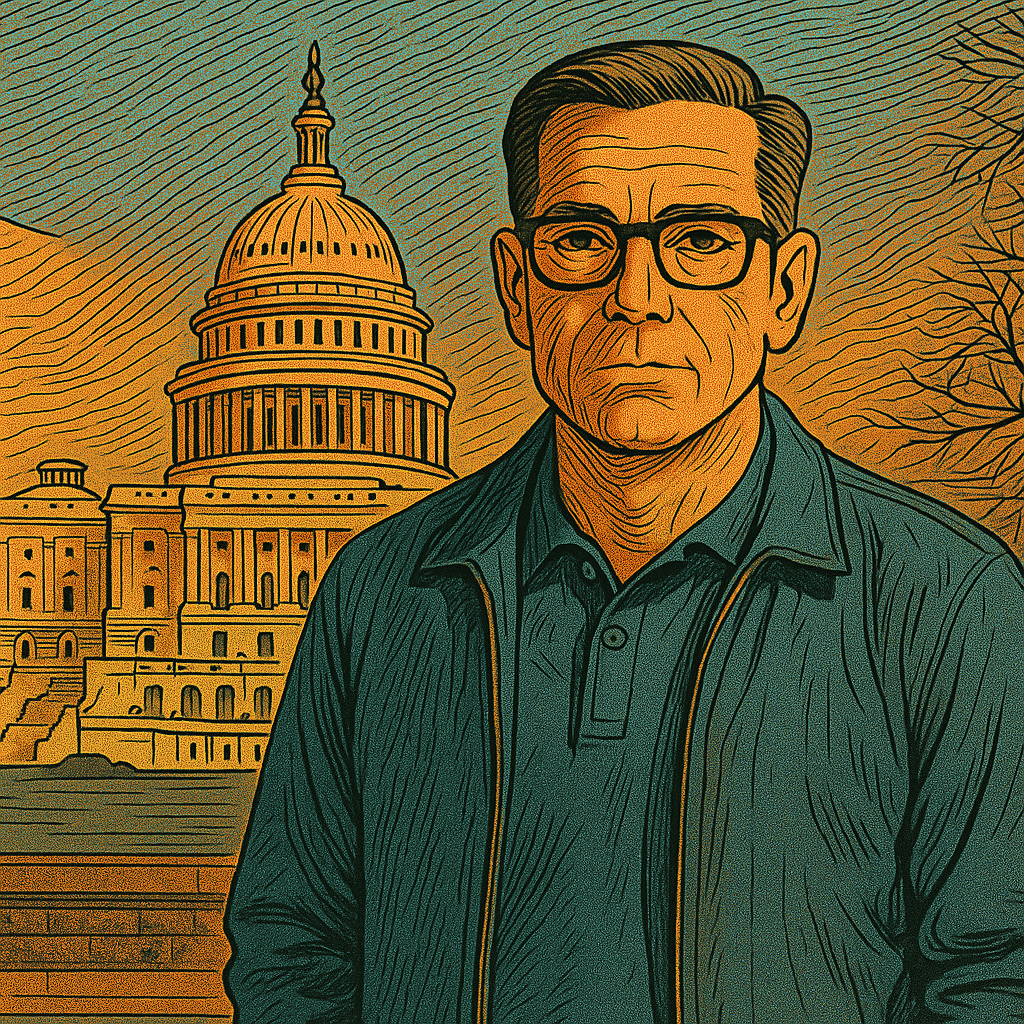 The week moved at the speed of systems under strain. On Sunday, December 19, Senator Joe Manchin said he could not support the administration’s Build Back Better package “in any way, shape, or form,” closing the door that negotiations had been pretending was ajar. Democrats argued over tactics—break the bill apart, rewrite the revenue, run on what already passed—while child-tax-credit payments expired into the holiday week like lights switched off. The argument that had filled a year ended with a single vote missing.
Omicron took the calendar next. On Tuesday, President Biden told the country that vaccinations, boosters, and free testing would carry the winter—“no lockdowns,” but “no excuses,” a line calibrated for patience already gone. Pharmacies ran out of rapid tests anyway; online retailers sold out; city clinics turned sidewalks into queues. The White House promised 500 million at-home kits to ship in January and invoked the Defense Production Act for more. Governors who had lifted restrictions weeks earlier faced curves their hospitals could read without spreadsheets.
Two new tools arrived. On Wednesday the FDA authorized Pfizer’s antiviral pill, Paxlovid, for high-risk patients; on Thursday it authorized Merck’s molnupiravir with stronger caveats. The public heard the headline first—“COVID pill”—and only later the fine print about availability, side effects, and the difference between treatment and prevention. Doctors described relief with an asterisk: pills would help individuals; only vaccination would bend population curves.
Travel illustrated the equation. By Friday, airlines canceled thousands of Christmas-weekend flights as crews tested positive or quarantined after exposures. Weather compounded the math: a Pacific storm system over the Northwest stacked delays on top of absences. At airports from Seattle to Atlanta, departures boards resembled countdown clocks stuck at zero. The country relearned the geometry of holidays during a pandemic: lines for tests, lines for security, lines for refunds.
In Minneapolis, a jury returned a verdict that had waited since spring. On Thursday, December 23, former police officer Kim Potter was found guilty of first- and second-degree manslaughter for killing Daunte Wright during a traffic stop in April. The case hinged on seconds, training, and the claim of a weapon mix-up. Streets stayed quiet; commentary did not. For a city still defined by the murder of George Floyd, the verdict read as a procedural answer to a civic wound that can’t be closed by procedure alone.
Economics produced its own cliffhanger. Turkey’s lira went into free fall early in the week before snapping back after President Erdoğan announced a program to protect lira deposits from exchange-rate losses, a policy that looked like confidence by decree. U.S. inflation remained the domestic refrain, even as fuel prices eased at the margins. Congress kept the government open into February and then went home. The markets treated all of it as handwriting they had already learned to read.
Abroad, deterrence kept its rehearsal schedule. U.S. and European officials warned again about Russian troop concentrations near Ukraine; Moscow repeated that NATO was the provocation; Kyiv asked for defense and timelines, not sympathy. Intelligence snapshots turned into a metronome: same positions, slightly closer. Diplomats called for talks in January; soldiers stayed where the maps already showed them.
Science delivered the week’s cleanest arc. On Saturday morning, December 25, the James Webb Space Telescope launched from French Guiana, a $10-billion suite of mirrors and math folded into a rocket fairing. The mission’s promise—light from the first galaxies, atmospheres of distant planets—felt like a counterweight to a year of triage. Webb headed to L2 with weeks of deployments ahead: sunshield, mirror segments, a choreography where every hinge mattered. Christmas morning had a plot twist the culture did not need to argue about.
Back home, tradition adapted, again. Some churches moved services outdoors; others streamed from empty sanctuaries. The Rockettes had already canceled the rest of their season; Broadway rewrote schedules day by day as casts thinned. The NFL and NHL postponed games; the NBA signed ten-day contracts like tourniquets. Families adjusted rituals to whoever had tested negative that morning. Stores closed early for lack of staff, not lack of demand. The economy continued to prove that growth and scarcity can coexist for months at a time.
Policy tried to match the mood with extensions. On Wednesday the administration extended the pause on federal student-loan repayments to May 1, citing Omicron uncertainty. Pediatric vaccine trials continued under winter conditions: stubborn; necessary; slower than headlines. Public-health officials delivered their thousandth reminder that boosters supplement, not replace, masks and ventilation. The message was steady; execution ran through supply and attention, both limited.
By week’s end, Kentucky’s debris fields were measured in truckloads rather than square miles, a small mercy. Airlines published rolling lists of cancellations that refreshed like weather radar. Pharmacies promised more tests “soon,” a word that had lost its meaning. Politics took its recess into a winter of variants and veto points. And a telescope coasted toward a stable point a million miles away, aiming to prove that a country can still build for the future while it is busy triaging the present.
The lesson was throughput. Capacity matters more than intent when systems run hot: hospital staffing, airport crews, logistics for pills and tests, votes that become laws. The week did not supply certainty; it measured limits. Where the ceiling held, life continued at reduced speed. Where it didn’t, the line wrapped around the block.