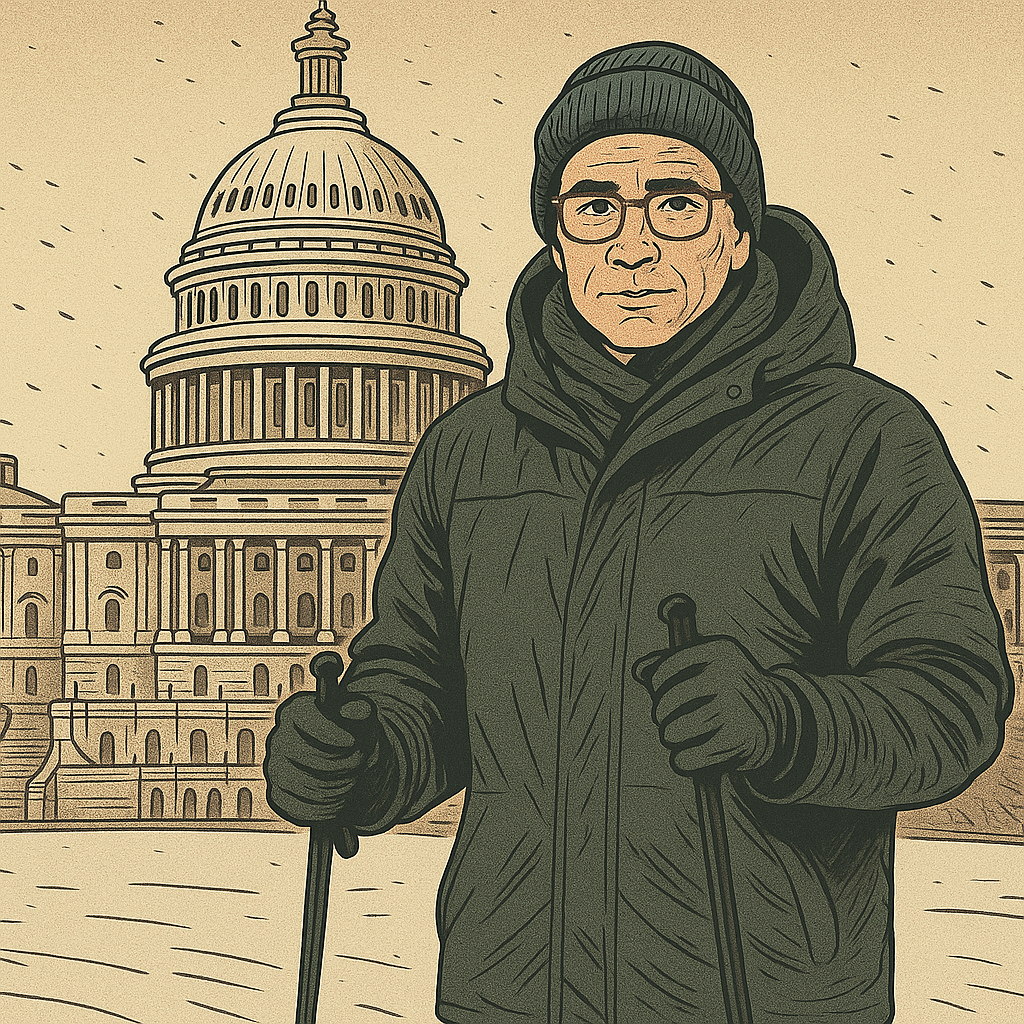
 The first full week of February marked a shift in Washington from ceremony to the mechanics of governing. On Monday, House impeachment managers carried the single article against Donald Trump across the Capitol, where it was read into the Senate record before a chamber still surrounded by fences and National Guard troops. Senators took their juror oaths the next day under the watch of President pro tempore Patrick Leahy, who would preside over the trial set to begin the following week. The sense of order returned, but the perimeter of caution remained.
The Senate’s procedural debates filled the week with arguments over constitutionality and precedent. Some Republicans questioned whether a former president could be tried, while Democrats countered that accountability did not expire with a term of office. Legal scholars cited the 1876 Belknap case as precedent. Outside the chamber, protest signs and security checkpoints reminded the city that the violence of January 6 was still a living memory. The sense of vigilance permeated routine motion—metal detectors at entrances, limited gallery access, and a watchful quiet that settled over staff corridors.
Inside the new White House, President Biden moved at a deliberate pace to show that government could again act predictably. He signed a set of executive orders undoing immigration restrictions, ending border wall funding, and creating a task force to reunite families separated under the previous administration. Another order strengthened protections for federal workers and reinstated collective bargaining rights rolled back over the prior four years. At the State Department, Secretary of State Antony Blinken emphasized a recommitment to alliances and to diplomacy as the nation’s first instrument of influence. The tone across agencies was technical, procedural, and intentional—the reassertion of normal governance.
Economic urgency dominated congressional debate. Treasury Secretary Janet Yellen warned lawmakers that slow or partial relief would risk a longer recession. Her argument for the $1.9 trillion American Rescue Plan echoed through committee hearings where senators argued over the balance between aid size and speed. Budget reconciliation emerged as the likely path to bypass a filibuster, and Senate leaders began drafting instructions to move the bill with a simple majority. For the administration, the risk of delay loomed larger than the political cost of partisan passage.
In closed-door meetings, Democratic leaders discussed the tradeoffs between speed and scope. They aimed to fulfill Biden’s campaign promise of direct payments and extended unemployment benefits while avoiding a drawn-out standoff. Moderates proposed smaller figures, citing deficit concerns, but Yellen and White House economists maintained that an undersized package would prolong job losses and suppress recovery. Public polling released that week showed broad support for aggressive stimulus, giving Democrats cover to advance reconciliation despite Republican objections.
Beyond the legislative struggle, the Capitol itself remained both workplace and symbol. Acting Capitol Police Chief Yogananda Pittman briefed Congress on preliminary findings from the January 6 attack, citing breakdowns in communication and command. Lawmakers pressed for a permanent security overhaul, including clearer jurisdiction between the Capitol Police Board and federal agencies. National Guard troops still patrolled nearby intersections, their presence both reassurance and reminder. Crews began repairing damaged doors and repainting corridors marred by tear gas residue.
The House Administration Committee reviewed footage of the riot to identify delays in the request for backup forces. The Senate Rules Committee prepared hearings on emergency protocols, while the Architect of the Capitol assessed structural damage and cleanup costs. Fencing contracts were extended through March, with periodic reviews planned as security concerns evolved. The image of soldiers bivouacked in the Thurgood Marshall Building cafeteria drew attention to the continuing strain on personnel support systems.
Federal agencies, still adjusting to new leadership, issued updates in quieter tones. The CDC detailed plans to increase vaccine supply allocations by mid-February, and the Department of Education outlined guidance for reopening schools under layered mitigation strategies. Routine press briefings resumed at 1 p.m. sharp, the kind of predictability reporters had once taken for granted. The week’s rhythm—trial logistics, budget drafts, executive orders, agency coordination—felt ordinary in a way that carried its own weight.
By Saturday, the rhythm of the capital felt closer to normal operations, though reminders of crisis were visible from every window facing the Mall. Barricades still defined the streets, snow lined the curbs, and masked staffers moved between buildings under cold February light. The government had not yet escaped its emergency posture, but it had rediscovered motion—hearings held, orders signed, and policies introduced. Washington remained under guard, but it was again at work.