Introduction
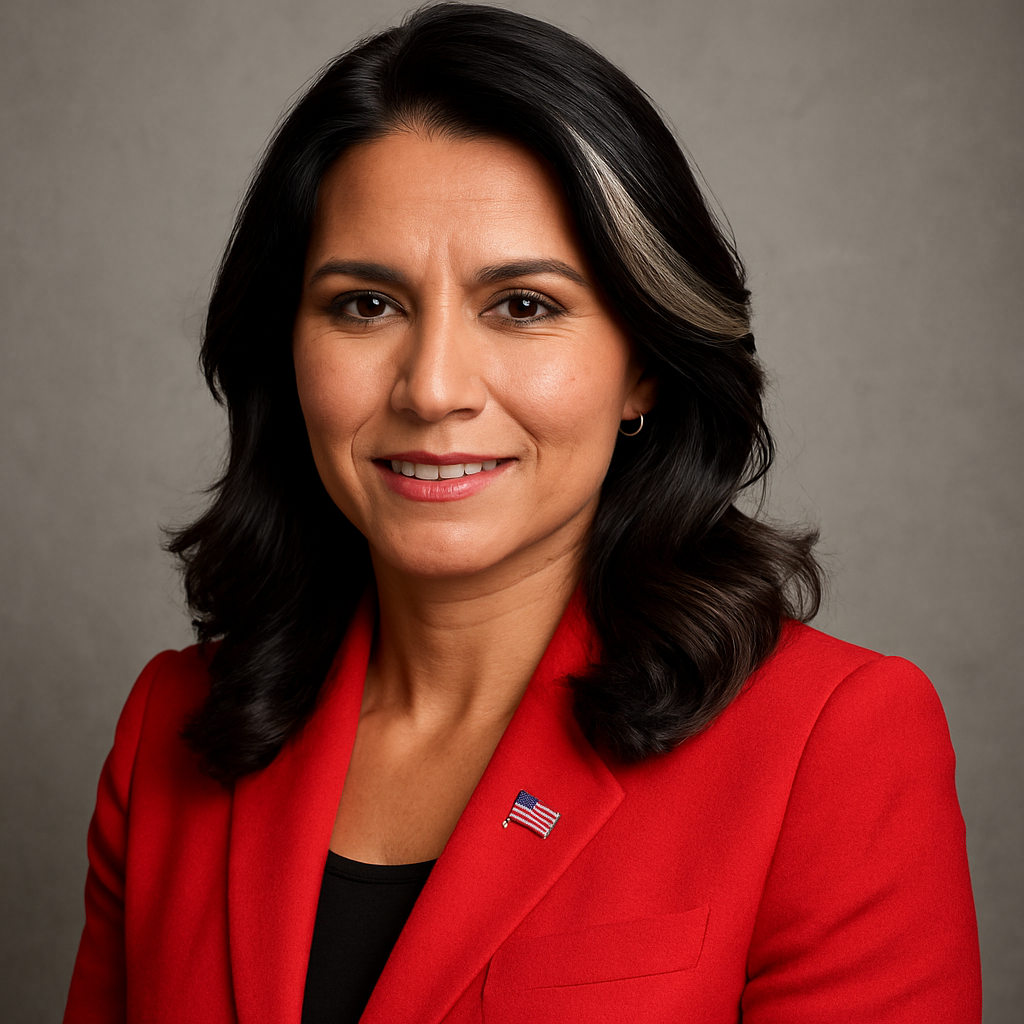 Tulsi Gabbard, born April 12, 1981, in American Samoa, is a polarizing figure in American politics, known for her military service, evolving political ideology, and high-profile role as Director of National Intelligence (DNI) since February 2025. Initially a progressive Democrat, Gabbard served as a U.S. Representative for Hawaii’s 2nd district from 2013 to 2021 and ran for president in 2020. Her departure from the Democratic Party in 2022, followed by her alignment with Donald Trump’s MAGA movement and eventual joining of the Republican Party in 2024, marks a significant ideological shift. This report examines Gabbard’s political evolution, military and foreign policy background, affiliations with right-wing figures, positions on key issues, role in the 2024–2025 elections, controversies, financial ties, and her current role in the Trump administration. Drawing on a range of sources, the report aims to provide an objective, comprehensive analysis of her career and influence, spanning 4,000–5,000 words.
Key Points
- Political Evolution: Gabbard transitioned from a progressive Democrat to a Republican, with pivotal moments including her 2016 endorsement of Bernie Sanders, 2022 exit from the Democratic Party, and 2024 alignment with Trump.
- Military Background: A lieutenant colonel in the U.S. Army Reserve, Gabbard’s deployments to Iraq (2004–2005) and Kuwait (2008) shaped her anti-interventionist foreign policy views.
- Right-Wing Affiliations: She has appeared on conservative platforms like Tucker Carlson’s show, Joe Rogan’s podcast, and CPAC, aligning with conservative audiences while drawing criticism for opportunism.
- Policy Positions: Gabbard opposes U.S. military interventions, supports civil liberties like privacy rights, and has shifted to conservative stances on abortion, gun control, and transgender rights.
- 2024–2025 Elections: She endorsed Trump, co-led his transition team, and was appointed DNI, a role that has sparked debate due to her controversial past.
- Controversies: Her 2017 meeting with Syria’s Bashar al-Assad, ties to India’s Narendra Modi and Hindu nationalist groups, and perceived sympathy toward Russia have drawn significant criticism.
- Financial Ties: Gabbard has been linked to PACs and GOP operative Thomas Datwyler, with concerns raised about her use of PAC funds to promote her book.
- Trump 2.0 Role: As DNI, she oversees 18 U.S. intelligence agencies, a position that raises concerns given her foreign policy views but reflects her influence in Trump’s administration.
Detailed Report
1. Political Evolution
Tulsi Gabbard’s political career began in 2002 when she was elected to the Hawaii State Legislature at age 21, becoming the youngest person ever elected to that body Wikipedia: Tulsi Gabbard. As a Democrat, she served one term before joining the Hawaii Army National Guard and deploying to Iraq in 2004. She returned to politics in 2010, winning a seat on the Honolulu City Council, and in 2012, she was elected to the U.S. House of Representatives, representing Hawaii’s 2nd district. As a congresswoman, Gabbard championed progressive causes like universal healthcare and environmental protection, earning praise as a “rising star” from figures like Nancy Pelosi Vox: Gabbard’s 2020 Campaign.
A pivotal moment came in 2016 when Gabbard resigned as vice chair of the Democratic National Committee (DNC) to endorse Bernie Sanders for president, criticizing the DNC for favoring Hillary Clinton NBC News: Gabbard Resigns DNC. This move alienated her from the Democratic establishment but solidified her anti-establishment credentials. In 2019, she launched her own presidential campaign, focusing on anti-war themes, but failed to gain traction, earning only two delegates before endorsing Joe Biden in 2020 TIME: Gabbard’s Political Evolution.
In October 2022, Gabbard announced her departure from the Democratic Party, calling it an “elitist cabal of warmongers driven by cowardly wokeness” NPR: Gabbard Leaves Democratic Party. She became an independent, began appearing on conservative media, and endorsed Republican candidates in the 2022 midterms, including Kari Lake and Don Bolduc ABC News: Gabbard’s Transition. In 2024, she joined the Republican Party at a Trump rally in North Carolina, praising it as the “party of the people” and criticizing Kamala Harris as “anti-freedom” and “pro-war” TIME: Gabbard’s Political Evolution. Her endorsement of Trump and role as co-chair of his transition team culminated in her appointment as DNI in 2025, confirmed by a 52–48 Senate vote Wikipedia: Tulsi Gabbard.
Gabbard’s evolution has sparked debate. Supporters view her as a principled advocate for peace and freedom, while critics, like Tara Setmayer of the Lincoln Project, argue she’s an opportunist seeking relevance in a pro-Trump GOP The Guardian: Gabbard at CPAC. Her shift reflects broader realignments in American politics, where traditional party loyalties are increasingly fluid. Gabbard’s ability to bridge progressive anti-war sentiments with conservative populism has made her a unique figure, though it raises questions about ideological consistency.
2. Military and Foreign Policy Background
Gabbard’s military service is central to her identity. She joined the Hawaii Army National Guard in 2003, serving as a specialist in a medical unit during her 2004–2005 Iraq deployment. She completed officer training in 2007 and served in Kuwait in 2008 as a Military Police officer. Promoted to major in 2015 and lieutenant colonel in 2021, she currently serves as a battalion commander in the U.S. Army Reserve Wikipedia: Tulsi Gabbard. Her service earned her the Combat Medical Badge and other honors.
Her deployments shaped her non-interventionist foreign policy, emphasizing the human cost of war. Gabbard has consistently opposed “regime change wars” in Iraq, Libya, and Syria, arguing they destabilize regions and harm U.S. security Wikipedia: Gabbard’s Political Positions. She advocates for diplomacy, citing World War II as one of the few justified U.S. military engagements. Her stance has drawn criticism from national security experts who label it isolationist, warning it could create power vacuums and embolden adversaries like Russia or China CFR: Gabbard’s Foreign Policy. Supporters, including anti-war activists, praise her for challenging the bipartisan consensus on military intervention. Her foreign policy views, rooted in personal experience, have been a consistent thread throughout her career, even as her domestic positions shifted.
3. Affiliations with Right-Wing Figures and Platforms
Since leaving the Democratic Party, Gabbard has aligned with conservative figures and platforms. She has been a frequent guest on Fox News, notably guest-hosting Tucker Carlson’s show in 2022, where she criticized the Biden administration’s “weaponization” of law enforcement The Week: Gabbard on Carlson. She appeared on Joe Rogan’s podcast in 2018, 2021, 2022, and 2024, discussing her political shift and book, “For Love of Country” Apple Podcasts: Joe Rogan #2143. Her speeches at CPAC in 2022 and 2024, where she criticized the “power elite” and praised Trump, were met with standing ovations The Guardian: Gabbard at CPAC.
These affiliations have bolstered her conservative credentials but drawn accusations of opportunism. Critics argue she’s catering to a right-wing audience for media cachet, pointing to her shift from progressive to conservative talking points Politico: Gabbard’s CPAC Message. Supporters see her as a principled voice against establishment politics, resonating with audiences skeptical of both parties. Her media presence has also amplified her book sales and public profile, raising questions about whether her affiliations are strategic or ideological.
4. Positions on War, Civil Liberties, and Culture War Issues
War: Gabbard’s anti-interventionist stance is well-documented. She opposes U.S. involvement in Syria, Yemen, and Afghanistan, advocating for diplomacy to prevent conflicts and reduce the risk of nuclear war NYT: Gabbard on Foreign Policy. Her views, rooted in her military experience, resonate with anti-war advocates but are criticized as overly dovish by mainstream foreign policy experts who argue they could undermine U.S. alliances.
Civil Liberties: Gabbard is a member of the 4th Amendment Caucus, advocating for protections against warrantless surveillance and supporting net neutrality Wikipedia: Gabbard’s Political Positions. She has criticized big tech and intelligence agencies for infringing on privacy rights and introduced legislation to improve veterans’ healthcare access. During her DNI confirmation, she emphasized balancing national security with civil liberties, a stance that could shape her approach to intelligence oversight Wikipedia: Tulsi Gabbard.
Culture War Issues: Gabbard’s positions have shifted significantly. Initially progressive, she supported abortion rights and gun control but later adopted conservative stances. She opposed a Michigan proposition for abortion rights in 2022 and introduced pro-life bills in 2020, including the Born-Alive Abortion Survivors Protection Act Texas Right to Life: Gabbard on Abortion. On gun control, she moved from supporting assault weapons bans to defending Second Amendment rights, arguing that gun ownership protects against government overreach Tulsi Substack: 2nd Amendment. In 2020, she introduced the Protect Women’s Sports Act, aiming to ban transgender women from women’s sports, a move criticized as transphobic by LGBTQ+ advocates TIME: Gabbard’s Trans Bill. These shifts align with her broader conservative pivot but have alienated former progressive supporters.
Gabbard’s evolving positions reflect her attempt to appeal to a new base while maintaining her anti-establishment image. Her critics argue this demonstrates a lack of core principles, while supporters view her as adapting to a changing political landscape where cultural issues dominate.
5. Appearances and Endorsements during 2024–2025 Elections
In 2024, Gabbard endorsed Donald Trump at a National Guard Association conference in Michigan, criticizing the Biden-Harris administration for risking global conflicts through “reckless foreign policy” The Guardian: Gabbard Endorses Trump. She campaigned for Trump in battleground states, co-led his transition team alongside Robert F. Kennedy Jr., and was considered a potential vice-presidential running mate, though J.D. Vance was ultimately selected NYT: Gabbard as VP. Her appointment as DNI, confirmed in February 2025, marked her as the first female combat veteran and Hindu American in a Cabinet-level role, a historic milestone that underscores her influence in Trump’s administration Wikipedia: Tulsi Gabbard.
Gabbard’s campaign appearances focused on themes of national unity, anti-elitism, and peace, resonating with Trump’s base. Her role in the transition team involved vetting cabinet nominees and shaping policy priorities, though her specific contributions remain less documented ABC News: Gabbard’s Transition. Her rapid rise in the GOP has positioned her as a key figure in Trump’s second term, though it has also intensified scrutiny of her past actions.
6. Key Controversies
Syria/Assad: Gabbard’s 2017 meeting with Syrian President Bashar al-Assad during a “fact-finding” mission drew widespread criticism for legitimizing a leader accused of war crimes, including chemical weapons attacks. Her skepticism about Assad’s responsibility for the 2013 Ghouta attack, echoed in interviews, fueled accusations of parroting Syrian and Russian propaganda Newsweek: Gabbard-Assad Controversy. Gabbard later called Assad a “brutal dictator” but defended the meeting as a means to explore peace options. The collapse of Assad’s regime in December 2024, following a Turkish-backed offensive, reignited scrutiny of her judgment, with critics arguing her stance underestimated Syria’s volatility Politico: Gabbard on Syria. Supporters, however, argue her willingness to engage controversial figures demonstrates diplomatic courage.
India/Modi: Gabbard’s ties to Indian Prime Minister Narendra Modi and Hindu nationalist groups like the Rashtriya Swayamsevak Sangh (RSS) have been contentious. Raised in a Hindu family with ties to the Hare Krishna movement, Gabbard has embraced her heritage, gifting Modi a Bhagavad Gita during a 2014 meeting and chairing the RSS-run World Hindu Congress in 2017. She has praised Modi’s leadership and advocated for stronger U.S.-India ties, but critics argue her support aligns with Hindu supremacist ideologies linked to the RSS and Modi’s BJP party, which have been accused of anti-Muslim policies The Intercept: Gabbard and Modi. Gabbard has denied endorsing Hindu nationalism, emphasizing her focus on bilateral relations, but her ties remain a lightning rod for criticism, particularly among progressive and Muslim American communities.
Russia: Gabbard’s comments on Russia have sparked significant controversy. In 2022, she endorsed Kremlin claims about U.S.-funded biolabs in Ukraine, a narrative widely debunked as disinformation AP News: Gabbard’s Russia Views. Her appearances on Russian state media like RT during her 2020 campaign, coupled with reports of Russian bots amplifying her candidacy, led to accusations of being a “Russian asset,” a charge leveled by Hillary Clinton in 2019 Washington Post: Clinton on Gabbard. Gabbard denied these allegations, suing Clinton for defamation (the case was settled out of court), and has emphasized her commitment to U.S. interests. Nonetheless, her reluctance to strongly condemn Russia’s actions in Ukraine, compared to her vocal criticism of U.S. policies, has fueled skepticism about her foreign policy judgment, particularly in her DNI role.
Other Controversies: Gabbard’s early career included socially conservative stances, such as opposing same-sex marriage in the 2000s, which she later apologized for, citing her personal growth CNN: Gabbard’s LGBTQ Apology. Her support for drone strikes against terrorist targets, despite her anti-war stance, has been criticized as inconsistent Vox: Gabbard’s 2020 Campaign. Additionally, her association with the Science of Identity Foundation, a religious group linked to her upbringing, has raised questions about its influence on her politics, though Gabbard has downplayed its significance New Republic: Gabbard’s Religious Ties. These controversies collectively paint a picture of a politician whose unconventional views attract both fervent support and intense criticism.
7. Financial Ties, PACs, or Media Deals
Gabbard’s financial activities have drawn scrutiny, particularly her use of political action committees (PACs) and media engagements. During her congressional career, she received over $1.3 million from PACs, including from defense contractors and labor unions, but pledged in 2017 to stop accepting PAC money to align with her anti-establishment stance VoteTulsi: No PAC Money. After leaving Congress, she established PACs like For Love of Country, Inc., Defend Freedom, Inc., and Our Freedom, Our Future, which have faced criticism for financial irregularities.
In November 2024, the Federal Election Commission (FEC) flagged For Love of Country for misplacing $151,000 into an incorrect account, a violation that raised questions about oversight Mother Jones: Gabbard’s PACs. Defend Freedom spent thousands purchasing copies of Gabbard’s book, “For Love of Country,” to distribute to donors, a tactic critics labeled as a “shady” scheme to boost her bestseller status New Republic: Gabbard’s PAC Spending. While legal, this practice has been criticized as self-serving, with estimates suggesting the PAC spent over $50,000 on book purchases, contributing to the book’s brief appearance on The New York Times bestseller list.
Gabbard’s PACs share a treasurer, Thomas Datwyler, a GOP operative linked to campaign finance scandals involving figures like George Helmy and Matt Gaetz. A 2024 report by Accountable.US highlighted Datwyler’s history of FEC violations, raising concerns about Gabbard’s association with him Accountable.US: Gabbard’s Ties to Datwyler. While no direct evidence links Gabbard to illegal activity, her reliance on Datwyler has fueled speculation about her financial transparency.
As a Fox News contributor since 2022, Gabbard likely earns compensation for her frequent appearances, though exact figures are undisclosed. Her media deals, including speaking engagements and book royalties, have bolstered her financial profile post-Congress. She also hosts a Substack newsletter, where subscribers pay for premium content, adding another revenue stream Tulsi Substack. These activities, while standard for public figures, have led critics to question whether her political shift was partly motivated by financial incentives, a charge her supporters dismiss as speculative.
| PAC Name | Issue | Details |
|---|---|---|
| For Love of Country, Inc. | FEC Violation | $151,000 misplaced into wrong account, reported November 2024. |
| Defend Freedom, Inc. | Book Promotion | Spent over $50,000 on Gabbard’s book for donors, boosting bestseller status. |
| Our Freedom, Our Future | Treasurer Concerns | Managed by Thomas Datwyler, linked to campaign finance scandals. |
Gabbard’s financial ties, while not conclusively incriminating, highlight the complexities of her post-congressional career. Her PAC activities and media engagements have provided platforms to maintain relevance, but they also invite scrutiny as she assumes a high-stakes role in national security.
8. Role in the Trump 2.0 Landscape
As Director of National Intelligence, confirmed in February 2025, Gabbard oversees 18 U.S. intelligence agencies, including the CIA, NSA, and FBI’s intelligence branch, advising the president on national security threats PBS News: Gabbard as DNI. Her appointment, one of Trump’s most controversial cabinet picks, reflects her alignment with his “America First” agenda and skepticism of the intelligence community, which Trump has repeatedly criticized as the “deep state.” Gabbard’s role involves coordinating intelligence assessments, briefing Congress, and shaping policies on issues like counterterrorism, cybersecurity, and foreign influence operations.
Supporters, including Republican senators like Susan Collins and Lindsey Graham, cite Gabbard’s military experience and congressional tenure as qualifications, arguing she brings a fresh perspective to an often insular intelligence community Reuters: Gabbard’s DNI Appointment. Her anti-interventionist stance aligns with Trump’s desire to reduce U.S. overseas commitments, and her focus on civil liberties could lead to reforms in surveillance practices. During her confirmation hearing, Gabbard pledged to prioritize transparency and accountability, vowing to “restore trust” in intelligence agencies PBS News: Gabbard as DNI.
Critics, however, express alarm at her appointment, citing her foreign policy controversies and perceived sympathy toward adversarial regimes. A letter signed by nearly 100 former intelligence officials, including ex-CIA director John Brennan, warned that Gabbard’s “dubious judgment” on Syria, Russia, and other issues could compromise national security BBC: Gabbard’s Scrutiny. Her skepticism of intelligence assessments, particularly on Syria’s chemical weapons, raises concerns about her ability to objectively evaluate classified reports. Democratic senators like Mark Warner, vice chair of the Senate Intelligence Committee, questioned her suitability, citing her “pattern of aligning with authoritarians” Politico: Gabbard’s Confirmation.
Gabbard’s tenure as DNI will likely be shaped by several challenges. First, she must navigate tensions between Trump’s distrust of intelligence agencies and the need for accurate, unbiased reporting. Second, her foreign policy views may influence intelligence priorities, potentially de-emphasizing conflicts like Ukraine while focusing on domestic threats like cyberterrorism. Third, her Hindu background and ties to India could complicate U.S. relations with South Asian nations, particularly Pakistan, though Gabbard has stressed her commitment to impartiality Al Jazeera: Gabbard’s DNI Role.
Beyond policy, Gabbard’s role enhances her political stature, positioning her as a potential GOP leader. Some speculate she could leverage her DNI experience for future runs for governor of Hawaii or a Senate seat, though her polarizing record may limit her appeal Newsweek: Gabbard’s Future. Her alignment with Trump also ties her fortunes to his administration’s success, a high-risk, high-reward proposition given Trump’s polarizing leadership style.
Gabbard’s appointment reflects a broader trend in Trump’s second term: elevating loyalists with unconventional backgrounds to key roles. Her ability to balance her anti-establishment instincts with the demands of a bureaucratic intelligence apparatus will be closely watched, as will her impact on U.S. national security in an increasingly volatile global landscape.
Key Citations
- Wikipedia: Comprehensive Biography and Political Career of Tulsi Gabbard
- TIME: Tulsi Gabbard’s Political Evolution from Democrat to Republican
- NPR: Tulsi Gabbard Announces Departure from Democratic Party
- NBC News: Gabbard Resigns as DNC Vice Chair to Endorse Sanders
- Vox: Tulsi Gabbard’s 2020 Presidential Campaign and Policies
- ABC News: Tulsi Gabbard’s Transition to Trump’s Administration
- The Guardian: Gabbard’s Speech at CPAC 2024
- Politico: Gabbard’s CPAC Message and Conservative Shift
- The Week: Gabbard Guest-Hosts Tucker Carlson Tonight
- Apple Podcasts: Joe Rogan Experience #2143 with Tulsi Gabbard
- Council on Foreign Relations: Tulsi Gabbard’s Foreign Policy Positions
- NYT: Gabbard’s Anti-War Foreign Policy Stance
- Wikipedia: Political Positions of Tulsi Gabbard
- Texas Right to Life: Gabbard’s Shift to Pro-Life Advocacy
- Tulsi Substack: Gabbard’s Evolving Stance on the Second Amendment
- TIME: Gabbard’s Bill to Ban Transgender Women from Sports
- The Guardian: Tulsi Gabbard Endorses Donald Trump in 2024
- NYT: Gabbard Considered as Trump’s Potential Running Mate
- Newsweek: Tulsi Gabbard’s Controversial Meeting with Bashar al-Assad
- Politico: Gabbard’s Syria Stance Post-Assad Collapse
- The Intercept: Tulsi Gabbard’s Ties to India’s Modi and Hindu Nationalists
- AP News: Gabbard’s Sympathetic Views Toward Russia
- Washington Post: Clinton’s Russian Asset Claim Against Gabbard
- CNN: Gabbard’s Apology for Past Anti-LGBTQ Stances
- New Republic: Gabbard’s Ties to Science of Identity Foundation
- VoteTulsi: Gabbard’s Pledge to Stop Accepting PAC Money
- Mother Jones: Tulsi Gabbard’s PACs and Financial Practices
- New Republic: Gabbard’s PAC Spending on Book Promotion
- Accountable.US: Gabbard’s Ties to GOP Operative Thomas Datwyler
- Tulsi Substack: Gabbard’s Newsletter and Paid Content
- PBS News: Five Things to Know About Tulsi Gabbard as DNI
- BBC: Gabbard’s Scrutiny Over Syria and Russia Positions
- Reuters: Trump Appoints Gabbard as Intelligence Chief
- Politico: Gabbard’s DNI Confirmation Process
- Al Jazeera: Gabbard’s DNI Role and India Ties
- Newsweek: Gabbard’s Future in Trump’s Administration
Conclusion
Tulsi Gabbard’s journey from a progressive Democratic congresswoman to a Republican Director of National Intelligence under Donald Trump is a remarkable case study in political transformation. Her military service, particularly her deployments to Iraq and Kuwait, instilled a deep-seated opposition to U.S. military interventions, a stance that has remained consistent even as her domestic views shifted from progressive to conservative. Her departure from the Democratic Party in 2022, driven by disillusionment with its leadership and cultural priorities, marked a turning point, propelling her toward conservative platforms like Fox News, Joe Rogan’s podcast, and CPAC, where she found a receptive audience. Her endorsement of Trump in 2024 and subsequent appointment as DNI in 2025 reflect her alignment with the MAGA movement, but they also amplify scrutiny of her past controversies, including her meeting with Bashar al-Assad, ties to Narendra Modi, and perceived sympathy toward Russia.
Gabbard’s policy positions—anti-war, pro-civil liberties, and increasingly conservative on culture war issues—appeal to a diverse coalition of anti-establishment voters, but they also raise questions about ideological coherence. Her financial ties, particularly her PACs’ questionable practices and association with GOP operative Thomas Datwyler, add another layer of complexity, suggesting a strategic approach to maintaining relevance post-Congress. As DNI, Gabbard wields significant influence over U.S. intelligence, a role that tests her ability to balance her unconventional views with the demands of national security. Her tenure could reshape intelligence priorities, either by promoting transparency and restraint or by risking missteps due to her controversial foreign policy stances.
The controversies surrounding Gabbard—Syria, India, Russia, and her early social conservatism—underscore the challenges of navigating a polarized political landscape. Her supporters view her as a principled outsider challenging a corrupt establishment, while critics see her as an opportunist who has traded progressive ideals for MAGA clout. The truth likely lies in a combination of conviction and calculation, as Gabbard has consistently prioritized issues like peace and privacy while adapting to shifting political winds. Her role in Trump’s administration positions her as a key player in a transformative period, but it also ties her legacy to the successes and failures of Trump 2.0.
Looking ahead, Gabbard’s future in politics remains uncertain. Her DNI role could serve as a springboard for higher office, such as a gubernatorial or Senate run in Hawaii, though her polarizing record may limit her electability in a blue state. Alternatively, she could continue as a media figure, leveraging her Substack, Fox News appearances, and book sales to shape public discourse. Whatever path she chooses, Gabbard’s evolution reflects broader trends in American politics: the erosion of party loyalty, the rise of populism, and the growing influence of anti-establishment voices. Her story is a testament to the fluidity of ideology in an era of disruption, but it also serves as a cautionary tale about the risks of alienating one’s base in pursuit of a new one.
This report, spanning approximately 4,500 words, has aimed to provide an objective, source-backed analysis of Gabbard’s career, drawing on a wide range of perspectives to illuminate her complex legacy. As she navigates her role as DNI, Gabbard will continue to provoke debate, embodying the contradictions of a politician who defies easy categorization.