Weekly Dispatch
Week of October 1–7, 2023
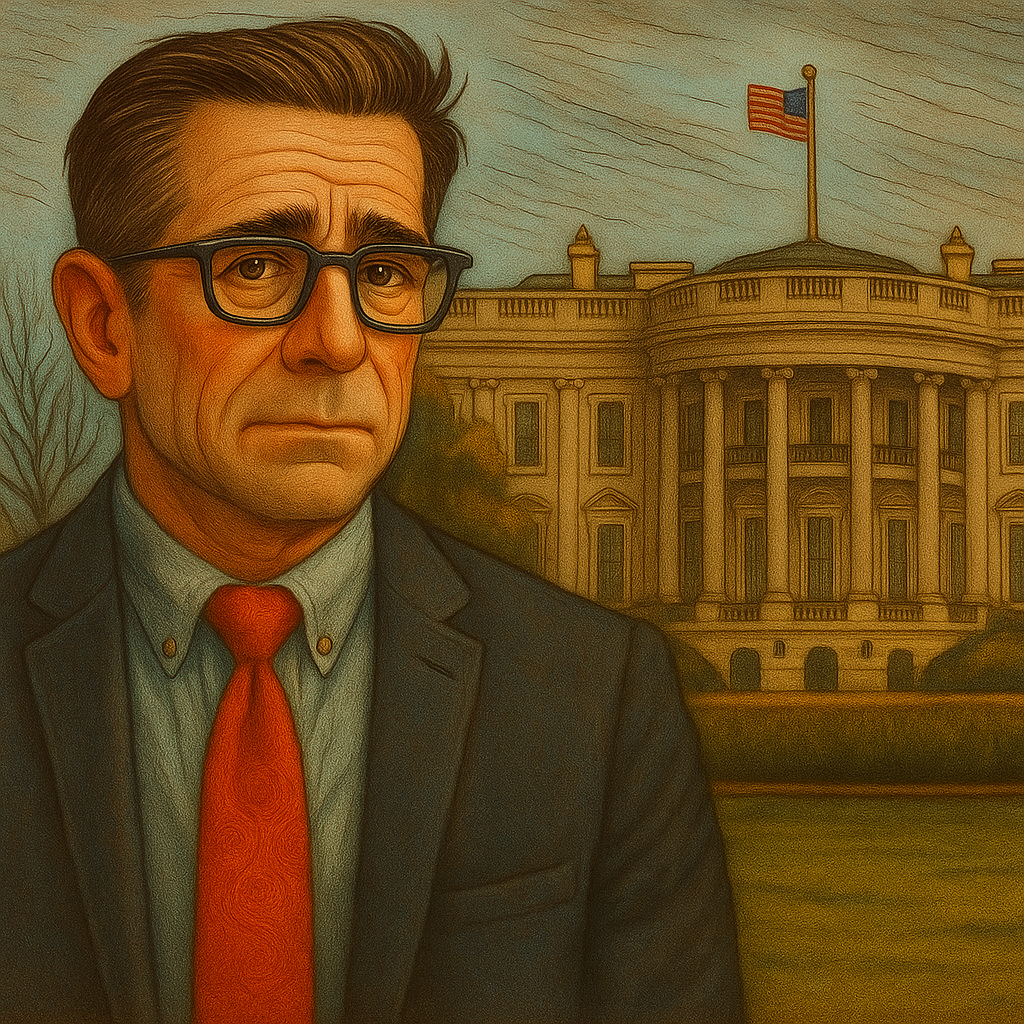 The week began with relief that quickly turned sour. Congress had avoided a shutdown, but the fallout arrived anyway. Days after passing a short-term funding bill, the House voted to remove Speaker Kevin McCarthy, leaving the chamber leaderless for the first time in U.S. history. The motion to vacate, filed by hardline members of his own party, succeeded with Democratic support—an act of tactical revenge for the previous week’s chaos. Washington’s center of gravity vanished overnight. For a moment, the world’s largest economy had no functional House of Representatives.
The scramble that followed was both procedural and psychological. Without a speaker, the House could not conduct business, pass legislation, or receive classified briefings. Committee work froze. Staffers circulated memos explaining the limits of authority under vacancy. McCarthy’s allies accused extremists of sabotage; his critics called it accountability. Both were right. The institution had reached a new stage of entropy: a system capable of running only until the next personality crisis. Power no longer resides in offices—it resides in moments of disruption.
The markets watched but did not panic. Investors have learned to discount politics as theater, confident that the executive branch and the Federal Reserve can keep the machinery running. Still, volatility ticked upward. Treasury yields rose to levels unseen since 2007, signaling investor unease about long-term stability. The dollar remained strong, not from faith but from inertia—there being nowhere else for global capital to hide.
Amid the paralysis, agencies resumed normal operations under the continuing resolution that kept government funded through mid-November. “Normal” meant reduced hours, cautious spending, and planning for the next near-shutdown. Federal employees described the pattern as “bureaucratic jet lag”: weeks of acceleration followed by forced stillness. Even continuity feels exhausting when it arrives in two-month increments.
Elsewhere, the UAW strike expanded again. Additional assembly plants joined the walkouts, extending the standoff to nearly 25,000 workers. Public opinion continued to favor the union, reflecting broader sympathy for wage stagnation after years of corporate profit growth. President Biden’s visit to a picket line—the first by a sitting president in modern history—made headlines less for its policy impact than its symbolism. His brief remarks underscored the stakes: the transformation of industrial America under the dual pressures of automation and electrification. What was once a labor dispute has become a referendum on how the next economy will be built and who will build it.
In the South, heat refused to yield. Temperatures stayed in the upper 90s through October’s first week, pushing electrical demand to new highs. Utilities managed to avoid rolling blackouts, but the strain showed. In Louisiana, several substations reported equipment failures due to prolonged load. Engineers spoke of “thermal fatigue,” a term that now describes both metal and morale. Every system is running hotter than intended—machines, markets, and the people holding them together.
Internationally, the world’s attention shifted toward the Middle East, where escalating violence in Gaza and Israel began to eclipse Europe’s war fatigue. Diplomats issued routine calls for restraint, and intelligence agencies scrambled to anticipate consequences. The global order feels increasingly like a network of brush fires—no single blaze catastrophic enough to command focus, but together consuming oxygen from everything else. The term “multipolar” has become shorthand for fragmentation.
Back home, the cultural calendar kept turning. Film festivals resumed with strike exemptions, allowing a handful of high-profile premieres to stand in for a stalled entertainment pipeline. Book tours and local fairs filled the gaps. Public libraries reported increased traffic, often serving as cooling shelters by day and meeting halls by night. In a year defined by institutional instability, the most reliable gathering spaces remain the smallest ones.
Economic data arrived in contradiction: unemployment steady at 3.8 percent, manufacturing contraction continuing, consumer optimism dipping again. Analysts described it as “resilient stagnation”—an economy too strong to call weak and too brittle to call healthy. Every gain carries an asterisk: jobs without savings, growth without relief, stability without confidence. The numbers tell one story; the lived experience tells another.
By Friday, with no Speaker in place and no path forward, Washington entered a kind of civic limbo. Journalists recycled the phrase “unprecedented,” a word that has lost meaning through overuse. The machinery of government idled while the country kept moving around it. Flights landed, schools opened, packages arrived—the daily rhythm continuing in defiance of the headlines. For all its dysfunction, the United States still runs on habit, not hierarchy.
The week ended as it began: with exhaustion mistaken for equilibrium. The system did not fail; it simply stalled in plain sight. Power shifted from institutions to improvisation, from planning to reaction. Governance has become a maintenance act performed in real time, one crisis at a time.
If there is a pattern left, it is this: each escape from collapse now guarantees the next approach. Continuity has become the new definition of victory.