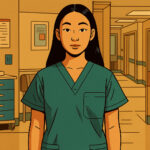
 Hospitals are often described as places of healing. What I saw in early 2022 was not healing but survival, both for patients and for the staff charged with their care.
The patient rooms were full, but the halls told the truer story. Beds lined up along the walls. Monitors blinking beside doors. Families waiting for hours for updates that were incomplete because the staff did not have time to say more than a sentence.
I spent a week shadowing night shifts in a unit that had once been considered calm. By 2022, calm had vanished. There were no “quiet nights,” only temporary reprieves before the next code, the next transfer, the next exhausted intake.
A Fractured Workforce
At the bedside, the nurse is the point of contact between the system and the patient. But the workforce that carried that burden was breaking. Nurses who had once shouldered double shifts without complaint were now cutting back hours because their own health was deteriorating. Respiratory therapists spoke in whispers about colleagues leaving mid-shift, unable to continue. Residents, already in their twenties and thirties, talked of burnout as if it were inevitable by thirty-five.
What collapsed first was not equipment but stamina. The unmeasured vital sign in every room was exhaustion.
Patients in Limbo
The patients who filled those rooms were not just COVID cases. They were the overflow of a system too damaged to manage chronic care.
A woman admitted with heart failure had been waiting months for follow-up. Her cardiology appointment had been canceled twice. By the time she reached the ward, her condition was critical. A man admitted with sepsis had delayed seeking care because he could not afford the ambulance ride. A teenager in diabetic crisis had gone without insulin for a week when his family’s coverage was cut off.
These were not medical mysteries. They were failures of access, failures of continuity, failures of a system that had normalized collapse.
The Bedside as Frontline
I write this not to catalog every case but to point to the pattern. At the bedside, the truth is unmistakable: collapse is not an event but a process. It is visible in the lines under nurses’ eyes, in the unfinished meals cooling in break rooms, in the charts that show preventable conditions advancing unchecked.
Healing requires more than beds and medication. It requires systems that function. In early 2022, the systems did not. What remained was survival.