Background
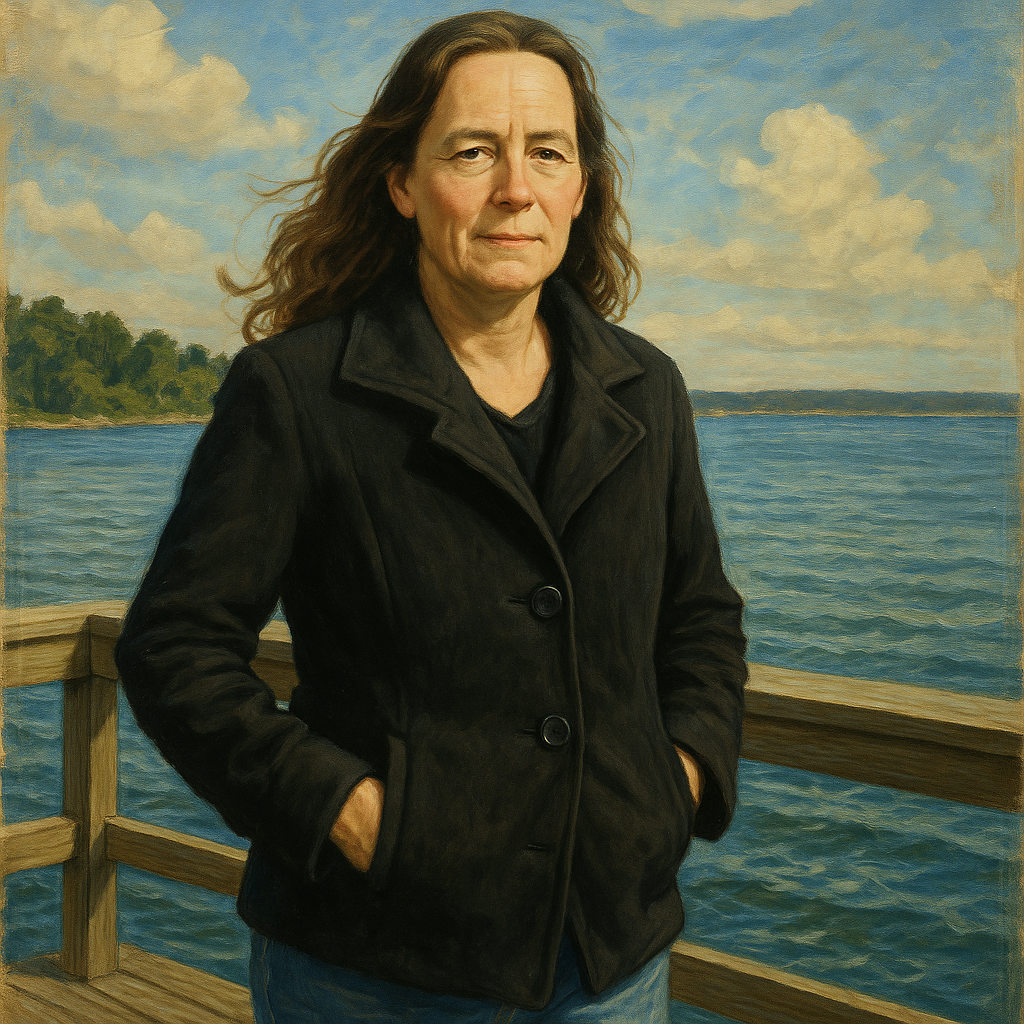 Heather Cox Richardson, born October 8, 1962, in Chicago, Illinois, is a distinguished American historian specializing in 19th-century U.S. history, focusing on politics, economics, and race. Raised in Maine, she attended Phillips Exeter Academy, a prestigious preparatory school in New Hampshire, which provided a strong academic foundation (Wikipedia). She pursued higher education at Harvard University, earning a Bachelor of Arts (AB), Master of Arts (MA), and Doctor of Philosophy (PhD) in history by 1992, studying under historians David Herbert Donald and William Gienapp (Encyclopedia.com).
Richardson’s academic career includes teaching positions at the Massachusetts Institute of Technology (MIT) and the University of Massachusetts Amherst before joining Boston College, where she is a professor of history (Boston College). Her courses cover the American Civil War, Reconstruction, the American West, and the Plains Indians, reflecting her expertise in transformative periods of American history. She has authored seven books, each examining the interplay of political ideologies, economic policies, and social dynamics in shaping the United States.
In her personal life, Richardson married Buddy Poland, a Maine lobsterman, in September 2022, and resides in Lincoln County, Maine (Wikipedia). She identifies as a Lincoln-era Republican, emphasizing principles of equality and opportunity rooted in Abraham Lincoln’s era, but does not align with any modern political party, maintaining a historian’s perspective on contemporary issues (Wikipedia).
Key Points
Heather Cox Richardson’s scholarship centers on 19th-century American history, with a particular focus on the political, economic, and racial forces that have shaped the nation. Her seven books are foundational to her reputation as a leading historian, each contributing to academic and public understanding of America’s past and present:
| Title | Publication Year | Key Themes |
|---|---|---|
| The Greatest Nation of the Earth: Republican Economic Policies during the Civil War | 1997 | Economic policies of the Republican Party during the Civil War |
| The Death of Reconstruction: Race, Labor, and Politics in the Post-Civil War North, 1865-1901 | 2001 | Northern attitudes toward Reconstruction and African-American rights |
| West from Appomattox: The Reconstruction of America after the Civil War | 2007 | National impact of Reconstruction, including the American West |
| Wounded Knee: Party Politics and the Road to an American Massacre | 2010 | Political forces leading to the Wounded Knee Massacre |
| To Make Men Free: A History of the Republican Party | 2014 | Evolution of the Republican Party from 1854 to the present |
| How the South Won the Civil War: Oligarchy, Democracy, and the Continuing Fight for the Soul of America | 2020 | Persistence of hierarchical values in American politics |
| Democracy Awakening: Notes on the State of America | 2023 | Roots of fascism and democratic challenges in America |
Richardson’s most significant public contribution is her newsletter, Letters from an American, launched in September 2019 on Substack during the first impeachment inquiry into President Donald Trump (Substack). The daily newsletter, which provides historical context for current political events, had amassed over 1.3 million subscribers by January 2024, making it one of Substack’s most successful publications (Wikipedia). Her work emphasizes the health of American democracy, offering a fact-based perspective that contrasts with polarized media narratives (The New York Times).
Richardson has also co-hosted podcasts, including Freak Out and Carry On (2017-2018) with WNYC and Now & Then with historian Joanne Freeman, extending her reach to audio audiences (American Academy). Her ability to distill complex political situations into accessible narratives has earned her accolades, such as Boston magazine’s 2021 “Best Pandemic Newsletter” award (Wikipedia).
Timeline
The following timeline outlines key milestones in Heather Cox Richardson’s life and career, based on verified sources:
| Year | Event |
|---|---|
| 1962 | Born in Chicago, Illinois |
| 1970s-1980s | Attended Phillips Exeter Academy, New Hampshire |
| 1980s-1992 | Earned AB, MA, and PhD from Harvard University (PhD completed in 1992) |
| 1990s-2000s | Taught history at MIT and University of Massachusetts Amherst |
| 1997 | Published The Greatest Nation of the Earth |
| 2001 | Published The Death of Reconstruction |
| 2007 | Published West from Appomattox |
| 2010 | Published Wounded Knee, joined Boston College |
| 2014 | Published To Make Men Free |
| 2019 | Launched Letters from an American newsletter |
| 2020 | Published How the South Won the Civil War |
| 2022 | Married Buddy Poland, interviewed President Joe Biden |
| 2023 | Published Democracy Awakening |
| 2025 | Continues Letters from an American, engages on Project 2025 |
Political Influence
Heather Cox Richardson’s Letters from an American has elevated her from an academic historian to a public intellectual with significant influence on political discourse. By January 2024, the newsletter had over 1.3 million subscribers, reflecting its broad reach in providing historical context for contemporary political events (Wikipedia). Described by The New York Times as offering “a break from the media maelstrom,” her work provides clarity in a polarized media landscape (The New York Times).
Her influence is evident in her February 2022 White House interview with President Joe Biden, where they discussed challenges to American democracy, including Russia’s invasion of Ukraine and the nomination of Ketanji Brown Jackson to the Supreme Court (Substack). This interaction underscores her credibility among policymakers and suggests her analyses are considered at high levels of government. The Nation highlights her ability to frame current events within the historical struggle between democracy and oligarchy, shaping public discourse on issues like voter suppression, electoral integrity, and democratic backsliding (The Nation).
Richardson’s books, particularly Democracy Awakening (2023), argue that America’s democratic struggles are rooted in historical tensions between egalitarianism and hierarchical ideologies. This perspective influences public understanding of contemporary challenges, such as judicial independence and voting rights, making her a key voice in debates about national identity and democratic values (The Guardian). While she does not directly engage in policymaking, her work informs public opinion, which can indirectly influence policy through voter priorities and advocacy.
Her role as president of The Historical Society, an organization dedicated to making academic history accessible to the public, further amplifies her influence. By bridging scholarly research and public discourse, she shapes how Americans understand their history and its relevance to current political debates (American Academy).
Controversies
While Heather Cox Richardson enjoys widespread acclaim, her work has faced criticism, primarily from conservative commentators and some historians. A 2023 article in Un-Diplomatic, titled “Liberalism Has a Heather Cox Richardson Problem,” argues that her focus on documenting Donald Trump’s legal and democratic challenges has evolved into a narrative perceived by some as overly aligned with liberal perspectives, potentially compromising her impartiality as a historian (Un-Diplomatic). Similarly, a 2023 Reddit discussion questioned whether she is an impartial commentator or a polemicist, citing her repetition of a prosecutor’s statement about a grand jury indictment of Trump as evidence of bias (Reddit).
Specific criticisms include a 2024 Medium article, “A Historian’s Blind Spot?,” which challenges Richardson’s statements on gun ownership, alleging factual inaccuracies in her historical interpretations (Medium). A 2021 article on Econlib disputes her portrayal of Herbert Hoover’s economic policies during the Great Depression, arguing that her claim about tax cuts is misleading and oversimplifies the economic context (Econlib). Additionally, a review of To Make Men Free in the Claremont Review of Books critiques her characterization of the Republican Party’s ideologies, suggesting it oversimplifies conservative principles and fails to capture the complexity of the party’s evolution (Claremont Review).
Despite these critiques, Richardson’s large following and positive reception from mainstream outlets indicate that these controversies are relatively minor compared to her overall influence. Her defenders argue that her historical approach prioritizes evidence over ideology, and her ability to maintain a broad readership suggests that these criticisms do not significantly undermine her credibility (The Nation). The debates reflect ideological differences rather than widespread evidence of factual errors or professional misconduct.
Policy Impact
As a historian and public commentator, Heather Cox Richardson does not directly craft or influence policy but plays a significant role in shaping public discourse, which can indirectly affect policy debates. Her Letters from an American newsletter frequently addresses critical issues such as voter suppression, judicial independence, the rule of law, and democratic backsliding, providing historical context that informs public understanding and advocacy (BillMoyers.com). For example, her analyses of historical parallels to modern voter suppression efforts may inspire public activism and influence discussions around voting rights legislation, though direct evidence of policy adoption is limited.
Her 2022 interview with President Joe Biden, where they discussed democracy’s vulnerabilities in the context of global and domestic challenges, suggests that her ideas are considered at the highest levels of government (Substack). The interview covered topics such as the importance of democratic institutions and the historical significance of judicial appointments, indicating that her historical perspective resonates with policymakers. However, there is no documented instance of her work directly leading to specific policy changes.
Richardson’s books, particularly How the South Won the Civil War (2020) and Democracy Awakening (2023), argue that hierarchical values and oligarchic tendencies have persisted in American politics, influencing contemporary debates on economic inequality, electoral reform, and democratic governance (Wikipedia). These arguments provide a framework for understanding current policy challenges, potentially shaping public priorities that influence legislative agendas. Her role as president of The Historical Society, which aims to bring academic history to general readers, further amplifies her impact by fostering informed public engagement with historical and political issues (American Academy).
While her influence is primarily in the realm of public opinion, this can translate into indirect policy impact through voter behavior and advocacy. For instance, her emphasis on the historical roots of democratic challenges may encourage grassroots movements to prioritize issues like electoral integrity, though quantifying this impact remains challenging.
Recent Developments
As of June 24, 2025, Heather Cox Richardson remains an active voice in American political discourse, publishing her Letters from an American newsletter daily on Substack. Recent posts from June 17, 2025, discuss Donald Trump’s governance style and its historical parallels, drawing on examples from past administrations to contextualize current leadership trends (Substack). On June 20, 2025, she analyzed border security statistics, comparing current data with historical trends to highlight shifts in immigration policy and enforcement (Substack). Her June 23, 2025, post examined media coverage of international events, critiquing how narratives shape public perceptions of global conflicts (Substack).
In March 2025, Richardson participated in a YouTube discussion titled “The Reality of Project 2025,” alongside Rep. Jasmine Crockett, addressing the implications of the conservative policy agenda for American governance and democracy (YouTube). This event underscores her engagement with significant contemporary political initiatives and her collaboration with public figures to inform audiences about policy developments.
Additionally, a November 2024 interview on On Point with WBUR saw Richardson discussing the political rehabilitation of President William McKinley and analyzing Donald Trump’s cabinet selections for his second term (WBUR). She drew parallels between McKinley’s era and current political trends, highlighting how historical economic policies inform modern debates. These recent activities demonstrate her ongoing relevance as a commentator who bridges historical scholarship with contemporary political analysis.
Richardson’s continued output, including her newsletter and public appearances, reinforces her role as a trusted source for readers seeking to understand the complexities of American politics. Her focus on democracy’s challenges, informed by historical insight, ensures her voice remains influential in navigating turbulent political landscapes.