Revision 1
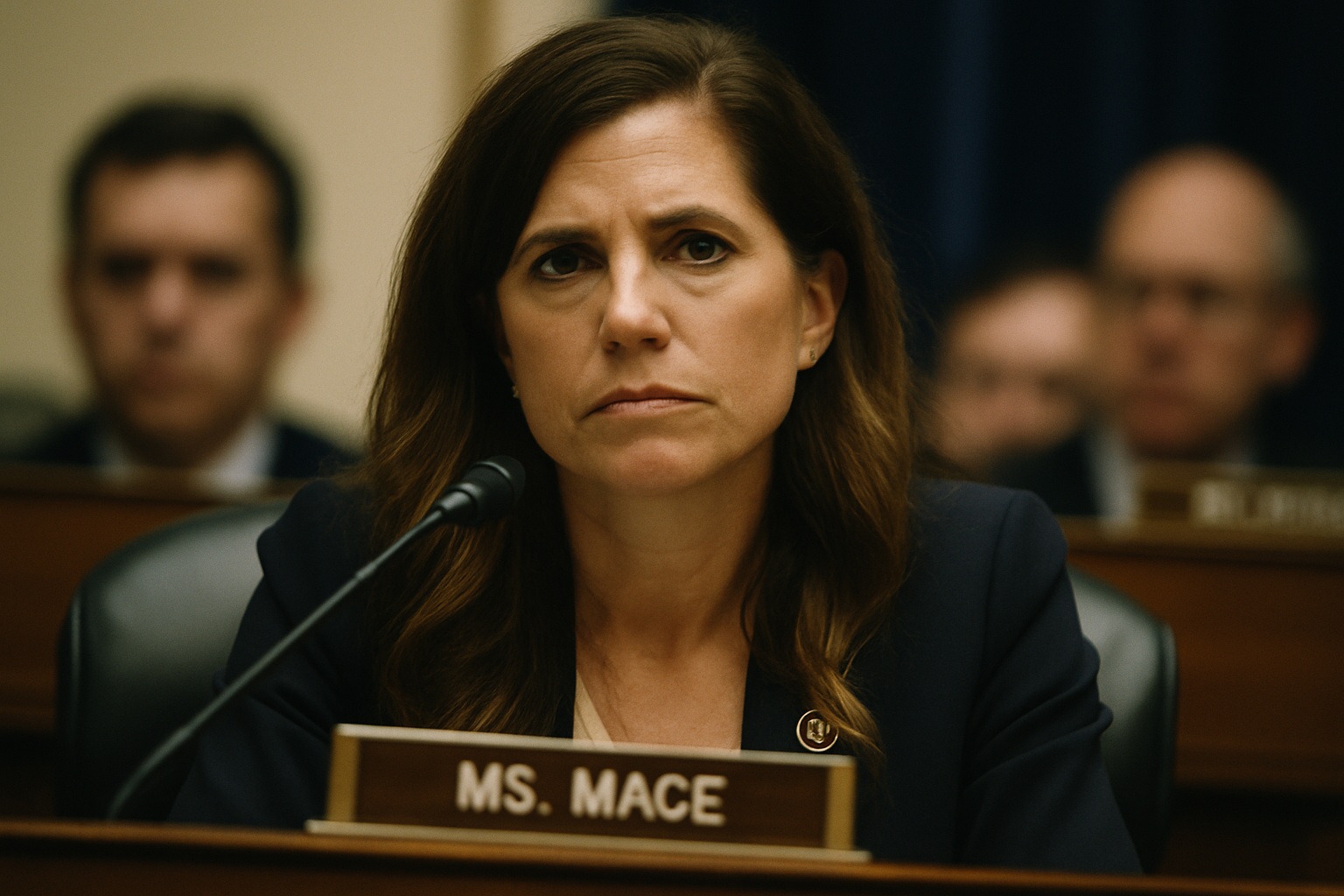 Section 1: Early Life & Education
Nancy Ruth Mace was born on December 4, 1977, at Fort Bragg, North Carolina, into a military family. Her father, James Emory Mace, served as an Army officer and later became commandant of cadets at The Citadel. Her mother, Anne Mace, was a schoolteacher. After her father’s retirement, the family relocated to the Lowcountry of South Carolina, settling in Goose Creek.
Mace’s adolescence was marked by instability. At age seventeen, she left high school before graduating. To support herself, she took a job as a waitress at a Waffle House in Ladson, South Carolina, while finishing her diploma through college credit courses. The experience gave her a working-class credential she would later use as part of her political identity: someone who had scraped by when circumstances pushed her down.
She earned her high school equivalency alongside coursework at Trident Technical College. By 1996 she had gained entry to The Citadel, South Carolina’s state military college, which had only recently been forced by court order to admit women. In 1999 she became the first woman to graduate from its Corps of Cadets, earning a bachelor’s degree in business administration, magna cum laude. Her father was serving as commandant of cadets during her time there, but her achievement was nonetheless a breakthrough in the institution’s history.
In 2001 she published a memoir, In the Company of Men: A Woman at The Citadel, describing the resistance she encountered and the sense of isolation she felt as a woman in a military culture that had not welcomed her.
Mace returned to higher education a few years later, completing a master’s degree in journalism and mass communication at the University of Georgia in 2004. This added a communications toolkit to her business credentials, equipping her for both entrepreneurial and political ventures.
By 2008 she had entered private enterprise, launching a consulting firm, the Mace Group, and later acquiring a stake in a South Carolina political news website. These steps marked the transition from education to the professional and political spheres that would eventually define her career.
Her early life therefore combined sharp contrasts: military family stability with adolescent dislocation, working-class survival with elite institutional access, and the burdens of being a pioneer with the advantages of insider connections. That combination would shape both her strengths and vulnerabilities as she moved into politics.
Section 2: Early Career & Political Formation
Public Relations and Consulting
After completing graduate school, Nancy Mace turned toward communications and consulting. In 2008 she founded The Mace Group, a firm offering public relations, marketing, and political strategy services. This move reflected both her journalism training and her interest in political messaging. She marketed herself as someone who could shape narratives and manage campaigns, skills that would later serve her in her own political runs.
Mace also took an ownership stake in a South Carolina political website, using it to sharpen her instincts about media cycles and public appetite for controversy. By investing in political media rather than only in traditional consulting, she demonstrated a willingness to mix enterprise with opinion—blurring the line between reporting, commentary, and advocacy. She sold her share of the site in 2013, just before formally entering electoral politics.
First Foray into Politics
Her first personal run for office came in 2014, when she challenged U.S. Senator Lindsey Graham in the Republican primary. At the time, Graham was facing criticism from the party’s right flank for his positions on foreign policy and immigration. Mace presented herself as a conservative alternative, focusing on small government and national security.
The campaign gained attention because she was a fresh face, the first woman Citadel graduate, and part of a wave of younger Republicans challenging establishment figures. But Graham’s dominance in South Carolina politics was overwhelming, and Mace finished far behind. Though unsuccessful, the run gave her name recognition statewide and signaled her ambition.
Building Political Credibility
Following her Senate race, Mace deepened her involvement in South Carolina politics. She worked as a consultant, built relationships with donors, and positioned herself as both an entrepreneur and a conservative reformer. She was not yet fully aligned with the Trump-style populism that would later dominate Republican politics, but she cultivated a reputation as a challenger to establishment norms.
In 2017 she won election to the South Carolina House of Representatives in a special election. This victory was significant: it gave her real legislative experience, introduced her to constituent service, and positioned her for a congressional run. Her statehouse tenure was marked by consistent conservative positions on taxes, business regulation, and education, with an emphasis on being responsive to her coastal district.
Ideological Positioning
Mace’s early political formation was built on several recurring themes:
- Conservatism with a reformist edge: She criticized establishment Republicans while avoiding the extremes of libertarian or fringe-right rhetoric.
- Business orientation: Her consulting and entrepreneurial background shaped her as a pro-business candidate, comfortable with chamber-of-commerce style issues.
- Narrative of resilience: Her personal story—the Waffle House waitress who became the first female Citadel graduate—was woven into every campaign as evidence of perseverance.
These traits made her a viable candidate in a Republican state but did not yet define her as a national figure. That would come with her election to the U.S. House, where her record and rhetoric would put her at the intersection of factional battles inside the GOP.
Section 3: Path to Congress (SC-01)
The District Landscape
South Carolina’s First Congressional District is a politically contested coastal seat, stretching from Charleston to Hilton Head. For decades it was safely Republican, but shifting demographics and suburban growth around Charleston began reshaping its politics. In 2018, Democrat Joe Cunningham flipped the seat in a surprise upset, running on a moderate platform that appealed to suburban voters wary of hardline rhetoric.
For Republicans, reclaiming SC-01 became a priority. The district was both symbolic—a long-held conservative seat lost in the Trump era—and strategic, representing suburban terrain where Democrats had made gains.
The 2020 Campaign
Nancy Mace announced her candidacy in 2019. Her pitch blended biography, conservative orthodoxy, and pragmatic rhetoric. She presented herself as pro-business, pro-military, and culturally rooted in the Lowcountry. Her campaign highlighted her Citadel background, entrepreneurial experience, and status as a single mother, giving her a personal dimension not typical of Republican candidates in the state.
Donald Trump endorsed her in June 2020, cementing her position in the primary and general election. While Mace had previously positioned herself as an independent conservative willing to challenge party leaders, she aligned closely with Trump during the campaign. In a Republican primary electorate, that alignment was decisive.
She defeated Joe Cunningham in November 2020, reclaiming the district for the GOP. Her victory was part of a broader trend in which Republicans regained suburban ground in the South, even as Trump lost nationally.
Messaging and Balancing Acts
Mace’s campaign emphasized several themes:
- Economic growth and small business advocacy, important in a district reliant on tourism, shipping, and real estate.
- Military and veterans’ issues, resonating with Charleston’s naval and defense presence.
- Limited government and lower taxes, consistent with Republican orthodoxy.
- Personal narrative, used to portray her as tough, tested, and relatable.
But the balancing act was visible from the start. She needed Trump’s support to win, yet her district’s demographics included suburban moderates and independents who had swung to Cunningham two years earlier.
Early National Attention
Her victory made her the first Republican woman elected to Congress from South Carolina. This milestone brought national media coverage and positioned her as a figure to watch inside the GOP. She was framed as part of a new generation of Republican women—conservative, combative, but distinct from the hard-right provocateurs.
A Seat with High Volatility
The First District’s competitiveness made Mace’s position precarious. She could not rely solely on Trump’s base. To hold the seat, she would have to navigate carefully between loyalty to the national Republican Party and responsiveness to suburban moderates. That tension would define her first term in Congress and shape her reputation as both a survivor and a political contortionist.
Section 4: House Tenure I (2021–2023)
The Impeachment Vote and Immediate Fallout
Nancy Mace entered Congress in January 2021 under extraordinary circumstances. Days later, the attack on the U.S. Capitol forced every member to confront Donald Trump’s role in inciting violence. Mace did not vote to impeach Trump, but she did make a public break, stating that his rhetoric had endangered democracy and that his legacy was damaged beyond repair.
This positioning was calculated. In a district where she needed both Trump loyalists and suburban moderates, Mace tried to walk a narrow line: criticizing Trump’s actions while refusing to join Democrats in impeachment. The result was that she pleased neither side fully. Trump loyalists accused her of betrayal. Democrats and anti-Trump conservatives dismissed her as opportunistic.
Legislative Record and District Service
During her first term, Mace focused on district-specific issues:
- Veterans and military installations, including funding for Charleston’s naval facilities.
- Port infrastructure, critical to Charleston’s economy.
- Flood mitigation and coastal resilience, addressing rising seas and hurricane risks in the Lowcountry.
On national legislation, she aligned with Republican priorities: opposing large Democratic spending packages, supporting deregulation, and voting against Biden administration initiatives on taxation and climate.
Abortion and Women’s Issues
Mace distinguished herself by speaking more openly about abortion than most of her Republican colleagues. While maintaining a pro-life stance, she argued for exceptions in cases of rape, incest, and maternal health. She criticized efforts to impose total bans at the state level, warning that such moves would alienate suburban women and cost Republicans electorally.
This positioning brought her media attention. She was portrayed as a rare Republican willing to acknowledge the political cost of absolutism. But critics on the right viewed her as unreliable, and pro-choice advocates saw her as an insufficient ally.
Privacy, Technology, and Social Media
Drawing on her communications background, Mace took an interest in data privacy and technology regulation. She supported efforts to increase transparency from tech companies, while opposing what she viewed as heavy-handed Democratic proposals. She positioned herself as a conservative interested in reform, not just obstruction.
Relationship with Party Leadership
Mace supported Republican leadership under Kevin McCarthy but did not position herself as a loyalist. She cultivated an independent image, speaking out against her own party when it played to her brand. This included criticizing fellow Republicans for downplaying the seriousness of January 6.
The result was that she was both tolerated and distrusted by party hardliners. She had enough loyalty to avoid open punishment but not enough to be fully embraced.
Media Presence
Mace became a frequent guest on national cable outlets. She emphasized her story as the first woman graduate of The Citadel, her single motherhood, and her willingness to criticize her own party. This made her attractive to outlets looking for a Republican who could comment critically on Trump without abandoning conservative positions.
The media coverage elevated her profile but reinforced her reputation as someone focused on branding. Critics accused her of prioritizing television appearances over legislative substance.
Position at the End of First Term
By 2022, Mace had established herself as a Republican who was neither fully pro-Trump nor anti-Trump, neither hard-right nor centrist. This ambiguity allowed her to survive in a swing district but left her without a firm base of loyal support. She was vulnerable to primary challenges from the right and general election challenges from Democrats.
Her first term illustrated her political method: balancing, hedging, and branding. It kept her afloat, but it also made her a target from all sides.
Section 5: House Tenure II (2023–2025)
The McCarthy Ouster
One of Nancy Mace’s most consequential moves in her second term was her vote to oust Speaker Kevin McCarthy in October 2023. The decision stunned many observers because Mace had generally supported McCarthy’s leadership during her first term.
Her explanation was that McCarthy had broken promises on issues she considered important, including commitments to pursue spending reforms and accountability measures. She framed her vote as a matter of principle, declaring that “the status quo is unacceptable.”
The reality was more complex. The vote aligned her with the small bloc of hard-right Republicans led by Matt Gaetz, even though she had not been closely identified with that faction. This fueled speculation that her move was less about policy than about maintaining her profile as an independent, unpredictable Republican willing to break ranks.
Repercussions Within the GOP
The ouster put Mace at odds with mainstream Republicans and left her in an awkward position. She was suddenly on the same side of a fight as lawmakers she often criticized. Party leaders viewed her as unreliable. Hardliners welcomed her vote but did not embrace her as one of their own.
The vote reinforced her reputation as a political operator who shifts position when it suits her. Supporters argued that this showed independence. Critics called it opportunism.
Committee Assignments and District Priorities
Despite the fallout, Mace remained active in committee work. She sat on the Oversight and Accountability Committee, a high-visibility assignment that allowed her to question administration officials and position herself as a watchdog. She also worked on issues tied directly to her district:
- Military readiness, especially for Charleston’s defense sector.
- Port modernization, ensuring continued federal support for the Port of Charleston.
- Coastal resiliency, highlighting climate impacts without adopting Democratic climate frameworks.
Her emphasis on district priorities showed that, whatever national controversy she generated, she remained focused on delivering visible benefits at home.
Speaker Vote Drama
The weeks following McCarthy’s removal were chaotic, with Republicans struggling to elect a replacement. Mace again positioned herself as an unpredictable vote. She criticized fellow Republicans for failing to govern effectively and signaled support for different candidates at different times.
This strategy kept her in the headlines but deepened frustrations among colleagues. By the time a new speaker was chosen, Mace had reinforced her image as someone who thrives on visibility but is difficult to pin down.
Relationship with Trump
Throughout this period, Mace maintained a careful relationship with Donald Trump. She continued to criticize his rhetoric around January 6 while seeking his endorsement for her reelection. This balancing act was risky: she needed Trump-aligned voters in her district, but she also wanted to keep suburban moderates in play.
Trump ultimately endorsed her again, indicating that he valued her vote count more than her rhetoric. For Mace, it was proof that she could criticize Trump at the margins without losing his support entirely.
Position Heading Into 2025
By early 2025, Mace had survived another reelection and continued to hold a seat in one of the most competitive districts in the South. She had established herself as a national figure, known more for her media presence and unpredictable votes than for legislative accomplishments.
Her critics inside the party saw her as unreliable. Her critics outside the party saw her as complicit with Trumpism. Her supporters argued that she was pragmatic, independent, and responsive to her district.
The second term reinforced the central pattern of her career: Nancy Mace survives by keeping herself at the center of attention, making moves that demonstrate independence while avoiding permanent exile from either faction of her party.
Section 6: Branding & Media Strategy
The Narrative Tools
Nancy Mace has built a political identity around a handful of recurring storylines:
- First woman to graduate from The Citadel — a credential she invokes as proof of toughness and perseverance.
- Waffle House waitress — a symbol of working-class grit, designed to counter the perception of elitism.
- Single mother — a humanizing frame, aligning her with everyday family struggles.
These narratives are deployed with consistency across campaigns, interviews, and social media. They provide her with a relatable brand that softens her sharper political maneuvers.
Viral Politics
Mace has demonstrated a knack for creating moments that cut through the noise. She delivers sharp one-liners in hearings, posts self-styled behind-the-scenes videos, and leans into cultural references designed to attract viral attention.
This approach keeps her visible. It also opens her to criticism that she is more interested in clicks than governance. Supporters see her as skilled at cutting through mainstream media filters. Critics see her as feeding the very spectacle politics she claims to resist.
Media Versatility
Unlike some of her colleagues who stick to partisan outlets, Mace has appeared across a range of media platforms. She does conservative talk shows, cable news panels, and even appearances on mainstream or centrist outlets. This broad approach suggests an awareness of her district’s competitive nature: she cannot survive by appealing only to the Republican base.
At the same time, her frequent media presence reinforces the impression that self-promotion is her primary mode of operation. For colleagues in Congress, her TV hits and social media clips sometimes overshadow substantive legislative work.
Contradictions in Messaging
Mace’s branding strategy thrives on contradiction. She criticizes her party’s extremism while voting with it on key issues. She questions Trump’s rhetoric while seeking his endorsement. She positions herself as a reformer but participates in the same power games as others.
These contradictions are not accidental—they are part of the brand. They allow her to flex depending on audience and context. But they also erode trust. Voters, colleagues, and journalists alike have struggled to pin down where she truly stands.
Image Management and Risk
The benefit of Mace’s branding is resilience. She has survived primary challenges from the right and general election challenges from Democrats, often because she presents different facets to different audiences.
The cost is credibility. By trying to be all things to all voters, she risks being seen as opportunistic and insincere. In politics, adaptability is a strength, but constant repositioning eventually raises questions about core principles.
The Media as a Governing Strategy
For Mace, media strategy is not a complement to governing—it is part of governing. She leverages visibility to apply pressure, to insulate herself from party retaliation, and to position herself as relevant in national debates. This strategy has kept her in the headlines. Whether it builds long-term influence is less clear.
Section 7: Policy Through a Centrist Lens
Abortion and Reproductive Policy
Nancy Mace has sought to carve a middle lane within her party on abortion. She consistently identifies as pro-life but emphasizes exceptions for rape, incest, and the life of the mother. She has warned Republicans that absolutist bans alienate suburban women and young voters.
Her voting record, however, generally supports restrictions on abortion, aligning her with the GOP majority. The rhetoric signals moderation, but the substance reflects a traditional conservative stance. The gap underscores a recurring theme: positioning herself as pragmatic while still voting with her caucus.
Immigration and Border Security
On immigration, Mace aligns with Republican calls for stronger border enforcement. She supports physical barriers, increased funding for border patrol, and restrictions on asylum processes. At the same time, she has voiced interest in reforming the visa system and improving pathways for legal migration, citing the needs of South Carolina businesses.
This dual approach allows her to frame herself as tough on illegal immigration while recognizing economic dependence on immigrant labor. The centrism here is rhetorical more than legislative; she has yet to champion substantive reform bills that would balance security with expanded legal channels.
Technology and Content Moderation
Mace has been vocal on issues of data privacy and tech accountability. She supports stronger protections for consumer data and transparency from major platforms, while opposing Democratic proposals she characterizes as overreach. Her interest in this space reflects her academic background in communications.
In practice, her proposals have been incremental, aiming at regulation without disrupting corporate innovation. This is a case where her rhetoric and policy align: skeptical of big tech but wary of heavy-handed intervention.
Fiscal Policy and Spending
Mace regularly campaigns as a fiscal conservative. She opposed large Democratic spending packages, citing inflationary risk. She supports balanced budget measures and tighter controls on federal outlays.
Yet like many members of Congress, she has sought earmarks and funding for district projects, especially coastal infrastructure and military installations. This reflects the standard congressional balancing act: advocating national restraint while securing local benefits. The contradiction is not unique to her but undercuts her broader message of fiscal discipline.
Veterans and Military Issues
Charleston’s military presence makes veterans’ issues central to her district. Mace has consistently supported defense spending, military pay increases, and expanded health services for veterans. On these issues, she shows less of the rhetorical balancing act; her positions are straightforward and aligned with her constituents’ needs.
Centrist Reality Check
Mace’s record shows a clear pattern:
- Rhetoric: Centrist positioning, emphasizing moderation and warnings against extremes.
- Votes: Mostly aligned with Republican caucus priorities, with few significant breaks.
- Exceptions: Technology and abortion are areas where she has been willing to critique her party’s approach, but without translating criticism into major legislative divergence.
The net effect is a brand of centrism that is more narrative than structural. She positions herself as a moderating voice, but in terms of measurable outcomes, she remains a reliable Republican vote.
Section 8: Controversies & Consistency Tests
Shifts on Trump
Nancy Mace’s relationship with Donald Trump has been a recurring flashpoint. After January 6, 2021, she said Trump’s rhetoric endangered democracy and damaged his legacy beyond repair. Yet by her next reelection campaign she accepted his endorsement and appeared with him at rallies.
This reversal has been criticized as opportunistic. Supporters in her district interpret it as pragmatic survival in a Republican Party still dominated by Trump. Critics, including some former allies, view it as a betrayal of principle for short-term political gain.
Staff Churn and Workplace Reports
Mace’s congressional office has faced reports of high staff turnover. Staffers have cited long hours, unclear priorities, and abrupt management decisions as reasons for leaving. While not unusual in Capitol Hill offices, her rate of turnover has been high enough to attract attention.
The perception of instability reinforces broader critiques of her political style—flexible, adaptive, but sometimes erratic. A chaotic office mirrors the shifting positions that define her public image.
Fundraising and Optics
Like many incumbents in competitive districts, Mace relies on significant fundraising. Her donor base includes traditional Republican sources, business groups, and small-dollar contributors attracted by her media presence.
She has drawn scrutiny for accepting funds from corporate PACs while criticizing establishment politics. This is not unique to her, but it exposes her to charges of inconsistency. The tension between independence branding and establishment fundraising is a contradiction visible to both critics and supporters.
Abortion Rhetoric vs. Record
Mace’s nuanced rhetoric on abortion has won her favorable media coverage, but her legislative record shows few breaks from Republican orthodoxy. This gap is not lost on constituents who expect her words to align with votes. Pro-choice groups criticize her as masking restrictionist policies with softer language. Pro-life groups view her openness to exceptions as suspect. The result is a perception that she is trying to have it both ways.
The McCarthy Vote Fallout
Her decision to vote against Kevin McCarthy during the speakership crisis in 2023 was another case of unpredictability. Mace justified the move as a stand against broken promises. But colleagues questioned her motives, seeing it as a bid for visibility rather than a principled stand.
The aftermath left her distrusted by party leadership and only conditionally accepted by the hard-right bloc. It showcased her independence but also highlighted her isolation inside her own caucus.
Tariffs and Trade
Mace has at times defended Trump-era tariffs as a negotiating tool, despite broad economic consensus that they raised consumer costs without achieving lasting structural change. Her position put her in tension with fiscal conservatives and pro-trade Republicans. For critics, it signaled political calculation over economic evidence.
Consistency Scorecard
- Trump: Break, then reconciliation.
- Abortion: Moderate rhetoric, conventional votes.
- Spending: Fiscal restraint rhetoric, district earmarks.
- Party Leadership: Claims of independence, but sporadic alignments with power brokers.
- Trade: Support for tariffs despite negative economic outcomes.
In each case, the pattern is clear: rhetoric that distances her from extremes, followed by actions that re-align her with the party’s center of gravity. The result is a reputation as unpredictable but not transformative—a politician whose flexibility is her defining trait, but whose credibility is undermined by constant recalibration.
Section 9: Assessment & Trajectory
Strengths That Keep Her Competitive
Nancy Mace has proven herself to be an adaptable and durable politician. She has held a volatile swing district through multiple election cycles by adjusting her message to different audiences. Her personal story—Waffle House waitress, first female Citadel graduate, single mother—remains a potent political tool. She leverages visibility more effectively than most of her peers, ensuring that she is rarely out of the news cycle.
Her emphasis on district priorities such as military installations, port infrastructure, and flood protection gives her a local anchor even as her national persona drifts with political winds. She is also unusually comfortable on a broad range of media platforms, which allows her to reach moderates, independents, and Republican base voters alike.
Vulnerabilities That Shadow Her Record
Her greatest strength—adaptability—is also her central vulnerability. The pattern of shifting positions has eroded trust. Critics across the political spectrum view her as opportunistic. Trump loyalists remember her post-January 6 criticism. Moderates question her alignment with Republican orthodoxy when votes are tallied. Party leadership distrusts her unpredictability, and the hard right sees her as a temporary ally at best.
This leaves her with no firm base of loyalty. She survives by balancing factions rather than by anchoring herself in one. In a swing district, this has worked. But in a primary dominated by Trump loyalists or a general election driven by suburban moderates, the lack of stable trust could prove costly.
Legislative Substance vs. Media Profile
Mace’s record is thin on substantive legislative accomplishments. She has introduced and supported bills, but none define her tenure. Her reputation is instead built on media visibility, branding, and high-profile moments in hearings or leadership fights. This strategy ensures relevance but not depth. Over time, the absence of major policy achievements could undermine her claim to influence.
Long-Term Prospects
Mace’s trajectory depends on three variables:
- District Volatility: SC-01 remains competitive. She cannot afford to alienate either Trump loyalists or suburban moderates.
- National GOP Trends: If the party consolidates further under Trump or a successor, her balancing act becomes harder to maintain. If it fractures, her flexibility could position her as a broker.
- Personal Branding: Mace’s ability to remain visible ensures her survival in the short term, but overexposure risks fatigue. Constituents may eventually demand results over airtime.
The Blunt Summary
Nancy Mace is a politician who survives by staying in motion. She is not defined by ideological conviction but by adaptability. That makes her effective in a competitive district and visible on the national stage. It also makes her vulnerable to charges of inconsistency and opportunism.
Her legacy, if it solidifies in the current mold, will not be one of policy achievement but of political survival. She is a case study in how branding, narrative, and media savvy can sustain a career in a divided political era—even at the cost of trust.
Bibliography
- Associated Press. Coverage of South Carolina’s First Congressional District elections (2018–2024).
- Charleston Post and Courier. Reporting on Nancy Mace’s statehouse campaigns, congressional races, and district priorities.
- CNN. Interviews with Nancy Mace regarding abortion policy, January 6, and party leadership disputes.
- Fox News. Coverage of Nancy Mace’s positioning within GOP factions and her votes during House leadership battles.
- Haverford College Archives. Records of Nancy Mace’s attendance and public remarks as an alumna.
- Politico. Analyses of her votes on Kevin McCarthy’s ouster, spending bills, and positioning on Trump.
- South Carolina General Assembly. Records of Mace’s service in the state legislature.
- The Citadel Archives. Documentation of Mace’s graduation as the first female cadet in 1999.
- The Hill. Articles on Mace’s abortion stance, immigration policy comments, and technology regulation efforts.
- The New York Times. Profiles and election coverage highlighting her balancing act between Trump and moderates.
- U.S. House of Representatives. Official roll call votes (117th–118th Congress).
- Wall Street Journal. Reporting on fiscal and trade policy, including Mace’s defense of tariffs.
- Washington Post. Coverage of Mace’s relationship with Trump, abortion messaging, and media strategy.