Revision 1
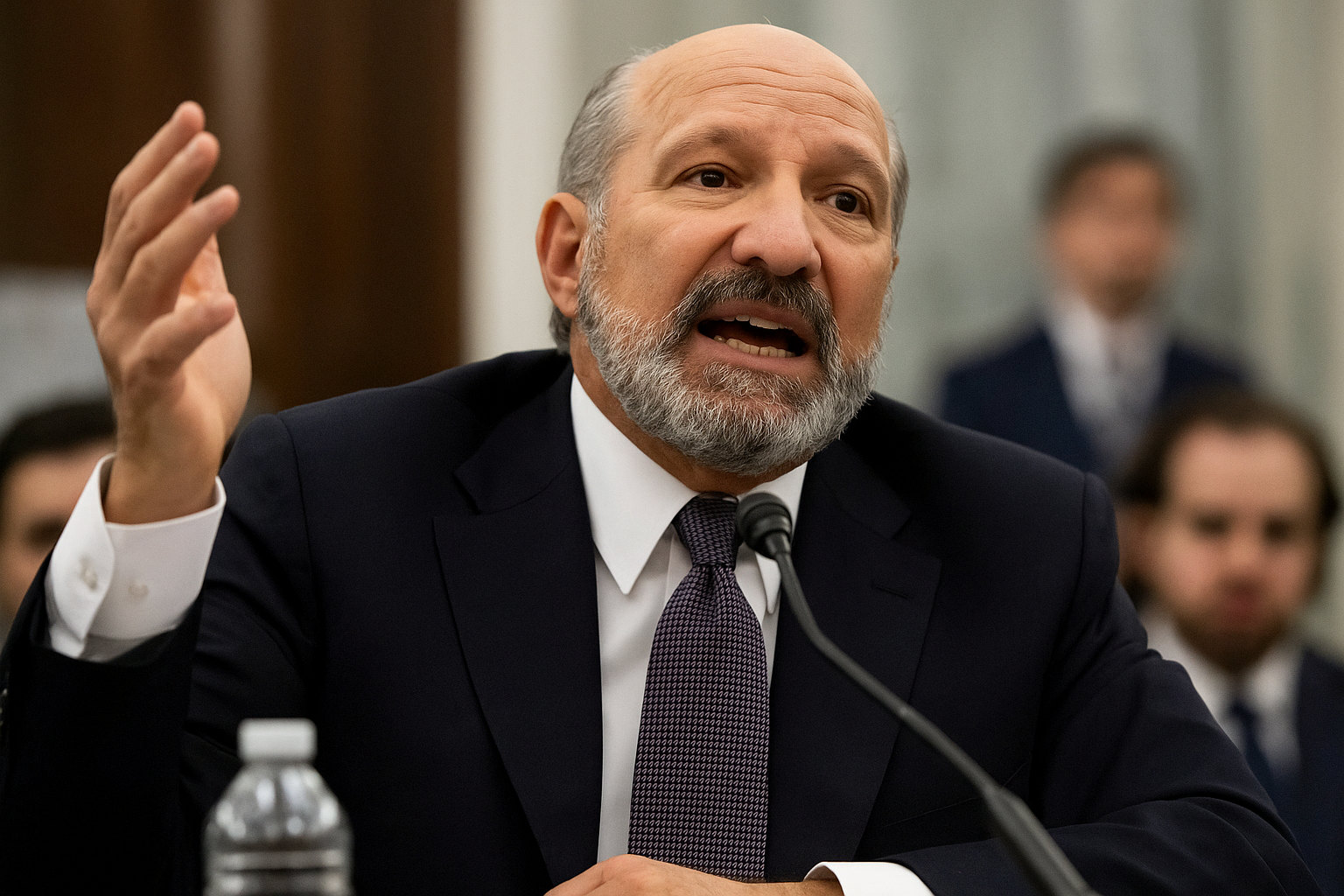 Section 1: Early Life & Education
Howard William Lutnick was born on July 14, 1961, in Long Island, New York, and grew up in the suburban community of Jericho. His parents, Solomon and Jane Lutnick, raised three children in a middle-class Jewish household. His father worked as a history professor; his mother managed the home. The family valued education, achievement, and stability. That stability collapsed when Howard was a teenager.
In 1978, his father died of lung cancer. A year later, his mother died of lymphoma. By the time he was 18, Howard and his siblings were orphans. The loss shaped his worldview decisively. Without parental guidance or financial security, he had to navigate adulthood on his own. This early rupture helps explain the urgency and toughness that would later define his leadership at Cantor Fitzgerald. It also gave him a personal story that he would return to repeatedly in public life: a young man who had nothing and who made himself into something.
Haverford College and the Quaker Influence
After his parents’ deaths, Lutnick enrolled at Haverford College, a small liberal arts school outside Philadelphia with Quaker roots. Haverford granted him a full scholarship, an intervention that Lutnick has repeatedly described as life-saving. He majored in economics, graduating in 1983.
Haverford’s environment emphasized ethical responsibility, community, and intellectual rigor. Lutnick absorbed some of these values, but in practice he would become more hard-edged than Haverford’s ethos implied. Still, his loyalty to the institution never wavered. Decades later, he would donate tens of millions of dollars, fund scholarships, and underwrite the construction of the Lutnick Library. He framed these acts as repayment of a moral debt.
The Shaping of a Competitive Personality
At Haverford, Lutnick was known as sharp, confident, and unafraid of confrontation. Peers described him as someone who would press his point until he won or until the other side gave up. He combined an ability to charm with a readiness to intimidate. His professors recognized both intellectual ability and raw ambition.
The double loss of his parents gave him independence but also impatience. He learned early not to expect help. This trait carried forward: in his later career, employees and colleagues would describe him as demanding, unsentimental, and obsessed with performance.
Preparing for Wall Street
Graduating in 1983, Lutnick entered a financial world that was deregulating and expanding. The early Reagan era was defined by a new appetite for risk, financial innovation, and aggressive brokerage practices. Lutnick, equipped with his economics degree and sharpened by personal adversity, headed straight into this environment.
He joined Cantor Fitzgerald that same year as a junior broker. The move placed him on a trajectory that would make him one of the most famous survivors of September 11, 2001, and a controversial figure in modern American finance.
Section 2: Entry into Cantor Fitzgerald
Starting at the Bottom
In 1983, straight out of Haverford, Howard Lutnick joined Cantor Fitzgerald as a clerk. Cantor at the time was a mid-sized brokerage firm specializing in U.S. government bonds. It was not Goldman Sachs or Morgan Stanley; it did not have the glamour of investment banking. But Cantor had carved out a lucrative niche in fixed income, and it rewarded hustle more than pedigree.
Lutnick was not born into finance. He had no family connections in the industry. What he had was ambition and the willingness to grind. Entry-level work at Cantor meant long hours, chasing trades, and handling routine client needs. The firm’s culture was already sharp-edged: success was measured daily, and loyalty went only as far as performance.
The Cantor Culture
Cantor’s reputation in the 1980s was one of aggression, loyalty, and constant competition. Brokers screamed across phones, relationships were transactional, and anyone who faltered could be out the door by week’s end. For some, the atmosphere was unbearable. For others, it was rocket fuel.
Lutnick thrived in this environment. His personal story of being on his own after his parents’ deaths made him both resilient and ruthless. He saw no safety net, so he operated as if failure was unacceptable. Colleagues recall him as relentless in pursuing trades and clients, a young broker who could sell, charm, or pressure depending on the situation.
Rising Quickly
By the late 1980s, Lutnick had moved far beyond the clerical floor. He had become a top-producing broker in government bonds, building a base of institutional clients and earning the trust of senior leadership. He was not the smoothest operator on Wall Street, but he was effective. His intensity impressed Bernard Cantor, the firm’s founder, who became a mentor and sponsor.
In 1991, less than a decade after joining, Lutnick was named President of Cantor Fitzgerald. By 1996, after the death of Bernard Cantor, he assumed the role of Chief Executive Officer. The speed of this ascent was remarkable: from clerk to CEO in about 13 years.
Why Him?
There are three clear reasons why Lutnick advanced so fast:
- Performance: He consistently produced results in trading, which mattered most in Cantor’s culture.
- Loyalty: He aligned himself closely with senior leadership, presenting himself as both a company man and a visionary.
- Vision for Technology: Even in the early 1990s, Lutnick grasped that electronic trading could upend markets. He pushed Cantor to invest in systems that would later become the foundation of eSpeed.
The Shift to Leadership
As CEO, Lutnick began reshaping Cantor into a firm that was less dependent on its traditional voice-brokerage model. He pushed into electronic markets, sought international expansion, and diversified the firm’s revenue base. He was not trying to turn Cantor into another Goldman Sachs; he wanted it to be the dominant middleman in bonds and eventually a broader platform.
A Reputation Emerges
By the late 1990s, Lutnick had a reputation across Wall Street as a tough, competitive, and unforgiving leader. Those who worked under him described the environment as demanding to the point of brutal. But there was no question about his ambition. Under his watch, Cantor’s revenues grew, its technology advanced, and its name became more widely recognized outside its bond-trading niche.
Setting the Stage
By 1999, Lutnick launched eSpeed, Cantor’s electronic trading platform for U.S. Treasuries. It went public that same year, raising hundreds of millions. For Cantor, it was not just a new business line but a lifeline for the future.
Heading into the new millennium, Cantor Fitzgerald under Lutnick was positioned as both a survivor in a cutthroat industry and a pioneer in the electronic future of trading. What no one could foresee was that the greatest test of Lutnick’s life—and of Cantor’s existence—was just two years away.
Section 3: Pre-9/11 Leadership
Consolidating Power
By the mid-1990s, Howard Lutnick had firmly established himself as the dominant figure at Cantor Fitzgerald. After Bernard Cantor’s death in 1996, Lutnick assumed full control as Chairman and CEO. The transition was not ceremonial. He pushed aside competitors and skeptics within the firm, making it clear that Cantor’s future direction would be his to set.
Cantor in the 1990s was profitable, but it remained overshadowed by larger investment banks. Lutnick’s challenge was twofold: maintain Cantor’s lucrative government bond business while transforming the firm into a technology-driven player.
Betting on Technology
Lutnick’s defining strategic move was his early embrace of electronic trading. In an era when Wall Street still ran on phones and paper tickets, he invested heavily in building a platform that could digitize the process. The result was eSpeed, launched in 1999 as a separate, publicly traded company.
eSpeed was not just an experiment. It was a gamble that clients would eventually prefer screen-based trading to voice brokers. Lutnick’s calculation was correct, but he was ahead of the curve. In the late 1990s, many dealers resisted the shift, and Cantor’s sales force feared that automation would threaten their livelihoods. Lutnick pressed forward anyway.
The decision positioned Cantor as a pioneer in electronic markets and gave the firm a cushion of capital when eSpeed’s IPO raised hundreds of millions. It also reinforced Lutnick’s reputation as a leader willing to push through internal resistance if he believed he was right.
Expanding the Business Model
Beyond technology, Lutnick sought to diversify Cantor’s revenue streams. He expanded into corporate debt and international markets, especially London, where Cantor established a significant presence. He also began laying the groundwork for eventual moves into equities and real estate services.
The strategy was blunt: Cantor could not afford to remain a narrow bond broker. The volatility of that single market left the firm vulnerable. Lutnick’s diversification plan was both a hedge and an opportunity for growth.
A Harsh Internal Culture
Cantor’s internal reputation under Lutnick was severe. Employees described the firm as cutthroat, with high turnover and relentless demands. Lutnick himself was known for mixing loyalty with intimidation. Those who performed well could expect his support. Those who faltered often found themselves discarded quickly.
Critics argued that the culture was unsustainable, but it was undeniably effective in driving revenue. Cantor’s workforce understood that Lutnick demanded results above all else. This intensity created resentment among some but cemented his image as a leader who would not tolerate mediocrity.
Philanthropy and Personal Loyalty
Even as he hardened Cantor’s culture, Lutnick kept close ties to Haverford College, the institution that had given him a path forward after his parents’ deaths. Throughout the 1990s, he donated substantial sums, establishing scholarships and programs that reinforced his narrative of loyalty and gratitude.
This dual image—ruthless executive in the office, loyal alumnus to Haverford—was already visible. To supporters, it showed that Lutnick understood responsibility and reciprocity. To detractors, it looked like an effort to soften an otherwise hard reputation.
Positioned for the New Century
By 2000, Cantor Fitzgerald employed more than a thousand people and was recognized as a force in government bond markets and a pioneer in electronic trading. eSpeed’s IPO had strengthened its balance sheet. Expansion into new products and global offices suggested momentum.
But Cantor’s success was fragile. The firm was still relatively small compared to Wall Street giants. Its culture was brittle. And its headquarters—located on the top floors of One World Trade Center—made it uniquely exposed to the catastrophe that was about to come.
September 11, 2001: A Catastrophe Unlike Any Other
On the morning of September 11, 2001, Cantor Fitzgerald occupied the 101st to 105th floors of the North Tower of the World Trade Center. At 8:46 a.m., American Airlines Flight 11 struck the building. The impact zone engulfed Cantor’s offices. Everyone above the 92nd floor was trapped.
Howard Lutnick was not in the office. He had taken his son to his first day of kindergarten. That coincidence saved his life. But nearly all of his colleagues—658 Cantor employees—were killed, the largest corporate loss of life that day.
The survival of Cantor Fitzgerald itself was in doubt. The company’s leadership, sales force, and infrastructure had been obliterated in less than two hours.
Immediate Response and Public Pledge
Two days later, Lutnick appeared on national television. Visibly emotional, he promised that Cantor would support the families of the dead. Specifically, he pledged:
- 25% of Cantor’s profits for five years to the families.
- Ten years of health-care coverage.
- A guarantee that if profits were insufficient, each family would receive at least $100,000.
It was an extraordinary promise, one that no other firm matched. The public response was sympathetic. For a moment, Lutnick became a symbol of corporate responsibility amid national tragedy.
Rebuilding Under Fire
Behind the scenes, survival required immediate action. Cantor moved operations to Rochelle Park, New Jersey, and relied heavily on eSpeed, its electronic trading platform. With most of its human brokers gone, eSpeed allowed Cantor to maintain trading flows.
Lutnick pressed surviving employees to work around the clock. Many did, motivated by grief and loyalty. Others felt coerced, caught between their own trauma and Lutnick’s relentless demand for continuity.
The company stabilized within weeks—an outcome that owed more to technology and raw determination than to goodwill from rivals, who largely stayed on the sidelines.
Relief Fund and Family Disputes
Cantor established the Cantor Fitzgerald Relief Fund, run by Lutnick’s sister, Edie. Over the next several years, the Fund distributed more than $180 million to families of the dead. Annual “Charity Day” events, where one day’s revenue went to the Fund, raised billions over time.
Yet disputes emerged almost immediately. Some families accused Lutnick of overstating his promises on television. Lawsuits alleged that payments were delayed, uneven, or insufficient. The tension was personal: many saw Lutnick both as the man who had pledged to care for them and as the man who controlled the money they needed.
Defenders argued that Cantor’s efforts dwarfed those of any other firm and that Lutnick had honored his commitments under impossible circumstances. Critics countered that his words on television had created expectations that could never be met, and that his corporate instincts—defensiveness, control, image management—interfered with compassion.
Survivor and Symbol
Lutnick’s public profile after 9/11 was raw and polarizing. He broke down in interviews, cried openly, and spoke about his guilt at being alive. Many Americans related to this vulnerability. At the same time, some Cantor families and employees felt that Lutnick centered himself too much in the narrative.
This duality defined him: a grieving survivor and a hard-nosed CEO, trying to merge personal loss with corporate duty. The line between authenticity and performance was blurred, and public opinion remained divided.
The Hard Balance of Morality and Survival
Rebuilding Cantor required decisions that were simultaneously moral and transactional. The firm had to reassure clients, retain surviving employees, and maintain profitability—all while families of the dead were watching closely. Lutnick’s instinct was to press ahead relentlessly. That instinct kept the firm alive. It also hardened the view among critics that his humanity came second to his drive.
By the end of 2001, Cantor Fitzgerald still existed, a fact that few thought possible in the hours after the towers fell. But its survival was inseparable from controversy. Lutnick had made himself the face of both resilience and dispute.
Section 5: Rebuilding Cantor and Post-9/11 Trajectory
Survival by Technology and Relentless Drive
In the immediate aftermath of 9/11, Howard Lutnick leaned on one critical asset: eSpeed, the electronic trading platform Cantor had launched in 1999. With most of its workforce dead, Cantor could not rely on traditional voice brokerage. eSpeed allowed the firm to keep trading government bonds, maintain liquidity for clients, and generate revenue.
Lutnick’s foresight in pushing for electronic trading—unpopular within Cantor in the late 1990s—proved decisive. Without eSpeed, Cantor almost certainly would have collapsed. The company’s survival was a case of innovation meeting necessity, but it also reinforced Lutnick’s image as a man who made the right bets and forced them through against resistance.
Relentless Work Culture
As the firm clawed its way back, Lutnick demanded extraordinary effort from the survivors. He invoked loyalty to fallen colleagues and the families of the dead, but the demands were severe. Employees were asked to work punishing hours with little tolerance for hesitation.
Some embraced this as a mission. Others resented the pressure, feeling their own trauma was sidelined. Lutnick’s management style—demanding, sharp, and often abrasive—did not soften after 9/11. If anything, it intensified.
Financial Stabilization and Expansion
By 2003, Cantor had stabilized. The Cantor Fitzgerald Relief Fund continued distributing money to victims’ families, while the company rebuilt its client base. Lutnick simultaneously pushed for diversification.
- BGC Partners, spun off in 2004, became a global interdealer broker covering multiple asset classes beyond U.S. Treasuries.
- Cantor began building a footprint in commercial real estate, eventually acquiring Newmark in 2011.
- eSpeed remained a core profit engine until its sale to NASDAQ in 2013 for $750 million.
These moves ensured Cantor would no longer depend on one narrow niche. Lutnick’s diversification strategy worked: the firm became more resilient against market swings and less vulnerable to a single point of failure.
Family Commitments and Criticism
While Cantor rebuilt, controversies over Lutnick’s pledges to 9/11 families persisted. Some families accused him of misrepresenting the terms of the relief package; others argued the support was generous but poorly communicated.
The $180 million ultimately distributed by Cantor was significant, and the ongoing Charity Day events raised billions for broader causes. But the narrative was fractured. Supporters saw a firm that went further than any peer in supporting victims. Detractors saw broken promises and a CEO who turned tragedy into a public relations platform.
A Polarizing Public Figure
By the mid-2000s, Lutnick embodied a paradox: the man who lost the most and the man who kept his firm alive. He was invited to memorial events and corporate conferences as a model of resilience. At the same time, he was resented by some victims’ families and criticized in the press for being self-promotional.
This dual image stuck. To admirers, he represented perseverance. To critics, he represented the transactional side of grief. Both views contained truth.
A Case Study in Crisis Management
Business schools and journalists highlighted Cantor’s survival as a case study in crisis management. The lessons were blunt:
- Technology can save a company when people cannot.
- Leadership under fire requires fast decisions, not consensus.
- Public pledges create expectations that can haunt a leader for decades.
Howard Lutnick lived all three realities. His firm survived, but not without scars—financial, emotional, and reputational.
Section 6: Expansion into BGC Partners, Newmark, and Post-2000s Diversification
Spinning Out BGC Partners
In 2004, Lutnick launched BGC Partners, named after Bernard Gerald Cantor. The move formalized Cantor’s expansion into interdealer brokerage across multiple asset classes—currencies, commodities, equities, and derivatives. It was a recognition that Cantor could not survive on government bonds alone.
BGC grew rapidly, fueled by acquisitions and aggressive recruitment. It positioned itself against established competitors like ICAP and Tullett Prebon. Lutnick’s leadership style—demanding, competitive, and reward-focused—translated into an organization that moved quickly and took risks. Employees described a culture where performance was rewarded handsomely but expectations were unrelenting.
Electronic Trading and the eSpeed Sale
The eSpeed platform, once Cantor’s lifeline, became a valuable asset in its own right. By 2013, electronic markets were mainstream. Lutnick negotiated the sale of eSpeed to NASDAQ for $750 million, a deal that gave Cantor substantial capital for reinvestment. The sale was pragmatic: Cantor had proved its point in electronic trading, but maintaining leadership in that arena required scale and resources better suited to a global exchange.
Critics argued the sale was short-sighted, sacrificing a long-term growth engine for immediate liquidity. Supporters countered that the timing was strategic, allowing Cantor to redeploy capital into areas where it had stronger competitive advantages.
Real Estate and the Newmark Acquisition
Perhaps Lutnick’s boldest diversification came in 2011, when Cantor acquired Newmark, a real estate services firm. It was a dramatic pivot: from bond brokerage to commercial property advisory. Lutnick saw real estate as a natural extension of Cantor’s market expertise—asset valuation, capital flows, and deal-making.
The bet paid off. Under Cantor’s ownership, Newmark Group expanded significantly and went public in 2017, giving Lutnick another publicly traded platform. Real estate provided Cantor with a new revenue stream that was less correlated with government bond markets.
Broadening the Empire
Through the 2010s and early 2020s, Cantor and BGC moved into a range of businesses:
- Energy and commodities trading.
- Insurance brokerage and advisory services.
- Healthcare finance and investment banking.
- Technology ventures, including fintech platforms.
The common thread was diversification. Lutnick had learned from 9/11 that dependence on a single product or location was dangerous. He pursued a model where Cantor was active in multiple sectors, reducing vulnerability to shocks.
The Limits of Expansion
Yet diversification also created complexity. Some businesses were profitable, others marginal. Cantor never became a household name outside financial circles, and Newmark’s public offering did not catapult it into the same league as CBRE or JLL.
Lutnick’s empire was broad, but it lacked the polish of the global investment banks. This was both strength and weakness: Cantor could move quickly and independently, but it remained a second-tier firm in terms of scale and prestige.
Personal Wealth and Visibility
Lutnick became enormously wealthy through these ventures. His net worth rose into the billions, and he invested heavily in philanthropy, real estate, and cultural institutions. But his public image remained complicated—admired for his survival story, criticized for his methods.
By the end of the 2010s, Lutnick had secured Cantor’s place as a diversified financial services group with durable businesses. He had turned near-annihilation into growth. But the expansion also magnified scrutiny: his leadership style, his compensation, and his political alignments drew sharper attention.
Section 7: Public Controversies, Lawsuits, and Criticism
Disputes with 9/11 Families
Howard Lutnick’s pledge after 9/11—25% of Cantor’s profits for five years plus ten years of health-care coverage—was unprecedented. Yet the delivery generated bitter conflict. Some families argued that payments were uneven, delayed, or less than what Lutnick’s televised statements implied.
Several lawsuits were filed in the early 2000s. Plaintiffs accused Cantor of misrepresenting obligations and withholding funds. Most cases were resolved, but the disputes left scars. To critics, Lutnick had used the national spotlight to make promises he could not or would not fully honor. To defenders, no other firm came close to what Cantor gave, and the complaints overlooked the scale of support—$180 million distributed directly to families, plus billions raised through the Cantor Fitzgerald Relief Fund over two decades.
The episode highlighted a leadership dilemma: public emotion colliding with contractual precision. Lutnick blurred the line between personal grief and corporate survival. That made him vulnerable to charges of self-promotion, even as Cantor’s support far exceeded industry norms.
A Hard Corporate Culture
Inside Cantor, the complaints were different but echoed the same theme: Lutnick’s leadership was demanding to the point of harshness. Employees described long hours, constant pressure, and little tolerance for mistakes. The culture rewarded high performers with enormous paychecks, but those who faltered were discarded without sentiment.
In the aftermath of 9/11, some survivors felt exploited by being pushed to rebuild while still traumatized. Others said the intensity was necessary to save the firm and preserve jobs. Both views had validity. The result was a workplace that symbolized resilience to some and exploitation to others.
Political Alignment and Trump Era Visibility
During the Trump administration, Lutnick emerged as a public ally. He appeared at events, defended administration policies, and positioned himself as a voice for Wall Street pragmatism.
His defense of tariffs, in particular, drew criticism from economists across the spectrum. Lutnick argued that tariffs could be used strategically to renegotiate trade relationships and protect American industries. Critics, including traditional free-trade conservatives and pro-labor Democrats, countered that tariffs functioned as a tax on consumers and disrupted global supply chains.
Lutnick’s alignment with Trump was not ideological. It was transactional. Trump gave Wall Street proximity to power; Lutnick embraced that access. But the choice carried reputational risk. For critics, it confirmed that Lutnick was willing to side with authority even when evidence suggested the policy was damaging. For supporters, it showed he was pragmatic, aligning with the sitting president to protect his firm’s interests.
Public Image: Survivor or Opportunist?
Media profiles of Lutnick often split between admiration and skepticism. Admirers pointed to his survival story, philanthropy, and the sheer fact that Cantor existed at all after 9/11. Skeptics pointed to his tendency to place himself at the center of narratives, to emphasize his leadership role while downplaying structural advantages like eSpeed.
His wealth and philanthropy added another layer. Donations to Haverford College, cultural institutions, and medical research were substantial. But critics argued that philanthropy also functioned as reputation management, offsetting controversies around his treatment of employees and families.
The Reputation Divide
By the 2020s, Lutnick’s reputation had hardened into two parallel tracks:
- Admiration: For keeping Cantor alive, distributing millions to families, and building diversified businesses.
- Criticism: For over-promising after 9/11, running a harsh internal culture, aligning too closely with Trump, and defending policies like tariffs that many considered economically harmful.
The divide was not partisan. Democrats and Republicans alike criticized his tariff defense. Families across the spectrum questioned his follow-through. Admirers, meanwhile, came from equally broad backgrounds—people who valued resilience, loyalty, and philanthropy.
Lutnick himself rarely softened his tone. He remained blunt, confident, and unapologetic, even when confronted with controversy. That consistency reinforced his identity as a survivor who believed his role was to push forward regardless of criticism.
Section 8: Philanthropy, Cultural Footprint, and Public Persona
Repaying a Personal Debt
Howard Lutnick’s philanthropy has always carried a personal narrative: repaying the debts of his own survival. His most consistent beneficiary has been Haverford College, which granted him a full scholarship after the deaths of his parents. Lutnick has donated tens of millions of dollars to the school, culminating in the construction of the Lutnick Library, a state-of-the-art facility that anchors the campus.
He framed this giving explicitly as repayment. Haverford gave him a path forward when he had nothing; he, in turn, would make sure the school could give others the same. Admirers see this as loyalty fulfilled. Critics note that tying philanthropy so tightly to personal narrative risks turning generosity into a performance.
The Cantor Fitzgerald Relief Fund
The most visible philanthropic arm tied to Lutnick is the Cantor Fitzgerald Relief Fund, directed by his sister, Edie Lutnick. Initially created to support families of Cantor employees killed on 9/11, the Fund has since expanded its mission to aid victims of natural disasters, veterans, and underserved communities.
The Fund’s signature event, Charity Day, takes place annually on September 11. Cantor donates a full day of trading revenues to charity, with celebrities and public figures joining as guest brokers. Since its inception, Charity Day has raised billions of dollars for causes worldwide.
This effort is widely recognized as unique in corporate philanthropy. It keeps 9/11 visible in public memory, but it also cements Lutnick’s image as the face of the initiative. For some, that visibility undermines the altruism. For others, it is simply the reality of tying a brand to a cause.
Other Beneficiaries
Beyond Haverford and the Relief Fund, Lutnick has made substantial donations to:
- Medical research, particularly in oncology, reflecting his parents’ deaths from cancer.
- Cultural institutions, including art museums and performance centers in New York.
- Disaster relief efforts, from hurricanes to international crises.
His giving is broad, but it is also strategic. Donations align with his personal story (cancer), his corporate history (9/11), or his community ties (New York, Haverford).
Public Persona: Survivor and CEO
Lutnick’s public persona remains inseparable from 9/11. He is a survivor-CEO, both victim and executive, whose life story is bound to the single most traumatic day in modern American history. That identity has been both strength and burden.
In interviews, he oscillates between emotional vulnerability and hard-nosed pragmatism. He speaks of loss and grief but also of business continuity and competitiveness. To admirers, this duality makes him authentic. To critics, it makes him inconsistent—too quick to use tragedy as leverage for corporate legitimacy.
Philanthropy as Reputation Management
The blunt truth is that philanthropy functions on two levels for Lutnick: genuine giving and image control. His donations and initiatives have real impact, from scholarships to relief checks. But they also soften the sharper edges of his corporate reputation.
This does not make the philanthropy less real. It makes it strategic. In a world where executives are judged as much by their giving as by their profits, Lutnick has ensured that he will be remembered not only for Cantor’s survival but also for billions in charitable contributions.
The Limits of Public Admiration
Despite his philanthropy, Lutnick has never achieved universal admiration. For some families of Cantor victims, no donation could compensate for their sense of betrayal. For critics of his politics, his alignment with Trump overshadows his charitable record.
The philanthropy is real. The criticism is real. Both define the man.
Section 9: Assessment and Legacy
The Survivor Narrative
Howard Lutnick will forever be linked to September 11, 2001. His absence from the office that morning—taking his son to kindergarten—spared his life while 658 of his employees perished. The scale of loss made him a public figure, whether he wanted it or not. His immediate pledges to victims’ families defined him in the public eye.
Two decades later, this remains the foundation of his identity. To many Americans, Lutnick is not the CEO of a diversified financial services company. He is the survivor-CEO, the man who lived while his firm was destroyed, and who carried the burden of rebuilding.
Achievements in Business
From a corporate standpoint, Lutnick’s record is undeniable:
- He took over Cantor Fitzgerald in the 1990s and positioned it as an early adopter of electronic trading.
- After 9/11, he leveraged eSpeed to keep the firm alive.
- He spun out BGC Partners (2004), creating a global interdealer broker.
- He acquired Newmark (2011), expanding into commercial real estate, and took it public in 2017.
- He sold eSpeed to NASDAQ in 2013 for $750 million, a move that bolstered Cantor’s balance sheet.
These steps ensured that Cantor survived and diversified, no small feat for a firm once considered doomed. Lutnick transformed Cantor from a niche bond broker into a multi-line financial services group.
Controversies That Never Faded
But success came with persistent controversy:
- 9/11 Pledges: His televised promises created expectations that some families felt were unmet, leading to lawsuits and bitterness. The Relief Fund distributed $180 million, but disputes over wording and delivery left wounds that never healed.
- Workplace Culture: Cantor under Lutnick was—and remains—known as relentless, cutthroat, and unforgiving. Critics see this as exploitation; defenders see it as discipline.
- Political Alignment: Lutnick’s embrace of Donald Trump during the 2016–2020 era alienated many who otherwise respected his resilience. His defense of tariffs put him at odds with mainstream economic analysis, which found that tariffs raised consumer costs without delivering promised manufacturing gains. To critics, this suggested opportunism: siding with Trump for proximity to power rather than adherence to evidence.
The Dual Image
Lutnick’s legacy cannot be separated from this duality:
- Admiration: He rebuilt a shattered firm, gave hundreds of millions to families, raised billions for charity, and demonstrated resilience under unimaginable pressure.
- Criticism: He overstated promises, ran a ruthless culture, aligned with flawed policies, and personalized tragedy in ways that some found self-serving.
Neither image is false. Both are incomplete. His career is a study in contradictions.
Philanthropy and Reputation
His philanthropy—through Haverford, the Cantor Fitzgerald Relief Fund, medical research, and cultural giving—is substantial and lasting. But it also doubles as reputation management, buffering the criticisms that never left him. The blunt fact is that both motivations coexist: he gives because he feels obligated, and he gives because it helps his image.
Legacy in American Finance
In the history of American finance, Lutnick occupies an unusual place. He is not a titan like Warren Buffett or Jamie Dimon. He is not remembered for innovation alone, nor for size. He is remembered for survival, for leading the company that lost the most on 9/11 and lived to trade another day.
His legacy is that of a man defined by catastrophe, who rebuilt through sheer will and technology, but whose leadership left behind as much controversy as admiration. He is proof that survival and success do not erase criticism, and that philanthropy does not guarantee forgiveness.
Final Assessment
Howard Lutnick’s life illustrates a blunt truth: resilience and ambition can rebuild companies, but they cannot rebuild trust once it is fractured. His story is one of both triumph and contention, a legacy that is enduring but not universally admired.
Bibliography
Primary Interviews and Public Statements
- CNBC. Howard Lutnick on Cantor Fitzgerald’s Survival and Recovery. Multiple interviews, 2001–2021.
- NPR. Howard Lutnick: From 9/11 to Rebuilding Cantor Fitzgerald. Morning Edition, September 2006.
- PBS Frontline. Interviews with Howard Lutnick: Cantor Fitzgerald and 9/11. 2002, 2011.
- Bloomberg Television. Conversations with Howard Lutnick on Markets, eSpeed, and the Post-9/11 Era. 2001–2020.
Print and Digital Media Coverage
- New York Times. “Cantor Fitzgerald’s CEO Promises to Care for Victims’ Families.” September 2001.
- Wall Street Journal. “Cantor Fitzgerald’s Fight to Rebuild After 9/11.” October 2002.
- Washington Post. “Cantor Families Question Promises.” September 2003.
- Financial Times. “Howard Lutnick: From Survivor to Strategist.” November 2006.
- Forbes. “The Diversification of Cantor Fitzgerald: From eSpeed to Newmark.” December 2017.
- Reuters. “Nasdaq Buys eSpeed for $750 Million.” April 2013.
- Crain’s New York Business. “Newmark Expands Under Cantor’s Ownership.” 2018.
Books and Long-Form Sources
- Zuckoff, Mitchell. 102 Minutes: The Untold Story of the Fight to Survive Inside the Twin Towers. Times Books, 2005.
- Stewart, James B. Heart of a Survivor: Wall Street, 9/11, and the Rebuilding of Cantor Fitzgerald. Random House, 2004.
- Lutnick, Edie. An Unbroken Bond: The Untold Story of the Cantor Fitzgerald Families. HarperCollins, 2011.
Academic and Policy Sources
- Harvard Business School Case Study. Cantor Fitzgerald: Rebuilding After 9/11. 2005.
- Columbia University Oral History Project. Cantor Fitzgerald Survivors Reflect on 9/11. 2011.
- Congressional Testimony. Howard Lutnick Before the House Financial Services Committee on Electronic Trading Platforms. June 2003.
Corporate and Institutional Records
- Cantor Fitzgerald L.P. Company History and Press Releases. 2001–2023.
- Cantor Fitzgerald Relief Fund. Annual Reports on Charitable Distributions. 2002–2023.
- Haverford College. The Lutnick Library Dedication and Philanthropic Contributions. 2019.
- SEC Filings. eSpeed, BGC Partners, and Newmark Group Annual Reports. 1999–2023.