Revision 1
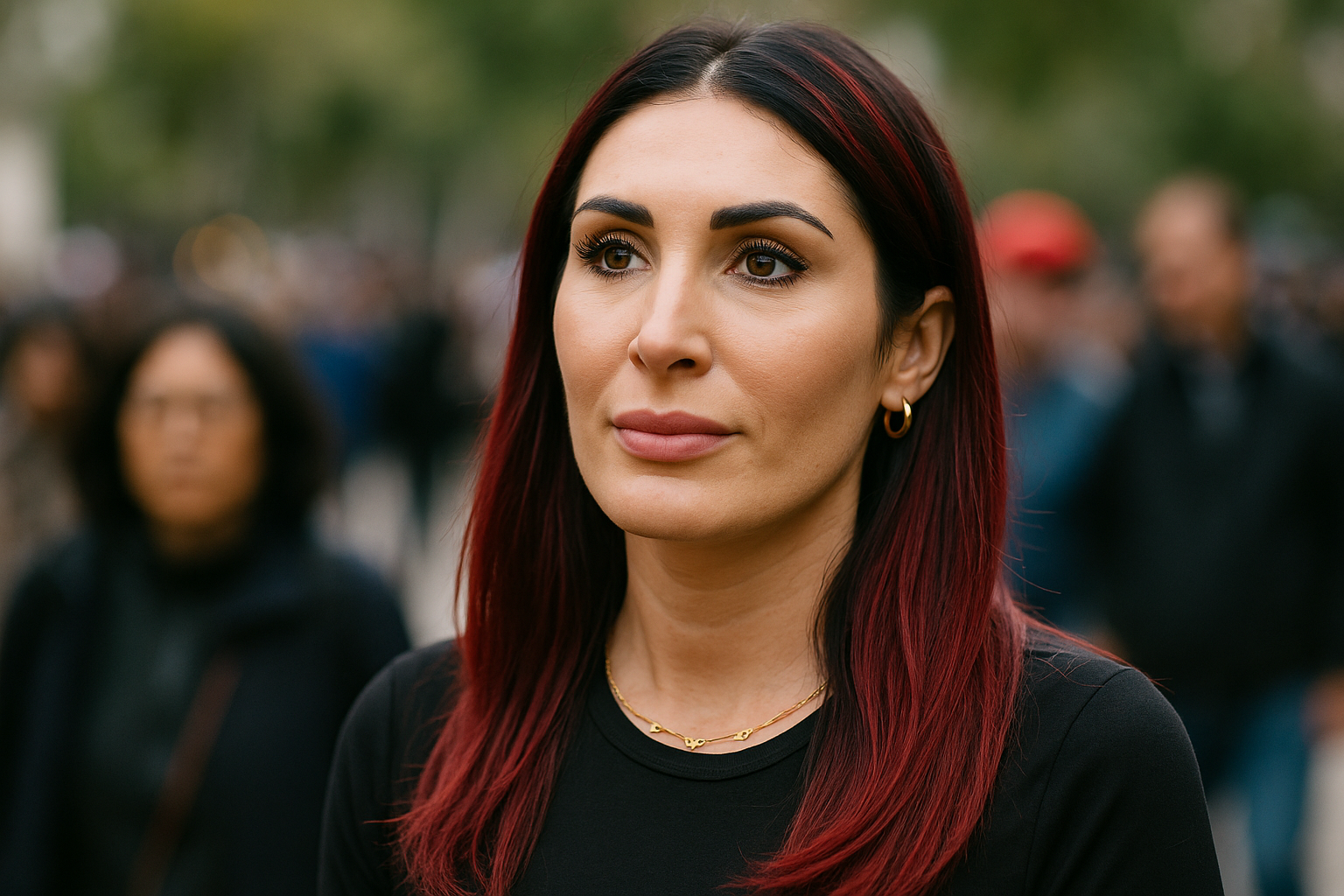
Section 1: Early Life & Education
Laura Elizabeth Loomer was born on May 21, 1993, in Tucson, Arizona, the youngest of three children in a Jewish household. Her father worked in construction-related fields, and her mother was engaged in part-time clerical and service work, balancing household responsibilities with supplemental employment. Loomer has described her childhood as unstable, recalling a volatile home atmosphere that intensified during her parents’ separation. She has publicly stated that her family life included domestic violence and the strain of caring for a sibling with severe mental health issues. These circumstances, according to Loomer’s own accounts, shaped her later determination to fight for visibility and influence, though critics note that her personal history has often been used to dramatize her outsider narrative.
Raised in suburban Tucson, Loomer attended local public schools before being moved into a boarding school environment following her parents’ divorce when she was about twelve. She has claimed that this period marked the beginning of her self-reliance, but it also distanced her from a conventional adolescent trajectory. Unlike peers who navigated high school through stable social networks, Loomer experienced a more fragmented upbringing, balancing academic expectations with family turbulence.
Her Jewish identity was a formative aspect of her upbringing. Loomer has described herself as a “proud Jew” in public settings, while also aligning with movements and individuals who are hostile toward Jewish communities. This contradiction has been a central theme in later critiques of her career, but in her formative years it appeared primarily as a personal identifier — she attended synagogue on occasion and referenced her Jewishness in school contexts, though she was not deeply embedded in formal religious institutions.
Loomer enrolled at Mount Holyoke College in Massachusetts after high school. Mount Holyoke, a historically women’s liberal arts college, provided a sharply different cultural setting from her Arizona upbringing. Loomer remained only one semester. She later claimed she was targeted and ostracized for her conservative viewpoints, framing her departure as an early instance of “cancel culture” and ideological intolerance. Independent accounts suggest her political identity was indeed a source of tension, though her narrative has been criticized as overdrawn. Nevertheless, she established a pattern that would become central to her public persona: claiming outsider status as evidence of authenticity.
Following her exit from Mount Holyoke, Loomer transferred to Barry University in Miami Shores, Florida. At Barry, she pursued a Bachelor of Science in Broadcast Journalism, which she completed in 2015. While at Barry, she began experimenting with forms of media activism that blurred the line between reporting and provocation. Faculty members described her as outspoken and intensely motivated, though not always disciplined in conventional journalistic practices. Her coursework provided technical proficiency in editing, production, and media framing, skills she would later deploy in activist stunts and political campaigns.
The transition from Mount Holyoke to Barry marked more than a geographical shift; it underscored Loomer’s move from a liberal arts environment to a vocational media track. At Barry, she was exposed to Miami’s politically charged, immigrant-rich landscape, which likely sharpened her focus on cultural and identity-based politics. Miami’s conservative Cuban exile community provided one model of right-wing activism, though Loomer’s own brand diverged, leaning toward confrontational performance rather than traditional organizing.
Graduating in 2015, Loomer entered the workforce with a degree in journalism, a chip on her shoulder about liberal intolerance, and a set of technical tools she intended to use in service of activism. This combination of grievance, skill, and spectacle formed the foundation of her career.
Section 2: Entry into Activism & Project Veritas
Upon graduating from Barry University in 2015, Laura Loomer stepped directly into the turbulent world of right-wing media activism. Her entry point was Project Veritas, the organization founded by James O’Keefe, known for producing undercover videos intended to expose liberal bias, progressive organizations, and government officials. Project Veritas specialized in hidden-camera stings and selective editing to craft narratives of corruption or hypocrisy. Loomer proved to be a quick study, absorbing its confrontational ethos and applying it to her own ambitions.
Barry University “ISIS Club” Incident
Even before graduation, Loomer staged one of her first high-profile stunts on her own campus. She secretly recorded conversations with administrators at Barry University, presenting the idea of forming a student organization that would ostensibly support the Islamic State (ISIS). Loomer later released heavily edited footage, suggesting that administrators were open to approving such a group.
The video was distributed through Project Veritas and attracted immediate controversy. Barry University suspended Loomer, accusing her of misrepresentation and deception. Critics condemned the stunt as dishonest and inflammatory, arguing that administrators had not endorsed ISIS but were instead following standard bureaucratic procedures for hypothetical student organizations. Supporters hailed Loomer as courageous, framing the episode as proof that American universities were naively tolerant of extremist ideologies.
This incident crystallized several defining traits of Loomer’s style: a willingness to use deception, a focus on Islamic extremism as her central theme, and an embrace of publicity regardless of whether the facts aligned with her framing.
Association with Project Veritas and James O’Keefe
Through her work with Project Veritas, Loomer learned the mechanics of ambush journalism and selective editing. O’Keefe’s model emphasized shock value, media amplification, and the generation of viral outrage. Loomer adopted these techniques wholeheartedly, blending them with her growing appetite for personal visibility.
Project Veritas operated at the intersection of activism and propaganda, often releasing videos timed to influence news cycles or elections. Loomer’s involvement reinforced her orientation toward media as a tool for disruption rather than investigation. For her, the goal was not balanced reporting but maximum exposure.
Expanding Into Far-Right Media Ecosystem
After her stint with Project Veritas, Loomer broadened her associations with other right-wing platforms. She contributed to The Geller Report, founded by Pamela Geller, known for her staunchly anti-Muslim stance. She also worked with Rebel Media, a Canadian right-wing outlet, and InfoWars, the conspiracy-driven network led by Alex Jones. Each of these affiliations deepened her reputation as a provocateur willing to advance extreme narratives.
The far-right media ecosystem rewarded her tactics. Stunts that might have disqualified her from mainstream journalism instead became her calling card in these spaces. Her confrontational approach — barging into events, ambushing public figures, shouting questions at press conferences — was praised by audiences who saw her as fearless and uncompromising.
Confrontational Tactics and Stunts
In the years following Barry University, Loomer became known for a string of confrontational actions designed to generate viral moments:
- Interrupting theatrical performances to protest perceived left-wing messaging.
- Confronting Muslim community leaders and politicians at public events.
- Staging disruptive protests against companies she claimed were enabling terrorism or censorship.
Her tactics blurred the line between activism and performance art. They were not designed to persuade undecided observers but to reinforce the grievances of a base already inclined toward her message. By framing herself as the lone voice daring to “speak truth,” Loomer carved a niche in the competitive world of far-right influencers.
Emerging Reputation
By the late 2010s, Loomer had established herself as a recognizable figure in extremist media. Her blend of investigative theater, Islamophobia, and self-promotion distinguished her from traditional journalists and even from more conventional conservative commentators. She was not attempting to join the mainstream but to disrupt it, inserting herself into controversies with the explicit aim of creating viral spectacles.
This period cemented her reputation as both a liability and an asset. Mainstream Republicans avoided her, wary of her extremism. But in the digital trenches of the MAGA movement, Loomer was embraced as a symbol of defiance against political correctness, liberal institutions, and Big Tech.
Section 3: Deplatforming & Tech Conflicts
One of the defining features of Laura Loomer’s career has been her conflict with the major platforms that power modern communication. While many activists and public figures have had individual accounts suspended or flagged, Loomer became synonymous with the concept of deplatforming itself. By the late 2010s, she was banned from nearly every mainstream digital service, a distinction she embraced and marketed as part of her identity.
Bans and Exclusions
Loomer was banned from Twitter in November 2018 after posting a series of Islamophobic tweets targeting Rep. Ilhan Omar of Minnesota. She described Omar as “anti-Jewish” and supportive of Sharia law, language that violated Twitter’s rules against hate speech. The ban was permanent at the time, and Loomer quickly turned it into a rallying cry.
Her exclusion from Twitter was followed by bans from Facebook and Instagram in May 2019, which cited her association with dangerous organizations and individuals. PayPal and Venmo terminated her accounts, restricting her ability to raise funds online. She was also barred from GoFundMe, Uber, and Lyft, the latter after she made derogatory comments about Muslim drivers.
Each ban became a news story. Rather than retreating, Loomer leaned into the role of “the most banned woman in America,” transforming exclusion into a form of brand recognition.
The Twitter Protest
Perhaps the most memorable episode of her deplatforming saga occurred in November 2018, when she handcuffed herself to the front doors of Twitter’s headquarters in New York. Loomer wore a yellow Star of David, invoking Holocaust imagery to suggest that she was being persecuted for her identity and beliefs. The stunt attracted significant media coverage, though critics denounced it as tasteless and offensive. Police eventually cut her free and removed her from the site.
This episode encapsulated Loomer’s strategy: stage a disruptive act, use symbolic props to amplify the message, and ensure that cameras captured the spectacle. Whether people supported her or ridiculed her was secondary; what mattered was that she remained in the spotlight.
Legal Challenges Against Big Tech
Loomer sought to fight her bans through the courts. She filed lawsuits against Twitter, Facebook, Google, and Apple, claiming that they had conspired to suppress conservative voices. In one high-profile case, Loomer v. Facebook et al., she alleged violations of free speech and antitrust law. Courts consistently dismissed her suits, reaffirming that private companies are not bound by the First Amendment in the same way as government entities.
Despite losing these cases, Loomer used them to fuel her narrative of persecution. Each legal defeat became further evidence, in her telling, of systemic bias against conservatives. The lawsuits also functioned as fundraising opportunities, allowing her to solicit donations from supporters eager to fight “Big Tech censorship.”
Reinstatement Under Elon Musk
In December 2022, after Elon Musk’s purchase of Twitter, Loomer’s account was reinstated. Musk’s broad reinstatement of previously banned accounts gave Loomer her primary megaphone back. She immediately resumed posting in the confrontational style that had gotten her banned, using her return to trumpet the message that perseverance and disruption could force institutions to yield.
Her reinstatement underscored a central tension: while platforms had repeatedly deemed her rhetoric unacceptable, shifts in ownership and politics could suddenly restore her presence. For Loomer, this validated her strategy of constant confrontation.
The Broader Narrative of Censorship
Loomer’s deplatforming battles positioned her as a martyr in the broader conservative narrative about censorship and cancel culture. Within MAGA circles, she became an icon of resistance to Silicon Valley’s supposed left-wing bias. Her image outside those circles was starkly different: to critics, she was a serial violator of community standards whose rhetoric targeted vulnerable communities.
Yet even critics acknowledged that she had effectively turned deplatforming into a platform of its own. By branding herself as the ultimate victim of Big Tech, Loomer ensured that her name remained central to debates about speech, moderation, and the limits of tolerance in digital spaces.
Section 4: Political Campaigns
While Laura Loomer initially built her identity as a media provocateur, she eventually attempted to parlay that notoriety into formal political office. Her congressional campaigns in 2020 and 2022 were high-visibility affairs, fueled by online fundraising and amplified by her reputation as a censored outsider. Though ultimately unsuccessful, they revealed both the limits and the persistence of her appeal within Republican politics.
2020: Florida’s 21st Congressional District
In 2019, Loomer declared her candidacy for Florida’s 21st District, a Democratic stronghold that included President Donald Trump’s Mar-a-Lago residence. The symbolism of running in Trump’s backyard was unmistakable: she positioned herself as his most loyal foot soldier, eager to defend his home turf.
Loomer campaigned on a hard-right platform centered on immigration restriction, anti-Muslim rhetoric, and denunciations of Big Tech. She framed herself as the living embodiment of “cancel culture’s” victims, arguing that her bans from social media and financial platforms demonstrated the need to dismantle monopolistic control of information.
The primary election was her moment of strength. She won decisively with 43% of the vote in a multi-candidate field, defeating five opponents. Her victory stunned some observers, given her lack of institutional support. Trump praised her after the primary win, though he stopped short of offering an outright endorsement in the general election.
In the general election, Loomer faced incumbent Democrat Lois Frankel, who had deep ties to the district and a solid organizational base. Loomer’s campaign raised significant funds — over $1.1 million, a large sum for a first-time candidate — but she was crushed at the ballot box, losing 59% to 39%. The margin reflected the district’s heavily Democratic makeup, not necessarily a repudiation of Loomer’s message by Republicans.
Despite the loss, Loomer claimed a kind of victory. She had secured national attention, proven her ability to raise money, and demonstrated that her brand could mobilize voters, at least in a Republican primary.
2022: Florida’s 11th Congressional District
Undeterred by her 2020 defeat, Loomer returned in 2022 to challenge incumbent Republican Daniel Webster in Florida’s 11th District. This race was strategically different: rather than contesting a Democratic stronghold, Loomer was attempting to unseat an established Republican by running to his right.
Her campaign leaned heavily on Trumpist loyalty tests. Loomer attacked Webster as insufficiently committed to the MAGA agenda, accusing him of failing to support Trump strongly enough on immigration and election integrity. She also amplified conspiracy theories about the 2020 election, framing herself as a warrior against fraud.
The race attracted attention because Loomer came alarmingly close to unseating Webster. She lost by only 7 percentage points (51% to 44%), a margin narrower than many had anticipated. Her refusal to concede, instead claiming the race was stolen, echoed Trump’s playbook and reinforced her role as a figurehead of election denial.
Lessons from the Campaigns
Loomer’s two congressional campaigns underscored several patterns:
- Fundraising Power: She could raise substantial sums from a national donor base motivated by her anti-censorship narrative.
- Media Visibility: Her notoriety guaranteed coverage, ensuring that even longshot campaigns received outsized attention.
- Base Resonance: While she struggled in general elections, her near-success in a Republican primary showed her resonance with a significant slice of the GOP electorate.
- Party Wariness: National Republican organizations largely kept her at arm’s length, recognizing her as a liability due to her extremism.
Aftermath
Though she failed to win office, Loomer continued to present herself as an elected official-in-waiting, framing her defeats as evidence of establishment corruption rather than rejection. Her refusal to concede in 2022 strengthened her standing among election deniers and cemented her role as a firebrand within the MAGA movement.
For Loomer, campaigns were less about legislative ambitions than about platform-building. Each run gave her new fundraising lists, expanded media coverage, and reinforced her identity as both insurgent and martyr. In that sense, her losses still advanced her broader mission: to remain visible, relevant, and disruptive.
Section 5: Ideology & Conspiratorial Politics
Laura Loomer’s political identity is anchored not in conventional policy proposals but in an ideology built around provocation, grievance, and conspiratorial worldviews. She has embraced positions that are extreme even by MAGA standards, constructing a persona defined by Islamophobia, ethnonationalism, election denial, and a relentless emphasis on loyalty to Donald Trump.
Islamophobia as a Central Theme
From the beginning of her public career, Loomer has targeted Islam as a religion and Muslims as a community. She has described Islam as a “cancer” and claimed that Muslim immigration represents an existential threat to the United States. In her view, Muslims are incompatible with American democracy, and she has advocated policies designed to restrict their rights and participation in public life.
Her rhetoric goes beyond critique of Islamist extremism, extending to blanket condemnation of Muslims. During her 2020 campaign, she argued that Muslims should be banned from serving in Congress and used Rep. Ilhan Omar as her primary foil. These statements placed her at the farthest edge of political discourse, aligning her with organizations and figures widely labeled as anti-Muslim hate groups.
Embrace of White Nationalism
Loomer has referred to herself as a “proud white nationalist,” attempting to distinguish the term from white supremacy by arguing that nationalism based on racial identity is not inherently about domination. This semantic defense has been widely rejected by civil rights groups, journalists, and mainstream politicians, who view the label as unambiguous evidence of extremism.
Her association with white nationalist figures and participation in events connected to that movement have deepened the criticism. Loomer has positioned herself as both Jewish and aligned with an ideology hostile to Jews, a contradiction that underscores the opportunism of her branding. Some analysts interpret her embrace of white nationalism as a calculated bid to maintain relevance in spaces where anti-Muslim sentiment overlaps with ethnonationalist politics.
Conspiracy Theories as Political Currency
Loomer has repeatedly promoted conspiracy theories, framing them as suppressed truths ignored by mainstream institutions. Examples include:
- Claiming that mass shootings, such as the Parkland and Santa Fe tragedies, were staged with “crisis actors.”
- Suggesting that hurricanes and natural disasters were engineered or manipulated.
- Repeating false claims that the 2020 presidential election was stolen from Donald Trump.
- Promoting the idea that terrorist attacks are often “false flag” operations staged by governments or elites.
These theories serve multiple functions. They provide a sense of insider knowledge, reinforce distrust of institutions, and energize her base by presenting her as a fearless exposer of hidden truths.
Election Denial and Loyalty Enforcement
After the 2020 election, Loomer became an outspoken proponent of election denial. She insisted that fraud was widespread and that Trump had been illegally removed from office. This theme dominated her 2022 campaign, where she accused her Republican opponent of failing to fight hard enough against alleged fraud.
More broadly, Loomer has assumed the role of a loyalty enforcer within the MAGA movement. She uses her platform to identify and target individuals she deems insufficiently loyal to Trump, often launching harassment campaigns against them online. These campaigns sometimes coincided with personnel changes in Trump’s circle, feeding speculation about her influence.
Ideology as Performance
What distinguishes Loomer’s ideology is its performative dimension. She does not simply articulate positions; she embodies them through stunts, lawsuits, and media spectacles. Whether handcuffing herself to Twitter headquarters, disrupting events, or staging confrontations, Loomer’s actions are designed to dramatize her views and force attention.
Her ideology is less a coherent framework than a collection of grievances deployed as theater. Islamophobia, ethnonationalism, and conspiracy theories are not offered as policy agendas but as identity markers, signaling membership in a political subculture defined by distrust of institutions and rejection of mainstream norms.
The Outsider’s Creed
At its core, Loomer’s ideological project is to sustain her position as an outsider perpetually victimized by powerful forces — universities, Big Tech, Democrats, establishment Republicans, global elites. By framing herself as persecuted yet unyielding, she transforms ideological extremism into a badge of authenticity.
This outsider creed ensures that even in defeat — whether electoral losses, dismissed lawsuits, or platform bans — Loomer claims victory. Every rejection reinforces her narrative that she is feared because she tells inconvenient truths.
Section 6: Proximity to Power
While Laura Loomer has never held elected office, her trajectory from fringe activist to insider influencer illustrates how outsider figures can exert pressure within the political system. By 2025, Loomer had achieved direct access to Donald Trump and his administration, using her role as an enforcer of loyalty to shape personnel decisions at the highest levels of government.
From Margins to Oval Office
The most striking evidence of Loomer’s ascent came in April 2025, when she was reported to have visited the Oval Office. During that meeting, Loomer allegedly presented Trump with a list of officials she considered disloyal or ideologically untrustworthy. Within weeks, several senior figures in intelligence and homeland security positions were dismissed or reassigned.
Loomer publicly claimed credit for these changes, framing herself as a watchdog guarding Trump’s interests against infiltration. While White House officials downplayed her influence, the sequence of events suggested at minimum that her criticisms were taken seriously at the highest levels. The mere fact that she was granted Oval Office access underscored her evolution from a social media provocateur to a figure capable of influencing executive decision-making.
Campaigns of Intimidation
Loomer has orchestrated online harassment campaigns against federal officials, particularly in the Department of Homeland Security (DHS), Customs and Border Protection (CBP), and the National Security Agency (NSA). She accused targeted individuals of being “open borders shills,” “deep state actors,” or otherwise insufficiently loyal to Trump.
These campaigns typically unfolded in three stages:
- Identification: Loomer spotlighted a specific official, often citing past statements or actions she deemed suspect.
- Amplification: She mobilized her followers through social media, broadcasting accusations and demanding firings.
- Aftermath: In several cases, officials were suspended, reassigned, or dismissed, often within days of her campaigns.
Even when correlation did not prove causation, the timing reinforced her reputation as someone who could get results.
Blocking Appointments
Loomer also claimed responsibility for derailing certain Trump administration appointments. Notably, she targeted Dr. Janette Nesheiwat, Trump’s nominee for Surgeon General, criticizing her views on vaccines and public health. Following Loomer’s campaign, the nomination was withdrawn. This episode demonstrated that Loomer’s influence extended beyond personnel removals into shaping the composition of the administration itself.
Immigration and Foreign Policy Pressure
In August 2025, Loomer took credit for pushing the State Department to suspend visas for Palestinians from Gaza. She described these actions in inflammatory terms, labeling applicants as “Islamic invaders” and urging faster deportations. While the extent of her actual influence on policy decisions remains debated, her ability to insert herself into discussions of visa policy highlighted the permeability of institutional boundaries to activist pressure.
Shaping Military Narratives
Loomer’s reach extended even into the symbolic terrain of the military. In summer 2025, she launched a public attack on the Army’s commemoration of Medal of Honor recipient Florent Groberg, questioning his merit because of his immigrant background. The backlash from veterans and military officials was swift, but the incident underscored Loomer’s audacity in targeting even traditionally sacrosanct institutions.
Implications of Access
Loomer’s proximity to Trump revealed a broader shift in how political power operates. Outsider figures with no formal credentials or institutional roles could, through relentless loyalty and media amplification, exert influence over governance. For Loomer, access to Trump validated her strategy: extremism and provocation were not disqualifying but, in some contexts, assets that secured her a place at the table.
Her influence also exposed vulnerabilities in institutional resilience. The fact that online campaigns by a provocateur could coincide with changes in federal staffing raised alarms about the erosion of professional standards in government. For critics, Loomer’s role was a cautionary tale of how spectacle-driven politics can bleed into administrative decision-making.
Outsider as Insider
By 2025, Loomer straddled two identities. She remained an outsider rhetorically — persecuted by Big Tech, scorned by the media, rejected by the Republican establishment. Yet she was also an insider practically, leveraging access to the Oval Office and shaping personnel decisions at the highest levels. This dual role magnified her influence: she could claim both victimhood and power simultaneously, reinforcing her appeal to a base that saw her as proof that loyalty and persistence could overcome exclusion.
Section 7: Recent Escalations
By 2025, Laura Loomer’s career had entered a phase marked by sharper controversies and higher-stakes interventions. No longer content with symbolic stunts against corporations or campus administrators, she directed her energy toward the core institutions of American governance — the military, immigration system, and executive branch. These escalations demonstrated both the durability of her influence and the volatility it carried.
Military Confrontation: The Groberg Attack
In August 2025, Loomer provoked outrage by attacking the Army’s commemoration of Florent Groberg, a retired officer and Medal of Honor recipient who had immigrated to the United States from France as a child. Loomer questioned Groberg’s merit, framing his recognition as an example of misplaced multiculturalism. Her remarks, circulated widely online, drew condemnation from veterans’ groups, military leaders, and bipartisan political figures.
The backlash underscored Loomer’s willingness to target even revered national symbols if doing so advanced her ideological themes. By questioning a decorated immigrant veteran, she signaled that loyalty to her vision of America was a matter of lineage and identity rather than service or sacrifice.
Visa Campaigns and Immigration Pressure
Loomer’s activism also extended to immigration policy. In the summer of 2025, she claimed credit for pushing the State Department to suspend visas for Palestinians from Gaza. She presented this as a national security victory, describing potential visa holders in dehumanizing terms such as “Islamic invaders.”
Although the State Department did not confirm her direct role, the timing of her campaign aligned with a shift in visa policy. For Loomer, the optics were the point: she portrayed herself as capable of forcing changes in federal policy through pressure alone. This amplified her status as both activist and influencer, projecting power disproportionate to her formal role.
Lawsuits and Legal Exposure
Loomer remained embroiled in litigation throughout 2025. She pursued a defamation case against Bill Maher and HBO, stemming from Maher’s implication of an improper relationship between her and Donald Trump. Loomer denied the allegation under oath, using the legal proceedings to reaffirm her loyalty to Trump while simultaneously threatening to sue media outlets that reported on the rumor.
Other suits, often targeting Big Tech or civil rights organizations like CAIR, continued to be dismissed, reinforcing the pattern that her courtroom presence was less about legal victory and more about sustaining her brand as persecuted truth-teller. Legal defeats became raw material for fundraising and social media content.
Escalating Rhetoric
As her influence inside Trump’s orbit increased, Loomer’s rhetoric grew more strident. She expanded her targets to include federal health officials, accusing them of promoting “globalist” vaccine agendas; intelligence officers, labeled “deep state saboteurs”; and even allies within the Republican Party who she deemed insufficiently loyal.
This intensification aligned with her broader role as a loyalty enforcer. By escalating attacks, Loomer sought to maintain pressure and visibility. The risks of overreach — alienating potential allies or triggering backlash — were significant, but her strategy relied on confrontation, not consensus.
Intra-Movement Tensions
Loomer’s rising profile created friction within the MAGA movement itself. Some Trump allies welcomed her aggressive loyalty enforcement, seeing her as useful in disciplining bureaucrats and party members. Others viewed her as reckless and destabilizing, a liability whose extremism undermined broader strategic goals.
Reports suggested that Trump himself oscillated between amusement at her tactics and concern about the controversies she generated. Nevertheless, her continued access indicated that her role, however controversial, had been institutionalized within the movement’s power structure.
Symbolism of Escalation
The shift from stunts like handcuffing herself to Twitter’s doors to influencing visa policy and attacking military heroes symbolized Loomer’s escalation from the margins to the heart of national politics. She no longer positioned herself as merely protesting censorship but as actively shaping the administration of government.
For critics, this escalation was alarming evidence of how radical voices could move from disruption to governance in a weakened institutional environment. For supporters, it was proof that outsiders could wield real power if they were loyal enough and relentless in their tactics.
Section 8: Assessment & Legacy
Laura Loomer’s career presents a paradox: she has never held elected office, passed legislation, or managed a public institution, yet she has achieved influence inside the halls of power through loyalty, spectacle, and relentless confrontation. Her legacy lies less in tangible policy accomplishments and more in the model she represents — an archetype of how outsider figures can pressure, infiltrate, and destabilize institutions in an era of populist politics and weakened guardrails.
Strengths That Amplified Her Role
- Media Savvy
Loomer understands the mechanics of modern outrage media. By staging stunts, provoking backlash, and ensuring cameras were present, she consistently inserted herself into national debates. Her ability to craft symbolic moments — whether handcuffing herself to Twitter’s headquarters or publicly targeting federal officials — guaranteed visibility far beyond her formal reach. - Victimhood as Branding
Deplatforming became not a setback but her brand. By presenting herself as “the most banned woman in America,” she transformed exclusion into proof of authenticity. Each ban, lawsuit, or defeat reinforced her narrative of persecution, which she repurposed for fundraising and mobilization. - Alignment with Trump
Her unflinching loyalty to Donald Trump opened doors. By framing herself as a watchdog guarding against disloyalty, she gained proximity to the Oval Office and became part of the machinery that enforced ideological conformity within Trump’s ranks. Loyalty was her currency, and she spent it effectively. - Agility Across Roles
Loomer moved fluidly between roles: journalist, activist, influencer, candidate, and enforcer. This adaptability allowed her to survive setbacks that might have ended other careers. Each defeat became a pivot point, not an endpoint.
Vulnerabilities and Limits
- Lack of Institutional Legitimacy
Loomer’s influence remains precarious because it is built on access and attention, not institutional authority. Without office or official title, her power depends on Trump’s favor and the persistence of her media platform. - Extremist Branding
Her open Islamophobia, embrace of white nationalism, and conspiratorial rhetoric limit her appeal beyond the far-right base. Mainstream Republicans continue to keep her at arm’s length, recognizing her as a liability in general elections. - Legal and Financial Exposure
Her many lawsuits, though often dismissed, drain resources and expose her to countersuits. Her reliance on online fundraising leaves her vulnerable to further deplatforming or financial cutoffs. - Internal Friction
Even within MAGA, Loomer has generated tension. Some insiders value her aggressiveness, but others fear that her recklessness undermines broader movement goals. This friction ensures that her position, while visible, is unstable.
Place in American Political Culture
Loomer embodies a set of broader trends reshaping American politics:
- Politics as Performance: In an era when virality often matters more than policy, Loomer thrived by prioritizing spectacle over substance.
- Influencers in Governance: She demonstrates how digital influencers, even without office, can pressure institutions and shape personnel decisions.
- Normalization of Extremism: Her access to the Oval Office illustrates how ideas once relegated to the fringe can migrate into the mainstream of political power.
- Martyrdom as Strategy: By leaning into bans and losses, Loomer exemplifies how defeat can be repurposed as proof of authenticity and fuel for future mobilization.
Projected Legacy
Loomer’s legacy will likely be measured not in terms of electoral victories but as a case study of disruption. She is emblematic of how radical activism in the digital age can bypass traditional pathways of legitimacy and still exert influence. Her role as a loyalty enforcer for Trump places her among the most controversial non-office-holding figures of his political ecosystem.
If future scholars assess the erosion of institutional resilience in early 21st-century America, Loomer’s career will stand as an example of how spectacle-driven politics, amplified by technology, blurred the line between fringe activism and state power.
For supporters, she will remain a warrior silenced by elites and vindicated by persistence. For critics, she will symbolize the dangers of unchecked extremism infiltrating the core of governance.
Section 9: Bibliography
Primary Sources
- Loomer’s public statements and social media activity (Twitter/X, Rumble, interviews).
- Federal Election Commission filings for her 2020 and 2022 campaigns.
- Court documents from Loomer v. Facebook, Google, Twitter, and Apple (dismissals 2019–2022).
Secondary Sources
- The Guardian, “Who is Laura Loomer?” (April 2025).
- PBS NewsHour, “How far-right activist Laura Loomer is shaping the Trump administration” (2025).
- ABC News, “Loomer’s pressure campaigns reshaping DHS and NSA staffing” (2025).
- Washington Post, coverage of Loomer’s attack on Florent Groberg (August 2025).
- People Magazine, “Laura Loomer denies Donald Trump affair rumor” (2025).
- New Lines Magazine, “Laura Loomer and Jewish MAGA’s Dance with the Devil” (2024).
- The Times-Picayune / NOLA.com, reporting on Loomer’s Florida campaigns.
- Wikipedia, “Laura Loomer” (general reference, citations compiled).