Revision 1
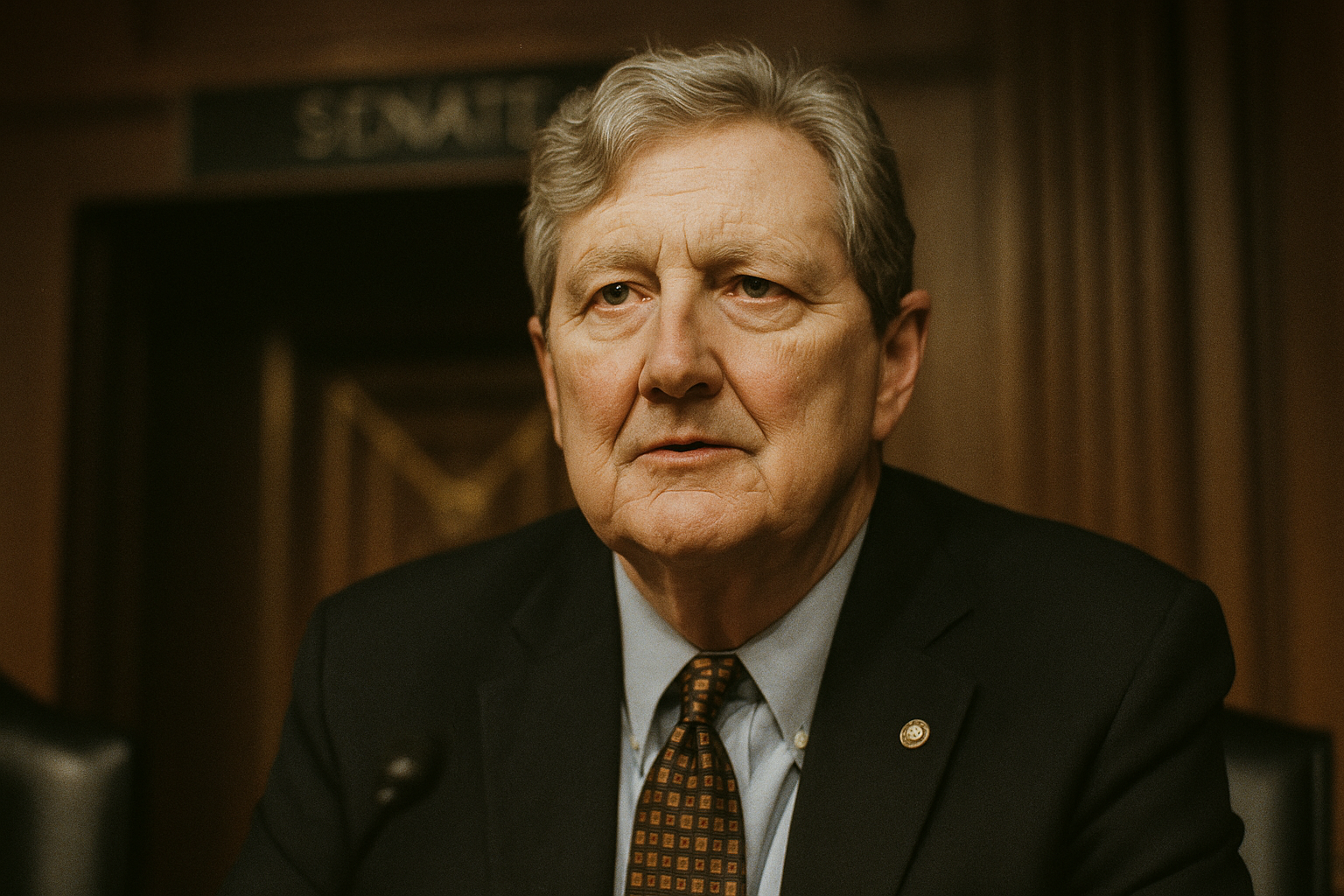 Section 1: Early Life & Education
John Neely Kennedy was born on November 21, 1951, in Centreville, Mississippi, and raised in Zachary, Louisiana, a small town north of Baton Rouge. His upbringing in the Deep South would later become an anchor for his political identity, grounding him in the language, imagery, and cadence of Southern populism. Yet Kennedy’s life trajectory also marked him as someone who bridged two very different worlds: the small-town culture of Louisiana and the elite corridors of American and British higher education. This tension — between humble roots and elite schooling — would shape both his political career and his rhetorical style.
Family and Regional Context
Kennedy grew up during a period of transition in the South. Louisiana was in the midst of social, cultural, and political upheaval as the Civil Rights movement confronted entrenched systems of segregation. His family background was not one of entrenched political dynasties or deep wealth. Instead, Kennedy was raised in a middle-class household that valued education and hard work. His parents instilled in him the importance of perseverance and self-reliance — qualities that would surface again and again in his public persona.
The Louisiana of Kennedy’s childhood was a place where populism and personal storytelling carried as much weight in politics as policy detail. From Huey Long’s era forward, Louisiana had produced politicians who leaned heavily on rhetorical performance to capture public attention. Kennedy’s later style, mixing homespun aphorisms with sharp partisanship, was part of that lineage. But it began with a boyhood surrounded by the rhythms of rural and small-town life, where plain talk carried social currency.
Vanderbilt University
Kennedy left Louisiana to attend Vanderbilt University in Nashville, Tennessee, earning a Bachelor of Arts in political science, philosophy, and economics. At Vanderbilt, he encountered a more cosmopolitan environment than the one he had known growing up. The campus was politically active, and Kennedy immersed himself in academic study. This combination of economics and philosophy gave him a dual lens: the analytical rigor of markets and policy, coupled with a deeper engagement with questions of ethics and society.
While Vanderbilt exposed him to broader national debates, it also allowed him to remain close to his Southern roots. Nashville itself was undergoing rapid growth and cultural change in the 1970s, a city balancing its role as the home of country music with ambitions to be a center for education and commerce. Kennedy’s education there helped position him for the next stage of his academic journey: law.
University of Virginia School of Law
Following his undergraduate degree, Kennedy enrolled at the University of Virginia School of Law, one of the nation’s most prestigious legal programs. UVA Law had produced a long list of judges, governors, and senators. Here, Kennedy’s legal foundation was laid. He studied constitutional law, civil procedure, and jurisprudence at a time when the nation was grappling with post-Watergate skepticism of government and shifting attitudes toward federal power.
The rigorous training he received at UVA sharpened his ability to parse legal arguments and anticipate the interplay between law and politics. Kennedy excelled academically and became known for his meticulous preparation and command of detail. His time at UVA solidified his reputation as a serious student of law, but it also marked him as someone destined to step beyond courtroom practice into the political arena.
Oxford University
Kennedy’s educational journey culminated with a prestigious postgraduate degree: a Bachelor of Civil Law (BCL) from Magdalen College, Oxford University. The BCL program at Oxford is regarded as one of the most intellectually demanding courses of legal study in the English-speaking world. There, Kennedy studied under Sir Rupert Cross, one of Britain’s foremost experts in evidence law. This experience broadened Kennedy’s horizons considerably, giving him a grounding in comparative law and exposing him to European approaches to legal philosophy.
Oxford also provided Kennedy with a cultural education. Living abroad in the late 1970s, he encountered different traditions of governance and public service. While Louisiana politics often revolved around patronage and populism, the British system emphasized institutional continuity and tradition. Kennedy absorbed both worlds: the plainspoken, crowd-pleasing populism of the South and the polished intellectual rigor of Oxford. This duality would become central to his political brand.
Elite Education, Populist Persona
The contrast between Kennedy’s upbringing and his education is one of the defining features of his biography. He would later adopt a public style filled with colloquial phrases, self-deprecating humor, and rural metaphors. Yet beneath that folksy veneer lay a résumé shaped by some of the world’s most prestigious institutions. His elite credentials could have aligned him with technocratic or managerial politics, but Kennedy instead chose to wield them in service of a populist image. That calculated choice became one of his greatest political strengths — and one of the main sources of criticism from opponents who accused him of playing down his privileged educational background for political gain.
By the time he returned to Louisiana to begin his legal and political career, Kennedy had built a foundation few of his peers could match. He was steeped in the traditions of both American and British law, fluent in the academic language of economics and philosophy, and culturally conversant with the small-town world of his childhood. These intersecting influences prepared him for a career that would straddle multiple identities: lawyer and politician, elite and populist, local and national.
Section 2: Early Legal & Political Career
When John Neely Kennedy returned from Oxford, he carried with him the credentials of a scholar and the ambitions of a practitioner. His trajectory into Louisiana politics was not immediate, but the path he chose positioned him at the intersection of law, governance, and public service. The years between his return and his rise to statewide office reveal both his legal acumen and his political adaptability.
Early Legal Practice
Kennedy began his professional career practicing law, initially with the New Orleans firm of Chaffe McCall. His work there gave him exposure to commercial and civil litigation, areas that required careful handling of contracts, business disputes, and regulatory compliance. This practice sharpened his understanding of how law shaped commerce in Louisiana, a state where oil, shipping, and agriculture were central to the economy.
Though the details of his early cases are not widely publicized, Kennedy’s time in private practice was formative. It allowed him to navigate the often-complex relationship between Louisiana’s unique legal code — influenced heavily by French civil law traditions — and broader U.S. federal law. This grounding in both civil and common law systems reflected the intellectual duality he had cultivated at Oxford.
Entry into Public Service
Kennedy soon transitioned from private practice into public service. He became special counsel to then-Governor Buddy Roemer in the late 1980s, a period when Louisiana politics was in flux. Roemer, elected as a reformer, sought to clean up corruption and modernize the state’s finances. Kennedy’s role as counsel gave him a front-row seat to the challenges of governing a state with deeply entrenched political patronage.
This experience was crucial in two respects. First, it exposed Kennedy to the inner workings of executive governance in Louisiana. Second, it introduced him to the political tensions between reformers and traditionalists, a divide that continues to shape Louisiana politics. Roemer himself eventually switched from Democrat to Republican, a move Kennedy would echo later in his own career.
Shifting Political Identity
Kennedy initially identified as a Democrat. His early political orientation reflected the historical alignment of Louisiana, where the Democratic Party had long dominated. But by the 1990s, the political landscape in the South was shifting. The national Democratic Party was moving left on social issues, while Louisiana voters were trending more conservative, especially in rural and suburban parishes.
Kennedy’s own trajectory mirrored this shift. In 1991, he ran unsuccessfully for state attorney general as a Democrat, finishing third. This early campaign introduced him to statewide politics and gave him visibility, but it also highlighted the difficulty of establishing a foothold in an evolving partisan landscape. His moderate Democratic identity was increasingly out of step with a Republican-leaning electorate.
Appointment as Secretary of Revenue
In 1996, Governor Mike Foster, a Republican, appointed Kennedy as Secretary of the Department of Revenue. This was a turning point. As revenue secretary, Kennedy was responsible for tax collection, enforcement, and fiscal management. His performance in this role earned him a reputation as a detail-oriented administrator, one capable of navigating complex fiscal issues with clarity.
Importantly, Foster’s decision to appoint Kennedy — a Democrat at the time — underscored Kennedy’s pragmatic reputation. He was viewed less as a partisan warrior and more as a competent technocrat who could deliver results. This role elevated him as a credible figure in Louisiana’s political establishment and set the stage for his election as state treasurer.
Campaigns for Statewide Office
Kennedy ran for Louisiana state treasurer in 1999 and won decisively. His campaign emphasized fiscal prudence and responsible stewardship of taxpayer dollars, themes that resonated with voters across party lines. In a state long plagued by budget deficits and corruption scandals, Kennedy positioned himself as the watchdog of the public purse.
His victory solidified his reputation as a fiscal conservative, even though he remained a registered Democrat. Kennedy would go on to serve as treasurer for nearly two decades, surviving shifts in political winds and winning reelection multiple times. This longevity demonstrated both his skill as a communicator and his ability to adapt to Louisiana’s shifting partisan alignments.
Relationship to Party Politics
Kennedy’s political identity during this period was pragmatic. As a Democrat serving under Republican leadership, he maintained working relationships across the aisle. But his rhetoric and policy priorities increasingly aligned with conservative fiscal positions. Over time, his criticisms of Democratic spending practices grew sharper. This culminated in his formal switch to the Republican Party in 2007, a move that reflected both personal conviction and political calculation.
The switch was significant. By joining the GOP, Kennedy aligned himself with the party that had become dominant in Louisiana. He positioned himself as a conservative populist, blending his fiscal credentials with the plainspoken style that would become his trademark. This move also set the stage for his Senate ambitions, which he pursued multiple times before finally succeeding in 2016.
The Roots of Kennedy’s Political Style
Even in these early years, Kennedy displayed the dual persona that would define his career: a technocratic expert with elite credentials who spoke in the language of rural common sense. As revenue secretary and treasurer, he often used colorful metaphors to explain budget issues, a style that made him accessible to voters. Yet behind the folksy delivery was a deep command of financial detail.
This combination — populist rhetoric, technocratic competence — allowed Kennedy to thrive in a political environment that distrusted both elites and bureaucrats. By cultivating the image of a straight-talking fiscal hawk, he bridged the gap between Louisiana’s populist traditions and the broader conservative movement reshaping American politics.
Section 3: State Politics & Treasurer Role
John Neely Kennedy’s longest and most stable period in public office came through his service as Louisiana’s State Treasurer, a position he held from 2000 until his election to the U.S. Senate in 2016. This sixteen-year tenure defined his political identity for much of his career. It was here that Kennedy honed his reputation as a fiscal watchdog, established himself as a statewide political figure, and cultivated the rhetorical style that would become his trademark.
First Election as Treasurer (1999)
Kennedy won his first statewide election in 1999, taking office in January 2000. His campaign emphasized stewardship, accountability, and responsibility with taxpayer money — themes that resonated deeply in a state with a long history of fiscal mismanagement and corruption scandals. He positioned himself not as a partisan brawler but as a technocrat with both the training and the resolve to handle Louisiana’s finances responsibly.
His early years were marked by high visibility. Louisiana’s treasurer manages billions in state investments, debt, and pensions. Kennedy leveraged the office not only to safeguard public funds but also to project himself as a protector of ordinary taxpayers against waste and mismanagement.
Public Persona as Fiscal Hawk
Kennedy was a master of translating complex budget issues into plain speech. He regularly issued press statements warning against what he described as “nonsense spending” and “gimmicks.” His metaphors — often humorous or homespun — gained him wide media attention. He was quoted widely in Louisiana news outlets, and later national media, for quips that cut through technocratic jargon.
Behind the rhetoric was genuine detail work. Kennedy pressed for greater transparency in state finances, advocated for limits on debt, and promoted investment policies designed to maximize returns for public pensioners. He routinely clashed with governors from both parties when he believed their budget proposals threatened long-term stability. This willingness to challenge leadership gave him credibility across partisan lines, even if it sometimes left him politically isolated.
Reelections and Durability
Kennedy’s ability to win reelection as treasurer — five times in total — testified to his popularity. Voters consistently rewarded his image as a defender of the public purse. His reelection margins often exceeded those of other statewide officials, underscoring how his message transcended strict party divisions in Louisiana.
This durability was partly due to the non-executive nature of the office. As treasurer, Kennedy was not directly responsible for proposing budgets or raising taxes, but he could criticize both with vigor. The role allowed him to combine administrative authority with outsider credibility — a platform he used effectively for nearly two decades.
Notable Fiscal Stances
Kennedy’s tenure included several high-profile stances that defined his brand:
- Opposition to “one-time money” for recurring expenses: Kennedy consistently warned that using nonrecurring revenues to plug budget gaps was irresponsible and would lead to long-term shortfalls.
- Criticism of borrowing practices: He argued repeatedly against excessive debt, framing it as “mortgaging the future of Louisiana’s children.”
- Defense of pensioners and bondholders: Kennedy emphasized the state’s obligations to retirees and investors, portraying himself as their guardian against political gamesmanship.
- Transparency initiatives: He advocated for clearer accounting practices and greater public access to financial information.
Each stance reinforced his image as the sober, practical steward of Louisiana’s finances, even when his colorful language drew headlines.
Relationship with Governors
As treasurer, Kennedy served under multiple governors — both Democrats and Republicans — and was often at odds with them. He sparred with Democratic governors like Kathleen Blanco and Republican governors like Bobby Jindal alike, criticizing budget proposals he viewed as reckless.
This bipartisan willingness to critique set him apart. While many state officials were bound closely to the fortunes of their governor, Kennedy used the independence of the treasurer’s office to carve out his own identity. His clashes with governors boosted his visibility and fueled speculation that he would seek higher office.
Senate Runs and Political Calculations
Kennedy’s time as treasurer also served as a launching pad for his U.S. Senate ambitions. He ran unsuccessfully in 2004 (as a Democrat) and again in 2008 (after switching to the Republican Party), losing both times but increasing his profile statewide. His persistence, combined with his steady presence as treasurer, kept him relevant in Louisiana politics until his eventual Senate victory in 2016.
These campaigns reflected his shifting political identity. His 2004 campaign emphasized moderate Democratic themes, but by 2008 he was firmly aligned with Republican conservatism, particularly on fiscal and social issues. This evolution mirrored the broader partisan realignment of Louisiana, where Republicans steadily overtook Democrats in statewide races.
Style and Public Recognition
Perhaps the most enduring legacy of Kennedy’s tenure as treasurer was his communication style. He perfected the art of delivering serious financial warnings in the language of everyday life. His phrases — colorful, humorous, sometimes bordering on the absurd — earned him a reputation as both quotable and accessible.
This style resonated because it fit Louisiana’s political culture, which had long celebrated rhetorical performance. From Huey Long’s barnstorming speeches to Edwin Edwards’ sharp one-liners, Louisiana politicians had thrived on showmanship. Kennedy, however, combined that tradition with the credibility of a financial expert, making him unique among his peers.
Preparing for Higher Office
By the time Kennedy had served over a decade as treasurer, he was one of the most recognizable figures in Louisiana politics. His longevity, bipartisan clashes, and rhetorical skill had made him a fixture in news cycles and political debates. Importantly, his financial stewardship gave him a record of competence that extended beyond slogans.
Kennedy’s years as treasurer positioned him as more than a financial administrator. They made him a symbol of accountability in a state often criticized for corruption, while also giving him the political platform to seek national office. His eventual Senate win was not the result of a sudden surge but the culmination of years spent building credibility through steady service and sharp public messaging.
Section 4: Senate Campaigns & Election
John Neely Kennedy’s ascent to the U.S. Senate was not instantaneous. It was the result of persistence, recalibration, and a keen sense of timing. His trajectory included multiple unsuccessful campaigns before he ultimately secured victory in 2016, positioning himself as Louisiana’s Republican voice in Washington during a transformative period in American politics.
First Senate Bid (2004)
Kennedy first sought a U.S. Senate seat in 2004 as a Democrat, challenging incumbent Republican David Vitter. At the time, Louisiana was already trending Republican in federal races, though Democrats still maintained strength in statewide offices. Kennedy’s campaign emphasized fiscal responsibility and pragmatic governance, themes consistent with his record as state treasurer.
Despite his credentials, Kennedy faced significant obstacles. Vitter enjoyed strong support from the national Republican Party and tapped into the growing conservative base in Louisiana. Kennedy’s Democratic affiliation limited his ability to capture that momentum. He ultimately lost the race, but the campaign increased his profile and confirmed his ambition for national office.
Second Senate Bid (2008)
By 2008, Kennedy had switched parties, formally becoming a Republican. This shift reflected both the national realignment of the South and Kennedy’s own political recalculations. His second Senate campaign targeted incumbent Democratic Senator Mary Landrieu, who had held her seat since 1997.
Kennedy ran as a fiscal conservative and critic of Washington spending, echoing themes that had defined his career as treasurer. However, 2008 proved to be a difficult year for Republicans nationally. Barack Obama’s presidential campaign energized Democratic voters, and Landrieu benefited from incumbency and a strong Democratic turnout. Kennedy was again defeated, but his decision to run as a Republican cemented his new partisan identity and aligned him with Louisiana’s increasingly conservative electorate.
Persistence and Political Patience
After two defeats, Kennedy could have retreated from Senate ambitions. Instead, he remained firmly entrenched in Louisiana politics through his continued service as state treasurer. Each reelection fortified his brand as a fiscal hawk and kept him visible in media coverage.
Kennedy also maintained connections with Republican leadership, positioning himself as a reliable conservative voice in statewide debates. His persistence demonstrated both resilience and a recognition that political opportunities often depend on timing as much as ambition.
The 2016 Senate Race
The opening Kennedy needed came in 2016, when Senator David Vitter announced he would not seek reelection after losing the 2015 gubernatorial race to Democrat John Bel Edwards. Vitter’s departure left a rare open seat, triggering a crowded field of candidates.
Kennedy entered the race as the best-known Republican, with nearly two decades of service as treasurer and a reputation for fiscal conservatism. His campaign messaging focused on Washington dysfunction, government waste, and the need for plainspoken accountability. He positioned himself as both an outsider to federal politics and an experienced manager of public funds.
Louisiana’s electoral system, which uses a “jungle primary,” placed multiple candidates from both parties on the ballot. Kennedy advanced to a runoff against Democrat Foster Campbell, a state public service commissioner. The runoff, held in December 2016, took place in the wake of Donald Trump’s presidential victory, which energized Republican turnout in Louisiana.
Kennedy won decisively, securing more than 60 percent of the vote. His victory gave Republicans another reliable vote in the Senate and marked the culmination of his long pursuit of national office.
Alignment with Trump Era Politics
Kennedy’s 2016 victory was inseparable from the broader political context of Trump’s rise. His folksy style and anti-Washington rhetoric resonated with the populist currents sweeping through the Republican base. While his elite educational background distinguished him from Trump’s core supporters, Kennedy’s ability to package complex issues into memorable soundbites fit neatly into the media-driven politics of the time.
He entered the Senate as both a product of Louisiana’s political culture and a participant in the national conservative wave. His arrival coincided with unified Republican control of Washington, giving him an opportunity to influence debates on judicial appointments, fiscal policy, and regulatory rollback.
Lessons from Defeat and Victory
Kennedy’s Senate campaigns reveal the importance of adaptation in political life. His first two defeats highlighted the limits of party affiliation and timing. His eventual victory demonstrated the payoff of patience, persistence, and recalibration. By waiting for an open seat and aligning with the prevailing political mood, Kennedy achieved the national office he had long sought.
The 2016 win also underscored the durability of his public persona. After nearly 20 years as treasurer, Kennedy had built trust with Louisiana voters. They viewed him as both a fiscal guardian and an authentic voice, someone who could be counted on to cut through political jargon with humor and bluntness. These qualities would define his Senate career in the years to come.
Section 5: Senate Career
John Neely Kennedy entered the U.S. Senate in January 2017 at a moment of upheaval. Donald Trump had just been inaugurated, Republicans controlled both chambers of Congress, and the national political landscape was shifting toward populism and polarization. Kennedy brought to Washington both the fiscal hawkishness he had honed as Louisiana State Treasurer and the rhetorical style that had become his trademark. Over the next several years, he carved out a reputation as a conservative stalwart, a sharp-tongued communicator, and a reliable ally of Republican judicial and economic priorities.
Committee Assignments
From the beginning of his Senate tenure, Kennedy secured seats on influential committees. His service has included:
- Appropriations Committee — giving him direct influence over federal spending priorities, a natural fit for a former state treasurer.
- Judiciary Committee — a high-profile assignment that placed him at the center of Supreme Court confirmations and debates over the federal judiciary.
- Banking, Housing, and Urban Affairs Committee — aligning with his interest in financial regulation and oversight.
- Small Business and Entrepreneurship Committee — significant for Louisiana’s business community, particularly small firms and agricultural enterprises.
These assignments allowed Kennedy to blend his fiscal expertise with a platform for national visibility. In Judiciary hearings especially, his questioning style — blunt, humorous, and sometimes combative — drew media coverage.
Legislative Priorities
Kennedy has consistently framed his legislative priorities around fiscal conservatism, limited government, and populist skepticism of bureaucratic power. Notable positions include:
- Tax and Budget Policy: Kennedy supported the 2017 Tax Cuts and Jobs Act, aligning with Republican priorities on tax relief and corporate incentives.
- Spending Restraint: He has repeatedly criticized omnibus spending bills and called for tighter budget discipline, echoing themes from his tenure as treasurer.
- Regulatory Reform: Kennedy has favored deregulation, particularly in banking and energy sectors, both of which are central to Louisiana’s economy.
- Disaster Relief: Representing a state vulnerable to hurricanes and flooding, Kennedy has advocated for federal aid to Louisiana in the aftermath of natural disasters.
His legislative record reveals a balance: orthodox conservatism on fiscal and regulatory issues, combined with pragmatic advocacy for disaster relief and infrastructure funding that directly benefits his state.
Judicial Confirmations
Kennedy’s role on the Senate Judiciary Committee has been among the most visible aspects of his career. During the Trump administration, he voted to confirm a record number of federal judges, including Supreme Court Justices Neil Gorsuch, Brett Kavanaugh, and Amy Coney Barrett.
His questioning of judicial nominees became a signature feature of Judiciary hearings. Kennedy often used direct, plainspoken questions — sometimes highlighting a nominee’s lack of experience or knowledge. In a few cases, his skeptical questions contributed to nominees being withdrawn or failing to advance, underscoring his influence in vetting judicial candidates.
At the same time, Kennedy was unwavering in supporting conservative nominees who aligned with Republican priorities, making him a reliable vote for reshaping the federal judiciary.
Alignment with Trump and GOP Leadership
Kennedy quickly emerged as one of the Senate’s most quotable defenders of Trump-era policies. He supported the administration on immigration restrictions, tax reform, and deregulation. His folksy soundbites — sometimes delivered in cable news interviews, sometimes on the Senate floor — made him a regular presence in political media.
Yet Kennedy occasionally struck a note of independence. On foreign policy and some spending issues, he voiced skepticism, particularly regarding the size of deficits. He also occasionally broke with the party line in Judiciary Committee hearings, pressing nominees from his own party with the same sharpness he applied to Democrats.
Still, on major votes and defining battles, Kennedy stood firmly with Republican leadership, reinforcing his identity as a reliable conservative voice.
Foreign Policy Stances
Kennedy’s foreign policy positions have generally reflected Republican orthodoxy. He has supported strong national defense, criticized adversaries like Russia and China, and backed aid packages for allies when framed as vital to U.S. security. At times, he has emphasized the importance of energy independence as a foreign policy tool, a position tied closely to Louisiana’s oil and gas economy.
Style and Media Presence
Kennedy’s rhetorical style remained one of his most distinctive traits in the Senate. He became known for aphorisms that framed complex issues in sharp, memorable terms. Lines like “You can’t fix stupid” or comparisons drawn from rural life became staples of his interviews and floor speeches.
This approach accomplished two things: it reinforced his image as a straight-talker, and it ensured that his commentary was widely quoted in media coverage. In an era where soundbites often matter more than legislative detail, Kennedy mastered the art of visibility.
Controversial Moments
Kennedy has faced criticism for some of his statements and positions. At times, his quips were seen as dismissive or unserious in the face of grave issues. Critics argued that his populist style masked an alignment with elite conservative interests, particularly in tax and judicial policy.
He has also been scrutinized for occasionally echoing Trump’s skepticism of U.S. intelligence findings on foreign interference, though he later clarified his positions under pressure. Such moments highlighted the tension between his role as an independent-minded lawmaker and his loyalty to party leadership.
Reputation in the Senate
By the midpoint of his Senate career, Kennedy had established a clear reputation: a conservative populist who combined fiscal hawkishness with rhetorical showmanship. Colleagues recognized him as sharp, prepared, and often unpredictable in committee questioning, but predictable in his alignment with Republican leadership on core issues.
For Louisiana, he became a prominent advocate in Washington, securing disaster relief funds and representing the state’s energy interests. Nationally, he emerged as a media-friendly conservative voice, quoted as often for his one-liners as for his policy positions.
Section 6: Public Persona & Rhetorical Style
If John Neely Kennedy is known nationally for one thing above all else, it is his style. While his résumé bears the marks of elite institutions — Vanderbilt, the University of Virginia, Oxford — his public presentation is that of a folksy, plainspoken Southerner who communicates in aphorisms, humor, and sharp one-liners. This deliberate stylistic choice has made him one of the most quotable senators in the United States, while also raising questions about authenticity and calculation.
The Folksy Persona
Kennedy’s public persona draws heavily on the traditions of Louisiana populism. Like Huey Long and other Louisiana figures before him, Kennedy has crafted an image of the politician who speaks not in abstractions but in earthy metaphors and easily remembered phrases. He peppers his commentary with colloquial expressions that resonate with everyday audiences:
- Describing wasteful government programs as “spending like a drunk sailor.”
- Summarizing complex policy debates with lines such as, “You can’t fix stupid.”
- Using barnyard or kitchen-table metaphors to reduce legal and fiscal complexity to common sense.
This rhetorical style projects accessibility, suggesting that Kennedy is speaking for ordinary people rather than for elites or bureaucrats. It also ensures that his remarks find traction in headlines, talk shows, and viral clips — a valuable political commodity in the media age.
Humor as a Political Weapon
Kennedy’s humor is central to his public image. He frequently deploys wit to defuse tension, embarrass opponents, or underscore a point. In Judiciary Committee hearings, his questioning of nominees has often been laced with dry humor, making him stand out in a chamber where most senators favor somber, scripted exchanges.
For Kennedy, humor functions as both shield and sword. It allows him to criticize opponents while appearing lighthearted, and it provides a way to connect with audiences who might otherwise disengage from arcane political debates. The effect is that Kennedy is often quoted not for detailed policy arguments but for the memorable way he frames them.
Media Visibility
The media has been integral to Kennedy’s national profile. His soundbites are tailor-made for cable news and social media, ensuring that he receives coverage far beyond the Senate floor. Outlets across the spectrum have featured his quips, with conservative media celebrating his bluntness and critics sometimes highlighting his statements as unserious or glib.
Kennedy appears frequently on Fox News and conservative talk radio, reinforcing his alignment with Republican populist messaging. His television presence has cemented his status as one of the most recognizable Republican senators, even though he is not among the chamber’s senior leaders.
Contrast with Educational Background
The contrast between Kennedy’s persona and his elite educational background is one of the most striking features of his public image. While many politicians highlight their academic achievements, Kennedy downplays his Oxford training in favor of rural imagery. This dissonance has been a point of criticism. Opponents accuse him of cultivating an inauthentic image — a highly educated lawyer adopting a “country lawyer” persona to appeal to voters.
Kennedy himself has leaned into the contrast. By presenting himself as both well-schooled and plainspoken, he signals that he is equipped with elite knowledge but still aligned with ordinary people. This dual identity has been politically effective, though it has fueled skepticism among those who see it as contrived.
Effectiveness with Voters
In Louisiana, Kennedy’s style resonates deeply. The state’s political culture has long celebrated flamboyant and colorful politicians. Voters accustomed to blunt talk and sharp wit see Kennedy’s rhetoric as a continuation of a familiar tradition. His reelection margins and popularity suggest that his persona works as intended: projecting relatability while reinforcing his conservative credentials.
Nationally, Kennedy’s style has made him a recognizable figure in the Republican Party. In an era when media soundbites often carry more weight than floor speeches, Kennedy’s ability to craft memorable lines ensures that he remains in the public eye.
Criticisms of Style
Kennedy’s rhetorical style has not been without controversy. Critics argue that his quips trivialize serious issues, reducing complex debates to punchlines. For example, while his humor may be effective in questioning judicial nominees, it can also come across as mocking or dismissive.
Some analysts view his style as symptomatic of a larger trend in American politics: the substitution of performance for substance. Kennedy’s wit and plain talk secure media coverage, but they sometimes obscure the underlying policies he supports — tax cuts for corporations, deregulation, and conservative judicial appointments. This has fueled accusations that his persona is a mask for conventional elite conservatism.
Strategic Calculation
There is little doubt that Kennedy’s rhetorical style is carefully cultivated. His one-liners are not accidental but the product of deliberate wordcraft, designed to be repeated in news cycles. This calculation demonstrates his awareness of modern media dynamics, where virality and memorability can outweigh detailed policy discussion.
For Kennedy, the strategic payoff is clear: his folksy persona has made him a household name among conservative voters and a figure whose remarks often drive political conversation. It has also shielded him from the perception of being an out-of-touch elite, despite his Oxford pedigree.
A Distinctive Brand in the Senate
In a chamber often criticized for being dull, Kennedy’s style sets him apart. Few senators manage to balance humor, plain speech, and media savvy in the way he does. His persona ensures that he remains not just another Republican vote but a figure whose voice carries distinct character in the broader political conversation.
Section 7: Controversies & Criticism
John Neely Kennedy’s political career has been marked not only by longevity and visibility but also by controversies that highlight the contradictions between his public persona and his political record. While admired by supporters as a sharp-tongued fiscal conservative with a knack for plain talk, Kennedy has faced sustained criticism for opportunism, inconsistency, and rhetorical excess.
Party Switching and Opportunism
Perhaps the most enduring criticism of Kennedy has been his shift from the Democratic Party to the Republican Party. His early statewide campaigns were run as a Democrat, including his 2004 Senate bid. By 2007, as the Republican tide rose in Louisiana, Kennedy formally switched parties.
Critics — especially within Louisiana’s Democratic circles — accused him of opportunism, charging that his ideological convictions were secondary to political expedience. For these critics, Kennedy’s switch was not about principle but about positioning himself to win in a state increasingly dominated by the GOP. Kennedy’s defenders countered that the national Democratic Party had moved leftward, leaving conservative Democrats like him without a political home. Still, the timing of his switch cemented a narrative of calculation over conviction.
Alignment with Trumpism
Kennedy’s alignment with Donald Trump has been both a source of strength and a target of criticism. His folksy style complemented Trump’s populist tone, and his sharp defenses of Trump-era policies made him a reliable ally in Washington. But this alignment also opened him to charges of enabling authoritarian tendencies.
For example, Kennedy drew scrutiny when he appeared to echo Trump’s skepticism about U.S. intelligence findings on Russian election interference, suggesting at one point that Ukraine might also have meddled. After public backlash, he clarified his remarks, but the incident raised questions about his willingness to support Trump even at the expense of established facts. Critics argued that Kennedy’s loyalty to Trump undermined his credibility as an independent-minded lawmaker.
The “Everyman” Versus the Elitist
Another recurring critique centers on Kennedy’s cultivated persona as a plainspoken “country lawyer.” Opponents argue that this image is at odds with his background: a Vanderbilt graduate, UVA law degree holder, and Oxford-trained legal scholar. The incongruity between his elite credentials and his down-home manner has led some to accuse him of affectation.
Journalists and political commentators often highlight this contrast, suggesting that Kennedy consciously downplays his elite pedigree to craft a populist image. For detractors, the folksy quips are not spontaneous reflections of character but carefully engineered branding designed for maximum political effect.
Judicial Committee Performance
Kennedy’s questioning of judicial nominees has occasionally generated controversy. While his blunt style has been praised for exposing unqualified candidates, it has also been criticized as showboating. His tough questions have embarrassed nominees from both parties, earning him headlines but also accusations of grandstanding.
In some instances, his sharp lines of questioning contributed to nominees being withdrawn, underscoring his influence. Yet critics argue that his style prioritizes entertainment value over substantive evaluation, reducing the dignity of Senate hearings to spectacle.
Stance on Civil Liberties and Surveillance
Kennedy has supported law-and-order policies, immigration restrictions, and expanded executive authority in some areas. Civil liberties advocates have criticized these stances as inconsistent with his professed support for small government. His willingness to endorse policies that expand surveillance or restrict immigration has led opponents to accuse him of selective constitutionalism — defending fiscal restraint while tolerating intrusions on personal liberty.
Soundbite Politics
Kennedy’s heavy reliance on soundbites has also drawn criticism from analysts who argue that his style trivializes serious issues. While his quips often generate laughter or headlines, they sometimes appear dismissive of complex debates. For example, reducing policy failures to “stupid” may capture attention but can obscure structural causes or needed solutions.
This reliance on humor has prompted concerns that Kennedy contributes to the broader trend of politics as performance, where wit replaces substance. Critics argue that in a time of national polarization, such approaches feed cynicism rather than solving problems.
Relations with Louisiana Constituents
At home in Louisiana, Kennedy enjoys strong popularity, but even here he has faced criticism. Progressive groups fault him for opposing Medicaid expansion and other social safety net measures, arguing that his fiscal conservatism comes at the expense of vulnerable populations in a state with high poverty rates. Environmental advocates criticize his support for the oil and gas industry, which provides jobs but also contributes to ecological challenges in Louisiana’s fragile wetlands.
Reputation Among Colleagues
Within the Senate, Kennedy’s colleagues recognize him as intelligent, prepared, and rhetorically skilled. But his penchant for sharp remarks and occasional breaks from party discipline have earned him a reputation as unpredictable. Some Republican leaders value his media savvy, while others see his showmanship as a distraction from party unity. Among Democrats, he is viewed largely as a partisan conservative who cloaks ideological rigidity in humor.
Summary of Criticisms
In sum, Kennedy’s controversies and criticisms fall into several categories:
- Opportunism: His party switch and calculated alignment with prevailing political winds.
- Trumpism: His strong support for Trump-era positions, even when they clashed with established norms.
- Authenticity: The tension between his elite education and his populist persona.
- Rhetorical Style: The line between sharp questioning and spectacle, humor and trivialization.
- Policy Stances: Positions on civil liberties, social programs, and energy that spark opposition.
Despite these critiques, Kennedy has managed to maintain a strong political brand. His resilience reflects the effectiveness of his style and the alignment of his positions with Louisiana’s conservative electorate.
Section 8: Legacy & Assessment
John Neely Kennedy’s career to date reflects the evolution of Southern politics over the past half century: from Democratic dominance to Republican realignment, from technocratic governance to populist spectacle, from traditional Senate deliberation to media-driven soundbite politics. His legacy is inseparable from these larger shifts, and assessing his significance requires situating him within both Louisiana’s political culture and the national conservative movement.
A Fixture in Louisiana Politics
In Louisiana, Kennedy is best understood as a product of the state’s distinctive political traditions. Louisiana has long prized colorful politicians who combine rhetorical flair with populist appeal. Kennedy fits squarely into this mold, even as his professional credentials set him apart. His sixteen years as state treasurer made him a household name, and his Senate career has extended his influence into national politics.
He has positioned himself as the fiscal guardian of a state long associated with corruption and budget crises. While critics point out the limits of his impact on Louisiana’s structural challenges, Kennedy’s brand as a fiscal watchdog has remained durable. His popularity among voters suggests that his image as a plainspoken defender of taxpayers continues to resonate in a state where trust in government is historically fragile.
The Populist Rhetorician
Nationally, Kennedy is emblematic of the broader populist turn in American politics. His style — humorous, blunt, colloquial — anticipates the needs of a media ecosystem where soundbites circulate more widely than policy papers. In this respect, Kennedy is not only a participant in the populist wave but also a skilled practitioner of the performance politics that define it.
His aphorisms and quips ensure that he remains visible in national debates, often quoted even when he is not leading on legislation. This visibility amplifies his influence, making him a recognizable voice within the Republican Party despite not holding formal leadership roles.
The Contradictions of Persona and Pedigree
Kennedy’s legacy also rests on the contradictions between his elite education and his populist persona. Few senators have studied under legal luminaries at Oxford only to present themselves as “country lawyers.” This tension raises questions about authenticity but also demonstrates Kennedy’s political skill. By downplaying his pedigree, he aligns with voters skeptical of elites, while still benefiting from the intellectual rigor his education provided.
This duality — elite knowledge cloaked in populist style — has been politically effective, even if critics see it as disingenuous. It also mirrors broader Republican strategies in the Trump era, where leaders with elite backgrounds adopt anti-elite rhetoric to connect with populist bases.
Influence on Judicial Politics
Kennedy’s service on the Senate Judiciary Committee may be his most enduring institutional legacy. His votes helped secure a conservative transformation of the federal judiciary, including three Supreme Court justices. His questioning of nominees — sometimes supportive, sometimes skeptical — underscored his role as both participant and gatekeeper in shaping the federal bench.
Given the long-term impact of judicial appointments, Kennedy’s role in this process will likely outlast his Senate tenure. The conservative shift in the courts is among the most significant legacies of the Trump-era Senate, and Kennedy was a reliable contributor to that transformation.
Criticism and Limits
Kennedy’s critics argue that his reliance on humor and soundbites undermines the seriousness of his office. They see him as part of the broader trend in which politics is increasingly about performance rather than governance. While he has been effective at communication, his legislative record is relatively thin compared to his rhetorical footprint.
Moreover, his alignment with Trumpism has tied his legacy to a controversial and polarizing movement. Supporters celebrate his loyalty to conservative causes; detractors argue that he enabled democratic backsliding by defending Trump against accountability. His reputation, therefore, is polarized: admired on the right, distrusted or dismissed on the left.
Comparison with Louisiana Predecessors
In the lineage of Louisiana senators, Kennedy represents both continuity and change. Like Huey Long, Russell Long, and Edwin Edwards, he embraces showmanship. Like David Vitter, he aligns firmly with the Republican conservative agenda. Yet unlike earlier figures who wielded institutional power as majority leaders or committee chairs, Kennedy’s influence is more mediated through media presence than legislative authorship.
This distinction reflects broader changes in American politics, where visibility and rhetoric increasingly substitute for institutional dominance.
Future Trajectory
As of 2025, Kennedy is in his early seventies, still active in the Senate, and still a fixture on cable news. His political future will likely depend on two factors: Louisiana’s continuing loyalty to the Republican Party, and his ability to maintain relevance in a fast-moving, media-saturated environment. Given his mastery of soundbites, he is well-positioned to remain a visible figure, though his influence may remain more rhetorical than legislative.
Assessment of Legacy
Kennedy’s legacy is complex:
- Strengths: Longevity, fiscal stewardship, rhetorical skill, influence on judiciary.
- Weaknesses: Perceived opportunism, thin legislative record, alignment with Trump’s controversies.
- Symbolism: Embodiment of the South’s political realignment and the rise of media-driven populism.
Ultimately, Kennedy’s career illustrates the transformation of American politics in the early 21st century: the blending of populist rhetoric with elite backgrounds, the dominance of soundbites over policy detail, and the centrality of media visibility in defining political influence. Whether seen as a defender of taxpayers or a practitioner of calculated performance, Kennedy has left an indelible mark on both Louisiana and national politics.
Section 9: Bibliography
Primary Sources:
- U.S. Senate official biography of Senator John Neely Kennedy.
- Louisiana State Treasurer’s Office reports and press releases (1999–2016).
- Congressional Record, Senate Judiciary Committee hearings (2017–2024).
- Public statements and press conferences by Senator John Neely Kennedy, archived by C-SPAN and Senate.gov.
Secondary Sources:
- Ballotpedia, “John Neely Kennedy” profile.
- The Times-Picayune / NOLA.com political coverage of Louisiana elections.
- The Advocate (Baton Rouge), reports on Kennedy’s tenure as treasurer and Senate campaigns.
- Reuters, Associated Press, and Washington Post coverage of Kennedy’s role in Senate debates and judiciary confirmations.
- Analyses from the Brookings Institution and Congressional Research Service on the 2017 Tax Cuts and Jobs Act and federal judiciary appointments.