Revision 1
 Section 1: Introduction
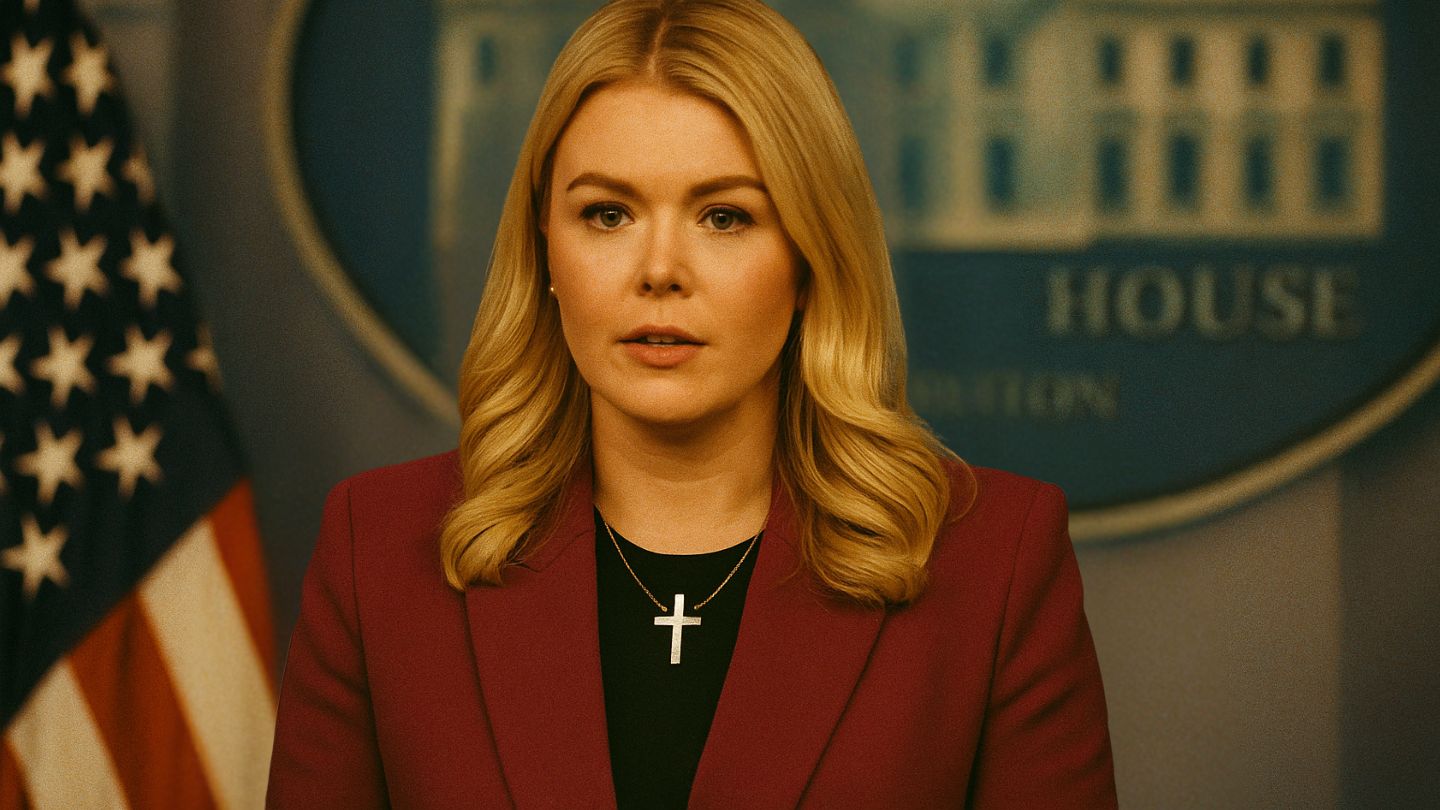
Karoline Claire Leavitt was born on August 24, 1997, in Atkinson, New Hampshire. In January 2025 she became the White House Press Secretary under President Donald J. Trump, the youngest person ever to hold that position.
Her appointment placed her at the center of American political communications at a time of renewed partisan conflict and shifting media structures. The White House press office she leads functions as the principal point of contact between the executive branch and the press corps, shaping the daily flow of presidential information. In this environment, Leavitt’s age, background, and communications style have drawn national and international attention.
Before arriving at the White House, Leavitt worked as an assistant press secretary in the final year of Trump’s first administration, as communications director for Representative Elise Stefanik, and as a congressional candidate herself in New Hampshire’s 1st District. She also served as a spokeswoman for MAGA, Inc. and later as national press secretary for Trump’s 2024 campaign. These roles built her reputation as a disciplined and highly loyal media strategist, qualities that factored into her selection as Trump’s official spokesperson in his return to power.
The following sections explore her early life, education, political development, and career trajectory, culminating in her current position. The narrative frames her as both a significant political figure and a representative of the generational change within the Republican Party’s communications framework.
Section 2: Early Life & Family Background
Karoline Claire Leavitt grew up in the small town of Atkinson, New Hampshire, close to the Massachusetts border. Her family background was rooted in the working and entrepreneurial culture of the region. Her parents, Bob and Erin Leavitt, operated a family ice cream stand in Atkinson, a business that became a familiar landmark for local residents during the summer months. Her father also managed a used truck dealership in nearby Plaistow, New Hampshire. These businesses tied the Leavitt family closely to the rhythms of local commerce and community interaction, and gave Karoline early exposure to the responsibilities and demands of small-scale enterprise.
She attended Central Catholic High School in Lawrence, Massachusetts, a private Roman Catholic school known for drawing students from both southern New Hampshire and the Merrimack Valley of Massachusetts. At Central Catholic she was active in athletics, especially softball, and gained early experience with leadership and performance in front of peers. Her schooling also placed her in a setting where religious instruction and civic duty were emphasized alongside academics, an environment that gave her both a structured foundation and opportunities to articulate her developing views.
Growing up in a politically divided region of New England, Leavitt was surrounded by a mix of Democratic and Republican traditions. Southern New Hampshire, while historically Republican in some towns, was increasingly contested ground, reflecting both suburban growth and demographic shifts. This environment meant that local political debates often spilled into everyday life, from town meetings to school discussions. Leavitt’s formative years coincided with heightened national polarization, particularly during the 2008 and 2012 presidential elections, which defined the tone of her teenage experience.
Her family background did not include entrenched political dynasties or long histories in government. Instead, it reflected middle-class entrepreneurial energy, which emphasized initiative, perseverance, and direct engagement with customers and the public. This background would later be a recurring theme in her political rhetoric, particularly in her emphasis on her “working family” roots when addressing audiences during her congressional campaign.
The Leavitt household encouraged both athletic discipline and civic participation. By her own accounts in interviews, she grew up feeling somewhat out of step with what she perceived as dominant liberal perspectives in schools and peer groups. This sense of being an ideological minority during her formative years contributed to her readiness to embrace outspoken conservative positions as she matured, positioning herself as a counter-voice to what she described as mainstream or establishment narratives.
The cultural context of New Hampshire also played a role. The state’s “Live Free or Die” motto and its distinctive political culture — with early presidential primaries, an ethos of citizen governance, and relatively accessible political institutions — created a climate where even young residents could not avoid exposure to debates about individual liberty, taxation, and the role of government. Leavitt’s early years in Atkinson unfolded in an environment that valued direct democracy, town-hall traditions, and visible proximity to national campaigns.
By the time she graduated high school, she carried forward a combination of small-town rootedness, Catholic educational discipline, and exposure to the retail style of politics that defines New Hampshire. These elements provided the foundation for her next stage: a college education that would bring her deeper into communications, media, and partisan engagement.
Section 3: Education & Campus Engagement
In the fall of 2015, Karoline Leavitt enrolled at Saint Anselm College in Goffstown, New Hampshire. The institution, operated by the Benedictine monks of Saint Anselm Abbey, is nationally recognized for its political science programs and the New Hampshire Institute of Politics, which frequently hosts presidential candidates and national debates during the state’s first-in-the-nation primary. For a student already inclined toward politics, communications, and public affairs, the college provided both an academic environment and a front-row seat to the national political process.
Leavitt majored in communications, with a minor in political science. This combination reflected her dual interests: the mechanics of public messaging and the substance of government and policy. The coursework gave her formal exposure to media theory, writing for broadcast and print, and the study of political institutions. Alongside her classroom training, she quickly became active in extracurricular activities that emphasized media production and political engagement.
She co-founded a broadcasting club on campus, an initiative that demonstrated her interest in building platforms for communication and gaining practical experience beyond the classroom. She also wrote for the student newspaper, the Saint Anselm Crier, where she contributed reporting and commentary. These early publications provided her first experiences in shaping messages for broader audiences, testing her ability to combine fact presentation with argument.
At the New Hampshire Institute of Politics, she became involved with student programs that brought her into contact with candidates, campaign staff, and media professionals covering the 2016 presidential race. New Hampshire’s central role in the nomination process meant that major candidates from both parties routinely appeared at campus events. For Leavitt, this environment offered access to real-time politics, where classroom study intersected with national campaigns only minutes away from her dormitory.
The 2016 presidential election was a decisive moment. While still a student, she began openly articulating conservative views, often emphasizing her belief that media institutions distorted political realities. She described feeling like one of the few outspoken conservatives in her classes, a “token” presence in what she characterized as a predominantly liberal setting. This sense of minority status within her immediate peer group reinforced her resolve to sharpen her arguments and defend her positions.
Internships furthered her development. She spent time in Washington, D.C., working with the White House Office of Presidential Correspondence. This internship placed her within the machinery of the executive branch and allowed her to see how communications were handled at the national level. Exposure to this environment gave her an understanding of message discipline, bureaucratic workflow, and the mechanics of filtering, sorting, and responding to citizen communications with the presidency.
Her college years also highlighted the dual nature of her formation: on the one hand, a grounding in the institutional traditions of a Catholic liberal arts college; on the other, immersion in the rough-and-tumble environment of New Hampshire politics and her first professional contact with the Trump White House. Both experiences reinforced her identity as a communications specialist and solidified her reputation among peers as someone determined to pursue a career in politics.
Leavitt graduated in 2019 with a degree in communications and a minor in political science. By then, she had accumulated practical experience in journalism, broadcasting, and political communications that would serve as a launchpad into her early professional career. Her readiness to move directly into the world of national politics reflected not only her academic background but also the unusually direct access New Hampshire students enjoy to the national political stage.
Section 4: Entry into National Politics
After completing her degree in 2019, Karoline Leavitt transitioned almost immediately into national politics. Her first full-time role came within the Trump administration, in the White House Office of Presidential Correspondence. This office functions as the executive branch’s clearinghouse for letters, emails, and other communications from the public to the president. Staff members in the office review, categorize, and prepare responses on behalf of the administration.
Leavitt began as a staff assistant and then advanced to the role of Associate Director. These positions gave her exposure to the formal systems by which the White House processes citizen correspondence and integrates it into its communications strategy. Although the office is far from the spotlight compared with the press briefing room, it provided a practical introduction to message discipline and bureaucratic procedure at the highest level of government.
Her advancement within that office coincided with the run-up to the 2020 election, when messaging control became increasingly central to Trump’s reelection campaign. In June 2020, Leavitt was promoted to Assistant Press Secretary, a more public-facing role within the White House press operation. In this position she assisted senior press officials in crafting responses to media inquiries, preparing briefing materials, and managing day-to-day communications tasks.
Although the Assistant Press Secretary position did not place her behind the lectern for televised briefings, it was an important training ground. She gained experience working under tight deadlines, coordinating messaging across different agencies, and handling interactions with national press outlets. This period also coincided with the COVID-19 pandemic, a time when communications demands were unusually heavy and highly scrutinized.
Her loyalty and reliability within the press office earned her recognition among senior Trump aides. By late 2020, she was considered part of the cadre of young staffers who had proven their commitment to the administration. With the transition of power in January 2021 following Trump’s electoral defeat, Leavitt’s role in the White House concluded, but her trajectory within Republican politics was only beginning.
Soon after leaving the administration, she joined Representative Elise Stefanik’s office as Communications Director. Stefanik, a New York Republican who rose to prominence during Trump’s first impeachment, was consolidating her position as a leading pro-Trump figure in the House. Leavitt’s appointment to her staff in 2021 gave her an opportunity to shape messaging for a high-profile Republican who was gaining national attention.
As Communications Director, Leavitt managed press relations, drafted statements, and coordinated communications strategy for Stefanik’s congressional office. This role required her to navigate both the legislative agenda and the demands of national media coverage. It also reinforced her identification with the Trump-aligned faction of the Republican Party, as Stefanik positioned herself as one of Trump’s most loyal defenders in Congress.
By the middle of 2021, Leavitt had already accumulated a résumé that included direct White House experience and senior communications responsibility on Capitol Hill. For a young professional only two years out of college, the speed of this progression marked her as a rising figure within Republican politics. These experiences positioned her to take the next step: seeking elected office herself.
Section 5: Congressional Campaigns & Political Identity
In July 2021, Karoline Leavitt announced her candidacy for New Hampshire’s 1st Congressional District. At only 23 years old, she sought to challenge Democratic incumbent Chris Pappas, positioning herself as a staunch supporter of Donald Trump and a representative of a new generation of conservative leadership. Her campaign emphasized both her youth and her loyalty to the former president, drawing a contrast with opponents whom she depicted as aligned with establishment politics.
The Republican primary in 2022 was competitive. Leavitt faced former State Department official Matt Mowers, who had previously been the Republican nominee in the district in 2020. Mowers had the backing of party figures with deeper institutional connections, but Leavitt’s campaign gained momentum through her ability to connect with grassroots activists and her embrace of populist themes. Her messaging often stressed border security, opposition to what she described as liberal cultural overreach, and economic issues such as inflation and energy policy.
Despite skepticism about her age and relative inexperience, Leavitt secured endorsements from several high-profile Republicans aligned with the Trump wing of the party. Her victory over Mowers in the September 2022 primary was widely noted as a sign of Trump’s enduring influence in Republican primaries. She became the youngest female congressional nominee in the country that cycle.
In the general election, Leavitt faced Congressman Chris Pappas, who had first won the seat in 2018. The district had a history of flipping between parties and was considered competitive, but Pappas had established a moderate profile and maintained significant support across the district. The campaign was marked by sharp contrasts: Pappas highlighted bipartisan work and local issues, while Leavitt emphasized national culture-war themes and a strict pro-Trump alignment.
Fundraising was a central element of the contest. Leavitt raised significant sums through national networks of conservative donors, but Pappas maintained a financial advantage and drew on established local connections. Media coverage often focused on the age gap between the two candidates, with Leavitt portraying her youth as an asset that allowed her to represent the future of Republican politics.
On Election Day in November 2022, Pappas defeated Leavitt, securing reelection with a margin of several points. While her loss was a setback, the campaign had elevated her profile nationally. She had demonstrated the capacity to win a contested Republican primary and had become a familiar face in conservative media. The campaign also solidified her reputation as a disciplined communicator who remained closely tied to Trump’s base.
Following the election, Leavitt did not step away from politics. Instead, she transitioned quickly into new roles that maintained her visibility. She became a spokeswoman for MAGA, Inc., a super PAC established to support Trump’s political activities, and later took on the role of national press secretary for Trump’s 2024 presidential campaign. These positions allowed her to refine her skills in rapid-response communications and develop further experience in national-level messaging operations.
Her congressional run revealed several consistent features of her political identity: a commitment to populist conservatism, an emphasis on loyalty to Trump, and a willingness to frame herself as a generational challenger to the political establishment. Even in defeat, the campaign served as a stepping stone that propelled her into higher levels of influence within the movement.
Section 6: Communications Strategy & Party Infrastructure
After her 2022 congressional defeat, Karoline Leavitt transitioned seamlessly into positions that kept her deeply embedded within the communications arm of the Republican Party and the Trump movement. She accepted a role as spokeswoman for MAGA, Inc., the super PAC created to support Donald Trump’s political activities and lay the groundwork for his 2024 campaign. This position placed her at the center of efforts to amplify pro-Trump messaging across national media platforms and manage responses to ongoing investigations and criticisms directed at the former president.
At MAGA, Inc., Leavitt was tasked with defending Trump against Democratic narratives, reinforcing loyalty within Republican ranks, and ensuring consistent communication across allied media outlets. Her responsibilities required rapid reaction to news cycles, coordination with both campaign operatives and outside media personalities, and the framing of talking points that resonated with Trump’s base. This role strengthened her reputation as a disciplined, aggressive spokesperson capable of delivering messages in sharp, uncompromising terms.
Her next major step came when she was named national press secretary for Trump’s 2024 presidential campaign. In this role, she oversaw day-to-day communication with the press, directed messaging strategies across states, and coordinated media appearances. The position gave her national visibility, as she frequently appeared on television and radio programs to defend Trump’s record, criticize opponents, and highlight campaign priorities.
Serving as campaign press secretary required balancing multiple priorities: maintaining message consistency across a vast campaign operation, handling hostile questions from mainstream outlets, and reinforcing Trump’s dominance in Republican primaries. Leavitt became one of the most visible public advocates for the campaign, presenting herself as an unwavering voice of loyalty. Her communication style reflected the broader Trump strategy of confronting the press, rejecting what she characterized as biased coverage, and delivering unfiltered messages to supporters.
Her performance as campaign press secretary further entrenched her within Trump’s inner circle. By demonstrating her ability to withstand intense scrutiny and maintain discipline under pressure, she positioned herself as a natural choice for a senior communications role should Trump return to the White House. The decision to appoint her as White House Press Secretary in January 2025 confirmed the trust she had built within the movement and underscored the degree to which her career trajectory was bound to Trump’s political resurgence.
Leavitt’s work within MAGA, Inc. and the Trump campaign also revealed the changing structure of Republican Party communications. Increasingly, formal party organizations were supplemented or even overshadowed by Trump-aligned entities and personalities. In this environment, figures like Leavitt were valued less for bureaucratic seniority than for loyalty, media agility, and the ability to articulate combative populist themes. Her rise demonstrated how traditional party structures had given way to a communications model centered on loyalty to Trump and responsiveness to a base-driven media ecosystem.
Through these roles, Leavitt became not only a practitioner of communications strategy but also a symbol of generational transition within the Republican Party. She represented a younger cadre of operatives who had entered politics during Trump’s rise and who viewed their careers as inseparable from his movement. Her effectiveness in managing message discipline and sustaining the Trump brand made her one of the most prominent young Republicans in the country as Trump returned to office in 2025.
Section 7: White House Press Secretary (2025– )
Karoline Leavitt assumed the role of White House Press Secretary on January 20, 2025, the same day Donald Trump was inaugurated for his second term as president. At 27 years old, she became the youngest person in U.S. history to hold the position. Her appointment underscored both Trump’s reliance on loyalists and the generational shift within the Republican communications establishment. For Leavitt, the press secretary’s podium offered both the most prominent platform of her career and one of the most challenging roles in Washington.
Appointment and Significance
The decision to appoint Leavitt followed her service as national press secretary during Trump’s 2024 campaign, a position in which she had demonstrated unflinching loyalty, message discipline, and willingness to engage combatively with media critics. Her youth was both an asset and a liability: on the one hand, it projected energy and the image of generational renewal within Trump’s team; on the other, it exposed her to skepticism about her experience and depth of knowledge. Critics in the press and among Democrats noted that her résumé was short compared with previous occupants of the office, while supporters argued that her direct connection to Trump and the base made her ideally suited to articulate the administration’s agenda.
Structure of the Press Operation
Leavitt entered the role at a time when the relationship between the Trump White House and the press corps was at its most adversarial. Unlike earlier administrations that sought at least a formal balance between adversarial questioning and information management, Trump’s communications strategy emphasized confrontation and control. Leavitt reflected this model in her approach to daily briefings and media access.
The White House press operation under her leadership featured several defining elements:
- Tight message discipline. Briefings were often accompanied by prepared talking points distributed to surrogates and outside allies, ensuring that themes carried across conservative media ecosystems.
- Selective access. Certain mainstream outlets faced reduced access to senior staff or early information, while pro-Trump networks and platforms received prioritized treatment.
- Rapid response. Leavitt directed a communications team that monitored media coverage and issued immediate rebuttals to stories deemed unfavorable, frequently labeling them as biased or inaccurate.
- Direct channels. In addition to traditional briefings, the office emphasized direct outreach via social media, bypassing traditional media intermediaries to communicate directly with supporters.
Briefing Room Style
Leavitt’s style in the James S. Brady Press Briefing Room is firm, brisk, and uncompromising. She often interrupts reporters, whom she accuses of misrepresenting facts, and declines to answer questions she characterizes as partisan or irrelevant. Exchanges with high-profile correspondents became viral moments, circulated both by critics as examples of hostility and by supporters as evidence of her strength.
Her rhetorical patterns mirror those of Trump: a heavy emphasis on framing the administration’s actions as correcting the failures of previous leadership, frequent use of populist language, and sharp delineations between “honest journalism” and “fake news.” While some press secretaries in earlier administrations balanced confrontation with humor or conciliation, Leavitt maintained a consistently adversarial posture toward outlets she viewed as hostile.
Notable Controversies
Within her first months, several episodes drew scrutiny:
- Foreign aid freeze. In March 2025, after the Supreme Court allowed the administration to withhold billions in congressionally approved foreign aid, Leavitt defended the decision from the podium, describing it as a constitutional assertion of executive authority. Critics accused her of misrepresenting the legal scope of the ruling, while allies praised her clarity in framing the administration’s position.
- Immigration enforcement. Following violent incidents at Immigration and Customs Enforcement facilities, Leavitt announced new federal measures to protect agents and facilities. Her statements described protesters as “domestic terrorists,” language that drew criticism from civil-liberties groups.
- Press access disputes. Several mainstream journalists accused the press office of restricting access in ways that violated long-standing norms. Leavitt insisted that credentialing decisions were based on security and professionalism, not political favoritism.
- Birthright citizenship litigation. When the administration petitioned the Supreme Court to reinstate restrictions on birthright citizenship, Leavitt defended the policy in terms of sovereignty and fairness, while legal experts described the move as unprecedented and constitutionally suspect.
Coordination with Trump
Leavitt’s close alignment with Trump himself is a defining feature of her role. Unlike some press secretaries who function as buffers between the president and the press, she acts as a direct extension of Trump’s voice. Her briefings frequently echo Trump’s phrasing and tone, reinforcing the perception that she is less an independent spokesperson than a conduit. This dynamic reflects both Trump’s management style and her own political identity, which is explicitly shaped by loyalty to him.
Public Reception
The reaction to Leavitt’s performance as press secretary has been polarized. Conservative outlets and supporters hailed her as a fresh, fearless communicator who dismantled what they characterized as liberal media narratives. They highlight her youth as proof that a new generation of Republicans was assuming leadership roles. By contrast, mainstream outlets and critics describe her as combative, inexperienced, and overly reliant on partisan framing.
Polls conducted in 2025 indicated that public awareness of Leavitt was unusually high for a press secretary, reflecting both her age and the media attention she attracted. Among Republican voters, she enjoyed strong approval ratings, with many viewing her as a potential candidate for future office. Among Democrats and independents, her ratings were negative, with perceptions shaped largely by televised confrontations.
Institutional Impact
Leavitt’s tenure thus far illustrates the broader transformation of the press secretary’s role under Trump. Historically conceived as an institutional position meant to inform and manage relations between the White House and the press, it has increasingly become a political role dedicated to reinforcing partisan narratives. By embodying this shift so fully, Leavitt has both redefined the office and placed herself at the center of the ongoing struggle between government communications and press freedom.
Her performance also highlights the institutional risks of this model. While her approach solidifies Trump’s support among loyalists, it further erodes trust with mainstream outlets and raises questions about the future of the press secretary role in administrations that follow. Whether her tenure will be remembered as a model of partisan communications effectiveness or as a low point in institutional transparency remains to be determined.
Section 8: Public Reception & Media Ecosystem
Karoline Leavitt’s tenure as White House Press Secretary quickly became a focal point for debate not only about the Trump administration’s communications strategy but also about the broader state of the American media ecosystem. Her presence in the briefing room and her constant visibility across cable news, radio, and digital platforms ensured that she became as well-known as many senior Cabinet officials.
Reception within Conservative Media
Conservative outlets consistently presented Leavitt as a rising star. Networks and commentators allied with Trump praised her ability to hold her ground in contentious exchanges and to deliver unambiguous defenses of the administration. She was frequently introduced on conservative talk shows as proof that a younger generation was prepared to continue Trump’s populist messaging style. Her sharp criticisms of mainstream outlets resonated with audiences who already distrusted established news organizations.
Editorials in conservative publications portrayed her as a symbol of renewal, emphasizing both her youth and her willingness to confront reporters directly. Clips of her exchanges with members of the White House press corps often circulated widely on pro-Trump social media accounts, edited into highlight reels that emphasized moments of confrontation and applause lines. For many within the Republican base, she became an accessible and relatable figure, reinforcing their sense of grievance against the press.
Coverage in Mainstream Outlets
By contrast, coverage in mainstream and liberal-leaning outlets was often critical. Commentators described her as combative, inexperienced, and dismissive of press norms. Several outlets highlighted what they viewed as her selective approach to access, including decisions to prioritize certain outlets while sidelining others. Critics also argued that she blurred the line between serving as a government spokesperson and acting as a political operative, reinforcing concerns about the politicization of traditionally institutional roles.
Profiles in major newspapers frequently noted her age and rapid rise, framing her as an emblem of the Trump movement’s emphasis on loyalty over experience. Her willingness to adopt Trump’s rhetorical style, including accusations of “fake news” and pointed attacks on journalists, was often presented as evidence that the press office had abandoned its traditional role as a mediator between the president and the public.
Public Awareness and Opinion
Polling in 2025 showed unusually high levels of public recognition for a press secretary. Surveys indicated that a majority of Americans were aware of Leavitt by name, with sharp partisan divides in opinion. Among Republican voters, she enjoyed strong approval ratings, with many viewing her as an articulate defender of their values. Among Democrats and independents, her ratings were overwhelmingly negative, often linked to perceptions that she prioritized confrontation over information.
Social media analytics reinforced these divides. On platforms such as X and Truth Social, her clips often trended among conservative audiences, generating positive engagement. On other platforms, the same clips circulated as evidence of hostility or misrepresentation, generating criticism and fact-checking responses.
Role in a Changing Media Environment
Leavitt’s visibility also highlights broader structural changes in the media landscape. Traditional outlets continue to cover daily briefings, but much of the administration’s messaging bypasses them entirely, reaching audiences directly through social media channels and friendly media outlets. Her role became less about informing the press corps and more about shaping content for circulation in segmented media ecosystems.
This dynamic amplified her influence. Each briefing, even when contentious, provided material that was immediately repackaged and distributed to millions of viewers in highly polarized information streams. The effect was to deepen the divide between audiences who viewed her as an effective advocate and those who saw her as emblematic of democratic erosion.
International Perspective
International coverage of Leavitt often focused on her age and her close alignment with Trump. Foreign media outlets portrayed her as an unusual figure in global politics — a press secretary in her twenties who served as the face of U.S. government communications. Some European commentators linked her rise to the broader trend of populist movements relying on younger, media-savvy figures to project renewal. Others expressed concern that her combative style reflected the administration’s ongoing hostility toward press freedom.
Legacy within the Media Ecosystem
Regardless of evaluations, Leavitt’s impact on the media environment has been significant. She has redefined the role of the White House press secretary as a partisan combat position, more closely aligned with campaign strategy than institutional transparency. This redefinition has not only shaped her reputation but also raised questions about the future of the office itself. If subsequent administrations follow her model, the press secretary may permanently shift from being an institutional spokesperson to being a political warrior at the podium.
Section 9: Assessment of Influence & Legacy Prospects
Karoline Leavitt’s career, though still in its early stages, already carries implications for the institutional role of political communications and for the trajectory of the Republican Party’s next generation of leadership. Her rise from local New Hampshire politics to the White House podium in less than a decade reflects both her personal discipline and the structural realignments of the Trump era.
Generational Transition
Leavitt represents a generational handoff within conservative politics. At an age when most of her predecessors were still in junior staff positions, she holds one of the most visible offices in Washington. This contrast underscores the degree to which Trump’s political movement values loyalty, media skill, and rhetorical combativeness over conventional metrics of seniority or institutional apprenticeship. By becoming the youngest White House press secretary in U.S. history, she has set a new benchmark for how quickly young operatives can ascend in a movement that prioritizes ideological alignment.
Institutional Consequences
Her tenure illustrates a redefinition of the White House press secretary’s role. Historically, the office was designed to provide transparency, offer factual updates, and maintain a working relationship with the press corps. Under Leavitt, the role has tilted sharply toward partisan advocacy and combative messaging. This shift has implications beyond her own career. If adopted by future administrations, it could normalize a communications model that treats the press secretary’s office as a campaign arm rather than an institutional bridge between government and the public.
The consequences extend to the press corps itself. Journalists covering the White House have faced a more hostile environment, with reduced access, selective engagement, and intensified accusations of bias. These conditions further strain the institutional relationship between the executive branch and the media, making the office a frontline in the struggle over information control in American democracy.
Personal Profile and Political Prospects
Leavitt’s high visibility has made her a figure of speculation for future office. Supporters point to her communication skills, loyalty to Trump, and ability to energize younger conservative voters as qualifications for elected office. Detractors argue that her record is defined primarily by partisan combat rather than policy expertise. Regardless, her name is already circulating among activists and donors as a potential congressional or gubernatorial candidate in the years ahead.
Symbolism in the Trump Era
As a figure, Leavitt embodies the Trump movement’s emphasis on loyalty, youth appeal, and rejection of traditional media norms. Her combative exchanges with journalists are not merely tactical but symbolic, reinforcing the administration’s broader posture of confrontation with institutions perceived as hostile. In this sense, she has become more than a press secretary; she is a symbol of the movement’s communications philosophy.
Legacy Prospects
The ultimate evaluation of her impact will depend on how her tenure concludes and how the office evolves afterward. If subsequent administrations return to a more traditional model of press relations, her time at the podium may be remembered as a departure from institutional norms, emblematic of a distinct political era. If, however, her approach becomes the template for future press secretaries, she will be credited with reshaping the office into a partisan communications arm.
For now, her legacy rests on three central features: her unprecedented youth in the role, her unwavering loyalty to Trump and his movement, and her ability to embody the shift from institutional spokesperson to partisan advocate. These features have ensured her place in the history of White House communications, regardless of how the broader political landscape changes in the years ahead.
Bibliography
- Washington Post, “Karoline Leavitt, Trump’s press secretary, embodies his combative media strategy,” March 24, 2025.
- New York Times political coverage, 2021–2025.
- Politico archives on the 2022 New Hampshire congressional race.
- Concord Monitor and Union Leader coverage of New Hampshire campaigns.
- LegiStorm directories and official congressional staff records.
- Saint Anselm College communications and New Hampshire Institute of Politics event listings.
- Federal Election Commission (FEC) candidate filings, 2021–2022.
- Roll Call and The Hill reporting on House Republican communications staff.
- Reuters, Associated Press, and BBC reporting on the 2025 press secretary appointment and early briefings.
- Reporters Without Borders, World Press Freedom Index 2025.
- Supreme Court and federal docket summaries on executive spending and immigration policy, 2025.