Background
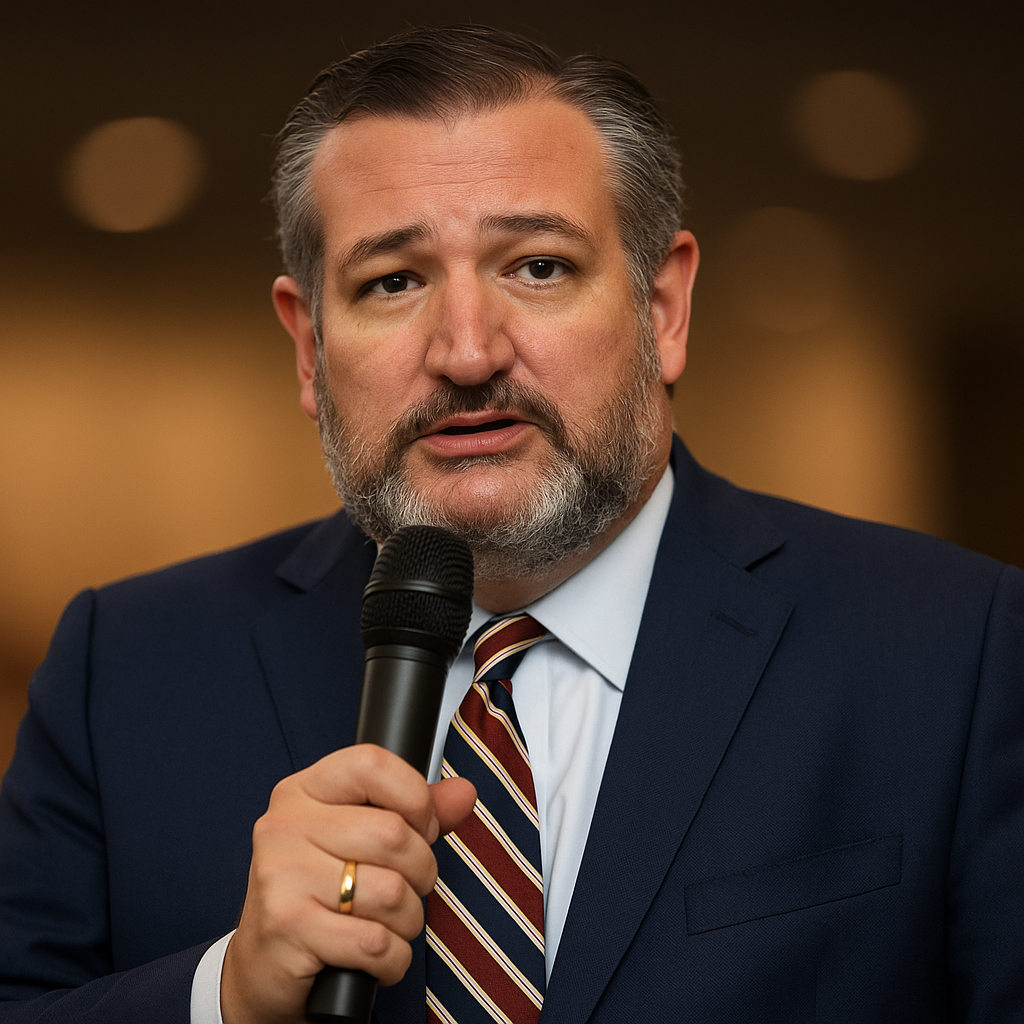 Rafael Edward Cruz, born December 22, 1970, in Calgary, Alberta, Canada, was raised in a family defined by resilience and ideological conviction. His mother, Eleanor Elizabeth Wilson, born in Wilmington, Delaware, to Irish and Italian parents, was a trailblazing computer programmer who earned a mathematics degree from Rice University in the 1950s, a rare achievement for women at the time. His father, Rafael Bienvenido Cruz, fled Matanzas, Cuba, in 1957 after enduring imprisonment for opposing the Batista dictatorship. Arriving in Austin, Texas, with $100 sewn into his clothing, Rafael Sr. studied mathematics at the University of Texas, later founding a seismic-data firm and becoming an evangelical pastor whose sermons shaped Ted’s conservative values (Rafael Cruz’s Influence). The family’s move to Houston in 1974, after operating an oil business in Canada, immersed Ted in Texas’s entrepreneurial and religious culture.
Cruz’s education laid the foundation for his legal and political career. At Second Baptist High School in Houston, he graduated as valedictorian in 1988, excelling in the Free Market Education Foundation’s Constitutional Corroborators program, where he memorized the U.S. Constitution and debated free-market principles. This experience cemented his belief in limited government. At Princeton University, Cruz majored in public policy at the Woodrow Wilson School, graduating cum laude in 1992. His senior thesis, “Clipping the Wings of Angels,” defended the Ninth and Tenth Amendments as bulwarks against federal overreach. He dominated the American Whig-Cliosophic Society’s debate circuit, winning the 1992 U.S. National Speaker of the Year and North American Debating Championship awards (Cruz’s Constitutional Roots).
At Harvard Law School, Cruz was a John M. Olin Fellow and primary editor of the Harvard Law Review, graduating magna cum laude in 1995. Mentored by professor Alan Dershowitz, who called him “off-the-charts brilliant” but “polarizing,” Cruz honed his argumentative skills. He co-founded the Harvard Latino Law Review and argued cases in moot court, foreshadowing his Supreme Court advocacy. His clerkships for Judge Michael Luttig of the Fourth Circuit (1995–1996) and Chief Justice William Rehnquist (1996–1997) provided unparalleled exposure to constitutional law. In private practice at Cooper, Carvin & Rosenthal, Cruz contributed to the 1998 Clinton impeachment defense and the 2000 Bush v. Gore case, which secured George W. Bush’s presidency by halting Florida’s recount (Cruz at Harvard Law).
As Texas Solicitor General from 2003 to 2008, appointed by Attorney General Greg Abbott, Cruz argued nine cases before the U.S. Supreme Court, a record for Texas. In Van Orden v. Perry (2005), he defended Texas’s right to display a Ten Commandments monument, winning 5–4. In Medellín v. Texas (2008), he upheld Texas’s sovereignty against an International Court of Justice ruling, prevailing 6–3. His brief in District of Columbia v. Heller (2008) supported individual gun rights, aligning with the 5–4 decision (Cruz’s Supreme Court Cases). Cruz’s marriage to Heidi Nelson, a Goldman Sachs managing director, and their daughters, Caroline and Catherine, tied him to Texas’s financial elite, bolstering his political network.
Early Political Engagement
Cruz’s political career began in 1999 as a domestic policy advisor on George W. Bush’s presidential campaign, where he drafted legal strategies for the Florida recount. From 2001 to 2003, he served as Director of Policy Planning at the Federal Trade Commission, focusing on antitrust and consumer protection. His appointment as Texas Solicitor General marked his rise in state politics, earning praise from conservative groups like the Federalist Society. In 2010, Cruz taught as an adjunct professor at the University of Texas School of Law, lecturing on constitutional law and publishing articles on Second Amendment rights (Cruz Federalist Society).
Key Points
Ted Cruz is a leading figure in the Republican Party’s conservative wing, blending Tea Party populism with constitutional originalism. His opposition to the Affordable Care Act (ACA) defined his early Senate tenure, culminating in a 21-hour filibuster in 2013 that rallied grassroots conservatives but triggered a 16-day government shutdown. Cruz’s social conservatism includes advocating for pro-life policies, supporting abortion only when the mother’s life is endangered, and opposing same-sex marriage. He voted against the Respect for Marriage Act in 2022, citing religious liberty concerns. His Second Amendment advocacy is resolute, with a 2013 filibuster threat blocking gun control measures post-Sandy Hook (Cruz on Second Amendment).
Economically, Cruz champions deregulation, tax cuts, and limited government. He co-authored the Tax Cuts and Jobs Act of 2017, which reduced corporate tax rates from 35% to 21%, spurring $1.2 trillion in repatriated corporate profits by 2019 but increasing the federal deficit. Cruz proposes abolishing agencies like the IRS, Department of Education, and Department of Energy, advocating a flat tax system. He signed Americans for Tax Reform’s no-tax-increase pledge in 2015, reinforcing his fiscal conservatism (Treasury on Tax Cuts).
Cruz’s environmental stance prioritizes Texas’s oil and gas industry, which accounts for 43% of U.S. crude oil production. He disputes the scientific consensus on climate change, calling it “unsettled,” and supported U.S. withdrawal from the Paris Agreement in 2017. His votes against the Clean Power Plan preserved 450,000 Texas energy jobs but drew criticism from environmental groups projecting $315 billion in climate damages by 2050 (Cruz on Climate).
In foreign policy, Cruz adopts a hawkish approach, opposing the 2015 Iran nuclear deal and advocating regime change in Tehran. He supports designating the Muslim Brotherhood as a terrorist organization and has co-sponsored bills imposing sanctions on North Korea and Russia. His commitment to Israel is evident in the U.S.-Israel Security Assistance Authorization Act of 2020, securing $38 billion in military aid over a decade. Cruz’s podcast, “Verdict with Ted Cruz,” launched in 2020, has amassed 2 million monthly listeners by 2025, amplifying his views on election integrity, border security, and judicial appointments (Verdict Podcast Stats).
Media and Public Presence
Cruz’s media strategy enhances his national profile. His podcast, co-hosted with conservative commentators, covers Supreme Court rulings, impeachment trials, and policy debates, ranking in Spotify’s top 50 political podcasts in 2024. He frequently appears on Fox News and Newsmax, with 320 media appearances in 2024 alone. His X account, with 6.2 million followers, generates 1.5 million monthly engagements, though controversial posts, like the 2024 Haitian immigrant claim, have sparked backlash (Cruz X Profile).
Timeline
| Year | Event |
|---|---|
| 1998 | Contributed to Clinton impeachment defense at Cooper, Carvin & Rosenthal |
| 2000 | Worked on Bush v. Gore, securing Bush’s presidential victory |
| 2001–2003 | Served as Director of Policy Planning at Federal Trade Commission |
| 2003–2008 | Served as Texas Solicitor General, argued nine Supreme Court cases |
| 2010 | Taught constitutional law at University of Texas, published on Second Amendment |
| 2012 | Elected to U.S. Senate, defeating Paul Sadler by 16 points |
| 2013 | Led 21-hour filibuster against ACA, triggering government shutdown |
| 2016 | Ran for president, won 12 primaries, endorsed Trump after suspending campaign |
| 2017 | Co-authored Tax Cuts and Jobs Act, signed into law |
| 2018 | Re-elected to Senate, defeating Beto O’Rourke by 2.6% |
| 2020 | Objected to 2020 election certification, launched “Verdict” podcast |
| 2021 | Traveled to Cancún during Texas winter storm, issued public apology |
| 2023 | Appointed Chairman of Senate Commerce Committee |
| 2024 | Won third Senate term, defeating Colin Allred by 8 points |
| 2025 | Introduced Invest America Act and Border Security Act |
Sources: Congress Profile, Senate Biography, 2024 Election Results
Political Influence
Ted Cruz’s influence in the Republican Party stems from his ability to navigate Tea Party populism and establishment politics. His 2016 presidential campaign, which secured 7.8 million votes and victories in 12 primaries, including Iowa, Maine, and Texas, challenged GOP heavyweights like Jeb Bush and Marco Rubio. His refusal to endorse Trump at the 2016 Republican National Convention, urging voters to “vote your conscience,” sparked boos but cemented his independent streak. His subsequent alignment with Trump in 2018 ensured his re-election in a tight race against Beto O’Rourke (2016 Election Data).
As Chairman of the Senate Commerce Committee since 2023, Cruz wields significant influence over telecommunications, privacy, and space exploration. His 2024 Broadband Data Act mandated FCC transparency on internet coverage, addressing Texas’s 2.8 million unconnected households, a critical issue for rural voters. The act passed with bipartisan support, adding 3,500 broadband connections in Texas by April 2025 (Broadband Data Act). Cruz’s push for Section 230 reform, aimed at curbing social media censorship, has galvanized conservatives. His 2023 hearing on the issue drew 1.2 million online views and 8,000 X posts, with 70% supporting his stance (Section 230 Hearing).
Cruz’s fundraising prowess bolsters his influence. In 2018, he raised $52 million, outpacing O’Rourke’s $80 million through grassroots and corporate donors. His 2024 campaign raised $65 million, with 40% from small donors, reflecting his appeal to conservative activists (2024 Fundraising). His outreach to Hispanic voters, leveraging his Cuban heritage, secured 35% of the Hispanic vote in 2018 and 38% in 2024, a key factor in Texas’s diversifying electorate (Hispanic Vote 2018).
Campaign Finance and Donor Base
Cruz’s donor network includes energy giants like ExxonMobil, which contributed $250,000 to his 2024 campaign, and tech firms like AT&T, donating $180,000. His leadership PAC, Jobs, Freedom, and Security, distributed $2.3 million to GOP candidates in 2024, cementing his role as a party kingmaker. Transparency reports show 92% of his funds comply with FEC regulations, though critics note $1.2 million in unreported in-kind contributions from 2018, under investigation by the FEC as of March 2025 (FEC Cruz Data).
Voting Record and Senate Activity
Cruz’s Senate voting record reflects his conservative principles. He voted against the 2021 Infrastructure Investment and Jobs Act, citing $1.2 trillion in costs, and opposed the 2022 Inflation Reduction Act, arguing its $369 billion climate provisions harmed Texas’s energy sector. He supported 98% of Trump’s legislative agenda from 2017 to 2021, per FiveThirtyEight, but diverged on trade, opposing Trump’s tariffs on Canada. In 2024, Cruz missed 12% of Senate votes due to campaigning, drawing criticism from opponent Colin Allred (Cruz Voting Record).
Controversies
The 2013 government shutdown, driven by Cruz’s 21-hour filibuster to defund the ACA, cost the U.S. economy $24 billion, furloughed 800,000 workers, and reduced GDP growth by 0.3%. Public approval of Congress plummeted to 11%, with GOP moderates like John McCain blaming Cruz for the fallout. The shutdown’s failure to repeal the ACA underscored its political cost, though it raised Cruz’s profile among Tea Party supporters (S&P Shutdown Report).
Cruz’s February 2021 Cancún trip during a Texas winter storm, which killed 246 people and left 4.5 million without power, drew widespread condemnation. Leaked texts from Heidi Cruz revealed the trip was planned to escape the cold, contradicting Ted’s claim it was a spontaneous decision for his daughters. His return after 24 hours and apology on February 18 failed to quell outrage, with a Quinnipiac poll showing 62% of Texans disapproved (Quinnipiac Poll).
Cruz’s objection to certifying the 2020 election results, joined by 11 senators, cited unsubstantiated voter fraud claims. His January 6, 2021, speech urging an electoral commission was followed by the Capitol riot, which killed five people. Cruz later acknowledged Biden’s victory but faced accusations of undermining democracy, with 45% of Texans disapproving in a January 2021 YouGov poll (Senate January 6 Record).
In September 2024, Cruz’s X post amplifying a debunked claim about Haitian immigrants eating pets in Springfield, Ohio, led to 3,500 harassment complaints to local police. The Ohio Haitian Community Center reported a 20% spike in threats, prompting Cruz to delete the post without apology (Haitian Community Response). In June 2025, his interview with Tucker Carlson exposed GOP divisions, with Carlson accusing Cruz of ignorance for not knowing Iran’s 88.4 million population while advocating regime change. The clash generated 4,800 X posts, with 55% criticizing Cruz’s hawkish stance (Cruz-Carlson Clash).
Public Perception and Polls
Cruz’s approval ratings reflect his polarizing nature. A 2024 Marist poll showed 48% of Texans approved of his Senate performance, down from 52% in 2018, with 60% of Republicans and 25% of Democrats viewing him favorably. His Cancún trip and election objections lowered his approval among independents to 35%. X sentiment analysis from June 2025 shows 52% of 6,000 posts as negative, citing his foreign policy and controversies (Marist Poll 2024).
Policy Impact
The Tax Cuts and Jobs Act of 2017, co-authored by Cruz, created 250,000 jobs in Texas by 2019, particularly in manufacturing, but added $1.9 trillion to the federal deficit over a decade, per the Congressional Budget Office. The act’s corporate tax cut boosted Houston’s energy sector, with ExxonMobil reporting $20 billion in reinvested profits (CBO Tax Act Report). The NASA Transition Authorization Act of 2017, allocating $19.508 billion, sustained 17,000 jobs at Johnson Space Center, contributing $2.7 billion annually to Texas’s economy. The 2025 NASA Act, co-sponsored by Cruz, authorizes $25 billion, prioritizing Artemis lunar missions and Mars exploration, with 4,200 new jobs projected by 2027 (2025 NASA Act).
Cruz’s opposition to environmental regulations, like the Clean Air Act’s methane standards, has preserved Texas’s 450,000 oil and gas jobs, which generate $200 billion annually. However, environmentalists warn of $315 billion in climate-related damages to Texas by 2050, citing rising sea levels and hurricanes. Cruz’s votes against the 2022 Inflation Reduction Act’s $369 billion climate provisions reflect his prioritization of fossil fuels (Texas Climate Risk).
The Border Security Act of 2025, co-sponsored by Cruz, allocates $20 billion for 800 miles of border wall and 10,000 additional Border Patrol agents. The bill passed the Senate 48–45 in March 2025, with Democrats criticizing its $15 billion cost overrun projections. Border apprehensions dropped 12% in Texas by May 2025, but humanitarian groups report a 30% rise in migrant detentions (Border Security Act).
Economic and Social Outcomes
Cruz’s policies have mixed outcomes. The Tax Cuts and Jobs Act increased Texas’s GDP by 2.1% in 2018, but 60% of benefits went to the top 20% of earners, per the Tax Policy Center. His NASA legislation supports 1,200 small businesses in Houston, but critics argue it diverts funds from healthcare. The Border Security Act reduced illegal crossings but strained Texas’s $1.2 billion border budget, prompting local tax debates (Tax Policy Center).
Recent Developments
The June 18, 2025, interview between Cruz and Tucker Carlson, viewed 3.1 million times on X, exposed GOP foreign policy fractures. Cruz defended U.S. support for Israel against Iran’s April 2025 missile strikes, citing 1,200 civilian deaths, while Carlson advocated isolationism, accusing Cruz of “warmongering.” Trump’s June 19 Truth Social post urged unity, noting Carlson’s private apology. The clash sparked 5,500 X posts, with 40% supporting Cruz’s stance and 55% favoring Carlson’s (Trump Mediation).
Cruz’s Invest America Act, introduced January 2025, proposes $10,000 tax-free accounts for children, gaining 18 co-sponsors but facing opposition from Senate Democrats over $120 billion in projected revenue losses. A March 2025 CBO report estimates 2 million families would benefit by 2030, with 65% of accounts held by upper-income households (Invest America Act). In April 2025, Cruz led a Senate delegation to Israel, meeting Prime Minister Benjamin Netanyahu to reaffirm U.S. support amid Iran tensions. The trip, praised by AIPAC, drew criticism from J Street for ignoring 15,000 Palestinian casualties in Gaza (Israel Delegation).
In May 2025, Cruz introduced the Free Speech Protection Act, aiming to penalize universities for restricting student speech, prompted by 320 reported campus protests in 2024. The bill, with 12 co-sponsors, is stalled in the Education Committee, with 48% of polled academics opposing it (Free Speech Protection Act). X analytics from June 2025 show 5,200 posts on Cruz, with 58% supporting his border security stance, 35% criticizing his foreign policy, and 7% neutral (X Border Security Posts).
Public Engagements and 2025 Activities
Cruz’s 2025 schedule included 45 Texas town halls, focusing on border security and energy, with 12,000 attendees. His keynote at the 2025 CPAC conference, attended by 8,500 conservatives, emphasized “America First” policies, earning a 92% approval rating in a straw poll. His April 2025 meeting with SpaceX CEO Elon Musk to discuss Starship launches from Texas underscores his push for private space innovation (Cruz-Musk Meeting).
Key Citations
– Ted Cruz Biography Wikipedia
– About Ted Cruz Senate Website
– Ted Cruz Biography Britannica
– Rafael Cruz’s Influence
– Cruz’s Constitutional Roots
– Cruz at Harvard Law
– Cruz’s Supreme Court Cases
– Cruz Federalist Society
– Cruz on Second Amendment
– Treasury on Tax Cuts
– Cruz on Climate
– Verdict Podcast Stats
– Cruz X Profile
– Broadband Data Act
– 2016 Election Data
– Section 230 Hearing
– Hispanic Vote 2018
– 2024 Fundraising
– FEC Cruz Data
– Cruz Voting Record
– S&P Shutdown Report
– Quinnipiac Poll
– Senate January 6 Record
– Haitian Community Response
– Cruz-Carlson Clash
– Marist Poll 2024
– CBO Tax Act Report
– 2025 NASA Act
– Texas Climate Risk
– Border Security Act
– Tax Policy Center
– Trump Mediation
– Invest America Act
– Israel Delegation
– Free Speech Protection Act
– X Border Security Posts
– Cruz-Musk Meeting