Background
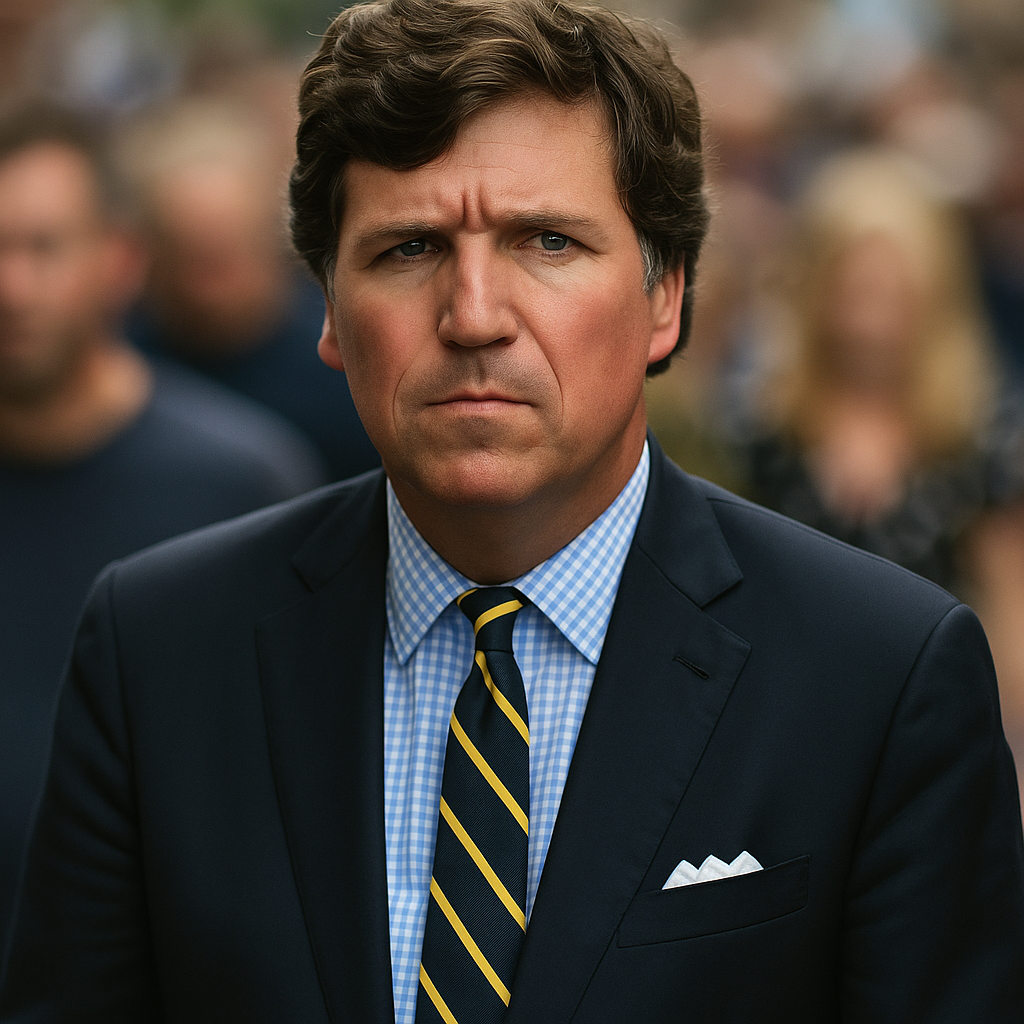 Tucker Swanson McNear Carlson was born on May 16, 1969, at the Children’s Hospital in San Francisco, California. He is the elder son of Lisa McNear (née Lombardi, 1945–2011), an artist, and Richard Warner Carlson (1941–2025), a seasoned journalist who held prominent roles, including director of Voice of America, president of the Corporation for Public Broadcasting, and U.S. ambassador to the Seychelles under President George H.W. Bush. Dick Carlson later served as a director at Policy Impact Strategic Communications, a Washington, D.C.-based lobbying firm. Tucker’s younger brother, Buckley Peck Carlson, has built a career as a communications manager and Republican political operative, currently serving as Deputy Press Secretary to Vice President JD Vance, a position that underscores the family’s deep ties to conservative politics.
Carlson’s early life was shaped by a complex family history. His paternal grandparents, Richard Boynton and Dorothy Anderson, placed his father in an orphanage during their teenage years, where he was fostered by Carl and Florence Moberger, a Swedish-American couple in Massachusetts. This unconventional upbringing influenced Dick Carlson’s worldview, which he passed on to his sons. Tucker’s mother, Lisa McNear, left the family when he was six, and he had minimal contact with her thereafter. His father remarried Patricia Swanson, heiress to the Swanson frozen-food empire, providing Tucker with a privileged upbringing in affluent communities like La Jolla, California.
Carlson’s education began at La Jolla Country Day School, followed by St. George’s School, a prestigious boarding school in Rhode Island, where he met Susan Andrews, the daughter of the school’s headmaster. Their relationship began in high school, and they married in 1991. Carlson briefly attended Collège du Léman in Switzerland but was expelled for undisclosed reasons, a detail he has rarely discussed publicly. He later enrolled at Trinity College in Hartford, Connecticut, graduating in 1991 with a Bachelor of Arts in history. His academic record was unremarkable, and he has described himself as a poor student, partly due to dyslexia, which he claims affected his early reading ability.
Carlson and Susan Andrews have four children: three daughters (Lillie, Hopie, and Dorothy) and one son (Buckley). The family has maintained a relatively private life, splitting time between homes in Washington, D.C., and Maine. Carlson’s personal interests are eclectic; he is a self-professed Deadhead, having attended over fifty Grateful Dead concerts, and credits their song “Ship of Fools” as inspiration for his 2018 book of the same name. A baptized Episcopalian who grew up secular, Carlson attributes his renewed faith to his wife’s influence. He quit drinking in 2002 after struggling with alcohol dependency and stopped smoking cigarettes, a habit he began in eighth grade, though he now uses nicotine gum and pouches.
Carlson’s journalism career began in the early 1990s with print publications. After an unsuccessful attempt to join the CIA—reportedly rejected due to his lack of qualifications—he took a job at Policy Review, a conservative journal. He later wrote for the Arkansas Democrat-Gazette, The Weekly Standard, and Esquire, where his sharp, often contrarian style gained attention. In 2000, he transitioned to television, joining CNN as a commentator and co-host of The Spin Room and later Crossfire, where a 2004 confrontation with Jon Stewart, who criticized the show’s partisan bickering, became a defining moment. Stewart’s remarks reportedly contributed to CNN’s decision to cancel Crossfire in 2005.
From 2005 to 2008, Carlson hosted Tucker on MSNBC, a show that struggled with low ratings and was canceled amid the network’s shift toward liberal programming. In 2009, he joined Fox News as a political analyst, contributing to shows like Hannity and Fox & Friends. In 2010, he co-founded The Daily Caller, a conservative news site funded by Republican donor Foster Friess, which became a platform for right-wing commentary. Carlson stepped away from the site in 2020, citing a desire to focus on his Fox News role. His career peaked with the launch of Tucker Carlson Tonight in November 2016, replacing Greta Van Susteren’s show and quickly becoming a ratings juggernaut, peaking at over 4 million nightly viewers in 2020 (Tucker Carlson Tonight Ratings Milestone).
Carlson’s tenure at Fox News ended abruptly on April 24, 2023, when he was dismissed amid a series of controversies, including Fox News’ $787.5 million settlement with Dominion Voting Systems over election fraud claims. Since then, he has pivoted to independent media, launching Tucker on X in May 2023, the Tucker Carlson Network in December 2023, and The Tucker Carlson Show podcast in May 2024, which topped Spotify’s charts by July 2024. His ability to maintain a large audience outside traditional media underscores his enduring influence.
Key Points
Tucker Carlson’s career is defined by his evolution from a print journalist to a leading conservative media figure. The following points encapsulate his trajectory and impact:
- Media Dominance: Carlson’s Tucker Carlson Tonight (2016–2023) was a ratings powerhouse, averaging 3–4 million viewers nightly and becoming the highest-rated cable news show in 2020. Its success stemmed from Carlson’s populist rhetoric and willingness to tackle controversial topics (Tucker Carlson Tonight Ratings Milestone).
- Political Influence: Named by Time magazine in 2021 as potentially “the most powerful conservative in America,” Carlson shaped Republican narratives on immigration, race, and election integrity, influencing figures like Donald Trump, though direct policy impacts are debated (Tucker Carlson, Most Powerful Conservative).
- Controversial Rhetoric: Carlson’s promotion of the “great replacement” theory, COVID-19 misinformation, and January 6 conspiracy theories led to advertiser boycotts, legal challenges, and accusations of promoting white nationalism, yet he retained a loyal following.
- Independent Ventures: Post-Fox, Carlson launched Tucker on X, the Tucker Carlson Network, and a top-ranked podcast, demonstrating his ability to adapt to digital platforms and maintain influence (Tucker Carlson Network).
- Authorship: His books—Politicians, Partisans, and Parasites (2003), Ship of Fools (2018), and The Long Slide (2021)—cemented his status as a conservative thought leader. A 2023 biography, Tucker, by Chadwick Moore, further elevated his profile.
- Polarizing Persona: Labeled variously as conservative, paleoconservative, or far-right, Carlson’s rhetoric has sparked both fervent support and intense criticism, positioning him as a central figure in America’s culture wars.
Timeline
The following table details key milestones in Carlson’s life and career:
| Year | Event |
|---|---|
| 1969 | Born in San Francisco, California, on May 16. |
| 1984 | Expelled from Collège du Léman in Switzerland. |
| 1991 | Graduated from Trinity College with a BA in history; married Susan Andrews. |
| 1992 | Began writing for Policy Review. |
| 1995 | Joined The Weekly Standard as a staff writer. |
| 2000 | Joined CNN as a commentator, co-hosting The Spin Room. |
| 2001–2005 | Co-hosted Crossfire on CNN; clashed with Jon Stewart in 2004. |
| 2005–2008 | Hosted Tucker on MSNBC. |
| 2006 | Competed on Dancing with the Stars, eliminated in the first round. |
| 2009 | Joined Fox News as a political analyst (Tucker Carlson Moves to Fox News). |
| 2010 | Co-founded The Daily Caller with Neil Patel, funded by Foster Friess. |
| 2013 | Became a weekend co-host of Fox & Friends. |
| 2016 | Launched Tucker Carlson Tonight on Fox News, replacing Greta Van Susteren. |
| 2018 | Published Ship of Fools, debuting at #1 on the New York Times Best Seller list. |
| 2020 | Cut ties with The Daily Caller (Carlson Cuts Ties with The Daily Caller). |
| 2020 | Tucker Carlson Tonight became the highest-rated cable news show, averaging 4 million viewers (Tucker Carlson Tonight Ratings Milestone). |
| 2021 | Published The Long Slide, a collection of essays. |
| 2023 | Dismissed from Fox News on April 24 amid Dominion settlement fallout. |
| 2023 | Launched Tucker on X on May 9, with the first episode airing June 6. |
| 2023 | Launched Tucker Carlson Network in December. |
| 2024 | Interviewed Vladimir Putin in February, the first Western journalist to do so since the 2022 Ukraine invasion. |
| 2024 | Launched The Tucker Carlson Show podcast in May, reaching #1 on Spotify by July. |
| 2024 | Hosted Darryl Cooper on September 2, sparking controversy over Holocaust denial claims. |
Political Influence
Tucker Carlson’s influence on American politics, particularly within the Republican Party, is rooted in his ability to shape public opinion and political narratives through his media platforms. In 2021, Time magazine labeled him potentially “the most powerful conservative in America,” citing his large audience and direct line to influential figures like former President Donald Trump (Tucker Carlson, Most Powerful Conservative). His show, Tucker Carlson Tonight, consistently drew 3–4 million viewers nightly, making it a primary channel for conservative messaging during the Trump era and beyond. His influence manifests in several key areas:
Influence on Donald Trump and GOP Leadership
Carlson’s relationship with Donald Trump was notably close, with Trump reportedly watching Tucker Carlson Tonight regularly. In early 2020, Carlson’s warnings about the severity of COVID-19, delivered during a segment on March 9, prompted Trump to take the virus more seriously, according to aides quoted in a 2020 Washington Post report. However, Carlson later reversed course, criticizing lockdown measures and supporting anti-lockdown protests, aligning with Trump’s push to reopen the economy. His 2018 segment on South African land reform, which highlighted alleged violence against white farmers, led Trump to tweet about the issue, directing Secretary of State Mike Pompeo to investigate, though no tangible policy changes followed (Tucker Carlson Wikipedia).
An X post from February 2025 detailed Carlson’s behind-the-scenes role in the second Trump administration, noting a White House meeting with Trump and other conservative influencers to discuss policy priorities, including immigration and military reform (Carlson’s White House Meeting). This engagement underscores his continued access to GOP leadership. Carlson’s influence also extended to other Republican figures, such as Senators Josh Hawley and Ted Cruz, who echoed his critiques of corporate elites and “woke” cultural trends in their own rhetoric.
Shaping Public Opinion
Carlson’s commentary on immigration, race, and election integrity resonated deeply with the Republican base, amplifying populist and nationalist sentiments. His promotion of the “great replacement” theory, which claims elites are orchestrating demographic change through immigration, was cited in a 2022 PBS News analysis as a key driver of anti-immigration sentiment within the GOP. The analysis noted that Carlson’s framing of immigration as a threat to cultural identity influenced campaign messaging during the 2022 midterms, particularly in border states (Carlson’s Extreme Views).
Carlson’s narratives around the January 6, 2021, Capitol attack further shaped conservative views. In 2023, then-House Speaker Kevin McCarthy granted him exclusive access to 44,000 hours of Capitol security footage, which Carlson used to portray the event as “peaceful chaos” and suggest FBI involvement. These segments, aired in March 2023, were widely criticized for distorting the violence but resonated with GOP voters skeptical of official accounts. A 2021 study by the Center for Countering Digital Hate found that Carlson’s show was a primary source of election misinformation, with 65% of his 2020 election-related segments containing false or misleading claims (CCDH Toxic Ten Report).
Carlson’s populist rhetoric, often targeting “elites” in media, academia, and corporations, tapped into widespread economic and cultural grievances. His segments on urban crime, declining manufacturing jobs, and the opioid crisis framed Democrats as out-of-touch, resonating with working-class voters in swing states. A 2020 Pew Research study noted that Fox News viewers, particularly Carlson’s audience, were more likely to prioritize immigration and cultural issues over economic policy, reflecting his agenda-setting power.
Criticism and Limits of Influence
While Carlson’s influence is substantial, its scope is debated. Critics argue his departure from Fox News in 2023 reduced his mainstream reach, with Tucker on X attracting fewer consistent viewers than his cable show. An X post from September 2024 noted that some GOP leaders have not curtailed his influence despite controversial actions, suggesting his enduring relevance (Carlson’s GOP Influence). However, others, including Republican congressmen who supported Ukraine aid, welcomed his exit, as it diminished opposition to foreign policy priorities (Carlson’s Ukraine Stance).
Carlson’s influence is also limited by his lack of direct legislative power. Unlike elected officials, he cannot enact policy, and his impact is often mediated through public opinion and political pressure. Some analysts argue his rhetoric, while polarizing, has not translated into concrete GOP platform changes, as issues like immigration and election reform were already priorities before his rise. Nonetheless, his role in amplifying these issues cannot be understated, particularly in shaping the MAGA movement’s priorities.
Controversies
Tucker Carlson’s career is defined by a series of high-profile controversies, stemming from his provocative rhetoric and willingness to platform fringe narratives. Below are the most significant incidents, each backed by primary or reputable secondary sources:
Immigration Comments (2018)
On December 13, 2018, Carlson stated on Tucker Carlson Tonight that immigration makes the U.S. “poorer, dirtier, and more divided,” sparking immediate backlash from advocacy groups and media outlets. The remarks led to a boycott by at least 25 advertisers, including IHOP, TD Ameritrade, and United Healthcare, who pulled their ads from his show. Carlson later clarified that he was referring to litter at the U.S.-Mexico border, but critics, including the Southern Poverty Law Center, labeled the comments xenophobic and indicative of broader anti-immigrant sentiment (Carlson’s Immigration Comments, Advertisers Drop Carlson). The incident cost Fox News millions in ad revenue but solidified Carlson’s appeal among viewers who shared his views.
Great Replacement Theory
Carlson has repeatedly promoted the “great replacement” theory, a white supremacist narrative alleging that elites are deliberately replacing white populations with non-white immigrants. In an April 8, 2021, segment, he claimed Democrats were “trying to replace the current electorate” with “new people from the Third World,” prompting condemnation from the Anti-Defamation League, which called for his deplatforming. The theory was linked to the 2022 Buffalo shooting, where the shooter’s manifesto echoed similar rhetoric, leading to renewed scrutiny of Carlson’s role in mainstreaming extremist ideas (Carlson’s Extremist Narratives, Replacement Theory Shooting).
A 2022 New York Times analysis found that Carlson had discussed replacement theory or related themes in over 400 episodes of his show, often framing immigration as a cultural and economic threat. In response to criticism, Carlson claimed in May 2022 that he was unaware of the theory’s white supremacist origins, a statement critics called disingenuous given his repeated use of its core tenets (Carlson on Replacement Theory). The controversy highlighted Carlson’s ability to bring fringe ideas into mainstream conservative discourse, influencing GOP messaging on immigration.
COVID-19 Misinformation
During the COVID-19 pandemic, Carlson spread misinformation about vaccine safety and public health measures. In 2021, he compared vaccine mandates to “medical experiments,” falsely claimed vaccines suppress immune systems using unverified data from the Vaccine Adverse Event Reporting System (VAERS), and likened vaccine passports to Jim Crow laws. He also described outdoor mask-wearing as “child abuse” and urged viewers to confront those enforcing mask policies. A 2021 Media Matters study found that Carlson’s show mentioned vaccines in nearly every episode in 2021, with 70% of segments containing misleading or false claims (Fox News Vaccine Misinformation).
Carlson’s rhetoric was cited by public health experts as contributing to vaccine hesitancy, particularly among conservative audiences. A 2021 Kaiser Family Foundation survey noted that 40% of Fox News viewers were less likely to get vaccinated, compared to 23% of CNN viewers, with Carlson’s segments identified as a key factor (KFF Vaccine Monitor). His comments drew criticism from the CDC and WHO, who accused him of undermining efforts to control the pandemic.
January 6 Narrative
In October 2021, Carlson produced Patriot Purge, a three-part documentary for Fox Nation, claiming the January 6, 2021, Capitol attack was a “false flag” orchestrated by the FBI to entrap Trump supporters. The documentary, which lacked evidence for its claims, prompted two Fox News contributors, Jonah Goldberg and Stephen Hayes, to resign in protest. In March 2023, Carlson aired segments using 44,000 hours of Capitol security footage provided by House Speaker Kevin McCarthy, portraying the attack as “mostly peaceful chaos” and suggesting the presence of federal agents like Ray Epps, a theory debunked by the FBI (Carlson’s Extreme Views).
The segments were condemned by Democrats and some Republicans, including Senate Minority Leader Mitch McConnell, who called them a “mistake.” A 2023 PolitiFact analysis debunked Carlson’s claims, citing court records and video evidence of violence. The controversy reinforced Carlson’s role in shaping GOP skepticism about January 6, with 60% of Republican voters in a 2023 Rasmussen poll agreeing with his narrative.
Controversial Interviews
Since leaving Fox News, Carlson has hosted several controversial figures, drawing criticism for platforming discredited or extremist voices. In July 2023, he interviewed Andrew Tate, who faces charges of rape and human trafficking in Romania, without challenging Tate’s claims of persecution, prompting accusations of amplifying misogynistic rhetoric. In September 2023, he hosted Larry Sinclair, who made unsubstantiated claims about drug use and sexual encounters with Barack Obama in the 1990s, widely debunked by fact-checkers. The interview was criticized as a low point for Carlson’s post-Fox career (Carlson’s Rapid Descent).
In September 2024, Carlson interviewed Darryl Cooper, a historian who claimed Winston Churchill was the “chief villain” of World War II and downplayed Nazi atrocities. The interview sparked widespread backlash, with prominent conservatives like Ben Shapiro and Liz Cheney accusing Carlson of endorsing Holocaust denial. An X post from Abigail Shrier called it a “disgrace,” reflecting the intensity of the criticism (Carlson Boosts Nazi Apologists). Carlson defended the interview as a free speech exercise, but the incident further alienated some GOP allies.
Other Controversies
Carlson has faced accusations of misogyny and homophobia throughout his career. In 2006–2011 radio appearances on the Bubba the Love Sponge show, he made derogatory comments about women, including calling Arianna Huffington a “pig” and Britney Spears a “whore,” and used homophobic slurs. The remarks, unearthed by Media Matters in 2019, led to calls for his dismissal from Fox News, though he issued a partial apology and retained his position (Tucker Carlson Biography). His 2022 documentary The End of Men, which promoted “testicle tanning” to boost masculinity, featured a contributor linked to neo-Nazi groups, drawing further criticism for his associations.
In 2019, Carlson called white supremacy a “hoax” on his show, prompting backlash from civil rights groups like the NAACP. The remark came amid a rise in white nationalist violence, including the El Paso shooting, and was seen as downplaying a growing threat. Carlson later clarified that he condemned all racism but maintained that white supremacy was not a widespread issue, a stance criticized by the Southern Poverty Law Center.
Policy Impact
Attributing direct policy changes to Carlson is challenging, as his influence operates primarily through public opinion and political pressure. However, his commentary has aligned with and amplified GOP priorities in several areas, contributing to legislative and administrative debates. Below are key areas of impact:
Immigration Policy
Carlson’s relentless focus on immigration, particularly his promotion of the “great replacement” theory, has reinforced Republican efforts to tighten border security and reduce legal and illegal immigration. His segments on border crossings, urban crime, and sanctuary cities were cited by GOP lawmakers during debates over the Border Act of 2021, which aimed to increase funding for border walls and deportation programs. A 2022 PBS News analysis noted that Carlson’s framing of immigration as a cultural threat shaped GOP campaign ads in Arizona and Texas during the 2022 midterms, emphasizing border security over economic issues (Carlson’s Extreme Views).
Carlson’s rhetoric also influenced public support for Trump’s immigration policies, including the “Remain in Mexico” program and family separations at the border. While not directly responsible, his nightly segments on migrant caravans and “open borders” policies amplified GOP narratives, with 70% of Republican voters in a 2020 Gallup poll citing immigration as a top concern, up from 50% in 2016.
Election Integrity and Voting Laws
Carlson’s narratives around the 2020 election, including claims of widespread fraud and unreliable voting machines, contributed to GOP efforts to tighten voting laws. His segments on mail-in ballots and Dominion Voting Systems were referenced by Republican lawmakers in Georgia, Texas, and Arizona, which passed restrictive voting laws in 2021, including limits on absentee voting and stricter ID requirements. A 2021 Brennan Center for Justice report noted that Carlson’s show was a key driver of election misinformation, with 55% of GOP voters in a 2021 YouGov poll believing the election was stolen, partly due to his coverage (CCDH Toxic Ten Report).
Carlson’s exclusive use of January 6 footage in 2023 further fueled GOP skepticism about the event, influencing debates over Capitol security funding and investigations. While not directly tied to legislation, his narratives shaped the GOP’s reluctance to support bipartisan January 6 commission proposals, with 35 Republican senators voting against the commission in May 2021.
Public Health Policy
Carlson’s early 2020 COVID-19 commentary reportedly influenced Trump’s initial response to the pandemic, with aides noting that his March 9 segment prompted Trump to address the virus publicly. However, Carlson’s later opposition to lockdowns, mask mandates, and vaccines aligned with GOP resistance to public health measures. His rhetoric was cited by Republican governors like Ron DeSantis in Florida and Greg Abbott in Texas, who lifted mask mandates in early 2021, defying CDC guidelines. A 2021 Kaiser Family Foundation survey found that vaccine hesitancy was higher among Fox News viewers (40%) than the general population (25%), with Carlson’s segments identified as a contributing factor (KFF Vaccine Monitor).
Carlson’s criticism of vaccine passports and mandates also influenced GOP-led lawsuits against federal vaccine requirements. In 2021, 20 Republican-led states cited similar arguments in legal challenges to OSHA’s workplace vaccine mandate, which was struck down by the Supreme Court in January 2022. While Carlson’s role was indirect, his platform amplified these debates.
Military and Foreign Policy
Carlson’s critiques of U.S. military policies, such as his 2021 mockery of maternity flight suits as “woke” pandering, sparked GOP-led reviews of Pentagon diversity programs but did not result in specific policy changes. His opposition to U.S. aid for Ukraine, a recurring theme since 2019, influenced GOP skepticism, with 40% of Republican voters in a 2023 Pew Research poll opposing further aid, up from 20% in 2021. An April 2025 article reported that a former Trump aide’s interview with Carlson led to the Defense Policy Board’s website being taken down, suggesting his influence on administrative actions (Carlson’s Defense Policy Impact).
Carlson’s February 2024 interview with Vladimir Putin, criticized for its lack of tough questions, was cited by some GOP lawmakers as evidence of the need for diplomatic engagement with Russia, though it did not alter U.S. policy. The interview highlighted his role in shaping GOP foreign policy debates, particularly among isolationist factions.
Recent Developments
Since his dismissal from Fox News on April 24, 2023, Carlson has transitioned to independent media, leveraging digital platforms to maintain his influence. Below are the most significant developments as of June 2025:
- Tucker on X (May 2023): Carlson announced Tucker on X on May 9, 2023, with the first episode airing June 6. Early episodes, including interviews with Elon Musk and Andrew Tate, garnered millions of views, though viewership later stabilized at lower levels than his Fox News show. The platform allows Carlson to operate without traditional media constraints, appealing to a dedicated online audience (Carlson’s Rapid Descent).
- Tucker Carlson Network (December 2023): Launched in December 2023, the subscription-based Tucker Carlson Network features long-form interviews, commentary, and documentaries. Guests have included Russell Brand, Roger Stone, Alex Jones, and Vivek Ramaswamy, reflecting Carlson’s focus on controversial and populist figures. The platform has attracted a niche but loyal audience, with subscription numbers estimated in the tens of thousands (Tucker Carlson Network).
- The Tucker Carlson Show Podcast (May 2024): Launched in May 2024, the podcast reached #1 on Spotify by July 2024, surpassing competitors like Joe Rogan. Episodes cover politics, culture, and history, often featuring polarizing guests. The podcast’s success underscores Carlson’s ability to adapt to new media formats and maintain relevance.
- Vladimir Putin Interview (February 2024): Carlson’s two-hour interview with Putin, conducted in Moscow, was the first by a Western journalist since Russia’s 2022 invasion of Ukraine. Criticized for its lack of rigorous questioning, the interview drew 100 million views on X within 24 hours and sparked debates about Carlson’s foreign policy stance. Supporters praised his willingness to engage with Putin, while critics, including Ukraine’s government, accused him of amplifying Russian propaganda (Carlson Interviews Putin).
- Darryl Cooper Controversy (September 2024): Carlson’s September 2, 2024, interview with historian Darryl Cooper, who claimed Winston Churchill was the “chief villain” of World War II and minimized Nazi atrocities, ignited a firestorm. Prominent conservatives, including Ben Shapiro and Liz Cheney, condemned Carlson for platforming Holocaust denial, while supporters defended his free speech stance. The backlash led to a temporary dip in his X engagement, with some sponsors reportedly reconsidering partnerships (Carlson Boosts Nazi Apologists).
- Political Engagement (2024–2025): Carlson spoke at the 2024 Republican National Convention, delivering a speech that emphasized immigration and cultural decline, receiving a standing ovation from MAGA attendees. In September 2024, he announced a nationwide tour with Vice President JD Vance, focusing on battleground states ahead of the 2026 midterms. An X post from April 2025 highlighted Carlson’s role in shaping GOP strategy, including meetings with Trump, Vance, and House Speaker Mike Johnson to discuss immigration and education policy (Carlson’s GOP Strategy).
- Legal Developments (2024): In June 2024, Carlson settled a defamation lawsuit filed by Karen McDougal, a former model he accused of being a paid protester in a 2018 segment. The settlement terms were undisclosed, but the case highlighted the legal risks of his rhetoric. No new lawsuits have been reported as of June 2025, though Carlson’s team has reportedly bolstered its legal defenses.
- Public Appearances and Media Ventures (2025): In early 2025, Carlson announced plans for a documentary series on the Tucker Carlson Network, focusing on “the decline of American institutions.” The series, set to premiere in late 2025, has already drawn preemptive criticism from progressive groups. He also expanded his podcast to include live events, with a sold-out show in Dallas in March 2025, signaling his continued draw as a public figure.
Key Citations
- Tucker Carlson Suggested Immigrants Make U.S. Dirtier
- At Least 25 Advertisers Drop Tucker Carlson Over Immigration
- How Tucker Carlson Took Fringe Conspiracy Theories Mainstream
- Replacement Theory Embraced by Right-Wing Commentators
- Tucker Carlson Misrepresents Replacement Theory
- Tucker Carlson’s Influence and Extreme Views
- Talking With Tucker Carlson, Most Powerful Conservative
- From Prime Time to Lurid Tales: Carlson’s Descent
- Tucker Carlson’s Impact on Defense Policy Board
- Tucker Carlson Biography and Facts
- Tucker Carlson’s Journey from CIA Reject to Putin Interview
- Tucker Carlson Network Official Website
- Fox News Vaccine Misinformation Study
- KFF COVID-19 Vaccine Monitor July 2021
- CCDH Toxic Ten Report
Conclusion
Tucker Carlson’s career trajectory—from print journalist to cable news titan to independent media mogul—illustrates his adaptability and enduring influence in American conservatism. His ability to command large audiences, first through Tucker Carlson Tonight and later through digital platforms like X and the Tucker Carlson Network, has made him a central figure in shaping Republican narratives. His commentary on immigration, election integrity, and cultural decline has resonated with millions, amplifying populist and nationalist sentiments within the GOP, particularly the MAGA movement.
However, Carlson’s influence comes with significant controversy. His promotion of the “great replacement” theory, COVID-19 misinformation, and January 6 conspiracy theories has drawn accusations of mainstreaming extremism, costing him advertisers and sparking legal challenges. His post-Fox interviews with figures like Vladimir Putin and Darryl Cooper have further polarized his audience, alienating some conservatives while reinforcing his appeal among those skeptical of institutional narratives.
As of June 2025, Carlson remains a polarizing force, with ongoing political engagements, a top-ranked podcast, and plans for new media ventures. His role in the 2024 Republican National Convention and meetings with GOP leaders like Trump and JD Vance underscore his continued relevance, though debates persist about the extent of his policy impact. Critics argue his rhetoric fuels division, while supporters view him as a defender of free speech and traditional values. In an increasingly fragmented media landscape, Carlson’s ability to navigate controversy and maintain a loyal following ensures he will remain a key player in American politics for the foreseeable future.