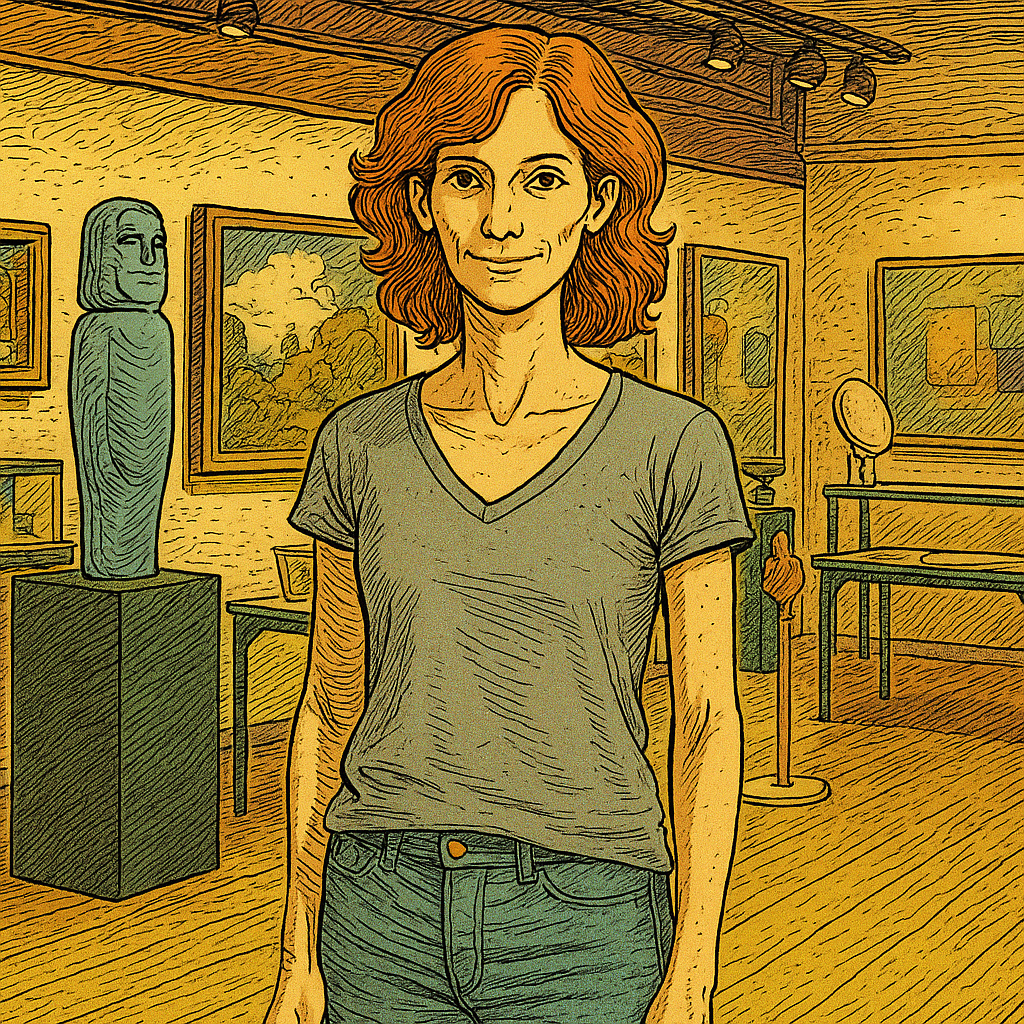
 The street was half-empty this morning. A few cars angled into parking spots near the courthouse, and the flag outside City Hall moved just enough to show its color. The rest of Main Avenue felt slowed, as if Durango itself had decided to take the day off.
It took me a moment to remember why. Juneteenth. A federal holiday now, though still new enough that people aren’t sure what to do with it. The banks were closed, but most of the shops opened anyway. I unlocked the gallery around ten and propped the door open to the smell of warm asphalt and pine pollen.
Inside, the light was mild and deliberate. The walls carried their usual hush, that thin border between seeing and thinking. I switched on the lights one circuit at a time, the old fixtures answering with their faint clicks. Out on the street, a delivery truck idled, then gave up and moved on.
The first visitor came in only to escape the sun. He asked if I had any paintings of trains, then left when I said no. The second stayed longer, tracing the edge of a photograph with her finger before saying, “My grandmother was born in Texas in 1939. She used to tell us she didn’t know she was free until she was eight.” Then she smiled—an uncertain, careful smile—and walked out without buying anything.
I turned off the fan and listened. The town was quiet enough to hear the echo of footsteps from the next block. Somewhere, a radio played “America the Beautiful,” soft and distorted. In Germany, national songs were handled with caution, wrapped in context and warning. Here, the melodies float loose in the air, unexamined but constant.
A man crossed the street carrying a small child on his shoulders. The child was waving one of those plastic pinwheels that catches light instead of wind. It spun once, then stopped. They passed under the flag, both of them in shadow.
Across the plaza, someone began reading from a phone—words I couldn’t quite make out. The cadence carried farther than the meaning, the rise and fall of sentences meant for ceremony. It might have been a declaration, or a prayer, or both. A passing gust lifted the sound just long enough for me to catch a phrase: freedom delayed, freedom pursued. Then it vanished again beneath the shuffle of tires on pavement.
I thought of Munich, of the old gallery there with its impossible windows that made every color look cold. I learned patience in that place, though I didn’t know it at the time. Here, the light behaved differently—more direct, less forgiving. The honesty of it could be startling. There, people measured memory in silence; here, it was measured in sound—flags, music, the steady repetition of dates.
I wrote a note for myself on the pad by the counter: How long does it take a nation to learn how to remember without celebrating? Then I crossed it out. Questions like that belong to the walls, not the ledgers.
By early afternoon the light turned hard and white. I stepped outside and locked the door for lunch. Across the street, the reflection of the flag in the City Hall window flickered as clouds began to move in from the west. A faint gust carried the scent of rain and diesel.
History, I thought, always smells like that here—something still burning, something almost clean.
At the corner, a man was adjusting the straps on a banner that read “CLOSED FOR JUNETEENTH.” He nodded when he saw me watching. “Good excuse for a day off,” he said, then added, “About time, too.” I nodded back. The exchange was simple, but it carried weight. Recognition can be quiet.
When I returned later, the gallery felt cooler, the air sharper. A few drops of rain marked the sidewalk outside, each one spreading into a darker circle before fading. The lights hummed back to life, steady and indifferent. I sat behind the counter and waited for the next person to step inside—someone who might see something they hadn’t expected to see.
Because days like this aren’t only about history; they’re also about light. And in Durango, even the light keeps its own kind of memory.