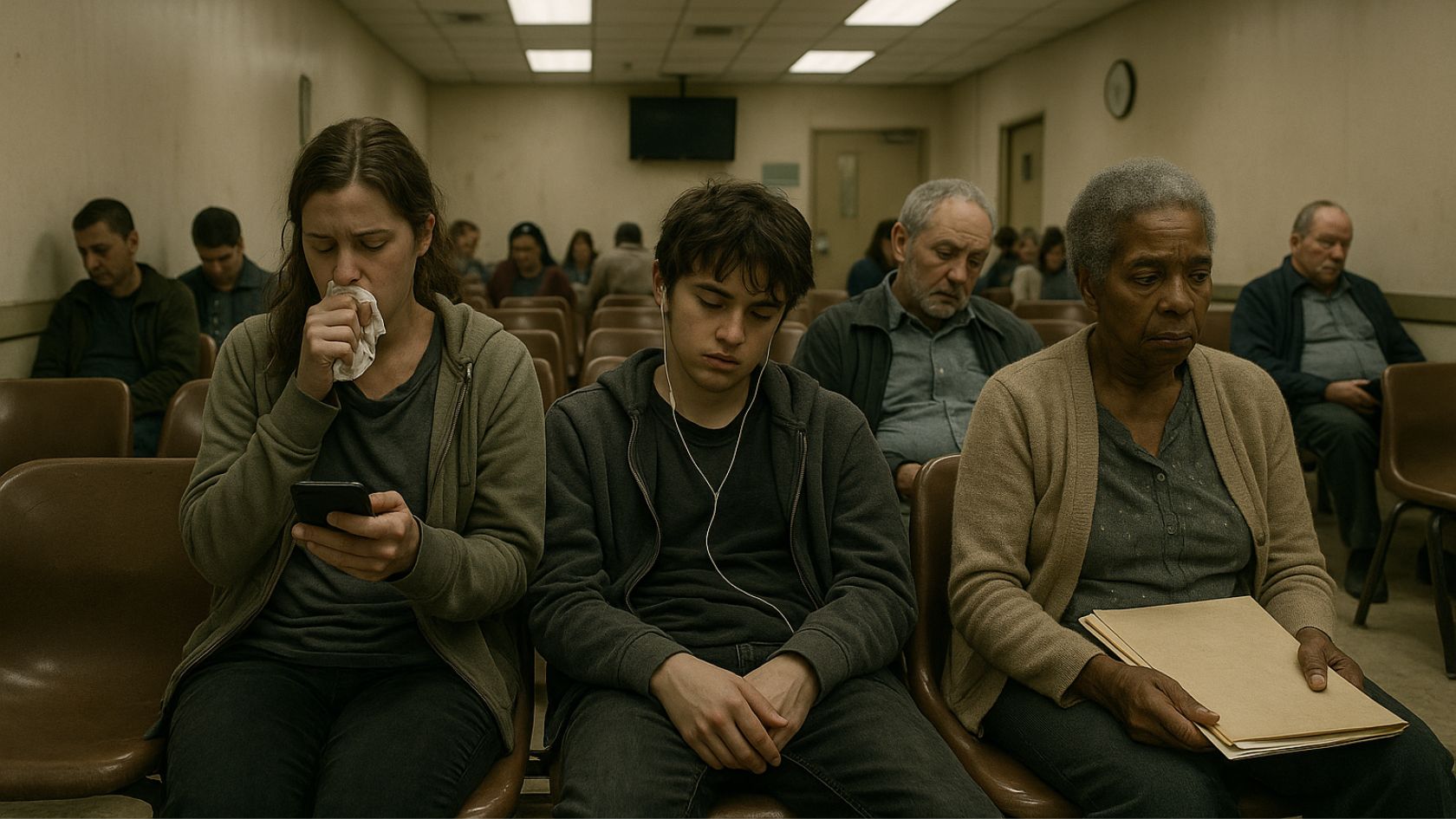
 A waiting room is not neutral space. It is an index of failure. Every seat filled, every sigh drawn, every child leaning against a parent’s arm — each is a measure of how far systems have fallen before help arrives.
I spent this morning in one of those rooms, not as staff but as witness. The walls were beige, the television silent, the air heavy with the odor of disinfectant that cannot quite hide the smell of fatigue. People waited with papers in their hands — forms not yet processed, lab slips already smudged, insurance cards bent at the corners.
The room was an archive of delay. A woman with a persistent cough scrolled her phone with one hand and pressed tissues to her lips with the other. A teenager slouched beside his grandmother, earbuds in, while she clutched a folder full of imaging reports. An older man dozed, his chin dropping to his chest, his name still uncalled after two hours.
This is not exceptional. It is ordinary. And that is the indictment.
Collapse Made Routine
In 2020 and 2021, the language was emergency: surge, crisis, disaster. By 2022, the vocabulary shifted. The collapse did not vanish, but it was naturalized into daily life. Waiting became normal. Delays became inevitable. Burnout became accepted attrition.
By 2025, the erosion is so complete that a crowded waiting room no longer registers as failure. It is simply how things are. Patients do not ask why they wait. They ask only how long. Staff do not question whether the load is safe. They ask only how much longer they can hold on.
This is how collapse sustains itself: by becoming unremarkable.
The Human Ledger
Behind every chart in the electronic record is a person whose body is already paying the bill for policy neglect. The woman coughing through her tissues will face a pneumonia that might have been prevented. The teenager will learn that delays in treatment are not aberrations but expectations. The man dozing will return next month with the same papers, the same wait, the same fatigue written into his pulse.
A waiting room is not just a space. It is a human ledger, each line item marked in hours lost, conditions worsened, dignity eroded.
Why I Write
I record this not to dramatize but to resist forgetting. When collapse becomes ordinary, it erases its own urgency. Writing is the counterweight. To put into words what the room contained is to remind that this is not natural, not inevitable, not acceptable.
The waiting room is the country: stretched, exhausted, resigned. But testimony can still insist that resignation is not the final word.