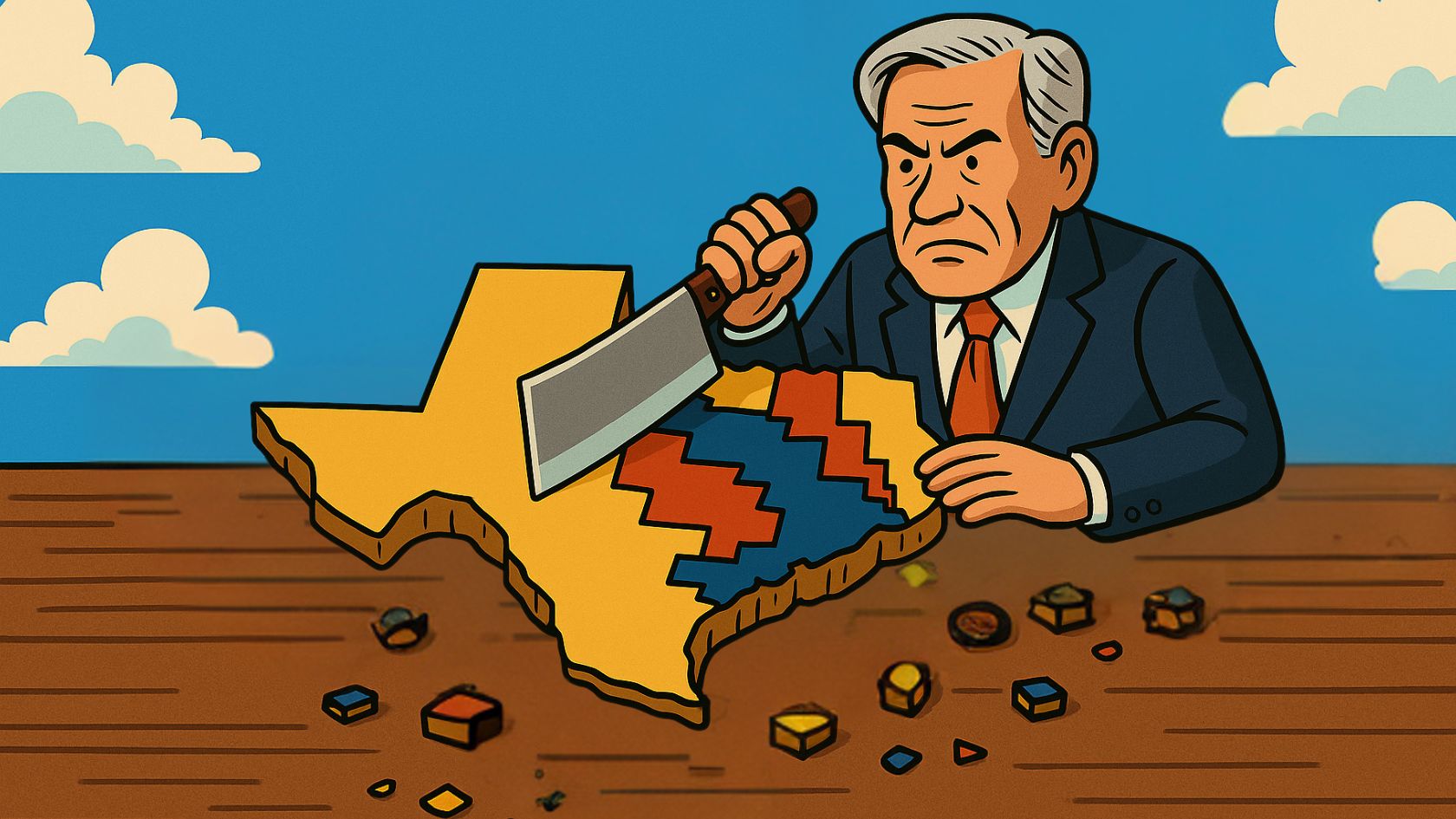
 I drove past the bay this morning, light bouncing off Trinity’s water, and thought about how little protection maps and slogans give when the ground is already shifting. Texas is being carved up again. The governor signed new political maps that lock in more safe seats for his party. It’s called redistricting, but it’s really entrenchment — a way to guarantee outcomes before a single vote is cast.
At the same time, lawmakers keep pushing laws that sound less like policy and more like punishment. One new law lets private citizens sue anyone who’s even suspected of helping someone get abortion medication, with payouts big enough to turn neighbors into bounty hunters. Another requires the Ten Commandments to hang in every public school classroom, erasing any line between religion and state. Another redefines gender on official documents, reducing people to biology on paper and stripping out anyone who doesn’t fit.
When a group of Democratic lawmakers fled the state to stop one of these sessions, leadership threatened to remove them from office entirely. State police were even called on to track them down. The point wasn’t just to win a vote; it was to make an example.
From Shoreacres, these fights can feel far away. The bay is still here. The sun still rises heavy over the water. But you see the effects close up: families checking receipts twice at the grocery store, teachers wondering what else will land on their classroom walls, neighbors watching leaders chase each other in circles while bills pile higher.
Texas has always lived with contradictions. Independence on one hand, heavy-handed control on the other. But right now, the contradictions aren’t quiet background noise. They’re the main event. Shoreacres isn’t insulated. Nobody is.
The long Texas summer hasn’t broken yet. Heat still presses down, storms still brew out in the Gulf, and classrooms are already filling under new rules and heavier costs. The surface rhythms remain familiar, but the politics underneath are not. The state government is turning inward on itself, pulling power tighter while daily life carries more strain. And people keep asking the same question: if this is what power looks like, who exactly is it serving?