 From Heir Apparent to Emerging Operator
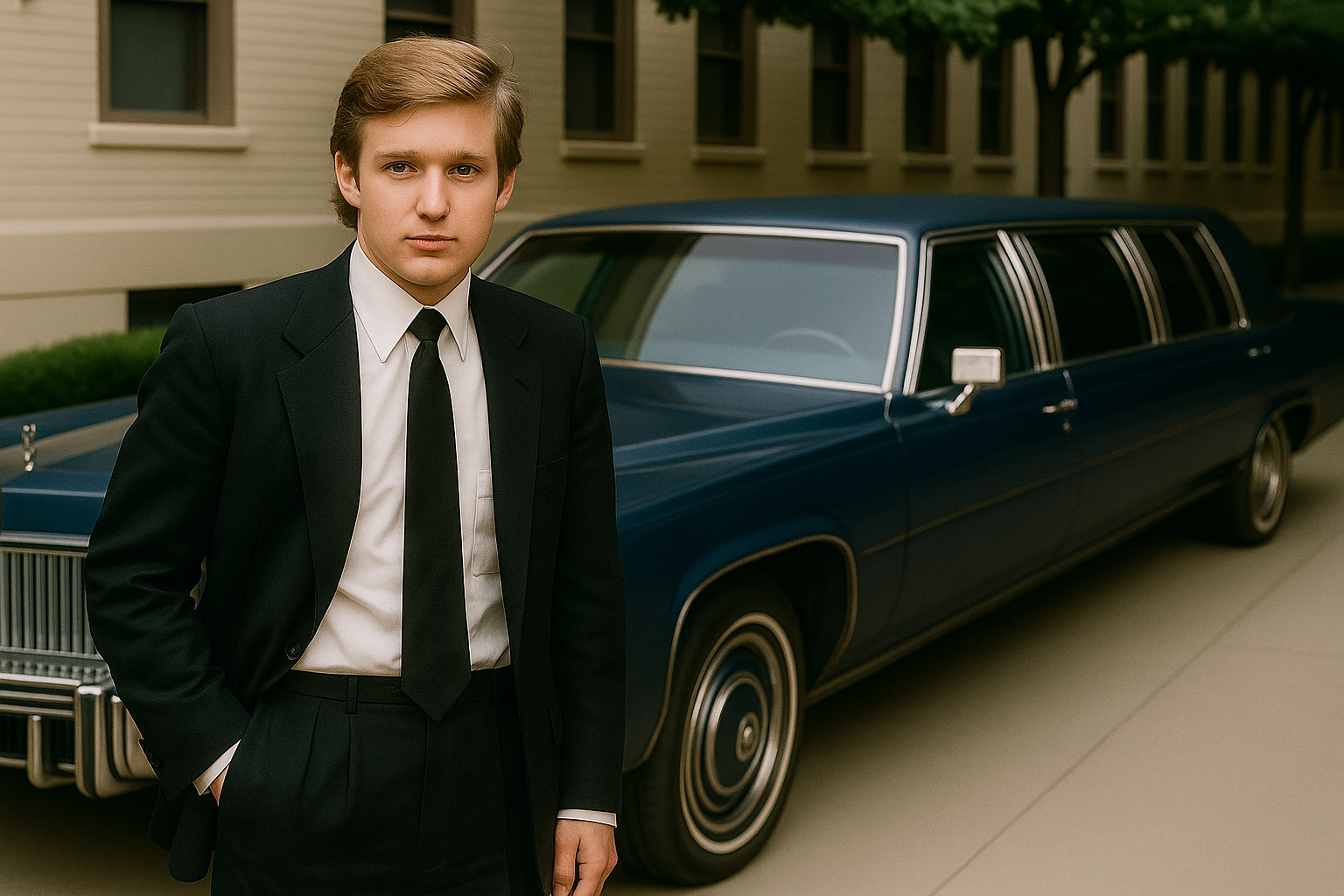
In 1968, Donald Trump stepped into the Trump Organization not as a junior trainee, but as the son destined to inherit the helm. The company was still Fred Trump’s domain — a disciplined, politically savvy machine rooted in the outer boroughs. It dealt in middle-income housing, backed by steady rental revenue and long-standing relationships with city agencies. But Donald’s ambitions were already straining against those limits.
Fred’s empire was proof that cautious calculation could generate immense wealth, but Donald saw a ceiling. He wanted a business that could double as a stage — one that fused profit with spectacle, real estate with celebrity. Manhattan was his target: the skyscraper capital where developers weren’t just businessmen but public figures, where buildings carried names like brands and headlines were part of the business plan.
The late 1960s and early 1970s were turbulent years for New York. Fiscal instability loomed, crime was climbing, and once-proud neighborhoods were slipping into decline. For most, this was a warning. For Donald Trump, it was an opening. Property values in parts of Manhattan were depressed, city government was desperate for revitalization, and developers with the right mix of vision, financing, and political access could secure sweetheart deals.
Inside the Trump Organization, Donald began by handling management and renovation projects, learning how to control costs, negotiate with unions, and keep properties profitable in a tough market. He also started building his own relationships — not only with contractors and lenders, but with journalists. Donald understood early that media exposure could be an accelerant: a flattering profile could shape public perception, influence city officials, and give investors confidence.
Fred watched his son’s maneuvers with a mix of pride and caution. He respected Donald’s drive, but he also knew the risks of overreach. For Fred, steady cash flow was the lifeblood of the business; for Donald, visibility was oxygen. The generational difference wasn’t just about style — it was about the very definition of success.
By the early 1970s, Donald was laying the groundwork for his move into Manhattan. He cultivated contacts in the city’s political establishment, studied high-profile development projects, and tracked which properties were ripe for rescue or reinvention. In his mind, Manhattan wasn’t just an upgrade from Brooklyn and Queens — it was the arena where the Trump name could become synonymous with success itself.
The Commodore Gambit
The moment that would define Donald Trump’s early career came in the mid-1970s with a building most New Yorkers considered a lost cause: the Commodore Hotel. Located on 42nd Street next to Grand Central Terminal, the once-grand hotel had fallen into deep decline, a casualty of the city’s economic unraveling and the broader urban malaise of the era.
To Donald, the Commodore was more than a fixer-upper — it was a test case for his emerging philosophy of development: acquire high-visibility assets in distressed condition, use political connections to secure favorable terms, and then rebrand them into symbols of resurgence with his name front and center.
This was not a deal that could be pulled off on charm alone. The property was owned by the bankrupt Penn Central Railroad, and redeveloping it would require both financing and government cooperation. Trump approached the Hyatt hotel chain as a potential partner, selling them on his vision of transforming the Commodore into a modern luxury destination. But Hyatt’s interest came with a condition: the project had to make financial sense, and in 1970s New York, that meant tax relief.
Here, Donald deployed one of the most important tools he had absorbed from Fred — the ability to work the political system. With the help of his father’s lawyer, the politically connected Roy Cohn, Trump lobbied city and state officials for an unprecedented 40-year tax abatement. It was a staggering concession, effectively transferring millions in future city revenue to make the deal viable.
The pitch to City Hall was wrapped in the language of urban revival. The Commodore’s redevelopment, Trump argued, would not just save a building but send a message that New York was open for business. For a city desperate to reverse its economic freefall, the argument landed. The abatement was approved, and with Hyatt on board, the financing fell into place.
When the Grand Hyatt opened in 1980, clad in reflective glass and outfitted with modern amenities, it was hailed as a symbol of New York’s comeback. For Trump, it was proof of concept. He had taken a derelict property and — through political maneuvering, strategic partnerships, and aggressive rebranding — turned it into a headline-grabbing success.
The Commodore deal also revealed something else: Donald’s willingness to fuse public resources with private ambition in ways that blurred the line between civic good and personal gain. The tax break was defended as a necessary incentive, but it also set a precedent for Trump’s future projects — large-scale developments that depended on favorable terms from government while maximizing his own profit and visibility.
In the wake of the Grand Hyatt’s opening, Donald Trump’s profile soared. He was no longer just Fred Trump’s son; he was a developer in his own right, with a signature style that combined bold vision, aggressive deal-making, and an instinct for media theatrics. Manhattan was no longer a target — it was his stage.
Building the Brand
With the Grand Hyatt success in hand, Donald Trump began to craft something his father had never pursued: a personal brand. For Fred Trump, the company’s name was simply a business identifier. For Donald, “Trump” was becoming a logo — a signal of luxury, ambition, and dominance.
He understood instinctively that in the high-stakes Manhattan market, perception could drive value as much as square footage or location. A building’s worth could be amplified if it was tied to an image of glamour and exclusivity. And that image could be shaped not only through architecture and amenities, but through relentless media exposure.
Trump courted journalists, fed them stories, and staged photo opportunities that ensured his name was never far from the business pages. He gave interviews that projected certainty and audacity, even when projects were still taking shape. He learned to speak in superlatives — the biggest, the best, the most luxurious — as a way to set expectations and create a sense of inevitability around his ventures.
His next major project was Trump Tower, conceived in the late 1970s and destined to become his signature property. Located on Fifth Avenue, it would combine retail space, luxury residences, and Trump’s own headquarters in a single gleaming structure. The tower was designed not just as real estate, but as an expression of personal identity — a monument to himself in the heart of Manhattan.
Securing the site required the same blend of deal-making and political navigation that had worked for the Commodore. Trump negotiated with the Bonwit Teller department store to acquire its location, promising to preserve valuable architectural features. When demolition began, those features were destroyed, drawing public criticism but leaving Trump undeterred. He was focused on the end result: a building that would dominate the skyline and carry his name in bold letters visible from blocks away.
Throughout the planning and construction of Trump Tower, Donald demonstrated a willingness to push boundaries — in zoning, in labor negotiations, and in marketing claims. Critics called it arrogance; Trump called it winning. The tower would open in 1983, just outside the time frame of this chapter, but its development in the late ’70s crystallized the formula he would use again and again: secure prime location, brand aggressively, court the press, and deliver a product wrapped in the aura of success.
By the early 1980s, “Trump” was no longer just a family name. It was a brand that promised — and, in the eyes of many, embodied — a certain vision of American aspiration: bold, unapologetic, and rooted in the belief that winning was the ultimate justification for any means used to achieve it.
Political Currents and Power Lessons
Even as Donald Trump was cementing his place in Manhattan real estate, he was absorbing lessons about politics that would later shape his public life. These were not the lessons of electoral politics, but of the transactional, behind-the-scenes exchanges between business and government.
The Commodore deal had shown him that political leaders could be persuaded — with the right framing, the right allies, and the promise of economic revival — to deliver extraordinary concessions. Zoning variances, tax abatements, and public financing were not abstract policy tools; they were levers that a skilled operator could pull to make ambitious projects possible.
Trump’s relationship with Roy Cohn deepened in this period, offering him both legal strategy and political theater. Cohn, infamous for his work as chief counsel to Senator Joseph McCarthy during the Red Scare, understood the use of intimidation, loyalty, and aggressive counterattack as tools of power. From Cohn, Trump learned that to concede publicly was to invite weakness, and that to attack — even preemptively — was often the best defense.
While these strategies played out in boardrooms and city agencies, they also had a public dimension. Trump was building a persona as a developer who could get things done, no matter the obstacles. His projects were framed as victories not just for himself, but for the city — revitalizing neighborhoods, creating jobs, restoring pride. This framing made it easier to defend the private gains embedded in his deals.
By 1982, Trump’s transformation was nearly complete. He had moved from the disciplined cadet captain of the New York Military Academy to a Manhattan developer whose name was becoming shorthand for bold ambition. He had mastered the art of blending public purpose with personal profit, of using political systems to serve private goals, and of turning every project into a platform for self-promotion.
What was emerging was not simply a businessman, but a figure who understood power in a deeply transactional way — who saw in every negotiation the chance to extract maximum advantage, and who recognized that public perception was as much a currency as cash.
The next decade would test this formula on an even larger stage. The 1980s offered new opportunities — casinos, global licensing, and an era of deregulation that rewarded audacity. Trump was poised to expand his empire beyond real estate, into industries and arenas where the stakes — and the spotlight — would grow ever brighter.