 Reinvention Through Reality Television
By the dawn of the 21st century, Donald Trump had already been a fixture in the business press and tabloid pages for decades. But in 2004, he stepped into a medium that would redefine his public image: network television. NBC’s The Apprentice premiered that January, introducing millions of viewers to a dramatized version of Trump as the ultimate boss — decisive, demanding, and unflinching in his pursuit of excellence.
The format was simple but potent. Contestants competed in business-themed challenges, and at the end of each episode, one was eliminated with Trump’s now-famous catchphrase: “You’re fired.” The show blended corporate competition with soap opera tension, turning Trump into both judge and celebrity brand. Boardroom showdowns were edited for maximum drama, and Trump’s persona — sharp suits, commanding tone, air of authority — became the centerpiece of the program.
For Trump, The Apprentice was more than entertainment. It was a weekly advertisement for the Trump brand, broadcast into living rooms across America and beyond. His skyscrapers and casinos became part of the show’s visual vocabulary, reinforcing the image of a global business empire. The reality of his finances or the actual scale of his operations mattered less than the perception that he was a titan of industry.
The timing was fortuitous. Reality television was exploding in popularity, and the early 2000s economy, buoyed by real estate booms in many regions, made Trump’s aspirational image resonate. Viewers saw him as a living embodiment of capitalist success — a man who made big deals, lived in opulence, and dispensed hard-edged wisdom to those trying to follow in his footsteps.
Over the course of its run, The Apprentice and its celebrity spin-offs became a powerful platform for Trump. They kept his name in the headlines, expanded his appeal beyond the New York business world, and introduced him to a new generation that knew him less as a developer and more as a television icon. This broader recognition would prove invaluable when Trump began to test the waters of political influence.
Tabloid Fixtures and Brand Expansion
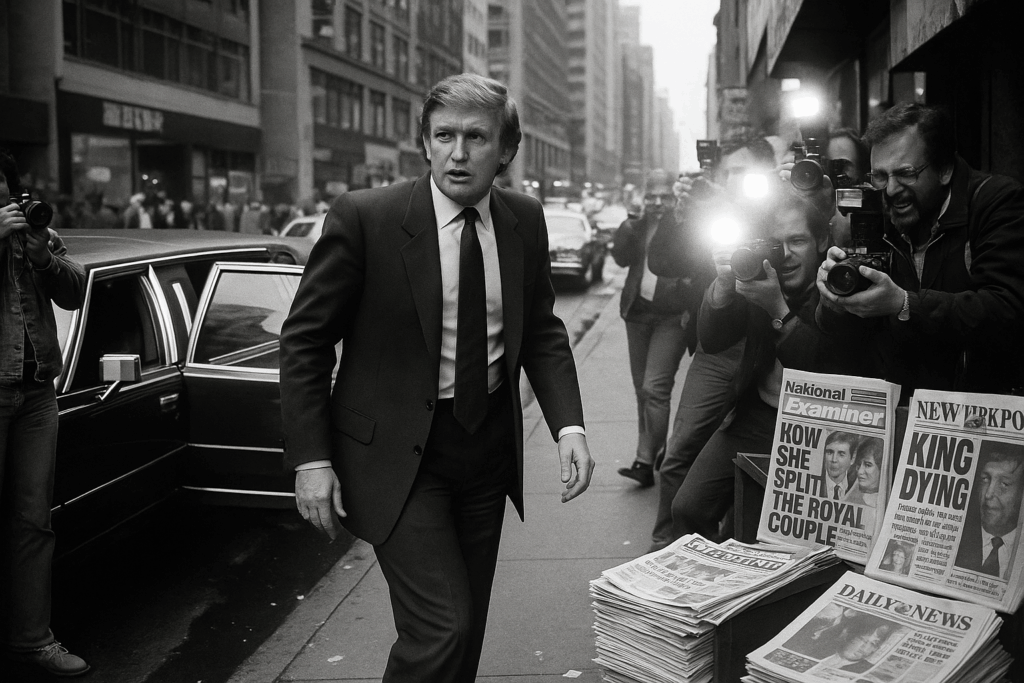
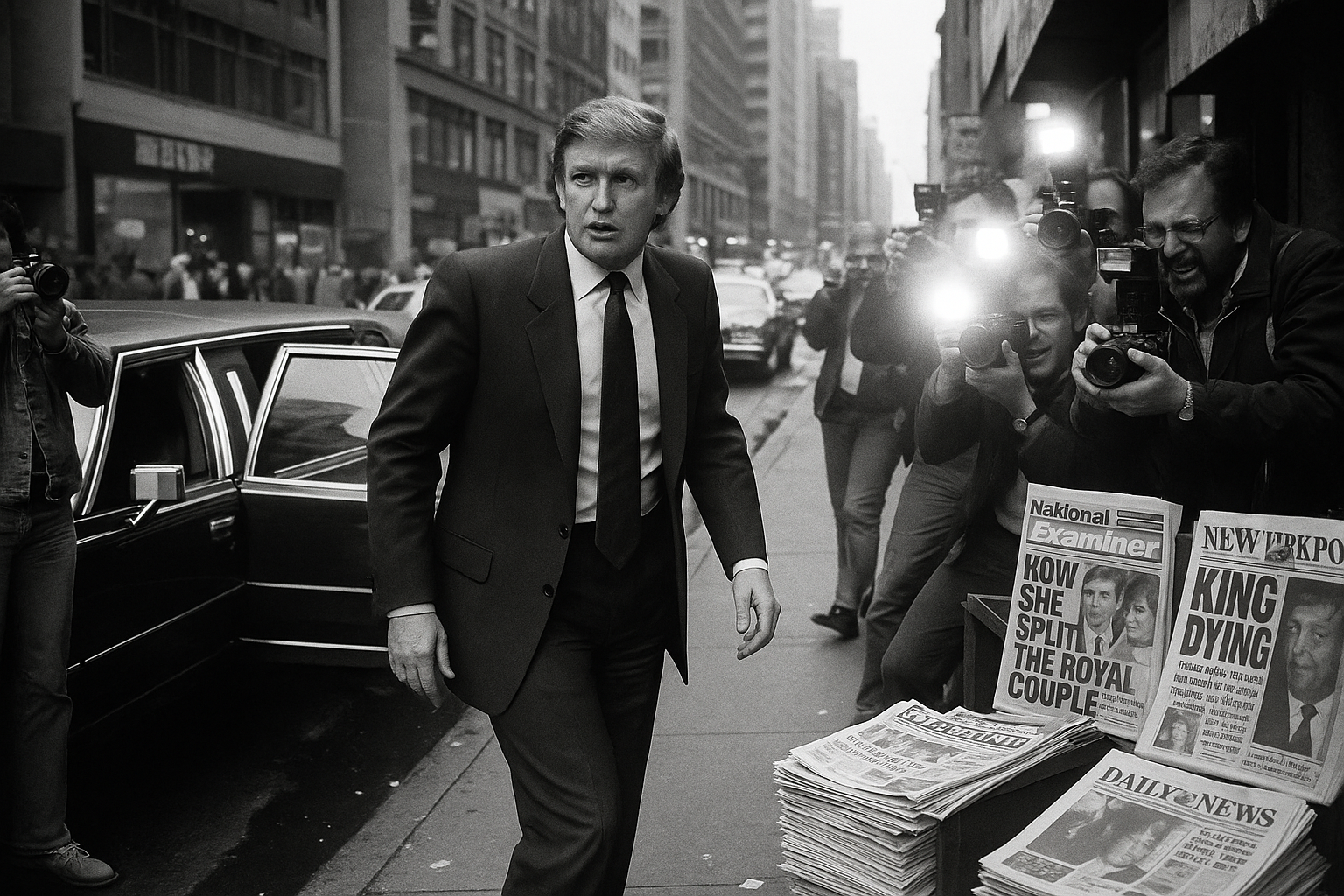
While The Apprentice amplified Donald Trump’s reach, the tabloid ecosystem of the 2000s ensured that he remained a constant topic of public conversation. New York’s Page Six, celebrity magazines, and entertainment TV shows documented his every move — from high-profile romances to public feuds. For Trump, this was not an intrusion but an opportunity.
He understood that saturation was a form of dominance. A brand that appeared everywhere became part of the cultural wallpaper, and in Trump’s world, visibility equaled value. His willingness to offer colorful quotes, stir minor controversies, or make off-the-cuff remarks that would generate headlines kept him in the cycle. Each appearance, no matter how trivial the subject, was a chance to reinforce his image as a man at the center of things.
The Trump Organization leaned into this visibility with an aggressive licensing strategy. Rather than relying solely on capital-intensive developments, Trump increasingly attached his name to projects built and operated by others — luxury hotels, condominium towers, golf courses — in exchange for fees and a share of the profits. This “brand as product” approach allowed rapid expansion without the risks of heavy debt, and it turned “TRUMP” into a global luxury mark.
His name appeared on towers in Chicago, Las Vegas, Toronto, Istanbul, and even farther afield. The common thread was the marketing: gold accents, polished finishes, and promotional material that linked every property to the larger-than-life persona seen on television. In reality, Trump’s ownership stake in many of these projects was minimal or nonexistent. But in the public eye, the distinction between owning and branding blurred into irrelevance.
Simultaneously, Trump expanded into other arenas of public spectacle — purchasing the Miss Universe, Miss USA, and Miss Teen USA pageants in 1996 and continuing to run them throughout the 2000s. The pageants provided an annual dose of media attention and global exposure, while reinforcing themes that had long been central to his brand: glamour, competition, and winning.
By the late 2000s, Donald Trump was no longer just a businessman who had crossed into television. He was a fully integrated celebrity brand — a hybrid of mogul, entertainer, and personality whose visibility spanned industries and continents. This omnipresence would prove to be both a resource and a weapon when he began shifting toward political messaging.
From Celebrity to Political Provocateur
By the early 2010s, Donald Trump’s media presence had evolved beyond business and entertainment. Increasingly, he used interviews, speeches, and social media to wade into political controversies — often with the same flair for provocation that had kept him in the tabloids for decades.
The most consequential of these forays came in 2011, when Trump became the most prominent public figure promoting the “birther” conspiracy theory, which falsely claimed that President Barack Obama had not been born in the United States. Through television appearances and a steady stream of interviews, Trump amplified a fringe narrative into a sustained media story. The tactic drew criticism from across the political spectrum, but it also raised his profile among certain segments of the Republican base.
Trump framed his involvement as a matter of “asking questions” and demanding transparency, but the coverage it generated — particularly on cable news — was unmistakably valuable. He understood that political commentary could operate much like a reality television storyline: provoke, dominate the conversation, and keep the spotlight fixed on yourself.
Meanwhile, his social media presence was expanding rapidly. Twitter, which he joined in 2009, became an unfiltered channel for his thoughts, grievances, and promotional messages. Where The Apprentice presented a polished, edited version of Trump, Twitter offered the raw, immediate voice of the man himself — and his willingness to insult rivals, challenge reporters, and issue sweeping declarations drew both followers and outrage in equal measure.
This shift into political theater didn’t mean the business and entertainment ventures stopped. Trump continued to appear on The Apprentice until 2015, launched new branding deals, and oversaw the ongoing operations of his properties. But politics began to seep into his public identity in a way that suggested a deeper ambition.
By the mid-2010s, the fusion of celebrity, brand power, and political provocation had created a platform unlike any other in American public life. Trump was no longer just leveraging politics for publicity — he was testing how far that combination of skills could take him in the political arena itself.
The Prelude to a Candidacy
By 2014, Donald Trump had spent more than a decade as a reality television star, global brand licensor, and perennial media fixture. But behind the familiar rhythms of The Apprentice seasons and licensing announcements, he was cultivating the next act in his public life — one that would draw directly on the skills he had honed over decades.
Trump’s flirtations with political campaigns were nothing new. He had teased potential runs in 1988, 2000, and 2012, each time generating headlines without ultimately entering the race. These trial balloons served a purpose: they allowed him to gauge public reaction, test political messages, and keep his name in circulation without the risks of actual candidacy.
By this point, the political climate had shifted in ways that favored his style. The rise of partisan cable news, the growing influence of social media, and widespread public distrust of traditional political elites had created an environment in which a celebrity outsider could plausibly mount a serious bid for national office. Trump’s mastery of media spectacle — his ability to command coverage through provocation and showmanship — was not a side asset; it was the core of his competitive advantage.
The Republican Party was also experiencing internal upheaval. The Tea Party movement had reshaped its grassroots base, infusing it with anti-establishment energy and suspicion toward the political class. Many voters were looking for a figure who could channel their frustrations with blunt, unapologetic language. Trump’s persona, refined over years of television and tabloid coverage, fit that desire perfectly.
As the 2016 election cycle approached, Trump began signaling more seriously that this time would be different. He sharpened his political commentary, increased his appearances at conservative gatherings, and floated policy positions in interviews that were designed to stir both support and outrage.
In June 2015, he descended the golden escalator at Trump Tower to announce his candidacy for president. The moment — meticulously staged and carried live on cable news — was the culmination of years of brand-building, media manipulation, and gradual immersion into political controversy. For Trump, the leap from reality television to presidential politics was not a reinvention, but the next logical step in a career built on the fusion of performance, publicity, and the unshakable belief that winning was the ultimate measure of worth.