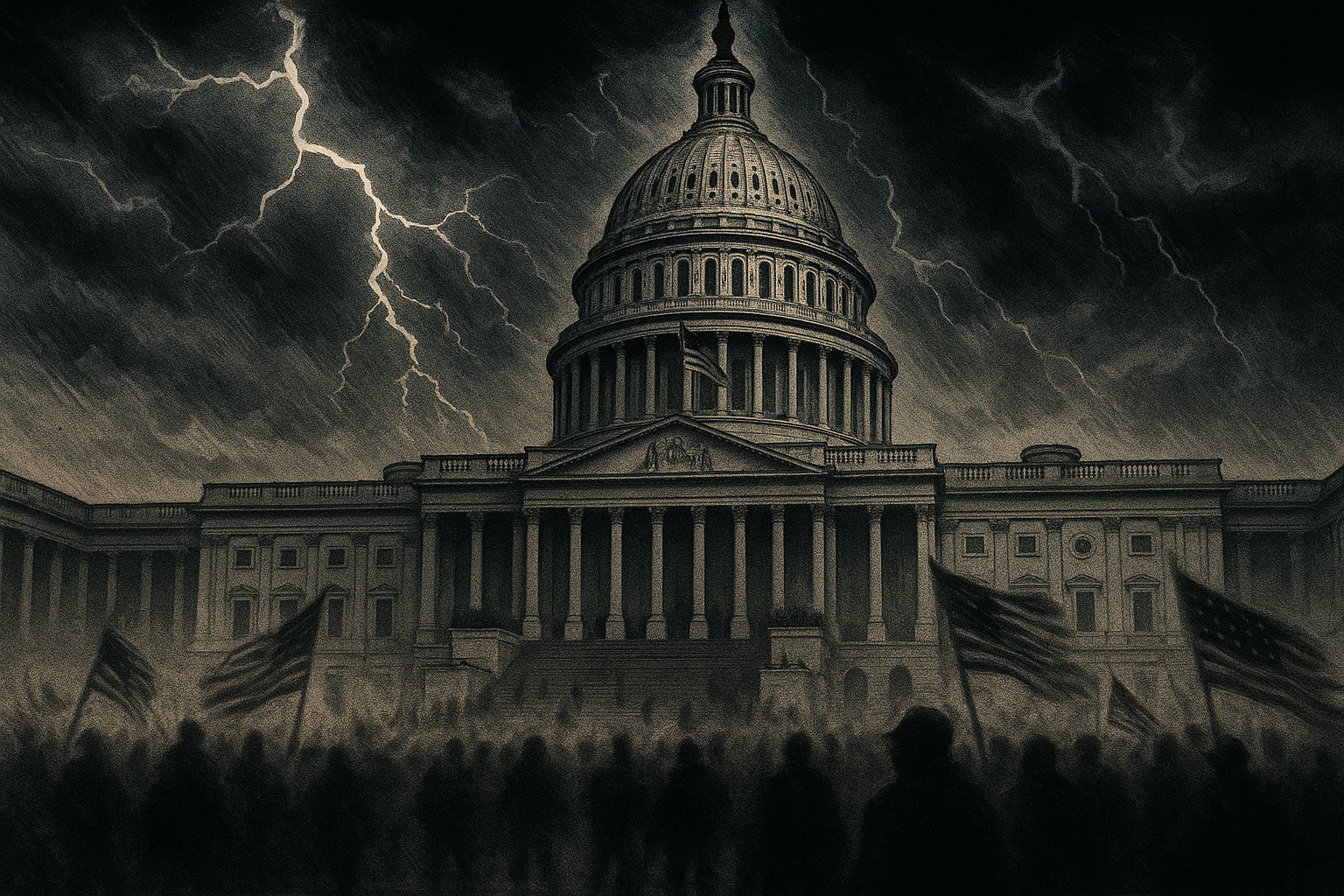
 Refusal, Resistance, and the Big Lie
In the aftermath of the 2020 election, Donald Trump embarked on a campaign unlike any post-election effort in American history — not to prepare for a transition of power, but to overturn the results outright. From the moment major networks called the race for Joe Biden on November 7, 2020, Trump declared the election “rigged” and “stolen,” a claim he repeated relentlessly despite the absence of evidence.
His legal team, led by Rudy Giuliani and later joined by Sidney Powell and Jenna Ellis, launched a barrage of lawsuits in multiple states, alleging fraud, irregularities, and violations of election law. Almost all were dismissed by judges — including many Trump-appointed jurists — for lack of credible proof. Yet the courtroom defeats did little to slow the narrative’s spread. In Trump’s telling, these were not legal losses but further evidence of a corrupt system aligned against him.
The “Stop the Steal” message took root among millions of supporters, amplified through conservative media, social platforms, and direct communications from Trump himself. State officials, both Republican and Democrat, faced intense pressure to reject certified vote counts. Georgia became the focal point when Trump personally called Secretary of State Brad Raffensperger on January 2, 2021, urging him to “find 11,780 votes” — enough to overturn Biden’s narrow win in the state. The call, later released to the public, became one of the most scrutinized moments of his presidency’s final days.
The effort extended to Congress, where Trump and his allies encouraged Republican lawmakers to object to the certification of Electoral College results on January 6, 2021. That day was framed by Trump as a last stand — “If you don’t fight like hell, you’re not going to have a country anymore.” Thousands of supporters gathered in Washington, D.C., for a rally that would spill into history with unprecedented consequences.
January 6 and the Capitol Assault
On the morning of January 6, 2021, Congress convened to certify the Electoral College vote — the final constitutional step in confirming Joe Biden as president-elect. Outside the Capitol, thousands of Trump supporters gathered, many arriving after hearing the president speak at a rally near the White House. In a speech lasting more than an hour, Trump repeated false claims of election fraud, urged the crowd to march to the Capitol, and told them to “peacefully and patriotically” make their voices heard — a phrase that would later be overshadowed by his repeated exhortations to “fight” and to “stop the steal.”
As lawmakers debated challenges to Arizona’s electors inside, the crowd surged toward the Capitol. Barriers were breached, police lines overrun, and soon rioters forced their way into the building. The Senate chamber was evacuated; members of the House took shelter. Offices were ransacked, historical artifacts stolen, and the halls of Congress — a symbol of peaceful democratic process — became the scene of violent confrontation.
The assault left five people dead in the immediate aftermath, including a Capitol Police officer, and more than 140 officers injured. Images of the chaos — rioters waving Trump flags in the Rotunda, a man in a fur-lined horned helmet sitting at the Senate dais — circulated worldwide within minutes, searing the event into public consciousness.
As the violence unfolded, Trump posted a video telling the rioters to go home while repeating that the election had been stolen and calling them “very special.” Hours later, Congress reconvened under heavy security and certified Biden’s victory in the early hours of January 7.
The political fallout was swift. Democrats and some Republicans accused Trump of inciting insurrection, leading to his second impeachment on January 13, 2021 — making him the only president in U.S. history to be impeached twice. Ten House Republicans joined Democrats in voting for impeachment. In the Senate trial the following month, seven Republicans voted to convict, but the 57–43 tally fell short of the two-thirds majority required for removal and disqualification.
For Trump’s critics, January 6 was the clearest manifestation yet of the dangers his rhetoric and tactics posed to democratic governance. For his most loyal supporters, it became another rallying point — recast not as an insurrection, but as the product of legitimate outrage at a corrupt political system.
The Post-Presidency and Parallel Power Structure
Donald Trump left the White House on January 20, 2021, skipping his successor’s inauguration and retreating to Mar-a-Lago, his private club in Palm Beach, Florida. But his departure from Washington did not mark a retreat from politics. Instead, he began constructing a parallel power structure — a political apparatus operating outside formal government yet wielding enormous influence over the Republican Party.
At the core of this structure was the Save America PAC, established in the final weeks of his presidency. It became both a fundraising juggernaut and a tool for maintaining loyalty within the party. Trump raised hundreds of millions of dollars by continuing to promote claims of election fraud, positioning himself as the leader of an ongoing struggle against a corrupt establishment.
Mar-a-Lago became his de facto political headquarters. Republican lawmakers, candidates, and donors made pilgrimages there to secure endorsements — often the difference between political survival and defeat in a primary. Trump used endorsements as both carrot and stick: rewarding those who echoed his claims about 2020 and punishing those who had voted for impeachment or certified Biden’s win.
The former president also invested heavily in shaping the party’s infrastructure. Loyalists were installed in key positions within state Republican organizations. Efforts intensified to change election laws in GOP-controlled states, often justified as “election integrity” measures but criticized by opponents as voter suppression. These included new voter ID requirements, restrictions on mail-in voting, and changes to the administration of local election boards.
Trump’s media strategy evolved but retained its confrontational edge. Banned from Twitter and Facebook in the wake of January 6, he launched press releases that mimicked his old tweets and later created Truth Social, a platform under the Trump Media & Technology Group. Conservative media outlets — from talk radio to cable news — continued to amplify his voice, ensuring he remained a central figure in the national conversation.
By mid-2022, it was clear that Trump was more than a former president; he was the head of a movement with its own fundraising base, communications network, and ideological litmus tests. In effect, he operated as the leader of a “counter-state” — not holding formal office, but commanding loyalty from elected officials, shaping legislative agendas, and influencing public opinion on a scale that rivaled, and in some cases eclipsed, that of the sitting president.
The 2024 Bid and the Final Battle
On November 15, 2022, Donald Trump formally announced his candidacy for president in 2024 from the ballroom of Mar-a-Lago. The setting — chandeliers, gilded columns, and an audience packed with loyalists — reinforced the image of a political leader running from his own court rather than a party headquarters. The speech was subdued by Trump’s standards, but the message was clear: the fight to reclaim the White House was not over, and his movement remained the dominant force in Republican politics.
The campaign launch came amid a shifting political landscape. The 2022 midterm elections had produced mixed results for Trump-endorsed candidates: while some prevailed in primaries, several high-profile losses in competitive states fueled questions about his electability. Still, his grip on the Republican base held firm, and potential rivals — including Florida Governor Ron DeSantis — were careful not to alienate his supporters outright.
Trump’s legal troubles intensified as the campaign began. Multiple investigations loomed: a federal probe into classified documents found at Mar-a-Lago, inquiries in Georgia over efforts to overturn the 2020 election, and civil suits tied to his business practices in New York. For most politicians, such legal peril might have ended a campaign before it began. For Trump, it became a rallying cry. He cast himself as a political martyr, targeted by a corrupt system precisely because he represented a threat to it.
Rhetorically, his 2024 campaign doubled down on themes of grievance and retribution. He spoke less about a second-term policy agenda and more about “finishing the job” — purging disloyal officials, dismantling what he called the “deep state,” and restoring the America that had been “stolen” in 2020. The language was darker, more combative, and more openly framed in existential terms than in 2016 or 2020.
The Republican primary field began to take shape in 2023, but Trump’s dominance in early polling and his unmatched ability to command media attention kept him at the center. He continued to hold massive rallies, where the mix of campaign stump speech, personal storytelling, and attacks on opponents felt less like traditional political events and more like revival meetings for a cause.
By early 2024, Trump’s movement had fully merged with his personal identity. Allies described the upcoming election as the “final battle” — not just a contest for the presidency, but a fight for the survival of the nation’s political and cultural order as they understood it. In Trump’s telling, victory would mean vindication and restoration; defeat would mean the irreversible loss of the America his supporters believed in.
Whether viewed as a populist crusader, a political strongman, or the central figure in a sustained campaign against democratic norms, Trump entered the 2024 race as both the most polarizing and the most influential political figure in the United States. The counter-state he had built during his years out of office was now mobilized for one purpose: to return him to power.