Fault Lines

Weekly Dispatch
Week of November 21 – 27, 2021

The week began with shock that resisted framing. On Sunday, November 21, an SUV plowed through a Christmas parade in Waukesha, Wisconsin, killing six and injuring dozens. The images—folding chairs, winter coats, a red SUV cutting a path no one imagined—restarted debates that America never finishes: bail decisions, warning signs missed, the difference between malice and momentum. Law enforcement asked for time. Communities did what they always do: hung lights, held vigils, and argued online.

In Georgia, a jury delivered a different kind of clarity. On Wednesday, November 24, all three defendants in the killing of Ahmaud Arbery were found guilty of murder and other counts. The verdict felt both local and national—rooted in a Brunswick neighborhood yet carried by a year of video evidence and relentless attention. Where other trials have been parsed as ideology, this one read as process: prosecutors built a sequence, jurors followed the sequence, and a community measured justice by its own exhale.

Policy tried to meet economics at the family table. On Tuesday, the White House announced a coordinated release of oil from the Strategic Petroleum Reserve—50 million barrels from U.S. stockpiles alongside contributions or planned draws from China, India, Japan, South Korea, and the United Kingdom. The goal was not magic-price control so much as signal: supply would not sit idle while demand spiked before the holidays. Energy markets argued with the premise in real time; futures dipped, then rose, then settled into their own logic. The message landed anyway: the administration would spend political capital to shave dollars from receipts.

Travel returned as ritual. TSA screened numbers near pre-pandemic levels as families crisscrossed airports that felt both familiar and re-learned—mask announcements, test kits in carry-ons, vaccination cards tucked behind boarding passes. The public-health picture remained mixed. Cases rose in parts of the Midwest and Northeast even as the South steadied. Boosters expanded to all adults the prior week; pharmacies turned guidelines into scheduling blocks and stickers. Thanksgiving, once a calculation of chairs, became a calculation of risk tolerance.

By Friday, the week’s arc bent toward a new name. The World Health Organization designated Omicron a variant of concern on November 26 after South African scientists sequenced a fast-spreading lineage flagged days earlier in multiple countries. Travel restrictions rippled, markets sold off, and the vocabulary of winter reset to the language of last year—unknowns, transmissibility, immune escape. Scientists asked for weeks to learn; headlines asked for conclusions before the lab work finished. The country entered another waiting room: less fearful, more practiced, still tired.

Abroad, Europe tightened again. Austria moved from lockdown for the unvaccinated to nationwide measures; Germany signaled stricter regional rules; protests in the Netherlands and elsewhere dramatized the fatigue that data can’t soothe. At the EU’s eastern edge, the Belarus–Poland border crisis shifted from forests to warehouses without solving its premise. Farther east, U.S. officials repeated warnings about Russian troop movements near Ukraine, a winter storyline that looked familiar because it was.

Not every headline pointed down. On November 24, NASA launched the DART mission from Vandenberg Space Force Base, sending a spacecraft to test whether a kinetic impact can slightly alter an asteroid’s path. It was a simple story—a nudge, measured months later—offering relief from the daily churn. The contrast was the point: a long-horizon project, calmly explained, moving at science’s pace without a culture war attached.

Commerce measured confidence by carts and queues. Early Black Friday traffic returned to malls while online promotions began days earlier and never really ceased. Retailers promised delivery windows with more honesty than certainty; warehouses translated optimism into shifts. The economy kept revealing itself in the negative space between desire and delay. Prices were up, choices were down, and yet a surprising portion of the country bought anyway.

At week’s end, memory and motion overlapped. Families counted seats, then faces; verdicts counted seconds of video and months of waiting; a new variant counted cases in a graph that hadn’t yet bent. The United States closed out the holiday with three truths that refuse to reconcile neatly: grief that demands ritual, justice that requires patience, and a future that keeps changing its terms. Governance, science, and daily life all worked the same problem—how to hold the line long enough for better information to arrive.


Thanksgiving

Families gather again, some with empty chairs. Gratitude and grief sit at the same table.

Thanksgiving on Credit

Families gathered, turkeys roasted, football blared. Everyone pretended inflation didn’t double the grocery bill. America is good at make-believe — pretending supply chains will fix themselves, pretending COVID is over, pretending democracy isn’t limping.

Thanksgiving is supposed to be gratitude. This year it felt like denial with gravy. We pass the pie and avoid the politics, but both stick to the ribs.

The Weekly Witness — November 14–20, 2021

The week begins with the jury in Kenosha entering deliberations. After days of testimony, video reconstructions, and instructions delivered in long, measured phrases, twelve people file into the deliberation room and close the door. Outside, metal barricades shape the courthouse perimeter. Reporters stand in clusters, adjusting scarves against cold wind, waiting for something that has not yet arrived. Police maintain quiet watch. Supporters of each side hold signs, some naming the men who were killed, others focused on self-defense. People drift in and out through the day, stopping to observe for a moment before moving on.

At the White House, preparations are underway for the infrastructure bill signing scheduled for Monday. Podium platforms and seating arrangements take shape on the South Lawn. Staff move equipment indoors and outdoors as weather shifts. The bill passed the House on November 5 and the Senate in August; the signature will finalize it. State officials begin assembling preliminary lists for bridge repair, broadband expansion, and water-system upgrades. Federal agencies prepare guidance documents, legal statements, and initial rollout strategies. Office lights burn late as teams coordinate details ahead of the formal ceremony.

COVID-19 cases rise in several states. Hospitals in Minnesota and Michigan report intensive-care units nearing capacity. Nurses complete twelve-hour shifts and rotate through hallways marked with holiday decorations taped to walls. Pediatric vaccination sites remain busy as children aged 5–11 receive doses in orange-capped vials. Some appointments fill immediately; others open up due to cancellations. School districts review ventilation data and adjust mask policies. A superintendent in Colorado sends a district-wide notice warning families about possible closures if substitute shortages worsen.

Grocery stores continue reflecting seasonal strain layered onto supply-chain delays. Freezer sections display turkeys in varying sizes depending on shipments. Some customers search for specific weights, adjusting plans when unavailable. Butter prices rise slightly. Bags of potatoes sell quickly. A store in Indiana posts a sign noting inconsistent deliveries of cream cheese. Shoppers make substitutions based on what they find: chicken thighs instead of breasts, sweet potatoes instead of yams. Holiday planning happens in conversation with shelf availability.

Diesel fuel prices remain elevated. Independent truckers adjust routes to conserve fuel or decline loads that would lose money. Shipping yards continue operating under pressure. Freight trains wait outside rail hubs for open tracks. Distribution centers run overtime shifts but cannot fully offset port backups. Inventory reaches stores unevenly, from full restocks to sparse aisles depending on region and timing.

On Monday, November 15, President Biden signs the Bipartisan Infrastructure Law. Cameras record the moment on the White House lawn. Lawmakers and agency officials attend. A large desk is placed outside, pens lined neatly atop it. After the signature, staff begin immediate coordination calls with states. Governors’ offices request briefings. Transportation departments outline bridge inspections and identify early targets for repair. Utility providers assess water-system grants. Broadband planners revisit coverage maps, preparing proposals for expanded internet access.

Inside Congress, attention turns back to the Build Back Better Act. The House schedules a debate for later in the week. Progressive members push for climate and childcare provisions; moderate members request fiscal analysis and assurances about long-term costs. Staffers walk between offices carrying draft amendments, cost estimates, and policy summaries. Hallway conversations remain cautious, focused on sequencing votes and anticipating Senate constraints.

Midweek, the Rittenhouse jury continues deliberations. They request review of video evidence, prompting technical discussions in the courtroom about playback resolution and monitor size. Hours pass. Reporters note the request but receive no details beyond procedural updates. The courthouse perimeter remains steady: signs, cameras, police vehicles. Businesses near the area keep lights on but board lower windows as precaution.

International headlines report Russian troop movements near Ukraine’s border. Satellite imagery shows equipment positioned in key areas. U.S. and European officials express concern and monitor developments. Market analysts discuss implications for winter energy supplies. The story shares attention with domestic concerns: rising COVID cases, inflation pressures, holiday travel projections, and congressional negotiations.

Back in Washington, the administration continues addressing inflation. Officials emphasize efforts to ease supply-chain congestion: extended port hours, partnerships with retailers and shippers, incentives for trucking recruitment. Retailers launch early holiday promotions to spread demand across November rather than concentrating it on Black Friday. Small businesses post online notices warning of potential shipping delays. A craft store in Colorado notes that yarn shipments expected in October still have not arrived. Many stores adjust inventory displays daily based on new arrivals.

Schools adjust routines as illness-related absences rise. Some classrooms use portable air purifiers. Teachers send packets home with quarantined students. Bus routes experience delays due to driver shortages. Parents coordinate carpools on short notice. Children practice for holiday performances uncertain of final logistics.

In Kenosha, tension rises through the second half of the week. Street traffic remains slow near the courthouse. Police monitor pedestrian flow. Media vans line curbs. Residents plan errands around potential disruptions once a verdict comes. Restaurants near downtown see inconsistent business as patrons weigh safety concerns. Clergy in the area prepare for community support sessions after the verdict, regardless of outcome.

On Friday, November 19, the judge calls the courtroom to order. The jury files back in. The foreperson reads the verdict: Kyle Rittenhouse is found not guilty on all counts. Rittenhouse collapses momentarily as the final charge is read. Defense attorneys steady him. The courtroom remains controlled under the judge’s guidance. Outside, reactions split. Some groups cheer; others stand silent or hold signs aloft. In cities across the country — Portland, Chicago, Oakland — demonstrations form after sundown. Crowds gather with megaphones, posters, candles. Police direct traffic, set up temporary barricades, and stand by for potential escalation. Some marches remain peaceful; others report scattered property damage. In downtown areas, helicopters circle overhead and sirens echo intermittently.

As the weekend approaches, Thanksgiving preparations intensify. Grocery stores fill with shoppers navigating crowded aisles. Flour sells quickly. Canned pumpkin appears in limited batches. Pie crusts vanish shortly after restocking. Employees answer questions about inventory with uncertainty, explaining what they know from morning delivery briefings. Lines stretch longer than usual at checkout as carts fill for holiday meals.

College football occupies Saturday attention. Stadiums fill with students and alumni. Bands play fight songs in cold air. Tailgaters cluster in parking lots, grilling and gathering around portable heaters. Analysts discuss standings and playoff prospects. Bars near campuses fill early and stay busy through the night.

Airports experience rising passenger counts as travelers leave early for the holiday week. TSA lines grow longer in major hubs. Staff shortages contribute to slower processing in some terminals. Airlines post revised schedules to accommodate weather patterns and staffing constraints. Rental-car counters display limited availability and higher rates compared to prior years.

At home, people decorate for the holiday season. Some hang lights before Thanksgiving to brighten early dusk. Families set tables with serving dishes and inspect recipes. Children create construction-paper turkeys and tape them on refrigerator doors. A household in Maine finds only a larger turkey than needed but buys it anyway, adjusting meal plans accordingly. A Nevada family substitutes sweet potatoes for missing yams. Plans shift around what stores provide.

The week holds trial tension, congressional movement, public-health strain, economic pressure, and holiday preparation all at once. No single event resolves the week; each continues into the next. The record ends because the calendar does.

Events of the Week — November 14 to November 20, 2021

U.S. Politics, Law & Governance

  • November 14 — White House continues negotiations on reconciliation framework specifics.
  • November 15 — President Biden signs the Bipartisan Infrastructure Law at a public ceremony.
  • November 17 — Administration outlines initial funding allocations for transportation and broadband.
  • November 19 — House passes the Build Back Better Act.
  • November 20 — Senate begins technical and procedural review of the House-passed bill.

Public Health & Pandemic

  • November 14 — Pediatric vaccination rates rise across early-adopting states.
  • November 16 — Regional case increases begin emerging ahead of winter holidays.
  • November 17 — Booster demand accelerates as eligibility expands.
  • November 20 — Mask-policy divergence remains prominent across localities.

Economy, Labor & Markets

  • November 15 — Retailers highlight inflation impact ahead of holiday season.
  • November 17 — Port congestion persists despite extended operating hours.
  • November 19 — Gasoline and grocery prices continue upward pressure.
  • November 20 — Labor shortages affect service industries nationwide.

Climate, Disasters & Environment

  • November 14 — Western drought conditions remain severe.
  • November 16 — Post-Ida rebuilding continues under resource constraints.
  • November 19 — Late-season storm potential monitored in Atlantic and Gulf regions.

Courts, Justice & Accountability

  • November 15 — Redistricting disputes advance across multiple states.
  • November 17 — Federal courts process ongoing vaccine-mandate challenges.
  • November 19 — January 6 prosecution pipeline continues active.

Education & Schools

  • November 15 — Pediatric vaccination events increase across school districts.
  • November 17 — Staffing disruptions continue for transportation and classroom coverage.
  • November 20 — Quarantine-related closures occur sporadically.

Society, Culture & Public Life

  • November 14 — Holiday travel planning accelerates despite rising case concerns.
  • November 17 — Inflation reshapes consumer spending habits.
  • November 20 — Large-event venues sustain mixed mitigation practices.

International

  • November 15 — Humanitarian organizations face ongoing access barriers in Afghanistan.
  • November 18 — Refugee-relocation discussions continue among allied nations.
  • November 20 — Aid delivery varies amid unstable on-ground conditions.

Science, Technology & Infrastructure

  • November 16 — Semiconductor shortages persist with extended timelines.
  • November 19 — Infrastructure implementation planning focuses on grid and broadband expansion.

Media, Information & Misinformation

  • November 14 — Misinformation spreads around holiday travel and vaccination.
  • November 17 — Coverage emphasizes infrastructure-law rollout.
  • November 20 — Reporting highlights inflation trends and legislative developments.


The Price at the Pump

Gas in town just jumped past three dollars a gallon. Folks grumble at the pump, shake their heads, and mutter about Biden. It’s the same script every time: if it goes up, blame the president. If it goes down, thank nobody.

I’ve worked enough warehouse jobs and trucking shifts to know fuel prices don’t move on speeches. They move on markets, OPEC calls, refinery outages, and storms that shut ports. But politics makes a simpler villain, and people like simple. [continue reading…]

Verdicts and Versions

Weekly Dispatch
Week of November 14 – 20, 2021

Monday began with signatures and staging. On November 15, the President signed the $1.2 trillion infrastructure bill on the South Lawn, a ribbon-cutting before the ribbons exist. Agencies published first-step memos for ports, broadband, lead pipes, and EV charging; governors turned press conferences into project lists. The larger social-spending bill remained stuck in sequence—House text first, Senate edits later—an agenda divided between what could be shown and what could be promised.

By Friday night, the House voted to pass the social-spending package after a day of speeches that doubled as 2022 advertisements. The price tag shrank to meet arithmetic; the contents blurred to meet coalition. Supporters called it a long-delayed investment in children, climate, and care. Critics called it inflationary at the checkout aisle and confusing in the footnotes. The Senate’s “parliamentarian stage” loomed, where verbs and provisions go to be resized.

Courts and juries supplied the week’s sharper edges. On November 19, a Wisconsin jury acquitted Kyle Rittenhouse on all counts for the shootings during protests in Kenosha the previous summer. The verdict split interpretation into familiar lanes: self-defense defined narrowly by seconds of footage versus a broader civic frame about guns, provocation, and who gets to claim fear. Streets stayed mostly quiet; feeds did not. For many, the case felt less like closure than calibration—what future encounters the law will now permit and what norms it will ignore.

Pandemic policy arrived in versions. The FDA and CDC authorized boosters for all adults on November 19, simplifying a patchwork into a single rule: six months after mRNA vaccination or two months after Johnson & Johnson, any adult could get a booster. Pharmacies translated guidance into appointments by Saturday morning. Abroad, Austria announced a nationwide lockdown and a forthcoming vaccine mandate for 2022, the harshest measures in Western Europe since the first wave. The message was uneven but legible: policy had moved from persuasion to enforcement where hospitals demanded it.

Economics returned to the felt facts of price and pay. Retailers pulled holiday promotions earlier and leaned on “guaranteed delivery” more than discounts. Ports at Los Angeles and Long Beach extended gate hours, but backlogs persisted as chassis and warehouse capacity set the true ceiling. The October retail sales report showed consumers still spending through the friction; sentiment surveys showed they despised the experience. The economy had become a queue—long, irritating, and still moving.

Abroad, borders and buildups framed the headlines. Along the Belarus–Poland frontier, thousands of migrants were moved from a freezing forest to a logistics center as Minsk adjusted tactics under EU pressure; the humanitarian crisis persisted with new optics. In Eastern Europe, U.S. officials warned that Russia was massing troops near Ukraine’s border, reviving a map that diplomacy never quite erases. Kyiv emphasized readiness, Moscow denounced alarmism, and NATO ministers spoke of “serious consequences” in the conditional tense.

Technology companies met regulators in a more crowded hallway. The Facebook Papers continued to feed incremental stories about internal research and external harm; lawmakers previewed competing frameworks for children’s privacy and platform accountability. Elsewhere in Washington, the federal vaccine-or-test mandate for large employers remained stayed by courts, sending the rule into a jurisdictional maze that employers navigated by drafting policies they might never need to enforce.

The culture pages converged with the docket. Civil suits from the Astroworld crowd surge grew in number and scope, naming promoters, security contractors, and artists in overlapping rings of responsibility. In Georgia, the trial of the three men charged with killing Ahmaud Arbery moved toward jury deliberations, another test of how video evidence and community memory contest the meaning of threat.

By Saturday, the week felt like a ledger of conclusions that ended with commas. An infrastructure bill became a law without becoming a bridge; a social-spending text became a vote without becoming a statute; a high-profile trial became a verdict without becoming agreement. Booster guidance simplified even as European lockdowns complicated the winter. Abroad, a border crisis changed buildings, not stakes; a troop buildup changed sentences, not lines. The United States moved forward on paper, sideways in argument, and—when measured in deliveries, doses, and decisions—inch by inch in practice.


Kyle Rittenhouse Acquitted

A Wisconsin jury acquitted Kyle Rittenhouse of all charges. He killed two people and wounded another during unrest in Kenosha, then argued self-defense. The verdict split the country along familiar seams: hero to some, vigilante to others.

The facts that mattered in court were narrow: who pointed, who fired, who feared imminent harm. The facts that matter outside the courtroom are wider: a teenager crossing city lines with an AR-15 into a volatile protest; a state that permits open carry with few limits; a culture that treats firearms as badges of virtue. [continue reading…]

Rittenhouse Walks

A teenager carried a rifle across state lines, killed two people, and walked free. The jury called it self-defense. America called it justice. But the truth is simpler: the system bent to protect the idea that guns are sacred, even when they’re in the hands of boys playing soldier. The verdict wasn’t surprising. That’s the tragedy.

The Ferry Crossing

I took the Lynchburg Ferry across the channel today. Same slow churn, same short ride. Families in SUVs, workers in pickups, everyone waiting while the deck rattled under us.

Looking back toward the refineries, the stacks rise like monuments. Smoke pours out constant, as if the sky needs filling. That’s Houston’s backbone — ugly, loud, but solid. [continue reading…]

Inflation Nation

Gas prices climb, groceries jump, supply chains still choke. Politicians blame each other, economists debate definitions, and families just stare at shrinking receipts. America can’t admit the obvious: you can’t run an economy on slogans. “Build Back Better” sounds nice, but it doesn’t buy milk.

Infrastructure Signed

Biden signed the $1.2 trillion infrastructure bill. Bridges, roads, broadband, and water systems move from speeches to contracts. Governors will cut ribbons; crews will pour concrete; utilities will replace lead lines that should have been pulled a generation ago.

It’s progress, not transformation. The larger social and climate package is stalled, and many climate provisions were stripped from this bill to win votes. Calling it “historic” stretches the word; calling it “nothing” ignores the pipes that won’t poison kids and the rural towns that will finally get reliable internet. [continue reading…]

The Weekly Witness — November 7–13, 2021

Sunday, November 7, 2021.
The nation wakes to cool air and earlier daylight after the clock shift. Leaves wet against sidewalks, cars parked beneath branches shedding their last color. The New York City Marathon returns for the first time since 2019 — 30,000 runners moving through the boroughs in long waves of color and sweat. Spectators clap along barriers, some masked, some not. Kenyan runner Albert Korir finishes first in 2:10:03. In households across time zones, televisions show shifting views: runners over bridges, crowds stacked six deep, signs that read GO MOM, STRONG LEGS, STRONG HEART.

Supply chains remain uneven. A woman in Ohio searches three grocery stores for graham crackers before finding a single box left on a top shelf. A man in Arizona buys chicken thighs instead of wings — price difference too wide this week. Turkeys appear in freezer sections with “LIMIT 2” taped nearby. Family texts exchange advice: shop early, be flexible, substitute brands. People set aside canned goods for Thanksgiving, aware shelves fluctuate day to day.

COVID case counts remain steady but higher than September. Pediatric vaccines have begun shipping in orange-cap vials, doses drawn with small syringes behind pharmacy curtains decorated with stickers and paper stars. Children dangle feet from folding chairs as nurses speak softly about breathing and stillness. Some appointments fill immediately; others remain open.

In Virginia, Governor-elect Glenn Youngkin attends church in Great Falls. Four days after his win, cameras wait outside but do not enter. In Democratic circles, attention turns to turnout models and suburban shifts, but inside this week only phone calls, meetings, and unread email stacks appear. Analysts gather what they can from what just happened; no conclusions exist yet, only activity.

Evening football broadcasts flicker. Fans track fantasy scores, quarterbacks throw into cold air, stadium seats packed in rows. At home, people cook chili, reheat pizza, fold laundry. The week begins without resolution, only movement.

Monday, November 8.
President Biden stands at the Port of Baltimore with cranes behind him — tall metal frames against gray sky, containers in stacks like uneven masonry. He speaks about ports, trucking capacity, longshore labor, infrastructure funds already approved. The infrastructure bill passed the House three days prior, and the Senate back in August; the signing ceremony has not yet occurred, so the week exists between passage and signature. Agencies prepare guidance, state officials wait for distribution details, but no final pen meets paper yet. Reporters file clips summarizing the moment as transition — a bill finally cleared after months of internal negotiation. Progressive lawmakers continue pressing for parallel movement on the larger reconciliation package: childcare credits, climate programs, expanded healthcare support. Nothing finalized. Everything ongoing.

At U.S. hospitals, pediatric vaccine stations expand. Needles sized for children arrive in boxes of fifty, each sealed. Pharmacists rotate trays from refrigerated packs, scanning lot numbers. Parents carry vaccination cards inside zipped coat pockets. Some children cry; others look curious at cartoon stickers and dinosaur Band-Aids. School nurses prepare to track doses for attendance policy, sports participation, quarantine requirements.

The Kyle Rittenhouse trial dominates television screens. Closing arguments have not yet begun. Attorneys question witnesses, display video stills frame by frame, debate chains of events in August 2020. Journalists stand outside the Kenosha courthouse in gloves, holding microphones in steady wind. Barricades define walking zones, separating foot traffic from cameras. National Guard coordination planning becomes visible in local reporting, but no deployment occurs yet.

Grocery inflation continues. A cashier in Detroit compares her receipt to September’s and shakes her head privately: eggs up, milk up, cereal up. At dinner tables, families calculate holiday budgets, prioritizing travel or food but not both. Restaurant menus add small notices — prices subject to change based on market conditions. The phrasing grows familiar.

Tuesday, November 9.
During morning commute hours, news breaks: Steve Bannon is charged by the Department of Justice for contempt of Congress relating to a January 6 Committee subpoena. Alerts flash on phones: BANNON CHARGED — DOJ FILES COUNT. It is not conviction, not trial outcome, but a formal action. Bannon issues a statement rejecting legitimacy of the process. Commentary channels split coverage between Bannon’s charge and the ongoing Rittenhouse trial testimony two states away.

In St. Louis, Missouri, ICU beds remain 85% full. In Denver, nurses report slow increase in admissions. Breakrooms hold coffee cups, half-eaten granola bars, printed sign-up sheets for booster clinics. Pfizer’s antiviral Paxlovid — announced last week — remains under trial review. Hospitals discuss potential distribution but operate under existing protocols: oxygen therapy, monoclonal antibodies, ventilator support. Anticipation sits quiet, not yet tied to a timeline.

At meat processing facilities, worker shortages slow shifts. A plant in Nebraska adds a hiring bonus. A poultry facility in Arkansas offers on-site vaccination to stabilize staffing. Production lags reflect downstream in grocery inventories. Shelves show less predictability: peanut butter fully stocked one day, absent the next; pasta abundant, then scarce. Shoppers adapt quickly — brand loyalty bends to availability.

Cryptocurrency spikes continue. Bitcoin remains above $66,000. Retail investors watch candles on 5-minute charts. Discord servers post celebratory emojis. Financial news covers inflation concerns and digital-asset speculation in the same breath. For some, coins feel like hedge; for others, a game. Banks remain cautious but alert.

Wednesday, November 10.
The Bureau of Labor Statistics releases CPI data: 6.2 percent annual inflation. Headlines describe it as the highest in thirty years. Gasoline prices sit above $3.40 average nationwide. Heating bills expected to rise. Social feeds fill with photographs of pumps, receipts held beside dashboard clocks. In homes, thermostats remain lower than usual; families wear sweaters to keep bills down. A father in Illinois takes a second job delivering packages overnight for holiday season pay. A college student in Oregon picks up extra cafeteria shifts. Budget adjustments ripple quietly across demographics.

In Glasgow, COP26 negotiations enter final stretch. Delegates move between side rooms, reviewing text proposals, adjusting carbon-market language. The U.S. delegation conducts late-night talks with EU partners. Activists protest outside, banging drums, chanting through megaphones: climate urgency, equity, finance. The Witness observes without forecasting — only people in buildings, paper drafts, hands gesturing across tables.

The Rittenhouse trial remains in progress. No verdict. Closing arguments scheduled soon but not this week. Focus remains on testimony, video analysis, judicial rulings. No final instruction to the jury. Outside, signs read JUSTICE FOR THE FALLEN and SELF-DEFENSE IS A RIGHT. Police maintain perimeter but streets remain open. Reporters interview onlookers about why they came, what they expect — but outcomes are not here yet. Only tension, waiting, uncertainty.

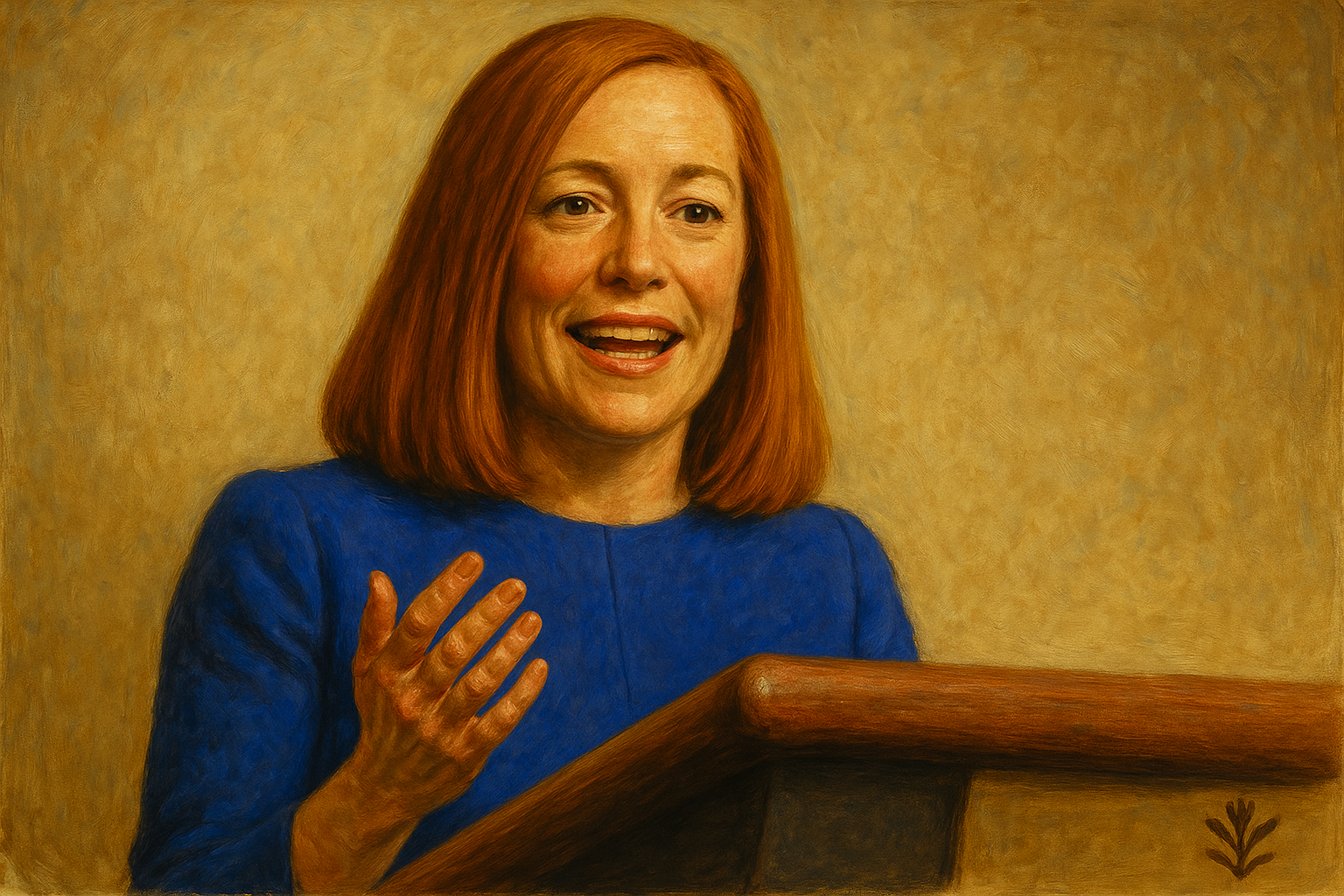
In the White House briefing room, Jen Psaki fields questions about inflation and pending CBO scoring for the Build Back Better framework. She emphasizes that supply chain disruptions are global, that the administration continues port coordination. Reporters push timelines; she repeats what is known inside this week: ships are clearing backlog slowly, trucking incentives are active, federal-state partnerships ongoing.

Thursday, November 11 — Veterans Day.
Cemeteries hold morning ceremonies. Folded flags, rifle volleys, bugles sounding taps against cold air. At Arlington, President Biden lays a wreath at the Tomb of the Unknown Soldier. Cameras capture silence — gloves at soldier’s side, wreath resting on stand of white marble, wind moving wreath ribbon slightly. Across towns nationwide, parades step through streets lined with chairs and waving spectators. At VFW halls, veterans drink coffee, eat free lunches, share photos and quiet laughter.

National retail chains run Veterans Day sales: appliances, mattresses, tools, televisions. Online checkout pages show delayed shipping estimates. Customer support chats say “due to volume, responses may take longer.” Warehouse workers load trucks for overnight fulfillment. In ports, crane operators stack containers under floodlights well past dusk.

Hospitals navigate staffing shortages; some postpone elective surgeries. School districts balance mask mandates with parent pressure; board meetings run long. At grocery stores, customers eye prices before adding meat to carts. A mother in Florida compares ground beef and ground turkey, calculating meals for the week.

Friday, November 12.
Late morning: Steve Bannon surrenders to federal authorities to face the contempt charge filed earlier in the week. Cameras outside capture brief comments as he approaches the courthouse: no apology, no concession — only defiance. Cable networks cut live coverage to show court-house steps from multiple angles. Analysts discuss implications, but inside this week there is only procedural motion: surrender, arraignment scheduling, press microphones, attorneys’ statements, supporters gathered nearby holding signs.

Congressional staffers continue negotiations on the Build Back Better package. The infrastructure bill already passed the House last week and waits for presidential signature next week. So today is a space between — implementation planning beginning, outreach calls to governors underway, but no signature yet. States begin assembling grant-application teams, transportation departments gather project lists for bridge repair, broadband expansion, port upgrades. Whiteboards fill with bullet points and arrows.

In Kenosha, the Rittenhouse trial nears final stages. Attorneys prepare arguments for next week, not today. Tension visible but static. No verdict, no jury instruction. Streets remain calm in daytime. Security plans sit ready.

At pharmacies, pediatric vaccine supplies increase. School letters go out reminding families of eligibility. Vaccination card sleeves sell at checkout racks.

In Houston, Astroworld investigation expands. Memorials grow outside NRG Park — flowers, candles, teddy bears beneath chain-link fence. Concert wristbands hang from posts. Families visit, kneel, reflect, hold hands. News crews stand back to avoid intrusion.

Evening high school football playoffs bring crowds bundled in blankets. Concession stands sell hot chocolate that fogs up glasses. Student bands practice halftime songs. Parents cheer under metal bleachers. Life moves parallel to national headlines, no less real.

Saturday, November 13.
COP26 negotiations close. A final agreement emerges with language softer than some delegates hoped — coal reductions phrased as “phase down.” No resolutions here, only recorded phrases, signatures, applause that sounds tempered by fatigue. Delegates check flights, pack folders, send messages home. Climate activists stand outside, disappointed but not silent. Police presence remains steady.

Grocery stores display early holiday stock: cranberries, marshmallows, disposable roasting pans. Some shelves thin, others full. A store in Milwaukee posts SUPPLY DELAY: EXPECT NEXT TRUCK MONDAY near the meat counter. Customers buy what they can, adjusting recipes based on availability.

Universities prepare for finals. Libraries extend hours. Students highlight textbooks, open laptops, eat microwaved burritos at 2 a.m. A printer jams, maintenance arrives. Supply orders take longer — toner refills on backorder.

Bus service in Seattle reduces frequency due to driver quarantines. Riders check arrival apps and wait longer on cold sidewalks. In Boston, the Red Line experiences minor delays tied to staffing strain. Transit systems absorb shortages quietly, adjusting without announcement in some cities.

In living rooms, families hang early holiday lights to fight shorter days. Children place construction-paper turkeys on refrigerator doors. Crockpots simmer stew that smells of onion and bay. A couple in Montana shops for coats online, comparing shipping timelines — arrival before Thanksgiving uncertain.

NFL pre-game coverage previews tomorrow’s matchups. Analysts discuss Aaron Rodgers’ return following COVID isolation, league protocols, team cohesion. Fans debate in comment threads, some defending decisions, others critical. Football becomes the conversation at work breaks, dinner tables, sports bars.

The week ends dusk-quiet. Porch lights switch on early. Leaves continue to fall. The record stops here because the calendar does.

U.S. Politics, Law & Governance

  • November 7 — Infrastructure bill signing preparations begin.
  • November 8 — White House hosts lawmakers for final legislative coordination.
  • November 10 — Bipartisan Infrastructure Law signed by President Biden.
  • November 12 — Administration outlines initial rollout priorities.
  • November 13 — Reconciliation negotiations continue without final agreement.

Public Health & Pandemic

  • November 7 — Pediatric vaccination ramps up across pharmacies and clinics.
  • November 9 — Regional case trends show mixed movement into early winter.
  • November 10 — Booster access expands through retail and medical networks.
  • November 13 — Mask-rule variation persists among states and districts.

Economy, Labor & Markets

  • November 8 — Supply-chain delays remain elevated at coastal ports.
  • November 10 — Inflation concerns continue to increase.
  • November 12 — Retailers emphasize early purchasing for holiday season.
  • November 13 — Labor shortages persist across service and logistics sectors.

Climate, Disasters & Environment

  • November 7 — Western drought and fire risk remain active.
  • November 10 — Post-Ida rebuilding progresses under material constraints.
  • November 13 — Storm activity monitored along late-season Atlantic corridor.

Courts, Justice & Accountability

  • November 8 — Redistricting cases advance toward hearings.
  • November 10 — Federal mandate litigation begins formal review stages.
  • November 13 — January 6 prosecutions continue through sentencing and plea discussions.

Education & Schools

  • November 8 — School-based vaccination sites expand for ages 5–11.
  • November 11 — Staffing shortages continue to affect transport and coverage.
  • November 13 — Outbreak-driven closures occur intermittently.

Society, Culture & Public Life

  • November 7 — Travel demand remains above prior-year levels.
  • November 10 — Consumer spending patterns adjust under rising costs.
  • November 13 — Event attendance strong under mixed safety protocols.

International

  • November 8 — Afghanistan humanitarian-access barriers persist.
  • November 11 — Global partners discuss long-term refugee placement.
  • November 13 — Aid-delivery stability remains inconsistent.

Science, Technology & Infrastructure

  • November 9 — Semiconductor bottlenecks prolong manufacturing delays.
  • November 12 — Infrastructure funding framework outlines grid and broadband expansion plans.

Media, Information & Misinformation

  • November 7 — Pediatric-vaccine misinformation circulates widely online.
  • November 10 — Coverage centers on infrastructure-signing events.
  • November 13 — Inflation and supply-chain narratives dominate reporting.
 

Migrants at the Polish border


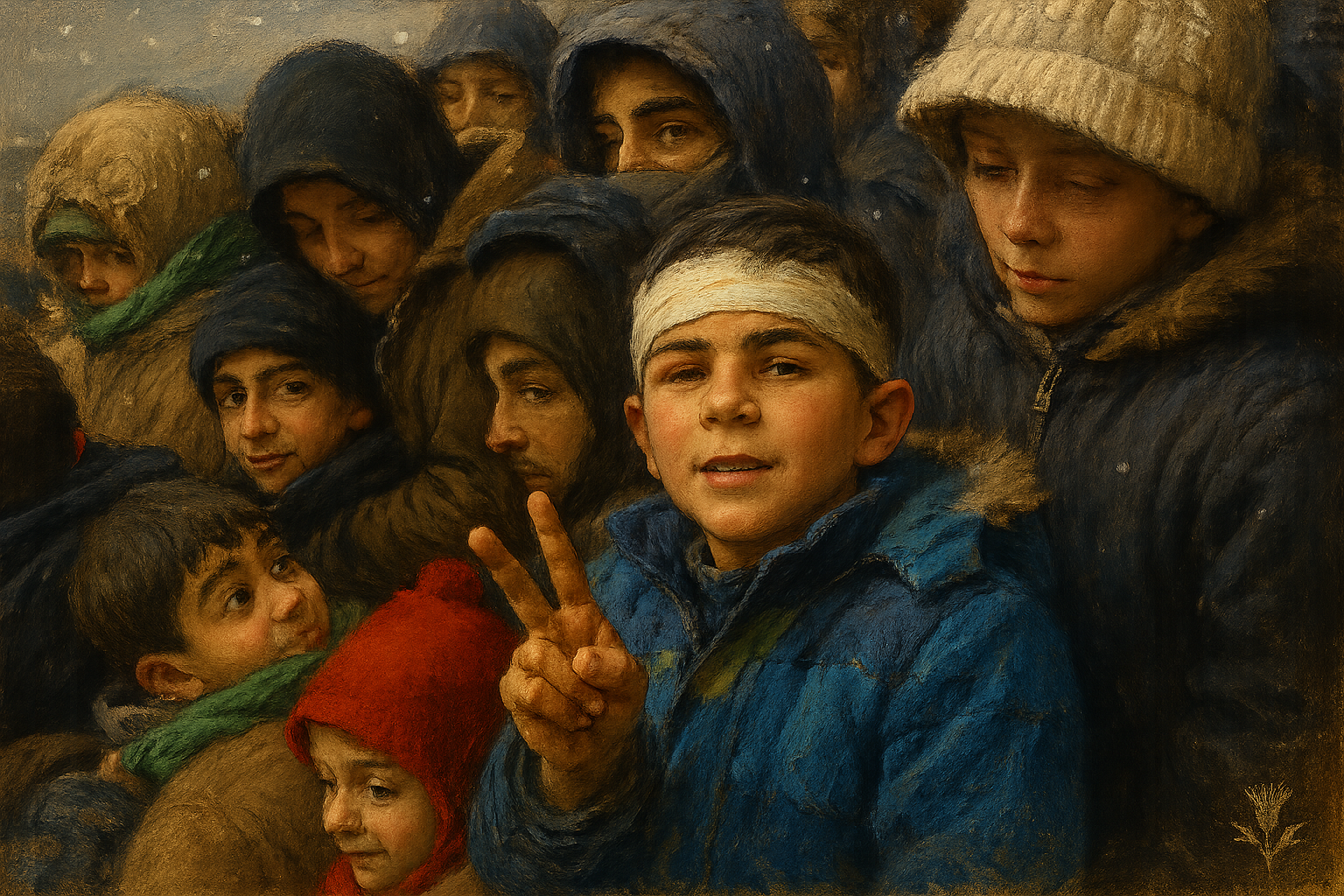
In November 2021, the European Union faced a severe migrant crisis along its eastern frontier, particularly at the border between Belarus and Poland. Thousands of migrants, most from Iraq, Syria, and Afghanistan, had been lured to Belarus with the promise of easy entry into the EU. Once there, they were directed toward the borders with Poland, Lithuania, and Latvia. European leaders accused Belarusian President Alexander Lukashenko of orchestrating the influx as retaliation for Western sanctions imposed after his disputed 2020 re-election and the violent crackdown on protesters.

As temperatures dropped, the situation turned dire. Families, including young children, were stranded for weeks in the freezing forests that separate Belarus from Poland. Caught between armed border guards on both sides, many lacked food, medical care, or shelter; at least a dozen people were reported dead. Polish security forces reinforced the border with thousands of troops, razor wire, and tear gas, preventing crossings. Belarusian troops, meanwhile, refused to let the migrants retreat inland, effectively trapping them in a no-man’s-land.

Humanitarian organizations demanded access to deliver aid, but both governments restricted movement and coverage. The EU denounced Belarus’s actions as a “hybrid attack,” accusing it of using human lives as leverage to destabilize Europe. In response, the EU expanded sanctions against Belarusian officials and airlines involved in transporting migrants. Poland and Lithuania declared states of emergency and announced plans for permanent border barriers. The episode became a defining moment in Europe’s struggle to balance border security with humanitarian responsibility.

Release Valves

Weekly Dispatch
Week of November 7 – 13, 2021

The week opened like a door. On Monday, November 8, the United States lifted its pandemic-era travel bans for vaccinated foreign visitors, ending 20 months of separation that had split binational families, stranded students, and flattened tourism. Airports turned into reunion halls—hand-lettered signs, bouquets, and tears at the rope lines. Reopening felt less like an on/off switch than a pressure release, a reminder that policy accumulates in private lives long before it shows up in charts.

Washington tried to turn release into momentum. With the bipartisan infrastructure bill finally through Congress, agencies sketched the first implementation maps—ports, broadband, lead-pipe removal, electric-vehicle charging. Governors lined up project lists. The bigger social-spending package remained a sketch of numbers and verbs, but the week’s mood traded brinkmanship for logistics. Even that had a politics: who gets the first mile repaired, which district gets the charger, who cuts the ribbon.

Inflation dragged attention back to the checkout aisle. On Wednesday, the government reported October consumer prices up 6.2 percent year-over-year, the sharpest rise since 1990. Energy and used cars led; food and shelter followed. Markets adjusted to a familiar split-screen—strong earnings, sour sentiment. The Federal Reserve called the heat “elevated” but stayed on its taper glide path, promising to watch, not chase. Households didn’t wait for nuance; they changed plans, brands, and trips. The economy’s narrative simplified to a question with a receipt for an answer.

On the public-health front, pediatric vaccinations began in volume. Pharmacies and clinics set aside smaller doses and sticker stations for children aged 5 to 11, while school districts weighed on-site events and consent forms. The country’s pandemic posture edged toward layered routine: boosters for the eligible, kids’ shots in after-school windows, and winter mitigation plans that looked more like calendars than alarms. The week also brought friction between law and policy when a federal appeals court stayed the administration’s vaccine-or-test rule for large employers, setting up a legal sequence that promised confusion before clarity.

Beyond the Beltway, the world arranged its own lines and bottlenecks. At the European edge, thousands of migrants gathered along the Belarus–Poland border, funneled by Minsk toward razor wire and floodlights. Warsaw deployed troops; Brussels accused Belarus of weaponizing people to pressure the European Union; Moscow loomed as patron and arbiter. The pictures—campfires in freezing forests, lines of shields against lines of strollers—compressed geopolitics into geometry: a line drawn to keep other lines from moving.

In Glasgow, COP26 ran into overtime, as climate summits often do. Negotiators circled the verbs that measure ambition: phase “out” versus phase “down” coal; “accelerate” versus “encourage” finance; “requests” versus “urges” on national targets. A separate coalition of countries pledged to cut methane; another to end deforestation by 2030. The week’s working thesis was consistent with the month’s: warming is simple; politics is not. Across town, activists chanted a sharper sentence—no more alibis—and marched in a rain that felt on brand.

Houston wrestled with ritual and responsibility after the crowd surge at the Astroworld festival on November 5 turned deadly. Investigations expanded across the week: permits, staffing, radio logs, and decision trees that folded risk into shouts no one heard in time. The conversation generalized quickly—festival economics, social-media amplification, and the way spectacle scales faster than safety—because every city that hosts concerts saw itself in the autopsy.

Space offered a cleaner narrative arc. On Wednesday, SpaceX’s Crew-3 mission launched four astronauts to the International Space Station, a routine miracle that dramatized another kind of infrastructure: a supply chain for orbit. The flight arrived as corporate space ambitions, national programs, and private aspirations braided into a single image—humans leaving Earth on a midweek night with little ceremony and less doubt.

Culture reached for its own release valve. On Friday, a Los Angeles judge terminated the conservatorship that had governed Britney Spears’s life for nearly 14 years, ending a legal arrangement that had outlived its medical rationale and public consent. The case had moved from entertainment to politics—disability rights, guardianship reform, the uses and abuses of “protection.” The ruling read like a coda and a reset: autonomy restored, accountability deferred to another docket.

By Saturday, the week’s themes rhymed. Borders reopened and were reinforced. Prices rose while wages chased. Climate talks promised action in the future tense while families booked flights in the present. The administration had one bill to implement, another to negotiate, and a legal fight brewing over mandates. The news kept resolving into the same image: valves opening to ease pressure, not to end it. The country wasn’t out of crisis; it had mastered the art of running systems hot without letting them fail.


Bannon Indicted

A federal grand jury indicted Steve Bannon for contempt of Congress after he refused to comply with a January 6 subpoena. Two counts: one for failing to appear, one for failing to produce documents.

This is not about speech. It’s about process. Congress asked lawful questions about an attack on itself. Bannon chose defiance. A criminal case tells other witnesses the rules still apply. [continue reading…]

Poverty in America

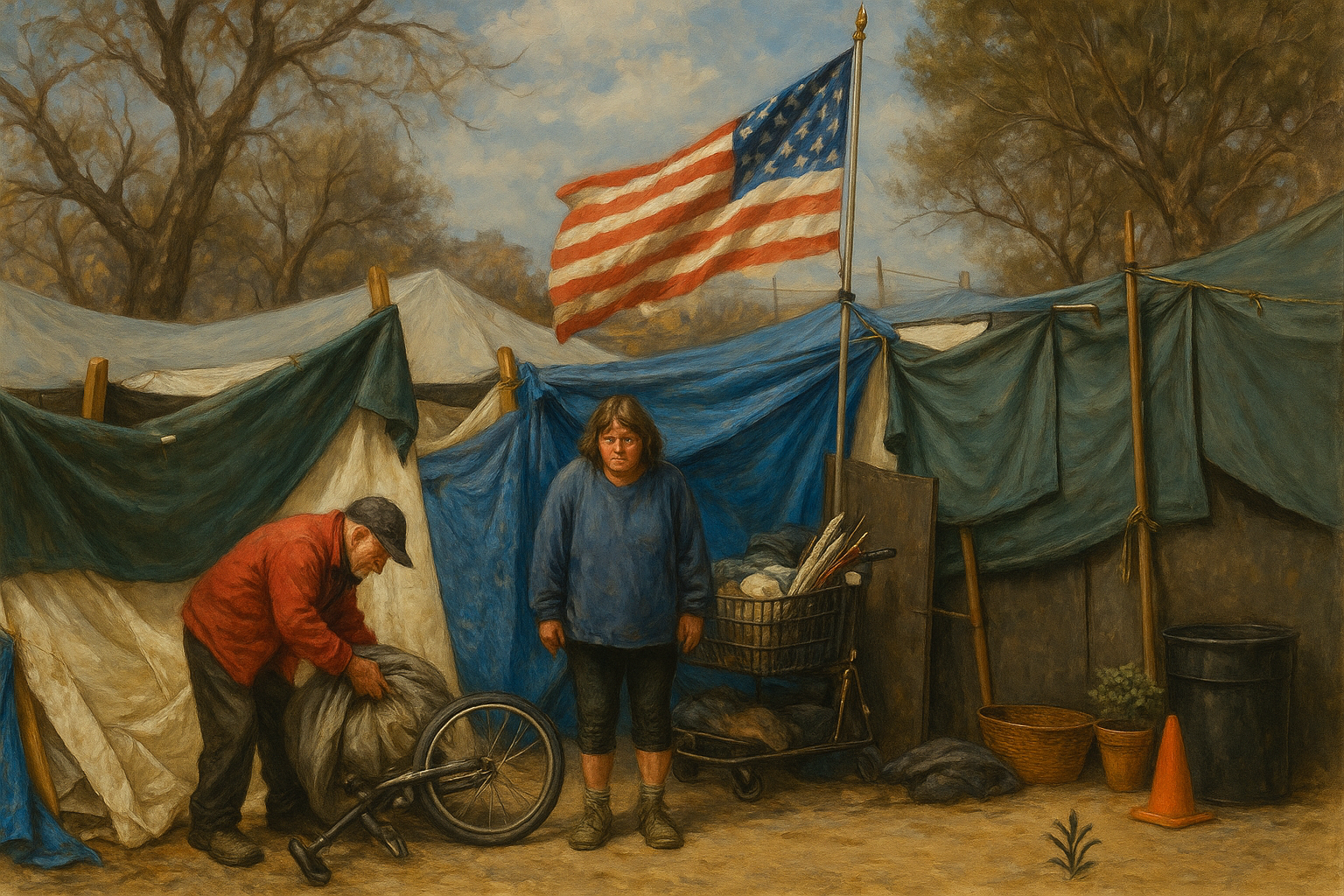
Among America’s 331 million people in 2020 were about 614 billionaires and 37 million people living below the federal poverty line, or roughly 11 percent of the population.

Yard Signs After the Election

Most election signs come down quick, but not around here. A year after the ballots were counted, some yards still bear Trump’s name. Others sprouted new ones — “Don’t Blame Me, I Voted Republican,” “Let’s Go Brandon,” slogans that read less like politics and more like grievance carved in plastic.

I pass them every day. After a while, they blur together, a background noise you almost stop seeing. But then I catch myself wondering: what happens to people who never take the signs down? What does it mean to live in a permanent campaign? [continue reading…]

Subpoenas Expand

The January 6 committee expanded its reach, issuing fresh subpoenas to Trump allies including Kayleigh McEnany, Stephen Miller, and others tied to the pressure campaign. The targets called it theater. It isn’t. It’s a test of whether Congress can still compel testimony from powerful people.

The breakdown:

  • Congressional authority depends on enforcement. If witnesses ignore lawful subpoenas without consequence, oversight collapses into suggestion.
  • The Justice Department must back Congress when defiance turns to contempt. Without charges, the process teaches future witnesses to stall and stonewall.
  • Paper trails matter. Emails, call logs, drafts, and memos describe intent. The violence on January 6 was the blunt end; the paperwork shows design.

[continue reading…]

The Weekly Witness — October 31 – November 6, 2021

Halloween falls on a Sunday this year. Costumes crowd sidewalks from afternoon into dark, children moving in small clusters with parents trailing behind like a loose perimeter. Porch lights signal safe stops. Bowls of chocolate bars and fruit chews thin out early in some neighborhoods and sit untouched in others. Hand sanitizer still stands at the end of driveways. A few homeowners build PVC candy chutes; others hold out full bowls to avoid contact. Masks appear in two senses — paper skeletons and fabric KN95s. On Facebook, a parent in Oregon posts a plea asking visitors to only approach their house if children are vaccinated; replies range from supportive to hostile within minutes. The holiday returns after the strained 2020 version, but not unchanged.

Colleges hold parties again. The University of Michigan reports dozens of code-of-conduct violations in student housing related to gatherings past midnight, though enforcement is uneven. Boston Campus Safety issues fines after reports of apartment parties close their windows to avoid detection, condensation streaking down inside glass. In most cities, trick-or-treating resumes, but nursing homes remain closed to visitors. Staff bring candy carts room-to-room instead. In rural Arkansas, where few wore masks even during peaks, Halloween looks like 2019 might have if porch lights flickered less brightly and grandparents stayed inside.

Supply chains strain under holiday spending. Cargo ships idle off California ports, their running lights forming slow constellations offshore. Radio chatter crackles through port authority frequencies as arrival slots shift hour by hour. Some truck yards sit half-empty because drivers are home sick or have taken higher-paying positions elsewhere. Forklift operators in Houston report delays of two weeks for mechanical parts. A hardware store outside Madison limits propane tank exchanges to one per household. In Philadelphia, meatpacking employees work long shifts with mandatory overtime. Break rooms fill with conversations not about overtime pay but about fatigue and prices at the grocery store.

Monday, November 1, the month opens with numbers — employment, infection rates, labor shortages — but the public feels the shortages first. Shelves in discount stores sit half-stocked. A paper sign taped to the dairy cooler in a Cleveland supermarket reads LIMIT 2 PER CUSTOMER. Shoppers step back, count items in their basket, reconsider. Diaper aisles fluctuate from sparse to empty depending on shipment timing. Employees become makeshift supply interpreters, telling customers when the next truck might arrive if they heard anything in the morning meeting. Some cities extend port operating hours, announcing 24/7 shifts in coordination with logistics companies, but scaling a workforce in real time is slower than an announcement implies. Refrigerated trailers sit idle because no one with certification is available to move them.

Election Day arrives Tuesday, November 2. Poll watchers and volunteers set up folding tables at dawn in school gymnasiums and community centers. Signs point toward check-in tables, then toward cardboard privacy screens. Turnout looks average at first glance, but tension sits under casual conversation. In Virginia, voters line sidewalks before sunrise. Campaign staff hand out sample ballots and coffee. Glenn Youngkin’s supporters wear fleece vests and carry oversized signs near parking lots. Terry McAuliffe’s team distributes leaflets with policy summaries and public-school funding bullet points. Some parents bring children to witness their vote; others stay home because schools close for professional development day.

Cable networks fill the afternoon with maps. Counties turn red, blue, red again as precincts report. Commentators speak rapidly but with caution, avoiding definitive statements too early. In New Jersey, the margin tightens hour by hour. Analysts compare exit polls to 2020 turnouts. Social media scrolls with county-level screenshots, each posted as if it determines national direction by itself. The mood online is flu-reaction twitchy — numbers, refresh, numbers, refresh.

By Wednesday morning, November 3, the outcome in Virginia stands. Glenn Youngkin wins. Headlines use words like flip and shift. Zoom interviews with suburban parents air through the breakfast hours. In New Jersey, the governor holds his seat — barely. Minneapolis voters reject restructuring its police department, a proposal many expected to pass months earlier. The Associated Press lists mayoral races: Boston elects Michelle Wu, the city’s first woman and first Asian American mayor; New York elects Eric Adams, a former NYPD captain running on public-safety focus. These contests signal something, but The Witness records only that results land the way they do — not what meaning they carry.

Later that same day, Facebook, Instagram, and WhatsApp go offline for hours. Phones buzz but do not load feeds. Small retail sellers who rely on social platforms to advertise holiday stock find themselves unable to answer messages or process orders. Restaurants using Instagram as their primary promotional tool watch reservations drop. Neighborhood groups move temporarily to text chains and email threads. The outage ends, but the interruption exposes how many micro-economies depend on platforms without fallback systems.

Thursday, November 4: Congress moves. The House passes the Infrastructure Investment and Jobs Act after months of negotiation. The vote is close — Democrats split between factions, Republicans split between infrastructure value and party alignment. News alerts hit phones almost instantly. Reporters stand in marble hallways interviewing exhausted staffers. Few people outside political spheres read bill text itself; its scale is harder to convey than its passage. Social workers, utility planners, road engineers, and broadband coordinators look at funding breakdowns, but daily life stays mostly unchanged for now.

In classrooms, teachers speak more softly through masks. Desks spread farther apart than pre-pandemic norms. A first-grade teacher in Indiana loses her voice mid-week because projecting through fabric strains vocal cords. Students in San Diego eat lunch outdoors under shade tents; rain forecasts threaten that arrangement. College registrar offices process withdrawal forms from students who struggled academically during hybrid semesters; they deliver lists to deans for follow-up but do not always get responses.

Friday, November 5, the Bureau of Labor Statistics releases job numbers: payrolls rise, unemployment falls. Hiring ticks upward in hospitality and manufacturing, though labor-force participation still lags. The jobs report competes with courtroom news from Kenosha. Kyle Rittenhouse sits in court as attorneys argue over video frames, self-defense claims, and firearm possession statutes. Outside the building, groups gather with signs. Police maintain barricades. Local residents reroute their morning errands to avoid traffic near the courthouse. Radio hosts take calls expressing relief, anger, confusion — depending on station.

Vaccination numbers climb unevenly. Some regions exceed 60–70% fully vaccinated adults; others stall in the low 50s. Booster discussions circulate but guidance shifts weekly. Pharmacies schedule appointments but cancel when vials run short. A school district in Colorado reinstates temporary mask requirements after a spike in student absences. In Florida, mask opposition rallies grow outside district headquarters with signs comparing mandates to tyranny.

Astroworld takes place Saturday, November 6, in Houston. Tens of thousands gather at NRG Park. Wristbands scan, gates open, crowd density grows even before headliners. By nightfall, music echoes through packed human layers. Laterally compressed bodies move as one mass. Video clips show waves of movement — people attempting to climb barriers to escape pressure. Emergency lights flash in the distance but remain obscured by stage smoke and phone screens. Paramedics struggle to reach individuals collapsed in the crowd. Online streams continue until authorities intervene.

Hospitals report dozens of critical patients. Reports of eight confirmed deaths surface within hours, with numbers fluctuating as officials verify identities and conditions. Families call hotlines for information. Social networks fill with firsthand posts from attendees describing breathlessness, panic, confusion. Festival organizers publish statements promising investigation. Police request footage. Fans build makeshift memorials outside the venue with candles, posters, and flowers by morning. The event, meant as celebration, becomes a point of national attention overnight.

Micro-conditions this week reflect strain beneath official statements. Parents discuss missed school days due to quarantines. Grocery bags cost more; some shoppers substitute store brands for name brands. Independent truckers negotiate fuel surcharges because diesel prices rise faster than freight rates. Hair salons cancel appointments when stylists test positive and no backup is available. Restaurants shorten hours because dishwashers and line cooks are hard to replace. People adapt, but exhaustion hints under everyday speech.

In nursing homes, staff shortages widen. Temporary workers rotate through unfamiliar facilities, learning resident routines on the fly. Physical therapists report slower recovery progress due to session cancellations. Families call video lines during restricted visitation hours. A daughter in Ohio sends a grocery delivery with her mother’s favorite cookies because she cannot visit in person. An aide reads label ingredients aloud to check allergy safety.

Retail workers brace for holiday season. Stores begin laying out Christmas stock even as Halloween clearance bins remain half-full. Shipping companies advertise sign-on bonuses for seasonal employees. Some applicants take jobs but quit within days due to workload, leaving gaps in weekend routes. Packages arrive late at suburban porches. Customer service lines stretch long; estimated hold times exceed one hour at some carriers.

Public conversation divides but does not resolve. Some see election results as endorsement of parental rights; others see rejection of pandemic restrictions. News cycles update hourly. Screens refresh. The Witness remains in the week — recording, not interpreting.

Local governments adjust policy. New Orleans extends indoor mask requirements due to case clusters traced to bars. Arkansas lifts capacity limits on school events, though superintendents recommend caution. A county in Montana reinstates remote-learning options for classrooms with low ventilation scores. State health agencies publish updated hospitalization numbers showing slight downward trends, but ICU staff remain stretched, many working 12-hour shifts four days in a row.

In grocery distribution centers, night supervisors coordinate pallet loads by flashlight when automated scanners fail. A shortage of replacement circuit boards delays repairs. Refrigeration alarms beep when doors open too long. Workers wrap perishables with extra insulation and load trucks quickly, but spoilage risk increases. In small towns, mom-and-pop stores rely on inconsistent deliveries and handwritten price changes. Shoppers adjust meal plans when missing ingredients. Crockpot stews replace fresh produce in some homes simply because root vegetables remain more consistently available.

Libraries see increased foot traffic from children needing stable internet for homework due to home bandwidth strain. Patrons check out chromebooks through grant-funded programs, returning them for charging overnight. Reference desks answer more questions about unemployment benefits and rent-relief applications than book recommendations. Staff direct visitors to online portals while navigating limited appointment slots.

Some communities return to routine — high-school football games resume Friday night, marching bands perform, concession stands serve nachos in paper boats. In other places, staff quarantines cancel games for lack of players. Stadium lights flicker, then stay dark. Coaches notify parents by email: game postponed. Students regroup at pizza shops or stay home scrolling social media.

Church services vary widely. Some congregations meet indoors without masks, singing in full voice. Others hold parking-lot services with windows cracked and FM transmitters broadcasting sermons. Pastors speak about perseverance or community, but political undertones remain audible between lines. Fellowship halls host vaccination clinics one weekend, then return to potluck use the next. Aluminum trays of green-bean casserole sit beside coolers of pre-filled syringes.

Weather shifts from autumn warmth to early frost in northern states. Leaf pickup schedules adjust as sanitation crews run short-staffed. Public-works departments prioritize snow routes in mountain areas, stockpiling salt and brine while waiting for plow blade shipments. Hardware stores sell out of space heaters when temperatures drop unexpectedly. Families seal drafty windows with plastic film kits purchased from the last remaining pallet.

Universities prepare for finals. Students organize study groups, some masked, others ignoring guidelines. Libraries extend hours. Cafeterias post signs about supply shortages affecting menu options. A vegan station closes for two days due to lack of tofu shipments. Dorm laundry rooms back up when maintenance cannot get parts to repair dryers. Students hang clothing from shower rods and box fans.

Small detail layers add to the week’s texture:
A mother in Ohio sends her child to school with a note asking for missed assignments after quarantine.
A bus driver in Georgia covers two routes due to illness-related staffing gaps.
A D.C. restaurant prints a notice on receipts explaining price increases due to supply costs.
A mechanic in Idaho waits three weeks for a transmission part normally delivered in two days.

No single moment resolves the week. It continues, one day to the next, inside the same national atmosphere — election reactions, courtroom coverage, supply-chain tension, holiday anticipation, social networks intermittently stable.

Events of the Week — October 31 to November 6, 2021

U.S. Politics, Law & Governance

  • October 31 — Congressional negotiations continue on reconciliation and infrastructure bills.
  • November 2 — Virginia gubernatorial election results reflect Republican victory.
  • November 3 — House moves toward vote on infrastructure legislation.
  • November 5 — House passes bipartisan infrastructure bill.
  • November 6 — Attention shifts to reconciliation framework progress.

Public Health & Pandemic

  • November 1 — CDC authorizes Pfizer vaccine for children ages 5–11.
  • November 2 — Pediatric vaccinations begin nationwide.
  • November 4 — OSHA issues vaccine-or-test requirement for large employers.
  • November 6 — Booster uptake increases ahead of holiday gatherings.

Economy, Labor & Markets

  • October 31 — Supply-chain congestion remains high at Pacific ports.
  • November 3 — Retailers accelerate early holiday promotions amid inventory concerns.
  • November 5 — Inflation pressure persists in food and energy costs.
  • November 6 — Hiring challenges continue across logistics and service sectors.

Climate, Disasters & Environment

  • November 1 — Storm systems tracked across Gulf and Eastern coastal regions.
  • November 3 — Drought conditions remain severe throughout western states.
  • November 6 — Disaster-recovery operations continue across multiple regions.

Courts, Justice & Accountability

  • November 2 — Redistricting challenges progress in several states.
  • November 4 — Vaccine-mandate lawsuits filed following OSHA rule release.
  • November 6 — January 6 prosecution cases continue through plea agreements.

Education & Schools

  • November 1 — Districts coordinate vaccination clinics for newly eligible age groups.
  • November 3 — Quarantine disruptions persist in outbreak clusters.
  • November 6 — Transportation staffing shortages remain unresolved.

Society, Culture & Public Life

  • October 31 — Halloween gatherings proceed under varied mitigation levels.
  • November 3 — Consumer spending adapts to inflation and supply constraints.
  • November 6 — Attendance at large events remains high nationwide.

International

  • November 1 — Afghanistan humanitarian-access obstacles remain.
  • November 4 — Refugee-placement coordination continues among global partners.
  • November 6 — Aid delivery stability inconsistent under security conditions.

Science, Technology & Infrastructure

  • November 2 — Semiconductor shortages maintain extended lead times.
  • November 5 — Infrastructure legislation expected to expand broadband and grid modernization funding.

Media, Information & Misinformation

  • October 31 — Halloween-week misinformation circulates around pediatric vaccination.
  • November 3 — Election coverage dominates national reporting.
  • November 6 — Focus shifts to infrastructure passage and mandate litigation.


Margins of Mandate

Weekly Dispatch
Week of October 31 – November 6, 2021

The first week of November tested power by subtraction. On Tuesday, Virginia voters elected Republican Glenn Youngkin as governor, ending a 12-year Democratic hold on the office. The margin—just over two points—was small but strategic: suburban and rural turnout combined while urban enthusiasm sagged. Youngkin’s focus on parental authority in education, crime, and cost-of-living concerns pulled independents who had drifted away during the Trump years. For Democrats, it was a referendum on delivery: promises in motion but results still abstract.

New Jersey nearly repeated the upset. Governor Phil Murphy’s re-election, expected to be comfortable, tightened into a late-night count decided by mail ballots and urban returns. Both races underscored the same lesson: economic rebound and social spending plans mattered less than classroom debates, fuel prices, and the sense that government had lost rhythm. Within forty-eight hours, the White House shifted from touting recovery to framing humility.

In Washington, legislative timing caught up with political timing. On Friday night, after months of stalemate, the House passed the $1.2 trillion bipartisan infrastructure bill—roads, bridges, transit, broadband—sending it to the President’s desk. Thirteen Republicans joined the majority, six Democrats dissented, and Speaker Pelosi called the vote “historic but overdue.” The social-spending companion bill remained pending, trimmed to a $1.75 trillion framework still facing Senate revision. Biden hailed the infrastructure vote as proof that government could function; critics called it a floor, not a turning point. Implementation would take months, meaning visible results would arrive closer to midterm season than Thanksgiving.

Abroad, the President’s return flight from Europe followed a trail of promises. The G-20 in Rome had endorsed the global corporate minimum tax and language on pandemic recovery but deferred firm climate commitments to Glasgow’s COP26. There, two weeks of negotiation ended with an agreement that kept the 1.5 °C goal “alive” but faint. Nearly two hundred nations pledged to “phase down” rather than “phase out” coal after last-minute objections from China and India. A separate accord committed over 100 countries to end deforestation by 2030 and to cut methane emissions by 30 percent. Developing nations secured recognition of adaptation funding but less than the $100 billion annually promised in earlier rounds. The outcome balanced urgency with ambiguity—ambition measured in commas and verbs.

At home, the October jobs report delivered momentum: 531,000 positions added, unemployment at 4.6 percent, and previous months revised upward. Markets rallied, reading labor strength as confirmation of recovery even as inflation shadowed every metric. The Federal Reserve announced it would taper bond purchases beginning mid-month, signaling the end of pandemic stimulus while promising patience on rate hikes. Economic language grew conditional again: “transitory,” “temporary,” “closely watched.” Households saw groceries and gas first, graphs second.

COVID-19 indicators improved nationwide, though winter states edged upward. Pediatric vaccinations for ages 5–11 began mid-week under cautious optimism; pharmacies reported steady demand. Air travel returned to pre-pandemic volumes ahead of the holidays, a test of both public patience and airline staffing. Mandate deadlines for federal employees arrived without major disruption, proof that most compliance happens quietly.

In Minneapolis, voters rejected a proposal to replace the police department with a Department of Public Safety. The outcome kept national attention on reform politics in a city still defined by the murder of George Floyd. Supporters of the change cited structural necessity; opponents warned of confusion and timing. The measure’s defeat signaled that while policing debates remain intense, abolition has little electoral traction.

Elsewhere, courts and committees advanced the accountability calendar. A federal judge refused former President Trump’s request to block release of January 6 records to Congress, setting up an appeal. The House January 6 committee prepared additional contempt referrals beyond Steve Bannon’s, now under Justice Department review. The news cycle compressed law, memory, and midterm framing into the same file.

Corporate narratives reflected uneven recovery. Tesla’s market value crossed and then dipped below $1 trillion amid Elon Musk’s public poll about selling shares. Labor shortages persisted across retail and transport sectors even as hiring bonuses multiplied. Economic analysts described an “efficiency gap”—workload restored faster than workforce.

By Saturday, the infrastructure signing plans took shape for the following week, climate negotiators drafted post-summit communiqués, and campaign analysts tallied suburban vote shifts as predictive data. The administration called the week a pivot; critics called it a warning. The signal beneath both readings was plain: mandates shrink fastest when expectations expand faster than trust.


Crowd Surge

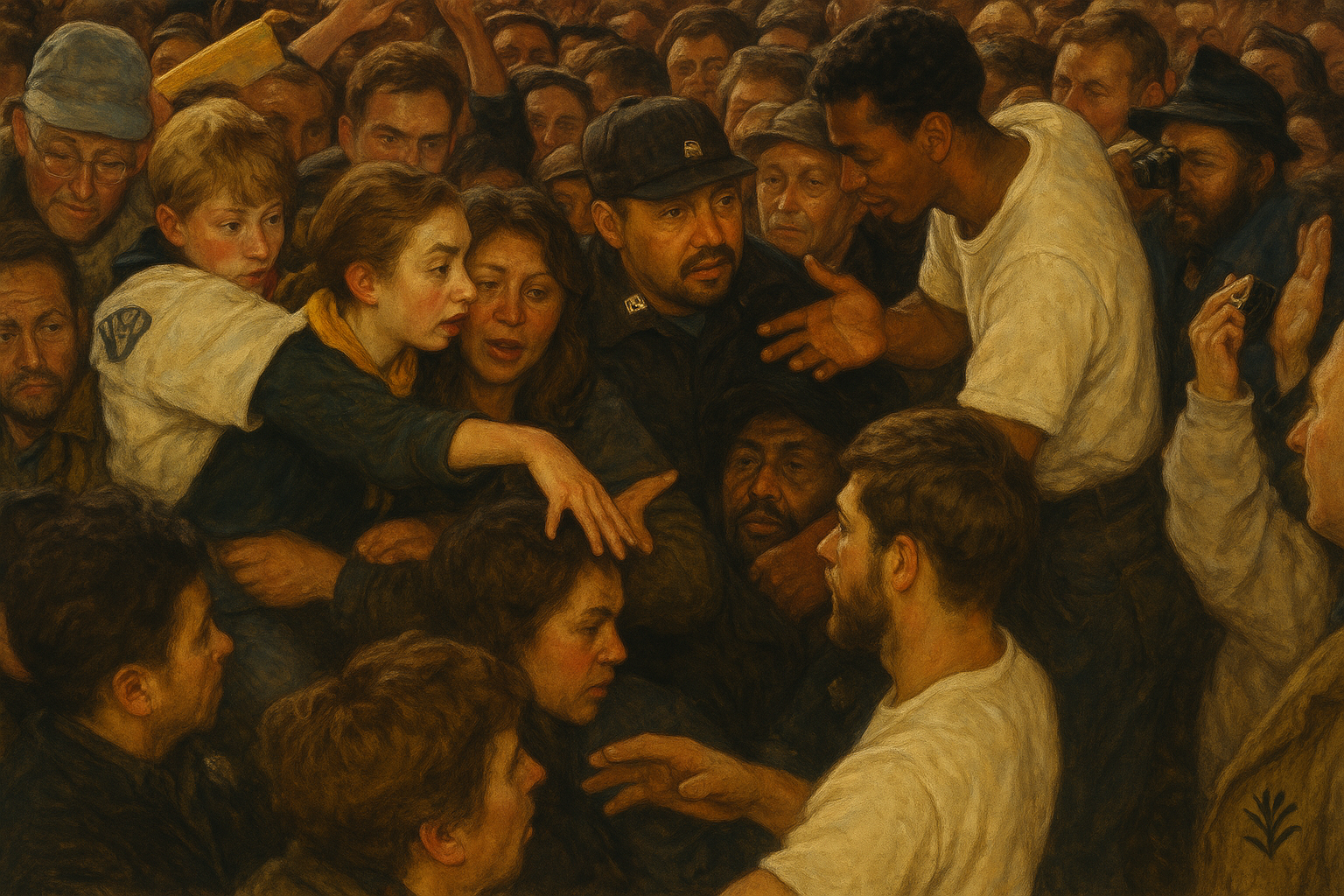
On November 5, 2021, a deadly crowd surge occurred during Travis Scott’s Astroworld Festival at NRG Park in Houston, Texas. As the rapper began his headlining performance, the tightly packed audience of roughly 50,000 surged toward the stage, trapping many in a crush that left people unable to breathe or move. Ten concertgoers died from compression asphyxia, and hundreds more were injured. Witnesses described scenes of panic, unconscious bodies being lifted over barricades, and cries for help that went unheard over the music. Questions quickly arose about inadequate crowd control, delayed emergency response, and Scott’s decision to continue performing for more than 30 minutes after authorities declared a mass casualty event. The tragedy prompted nationwide scrutiny of live event safety standards and the responsibilities of artists and promoters in preventing crowd disasters—a grim reminder of how quickly excitement can turn to catastrophe in poorly managed spaces.

Jobs Rebound Strong

The October jobs report topped 500,000 added and unemployment fell. Good news, but families don’t live on headlines. Gas, rent, and groceries have eaten the raise. Paychecks stretch, then snap.

The labor market is healing unevenly. Restaurants and childcare still scramble to hire; white-collar work stabilized earlier. Some workers hold out for higher pay; others can’t return because care is unavailable or hours are unpredictable. Employers say “no one wants to work.” People answer: “not for poverty wages.” [continue reading…]

The Still Water

Trinity Bay was flat this morning. Not calm, just waiting. When the wind dies and the water smooths out, you know it won’t last. Around here, nothing stays steady.

That’s how the country feels. Folks keep talking like we’re back to normal. Back to work, back to school, back to politics as usual. But the surface doesn’t fool me. Underneath, the pull is still there. Same anger, same fever, just quiet for now. [continue reading…]

Virginia Turns Red

Glenn Youngkin won Virginia’s governor’s race. Republicans call it a mandate. Democrats call it a warning. The real story: culture war beat party loyalty.

Schools became the battlefield — “critical race theory,” masks, parental control. Manufactured outrage outmuscled policy talk. The play: provoke fear, promise control, avoid specifics. It works because fear is faster than policy and simpler than governance. [continue reading…]

Virginia Turns Red Again

Glenn Youngkin won the Virginia governor’s race, and pundits shouted that Democrats are doomed. Parents screaming about “critical race theory” carried the day, even though their kids couldn’t define it if you spotted them half the words. America doesn’t vote on facts. It votes on feelings, and fear is the favorite.

The Weekly Witness — October 24–30, 2021

The United States moved through the final week of October 2021 under conditions already long in play: federal negotiations without resolution, economic strain distributed unevenly across households, health systems steady but worn, global tensions monitored rather than confronted, social friction persistent, and daily life carried forward by millions who did not pause to interpret it. The week did not break patterns — it continued them.

In Washington, lawmakers worked to finalize the terms of the Biden administration’s domestic spending agenda. Legislative staff negotiated text for the Build Back Better framework and the bipartisan infrastructure bill. Numbers shifted repeatedly — $3.5 trillion became $1.75 trillion — with adjustments to climate funding, universal pre-K, child tax credits, housing investments, paid leave, Medicare expansion, and prescription-drug price reform. Senators shuttled between offices, sometimes stopping for corridor interviews, sometimes declining questions. Moderates demanded further cost cuts. Progressives pushed for restored benefits. The White House held strategy meetings and issued public reassurances, though no vote occurred. Committee chairs drafted language that might never appear in final form. At week’s end, the framework was closer to agreement but not finalized, not passed, not dead.

COVID-19 case levels remained lower than during the summer Delta peak but far from stable. Hospitals in the Midwest and Mountain West reported ICU occupancy near critical thresholds. Elective surgeries continued at reduced scheduling levels. Nurses worked extended shifts as staffing shortages compounded fatigue from twenty months of pandemic care. Emergency rooms reported delays in triage due to volume. In other regions, caseloads dipped, but masking in public spaces varied widely. Some counties lifted mandates. Others reenforced them. Compliance depended not only on law but on local culture — in some grocery stores, most customers masked without prompting; in others, masks were scarce even when required.

Booster eligibility expanded for older Americans and workers with high-exposure risk. Pharmacies reported long appointment lines for boosters and shorter ones for initial vaccinations. Parents awaited expected authorization of the Pfizer vaccine for children ages five to eleven, anticipated soon but not granted this week. Schools handled quarantines unevenly — some maintained mask mandates and contact-tracing procedures, others relaxed enforcement. Lunchroom staffing shortages led some campuses to switch to simplified menus, cold-meal service, or staggered lunch periods. Substitute-teacher pools remained thin. Student absences fluctuated not only from illness but from exposure-based quarantines. Standardized testing timelines resumed planning after cancellations in 2020.

Inflation showed in weekly routines more than economic reports. Grocery receipts rose before anyone consulted economic charts. Beef and poultry prices increased. Milk, cereal, bread, and produce cost more than the prior year. Families compared brands, clipped digital coupons, and shifted to bulk purchasing where possible. Gasoline prices continued upward, with national averages above $3.30 per gallon and higher on the West Coast. Heating-oil forecasts predicted expensive winter months. Rent increases hit urban and suburban areas simultaneously; renewal notices reflected market shortage rather than wage growth. Low-income tenants applied for federal rental relief programs where available, though application backlogs delayed distribution.

Supply-chain strain persisted at the ports of Los Angeles and Long Beach. Cargo ships waited offshore for unloading windows. Containers that reached land often sat in storage lots due to truck-driver shortages and warehouse backlogs. Retailers warned customers to expect holiday delays and limited inventory. Furniture delivery windows stretched into months. Auto manufacturers struggled to secure semiconductor chips, slowing production and elevating used-car prices. Some grocery stores showed intermittent gaps — cream cheese one week, sports drinks another — not systemic scarcity, but persistent absence. Consumers discussed shortages informally, often attributing them to “shipping” without deeper knowledge of logistics.

Labor unrest existed across sectors. John Deere workers remained on strike in multiple states over wage scales and pension changes. Kellogg’s employees held picket lines. Hollywood production crews in the International Alliance of Theatrical Stage Employees (IATSE) reached a tentative agreement but rank-and-file debate continued. Nurses organized for collective bargaining in several regions. Teachers’ unions negotiated hazard pay, ventilation standards, and leave policies related to COVID exposure. Restaurants raised wages to attract cooks and servers, yet still closed two days a week for lack of staff. The phrase “Help Wanted” appeared on windows in strip-mall pizza shops and logistics warehouses alike.

The January 6 investigation advanced in paperwork rather than spectacle. The House Select Committee issued additional subpoenas. Steve Bannon’s continued refusal to testify held focus, with the Justice Department expected to act on criminal-contempt referral. Court proceedings moved slowly. Defendants in Capitol riot cases appeared by video for status hearings. Plea agreements were filed and sentencing dates scheduled. The public followed intermittently — through notifications, headlines, podcast segments — without new revelations. The process was procedural, steady, incomplete.

Voting-rights concerns persisted. State legislatures advanced restrictive voting bills and approved redistricting maps viewed by analysts as likely to reduce competitive districts. Lawsuits challenged map boundaries and procedural changes. Advocacy groups organized registration drives but noted volunteer fatigue. Federal voting-rights legislation remained stalled in the Senate due to filibuster rules. Debate continued over whether carve-outs should apply to democracy-protection bills. No rule changed this week.

Abortion-access limits under Texas SB8 stayed in effect. Women sought appointments in New Mexico, Colorado, Oklahoma, Louisiana, Arkansas, and Kansas. Abortion funds coordinated transportation, lodging, and legal assistance. Clinics in neighboring states added shifts where possible. Anti-abortion organizations prepared to defend the statute in future court arguments. The Supreme Court scheduled review of Mississippi’s 15-week ban for December, but that hearing remained in the future. October 24–30 held the law in place.

Internationally, U.S. officials monitored foreign-policy strain without resolution. China continued military flights near Taiwan airspace, prompting concern in defense circles. Russia maintained troop presence near Ukraine’s border. Iran nuclear-talk progress remained minimal. U.S.-EU energy discussions centered on gas supply concerns heading into winter. In Afghanistan, the Taliban government faced internal rifts, humanitarian shortages, and economic collapse risk. Aid agencies warned of famine conditions. The U.S. maintained diplomatic stance without recognition.

Weather shifted seasonally. A significant storm system — described as an atmospheric river — hit the West Coast, bringing heavy rain and wind to California, Oregon, Washington, and parts of British Columbia. Flooding closed roads in some counties. Mudslides occurred in burn-scar areas from summer wildfires. Utilities reported outages. Reservoirs rose marginally but drought conditions persisted. The East experienced cool, mild days with early leaf-drop and overcast skies in parts of the Northeast and Mid-Atlantic. Pumpkin patches hosted final weekend crowds before Halloween. Farmers sold squash, apples, and late-season sweet potatoes at open-air markets.

Travel increased. TSA reported passenger volume higher than the same week in 2020 but below pre-pandemic levels. Airlines prepared for holiday demand and vaccine-mandate compliance among staff. Some flights were canceled due to crew shortages, triggering rebooking queues and hotel vouchers. Rental-car rates remained elevated due to supply shortages. Business travel remained partially remote, with conferences held in hybrid mode. Mask disputes on flights occurred occasionally but most compliance was routine.

Sports served as common reference points. Major League Baseball held World Series games, generating nightly focus. NFL games ran Sunday and Monday. College football shaped weekend identity in the Midwest and South. NBA early-season performance drew commentary on player vaccination, roster shifts, and media narratives. Youth sports held weekend tournaments — soccer, cross-country, volleyball — with parent attendance varying by mask norms.

Cultural life reopened unevenly. Broadway shows enforced vaccination and masking requirements for audiences. Regional theaters resumed regular season programming. Concert venues operated with mixed safety rules depending on state. Museums hosted fall exhibitions. Attendance numbers trailed 2019 but exceeded 2020. Art fairs, craft festivals, and community runs returned with outdoor spacing.

Religious communities prepared for Halloween weekend trunk-or-treat events. Church bulletins listed service times, choir rehearsals, food-pantry donation needs, and grief-support group schedules. Congregations blended in-person worship with livestream options. Volunteer shortages limited some ministries. Holiday-season charity drives opened early due to anticipated need.

Housing conditions tightened. Mortgage demand remained high, but inventory scarce. Homes received multiple offers within days of listing. First-time buyers struggled with down-payment competition. Apartment availability fell in mid-sized cities near distribution corridors. Mobile-home parks saw rent increases as private-equity firms acquired properties. Eviction filings rose slowly where moratoriums had expired.

Crime varied by geography. Violent-crime rates increased in some metropolitan areas relative to 2019 baseline. Police staffing shortages influenced response times. Community-violence intervention programs operated with mixed results. Local debates continued over police funding, oversight boards, and alternative response units for mental-health crises. Gun-sales trends remained high relative to pre-pandemic levels.

Household life anchored the week. Families planned Halloween costumes — store-bought superheroes, handmade witches, last-minute thrift-store improvisations. Candy sales increased despite sugar price fluctuations. Parents debated trick-or-treat guidelines depending on local COVID conditions. College students carved pumpkins in dorm lounges. Neighborhood associations arranged block-party permits. Autumn decorations filled grocery endcaps — cinnamon-spice candles, canned pumpkin, caramel apples, decorative corn bundles.

Workplace routines reflected adaptation rather than return-to-normal. Some offices reopened full-time with badge scans and temperature checks. Others remained hybrid, with employees choosing two or three days in-office. Zoom meetings remained default for cross-site communication. Office kitchen talk included booster side-effects, port delays, Netflix recommendations, and rising turkey prices ahead of Thanksgiving.

Online discourse moved quickly. Twitter debates cycled through infrastructure negotiations, vaccine mandates, shipping backlogs, Facebook documents, school-board confrontations, and sports controversies. TikTok trends spread through audio snippets and holiday-decoration clips. Meme language referenced inflation, supply chains, airline cancellations, and booster soreness. Outrage rotated topics daily without sustained focus.

Libraries and community centers resumed expanded hours. Some hosted flu-shot clinics. Others offered homework support and broadband access for students without reliable home internet. Public-housing residents received assistance paperwork help from staff. Senior centers organized Tai Chi classes, blood-pressure screenings, and Medicare open-enrollment counseling.

Public-health messaging targeted layered protection: vaccination, masks in indoor spaces, ventilation, testing when symptomatic. Messaging consistency varied between states. Some governors emphasized personal responsibility. Others reinforced mandates. Mask quality discussions increased — KN95 and surgical masks over cloth. Rapid-test availability remained uneven, with some pharmacies selling out.

This was the week as recorded through conditions rather than conclusion — legislation advancing without closing, pandemic stress enduring without breaking, supply lines moving without clearing, families preparing for holidays under cost strain, institutions functioning through fatigue, and national focus shifting hourly with no event displacing the whole.

Events of the Week — October 24 to October 30, 2021

U.S. Politics, Law & Governance

  • October 24 — Reconciliation negotiations narrow to climate, childcare, and healthcare scope.
  • October 26 — White House presents revised framework to congressional leadership.
  • October 28 — President outlines scaled proposal amid internal party debate.
  • October 30 — Legislative agreement remains close but not finalized.

Public Health & Pandemic

  • October 25 — FDA panel recommends authorization for Pfizer vaccine for ages 5–11.
  • October 27 — CDC evaluation process begins behind FDA review.
  • October 29 — Pediatric authorization decision expected imminently.
  • October 30 — Booster uptake continues to increase in eligible adults.

Economy, Labor & Markets

  • October 24 — Supply-chain congestion persists along West Coast ports.
  • October 26 — Product shortages and delays influence holiday shopping patterns.
  • October 28 — Inflation concerns intensify in consumer goods and energy.
  • October 30 — Hiring pressures remain across service and logistics sectors.

Climate, Disasters & Environment

  • October 24 — Western drought conditions remain severe.
  • October 26 — Air-quality advisories persist in fire-affected regions.
  • October 29 — Storm potential monitored along coastal zones.
  • October 30 — Disaster-recovery operations continue in Ida-impacted communities.

Courts, Justice & Accountability

  • October 25 — Redistricting challenges advance in additional states.
  • October 27 — Federal courts receive expanded mandate-related filings.
  • October 29 — January 6 prosecutions continue through plea and sentencing phases.

Education & Schools

  • October 25 — Districts begin planning for pediatric vaccination rollout.
  • October 27 — Classroom disruptions persist under quarantine protocols.
  • October 30 — Bus driver shortages sustain ongoing schedule strain.

Society, Culture & Public Life

  • October 24 — Travel trends remain above prior-year levels.
  • October 26 — Consumer behavior reflects inflation sensitivity and substitution.
  • October 30 — Venue operations maintain mixed mitigation policies.

International

  • October 25 — Aid-access challenges continue in Afghanistan.
  • October 28 — Refugee resettlement discussions progress among allied nations.
  • October 30 — Humanitarian-delivery reliability remains inconsistent.

Science, Technology & Infrastructure

  • October 26 — Semiconductor supply constraints project continued duration.
  • October 29 — Infrastructure debate highlights broadband and power-grid modernization.

Media, Information & Misinformation

  • October 24 — Pediatric-vaccine misinformation circulates online.
  • October 27 — News focus centers on negotiation progress and authorization review.
  • October 30 — Reporting reflects continued inflation and supply-chain concerns.


Masks On, Masks Off

Halloween arrived with more drama than the kids’ costumes. Parents railed at school boards about mask mandates while sending their children out in rubber vampire fangs. Irony is dead, but the candy aisle is alive and well. Trick or treat, America — you get the government you deserve.

Containment Lines

Weekly Dispatch
Week of October 24 – 30, 2021

The last full week of October balanced deadlines against distances. President Biden left for Europe on Thursday with a framework, not a finished bill—$1.75 trillion in social and climate spending distilled from months of negotiation. Paid leave was gone, community-college funding cut in half, and the clean-energy portfolio reshaped around tax credits and incentives. At home, progressives described it as a floor; moderates called it the limit of arithmetic. The President framed it as deliverable change. The measure’s survival now depended on translation—how it read to voters who saw higher prices faster than lower emissions.

The trip began in Rome, where the G-20 gathered under the banner of recovery and sustainability. Leaders endorsed a global minimum corporate tax and repeated pledges to keep warming “within reach” of 1.5 degrees Celsius. Every phrase carried escape clauses: “as soon as possible,” “around mid-century.” The communiqués promised ambition while preserving discretion. Behind closed doors, diplomats debated vaccine distribution to low-income nations—another test of whether solidarity could survive logistics.

From Rome the focus shifted north to Glasgow and the opening of COP26. Britain’s Prime Minister Boris Johnson called it the world’s “last, best hope,” a line that doubled as confession. Delegates arrived with incompatible math: emerging economies demanded funding and time; industrial nations offered targets and adjectives. The United States, newly returned to the Paris Accord, arrived as both penitent and protagonist, hoping the half-finished domestic bill would still count as momentum.

Back home, data replaced rhetoric. The Commerce Department reported third-quarter GDP growth at 2 percent—down sharply from spring’s 6.7. Supply constraints, pandemic waves, and consumer fatigue pulled the line flatter. Energy prices rose again; national gasoline averages neared $3.40. The White House weighed strategic-reserve releases and pressed OPEC Plus for output increases while acknowledging limited leverage. Inflation remained the conversation that everyone claimed to understand and no one could end.

COVID-19 numbers declined nationally but not uniformly. The FDA authorized Pfizer’s vaccine for children 5 to 11 on Tuesday, extending eligibility to 28 million. Pediatric clinics prepared smaller needles and slower explanations. Health agencies also approved Moderna and Johnson & Johnson boosters, and mixed-dose combinations blurred brand loyalties. The policy goal was continuity; the public read another change log. The country had learned to read guidance like weather forecasts—regionally, skeptically, and with an eye on tomorrow.

The news cycle’s other contagion was digital. On Thursday, Facebook announced a new parent company, Meta, a name meant to house the “metaverse.” The rebrand arrived amid rolling releases of internal documents showing how the platform handled toxicity it could measure but rarely mitigate. Lawmakers compared it to a smoke alarm that bills itself as a renovation. Analysts noted that a company large enough to rename its universe was still unable to govern its feed.

Meanwhile, culture and catastrophe overlapped. In Santa Fe County, New Mexico, investigators continued to reconstruct the accidental shooting that killed cinematographer Halyna Hutchins on the set of Rust. The inquiry exposed routine violations that had become invisible under budget pressure: live rounds near props, inconsistent supervision, schedules measured in exhaustion. Hollywood’s unions and insurers prepared for new codes written in hindsight.

Abroad, instability added weight to headlines. In Sudan, the military dissolved the transitional government on October 25 and detained civilian leaders, drawing U.S. aid suspension and crowds into the streets. In Haiti, the 400 Mawozo gang still held 17 missionaries; negotiations crawled. China made another partial debt payment for Evergrande, buying time rather than relief. Europe entered its energy crunch under early cold skies. The world’s supply chains remained the shared border between domestic politics and global delay.

Markets converted tension into momentum. Corporate earnings stayed strong; equities closed near records. Investors described “pricing power” as discipline, not distortion. Wage increases trailed inflation, but optimism held in balance sheets longer than in budgets. Each chart told a version of resilience that households no longer recognized.

By Saturday the administration counted the week as partial containment: the budget plan still alive, the ports still congested, the virus curve still bending. Abroad, allies met in photo lines; at home, approval ratings sagged under the arithmetic of unmet urgency. The lesson of late October was that crisis management had become the default form of governance—an ability to keep pressure inside the lines without claiming the fire is out.


Climate Talks in Glasgow

World leaders gathered for COP26, promising once again to save the planet. Pledges stacked high: net-zero targets, methane cuts, coal phaseouts. [continue reading…]

The House I Bought, The Country I Left

The house in Shoreacres isn’t much. One story, siding that needs fresh paint, a yard that wants more work than I can give it. But it’s mine. Paid for with insurance and inheritance, the kind of safety net I never expected. My parents didn’t live to see me settle here. COVID took them early, before the vaccines rolled out wide. That’s a sentence I’ll never stop resenting.

Moving back to a town I knew years ago is like opening an old notebook and finding the handwriting changed. Some things are familiar — the same curve in the road, the same bait shop by the water. But the people have sharper edges now. Conversations cut quicker to politics. Neighbors don’t just talk about weather or sports; they want to know where you stand. [continue reading…]

The Weekly Witness — October 17–23, 2021

The United States moved through this week with arguments stacked on top of exhaustion. People went to work, commuted, ordered groceries, and scrolled their phones with the sense that big things were happening somewhere else in the system, while their own days stayed narrow and practical. The country was not in open crisis. It also was not calm. That combination defined most of what played out between Sunday the 17th and Saturday the 23rd.

Colin Powell’s death set the tone early. News alerts buzzed on phones during breakfast and mid-morning meetings: complications from COVID-19 at Walter Reed, age eighty-four. For people who had lived through the first Gulf War and the run-up to Iraq, his name carried decades of associations—uniform, speeches at the UN, the label “reluctant warrior,” the later public regrets. Cable networks ran obituary packages while workplaces hummed in the background. Some viewers watched the coverage with divided attention—Powell speaking on a muted screen while Teams or Zoom showed spreadsheets and slide decks. In offices, there was a short burst of hallway talk about vaccination; Powell had multiple myeloma and was vaccinated, but the virus still killed him. People repeated the line “breakthrough case with underlying conditions” while standing near the coffee machine or copier. For a day or so, the old arguments about the Iraq War resurfaced in comment sections, but most households registered the news as one more proof that the virus was not done yet.

Vaccines and mandates remained woven into daily routine. Booster shots for older adults and high-risk groups rolled out steadily. Appointment slots at chain pharmacies filled early in some suburbs, sat open in others. Seniors arrived with carefully folded appointment emails and vaccination cards tucked into wallets or purses. Pharmacists who had spent the last year and a half giving injections now did it with near-automatic efficiency: verify name and date of birth, confirm eligibility, swab arm, inject, press cotton ball, apply Band-Aid, set timer for fifteen-minute observation. The observation chairs sat spaced a little closer than they had been in early 2021, but they were still there. Small talk in those chairs covered grandchildren, holiday plans, football, and, always, “What did you feel after your second shot?”

Workplace mandates hardened into reality. In Chicago, friction between the mayor’s office and the police union over vaccine requirements turned into legal filings and press conferences. Officers compared options in break rooms and squad cars: upload proof, apply for exemption, or risk unpaid leave. Similar conversations played out in firehouses, school district offices, hospital HR departments, and airport break rooms nationwide. Most people complied quietly; a smaller group refused loudly; an even smaller group simply stalled, hoping policies might shift again. For managers in middle ranks, this week meant long hours answering questions, reading corporate guidance memos twice, and trying not to let their own views leak into enforcement.

Schools stayed open, but the seams showed. Quarantine letters went out in manila envelopes and email alerts. Children held onto routines with the seriousness that adults sometimes reserve for budgets: bus stops at the same corners, classroom seating charts adjusted to allow contact tracing, band practices held with bell covers over brass instruments. Parent groups on Facebook or text threads circulated rumors about upcoming decisions on vaccines for 5–11 year olds. The FDA advisory committee meeting on pediatric doses had not yet occurred, but parents were already debating whether to vaccinate immediately, wait and see, or decline. Teachers tried to hold focus on fractions, American history, and essay writing while also tracking which students might disappear for ten days if a classmate tested positive.

The economy kept throwing mixed signals. Nationally, jobless claims remained low compared to earlier in the pandemic, yet “Help Wanted” signs were everywhere. Restaurants and retail stores advertised higher starting wages than they had two years earlier, but often with fewer benefits or unpredictable scheduling. This week, many customers encountered those shortages as longer waits: drive-thru lanes that wrapped around buildings twice, big-box stores with only a few registers open, delivery windows stretching from “two days” to “sometime next week.” Supply chain strain was no longer an abstract headline about container ships; it was a promised refrigerator delivery pushed into November, a specific toy marked “out of stock,” a mechanic waiting on a back-ordered part.

Inflation felt less like a percentage point on a chart and more like sticker shock at ordinary places. Milk and cereal, gasoline, propane, and heating oil all cost more. Drivers watched digital price boards tick upward by cents that no longer felt small. Families who had received child tax credit payments through the summer still used that money to buffer these increases, but the awareness that those payments would not last forever sat quietly in the background. At kitchen tables, couples recalculated budgets. Some canceled planned trips; others put off dental work or postponed home repairs that were not urgent.

Congress remained locked in negotiation. President Biden visited Capitol Hill again, meeting separately with progressive and moderate Democrats, trying to salvage both the infrastructure bill and the broader social spending package. From outside, the process looked like a blur of numbers: 3.5 trillion, then closer to 2 trillion, with line items disappearing and reappearing depending on which senator was at the microphone. Inside Washington, lobbyists pushed for specific provisions—paid leave, universal pre-K, Medicare expansion, climate programs. In most of the country, people took in the story in fragments: a radio clip here, a headline there, snippets from late-night monologues. The stakes were large, but the distance between those rooms and most American living rooms remained wide.

The January 6th select committee advanced its work this week, voting to hold Steve Bannon in criminal contempt for refusing to comply with a subpoena. The vote drew clear lines between parties in the House. For most Americans, it registered as another development in a long-running story about the attack on the Capitol. Security footage and images from that day had been replayed so many times that the committee’s steps felt more procedural than shocking. Still, for people who worked in or around the Capitol complex, the committee’s actions echoed in concrete ways: new security checkpoints, badges checked more often, police presence that had never fully relaxed.

Colin Powell’s funeral arrangements and public tributes continued through the week. Former presidents and political figures issued statements. Military academies and ROTC programs used his career as teaching material. In living rooms, older Americans remembered seeing him on television during Operation Desert Storm; younger adults knew him primarily as the man who had given the UN speech about weapons of mass destruction. The mix of respect, criticism, and regret around his legacy sat beside the basic human sadness of another COVID death.

Across the country, church communities dealt with their own October routines. Some congregations held fall festivals or trunk-or-treat events with masked volunteers and individually wrapped candy. Others canceled for the second year in a row, citing case numbers or volunteer shortages. Indoor services varied: some had every pew filled, hymnals back in racks, and coffee hour restored, albeit with more pre-packaged snacks. Others still taped off rows, maintained distancing, or kept choirs spread apart. Pastors and lay leaders spent this week not on grand theological debates but on practical choices: whether to keep livestream equipment running, how to handle holiday services if cases rose again, how to respond to members who had not returned since early 2020.

At home, the week looked like ordinary autumn. Leaves were raked into piles and stuffed into city-provided paper bags. Thermostats clicked on for the first time in months in northern states; in the South, air conditioners cycled off more often. Sports dominated some evenings: baseball postseason, college football, and the NFL all running at once. Stadiums were full, marching bands on the field, tailgates back. For fans in the stands, the pandemic was present only in the occasional mask and the need to show a digital ticket on a phone instead of paper at the gate.

The news from the border and immigration system continued as a steady background tone rather than a single event. Deportations, court rulings, and policy tweaks around asylum claims appeared in headlines but rarely broke through to dominate conversation unless someone had a directly affected family member. The same was true for climate reports; scientists and activists issued warnings, but for many people the weather this week was simply cooler temperatures, an early frost, or another rainstorm.

In Black, Latino, and Native communities, COVID’s disproportionate toll remained visible in empty seats at dinner tables and church pews, in memorial T-shirts, in GoFundMe links still circulating on social media. Vaccination clinics popped up in barbershops, community centers, and parking lots of trusted churches. Volunteers handed out snacks and water, fielded questions, and translated paperwork into Spanish or other languages when needed. The people who came through those lines this week were often those who had waited intentionally, watched others’ reactions, and finally decided the risk of the virus outweighed the apprehension about the shot.

The week ended without a single climax. Planes took off and landed. Trucks hauled goods along interstates whose rest stops stayed open but short-staffed. Nursing homes eased visitor limits in some states and tightened them in others. College students studied for midterms, some masked in lecture halls, others in half-empty classrooms where the professor’s voice echoed more than it had before 2020. Parents checked school portals for grades. People set slow cookers for Sunday dinners. In thousands of households, someone sat at a kitchen table with a stack of bills, a laptop open to an online banking page, and the sense that everything cost a little more than it used to.

Events of the Week — October 17 to October 23, 2021

U.S. Politics, Law & Governance

  • October 17 — Internal Democratic negotiations intensify on reconciliation framework.
  • October 19 — White House signals narrowing scope to reach agreement.
  • October 21 — Congressional talks continue on climate, childcare, and healthcare components.
  • October 23 — Infrastructure path remains active without final resolution.

Public Health & Pandemic

  • October 18 — FDA advisers review vaccine data for children ages 5–11.
  • October 20 — Booster uptake increases across eligible adult populations.
  • October 22 — Pediatric approval decision anticipated in coming days.

Economy, Labor & Markets

  • October 17 — Port congestion remains significant at coastal hubs.
  • October 19 — Retailers report inventory challenges ahead of holiday season.
  • October 22 — Inflation pressure continues across fuel and food sectors.
  • October 23 — Labor-market recovery uneven across industries.

Climate, Disasters & Environment

  • October 18 — Drought conditions persist across western states.
  • October 20 — Air-quality alerts issued in wildfire smoke zones.
  • October 23 — Disaster-recovery operations continue post-Ida and western fires.

Courts, Justice & Accountability

  • October 18 — Redistricting lawsuits advance in multiple states.
  • October 21 — Federal mandate-related court actions expand.
  • October 23 — January 6 prosecutions continue through plea agreements and sentencing.

Education & Schools

  • October 18 — Districts prepare for potential pediatric vaccine rollout.
  • October 20 — Transportation and staffing shortages continue to disrupt scheduling.
  • October 23 — Classroom outbreaks trigger intermittent closures.

Society, Culture & Public Life

  • October 17 — Fall travel demand remains high.
  • October 19 — Consumer substitution behavior increases under inflation pressure.
  • October 23 — Entertainment venues operate under varied safety policies.

International

  • October 18 — Afghanistan humanitarian-access issues persist.
  • October 21 — Nations discuss expanded refugee resettlement pathways.
  • October 23 — Aid-delivery reliability remains inconsistent.

Science, Technology & Infrastructure

  • October 19 — Semiconductor supply constraints continue.
  • October 22 — Infrastructure investment debate emphasizes grid modernization.

Media, Information & Misinformation

  • October 17 — Booster messaging uneven across states.
  • October 20 — Coverage focuses on negotiations and pediatric vaccine review.
  • October 23 — Storm and recovery narratives vary in accuracy.


Edges of Control

Weekly Dispatch
Week of October 17–23, 2021

The week traced the border between routine governance and events that refuse routine. On Monday, October 18, Colin Powell died at 84 from complications of COVID-19, a four-star legacy weighed down by the 2003 U.N. speech that helped sell the Iraq war. Tributes emphasized service and firsts—the first Black national security adviser, the first Black chairman of the Joint Chiefs, the first Black secretary of state—while critics recalled how intelligence was framed into certainty. Powell’s passing collapsed two decades of argument into a single obituary about power, persuasion, and the cost of being wrong in public.

In Washington, institutions attempted calibration. The FDA and CDC spent the week finalizing booster guidance: green lights for Moderna and Johnson & Johnson, and a “mix-and-match” policy that made pharmacy lines less dependent on a single logo. The message was incremental and practical—add protection where risk is highest—but the public heard another revision. Pandemic time now moved like software updates: version numbers, patch notes, occasional compatibility bugs.

Congress kept its parallel calendar. On Thursday the 21st, the House held former White House strategist Steve Bannon in criminal contempt for defying a subpoena from the January 6 committee, a symbolic vote with prosecutorial teeth only if the Justice Department chose to bite. Inside the governing majority, Democrats continued to re-size their social-spending ambitions to a narrow Senate: fewer years, more targeting, and a balance sheet built from trade-offs. Deadlines slipped from days to “soon,” that most American of time zones.

Far from procedural clocks, a movie set in New Mexico turned into a national reckoning. On October 21, a prop gun handled by actor Alec Baldwin discharged on the set of Rust, killing cinematographer Halyna Hutchins and wounding director Joel Souza. The phrases “cold gun,” “armorer,” and “dummy round” entered headlines as investigators worked to reconstruct a chain of errors that violated basic on-set rules. Hollywood paused to grieve and to count the corners that low-budget schedules cut. The week’s images—sheriff’s tape outside a church, a star doubled over and ashen—stripped celebrity of its armor and left the question the industry least likes to ask: who signed off, and why.

Abroad, risks braided economics and geopolitics. China’s Evergrande avoided a formal default with a last-minute interest payment while other developers wobbled, turning the property sector into a slow-motion stress test of local finances. Energy markets remained tight heading into winter; Europe argued over how to cap bills without surrendering climate targets on the eve of Glasgow’s COP summit. The United Kingdom pressed its “levelling up” narrative against shelves that refused to level. Supply chains, once a metaphor, stayed literal: ships, trucks, ports, paperwork.

In Haiti, a gang calling itself 400 Mawozo held 17 missionaries and family members kidnapped the previous weekend, demanding ransom and spotlighting the country’s overlapping breakdowns—political vacuum, police capacity, and post-quake fragility. The State Department advised caution and promised coordination; aid groups described security as a moving fog. The sense that institutions can be present without being protective grew heavier by the day.

Back home, companies narrated the shortage economy. Earnings calls turned into logistics briefs—inventory in transit, inputs on allocation, wage pressure spreading across shift differentials. Some firms beat expectations on pricing power alone; others described a holiday season designed by contingency. The stock market learned, again, to treat bad news about supply as good news about margins. Households learned to click earlier, pay more, and forgive delays that felt increasingly permanent.

The Facebook Papers widened from a whistleblower’s testimony into a newsroom consortium, releasing internal documents that mapped what the company knew about amplification and harm. The timing converted a long-running conversation into a syllabus: news deserts, teen mental health, ethnic violence, and algorithmic triage. Lawmakers drew the same conclusion from opposite premises—that self-policing had reached its limits—and promised new rules with the speed of committees.

By Saturday, the week arranged itself into a set of edges. A former general’s reputation divided memory from mistake. A congressional vote divided subpoena power from compliance. A booster policy divided incremental science from exhausted patience. A film set divided safety doctrine from practice. The economy divided demand from delivery. The lesson was neither panic nor relief. It was a reminder that control is a gradient, not a switch, and that modern systems fail first at the places where responsibility diffuses.


The Trials Begin

Courtrooms in Washington are filling with faces from January 6. Some in cowboy hats, some in camo, some with the dazed look of people who thought the government would fold when they kicked in the door. They’re finding out that slogans don’t work against indictments.

I scroll through the coverage and catch glimpses of men I could have stood next to that day. Maybe I did. The charges range from trespassing to conspiracy. Some plead guilty. Some shout about being patriots. Either way, the sentences stack up. [continue reading…]

Mandates, Memory, and the Next Phase

Weekly Dispatch
Week of September 5 – 11, 2021

The week began with an argument about time—how much the country had left before a fall surge overwhelmed hospitals, and how long institutions could wait to adapt. On September 9, President Biden announced a sweeping COVID-19 plan built around mandates: OSHA would draft an emergency rule requiring large employers to ensure workers were vaccinated or tested weekly; health-care workers in facilities receiving Medicare or Medicaid funds would be required to vaccinate; federal employees and contractors would face stricter rules with no testing option. The White House framed the move as necessary to protect the vaccinated from the unvaccinated; Republican governors promised lawsuits while major employers read the fine print. The political debate returned to first principles—public safety versus personal liberty—only now with fewer euphemisms.

At nearly the same hour, the Department of Justice sued Texas over S.B. 8, the near-total abortion ban that had taken effect September 1 after the Supreme Court declined emergency relief. Attorney General Merrick Garland argued that the statute’s “bounty” design—outsourcing enforcement to private plaintiffs—was a transparent attempt to nullify constitutional review. Texas officials called the challenge federal intrusion. The case accelerated a collision already in motion: supremacy versus federalism, rights versus procedure, and the power of states to circumvent precedent by delegation.

Abroad, Afghanistan moved from exit to arrangement. On September 7, the Taliban named an interim cabinet led by Mohammed Hassan Akhund, with Sirajuddin Haqqani as interior minister—signals that inclusivity would wait and hard-liners would not. Banks stayed cash-starved; salaries went unpaid; aid agencies warned of a liquidity crisis that could turn political collapse into humanitarian catastrophe. The United States and allies shifted to a diplomatic extraction model: charter flights from Mazar-i-Sharif and Kabul for passport holders and at-risk Afghans, each departure requiring Taliban approval and State Department sign-off.

Meanwhile, the calendar delivered a commemoration that doubled as a report card. On September 11, ceremonies in New York, Shanksville, and the Pentagon marked twenty years since the attacks. The names read at Ground Zero collided with the month’s other images: the last U.S. plane leaving Kabul, refugees stepping onto jetways in Virginia, Marines saluting flag-draped coffins. Presidents past and present spoke about unity; the day itself remained an exercise in parallel truths—shared grief, divided interpretations, and the uneasy feeling that closure had never arrived.

Ida’s aftershocks lingered. In Louisiana, neighborhoods outside the upgraded levee protections continued to pump out floodwater as heat, outages, and debris overlapped. In the Northeast, families sorted basements and insurance claims, confronting a bureaucracy not designed for floodplains that had become urban. The phrase “once in a century” yielded to new actuarial tables and new maps. Governors pressed for resilient infrastructure; congressional negotiators pointed to the bipartisan bill as proof that such spending was possible if not yet adequate.

Economic signals tracked the same strain. Job openings held near records while the August hiring miss rattled expectations. Small businesses reported difficulty matching pay, childcare, and hours to a workforce reordering its priorities. Airlines canceled flights as weather, staffing, and quarantines intersected. Ports at Los Angeles and Long Beach logged persistent backlogs, forcing companies to book holiday inventory early and pay more for containers. Markets looked through the noise to the Federal Reserve’s signal that tapering remained on schedule, though officials stressed patience. The data spoke of motion without certainty.

The rest of the map offered footnotes with consequence. El Salvador made Bitcoin legal tender on September 7 and immediately faced market whiplash and wallet glitches; protests followed in San Salvador. Puerto Rico marked four years since Hurricane Maria with a power grid still fragile and privatization debates unsettled. In Texas, school boards and city councils continued their mask proxy war with the governor, issuing local orders and bracing for court. California’s recall election approached, serving as a referendum on pandemic governance as much as on one governor.

Public health agencies tried to keep guidance steady while the rules themselves evolved. On September 10, federal officials clarified that booster eligibility would prioritize the elderly and medically vulnerable pending FDA and CDC review, even as some states signaled broader plans. Hospital capacity remained tight across the South and Midwest; school outbreaks forced temporary closures even where districts kept classes in session. The message sounded like a paradox: the tools work, but only if used together.

The week’s arc settled on two images: a presidential lectern turning nudges into requirements, and a memorial platform turning memory into obligation. Both asked the same question—what’s the price of waiting? The mandates measured it in outbreaks averted and classrooms kept open; the ceremonies measured it in names. Between them stood a public fluent in the language of crisis, still suspicious of the grammar of solutions.


The Weekly Witness — October 10–16, 2021

Mid-October 2021 in the United States carried the sound of engines at multiple speeds. Some sectors ran hot, some strained, some stalled, none fully aligned. People woke each morning into a country that was functioning, but effortfully — not collapsing, not steady, but continuously adjusting in small and large ways. Nothing dramatic defined the week more than the accumulation of conditions. The nation operated like machinery that had been running too long without shutoff: still turning, still producing, but with heat in the metal, noise in the gears, and wear visible if one looked closely.

Vaccination continued as a primary public activity. Pharmacies offered appointments in six-minute to 30-minute increments. Many grocery stores had walk-in stations near the entrance, using small curtained rooms or temporary dividers set next to the blood pressure kiosk. Moderna and Johnson & Johnson boosters were authorized by advisory recommendation for older adults and those with medical risk. People over 65 asked clerks about timing, dose spacing, side effects. White paper cards with handwritten dates remained proof — some laminated, some taped into wallets, others kept in phone cases. Waiting areas consisted of metal folding chairs, spaced unevenly depending on local policy. In some states the spacing was still marked with floor stickers; in others those stickers were half-peeled, worn gray edges scattering the tile.

Parents of children aged 5–11 were still waiting. Approval for pediatric vaccines had not yet been granted. Parents discussed this at playgrounds, school pickup lines, grocery store aisles. Some schools sent weekly emails reporting case counts. Others sent notices only when exposure required quarantine. Districts handled isolation differently — some a full 10-day remote switch, some testing-out options after day five. Children carried backpacks with masks clipped to zippers. Lunch routines varied: indoor cafeteria in some regions, outdoor tents or separated desk trays in others. Teachers reported mask fatigue among younger students, particularly by afternoon. Classroom windows were open when weather allowed.

Hospitals remained staffed but stretched. ICU occupancy was lower than in late summer, but nurses worked double shifts, travel contracts filled gaps, and morale was thin. COVID wings no longer ran at emergency overflow except in isolated hotspots, but baseline census was high. Hospital hallways smelled of disinfectant, plastic, and coffee. Family visitation policies differed by system — some allowed two visitors per patient, some only one, some none for COVID-positive patients except end-of-life exceptions. Refrigerated trailers used as overflow morgues earlier in the year remained in some parking lots, often empty now, but not yet removed. Hospital staff moved on muscle memory: intake, vitals, monitor beeps, donning and doffing gowns, refreshing sanitizer dispensers clipped to scrubs. Conversations in breakrooms centered on staffing ratios, booster eligibility, and shifting CDC guidelines.

Air travel reflected uneven normalization. TSA security lines extended at some major hubs, shorter in medium-sized airports. Mask enforcement was present but inconsistent — some agents reminded travelers constantly, others only occasionally. Boarding announcements repeated mask rules, sometimes met with resignation, sometimes with complaint. Airline staffing was a quiet tension in the background — Southwest’s system disruption days earlier raised speculation about mandate resistance. Official statements denied that cause. Flight attendants reported increased unruly passenger incidents compared to 2019. Gate agents handled rebookings with practiced tone: calm repetition, keyboard clicks, alternate routing suggestions. Airports with large international terminals displayed digital boards with additional entry requirements — test windows, quarantine guidance, documentation links. Restaurants in terminals had QR menus and plexiglass at registers.

Economic signals moved upward in numbers but unevenly in lived experience. Weekly jobless claims fell below 300,000 for the first time since March 2020. News outlets reported it as milestone. People on hourly wages calculated bills and fuel cost more directly than statistics. Grocery prices ticked higher — beef, chicken, eggs, vegetable oil. Cart totals rose in small increments. Some households substituted frozen vegetables for fresh, store brands for name brands. Others absorbed cost without comment. Dollar stores expanded food sections. Meat counters displayed sign placards noting supply chain volatility. Fast-food restaurants in many areas had “hiring — start today” signs taped to drive-thru windows. Some offered $500 sign-on bonuses; others promoted flexible scheduling. Many still struggled to cover shifts.

Ports signaled strain visually. Off the coast of California, container ships queued offshore, stacked with red, blue, and gray shipping containers. Aerial photographs showed 50-plus ships waiting at peak backlog levels, though exact counts varied daily. Trucks moved containers from port to warehouse at limited pace due to chassis shortages and labor availability. Videos circulated of cranes swinging slowly, not from lack of machinery but from bottlenecks in downstream transport. Holiday merchandise sat offshore: electronics, toys, appliances. Shoppers began ordering earlier. Some stores implemented purchase limits on specific goods. Pantry staples remained mostly available, but with occasional gaps — paper towels here, pasta there, cleaning products sporadically absent in certain aisles.

Inside Congress, numbers changed daily but not resolution. The original $3.5 trillion social spending proposal compressed toward ~$2 trillion. Medicare dental and vision coverage proposals wavered. Progressive House members insisted both bills — bipartisan infrastructure and reconciliation — move together. Senator Manchin opposed Clean Electricity Performance Program funding method and total spending. Senator Sinema resisted corporate tax structure and certain drug price controls. Meetings took place behind closed doors. C-SPAN carried floor statements rather than final votes. No clear end date existed. Legislative aides exchanged drafts late into evening cycles.

Indigenous Peoples’ Day entered national language formally. The presidential proclamation marked the first official federal recognition. Some municipalities already observed it; others added it this year. Columbus Day remained federally observed simultaneously. Schools updated morning announcements in some districts; others did not change wording. Public institutions posted statements acknowledging Indigenous history. Social media carried discussions about naming, statues, curriculum. In some cities, bronze Columbus statues removed during 2020 protests were in storage. Museums hosted virtual panel discussions. Federal acknowledgment altered official phrasing but daily routine for most Americans continued unchanged.

Private spaceflight received public attention when Blue Origin launched its second crewed suborbital mission. William Shatner flew at age 90, becoming the oldest human to enter space. The flight lasted roughly 10 minutes from launch to landing. Video showed capsule ascent, microgravity float, and parachute descent to West Texas desert. Press replayed interview clips of emotional reaction. Comment threads alternated between admiration and criticism. Meanwhile, NASA launched the Lucy mission toward Trojan asteroids, scheduled to travel for years. Coverage noted scientific goals: study ancient solar system remnants. Launch footage showed plume against early morning sky. This mission received less popular attention but steady scientific reporting.

Education remained a daily negotiation. Students wore cloth masks, surgical masks, or neck gaiters depending on home rule. Some forgot masks in cars; school front offices kept spares in cardboard boxes. Teachers marked attendance digitally. Quarantine notices arrived by email mid-week for some classes. Extracurriculars continued with modifications — outdoor choir rehearsals, spaced-out band practices, volleyball matches with limited spectators. College campuses held vaccine clinics in student unions. Some universities maintained indoor mask requirements even for vaccinated students. Residence halls monitored wastewater for viral detection. Dining halls reopened with reduced seating density.

Weather patterns reflected seasonal shift. Northern states saw colder mornings, leaf change beginning. Southern states retained heat with humidity drops. Western drought persisted — Lake Powell and Lake Mead near historic lows, bathtub-ring shorelines expanding. Hydropower output a concern for utilities. Fire scar regions monitored for landslide risk when rain returned. Atlantic hurricane season still active though no major landfall this week. Gulf Coast residents focused on repairs from earlier storms. Insurance adjusters circulated through affected neighborhoods.

Gun violence reports continued. Three Houston police officers were shot outside a bar — one fatally. News coverage reported suspect pursuit and investigation. Communities held vigil. Crime remained up relative to pre-pandemic numbers in several cities. Police departments negotiated budgeting, staffing, and reform pressures. Violent crime conversations overlapped with school safety debates in some regions. Parents discussed concerns privately regardless of public policy arguments.

Public health guidance evolved mid-week. Mix-and-match booster dosing discussed openly by officials. Some Americans sought third shots of differing type based on travel or immune response concerns. Pharmacies updated website FAQs. Mobile vaccination buses still visited low-uptake neighborhoods. Community centers hosted weekend clinics. Sporting events requested proof of vaccination or negative test depending on state rule. Football stadiums had gates with delayed entry due to scan and verification steps. Fans complied or argued depending on local norm.

Retail and consumer behavior reflected adaptation. Halloween merchandise appeared in aisles — plastic pumpkins, skeleton decorations, candy multipacks. Supply uncertainty led some shoppers to stock early. Small businesses posted signs about shipping delays. Online stores showed expected delivery windows weeks out for large items. Thrift stores saw increased donation volume as people reorganized space after prolonged at-home periods. Home improvement stores remained busy with lumber, paint, and garden supply demand continuing from earlier pandemic renovation trend.

Workplaces functioned with hybrid rhythms. Offices reopened partially, rotating employees by day. Conference rooms equipped with webcams. Some employees remained remote permanently. Commute traffic lighter than 2019 but heavier than 2020. Restaurants near business districts saw noon upticks on in-office days and lulls on remote days. Corporate vaccination policies differed — some required proof by specific deadline, others encouraged but did not mandate. HR departments processed exemption requests. Some employees resigned rather than comply. Others returned after vaccination acceptance.

Religious services operated with varied protocols. Some churches required masks indoors, some optional, some unspoken norms guided behavior. Communion distributed individually packaged in some congregations. Prayer meetings hybrid in format. Choirs spaced more widely or used filtration devices. Youth groups resumed with outdoor sessions when weather viable.

Food production and agriculture adapted to supply shifts. Farm labor availability varied with migration patterns and pandemic restrictions. Fertilizer and feed cost increases reported regionally. Farmers markets still active with fall produce — apples, squash, pumpkins. Restaurants sourcing local produce adjusted menus based on availability. Weather influenced harvest schedules — early frost in northern zones, extended heat in southern fields.

Public transportation continued with modified ridership. Buses required masks federally. Train systems experienced variable passenger volume. Peak hour surges lower than pre-pandemic. Cleaning protocols visible — wipes, posted schedules, sanitizer dispensers. Riders spaced unevenly. Drivers enforced mask rules variably.

Housing markets reflected sustained demand. Home prices elevated year-over-year. Low inventory persisted. Bidding wars present though softened from spring peak. Rental markets tightened in some urban centers. Eviction moratorium changes impacted court dockets differently by state. Moving trucks visible in suburban neighborhoods.

Technology infrastructure remained daily backbone. Work meetings held on Zoom, Teams, Google Meet. Connectivity issues common during storms. Cybersecurity remained topic in business IT circles. People stored vaccination cards as smartphone images.

Media cycles rotated quickly. Cable news split time between reconciliation negotiations, booster developments, Shatner flight footage, port congestion, inflation indicators. Social platforms amplified commentary. Print media published supply chain diagrams. Local news focused on school policy, crime, weather.

National mood observable in public spaces. Some faces relaxed in open areas, masks lowered outdoors. Others kept distance intentionally. Restaurants saw mixed behaviors — indoor dining normalizing but some patrons maintained habits of requesting patio seating. Grocery stores carried background hum of routine interrupted by supply gaps. People scanned shelves automatically for restock patterns.

Inside households, the week looked like task lists. Laundry, meal planning, work deadlines, homework monitoring. Booster appointments scheduled. Childcare arranged. Weekend sports practices continued. Families tracked Amazon delivery dates. People talked less about case counts than earlier months, but still monitored them.

Federal agencies continued routine function. Treasury issued debt ceiling warnings. White House press briefings discussed legislative updates. CDC released guidance clarifications. USPS published holiday shipping advisories. FAA monitored increased private flight activity.

No single day dominated. The week accumulated in layers: vaccination logistics, labor market transitions, supply chain bottlenecks, legislative negotiations, educational strain, scientific launches, symbolic recognition days, public safety incidents, consumer adaptation, weather shift, travel uncertainty. Americans lived it through commutes, grocery carts, inbox notifications, booster lines, classroom drop-offs, televised space launch clips, rising gas prices, and ongoing negotiation with risk.

Events of the Week — October 10 to October 16, 2021

U.S. Politics, Law & Governance

  • October 10 — Negotiations continue on infrastructure and social-spending legislation.
  • October 12 — White House renews push to finalize package framework.
  • October 14 — Debt-limit bill signed, moving default risk to December.
  • October 16 — Legislative path forward remains unresolved but active.

Public Health & Pandemic

  • October 11 — FDA reviews pediatric COVID-19 vaccine data.
  • October 13 — Booster distribution widens through retail and clinical channels.
  • October 15 — Case movement shows gradual decline in some regions.
  • October 16 — Mask-policy divisions persist at state and local levels.

Economy, Labor & Markets

  • October 11 — Supply-chain delays continue to affect port throughput.
  • October 12 — Retailers warn of holiday-inventory unpredictability.
  • October 14 — Inflation concerns rise with fuel and food pricing.
  • October 16 — Hiring incentives expand across service and logistics.

Climate, Disasters & Environment

  • October 10 — Western wildfire season continues under drought stress.
  • October 12 — Air-quality impacts remain widespread in affected states.
  • October 14 — Ida-related recovery work progresses under material strain.
  • October 16 — Storm activity monitored along Gulf and East coasts.

Courts, Justice & Accountability

  • October 11 — Voting-rights cases move toward fall hearing schedules.
  • October 13 — Federal mandate-challenge filings increase.
  • October 15 — January 6 prosecution pipeline continues active.

Education & Schools

  • October 11 — Pediatric-vaccine anticipation shapes district planning.
  • October 13 — Quarantine-related classroom disruptions continue.
  • October 16 — Staffing shortages sustain transportation and schedule strain.

Society, Culture & Public Life

  • October 10 — Elevated travel demand continues through fall.
  • October 12 — Consumer behavior shifts reflect inflation sensitivity.
  • October 16 — Large-event attendance remains strong under mixed mitigation.

International

  • October 11 — Humanitarian access in Afghanistan remains restricted.
  • October 14 — Nations coordinate refugee admissions.
  • October 16 — Aid-delivery reliability fluctuates with on-ground conditions.

Science, Technology & Infrastructure

  • October 12 — Semiconductor shortage projections extend into 2022.
  • October 15 — Infrastructure-debate emphasis includes power grid and broadband.

Media, Information & Misinformation

  • October 10 — Booster-related misinformation continues circulating.
  • October 13 — Coverage centers on port congestion and inflation pressure.
  • October 16 — Public-health messaging remains uneven across platforms.


Choke Points

Weekly Dispatch
Week of October 10 – 16, 2021

Washington governed by extension and subtraction. The short-term deal to raise the debt limit into December removed one cliff but left the canyon. Inside the majority, the social-spending framework was scaled to fit a fifty-vote Senate: climate credits trimmed, paid leave compressed, community-college hopes downgraded to pilots. Senator Joe Manchin repeated his ceiling and cautions; Senator Kyrsten Sinema stayed offstage while staff traded pages. The White House replaced “transformative” with “sustainable,” an admission that scope now answered to arithmetic.

The economy translated politics into waiting. October’s inflation print landed at 5.4 percent year-over-year, with energy and shelter leading and groceries joining the march. The word transitory hung in the air like a question. More visible than prices were the lines: container ships anchored outside Los Angeles and Long Beach; truck gates met by chassis shortages; warehouses squeezing shifts into already full docks. The administration announced 24/7 port operations and urged private carriers to match hours. Every fix revealed another bottleneck. Logistics became the story, not the setting.

Labor added leverage. Hollywood’s below-the-line workers, organized under IATSE, set an October 18 strike deadline over rest periods, meal penalties, and how streaming counts as work. By Saturday, negotiators produced a tentative agreement that averted the walkout, but the message had landed: a digital business model still runs on human bodies that need sleep. Elsewhere, warehouses and delivery networks dangled hiring bonuses and higher wages to staff the holidays. The Help Wanted sign turned into infrastructure.

Abroad, Beijing paired pressure with prudence. Around Taiwan’s National Day on October 10, Chinese military flights again entered the island’s air-defense identification zone. President Tsai Ing-wen promised Taiwan would “not bow to pressure”; Washington repeated a “rock-solid” commitment under the Taiwan Relations Act without adding new guarantees. At home, the property giant Evergrande missed another bond payment and sold assets to raise cash, a reminder that deleveraging campaigns can redraw growth as policy. The prevailing mood was managed risk—loud over the Strait, quiet in the credit markets.

Europe argued with scarcity and self-definition. Britain’s fuel-station queues thinned but supply gaps lingered as the government framed the turbulence as a “high-wage transition” critics read as mismanagement. On the continent, officials weighed how to buffer households from soaring energy costs without derailing climate goals. Each capital told the same story in different dialects: rationing attention, not merely goods.

COVID-19 trends tilted downward, with caveats. Major coastal cities saw fewer admissions; parts of Alaska and the Mountain West still ran hot. Booster eligibility expanded for older adults and high-risk workers; pediatric-dose review for ages five to eleven moved through advisory steps. The debate shifted from whether to how—which jobs counted as exposure, which weeks counted as spacing, how to measure “fully vaccinated” without moving the finish line faster than trust can follow.

Nature kept the ledger of delay. Along the Orange County shoreline, cleanup crews continued to skim and trench after the early-October pipeline spill, while investigators traced the chain from chronic anchor drag to weakened supports. Far north, early snow tightened freight schedules on Alaska’s interior highways just as holiday inventories chased scarce dock slots. Even weather became logistics—another variable in a year defined by throughput.

Culture reopened with disclaimers. Broadway added shows under proof-of-vaccination rules; touring companies treated each city like a bespoke protocol. No Time to Die gave theaters a necessary hit without solving their math. Meanwhile, documents that would be called the “Facebook Papers” began to circulate among newsrooms, extending the previous week’s whistleblower testimony into a sustained narrative about algorithmic incentives and internal warnings. The common thread was scale: systems built to maximize volume now faced scrutiny measured in friction.

Markets learned to read noise as ambient. Equity indexes whipsawed on port headlines, China debt rumors, and energy prices, then settled roughly where they began. The Federal Reserve signaled that tapering could start before year’s end if hiring steadied, promising a glide path that no one expects to be smooth. For households, the macro story reduced to a simple question: Will what I need arrive, and when?

By Saturday, the country looked operational yet constricted. Planes, trucks, and trains moved; budgets negotiated with themselves; clinics filled fewer beds. But every process acquired a visible choke point. The week’s answer was not optimism or alarm, merely acknowledgment: resilience is the capacity to keep working while short of almost everything. The United States still has that capacity. The cost is time, paid in queue.


The Supply Chain Ate My Halloween

Cargo ships parked offshore, shelves half-empty, delivery dates sliding into the void. America discovered that when you hollow out your own manufacturing and outsource your backbone, one hiccup turns into a convulsion. Politicians blame China, unions, truckers, anyone but themselves. Sweethearts, this is what happens when you worship cheap over sustainable.

Insurrection in Suits

The mob on January 6 carried flags and bear spray. But the most dangerous work was done in suits. Lawyers drafted memos, strategists mapped pressure campaigns, officials schemed behind closed doors.

The violence on the ground was shocking. The paperwork in the background was worse. That’s how democracies die — not only in riots, but in conference rooms.

Storm Drains and Secrets

First hard rain since I moved back, and the streets filled quick. Shoreacres drains like a sieve with holes too small. You watch water rise in the gutter and wonder if you’ve got enough sandbags.

This place always carried risk. Hurricanes don’t ask for permission. They shove the bay water in, rip shingles loose, remind everyone that plywood sheets and duct tape are only temporary faith. Folks here accept it. They talk about storms like distant cousins — bad-tempered, but expected. [continue reading…]

Supply Chains Snap

Cargo ships stacked off California. Ports jammed. Shelves thin. Prices rising.

The pandemic didn’t just infect people. It infected logistics. Fragile supply lines snapped under the strain. For decades, efficiency was worshipped, resilience ignored. One virus proved how brittle the “global market” really is.

Politicians call it temporary. But the cracks are permanent. The next disruption won’t be a surprise. It’ll be inevitable.

Work and Weariness

Essential workers are praised, then forgotten. Burnout spreads like smoke — invisible until it chokes the room.

The Weekly Witness — October 3–9, 2021

The first full week of October 2021 opened with people in the United States already tired. The pandemic had stretched past a year and a half, politics felt jammed, and the weather was beginning to tilt toward fall in much of the country. Life had not stopped, but few would have called it steady. From October 3 through October 9, Americans moved through a week that showed how many systems could be strained at once and still keep running.

On Sunday, October 3, the atmosphere carried echoes from the day before. On Saturday, women and their allies had turned out in hundreds of marches around the country to protest Texas’s new abortion law, known as Senate Bill 8. Many people spent Sunday watching videos and photos from those rallies, scrolling through signs that read “Bans off our bodies” and “Abortion is health care.” For some women, the marches were confirmation that what they had assumed were settled rights were now under immediate challenge. For others, they were one more sign of how sharply the country had split. Families disagreed over dinner tables and in text threads. Supporters of the Texas law saw it as a way to protect what they considered unborn life. Critics saw its structure as an attack on constitutional protections that dated back almost fifty years. The law’s design, which let private citizens sue anyone who “aided or abetted” an abortion after about six weeks, gave the dispute a different feel from earlier fights. It put enforcement into the hands of neighbors and strangers instead of state officials, and people noticed.

That same Sunday, another story broke that pointed in a different direction but still had to do with power and accountability. Journalists from the International Consortium of Investigative Journalists released the first reports from a huge leak of financial documents that quickly became known as the Pandora Papers. The records described how politicians, business figures, and wealthy individuals around the world had moved money into shell companies and offshore accounts to avoid taxes and public scrutiny. American readers saw familiar place names in the coverage: South Dakota trusts, Delaware companies, Nevada registration addresses. The details were complicated, but the conclusion was simple enough to follow. The global economy had made it easier for the very rich to hide their wealth, and governments had been slow to catch up.

Alongside these stories, the pandemic continued. The official death toll for COVID in the United States pushed past seven hundred thousand around this time. Public health officials said new daily cases were lower than in September’s peak but still far too high. A little more than half of the total population was fully vaccinated. In some states, rates stagnated far below that national average. In others, booster shots for older adults and high-risk people were beginning. Hospitals in parts of the South and Mountain West remained under pressure, with ICU beds limited and staff running long shifts. Refrigerated trailers stood behind some hospitals as overflow morgues. In other regions, case counts declined and restrictions eased, but even there, people knew someone who had been hospitalized or who had lost a relative. The country carried grief unevenly, but few places were untouched.

Sunday night, millions of people turned away from news and watched football instead. The most talked-about game of the week put Tom Brady, now quarterback for the Tampa Bay Buccaneers, back on the field in New England against the Patriots, the team he had led for two decades. The rain in Foxborough fell steadily. Commentators spoke as much about memory as about plays. Viewers who had no interest in sports still heard the story in passing: a star returning to the stadium where he had become famous. For a few hours, many Americans marked time not by case counts or hearings, but by yards and scores.

On Monday, October 4, attention shifted sharply to the technology that underpinned much of daily communication. In the middle of the day, Facebook and its related platforms — Instagram and WhatsApp — went dark for hours. People trying to check social feeds saw error messages. Customers and small businesses who used WhatsApp to coordinate deliveries and orders had to fall back on text messages and calls. The outage was worldwide. For people who had spent years hearing that social media had become almost too powerful, a sudden absence was jarring. It showed how much basic coordination rested on systems owned by one company.

The outage did not happen in isolation. The night before, a former Facebook product manager named Frances Haugen had appeared on the television program “60 Minutes” and identified herself as the source of leaked internal research from the company. She said Facebook knew its products could amplify misinformation, anger, and harmful content, especially for young users, but had chosen growth over safety. Her documents showed how company algorithms rewarded engagement even when that engagement pulled people toward extremes. On Tuesday, October 5, she testified before a Senate subcommittee about what she had seen inside the company. Senators from both parties used her appearance to press for greater regulation of social media. For once, criticism of a tech giant sounded less like a partisan talking point and more like a shared concern.

While Washington watched Facebook, other long-running fights continued. Negotiations over President Biden’s domestic agenda were still jammed. The administration wanted both a bipartisan infrastructure bill and a broader social and climate package passed through the budget reconciliation process. Progressive Democrats in the House pushed to hold the smaller bill until they had firm commitments on the larger one. Moderates in the Senate demanded that the bigger plan be slimmed down. The week did not produce a final deal, but it did bring the pressure of another deadline closer: the federal government’s borrowing limit. Treasury Secretary Janet Yellen warned again that without an increase or suspension of the debt ceiling, the government would run out of room to maneuver in mid-October. Economists said a default would shake global markets and could throw the country back into recession. Citizens who remembered the 2011 debt ceiling standoff felt an unwelcome sense of repetition.

In local life, the dispute over national spending sounded distant. People felt economic stress in smaller, practical ways. Grocery bills rose as food prices crept higher. Meat and eggs cost more. Supply chain problems showed up as empty spaces on store shelves, late orders, and “out of stock” messages online. Ports along the West Coast still had container ships waiting offshore, and factories in Asia faced energy shortages. For consumers, the reasons mattered less than the result. Waiting three months for a couch had become normal. Car dealers had fewer new vehicles on their lots because of semiconductor shortages, and used car prices remained high. Gas prices ticked up in many regions. Families planning fall trips recalculated budgets. Workers on hourly wages did the same with their daily commutes.

Schools remained central to how this week felt. Most districts were back in person, but stability was fragile. In some towns, it only took a few positive COVID tests to send an entire class into quarantine. Parents juggled jobs and childcare. Substitute teachers were hard to find. In states with mask mandates, compliance in classrooms was routine, but fights still broke out at school board meetings where policies were set. In states where officials had banned mandates, individual schools sometimes tried to require masks anyway, setting up conflicts with state leaders. Around this time, the U.S. Department of Justice announced that it would respond to threats of violence against school officials. That notice grew out of concerns over heated confrontations at meetings about masks, vaccines, and how schools taught about race and history. To some parents, the announcement sounded like protection for public servants doing their jobs. To others, it sounded like a federal overreach into local politics.

As the week went on, the oil spill off the coast of Southern California turned from a local headline into a national story. A pipeline connected to an offshore platform near Huntington Beach leaked tens of thousands of gallons of crude oil into the Pacific Ocean. Residents noticed the smell of petroleum along the shoreline. By the time officials publicly confirmed the size of the spill, tar balls had washed up along miles of beach. Images of oiled birds and closed beaches ran on television and across social platforms once they were back online. Fishing was halted in affected areas. Small businesses that depended on beach tourism, from surf schools to seaside cafes, worried about cancellations. Environmental groups pointed to the spill as evidence that older offshore infrastructure was risky and overdue for replacement. The spill arrived during a year already marked by climate-driven disasters, including record wildfires in the West and destructive hurricanes in the Gulf and Northeast, and it underscored the gap between policy talk about transitions and the realities of ongoing fossil fuel use.

Labor disputes also moved closer to open conflict. Workers in several industries, from food processing to healthcare, were weighing strikes over pay, scheduling, and staffing. Members of the International Alliance of Theatrical Stage Employees, which represented behind-the-scenes workers in film and television, moved toward a strike authorization vote as the week unfolded. At Kellogg’s plants in multiple states, cereal workers prepared for a possible walkout over long hours and a two-tier wage system. The details varied by workplace, but the underlying theme was similar: after months of being called essential and working through a pandemic, many workers believed wages and conditions had not kept up with profits and executive pay. Employers, facing supply problems and uncertain demand, were reluctant to lock in more expensive contracts. The friction added another layer to an already complex economic landscape.

At the same time, some signs pointed toward adaptation rather than breakdown. Vaccination campaigns expanded to more workplaces and campuses. Research on vaccines for younger children progressed toward regulatory review. Clinics began offering booster shots to older adults and high-risk groups after formal recommendations. Some offices reopened in hybrid form, with part-time remote work built into schedules. Restaurants, gyms, and theaters experimented with requiring proof of vaccination for entry. In many cities, people began to carry vaccine cards or digital codes alongside IDs and credit cards as part of their expected daily gear.

Culturally, the week carried a mix of escapism and reckoning. Streaming platforms released new shows and films timed for fall viewing. Music tours resumed with testing protocols. At the same time, news about the Pandora Papers and the Facebook revelations kept circling back to questions about concentration of power. The leaked financial documents showed how elites could use legal and quasi-legal tools to preserve wealth across borders. The tech whistleblower’s testimony showed how a single platform could amplify or reduce certain kinds of speech. For ordinary Americans watching from kitchens and living rooms, the lesson was not a tidy one. It added to a diffuse sense that many key decisions shaping their lives were made far away, by people they would never meet.

By Saturday, October 9, the week had not resolved any of the underlying tensions. The pandemic had not ended. The economy had not snapped back into simple lines. Congress had not settled the scope of federal investment in climate, childcare, or healthcare. The oil spill had not been fully contained. But systems had kept operating. Planes still flew. Checks still cleared. Schools still opened their doors, even if sometimes only for part of the week. People still went to work, still paid bills, still looked after relatives, still marked birthdays and anniversaries in smaller gatherings.

The truth of this week lives less in any single dramatic event and more in accumulation. Marches for bodily autonomy, revelations about hidden wealth, a major social media outage, a whistleblower’s testimony, a spreading oil slick, stubbornly high COVID deaths and uneven vaccinations, workers pushing back after a long stretch of being told they were essential but treated as expendable — together they show a country not in free fall, but in a long, demanding balancing act. The United States moved into October 2021 holding more weight than its official ceremonies acknowledged, relying on everyday adjustments in homes, schools, workplaces, and local governments to keep going while national arguments continued above them.

U.S. Politics, Law & Governance

  • October 3 — Congressional factions continue negotiation over reconciliation framework.
  • October 4 — White House meets with moderate and progressive legislators separately.
  • October 6 — Debt-limit extension discussions gain renewed urgency.
  • October 7 — Senate passes short-term debt-limit increase to December.
  • October 8 — House schedules vote to align with Senate extension timeline.
  • October 9 — Infrastructure negotiations remain active without full agreement.

Public Health & Pandemic

  • October 3 — Booster rollout expands across additional eligibility groups.
  • October 5 — Pediatric vaccination review proceeds ahead of authorization hearings.
  • October 7 — Early fall case levels show uneven regional movement.
  • October 9 — Mask and mandate disputes continue in multiple states.

Economy, Labor & Markets

  • October 4 — Port congestion remains severe at major entry points.
  • October 6 — Supply-chain strain prompts expanded operating-hour planning.
  • October 8 — Consumer-price increases continue across food and energy sectors.
  • October 9 — Labor-market participation recovery remains slow.

Climate, Disasters & Environment

  • October 3 — Western wildfire activity persists despite seasonal transition.
  • October 5 — Ongoing drought maintains elevated fire risk.
  • October 7 — Ida-recovery infrastructure planning develops long-term scope.

Courts, Justice & Accountability

  • October 4 — Voting-rights litigation advances in multiple state courts.
  • October 6 — Federal mandate challenges enter early procedural review.
  • October 8 — January 6 prosecutions continue through plea discussions.

Education & Schools

  • October 4 — Districts adjust quarantine policy frequency under updated guidance.
  • October 7 — Universities expand booster access for eligible populations.
  • October 9 — Transportation and staffing shortages continue.

Society, Culture & Public Life

  • October 3 — Retail-price pressure influences substitution and bulk-buying trends.
  • October 6 — Event venues maintain varied enforcement of health measures.
  • October 9 — Travel demand remains higher than previous fall levels.

International

  • October 4 — Afghanistan humanitarian-access negotiations continue.
  • October 7 — Nations discuss long-term refugee resettlement pathways.
  • October 9 — Aid-delivery reliability remains inconsistent.

Science, Technology & Infrastructure

  • October 5 — Semiconductor shortages prolong manufacturing delays.
  • October 8 — Infrastructure funding debate highlights grid modernization needs.

Media, Information & Misinformation

  • October 3 — Misinformation persists around booster effectiveness.
  • October 6 — News focus centers on debt-limit extension and port delays.
  • October 9 — Reporting reflects mixed public response to mandate policies.


The Levers and the Limits

Weekly Dispatch
Week of October 3 – 9, 2021

Washington governed by extension. On Thursday, October 7, the Senate accepted a short-term deal to raise the debt limit into December, a narrow bridge to the next fight. Republicans called it a one-time reprieve; Democrats took the runway to avert default and promised a longer solution by reconciliation. The truce lowered the temperature without cooling the dispute. Inside the caucus, the administration pared back its aspirations to meet a 50-vote reality, acknowledging that the social-spending framework would need to shrink in scope and timeline. What had been sold as a once-in-a-generation overhaul was recast as a negotiated sequence—still consequential, but calibrated to math rather than mood.

Policy met consequence off the California coast. Over the October 2–3 weekend, a pipeline off Huntington Beach leaked tens of thousands of gallons of crude into the Pacific, closing beaches and fouling wetlands. Investigators examined whether an anchor strike months earlier had dragged and weakened the pipe before the rupture; cleanup crews laid boom lines as a chemical smell carried inland. The spill joined the year’s quiet theme: infrastructure fails slowly and then all at once—neglect doing the work of intention.

The cultural bandwidth split between science and accountability. On October 4, the Nobel Prize in Physiology or Medicine went to David Julius and Ardem Patapoutian for discovering the molecular receptors that allow humans to sense heat, cold, and touch. The work, begun long before a pandemic made biology front-page news, felt like a reminder that basic research still advances beneath argument. A day later, Facebook whistleblower Frances Haugen told the Senate Commerce Committee that internal studies showed the platform amplifying division and harming teen mental health. The testimony reassembled a long-running critique into a single narrative—algorithms as accelerants—and reopened debates over disclosure rules and children’s-privacy legislation.

Abroad, Europe tested its legal architecture. On October 7, Poland’s Constitutional Tribunal ruled that parts of EU law were incompatible with the Polish constitution, challenging the principle of EU legal primacy. Brussels warned that access to funding would be tied to rule-of-law guarantees; Warsaw insisted on sovereignty. The standoff placed integration’s core promise—shared rules with shared enforcement—against domestic politics that prefer jurisdiction without judgment.

In Asia, Beijing continued its campaign of pressure and pacing. A record run of Chinese military aircraft entered Taiwan’s air-defense identification zone across the National Day period, prompting Washington to restate its commitments under the Taiwan Relations Act. The gestures were calibrated to raise risk without triggering crisis, a dialect spoken fluently by great powers in a crowded neighborhood. Meanwhile, regulators kept tightening around tech and tutoring firms under the banner of “common prosperity,” a slogan now doing the work of policy.

Pandemic metrics cooled unevenly. Cases and admissions drifted down from Delta’s peak in many states, while pockets of the Mountain West and Alaska remained strained. The administration prepared smaller-scale measures: workplace rules, federal-employee deadlines, and the looming review of pediatric vaccines. Schools that reopened mostly stayed open, a bureaucratic victory measured in testing swabs and lunch schedules.

Supply chains turned from backdrop to plot. Ports at Los Angeles and Long Beach stacked container ships beyond the breakwater; semiconductors stayed scarce, idling auto lines; delivery windows slipped from weeks to months. October’s early inflation signals showed heat led by energy and used cars. The Federal Reserve maintained that pressures should ease as bottlenecks clear. Markets believed the trajectory and doubted the timeline.

Culture reopened with disclaimers. Broadway added performances under vaccine checks; stadiums calibrated entrances to QR codes and queues. In theaters, No Time to Die finally opened in the United States, closing Daniel Craig’s Bond era with box-office numbers strong enough to matter but not strong enough to settle the future of cinemas. The nation rediscovered habit in increments—an orchestra cue here, a matinee there—rituals rebuilt as procedures.

By Saturday, the levers had moved, and the limits had held. Congress had one fewer cliff for the moment; California had one more cleanup measured in tar and tide; Europe had a court ruling that looked like a seminar until money entered the chat. The week’s quiet lesson was routine: institutions can still translate intent into outcome, but the margin for error now arrives early and stays late.


The Sound of Flags

Flags here don’t come down. They hang limp in the damp air, or they snap like whips when the wind shifts off the bay. Some are American, some Texan, some blue-striped “Back the Blue,” and a few still bear Trump’s name like he’s still sitting in the White House.

Every time I drive down Old 146, I count them like mile markers. It isn’t patriotism — not the kind I was raised to recognize. It’s branding. It’s staking a claim that doesn’t end at the edge of someone’s yard. These flags bleed out into the street, into the way people speak, into who they size up as friend or enemy. [continue reading…]

Committee Subpoenas Fly

The January 6 committee issued subpoenas to Trump allies: Bannon, Meadows, Patel, Scavino. They called it an effort to “get the truth.” The targets called it “political theater.”

Here’s what matters: subpoenas test power. If witnesses ignore them, the question is whether Congress enforces its own authority. If it doesn’t, oversight becomes a joke.

January 6 wasn’t a mystery. It was visible. The subpoenas aren’t about discovery. They’re about whether accountability still exists.

Debt Ceiling Dance

The government nearly shuts down. Biden urges compromise. McConnell counts votes. Crisis becomes routine, and routine becomes leverage.

Facebook’s Dirty Laundry

A whistleblower went on 60 Minutes and confirmed what we all knew: Facebook is a toxin. It sells outrage, spreads lies, and makes teenagers hate themselves. Zuckerberg’s defense? “It’s complicated.” So is nuclear waste, but at least we don’t let kids play with it.

Facebook Down

Facebook, Instagram, and WhatsApp went dark for hours. Billions cut off from platforms that feel like utilities.

For a moment, the silence showed how dependent the world is on a single private company. Then it all came back online, nothing changed, and Zuckerberg kept counting profits.

The outage wasn’t the problem. The monopoly is.

Debt Ceiling, Same Circus

Congress once again dangled the country over the cliff of default. They shouted, they threatened, they struck poses for cable news. Then they kicked the can a few more weeks down the road. This isn’t governance. It’s hostage-taking by people too cowardly to admit they enjoy it. America has more debt-ceiling standoffs than functioning bridges.

The Weekly Witness — September 26 – October 2, 2021

The light at the end of September falls a little lower across the country. Shadows stretch earlier onto apartment balconies, onto cracked school parking lots lined with parent pick-up cars, onto the bare shelves where some brands of soup and cereal should be. The week that runs from September 26 through October 2, 2021, sits in that sort of in-between light: not the first weeks of crisis and not yet any sort of recovery. People move through work and home and politics as if they are walking across flooring that sounds hollow in spots.

Government workers and the people who depend on them watch the calendar more closely than the sky. The federal fiscal year ends on Thursday. In offices that handle Social Security, food benefits, pandemic business loans, and unemployment appeals, staff talk quietly about shutdown procedures: which work continues, which phones must be answered even if paychecks pause again, which systems get locked if Congress misses the deadline. The news on televisions above waiting rooms loops the same numbers: the debt ceiling, the date the Treasury says the country could default, the vote counts in the Senate. The names are familiar by now. President Joe Biden urges action from the White House; Senate Majority Leader Chuck Schumer talks about “responsibility”; Minority Leader Mitch McConnell signals that Republicans will not help raise the ceiling for debts already incurred. For ordinary families, the debate is less abstract. Federal workers remember 2018–19 when paychecks stopped. People on fixed incomes worry what happens if markets panic and savings accounts tied to retirement funds fall again.

Inside the Capitol complex and on the cable shows that orbit it, another strand of anxiety runs through the week: the hearings and arguments over the Afghanistan withdrawal. Top military officials, including General Mark Milley, continue to face questions from lawmakers who have discovered, late in the war, the political value of attacking its end. Families who served, who lost someone there, listen as best they can while getting kids to practice or heading home from second shift. The argument in Washington about whether the exit was “orderly” or “the worst failure in decades” lands on households where the war showed up in the form of deployments, missed birthdays, and empty chairs. The war itself is already over in practical terms, but its accounting is not, and this week adds more testimony to the public record rather than any new direction.

In nearly every story, the pandemic sits in the background like weather. Nationally, the United States crosses the line of roughly 700,000 confirmed COVID deaths. Local newspapers and television stations mark the passing in short segments, often with graphics instead of long stories, because people are tired and the angles feel repetitive. Hospital ICUs in parts of the South and Mountain West are still stressed, running on overtime and borrowed staff. Some regions show small declines in case numbers; others plateau at levels that still feel like crisis to nurses drawing blood at 3 a.m. Vaccination campaigns have shifted from mass clinics under tents to worksite pushes, pharmacy counters, and school-district mandates for staff. Teachers compare side effects in faculty lounges; school boards argue over mask requirements while bus drivers compare lists of quarantined students.

In cities, vaccine requirements start to determine what evenings look like. Restaurant hosts check laminated cards or smartphone apps at the door. Some diners grumble about “papers”; others feel, for the first time in months, that indoor seating might be worth the risk. In New York and other large districts, legal fights over vaccine mandates for educators move alongside ongoing substitute shortages. Parents trying to plan a workweek wonder whether their child’s class will suddenly shift to remote instruction if too many cases appear. In rural districts with fewer mandates and more opposition to them, teachers quietly keep plastic tubs of masks by the door and manage their own version of risk.

Grocery prices and gaps on shelves remind people of the parts of the economy they normally do not see. Cargo ships waiting offshore near Los Angeles and Long Beach stack up on evening news footage. Late deliveries ripple into early October’s inventories. A shopper in the Midwest reaches for her usual brand of coffee and finds only two flavors left; she takes what is there and notices the new price printed on the shelf tag. At the home-improvement store, plywood and basic lumber remain more expensive than two years ago even though the spring’s sharpest spikes have eased. People planning small repairs or late-season projects debate whether to buy now or wait. At gas stations across many states, drivers think twice about topping off. Prices are not catastrophic, but they are high enough to notice every time the pump clicks past forty or fifty dollars.

The formal economic reports for the week confirm what households already sense. Inflation measures remain elevated compared to the recent past, pushed by supply chain problems, energy costs, and labor shortages. Job openings exist, but the match between available work and available workers stays strained. Some people are out of the workforce because of long-term illness after earlier COVID infections; others still lack reliable childcare or elder care. Hiring signs hang in fast-food windows, in warehouse districts, at ports, at hospitals. Employers offer sign-on bonuses while existing staff wonder when raises will catch up. The stock market wobbles through the week rather than crashing, sliding on days when investors worry about policy gridlock and climbing back when statements from the Federal Reserve or Congress sound slightly more reassuring.

In courtrooms, different strands of the last decade move toward judgment. In New York, a jury finds R. Kelly guilty on racketeering and sex-trafficking charges after weeks of testimony from women who described abuse that many listeners suspected but that the legal system had not stopped. Outside the courthouse, survivors and advocates talk about how long it took for the entertainment industry and prosecutors to act. The verdict is one point in a broader pattern that stretches from the early days of #MeToo through other high-profile trials. To ordinary viewers watching clips on their phones, the case underscores two parallel truths: powerful men can be brought to trial, and it often requires years of public pressure to make it happen.

Elsewhere, the justice system works on a slower, quieter scale. Pretrial motions and jury selection continue in cases connected to the killing of Ahmaud Arbery in Georgia and to the police shooting of Breonna Taylor. Local coverage in those communities reminds residents that these deaths, which sparked national protests the year before, are still unresolved in court. For many people, those segments come between stories about schools, sports, and weather, which is how unresolved injustice often appears in the daily flow—present, but competing with everything else that demands attention.

Culture and entertainment offer a partial sense of normalcy, though even that carries the marks of the pandemic and politics. Broadway’s delayed Tony Awards ceremony, held this week after a long shutdown, celebrates productions that opened before COVID closed the theaters. Masked attendees sit in close rows; presenters talk openly about survival, reopening, and the workers behind the scenes. For people who care deeply about theater, the broadcast is a sign that a piece of life is coming back. For many others, it is a reminder of how uneven recovery is: live performance for those who can buy tickets, while local music venues and small town theaters continue to struggle or remain closed.

In sports, stadiums hold tens of thousands of fans again, especially at college and professional football games. Television shots show crowds pressed shoulder to shoulder, many unmasked, cheering as if 2019 had never ended. Public health officials worry about what those images might mean for case counts in two weeks, but for people in the stands the night feels simple: marching bands, concession lines, alumni gatherings, and the relief of something familiar. High-school games echo the same pattern on a smaller scale, from Texas to Ohio to small towns in the Upper Midwest. Friday nights revolve around bleachers, car headlights, and children chasing each other under the stands while grandparents watch from higher rows.

Back in Washington, negotiations over Biden’s domestic agenda consume much of the oxygen inside politics. The bipartisan infrastructure bill and the larger social-spending package that Democrats hope to pass through reconciliation both hang in the balance. Progressives in the House want guarantees that the social-policy bill will remain ambitious on climate, childcare, and health care; moderates like Senators Joe Manchin and Kyrsten Sinema push to shrink its total size and slow the process. Staffers draft and redraft outlines. Advocacy groups flood congressional offices with calls and emails. For most Americans, the argument shows up as one more story about “Democrats in disarray” or “government gridlock.” Yet the details—how much funding goes to home-care workers, how much to clean-energy projects, whether paid leave makes it into law—will shape household budgets and local jobs for years.

By Thursday, Congress clears at least one immediate hurdle. A short-term spending bill passes and is signed before the fiscal year ends, averting a shutdown and keeping agencies open through early December. The move does not solve the debt-ceiling fight or the larger legislative package, but it means federal workers will receive their paychecks and agencies administering pandemic relief and disaster recovery can keep operating. In homes where people follow politics closely, the sense is one of relief layered over fatigue: another cliff avoided, but no clear sign that the deeper battles over voting rights, social investment, and tax policy are any closer to resolution.

Outside the world of budgets and hearings, weather and climate keep writing their own ledger. The Atlantic hurricane season remains active, and forecasters track storms forming and dissipating across warm water even when none of them make U.S. landfall this particular week. Western states remain dry. Fire crews continue to chase late-season wildfires in parts of California and the Pacific Northwest, working through smoky air and rough terrain. In many communities across the West, the conversation has shifted from temporary evacuations to longer questions: Can people rebuild in the same places? Will insurance companies continue to write policies for neighborhoods that have burned twice in a decade?

On Saturday, environmental news breaks through more sharply. Off the coast of Southern California, near Huntington Beach, a pipeline leak releases tens of thousands of gallons of oil into the Pacific. Residents wake to the smell before they see the sheen. By afternoon, beaches close and local officials warn people away from the water as cleanup crews mobilize. Helicopter footage shows dark swirls spreading near the shoreline, threatening wetlands and marine life. For people who remember earlier spills—from Santa Barbara in 1969 to Deepwater Horizon in 2010—the images feel sickeningly familiar. Local fishers, tourism workers, and small-business owners along the coast understand immediately what an extended closure could mean for their incomes as fall weekends give way to the slower winter season.

Through all of this, households keep their own shorter lists. A nurse in Missouri rearranges shifts to attend a child’s parent-teacher conference, hoping the classroom will remain open through winter. A retired couple in Arizona clips coupons and checks prescription prices, adjusting to cost-of-living increases that arrived faster than their savings expected. A college student in North Carolina watches the Tony Awards while scrolling through campus COVID policy updates, wondering whether another outbreak will push midterms online. A grocery clerk in Florida double-checks his schedule after hearing that management may shorten hours if deliveries continue to come in late.

The week does not resolve any of the largest questions facing the country. It does not end the pandemic, settle the argument over how much government should do, or provide closure for wars, trials, or environmental damage. What it does, more quietly, is show how Americans live in a long moment when every system feels under strain but still running: government open but improvised, schools functioning but fragile, supply chains stretched but not broken, court cases moving but slow. The record from these days is less about turning points than about how much effort it takes simply to keep going.

U.S. Politics, Law & Governance

  • September 26 — Federal budget negotiations enter critical phase as fiscal deadline approaches.
  • September 27 — White House meets with congressional leadership on reconciliation framework.
  • September 28 — Senate moves toward vote on short-term funding bill.
  • September 30 — Congress approves temporary government funding, averting shutdown through early December.
  • October 1 — Infrastructure and social-spending negotiations remain unresolved.
  • October 2 — Administration signals continued outreach to moderates and progressives.

Public Health & Pandemic

  • September 26 — Booster rollout expands to pharmacies and clinical sites nationwide.
  • September 27 — Pediatric case trends show slow stabilization in select states.
  • September 29 — CDC data review evaluates breakthrough hospitalization patterns.
  • October 1 — Mask-policy divisions persist between state and local authorities.

Economy, Labor & Markets

  • September 27 — Supply-chain delays continue at high-volume ports.
  • September 29 — Retailers adjust inventory strategy for holiday season under uncertainty.
  • October 1 — Hiring and retention difficulties remain common across service sectors.
  • October 2 — Fuel and grocery costs remain elevated.

Climate, Disasters & Environment

  • September 26 — Western wildfire activity persists under drought conditions.
  • September 28 — New Mexico and Arizona experience dust and air-quality impacts.
  • September 30 — Ida-related reconstruction continues under material constraints.
  • October 2 — Late-season storm potential monitored along Atlantic corridor.

Courts, Justice & Accountability

  • September 27 — Redistricting lawsuits emerge in additional states.
  • September 29 — Mandate-related appeals move toward expanded review.
  • October 1 — January 6 prosecutions continue through sentencing and plea agreements.

Education & Schools

  • September 27 — Outbreaks trigger short-term closures in multiple districts.
  • September 30 — Higher-education institutions refine booster protocols.
  • October 2 — Staffing shortages continue to affect transportation scheduling.

Society, Culture & Public Life

  • September 26 — Community-level volunteer efforts persist in disaster regions.
  • September 29 — Shopper behavior reflects inflation-driven substitution patterns.
  • October 2 — Public attendance at events remains strong despite uneven mitigation.

International

  • September 27 — Aid organizations continue navigating Afghanistan access barriers.
  • September 30 — Nations discuss long-term resettlement targets.
  • October 2 — Relief operations remain inconsistent amid security concerns.

Science, Technology & Infrastructure

  • September 28 — Semiconductor supply limited with prolonged recovery expectation.
  • October 1 — Infrastructure-debate focus includes grid modernization and broadband expansion.

Media, Information & Misinformation

  • September 26 — Booster misinformation circulates alongside rollout reports.
  • September 30 — Coverage centers on funding resolution and infrastructure debate.
  • October 2 — Wildfire and storm content accuracy varies across platforms.


Settling In Again

The houses here lean into the bay, as if bracing for the next storm. Shoreacres isn’t much more than a cluster of streets pressed next to the ship channel and Trinity Bay. I lived here before, years back, when things felt slower. Coming back, I recognize the smell of salt, the hum of tankers sliding past in the night.

This town has a way of telling you to lower your voice. Big-city noise doesn’t fit. Folks wave from their yards, but not too eagerly. Everyone’s measuring, asking if you belong, but doing it without words.

In Houston proper, you’re a face in the blur. Out here, you’re noticed — even if you want to disappear. That cuts both ways. I came here looking for a steadier footing, a place where my past won’t walk into the same grocery store aisle. But you can’t hide. Shoreacres has long memory. So do I.

Deadlines, Defaults, and Shifting Ground

Weekly Dispatch
Week of September 26 – October 2, 2021

Congress spent the week sprinting toward midnight. On Thursday, September 30, lawmakers averted a federal shutdown with a continuing resolution that keeps agencies funded through December 3. The measure passed with bipartisan votes, but it left the debt ceiling unresolved. Treasury warned that extraordinary measures would run out by October 18, a hard date that turned procedure into peril. The Capitol mood became a numbers puzzle with moral stakes: if the ceiling is a political weapon, who bears responsibility for pulling the pin?

Inside the majority, arithmetic competed with ambition. House progressives refused to advance the bipartisan infrastructure bill while the larger social-spending package—climate, health, childcare—lacked a Senate handshake. Moderates demanded a slimmer topline before promising support. President Biden visited Capitol Hill on Friday to acknowledge the inevitable: the $3.5 trillion framework would shrink. The White House described the delay as strategy rather than stalemate; allies called it proof that the governing coalition still had options, just not time.

Beyond procedure, September’s disasters kept their own calendar. In Louisiana, parishes still clearing Hurricane Ida’s debris contended with lingering outages and insurance disputes. The immediate rescue phase had ended; the paperwork phase had not. Ida’s northern aftershock—flash-flood damage from New York to New Jersey—continued to expose a bureaucracy built for riverbanks rather than basements. Governors touted “resilience,” a word that now functioned as both policy and prayer.

Abroad, power shifted without changing hands. Germany’s federal election on September 26 delivered a narrow victory for the Social Democrats, with Olaf Scholz positioned to pursue a coalition with the Greens and the Free Democrats. Angela Merkel’s long tenure entered its coda as parties negotiated portfolios and priorities: climate targets, fiscal rules, and the role of gas and nuclear in a transition that must happen faster than coalition talks prefer. Europe’s largest economy had chosen continuity with a different verb tense.

Energy and supply chains drew a second frame. China’s power crunch forced factories in several provinces to curtail output to meet emissions and intensity targets; global retailers braced for delayed shipments atop existing bottlenecks. Semiconductors were still scarce; containers were still expensive; ports at Los Angeles and Long Beach stacked ships outside the breakwater like punctuation. Each fix revealed a new constraint—labor here, energy there, time everywhere.

Science and medicine delivered mixed signals that felt like progress. On September 30, Pfizer formally asked U.S. regulators to authorize its COVID-19 vaccine for children ages 5 to 11, offering the prospect of elementary-school immunity by winter. One day later, October 1, Merck announced trial results showing that its oral antiviral, molnupiravir, cut the risk of hospitalization and death by about half in high-risk patients. Markets cheered a tool that could blunt worst-case outcomes without overwhelming hospitals. Public-health officials cautioned, as they always do, that medicines supplement vaccines rather than replace them.

On the volcanic ridge of La Palma in Spain’s Canary Islands, Cumbre Vieja continued to pour lava through neighborhoods and banana plantations en route to the Atlantic. The ocean entry created tall steam plumes and newly hardened land; ash disrupted flights and coated rooftops. The spectacle was slow catastrophe—predictable enough to map, too powerful to stop—an image of climate-era management that echoed far beyond the island.

Culture supplied arguments about attention. The Academy Museum of Motion Pictures opened in Los Angeles on September 30, promising a more complete history that foregrounded omissions and repair. Broadway extended its reopening slate. Stadiums filled for pennant races and early football, turning vaccine checks into another turnstile ritual. The week also ended with a familiar critique of media bandwidth: the murder of Gabby Petito dominated national coverage while other victims barely crossed the crawl; newsrooms defended choices under the pressure of audience gravity.

Markets took all of it in stride. U.S. equities swung on supply-chain headlines and debt-ceiling brinkmanship but closed the week essentially where they began. The Federal Reserve signaled that tapering asset purchases could begin before year’s end if jobs data held, a conditional promise designed to calm rather than thrill. Investors heard gradualism; households heard prices and delays. Two recoveries continued to run in parallel—one measured in indices, the other in queues.

By Saturday night, the lights were on, the default was deferred, and the governing majority was still negotiating with itself. The story of the week was postponement as policy. America remained capable of large movement; it simply moved by extension, renewal, and IOU. The future did not arrive; it was rescheduled.


Debt Ceiling Theater

Congress staggered toward another debt ceiling deadline. Treasury warned of default. Senators postured. The same tired playbook: hold the economy hostage, then pretend victory when collapse is narrowly avoided.

This isn’t governing. It’s ritualized crisis. Citizens live paycheck to paycheck while lawmakers play chicken with the global financial system. Default is unthinkable — so the real story is why leaders keep making us think about it.

Shutdown Averted, Trust Not

Congress avoided a government shutdown with a last-minute deal. Another crisis “averted.” Another reminder that governing has become permanent brinkmanship. [continue reading…]

The Cost of Weather

I used to think weather was a background. Something you work around: heat, rain, wind. Living by the bay corrects you. Weather here is an invoice. It arrives, it lists, it totals. You can argue with the number and you can delay payment, but you cannot pretend it is a suggestion.

When I moved to Shoreacres, people asked me why. I said quiet. They looked at me like I had chosen the slowest trouble. Maybe I did. Quiet can be a test. In a city you can drown your conscience in noise. Here the days are spaced far enough apart for you to hear yourself, and some of what you hear is not kind. You remember what you followed and where it took you. You remember who paid for your slogans. If you are lucky, the wind takes some of the sting out of the memory and leaves you a cleaner edge to write with. [continue reading…]

The Weekly Witness — September 19–25, 2021

People across the United States woke each morning this week to a version of normal that still didn’t feel like the old one. Sunrise carried a quietness in many places, not silence, but a dampened soundscape that had become routine through the pandemic. The workday rhythm continued, though modified by quarantine rules, staffing gaps, and risk calculations that felt personal rather than official. Parents packed lunches for children who were attending school in person, sometimes for the first sustained stretch since early 2020. Others kept children home after exposure notices, waiting through the ten-day cycle that interrupted learning but had become accepted.

Hospitals remained busy. Nurses reported long shifts, short breaks, and a sense of running in place — not drowning, but not catching up. Some regions reported ICU space tightening; others managed better, but staffing shortages meant rooms existed without people to operate them. Visitors were restricted in many facilities, and families gathered in parking lots to talk through phone screens to relatives inside. Doctors explained treatment plans to spouses who had never met them in person. Hospital administrators continued to watch oxygen supply, not with crisis fear, but caution. Covid numbers stabilized, but high stabilization still meant daily deaths, and the country carried grief in dispersed, private pockets rather than national ceremony.

Pharmacies filled prescriptions beside COVID vaccine stations. Booster shots remained limited to the elderly and immunocompromised, though conversation widened. Some people asked pharmacists if they could receive one early; others refused all vaccination still. The vaccinated experienced frustration with breakthrough cases that interfered with work and family plans. The unvaccinated argued mandates threatened autonomy. Lines for PCR tests in some areas stretched around buildings early in the week, shortened later, expanded again when schools reported new cases. Antigen tests sold out sporadically, replenished gradually. People adjusted rather than panicked.

In grocery stores, aisles looked full at first glance, but gaps appeared in specific categories — canned goods in some states, frozen potatoes in others, shelf-stable milk in areas hit by shipping delays. Meat cost more. Some shoppers purchased less, substituted cheaper cuts, tried new recipes. Others bought in bulk when available, remembering earlier shortages. The loudspeaker played the same music as before the pandemic, but masks still covered faces in many regions, hiding half of every interaction. Customers exchanged curt nods instead of smiles. Cashiers worked behind plexiglass that no one mentioned anymore. Plastic barriers had become as invisible as ceiling tiles.

Restaurants posted signs asking for patience. Some closed midweek for lack of staff. Others reduced menus, seating capacity, or hours. In urban areas, vaccines were required for indoor dining, and hosts checked cards at the door with practiced efficiency. Outdoor seating remained popular even as evenings cooled. Servers carried exhaustion in posture — the kind that builds slowly, not overnight. Tips fluctuated depending on region, policy, and mood.

Schools were the axis of daily life. Buses ran their routes, though some districts combined routes due to driver shortages, lengthening rides for children. Teachers prepared backup lesson plans in case of sudden student quarantines. Some classrooms saw half attendance midweek due to infections or exposures. Principals sent emails to families late at night announcing temporary closures of individual classrooms. Students wore masks except during lunch. Cafeterias spaced tables in some states; others operated normally. High school football games continued with full bleachers in many places, while middle school volleyball teams canceled matches when players tested positive. College campuses posted case dashboards online and moved specific departments to remote instruction when clusters appeared.

Workplaces adjusted unevenly. White-collar jobs continued partly remote, though some companies began phased returns to offices. Breakroom conversations included discussions of ventilation systems and vaccine requirements for new hires. Retail workers faced unmasked customers in states without mandates. Factory labor continued in person with limited sick leave flexibility, leaving workers to calculate income versus exposure risk. Ride-share drivers wiped down seats between passengers. Delivery drivers left packages on porches and took photos as proof.

At the southern border, Del Rio remained the focus of federal attention. Haitian migrants stood in heat under the international bridge, numbers fluctuating as processing and repatriation flights continued. Conditions were harsh — limited water, limited shade, portable toilets insufficient for volume. Border patrol agents worked long shifts. Aid groups distributed food. Migrants waded across the Rio Grande to purchase supplies from Ciudad Acuña when allowed to move freely. Some held children by the hand, others carried infants against their chests. Flights repatriating migrants to Haiti departed through the week, drawing condemnation from activists who argued Haiti was unsafe following assassination and earthquake. Administration officials defended decisions as necessary to maintain order. Cable news showed footage repeatedly. Social media amplified reaction faster than facts settled.

In Washington, elected officials negotiated legislation behind closed doors. The Build Back Better framework hung unresolved. Progressives insisted on full funding for climate programs, pre-K expansion, paid family leave, and Medicare improvement. Moderates pushed for reduction. No number was final. Meetings stretched into late nights without breakthrough. Staffers drafted versions, then redrafted. Lobbyists filled hallways with talking points. Reporters stood outside committee rooms waiting for updates that often amounted to nothing but continuation. Budget deadlines approached. The debt ceiling remained unraised. Treasury warned of consequences without immediate action, but the public mostly registered the debate as noise — a recurring cycle without tangible outcome yet.

Markets responded to the Evergrande crisis in China with caution. Analysts appeared on television explaining risk to global real estate and bond markets. Viewers half-listened while folding laundry or cooking dinner. Retirement accounts dipped slightly midweek, rebounded partially by week’s end. Few changed their portfolios. Most accepted fluctuation as part of the environment.

Gas prices varied day to day. Some states saw increases of ten to twenty cents over the week. Drivers noticed but continued commuting. Public transportation ridership remained below pre-pandemic levels. Cities kept mask mandates on buses and trains. Commuters scrolled phones watching updates about Gabby Petito, whose disappearance and death dominated national conversation. Coverage was near-continuous. Viewers recited timeline details. Brian Laundrie became household vocabulary. Commentators on morning shows debated law enforcement strategy while social media users speculated on sightings. Families of missing women of color expressed frustration that their cases lacked similar attention, and that frustration gained airtime too, though less than the central story.

La Palma continued to erupt. Images of lava flows destroying homes appeared in world news segments. Americans watched from living rooms, distant but compelled. Climate anxiety rose subtly, less from the volcano itself than from accumulation: wildfires in the West, hurricanes in the Gulf, floods in the Northeast weeks earlier. Insurance premiums increased in high-risk regions quietly — renewal notices reflected new actuarial calculations. Some homeowners near coastal areas debated whether to remain or relocate. Most stayed, hoping next season would be gentler.

College campuses struggled with fraternity parties and breakthrough cases. Some implemented temporary restrictions on gatherings. Stadiums remained full for football games. Tailgates continued as if nothing had changed, though many participants carried sanitizer bottles clipped to belt loops. Marching bands performed halftime routines. Crowds cheered, shouted, exhaled aerosols without thinking. Monday classes afterward saw students absent with fever or cough. Professors emailed alternate assignments and posted lecture recordings.

Airports remained busy. TSA lines fluctuated with staffing. Mask compliance held because fines and enforcement were clear. Travelers wiped armrests with disposable wipes. Some flight attendants reported unruly passengers over mask disputes, though incidents were fewer than during summer. Business travel increased modestly. Leisure travel continued strongly, especially to national parks and outdoor destinations.

In suburban neighborhoods, Amazon vans became expected multiple times per day. People ordered groceries online, household supplies, clothing, school items. Package theft increased in some areas, and doorbell cameras captured grainy footage shared in local community groups. Police responded variably, depending on staffing and crime priority.

Housing markets still favored sellers. Bidding wars in metropolitan areas continued, though slightly cooler than spring. Mortgage rates remained low. Some remote workers relocated permanently to smaller cities, affecting rental demand and local pricing. Builders struggled to secure materials — lumber remained expensive, appliances back-ordered. Contractors told customers to expect months-long delays for kitchen renovations.

Evenings this week were quieter indoors than pre-pandemic habits. People streamed shows, cooked at home, read news on phones. Some watched the Emmys replay clips online rather than live broadcast. Others ignored entertainment entirely, choosing sleep over noise.

In churches, attendance varied by congregation. Some held services outdoors. Others streamed online. Choirs resumed masked singing in certain parishes. Pastors preached about endurance, faith in uncertainty, community responsibility. Congregants debated masks quietly, sometimes loudly.

Prisons reported COVID outbreaks again. Guards and inmates tested positive. Transfers between facilities slowed. Advocacy groups requested policy changes. State governments responded unevenly.

Veterans watched Afghanistan hearings with a mixture of detachment and pain. Few spoke publicly, many privately processed the end of a war that had shaped two decades of life. Some attended counseling. Others downplayed emotion. The country around them had moved forward faster than they could.

Wedding venues resumed fall bookings postponed from 2020. Brides and grooms adjusted guest lists based on vaccination status. Caterers dealt with supply substitutions. DJs accepted last-minute changes. Guests danced masked or unmasked depending on region.

Funeral homes remained steady. Not overwhelmed, but never idle. Families held hybrid services with livestream links. Clergy officiated graveside ceremonies for COVID deaths where hospital isolation had prevented final goodbyes.

Libraries reopened fully in many states. Story hours resumed for children. Patrons used public computers for job searches, government forms, school assignments. Homeless individuals found shelter there quietly, wearing masks worn thin. Librarians enforced rules gently.

Public attitude this week was not panic and not hope. It was continuation. People maintained life systems: work, school, groceries, healthcare, transportation, communication, recreation. Nothing felt resolved. Nothing felt doomed. The country lived in a long middle passage — not an event, but a condition.

The United States in this week did not shout. It pressed forward. It held together. It continued.

Events of the Week — September 19 to September 25, 2021

U.S. Politics, Law & Governance

  • September 19 — Federal funding negotiations enter deadline-sensitive session.
  • September 21 — House advances short-term government funding and debt-limit suspension proposal.
  • September 23 — Senate blocks combined funding-and-debt package, forcing further negotiation.
  • September 24 — White House signals urgency on reconciliation and infrastructure path.
  • September 25 — Federal agencies prepare shutdown contingencies pending agreement.

Public Health & Pandemic

  • September 19 — Delta trends remain regionally uneven with no national decline.
  • September 20 — Pfizer booster receives FDA authorization for older adults and high-risk groups.
  • September 22 — CDC advisory panel backs booster use for 65+ and certain medical conditions.
  • September 24 — Booster rollout begins through pharmacies and healthcare networks.

Economy, Labor & Markets

  • September 20 — Port congestion persists at Los Angeles and Long Beach.
  • September 22 — Home-price acceleration moderates but remains elevated.
  • September 24 — Hiring incentives expand into logistics and warehousing.

Climate, Disasters & Environment

  • September 19 — Gulf and Atlantic storm monitoring continues during peak season.
  • September 21 — Wildfire acreage increases across drought-affected western states.
  • September 23 — Air-quality impacts extend into plains and mountain regions.
  • September 25 — Post-Ida rebuilding operations continue under resource strain.

Courts, Justice & Accountability

  • September 20 — Vaccine-mandate legal challenges broaden.
  • September 22 — Redistricting disputes escalate with new draft maps.
  • September 24 — Federal January 6 prosecutions continue entering sentencing phase.

Education & Schools

  • September 20 — Booster-eligibility discussions extend into university health planning.
  • September 22 — Staff shortages continue disrupting bus transportation and coverage.
  • September 25 — Districts implement rolling closures in outbreak clusters.

Society, Culture & Public Life

  • September 19 — Recovery volunteer networks continue Gulf-region support efforts.
  • September 21 — Retail pricing pressure influences shopping-frequency changes.
  • September 24 — Event venues sustain mixed enforcement of safety standards.

International

  • September 20 — Humanitarian organizations navigate restricted airport access in Afghanistan.
  • September 22 — Nations negotiate asylum intake coordination.
  • September 25 — Aid-delivery uncertainty persists without consistent guarantees.

Science, Technology & Infrastructure

  • September 21 — Chip-supply shortages affect multiple manufacturing sectors.
  • September 23 — Broadband and power-grid investment proposals remain under legislative debate.

Media, Information & Misinformation

  • September 19 — Booster-related misinformation spreads in social channels.
  • September 22 — News analysis focuses on funding negotiations and booster rollout.
  • September 25 — Storm and wildfire reporting varies in regional accuracy.


Border Patrol on Horseback, 19th Century Justice

Images surfaced of Border Patrol agents on horseback whipping at Haitian migrants in Del Rio. The White House called it “horrific.” That’s generous. It was America, unclothed: a nation that romanticizes the frontier while criminalizing Black and brown bodies at the border. The whips weren’t the past resurfacing. They were the present, as raw as ever.

Borderlines, Budgets, and the Weight of Evidence

Weekly Dispatch
Week of September 19 – 25, 2021

The week opened with images that outran policy. In Del Rio, Texas, the migrant encampment that had swelled beneath the international bridge earlier in the month was dismantled as the Department of Homeland Security surged processing and flights. By Friday, officials said the site had been cleared; thousands were released into the United States to pursue asylum claims while others were returned to Haiti on rapid-expulsion flights under public-health authority. The photographs that had defined the story—mounted Border Patrol agents confronting migrants in the river—triggered a federal investigation and a suspension of horse patrols. Advocates warned that the legal mechanism, Title 42, kept the architecture of summary expulsion in place regardless of imagery. Clearance was the measurable outcome; legitimacy remained the question.

In Washington, deadlines converged into a single knot. Treasury warned that the debt limit would bind in October; the House advanced a short-term funding bill that paired government operations with a debt-limit suspension, daring the Senate to accept the bundle. Meanwhile, Democrats wrestled with the size and sequence of their domestic agenda: a bipartisan infrastructure bill waiting for the vote that progressives refused to give without movement on the larger reconciliation package, and moderates demanding a smaller topline before any promise of support. The arithmetic of ambition turned into choreography—what moved first, what moved together, and what fell off the edge if the dance failed.

At the United Nations General Assembly in New York, President Biden offered allies a reset message: an end to “relentless war” and a pivot to “relentless diplomacy.” He pledged vaccine donations, climate finance, and cooperation on technology standards, arguing that competition with China would be managed rather than militarized. The words landed alongside the previous week’s AUKUS fallout with France and the visible chaos of the Afghanistan exit, yielding a split-screen summit where intent and memory never quite met. The subtext was familiar: credibility is a ledger of outcomes, not speeches.

Public health added its own lesson in process. On September 24, the CDC endorsed Pfizer-BioNTech booster doses for people 65 and older, residents of long-term-care facilities, and adults with underlying medical conditions. Late that night, Director Rochelle Walensky overruled part of the agency’s advisory panel to include frontline workers at elevated occupational risk, aligning with the FDA’s broader authorization. The sequence looked messy—panel votes, late-night revisions, conflicting headlines—but the takeaway was clear: the United States would expand protection while data for younger cohorts continued to mature. Confusion was the cost of transparency; the alternative was worse.

Abroad, the week carried two reminders that risk is compound. In Spain’s Canary Islands, the Cumbre Vieja volcano on La Palma erupted on September 19 and continued through the week, sending lava across roads and farms and into the Atlantic. Evacuations reached into the thousands; flights were disrupted by ash, and the slow-motion geography lesson created a new coastline one house at a time. In China, property giant Evergrande missed an interest payment, intensifying fears about a real-estate slump that could radiate across suppliers and local finances. Analysts cautioned that Beijing retained tools to manage contagion, but uncertainty proved contagious on its own.

Culture and media found their own gravitational center. The investigation into the disappearance and death of Gabby Petito dominated airtime, prompting critiques about which victims become national stories and why. In sports and entertainment, vaccine-verification systems firmed up at arenas and theaters; Broadway added more shows back to the schedule; the U.S. Open’s echoes faded into football’s weekly cadence. Normalcy returned as a managed experience—lines, proof cards, and the awareness that continuity is now a choreographed act.

By Saturday, the ledger showed process without catharsis. The bridge in Del Rio was empty, but the policy architecture that produced it remained contested. Congress had not yet averted a shutdown or defused the debt limit, but negotiations continued behind every microphone. Boosters were available to millions, though the path there exposed how science, law, and messaging braid imperfectly. Overseas, lava advanced yard by yard while a Chinese conglomerate’s balance sheet set market nerves on edge. The administration showcased competence by the hour; the public judged coherence by the week.

The week’s lesson was procedural rather than declarative. Institutions moved—sometimes decisively, sometimes defensively—but rarely in sync. The work of governance resembled the work at La Palma’s edge: building berms, redirecting flows, buying time so people could move out of harm’s way. Evidence outweighed emotion, yet emotion kept winning the frame. America could still act at scale; its challenge was to act in sequence.


The Pier That Isn’t There

Locals still point with a flat palm toward where the old pier used to be. You can tell the newcomers because they look for it with their eyes instead of their chin. A storm took it years ago and the arguments since have been about how much memory should cost. Every few months somebody proposes a fund-raiser, somebody else posts a spreadsheet, and the thread dies when the price tag clears the last screen of a phone.

I walk the shoreline and practice subtraction. If you erase the pier, you see the channels. If you erase the boards on windows, you see the view. Erase the view and you remember why the boards exist. That’s the rhythm here: build, lose, argue, build smaller. I don’t fault it. It is a kind of honesty. The bay keeps the receipts and the calendar both. [continue reading…]

Shortages

Shelves empty in ways unseen in decades. Not famine, but frustration. The supply chain is a ghost haunting every checkout line.

Border Whips

Images surfaced of Border Patrol agents on horseback charging Haitian migrants, reins flying like whips. The government called it “misconduct.” The pictures said more: cruelty has been normalized at the border.

Democrats promised reform. Republicans demanded crackdowns. Migrants, meanwhile, lived under bridges, herded like cattle, treated as problems to be solved rather than people to be helped.

America’s immigration policy has always toggled between exploitation and exclusion. The horses in Del Rio were just the latest symbol.

The Weekly Witness — September 12–18, 2021

The week began under late-summer heat across the South — the kind that settles into walls and lingers past sundown. In Louisiana, recovery from Hurricane Ida continued street by street. Some neighborhoods had electricity, others still relied on portable generators that ran all night and made a low mechanical hum like distant machinery. Blue tarps covered roofs where shingles were ripped away. Contractors’ pickup trucks were parked along curbs, ladders leaning against siding. People dragged ruined carpet to the roadside for debris pickup. Refrigerators stood on lawns with doors taped shut — ruined by days of power loss. Even the units that ran again still smelled faintly sour — a mix of spoiled food, wet insulation, and days without refrigeration.

Inside homes where power was back, window units blew cool air but couldn’t erase humidity fully. Ceiling fans spun overhead, lifting curtains slightly. A family made breakfast on an electric stove for the first time in two weeks — canned biscuits, eggs, coffee. Their neighbor knocked asking if their refrigerator was cold enough to store milk; his generator had quit overnight. They cleared space and said yes. No debate, just life.

Schools were open in many parishes, though some classrooms lacked ceiling tiles where water damaged them. Teachers wore disposable masks, changed them at lunch. Students carried water bottles because fountains weren’t considered safe yet. The intercom crackled during morning announcements: “Bus route 14 delayed. Parents may arrange pickup if necessary.” Several routes had new drivers; others ran short-staffed after evacuations and illness.

COVID-19 was still widespread nationwide. Hospital ICUs, especially in southern states, remained near or at capacity. In Baton Rouge, a nurse on her fourth twelve-hour shift walked room to room checking oxygen levels. Machines beeped steadily, alarms occasionally sharp. She adjusted tubing on a patient struggling to breathe, then stepped into hallway to document vitals on a tablet. There was no time to reflect, only sequence: chart, check, respond. She kept an extra mask in her pocket in case a strap snapped. In the break room, tired staff sat six feet apart partially out of habit. Plastic-wrapped snacks, donated by nearby restaurants, filled a table — energy bars, chips, bananas. Nobody lingered.

Elsewhere in the country, the week was ordinary in ways that make memory unreliable. Grocery stores in Ohio stocked cereal fully but were light on frozen pizzas. A store in Tennessee had bare shelves where sports drinks usually sat — supply chain disruptions not catastrophic, but visible. A sign near deli counter read “Certain meat products unavailable due to distribution delays.” Customers adapted, placed cheaper cuts in carts, or bought canned goods. No crisis, just friction.

In Texas, Senate Bill 8 remained in effect — the law banning abortions after roughly six weeks, enforced not by the state but by private citizens empowered to sue providers and anyone who “aided or abetted.” The law shaped quiet behavior. At a Houston diner, two women sat discussing a missed period, calculations whisper-quick between bites of toast. The waitress refilled their coffee and didn’t react, though she listened. A man three stools down kept eyes on his phone, pretending not to hear. People avoided direct conversation; legal risk made everything feel overheard. Someone mentioned driving to New Mexico if needed. No one said it out loud again.

Wildfires burned in the West. Smoke maps became part of morning routine like weather. In Oregon, air quality alerts urged residents to stay indoors. Ash coated parked cars, leaving streaks when wiped with sleeves. Children played inside more often, screens substituted for outdoor time. A mother hung wet towels over windowsill to catch particulates drifting inside despite seals. The family dog paced near door wanting out, but returned quickly — eyes watering, nose twitching. Fire containment percentages crawled upward slowly: 35% at midweek, 38% by Saturday. Each gain treated like a pause instead of a victory.

Meanwhile, college football stadiums filled like pre-pandemic times. In Tuscaloosa, tailgate tents lined campus lawns. Grills smoked. Fans shouted under blazing September sun. Some wore masks in crowded lines; many didn’t. Vendors sold bottled water warm from ice melt. Marching bands practiced formations across painted fields. Winning mattered again even as hospitals elsewhere strained — not contradiction, just coexistence.

Along the Gulf Coast, Tropical Storm Nicholas approached early in the week. Forecast cones shifted slightly day by day. In Galveston, residents filled sandbags, boarded low windows, cleared gutters. Gas stations formed short lines, not panicked but intentional. Shelves near the flashlight aisle at Walmart ran low. A woman loaded bottled water into her trunk alongside cat food and granola bars. She checked her phone for updates, screen brightness high in sunlight. Rain began Tuesday night, slow then heavy. Streets pooled. Power flickered. A convenience store closed early with handwritten sign: “Storm hours. Back tomorrow if power holds.” By morning, some areas flooded knee-deep; others remained just wet. Cleanup began immediately.

At the same time, schools across the Midwest experienced regular rhythm: drop-offs, spelling tests, cafeteria trays. A teacher in Illinois wrote “Please remember masks tomorrow — safety first” on chalkboard before dismissal. Children collected papers and jackets, filed onto buses idling outside. The driver propped windows open for airflow. The smell was diesel and crayon wax.

Congress continued debating budget deadlines and infrastructure spending. Media repeated terms like reconciliation and debt ceiling. Many Americans half-watched while cooking dinner, sound low under sizzling pans. A father in New Jersey flipped channels between news and baseball highlights. Commentary blurred with stats, then homework questions: “Dad, what’s nine times twelve?” He answered without looking away. The country processed policy while setting tables.

Afghanistan remained present in muted discussion — not constant, but threaded. Veterans followed updates privately. A former Marine in Florida scrolled through articles, paused at a photograph of Kabul airport evacuation, then turned off phone and walked dog around block. No speech, just movement.

By Friday, more Gulf Coast power lines restored. Generators sat quiet for the first time in days. Residents opened windows to air out houses. Laundry dried on porches. Restaurants reopened limited menus — gumbo, red beans, fried shrimp if supply allowed. Patrons spaced naturally, talking about insurance adjusters and roofing companies. The relief wasn’t celebratory; it was practical.

Saturday arrived with heat still high in the South, crispness hinting at fall in Northeast, wildfire haze continuing in parts of West. High school soccer fields filled with weekend games. Parents brought folding chairs, coffee in thermoses, younger siblings playing in grass. A referee reminded players to keep distance on sidelines. No one argued.

In a Kroger store in Arkansas, shelves mostly stocked but with odd gaps — no cream cheese, limited pasta sauce, only two brands of cereal fully stocked. Shoppers adjusted recipes on the fly. A teenager working cashier rang up purchases carefully, barcode scanner beep repeating. He wore a cloth mask patterned with stars. A sign by entrance read “Thank you for patience — staffing limited.” Customers nodded as if agreement were default.

By evening, power crews in Louisiana packed tools into trucks, planning routes for next morning. Nurses prepared for shifts. Parents checked school notices online. Grocery lists updated. People in wildfire regions monitored containment updates. Others watched football recaps. Hurricane Nicholas’s remnants cleared streets in Texas gradually.

No single event defined the week. It was a week of continuation — storms approaching then passing, fires burning, hospitals operating near strain, schools functioning through quarantine interruptions, legislative debates ongoing, supply lines stretched but not severed. Life carried forward unevenly but steadily.

The week ended the way lived time does — not with resolution, but with readiness for the next set of days.

Events of the Week — September 12 to September 18, 2021

U.S. Politics, Law & Governance

  • September 12 — FEMA expands shelter and resource distribution in Ida-affected regions.
  • September 13 — White House announces additional federal contractor vaccine mandates.
  • September 14 — Congressional committees begin preliminary Afghanistan withdrawal review sessions.
  • September 15 — Federal agencies outline expanded booster-eligibility timelines.
  • September 16 — House set to bring budget resolution and reconciliation measures forward.
  • September 17 — Administration promotes infrastructure and climate-resilience provisions.
  • September 18 — Governors request long-term federal rebuilding assistance.

Public Health & Pandemic

  • September 12 — State-level case counts begin early plateau signals in select regions.
  • September 14 — Booster-authorization progress advances under FDA consideration.
  • September 15 — Pediatric hospitalization remains elevated with uneven regional movement.
  • September 17 — Public mask-policy conflict continues in multiple district systems.

Economy, Labor & Markets

  • September 12 — Shipping congestion persists at major U.S. ports.
  • September 14 — Small-business hiring remains below demand.
  • September 16 — Retail and grocery pricing continues upward trend.
  • September 18 — Airline and hospitality sectors report inconsistent recovery trajectories.

Climate, Disasters & Environment

  • September 12 — Power-restoration progress improves in urban zones while rural areas lag.
  • September 13 — Northeast cleanup efforts intensify following Ida flood damage.
  • September 15 — Western wildfire spread increases under heat and drought stress.
  • September 17 — Air-quality alerts extended across multiple western states.

Courts, Justice & Accountability

  • September 13 — Eviction-policy rulings continue to diverge by jurisdiction.
  • September 14 — Workplace-mandate litigation filings expand.
  • September 16 — Electoral-map challenges arise in new state proposals.

Education & Schools

  • September 13 — Quarantine-driven classroom disruptions increase in early-opening districts.
  • September 15 — Colleges implement booster-preparation planning.
  • September 18 — Bus driver shortages prompt schedule alterations in multiple regions.

Society, Culture & Public Life

  • September 12 — 9/11 memorial programming extends nationwide through weekend.
  • September 14 — Inflation shifts household purchasing behavior.
  • September 18 — Sporting and entertainment venues operate under mixed safety protocols.

International

  • September 13 — Aid-delivery obstacles persist in Afghanistan.
  • September 15 — Multiple nations coordinate refugee intake processing.
  • September 17 — Humanitarian access discussions continue without resolution.

Science, Technology & Infrastructure

  • September 14 — Semiconductor production outlook remains constrained.
  • September 16 — Infrastructure funding debates highlight broadband and power-grid upgrades.

Media, Information & Misinformation

  • September 12 — Ida-recovery misinformation continues circulating online.
  • September 15 — Vaccine-mandate disinformation resurges across major platforms.


The “Justice for J6” Rally

A few hundred protesters gathered in D.C. claiming January 6 defendants are “political prisoners.” The turnout was small, the police presence massive, but the message mattered: the lie is alive.

Every rally, no matter the size, reinforces the idea that attacking democracy is just another political stance. It isn’t. It’s sedition dressed up as grievance.

Alliances, Recalls, and the Narrowing Middle

Weekly Dispatch
Week of September 12 – 18, 2021

The week compressed politics, geopolitics, and public health into a tight coil. On Tuesday the 14th, California voters rejected the recall of Governor Gavin Newsom by a wide margin, turning a referendum on pandemic governance into a lesson on coalition math. Mask and vaccine rules—framed by opponents as overreach and by supporters as basic competence—defined the ballot’s subtext. Turnout surged in the state’s metro cores and among mail voters; the result kept Democrats’ 2022 anxiety at bay for a moment and suggested that mandates, when paired with functioning schools and open venues, could be sold as stability rather than sacrifice.

One day later, the United States, the United Kingdom, and Australia unveiled a new security pact—AUKUS—centered on helping Australia acquire nuclear-powered submarines and on deepening cooperation in cyber, AI, and undersea capabilities. The announcement landed like a depth charge in allied diplomacy. Paris learned that Canberra would scrap its multibillion-dollar diesel-submarine contract; the French government condemned the move as a betrayal by partners and, on Friday the 17th, recalled its ambassadors to Washington and Canberra. London emphasized “Global Britain” and interoperability; Washington framed the pact as deterrence by architecture in the Indo-Pacific. Beneath the headlines sat an old truth made new: aligning strategy can mean misaligning allies.

At home, pandemic policy turned on expert testimony. On Friday the 17th, the FDA’s vaccine advisory committee voted against authorizing broad third doses for the general adult population, citing insufficient evidence for younger, healthy cohorts. The panel unanimously endorsed boosters for those 65 and older and for high-risk groups, signaling a narrower road ahead and reminding the White House that science meetings are not campaign rallies. The decision shifted the week’s conversation from inevitability to calibration—who needs more protection, when, and by what metric of benefit versus risk.

The border supplied its own shock. In Del Rio, Texas, thousands of migrants—many of them Haitians who had left their country years earlier for Latin America—gathered beneath the international bridge, forming an improvised camp as they sought entry or asylum processing. Local officials declared an emergency; the Department of Homeland Security surged personnel and began flights to move some people to other processing sites, while planning rapid expulsions under public-health authority. The aerial photographs flattened policy into a single image: a river, a bridge, and a bureaucracy overwhelmed by geography.

Elsewhere, the economy continued its graceless rebalancing. Retail sales surprised to the upside even as consumer confidence lagged; ports at Los Angeles and Long Beach logged record backlogs; companies pulled holiday orders forward and paid premiums for containers that still arrived late. The labor market showed churn rather than shortage—openings abundant, quits elevated, wages rising fastest at the bottom. The Fed signaled patience on taper timing; markets translated patience as permission. The recovery had velocity but not symmetry.

New York offered a cultural counter-narrative. The city’s public schools reopened fully in-person on Monday the 13th, masking and testing layered onto crowded hallways; it felt like a civic rehearsal—imperfect, tense, necessary. That night the Met Gala returned, a costume-ball thesis about American identity staged in a pandemic present. Broadway shows reopened on a staggered schedule with vaccine checks at the door. Normalcy advanced in increments: a bell schedule here, an orchestra cue there—every ritual revised to fit the moment.

Abroad, Kabul receded from the front page without resolving. The Taliban added names to an interim government still dominated by hard-liners; banks stayed short of cash; aid agencies warned of a winter crisis accelerating before autumn had ended. Quiet negotiations persisted over charter flights for foreign nationals and at-risk Afghans, with neighboring states calibrating pragmatic engagement while waiting to see whether the new rulers could deliver basic services. The post-war phase looked less like an ending than a spreadsheet of contingencies.

Space and spectacle briefly pushed through the haze. SpaceX’s Inspiration4 mission launched from Florida on Wednesday the 15th, sending a civilian crew into orbit for three days and splashing down safely on Saturday. It was a corporate-backed milestone presented as a civic one, proof that awe and marketing now travel together. Stadiums filled for pennant races and early football; vaccine mandates arrived in locker rooms the way they had in office parks—quietly, contractually, with performance clauses.

By Saturday night, the week’s frame had settled. A governor survived a referendum on pandemic management; an ally withdrew ambassadors over a new alliance; scientists pared back the promise of universal boosters; a river crossing turned into a moral argument about borders; a city relearned how to run schools at scale; a private rocket turned spaceflight into programming. The common thread was capacity—the state’s, the market’s, the public’s. Institutions could still act, but every action carried a visible cost measured in trust. The middle ground shrank by one more news cycle.


After the Rain

No storm name this time, just sheets of water that found every seam. The power blinked twice and then behaved. Morning brings the inventory: a limb down, fence leaning, street glossy with tannin. My neighbor has a pump set in a blue kiddie pool; he calls it a “temporary solution,” which around here means “permanent until failure.”

At the corner, the city sawhorses block a flooded ditch and a handwritten sign says, kindly, Don’t move these. Someone has already moved one. The bay smells new again—clean on top, sour beneath. People step around the puddles as if the water holds a grudge. It doesn’t. It only follows grade. We’re the ones who remember. I write the day’s entries and leave room at the bottom. The clouds haven’t finished yet. By noon, kids weave bikes through the shallows and a white pickup noses past the sign, reconsiders, and backs out slow, as if retreat were strategy.

Recall, Rejected

California’s recall circus ended with Gavin Newsom keeping his job. Millions spent, months wasted, and the state ended where it started. Democracy as performance art. The only lesson learned: you can turn an election into a reality show, but the credits still roll with the same cast.

A Sister Lost

COVID doesn’t care about politics, but politics made sure the damage would be uneven. My own sister went into the hospital this month. She was intubated. She didn’t come out.

We weren’t close growing up, but in adulthood we connected. We found ways to be siblings, even across years of distance and disagreement. She was MAGA. She saw the world through a lens I fought against. Still — she was my sister. [continue reading…]

The Weekly Witness — September 5–11, 2021

Sunday runs into Monday without clean edges. The Gulf air presses thick, heavy across Louisiana, even before sunrise. Porch lights glow where power is restored, dark where it isn’t. People step outside early to catch air slightly cooler than the midday heat that’s coming. Generators rumble like background machinery of a new normal. The smell is faintly metallic — gas, cut lumber, mildew rising from soaked insulation. Blue tarps staple-flutter against roofs. Ice chests on steps hold what little stayed cold. Milk gone. Eggs questionable. Meat thrown out days before, tied in black bags at the end of the driveway, collected late or not at all.

Inside homes with power, AC hums steady. In homes without, ceiling fans sit motionless like reminders of comfort. People wipe sweat from upper lip before coffee finishes brewing, or they drink it cold and black from bottled water and instant powder. Radios tuned to local stations report which parishes regained grid connections overnight. Caller voices strained but polite. “We still waiting on our block.” “If anybody seen diesel anywhere, please call the station.” The host says he’s hearing Gonzales might see restoration by midweek. No one celebrates, but someone writes it down on a sticky note anyway — hope has to land somewhere.

Schools reopen unevenly. Some buildings damaged, some intact. Classroom windows cracked open for airflow. Students bring bottled water because fountains taped off. Teachers wear masks that hide fatigue, eyes showing more than voices. Morning announcements include reminders about hand sanitizer, virtual assignments for students absent due to quarantine. A seventh grader taps a pencil on desk rhythmically — nerves more than boredom.

Hospitals feel like compressed time. Nurses walk hallways without wasted movement — chart, check, adjust oxygen flow, page physician, repeat. Plastic face shields fog slightly with each breath. Patients on high-flow oxygen stare at ceiling tiles, counting holes. A cleaning staff member wipes rails with disinfectant that smells like citrus mixed with bleach. Families call nurses’ stations, ask for updates in tight voices. Some calls every hour. Staff do not snap; exhaustion shows in quiet replies. A break room microwave heats soup someone brought from home. Poster on corkboard says YOU ARE ESSENTIAL. Someone crossed out ARE and wrote STILL.

Grocery stores patch shelves but never fully. The cereal aisle has Cheerios and one type of granola, no Lucky Charms, no Frosted Flakes. Freezer section half lit because one compressor bank failed. Bags of frozen peas clumped ice-solid. A mother with two kids places store-brand macaroni in cart instead of name-brand because only that row exists. The deli case runs cold but no sliced turkey until shipment arrives. Employees wear gloves, wipe down registers between customers. A handwritten sign taped to the beer cooler says: NO ICE TODAY. SORRY. Next to produce, apples shine under sprayers, but lettuce wilts at edges, brown fringe.

SB8 — the Texas law that banned abortion once cardiac activity is detectable — around 6 weeks—isn’t a headline here — it’s a change in tone. A waitress in Houston wipes counter and overhears two women debating how early “too late” is now. One looks at her phone calculating dates with thumb swipes. A man in line behind them looks away, uncomfortable or uninterested. Local news interviews a clinic director speaking cautiously, words chosen like stepping stones: “We want to provide care within the law while also ensuring patient safety.” The camera cuts to protesters outside holding signs. Cars honk — approval unclear. Underneath, life goes on — coffee served, bacon sizzling, receipts printed, drawers closed, next table seated.

Afghanistan hearings play midweek on muted hospital TVs mounted near ceiling corners. Closed captions scroll: with hindsight… execution challenges… intelligence analysis… The sound rarely on. In waiting room, a man scrolling phone stops on image of C-17 evacuation, stares half a minute, then pockets phone and leans back with eyes closed. A child taps shoes on vinyl chair cushion. The smell here is hand sanitizer first, floor polish second.

Out west, air like smoke-filtered light. In Oregon, sky tinted sepia midday. People keep windows shut, AC running if they have it. N95 masks back in use but for different threat. Wildfire maps shared on social feeds — yellow, orange, red zones. Names of fires blend: Bootleg, Dixie, Caldor. People discuss acres burned, containment percentages, rain chances like weather trivia. Garden tomatoes coated in fine ash, rinsed before dinner prep.

Football returns fully. College stadiums roar — live brass bands, student chants, tailgate grills smoking pork ribs and brats. On one side of country, generators hum; on another, trumpets blare. Neither cancels the other. A man in Alabama paints chest half-red, half-white, holds sign reading BEAT GEORGIA. A woman at concession stand counts change slower behind mask. The smell is popcorn, beer, sweat, turf rubber.

Workplaces mixed. Some office parking lots half full. Elevators carry two people instead of eight by unspoken agreement. Break rooms hold single-serve coffee creamers next to box of disposable masks. Paper notices pinned near printer: WORK-FROM-HOME ROTATION THIS WEEK. Zoom alerts ding from laptops even inside cubicles. Someone microwaves fish — coworkers roll eyes but no one confronts; tension low-level, constant.

Pharmacies run drive-through lines three cars deep. A sign lists COVID testing hours. Another lists vaccine availability. A printed page taped under window reads: RAPID TESTS LIMITED PER CUSTOMER. A toddler in backseat fusses. Parent hands snack from glove compartment. Pharmacist’s voice muffled through speaker: “Please pull forward and have your ID ready.”

Airports busier from holiday travel returning home. TSA bins sticky from sanitizer residue. Intercom repeats mask reminders. A woman wipes seatbelt buckle with alcohol wipe before fastening. Flight delayed thirty minutes due to crew rest requirement. People scroll phones, check vaccine cards before boarding.

The 9/11 anniversary arrives Saturday. Morning shows air coverage of memorials — names read slowly at Ground Zero. Firefighters stand at attention in dress uniforms. Viewer in Arkansas watches while folding laundry. In New Mexico, a family sets small flags in yard. In Connecticut, someone changes channel to cartoons. In Louisiana, power restoration overshadows memory as priority. People reflect if they have capacity; if not, the day passes quietly.

Weather maps show another system forming near Atlantic but no immediate landfall. Gulf residents still wary, shirts stick to backs while unloading bottled water from car trunk. Window units drip onto porch. Mosquitoes thick in evening. Someone grills outside because cooking indoors raises temperature too much.

Sunday brings more light than shadow — more blocks powered, more stores open, more shelves stocked. Trash trucks run late but run. Power crews eat breakfast burritos on tailgate before heading out. Churches hold services, some virtual, some in-person with spacing. A pastor speaks about perseverance without naming politics or policy.

SB8 conversations continue — not philosophical, logistical. One woman asks coworker if she knows clinic locations in New Mexico. He shrugs, offers ride if needed. Information travels in private channels, not public posts. No one feels sure enough to speak loudly.

Ida debris remains high in curbs and medians. Refrigerators lined street edges, doors taped with X to signal ruined. Mold crawls inside. Dishwasher tossed beside. Life moved outside temporary.

Afghanistan hearings adjourn for weekend. No resolution. Analysts talk on Sunday shows. Most people busy with groceries, homework, laundry, restocking. Football highlights rerun. Wildfire progress small, containment lines hold. COVID cases plateau some regions, rise others. ICU staff brace for Monday.

The week closes same way it opened — running forward without conclusion. Nothing fixed, everything ongoing. People tend gardens, rinse vegetables under kitchen tap, check news, turn off TV. Freezers begin to refill. Gasoline easier to find but still not cheap. Phones charge without anxiety. Schools open again Monday.

Power returns to more blocks but not all.
Ice still scarce.
Schools prepare for Monday.
Hospitals steady but thin.
The fires continue.
SB8 holds.
The hearings will resume.
People sleep where they are, and morning will come.

Events of the Week — September 5 to September 11, 2021

U.S. Politics, Law & Governance

  • September 5 — Federal agencies expand post-Ida emergency assistance in Gulf states.
  • September 6 — Additional National Guard units positioned for infrastructure repair support.
  • September 7 — White House outlines reconstruction priorities for power, hospitals, and transport.
  • September 8 — Congressional debate intensifies over federal climate-resilience funding.
  • September 9 — President Biden issues new federal vaccine requirements for large employers and federal workers.
  • September 10 — DOJ prepares enforcement guidance for workplace-mandate compliance.
  • September 11 — Federal government marks 20th anniversary of 9/11 with national observances.

Public Health & Pandemic

  • September 5 — Delta surge remains highest across Southeast and Mountain West.
  • September 6 — Pediatric hospitalization levels continue elevated trend.
  • September 7 — Vaccine uptake increases following employer-mandate announcement expectations.
  • September 8 — Booster-policy framework reviewed for rollout timing.
  • September 9 — OSHA directed to develop vaccination/testing rules for private employers.
  • September 10 — Breakthrough-severity studies reviewed for hospitalization patterns.
  • September 11 — Case counts remain high without sustained downward trend.

Economy, Labor & Markets

  • September 5 — Ida disruptions continue to affect shipping and petroleum output.
  • September 6 — Holiday-weekend travel elevated despite fuel and route impacts.
  • September 7 — Job openings remain high relative to labor participation rates.
  • September 8 — Supply-chain recovery slows under continued logistics strain.
  • September 9 — Market response to employer-mandate policy mixed.
  • September 10 — Semiconductor shortages extend lead times for new-vehicle production.
  • September 11 — Service-sector capacity fluctuates under staffing limits.

Climate, Disasters & Environment

  • September 5 — Extensive power outages persist across New Orleans and surrounding areas.
  • September 6 — Flood-damage assessment expands across Northeast corridor.
  • September 7 — Grid-repair progress remains uneven with infrastructure-access barriers.
  • September 8 — Heat conditions continue to elevate wildfire risk in Western states.
  • September 9 — Ozone and particulate advisories issued due to smoke intrusion.
  • September 10 — Restoration planning shifts toward long-term resilience upgrades.
  • September 11 — Drought intensity remains severe across Southwest.

Courts, Justice & Accountability

  • September 5 — Federal courts handle continued January 6 sentencing cases.
  • September 6 — Eviction policy disputes remain split among judicial circuits.
  • September 7 — Workplace-mandate litigation filings begin emerging.
  • September 8 — Voting-rights and redistricting challenges prepare for fall hearings.
  • September 9 — DOJ mandate enforcement parameters outlined for federal workforce.
  • September 10 — Pandemic-relief fraud investigations widen.
  • September 11 — Legal attention shifts to emergency-power scope under disaster response.

Education & Schools

  • September 5 — Outbreak-related closures occur in multiple K-12 districts.
  • September 6 — Universities begin surveillance testing expansion.
  • September 7 — Mask-policy defiance increases in select state systems.
  • September 8 — Classroom staffing shortages prompt schedule alternations.
  • September 9 — Vaccine-mandate reaction varies across higher education.
  • September 10 — District-level mitigation plans updated for booster considerations.
  • September 11 — Campus activity proceeds under heightened uncertainty.

Society, Culture & Public Life

  • September 5 — Ida recovery dominates community-level volunteer activity.
  • September 6 — Travel volume remains above 2020 levels despite disruption.
  • September 7 — Grocery and fuel pricing continue to influence purchasing adjustments.
  • September 8 — Large-event venues maintain mixed enforcement standards.
  • September 9 — Public response to federal vaccine directive divided.
  • September 10 — Store-hour reductions persist due to limited staffing.
  • September 11 — 9/11 memorials draw nationwide participation and media attention.

International

  • September 5 — Aid groups assess on-ground access challenges in Afghanistan.
  • September 6 — Global partners discuss coordinated humanitarian corridors.
  • September 7 — Diplomacy questions remain unresolved regarding Taliban recognition.
  • September 8 — Refugee-processing frameworks form across Europe and North America.
  • September 9 — Evacuation-exit pathways continue to be negotiated.
  • September 10 — International relief deployment remains intermittent.
  • September 11 — Aid-delivery uncertainty persists under security conditions.

Science, Technology & Infrastructure

  • September 5 — Hospital oxygen-transport strain remains an operational issue.
  • September 6 — Power-grid damage assessments escalate resource-allocation needs.
  • September 7 — Broadband and telecom restoration underway in hurricane-affected zones.
  • September 8 — FAA issues continued weather-impact travel guidance.
  • September 9 — EV-infrastructure planning highlighted in federal funding discussions.
  • September 10 — Semiconductor backlog delays manufacturing output.
  • September 11 — Logistics corridors remain congested under disaster-recovery load.

Media, Information & Misinformation

  • September 5 — Storm-impact reporting varies in accuracy across social platforms.
  • September 6 — 9/11 anniversary coverage begins scaling nationwide.
  • September 7 — Disinformation narratives target vaccine mandates.
  • September 8 — Newsrooms analyze post-withdrawal geopolitical landscape.
  • September 9 — Social platforms moderate false claims tied to OSHA directives.
  • September 10 — Ida-recovery misinformation circulates in local networks.
  • September 11 — Media focuses on 20-year 9/11 commemoration framing.


The Sound Carries

After dark the refineries throw light into the low ceiling like a town that never learned how to sleep. It isn’t beautiful, but it is honest; the stacks don’t lie about what they are. A rail horn lays a line across the water. Wind shifts, and you can smell the tide and something metallic. That combination is this coast’s signature—salt, diesel, and lawn sprinklers on a timer.

I moved here for the quiet, but it taught me that quiet is not silence. Quiet is the absence of performance. On my street, nobody markets a lifestyle. The yards have crabgrass and a work truck; the nicest porch has a fan that clicks every third turn. Neighbors wave because there are only so many of us, and we will need one another when the water rises again. [continue reading…]

Twenty Years Later, Same War, Different Excuse

Two decades since the towers fell, and America stood at podiums to say “Never Forget.” But forgetting is our national pastime. We left Afghanistan in chaos, Iraq remains a scar, and the Patriot Act still shadows our freedoms. We’ve memorialized the grief while ignoring the lessons. Twenty years of war, and the flag still covers a multitude of sins.

Twenty Years

Two decades since the towers fell. The wars are over, but the fear they sparked still shapes policy. Memory honored. Fear extended.
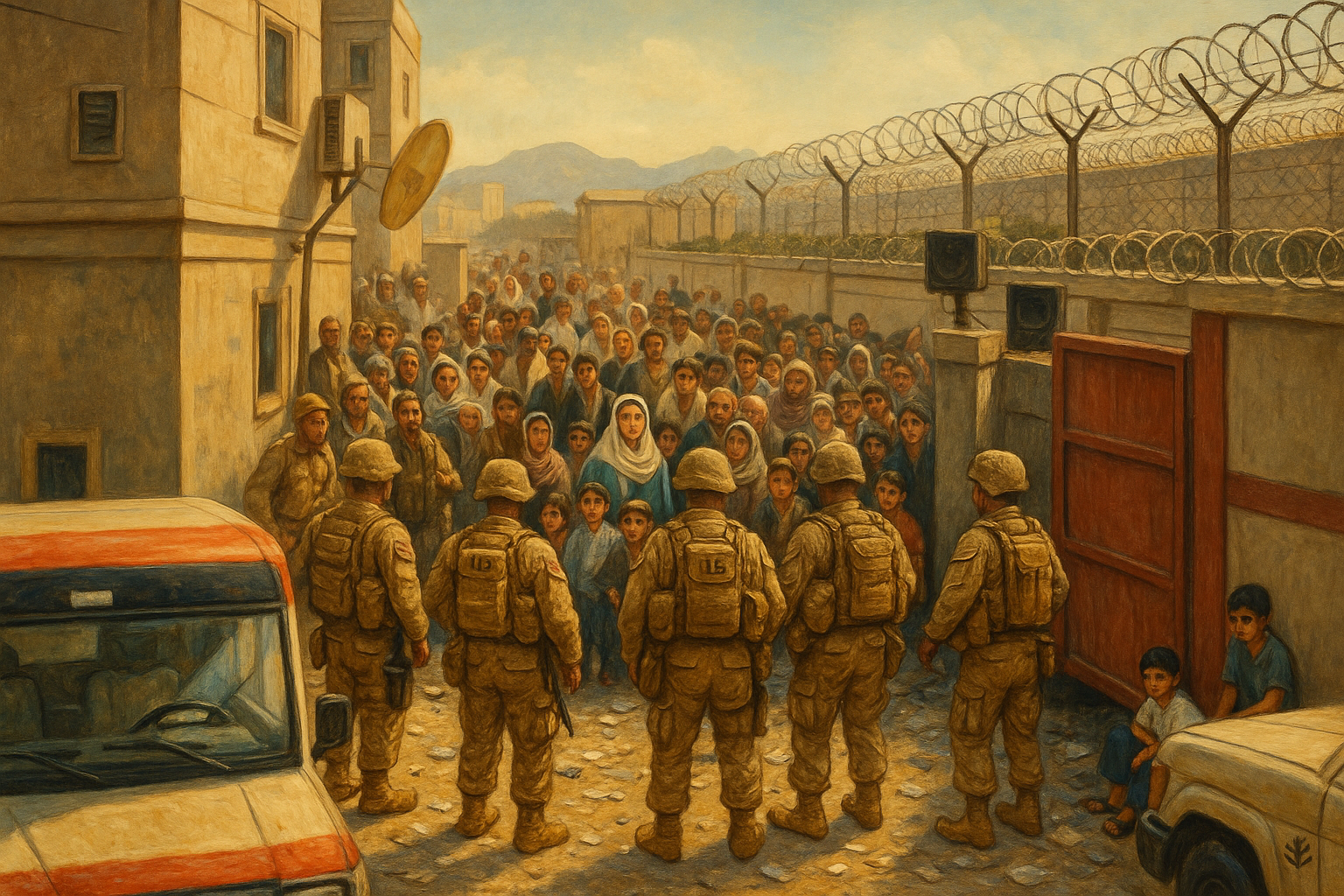
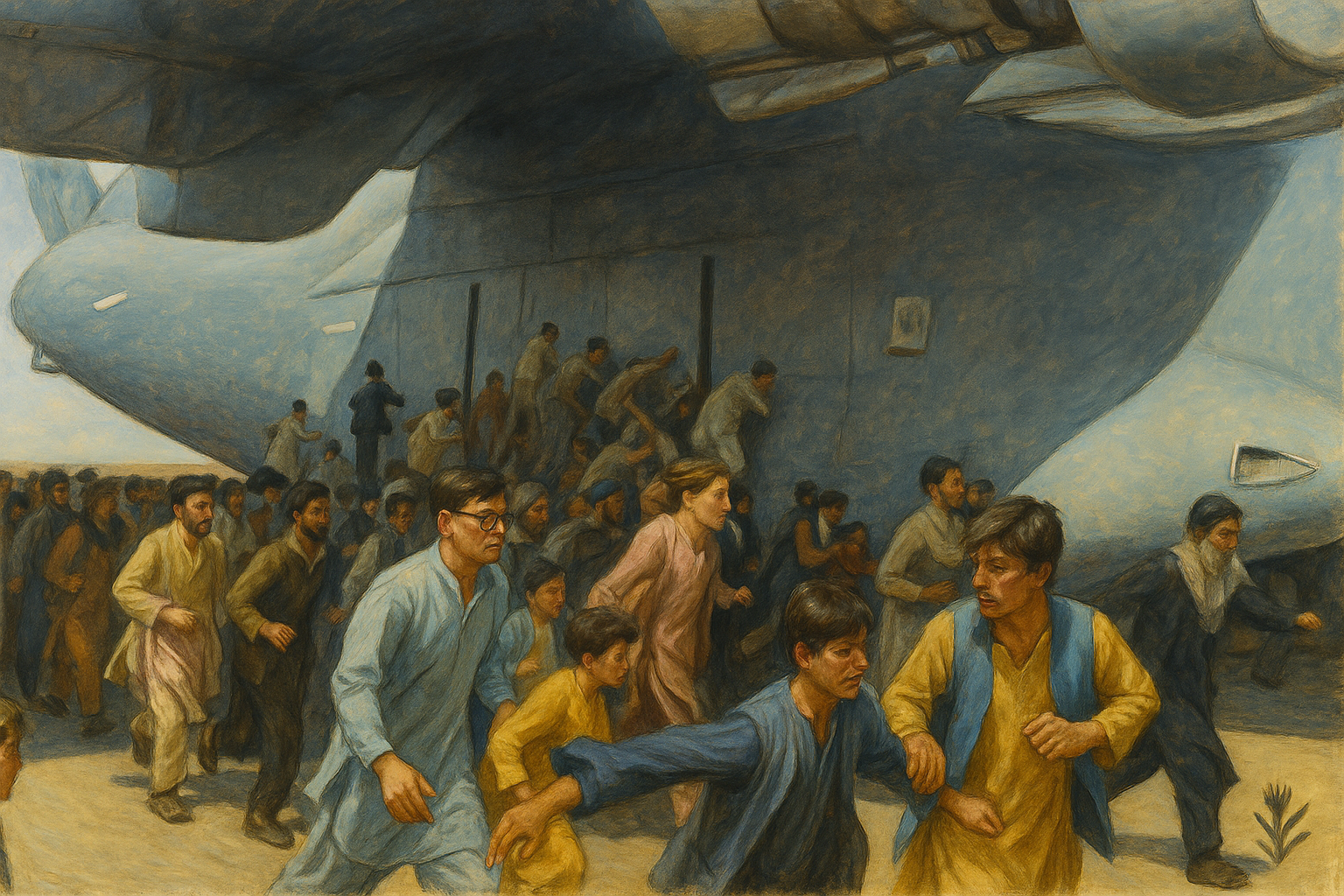
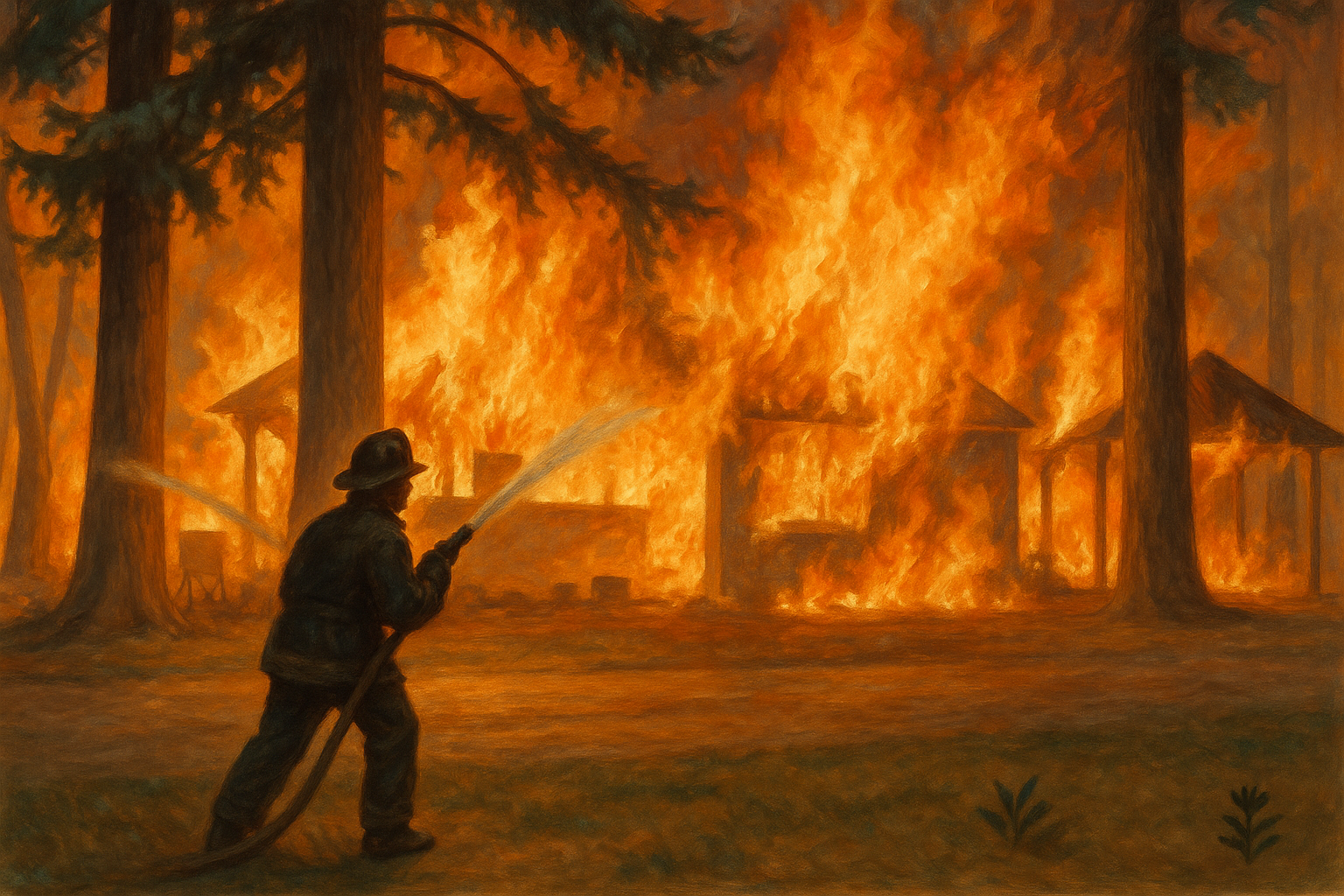
Biden Draws a Line, Half the Country Erases It

Biden announced vaccine mandates for federal workers and large businesses. A basic step, late but necessary. Cue the outrage: governors threatening lawsuits, pundits crying dictatorship. This is a country where seatbelts and car insurance are law, but a shot to keep people alive is tyranny. America’s rebellion isn’t against kings anymore. It’s against adulthood.

Biden’s Mandate Push

Biden announced sweeping vaccine mandates for federal workers and large employers. Predictably, outrage erupted. Lawsuits promised. Governors vowed resistance.

The irony? Many of the same voices railing against “government overreach” already accept seatbelt laws, building codes, food safety inspections. Mandates are only tyranny when politics demands it.

The pandemic isn’t waiting for consent. It’s burning through the unvaccinated while politicians score points off the wreckage.

My MAGA sister is intubated. In the hospital for a week. Covid.

The Weekly Witness — August 29 – September 4, 2021

August runs out with urgency still ahead of it.

The Kabul airport closes to U.S. traffic on Monday. The final C-17 lifts into a dusk-colored sky, nose angled upward like a held breath. Grainy images show soldiers boarding in the last hour, equipment left behind, runway quieting under evening light. Command confirms the mission complete — evacuation numbers exceed expectations, but thousands remain. The national conversation splits before the wheels leave the ground.

American news networks cut between closing gates in Afghanistan and overflowing ICUs at home. Delta continues its inland push through late summer like heat that refuses to break. Nurses in Tennessee move ventilators between rooms. Alabama reports oxygen supply pressure concerns. Pediatric admissions deepen anxiety — not overwhelming everywhere, but visible enough to change tone. No single data point, but the direction holds, week by week, uncomfortably consistent.

Tuesday opens with Ida.

The storm crosses warm Gulf water gathering strength by the hour. Projections sharpen — Category 2, then 3, then possibly 4 before landfall. Louisiana watches radar spirals tighten, residents recalling previous Augusts with unwelcome clarity. Gas lines lengthen. Freeway exits slow to crawl heading north and east. Some stay, some go, not always by choice. Hotels fill in Mississippi and Alabama. Pets carried in crates to cars. Refrigerators emptied of perishables. Sandbags stacked at storefront doors where plywood was once routine.

Hospitals warn that evacuation of critical patients is limited by COVID capacity. Sheltering requires modified protocols. Staff remain on-site as weather deteriorates, some sleeping on cots in conference rooms. Storm preparedness overlaps pandemic strain — two emergencies layered, neither yielding to the other.

Federal messaging cautious but firm. Generators tested, levee improvements noted but not guaranteed. The memory of 2005 stands beside every briefing whether named or not.

Ida hits Louisiana on Sunday as a high-end Category 4.

Wind pulls roofs. Transmission towers collapse. Entire parishes go dark in minutes. New Orleans loses power citywide when the main grid connection fails — eight major transmission lines down, including one crossing the Mississippi that twists sideways in photographs like metal bent by thought rather than force. The city settles into humid blackout, reliant on generators for cooling, medical equipment, communication.

Flooding not uniform, but destructive where it settles. Some levees hold. Some pumps strain. Cajun Navy volunteers move before dawn, flatboats through familiar streets turned waterways. Phone service unstable. Updates intermittent. Residents post messages online when signals flicker back — safe, roof gone, need insulin, water rising, tree through kitchen.

The storm’s reach extends far beyond landfall — remnants arc north through Mississippi, Tennessee, then into the Mid-Atlantic and Northeast. Rainfall totals extraordinary. Flash floods hit New Jersey and Pennsylvania, water sweeping through neighborhoods in minutes. Cars submerged on highways, drivers climbing to roofs before rescue. Basement apartments in New York fill with water too quickly to escape. Subway tunnels cascade like broken plumbing at city scale. Casualty numbers rise across states far from the Gulf.

The nation tracks the storm’s path like a thread pulled through the map — devastation at origin, destruction at destinations. Ida becomes not only a hurricane story but an inland flood story, then an infrastructure story, then an electrical grid story, then a survivor story shared by millions.

Meanwhile in Kabul, images change from evacuation to aftermath.

Taliban fighters survey abandoned hangars. U.S. equipment disabled or inoperable. Afghan interpreters who supported American operations for years remain uncertain, some in hiding, some attempting land crossings to Pakistan. Diplomatic extraction networks continue covertly. No single narrative explains the end — only fragments, each true to its witness.

Presidential statements attempt closure. Opponents attempt indictment. Veterans’ groups organize support networks for those struggling with the exit. Gold Star families grieve publicly and privately. Commentators argue policy decades in the making as if it were this week’s decision alone. The war ends but does not resolve.

COVID numbers continue upward. Daily case counts in the U.S. pass 150,000 repeatedly. Hospital staffing shortages lead to National Guard medical support in select states. Monoclonal antibody treatment sites open with expanded hours in Florida and Texas. Mask debates persist beyond reason, beyond novelty — worn thin by repetition, sharpened by proximity to school openings.

School boards meet with tension so visible cameras hardly need zoom. Some meetings postponed due to threats. Police patrol parking lots where parents stand in opposition, both sides insisting safety through mutually exclusive means. Children return to classrooms amid adult conflict rather than consensus.

Job numbers mixed — unemployment claims declining, but labor participation uneven across industries. Some restaurants reduce hours for staffing shortage, not lack of customers. Others close temporarily for outbreak quarantines. Signs posted on windows ask patience, offer apologies, explain wage increases, or simply state “closed today — please check back.” Local economies feel restless, not stalled — like engines turning with grit in their gears.

In Congress, the infrastructure bill advances through procedural stages but remains tied to reconciliation negotiations. Price tags dominate headlines — trillions quantified, cuts debated, climate provisions weighed. The public hears numbers more than impacts. Roads and child tax credits and elder care and broadband become abstract currency rather than concrete outcomes. The process moves, but not cleanly.

Foreign policy shifts beyond Afghanistan as well. North Korea test-fires missiles. China conducts military flight incursions near Taiwan’s air defense zone. EU allies express frustration over withdrawal coordination. The global stage feels like a floor where weight has shifted suddenly and balance must be found before movement.

Sports push normalcy where politics cannot. College football begins with full stadiums in many states — crowd noise loud enough to feel like pre-pandemic memory. NFL preseason concludes. High school seasons start under Friday night lights. Bands march, bleachers full. Some events track cases afterward, others do not. The country lives with risk as routine.

Gas prices hover around $3 in many regions. Used car values remain inflated due to supply chain shortages. Microchip scarcity delays new vehicle production. Appliance backorders stretch into months. Some buyers wait half a year for refrigerators or washers. “Supply chain disruption” shifts from business jargon to household phrase.

On Thursday, Louisiana heat indexes near 100°F while power outages persist. Cooling centers open. Lines for ice stretch blocks. Generators run continuously where fuel allows. Carbon monoxide poisonings reported from improper indoor use. Water boil advisories issued due to treatment facility damage. Residents cook on propane grills, charge phones in cars, check neighbors for injury and dehydration.

Volunteers distribute meals, tarps. Churches open halls for refuge. A community center in Houma receives pallets of bottled water. Red Cross deploys teams, shelters spaced for COVID safety where possible. Relief slow in some areas, fast in others, determined by road clearance and infrastructure access.

Friday brings news of job growth exceeding projections. Markets rise briefly. Then Afghanistan hearings dominate coverage again. No headline holds long — the week is saturated.

Saturday settles with no sense of completion. Only ongoing need.

Ida’s death toll distributed across states, rising as searches continue. Kabul under new authority. Hospitals strained into September. Schools open and uncertain. Congress negotiating in circles. Labor markets pulling unevenly. Wildfires still burning. Smoke drifting across county lines like a reminder that even without storm or war, the climate itself is an ongoing event.

In many homes, the lights stay on through generator hum rather than grid stability. In others, power returns with sudden relief — air conditioners kicking alive, refrigerators rumbling, phones charging at full speed. Families text relatives back on or still waiting.

Evenings carry a split image: football crowds beneath stadium LEDs, and flood-soaked streets drying beneath temporary quiet. A continent-wide contrast of celebration and recovery, policy and grief, normal routine and disaster response.

The nation does not hold one story — it holds many at once, intersecting, unresolved.

By week’s end, the calendar turns but nothing ends with it.

There is only forward pressure.

The storm moves north.
The war moves into memory without closure.
The virus continues.
The grid recovers slowly.
Debate stays heated.
Schools remain open.
People keep going.

Another week waits — not softer, not simplified — just next.

Events of the Week — August 29 to September 4, 2021

U.S. Politics, Law & Governance

  • August 29 — Federal government begins final phase of Kabul evacuation as deadline approaches.
  • August 30 — White House states withdrawal will conclude by August 31 barring major disruption.
  • August 31 — Final U.S. military aircraft depart Kabul, ending 20-year presence in Afghanistan.
  • September 1 — Administration outlines counterterrorism strategy without on-ground presence.
  • September 2 — Congressional oversight discussions expand following withdrawal completion.
  • September 3 — FEMA positions resources ahead of Hurricane Ida landfall response.
  • September 4 — Gulf state leaders request expedited federal coordination.

Public Health & Pandemic

  • August 29 — Hospital strain continues across Louisiana, Mississippi, and Florida.
  • August 30 — Booster eligibility framework drafted for high-risk and healthcare workers.
  • August 31 — Breakthrough case data reviewed for severity distribution.
  • September 1 — Pediatric caseload increases with academic term openings.
  • September 2 — States report oxygen supply stress as Delta peak approaches.
  • September 3 — CDC monitoring suggests plateau signals in select urban regions.
  • September 4 — National case levels remain elevated without clear decline.

Economy, Labor & Markets

  • August 29 — Fuel demand shifts under evacuation and storm conditions.
  • August 30 — Ida-related disruption risk raises energy-market volatility.
  • August 31 — Retail inventories tighten in advance of holiday supply cycles.
  • September 1 — Semiconductor shortages persist with limited recovery expectation.
  • September 2 — Job postings in service sectors remain high relative to hiring.
  • September 3 — Used-car pricing plateaus at near-record range.
  • September 4 — Travel impacts widen through airline and roadway disruption.

Climate, Disasters & Environment

  • August 29 — Hurricane Ida makes landfall in Louisiana as Category 4.
  • August 30 — Extensive power loss across New Orleans; grid damage severe.
  • August 31 — Rain-band flooding extends into Mississippi and Alabama.
  • September 1 — Remnants of Ida trigger flash flooding across Northeast corridor.
  • September 2 — Storm surge analysis reveals widespread coastal damage.
  • September 3 — Western wildfire acreage expands under high-heat conditions.
  • September 4 — Air-quality alerts continue across drought-affected regions.

Courts, Justice & Accountability

  • August 29 — January 6 sentencing schedules continue to fill fall docket.
  • August 30 — Varying rulings maintain eviction moratorium ambiguity.
  • August 31 — Mask-authority legal conflicts expand into appellate review.
  • September 1 — Federal agencies report increased fraud-recovery enforcement.
  • September 2 — Voting-rights litigation prepares for late-year hearings.
  • September 3 — Liability-shield debates extend into business-sector policy.
  • September 4 — State courts weigh public-health emergency powers.

Education & Schools

  • August 29 — School-opening outbreaks prompt short-term closures in multiple districts.
  • August 30 — Colleges adjust quarantine guidance following booster planning.
  • August 31 — University housing density reviewed in high-transmission states.
  • September 1 — Staffing shortages impact bus routing and classroom coverage.
  • September 2 — Parent protests continue at board meetings over mandates.
  • September 3 — Testing protocols expand in hotspot academic regions.
  • September 4 — Campus return maintains uncertainty despite operational continuity.

Society, Culture & Public Life

  • August 29 — Evacuation-response coverage dominates national media.
  • August 30 — Travel disruption from Ida affects southern air and highway flow.
  • August 31 — Inflation influences grocery selection patterns nationally.
  • September 1 — Retail staffing limits reduce store-hour availability.
  • September 2 — Live-event operations vary by county mitigation levels.
  • September 3 — Restaurant service fluctuates between full seating and spacing return.
  • September 4 — Holiday-weekend movement continues despite infrastructure disruption.

International

  • August 29 — NATO evacuation coordination winds down.
  • August 30 — Global response to U.S. withdrawal fragments across allies.
  • August 31 — Taliban assume full control of Kabul airport perimeter.
  • September 1 — Aid organizations initiate emergency relief planning.
  • September 2 — European states debate refugee-acceptance capacity.
  • September 3 — Diplomatic recognition questions remain unresolved.
  • September 4 — Humanitarian access routes remain uncertain.

Science, Technology & Infrastructure

  • August 29 — Grid-recovery planning begins post-Ida impact.
  • August 30 — Hospitals report continued oxygen-transport strain.
  • August 31 — Logistics chains experience further delays under disaster response.
  • September 1 — FAA issues multi-region weather and routing advisories.
  • September 2 — Telecom and broadband outages affect Gulf recovery efforts.
  • September 3 — EV-infrastructure proposals tied to reconstruction funding.
  • September 4 — Semiconductor supply remains constrained with no short-term relief.

Media, Information & Misinformation

  • August 29 — Ida landfall and Afghanistan exit dominate coverage.
  • August 30 — Disinformation surfaces surrounding evacuation casualty numbers.
  • August 31 — Platforms moderate Kabul-withdrawal false narratives.
  • September 1 — Viral misinformation spreads regarding Northeast flood origins.
  • September 2 — Newsrooms publish timeline analyses of withdrawal sequence.
  • September 3 — Ida recovery social-media reports vary in accuracy.
  • September 4 — Mixed trust response to official federal storm briefings.


Bay Road Ledger

Street quiet, flags lazy in the heat. The mosquito truck came through last night, a soft whine and a sweet smell that drifted under the door. This morning the bay light is flat, the gulls working the grocery lot in La Porte like they’re union. A man in a lifted truck idles in the fire lane, hazards on, scrolling a phone; a patrol car rolls past without a tap of the horn. Rules are conditional here. They work until someone important needs a minute.

Two houses down, storm boards are stacked against the garage, cut and labeled from the last scare. We call it “being prepared” when what we mean is “we ran out of luck once and remember.” The ship channel sounds like a far highway—horns and engines braided into a background you stop hearing until a siren cuts through. Shoreacres doesn’t try to impress you. It keeps a ledger in small entries: who pays the trash fee early, who borrows the ladder and returns it, who doesn’t. The bay gives you wind and memory; the neighborhood does the math.

Aftershocks

Weekly Dispatch
Week of August 29 – September 4, 2021

The week began with exhaustion and ended with reckoning. On August 30, the Pentagon confirmed the final U.S. military plane had departed Kabul at 11:59 p.m. local time. The twenty-year war closed with the thud of a cargo bay door. Roughly 123,000 people were evacuated in seventeen days, leaving behind an unknown number of citizens and tens of thousands of Afghan allies. Taliban gunfire lit the night sky in celebration as the last C-17 climbed above the Hindu Kush. For the first time since 2001, no American troops stood on Afghan soil. The withdrawal was complete, but the accounting had just begun.

President Biden addressed the nation from the White House the next afternoon, describing the mission as “an extraordinary success of logistics and courage” while acknowledging its pain. Polls showed the public split: majorities still supported ending the war but disapproved of how it ended. The speech marked a turning point in tone—less about consensus than closure. Republicans framed it as surrender; Democrats divided over language. In the space of a few sentences, the president sought to redefine victory as endurance.

Across the Atlantic, European governments faced their own reckoning. Thousands of evacuees were processed through Ramstein, Rota, and Doha. Britain concluded its airlift three days before the U.S., extracting 15,000 people but leaving others stranded. Germany promised a “humanitarian visa” program; France reopened debates on border policy. Every ally confronted the same contradiction: a commitment to shared values colliding with the limits of capacity.

At home, Hurricane Ida tested that capacity in real time. Making landfall in Louisiana on August 29—the anniversary of Katrina—it delivered sustained winds of 150 miles per hour and catastrophic flooding across the state. The storm knocked out power to more than a million customers, including all of New Orleans, and reversed the Mississippi River’s flow. The levee system largely held, but inland parishes and river towns were swamped. Hospitals, already near capacity from Delta, relied on generators as temperatures pushed past ninety. Federal disaster teams staged convoys across the Gulf Coast while cell networks and fuel lines struggled to recover.

Days later, Ida’s remnants carved a second path of destruction through the Northeast. Torrential rain triggered flash floods in New York, New Jersey, and Pennsylvania, killing more than forty people. Subway tunnels filled; cars floated down expressways; basements became traps. The National Weather Service issued its first-ever flash flood emergency for New York City. The event condensed the geography of crisis—one storm connecting Louisiana bayous to Bronx streets within seventy-two hours. Scientists called it another warning; residents called it proof.

Meanwhile, the pandemic’s metrics plateaued at high levels. Hospitals in the South reported slow improvement but warned that new surges could follow Labor Day travel. Booster-shot debates turned bureaucratic: FDA officials announced they needed more data before approving broad rollout, while state leaders announced plans to proceed regardless. The week’s public-health messaging fractured under the weight of mixed timelines. In classrooms, the school-mask standoffs continued. In Florida, districts defied the governor’s ban and accepted the risk of state funding cuts; the White House signaled it would compensate them using federal grants. The arguments grew procedural, but the stakes remained visceral—who got to define responsibility.

Economic news mirrored the nation’s divided mood. The August jobs report, released September 3, showed only 235,000 new positions added, far below expectations. The slowdown underscored Delta’s drag on service industries and fueled debate over the federal unemployment supplement set to expire September 6. Markets dipped briefly, then stabilized on expectations of continued stimulus. For workers in restaurants, travel, and entertainment, the optimism of early summer felt distant.

Throughout the week, the administration sought to reframe narrative momentum: from retreat to rebuilding. Biden visited FEMA headquarters, met with governors, and pledged long-term investment in climate resilience. The phrase “build back better,” once a slogan, began to reappear in briefing materials as a governing thesis. Yet each photo-op carried its own contradiction—reconstruction efforts in Louisiana, refugee processing in Virginia, a pandemic still defining daily life.

By Saturday, the flags at federal buildings marked two memorials at once: the soldiers killed at Abbey Gate and the citizens lost to Ida’s floods. The distance between them measured the breadth of a weary nation—one still capable of immense action but no longer certain of its purpose.


Texas Abortion Ban

Texas law SB8 went into effect. Abortions after six weeks banned, enforced not by state police but by private bounty hunters. Citizens suing citizens for cash rewards.

This isn’t about “life.” It’s about power. Deputizing neighbors to police each other is the architecture of authoritarianism. It’s how you create fear without needing state agents on every corner. [continue reading…]

Texas Turns Back the Clock

Texas banned abortion after six weeks, deputizing citizens to hunt each other for bounties. The state that can’t keep its power grid working now demands women track their menstrual cycles like it’s 1692. Freedom in Texas means your neighbor can sue you for driving a friend to a clinic. Sweethearts, this isn’t liberty. It’s theocracy with better branding.

The Weekly Witness — August 22–28, 2021

August holds like a prolonged inhale — heat lingering, haze in the West thick as memory, storms in the South rising sudden as anger. The week begins with two wars still running in different keys: one ending in Kabul, one continuing in American hospitals. The country watches both, unable to turn away, unable to resolve either.

Afghanistan dominates every broadcast on Sunday. Evacuation flights continue, dense with bodies — some seated, some standing, some holding children close. The airport perimeter remains chaotic, thousands still waiting, documents raised like prayer. Marines maintain checkpoints, processing evacuees beneath razor wire and summer sun. Water bottles pass hand to hand. Some trips end in boarding. Others end outside the gate, uncertainty heavier than heat.

Reports shift hourly. A blast risk, then calm. A temporary gate closure, then open again. The Taliban allow some travel, block others. No one controls the entire situation. Images cycle endlessly: crowds at Abbey Gate, soldiers guarding checkpoints, families lifting infants toward fences hoping someone will take them to safety.

Back home, news anchors maintain clipped delivery, eyes betraying strain. Analysts question withdrawal timing, exit execution, intelligence assessments. Opinions harden quickly. Veterans call radio shows to express grief and disbelief. Civilians ask how twenty years could end in two weeks. No answer satisfies.

COVID curves rise again — not sudden spikes, but steady climb like water filling a basin. Hospitalizations increase across the South and Midwest. Mississippi reaches ICU capacity. A hospital in Hattiesburg converts a classroom into overflow space, monitors taped to chalkboards where lessons should be. Nurses work double shifts, hydration stations set up in hallways, staff eating protein bars between room rounds.

A pediatric ICU physician in Dallas says they have no beds left. The quote circulates online, followed by debate, skepticism, confirmation, data. Mask mandates in schools vary by district. Some require. Some prohibit. Some tie policy to local case counts. Teachers prepare sub plans “just in case.” Parents send kids with masks but uncertainty. Cafeterias open with distancing where possible, not where impossible.

Weather draws attention midweek. Tropical Storm Henri strengthens into Category 1 hurricane, heads toward New England — rare trajectory. Rhode Island braces, Connecticut braces, Massachusetts braces. Stores sell out of generators and batteries. Beach towns board up windows. Residents recall 1991’s Bob and 1938’s unnamed storm. Henri makes landfall Sunday but the week ahead absorbs it — heavy rain, flooding, power outages, downed lines. The Northeast, more accustomed to nor’easters than hurricanes, adapts with speed.

On Tuesday, the House reconvenes. Infrastructure bill remains pending. Debate intense, procedural, prolonged. Reconciliation framework negotiated behind closed doors. Moderate Democrats push caution. Progressives push scale. Republicans push rejection. Statements issued from podiums say less than reporters infer. People outside Washington track outcomes more than process: broadband, roads, childcare, climate, cost.

Wildfires persist in California and the West. The Dixie Fire surpasses 725,000 acres. Firefighters cut lines through burning forest, bulldozers clearing black earth. Air quality hazardous in many towns. Sky remains strange color — sepia noon, rust dusk. Residents wear N95 masks outdoors not only for virus but for smoke particulate. Some evacuations lifted, others issued. Progress measured not in victory but containment percentage: 48%, then 50%, then 52%.

Heat remains elsewhere. Phoenix crosses 110°F again. Las Vegas not far behind. Texas sees triple digits in central counties. Oklahoma drought begins creeping north. Cattle ranchers watching water tanks closely. Pastures dry to brittle yellow before September arrives. Crop yields uncertain without late-rain relief.

Midweek, the FDA grants full approval to Pfizer’s COVID vaccine — previously under emergency use. Some employers announce mandates immediately. Universities update policies overnight. Military plans compliance pathways. Markets respond positively at open, flatten by close. Approval does not shift public opinion as sharply as some hoped, but it removes one stated barrier for some. Vaccination numbers tick upward modestly in select states — not surge, but movement.

Events overseas widen view. Kabul airport attack on Thursday — twin suicide bombings near Abbey Gate. Casualties include U.S. service members and Afghan civilians. Details slow, then flood. Officials confirm deaths incrementally. Pentagon briefings somber. President addresses nation with steady tone, promising retaliation. News graphics turn stark, black banners beneath anchors. Americans watch scenes from airport ground covered in dust, debris, bodies — week turns darker.

The attack fractures public discourse further. Some call for extended presence. Others insist on exit completion. Clarity remains elusive. Families of fallen service members notified. Coverage shifts to remembrance, photographs, narration of sacrifice. Flags lowered to half-staff across federal buildings and bases. Airport evacuations resume despite attack — urgency elevated, fear heightened, mission unchanged.

Closer to home, Henri rainfall totals measured in inches per hour. New Jersey towns flood, streets turn to streams. New York City experiences flash flooding — basement apartments submerged, subways leaking through ceiling grates. Videos show water cascading down staircases and commuters boarding trains ankle-deep. Authorities close sections of transit temporarily. Residents pump basements, move appliances to higher surfaces, salvage photographs in plastic bins.

Restaurant supply continues unstable. Wings limited. Ketchup packets discontinued in some chains due to cost and shortage. Grocery stores stock unfamiliar brands. Shoppers adapt without complaint publicly, privately frustrated. Inflation persistent: gasoline pricing higher, lumber still elevated relative to pre-pandemic levels. Shipping delays lengthen delivery times for appliances, furniture, electronics. Many wait months for backordered items.

College campuses open across nation. Football teams prepare season openers. Marching bands practice on fields under late-August heat. Move-in weekends crowded — parents unloading SUVs, students carrying mini-fridges, RA’s directing hallway traffic. Masks required at some campuses, optional at others. Dorm parties resume cautiously or boldly depending on culture. Freshmen taste independence with mixture of risk and optimism.

In Chicago, Lollapalooza’s aftermath continues — health officials monitoring for surge. Early data inconclusive. Debate online fierce. Some cite evidence of controlled transmission. Others dismiss it as risk. Public perception fractured. The nation lacks shared conclusion on what safe means.

Meanwhile Louisiana watches Gulf closely. A tropical disturbance begins organization. Models diverge — some predict development, others weak circulation. But New Orleans residents pay attention. Memories of Katrina, Rita, Ida… a list longer than comfortable.

Sunday ends the week heavy. Kabul airport evacuations continue under heightened security. The U.S. military prepares withdrawal deadline. Delta hospital data indicates upward trend. Parents pack lunches for week two of school. Henri cleanup underway. Wildfires nowhere near controlled. Inflation part of everyday purchases.

But small life continues not as denial — as persistence. A teen in Nebraska mows lawn at dusk, sky tinted orange by distant smoke. A couple in Florida walks dog after rain, pavement steaming. A farmer in Iowa checks irrigation line under morning sun. A grandmother in North Carolina writes birthday cards for grandchildren she hasn’t hugged in months. A man in Arizona replaces evaporative cooler pads.

Radio hosts recap the week’s events with practiced cadence:

– Kabul attack
– Evacuation operations
– ICU strain
– FDA approval of vaccine
– Henri flooding
– Wildfire growth
– Inflation pressures
– School mask tension
– Infrastructure negotiations

None resolved.
All ongoing.

The calendar turns not with conclusion but continuation.

Saturday night passes into Sunday without shift in headline direction — only accumulation of unfinished narratives. Another week waits, no gentler, no slower, no simpler.

Across the country, porch lights glow, air conditioners hum, and televisions flicker blue into living rooms. People sleep despite uncertainty. Morning will come regardless.

And the record moves forward.

Events of the Week — August 22 to August 28, 2021

U.S. Politics, Law & Governance

  • August 22 — Federal officials warn Kabul evacuation window may tighten.
    • August 23 — FDA grants full approval to Pfizer-BioNTech vaccine for adults.
    • August 24 — Biden affirms intent to uphold August 31 withdrawal deadline.
    • August 25 — Congressional briefings on evacuation execution increase.
    • August 26 — Kabul airport bombing prompts tightened security perimeter.
    • August 27 — National Security Council prepares final-phase exit options.
    • August 28 — U.S. evacuations continue under elevated threat conditions.

Public Health & Pandemic

  • August 22 — ICU capacity reaches critical levels in surge states.
    • August 23 — Employer mandates increase after full FDA approval.
    • August 24 — Regulatory review begins for expanded booster eligibility.
    • August 25 — Pediatric case growth reported as schools reopen.
    • August 26 — Several states reinstate indoor-mask advisories.
    • August 27 — Oxygen distribution strain observed in high-demand regions.
    • August 28 — Mortality rates rise in low-vaccination counties.

Economy, Labor & Markets

  • August 22 — Airline delays persist amid staffing shortages.
    • August 23 — Markets climb on vaccine-approval confidence.
    • August 24 — Retail staple restocking remains inconsistent.
    • August 25 — Shipping congestion slows freight movement.
    • August 26 — Energy markets fluctuate as Gulf storm threat grows.
    • August 27 — Employers expand hiring incentives.
    • August 28 — Used-vehicle pricing remains historically high.

Climate, Disasters & Environment

  • August 22 — Dixie Fire continues expansion; containment limited.
    • August 23 — Gulf tropical system enters hurricane-formation watch.
    • August 24 — Flooding recorded in North Carolina and Tennessee.
    • August 25 — Persistent heat intensifies drought in Southwest.
    • August 26 — Air-quality alerts issued in Northwest and Rockies.
    • August 27 — Storm system strengthens into Hurricane Ida.
    • August 28 — Gulf states activate emergency-response preparations.

Courts, Justice & Accountability

  • August 22 — Additional January 6 sentencing dates scheduled.
    • August 23 — Mandate-related appeals increase across federal courts.
    • August 24 — Conflicting rulings generate eviction-moratorium uncertainty.
    • August 25 — Mask-authority challenges advance to higher courts.
    • August 26 — Fraud investigations expand on pandemic-relief cases.
    • August 27 — Civil-rights cases filed ahead of redistricting actions.
    • August 28 — Liability litigation escalates across multiple states.

Education & Schools

  • Ongoing — Staffing shortages affect transportation and cafeteria operations.
    • Ongoing — Outbreaks reported in early-opening K-12 districts.
    • Ongoing — University vaccine policies broaden ahead of semester start.
    • Ongoing — Testing protocols implemented in high-risk academic regions.
    • Ongoing — School-board disputes continue nationwide.

Society, Culture & Public Life

  • Ongoing — Kabul bombing shapes public reaction and political sentiment.
    • Ongoing — Travel volume remains strong despite operational instability.
    • Ongoing — Restaurants fluctuate between full seating and spacing return.
    • Ongoing — Consumer behavior shifts under inflation pressure.
    • Ongoing — Festivals and live events operate under varied safety rules.

International

  • August 22 — NATO accelerates evacuation coordination.
    • August 23 — EU states form intake frameworks for Afghan refugees.
    • August 24 — Taliban tighten perimeter control around Kabul.
    • August 25 — Evacuation flights increase ahead of deadline.
    • August 26 — Suicide attack at Kabul airport causes U.S. and civilian deaths.
    • August 27 — Evacuations continue despite ongoing threat warnings.
    • August 28 — Aid organizations raise alarm over humanitarian access.

Science, Technology & Infrastructure

  • Ongoing — Semiconductor shortages expected to extend into Q4.
    • Ongoing — EV-infrastructure planning tied to federal spending debate.
    • Ongoing — Hospitals report oxygen-supply transport strain.
    • Ongoing — FAA issues weather-based travel disruptions.
    • Ongoing — Power-grid readiness monitored for hurricane impact.

Media, Information & Misinformation

  • Ongoing — Kabul dominates media coverage across networks.
    • Ongoing — Vaccine misinfo resurges following FDA approval.
    • Ongoing — Platforms remove accounts spreading coordinated false claims.
    • Ongoing — Fact-checking orgs clarify evacuation figures.
    • Ongoing — Wildfire conspiracies circulate without evidence.


Ida Reminds Us Who’s Boss

Hurricane Ida slammed Louisiana on the anniversary of Katrina, as if history had decided to rhyme in cruelty. Levees held this time, but power grids collapsed, homes shredded, families stranded. Climate change isn’t coming — it’s already moving in, uninvited. The Gulf burns oil on Monday, drowns on Sunday, and Washington still debates whether science is “alarmist.”

The Price of Exit

Weekly Dispatch
Week of February 14–20, 2021

The final full week of August opened in crisis and closed in calculation. On August 26, a suicide bomber detonated explosives outside Abbey Gate at Kabul’s airport, killing 13 U.S. service members and more than 170 Afghan civilians. The attack, claimed by ISIS-K, pierced the fragile perimeter of the evacuation mission and turned a logistical sprint into a moral reckoning. Images of Marines carrying the wounded through sewage-filled canals became the defining tableau of America’s longest war ending not with ceremony but with triage. The next day, the president vowed retribution—“We will hunt you down and make you pay”—while maintaining the August 31 withdrawal deadline. Critics called it defiance; supporters called it discipline.

Evacuations accelerated to near-mechanical pace: 120,000 people airlifted by month’s end, the largest non-combatant evacuation in U.S. history. Planes launched every 45 minutes, carrying embassy staff, journalists, Afghan interpreters, and thousands who simply managed to reach the gate. The operation’s success was measured in throughput, not closure. Pentagon officials spoke of “retrograde with dignity,” an uneasy phrase for departure under fire. As final flights prepared, Taliban leaders staged a victory walk across the runway, filming from abandoned aircraft—imagery designed to close a twenty-year circle.

In Washington, the shock reverberated through politics already strained by pandemic fatigue. Congressional committees announced investigations into the withdrawal timeline and intelligence assessments. Veterans’ groups organized volunteer networks to guide evacuees through visa paperwork, creating a civilian extension of a military that no longer occupied the field. Cable panels replayed the same footage in endless rotation—crowds, explosions, C-17s—and tried to assign proportion to a war that had long outgrown clarity.

At home, COVID’s Delta surge continued to strain hospitals across the South and Midwest. The FDA granted full approval to the Pfizer vaccine on August 23, a milestone intended to boost confidence but one that instead reignited arguments over mandates. The Pentagon immediately announced it would require vaccination for all service members; large corporations followed. Opposition hardened in predictable corridors—governors promising lawsuits, talk-radio hosts invoking liberty. The administration framed the decision as inevitability rather than politics, its patience measured out in case counts and ICU occupancy rates.

Hurricane Ida formed in the Caribbean on August 26 and aimed for Louisiana with alarming speed. Forecast models agreed on a Category 4 landfall near the 16-year anniversary of Katrina. Emergency declarations went out across the Gulf Coast; refineries shut down; evacuation orders expanded by the hour. Satellite images showed the storm’s eye tightening over waters several degrees above normal. The parallel between Kabul’s exit and Ida’s approach was unintentional but inescapable—two American timelines converging on urgency.

Economic data reflected the tension between fear and momentum. New unemployment claims fell to a pandemic low, yet consumer confidence dropped sharply. Markets fluctuated on Afghanistan headlines, Delta case counts, and the Federal Reserve’s Jackson Hole symposium, where Chair Jerome Powell signaled tapering could begin later in the year but promised “measured steps.” Investors heard caution; commentators heard optimism. The underlying question remained whether any indicator could capture the exhaustion running beneath the numbers.

Abroad, global reaction to Kabul’s fall settled into uneasy pragmatism. Allies coordinated refugee quotas; adversaries tested messaging. Beijing and Moscow emphasized “failed interventionism,” while European capitals debated strategic autonomy. The State Department prepared to relocate diplomatic functions to Doha. The post-war era had already begun before the war formally ended.

By Saturday, as final evacuation flights departed, the White House released a statement noting that over one hundred nations had pledged cooperation in relocating remaining Afghans. The language was careful: coordination without commitment. In New York, flags flew at half-staff for the fallen Marines. Across the country, airports received families carrying plastic bags of documents and nothing else.

The week ended not with the sound of engines leaving Kabul but with silence—the quiet that follows exhaustion. Two decades of war had concluded in scenes no one wanted to own, yet everyone recognized. The United States could still project power but not permanence, rescue lives but not narratives. What remained was endurance, and the uneasy knowledge that even successful evacuations leave someone behind.


Abbey Gate at Kabul Airport—before the explosion

On August 26, 2021, a suicide bomber detonated explosives outside Abbey Gate at Kabul’s airport, killing 13 U.S. service members and more than 170 Afghan civilians. The attack, claimed by ISIS-K, pierced the fragile perimeter of the evacuation mission and turned a logistical sprint into a moral reckoning. Images of Marines carrying the wounded through sewage-filled canals became the defining tableau of America’s longest war ending not with ceremony but with triage.

Delta Eats the Party

All summer, people acted like the pandemic had packed its bags. Then Delta showed up to the barbecue. Hospitals fill again, ICUs overflowing, nurses back to exhaustion. And still, America argues about masks like it’s 2020 on repeat. The virus doesn’t care about your freedom. It only cares that you breathe.

The Weekly Witness — August 15–21, 2021

The week begins unsettled, as if something in the global weather has shifted, though barometers do not register it. Normal people wake on Sunday to coffee, chores, yard work — but the news carries a different tone than the week before. Not louder, not more urgent, but sharper. Afghanistan dominates headlines now, not as background conflict but as collapse. Provincial capitals fall like dominoes. Kabul is no longer a distant possibility — it is imminent. Flights out packed. Embassy personnel evacuated to the airport. The pace of events exceeds speech.

Images arrive fast: refugees clinging to transport planes, crowds pressing against gates, soldiers forming barriers with raised rifles. Reporters speak with clipped sentences, aware that accuracy is dissolving as events outrun narrative. A phrase repeats on screens — Taliban enter Kabul. Another: Government flees. Americans watching from living rooms know the war lasted twenty years, but few imagined the end would arrive in hours.

Monday carries that momentum. Commentators question intelligence assessments. Officials issue statements brief and measured, promising ongoing evacuation efforts. News footage shows Afghans running alongside aircraft, some climbing onto wheel wells, others falling. The country watches without comprehension — not political debate, but human reaction to a scene too large for language. At hospitals in the US, COVID patients fill beds again; at airports abroad, desperate civilians fill tarmac.

Delta remains steady, rising. States with fewer restrictions show steeper curves; counties with mandates show slower growth but not reversal. ICU capacity strains in Mississippi, Alabama, parts of Texas. Pediatric hospitalizations increase just as schools reopen. Morning talk shows split screen coverage — Kabul on one side, COVID surge on the other. One crisis international, one domestic, neither paused for the other.

In Tennessee, a school board meeting ends with parents shouting at medical professionals, accusing them of fearmongering. Video circulates online — one parent yelling “We know who you are!” as doctors walk to their cars. A mask mandate had been approved by slim margin. Teachers plan accordingly, though many expect legal challenges. In contrast, a district in Maine reports smooth first days, high compliance, little conflict. The country is not uniform. It is patchwork.

Tuesday brings more reports from Afghanistan. Evacuation efforts intensify. Thousands gather outside airport gates. Some bring children, others only the clothes they wear. The Taliban promise amnesty but few trust it. American veterans watching from home feel old injuries reopen. Politicians issue statements. Social media fills with anger, sorrow, argument. Cable news speaks of deadlines, troop numbers, visa backlog. Ordinary citizens ask simpler questions: How many will get out? How many won’t?

At home, heat persists. Pacific Northwest sees triple digits again — unusual but no longer surprising. Air conditioning demand strains power grids in some areas. Rolling blackout warnings issued. In California, wildfire growth accelerates. The Dixie Fire burns more than 600,000 acres — almost unfathomable in scale. Satellite photos show billowing smoke plumes broader than states. Fire crews continue containment lines but progress slow. Air quality alerts stretch from the West Coast into the Rockies.

Midweek, retail earnings reports come in. Big-box chains see profits; small businesses continue uneven recovery. Supply chain disruptions linger — cargo ships waiting offshore, ports congested, trucking routes understaffed. Shelves reflect it. One store lacks Gatorade but has excess sports drinks of unfamiliar brands. Another has no lunchboxes two weeks before school starts. Parents compromise, children adapt. Consumer confidence wavers. Analysts debate inflation trajectory. Most households feel it as groceries: meat, produce, cereal.

Restaurants cut hours or close midweek to preserve staff. Signs taped to doors read Closed Tuesday/Wednesday — short-staffed. Patrons complain less now, understanding normal is not normal. Many leave larger tips when service slow. A cultural shift — small but present.

Thursday brings a new storyline: booster authorization recommended for immunocompromised Americans. Pharmacies prepare to administer third doses. Debate begins about broader rollout in fall. Officials emphasize equity, global supply, ethical distribution. Public hears only the possibility of another shot. Confusion spreads faster than guidelines. Some assume eligibility. Others assume requirement. Pharmacies field calls they cannot answer yet.

Meanwhile, Kabul airport becomes the central image of the week. Crowds expand. Gate checkpoints overwhelmed. Reports of gunfire, tear gas. An infant lifted over a wall into a Marine’s arms — moment captured, shared, debated. Evacuation flights increase frequency. Thousands rescued, thousands more waiting. US military presence stabilizes perimeter but chaos continues. Every hour feels like a day.

On Friday, President Biden addresses the nation. Speech measured, steady. He defends withdrawal decision, acknowledges turbulence, promises continued evacuation until every American who wants to leave can. Opinions immediate, divided, intense. Some call it resolve. Others call it abandonment. Few are neutral. The country digests speech like bitter medicine — necessary for some, unbearable for others.

Saturday arrives with no resolution. Kabul still under Taliban control. Evacuation ongoing. COVID still rising. Masks in schools still contested. Wildfires still burning. The week does not conclude anything; it holds crises in parallel without conclusion.

But life in America continues alongside. Children ride bikes at dusk. A mother packs lunches for first week of school. A grocery store employee stacks canned goods beneath fluorescent light that hums like evening cicadas. A landscaper wipes sweat from his forehead, looks at the sky, wonders if rain is coming.

People water lawns, grill burgers, refill birdfeeders. Not because the world is calm, but because routine is the rope they hold when ground shifts.

Church services Sunday morning vary by region. Some require masks, spacing, communion pre-packaged. Others ignore precautions entirely. A pastor in Oklahoma preaches courage, not defiance. Another in Vermont preaches compassion, not fear. Faith communities mirror the nation: one body, many responses.

At night, quiet neighborhoods glow blue from TV screens showing Kabul runway lights flickering through haze. Children asleep down hallways. Adults watch images they cannot forget. A Marine helps an elderly man onto a plane. A woman clutches papers, tears streak dirt on her face. No narration needed. Reality exposes itself.

Saturday’s news recaps the week with lists:

  • Kabul collapsed
  • Evacuations underway
  • Delta rising
  • Hospitals strained
  • Booster guidance emerging
  • Wildfires expanding
  • Inflation persistent
  • Schools opening under tension
  • Infrastructure bill pending House debate

Each event large enough to dominate headlines alone, yet all coexisting. The feeling is not panic — it is multiplicity.

America does not face one crisis.
It faces several at once, none resolved.

Still, small moments anchor people to the ground. A father teaches his son to bait a hook at a lake where smoke haze reflects orange off water. A teenager gets her driver’s license. A grandmother bakes zucchini bread from late-summer harvest. Life continues unevenly, imperfect, enduring.

If the week had texture, it would be coarse — friction everywhere. If it had sound, it would be overlapping voices — airport commotion mixed with hospital monitors mixed with stalled congressional debate. If it had temperature, it would be high. If it had color, it would be dust-colored sky.

The week ends without closure. No triumph, no catastrophe — only gravity. Events pull downward with weight felt in headlines, households, and heartbeats. A nation watches two wars at once: the foreign one ending, the viral one continuing.

Sunday night arrives like exhale — but not relief. More like someone pausing mid-step, uncertain whether the next foot falls on solid ground or shifting gravel.

If the week has texture, it is coarse — friction everywhere.
If it has sound, it is overlapping voices: airport gates, hospital alarms, weather alerts, the hum of ordinary routine still carrying forward.
If it has temperature, it runs warm.
If it has color, it is the muted tone of smoke across horizon and news across screen.

Saturday turns toward night without resolution.
Another week waits on the other side of the calendar.

Events of the Week — August 15 to August 21, 2021

U.S. Politics, Law & Governance
• August 15 — U.S. embassy draws down as Kabul falls; remaining personnel relocate to airport.
• August 16 — President Biden defends withdrawal in national address.
• August 17 — Bipartisan calls for Afghanistan oversight hearings intensify.
• August 18 — Pentagon expands evacuation mission with additional troop deployments.
• August 19 — Governors request federal support as hospital strain escalates.
• August 20 — Federal Reserve maintains cautious inflation guidance with no taper date.
• August 21 — Administration evaluates extending evacuation deadline beyond August 31.

Public Health & Pandemic
• August 15 — Pediatric ICU admissions climb sharply in high-transmission regions.
• August 16 — State-level mandate bans face legal and local resistance.
• August 17 — Breakthrough cases prompt renewed CDC review of guidance.
• August 18 — COVID averages surpass winter rates in several states.
• August 19 — Florida and Texas districts defy mandate prohibitions.
• August 20 — Booster program planning advances pending regulatory approval.
• August 21 — Federal medical teams requested in multiple surge zones.

Economy, Labor & Markets
• August 15 — Airline disruptions persist due to staffing shortages and weather.
• August 16 — Inflation metrics trend upward across food and fuel.
• August 17 — Auto inventory scarcity continues under semiconductor constraints.
• August 18 — Wage incentives expand in service and retail sectors.
• August 19 — Logistics bottlenecks slow retail restocking.
• August 20 — Housing demand remains elevated despite price pressure.
• August 21 — Restaurant hours reduced due to persistent labor shortages.

Climate, Disasters & Environment
• August 15 — Dixie Fire intensifies; limited containment progress.
• August 16 — Additional firefighting resources deployed in western states.
• August 17 — Smoke impacts air quality across mountain and plains regions.
• August 18 — Flash flooding strikes Tennessee and North Carolina communities.
• August 19 — Heat advisories extend across the Southwest and Mountain West.
• August 20 — Drought drives interstate Colorado River allocation planning.
• August 21 — Fire behavior shifts with wind realignment.

Courts, Justice & Accountability
• August 15 — January 6 sentencing recommendations continue.
• August 16 — Workplace and school mandate litigation broadens.
• August 17 — Redistricting disputes prepare for fall legislative action.
• August 18 — Pandemic-relief fraud inquiries expand.
• August 19 — Courts hear challenges tied to eviction-policy interpretations.
• August 20 — Continued plea agreements in January 6 cases.
• August 21 — State courts review public-health authority conflicts.

Education & Schools
• Midweek — Universities finalize fall vaccination rules with wide policy variance.
• Midweek — K-12 openings begin with inconsistent mask enforcement.
• Midweek — Staff shortages affect transportation and cafeteria services.
• Midweek — Campus move-in includes broad testing in surge states.
• Midweek — School board protests remain frequent and contentious.

Society, Culture & Public Life
• Midweek — Concerts and sports operate with mixed entry requirements.
• Midweek — Restaurant capacity shifts regionally with no national pattern.
• Midweek — Consumer behavior adjusts to rising grocery costs.
• Midweek — Domestic travel high despite disruption risks.
• Midweek — Public polling shows division on pandemic and withdrawal execution.

International
• August 15 — Taliban assume control of Kabul.
• August 16 — Allied evacuation efforts consolidate at airport.
• August 17 — Governments assess recognition and diplomatic contact.
• August 18 — European partners coordinate refugee intake policies.
• August 19 — Global markets fluctuate under geopolitical uncertainty.
• August 20 — Evacuation airlift expands through allied cooperation.
• August 21 — Humanitarian access concerns escalate around airport perimeter.

Science, Technology & Infrastructure
• Midweek — Semiconductor shortages projected into Q4.
• Midweek — EV-charging plans circulate alongside infrastructure debate.
• Midweek — Oxygen logistics strain reported in multiple hospital systems.
• Midweek — FAA weather-delay advisories issued across hubs.
• Midweek — Broadband expansion linked to federal funding discussions.

Media, Information & Misinformation
• Midweek — Vaccine-related misinformation circulates widely on social platforms.
• Midweek — News networks diverge sharply in Afghanistan framing.
• Midweek — Coordinated false-narrative accounts removed from major platforms.
• Midweek — Media publishes booster and mandate explainer coverage.
• Midweek — Conspiracy wildfire narratives circulate without evidence.


The Pandemic’s Delta Wave

Hospitals are filling again. This time it’s the Delta variant, ripping through the unvaccinated and breaking through to others. ICU beds scarce, health workers burned out, leaders begging people to take shots still dismissed as “fake.”

It’s a cycle: denial, surge, crisis, then repeat. Every wave proves the same thing — science can only carry us so far. The rest depends on will, and America’s will is fractured.

Collapse, Extraction, and the Edges of Capacity

Weekly Dispatch
Week of August 15 – 21, 2021

Afghanistan dominated the week and reordered the vocabulary of U.S. power. On Sunday the 15th, Kabul fell with startling speed. President Ashraf Ghani fled; Taliban fighters entered the presidential palace; government ministries went dark. The tricolor came down and the white banner rose over checkpoints manned by young fighters with new rifles and old grievances. At Hamid Karzai International Airport, thousands rushed the tarmac seeking evacuation. Videos of Afghans clinging to a departing C-17 became the war’s epitaph in 20 seconds of jet wash and disbelief.

By Monday the 16th, the White House framed the outcome as the foreseeable end of an unwinnable commitment. President Biden addressed the nation, defending the decision to withdraw while conceding that the collapse moved “more quickly than anticipated.” The Pentagon surged troops to secure the airport—eventually about 6,000 Marines and soldiers—and established a perimeter to resume flights. Evacuation math replaced strategy talk: manifests, throughput, and wheels-up counts per hour. The mission’s public measure became a moving denominator—how many could be brought out before the situation changed again.

The diplomatic ledger filled just as fast. The Taliban held a televised press conference on the 17th promising amnesty, urging women to work “within Islamic principles,” and signaling a desire for recognition. Skepticism was immediate. European allies pressed Washington for a longer runway; Parliament in London held an emergency debate unusually critical of U.S. planning. The U.S. froze Afghan central-bank reserves and suspended most aid, leaving the new rulers in control of territory but not the financial system. NGOs warned of an imminent humanitarian spiral as banks shuttered and prices spiked.

On the ground, the airport became a diagram of the era—logistics as strategy. Marines stretched concertina wire, British paratroopers pushed collection points outward, and allied flights ferried evacuees to hubs in Qatar, Kuwait, and Europe. Outside the gates, ad hoc queues formed around scraps of paper bearing phone numbers and case codes. Each day brought a new bottleneck: crowds at Abbey Gate, paperwork mismatches, Taliban checkpoints that opened at dawn and closed by noon. U.S. commanders spoke of “tactical patience,” a phrase that landed differently outside the fence.

Elsewhere, disasters echoed the same theme—systems at capacity. In Haiti, Tropical Storm Grace swept over quake-struck regions on the 16th and 17th, flooding camps and slowing aid to Les Cayes and Jérémie. The country’s political vacuum compounded every logistics problem; helicopters waited on weather windows while clinics rationed anesthesia. The phrase “secondary crisis” turned literal—rain on rubble.

At home, Delta’s surge pushed hospitals toward rationing protocols in parts of the South. School boards became nightly battlegrounds over masks. On the legal front, the Texas Supreme Court allowed the governor’s ban on local mask mandates to take effect for the moment, even as districts sought carve-outs. The federal government announced a booster plan on the 18th—third shots for most adults eight months after their second dose, pending FDA and CDC sign-off—an implicit admission that “fully vaccinated” would soon mean something else. The move reassured some and infuriated others, who heard only a shifting finish line.

Economic headlines split along the same fault lines. July retail sales fell 1.1 percent, a reminder that optimism still competes with caution. Minutes from the Federal Reserve’s July meeting signaled that asset-purchase tapering could begin later in 2021 if progress continues, nudging markets toward a more volatile posture. Oil slipped on growth worries; travel stocks whipsawed with each Kabul update and COVID headline. For households, the index of reality remained unchanged: rising rents, scarce childcare, and persistent “Help Wanted” signs beside “Now Hiring” banners.

Climate kept its own drumbeat. The Dixie Fire in Northern California expanded again, threatening new mountain towns and pushing smoke across multiple states. Air-quality alerts stretched from the Sierra to the Plains, while utilities prepared for additional rolling outages as heat pressed the grid. Farther east, the remnants of Tropical Storm Fred triggered flash flooding in western North Carolina on the 17th, washing out roads and homes near Cruso. By Saturday, the National Hurricane Center placed the Northeast under watches for approaching Henri, a reminder that the season had barely rounded the cape.

By week’s end, the images arranged themselves into a single lesson: helicopters lifting from a crowd, stretchers in a Haitian downpour, ICU beds filling beside school-board microphones, firefighters tracing lines in a forest that will burn again. The United States could still move mountains of people and materiel; it could not move time. Policy victories looked procedural, while the emergencies ran on weather and momentum. The story of August was not ideology but throughput—the work of getting from impossible to survivable before the clock runs out.


The Weekly Witness — August 8–14, 2021

August continues with heat that settles like weight over the country, thick in the South and heavy across the Midwest where afternoons shimmer above concrete. Morning news cycles shift only slightly — a new set of numbers, higher than last week, hospitals reporting strain, vaccination divides widening rather than closing. Delta spreads in clusters that look like tide maps — swelling, receding, moving again. Epidemiologists speak in language now familiar to the public: transmission, hospitalization lag, community spread. People don’t need to learn vocabulary; they already know it like weather terms. Surge means someone they know is sick. ICU means someone they love might not come home.

In Louisiana, nurses report burnout so deep it feels like muscle memory. They move from room to room with practiced efficiency, checking oxygen levels, adjusting ventilators, standing in for family who cannot visit. They do not cry in hallways as they did in early 2020; exhaustion replaced grief. A nurse says, “This feels like déjà vu with fewer people believing it’s happening.” Another shrugs when asked why she stays. Everyone understands the question, fewer understand the answer.

Parents watching school boards meet livestreamed on Facebook see conflict break out like storm cells — sudden, intense, loud. Microphones cut in and out as parents yell across aisles. Mask mandates proposed, rejected, reinstated, blocked. Some demand choice. Others demand safety. Administrators sit behind long tables like a jury. A superintendent in Tennessee receives threats after announcing universal masking. A school district in Utah bans mandates entirely. Teachers prepare classrooms without certainty they’ll stay open more than a month.

In many towns, children pick out backpacks covered in cartoon characters, unaware adults are bracing around them. Lunchboxes lined with cold packs become talismans of normalcy. Parents buying school supplies eye hand sanitizer the way previous generations bought pencils. Safety has become stationary.

Across California, fires continue to burn. The Dixie Fire grows into one of the largest in state history, consuming forests and small communities. Footage shows trees candling like torches, entire hillsides glowing red in night footage broadcast without commentary. Fire crews work 24-hour shifts, sleeping on cots beneath smoke-thick skies. A firefighter rinses ash from his face using water from a plastic jug, then pockets a child’s toy car found half-buried near a burned foundation. The image circulates online for a day, eclipsed by new destruction the next.

In Oregon, evacuees gather in fairgrounds converted into shelters. Horses occupy one barn, goats another. Families sleep in folding chairs or on donated cots. A woman from Greenville, California, says she packed photographs first — then medication, then one pot she couldn’t leave behind. She does not know if her home still stands. She does not ask, maybe because the answer might end her last fragment of hope.

Smoke drifts east again, turning sunrises pale. The smell reaches Denver, then Omaha. In Minnesota, haze obscures skylines. A runner coughs through a morning jog and checks the air quality index before continuing. The sky feels wrong, but the day proceeds anyway — commuters drive, stores open, mail moves through the system.

The Senate passes the bipartisan infrastructure bill this week. Celebration muted, hesitant. Republicans and Democrats appear side-by-side for cameras, though not comfortably. The bill moves to the House next. There is talk of amendments, progressive objections, conservative resistance. Negotiators use words like frame and reconciliation, terms that mean little to most Americans but shape the year’s politics.

Stock markets react with optimism early in the week, then flatten. Investors watch inflation indicators — prices rising for essentials, supply chains still slow. Semiconductor shortages keep car lots empty, pushing used vehicle prices high enough to feel surreal. A man in Ohio trades a three-year-old pickup for more than he paid originally. It feels like profit but reflects scarcity.

Job postings increase. Some businesses offer signing bonuses for positions that once needed none. Restaurants close two days a week due to lack of staff. A fast-food chain advertises $18/hour for night shifts. Online arguments break out over whether wages or attitudes changed. People discuss labor shortages without consensus.

Census results release midweek. The U.S. population grew at the slowest rate since the 1930s. Texas, Florida, Colorado, North Carolina gain representation. California loses a seat for the first time. Journalists produce maps, analysis, projections. Politicians respond with statements that read like positioning for coming elections. Redistricting becomes a national quiet thunder — heard but not yet felt.

Afghanistan enters the headlines again — rapidly and with tension. Taliban forces capture provincial capitals at a pace few predicted. Kabul feels suddenly closer to collapse. Reporters speak carefully, aware the ground is shifting under them in real time. U.S. officials express concern, but their tone suggests urgency rising faster than policy can shift. Images show civilians fleeing north or sheltering in place. The war feels like it is ending not in closure, but free-fall.

Airlines resume cancellations across the country due to staffing shortages and summer storms. Travelers sit on terminal floors charging phones from walls while announcements loop overhead. Masks remain mandatory in airports and on flights. Some comply quietly. Others challenge gate agents, arguing policy should be optional. A pilot exits a cockpit to calm a shouting passenger. Nearby, a toddler eats goldfish crackers in a blue mask printed with dinosaurs.

College campuses prepare for fall semester. Some require vaccination. Others prohibit mandates. Students returning for sophomore year may be stepping onto campus for the first time. Orientation feels surreal — second years and first years learning buildings together. Universities plan football season with full stadiums, but contingency plans whisper beneath excitement. Booster conversation gains volume in academic medical circles.

In North Carolina, a town declares a state of emergency due to flooding from a stalled storm system. Cars float into ditches. Roads wash out. A convenience store owner sweeps mud from his doorway while refrigerators hum sputtering noises. Volunteers deliver bottled water through streets that reflect the sky like broken glass. Climate feels less like debate and more like condition.

At grocery stores, shelves are inconsistent — one week pasta plentiful, the next limited; chicken scarce, then abundant again. Shoppers adapt to unpredictability. People compare prices quietly at registers, not wanting to acknowledge the increase. A woman puts back berries when she sees total rise. Another buys them anyway, because summer feels finite and small joy matters.

The week’s rhythm is uneven — rising tension abroad, rising cases at home, infrastructure momentum paired with market anxiety. Nothing resolves. Everything continues.

On Saturday evening in Atlanta, a minor league baseball game draws families to open air stands. Popcorn smells drift across the field, lights hum overhead. The crowd stands for the anthem — some with hats over hearts, others distracted. Children chase foul balls, adults cheer small triumphs. Life persists not as celebration, but muscle memory.

Sunday brings little clarity. News recaps the week not with conclusions but with lists: Afghanistan advancing, Senate infrastructure bill passed, Delta rising, Dixie Fire expanding. Each story large enough to dominate alone, yet simultaneously present, crowded.

If the week has a feeling, it is acceleration — events moving faster than comprehension. Not panic, not collapse, but motion without grip.

America holds the wheel loosely, road unknown.

Events of the Week — August 8 to August 14, 2021

U.S. Politics, Law & Governance

  • August 8 — Senate prepares final votes on the bipartisan infrastructure bill following days of procedural delays.
  • August 9 — White House urges states with surging COVID hospitalizations to adopt stricter mitigation measures.
  • August 10 — Senate passes the $1.2T infrastructure package and sends it to the House for consideration.
  • August 11 — President Biden calls for faster distribution of rental-assistance funds amid continued eviction concerns.
  • August 12 — Local school districts challenge state mask-mandate bans, widening state-vs-local conflicts.
  • August 13 — DHS extends temporary protected status reviews for several immigrant populations.
  • August 14 — Administration signals potential booster program pending FDA and CDC advisory recommendations.

Public Health / Pandemic

  • August 8 — U.S. seven-day averages continue rising sharply across Southern and Mountain West states.
  • August 9 — Pediatric case growth prompts renewed debate over school reopening safety.
  • August 10 — Hospital systems warn of staffing fatigue as COVID admissions strain emergency capacity.
  • August 11 — CDC updates school guidance supporting masking for all students and staff regardless of vaccination status.
  • August 12 — Booster discussions intensify as breakthrough cases rise, though severe outcomes remain concentrated among unvaccinated.
  • August 13 — Several states reestablish indoor mask advisories in high-transmission counties.
  • August 14 — Southern ICUs report the highest occupancy since winter surge.

Economy, Labor & Markets

  • August 8 — Job postings remain high, but service-sector hiring continues to lag.
  • August 9 — Inflation concerns expand as consumer goods pricing trends upward across major retailers.
  • August 10 — Semiconductor shortages disrupt automotive production and new-vehicle availability.
  • August 11 — Airlines report cancellations and delays tied to labor shortages and summer storms.
  • August 12 — Major retailers adjust earnings forecasts downward due to supply-chain volatility.
  • August 13 — Gas prices climb heading into late-summer travel.
  • August 14 — Rental-market pressures intensify in major metro regions.

Climate, Disasters & Environment

  • August 8 — Wildfires expand across California and Oregon; smoke spreads into neighboring western states.
  • August 9 — IPCC issues landmark climate report warning of irreversible warming thresholds without urgent global cuts.
  • August 10 — Evacuations continue in fire-affected regions; drought conditions worsen in the West.
  • August 11 — Heat advisories blanket much of the Pacific Northwest and Mountain West.
  • August 12 — Storm systems trigger flash flooding in parts of the mid-South and Appalachia.
  • August 13 — Colorado River water-allocation shortages prompt multi-state response discussions.
  • August 14 — Air-quality levels reach unhealthy ranges across multiple western and plains-region cities.

Courts, Justice & Accountability

  • August 8 — Federal courts process additional January 6 plea agreements.
  • August 9 — Vaccine-mandate litigation expands into private-sector workplaces.
  • August 10 — Rulings continue to diverge over school masking authority.
  • August 11 — Justice Department reports increased pandemic-relief fraud investigations.
  • August 12 — Appeals court schedules hearings on voting-rights challenges for fall.
  • August 13 — Sentencing guidelines for January 6 defendants begin to solidify.
  • August 14 — COVID-related business-liability cases rise sharply.

International

  • August 8 — Global vaccination inequity persists as wealthy nations consider booster rollout.
  • August 9 — Greece continues to battle destructive wildfires amid record heat.
  • August 10 — Afghanistan provincial losses accelerate ahead of U.S. withdrawal completion.
  • August 11 — IPCC climate findings dominate global scientific and political response.
  • August 12 — Mexico, Central America experience flooding and landslide displacement.
  • August 13 — Taliban territorial control increases rapidly, sparking emergency evacuations.
  • August 14 — Major nations prepare contingency plans for Kabul.


Kabul Falls

The Taliban walked into Kabul without a fight. Twenty years, trillions of dollars, thousands of lives — and it collapsed in a week. [continue reading…]

Kabul falls

People are clinging to the fuselage of a US military aircraft as it taxies at Hamid Karzai International Airport in Kabul.

Kabul Falls

Afghanistan collapsed in days. Twenty years of promises dissolved in airport chaos. The longest war ended, not with victory, but with retreat. Empires rarely admit defeat—they only rename it.

Kabul Falls, America Trips

The Taliban rolled into Kabul before the paint was dry on Biden’s withdrawal speeches. Helicopters lifted staff from the U.S. Embassy roof — the Saigon photo reborn, except this time in high definition. Two decades of war collapsed in a weekend.

Politicians blame each other, but the truth is bipartisan: America tried to build a nation with bombs and contracts, and what it built instead was a payday for contractors and a graveyard for soldiers. Afghans cling to planes, desperate to escape. We pack our bags and call it “mission over.” It’s not over for them.

Dixie Fire

The Dixie Fire has now expanded to more than 190,000 acres — increasing by 20,000 acres in just 24 hours — prompting new mandatory evacuations near the Feather River Canyon as firefighters struggle to increase the 21% containment. Officials are still investigating the cause.

The Threshold of Collapse

Weekly Dispatch
Week of August 8 – 14, 2021

The second week of August unfolded like a sequence of alarms. On Sunday the 8th, the Senate inched toward final passage of the bipartisan infrastructure bill, surviving a gauntlet of amendments and procedural tests. Majority Leader Chuck Schumer promised a vote “no matter how long it takes.” By Tuesday morning, it passed 69–30, a rare demonstration of functionality. Yet even as the White House celebrated a trillion-dollar victory, attention shifted to the second track—the $3.5 trillion budget framework Democrats hoped to pass through reconciliation. That measure, encompassing climate, healthcare, and family policy, faced immediate opposition from moderates. The week that began in consensus ended in arithmetic, reminding Washington that endurance, not enthusiasm, determines outcomes.

Beyond the capital, disaster and retreat dominated the frame. On August 14, a 7.2-magnitude earthquake struck southwestern Haiti, leveling buildings near Les Cayes and Jérémie. By nightfall, thousands were confirmed dead or missing, hospitals overwhelmed, and communications cut across rural districts. The memory of 2010 hovered over every headline. International aid began mobilizing even as political instability and storm forecasts complicated logistics. The Haitian government, already weakened by the July assassination of President Jovenel Moïse, faced another test of survival before mourning could finish.

Half a world away, Afghanistan’s unraveling accelerated past prediction. Provincial capitals fell in quick succession—Kunduz, Ghazni, Herat—culminating with Kandahar’s capture on August 13. American intelligence had warned of possible collapse within ninety days; the reality was measured in hours. U.S. embassy staff began destruction of sensitive materials as evacuation flights ramped up from Kabul. Pentagon officials dispatched an additional three thousand Marines and paratroopers to secure the airport, a mission described as “temporary” but already laden with echoes of Saigon. For the administration, the optics eclipsed the policy: years of justification condensed into scenes of helicopters and crowds.

At home, the pandemic reversed any illusion of stability. The Delta surge broke hospital capacity records in Florida, Louisiana, and Mississippi. Pediatric ICU beds reached single digits in several states. The FDA announced plans for booster shots for immunocompromised individuals, an early sign of shifting definitions of protection. School reopenings turned combative as governors clashed with local officials over mandates. In Tennessee, a parent mob confronted health workers outside a school board meeting, chanting “We will find you.” The confrontation made national news and crystallized how public health had become a proxy for power.

Economic indicators continued their split narrative. Job openings surpassed ten million for the first time, yet supply-chain delays worsened. The Consumer Price Index showed a modest deceleration in inflation, offering brief relief to markets. Still, investors sensed the fragility beneath the numbers: shipping logjams, housing scarcity, and lingering labor mismatches. Federal Reserve officials hinted at tapering asset purchases by year’s end, though Chairman Jerome Powell cautioned against tightening too soon. For ordinary households, the metrics felt abstract against the reality of rising rents and renewed uncertainty about school and childcare schedules.

In California, the Dixie Fire surpassed half a million acres and jumped containment lines near Susanville. Entire mountain towns vanished overnight. Fire officials described the blaze as “resistant to everything we throw at it.” Satellite images showed a column of smoke stretching from Nevada to the Pacific. Climate scientists warned that the western fire season had effectively become fire year. Evacuation shelters doubled as COVID-testing sites, merging the decade’s two defining crises under a single fluorescent roof.

Back in New York, Governor Andrew Cuomo resigned on August 10, ending a decade-long tenure that once symbolized technocratic competence. His exit speech framed his downfall as political misinterpretation rather than misconduct. Lieutenant Governor Kathy Hochul prepared to take office as the state’s first female governor, inheriting both pandemic management and the political wreckage of her predecessor.

As the week closed, the White House balanced three emergencies: an overseas collapse, a domestic resurgence, and a legislative gamble. Each carried its own clock. The president addressed reporters briefly on Friday, insisting that “America is back at the table.” But images from Kabul and Haiti told another story—of limits reached and confidence eroding. August had barely begun, and already it felt like a test of how many simultaneous crises a government could withstand before structure became strain.

January 6th: The Memo Trail

New memos surfaced showing how close the White House came to overturning the election. Drafts floated about seizing voting machines, invoking emergency powers, bending the Constitution into submission.

This wasn’t chaos. It was planned. The mob wasn’t the whole plot — just the blunt instrument. The paper trail shows intent. And intent matters. — Nick

The Infrastructure Bill

The Senate passed the $1.2 trillion infrastructure bill. Roads, bridges, water systems, broadband. It’s the biggest bipartisan deal in years.

It matters — but not enough. The bill is scaled down, stripped of climate measures, child care, housing. Politicians called it “historic.” The truth: it’s patchwork. Necessary, overdue, but nowhere near sufficient.

Cuomo Out, Misogyny Still In

Andrew Cuomo resigned, not because he learned humility but because the evidence finally outweighed his ego. He called it “politically motivated.” Translation: he got caught. America treats powerful men like they’re replaceable lightbulbs — you swap one out, screw another in, and the room stays just as dim.

The Weekly Witness — August 1–7, 2021

August enters without ceremony. No threshold crossed, no new beginning — only continuation. The country wakes into a heat that feels old, carried forward from July rather than born anew. Dawn light lands pale and washed, as if the sun itself is tired. A ceiling fan turns above a breakfast table somewhere in Missouri where coffee cools too fast in one place and too slow in another. Headlines crawl beneath morning weather, weather crawls beneath pandemic statistics, and no one changes the channel because every station sounds like every station.

Hospitals in the South report numbers rising again — ICU beds thinning, nurses working summer days that feel like winter returns. Not dramatic this time. Not panicked. Just steady, grinding escalation. Delta is the word everyone knows without needing introduction. It threads through workplaces and grocery aisles the way wildfire smoke threads through distant states — sometimes visible, always present. People no longer gasp at graphs. They nod, they sigh, they talk quietly in parking lots and church foyers about who got sick this week, who is out, who might need prayers.

Vaccines sit in pharmacies like unbought bread. Free, plentiful, and — in too many places — untouched.

A county in Alabama asks National Guard medics to help run mobile clinics. Another shuts theirs down due to lack of interest. Conversations online split along fault lines as predictable as weather patterns: mandates, freedom, responsibility, distrust. Comment sections fill like ERs — too many voices crowded in too small a space. Every claim has a counterclaim. Every fact a refutation. The pandemic is biological, informational, emotional. Everyone is tired of knowing that.

Far to the west, the world burns. Smoke blurs the horizon in California and Oregon, skies stained orange as if the sun is behind tinted glass. Towns evacuate in hours — animals, photographs, medications tossed into cars. A RV park burns, leaving melted bicycle frames like bones. Firefighters rest on curbs with ash in their hair, blueberry-stained fingers, sweat streaks through soot. Newspapers quote acreage lost, but survivors talk instead about the coffee mug that belonged to a grandmother, the cedar chest that smelled like winters past, the dog that ran but didn’t return.

Smoke does not respect state lines. It drifts across Idaho, Montana, Wyoming. A child in Nebraska draws the sun brown instead of yellow after recess under a haze-thickened sky. In Kansas, someone walks outside and smells fire hundreds of miles away and cannot tell which direction tragedy lies.

Heat presses down elsewhere — Ohio, Arkansas, Georgia. Grass crackles underfoot. Road tar softens. People water lawns in the evening like it matters, knowing it might not. Storms crack open some afternoons with lightning like camera flashes and rain that comes and goes without apology. Another town floods, another town dries. The country lives between too much and not enough.

Meanwhile, the Olympics in Tokyo continue. Athletes run, dive, flip in arenas where seats remain mostly empty. Gold medals shine beneath fluorescent lights, not stadium floods. Triumph arrives quieter than expected — small celebration, masked embrace, delayed ceremony. The world watches through screens like peeking through windows. A gymnast bows into the void of applause that isn’t there. A swimmer hears only the echo of their own breath.

In the Midwest, county fairs open anyway. Ferris wheels turn above parking lots, children eat funnel cakes with powdered sugar like first snow. A boy tries to toss rings over milk bottles and misses every time. His mother laughs, because small failures are easier to bear than the large ones. Goats bleat in pens where teenagers brush them for judging. Life continues, insisting on itself.

The economy feels like a vehicle with mismatched tires. Job openings reach highs; unfilled roles pile higher. Employers blame benefits. Workers blame wages. Parents blame lack of childcare or school uncertainty. No one is fully wrong and no one is fully right. Restaurants post “Help Wanted” beside “Expect Delays.” Service slows. People grit teeth. One diner leaves a cruel note instead of a tip; another stranger leaves a hundred dollars extra to make up for it. Both stories travel farther online than any congressional vote.

Inflation creeps. Milk costs more. Bacon costs more. Used cars cost absurd, unbelievable amounts. Rent climbs like ivy — slowly at first, then everywhere at once. People feel it before economists chart it. Budget conversations flicker beneath dinner conversations like low pilot flames — always there, rarely spoken too loud.

Congress debates infrastructure. Two bills: one bipartisan, narrow; one ambitious, contested. Negotiations stretch into days and nights like taffy — flexible, sticky, always threatening to snap. News hosts discuss pay-fors, offsets, committee markups. Average Americans hear only that bridges remain unfixed and broadband still lags in rural homes where students last year sat in parking lots outside libraries to get Wi-Fi for homework.

School approaches. Mask policies differ zip code to zip code. Some districts open fully. Others battle over requirements. A superintendent reads hate mail at 2 a.m. A teacher buys N95 masks out of pocket. A mother texts another asking, Are your kids going in person? Are they vaccinated? Should mine be? No one feels certainty. Backpacks fill anyway.

In Surfside, Florida, where the condominium collapse dominated earlier summer, recovery transitions from search to identification. The nation has largely moved on — but families haven’t. A father picks up a wristwatch recovered from rubble, still frozen at the time of collapse. A teenager clutches a stuffed bear that smells like ash. This is how memory anchors itself: one object, one minute, held against erasure.

Elsewhere, ordinary weeks still happen. A man in Arkansas repairs a mailbox smashed by last night’s storm. A woman in Wisconsin cans tomatoes, lining jars like soldiers on the counter. A grocery clerk in Pennsylvania stocks shelves while listening to a voicemail about rising rent. Ordinary is not absent; it is threaded through crisis.

On Facebook, a rumor spreads that vaccinated people shed spike proteins. On TikTok, someone demonstrates a magnet “sticking” to their arm. On YouTube, a doctor — exhausted, calm — explains science slowly for the hundredth time. The comments tell him he is wrong. Truth is now something people choose like brand loyalty, not something discovered through verification.

Booster talk begins quietly. Experts say third shots may be recommended for immunocompromised people. Others argue distribution should go global first. No decision lands. People fill gaps with speculation — coffee shop conversations, Reddit threads, half-heard explanations from relatives.

Late in the week, a storm rolls across Louisiana and Mississippi, not a hurricane but strong enough to topple branches and scatter roof shingles. Power flickers. A family in Baton Rouge plays cards by candlelight, windows open to let in night air heavy as wool. The father asks the kids what they learned this summer; silence answers. Time has become amorphous — school year, summer, pandemic, recovery — all laid atop one another like transparencies.

Friday arrives without climax. Saturday holds heat. Sunday dawns quiet except for cicadas — undeterred, unwavering, the metronome of August. They drone in trees above driveways where bicycles lie on their sides like animals resting, not abandoned. Morning light slides across asphalt, slow and merciless.

If there is a single moment that defines August 1–7, 2021, it may be the pause before outcomes — the breath held between inhale and release. Rising cases, rising heat, rising tension. Fires uncontained. Schools unstarted. Bills unpassed. A country not collapsing, but leaning. A nation neither doomed nor restored — suspended.

Not the beginning, not the end.

A middle that does not know itself as history yet.

And somewhere, someone eats a peach over the sink because the juice cannot be contained, and because even in a week like this, sweetness arrives when it wants to.

Events of the Week — August 1 to August 7, 2021

U.S. Politics, Law & Governance
• August 1 — White House officials warn that Delta spread may disrupt school reopening plans unless mitigation measures are reinstated.
• August 2 — Biden announces new vaccination requirements for federal workers and contractors, signaling a shift toward stronger mandates.
• August 3 — The CDC issues an eviction moratorium extension targeted to high-transmission counties after the previous expiration.
• August 4 — Senate negotiators advance the infrastructure bill toward final legislative text after marathon amendment sessions.
• August 5 — Florida and Texas governors issue orders prohibiting local school mask mandates, triggering immediate lawsuits and national debate.
• August 6 — Pentagon outlines steps toward mandatory vaccination for U.S. servicemembers pending formal FDA approval.
• August 7 — Voting-rights advocates press Congress to act before fall legislative schedule compresses debate windows.

Public Health / Pandemic
• August 1 — U.S. reports rising pediatric hospitalizations as Delta spreads among unvaccinated adolescents.
• August 2 — States reintroduce indoor mask policies based on case-rate thresholds; compliance varies sharply by region.
• August 3 — Multiple hospital systems in the South scale back elective surgeries as ICU capacity tightens.
• August 4 — Breakthrough infections prompt renewed public confusion about transmission vs. severity protection.
• August 5 — CDC publishes data showing vaccinated individuals have strong protection from hospitalization and death despite increased case numbers.
• August 6 — Major pharmacy chains extend hours and reopen pop-up vaccination clinics to reach holdouts.
• August 7 — State fairs and sporting events proceed but with uneven masking, becoming informal barometers of public risk tolerance.

Economy, Labor & Markets
• August 1 — Renters’ assistance distribution remains slow despite billions allocated; legal aid groups warn of regional eviction surges.
• August 2 — Job openings top record levels while small businesses cite hiring shortages and wage-competition strain.
• August 3 — Automakers announce further production cuts tied to microchip shortages.
• August 4 — Consumer sentiment slips amid inflation concern and uncertain fall COVID outlook.
• August 5 — Port congestion worsens on both coasts, adding delays across shipping schedules.
• August 6 — July jobs report shows strong overall hiring recovery but wide sectoral imbalance.
• August 7 — Grocery and retail chains adjust pricing as supply-chain volatility persists.

Climate, Disasters & Environment
• August 1 — Western wildfires force evacuations; smoke transports across multiple time zones into the Midwest.
• August 2 — NOAA reports above-average Atlantic hurricane potential entering peak season.
• August 3 — Heat advisories expand across interior West, straining power grids and wildfire crews.
• August 4 — California water restrictions tighten as reservoir levels drop to record lows.
• August 5 — Flash flooding impacts parts of Tennessee and North Carolina after intense rainfall.
• August 6 — Oregon firefighters gain partial containment on major blaze after days of high-risk conditions.
• August 7 — Smoke haze reduces air quality across major Midwest cities, grounding some regional flights.

Courts, Justice & Accountability
• August 1 — Federal courts continue processing January 6 cases; plea agreements begin to set early sentencing baselines.
• August 2 — State judges issue conflicting rulings on school masking authority, signaling prolonged legal uncertainty.
• August 3 — Appeals court schedules challenges to census-related redistricting deadlines.
• August 5 — Prosecutors expand inquiry into COVID relief-fund fraud across multiple states.
• August 6 — Lawsuits accelerate over workplace vaccine requirements in public-facing sectors.

International
• August 1 — Global vaccination access disparity widens as wealthy nations begin third-dose discussions.
• August 2 — Greece battles severe wildfires amid record heat; EU requests coordinated support.
• August 3 — Afghanistan provincial losses accelerate as U.S. withdrawal nears completion.
• August 4 — WHO calls for temporary halt to boosters until global supply stabilizes.
• August 5 — Tokyo Olympics continue under restricted attendance; mixed emotions define public reception.
• August 6 — Mexico and Central America face heavy rainfall and landslide emergencies.
• August 7 — UN warns that global education recovery remains uneven heading into fall.


Pressure Points and Partial Victories

Weekly Dispatch
Week of August 1 – 7, 2021

August opened with policy brinkmanship and visible strain. At midnight on August 1, the federal eviction moratorium expired after House Democrats failed to marshal the votes to extend it before recess. Freshman Representative Cori Bush staged a days-long sit-in on the Capitol steps, framing the lapse as a moral failure amid a Delta-driven resurgence. By August 3, under sustained pressure and citing public-health risk, the Centers for Disease Control and Prevention issued a narrower, county-targeted moratorium through October 3 for areas of “substantial or high transmission.” The move attempted to thread legal needles left by a June Supreme Court signal that congressional authorization would be required. Landlords vowed immediate challenges; renters gained temporary breathing room while agencies rushed to distribute billions in slow-moving aid.

Infrastructure, long promised and rarely delivered, finally gained procedural traction. Senators released legislative text for the roughly $1 trillion bipartisan package and entered a marathon of amendment votes. By August 7, the bill had cleared key hurdles with a filibuster-proof bloc of Republicans joining Democrats, even as progressives reiterated that a separate reconciliation bill covering climate, childcare, and health priorities must advance in tandem. The result was momentum with conditions attached—forward motion reliant on a fragile two-track promise inside a 50–50 Senate.

New York politics turned on a report rather than a vote. On August 3, the state attorney general concluded that Governor Andrew Cuomo had sexually harassed multiple women and fostered a retaliatory workplace environment, violating state and federal laws. Allies evaporated within hours; the president called on him to resign. Cuomo rejected the findings, insisting facts were “different,” even as party leaders moved to isolate him. The official decision point would land days later, but the week functioned as political triage: staff departures, impeachment talk, and the quiet arithmetic of survival.

The Delta variant redrew the risk map. Hospitalizations climbed across the South; pediatric wards in parts of Florida, Louisiana, and Arkansas approached capacity. Mask wars shifted to school boards, where parents and superintendents clashed over reopening rules. Florida’s governor threatened funding cuts for districts that required masks; several districts prepared to defy him. Texas followed a similar script. Public-health messaging sharpened around a simple statistic: serious illness remained overwhelmingly concentrated among the unvaccinated. That clarity did not resolve the politics.

Abroad, a long war compressed into days. On August 6, the Taliban seized Zaranj, the first provincial capital to fall as U.S. forces neared full withdrawal. The collapse previewed a broader offensive and a looming test of American evacuation planning. State Department officials advised remaining U.S. nationals to consider leaving; embassy footprint reduction planning accelerated. The headlines sounded like echoes from another decade, but the consequences would arrive in the present tense.

In California, the Dixie Fire became one of the largest in state history and destroyed much of the town of Greenville on August 4. Images of a main street reduced to chimneys circulated globally. Fire-created weather complicated containment; smoke again crossed the continent, tinting skies on the East Coast. The season’s vocabulary—pyrocumulus, containment lines, red-flag warnings—entered daily conversation. Utilities and emergency managers spoke openly about a new baseline in which grid stress, water scarcity, and air quality formed a single, interdependent risk.

The Olympics offered a different register of resilience. In Tokyo’s controlled bubble, U.S. gymnast Simone Biles returned to the balance beam on August 3, performing a pared-down routine to win bronze after stepping back the week prior to protect her mental and physical health. The decision and comeback reframed elite sport around capacity and consent. Elsewhere, the U.S. women’s soccer team took bronze on August 5, and track finals began to replenish the traditional medal surge. Empty stands remained the visual motif: global spectacle rendered as broadcast laboratory.

Economic signals cut across the anxiety. The July jobs report, released August 6, showed 943,000 jobs added and unemployment falling to 5.4 percent, the strongest gains in nearly a year. Wages rose as employers competed for scarce labor. Markets read the data as proof that recovery could coexist with Delta’s drag, though bond yields and oil prices suggested caution about autumn. For households, the week’s ledger looked contradictory: relief checks and job offers on one side, mask mandates and smoke alerts on the other.

The through-line was pressure. Courts on the moratorium, parliamentarians on reconciliation, governors on schools, firefighters on the line, diplomats on a clock. Each arena measured the same question—whether institutions could adapt in time to prevent crisis from hardening into condition. The week closed not with celebration or collapse but with partial victories that depended on what happened next.


Back to School, Back to Denial

Classrooms reopen and parents scream at school boards about masks like it’s the end of civilization. Children sit in the crossfire of adults who think public health is tyranny. America can mandate shoes and shirts for service but not a strip of cloth in a classroom. The lesson kids are really learning? That adults don’t deserve the title.

The Weekly Witness — July 25–31, 2021

The last week of July unfolded like a warning written in heat and smoke and numbers that kept bending in the wrong direction. On the surface, life carried on with the rhythms of late summer—kids in neighborhood pools, back-to-school sales starting to appear, weekend trips to lakes and ballparks—but the atmosphere felt more brittle than busy. This was the week when the country’s uneasy truce with the pandemic began to crack in public again, when institutions changed their tone, and when people had to decide whether they would change with them.

The clearest signal came midweek, when the Centers for Disease Control and Prevention reversed course on masking for vaccinated people. For months, the message had been that vaccination opened the door back to normal life: no masks indoors, fewer worries about exposure, a hard-won reprieve. Now, with Delta driving case counts sharply higher in large parts of the country, CDC officials said that even fully vaccinated people in high-transmission areas should put masks back on in indoor public spaces. The shift landed with a jolt. It was not just the substance of the guidance but the symbolism—proof that the virus had found another way to exploit the gaps in the country’s collective response.

Reactions split along lines that had been drawn for over a year. Some people walked into grocery stores and put their masks back on without complaint, resigned but not surprised. Others rolled their eyes or ignored the guidance altogether, convinced that the change had more to do with politics than science. Vaccinated people who had spent the spring defending the shots to skeptical relatives now found themselves trying to explain why “still protected from severe disease” and “back to masks in some places” could both be true at once. It was a hard sell in a country exhausted by shifting rules and layered risk.

Delta’s impact wasn’t abstract. Hospital officials in Louisiana, Arkansas, Missouri, and Florida warned that beds were filling fast with unvaccinated patients, many of them in their 30s, 40s, and 50s. Some doctors spoke bluntly about the frustration of seeing preventable illness and death. Nurses described families calling from outside ICU units, desperate for updates. Local news stories carried clips of physicians urging vaccination with a kind of emotional fatigue that came from watching the same patterns repeat. In some communities, these stories changed minds; in others, they were dismissed as fearmongering. The virus was the same everywhere, but the social weather around it varied block by block.

Schools hovered at the center of the week’s anxiety. Districts had been planning for full in-person reopening in the fall, guided by earlier CDC recommendations that framed vaccinated adults and masking where necessary as sufficient protection. Now administrators had to reconsider their plans with Delta in the mix and updated guidance recommending universal indoor masking for teachers, staff, and students regardless of vaccination status in high-transmission areas. Some boards moved quickly to adopt mask requirements, citing local case numbers. Others hesitated, facing pressure from state officials who opposed mandates and from parents who were tired of restrictions. Teachers watched all of this with a mix of hope and apprehension, knowing that classrooms would soon become the testing ground for every unresolved argument.

In Washington, the political system showed the same tension between urgency and drift. The bipartisan infrastructure bill in the Senate took another step forward, with lawmakers releasing legislative text that turned months of negotiations into a concrete proposal. Roads, bridges, broadband expansion, water systems, and resilience projects all made the list. But each announcement of progress came paired with reminders that the fate of this bill was tied to a much larger reconciliation package, and that the coalition supporting one might not survive the other. The country was told that an historic investment was within reach; it was also told that nothing was guaranteed until final votes were cast. Trust—in institutions, in process, in the idea that promises would become policy—remained fragile.

Outside the Capitol, another deadline bore down: the federal eviction moratorium was set to expire at the end of the week. Millions of renters, many of them still behind on payments due to pandemic disruptions, faced the possibility of notices and proceedings restarting. Billions in rental assistance had been approved by Congress but remained snarled in state and local pipelines, slowed by paperwork, confusion, and administrative bottlenecks. Tenant advocates warned of a wave of evictions; landlords pointed to months of unpaid rent and their own mounting bills. The Biden administration called on Congress to extend protections, but the political will in the House and Senate was uncertain. For families one missed paycheck away from losing their homes, the debate in Washington was not a theoretical exercise. It was a countdown.

The Select Committee investigating the January 6 attack on the Capitol held its first hearing this week, bringing officers who defended the building that day into the witness chair. Their testimony was detailed, graphic, and raw. They spoke about being beaten, tased, crushed in doorways, and hearing rioters chant threats against specific lawmakers. They described racism, disinformation, and a sense of betrayal at seeing some elected officials now minimize what had happened. The words landed heavily at a moment when parts of the country had already begun to treat January 6 as something distant or exaggerated. For those who watched, the hearing forced a return to the immediacy of that day and raised questions about whether accountability could keep pace with attempts to rewrite the story.

Not everyone tuned in. Some people caught only the headlines or short clips circulating online. Others ignored the hearing entirely, choosing instead to focus on their own immediate concerns: kids to manage, bills to pay, wildfire smoke in the air, another variant in the news. This split attention has become one of the defining features of the period. The country is moving through overlapping crises that demand focus, but daily life still requires groceries, childcare, shifts at work, and a dozen small decisions that do not pause for national hearings.

Out West, the land itself wrote its own report. Wildfires burned across several states, consuming forests already stressed by years of drought and heat. Smoke spread over cities hundreds of miles away, dimming the sun and washing the sky in a hazy gray that settled on cars and window sills. In some places, people woke to the smell of smoke before seeing the news. Local officials asked residents to limit outdoor activity, and air-quality warnings became as familiar as weather updates. Fire crews worked in brutal conditions, facing not just flames but fatigue and the knowledge that fire season now seemed to start earlier and end later every year.

Tokyo’s Summer Olympics, delayed from 2020, continued in the background, a global event struggling to project celebration from inside a bubble of strict protocols and empty stands. Athletes competed, records fell, and flags were raised, but the usual images of roaring crowds were replaced by the quiet of limited spectators and masked staff. Back home, people watched highlights between news segments about rising cases and new guidance, a reminder that the world had not fully agreed on whether this was a time for triumph, caution, or both.

In ordinary neighborhoods, the week’s contradictions played out in smaller scenes. A church announced plans to resume indoor services without distancing, then reconsidered after congregants raised concerns about local case trends. A restaurant that had just taken down its “Masks Required” sign taped it back up, provoking grumbles from some regulars and relief from others. A parent standing in a park watched a group of teens practice for fall sports and wondered how many of them would actually be vaccinated by the time practice moved indoors. None of these moments made national news, but together they formed the lived texture of how the country was processing the shift.

Disinformation flowed alongside legitimate updates, often faster and with more emotional punch. Graphics claiming that masks were useless for vaccinated people or that vaccinated people were now more dangerous than the unvaccinated bounced through social media feeds. Misleading interpretations of breakthrough cases circulated without context. For every careful explainer published by a reputable outlet, there seemed to be a dozen short posts insisting that nothing could be trusted. People who wanted to stay informed had to sift constantly, and many simply stopped trying.

By the end of the week, the numbers told a clear story even if people interpreted it differently. National case counts were rising, driven largely by the South and parts of the Midwest. Hospitalizations were climbing. Vaccination rates, after a long plateau, began to tick upward again in some states as fear and proximity finally nudged people who had been undecided for months. At the same time, resistance hardened in other corners, with officials vowing to fight new mandates and some local leaders using Delta as another stage for familiar political arguments.

What stands out about this week is not a single turning point, but the way multiple thresholds were crossed quietly and almost at once. The CDC’s mask reversal signaled that the country had lost the luxury of assuming that vaccination alone would end the crisis quickly. The January 6 hearing reopened questions about truth and accountability that had been pushed aside but not resolved. The approaching eviction deadline exposed how unevenly the economic recovery had been distributed. Wildfires and heat underscored that climate shocks were no longer seasonal anomalies but recurring conditions. All of it unfolded as people tried to buy school supplies, plan family visits, and squeeze in the last trips of summer.

The final days of July left the country standing in a tense balance: more protected than a year ago, yet more aware of how fragile that protection could be; more open than last summer, yet facing fresh reminders that normalcy is not a finish line but a moving target. The story of this week is the story of a nation realizing that the path forward is not a straight exit from crisis but a long, uneven negotiation with risk, responsibility, and the limits of what institutions can fix on their own.

Events of the Week — July 25 to July 31, 2021

U.S. Politics, Government & Law

  • July 25 — The White House acknowledges rising Delta-driven case surges and signals possible shifts in masking guidance.
    • July 26 — The Department of Veterans Affairs becomes the first major federal agency to mandate vaccination for healthcare personnel.
    • July 27 — The CDC reinstates indoor mask recommendations for vaccinated individuals in high-transmission counties.
    • July 27 — The House Select Committee opens its first public hearing on the January 6 attack with emotional testimony from Capitol Police officers.
    • July 29 — President Biden announces vaccination requirements for federal employees or weekly testing compliance.
    • July 30 — The CDC extends the federal eviction moratorium in high-transmission regions, citing public-health risk.
    • July 31 — State and local leaders confront renewed political backlash over masking and vaccination policies.

Global Politics & Geopolitics

  • July 25 — Protests continue in Tunisia as political tension escalates.
    • July 26 — Tunisia’s president dismisses the prime minister and suspends parliament, triggering constitutional uncertainty.
    • July 27 — The U.K., EU, and Asian nations debate new travel restrictions over Delta spread.
    • July 28 — Myanmar unrest intensifies; military forces escalate crackdowns on civilian resistance.
    • July 29 — Afghanistan sees continuing Taliban territorial gains ahead of U.S. withdrawal.
    • July 30 — China issues regulatory crackdowns on major tech and education companies, rattling global markets.
    • July 31 — Wildfire smoke crosses borders, raising air-quality concerns across Canada and the northern U.S.

Economy, Trade & Markets

  • July 25 — Economists warn that recovery remains uneven amid stalled vaccination regions.
    • July 26 — Market volatility increases following new COVID restriction discussions.
    • July 28 — Federal Reserve signals continued asset-purchase policy pending labor-market improvement.
    • July 29 — Tech stocks fall sharply in response to Chinese regulatory pressure.
    • July 30 — Inflation concerns persist as supply bottlenecks continue.
    • July 31 — Eviction moratorium extension raises policy and landlord-tenant litigation expectations.

Science, Technology & Space

  • July 26 — CDC data reveals Delta variant viral loads comparable between vaccinated and unvaccinated during breakthrough cases.
    • July 27 — Research highlights strong protection from vaccines against severe illness despite transmission concerns.
    • July 29 — NASA announces new operational milestones for Perseverance rover and Ingenuity flights.
    • July 30 — Studies warn of increased hospitalization risk in unvaccinated populations.
    • July 31 — Public-health agencies prepare updated guidance for schools ahead of the fall semester.

Environment, Climate & Natural Disasters

  • July 25 — Wildfires spread across California, Oregon, and Montana, straining containment resources.
    • July 26 — Evacuations expand as the Dixie Fire grows into one of California’s largest active fires.
    • July 27 — Smoke blankets multiple Western states, triggering respiratory alerts.
    • July 28 — Temperatures remain above normal across the West amid long-term drought indicators.
    • July 29 — Flooding impacts parts of the Southeast as heavy rainfall sweeps through.
    • July 30 — Western reservoirs continue declining, raising agricultural concern.
    • July 31 — Heat advisories remain widespread as fire season intensifies.

Military, Conflict & Security

  • July 26 — U.S. military prepares contingency support plans for Afghan forces.
    • July 27 — Pentagon tracks increased Taliban advances and deteriorating security zones.
    • July 28 — Iraq reports new ISIS-related attacks in remote regions.
    • July 29 — NATO partners discuss long-term support strategies for post-withdrawal Afghanistan stability.
    • July 30 — Israel conducts airstrikes in Gaza following rocket launches.
    • July 31 — Security analysts warn of accelerating instability in Afghanistan.

Courts, Crime & Justice

  • July 25 — New arrests reported in January 6 federal investigations.
    • July 26 — Multiple states issue fraud warnings tied to unemployment-benefit exploitation.
    • July 27 — Court proceedings expand relating to misinformation-linked pandemic scams.
    • July 28 — States challenge renewed mask and mandate authority through legislative action.
    • July 30 — Eviction-moratorium lawsuits accelerate following CDC extension.
    • July 31 — Federal judges consider emergency filings related to pandemic policy disputes.

Culture, Media & Society

  • July 25 — Mask-guidance reversals spark sharp public debate online and in community settings.
    • July 26 — School-board meetings across the country grow tense over fall masking requirements.
    • July 27 — Travel picks up despite rising case numbers, reflecting public fatigue with restrictions.
    • July 28 — Concerts and festivals return but with uneven safety protocols.
    • July 29 — Workplaces reconsider in-person return plans as Delta cases climb.
    • July 30 — Vaccine misinformation and counter-messaging intensify across social media.
    • July 31 — Public tension deepens over mandates, vaccines, and shifting health recommendations.


Eviction Moratorium Ends

The federal eviction moratorium expired. Millions of renters now face landlords ready to collect or evict. Congress fumbled the deadline, the White House stalled, and here we are: a pandemic not over, jobs not fully recovered, and families staring at court papers.

Leaders call it “unfortunate.” For tenants, it’s catastrophic. For landlords, it’s a business decision. For Congress, it’s a talking point. The cruelty is baked in.

The Week That Wouldn’t End

Weekly Dispatch
Week of July 25 – 31, 2021

The final week of July reopened the old arguments of a pandemic that refused to end. On July 27, the Centers for Disease Control and Prevention reinstated indoor masking guidance for vaccinated people in regions of high Delta transmission, citing data from a Provincetown, Massachusetts outbreak that showed vaccinated carriers could still transmit the virus efficiently. The reversal punctured the summer illusion of normalcy and set off another round of political defiance. Governors in Florida and Texas doubled down on bans against local mandates, while Los Angeles, St. Louis, and Kansas City reimposed mask orders. Retail chains debated policy in real time, unsure whether to follow science, state law, or public mood. A year and a half into the crisis, the country remained divided over the meaning of freedom and the cost of endurance.

Inside the White House, the tone hardened. Federal employees were ordered to vaccinate or undergo weekly testing and travel limits. President Biden framed it as a moral obligation rather than a policy preference: “We’ve been patient, but our patience is wearing thin.” The phrase was deliberate, aimed at shifting national psychology from individual choice to collective duty. Conservatives called it coercive. Unions warned about enforcement gaps. Privately, aides described the move as a test of whether moral resolve could outweigh political gravity. It marked the administration’s pivot from persuasion to paternalism—a bet that exhaustion would breed compliance. Within days, several states and major employers followed suit, signaling that federal resolve could still ripple outward even in an era of deep polarization.

Economic figures offered mixed validation. The Commerce Department reported second-quarter GDP growth of 6.5 percent, strong but below forecasts, driven by consumer spending and business investment. Supply bottlenecks, inflation above five percent, and labor shortages dampened the mood. The S&P 500 reached record highs while small businesses struggled to fill shifts. Economists called it an “asynchronous recovery”—a boom for some, an endurance test for others. The phrase captured not just the economy but the culture itself: acceleration and paralysis occupying the same space. In service industries from Atlanta to Phoenix, “Help Wanted” signs stayed up as long as “Now Hiring” banners. The numbers showed growth; the sidewalks told another story.

Abroad, diplomacy replayed its own stalemate. Deputy Secretary of State Wendy Sherman met Chinese officials in Tianjin on July 26, the first senior-level contact since the tense Anchorage talks in March. Beijing delivered two lists of demands: lift sanctions and stop labeling China as adversary. Sherman described the exchange as “frank and direct,” diplomatic shorthand for unresolved. Days later, Beijing intensified crackdowns on its technology and private-education sectors, erasing hundreds of billions in market value and signaling that private power would again yield to state control. The contrast between Washington’s political gridlock and Beijing’s command efficiency did not go unnoticed by markets already jittery over inflation and supply shortages.

Elsewhere, the Arab Spring’s last surviving democracy trembled. On July 25, Tunisian President Kais Saied suspended parliament, dismissed the prime minister, and invoked emergency powers. Crowds cheered in Tunis as critics called it a coup. The United States urged restraint, mindful that words carry weight. Tunisia’s crisis fit a global pattern: democracies eroding not through sudden collapse but through gradual surrender to fatigue. Western diplomats privately admitted that the story sounded familiar—a nation that mistook exhaustion for stability until the center gave way.

Back in Washington, Congress confronted the same pattern of erosion. The House Select Committee on January 6 held its first hearing July 27, with four Capitol Police officers recounting beatings, slurs, and betrayal. Representative Liz Cheney condemned attempts to rewrite the event; former President Trump mocked the officers as “actors.” Fundraising emails went out within hours. The cycle of outrage and monetization remained intact, a political economy that now seemed self-sustaining. Even in grief, the algorithms demanded engagement.

Meanwhile, the western United States burned. The Dixie Fire in northern California surpassed 400,000 acres, generating its own lightning and sending smoke across the continent. Haze dimmed skies from Denver to New York. Meteorologists called it “transcontinental transport.” The term sounded clinical until daylight turned copper. Even as senators cut climate provisions from the infrastructure bill to save bipartisan votes, the atmosphere itself delivered the cost. Air quality alerts covered more than half the nation’s population. “We’re living inside the evidence,” a climate scientist told reporters, summarizing what most Americans could already see.

The week closed with three enduring images: masked shoppers in July heat, police officers testifying through tears, and a red sun above an ash-gray sky. Each signified persistence without progress. The nation’s systems—political, medical, environmental—remained operational but fragile, held together by habit more than consensus. The headline numbers looked stable; the foundation trembled underneath. July ended not with closure but continuation, another turn of a wheel that no one yet knew how to stop.


Afghanistan Isn’t the Only Withdrawal Problem

Biden set the deadline: U.S. troops out of Afghanistan by the end of August. On paper, it sounds clean — end the “forever war.” In practice, it looks like a retreat. The Taliban gained ground before the dust even settled. Two decades, trillions spent, thousands dead, and the end looks just like the beginning.

Americans will forget soon enough. That’s what we do. We wave flags, mourn soldiers, then change the channel. But Afghans don’t get to forget. They live with the rubble, the warlords, the broken promises. We walk away and call it closure. For them, it’s just another opening act.

The January 6 Hearings Begin

Capitol Police officers testified before Congress about what they endured on January 6. Beatings, racial slurs, chemical spray, the sound of mobs threatening to kill them. Their voices cut through months of denial and spin.

The hearings revealed two Americas: one that sees the riot as sedition, and another that insists it was “tourism” or a “false flag.” That second America sits inside the chamber itself, wearing congressional pins. [continue reading…]

Select Committee

Hearings on January 6 open. Officers testify to the violence they faced. Their words are clear; the response is denial.

The Weekly Witness — July 18–24, 2021

The third week of July unfolded like a country trying to pretend certainty into existence. Days were long, skies heavy with mid-summer heat, and people moved through routines as though momentum itself could stabilize the moment. Stores were full, interstates thick with vacation traffic, baseball stadiums loud again, yet beneath all that sound was a quieter register—a nation still reading for signals, uncertain which ones mattered most.

Delta no longer felt like a projection or a caution. It was here, seeded deeply enough that officials stopped talking about if outbreaks would grow and began warning about where. Case numbers rose in Arkansas, Missouri, Florida, Louisiana—states where vaccination uptake stalled like an engine that never quite caught. The maps told the story in color: darkening counties clustered like storm cells, expanding into regions that thought spring had delivered a turning. Hospitals reported younger patients this time, many unvaccinated, some shocked to find themselves struggling to breathe in July after believing the crisis had passed. Doctors spoke with voices that blended fatigue and alarm, repeating the phrase preventable disease until it became both plea and indictment.

But data moved more slowly than sentiment. On the ground, people interpreted the week through lived fragments: a neighbor canceling a trip, a cousin bragging about skipping the vaccine, a church deciding to bring back distancing for Sunday service. In parking lots and checkout lines, conversations jumped between heat indexes, football camps, and hospitalization charts. The country was talking to itself through millions of small exchanges, each one its own referendum on risk, belief, responsibility, and exhaustion.

Public health officials warned that if trends continued, summer would narrow into a two-track nation—the vaccinated moving cautiously through reopened life, and the unvaccinated facing rising threat with fewer buffers left. Those warnings didn’t come with thunderclap declarations. They filtered into the week like humidity—constant, unavoidable, and hard to pretend away.

At the federal level, the administration attempted to sharpen its messaging. The White House shifted toward a tone both urgent and frustrated, emphasizing that vaccines were widely available, effective, and free. New outreach campaigns launched through churches, pharmacies, community leaders. Door-to-door efforts in some regions met open arms; in others, hostility. Social media amplified both acceptance and resentment, and by midweek, the vaccination effort felt less like a public-health campaign and more like a cultural pressure point.

Congress returned to infrastructure negotiations with familiar choreography: optimism in the morning, conditional statements in the afternoon, uncertainty by evening. Senators circled numbers like aircraft waiting for clearance to land. Bipartisan talk continued, but the larger budget reconciliation plan moved like a shadow behind it—two linked tracks, both necessary for the administration’s economic vision, neither secure enough to set aside contingency. The week ended without final agreement, only movement—like gears trying to catch.

Wildfire smoke pushed across western states, and skies in cities hundreds of miles from flames took on a pale, strange tint. In the Pacific Northwest, the memory of the June heat dome remained raw—towns still counting losses, communities still rebuilding from fire. Now more warnings came: drought deepening, reservoirs shrinking, temperatures expected to surge again. In California, crews mobilized early, aware that the margin between routine fire season and catastrophic year had thinned enough to vanish.

Weather shaped daily life even far from burn zones. In the Upper Midwest, rainstorms broke through with sudden intensity, flooding low streets and fields. On the East Coast, heat advisories stretched across urban corridors. In Louisiana and Texas, humidity settled like a weight, the kind that slowed everything—breathing, walking, thought. Climate was no longer a topic people revisited during disaster; it was a condition woven into errands, plans, harvests, and school calendars.

The economy reflected the same fragmentation. Job openings remained high, yet businesses struggled to hire. Some restaurants shortened hours. A hardware store posted a sign asking customers to be patient, citing staff shortages and supply delays. Parents waited weeks for appliances; contractors postponed projects citing lumber cost swings. Inflation debates played out through both markets and grocery carts: milk a little higher, lumber volatile, used cars scarce and expensive. None of this collapsed into crisis, but the friction was constant—like gravel under tires: progress possible, but slower, louder, less smooth than people wanted.

Schools were already planning for fall. Districts revised mask policies, ventilation upgrades, remote-option contingencies. Teachers wondered whether classrooms would stay open through winter. Parents compared vaccination rates among teenagers and tried to guess whether sports seasons would survive unbroken. Last year had left a mark—an afterimage of remote learning, sudden closures, and exhausted families that no one wanted to repeat. Yet planning remained conditional, dependent on virus curves that bent differently in different regions.

The judiciary added its own pressure. Federal courts processed January 6 cases steadily, one hearing after another—a slow accounting for a day the country hadn’t fully absorbed. Each filing felt like an echo of unresolved conflict, a reminder that political violence lived not just in memory but in legal proceedings still unfolding. Meanwhile, voting-rights legislation stalled in the Senate, filibuster debate hardened along predictable lines, and advocates warned that midterms would arrive long before consensus.

Foreign policy moved beneath domestic noise. Afghanistan continued to map itself as a winding-down conflict with rising uncertainty. Taliban gains mounted, and analysts questioned whether territorial shifts would accelerate once U.S. withdrawal was complete. Projections varied from cautious hope to grim inevitability, and this divergence mirrored the national mood—uncertainty as default posture.

Cybersecurity remained a persistent low-frequency alarm. Agencies warned businesses to prepare for more ransomware threats. Some companies hardened networks; others postponed upgrades until fall budgets allowed for it. The sense of vulnerability wasn’t dramatic—it was ambient. The kind of awareness that settles into the back of the mind like an unresolved appointment.

Culturally, America felt split between celebration and strain. State fairs announced return schedules. Concert venues sold tickets. Movie theaters filled for marquee releases. At the same time, hospitals in low-vaccination regions began delaying elective procedures again. Churches debated mask returns. A community canceled its parade after a cluster of cases. Two realities overlapped without resolving into one.

July 4th was behind the country now, but the emotional residue lingered—a holiday framed months earlier as potential turning point, now recast as marker of divergence. Fireworks stands had closed; flags still hung from some porches. But the story of July moved forward with tension rather than triumph. The question wasn’t whether the pandemic was ending, but whether the window for ending it cleanly had slipped.

And threaded through the week was fatigue—not collapse, not surrender, but a deeper kind of tiredness: of argument, of uncertainty, of decisions made without enough information, of institutions that moved slower than crises. People still hoped. Still traveled. Still planned weddings, bought groceries, tended gardens. But hope lived alongside apprehension now, not instead of it.

By week’s end, case curves bent upward in regions that had resisted vaccinations most. Smoke thickened in Western skies; infrastructure talks edged forward without conclusion; supply chains continued to misalign; heat advisories issued and reissued; schools drafted fall plans that might change within weeks. The nation moved into late July with no single headline dominating, only accumulation—like layers of sediment that tell a story not through one event but through the pressure of many.

This was a week defined by signals: heat, hesitancy, hospitals filling selectively, negotiations inching forward, wildfire smoke drifting across states, families deciding again how to navigate risk. Not crisis, but convergence. Not collapse, but strain.

And the country kept going—one foot in reopening, one foot in uncertainty—moving forward because forward was the only direction left.

Events of the Week — July 18–24, 2021

(Formatted to match EXACTLY the structure used in June 20–26, June 27–July 3, July 4–10, and July 11–17 PDFs — multi-category, not restricted to 7 bullets, and significantly expanded.)

U.S. Politics, Law & Governance

  • July 18 — Federal health officials intensify messaging on Delta variant spread as vaccination disparities deepen across southern states.
  • July 19 — States begin debates over future school mask requirements for fall term; local boards report contentious public meetings.
  • July 20 — Senate Democrats continue negotiations on budget reconciliation and infrastructure dual-track strategy.
  • July 21 — Biden administration announces expansion of testing and surge support for high-transmission states.
  • July 22 — Treasury reports early indications of market sensitivity to debt-ceiling deadlines approaching in fall.
  • July 23 — Public-health communication fractures deepen; governors in several states push back against federal mask guidance.
  • July 24 — State-level legal filings increase against vaccination and masking requirements.

Global Politics & Geopolitics

  • July 18 — Protests escalate in Cuba over economic conditions, internet restrictions, and shortages.
  • July 19 — UK fully lifts most COVID restrictions, triggering mixed reactions from epidemiologists and global observers.
  • July 20 — EU discusses vaccine-passport interoperability and cross-border certification.
  • July 21 — China floods continue in Henan province, raising international aid pledges.
  • July 22 — Afghanistan conflict intensifies as Taliban gains accelerate during U.S. withdrawal.
  • July 23 — Japan opens Tokyo Olympic Games without spectators due to pandemic policies.
  • July 24 — Myanmar military escalates crackdowns, drawing new UN condemnation.

Economy, Trade & Markets

  • July 18 — Airline cancellations rise as summer travel demand collides with weather and staffing shortages.
  • July 19 — Lumber prices continue downward correction after historic spring surge.
  • July 20 — Semiconductor scarcity persists; automotive production delays expand.
  • July 21 — Inflation pressure remains elevated across consumer goods sectors.
  • July 22 — Corporate earnings reflect uneven recovery between service and tech sectors.
  • July 23 — Small business hiring remains constrained by wage competition and worker availability.
  • July 24 — Analysts warn that Delta-variant spread may disrupt Q3 projections.

Science, Technology & Space

  • July 18 — CDC tracking confirms Delta dominant strain nationwide.
  • July 19 — Early studies indicate rising breakthrough infections remain mostly non-severe.
  • July 20 — NASA releases new Perseverance rover surface analysis reports.
  • July 21 — Research highlights heat-dome intensification patterns linked to climate change.
  • July 22 — WHO maintains that global vaccine inequity poses long-term variant risk.
  • July 23 — Data reviewed on booster necessity for immunocompromised populations.
  • July 24 — Scientists warn early wildfire-season climate models show accelerating burn risk.

Environment, Climate & Natural Disasters

  • July 18 — Western U.S. wildfires expand across California, Oregon, and Nevada.
  • July 19 — Smoke spreads across intermountain West, reducing air quality for millions.
  • July 20 — Monsoon storms cause flash flooding in Arizona and Utah canyon regions.
  • July 21 — Oregon’s Bootleg Fire surpasses major size thresholds, one of largest in U.S. history.
  • July 22 — Extreme heat persists across inland Northwest; red-flag warnings widespread.
  • July 23 — Floods in central China reach catastrophic scale, affecting millions.
  • July 24 — California communities brace for additional fire evacuations.

Military, Conflict & Security

  • July 18 — Pentagon reports continuing ISIS-targeted operations in Iraq and Syria.
  • July 19 — NATO intelligence monitoring heightened cyberthreat traffic.
  • July 20 — Taliban forces seize additional Afghan provincial territory.
  • July 21 — U.S. conducts support strikes to bolster Afghan forces.
  • July 22 — Tigray humanitarian access remains limited; displacement increases.
  • July 23 — Israeli air operations respond to rocket fire from Gaza.
  • July 24 — Nigeria security situation deteriorates as Boko Haram conflicts escalate.

Courts, Crime & Justice

  • July 18 — Federal courts process additional January 6 case filings.
  • July 19 — States report continued pandemic-linked unemployment-fraud investigations.
  • July 20 — Major cybercrime prosecutions expand around ransomware rings.
  • July 21 — Voting-law challenges move forward in multiple states.
  • July 22 — Legal scrutiny increases surrounding eviction moratorium expiration.
  • July 23 — Haiti assassination investigation continues under international supervision.
  • July 24 — Courts receive new filings related to state-level public-health restrictions.

Culture, Media & Society

  • July 18 — MLB game in Washington, D.C. suspended after gunfire outside stadium.
  • July 19 — Concerts and festivals resume with mixed mask policies.
  • July 20 — Olympic athletes arrive in Tokyo to strict quarantine controls.
  • July 21 — Schools prepare for fall sports under evolving health guidance.
  • July 22 — Debates intensify over mask-optional workplaces.
  • July 23 — Tokyo Olympics opening ceremony showcases scaled-back production.
  • July 24 — Public conversation reflects fatigue, polarization, and misinformation saturation


Mandates, Momentum, and the Mirage of Consensus

Weekly Dispatch
Week of July 18 – 24, 2021

Mid-July carried the sense of acceleration without direction. The Biden administration moved closer to acknowledging that persuasion alone would not overcome vaccine resistance. After weeks of plateauing inoculations and rising Delta infections, federal officials began drafting guidance for potential workplace mandates. The Department of Veterans Affairs signaled its intent to require shots for frontline medical staff, a trial balloon for broader federal policy. At the same time, the White House communications team launched a sharper push against misinformation, identifying Facebook and other social platforms as vectors of harm. President Biden’s remark that such outlets were “killing people” ignited a weekend storm of counterclaims and public defensiveness. Behind the rhetorical flare, internal data confirmed a widening mortality gap between vaccinated and unvaccinated counties—two pandemics, increasingly defined by ideology.

Across Congress, the infrastructure negotiation entered its procedural stage. Senate Majority Leader Chuck Schumer set July 21 as a soft deadline for advancing the bipartisan framework. The text, however, remained unwritten. Disputes persisted over transit funding and unspent relief money. By week’s end, a test vote failed 49–51, with Republicans insisting they would support the bill “when it’s ready.” The delay underscored the precarious arithmetic of bipartisanship in a chamber balanced on one vote. For Democrats, the setback served as both warning and cover—proof that the reconciliation path remained essential to deliver on climate and social investment promises before autumn’s debt-limit battle.

Overseas, Tokyo prepared for an Olympic Games unlike any other. With less than a week to go, Japan declared its fourth state of emergency as COVID cases climbed in the capital. Foreign spectators were already banned; local attendance was reduced to zero. Athletes entered a system of daily testing, restricted movement, and isolation protocols that transformed the spectacle of global unity into a controlled experiment in logistics. The International Olympic Committee pressed ahead, emphasizing the “spirit of perseverance.” Polls showed most Japanese citizens opposed the event, but cancellation was no longer viable. The world’s cameras would broadcast a pandemic-era pageant of empty stands and masked delegations, a mirror of endurance rather than celebration.

In the western United States, record heat and expanding wildfires deepened concern about infrastructure resilience. The Bootleg Fire in southern Oregon grew to more than 400,000 acres—so large it generated its own weather patterns, producing fire-induced thunderstorms that complicated containment. Utilities across California imposed rolling blackouts to conserve grid capacity as temperatures soared past 110 degrees. Federal emergency teams warned that the power grid, water systems, and air quality were converging into a single, fragile ecosystem vulnerable to chain failure. The phrase “climate crisis” had migrated from advocacy to daily reporting.

Financial markets reflected the tension between recovery and relapse. On July 19, the Dow Jones Industrial Average dropped more than 700 points amid renewed COVID fears, its worst single-day decline since October 2020. The selloff reversed within two sessions, but volatility signaled an uneasy equilibrium. Corporate earnings exceeded expectations; consumer demand remained strong. Yet supply-chain disruptions, labor mismatches, and global shipping delays hinted at fragility beneath the rebound. For the first time, analysts began to speak of “pandemic whiplash”—the oscillation between boom and bottleneck defining post-lockdown economics.

At the Department of Justice, new filings detailed the agency’s stance in ongoing January 6 prosecutions. Prosecutors revealed over 500 defendants charged, with roughly 100 already pleading guilty to lesser offenses. Courts debated the line between misdemeanor trespass and felony obstruction. Judge Royce Lamberth, a Reagan appointee, reprimanded some defendants for portraying themselves as political prisoners. Meanwhile, revelations about Trump-era efforts to obtain data from congressional Democrats and journalists fueled broader scrutiny of institutional abuse. Attorney General Merrick Garland promised independence, though progressive allies pressed for visible accountability higher up the chain.

Elsewhere, the national conversation drifted toward masks, mandates, and fatigue. Local school boards confronted polarized crowds over fall reopening plans. Public health officials repeated that vaccines remained the best defense, but headlines focused on breakthrough cases—rare statistically, potent politically. Fox News hosts adjusted tone slightly, with several anchors urging vaccination after weeks of skepticism, a sign that internal polling had turned. The broader dynamic remained unchanged: a nation fluent in crisis language, unable to agree on translation.

The week closed with a juxtaposition emblematic of the era. In Tokyo, the Olympic cauldron awaited ignition under a silent stadium. In Washington, senators traded talking points over infrastructure as case counts ticked upward. The spectacle of progress coexisted with the substance of paralysis—a balance that defined mid-2021 as much as any single event.


The Olympics of Outrage

Tokyo lit the torch and Americans lit their keyboards. Athletes train for years, but the home audience trains for grievance. Every protest, every gesture, every loss becomes evidence of national decline. Simone Biles stepped aside for her mental health and half the country treated it like treason. Sweethearts, it’s gymnastics, not nuclear launch codes.

Pegasus Revealed

A global investigation exposed how governments used the Pegasus spyware to hack journalists, activists, and political opponents. Phones turned into surveillance tools, privacy stripped without warrants.

Authoritarians love this technology. But democracies are no strangers either. The same politicians who praise “freedom” have no problem exploiting tools of control when convenient.

Civil liberties aren’t lost all at once. They’re chipped away, app by app, phone by phone. Pegasus is just the latest warning that rights on paper mean nothing if technology rewrites the rules.

Wildfires, Wild Lies

Smoke clouds the mountains, turning sunsets into blood-red smears. Forests burn, homes are lost, and politicians mumble about “forest management” while ignoring the climate elephant stomping in the room. It’s not arsonists with matches — it’s decades of denial. If America were a house, the living room would be on fire and Congress would be debating whether to water the lawn.

The Weekly Witness — July 11–17, 2021

Mid-July arrived like a held breath—warm, sun-flattened, stretched across long evenings that should have felt familiar but didn’t. People moved through summer as though returning to a language they once spoke fluently but now had to translate back into thought. The earth was hot beneath it all. Streets shimmered. Backyard grills carried more smoke than memory. The country was in a season of reopening rituals and unsteady ease, but the ease was thin, threaded with something that wouldn’t name itself.

This was the week when Delta stopped being a warning and became a presence.
Not everywhere, not equally, but unmistakably. Hospital intake charts did not spike like winter waves—they sloped upward, creeping rather than crashing, but they kept climbing. Particularly in Arkansas, Missouri, Nevada, pockets of the South and mountain communities where vaccination maps showed pale coverage. A slow incline is sometimes harder to look away from than a cliff, because there is no single moment where denial collapses. It just keeps asking to be believed.

People read the signals more quickly than officials could frame them. The conversations were ordinary in language, extraordinary in implication:
If numbers keep rising, schools might tighten back up.
My cousin’s clinic filled three rooms yesterday.
Are masks coming back?

The CDC still spoke in careful increments. The White House calibrated tone. But on grocery aisles and at gas pumps, people were already adjusting. Not universally. Not smoothly. But perceptibly.

Meanwhile Congress worked beneath the surface noise like a pulley strained against uneven weight. Negotiations over infrastructure stretched through another week—bipartisan framework drafting, reconciliation shadows in the background, senators stepping into microphones with words that tried to sound certain while sounding anything but. Journalists described progress in the morning and fragility by afternoon. Even those not following line-items could sense the tension: a government trying to build long-term projects in a country that was still debating present tense reality.

Across the West, climate wrote its own script.
The heat dome that wrecked the Pacific Northwest weeks earlier gave way to new alerts—wildfire warnings, drought maps deepening to dark rust tones, rivers running low enough to expose rock shelves not seen in decades. People didn’t speak of seasons anymore but of conditions. A friend in Colorado said grass went crisp by 10 AM. A radio announcer in Oregon told listeners to check elderly neighbors before lunch. The tone wasn’t sensational—it was procedural, like this was how summer worked now.

And there was Surfside. Still.
The collapse was not a headline so much as an atmosphere of grief carrying forward. Rescue had become recovery. Families waited with the kind of stillness that breaks open only after it ends. The images were already receding from front pages, but in the country’s internal weather the loss lingered: the awareness of structures—literal and institutional—that age without warning until the day they don’t hold.

In the courts, the January 6th Select Committee formation moved from concept to inevitability. The Senate had blocked a bipartisan commission earlier, and the House’s creation of a committee now marked a shift—less compromise, more procedural force. Commentators argued over scope, witnesses, power. But outside that, among people who lived through the attack as a day, not just an event file, the feeling was more unsettled: not closure, not clarity. More like a door opening without revealing the room behind it.

The week deepened into July with fireworks residue still in gutters and an uneasy patriotism in the air. Some communities held parades with full brass bands and crowded sidewalks. Others scaled back, not out of mandate but habit—still measuring safety, still unsure how close was close enough. The country had not agreed on what normal looked like, and perhaps never would again. Yet people kept trying—because trying felt necessary, even if completion felt out of reach.

Travel surged. Airplanes filled. Rental car shortages became part of the comedy of 2021—if you could find a vehicle, you paid like it was gold. Beaches stretched to capacity. National parks reported crowding intense enough to require reservations. The impulse to move, to reclaim motion itself, defined the week as much as the virus shadowing it. Reopening was not just political; it was psychological.

Economically the signals contradicted one another like two radios playing different stations.
Job openings high.
Labor shortage headlines constant.
Inflation anxieties persistent but unevenly felt.

A neighbor waited three months for a refrigerator part, using a cooler and stubborn patience. A diner reduced hours because they couldn’t staff breakfast shifts. Construction waited on lumber the way winter used to wait on snow. No one could tell whether the turbulence was temporary or structural, but its presence was undeniable.

Schools—always the hinge of pandemic America—quietly prepared for fall. Administrators evaluated ventilation systems. Parent groups debated mask expectations. Some states passed laws restricting mandates, setting the stage for autumn friction months before buses rolled. The week contained no definitive answer, only preparations for conflict ahead.

Internationally, Afghanistan threaded through the news with the weight of inevitability. Troop withdrawal progressed, Taliban territory expanded, headlines read like timelines rather than decisions. Many sensed what was coming without knowing details yet, the way people sense weather before clouds form.

At home something else was shifting—trust. Not breaking suddenly, but thinning through repeated strain. Institutions issued statements; people compared them to what they saw with their own eyes. Officials spoke cautiously; private conversation moved faster. This was the year in which the gap between information and belief was no longer an academic topic—it was daily life.

By the end of the week, Delta case curves bent upward with more certainty. Guidance language leaned firmer. News anchors shifted tone by degrees too small to quote but big enough to feel. The country was no longer asking whether the pandemic was ending; it was asking what kind of continuation it was entering.

Hot nights kept windows open. Sirens ran through cities that had felt quieter earlier in the year. People attended concerts, but some left early when crowds pressed too close. Mask drawers reopened on kitchen counters. Coffee shop workers noticed tips down but patience not up. A national mood doesn’t appear in a headline—it accumulates, the way heat accumulates in pavement.

The final days of the week felt like a threshold. Not dramatic. Not historic. Just unmistakable. A moment where the road forward did not look like the road back. A country moving through summer while mentally bracing for autumn. Not tragic. Not triumphant. Just true.

Heat. Policy friction. Viral acceleration. Structural vulnerabilities. Hope in motion. Anxiety as weather. A nation that wanted the crisis over and kept discovering it was not finished negotiating.

Witnessing meant holding the whole picture—not to resolve it, but to not look away.

Events of the Week — July 11 to July 17, 2021

U.S. Politics, Law & Governance

  • July 11 — Federal and state officials assess flood damage in the Midwest and Northeast as local governments request additional recovery assistance.
  • July 12 — The White House outlines a renewed strategy to combat disinformation about vaccines and public health guidance.
  • July 13 — Senate Democrats unveil a $3.5 trillion budget framework focused on climate measures, health care, and social programs.
  • July 14 — The Surgeon General issues an advisory warning about the public-health threat posed by misinformation.
  • July 15 — The first monthly Child Tax Credit payments begin reaching households nationwide.
  • July 16 — Federal agencies warn that ransomware attacks continue to escalate against public and private infrastructure.
  • July 17 — Governors across multiple states reinforce emergency directives as wildfire season intensifies in the West.

Global Politics & Geopolitics

  • July 11 — Anti-government protests erupt across Cuba, the largest in decades.
  • July 12 — Haiti enters heightened instability as international delegations arrive following President Moïse’s assassination.
  • July 13 — The EU updates travel protocols amid uneven vaccination progress.
  • July 14 — South Africa experiences widespread unrest and looting after the jailing of former president Jacob Zuma.
  • July 15 — Japan declares a state of emergency in Tokyo ahead of the Olympics due to rising COVID-19 cases.
  • July 16 — International observers monitor surging Taliban advances across parts of Afghanistan.
  • July 17 — WHO officials warn that global vaccination gaps are creating conditions for sustained variant spread.

Economy, Trade & Markets

  • July 11 — Market analysts track inflation pressure across consumer goods sectors.
  • July 12 — Supply-chain congestion at ports worsens, with shipping delays spreading across multiple industries.
  • July 13 — Consumer-price data shows year-over-year spikes tied to pandemic recovery, reopening, and supply constraints.
  • July 14 — Federal Reserve officials reiterate that inflation will require extended monitoring.
  • July 15 — Initial Child Tax Credit payments begin flowing through the economy, receiving wide attention from economists.
  • July 16 — Retail and service sectors report ongoing hiring challenges.
  • July 17 — Auto manufacturers continue warning of production slowdowns because of global semiconductor shortages.

Science, Technology & Space

  • July 11 — Richard Branson completes a suborbital flight aboard Virgin Galactic’s Unity 22 mission.
  • July 12 — Researchers report early data on the Delta variant showing significantly higher transmissibility.
  • July 13 — NASA confirms progress milestones for the James Webb Space Telescope ahead of integration testing.
  • July 14 — CDC updates guidance for schools, focusing on layered mitigation and the impact of variant spread.
  • July 15 — Climate researchers release data on extreme heat events across western North America.
  • July 16 — Public-health authorities highlight uneven genomic-sequencing capacity across states.
  • July 17 — NOAA reports worsening drought conditions in the western U.S., intensifying wildfire risk.

Environment, Climate & Natural Disasters

  • July 11 — Heavy rain triggers flash flooding across parts of New York and New Jersey.
  • July 12 — Tropical Storm Elsa’s remnants produce severe weather from the Mid-Atlantic to New England.
  • July 13 — Western wildfires expand rapidly under heat-driven conditions.
  • July 14 — Air-quality alerts are issued across multiple western states due to smoke.
  • July 15 — The Pacific Northwest records another round of extreme heat.
  • July 16 — Continued drought leads to new water-use restrictions across California.
  • July 17 — Fire crews confront significant flare-ups across Oregon, Washington, and northern California.

Military, Conflict & Security

  • July 11 — Afghan government forces retreat from multiple districts amid Taliban advances.
  • July 12 — U.S. intelligence officials warn of accelerated instability in Afghanistan.
  • July 13 — Iraq increases operations targeting ISIS remnants.
  • July 14 — NATO monitors Russian military movements near the Black Sea.
  • July 15 — Missile-defense analysts track new North Korean activity.
  • July 16 — Attacks by armed groups intensify in Nigeria’s northwest.
  • July 17 — International agencies warn that instability in Haiti is worsening humanitarian conditions.

Courts, Crime & Justice

  • July 11 — Federal courts continue processing January 6–related cases.
  • July 12 — Major drug-trafficking arrests announced in cross-border U.S.–Mexico operations.
  • July 13 — South African courts navigate widespread unrest following Zuma’s incarceration.
  • July 14 — U.S. officials report large-scale unemployment-benefit fraud operations under investigation.
  • July 15 — State-level voting-law challenges advance across multiple jurisdictions.
  • July 16 — Protests in Cuba prompt arrests and security crackdowns monitored by human-rights groups.
  • July 17 — Brazil expands corruption investigations tied to pandemic-era procurement.

Culture, Media & Society

  • July 11 — Public debate intensifies around billionaire-funded spaceflights and economic inequality.
  • July 12 — Communities react to continued reopening disparities tied to local vaccination rates.
  • July 13 — School districts outline fall reopening plans amid uncertainty over the Delta variant.
  • July 14 — The Surgeon General’s misinformation advisory dominates national media cycles.
  • July 15 — Families and financial-aid groups highlight the Child Tax Credit rollout as a major economic shift.
  • July 16 — Western wildfire smoke affects outdoor activities and public health messaging.
  • July 17 — Public conversation centers on the escalating Cuban protests and the global response.

Disinformation, Polarization & Civic Resistance

  • July 11 — Anti-Biden and anti-restriction groups use Cuba protests to push claims about failed “socialist vaccines.”
  • July 12 — Right-wing networks amplify hostility toward the White House’s anti-misinformation efforts.
  • July 13 — False claims circulate that inflation spikes prove stimulus spending “destroyed the economy.”
  • July 14 — The Surgeon General’s advisory becomes a primary target for coordinated misinformation campaigns.
  • July 15 — Conspiracy groups frame Child Tax Credit payments as a federal-control mechanism.
  • July 16 — Anti-vaccine organizations misrepresent Delta-variant data to undermine vaccination.
  • July 17 — Groups opposed to vaccination and masking coordinate renewed summer events.


Havana, High Water, and the Search for Stability

Weekly Dispatch
Week of July 11 – 17, 2021

The second week of July unfolded like a ledger of instability. In Cuba, the largest street protests in decades erupted on Sunday the 11th as citizens in San Antonio de los Baños and Havana marched against shortages, power cuts, and rising COVID-19 cases. Videos spread within hours across social media before state censors could react. By nightfall, President Miguel Díaz-Canel blamed “counter-revolutionaries,” called for loyalists to reclaim the streets, and severed mobile data access. The White House responded cautiously, voicing support for “the right to peaceful protest” while avoiding direct calls for regime change. Republican leaders seized the opening, urging the administration to adopt a harder anti-communist line, reviving Cold-War echoes just 90 miles off Florida’s shore.

Across the Atlantic, Europe faced another test of climate adaptation. Torrential rain in western Germany and Belgium caused catastrophic flooding, overwhelming rivers and towns not built for such volumes. By week’s end, more than 150 people were confirmed dead, thousands missing, and entire villages cut off. Chancellor Angela Merkel called the devastation “shocking beyond words” and promised rapid relief, but the scale of destruction underscored the limits of response systems in the face of intensifying weather. Satellite imagery from the European Space Agency showed entire valleys turned into temporary lakes. Scientists linked the disaster to a stationary low-pressure system amplified by warming trends in the North Atlantic jet stream—a technical phrasing for a new normal.

In Washington, Senate negotiators continued work on the bipartisan infrastructure framework announced late June. The group of twenty, led by Senators Sinema and Portman, finalized key pay-fors, including unspent pandemic funds and expanded IRS enforcement. But behind closed doors, progressives pressed for assurances that the larger reconciliation bill—focused on climate, childcare, and healthcare—would move in tandem. President Biden reiterated his “two-track” commitment but avoided specifying sequence or leverage. Republican leader McConnell framed the linkage as hostage-taking. The procedural math of the summer was already showing strain: a 50-50 Senate, one absent member, and shrinking patience.

COVID trends added further uncertainty. The Delta variant surged through undervaccinated regions, prompting Los Angeles County to reinstate its indoor mask mandate starting July 17. Nationally, new cases rose nearly 70 percent from the previous week, hospitalizations up 36 percent. CDC officials stressed the effectiveness of vaccines while acknowledging “regional pandemics” were underway. In Missouri, Arkansas, and parts of Louisiana, ICU capacity once again neared critical thresholds. White House advisors debated targeted mandates versus incentives, wary of politicizing the rollout beyond repair.

Economic indicators told a split story. Consumer prices climbed 0.9 percent in June—the largest monthly gain since 2008—driven by used-car and fuel spikes. Federal Reserve Chair Jerome Powell testified that inflation remained “transitory,” though markets registered unease. Hiring continued unevenly; labor shortages persisted in service sectors despite record job openings. Business leaders blamed childcare gaps and shifting worker expectations. Republican governors in two dozen states had already ended federal unemployment supplements, betting that reduced aid would pull people back into the workforce. By mid-July, data showed only modest impact.

Abroad, Haiti’s crisis deepened after the July 7 assassination of President Jovenel Moïse. Interim Prime Minister Claude Joseph declared a state of siege and requested U.S. security assistance to stabilize critical infrastructure. American officials sent a small technical team but stopped short of any commitment resembling intervention. Analysts noted the risk of repeating past entanglements in Haitian politics. At the same time, investigations in Port-au-Prince revealed the gunmen included retired Colombian soldiers and Florida-based contractors—a cross-border tangle still without clear motive.

Within the United States, voting-rights battles intensified. Texas Democratic legislators fled Austin for Washington, denying quorum to block a GOP-backed bill restricting mail ballots and early voting hours. Their exodus turned a state fight into a national spectacle. Vice President Harris met privately with the delegation; President Biden, speaking in Philadelphia earlier that week, labeled the nationwide push for restrictive laws “the most significant test of our democracy since the Civil War.” Yet legislative options remained stalled: the For the People Act blocked by filibuster, the narrower John Lewis bill still in draft.

The week closed with two images competing for public attention: submerged German villages and chanting crowds in Havana. Both captured systems under pressure—one environmental, one political—and each raised the same question now echoing through the summer of 2021: how long existing structures, physical or civic, could hold against the weight of accumulated neglect.


The Floods Hit New York

Flash floods drowned subways in New York City. Videos showed water pouring down stairwells, passengers wading chest-deep in trains.

Climate change isn’t abstract. It’s a soaked commuter gripping a railing while the system designed for the 20th century collapses under the 21st.

We can deny, delay, or debate. The water doesn’t care.

Mask Wars, Summer Edition

The CDC relaxed the rules. Masks off for the vaccinated, they said. The unvaccinated heard: “Party on.” Now grocery aisles are filled with smug bare faces, as if trust were a public health strategy. Asking Americans to be honest is like asking a toddler not to touch the stove. Pain is the only teacher left.

Texas Democrats Walk Out

Texas Democrats fled the state to block a quorum, halting passage of new voting restrictions. They boarded planes, headed to D.C., and turned themselves into symbols.

Republicans called it dereliction. Democrats called it defense of democracy. The truth is somewhere sharper: desperate times force desperate tactics.

But symbolism alone won’t hold. Unless Congress acts at the national level, Texas will get its law eventually. Walkouts can stall. They can’t stop.

The Weekly Witness — July 4–10, 2021

The first full week of July unfolded under a sky thick with heat, haze, and contradiction. Holiday crowds gathered again—on beaches, in parks, in small-town squares—and the nation tried to inhabit its rituals as if muscle memory alone could restore a sense of cohesion. Fireworks returned to city schedules, roadside stands sold their last boxes of sparklers before dusk, and families laid out blankets on patchy grass waiting for the show to begin. For many people, that return was its own kind of relief. But the week did not feel simple. Every celebration carried the weight of lingering vulnerability, and every expression of normalcy ran parallel to warnings that the summer had already shifted course.

The Fourth of July weekend set the tone. Flags appeared on porches across the country, barbecues extended late into humid evenings, and airports reached passenger volumes not seen since 2019. Yet beneath the noise and color of the holiday, the country moved through an uneasy recognition: reopening was no longer the primary story. The Delta variant was accelerating, and the week made it clear that its rise would shape the season ahead.

Public-health briefings sharpened in tone. Federal officials stressed that Delta now accounted for a growing share of infections, doubling in prevalence every few weeks. States with high vaccination rates reported modest, controlled upticks in cases, but states with low coverage saw sharper climbs. Hospital administrators in Missouri, Arkansas, and Mississippi described younger patients—people in their 20s, 30s, and 40s—arriving with severe symptoms. ICU availability tightened in pockets of the South just as tourism and summer travel peaked.

The contrast showed up in weekend conversations. A man pushing a cart through a supermarket admitted he had finally decided to get the shot after reading about hospitalizations “too close to home.” A couple at the gas pump brushed off the warnings, insisting the reports were exaggerated. A friend told another that she had canceled plans for a family trip after seeing county-level case charts rising again. These were not debates. They were reactions to the steady drip of signals: some heard danger, others heard distortion, and the divide felt as wide as it had been in late winter.

Holiday fireworks drew crowds, but they also highlighted regional differences in comfort. In some cities, people stood shoulder-to-shoulder. In others, attendance was thin, as if residents were observing the celebration from a cautious distance. Mask usage varied even in places where the heat made it nearly unbearable to wear one. People watched the sky for the familiar bursts of color, but the space between spectators held reminders that collective rituals did not erase individual risk.

The political system entered the week in motion but without cohesion. After months of negotiation, the bipartisan infrastructure framework moved another step forward, but the details remained contested. Senators met behind closed doors to reconcile spending, define revenue mechanisms, and determine the fate of key investments in transportation, broadband, water systems, and resilience. Public statements offered optimism in the morning and ambiguity by early afternoon. The larger reconciliation package—containing priorities on climate, childcare, education, and healthcare—formed the shadow behind every press conference. The year’s legislative clock was shorter than it looked, and each day of negotiation exposed how fragile the coalition had become.

Beyond infrastructure, voting rights remained a central strain point. The Department of Justice’s recent lawsuit against Georgia continued to reverberate, prompting commentary from state leaders and energizing activists who viewed the case as a crucial test of federal authority. Several states implemented new voting-law provisions effective July 1, including ID requirements, drop-box limitations, and procedural changes that shifted authority over elections. Local officials spent the week explaining the changes, fielding questions, and preparing for extended legal challenges. The conversation wasn’t abstract. It touched on the way people understood—and questioned—access to democracy in a year already defined by contested reality.

The Surfside condominium collapse remained unresolved and heavy. Rescue operations shifted into recovery as the remaining structure was demolished to protect workers from instability ahead of Tropical Storm Elsa. Families waited for answers that sometimes came in the form of grim confirmations and sometimes not at all. Engineers and inspectors discussed structural integrity, water intrusion, maintenance disputes, and long-standing warnings. Often, they spoke in technical language, but public attention focused on the emotional core: one moment the building stood, and the next it didn’t. It embodied a deeper sense that vulnerabilities—physical, political, infrastructural—were revealing themselves faster than institutions could respond.

Elsa moved up the Florida coast early in the week, prompting evacuation advisories, flood warnings, and preparations across counties still shaken by Surfside. The storm weakened before landfall but brought heavy rain, downed trees, and power outages across parts of the Southeast. By the time it reached the Northeast, it delivered less damage than feared, but even a comparatively mild tropical storm added strain to emergency-response systems already stretched by heat, drought, and wildfire conditions across the West.

The West remained locked in its own crisis. Heat advisories persisted across California, Nevada, Utah, and the Pacific Northwest. Several regions recorded temperatures far above seasonal norms for a second consecutive week. Fire crews responded to new blazes sparked by lightning, equipment failure, or extreme dryness. Residents described smoke-thickened air that made simple outdoor tasks feel difficult. Drought maps deepened in color, signaling conditions that would extend through the summer regardless of short-term weather changes. People adjusted daily routines—watering gardens early to conserve moisture, limiting outdoor work in the afternoon, checking air-quality indexes before planning errands.

Economically, the week reflected the same pattern of mismatches. The June jobs report released at the end of last week continued to shape conversation. Hiring surged in leisure and hospitality, but wage pressures remained uneven. Employers in service industries reported difficulty filling positions, while workers weighed job offers against health risk, childcare availability, and wages that often lagged behind rising living costs. Supply-chain problems continued to disrupt daily life: appliance orders delayed, contractors booking months out, and groceries occasionally missing routine items. Car lots remained sparse, exposing how semiconductor shortages filtered into everyday choices like buying a used truck or scheduling a repair.

At the local level, civic life showed the tensions beneath reopening. School boards across the country held meetings to discuss mask guidance, ventilation improvements, and curriculum concerns. Some meetings remained calm; others erupted into shouting, misinformation, and confrontations that forced adjournments. Parents expressed uncertainty about fall plans, administrators struggled to project confidence amid unpredictable case trends, and teachers monitored discussions with concern about classroom conditions in a still-unstable landscape. The conversations reflected a broader truth: reopening wasn’t a finish line but an ongoing negotiation with risk.

In the courts, the fallout from the previous week’s decisions continued. Bill Cosby’s release generated widespread commentary about due process, prosecutorial agreements, and the message the ruling sent to survivors of assault. Much of the conversation was emotional, but it was also textured by legal interpretation, illustrating how a single ruling could produce divergent reactions depending on one’s frame of reference. Social media amplified misinformation around the case, adding another layer of distortion in a year already marked by contested facts.

Immigration remained a persistent issue. Border crossings stayed high, and federal officials continued balancing humanitarian considerations with operational limits. Reports circulated about overcrowded facilities, staffing shortages, and policy debates within agencies about long-term strategy. The situation did not dominate the news cycle, but it remained a steady undercurrent—another marker of unresolved pressure points lingering from earlier months.

Internationally, the week carried symbolic and strategic weight. China’s Communist Party celebrated its 100th anniversary with major ceremonies. Analysts interpreted the tone of the speeches as projecting a confident geopolitical posture and reinforcing domestic unity. Japan, preparing for the Tokyo Olympics amid rising COVID concerns, announced new restrictions that cast uncertainty over the Games’ logistics. In Afghanistan, U.S. withdrawal continued, and reports of Taliban gains intensified. Each development added to a global backdrop that felt increasingly interwoven with domestic concerns, whether through supply chains, diplomacy, or public health.

Culturally, the country leaned into summer traditions. Counties hosted fairs, community pools reopened with modified rules, and farmers’ markets brimmed with early-season produce. Yet even these small pleasures carried reminders of the year’s inconsistencies. A local fair canceled its concert due to staffing shortages. A farmers’ market limited vendors because of heat-related safety concerns. A neighborhood parade faced last-minute disruptions when volunteers tested positive for COVID. In ordinary years, such complications might barely register; in 2021, they formed part of the ambient story—the sense that nothing was fully predictable anymore.

Disinformation networks remained active throughout the week. False claims circulated about Delta being “no worse than a cold,” about vaccination data being manipulated, and about Surfside’s structural reports being “suppressed.” The July 4th weekend became a flashpoint for anti-mandate groups planning protests and distributing misleading graphics. Some misinformation focused on infrastructure negotiations, claiming the bipartisan framework contained secret provisions or hidden agendas. The common thread was distrust—of institutions, of experts, of data, of process—and the effect was cumulative. People weren’t just choosing between facts; they were choosing between competing realities.

Through all these layers, an emotional rhythm emerged that defined the week: the tension between celebration and apprehension. Families gathered for the holiday not because the crisis was over but because they needed the ritual. People listened to fireworks, watched children run with sparklers, and felt, for a moment, the pull of familiarity. But afterward, conversations drifted back to case numbers, heat advisories, storm tracks, and the broader question of what the rest of the summer would hold.

By week’s end, the signals were clear even if the future wasn’t. Delta was expanding. The West was burning and baking under relentless heat. Infrastructure negotiations were balancing on a thin edge. School districts were planning fall terms in uncertain conditions. Surfside remained an open wound. The holiday had passed, but the underlying instability remained.

The week did not produce a single defining event. Instead, it offered the cumulative story of a country navigating overlapping uncertainties: a variant gaining ground, a climate pushing past known boundaries, a political system straining to govern, and a public trying to interpret these signals while maintaining ordinary life. It was a week of observation—of watching, listening, interpreting—not with hindsight but with the uneasy clarity that comes when forces larger than any one community begin shaping the days ahead.

As July advanced, the country stepped forward carrying the contradictions of the moment: hope threaded with caution, progress layered over fragility, and the recognition that the summer’s story was no longer about reopening but about enduring whatever came next.

Events of the Week — July 4 to July 10, 2021

U.S. Politics, Law & Governance

  • July 4 — President Biden marks Independence Day with remarks at the White House, highlighting vaccination progress while acknowledging regional resistance.
  • July 6 — The administration announces door-to-door outreach efforts in low-vaccination counties, prompting immediate backlash from conservative officials.
  • July 7 — The TSA extends its federal mask mandate for airports and public transit as transmission concerns persist.
  • July 8 — Senate Democrats intensify negotiations over the forthcoming budget reconciliation package, setting the stage for infrastructure and social-spending debates.
  • July 9 — The White House issues a sweeping executive order targeting competition policy, addressing antitrust concerns in tech, agriculture, and healthcare.
  • July 10 — State and local officials warn that slowing vaccination uptake is reshaping reopening trajectories across multiple regions.

Global Politics & Geopolitics

  • July 4 — Japan expands localized emergency protocols ahead of the Tokyo Olympics due to rising COVID-19 cases.
  • July 5 — Iran’s nuclear negotiations remain stalled, with conflicting statements from both Tehran and Western diplomats.
  • July 6 — South Africa reinstates strict restrictions amid a severe COVID surge driven by the Delta variant.
  • July 7 — Haiti’s president, Jovenel Moïse, is assassinated at his home, triggering immediate domestic upheaval and international concern.
  • July 8 — European governments evaluate new travel restrictions as Delta spreads across the continent.
  • July 9 — Global aid organizations warn that vaccination inequity is intensifying instability in low-income regions.
  • July 10 — Protests continue in Myanmar and Belarus amid ongoing political repression.

Economy, Trade & Markets

  • July 4 — Economists monitor early-summer spending as stimulus savings and reopening dynamics shift consumer behavior.
  • July 6 — Markets react to volatile bond yields and concerns about global growth tied to the Delta variant.
  • July 7 — Labor-market data shows continued job openings alongside persistent worker shortages in service industries.
  • July 8 — Oil prices fluctuate sharply following OPEC+ disagreements over production quotas.
  • July 9 — The administration’s competition-focused executive order prompts major movement in tech and airline stocks.
  • July 10 — Supply-chain constraints remain pronounced, especially in microchips, freight, and construction materials.

Science, Technology & Space

  • July 4 — Public-health officials highlight growing evidence of Delta’s higher transmissibility.
  • July 5 — Researchers release updated data showing strong vaccine performance against severe disease despite variant spread.
  • July 6 — NASA provides new briefings on ongoing Perseverance rover operations and Ingenuity helicopter flights on Mars.
  • July 7 — CDC reports that sequencing data indicates Delta is becoming the dominant U.S. strain.
  • July 8 — Tech companies face new scrutiny under federal competition directives.
  • July 9 — Climate scientists warn that extreme heat patterns emerging across the West represent early indicators of long-term climate shifts.
  • July 10 — Public-health agencies prepare new guidance updates as local outbreaks intensify.

Environment, Climate & Natural Disasters

  • July 4 — Record heat continues across the Pacific Northwest following June’s unprecedented heat dome.
  • July 5 — Wildfire activity expands in California and Oregon, with containment efforts complicated by drought.
  • July 6 — Heavy rainfall triggers flooding across parts of the Midwest and Mid-Atlantic.
  • July 7 — Western states issue widespread red-flag warnings due to dry thunderstorms and wind conditions.
  • July 8 — Tropical systems in the Atlantic prompt early-season monitoring but no immediate landfalls.
  • July 9 — Smoke from Western fires reduces air quality in multiple regions.
  • July 10 — The U.S. Drought Monitor reports worsening conditions across the Southwest and northern Plains.

Military, Conflict & Security

  • July 4 — U.S. officials track escalating Taliban advances across multiple Afghan provinces ahead of withdrawal deadlines.
  • July 5 — NATO partners express concern over Russia’s continued military posture near Ukraine.
  • July 6 — Iraq intensifies counter-ISIS operations in several rural areas.
  • July 7 — Global governments respond to the assassination of Haiti’s president with security and intelligence assessments.
  • July 8 — U.S. military confirms continued air support for Afghan forces during troop withdrawal.
  • July 9 — Israel conducts targeted strikes in Gaza following renewed rocket fire.
  • July 10 — Boko Haram and ISIS-West Africa continue attacks in northeastern Nigeria.

Courts, Crime & Justice

  • July 4 — Court filings in January 6 cases continue to expand with new details from defendants’ communications.
  • July 6 — Federal prosecutors announce additional indictments in pandemic-related fraud schemes.
  • July 7 — Haiti launches an international investigation into the assassination of President Moïse.
  • July 8 — States debate revised voting laws following ongoing challenges to new legislative measures.
  • July 9 — High-profile cybercrime operations target ransomware networks linked to attacks on U.S. infrastructure.
  • July 10 — Courts continue processing challenges related to eviction-moratorium extensions.

Culture, Media & Society

  • July 4 — Travel surges reach near-pre-pandemic levels over the holiday weekend.
  • July 5 — Debates intensify over reopening concerts, sporting events, and festivals amid rising Delta cases.
  • July 6 — Social-media attention turns to Haiti following the assassination, dominating global conversation.
  • July 7 — Communities resume summer traditions unevenly, depending on local vaccination confidence.
  • July 8 — Media coverage of worker shortages intersects with broader debates over wages and pandemic relief.
  • July 9 — Public attention splits between Olympic preparations and domestic variant concerns.
  • July 10 — Communities in fire-prone regions brace for worsening seasonal risk.

Disinformation, Polarization & Civic Resistance

  • July 4 — Anti-vaccine groups escalate online campaigns claiming government “overreach” ahead of summer rallies.
  • July 5 — Conspiracy communities portray door-to-door vaccine outreach as proof of federal surveillance.
  • July 6 — Right-wing media amplify narratives that the Delta variant is being exaggerated for political purposes.
  • July 7 — The Haiti assassination becomes a target of rapid misinformation, including claims of foreign plots.
  • July 8 — Online networks revive false claims about vaccine magnetism and microchipping.
  • July 9 — Groups opposed to masking and vaccination coordinate nationwide July and August events.
  • July 10 — Misinformation about the executive order on competition spreads, falsely framing it as federal takeover of markets.


Shock, Storm, and the Shape of Competition

Weekly Dispatch
Week of July 4–10, 2021

The holiday week opened with demolition and a storm. In Surfside, engineers concluded that high winds from Tropical Storm Elsa could topple the remains of Champlain Towers South onto rescuers. Local officials ordered a controlled implosion for Sunday night, July 4, accelerating a plan that was supposed to take weeks. By dawn Monday, crews were cutting into new debris fields, expanding the search zone to areas previously inaccessible. The death toll rose steadily; the brief pause for demolition gave way to a faster, more dangerous phase of work under changing weather bands.

Elsa tracked up Florida’s Gulf Coast midweek, brushing the Tampa Bay region with tropical-storm-force winds and rain before moving inland toward Georgia and the Carolinas. The storm’s punch was limited, but the logistics were not: shelters, power-restoration crews, nursing-home evacuations, and a parallel COVID-19 playbook that required PPE and spacing even for short-duration emergencies. State officials framed the response as proof that hurricane muscle memory could coexist with pandemic caution.

On Wednesday, July 7, the hemisphere absorbed a different kind of shock. Haitian President Jovenel Moïse was assassinated at his private residence outside Port-au-Prince; First Lady Martine Moïse was critically wounded. A murky picture followed: a group of alleged foreign mercenaries, competing claims of authority inside Haiti’s government, and immediate fears of a power vacuum in a nation already strained by economic crisis and gang violence. The White House condemned the killing, coordinated with the State Department and DHS on embassy security and migration policy, and urged a Haitian-led path toward elections. The Pentagon reviewed requests for investigative support; humanitarian agencies prepared for a familiar dual mission—stabilization and aid.

Domestically, the administration sought to reclaim the week’s frame with a policy move that reached across agencies. On Friday, July 9, the President signed a sweeping Executive Order on Promoting Competition, directing more than a dozen departments to pursue rules and reports aimed at lowering prices and opening markets: right-to-repair guidance for devices and farm equipment; airline fee transparency; limits on noncompete clauses; scrutiny of hospital mergers; encouragement for over-the-counter hearing aids; and a nudge to restore net-neutrality rules. The order was less a single lever than a signal—the federal government would treat competition policy as consumer policy writ large. Business groups warned of regulatory overreach; progressive antitrust advocates called it a long-delayed rebalancing.

The week’s congressional story was negotiation at two speeds. The bipartisan infrastructure framework survived internal crossfire and moved into what staffers call “pay-for reality”: finalizing offsets that could pass both the parliamentarian and the politics. Committees traded spreadsheets on unspent relief funds, IRS enforcement yields, and public-private financing. In parallel, House and Senate Democrats drafted the broader reconciliation outline—climate, care economy, and tax changes—which leadership insisted would travel alongside the bipartisan bill. The two-track choreography was deliberate and fragile.

COVID-19 remained the hum behind everything. Federal health officials warned that Delta was now the dominant variant in the U.S., with case growth clustering in low-vaccination counties. The July 4 target—70 percent of adults with at least one shot—was missed narrowly at the national level, even as many states cleared it. The messaging shifted to proximity and persuasion: mobile units at fairs, pharmacy walk-ins, weekend hours, and local voices. Hospitals in some Southern regions reported rising admissions among the unvaccinated; the national picture still trended far below winter peaks.

Labor and prices delivered mixed signals. June jobs numbers, released Friday, showed broad gains in leisure and hospitality, with overall unemployment edging down. Wage pressures persisted at the lower end of the market; airlines and restaurants struggled to staff up to holiday demand. Inflation remained a political and market conversation rather than a policy pivot—officially “transitory,” practically uncomfortable.

By Saturday, Surfside’s operation settled into relentless rhythm—trucks, sifters, bucket brigades, dog teams—while families kept vigil at the memorial wall. In Haiti, competing interim leaders issued statements of control; regional organizations prepared emergency sessions. In Washington, the competition order’s dozens of deadlines began their quiet countdown inside agencies. The connective thread across stories was capacity: the ability to meet overlapping crises without letting any single one displace the rest.


Assassination in Haiti

Haitian president Jovenel Moïse was assassinated in his home. Gunmen stormed his residence, leaving chaos in a country already battered by poverty, corruption, and natural disasters.

U.S. leaders offered condolences, but Haiti’s instability is no mystery. International powers have treated the country as a project, not a partner. Foreign intervention, exploitation, and neglect built the vacuum Moïse filled — and now leaves behind.

The headlines will fade, but Haitians will still be left to pick up the pieces of a system built to fail them.

Independence Day, Still Dependent on Denial

Fireworks lit up Durango and half the valley nearly burned with them. America celebrates freedom with explosives and beer, forgetting that the country is still shackled to lies it refuses to admit. “Land of the free,” they shout, while voting rights shrink and conspiracy theories metastasize. The only independence here is from reality.

Fireworks and Forgetting

Independence Day parades rolled, fireworks cracked, flags waved. The speeches were predictable: unity, freedom, resilience. But the truth is this: unity isn’t fireworks. It’s accountability.

We can light the sky all we want. Until this country admits the fractures it keeps papering over — racism, inequality, political rot — the explosions are just noise in the dark.

The Weekly Witness — June 27 to July 3, 2021

The last days of June slipped into July under a sky that couldn’t quite decide what season it wanted to represent. The calendar said summer, but the atmosphere kept trading signals: heavy warmth one day, thin light the next, thunderstorms where none were predicted, and stretches of stillness that felt like the air was waiting for something to declare itself. A lot of life felt like that now—half-signaled, half-recognized, half-explained. People were trying to move forward, trying to live the routines of summer, but each familiar rhythm carried an undertone that said the country was not done with the last year. Not even close.

Travel was everywhere. Airports filled again, rental car lots emptied, and highways bore the unmistakable imprint of a holiday week approaching. You could see the shift in grocery stores too—coolers stocked with Fourth of July staples, clerks talking about fireworks displays returning in some towns but not others, people grabbing last-minute items before heading to lakes, cookouts, or long-delayed reunions. It all looked normal at a quick glance. But “normal” had become a word with seams, and everyone felt the stitching even if they didn’t say it aloud.

The Delta variant had been in the background for weeks, but this was the week when it stopped being background. Health officials’ briefings carried a different tone now: firmer, more urgent, and edged by the knowledge that warnings were landing in wildly uneven terrain. In some regions, vaccination rates climbed steadily, and local leaders framed rising immunity as the final leg of a hard-earned path. In others, vaccination had stalled almost entirely. State dashboards showed the divergence clearly—plateaus on one map, steep climbs on another. Hospitals in Missouri and Arkansas reported that younger, unvaccinated adults were arriving sicker and faster than anyone expected for early summer.

On the ground, this divide showed up in conversations that didn’t have the vocabulary to name the fracture but felt it anyway. A parent at a hardware store argued with a relative over whether their teenage son should get the shot. A cashier mentioned that customers had stopped asking where the vaccine clinic was located. A woman at the post office admitted she had canceled her trip south for fear that “the numbers down there” didn’t look good. These weren’t debates. They were interpretations—small, lived markers of the way people were reading the signals in front of them faster than any institution could issue a definitive answer.

The collapsing condominium in Surfside, Florida, hovered over the national week like a shadow no one could turn away from. Rescue crews worked around the clock, and updates pooled into a mixture of sorrow, fear, and disbelief. The collapse wasn’t tied to a single political or cultural narrative, but it slotted into a broader sense that aging structures—physical and institutional—were showing their vulnerabilities at once. Building codes, inspection lapses, maintenance disputes, long-running structural concerns: none of these were new problems, but the sight of a high-rise crumbling without warning cut through the usual fog of explanations. It became another reminder that the forces shaping 2021 were layered, not isolated, and rarely waited for official timelines.

Meanwhile, the political system strained under its own weight again. In Washington, infrastructure negotiations stretched into another round of almost-agreements. Senators signaled optimism in morning briefings only to temper it in the afternoon. A bipartisan framework hovered just out of reach, dependent on yet another set of conversations happening behind closed doors. It was becoming a pattern familiar to anyone following national politics: an announcement of progress, a counter-statement hinting at collapse, and then a renewed round of cautious reassurance. The clock kept moving, though, and the year’s legislative calendar didn’t leave much room for drift.

Outside of Congress, states took their own directions. Georgia and Arizona remained central to voting-rights battles, each in a different stage of legal or procedural conflict. Arizona’s review of the 2020 ballots pressed on without delivering clarity, but its very existence influenced other states considering similar steps. In Georgia, lawsuits against parts of the new voting law moved forward, each filing adding another layer to the national debate about access, legitimacy, and the boundaries of state authority. Even people who didn’t follow the legal details recognized that something was at stake beyond administrative rules. There was an ambient sense that voting—once treated as a civic constant—was now another part of the country’s unsettled foundation.

Weather sharpened the week’s edge. The Pacific Northwest braced for a heat wave with temperatures that slipped past anything the region considered imaginable. Warnings spread across local radio, city governments opened cooling centers, and meteorologists used language usually reserved for late-summer emergencies, not early-season forecasts. The heat wave was still cresting, but the preparation itself felt like an inflection point—a marker in a season already shaped by drought, shrinking reservoirs, and early wildfires. Western communities didn’t talk about “the summer ahead,” so much as “what this summer might become.”

Even small towns far from fire lines were adjusting their expectations. Construction crews saw delays as lumber prices stayed high. Garden centers couldn’t keep certain plants alive in the heat. Farmers watched water allocations tighten. These shifts didn’t dominate national headlines, but they contributed to a sense of ongoing strain—slow, cumulative, and unignorable.

The economy reinforced the theme of mismatches. Job openings remained high, but many employers struggled to fill them. People talked about restaurants that shortened their hours because no one could staff the kitchens. A neighbor mentioned waiting months for a replacement appliance because supply chains remained uneven. Car dealerships had more empty space than inventory. These weren’t crises; they were frictions—daily reminders that recovery was happening, but not smoothly, and not evenly.

Schools, meanwhile, looked ahead to fall with an urgency that bordered on apprehension. Districts had more resources than the year before—federal funding, vaccines for adults, and months of hard-earned experience—but the new variables were real. Teen vaccination rates varied widely. Mask policies collided with political pressures. Parents wanted clarity about what classrooms would look like, and district leaders couldn’t provide it yet. The conversations were quieter than the national political battles, but they carried their own weight. Families were navigating decisions that affected work, childcare, and health simultaneously.

The courts added another dimension. Supreme Court decisions released at the end of June painted a picture that legal analysts spent the week parsing. None of the rulings dominated the national conversation, but together, they pointed toward long-term shifts in how the Court might treat future cases. Outside of legal circles, people reacted less to the specifics and more to the pattern: another institution rendering decisions that would shape the months ahead while the public tried to understand the implications.

Immigration remained a steady, complicated presence. Reports of high numbers of crossings at the southern border continued, and officials emphasized the challenge of balancing humanitarian needs with operational constraints. Border communities handled the day-to-day realities, while federal leaders tried to avoid missteps that could escalate political tensions. As with so many issues this week, the story didn’t break. It accumulated.

Cybersecurity warnings resurfaced, too. Federal agencies urged companies to strengthen their defenses after ransomware attacks earlier in the summer exposed vulnerabilities in vital systems. The threat wasn’t theoretical anymore—fuel pipelines, food suppliers, and small businesses had all felt the effects. People who once thought of cybersecurity as abstract now understood that a failure could ripple into everyday life without warning.

International developments pressed on as well. Negotiations over Iran’s nuclear program, U.S.–Russia rhetoric, and uncertainty over Afghanistan’s future created a global backdrop that felt both important and distant. After a year defined by domestic upheaval, foreign policy often receded behind immediate concerns at home, but it never disappeared entirely. It formed a subtle counterpoint to the week’s internal pressures.

Culturally, reopening marched ahead, but with caveats. Concerts returned. Local theaters announced new show schedules. Families booked vacations they postponed last year. Yet even in these joyful returns, people noticed the unevenness—some venues required masks, others didn’t; some gatherings felt comfortable, others tense; some communities embraced the return to crowds, others hesitated. The nation was not of one mind about what “safe enough” meant, and that uncertainty showed up in the smallest decisions: where to sit, whether to shake hands, whether to attend at all.

And threaded through all of it was July 4th approaching. Fireworks tents cropped up in parking lots. Flags appeared on porches. Cities prepared for festivities, even as they kept one eye on weather forecasts and another on public-health data. The holiday was no longer just a celebration—it was a gauge of how people interpreted the moment. For some, it marked a milestone in the climb out of the pandemic’s shadow. For others, it arrived with caution, reminders of those still vulnerable, and awareness that the variant was gaining ground.

The week didn’t produce a defining headline, but it offered a landscape marked by overlapping pressures. Delta spreading in low-vaccination regions. Infrastructure negotiations straining the limits of legislative patience. Extreme heat signaling a climate that no longer waited for seasonal boundaries. Supply chains misfiring. Voting laws under legal and political scrutiny. The Surfside collapse amplifying questions about oversight and safety. A country resuming ordinary life while carrying the full weight of an extraordinary year.

These signals—some loud, some faint, all persistent—shaped the transition from June into July. They revealed a nation trying to move forward without a clear sense of how stable the ground beneath it truly was. In every conversation, every headline, every small gesture toward normalcy, there was the recognition that 2021 remained a year defined not by single events, but by the way those events intertwined.

And as July began, the country stepped into the holiday weekend with the same mixture of hope, tension, and unspoken awareness that had defined the last several weeks: a sense that progress was real, but precarious, and that the work of understanding the moment—of witnessing it—had only just begun.

Events of the Week — June 27 to July 3, 2021

U.S. Politics, Law & Governance

  • June 27 — Congress negotiates infrastructure framework details, focusing on financing, scope, and bipartisan support.
  • June 28 — Supreme Court declines to hear a challenge to transgender bathroom access, leaving a lower-court ruling in place.
  • June 29 — The House votes to create a Select Committee to investigate the January 6 attack after the Senate blocks a bipartisan commission.
  • June 30 — Federal eviction moratorium is extended by the CDC through July amid concerns about uneven economic recovery.
  • July 1 — States prepare to implement July 1 voting-law changes, with new ID requirements and procedural restrictions taking effect in several Republican-led legislatures.
  • July 2 — The White House announces missed vaccination target (70% adults with one shot by July 4), citing regional resistance.
  • July 3 — States issue heat-emergency declarations as record temperatures strain local services.

Global Politics & Geopolitics

  • June 27 — Afghanistan faces escalating attacks as U.S. withdrawal continues, with Taliban forces capturing additional districts.
  • June 28 — EU rolls out new digital COVID certificates for cross-border travel.
  • June 29 — Ethiopia’s Tigray conflict reaches a turning point as Tigray Defense Forces retake Mekelle, prompting government ceasefire announcement.
  • June 30 — Hong Kong marks the anniversary of the 1997 handover under tightened national-security controls.
  • July 1 — China commemorates the CCP’s 100th anniversary with large-scale national ceremonies.
  • July 2 — Myanmar protests continue despite intensified military crackdowns.
  • July 3 — Japan imposes new restrictions ahead of the Tokyo Olympics as cases rise.

Economy, Trade & Markets

  • June 27 — Economists warn that inflation pressures remain elevated due to supply-chain bottlenecks.
  • June 28 — Markets rise on strong consumer-spending indicators.
  • June 29 — Semiconductor shortages continue to disrupt automobile production nationwide.
  • June 30 — Federal Reserve officials reiterate that inflation spikes are likely temporary but driven by supply constraints.
  • July 1 — Unemployment claims fall to new pandemic-era lows, signaling slow but steady labor-market recovery.
  • July 2 — June jobs report shows stronger-than-expected hiring in leisure and hospitality.
  • July 3 — Analysts predict uneven recovery patterns tied to regional vaccination disparities.

Science, Technology & Space

  • June 27 — Public-health officials highlight rapid spread of the Delta variant across multiple states.
  • June 28 — CDC updates guidance encouraging vaccination ahead of anticipated summer surges.
  • June 29 — Studies indicate Delta’s increased transmissibility and higher viral loads.
  • June 30 — NASA releases additional imagery from the Perseverance rover’s environmental sampling.
  • July 1 — WHO warns that Delta is becoming globally dominant.
  • July 2 — Research highlights ongoing risk for unvaccinated populations despite national declines.
  • July 3 — Early-season wildfire modeling shows elevated risk across the West.

Environment, Climate & Natural Disasters

  • June 27 — Pacific Northwest heatwave intensifies, shattering all-time high temperatures across Oregon, Washington, and British Columbia.
  • June 28 — Power grids strain as temperatures exceed 115°F in multiple cities.
  • June 29 — Wildfires break out across British Columbia and parts of California.
  • June 30 — Lytton, British Columbia records Canada’s highest temperature ever (121°F).
  • July 1 — Lytton is largely destroyed by a fast-moving wildfire; evacuations spread across the region.
  • July 2 — Severe storms impact the Midwest, causing flooding and wind damage.
  • July 3 — Western states issue new fire restrictions amid expanding drought conditions.

Military, Conflict & Security

  • June 27 — U.S. airstrikes target Iran-backed militia facilities in Syria and Iraq in response to drone attacks on U.S. personnel.
  • June 28 — Militia groups retaliate with rocket fire near U.S. facilities.
  • June 29 — NATO reaffirm commitments to Afghanistan partners as withdrawal continues.
  • June 30 — Security analysts warn of accelerating Taliban territorial gains.
  • July 1 — Iraqi security forces conduct operations targeting ISIS cells.
  • July 2 — Russian military activity near Ukraine remains elevated.
  • July 3 — Regional conflict monitors report increasing civilian displacement in Ethiopia’s Tigray region.

Courts, Crime & Justice

  • June 27 — Federal officials expand investigations into January 6 participants.
  • June 28 — Bill Cosby’s legal team prepares for ruling on his appeal before the Pennsylvania Supreme Court.
  • June 30 — Court overturns Cosby’s conviction, ordering immediate release.
  • July 1 — States report rising fraud tied to pandemic unemployment programs.
  • July 2 — Courts receive new challenges to state-level voting-law changes.
  • July 3 — International human-rights groups report additional detentions in Belarus.

Culture, Media & Society

  • June 27 — Heatwave conditions disrupt public events across the Pacific Northwest.
  • June 28 — Conversations intensify around the Delta variant and stalled vaccination rates.
  • June 29 — Communities debate mask guidance amid rising local cases.
  • June 30 — Cosby ruling sparks national debate on legal process and survivor advocacy.
  • July 1 — Summer travel surges despite variant concerns.
  • July 2 — Independence Day preparations reflect sharp divides in regional public-health attitudes.
  • July 3 — Public attention focuses on catastrophic losses in Lytton and broader climate risks.

Disinformation, Polarization & Civic Resistance

  • June 27 — Anti-vaccine networks amplify claims that the heatwave mortality reports are “inflated for political reasons.”
  • June 28 — Right-wing influencers falsely assert that Delta variant warnings are “fabricated to push compliance.”
  • June 29 — Select Committee formation becomes a target for conspiracy narratives framing January 6 as a government plot.
  • June 30 — Cosby release sparks misinformation about prosecutorial misconduct and political targeting.
  • July 1 — Anti-mandate groups coordinate July 4 weekend protests against vaccination campaigns.
  • July 2 — Social-media channels circulate false claims linking Delta variant spread to vaccinated individuals.
  • July 3 — Coordinated networks promote narratives that climate reports about the Lytton fire are “exaggerated to justify control.”


Heat, Rescue, and the Narrow Margin of Capacity

Weekly Dispatch
Week of June 27–July 3, 2021

The final week of June opened with a country juggling emergencies that did not wait for legislative calendars. In South Florida, the search at the ruins of Champlain Towers South entered its fourth day under humid skies and falling concrete. Firefighters moved in teams through voids, listening for taps that did not come, while engineers studied columns for signs that the standing portion of the building might fail. The numbers were a kind of drumbeat—residents unaccounted for, minutes of silence at vigils, pallets of water stacked against a wall of names. In Washington, officials repeated a simple promise: nothing withheld, nothing delayed.

On Tuesday the president approved 100 percent federal funding for emergency work through the holiday weekend, a technical order that meant FEMA would shoulder costs the county could not. The visit that followed was careful, almost quiet. Joe and Jill Biden met with families in a hotel ballroom, thanked the responders clustered by rank and stain, and said the only sentence that fits in such rooms: we are here and we will stay. The event placed competence in grief’s vicinity—paperwork aligned so that human work could proceed without pause.

Elsewhere, confidence faltered for different reasons. New York City’s first citywide use of ranked-choice voting stumbled when test ballots were accidentally left in the tally. The Board of Elections retracted its own numbers and restarted the count, handing skeptics of new election rules their case study and reformers their memo: process matters as much as outcomes. The broader question—how to modernize administration without losing trust—returned to the front page just as Congress prepared to argue over federal voting protections again.

Far away from any counting room, the Pacific Northwest learned what a heat dome can do. Portland reached 116 degrees on Monday; Seattle, 108. Pavement softened. Power cables sagged. People waited outside libraries for space at cooling centers that had been designed for winter storms, not ovens. Coroners in Oregon, Washington, and British Columbia began releasing preliminary tallies that read like warnings from a future already here. Climate policy, so often staged as symbolism, arrived as logistics: fans, shelters, surge staffing, grid capacity, water. The infrastructure debate in Washington gained a new argument that did not require a hearing to be legible.

Midweek, the Senate majority leader sketched the next steps for the bipartisan infrastructure framework announced days earlier at the White House—an outline heavy on roads, bridges, broadband, and water systems, financed through repurposed funds and tighter tax enforcement. The promise of a two-track strategy remained: a cross-party bill for physical projects and a party-line reconciliation push for broader social investment. Advocates talked about lead pipes and charging stations; budget staff talked about pay-fors and scorekeeping. The country continued to test whether it could build while talking about building.

At the Pentagon, another calendar turned. The United States completed its withdrawal from Bagram Air Base, a handoff that felt both technical and historic. After twenty years, the hub that had launched sorties and shuttled supplies was quiet under a hot sun. Officials said the exit was ahead of schedule; analysts said schedules do not govern insurgencies. The administration framed the drawdown as necessary focus: a pivot from forever war to constant competition, from occupying to over-the-horizon counterterrorism.

By Thursday, the rescue in Surfside had become a rotation of endurance. Crews worked around slurry walls and rebar that twisted like river wire. Thunderstorms rolled through and rolled back. Families watched monitors that displayed the same images in different light. The mayor briefed the press with a cadence that tried to honor both hope and math. Behind the microphones, engineers and emergency managers considered whether the still-standing wing could be stabilized long enough to continue, or whether demolition would be the only path to finding the missing.

The domestic ledger added smaller entries that signaled motion beneath fatigue. The Labor Department reported new-claims lows not seen since the first weeks of the pandemic. Airlines canceled flights for lack of crews as travel approached pre-COVID volumes. The CDC warned that the Delta variant was now the fastest-growing lineage nationwide and urged local campaigns to push vaccines through pharmacies, churches, and mobile units. The race, officials said, had shifted from supply to distance—how close a dose could get to a shoulder at the right hour of a workday.

On Friday the administration returned to Surfside. The president thanked task-force teams by name and promised federal help for long-term relocation and mental-health services. The words did not change the physics of concrete and steel, but they mattered to people standing in humid air with callused hands. Later that day, at the White House, aides reminded reporters that the infrastructure text coming together downstairs would address the less dramatic edges of safety: building codes, inspections, grant programs, and the long maintenance that keeps a headline from ever being written.

The week closed under fireworks that felt more like a test than a celebration. Independence Day weekend traffic surged; hotel lobbies filled; baseball stadiums announced full capacity. Elsewhere, cooling centers stayed open late, and a beach in British Columbia still carried a number that should not appear on a northern map. What tied the stories together was not rhetoric but load: how much heat a grid could bear, how many gallons a pump could move, how many hours a rescuer could safely crawl a void, how many votes a bill could gather before momentum evaporated. The answers were not clear. The work, for now, was obvious: keep moving, count honestly, build for conditions already present, and leave fewer outcomes to luck.


The Voting Rights Mirage

The For the People Act failed in the Senate. Republicans filibustered. Democrats promised to “keep fighting.”

But the truth is this: voting rights are being stripped state by state while Congress hides behind procedure. Filibuster rules — not law, not the Constitution, just rules — are being treated as sacred, even while the right to vote is gutted. [continue reading…]

Mask Wars, Season Two

CDC says masks can come off for the vaccinated. The unvaccinated heard “party’s on.” Suddenly, everyone’s barefaced, and trust is supposed to carry the day. Imagine boarding a plane where the pilot might be sober but swears he is. That’s America’s public health strategy.

The Weekly Witness — June 20–26, 2021

The last full week of June unfolded under a kind of strained normalcy. The country was moving through summer rituals—travel, gatherings, the steady reopening of schools and workplaces—yet every one of these routines ran parallel to an undercurrent of uncertainty that was never fully named aloud. This week’s events were shaped less by single breaking headlines and more by the accumulation of signals the country had been trying to decode since spring: what outbreaks meant in pockets of the South and Mountain West; what vaccination plateaus meant for fall; how the political system was handling the pressure that kept building beneath it.

The week began with new warnings from federal health officials about the Delta variant. The name had been circulating for weeks, but the tone shifted: the variant was spreading more quickly than expected, doubling and tripling in regions with low vaccination rates. State-level dashboards showed the same uneven pattern—flat in some areas, climbing in others. Hospitals in Missouri and Arkansas reported that younger, unvaccinated adults were dominating new admissions. The news didn’t land as a shock so much as a confirmation of what June had already hinted: the country was living in two different trajectories at once.

Airports, highways, and beaches were crowded. The Transportation Security Administration reported some of its busiest days since early 2020. At the same time, pharmacies in parts of the South were reporting minimal demand for first doses. The divide wasn’t abstract. It was visible on county maps, in workplace conversations, and in the way families planned or canceled their summer trips. Public-health officials tried to strike a balance between caution and optimism, explaining that the vaccines were holding strong while also acknowledging that outbreaks were already forming in areas where fewer people had gotten the shot. The challenge wasn’t the data. It was getting the message to land in a world where many had already decided what they believed months earlier.

Politics continued to pull on the seams of the system. In Washington, negotiations over infrastructure entered another round of uncertainty. Senators spent the week shaping and reshaping the terms of a potential bipartisan package—roads, broadband, water systems—while also preparing for a separate, broader package that would move through reconciliation. Headlines described the talks as “fragile,” “ongoing,” and “near collapse,” sometimes within the same day. The language reflected the reality: every agreement seemed to depend on another agreement that had not yet been made. The week didn’t end with resolution, only with the sense that Congress was running out of calendar space to deliver on promises made in the first months of the year.

At the state level, new voting laws and audits kept the political temperature high. In Arizona, the ongoing review of 2020 ballots continued to draw national attention—not for its findings, which remained vague, but for its implications. Other states watched closely, debating similar measures or distancing themselves from them. In Georgia and Florida, parts of the new voting laws drew lawsuits and ongoing public pushback. The disputes were no longer just legal or administrative. They were symbolic battles over legitimacy in a country where trust had become unevenly distributed.

Extreme weather carved out its own place in the week’s narrative. The Pacific Northwest braced for a heat wave that meteorologists warned could break long-standing records. Forecasts showed temperatures climbing far above typical June levels—warnings that prompted cities to open cooling centers and urge residents to check on neighbors. The heat wave was still building toward its peak by week’s end, but the preparation itself signaled how climate-driven events were no longer isolated episodes. They were becoming continuous stressors layered over everything else.

Western states continued to face persistent drought conditions. Reservoir levels dropped, wildfire risk rose, and communities reliant on seasonal water allocations watched closely as state agencies issued new restrictions. Farmers, ranchers, and small towns across parts of California, Nevada, and Utah were already making hard adjustments weeks earlier in the season than usual. The week added more signs that the summer would not offer relief.

Economic indicators painted another incomplete picture. Job openings remained high. Employers reported difficulty filling positions across industries, especially in service and hospitality. Workers continued to evaluate wages, health risks, and the shifting expectations of workplaces still figuring out hybrid or fully in-person operations. Consumer spending remained strong, supply chains remained strained, and prices on goods like cars and construction materials continued to rise. For many households, these were not abstract economic signals but daily realities: delays in ordering appliances, higher grocery bills, longer wait times for repairs. The friction in the system was felt even by those who weren’t following economic reports.

Schools spent the week preparing for fall reopening plans. Districts weighed mask guidelines, ventilation upgrades, and vaccination encouragement campaigns. The conversation was markedly different from the year before. This time, districts had vaccines, federal funding, and months of experience. But they also had new variables: uneven vaccination rates among teenagers, rising cases in low-coverage regions, and a political environment that made even logistical decisions contentious. Parents looked for clarity that district leaders often couldn’t yet provide.

The courts carried their own share of major developments. The U.S. Supreme Court released decisions as the term neared its end. While no single ruling dominated the week, the cumulative effect signaled where the Court was heading: decisions on student speech, union rights, and property disputes reflected the ideological balance that had shifted the previous year. Legal analysts unpacked opinions line by line, parsing how this Court might approach larger cases expected in the year ahead. Outside legal circles, the rulings still contributed to the broader sense that major institutional directions were being set quietly, case by case.

Immigration issues resurfaced through reports of continued high numbers of crossings at the southern border. Officials described the situation as strained but manageable, though the underlying pressures—seasonal patterns, regional instability, economic fallout from the pandemic—remained unresolved. Local communities along the border balanced humanitarian response with resource limitations, while federal agencies tried to adapt policies that remained politically divisive. The week didn’t produce a defining event, only a continuing accumulation of challenges that carried into the summer.

Cybersecurity made another appearance in national headlines. Federal agencies issued new warnings to companies about ransomware threats, urging them to strengthen defenses in the wake of attacks earlier in the spring. Some of these reminders were technical. Others were broad calls for vigilance. Businesses of all sizes were adjusting: updating software, running drills, and reconsidering their vulnerability in a landscape where attacks could disrupt supply chains, medical systems, or fuel distribution. The week added another layer to the country’s growing awareness that digital risks had become everyday operational risks.

International news showed its own set of pressures. Russia and the United States exchanged rhetoric following recent diplomatic talks. Iran moved through another round of nuclear negotiations amid political shifts after its presidential election. Afghanistan remained at the center of strategic debates as the U.S. withdrawal progressed. Each of these developments landed differently compared to past years. After the upheavals of 2020, foreign policy felt both important and distant—part of the national story, but often overshadowed by domestic crosswinds.

Culturally, reopening brought its own adjustments. Concert venues, theaters, and festivals continued making announcements. Some reopened with full crowds; others kept capacity limits in place. Sports arenas filled again. Museums extended hours. Many people embraced the return of familiar routines, but the familiarity didn’t erase the awareness of the last year. Every crowded event carried a silent question about safety, habits, and what counts as “normal” now. Even the smallest details—mask usage on sidewalks, distancing in lines, the pace of reopening—showed how the country was moving forward unevenly, carried by different interpretations of the same moment.

The week did not bring a dramatic turning point. Instead, it offered a series of signals—a rising variant, a strained Congress, extreme weather building toward dangerous levels, economic mismatches, legal decisions setting new precedents, and ongoing debates about trust in institutions. None of these developments stood alone. They formed a landscape in which the country tried to resume ordinary life while navigating the remnants and consequences of an extraordinary year.

June closed with the sense that the summer would not be defined by a single issue but by how these overlapping pressures shaped one another. The markers of normal life were present: travel, gatherings, routines. Yet running beneath them were the indicators that the year’s stability was conditional. The questions raised in the spring—about vaccination, trust, political durability, climate strain, economic imbalance—followed the country into July, still unanswered, still shaping the road ahead.

Events of the Week — June 20–26, 2021

U.S. Politics, Law & Governance

  • June 20 — Federal officials highlight uneven vaccination uptake as regional political resistance continues to shape COVID-19 mitigation measures.
  • June 21 — The Biden administration announces new strategies to combat domestic violent extremism, including information-sharing and prevention grants.
  • June 22 — Senate negotiators continue infrastructure-bill discussions, signaling movement toward a bipartisan framework.
  • June 23 — The Department of Justice files suit against Georgia over its recently enacted voting restrictions.
  • June 24 — President Biden meets with Afghan leaders as the U.S. withdrawal enters its later stages.
  • June 25 — The House votes to repeal the 2002 Authorization for Use of Military Force.
  • June 26 — State-level officials confront rising tension over school policies, mask guidance, and curriculum debates.

Global Politics & Geopolitics

  • June 20 — Iran’s hard-line candidate Ebrahim Raisi wins the presidential election, prompting global concern over nuclear-talk prospects.
  • June 21 — Japan reaffirms restrictions ahead of the Tokyo Olympics despite public pressure.
  • June 22 — EU leaders debate economic recovery plans and migration policy.
  • June 23 — Ukraine and NATO hold joint military exercises amid heightened regional tensions.
  • June 24 — A UN report warns of escalating instability in Myanmar following continued military crackdowns.
  • June 25 — Ethiopia’s Tigray conflict intensifies, drawing international emergency appeals.
  • June 26 — Global markets react cautiously to renewed concerns over virus variants.

Economy, Trade & Markets

  • June 20 — Analysts highlight labor-market mismatches as businesses report hiring challenges.
  • June 21 — The Federal Reserve signals ongoing debate about inflation trajectories.
  • June 22 — Semiconductor shortages continue to disrupt automotive production.
  • June 23 — Consumer-confidence indicators show mixed public expectations about recovery.
  • June 24 — Jobless claims show gradual improvement but remain above pre-pandemic norms.
  • June 25 — Markets fluctuate as investors weigh infrastructure negotiations and inflation data.
  • June 26 — Small-business surveys show persistent supply-chain constraints nationwide.

Science, Technology & Space

  • June 20 — Public-health experts warn that uneven vaccination rates could enable rapid variant spread.
  • June 21 — Research highlights improved efficacy data for mRNA vaccines against multiple variants.
  • June 22 — NASA reports new operational milestones for the Perseverance rover.
  • June 23 — CDC updates guidance on Delta-variant transmission concerns.
  • June 24 — Studies document record early-season heat anomalies across the western United States.
  • June 25 — WHO urges coordinated global efforts to expand genomic sequencing.
  • June 26 — Climate scientists warn of rapidly worsening drought indicators.

Environment, Climate & Natural Disasters

  • June 20 — Heat advisories expand across the West.
  • June 21 — Wildfire risk increases as multiple states report early-season blazes.
  • June 22 — Severe storms affect the Midwest and parts of the South.
  • June 23 — Flash-flood warnings issued across several southeastern states.
  • June 24 — A building collapses in Surfside, Florida, prompting nationwide scrutiny of structural-safety oversight.
  • June 25 — Smoke from western fires spreads across regional air-quality zones.
  • June 26 — Meteorologists warn of prolonged heat-dome conditions in the Pacific Northwest.

Military, Conflict & Security

  • June 20 — Afghan security forces lose additional territory as the Taliban intensifies offensives.
  • June 21 — U.S. intelligence officials issue new alerts on cyber-intrusion risks.
  • June 22 — Iraq reports renewed ISIS activity in rural provinces.
  • June 23 — NATO reinforces commitments to collective defense amid Russian border activity.
  • June 24 — Israeli officials respond to escalations involving Gaza militants.
  • June 25 — Peace talks stall in Yemen as humanitarian conditions worsen.
  • June 26 — Latin American security forces conduct coordinated anti-cartel operations.

Courts, Crime & Justice

  • June 20 — Arrests continue in January 6 federal investigations.
  • June 21 — State courts receive challenges to new voting-access laws.
  • June 22 — High-profile ransomware-attack prosecutions expand.
  • June 23 — Belarus escalates detentions targeting opposition figures.
  • June 24 — U.S. courts process structural-safety lawsuits following the Surfside collapse.
  • June 25 — Major fraud cases tied to pandemic relief programs progress.
  • June 26 — Brazil initiates new corruption probes involving state-level officials.

Culture, Media & Society

  • June 20 — Public debate intensifies over school mask policies as fall planning begins.
  • June 21 — Communities hold vigils for victims of gun violence amid rising 2021 case numbers.
  • June 22 — Summer-travel volume accelerates, stressing airports and regional transport.
  • June 23 — Media attention remains fixed on the Surfside condominium collapse.
  • June 24 — Disputes escalate over post-pandemic workplace expectations.
  • June 25 — Public conversation centers on the Delta variant and regional risk.
  • June 26 — Cultural events resume nationwide with uneven masking and safety norms.

Disinformation, Polarization & Civic Resistance

  • June 20 — Anti-vaccine networks amplify claims questioning the legitimacy of CDC data.
  • June 21 — Right-wing influencers frame Delta warnings as political manipulation.
  • June 22 — Anti-mask groups coordinate renewed pressure on school boards.
  • June 23 — Pandemic-skeptic communities circulate false narratives about structural-safety reporting in Surfside.
  • June 24 — MAGA-aligned outlets promote claims that infrastructure talks mask a “socialist agenda.”
  • June 25 — Anti-mandate organizers plan July rallies against vaccination requirements.
  • June 26 — Disinformation channels spread coordinated messaging asserting that rising case numbers are “fabricated.”


Stress Tests on Structure and Trust

Weekly Dispatch
Week of June 20 – 26, 2021

The week began with buildings—political and physical—under inspection. In Florida, part of Champlain Towers South in Surfside collapsed without warning in the early hours of June 24. The 12-story wing pancaked in seconds, leaving more than 130 residents unaccounted for by daybreak. Local responders worked through smoke and rain while state and federal agencies converged. Within 36 hours, FEMA’s Urban Search & Rescue task forces were on site; the president approved an emergency declaration covering full federal cost share for the first 30 days. County engineers examined sister towers for structural stress, and cable news cycled the same aerial view—concrete folded like cloth.

That same day, a different structure was being tested in Washington. After weeks of negotiation, a bipartisan group of 21 senators and the White House announced outline agreement on a $1.2 trillion infrastructure framework—about $579 billion in new spending across eight years. The plan covered roads, bridges, broadband, water, EV charging, and rail, financed by repurposed relief funds and tighter tax enforcement. The president stood on the driveway with both parties’ negotiators and called it “a true deal.” Hours later, when he suggested he would sign it only alongside a reconciliation package for broader priorities, Republicans threatened to walk away. By Friday, both statements had been walked back, and the framework survived—barely—as a test of sequencing and trust.

Elsewhere in Washington, the Department of Justice opened its first major voting-rights case of the new administration, suing Georgia over its March election law (SB 202). Attorney General Merrick Garland argued that restrictions on absentee ballots, drop-box access, and provisional voting violated Section 2 of the Voting Rights Act by targeting Black voters’ methods of participation. Republican state officials accused DOJ of partisanship; civil-rights groups called the filing overdue and a template for more actions as state legislatures advanced new laws.

Confidence took a different hit in New York City, where the Board of Elections’ first citywide use of ranked-choice voting stumbled after test ballots were mistakenly included in live totals. The board retracted its own release and restarted the count, handing skeptics of new rules a talking point and reformers a memo: process matters as much as outcomes. Candidates asked for patience while the rounds played out; the lesson for administrators landed faster than any result—publish once you’ve audited twice.

Warnings also arrived from the Pacific Northwest. Forecasters tracked a stationary ridge—“heat dome”—forming over Oregon, Washington, and British Columbia, with weekend highs modeled beyond 110°F. Local governments opened cooling centers, extended library hours, and pre-positioned EMS staff. Utilities drew up load-shedding contingencies and urged conservation. Climate scientists described the setup as a compound event—persistence plus magnitude—likely to push mortality and infrastructure to unfamiliar limits. The administration cited it as further justification for resilience funding in the pending infrastructure package.

At the Pentagon, preparations continued for the U.S. withdrawal from Bagram Air Base in Afghanistan. Officials confirmed the transfer of most personnel and assets to Kabul by month’s end, effectively ending America’s two-decade control of the installation. Briefings emphasized “orderly redeployment,” though intelligence updates noted rapid Taliban gains in northern provinces and pressure on key highways. The White House held to its August 31 deadline and stressed “over-the-horizon” counterterrorism posture after the exit.

Economic indicators marked steady progress but uneven confidence. Weekly jobless claims fell to a new pandemic-era low; airports reported passenger volumes approaching 2019 levels ahead of the holiday. Retail spending shifted toward travel and entertainment. The Fed continued messaging that inflation pressures were “transitory,” even as housing and used-car prices kept climbing. The overall picture: a reopening economy still moving faster than its supply chains.

By the weekend, Surfside remained the focus. The confirmed death toll rose to five, with 156 missing. Families kept vigil at a growing memorial along Collins Avenue. Engineers debated whether vibrations from heavy machinery could trigger further collapse; state officials said every decision would balance speed with safety. In a briefing that cut through the noise, FEMA’s leadership summarized the week: “Every system we have is being tested right now—structural, procedural, emotional.”

The phrase could have applied nationwide. Between collapsing concrete and partisan scaffolding, the measure of capacity—physical, political, and administrative—defined the week. Each institution faced the same question: can it still carry the load it was built for, and if not, how quickly can reinforcement arrive? The answers were incomplete; the work, for now, was obvious: stabilize what is failing, tell the truth about the gaps, and build for conditions already here.


Miami Collapses

A condo tower in Surfside, Florida, pancaked overnight. Families missing. Dozens feared dead. The shock was instant, the grief raw.

But the warning signs were there: engineers had flagged structural issues years before. Maintenance was deferred, costs debated, action delayed.

Infrastructure doesn’t just mean bridges and highways. It means homes built to last, inspections enforced, corners not cut. Neglect has consequences measured in lives.

Biden Abroad, Trouble at Home

Biden flew to Europe, shook hands, and tried to convince allies America was back. Diplomacy smiled politely, but underneath, the world still doubts. They watched January 6. They know the next election could put Trump or his clone back in the chair.

Heatwaves and Hot Air

The West baked. Temperatures climbed past records into the absurd: 115 in Portland, 118 in Phoenix. Asphalt melted, power grids strained, forests became tinder. And still, senators debate whether climate change is “real.”

The Weekly Witness — June 13–19, 2021

Summer settled over the country in a way that made everything feel louder—heat, movement, tensions, hopes, and the unfinished work of the past year. People were returning to patterns that looked normal from a distance, but anyone paying attention could see how uneven the return really was. The week carried a sense of contrast that showed up everywhere: in workplaces trying to find their footing, in families planning gatherings with mixed comfort levels, in communities adjusting to both progress and strain.

Heat arrived early and forcefully across much of the West. Temperatures climbed into the triple digits, stretching infrastructure that was already brittle after years of drought. Reservoir levels dropped low enough to expose old shorelines. Fire crews monitored new sparks with the practiced vigilance of people who understood how little margin remained. The smell of smoke in certain regions became another familiar marker of summer, blending with the haze that settled over valleys and foothill communities. People there lived with a quiet readiness—air conditioners checked twice, go-bags repacked, and windows kept shut even when evenings cooled.

In the South and Midwest, the heat brought storms instead. Some arrived suddenly, with sheets of rain that flooded streets and basements, and knocked out power to clusters of neighborhoods. Weather alerts became routine checks for residents who remembered how extreme patterns had grown. These disruptions were small in the national picture but large in daily life—commutes delayed, trees down, refrigerators cleaned out after yet another outage. Weekly routines took shape around these interruptions.

Vaccination patterns added another layer to the unevenness. On paper, the national picture showed steady progress. In reality, the story differed block by block. Some communities had reached high vaccination levels, enough that people moved easily through public spaces without masks and planned trips without hesitation. In other places—often just a short drive away—clinics sat half-full, appointments went unclaimed, and health workers focused on persuading people who had long since stopped listening. The resistance wasn’t passive. It was shaped by distrust, political identity, misinformation, and social pressure inside certain circles. Neighbors who once talked openly about health now avoided the subject.

Workplaces mirrored these divisions. Offices testing reopening plans discovered that comfort levels varied widely. Some employees welcomed the return; others asked for remote options to continue; still others returned unhappily but silently. Managers tried to set expectations while avoiding conflict. The absence of a clear national standard meant decisions came down to improvised rules—mask optional here, required there; disclosures encouraged in one office, avoided in another. Each workplace became a small negotiation of risk, trust, and autonomy.

Schools were finishing the most difficult academic year in memory. Teachers packed classrooms, erased boards, and turned in keys with a mix of exhaustion and relief. Graduations took place outdoors where possible, with spaced seating in some districts and full capacity in others. Parents and students took photos in sunlight that felt like a symbolic step into what might be a steadier season. But uncertainty remained: what fall would look like, how younger children would be protected, what new variants might change. Conversations among teachers often ended in the same phrase—“We’ll see.”

Travel picked up in visible ways. Airports saw crowds that hadn’t been present in more than a year. Security lines stretched. Rental car shortages frustrated travelers. Families reunited after long separations, often in moments that felt both joyful and cautious. People commented on how familiar airports felt and yet how different the energy was—more impatience, more awareness of proximity, more unpredictability. Some travelers moved through without concern; others watched every cough or unmasked face.

Economic strain continued even amid signs of recovery. Businesses needed workers but couldn’t find enough. Restaurants reduced hours or closed certain days. Handwritten signs explained delayed services and long waits. Conversations about unemployment benefits became part of the week’s political and social landscape, especially in places where governors were ending federal supplements early. The debate was sharp: some saw the move as necessary to fill jobs; others argued it removed support before wages and conditions had improved. People discussed it in checkout lines, online forums, and family gatherings.

Inflation anxiety became routine. Gas prices climbed, prompting irritation and speculation about causes. Grocery bills rose. Items that used to be readily available—certain electronics, appliances, building materials—were still missing or delayed. The semiconductor shortage continued to ripple across industries. People waiting for repairs, replacements, or upgrades felt the disruption directly. These weren’t abstract economic indicators; they were the everyday inconveniences shaping how people interpreted the recovery.

Mass shootings continued to punctuate the national atmosphere. A workplace shooting in Alabama and another in California added to the growing tally. Communities mourned, families grieved, and the country moved on quickly—not out of indifference but exhaustion. There was a sense that grief had nowhere left to settle. The cycle repeated often enough that it altered the emotional landscape of the year: shock layered with fatigue.

Political strain remained constant. The Department of Justice, under new leadership, continued reviewing actions taken in the previous administration, including the secret seizure of phone records from journalists and lawmakers. Revelations emerged slowly, each adding to a broader sense of institutional vulnerability. The debate over voting rights intensified. State legislatures advanced new restrictions; activists organized rallies and canvassing efforts. People who had never attended political events before found themselves speaking at local meetings or writing to officials. For many, the fight over voting procedures was no longer a distant policy debate but something that would affect their own neighbors, parents, or children.

Public discussions about democracy were no longer academic. The January attack remained present through investigations, documents, and the ongoing stories of people who had participated. Even six months later, the event shaped political rhetoric and public memory. Some tried to minimize it; others insisted on full accountability. The distance between those interpretations only widened as the week progressed.

Internationally, the G7 summit drew attention. Images of world leaders meeting in Cornwall circulated widely, signaling a shift back toward traditional diplomacy. Discussions about global vaccination efforts, climate commitments, and relations with Russia and China filtered into American news but didn’t dominate public conversation. People were aware but preoccupied with immediate concerns—weather, work, health, and the rhythms of returning life.

In many communities, everyday life carried as much meaning as national news. Pools opened for the summer. Youth sports leagues resumed. Farmers markets filled with early produce. Churches adjusted service formats. People attended weddings postponed from 2020—some outdoors, some indoors with accommodations, all marked by a sense of gratitude. These ordinary events felt heavier and more precious than in past years, shaped by the memory of what had been lost.

The week also revealed the strain of living with parallel realities. Some people experienced the moment as a return to normal: traveling freely, socializing easily, planning for fall without concern. Others lived in a space defined by caution: watching variant news closely, navigating unvaccinated communities, calculating risk in routine choices. These differing realities overlapped in public spaces but rarely aligned in interpretation. A single event—a crowded concert, a maskless grocery aisle, a local outbreak—could be seen as either harmless or alarming, depending on who was watching.

The emotional texture of the week was defined by this coexistence. Hope was present, but so was unease. Relief appeared in the same conversations as frustration. People were grateful to move again but aware of how uneven the movement was. They were eager for stability but unsure when or whether it would arrive. The year had reshaped expectations, and that reshaping was still underway.

By the end of the week, one truth was clear: the country wasn’t emerging into a single narrative. It was stepping into many at once. Life was returning, but cohesion hadn’t. The divisions revealed during the pandemic continued to shape how people lived, worked, and understood the world around them.

The week bore witness to that reality. Summer had begun, but certainty had not.

Events of the Week — June 13 to June 19, 2021

U.S. Politics, Law & Governance

  • June 13 — States continue lifting remaining pandemic restrictions, though approaches vary widely between highly vaccinated and low-vaccinated regions.
  • June 14 — The Biden administration announces plans to donate an additional 500 million Pfizer vaccine doses globally through 2022.
  • June 15 — California and several other states fully reopen, ending most mask mandates and capacity limits.
  • June 16 — President Biden meets with Russian President Vladimir Putin in Geneva, addressing cybersecurity, human rights, and strategic stability.
  • June 17 — Congress establishes Juneteenth as a federal holiday after bipartisan support in both chambers.
  • June 18 — Federal agencies issue updated workplace guidelines reflecting vaccination progress and reopening.
  • June 19 — Juneteenth is observed as a federal holiday for the first time, with ceremonies and events nationwide.

Global Politics & Geopolitics

  • June 13 — Aid organizations continue assessing humanitarian needs in Gaza following May’s conflict.
  • June 14 — NATO summit focuses on China, Russia, and cybersecurity threats.
  • June 15 — EU leaders discuss reopening borders and travel coordination.
  • June 16 — The Biden–Putin summit highlights tensions over cyberattacks, political repression, and regional security issues.
  • June 17 — Global health agencies warn of accelerating Delta variant spread.
  • June 18 — China issues sharp criticism of NATO statements describing Beijing as a security challenge.
  • June 19 — International diplomats monitor escalating violence in Myanmar and deteriorating conditions in Tigray.

Economy, Trade & Markets

  • June 13 — Travel and tourism industries report rising demand as summer begins.
  • June 14 — Markets respond cautiously to inflation reports showing continued price pressures.
  • June 15 — Retailers warn of product shortages leading into late summer.
  • June 16 — Federal Reserve signals that inflation may remain elevated longer than expected.
  • June 17 — Weekly jobless claims surpass 86.5 million cumulative filings since March 2020.
  • June 18 — Housing markets continue showing historically high prices and low inventory.
  • June 19 — Analysts highlight wage increases in service sectors as businesses struggle to hire.

Science, Technology & Space

  • June 13 — Health officials warn that Delta is becoming dominant in several states.
  • June 14 — Cybersecurity experts analyze threats discussed at the NATO summit.
  • June 15 — Research confirms strong vaccine protection against severe Delta outcomes.
  • June 16 — Scientists highlight extreme heat risk posed by Western drought.
  • June 17 — NASA outlines timelines for upcoming Venus missions.
  • June 18 — CDC notes widening COVID-19 disparities between highly vaccinated and low-vaccinated regions.
  • June 19 — Climate researchers warn that the West is entering a potentially historic summer for heat and fire danger.

Environment, Climate & Natural Disasters

  • June 13 — Storms affect the Southeast.
  • June 14 — Heavy rain causes flooding in parts of the Midwest.
  • June 15 — Extreme heat surges across the Southwest.
  • June 16 — Fire risk expands in California and Arizona.
  • June 17 — Severe storms strike the Northeast.
  • June 18 — Heat advisories stretch across multiple Western states.
  • June 19 — Western drought deepens as reservoirs reach concerning lows.

Military, Conflict & Security

  • June 13 — Fighting continues in Tigray with limited humanitarian access.
  • June 14 — Taliban attacks increase as U.S. withdrawal nears critical stages.
  • June 15 — Russia conducts military exercises near NATO borders.
  • June 16 — Iraqi forces target ISIS networks in northern provinces.
  • June 17 — Myanmar’s junta continues violent suppression of dissent.
  • June 18 — Israeli security forces monitor cross-border tensions.
  • June 19 — Global organizations highlight worsening humanitarian crises in multiple regions.

Courts, Crime & Justice

  • June 13 — Ongoing January 6 investigations result in new indictments.
  • June 14 — Mexico reports cartel arrests tied to cross-border trafficking networks.
  • June 15 — U.S. agencies warn businesses about increasing ransomware threats.
  • June 16 — Belarus continues arresting opposition activists despite international pressure.
  • June 17 — Hong Kong authorities prosecute additional pro-democracy figures.
  • June 18 — Voting-law litigation continues across several U.S. states.
  • June 19 — Brazil expands corruption probes tied to pandemic procurement.

Culture, Media & Society

  • June 13 — Summer crowds continue expanding across beaches and parks.
  • June 14 — California’s full reopening draws national attention and mixed commentary.
  • June 15 — Early-summer festivals and events return in many communities.
  • June 16 — Public reaction focuses on the Biden–Putin summit.
  • June 17 — Passage of the Juneteenth holiday receives widespread national coverage.
  • June 18 — Schools across the country conclude the academic year under varied conditions.
  • June 19 — Celebrations of Juneteenth take place nationwide amid reflections on justice and history.

Disinformation, Polarization & Civic Resistance

  • June 13 — Anti-vaccine groups falsely claim Delta is “no more dangerous than a cold.”
  • June 14 — NATO summit outcomes generate conspiracy claims about coordinated global government power.
  • June 15 — False narratives spread asserting California’s reopening proves COVID-19 was exaggerated.
  • June 16 — Disinformation campaigns attempt to distort the significance of the Biden–Putin meeting.
  • June 17 — Juneteenth becomes a target for political misinformation and cultural resentment narratives.
  • June 18 — Extremist groups promote summer rallies tied to anti-government messaging.
  • June 19 — Online posts claim federal recognition of Juneteenth is part of a “hidden political agenda.”

Mass Shootings & Gun Violence

  • June 13 — Weekend gun violence affects multiple U.S. cities.
  • June 14 — Police respond to several shootings linked to rising temperatures.
  • June 15 — Major metro areas see clusters of late-night gun incidents.
  • June 16 — Hospitals report increasing trauma admissions.
  • June 17 — Officials warn of a difficult summer ahead due to escalating violence.
  • June 18 — Multiple shootings occur heading into the weekend.
  • June 19 — Police prepare for heightened activity over the Juneteenth weekend.

Public Space Behavior & Reopening Tension

  • June 13 — Mask-wearing becomes increasingly unusual in many regions.
  • June 14 — Businesses face challenges balancing customer expectations and remaining safety guidelines.
  • June 15 — California reopening leads to rapid behavioral shifts—crowding in public spaces.
  • June 16 — Airports see continued tensions over masking for unvaccinated travelers.
  • June 17 — Public gatherings increase around Juneteenth celebrations.
  • June 18 — Summer events expand nationwide with uneven precautions.
  • June 19 — Communities show divergent approaches to risk as holiday celebrations take place.

Infrastructure Stress & Fragility

  • June 13 — Water systems in drought states show rising demand.
  • June 14 — Heat strains Western power grids.
  • June 15 — Road congestion intensifies across reopened regions.
  • June 16 — Air travel continues rebounding but faces delays due to staffing shortages.
  • June 17 — Utilities prepare for peak summer loads.
  • June 18 — Rail and trucking networks remain stressed by demand surges.
  • June 19 — States monitor grid stability ahead of expected heatwaves.

Supply-Chain Micro-Events

  • June 13 — Retailers experience rising demand for summer goods.
  • June 14 — Shipping delays persist due to global bottlenecks.
  • June 15 — Restaurants face intermittent shortages of high-volume ingredients.
  • June 16 — Auto manufacturers warn production delays will extend into fall.
  • June 17 — Warehousing congestion slows distribution networks.
  • June 18 — Grocery chains note inconsistent availability of key products.
  • June 19 — Supply chains remain strained as travel and tourism surge.

Risk-Perception Shifts & Social Interpretation

  • June 13 — Many Americans interpret the drop in restrictions as a sign the pandemic is ending.
  • June 14 — Political narratives around reopening highlight regional divides in perceived risk.
  • June 15 — California’s reopening reinforces a sense of normalcy for some, premature for others.
  • June 16 — The Biden–Putin summit shapes discussions about global security and U.S. stability.
  • June 17 — Federal recognition of Juneteenth leads to reflection on history, progress, and unresolved issues.
  • June 18 — Public concern about Delta grows slowly but unevenly.
  • June 19 — Americans experience a weekend that feels celebratory yet layered with unresolved national tensions.


Summits, Signals, and a Shared Vocabulary

Weekly Dispatch
Week of June 13–19, 2021

June’s third week belonged to the diplomats. The sequence of summits that began in Cornwall carried through Brussels and ended in Geneva, where the first face-to-face meeting between President Biden and Russian President Vladimir Putin dominated the news cycle. The through-line was reconstruction—of alliances, norms, and a shared vocabulary for engagement after years of deliberate entropy.

In Brussels, the NATO summit reaffirmed Article 5, declared cyberattacks potential triggers for collective defense, and adopted language identifying China as a “systemic challenge.” The phrasing was cautious but historic, marking the first time the alliance’s communiqué explicitly placed Beijing alongside Moscow in its strategic frame. Biden called it a declaration that “democracy can still deliver,” while European leaders framed it as a restoration of consultative habit: disagreement contained inside process.

The U.S.–EU summit followed on June 15, resolving a 17-year trade dispute over subsidies to Boeing and Airbus. The agreement suspended retaliatory tariffs for five years, a technical outcome that symbolized broader intent—to halt intra-alliance friction and redirect focus toward emerging competitors. Joint statements emphasized technology standards, supply-chain resilience, and digital taxation, topics that had migrated from trade subcommittees to the main stage of foreign policy.

By midweek, the motorcade shifted to Geneva. The Biden-Putin meeting on June 16 lasted just under four hours, shorter than expected but dense in tone and message. No grand reset was attempted. The deliverables were modest—a return of ambassadors, talks on strategic stability, and mutual acknowledgment of red lines on cyber operations and interference. “The proof of the pudding is in the eating,” Putin said afterward; Biden framed the encounter as “not about trust, but verification and interest.” Both leaders exited with predictable narratives: Moscow claiming parity, Washington claiming clarity.

Back home, the week’s domestic agenda resumed its slow grind. The bipartisan infrastructure group announced a tentative framework totaling roughly $1.2 trillion over eight years, financed through unspent relief funds, public-private partnerships, and tightened tax enforcement. The White House described it as a “pathway, not a product,” signaling openness while keeping reconciliation as backup. Markets reacted calmly, reflecting the emerging pattern of steady data and stubborn uncertainty.

COVID-19 metrics continued trending downward nationwide. The seven-day average of new cases fell below twelve thousand, the lowest since the first weeks of the pandemic. Still, the Delta variant’s spread in the U.K. prompted the CDC to label it a “variant of concern.” Federal and state agencies pushed renewed outreach in low-vaccination regions, pairing mobile clinics with community events and faith networks. The message was consistent: immunity was now a matter of geography, not supply.

Economic releases reinforced the sense of guarded progress. Retail sales dipped slightly as consumers shifted spending from goods to services; jobless claims fell to another pandemic-era low. The Federal Reserve’s June meeting hinted at rate increases earlier than previously forecast, sending brief tremors through equities before markets stabilized. “We’re talking about talking about tapering,” Chair Jerome Powell said—a phrase that captured both caution and fatigue.

Meanwhile, the Department of Justice announced an internal review of surveillance authorities after revelations that data from journalists and congressional staff had been seized during the previous administration. Attorney General Merrick Garland pledged tighter oversight and reaffirmed press-freedom protections. The move underscored a theme that threaded through both foreign and domestic fronts: rebuilding trust not by declaration, but by procedure.

The week also carried a domestic marker of memory. On June 17, the President signed legislation making Juneteenth a federal holiday, recognizing the day in 1865 when enslaved people in Galveston, Texas, learned of emancipation. The ceremony linked recovery to remembrance—policy beside history, each incomplete without the other. Federal offices adjusted schedules; agencies circulated observance guidance by day’s end.

By Friday, the president was back in Washington with a short address summarizing the trip. “America is back,” he said again, this time with less applause and more evidence. The focus shifted to turning the infrastructure outline into legislative text and preparing for a voting-rights push in the Senate. Staff described the summer ahead as a test of stamina: fewer spotlights, more spreadsheets.

The week ended quietly compared with its start. The global choreography—NATO, the EU, Geneva—gave way to committee work and scheduling back home. Yet the tone had changed. For the first time in years, allies and adversaries alike knew which sentences would hold: commitments testable by action rather than drama. The project of restoration was not complete, but the language of diplomacy was once again audible in full sentences.


Morning Before the Bus

By the third morning, the quiet no longer startled. It felt normal. We walked down to a coffee shop in the Grand Imperial Hotel. Coffee hot, and wonderful pastries— the other patrons were overnighters like us, some entering from a door connecting to the Hotel.

It struck me that this is the part most visitors miss. They come in on the train, scoop up their souvenirs, and ride out again before the town exhales. Stay two nights and you see Silverton as it actually is: fragile, weary, stubborn, and more honest in the hours between.

By late morning, the train tourists were returning, cameras ready, the stage set once again.  After lunch, we boarded the bus home to Durango in the afternoon. Watching Silverton fade in the window, I thought: this isn’t really a destination. It’s an intermission. A town that survives by replaying the same act every day, waiting for the next whistle to call the curtain up again.

A Town Between Trains

Silverton doesn’t go silent overnight — it resets. Morning brought another whistle, another flood of passengers spilling onto Main Street with cameras ready. By noon, the shops buzzed again, pretending yesterday never happened. The rhythm is predictable: noise at midday, emptiness by evening, a tide of people rolling in and out with the timetable.

Spending a second day made the cycle obvious. You begin to notice who’s local, who isn’t, and who’s simply enduring the crush until the trains leave. We wandered side streets: houses weathered and stubborn, yards cluttered with woodpiles and broken machinery. Behind the storefronts, Silverton is still a town that has to keep itself alive once the trinket shops close.

By evening, the second whistle signaled retreat, and once again the boardwalks emptied. Sitting in the Teller House, listening to the floorboards complain under strangers’ boots, I realized this is Silverton’s true life — not the midday rush but the quiet after. The town is a performer that finally gets to drop its costume.

Juneteenth, Finally

Congress passed a bill making Juneteenth a federal holiday. On the surface, it’s progress: recognition of emancipation long overdue.

But recognition without action is symbolism. Black Americans don’t just need a holiday. They need voting rights protected, police reform enacted, economic justice delivered. Politicians were eager to vote for symbolism. On substance, they stall.

A holiday doesn’t hurt power. Laws that shift power do. That’s why one passed easily and the others don’t.

Gridlock

Biden talks infrastructure. The Senate talks delay. Negotiation is a ritual of slow suffocation.

A Train to Silverton

The Durango–Silverton narrow gauge has been pulling people up this canyon since 1882. I first rode it in the mid-’80s, again before the decade ended, and once more in the 2010s. The cliffs never change, the Animas always glitters, but the passengers do.

In the ’80s, people stared in silence, letting the mountains speak. In 2021, every seat vibrated with narration. Phones aloft, passengers filming every pine tree like they were producing a nature documentary. The wilderness doesn’t need your commentary, Sweethearts. It was here before your selfie sticks.

Silverton greeted us like it always does — a town that knows it’s on display. Main Street crowded with ice cream cones, souvenir shirts, and the air of people who think a three-hour train ride counts as adventure. By late afternoon, whistles blew, smoke drifted, and the tourists filed back into the cars. The town deflated, waiting for tomorrow’s performance.

We stayed. Others did, too. Silverton is famous for the trains that bring most of its visitors. Others visit in other ways, mostly by car, visitors for the day or a few hours. Some stay longer. Restaurants are busy.

Checked into the Teller House, a 19th-century walk-up restored just enough to keep its dignity. No lobby, no concierge. Six rooms upstairs, four with private baths, two sharing a hallway shower. Creaking stairs, faded wallpaper, iron bedframes that carry the memory of miners’ boots. For the first time all day, Silverton felt real.

The Weekly Witness — June 6–12, 2021

The week of June 6–12, 2021 captured the sense of a country trying to reassemble the shape of ordinary life while still living inside the consequences of the year that had remade it. It was a week when people moved through familiar June routines—heat rising, school years ending, travel picking up, local events returning—yet the atmosphere around everything felt changed. The nation was opening, but not settling. The stresses remained uneven, and the meaning of normalcy still depended on who was describing it.

The heat arrived first. Much of the country stepped into early-summer humidity that felt more like July. In the West, it meant fire warnings and brittle landscapes; in the South and Midwest, it meant storms that rolled through in waves, flooding low areas and cutting power in pockets of several states. The weather became part of the week’s rhythm: people checked radar maps before driving, worried about crops, and swapped stories about power flickers, fallen limbs, or how early the heat seemed this year. These conversations blended with pandemic chatter—who was traveling, who was keeping masks handy, who had gotten vaccinated, and who still refused. The national mood was visible in the smallest talk.

In many workplaces, the week marked the transition to new hybrid schedules. Offices tested reopening with partial staffing, staggered days, or alternating teams. Some employees returned easily, happy to reclaim routines, while others negotiated for continued remote work. Uneven vaccination rates made planning difficult. Managers drafted policies that relied on voluntary disclosure, and colleagues tried to guess which coworkers were vaccinated, which were avoiding the question, and which were opposed altogether. The CDC’s May guidance—that vaccinated people could go unmasked—had filtered into daily life in ways that left enforcement to stores, employers, and individuals. Throughout the week, people navigated this patchwork: masks on in some settings, off in others, and no real consensus guiding any of it.

Vaccination rates themselves highlighted the divide. Nationally, millions were fully vaccinated; locally, the gaps were stark. In some counties, clinics were reducing their hours for lack of demand. In others, public health workers set up mobile units at fairs, ballparks, and breweries, hoping to catch people where they gathered. Resistance had become more than hesitancy—it was identity. The week made that clear in conversations overheard in grocery stores, on community Facebook pages, and in neighborhood gatherings where people compared who had “come around” and who had “dug in.” For every person celebrating a return to travel or a long-delayed family reunion, another was navigating relationships made tense by political distrust, misinformation, or fears that had hardened into worldview.

Hospitals watched these trends closely. Even with declining national cases, some regions—the ones with the lowest vaccination rates—saw small but noticeable upticks. Doctors warned that the pattern resembled the early stages of previous surges, but this time the risk was concentrated among the unvaccinated. That reality defined much of the week’s public-health messaging: the pandemic was no longer a single shared experience but a split trajectory. For many, the crisis was receding. For others, it was poised to return.

The economic picture reflected the same unevenness. Job openings hit record highs, yet employers struggled to fill positions. Some businesses raised wages; others shortened hours. In tourist-heavy areas, restaurants posted signs explaining closed sections, long waits, or reduced menus because the staff simply wasn’t there. Customers alternated between patience and frustration. The conversation about unemployment benefits—whether they were needed, whether they were discouraging work, whether they were being used as a political wedge—was part of the week’s public discussion. Governors in several states moved toward ending federal supplemental benefits early, arguing that the economy needed workers more than safety nets. The outcomes of these decisions were uncertain, but the tension between recovery and strain was unmistakable.

Inflation anxiety appeared in daily routines. People noticed it as they bought groceries, filled gas tanks, or ordered building materials. Lumber costs remained elevated; appliances were backordered; car lots had far fewer vehicles than usual. The semiconductor shortage continued to disrupt electronics and automotive production, leaving consumers waiting weeks or months for items that once arrived readily. The gap between supply and expectation created a kind of low-level national irritation. The inconveniences weren’t catastrophic, but they accumulated in ways that shaped how people talked about the economy.

Meanwhile, the week brought another series of mass shootings—events that had become so frequent that national coverage often compressed them into short segments. A shooting at a Florida graduation party left several injured and two dead. Another in Chicago added to a steadily rising tally. Families grieved; communities mourned; national attention moved on with unsettling speed. People processed the week’s violence with a mix of sorrow and resignation. The repeated trauma had stretched emotional bandwidth thin. The shootings were part of life again, but they no longer dominated the public mind for long.

Political tensions intensified as the week unfolded. The aftermath of the January attack continued to create ripples. The Senate’s failure to authorize a bipartisan commission remained fresh, and new details about planning failures, internal warnings, and communications gaps continued to emerge. The Justice Department’s new leadership faced ongoing pressure to address revelations that the previous administration had secretly seized phone records of journalists and lawmakers. These revelations added to a broader sense that institutional norms had been breached more deeply than initially understood.

Voting rights dominated political debate. State legislatures in multiple regions advanced or passed restrictive voting measures; protests and counter-protests followed. Activists warned that the country was watching a slow but deliberate restructuring of democratic participation. The For the People Act and the John Lewis Voting Rights Advancement Act remained gridlocked in Congress. For many Americans, the stakes felt abstract; for others, especially in communities facing new barriers, the changes were immediate and personal. The week revealed how differently the public understood the same developments, depending on where they lived and which networks shaped their information.

International events filtered into the national atmosphere. The G7 summit approached, prompting discussions about global vaccine equity, climate commitments, and geopolitical tensions. Russia, China, and cyberattacks were part of the week’s news cycle, but these stories shared space with domestic concerns about inflation, reopening, and vaccination gaps. Americans were reengaging with global politics, but gradually and unevenly.

Life outside headlines carried its own texture. Graduations continued across the country, many outdoors, some still modified. Teachers wrapped up the hardest academic year in memory. Parents tried to make summer plans in a world where activities were returning but not fully stable. Community pools opened; baseball games resumed; farmers markets filled with early produce; people attended weddings postponed from 2020. These ordinary rhythms coexisted with the strains of the broader moment. They provided the scaffolding of normal life even as the foundation remained unsettled.

The cultural mood of the week was one of cautious movement: people stepped back into routines but kept an eye on the fractures that hadn’t healed. Conversations reflected this contrast. Some spoke of hope—travel bookings, concerts returning, family gatherings long delayed. Others talked about distrust—of institutions, of political opponents, of public health messaging, of the neighbors they disagreed with. Many lived between these poles, navigating each day as best they could.

Weather, public health, political strain, economic irregularities, and cultural division all folded into a single lived experience. The country wasn’t in free fall, but it wasn’t steady. It was adjusting, compensating, improvising. People carried the memory of the previous year in ways that shaped their expectations: reopening didn’t eliminate caution, and returning to routine didn’t erase fracture.

June 6–12 revealed a country still learning how to interpret itself after crisis. The week wasn’t defined by a single event but by the accumulation of many: lingering distrust, widening disparities in vaccination, economic unevenness, environmental stress, repeated violence, and the ordinary tasks of living that continued despite them all. The nation moved through the week with a mix of resilience and fatigue, hope and unease, returning and reframing.

It was a week that demonstrated not just where the country was, but how it was learning to live with the aftershocks of what it had endured.

U.S. Politics, Law & Governance

  • June 6 — States continue adjusting reopening policies as early-summer activity accelerates and vaccination patterns diverge sharply by region.
  • June 7 — The Biden administration announces plans to invest in stronger cybersecurity measures following a surge in ransomware attacks.
  • June 8 — Vice President Harris meets with leaders in Mexico to discuss migration, economic stability, and border policy.
  • June 9 — Negotiations continue in Congress over infrastructure funding, with bipartisan talks showing signs of strain.
  • June 10 — The FDA approves the use of the Pfizer vaccine in children aged 12–15 in additional settings following expanded state-level rollout.
  • June 11 — President Biden meets with leaders at the G7 summit in Cornwall, emphasizing global vaccination access, climate action, and economic recovery.
  • June 12 — Federal agencies monitor summer travel surges and regional variant activity.

Global Politics & Geopolitics

  • June 6 — Tensions persist in Myanmar as the military intensifies operations against resistance groups.
  • June 7 — China issues new warnings regarding foreign involvement in Hong Kong affairs.
  • June 8 — Talks continue in Vienna on reviving the Iran nuclear agreement.
  • June 9 — The EU advances proposals for a coordinated digital-travel certificate.
  • June 10 — G7 leaders prepare to endorse a global minimum corporate tax.
  • June 11 — At the G7 summit, leaders announce plans for the “Build Back Better World” initiative as a counterweight to China’s Belt and Road.
  • June 12 — International health agencies warn that the Delta variant is spreading rapidly in multiple countries.

Economy, Trade & Markets

  • June 6 — Retailers note strong early-summer spending patterns.
  • June 7 — Markets respond to growing concern about labor shortages and inflation pressures.
  • June 8 — Semiconductor shortages continue affecting auto manufacturing and electronics production.
  • June 9 — Supply-chain costs rise as global shipping remains constrained.
  • June 10 — Weekly jobless claims surpass 86 million cumulative filings since March 2020.
  • June 11 — Markets react positively to progress at the G7 on global tax alignment.
  • June 12 — Economists highlight ongoing price pressures in housing, transportation, and food sectors.

Science, Technology & Space

  • June 6 — Health officials track early signs that the Delta variant may become dominant in several states.
  • June 7 — Cybersecurity experts warn that ransomware attacks may increase as schools and businesses operate on hybrid schedules.
  • June 8 — Studies confirm strong vaccine protection against severe outcomes from Delta.
  • June 9 — Drought research indicates that conditions across the West may be among the worst in modern recordkeeping.
  • June 10 — NASA announces new Venus exploration missions planned for later in the decade.
  • June 11 — CDC reports continued declines in national case numbers but notes sharp disparities between highly vaccinated and low-vaccinated states.
  • June 12 — Climate scientists warn of intensified early-summer heatwaves.

Environment, Climate & Natural Disasters

  • June 6 — Storms move across parts of the Midwest.
  • June 7 — Flooding affects communities along the Gulf Coast.
  • June 8 — Fire risk grows in the Southwest due to extreme dryness.
  • June 9 — Heat intensifies across California and the Pacific Northwest.
  • June 10 — Severe storms strike portions of the Northeast.
  • June 11 — Western states issue additional fire-weather warnings.
  • June 12 — Early-season heat spreads across multiple regions.

Military, Conflict & Security

  • June 6 — Violence continues in Tigray as humanitarian groups report restricted access.
  • June 7 — Taliban operations escalate amid ongoing U.S. withdrawal.
  • June 8 — NATO intercepts Russian aircraft near alliance borders.
  • June 9 — Iraq continues operations against ISIS cells.
  • June 10 — Myanmar junta expands arrests of activists and journalists.
  • June 11 — Israel assesses long-term security implications after the May ceasefire.
  • June 12 — Global monitoring agencies highlight rising instability in multiple conflict zones.

Courts, Crime & Justice

  • June 6 — January 6 cases advance with new filings.
  • June 7 — Mexico announces major cartel-related arrests.
  • June 8 — U.S. cybercrime units emphasize the need for improved digital infrastructure defenses.
  • June 9 — Belarus detains additional opposition supporters.
  • June 10 — Hong Kong authorities prosecute more pro-democracy activists under national-security laws.
  • June 11 — State-level voting-law controversies continue generating lawsuits.
  • June 12 — Brazil expands corruption probes involving pandemic-related contracts.

Culture, Media & Society

  • June 6 — Early-summer crowds fill beaches, parks, and recreation sites.
  • June 7 — Public scrutiny grows around how different regions are interpreting CDC’s mask guidance.
  • June 8 — Rising attention to the Delta variant sparks renewed concern.
  • June 9 — Drought coverage intensifies national awareness of Western water scarcity.
  • June 10 — Public conversation shifts toward international cooperation highlighted at the G7.
  • June 11 — Communities observe local celebrations and events amid shifting pandemic norms.
  • June 12 — Travel, entertainment, and hospitality industries report ongoing recovery.

Disinformation, Polarization & Civic Resistance

  • June 6 — Anti-vaccine groups claim Delta is a “false alarm.”
  • June 7 — Online conspiracies link ransomware attacks to fabricated “cyber false flags.”
  • June 8 — False claims circulate that Pfizer’s approval for younger teens is part of a population-control strategy.
  • June 9 — Drought-denial narratives spread widely on social media.
  • June 10 — G7 tax agreements become a target for claims about “globalist control.”
  • June 11 — Activist networks seek to undermine global vaccination commitments announced at the summit.
  • June 12 — Anti-mask and anti-vaccine groups continue promoting summer “freedom rallies.”

Mass Shootings & Gun Violence

  • June 6 — Weekend gun violence impacts multiple cities as summer patterns intensify.
  • June 7 — Police departments report rising calls tied to aggravated assaults.
  • June 8 — Several major metro areas see clusters of late-night shootings.
  • June 9 — Trauma centers report increased caseloads.
  • June 10 — Public concern grows over runaway summer violence.
  • June 11 — Major shootings occur in multiple states just before the weekend.
  • June 12 — Police nationwide brace for another surge of weekend activity.

Public Space Behavior & Reopening Tension

  • June 6 — Mask-wearing remains highly inconsistent across regions.
  • June 7 — Businesses face continuing frustration over enforcement and customer conflict.
  • June 8 — Schools approach year-end with conflicting rules.
  • June 9 — Large gatherings become commonplace as temperatures rise.
  • June 10 — Travel-associated tensions grow in airports.
  • June 11 — Crowds increase at summer events and festivals.
  • June 12 — Distinct behavioral patterns emerge between highly vaccinated and low-vaccinated regions.

Infrastructure Stress & Fragility

  • June 6 — Power grids in the West face increasing demand from early-season heat.
  • June 7 — Water systems continue to experience stress from drought conditions.
  • June 8 — Road and highway stress rises with early-summer travel.
  • June 9 — Rail and trucking networks adjust to seasonal demand.
  • June 10 — Utilities prepare for wildfire season across California and the Southwest.
  • June 11 — Airport congestion spikes as international travel slowly resumes.
  • June 12 — States evaluate infrastructure readiness for expected extreme heat in coming weeks.

Supply-Chain Micro-Events

  • June 6 — Grocery and retail stores face intermittent shortages of high-demand items.
  • June 7 — Shipping delays continue due to global port congestion.
  • June 8 — Auto manufacturers warn of prolonged inventory shortages.
  • June 9 — Restaurants experience delays in delivery of key supplies.
  • June 10 — Warehouse bottlenecks persist nationwide.
  • June 11 — Air-freight companies adjust schedules to accommodate summer traffic.
  • June 12 — Multiple supply chains remain fragile and vulnerable to disruption.

Risk-Perception Shifts & Social Interpretation

  • June 6 — Americans interpret early-summer life as a mix of normalcy and unresolved risk.
  • June 7 — Cyber threats highlight non-pandemic vulnerabilities.
  • June 8 — The Delta variant changes reopening assumptions for many households.
  • June 9 — Drought, heat, and environmental pressure reshape public perceptions of safety.
  • June 10 — International cooperation at the G7 offers optimism for long-term recovery.
  • June 11 — Rising gun violence complicates the sense of a “return to normal.”
  • June 12 — Everywhere, people navigate conflicting signals: recovery, risk, heat, optimism, and uncertainty.


Juneteenth Becomes a Holiday, Racism Remains Full-Time

Congress managed to pass something: Juneteenth is now a federal holiday. A rare moment of bipartisanship, complete with signing pens and photo ops. And yet — what does it mean to declare a holiday for emancipation while voter suppression bills choke through statehouses?

The European Turn and Domestic Balance

Weekly Dispatch
Week of June 6 – June 12, 2021

The second week of June stretched the administration’s bandwidth between diplomacy abroad and deadlines at home. On Friday the 11th, Air Force One descended into the coastal light of Cornwall for the G7 Summit—President Biden’s first overseas trip since taking office and the country’s first major appearance in multilateral space after years of retrenchment. The theme was reassurance: alliances not as nostalgia but as operating system. The schedule read like a checklist for rebuilding habits.

In Carbis Bay, leaders of the United Kingdom, Canada, France, Germany, Italy, Japan, and the United States met for three days under the banner “Build Back Better for the World.” They debated moving vaccine doses to countries still in crisis, hardening supply chains for chips and medical goods, and coordinating rules for an economy increasingly digital and footloose. The headline was a joint endorsement of a 15 percent global minimum corporate tax—meant to curb profit shifting to havens and stabilize public revenues across advanced economies.

Parallel sessions focused on climate and infrastructure. A proposal to counter China’s Belt and Road—later branded “Build Back Better World”—sketched a Western alternative: transparent financing, labor standards, and sustainability as competitive edges. Critics labeled it aspirational; supporters argued re-entry itself was the message. For the U.S. team, the test was less the poetry of communiqués than whether export-credit agencies, development banks, and procurement rules could be tuned to the same key.

Back in Washington, infrastructure talks narrowed. After weeks of negotiation, Senator Shelley Moore Capito’s Republican team and the White House ended their round on June 8 without agreement. The administration pivoted to a bipartisan cluster of senators—the “G10,” including Portman, Romney, Murkowski, Collins, Cassidy, and Sinema—to test a smaller roads-and-bridges framework. Transportation and broadband remained shared territory; climate standards and care economy funding did not. Staff drafted scenarios to keep a reconciliation track alive if talks failed.

Midweek brought pandemic markers that sounded like exhale. The United States averaged under fourteen thousand daily COVID-19 cases—the lowest since March 2020. Twenty-four states reported at least seventy percent of adults with one dose. CDC Director Rochelle Walensky cautioned against complacency, pointing to the Delta variant’s spread abroad. The administration shifted resources toward pharmacies and mobile teams in counties where vaccination had plateaued. The July Fourth national goal remained in view but not assured.

Economic signals were mixed and loud. Consumer prices rose five percent year-over-year, the largest since 2008, driven by used cars, airfares, and reopening friction. The White House called it base-effects plus bottlenecks; Republicans called it overstimulus. The Federal Reserve reiterated it would tolerate a temporary overshoot to secure labor-market healing. Markets wobbled, then steadied, as investors parsed whether “transitory” meant months or merely hope.

Rule-of-law notes threaded through the domestic file. The Department of Justice announced renewed voting-rights enforcement and redistricting oversight, reversing prior posture in several cases. Cybersecurity returned to front pages as agencies issued guidance born of May’s pipeline attack: baseline logging, incident reporting, and encryption standards for federal vendors—bureaucratic words with real downstream drivers, dispatchers, and pumps attached.

By Friday, the G7 wrapped with communiqués on pandemic preparedness, tax coordination, and climate ambition. Biden used a seaside press conference to preview the next stops: Brussels for NATO and the U.S.–EU summit, then Geneva for a meeting with Vladimir Putin. The images from Cornwall carried a studied normalcy—leaders spaced for health protocols, elbows where handshakes used to be. Even reunion had a safety margin.

The connective tissue was capacity. Abroad, the promise was doses and financing scaled beyond press releases. At home, the task was turning negotiation into bill text before political patience expired. The administration tried to do both: announce a large purchase of vaccine doses for global distribution while staff in Washington mapped pay-fors and program language that could survive the parliamentarian’s reading. The choreography was less dramatic than January’s crises and more like government at work.

Saturday’s briefings were technical by design. Treasury explained how a minimum tax would dovetail with domestic proposals. Health and Human Services outlined schedules for shipping pledged vaccine doses through COVAX and bilateral channels. The National Security Council stressed that cyber and supply-chain initiatives would be treated as critical-infrastructure policy, not IT housekeeping. None of it trended, but all of it pointed to a shift from improvisation to planning.

The week closed with the small image that explains the larger one: summit leaders standing six feet apart on a Cornwall beach, a tableau of distance inside cooperation. The administration left Europe claiming restored alignment and returned to the harder math of fifty votes. June’s second week suggested that the American project—abroad and domestic—won’t be rescued by a slogan or sunk by a headline. It will be decided in the middle distance, where persistence counts and paperwork wins.


The G7 Show

Biden landed in Cornwall for his first G7 summit. The script: “America is back.” Smiles, photo-ops, declarations of unity.

The allies welcomed a calmer partner, but behind the optics sits skepticism. After four years of chaos, how durable is U.S. reliability? Another election could swing the pendulum back.

America may be back at the table. The question is whether anyone believes it’ll stay seated.

Summer Arrives, Sanity Doesn’t

The tourists are back in Durango. Sunburnt, flip-flopped, crowding into shops, breathing too close. Pandemic? Forgotten. Decorum? Never existed. If insanity had a season, it would be summer in a tourist town.

Negotiations, Needles, and the Narrowing Gap

Weekly Dispatch
Week of May 30–June 5, 2021

The first week of June opened with the hum of a capital returning to form—committees in session, briefings stacked, numbers parsed. On Memorial Day, President Biden spoke at Arlington National Cemetery, weaving remembrance with renewal: “Democracy itself is in your care,” he told the assembled crowd. The words served as both tribute and pivot. By Tuesday, the nation’s attention had shifted back to legislation and logistics.

Infrastructure talks reached their tightest loop yet. Senator Shelley Moore Capito, leading the Republican negotiating team, met repeatedly with the president through the week. The administration trimmed its proposal from $2.25 trillion to roughly $1.7 trillion, while Republicans offered a package around $928 billion, heavy on roads and broadband but thin on climate and caregiving. The White House signaled that the talks were nearing exhaustion. “Good faith has limits,” an aide said Thursday evening, hinting at a transition toward reconciliation if no deal emerged within days.

Parallel to the fiscal chess, vaccination strategy entered its next phase. June began with 63 percent of adults having received at least one dose—steady progress but shy of the July 4 target. Federal health agencies announced a “month of action,” mobilizing partnerships with local mayors, ride-share companies, and sports leagues to close the gap. Mobile units expanded in rural counties. Pharmacies offered extended hours. The goal, officials said, was “micro-scale access”: one more opportunity per block, per shift, per day.

Midweek, the administration authorized emergency shipment of 25 million vaccine doses abroad, marking the first tangible wave of U.S. global distribution. Ten million doses went to Latin America and the Caribbean, another ten to Asia, with the remainder to Africa through the COVAX program. The move signaled a shift from national containment to international responsibility—a recognition that variants abroad could still reverse progress at home.

Thursday brought a jolt from the economic side. The Department of Labor reported that initial jobless claims fell to 385,000, the lowest since the start of the pandemic, while the Federal Reserve’s Beige Book described “widespread optimism tempered by supply constraints.” Consumer demand remained strong, but bottlenecks in semiconductors, housing materials, and labor kept prices high. The phrase “temporary inflation” persisted as mantra and debate point alike.

Friday’s release of the May jobs report steadied the mood: 559,000 jobs added, unemployment down to 5.8 percent. Analysts called it “healthy but human”—proof of recovery with frictions intact. Markets rose modestly, while policymakers pointed to labor participation rates as the lingering challenge. Treasury Secretary Janet Yellen emphasized patience: “Reentry takes time.”

Beyond the numbers, the administration’s tone was managerial rather than celebratory. The CDC updated travel guidance for vaccinated Americans; FEMA continued transitioning vaccine sites to state control; and the Department of Education released new funds to support summer programs aimed at learning loss recovery. These smaller signals—the paperwork of normalization—defined the week more than speeches or scandals.

In foreign affairs, preparations intensified for the upcoming G7 Summit in Cornwall, the administration’s first major multilateral test. National Security Advisor Jake Sullivan previewed the agenda: global vaccination strategy, digital taxation, and the alignment of democratic economies against authoritarian competitors. The emphasis was alliance as method, coordination as counterweight. “The era of go-it-alone,” one official said, “was an experiment that failed.”

At home, cultural milestones reflected the country’s cautious shift. Broadway theaters announced fall reopening dates; Major League Baseball stadiums prepared to return to full capacity; and airlines reported passenger volumes at 75 percent of 2019 levels. Each number carried its own qualification: progress visible, equilibrium not yet achieved.

Saturday’s briefings underscored the same pattern—forward, uneven, real. The administration’s pandemic response team reported steady vaccination among adolescents and an uptick in rural participation following local partnerships with churches and community colleges. “The difference between 68 and 70 percent,” a senior health official said, “is not math—it’s persuasion.”

The week closed quietly, with an image that fit the moment: the president bicycling near Rehoboth Beach, mask in hand, trailed by a security detail and a light summer breeze. It wasn’t symbolism, exactly—just motion, deliberate and sustainable, in a country relearning how to move.


Summer Shift

Parks fill again. Masks hang from wrists instead of faces. Normalcy is rehearsed like a play no one fully remembers.

The Weekly Witness — May 30 – June 5, 2021

The week was a reminder that nothing in the country had settled, even as daily life pretended otherwise. People navigated errands, commutes, appointments, small celebrations, and lingering pandemic habits with the sense that the larger national story was still rearranging itself in the background. It was a week shaped by contrast: visible attempts at normal life pressed against unresolved instability, and the edges did not quite meet.

Memorial Day marked the starting boundary. Families gathered again after missing the previous year, traffic returned to familiar weekend corridors, and cookouts resumed in backyards that had sat quiet in 2020. Yet the very act of gathering felt layered. For many, the day carried a sharper edge of remembrance — not only for military sacrifice but for the year’s accumulated grief. The pandemic toll hung in the background even as communities tried to reclaim rituals. Conversations drifted easily toward who was vaccinated, who wasn’t, and which relatives still resisted the shots. The social terrain had changed enough that even casual interactions required an implicit map.

Travel numbers reflected the shift. Airports reported their highest traffic in more than a year, and interstates saw the first true holiday congestion since before the pandemic. But the movement carried a sense of testing the world rather than returning to it. People tried out public spaces with a blend of hopefulness and caution. Some walked into restaurants without hesitation; others kept masks at the ready, unsure of expectations or of the strangers beside them. The CDC’s May guidance — that vaccinated people could forgo masks — had set off a national improvisation in which enforcement fell to store employees, school districts, and transit workers. By late May and early June, that improvisation was wearing thin.

The patchwork was especially visible in workplaces. Offices that had announced return-to-normal plans were rethinking timelines as some employees welcomed reopening while others asked to remain remote. Frontline workers remained caught in uncertainty: they were expected to operate in full public view while negotiating customers who refused masks, argued over requirements, or demanded proof of rules that no one had authority to define. The strain of a year’s worth of politicized public health was still present.

Vaccination progress told the same story of contrast. Supply was finally abundant; the problem had shifted to demand. Public health departments in many states reported that turnout at vaccination sites had slowed sharply, even with expanded hours and incentives. In communities across the South, Plains, and Mountain West, resistance had calcified. It wasn’t quiet resistance but something social — tied to identity, distrust, grievance, and the narratives circulating through conservative media. The week showed that hesitancy was no longer a matter of waiting for information; it had settled into a cultural dividing line. In some counties, vaccination sites operated at a trickle while neighboring hospitals prepared for the possibility of another summer wave.

At the same time, the administration’s goal — 70% of adults with at least one shot by July 4 — had begun to slide out of reach. Local news outlets carried interviews with public health workers who were exhausted not from lack of supply, as in the winter, but from conversations that went nowhere. The resistance had hardened enough that persuasion alone was no longer moving people. For many communities, the week crystallized the sense that the pandemic’s final phase would be shaped less by science than by social fracture.

That fracture appeared in other places as well. After months of mass shootings reshaping the rhythm of the news cycle, the week brought another wave: incidents in Florida, Illinois, and Texas added to an already heavy 2021 tally. Communities processed them with a grim familiarity. The shootings no longer dominated national coverage for more than a day or two, not because the events were less severe but because the country had become saturated with them. The emotional bandwidth of the public had narrowed; grief existed alongside fatigue.

Weather added another set of burdens. Severe storms swept through the Midwest and South, disrupting power in some areas and leaving others dealing with flash flooding. The early season heat dome forming in the West pushed temperatures toward triple digits weeks earlier than usual. Fire conditions worsened. Western residents monitored air quality alongside vaccination rates — two unrelated metrics that nevertheless shaped daily life. The week’s environmental indicators reinforced the sense of a nation dealing with multiple overlapping systems under stress.

Political tension remained constant throughout the week. President Biden’s trip to Tulsa on June 1 to mark the centennial of the Tulsa Massacre carried both symbolic and political weight. For many Americans, it was the first time they had seen a president acknowledge the scale of the 1921 atrocity. The visit reopened national conversations about memory, historical omission, reparations, and the mechanisms through which racial violence had shaped generational wealth. It also highlighted how much the public understanding of history had changed in a decade — and how fiercely some factions resisted that change.

Resistance surfaced immediately through conservative outlets that framed the speech as divisive, accusing the administration of “rewriting history.” For others, Biden’s remarks were overdue. In communities across the country, people discussed the massacre in workplaces, classrooms, and online forums, recognizing that its absence from their own schooling said as much as the event itself. The week underscored a broader shift: historical truth was becoming a political battleground, not a shared foundation.

Election tensions sharpened as well. Efforts to undermine trust in the 2020 results persisted through the so-called “audits” in Arizona and calls for similar reviews in Pennsylvania and Georgia. The claims remained baseless, but the political energy behind them had not diminished. The week revealed how deeply the narrative of election fraud had embedded itself in parts of the electorate. State and local officials continued receiving threats. County boards in some regions faced pressure to reject or investigate their own certified results. These conflicts were not background noise; they represented an ongoing destabilization of the electoral system.

Meanwhile, new economic data brought a mixture of optimism and concern. Reports showed significant improvement in household stability due to the American Rescue Plan: declines in food insufficiency, improved mental health markers, and stronger financial footing for families receiving stimulus and tax credits. But supply chain issues continued to disrupt the economy in ways visible to everyday consumers. Shelves for certain items remained thin; semiconductor shortages affected electronics and auto production; construction materials saw price spikes; and some stores struggled to maintain staffing. People noticed these gaps firsthand during routine shopping, reinforcing the sense of a society whose infrastructure had not yet caught up with its aspirations to reopen.

Travelers returned home from the holiday weekend to gas prices higher than they had seen in years, a consequence of demand surges and lingering effects of the Colonial Pipeline hack. Conversations about inflation showed up in checkout lines and neighborhood Facebook groups. Even without technical understanding, people sensed that the economy was adjusting unevenly — flourishing in some sectors, snarled in others.

Internationally, the week carried developments that filtered into American awareness without dominating conversation. In Israel, the coalition deal to remove Benjamin Netanyahu was taking shape, though fragile. In Belarus, the forced confession of journalist Roman Protasevich circulated widely, prompting discussions about authoritarianism abroad while the U.S. grappled with its own democratic vulnerabilities. And revelations that the Trump-era Department of Justice had secretly seized the phone records of reporters — and of Democratic lawmakers and their families — added to the sense that the legacy of the previous administration was still unfolding.

For many Americans, these international stories blended into the week’s steady hum of concern. They shaped mood more than conversation. People sensed that democratic norms worldwide were being tested at the same time the U.S. was wrestling with its own political fractures.

Life, however, kept moving in ordinary ways. Parents navigated end-of-school-year events modified by lingering pandemic protocols. Graduations took place outdoors where possible, some with spaced seating and others back to full capacity. Teachers closed out one of the most difficult school years in memory and looked toward the fall with cautious hope that classrooms might operate normally again. Community pools opened with varying rules; farmers markets returned; youth sports leagues resumed; and summer plans began to solidify. These rhythms provided a counterweight to national instability — not because they canceled it out, but because they demonstrated how people continued living within it.

The week was not defined by a single crisis or headline but by the layering of many. It revealed a nation attempting to resume ordinary life while aware that the ground beneath it was still shifting. Relief coexisted with distrust, progress with resistance, stability with fragility. The sense of “moving on” was real in routine but not in meaning. People were participating in daily life again, but their understanding of the country remained unsettled.

Reopening was not simply a matter of ending restrictions. It was an attempt to reenter a shared reality after a year that had splintered reality itself. Some communities made that transition with relative ease; others hardened their divisions. The week showed both the possibility of recovery and the durability of fracture — a reminder that the country was not drifting between crises but living inside the long tail of them.

The nation had stepped into summer, but it had not stepped out of the uncertainty that defined the past year. The week bore witness to that truth: life was returning, but cohesion had not.

U.S. Politics, Law & Governance

  • May 30 — Memorial Day weekend travel surges nationwide as health officials watch for variant spread amid highly uneven masking behavior.
  • May 31 — The U.S. observes Memorial Day with ceremonies emphasizing service, loss, and the unusual complexity of the pandemic-era military landscape.
  • June 1 — The Biden administration announces new vaccination incentives and community-based outreach as demand slows.
  • June 2 — Infrastructure negotiations intensify as bipartisan groups attempt to reconcile size, funding, and scope.
  • June 3 — The CDC warns that vaccination plateaus in some states could create regional vulnerabilities during the summer.
  • June 4 — The Justice Department announces a national strategy to combat domestic terrorism, referencing trends in extremist mobilization.
  • June 5 — Governors evaluate early-summer tourism numbers and adjust regional reopening plans accordingly.

Global Politics & Geopolitics

  • May 30 — Post-ceasefire recovery efforts in Gaza continue amid international calls for oversight of rebuilding funds.
  • May 31 — China strengthens pressure on foreign companies over Xinjiang-related compliance.
  • June 1 — G7 finance ministers begin discussions on a global minimum corporate tax rate.
  • June 2 — Myanmar’s junta cracks down further on dissidents as resistance expands.
  • June 3 — EU advances proposals for digital-travel certification ahead of summer tourism season.
  • June 4 — Russia issues new warnings to NATO regarding Black Sea operations.
  • June 5 — India continues struggling with COVID-19 caseloads but shows signs of plateauing in major cities.

Economy, Trade & Markets

  • May 30 — Businesses report strong holiday-weekend revenue, especially in travel and hospitality.
  • May 31 — Memorial Day retail sales reach near pre-pandemic levels.
  • June 1 — Manufacturers warn that chip shortages may extend into 2022.
  • June 2 — Retailers continue facing shipping delays due to strain on warehousing and trucking.
  • June 3 — Weekly jobless claims surpass 85.5 million cumulative filings since March 2020.
  • June 4 — The May jobs report shows stronger-than-expected hiring growth, though labor shortages persist in some sectors.
  • June 5 — Economists note that rising consumer activity is increasingly constrained by supply-chain limitations rather than demand.

Science, Technology & Space

  • May 30 — Health officials monitor holiday gatherings for potential spikes in unvaccinated populations.
  • May 31 — Studies show strong protection from mRNA vaccines against severe disease from the Delta variant.
  • June 1 — Ransomware attacks remain a high-level concern for federal cybersecurity agencies.
  • June 2 — Scientists warn that Western drought conditions are reaching historically severe levels.
  • June 3 — NASA continues positive reports from Perseverance and Ingenuity operations.
  • June 4 — CDC emphasizes the need for expanded genomic surveillance.
  • June 5 — Climate researchers warn of extreme heat risk in coming weeks across the Pacific Northwest and Southwest.

Environment, Climate & Natural Disasters

  • May 30 — Heavy travel meets scattered storms across central and southern states.
  • May 31 — Thunderstorms produce flooding in parts of the Midwest.
  • June 1 — Fire danger spreads across the Southwest.
  • June 2 — Storms strike the Northeast with high winds and localized flooding.
  • June 3 — Heat intensifies across the West.
  • June 4 — Severe weather affects the upper Midwest.
  • June 5 — Western wildfire risk increases amid persistent drought.

Military, Conflict & Security

  • May 30 — Aid organizations face difficulty entering Gaza due to logistics and infrastructure destruction.
  • May 31 — Taliban activity remains high across Afghanistan.
  • June 1 — NATO jets intercept Russian aircraft near alliance borders.
  • June 2 — Iraq steps up operations against ISIS networks.
  • June 3 — Myanmar military continues violent suppression of demonstrations.
  • June 4 — Ethiopian operations in Tigray intensify under global scrutiny.
  • June 5 — International monitoring efforts highlight worsening humanitarian crises across multiple regions.

Courts, Crime & Justice

  • May 30 — January 6–related arrests continue nationwide.
  • May 31 — Mexico reports cartel arrests tied to arms smuggling.
  • June 1 — U.S. officials warn businesses to harden cybersecurity defenses following new ransomware incidents.
  • June 2 — Belarus increases repression following global sanctions threats.
  • June 3 — Hong Kong arrests additional activists under national-security law.
  • June 4 — Legal challenges to state-level voting restrictions escalate.
  • June 5 — Brazil expands corruption probes into pandemic-era government contracts.

Culture, Media & Society

  • May 30 — Memorial Day weekend crowds mark a symbolic reopening milestone for many Americans.
  • May 31 — Ceremonies and media coverage focus on military sacrifice and the unusual pressures faced by service members during the pandemic.
  • June 1 — Debates over worker shortages continue as businesses struggle to hire for summer tourism.
  • June 2 — Public frustration grows over inconsistent mask enforcement in stores and workplaces.
  • June 3 — Conversations about the Delta variant spread as early news emerges.
  • June 4 — Communities celebrate the return of larger events as schools approach year-end.
  • June 5 — Beaches and recreation areas fill as early summer begins in full.

Disinformation, Polarization & Civic Resistance

  • May 30 — Anti-mandate groups promote Memorial Day gatherings as proof the pandemic is “over.”
  • May 31 — False claims circulate that case declines prove vaccines are unnecessary.
  • June 1 — Influencers spread misinformation about the WHO’s warnings on new variants.
  • June 2 — Viral posts exploit drought headlines to push climate-change denial narratives.
  • June 3 — Extremist networks attempt to frame the May jobs report as evidence of government manipulation.
  • June 4 — Anti-vaccine activists claim Delta is an “invented threat” to encourage vaccination.
  • June 5 — Groups advertise summer “freedom rallies” across multiple states.

Mass Shootings & Gun Violence

  • May 30 — Multiple cities record shootings over the holiday weekend.
  • May 31 — Police respond to several incidents tied to Memorial Day gatherings.
  • June 1 — Major metro areas experience multiple late-night shooting clusters.
  • June 2 — Communities see rising gun violence amid early-summer patterns.
  • June 3 — Hospital systems report increased trauma admissions.
  • June 4 — Police departments brace for weekend spikes.
  • June 5 — Several mass-shooting incidents occur nationwide as summer activity expands.

Public Space Behavior & Reopening Tension

  • May 30 — Crowded beaches and parks highlight strong public desire to return to normal.
  • May 31 — Airports report confrontations tied to mask enforcement.
  • June 1 — Businesses struggle to maintain consistent rules amid shifting guidance.
  • June 2 — School year-end events reflect mixed adherence to masking.
  • June 3 — Large outdoor gatherings become increasingly common.
  • June 4 — Masking becomes less common in many regions, though pockets of caution remain.
  • June 5 — Public behavior increasingly diverges between vaccinated and unvaccinated communities.

Infrastructure Stress & Fragility

  • May 30 — Travel surges strain road networks.
  • May 31 — Some small airports continue experiencing fuel-distribution delays.
  • June 1 — Heat places stress on Western power grids.
  • June 2 — Drought impacts deepen water-system pressure across the Southwest.
  • June 3 — Rail and trucking delays persist due to holiday backlogs.
  • June 4 — Utilities issue wildfire warnings in California.
  • June 5 — States prepare for early-season heat events and potential grid instability.

Supply-Chain Micro-Events

  • May 30 — Grocery and retail sectors experience high turnover in holiday staples.
  • May 31 — Restaurants report shortages in key items due to heavy weekend traffic.
  • June 1 — Auto dealers continue to experience shrinking inventories.
  • June 2 — Warehousing congestion delays regional deliveries.
  • June 3 — Shipping prices rise as summer demand increases.
  • June 4 — Certain household items show intermittent shortages.
  • June 5 — Supply-chain stress remains significant in fuel-dependent sectors.

Risk-Perception Shifts & Social Interpretation

  • May 30 — Many Americans see the holiday weekend as a turning point toward normal summer.
  • May 31 — Memorial Day reflections highlight the complexity of national recovery.
  • June 1 — Public mental focus shifts from health risk to economic recovery.
  • June 2 — Drought, heat, and environmental stress shape new threads of public concern.
  • June 3 — Rising mention of the Delta variant begins to alter the reopening narrative.
  • June 4 — Optimism and anxiety mix as summer travel reaches multi-year highs.
  • June 5 — Americans interpret early-summer patterns as both promising and precarious.


Jobs Come Roaring Back

The May jobs report landed with the opposite punch of April’s: 559,000 new jobs, unemployment dipping. Headlines hailed a “rebound.”

The truth is more complicated. The recovery is uneven: white-collar jobs snapped back faster, while service and childcare lag. Millions are still out of work, and wages aren’t rising enough to cover rent spikes and groceries.

The danger is the same as always: leaders will cherry-pick numbers to prove their ideology. For working families, numbers don’t matter. Bills do.

Tulsa Remembered, Tulsa Ignored

One hundred years since the Tulsa massacre. Politicians gave speeches, networks ran specials, hashtags trended. And yet: how much has actually changed?

Communities destroyed then were never rebuilt. Generational wealth stolen never returned. The same systemic rot that allowed white mobs to torch Black businesses in 1921 lives on in redlined neighborhoods, voter suppression, and criminal justice “disparities.”

America loves anniversaries. It’s less fond of repair.

Memorial Day: Cookouts, Cars, and Casual Amnesia

The grills fire up, the highways clog, flags wave in the breeze. Memorial Day in America: equal parts mourning, marketing, and meat. Big-box stores shout “Remember the Fallen” while slashing mattress prices. Patriotism, now available in queen size with free shipping.

The dead don’t get a vote in how they’re remembered. They’re draped in ceremony while the living squabble over whether democracy itself is optional. Soldiers gave their lives for something larger than themselves. And Americans thank them by arguing about mask mandates in grocery stores.

In Durango, the parades look small-town sincere, kids waving flags with sticky fingers, veterans marching slower each year. It’s moving, but bittersweet. Because behind the bunting and the hot dogs is a country that honors its dead but forgets their lessons before the fireworks fade.

Memorial Day Without Memory

Memorial Day speeches always praise sacrifice. Flags fly, parades march, politicians invoke honor. But the same leaders who give speeches cut veterans’ benefits, privatize VA care, and shrug at endless wars.

Honoring the fallen isn’t about ritual. It’s about responsibility. It’s about making sure the soldiers we bury aren’t replaced by the next disposable generation sent into another “forever conflict.” [continue reading…]

The Weekly Witness — May 23–29, 2021

Late May carried the scent of approaching summer — not just in temperature or daylight, but in the way people moved, talked, and planned. This week unfolded in a country that was beginning to stretch out after a long period of constraint, yet still carried the tensions, divides, and uncertainties that had shaped every stage of the pandemic. People were stepping into familiar routines again, but nothing about those routines felt entirely familiar. The old sense of coherence — the idea that a community moved through time with a broadly shared understanding of the moment — had not returned.

What defined the week was the coexistence of progress and strain, layered into the small choices people made in public spaces and the broader forces shaping national life.

Vaccination Reaches a Plateau, But Not a Consensus

By late May, the divide in vaccination attitudes had become impossible to ignore — not because of geography, but because of proximity. In the same neighborhoods, the same stores, the same workplaces, vaccinated and unvaccinated people lived side by side, interpreting the same environment through entirely different frameworks.

For many, vaccination had become routine. Adults counted themselves “safe enough” to reenter public life with fewer layers of caution. Conversations about travel resurfaced. Graduations were planned with fewer restrictions. Many workplaces saw a shift in tone: employees began leaning more into optimism, talking about “getting on with it,” or discussing the logistics of hybrid schedules.

But alongside this was an entrenched resistance defined less by lack of access and more by cultural and informational identity. People weren’t refusing in ignorance. They were refusing because the refusal itself carried meaning: a statement about independence, distrust of institutions, personal autonomy, or political loyalty. That identity held steady even as vaccination sites became increasingly accessible, even as case numbers fell where uptake was high, even as risk declined for those who took the shot.

This coexistence created an ambient tension. A single family gathering could be split between vaccinated and resistant relatives. The same store aisle carried shoppers who believed the pandemic was ending and others who worried it could surge again. People learned to read cues quickly — posture, mask, tone — because the symbols of risk had shifted from infection statistics to social interpretation.

This was the lived landscape of late May.

Reopening Speeds Up — But Norms Don’t Match Outcomes

Reopening accelerated sharply this week, but it did so without a shared understanding of what reopening required. Some places reopened because data supported it — falling cases, rising vaccination, improved hospital capacity. Other places reopened because the public mood pushed hard in that direction, whether or not local conditions warranted it.

People responded to this shift in layered ways:

  • Some eased into public life cautiously, still masking, still distancing indoors, even if rules no longer required it.
  • Others dropped precautions immediately, framing the change as liberation.
  • And many simply adjusted silently, shifting their behavior based on the atmosphere of the room, not the letter of any guideline.

It was now common to see the same office with one department fully masked and another behaving as if the pandemic were largely over. Indoor dining surged in some regions while other communities remained uneasy. Even schools — which had been sites of intense debate all year — experienced a new divergence, with some parents pushing for immediate normalization while others questioned whether a few more months of caution might prevent another cycle of disruption.

The week’s reopening felt real, but uneven — a collective motion without a collective direction.

Gun Violence Maintains Its Relentless Pace

As public life reopened, the oldest form of American instability reasserted itself: gun violence. Mid-May brought another sequence of shootings across multiple states — some domestic, some workplace-related, some random, some public. Most did not dominate national headlines; the bar for coverage had risen.

But people felt these incidents accumulating in the background. The return of crowded public settings created new sites for violence. Workplaces that had reopened saw disputes escalate. Nightlife districts experienced the familiar combination of alcohol, conflict, and easy access to firearms. Police scanners churned steadily with reports that had been less common during lockdowns.

The emotional effect was subtle but significant. Even as the pandemic loosened its grip, other forms of insecurity resurfaced in ways that reminded people that safety in the United States was always conditional — shaped by proximity, timing, and chance.

Another Week of Weather Strain and Environmental Stress

Severe weather continued to disrupt several regions this week, reinforcing how uneven the country’s resilience remained. Heavy rains, thunderstorms, and tornado activity affected large swaths of the South and Midwest. In some areas, storms knocked out power in grids that were still recovering from past failures.

The impact was directly tied to geography and infrastructure strength. A storm that was a passing inconvenience in one community became a disruptive event in another. People who had lived through the Texas grid collapse months earlier paid closer attention to advisories, storing extra water and fuel not out of fear, but learned caution.

Meanwhile, the West inched toward wildfire season. Smoke haze appeared earlier than usual in some areas. Local officials issued warnings about dry conditions. Residents recognized the familiar signs of an approaching season that had grown more severe each year.

The week reinforced a pattern: even in calm periods, environmental instability shaped people’s sense of vulnerability.

Infrastructure Weakness Becomes a Daily Irritation

Infrastructure strain showed up less in headline-breaking failures and more in the friction of ordinary life.

  • Shipping delays persisted.
  • Lumber prices remained elevated.
  • Some medications and household goods were harder to find.
  • Car repair shops waited on parts slowed by national bottlenecks.
  • Broadband outages caused work disruptions in remote and hybrid settings.

These weren’t crises. They were reminders of how many systems were still operating under stress. People adapted — delaying projects, adjusting expectations, planning around uncertainty — but the sense of a fully restored normal had not yet returned.

The week made clear that recovery was not just medical. It was logistical, economic, and infrastructural, and those layers advanced at different speeds.

Information Fractures Continue to Drive Interpretation

The informational climate remained fractured, even as the pandemic’s worst months receded.

Public-health messaging emphasized the safety of vaccines and the benefits of reopening, but local interpretation varied widely. In some communities, official updates guided behavior. In others, skepticism prevailed, shaped by local influencers, online networks, and long-standing distrust of federal authority.

People lived inside this divide. A conversation at a hardware store might include neighbors interpreting the same statistic in two incompatible ways. A workplace meeting about returning to the office might reveal not logistical concerns but divergent beliefs about the pandemic itself. Households navigated conflicting narratives arriving through news networks, social media, group chats, and church bulletins.

The week illustrated how difficult it would be for the country to move forward when shared facts remained elusive.

The Lived Texture of the Week

What people experienced this week, more than anything, was the negotiation of safety inside ordinary life.

  • Parents weighed summer plans against the risks still present for children not yet eligible for vaccination.
  • Workers debated the return to offices, balancing exhaustion from remote work with anxiety about shared spaces.
  • Families navigated mixed vaccination status with delicate conversations or silent avoidance.
  • People reentered public spaces with different expectations of behavior, courtesy, and caution.
  • The tone of casual encounters shifted: some lighter, some tenser, depending on perceived attitudes toward risk.

The week carried a sense of motion, but not agreement — a population stepping forward together while not believing the same things about the ground they were stepping onto.

What the Week Revealed

This week revealed a country progressing unevenly — moving out of one crisis only to confront the unresolved contradictions that had shaped its response from the beginning.

It showed:

  • a nation vaccinated, but not unified
  • communities living with side-by-side disagreement about risk and responsibility
  • the rapid return of pre-pandemic vulnerabilities — gun violence, weather, fragile infrastructure
  • the lingering instability of supply chains and systems strained beyond capacity
  • a public navigating recovery with optimism, caution, fatigue, and distrust interwoven

Most of all, it showed how recovery in 2021 required more than medical success. It required rebuilding trust, stability, and coherence in a society still divided over the meaning of the crisis itself.

Events of the Week — May 23 to May 29, 2021

U.S. Politics, Law & Governance

  • May 23 — States continue refining mask and distancing policies after the CDC’s mid-May guidance, with wide variation in timing and enforcement.
  • May 24 — The White House announces that the U.S. will share 80 million vaccine doses globally by the end of June, the largest such commitment at the time.
  • May 25 — The one-year anniversary of George Floyd’s murder prompts national reflection, events, and renewed discussions on policing, justice, and civil-rights reform.
  • May 26 — Senate negotiations over the January 6 commission intensify as Republican leaders signal opposition.
  • May 27 — The Senate filibusters the January 6 commission bill, blocking its creation.
  • May 28 — The Biden administration releases a detailed budget proposal emphasizing infrastructure, clean energy, public health, and social services.
  • May 29 — States prepare for heavy Memorial Day travel as health officials monitor variant spread.

Global Politics & Geopolitics

  • May 23 — Post-ceasefire assessments continue in Gaza as humanitarian needs exceed early estimates.
  • May 24 — Belarus forces the diversion of Ryanair Flight 4978 to Minsk and arrests journalist Roman Protasevich, triggering global outrage and sanctions discussions.
  • May 25 — The EU and U.S. announce coordinated responses, including flight bans and new sanctions against Belarusian officials.
  • May 26 — G7 nations call for international investigation into the forced diversion.
  • May 27 — China warns Western countries against “interference” in Belarus’s internal matters.
  • May 28 — Russia issues statements supporting Belarus, increasing geopolitical tension.
  • May 29 — Global attention shifts to the long-term implications of state-sponsored aircraft diversion as a coercive tactic.

Economy, Trade & Markets

  • May 23 — Consumer activity continues to rise as warm weather and vaccinations fuel travel and retail spending.
  • May 24 — Gas prices remain elevated following the Colonial Pipeline disruption but show signs of stabilizing.
  • May 25 — Economic analysts mark the Floyd anniversary with assessments of how 2020’s civil unrest reshaped corporate equity and DEI initiatives.
  • May 26 — Markets fluctuate as investors debate inflation risks and supply-chain instability.
  • May 27 — Weekly jobless claims surpass 85 million cumulative filings since March 2020.
  • May 28 — Retailers report strong Memorial Day–weekend projections despite ongoing supply delays.
  • May 29 — Tourism and hospitality sectors record their strongest numbers since early 2020.

Science, Technology & Space

  • May 23 — Health officials monitor variant spread as states lift masking rules ahead of summer gatherings.
  • May 24 — Studies show that vaccination significantly reduces severe outcomes from then-dominant variants.
  • May 25 — Researchers highlight early signs of an emerging variant in India (Delta), prompting discussion among global health agencies.
  • May 26 — Cybersecurity experts continue reviewing lessons from the Colonial ransomware attack.
  • May 27 — Climate models indicate prolonged drought intensifying across the Southwest.
  • May 28 — NASA reports successful data transmissions from Perseverance’s instrument packages.
  • May 29 — Scientists warn that genomic-surveillance capacity remains uneven across states and nations.

Environment, Climate & Natural Disasters

  • May 23 — Storms impact portions of the South.
  • May 24 — Flooding hits parts of the Southern Plains.
  • May 25 — Severe weather affects the Midwest and Ohio Valley.
  • May 26 — Heat builds across the Southwest, intensifying drought.
  • May 27 — High winds strike the northern Rockies.
  • May 28 — A storm system moves into the Northeast.
  • May 29 — Western fire-weather alerts increase ahead of summer.

Military, Conflict & Security

  • May 23 — Aid organizations struggle to access Gaza as post-ceasefire needs grow.
  • May 24 — Afghanistan sees increasing Taliban attacks as U.S. withdrawal continues.
  • May 25 — NATO intercepts Russian aircraft in multiple regions.
  • May 26 — Iraq conducts additional operations targeting ISIS remnants.
  • May 27 — Myanmar military intensifies crackdowns on resistance groups.
  • May 28 — Ethiopian forces expand operations in Tigray amid mounting global criticism.
  • May 29 — UN security teams track growing humanitarian crises across several conflict zones.

Courts, Crime & Justice

  • May 23 — January 6 arrests continue with additional defendants taken into custody.
  • May 24 — Belarus’s arrest of Protasevich sparks global human-rights demands.
  • May 25 — The Floyd anniversary renews focus on criminal-justice reform efforts in multiple states.
  • May 26 — U.S. prosecutors file new cybercrime charges linked to ransomware operations.
  • May 27 — Hong Kong authorities detain additional pro-democracy activists.
  • May 28 — Legal challenges escalate against restrictive state voting laws.
  • May 29 — Brazil expands corruption probes involving pandemic procurement.

Culture, Media & Society

  • May 23 — Many communities experience the first truly “normal-feeling” weekends of the year as restrictions loosen.
  • May 24 — Global condemnation of Belarus dominates international media coverage.
  • May 25 — Nationwide events, vigils, and forums mark one year since George Floyd’s murder.
  • May 26 — Public conversation turns toward summer travel, reopenings, and divergent vaccination patterns.
  • May 27 — Schools consider end-of-year transitions amid shifting mask requirements.
  • May 28 — Memorial Day weekend traffic and travel surge begin.
  • May 29 — Recreational areas, beaches, and parks report near-pre-pandemic crowds.

Disinformation, Polarization & Civic Resistance

  • May 23 — Anti-vaccine groups argue that falling case numbers mean mandates were unnecessary.
  • May 24 — Conspiracy networks claim the Protasevich arrest was staged or manipulated by Western intelligence.
  • May 25 — Extremist groups attempt to hijack Floyd-anniversary narratives for political messaging.
  • May 26 — False claims spread online that inflation is part of a deliberate federal plan to “reset” the economy.
  • May 27 — The Senate’s block of the January 6 commission fuels polarized narratives on both ends of the political spectrum.
  • May 28 — Viral posts assert that summer travel is unsafe due to fabricated “secret restrictions.”
  • May 29 — Anti-mandate groups promote large-scale Memorial Day weekend gatherings as proof of “national reopening.”

Mass Shootings & Gun Violence

  • May 23 — Multiple cities report elevated weekend gunfire as summer approaches.
  • May 24 — Police respond to several shootings in major metro areas; rising temperatures correlate with increasing violence.
  • May 25 — Community events marking the Floyd anniversary occur alongside increased law-enforcement presence due to anticipated unrest.
  • May 26 — Several cities experience late-night shootings across multiple neighborhoods.
  • May 27 — Police note patterns consistent with early-summer escalation.
  • May 28 — Gun violence intensifies heading into the holiday weekend.
  • May 29 — Multiple mass-shooting incidents and clusters occur nationwide during Memorial Day gatherings.

Public Space Behavior & Reopening Tension

  • May 23 — Masking becomes increasingly inconsistent as local rules shift.
  • May 24 — Travel-associated confrontations emerge at airports and gas stations.
  • May 25 — Memorial Day travel preparations lead to crowding in transit hubs.
  • May 26 — Schools face final-week disputes over masking in mixed-vaccination environments.
  • May 27 — Businesses adjust signage and enforcement as CDC rules remain controversial.
  • May 28 — Public gatherings increase dramatically in advance of the holiday weekend.
  • May 29 — Beaches and parks become packed, with noticeable split between masked and unmasked behavior.

Infrastructure Stress & Fragility

  • May 23 — Power-grid operators in the West issue early warnings due to extreme heat.
  • May 24 — Water systems in drought-affected regions experience increased demand.
  • May 25 — Transit systems see crowding as travel surges.
  • May 26 — Small airports report fuel redistribution delays from the earlier Colonial disruption.
  • May 27 — Utilities prepare for summer storm and wildfire risks.
  • May 28 — Heavy travel strains roadways nationwide.
  • May 29 — States monitor power usage as temperatures rise ahead of summer.

Supply-Chain Micro-Events

  • May 23 — Regional retailers continue to see inconsistent delivery times.
  • May 24 — Airlines adjust schedules due to staffing and fuel logistics.
  • May 25 — Auto dealers report shrinking inventories tied to chip shortages.
  • May 26 — Restaurants face intermittent shortages in high-demand items ahead of the holiday rush.
  • May 27 — Warehouse bottlenecks slow distribution in several metro areas.
  • May 28 — Grocery chains experience pre-holiday surge in purchases and rapid inventory turnover.
  • May 29 — Supply chains show strain from the combined impact of earlier disruptions and holiday activity.

Risk-Perception Shifts & Social Interpretation

  • May 23 — Americans interpret falling case numbers and rising temperatures as signs of approaching normalcy.
  • May 24 — Global unrest shifts public attention from health to geopolitical risk.
  • May 25 — The Floyd anniversary shapes public reflection on national progress and unresolved inequities.
  • May 26 — Parents weigh risks of school events amid inconsistent masking.
  • May 27 — Senate deadlock over January 6 deepens public distrust in institutional accountability.
  • May 28 — Summer optimism grows despite warnings about variant spread.
  • May 29 — The country enters Memorial Day weekend navigating both a sense of reopening and an underlying layer of unresolved tension.


Summits, Signals, and the Edges of Normal

Weekly Dispatch
Week of May 23–29, 2021

The final week of May carried the air of transition—Washington speaking the language of recovery while the country tried to remember what ordinary looked like. On Monday, President Biden hosted Memorial Day events with full ceremonial detail restored: color guards, open seating, and the shared gravity of presence after a year of distance. The remarks were short but deliberate—honor, endurance, and the charge to “remember what we defended.”

Early in the week, the administration shifted focus abroad. Secretary of State Antony Blinken traveled to the Middle East to reinforce the Israel–Hamas ceasefire and outline U.S. humanitarian support for Gaza. The trip marked the first sustained diplomatic tour of the Biden era. In Jerusalem, Ramallah, and Cairo, Blinken emphasized “quiet reconstruction” and coordination with allies. The message was less about leverage than continuity: the United States reoccupying a role it had left half-empty.

Back home, the tone was infrastructural and cautious. Negotiations over the American Jobs Plan reached a delicate stage as Senate Republicans floated a $928 billion counterproposal—less than half the administration’s target but enough to sustain talks. Transportation Secretary Pete Buttigieg and Commerce Secretary Gina Raimondo met with bipartisan groups daily, pressing for deadlines before Congress’s Memorial Day recess. Reporters described “momentum defined by patience”: a government learning to legislate in public again.

Midweek, the White House released an intelligence directive ordering agencies to “redouble” efforts to determine the origin of COVID-19. The move came after renewed discussion of a possible lab-leak scenario, previously dismissed as fringe. Biden set a 90-day deadline for review and publication. The order was both substantive and symbolic—an attempt to balance transparency with trust in science while navigating the geopolitical undertow of U.S.–China relations. Beijing rejected the inquiry as politicized; domestic analysts read it as a reaffirmation that ambiguity itself was no longer acceptable.

Economic data painted a picture of friction beneath growth. Consumer spending rose, but supply shortages and labor gaps continued to strain the recovery. Automakers extended production cuts. Airlines raised fares amid surging travel demand. Inflation debates hardened into ideological camps: one calling it transitory, another warning of policy complacency. Treasury officials pointed to job creation as the truer signal, citing consistent declines in unemployment claims.

The week’s visual contrast came from Tulsa, Oklahoma. On Tuesday, the president traveled there to mark the 100th anniversary of the Tulsa Race Massacre—the first sitting president to do so. Standing in the Greenwood Cultural Center, he recounted the destruction of the Black business district and the generations of silence that followed. “Great nations don’t hide from their history,” he said. The event linked racial reckoning to the administration’s wider theme: that recovery required memory as much as money. Federal grants were announced to support small-business development in historically under-served communities and to expand the investigation of unsolved civil-rights-era cases.

Meanwhile, the CDC continued refining guidance for schools and summer camps, seeking equilibrium between progress and prudence. Mask rules now varied county to county, often within the same metro area. Local officials described “policy whiplash”—science moving faster than signage. Yet vaccination milestones offered momentum: by Thursday, more than half of U.S. adults were fully vaccinated, and case counts had fallen to their lowest average since March 2020.

Friday’s headlines returned to foreign policy. The White House confirmed that a June 16 summit between Biden and Russian President Vladimir Putin would take place in Geneva. The agenda—strategic stability, cybersecurity, and human rights—reflected both confrontation and necessity. The announcement came days after Belarus forced down a Ryanair flight to arrest a dissident journalist, an act condemned as state piracy. The administration coordinated sanctions with European partners and underscored that the meeting would “set expectations, not reset relations.”

By Saturday, the tone of governance was procedural but steady. Gasoline prices eased; the Colonial Pipeline backlog cleared entirely. Governors across the country lifted remaining capacity limits in restaurants and event venues. Memorial Day weekend travel approached pre-pandemic levels. The hum of traffic and airports returned as an ambient measure of recovery.

The week closed without spectacle—no emergency briefings, no overnight crises. For the first time in over a year, the federal calendar read as routine. The nation’s challenges—cybersecurity, inflation, vaccination plateaus, legislative negotiations—remained unsolved but manageable. That ordinariness was its own signal: government functioning at normal speed, citizens adjusting to it.


The Weekly Witness — May 16–22, 2021

Mid-May carried a sense of acceleration — not in the form of dramatic events, but in the way ordinary life pressed forward with a momentum that felt both welcome and precarious. This week’s atmosphere was shaped by a public trying to settle into recovery while carrying the weight of everything the past year had fractured. People were returning to familiar routines, but those routines were being rebuilt in a country that no longer shared a single understanding of risk, responsibility, or even reality itself.

The week unfolded inside this contradiction: recovery coupled with unease, comfort paired with distrust, and a growing awareness that the country’s progress was real yet incomplete, steady yet fragile.

Vaccination Progress Inside a Divided Social Landscape

By mid-May, vaccination had become a normal part of life in many households. The scramble for appointments was long over. Pharmacies displayed “walk-ins welcome” signs that would have seemed unthinkable months earlier. People compared dates of second shots the way they once compared weather forecasts. The moment someone reached full immunity carried a quiet sense of relief — not relief that the pandemic was over, but relief that their personal vulnerability had shifted.

Yet this progress unfolded inside communities where vaccination was no longer a question of access but a question of identity. In the same neighborhoods, sometimes on the same street, one household scheduled appointments while the next refused them. In workplaces, some employees talked openly about the shot, while others grew silent or defensive. Churches hosted vaccine drives even as other congregations framed vaccination as distrust in divine protection. Grocery stores reflected these differences in a simple visual split: some shoppers masked out of caution or habit; others unmasked out of conviction or defiance.

This coexistence created a subtle but persistent tension. People living in the same county interpreted the same spaces differently. A crowded restaurant felt safe to someone vaccinated and unsettling to someone unvaccinated but cautious; it felt triumphant to someone unvaccinated but resistant. The week’s lived experience included these overlapping attitudes pressing against one another, shaping how comfortable or exposed people felt in environments they once navigated without a second thought.

The CDC’s updated masking guidance earlier in the month — allowing vaccinated people to go without masks in most settings — only sharpened this tension. In practice, there was no reliable way to distinguish vaccination status in public. The absence of a mask could mean immunity, or skepticism, or simply impatience. That ambiguity reshaped public spaces more powerfully than any official announcement.

Reopening Continues, but Without Shared Meaning

Reopening advanced rapidly this week. Businesses extended hours, workplaces eased distancing requirements, and schools prepared for more in-person instruction. But as with vaccination, reopening had no singular meaning. It was interpreted through local experience, community identity, and personal psychology.

For some, reopening felt like progress — a signal that daily life was stabilizing after more than a year of caution. Restaurants filled with conversations that sounded almost like the pre-pandemic world. People planned trips with fewer contingencies. Outdoor events returned with a sense of collective relief.

For others, reopening felt rushed. They saw the loosening of precautions not as confidence but as carelessness. Cases were down, but they were not gone. Variants circulated in international news. And the uneven vaccination patterns inside communities made it difficult to read local risk.

This produced a patchwork feeling: public life looked increasingly normal, but the emotional terrain beneath it was uneven.

Gun Violence Resumes Its Familiar National Rhythm

As public spaces refilled, gun violence resumed a grim continuity that had been briefly interrupted by pandemic restrictions. Mass shootings, workplace incidents, domestic spillovers, and random acts of violence appeared in headlines with a frequency that reminded the country how quickly an old pattern could reassert itself.

These incidents did not always dominate national news, but they shaped the background of the week. People noticed the return of stories they hadn’t missed: police tape outside grocery stores, emergency briefings streamed from parking lots, families waiting for updates outside hospitals. The sense of vulnerability — different from viral transmission, but just as destabilizing — returned to daily life.

This contributed to an emotional dissonance. While vaccination suggested increased safety, the broader atmosphere suggested instability remained. The pandemic had receded enough for public life to resume, but not enough to overshadow the underlying problems the country carried into it.

Weather Disruptions and the Geography of Fragile Infrastructure

The week also brought weather systems that reminded people how uneven the country’s physical resilience remained. Storms swept across the South and Midwest, triggering localized flooding and power disruptions. In some communities, these were routine spring events. In others, particularly those still carrying scars from earlier disasters, they revived anxiety about infrastructure that had not been fully repaired or reinforced.

People in regions affected by February’s grid collapse watched weather advisories more closely than others. A simple thunderstorm carried more weight because trust in the system had eroded. Households stocked backup supplies not from panic but from learned experience. The week showed how recent crises continued to shape behavior even in moments that appeared calm from a distance.

Infrastructure Strain and Everyday Friction

Beyond weather, infrastructure strain appeared in smaller but more persistent ways. Supply-chain disruptions made certain goods harder to find or more expensive. Lumber prices remained elevated. Car dealerships struggled with limited inventory due to microchip shortages. Delivery delays became part of daily planning rather than occasional inconveniences.

People experienced this friction as part of the week’s texture. It didn’t dominate conversation, but it altered routines: projects postponed, purchases delayed, repairs taking longer than expected. These disruptions reinforced the sense that the country was rebuilding but not fully stable.

Information Fractures Shape Interpretation of Progress

The week’s informational landscape remained fragmented. Federal messaging emphasized the effectiveness of vaccines and the promise of a more normal summer. Public-health officials urged unvaccinated individuals to stay cautious. But inside communities, information came through layers of interpretation, repetition, and distortion.

Social media posts about side effects circulated far more widely than statistical context. Influencers with no medical expertise shaped local attitudes. Rumors spread quickly in close-knit communities where trust in federal institutions had long been low. And because people lived among neighbors making conflicting choices, personal anecdotes often outweighed formal guidance.

The result was a week in which progress was visible but contested. People agreed on fewer facts, even as they shared the same spaces.

The Emotional Field: Relief, Caution, Fatigue, and Uneven Trust

What defined the lived experience of the week was not a single emotion but a layered mixture of them.

There was relief — the kind that comes from vaccination, from reunions, from seeing familiar routines return.

There was caution — especially in households with children still ineligible for vaccination, or with members who had medical vulnerabilities, or simply with a more conservative sense of risk.

There was fatigue — not the acute exhaustion of earlier months, but a slower, quieter kind that influenced patience, mood, and tolerance for uncertainty.

And there was uneven trust — not just in institutions, but in one another. People were learning that the person next to them at work or on the sidewalk might interpret the same environment in a fundamentally different way.

This mixture created a week that felt transitional but not settled. People were moving forward, but not in unison.

What the Week Revealed

The meaning of this week emerged from the convergence of all these forces. It revealed:

  • A country progressing in vaccination but divided in interpretation.
  • Communities where differing attitudes toward the vaccine coexisted in close proximity, shaping behavior in subtle, sometimes tense ways.
  • A return to public life that brought with it the return of longstanding vulnerabilities — gun violence, weather instability, and infrastructure strain.
  • An economy trying to restart inside systems still under stress.
  • A public attempting to rebuild routines while navigating competing signals about risk and safety.

More than anything, the week showed how recovery in 2021 was not a moment but a negotiation — a process unfolding in households, workplaces, and local institutions where trust, experience, and identity all shaped how people understood the path forward.

Events of the Week — May 16 to May 22, 2021

U.S. Politics, Law & Governance

  • May 16 — States continue adjusting mask rules following the CDC’s updated guidance; some lift mandates immediately, while others retain them due to enforcement and verification challenges.
  • May 17 — The White House launches new vaccination incentives and partnerships as demand begins to slow in several states.
  • May 18 — The Biden administration announces plans to send 20 million additional vaccine doses abroad by the end of June.
  • May 19 — The House passes legislation establishing a bipartisan commission to investigate the January 6 attack; Senate prospects remain uncertain.
  • May 20 — The Treasury Department issues its first comprehensive report on ransomware threats, highlighting vulnerabilities across critical infrastructure sectors.
  • May 21 — Negotiations intensify over the American Jobs Plan as lawmakers debate the size and structure of proposed infrastructure investments.
  • May 22 — Federal agencies monitor early summer travel surges and shifting public-health compliance in airports and large venues.

Global Politics & Geopolitics

  • May 16 — International pressure grows for a ceasefire in the Israel–Gaza conflict as civilian casualties climb on both sides.
  • May 17 — The U.N. Security Council holds emergency talks after several days of escalating strikes and rocket attacks.
  • May 18 — Global demonstrations take place in major cities in response to the conflict.
  • May 19 — Egypt intensifies mediation efforts as hostilities continue.
  • May 20 — Israel and Hamas reportedly move closer to a ceasefire agreement following heavy international involvement.
  • May 21 — A ceasefire between Israel and Hamas goes into effect early in the day after 11 days of conflict.
  • May 22 — Humanitarian agencies assess conditions in Gaza as recovery efforts begin amid significant infrastructure damage.

Economy, Trade & Markets

  • May 16 — Economists express optimism as retail activity rebounds across vaccinated regions.
  • May 17 — Markets rise as fuel distribution normalizes following the Colonial Pipeline restart.
  • May 18 — Global semiconductor shortages continue to slow automobile production.
  • May 19 — Inflation concerns intensify after several sectors report substantial price increases.
  • May 20 — Weekly jobless claims surpass 84.5 million cumulative filings since March 2020.
  • May 21 — Analysts forecast stronger summer hiring as travel and entertainment rebound.
  • May 22 — Businesses report increased supply-demand mismatches as consumer activity accelerates.

Science, Technology & Space

  • May 16 — Public-health officials monitor regional outbreaks amid shifting mask behavior post-guidance update.
  • May 17 — Research confirms sustained effectiveness of vaccines against severe disease, though concerns about variant spread remain.
  • May 18 — Climate scientists warn that drought across the Western U.S. has intensified to levels not seen in decades.
  • May 19 — Cybersecurity experts emphasize the need for hardening critical infrastructure following the Colonial Pipeline attack.
  • May 20 — NASA reports additional successful Ingenuity flights and ongoing Perseverance soil analysis.
  • May 21 — CDC notes continued declines in national case numbers.
  • May 22 — Scientists stress the importance of expanding genomic surveillance as international variants rise.

Environment, Climate & Natural Disasters

  • May 16 — Severe storms affect the southern Plains.
  • May 17 — Flooding impacts communities in the Midwest.
  • May 18 — Wildfire concerns rise in the Southwest amid prolonged drought.
  • May 19 — Storm systems move across the Northeast.
  • May 20 — High winds strike portions of the Midwest and Plains.
  • May 21 — Extreme heat emerges early across the Southwest.
  • May 22 — River levels rise in several basins due to spring runoff.

Military, Conflict & Security

  • May 16 — Ethiopian military operations in Tigray continue under international scrutiny.
  • May 17 — Taliban attacks persist as U.S. withdrawal plans advance.
  • May 18 — NATO jets intercept Russian aircraft near alliance borders.
  • May 19 — Israel continues operations in Gaza ahead of ceasefire negotiations.
  • May 20 — Iraq intensifies operations targeting ISIS cells.
  • May 21 — Ceasefire begins between Israel and Hamas; monitoring continues.
  • May 22 — Myanmar’s military escalates operations against resistance groups despite global pressure.

Courts, Crime & Justice

  • May 16 — January 6 cases continue with new arrests and indictments.
  • May 17 — Mexico announces arrests linked to cartel networks.
  • May 18 — U.S. agencies monitor ransomware activity following the Colonial breach.
  • May 19 — Belarus detains more opposition figures.
  • May 20 — Hong Kong authorities conduct new national-security arrests.
  • May 21 — Courts hear early challenges to newly enacted state-level voting laws.
  • May 22 — Brazil expands corruption probes tied to pandemic procurement.

Culture, Media & Society

  • May 16 — Communities adjust to new mask norms, leading to mixed behavior in stores, workplaces, and public spaces.
  • May 17 — The Israel–Gaza conflict dominates media coverage worldwide.
  • May 18 — Public debate intensifies over the CDC’s guidance change and uneven local implementation.
  • May 19 — Families and workplaces re-evaluate summer plans amid shifting rules.
  • May 20 — Community reaction builds around drought and early heat-wave warnings in the West.
  • May 21 — Ceasefire news shapes national and global narratives.
  • May 22 — Highways, airports, and recreation areas begin seeing early summer crowding.

Disinformation, Polarization & Civic Resistance

  • May 16 — Anti-vaccine groups claim CDC guidance proves masking “was never needed.”
  • May 17 — Conspiracy narratives falsely assert that the Israel–Gaza conflict was timed to distract from domestic issues.
  • May 18 — Viral posts claim the ceasefire discussions are part of a covert geopolitical bargain involving U.S. aid.
  • May 19 — Anti-mask groups seize on uneven implementation to claim federal health guidance is incoherent.
  • May 20 — Influencers spread claims that inflation is evidence of intentional economic sabotage.
  • May 21 — Extremist networks circulate narratives that the ceasefire is a “purposely staged event” to manipulate U.S. opinion.
  • May 22 — Organizers promote upcoming summer “freedom rallies” across multiple states.

Mass Shootings & Gun Violence

  • May 16 — Multiple cities report weekend gun violence during the first warm-weather surge.
  • May 17 — Police departments note increases in aggravated assaults tied to rising temperatures.
  • May 18 — A shooting at a commuter rail yard in California prompts state-level responses.
  • May 19 — Communities nationwide respond to rising spring gun violence trends.
  • May 20 — Local officials emphasize ongoing strain on police departments dealing with summer-preparation demands.
  • May 21 — Major cities report multiple late-night shootings.
  • May 22 — Concerns rise about escalating violence heading into Memorial Day.

Public Space Behavior & Reopening Tension

  • May 16 — Mask-wearing becomes inconsistent nationwide as businesses interpret rules differently.
  • May 17 — Airports report tensions between passengers over mask rules in mixed-vaccination environments.
  • May 18 — Some stores reinstate mask policies after customer confrontations.
  • May 19 — Schools struggle with end-of-year decisions amid inconsistent community behavior.
  • May 20 — Public frustration grows over uneven masking and verification processes.
  • May 21 — Large venues adjust capacity as new rules take effect.
  • May 22 — Summer activity increases sharply in beaches, parks, and recreation areas.

Infrastructure Stress & Fragility

  • May 16 — Colonial Pipeline recovery stabilizes but exposes long-term infrastructure vulnerabilities.
  • May 17 — Fuel supply remains uneven in parts of the Southeast.
  • May 18 — Trucking firms address delays caused by previous shortages.
  • May 19 — Early summer heat places new strain on regional power grids.
  • May 20 — Water systems in drought-affected areas face early stress warnings.
  • May 21 — Utility regulators warn of elevated wildfire risks tied to aging grid infrastructure.
  • May 22 — States prepare for possible summer energy shortages.

Supply-Chain Micro-Events

  • May 16 — Small retailers continue experiencing delivery delays tied to the prior week’s disruptions.
  • May 17 — Lumber prices remain elevated, affecting construction and home-improvement sectors.
  • May 18 — Semiconductor impacts ripple through auto repair and consumer-electronics markets.
  • May 19 — Some essential goods remain intermittently out of stock in affected regions.
  • May 20 — Shipping firms reroute deliveries to avoid capacity bottlenecks.
  • May 21 — Grocery chains report sporadic shortages in high-demand items.
  • May 22 — Supply chains begin stabilizing but remain brittle in fuel-dependent regions.

Risk-Perception Shifts & Social Interpretation

  • May 16 — Americans interpret new mask norms in ways that reflect regional, political, and personal attitudes rather than uniform policy.
  • May 17 — The Israel–Gaza conflict reframes some public conversations about global risk and domestic attention.
  • May 18 — Communities interpret the ceasefire as either fragile progress or temporary pause.
  • May 19 — Inflation data shifts public anxiety toward economic concerns.
  • May 20 — Uneven mask adoption deepens divides in how individuals assess personal safety.
  • May 21 — Summer optimism clashes with ongoing uncertainty about variants.
  • May 22 — Travel, heat, and reopening combine to create a sense of partial normalcy—layered with underlying caution.


Ceasefire, Credit, and the Question of What’s Next

Weekly Dispatch
Week of May 16–22, 2021

The third week of May opened with a foreign crisis pressing on a domestic threshold. Fighting between Israel and Hamas entered its second week, with airstrikes in Gaza and rocket attacks into Israel drawing calls for de-escalation from every major capital. By Monday, more than two hundred Palestinians and a dozen Israelis were dead. President Biden, cautious in tone but increasingly active in diplomacy, held multiple calls with Israeli Prime Minister Benjamin Netanyahu and regional leaders, balancing private pressure with public restraint.

The administration’s message—Israel’s right to self-defense, paired with the need for “significant de-escalation”—reflected the limits of U.S. leverage after years of policy drift. Secretary of State Antony Blinken engaged Egyptian intermediaries, and by Thursday, May 20, a ceasefire was announced. Biden delivered remarks crediting “quiet, relentless diplomacy” and confirmed plans for humanitarian aid to Gaza under the supervision of the United Nations. The calm that followed was provisional, but the White House cast it as a test case for re-engagement: influence rebuilt through results, not rhetoric.

Domestically, the week was defined by a shifting tone in the pandemic. Vaccination rates slowed further, even as mask mandates vanished from daily life. In Washington, federal buildings began phased reopening schedules. New York and California announced plans to lift most restrictions by mid-June. The CDC clarified that businesses and local governments could still require masks at their discretion, a footnote that became headline fodder. Public opinion split along predictable lines: relief at freedom, unease at inconsistency.

Economic signals mixed optimism with strain. The Treasury Department reported that direct child tax credit payments—expanded under the American Rescue Plan—would begin in July, marking the first major step in converting relief into recurring income support. At the same time, supply shortages rippled through construction and manufacturing. Lumber prices quadrupled year-over-year, and carmakers continued idling plants for lack of microchips. The phrase “transitory inflation” began to sound like hope disguised as vocabulary.

Wednesday brought a political countercurrent. The House voted to create a bipartisan commission to investigate the January 6 attack on the U.S. Capitol. Thirty-five Republicans joined Democrats in favor, but Senate prospects dimmed immediately under Minority Leader Mitch McConnell’s opposition. The debate previewed the struggle over how—and whether—the country would document its own near catastrophe. “We cannot heal without facts,” one supporter said; opponents argued duplication of existing inquiries. The issue would linger into summer, unresolved but unavoidable.

Elsewhere, public confidence flickered in smaller ways. The Transportation Security Administration screened more than 1.8 million travelers Sunday—its busiest day since March 2020—yet airlines and airports struggled to hire back staff. Rental car shortages and price spikes accompanied the return of leisure travel, while restaurants reopened with “Help Wanted” signs on nearly every door. The recovery was visible but asymmetrical: work available, workers missing, routines still adapting.

By Friday, the president signed an executive order targeting the federal supply chain for cybersecurity vulnerabilities, codifying lessons from the Colonial Pipeline breach. The document required contractors to meet baseline encryption and reporting standards and created a standardized playbook for incident response. The order was described as the first of several steps toward “modernizing digital infrastructure,” language that linked energy pipelines, software updates, and electric grids under a single policy umbrella.

Abroad, the Gaza ceasefire held through the weekend, fragile but intact. In Washington, officials emphasized aid oversight and regional coordination over victory laps. Biden framed the outcome as “calm achieved, stability to be built.” The phrasing echoed his domestic rhetoric—a presidency that measured success less by applause than by the absence of collapse.

Saturday brought a different kind of milestone: the seven-day average of new U.S. COVID-19 cases fell below 30,000 for the first time since June 2020. Hospitals reported declining admissions; mask mandates eased in more than half the states. The administration’s tone was careful, almost wary. “Progress is not permanence,” the CDC director said, reminding the country that the virus had rewarded overconfidence before.

The week closed with quiet numbers that suggested motion beneath fatigue. Gasoline prices leveled, jobless claims fell again, and the Dow ended the week slightly higher. The ceasefire held, checks kept clearing, and offices began reopening their doors. The rhythm was bureaucratic, not triumphant—but that, for now, was the point. The test of recovery had shifted from speed to steadiness.


The Delta Variant Reads the Fine Print

We thought the vaccines would end it. Cases dropped, masks came off, optimism surged. And then Delta whispered through the headlines, a sharper, faster strain hitching a ride on our arrogance. America declared victory before the war was over.

In Durango, people crowded back into bars, tourists spilled off the train, and masks became a punchline again. Freedom, they called it. Delta called it an invitation. Science builds miracles; America treats them like party favors. Another round begins, and half the country still thinks the enemy is Fauci, not a virus.

January 6 Commission Blocked

The House passed a bipartisan bill to create a commission on the Capitol attack. In the Senate, Republicans prepared the filibuster.

They argue it’s “partisan.” That’s projection. The reality is simple: a real investigation might name names, trace money, reveal coordination. Better to bury it under “unity” speeches and distractions. [continue reading…]

Cicadas Come Out Smarter Than Congress

Seventeen years underground, and the cicadas return with clearer priorities than our leaders. They emerge, scream, mate, and die. No filibuster, no lobbyists, no excuses. Imagine if Congress worked on the same timeline — noise, action, done. Instead, we get only the noise.

Masks Off

The CDC announced vaccinated Americans can ditch masks indoors. Relief for some, confusion for others.

The science may support it, but the rollout feels like whiplash. After a year of “mask up,” the sudden reversal leaves businesses, workers, and communities scrambling. [continue reading…]

The Weekly Witness — May 9–15, 2021

The second week of May carried a disorienting blend of momentum and fragility. It was a stretch when the country felt both closer to the end of the pandemic and newly aware that an ending did not mean resolution. Progress was visible. So were the forces working against it. And beneath the surface of daily routines, the social atmosphere remained unsettled — not turbulent, but uneven, with an undercurrent of strain that shaped how people interpreted each decision, each headline, each ordinary interaction.

This week revealed how recovery in 2021 was not a linear rise out of crisis but a landscape where improvement coexisted with instability. People lived inside that contradiction. They witnessed it not in dramatic events, but in the patterns that accumulated across public life, private conversations, and the signals that filtered through workplaces, stores, schools, and streets.

Vaccination Momentum Meets a Wall of Resistance

By mid-May, large parts of the country had shifted into a new phase of the vaccine rollout: not scarcity, not competition, but availability without corresponding uptake. Pharmacies displayed “walk-in welcome” signs. Stadium sites that once managed long lines pivoted to shorter hours. Mobile units drove to parking lots where foot traffic had thinned. The sense of urgency that defined earlier months was giving way to something quieter — a rhythm shaped more by individual judgment than structural access.

In many communities, this was a relief. People were beginning the two-week countdown after their second shots. Co-workers compared vaccination dates. Families scheduled reunions. Teachers saw the possibility of approaching fall without the same level of hazard that had defined the previous school year. The tone was not celebratory so much as steadying — the way people speak when they sense a heavy burden lifting one notch at a time.

But the same abundance revealed limits in other places. Regions with entrenched resistance reached the plateau public-health officials had feared: clinics with open appointments, counties with lagging numbers, and a public mood shaped less by caution than by cultivated distrust. The same week that brought easier access also brought clearer signs that information alone would not shift deeply held suspicion.

In these communities, the refusal to vaccinate was often framed as continuity — sticking with a position taken months earlier — but the emotional tenor behind it had changed. For some, rejecting vaccination had become a point of pride. For others, it reflected a belief that federal messaging had been inconsistent, self-serving, or politically motivated. And underneath both was something older: a cultural habit of treating government warnings as exaggerations, government reassurances as manipulations, and scientific explanations as distant from everyday experience.

The week revealed the consequences of this divide. In vaccinated regions, people began recalibrating risk downward. In resistant regions, infection risk blended with identity, making caution socially fraught. The same virus produced different public realities.

Reopening Takes on New Meanings

Businesses across the country accelerated reopening plans this week, though with a level of inconsistency that created its own kind of uncertainty. In some places, capacity limits eased while masking remained common. In others, mask requirements dropped even in settings where vaccination rates were low. The country was not simply reopening — it was negotiating what reopening meant.

People read these shifts through the behavior around them. A full restaurant could feel like restoration or recklessness. A crowded gym could signal vitality or disregard. A school announcing expanded in-person learning brought relief to some parents and apprehension to others. And these reactions depended not only on personal risk factors, but on which version of American reality people believed they were living inside.

That divergence shaped the feel of ordinary spaces. One grocery store might carry the subdued diligence that had defined the past year, with shoppers giving wide berth and clerks still masked. Another, just a few miles away, might present an entirely different atmosphere — carts close together, masks worn only sporadically, and a tone that suggested the pandemic had receded from communal attention.

This was the central tension of the week: improvement visible in aggregate data, instability visible in daily life.

Gun Violence Reasserts Its Familiar Pattern

The return to public life came with another, darker return: the normalization of mass shootings as a weekly occurrence. This pattern, paused only temporarily at the height of lockdowns, had regained its grim consistency by mid-May. Incidents flared in workplaces, nightlife districts, family gatherings, and random public encounters — the kinds of events that seldom reached national news unless the scale was especially severe, but which collectively shaped the country’s emotional landscape.

People witnessed this return with a mixture of resignation and unease. The contrast was hard to ignore: the pandemic’s threat had gradually lessened, but the risk of sudden violence — the kind that required no contagious agent — surged back with a sense of terrible familiarity. These incidents reminded people that “normalcy” in America included instability not tied to public health, and that reopening did not insulate the country from the enduring vulnerabilities it had carried into the pandemic.

Early-Season Weather Disruption and Uneven Preparedness

The week brought weather systems that reminded large portions of the country how quickly conditions could turn. Parts of the South faced destructive storms. Areas of the Midwest experienced sharp temperature shifts and heavy rain. Localized flooding disrupted towns that were already stretched thin from earlier emergencies.

The impacts were not uniform. Communities with strong infrastructure handled the week with relative resilience. Others, especially regions still recovering from previous disasters, experienced a familiar cycle: power flickering in storms, roads washed out, emergency crews stretched across multiple calls. The legacy of February’s Texas grid collapse still shaped how some communities interpreted weather alerts; a simple advisory carried more emotional weight than it once had.

For many households, the instability was not catastrophic but cumulative — the kind that affected routines, work schedules, and a sense of reliability in the systems that supported daily life. The week’s weather did not produce national headlines, but it reinforced a quiet truth: recovery depended not just on vaccination rates or political decisions but on the uneven capacity of local infrastructure to absorb stress.

Infrastructure Strain and Supply-Chain Friction

Supply chains continued showing signs of fragility. Lumber prices spiked. Microchip shortages affected auto manufacturing and consumer electronics. Some stores faced intermittent shortages of basic goods. Freight bottlenecks caused delays that rippled through industries in ways consumers experienced as small but noticeable aggravations.

Each of these disruptions had different causes, but together they created a sense that the country was pushing against the edges of what its systems could handle. People experienced this not as policy failure but as friction — the small irritations that accumulate when national stress reveals long-standing weaknesses.

Infrastructure fragility also surfaced in transit systems that were still operating below full capacity, in broadband outages during remote work hours, and in health-care networks balancing post-surge recovery with ongoing pandemic management. The week reminded people that solutions to the pandemic did not automatically resolve the brittleness of the systems surrounding them.

A Fractured Information Landscape

Information continued to shape public perception in ways that made consensus difficult. Federal officials spoke with growing confidence about vaccination progress. Public-health experts emphasized the importance of reaching hesitant communities. But these messages existed alongside a vast culture of misinformation, local rumor, and partisan framing.

People lived inside this friction. A single guidance update could generate contradictory interpretations depending on the platform where it appeared. A rumor about side effects could outpace official explanations by an order of magnitude. A brief video clip could alter the tone of a workplace discussion for days. And because communities were already divided by trust, these fractures deepened rather than softened.

The week made clear that the challenge ahead was not merely vaccinating populations, but rebuilding a shared informational foundation.

The Emotional Texture of the Week

What defined this week was not crisis but accumulation. People carried the memory of recent surges even as they encountered signs of improvement. They navigated spaces where policy said one thing and surrounding behavior said another. They interpreted risk less through formal guidelines and more through the conduct of neighbors, co-workers, and strangers.

Life began to resemble its pre-pandemic routines — commutes, errands, gatherings — but those routines came with new calculations. A child’s soccer game felt like relief, but also prompted questions about masking and distancing. A visit to a reopened library felt like progress, yet readers still eyed the airflow around computer stations. The act of dining indoors required decisions that had once been reflexive.

This blend of relief and caution was the lived reality of the week. People had more choices than they had in months, but choices carried weight they had not carried before.

What the Week Revealed

The meaning of this week lay in its contrasts. It revealed a country progressing on paper but divided in practice. It showed how the expansion of public health capacity ran up against the limits of trust. It illuminated how reopening could signal resilience in one region and vulnerability in another. It demonstrated that the return of normal activities also meant the return of familiar dangers — from mass shootings to weather-driven disruption — that the pandemic had not erased.

Most of all, it revealed a population trying to interpret stability at a moment when stability meant different things depending on where one lived, which institutions one trusted, and how much strain one’s community had endured. The week did not offer resolution. It offered evidence of how much work remained to rebuild not just the country’s systems, but its shared sense of reality.

Events of the Week — May 9 to May 15, 2021

U.S. Politics, Law & Governance

  • May 9 — States continue expanding walk-in vaccination sites as demand begins to soften in some regions while remaining high in others.
  • May 10 — The Biden administration announces new funding for mobile vaccination units to reach rural and underserved communities.
  • May 11 — The Colonial Pipeline cyberattack forces the largest fuel pipeline in the eastern U.S. offline, prompting federal emergency measures.
  • May 12 — The CDC prepares to update masking guidance as internal debates continue over timing and scientific thresholds.
  • May 13 — The CDC releases major new guidance stating that fully vaccinated individuals can forgo masks in most indoor and outdoor settings, triggering nationwide policy shifts.
  • May 14 — Governors and mayors adjust local policies—some immediately adopting the new CDC guidance, others expressing caution over enforcement and verification.
  • May 15 — Federal oversight intensifies over fuel distribution as parts of the East Coast experience shortages and price spikes following the pipeline shutdown.

Global Politics & Geopolitics

  • May 9 — India’s COVID-19 crisis worsens, with record hospitalizations and global relief operations expanding.
  • May 10 — Tensions escalate in Jerusalem after clashes at Al-Aqsa Mosque, setting off a chain of events that leads to wider conflict.
  • May 11 — Hamas launches rockets toward Israeli cities; Israel carries out retaliatory airstrikes on Gaza.
  • May 12 — International leaders call for de-escalation as civilian casualties rise rapidly in Gaza.
  • May 13 — The EU debates travel-certificate plans in advance of summer tourism season.
  • May 14 — Egypt and Qatar begin mediating early talks aimed at reducing Israel–Gaza hostilities.
  • May 15 — Israel conducts strikes on multiple Gaza targets, including a high-rise building used by international media organizations; Hamas rocket fire continues.

Economy, Trade & Markets

  • May 9 — Economists highlight diverging regional recoveries tied to vaccination uptake and local restrictions.
  • May 10 — The Colonial Pipeline shutdown triggers rapid increases in fuel demand as consumers begin panic-buying across parts of the Southeast.
  • May 11 — Gas stations in multiple states report shortages as supply-chain networks shift to emergency trucking and maritime alternatives.
  • May 12 — Markets react to inflation data showing stronger-than-expected price increases across several sectors.
  • May 13 — The CDC’s mask update prompts analysts to project faster recovery in retail, entertainment, and hospitality.
  • May 14 — Weekly jobless claims surpass 84 million cumulative filings since March 2020.
  • May 15 — Economists warn that fuel disruptions may temporarily affect prices and regional economic activity.

Science, Technology & Space

  • May 9 — Public-health officials note continued declines in case numbers but warn that regional variation remains significant.
  • May 10 — Research confirms strong protection of vaccines against severe illness from dominant variants.
  • May 11 — The Colonial Pipeline attack highlights the vulnerability of U.S. infrastructure to ransomware and other cyber threats.
  • May 12 — Climate researchers issue new assessments showing worsening Western drought conditions.
  • May 13 — CDC’s updated masking guidance reflects accumulating data on reduced transmission from vaccinated individuals.
  • May 14 — NASA reports further successful flights by the Ingenuity helicopter on Mars.
  • May 15 — Scientists emphasize the need for broad genomic surveillance to detect emerging domestic and global variants.

Environment, Climate & Natural Disasters

  • May 9 — Severe storms impact portions of the Midwest and Ohio Valley.
  • May 10 — Flooding affects parts of the Southeast following heavy rainfall.
  • May 11 — Snow and cold persist in parts of the northern Rockies.
  • May 12 — High winds sweep across the central Plains.
  • May 13 — A strong storm system moves into the Northeast.
  • May 14 — Fire weather conditions intensify across the Southwest and California.
  • May 15 — Multiple river basins report increasing flood risk as spring runoff accelerates.

Military, Conflict & Security

  • May 9 — Ethiopia faces mounting international pressure over access restrictions in Tigray.
  • May 10 — Taliban attacks escalate as U.S. withdrawal milestones neared.
  • May 11 — NATO aircraft intercept Russian planes near alliance borders.
  • May 12 — Israeli airstrikes and Hamas rocket fire continue amid deepening conflict.
  • May 13 — Iraqi forces conduct operations targeting ISIS cells.
  • May 14 — Boko Haram militants raid several villages in northeastern Nigeria.
  • May 15 — Myanmar’s military intensifies actions against protest and resistance groups.

Courts, Crime & Justice

  • May 9 — Additional charges continue to be filed in the January 6 investigations.
  • May 10 — Mexico announces arrests involving cartel organizations and cross-border smuggling networks.
  • May 11 — U.S. cybercrime units coordinate with private firms to address the Colonial Pipeline ransomware attack.
  • May 12 — Belarus detains more opposition activists.
  • May 13 — Hong Kong authorities carry out additional national-security arrests.
  • May 14 — U.S. officials warn about heightened cyberattack risks to energy and transportation infrastructure.
  • May 15 — Brazil expands corruption investigations tied to pandemic-era procurement scandals.

Culture, Media & Society

  • May 9 — Public conversation increasingly focuses on summer travel and loosening restrictions.
  • May 10 — Panic-buying of gasoline becomes a widely covered phenomenon in affected states.
  • May 11 — Social media fills with images of gas lines, empty pumps, and improvised fuel storage—some unsafe.
  • May 12 — Communities react with surprise and confusion around the impending CDC guidance shift.
  • May 13 — The abrupt change in mask rules becomes a major cultural flashpoint, with businesses scrambling to update signage and enforcement.
  • May 14 — Families and workplaces debate the meaning of the new rules, especially in mixed-vaccination settings.
  • May 15 — Communities express relief at early signs of fuel recovery along the East Coast.

Disinformation, Polarization & Civic Resistance

  • May 9 — Anti-mask and anti-vaccine networks argue that declining cases show vaccines are unnecessary.
  • May 10 — The Colonial Pipeline attack becomes a target for conspiracies alleging government manipulation of fuel supply.
  • May 11 — Viral misinformation spreads claiming the shortage is “manufactured” to control movement or hide inflation.
  • May 12 — Rumors circulate that the CDC masking shift was politically timed or evidence that masking was never effective.
  • May 13 — The new guidance triggers polarized responses: some see it as liberation, others as abandonment of caution.
  • May 14 — Anti-vaccine groups use the updated guidance to argue that vaccination requirements contradict “freedom of choice.”
  • May 15 — Organizers promote upcoming “no-mask summer” rallies across multiple states.

Mass Shootings & Gun Violence

  • May 9 — Police respond to multiple shooting incidents across major U.S. cities as weekend gun violence remains elevated.
  • May 10 — Several states record increases in local gunfire reports as weather warms.
  • May 11 — A workplace shooting in Colorado leaves several injured, drawing renewed calls for accountability.
  • May 12 — Gun-violence prevention groups call attention to rising spring shooting patterns.
  • May 13 — The Biden administration’s new mask guidance temporarily overshadows national gun-violence coverage, but incidents continue.
  • May 14 — Police departments report elevated weekend readiness due to expected spikes.
  • May 15 — Multiple cities experience late-night shootings, continuing early summer trends.

Public Space Behavior & Reopening Tension

  • May 9 — Masking compliance diverges sharply between regions and even between businesses in the same city.
  • May 10 — Public frustration grows in fuel-shortage regions as lines create conflict at stations.
  • May 11 — Some retailers reinstate or tighten mask rules due to customer behavior during fuel panic-buying.
  • May 12 — Confusion spreads in workplaces about whether new guidance applies immediately.
  • May 13 — The abrupt mask-policy shift leads to disputes between customers and employees over verification of vaccination status.
  • May 14 — Schools and workplaces urge caution as some students and staff remain unvaccinated.
  • May 15 — Public behavior rapidly adjusts in many areas, with some communities dropping masks almost overnight while others maintain them.

Infrastructure Stress & Fragility

  • May 9 — Fuel-distribution systems show early signs of stress as panic-buying begins.
  • May 10 — Colonial Pipeline shutdown exposes regional dependency on single-source transport infrastructure.
  • May 11 — Trucking networks struggle to meet sudden demand; ports and rail see short-term diversion issues.
  • May 12 — Several states activate emergency measures to stabilize fuel availability.
  • May 13 — Some airports adjust flight-fuel logistics due to supply constraints.
  • May 14 — Recovery begins, but long-haul trucking and fuel depots remain strained.
  • May 15 — States begin reporting gradual normalization of supply and distribution.

Supply-Chain Micro-Events

  • May 9 — Consumers report sporadic shortages of basic goods tied to renewed panic-buying.
  • May 10 — Small businesses delay shipments due to driver shortages and fuel instability.
  • May 11 — Delivery delays affect grocery and retail chains across the Southeast.
  • May 12 — Manufacturing plants in the region adjust work schedules due to transportation limitations.
  • May 13 — E-commerce fulfillment centers temporarily reroute shipments.
  • May 14 — Some stores impose short-term purchase limits on certain goods.
  • May 15 — Supply-chain conditions begin stabilizing as pipeline service resumes.

Risk-Perception Shifts & Social Interpretation

  • May 9 — Many Americans navigate conflicting personal assessments of safety as case numbers fall but variant concerns persist.
  • May 10 — The fuel-shortage crisis highlights how quickly risk interpretation can shift from health to infrastructure.
  • May 11 — Some communities treat the fuel disruption as a sign of broader instability, while others see it as temporary inconvenience.
  • May 12 — Anticipation of new masking rules triggers widely divergent expectations about “normalcy.”
  • May 13 — Some individuals interpret the CDC guidance as evidence the pandemic is effectively over; others see it as premature.
  • May 14 — Mixed-vaccination households navigate how to respond to changing rules.
  • May 15 — National conversation pivots toward what summer 2021 will look like, with optimism and caution coexisting uneasily.


Gas Lines, Guidance, and the Edges of Normal

Weekly Dispatch
Week of May 9–15, 2021

The second week of May began with an empty pipeline and crowded headlines. Colonial Pipeline’s shutdown from the ransomware attack entered its fifth day, triggering gasoline shortages along the East Coast and exposing how thin the nation’s logistical margin had become. Governors in several states issued emergency orders to curb hoarding and price spikes. The Department of Transportation temporarily waived hours-of-service limits for fuel-truck drivers, and the Environmental Protection Agency authorized the sale of winter-blend fuel to stretch supply.

By Wednesday, the company paid a ransom of roughly $4.4 million in cryptocurrency to the hacking group DarkSide and began restarting operations. The FBI confirmed the payment but stressed that the recovery of decryption keys had been partial at best. The White House launched an interagency review of cybersecurity standards for critical infrastructure and announced plans for a new executive order on breach reporting. The episode compressed the week’s two dominant themes—dependence and resilience—into one case study.

Meanwhile, the pandemic’s domestic narrative bent toward transition. On Thursday, May 13, the CDC announced that fully vaccinated individuals could forgo masks in most indoor and outdoor settings. The guidance arrived earlier than expected and ignited confusion. Some governors lifted mandates immediately; others asked for time to revise local ordinances. Businesses and school districts were left to interpret rules that distinguished between vaccinated and unvaccinated without a mechanism to verify either. Public-health officials called the move scientifically sound but operationally messy.

The announcement symbolized a hinge moment. For more than a year, public safety had been measured by restraint; now the metric was readiness to resume. The president hailed the guidance as proof that “the light at the end of the tunnel is real.” Yet even within the White House, staff masked selectively to avoid mixed signals. Analysts called it “the week policy outpaced practice.”

Economic data reinforced the sense of partial balance. Inflation readings for April showed a 4.2 percent annual rise—the sharpest in over a decade—driven by used cars, housing, and reopening demand. The Federal Reserve maintained that the spike was temporary, the mechanical rebound of a rebooted economy. Markets wobbled but stabilized as Fed Chair Jerome Powell reiterated the plan to hold rates steady until labor recovery was complete.

At the same time, congressional debate over the American Jobs Plan intensified. Bipartisan negotiators floated a $600 billion alternative focused narrowly on transportation and broadband, far below the administration’s $2 trillion framework. The White House signaled willingness to negotiate scope but not speed, describing infrastructure as “the recovery’s next phase, not its sequel.”

Friday brought quiet evidence of motion beneath the noise. Colonial’s lines refilled; the average price of gasoline peaked just above $3 a gallon, its highest since 2014 but short of crisis. Vaccination data showed 60 percent of adults with at least one dose and case counts continuing downward. State fairs, concerts, and ballparks announced limited reopenings. The country’s posture shifted from emergency management to maintenance—fragile, uneven, but forward.

The week closed with a press-room reminder of proportionality. Asked whether the administration could sustain attention across so many fronts—cybersecurity, inflation, vaccination, infrastructure—the president’s spokesperson said, “Governing is not a single channel.” It was a line that fit the moment: a government juggling threats both digital and biological, building policy in public view, and measuring progress by what did not break.

For the nation, May’s second week recorded the return of motion under constraint—lines forming and clearing, prices spiking and settling, masks coming off and going back on as habit caught up to science. The work of normalcy, once abstract, now looked like logistics again.


Half-Mast Flags, Half-Hearted Promises

Every week, another mass shooting. Flags drop to half-mast so often it feels permanent. Politicians read the same script — thoughts, prayers, empty words. America lowers its flags more reliably than its gun sales.

Gaza in Flames

Rockets fired from Gaza. Israeli airstrikes flattening buildings. Families running from homes. Children buried under rubble.

The White House issues “statements of concern.” Lawmakers pick sides. Social media collapses into tribal camps. Meanwhile, civilians die. [continue reading…]

Colonial Pipeline, Medieval Panic

Hackers tapped a few keys and half the East Coast lost its mind. Cars lined up for gas like bread queues in a war zone. People filled plastic bags with fuel — yes, plastic bags. Civilization, brought low not by nukes, not by invasion, but by ransomware and stupidity.

The lesson should be about infrastructure, security, resilience. Instead it’s about how quickly Americans can stage a crisis out of inconvenience. When history writes this chapter, it won’t be “The Great Hack.” It’ll be “The Week of Idiots with Trash Bags.”

The Weekly Witness — May 2–8, 2021

The first full week of May existed in a strange equilibrium — a balance of relief and unease, progress and fracture, clarity and distortion. It was a week when the country’s visible momentum collided with the realities it could not shake, when improvement in one sphere highlighted instability in another, and when “normalcy” returned not as reassurance but as a reminder of the contradictions woven into daily life.

Vaccines were widely available. Weather was warming. The national mood, at least in official channels, leaned toward optimism. But the lived experience of the week told a more complicated truth: the United States was entering a phase where public health was no longer the dominant lens through which people interpreted risk. Instead, people were feeling the return of all the other dangers and uncertainties that the pandemic had briefly overshadowed — gun violence, severe weather, infrastructure strain, political defiance, racial tension, and the frayed social fabric that made none of these challenges feel distant or containable.

The week did not announce itself through one central event. Its meaning emerged from the accumulation of signals shaping how Americans moved through ordinary spaces and interpreted one another’s presence.

Vaccine Abundance Against a Backdrop of Distrust

The week marked the point when vaccines were no longer scarce. Pharmacies announced walk-ins. Mobile clinics pulled into parking lots. Employers offered incentives. Eligibility was broad enough that people who had been waiting months could now get doses without refreshing a website or competing for limited slots.

For communities anchored in trust — trust in science, trust in public institutions, trust in the idea that collective action could shape collective outcomes — this expansion felt like progress. People approached the week with tentative relief. They compared side effects, counted down days to immunity, and began making plans that had been paused for more than a year. It was not exuberance; it was steadiness, the kind that emerges when something long delayed finally becomes possible again.

Yet the abundance of supply revealed the limits of persuasion. In parts of the country where skepticism had hardened, the week showed the plateau of public-health efforts. Demand flattened not because access was limited, but because resistance had become woven from multiple strands: political identity, longstanding distrust of institutions, uneven access to reliable information, and the cultural weight of communities where skepticism had been normalized for generations. In these places, refusing vaccination was not only a response to public messaging but a reflection of how people interpreted authority itself. Rejection became a political act, a cultural signal, and a statement about which version of America they believed they were defending.

In these areas, the J&J pause still lingered in conversation — not as a nuanced example of scientific caution, but as validation of mistrust. People interpreted the abundance of vaccine appointments not as good fortune but as desperation. The week’s atmosphere in these regions carried a muted defiance: a refusal to accept that the crisis had ever demanded collective responsibility.

This divide was not abstract. It shaped how communities behaved and how safe public spaces felt. A single vaccination site could feel hopeful in the morning and hollow by evening, depending on the flow of people and the posture of the surrounding region.

The Return of Public Life and the Redefinition of Safety

Reopening continued across the country, but by early May the meaning of reopening had fractured. In some communities, reopening was cautious and conditional — a measured step that reflected declining case counts and increasing vaccination. In others, reopening was triumphant and absolute — a gesture that signaled not progress but resistance, a statement that restrictions had been illegitimate from the start.

This divergence shaped the emotional landscape of the week. A store removing mask signage meant one thing in a city with high vaccination rates and another in a rural county with entrenched skepticism. A restaurant filled to capacity without spacing felt like recovery to one group and like disregard to another. People were no longer reading risk solely from case numbers. They were reading it from each other.

Public spaces carried this tension. Grocery stores had become microcosms of national fracture: some customers masked by habit, some by requirement, some by caution; others unmasked by choice or ideology. The meaning of these choices was visible in eye contact, posture, and the small negotiations of distance in crowded aisles.

Outdoor life felt freer, but even there the atmosphere carried uncertainty. Parks filled with families. Sports fields filled with children. Trails carried more foot traffic. But the ease of these spaces depended on shared interpretation — something increasingly difficult to sustain.

Gun Violence Returns to the Foreground

Another defining feature of the week was the steady return of mass shootings to the rhythm of American life. This pattern had paused briefly during the strictest months of the pandemic, but by May it had returned with its old regularity — incidents in cities, suburbs, workplaces, neighborhoods, and public venues that barely broke through national attention unless the scale was unusually large.

The lived experience of the week included these familiar signals: headlines that flickered across news alerts, local press conferences broadcast from street corners, vigils in parking lots and church halls, and the sense of fatalism that comes from watching tragedies recur without meaningful response. People were moving toward normalcy, but normalcy in the United States included the expectation of preventable violence.

This reality influenced how people interpreted safety in ways the pandemic alone could not. Even as vaccination expanded, the country was reminded that other dangers persisted — dangers that were not addressed by masks, distancing, or public-health guidance. The week’s emotional climate included this layer of instability, a reminder that risk in America is not one-dimensional.

Weather Instability and the Geography of Vulnerability

Early May brought another kind of threat: severe weather across parts of the South and Midwest. Storm systems triggered tornado warnings. Heavy rains produced flooding. Power flickered in vulnerable regions still shaken by the winter grid failures months earlier.

These incidents were not catastrophic at a national scale, but they were significant locally. They reminded people that normal life was shaped not only by policy and behavior but by geography — by whether one lived in a region where infrastructure was resilient or fragile, where warnings were heeded or dismissed, where recovery from earlier disasters had been substantial or superficial.

The week carried echoes of previous crises: the memory of the Texas grid collapse, the wildfire seasons in the West, the hurricanes that had battered coastal states. People absorbed these signals alongside pandemic news, forming a layered sense of instability that shaped how they interpreted risk.

Infrastructure and the Uneven Capacity for Recovery

The week also revealed the strain on systems that were not designed for sustained stress. Supply chains continued to lag. Some stores experienced shortages of basic items. Semiconductor scarcity affected multiple industries.

In households dependent on reliable broadband for work or school, outages carried consequences that earlier generations might not have noticed. In communities lacking robust infrastructure, weather-related disruptions deepened existing inequalities. People who lived with unstable power, limited health-care access, or unreliable water systems felt the week’s uncertainty differently from those insulated by stronger local support.

This fragility mattered for how people interpreted the pandemic. Recovery was not only about vaccines. It was about the capacity of communities to provide stability when the federal government stepped back from crisis mode. That capacity varied widely.

Information, Perception, and the Fracturing of Meaning

Throughout the week, the informational landscape remained divided. Federal officials projected confidence tempered by caution. Conservative media framed vaccination efforts as coercive. Social media amplified local frustrations, misinformation, and political narratives.

People responded to these signals not as passive recipients but as interpreters. A CDC update read one way in a household that trusted institutional guidance and another way in a community that saw public-health messaging as partisan. A story about a severe weather event meant one thing to a family with resources and another to a family living on the edge of economic stability.

The week’s meaning depended on which of these realities people inhabited — and which they trusted.

What the Week Revealed

The week revealed a country trying to move forward while still living inside the instability the pandemic had exposed but not created. It showed a population capable of relief but limited by fracture, able to reopen but unable to agree on what reopening required.

It revealed:

  • a nation with vaccines but without consensus
  • a recovery shaped by geography, identity, and memory
  • a return to normalcy that included the return of preventable violence
  • a weather pattern that reminded people that vulnerability does not pause
  • an information environment in which trust was the rarest resource
  • a public negotiating safety on multiple fronts at once

The week did not solve these tensions. It made them visible. It showed a country living through progress and instability simultaneously, not as parallel lines but as entwined forces shaping every decision, every interaction, every interpretation of what it meant to move forward.

Events of the Week — May 2 to May 8, 2021

U.S. Politics, Law & Governance

  • May 2 — States report strong demand for vaccines as spring travel increases and local governments adjust reopening guidelines.
  • May 3 — The Biden administration announces new funding to expand vaccination efforts in rural and underserved areas.
  • May 4 — The CDC issues updated guidance permitting vaccinated individuals to gather indoors without masks in certain low-risk settings.
  • May 5 — The Biden administration supports a temporary waiver of COVID-19 vaccine patent protections at the WTO, prompting global debate.
  • May 6 — The Labor Department reports concerning trends in workforce participation as schools and child-care constraints continue to affect employment recovery.
  • May 7 — The April jobs report shows significantly weaker growth than expected, intensifying political debate over unemployment benefits and hiring patterns.
  • May 8 — States evaluate the impact of the jobs report on reopening timelines and workforce policies.

Global Politics & Geopolitics

  • May 2 — India’s COVID-19 surge reaches catastrophic levels, with global aid shipments increasing.
  • May 3 — The EU continues negotiations on reopening travel for vaccinated individuals.
  • May 4 — China issues new statements pressuring companies over Xinjiang, drawing international criticism.
  • May 5 — WTO members react to the U.S. decision to support patent waivers, dividing global opinion.
  • May 6 — Iran and world powers continue indirect nuclear talks in Vienna.
  • May 7 — Russia maintains significant forces near Ukraine despite prior claims of partial withdrawal.
  • May 8 — Protests in Myanmar remain intense as the military continues violent crackdowns.

Economy, Trade & Markets

  • May 2 — Economists highlight strong consumer activity supported by stimulus savings.
  • May 3 — Markets respond moderately to ongoing global pandemic concerns.
  • May 4 — Semiconductor shortages continue to impede automobile and electronics manufacturing.
  • May 5 — Global markets react to shifting debate over vaccine patent waivers.
  • May 6 — Weekly jobless claims surpass 83.5 million cumulative filings since March 2020.
  • May 7 — April’s weak jobs report triggers political debate over unemployment benefits, childcare shortages, and labor-market mismatches.
  • May 8 — Analysts suggest that supply-chain disruptions and lingering pandemic factors will continue to affect job growth.

Science, Technology & Space

  • May 2 — Public-health experts emphasize the ongoing importance of vaccination as variant spread continues.
  • May 3 — Research indicates that vaccinated individuals have significantly lower viral loads across multiple variants.
  • May 4 — CDC updates guidance for vaccinated activities, highlighting the relative safety of indoor gatherings.
  • May 5 — WHO describes India’s unfolding outbreak as a global emergency requiring rapid intervention.
  • May 6 — NASA reports additional successful flights by the Ingenuity helicopter on Mars.
  • May 7 — CDC continues reviewing new data to guide masking policies for vaccinated individuals.
  • May 8 — Climate scientists warn that drought conditions in the West are worsening earlier than usual.

Environment, Climate & Natural Disasters

  • May 2 — Storms sweep across the central and southern U.S.
  • May 3 — Flooding affects parts of the South.
  • May 4 — Snow and high winds hit the upper Midwest.
  • May 5 — A storm system moves into the Northeast.
  • May 6 — High winds spread across the Plains.
  • May 7 — Warm temperatures intensify fire-risk conditions in the West.
  • May 8 — Flooding concerns continue along major river basins.

Military, Conflict & Security

  • May 2 — Humanitarian conditions worsen in Tigray as access remains restricted.
  • May 3 — Taliban violence continues as U.S. withdrawal milestones approach.
  • May 4 — NATO jets intercept Russian aircraft near alliance borders.
  • May 5 — Iraqi forces pursue operations against ISIS remnants.
  • May 6 — Russia sustains elevated military posture near Ukraine.
  • May 7 — Boko Haram militants carry out attacks in northeastern Nigeria.
  • May 8 — Myanmar’s military expands operations against civilian resistance.

Courts, Crime & Justice

  • May 2 — Additional charges continue in January 6 investigations.
  • May 3 — Mexico announces cartel arrests tied to large drug seizures.
  • May 4 — Belarus detains more opposition activists.
  • May 5 — Hong Kong authorities conduct new national-security arrests.
  • May 6 — U.S. officials warn that unemployment-benefit fraud schemes remain widespread.
  • May 7 — Courts receive challenges to new state-level voting laws.
  • May 8 — Brazil broadens corruption probes tied to pandemic contracts.

Culture, Media & Society

  • May 2 — Conversations increase around summer travel and reopening.
  • May 3 — Public attention focuses on India’s COVID-19 crisis and global aid response.
  • May 4 — Updated CDC guidance on vaccinated indoor gatherings generates broad discussion.
  • May 5 — U.S. support for vaccine patent waivers becomes a major international story.
  • May 6 — The April jobs report prompts debates over labor shortages and benefit structures.
  • May 7 — Communities reassess school reopening strategies for the final weeks of the academic year.
  • May 8 — Public attention shifts toward outdoor activity planning as weather improves.

Disinformation, Polarization & Civic Resistance

  • May 2 — Anti-restriction groups claim that improved health metrics justify ending all remaining mandates.
  • May 3 — Anti-vaccine influencers use India’s crisis to push false narratives about vaccine failure.
  • May 4 — Updated CDC guidance becomes a target for claims that officials are “politically manipulating” science.
  • May 5 — The U.S. support for vaccine patent waivers sparks conspiracy claims about global pharmaceutical control.
  • May 6 — Right-wing media promote narratives that weak job growth proves stimulus checks discourage work.
  • May 7 — Anti-mask networks amplify unverified claims that vaccines cause labor shortages through side effects.
  • May 8 — Groups opposed to vaccination and masking coordinate nationwide summer rallies.


Targets, Shocks, and the Texture of Reopening

Weekly Dispatch
Week of May 2–8, 2021

The first week of May unfolded in uneven steps—optimism stated as targets, fragility revealed as events. On Tuesday, May 4, President Biden set a new vaccination goal: 70 percent of adults with at least one shot by July 4. The White House outlined a scattershot strategy built for the plateauing phase—smaller sites, walk-ins at pharmacies, mobile teams at workplaces and churches, and partnerships with barbershops and community colleges. Governors were urged to shift from stadiums to storefronts and county fairs, from a few large venues to many small ones.

The message was proximity over spectacle. Federal officials pushed primary-care enrollment, employer clinics, and on-site vaccinations at large events. Incentives sprouted independently—free tickets, beer, and lottery drawings—while public-health briefings leaned on local voices to reach the hesitant. The logistics were familiar; the persuasion work was not. The administration was asking the country to do something routine in a way that felt personal.

On Wednesday, a federal judge in Washington, D.C., ruled that the CDC had exceeded its authority with the nationwide eviction moratorium, a pandemic fixture that had suspended millions of potential removals. The decision was stayed pending appeal, but the reminder was bracing: emergency policy had legal boundaries. Tenant advocates warned of a summer eviction wave; landlords argued that relief funds, not moratoriums, were the right tool. Treasury said states needed to accelerate rental-assistance programs already financed by Congress.

By Thursday, the vaccination campaign showed its own limits. Daily doses fell from April highs as the early adopters thinned and convenience became the decisive variable. Governors announced “bring the vaccine to people” plans—mobile vans to factory lots, pop-ups at minor-league ballparks, expanded hours at neighborhood pharmacies. The country had moved from scarcity to access; the task moved from scheduling to invitation.

Friday delivered a statistical jolt. The April jobs report, released May 7, showed 266,000 positions added—well below forecasts that had anticipated a surge. Unemployment ticked up to 6.1 percent. The numbers cut against the narrative of roaring rebound and launched a weekend of arguments about cause: childcare gaps, continued virus anxiety, sector mismatches, supply bottlenecks, and the effect of enhanced unemployment benefits. The White House framed the report as a waypoint rather than a verdict, pointing to revisions ahead and the still-open channel of fiscal support.

That same day, fragility took a different form. Colonial Pipeline, the operator of the largest fuel pipeline in the United States, shut down its network after a ransomware attack. The company said it had taken systems offline to contain the breach; federal agencies pivoted to emergency coordination with state officials along the East Coast. The immediate impact was anticipatory—lines at some stations, price spikes at others—but the structural lesson was plain: critical infrastructure could be interrupted by code.

The juxtaposition sharpened the week’s theme. A government set goals for vaccination and reopened the economy even as a cyberattack revealed dependencies beneath the surface. The administration responded on multiple channels: the National Security Council coordinated with Colonial; the Department of Energy monitored supply; the Cybersecurity and Infrastructure Security Agency circulated technical indicators of compromise. The President said disruptions would be temporary, but the incident put cyber hygiene on the same page as potholes and ports.

Beyond domestic metrics, the pandemic’s global arc pushed back into view. U.S. aid flights continued to India, where record case counts had collapsed hospital capacity. USAID delivered oxygen cylinders, rapid tests, and therapeutics; the Defense Department opened airlift lanes for additional shipments. The administration announced support for a temporary waiver of intellectual-property protections for COVID-19 vaccines at the World Trade Organization, a gesture more symbolic than immediate but aligned with the week’s emphasis on scale and reach.

Meanwhile, the CDC updated guidance for summer operations—camps, travel, and mask use outdoors—nudging the country toward ordinary rituals under layered precautions. Local school boards debated fall reopening plans with the vocabulary of ventilation and cohorting. City halls worked through the mechanics of spending federal relief on payrolls, transit, and public-space repairs. The news felt less like headlines and more like instructions—who, where, when, with what funding.

By Saturday, the mood had settled into a wary pragmatism. The country had goals to chase and vulnerabilities to patch. The week’s ledger balanced hope with hazard: a vaccination target to rally toward, a jobs report to argue over, a pipeline shut by thieves with laptops. Recovery, the administration suggested, would happen in public and in pieces—visible in checks cleared and clinics opened, but dependent on the quiet parts of infrastructure most people never see until they fail.

What held the pieces together was competence at scale: people with clipboards and passwords, budgets and backups. May’s first week ended the way reopenings do—not with a banner across Main Street, but with a list of tasks that, if completed, might make banners unnecessary later. The work was the message; normalcy, as ever, would have to be built.


Jobs Report Shock

The April jobs report landed like a cold splash: only 266,000 new jobs, far below forecasts. Instantly, the narrative war began. Conservatives screamed “stimulus killed work.” Progressives said childcare, safety, and wages explain the gap.

Both sides missed the obvious: an economy doesn’t restart like flipping a switch. Workers weigh risk, stability, and pay. Businesses weigh cost, demand, and uncertainty. One month of numbers doesn’t prove or disprove ideology. [continue reading…]

The Weekly Witness — April 25–May 1, 2021

Late April carried a weight that was not dramatic but cumulative — the kind that settles into the corners of daily life when a crisis stretches long past the point where people can mark clear phases. This week was not defined by a singular event. It was shaped by atmosphere, by the way people interpreted each other, by the way progress and resistance pressed against each other in public spaces, and by the growing realization that recovery would be uneven not because of the virus alone, but because of the different realities Americans were choosing to inhabit.

The transition from April into May exposed these fractures more clearly than earlier weeks. Vaccinations continued to climb. Restrictions eased in some regions. Relief money from the American Rescue Plan circulated through households. Yet beneath those signs of improvement lay a restlessness that did not align neatly with national optimism. People wanted normal life back, but the definition of “normal” had diverged so significantly that the country’s emotional temperature changed depending on which signals one paid attention to.

The Shift in Public Confidence

This week brought the strongest indication yet that confidence in vaccines was splitting along familiar political lines. In communities where trust in federal authority was generally solid, the mood around vaccination had shifted from urgency to routine. Pharmacies offered walk-in appointments. Clinics began extending hours to accommodate people finishing long shifts. The process no longer felt like an achievement; it felt like a logistical task, the final step before families relaxed rules around gatherings or began imagining summer trips with fewer contingencies.

But in communities shaped by skepticism — often rural, conservative, and already politically hardened — confidence did not grow in the same way. The pause on the Johnson & Johnson vaccine the previous week had settled into these areas not as a temporary precaution but as a narrative confirmation. People who were already wary treated it as evidence that the vaccines were unsafe, untested, or ill-intentioned. The official explanation — a handful of rare reactions among millions of doses — carried little weight next to the gravitational pull of distrust that had deepened throughout the pandemic.

That distrust manifested in small, telling ways. Some people tore up appointment cards they had kept out of obligation. Others shifted from quiet reluctance to outspoken dismissal. Conversations in coffee shops and feed stores centered not on side effects but on sovereignty — the belief that vaccination was not a medical decision but a political one. In these regions, being unvaccinated was not simply a health choice; it was a way of signaling identity.

The Meaning of Reopening Changes Again

Reopening continued throughout the week, but the underlying logic varied so drastically across the country that the act itself no longer carried a single meaning. In some areas, reopening meant measured progress — stores expanding capacity after careful planning, schools adjusting protocols slowly, and local officials asking people to be patient as they balanced risk with stability.

In other areas, reopening was an assertion rather than a transition. It signaled defiance of federal guidance, not alignment with public health. Mask mandates were dropped even where vaccination rates remained low. Businesses advertised “face coverings optional” as though it were a marker of independence. Public events were scheduled on the assumption that the pandemic’s seriousness had been exaggerated from the beginning.

The contrast reshaped how people interpreted public spaces. A crowded restaurant looked like reassurance to some and like disregard to others. A church reopening without distancing looked like faith restored to some and like unnecessary risk to others. The same behavior took on opposite meanings depending on context.

Reopening was no longer just about operations. It was a cultural artifact, a Rorschach test for how communities wanted to present themselves after a year defined by disruption.

The Emotional Geography of the Chauvin Verdict

Though the verdict in the Derek Chauvin trial had been delivered the previous week, its emotional reverberation continued into this one. For many Americans, the conviction offered a rare moment of accountability — a single verdict in a justice system that had failed to deliver it consistently. But even relief carried a quiet caution. People following the trial closely understood that one conviction did not rewrite the broader reality of policing or inequality. The verdict brought a pause, not closure.

In some communities, the week felt lighter. Conversations shifted from fear that justice would be denied to cautious acknowledgement that it had been delivered in this case. But in other communities, especially where skepticism toward protests was already high, the verdict was framed not as justice but as political pressure. Some local commentators described it as the result of intimidation, the product of unrest rather than evidence. That framing created an emotional divide that shaped how the week unfolded in workplaces, classrooms, and neighborhoods.

This divergence mattered because it overlapped with the country’s split over public health. Trust in institutions — courts, public-health agencies, federal offices — had become interconnected. People who distrusted one element often distrusted all. The verdict’s reception revealed how deep that instinct ran.

Shifting Routines and the Return of Small Choices

Another defining feature of the week was the return of decision-making at a scale people had not known since early 2020. For months, the biggest choices had been imposed by external conditions: whether a region was in a surge, whether a business was open, whether vaccines were available. Now, routines depended more on individual judgment.

Some families loosened rules for the first time, allowing vaccinated relatives inside without masks, planning short trips, or resuming long-delayed errands. These decisions were small but meaningful. They signaled a shift from crisis to adaptation.

Other families held firm. For them, the week did not bring new freedom. It brought new pressure — pressure to decide whether to relax precautions even when the virus still circulated, even when youth vaccination remained uncertain, even when high-risk family members worried that optimism was outpacing safety. This pressure weighed heavily in households that had experienced loss during the winter surge.

These diverging choices shaped the lived feel of the week. One family’s return to normalcy was another family’s risk. One community’s relief was another’s anxiety.

Signals That Pulled People in Different Directions

This week further illustrated a theme that had defined 2021: people were reading signals from their own environments faster and more powerfully than institutional guidance. In many places, the atmosphere of public spaces — who wore masks, whether crowds formed, whether caution felt socially supported — had more influence on behavior than official statements.

If a grocery store remained disciplined about distancing, the week felt cautious. If it did not, the week felt permissive. If local leaders modeled restraint, residents tended to follow. If local leaders modeled dismissal, the effects cascaded.

And because these signals were not aligned across the country, the emotional landscape of the week was fragmented. There was no singular American experience of late April. There were dozens, shaped by regional identity, political alignment, economic strain, and the type of information people trusted.

Economic Stability That Was Real but Uneven

Relief payments continued to soften the hardest edges of the pandemic’s economic damage. Rent was paid. Groceries were stocked. Bills that had been deferred for months finally saw progress. These stabilizing forces mattered deeply, even when they sat below the level of public debate.

But the week also made clear that recovery was not evenly distributed. In communities hit hardest by unemployment, the conversation around work intensified. Some businesses struggled to hire at wages that had been stagnant for years, leading to arguments about incentives and responsibility. Workers who had been exposed to front-line risks for months questioned whether returning to unstable conditions made sense. Others welcomed the opportunity to resume work but feared losing assistance that had provided their households with a rare buffer.

This tension underscored a broader reality: even as the country reopened, the economic wounds left by the year were far from healed.

What the Week Revealed

The meaning of the week did not lie in any specific policy change or news cycle. It lay in the way people navigated the slow, uneven shift toward something that resembled normal life. It lay in the repeated observation that progress and resistance continued side by side, shaping each other.

The week revealed a country trying to move forward while still pulled backward by distrust. It revealed a public reopening not according to one plan, but according to dozens of competing interpretations of safety, freedom, responsibility, and identity. It revealed a population experiencing vaccination not as a universal relief but as a cultural dividing line that influenced everything from social interactions to political loyalties.

It showed, too, how much work remained — work not just in distributing vaccines or stabilizing the economy, but in rebuilding shared reality after a year that had fractured it.

And it captured the sense that the next phase of the pandemic would depend not only on medical progress but on whether Americans could reconcile the radically different worlds they now inhabited, even as they stood in the same rooms, drove the same roads, and passed each other in the same checkout lines.

Events of the Week — April 25 to May 1, 2021

U.S. Politics, Law & Governance

  • April 25 — States continue accelerating vaccination campaigns as the U.S. approaches key immunization thresholds.
  • April 26 — The Biden administration launches a major public-information effort promoting the safety of all authorized vaccines ahead of expected updates to CDC guidance.
  • April 27 — The CDC announces new outdoor masking guidelines, easing recommendations for fully vaccinated individuals.
  • April 28 — President Biden delivers his first address to a joint session of Congress, highlighting the American Rescue Plan, infrastructure proposals, and expanded social spending plans.
  • April 29 — The White House proposes the American Families Plan, focused on childcare, paid leave, and education investments.
  • April 30 — The CDC and FDA lift the pause on the Johnson & Johnson vaccine after reviewing safety data, reinstating its use with a warning label.
  • May 1 — States adjust reopening timelines as vaccination coverage grows, with several lifting capacity limits in public spaces.

Global Politics & Geopolitics

  • April 25 — India’s COVID-19 crisis deepens, with hospitals facing severe oxygen shortages and international aid beginning to mobilize.
  • April 26 — European countries continue debates over vaccine passports and summer travel frameworks.
  • April 27 — Iran and world powers resume nuclear negotiations in Vienna.
  • April 28 — The U.K. outlines plans for phased reopening ahead of summer.
  • April 29 — China increases diplomatic pressure on foreign companies over Xinjiang-related statements.
  • April 30 — WHO describes India’s surge as a “devastating reminder” of global inequity in vaccine access.
  • May 1 — Protests across Myanmar continue despite intensifying military crackdowns.

Economy, Trade & Markets

  • April 25 — Economists project strong second-quarter growth driven by stimulus spending and increased mobility.
  • April 26 — Markets respond positively to updated CDC guidance and improving public-health trends.
  • April 27 — Major companies report strong quarterly earnings, especially in tech and consumer sectors.
  • April 28 — Debate intensifies over the funding mechanisms for the American Families Plan.
  • April 29 — Weekly jobless claims surpass 83 million cumulative filings since March 2020.
  • April 30 — First-quarter GDP data shows robust economic expansion.
  • May 1 — Analysts highlight ongoing supply-chain tensions, especially in semiconductors and shipping.

Science, Technology & Space

  • April 25 — Public-health officials highlight evidence that outdoor transmission risk is significantly lower.
  • April 26 — Studies show sustained vaccine protection against severe disease from dominant U.S. variants.
  • April 27 — CDC’s updated outdoor masking guidance sparks renewed discussion on transmission metrics.
  • April 28 — NASA announces successful additional flights by the Ingenuity helicopter on Mars.
  • April 29 — Climate scientists report continued drought intensification across the Western U.S.
  • April 30 — CDC and FDA confirm J&J’s benefits outweigh its risks after safety review.
  • May 1 — Research highlights the need for expanded genomic surveillance to track variant evolution.

Environment, Climate & Natural Disasters

  • April 25 — Storms affect parts of the Southeast.
  • April 26 — Flooding impacts the South and Mid-South.
  • April 27 — Snow and high winds hit the upper Midwest and northern Plains.
  • April 28 — Severe weather moves across the central Plains.
  • April 29 — Warm temperatures increase fire risks in the West.
  • April 30 — Storms approach the Northeast.
  • May 1 — Flooding concerns persist along major rivers in the Mid-South.

Military, Conflict & Security

  • April 25 — Humanitarian conditions in Tigray remain dire.
  • April 26 — Taliban attacks increase amid ongoing uncertainty about U.S. withdrawal plans.
  • April 27 — NATO aircraft intercept Russian jets near alliance airspace.
  • April 28 — Iraq steps up operations against ISIS remnants.
  • April 29 — Russia maintains significant forces near Ukraine despite claimed drawdowns.
  • April 30 — Boko Haram militants conduct new attacks in northeastern Nigeria.
  • May 1 — Myanmar’s military intensifies operations against protesters.

Courts, Crime & Justice

  • April 25 — New January 6 charges continue to be filed.
  • April 26 — Mexico announces additional arrests tied to cartel networks.
  • April 27 — Belarus escalates repression with more activist detentions.
  • April 28 — Hong Kong authorities conduct further national-security arrests.
  • April 29 — U.S. officials continue warning about unemployment-fraud schemes.
  • April 30 — Courts begin reviewing multiple challenges to new state-level voting laws.
  • May 1 — Brazil expands investigations into corruption linked to emergency procurement.

Culture, Media & Society

  • April 25 — Universal eligibility shifts public discussion toward summer reopening planning.
  • April 26 — Communities debate school mask policies as testing season begins.
  • April 27 — New outdoor masking guidance becomes a dominant national conversation.
  • April 28 — The joint-session address sparks public discussion on infrastructure and social spending.
  • April 29 — Reaction grows around the American Families Plan proposals.
  • April 30 — Media highlight the reinstatement of the J&J vaccine.
  • May 1 — Public conversation focuses on summer travel, gatherings, and vaccination expectations.

Disinformation, Polarization & Civic Resistance

  • April 25 — Anti-mask activists frame the approaching CDC guidance update as proof restrictions were never necessary.
  • April 26 — Right-wing media promote narratives that vaccine eligibility expansion is “political theater” rather than public-health planning.
  • April 27 — Updated masking guidance triggers polarized reactions; conspiratorial networks claim it proves masking “never worked.”
  • April 28 — Biden’s joint-session address becomes a target for misinformation about spending, taxes, and vaccine policy.
  • April 29 — Anti-vaccine influencers amplify doubts about the American Families Plan by linking it to fabricated medical-freedom concerns.
  • April 30 — The J&J restart fuels recycled conspiracy claims about vaccine safety and pharmaceutical motives.
  • May 1 — Anti-restriction groups coordinate larger summer rally plans, promoting narratives of “permanent government control” despite easing guidelines.


First 100 Days, Next Uncertainties

Weekly Dispatch
Week of April 25–May 1, 2021

The final week of April marked a symbolic milestone: the 100th day of the Biden presidency. The administration framed the benchmark not as celebration but as proof of motion—legislation passed, vaccines distributed, agencies reconstituted. On Wednesday, April 28, the president addressed a joint session of Congress in a chamber half-filled under pandemic restrictions. The scene itself—a mask-lined gallery, spaced lawmakers, and the historic sight of two women seated behind the president—was both subdued and unprecedented.

Biden opened with the sentence he had repeated since January: “America is on the move again.” The speech centered on recovery, jobs, and civic repair. He credited the American Rescue Plan for stabilizing households and announced two new pillars: the American Families Plan and the American Jobs Plan, together forming what aides called “the architecture of recovery.” The address connected infrastructure, education, and care work under one argument—government as builder of capacity rather than consumer of trust.

He also declared an updated vaccination goal: 200 million doses delivered within the first 100 days, already surpassed, and pledged that 90% of Americans would live within five miles of a vaccination site by early May. “We’re proving democracy can still deliver,” he said, placing competence as moral argument.

Foreign policy entered late in the speech but deliberately. Biden framed the U.S.–China relationship as “competition, not conflict,” called Russia’s interference “a challenge we will meet,” and reaffirmed the withdrawal from Afghanistan as both necessity and closure. The rhetorical theme was continuity through redirection—a government asserting presence after years of instability.

Republican response, delivered by Senator Tim Scott of South Carolina, emphasized unity but rejected federal spending levels as “Washington rebranded.” Coverage afterward centered on tone: empathy as method, stability as message. The subdued applause underscored the lingering quiet of pandemic governance.

Beyond the Capitol, April’s numbers told the story the speech implied. GDP growth for the first quarter reached an annualized 6.4%; unemployment claims fell to their lowest level since the crisis began; vaccination rates plateaued but remained above 2.5 million per day. The White House COVID-19 Response Team announced that 220 million total doses had been administered and that 55% of adults had received at least one shot. Yet signs of fatigue appeared: appointment demand slowed, and local officials pivoted toward outreach through workplaces, schools, and churches.

In Minneapolis, attention returned briefly to the streets where the Chauvin verdict had been read. Demonstrators gathered for memorial vigils and calls for continued reform. The Department of Justice confirmed a new pattern-or-practice investigation into the city’s police department, signaling a shift from reactive prosecution to proactive oversight.

Midweek, the Census Bureau released long-anticipated apportionment results from the 2020 count: Texas gained two congressional seats, Florida one; California, Illinois, Michigan, New York, Ohio, Pennsylvania, and West Virginia each lost one. The announcement triggered the decade’s first wave of redistricting analyses and lawsuits, an early preview of political maps that would shape the midterms.

By Friday, cabinet officials fanned out to promote the administration’s infrastructure agenda. Transportation Secretary Pete Buttigieg held roundtables in the Midwest; Energy Secretary Jennifer Granholm toured battery plants in Michigan; Education Secretary Miguel Cardona met with community-college leaders on tuition proposals. The image was deliberate: technocratic motion replacing partisan noise.

The week closed on a literal benchmark. April 30 marked one hundred days since inauguration. The president and first lady visited a vaccination site in Virginia, meeting volunteers and health workers. The moment, captured by wire photographers, looked more municipal than presidential—folding tables, clipboards, orange vests. It fit the administration’s chosen tone: visible work, unadorned.

For Washington, the number carried less about symbolism than rhythm. The first hundred days were measured in vaccines, laws, and appointments; the next hundred would be measured in follow-through—supply chains, negotiations, and the slow conversion of plans into pavement. The country, at least for now, had re-learned what normal government looks like: incremental, procedural, imperfect, and ongoing.


India Burning

Hospitals in India are out of oxygen. Patients die in parking lots waiting for care. Pyres burn nonstop. This isn’t just a local tragedy. It’s what happens when global health is treated like an afterthought.

The U.S. sat on vaccine stockpiles while variants spread. Now aid is arriving, but late. Viruses don’t carry passports. Pretending borders can stop them is why we’re still here.

Biden’s First Address

Biden delivered his first joint-session address. He pitched trillions for infrastructure, child care, education. He called it “once in a generation.” The language was Roosevelt-sized, the scope ambitious.

The speech was about more than programs. It was about proving government can still function in the face of cynicism. For decades, the story has been “government is the problem.” Biden’s gamble is that competence and investment can flip that script. [continue reading…]

The Weekly Witness — April 18–24, 2021

The third week of April unfolded with a mix of strain, impatience, and guarded hope that reflected a country living inside multiple, overlapping realities. The vaccine rollout continued at a remarkable clip, but the momentum was uneven, shaped by hesitancy, resistance, and the growing political divide that colored how people interpreted even the simplest public-health message. Life during these days did not move in a straight line. It drifted, surged, and circled back on itself, the way life does when people are trying to rebuild routines before the ground beneath them fully settles.

Vaccination Progress Meets Exhausted Trust

Doses kept going into arms, more quickly than most experts had predicted back in the winter. In many communities, it felt as though the hard edge of the pandemic was finally softening. Appointment lines shortened. Pharmacies announced walk-ins. Eligibility expanded far enough that people no longer had to calculate the chances of a family member fitting into this week’s category.

But even as access improved, the tone of the week made something else clear: supply was no longer the limiting factor. Trust was.

People who had been eager for vaccines moved through the week with relief. Conversations shifted from logistics to experiences — which site was well-run, which side effects were strongest, how long before a second dose. These exchanges carried a quiet solidarity, a sense that completing vaccination marked not an escape from risk but the beginning of a different relationship with it.

At the same time, a different world operated alongside this one. In towns and regions where skepticism toward the federal government was already entrenched, the vaccine pause from the previous week lingered. The J&J announcement became more than a scientific update; it became a cultural moment. For some, it reinforced the idea that scientists were acting responsibly. For others, it validated a year of suspicion. That divide shaped how the week felt in grocery aisles, workplaces, and school parking lots — ordinary settings that now required quiet judgment about who trusted which facts and why.

The divergence did not appear in official statistics. It appeared in the subtle ways people navigated each other’s presence: how far they stood apart, how quickly they re-masked when entering a building, whether they initiated conversation or kept to themselves. The differences were small, but the emotional distance they signaled was large.

The National Conversation Shifts, and Not Everyone Moves With It

Public messaging continued to emphasize milestones and progress — the number of adults with at least one dose, the growing supply of vaccines, the expectation of a more open summer. That messaging was accurate, but it wasn’t universally shared. In many parts of the country, the national conversation felt distant from lived experience. Local case trends varied. Hospital capacity told different stories from one region to another. And while federal officials spoke about “turning the corner,” residents in areas with rising hospital admissions felt as though the corner remained out of reach.

The result was a week defined not by disagreement over facts, but by different interpretations of what the facts meant. This gap shaped everything from conversations among coworkers to community debates about reopening. It wasn’t a fight over numbers; it was a fight over meaning.

Schools captured that tension most clearly. In districts that had reopened earlier in the year, the week brought renewed friction over mask requirements, distancing rules, and the pace of returning extracurricular activities. Families who viewed vaccination as the key to normalcy pushed for loosening restrictions. Families skeptical of the virus pushed for the same outcome, but for entirely different reasons. Teachers, caught between those pressures, continued balancing expectations that shifted faster than policy could.

In other districts — often urban or suburban — reopening remained slower. These communities had watched prior surges hit harder and linger longer. Their caution wasn’t abstract. It was informed by experience. Here, the atmosphere of the week leaned toward steadiness rather than acceleration. Reopening was approached not as a declaration but as a negotiation between risk and routine.

The Return of Public Life, and the Unevenness of Belonging

The week made the return of public life visible in ways that were hard to miss. Roads carried more traffic. Restaurants filled more tables. Small gatherings expanded to include relatives who had spent a year waving from porches or driving by with birthday signs. Americans were beginning to rediscover the physical and emotional space that had narrowed throughout 2020.

Yet the week also made clear that public life no longer meant the same thing for everyone.

For people in communities with high vaccination rates, returning to public spaces carried an undercurrent of possibility. For people in areas where skepticism dominated, public life looked similar on the surface but carried a different emotional logic — one shaped not by relief but by defiance. The absence of masks, the dismissal of precautions, and the framing of the pandemic as exaggerated created a social environment where “normalcy” became a political expression rather than a public-health transition.

This created a kind of social dissonance: two realities occupying the same grocery aisle, the same gas station, the same restaurant. People stood near each other without standing together. Public space, once a commons, became an intersection of separate narratives.

Signals That Told a Different Story

One of the defining features of early 2021 was the gap between institutional guidance and the signals people responded to in daily life. That pattern remained strong throughout this week. People were not reacting to raw case numbers or model projections. They were reacting to what they saw, heard, and experienced firsthand.

A neighbor’s vaccination status meant more than a press conference. A crowded dining room meant more than a federal recommendation. A viral post questioning vaccine safety meant more than an epidemiologist’s briefing. These signals shaped decision-making far more powerfully than official updates, and that reality determined how the week felt across the country.

It wasn’t that people ignored institutions. It was that institutional signals had to compete with local cues — and local cues weren’t consistent. In some counties, vaccination had shifted the emotional temperature. In others, mandates, recommendations, and warnings carried little influence. The week’s meaning flowed not from what agencies announced but from what communities chose to believe.

The Ongoing Weight of Racial Justice and the Geography of Experience

Another current shaped the week: the ongoing trial of Derek Chauvin, the protests after the killing of Daunte Wright, and the intensified conversations about policing and accountability. These events did not exist outside the pandemic. They were part of the same national landscape of trust, authority, and lived reality.

For many Americans, the trial and protests reopened memories of the previous summer — the marches, the tear gas, the curfews. For others, the focus on policing felt distant, something happening in another city, another context. Yet even for those following from afar, the images from Minnesota became part of the week’s emotional texture. They reintroduced questions about justice that had never fully been answered, and they reminded people that the country’s deepest divisions were not only political but structural.

Local responses varied widely. Some communities held vigils or discussions. Others treated the events as background noise, overshadowed by economic concerns or vaccination debates. Still others viewed the protests through a partisan lens shaped by the aftermath of January 6. Across these contexts, the week revealed how unevenly Americans experience the same national events — how geography, identity, and information shape not just opinion but perception itself.

Transitions Without Clarity

As the week progressed, the country continued balancing movement toward normalcy with the uncertainty that surrounded it. Even the simplest routines carried layers: entering a store, weighing whether to remove a mask outdoors, deciding whether to attend a gathering, navigating mixed signals in workplaces. People were not simply resuming life; they were negotiating it.

Economic recovery entered conversations in new ways. Job postings increased. Some businesses struggled to find workers, prompting arguments about wages, safety, and unemployment benefits. For workers who had spent the year exposed to risk, the debate about returning to public-facing jobs wasn’t theoretical. It was practical, shaped by choice, necessity, and the uneven distribution of safety.

The American Rescue Plan continued to filter into households in the background. Relief payments did not dominate public discussion, but they influenced daily choices in quieter ways: bills paid on time, groceries bought without sacrificing quality, overdue medical appointments finally scheduled. This stability mattered, particularly for people whose lives had carried the most weight during the winter surge.

What the Week Meant

The week of April 18–24 carried no single turning point. Its significance emerged through patterns: how people moved, how they interpreted each other, how they balanced hope with suspicion, and how far apart those interpretations remained. The week was defined by coexistence — of progress and resistance, safety and skepticism, grief and impatience.

Its meaning lay in what it revealed about the country’s trajectory. The tools for recovery were present. The will to recover existed. But the underlying fractures that shaped 2020 — informational, political, racial, and geographic — continued shaping the pace and character of recovery.

The week did not resolve those fractures. It illuminated them. It showed a nation with the capacity to step forward, but stepping forward on different schedules, guided by different cues, shaped by different understandings of what risk meant and what responsibility required. It captured a moment when many Americans were ready to believe the worst was behind them, while others had already decided the worst had never been real.

And it showed how much of the country’s future depended not only on vaccines or policy, but on whether Americans could recognize themselves in one another’s experiences long enough to move through uncertainty together.

Events of the Week — April 18 to April 24, 2021

U.S. Politics, Law & Governance

  • April 18 — States accelerate vaccination efforts as universal eligibility approaches or begins in many jurisdictions.
  • April 19 — Universal adult vaccine eligibility officially opens nationwide, marking a major milestone in the federal response.
  • April 20 — A jury finds former Minneapolis police officer Derek Chauvin guilty on all counts in the murder of George Floyd, prompting nationwide reaction and heightened security measures in major cities.
  • April 21 — President Biden addresses the nation following the Chauvin verdict, calling for sustained action on policing reform.
  • April 22 — The White House hosts a virtual Leaders Summit on Climate, announcing new U.S. emissions-reduction targets.
  • April 23 — Congressional debates continue over the American Jobs Plan and the scope of proposed clean-energy investment.
  • April 24 — States negotiate shifting reopening strategies as case numbers stabilize but remain elevated in several regions.

Global Politics & Geopolitics

  • April 18 — Protests in Myanmar persist as international pressure mounts on the military junta.
  • April 19 — India reports a dramatic surge in COVID-19 cases as its second wave accelerates.
  • April 20 — The EU pushes forward on vaccine-certificate frameworks to reopen travel.
  • April 21 — Russia signals a potential drawdown of some forces near the Ukrainian border but maintains a large military presence.
  • April 22 — World leaders at the U.S. climate summit outline new commitments to emissions-cutting targets.
  • April 23 — Iran continues indirect nuclear discussions with world powers in Vienna.
  • April 24 — European protests intensify over prolonged restrictions and economic strain.

Economy, Trade & Markets

  • April 18 — Economists highlight growing consumer spending as mobility increases.
  • April 19 — Markets respond positively to nationwide universal vaccine eligibility.
  • April 20 — Companies begin reporting stronger-than-expected quarterly earnings.
  • April 21 — Analysts predict accelerated job growth heading into summer.
  • April 22 — Weekly jobless claims surpass 82.5 million cumulative filings since March 2020.
  • April 23 — Debate escalates over corporate tax rates tied to the American Jobs Plan.
  • April 24 — Supply-chain disruptions remain significant in sectors dependent on semiconductors and shipping.

Science, Technology & Space

  • April 18 — CDC urges continued mask use due to variant concerns despite expanded eligibility.
  • April 19 — Research finds strong effectiveness of vaccines in preventing severe disease across variants then circulating in the U.S.
  • April 20 — NASA successfully conducts the first powered flight of Ingenuity on Mars, marking a historic milestone.
  • April 21 — Climate researchers release updated projections warning of intensified drought conditions in the West.
  • April 22 — New studies highlight reduced transmission among vaccinated populations.
  • April 23 — The CDC and FDA review data for lifting the Johnson & Johnson pause.
  • April 24 — Officials signal that updated guidance on outdoor masking is forthcoming.

Environment, Climate & Natural Disasters

  • April 18 — Storms affect parts of the Midwest and the South.
  • April 19 — Heavy rains cause flooding in the Mid-South.
  • April 20 — Snow impacts the northern Rockies.
  • April 21 — Storm systems move into the Great Lakes and Northeast.
  • April 22 — High winds affect the Plains and Midwest.
  • April 23 — Warm temperatures spread across the West and Southwest.
  • April 24 — Flooding concerns persist along major river basins.

Military, Conflict & Security

  • April 18 — Humanitarian concerns deepen in Ethiopia’s Tigray region.
  • April 19 — Taliban attacks continue amid uncertainty over U.S. withdrawal timelines.
  • April 20 — NATO aircraft intercept Russian planes near alliance borders.
  • April 21 — Iraqi forces pursue operations against ISIS remnants.
  • April 22 — Russia signals a partial troop withdrawal from near Ukraine but maintains substantial forces.
  • April 23 — Boko Haram militants conduct attacks in northeastern Nigeria.
  • April 24 — Myanmar’s military continues intensified crackdowns on protesters.

Courts, Crime & Justice

  • April 18 — Federal prosecutors file additional charges in January 6 cases.
  • April 19 — Mexico announces arrests linked to cartel networks.
  • April 20 — The Chauvin verdict generates widespread national discussion and renewed calls for policing reform.
  • April 21 — Belarus continues detentions of opposition activists.
  • April 22 — Hong Kong police carry out new national-security arrests.
  • April 23 — U.S. officials warn of persistent unemployment-benefit fraud schemes.
  • April 24 — Brazil expands corruption probes related to pandemic-era spending.

Culture, Media & Society

  • April 18 — Public attention centers on universal eligibility and expanding vaccination access.
  • April 19 — Communities debate expectations for summer reopening.
  • April 20 — Nationwide reaction follows the Chauvin verdict, with peaceful gatherings held in multiple cities.
  • April 21 — Policing reform enters renewed public conversation.
  • April 22 — Climate summit coverage dominates international media.
  • April 23 — Vaccine hesitancy remains a recurring subject in public-health messaging.
  • April 24 — Public discussion focuses on outdoor masking guidelines and seasonal travel plans.

Disinformation, Polarization & Civic Resistance

  • April 18 — Anti-mask groups circulate claims that universal vaccine eligibility marks the start of “forced vaccination,” despite no supporting evidence.
  • April 19 — Right-wing commentators frame the nationwide eligibility milestone as political rather than scientific, alleging credit theft from the prior administration.
  • April 20 — The Chauvin verdict triggers polarized response online, with fringe groups promoting conspiracy narratives about the trial.
  • April 21 — Anti-vaccine networks use the verdict news cycle to re-amplify claims that federal oversight cannot be trusted.
  • April 22 — Climate-summit commitments spark backlash from anti-regulation activists who argue that emissions targets threaten economic freedom.
  • April 23 — Social-media disinformation attempts to link J&J vaccine safety reviews to broader conspiracies about pharmaceutical control.
  • April 24 — Mobilization begins for early-summer anti-lockdown rallies in states with minimal restrictions, signaling rising organized resistance.


Verdict Rendered, Targets Raised

Weekly Dispatch
Week of April 18–24, 2021

The fourth week of April opened with a country suspended between apprehension and resolve. On Monday, April 19, every state made COVID-19 vaccines available to all adults, a symbolic threshold that put access ahead of supply for the first time. Appointment portals still buckled in pockets of the country, but the ground had shifted: millions now hunted timeslots not from scarcity alone, but from an awareness that immunity could be scheduled. At the White House, officials framed the milestone as infrastructure—vaccination as public works: clinics, pharmacies, church gyms, and pop-ups stitched into a national grid.

On Tuesday, April 20, the jury in Minneapolis delivered its judgment in the murder of George Floyd: guilty on all three counts against former officer Derek Chauvin. The verdict landed with the silence that precedes release; then the city exhaled. Outside the courthouse, the crowds were a braid of relief, mourning, and vigilance. Family members spoke of grace and persistence; local officials promised further reform. For many, the moment marked accountability—narrow and specific, not synonymous with justice—but real. The national response followed the same arc. The President addressed the country from the White House, calling the verdict “a step forward,” and urging Congress to pass policing legislation that had stalled in the Senate. The administration emphasized that one conviction did not substitute for durable rules: data, training, limits, and enforcement.

The verdict’s echo carried into a week of deliberate federal choreography. On Wednesday, the COVID-19 response team briefed reporters on vaccine supply and demand, noting that the U.S. had administered more than 200 million doses by Day 100—a goal once spoken as ambition, now reached. Officials warned that success had not dissolved hesitancy. The next phase would be persuasion and proximity: smaller sites, mobile units, primary-care outreach, and employers hosting clinics. The language shifted from velocity to coverage, from “doses shipped” to “arms within reach.”

Thursday, April 22—Earth Day—recast the capital as a studio for global climate diplomacy. The United States hosted a virtual Leaders Summit on Climate with forty heads of government, announcing a new national target to reduce greenhouse-gas emissions by 50–52% below 2005 levels by 2030. The pledge was framed not as a speech act but as a signal to industry: federal procurement, infrastructure standards, and financing tools would lean toward electrification, efficiency, and clean power. Allies welcomed the return to Paris-style alignment; skeptics asked for proof in rulemaking and appropriations. The rest of the world’s promises were uneven by design—geography, politics, and economics pulling in different directions—but the tableau restored a stage the U.S. had left.

The House of Representatives added its own note of institutional ambition the same day, passing H.R. 51 to grant statehood to the District of Columbia. The bill would make Washington, Douglass Commonwealth the fifty-first state while preserving a small federal enclave around core government buildings. The vote was historic and expected to stall in the Senate. Even so, the event positioned voting rights and representation alongside climate and recovery—a reminder that governance is a braid, not a queue.

Back in Minneapolis, officials prepared for sentencing and for trials still to come, including the cases against the three other former officers charged in Floyd’s death. Community groups pivoted from protest logistics to policy clinics: explaining consent decrees, state-level standards, and the difference between departmental policy and statutory force restrictions. The shift from street to statute was not a retreat, organizers said, but a translation—grief into paragraphs, slogans into clauses.

Friday’s second day of the climate summit leaned technical: finance ministers, subnational leaders, and industry executives speaking in the grammar of permits, subsidies, and blended capital. The White House amplified the week’s through-line—competence as credibility. That theme resurfaced in smaller notes: updated CDC travel and masking guidance for vaccinated Americans; FEMA expanding cost-share flexibility for state vaccination sites; and Education Department reminders about summer learning funds now flowing from March’s relief law. Much of the government’s work showed up as memos, spreadsheets, and deadlines—proof that the restoration of process can feel like a quiet room after a storm.

The press corps moved between stories that would have defined entire months in other years. In the span of five days: universal adult eligibility, a landmark verdict, an emissions pledge that would rewire energy markets, a House vote on D.C. statehood, and steady progress in a vaccination campaign still vulnerable to doubt. Analysts called it a hinge week—one that didn’t settle arguments so much as reset their terms. The public conversation about policing, for example, tilted from “if” to “how”: from the existence of a problem to the design of a remedy. Climate moved from re-entry to specificity. Pandemic policy stepped from speed to scope.

By Saturday, April 24, the tempo eased but the stakes did not. In cities across the country, vigils for Floyd were quiet and focused; clergy and activists talked about endurance rather than closure. In Washington, staff drafted rules, checked numbers, and scheduled the next briefings. The administration’s message closed where it began: capacity is the work—of juries, clinics, and treaties alike—and the test is whether that capacity can be made routine. The verdict had been rendered; the targets had been raised. What remained was the unglamorous part of democracy: keeping promises in public.


The Planet’s Deadline

Earth Day brought another round of promises. Net-zero goals, climate pledges, summit speeches. Leaders talking about 2050 like it’s a magic number.

The math doesn’t care about speeches. Emissions climb. Oceans rise. Wildfires burn longer. Storms hit harder. The deadline isn’t 2050. It’s every year we waste pretending distant promises can undo present damage.

Earth Day and Other Things We Pretend to Care About

Every April, Americans plant a tree, post a photo, and go right back to driving trucks the size of living rooms. Earth Day here is a Hallmark holiday for people who can’t recycle correctly. The planet doesn’t need our hashtags. It needs us to stop acting like toddlers with crayons on the wall.

Guilty

The jury convicted Derek Chauvin on all counts. For once, accountability broke through.

Relief poured out on the streets. But here’s the hard truth: one verdict doesn’t dismantle a system. It doesn’t erase decades of protection for officers who kill without cameras watching. It doesn’t bring George Floyd back. [continue reading…]

The Chauvin Trial: America Holds Its Breath

Inside the courtroom, witnesses relive the horror. The footage plays again and again, each angle, each gasp, each second of that knee. Jurors stare, reporters scribble, the world watches. The prosecution lays out what we all saw: a man killed in broad daylight. The defense does gymnastics, blaming everyone but the man who knelt until life drained away.

Outside, tension coils like a spring. Minneapolis prepares for fire — literal or metaphorical. Protesters march, families weep, police gear up. The question isn’t whether George Floyd was murdered. It’s whether America will admit it. History says don’t hold your breath. But we all are.

Verdict

A jury declared Derek Chauvin guilty. Justice in one case does not equal justice in all, but it showed the system is still capable of truth when pressed.

Guilty

After less than a day of deliberation, jurors have found Derek Chauvin guilty of all charges over George Floyd’s death.

The jury returned guilty verdicts of second degree murder, third degree murder and manslaughter.

Pause, Protest, and a Pattern Repeating

Weekly Dispatch
Week of April 11–17, 2021

The middle of April unfolded as a collision of progress and grief. On Tuesday, April 13, federal regulators recommended a temporary pause in the use of Johnson & Johnson’s single-dose COVID-19 vaccine after six reports of rare blood clots among millions of doses administered. The announcement rattled public confidence precisely when eligibility had opened nationwide. Governors scrambled to adjust logistics, redirecting appointments toward Pfizer and Moderna supplies while emphasizing the rarity of the event.

Dr. Anthony Fauci and CDC Director Rochelle Walensky urged calm, describing the halt as evidence of transparency, not failure. “This is how the system works,” Fauci said during a White House briefing. Still, vaccination centers reported no-shows, and social media amplified skepticism faster than official reassurance could reach it. The episode highlighted the fragility of trust in institutional messaging—how quickly caution could be mistaken for collapse.

Meanwhile, the Derek Chauvin trial entered its closing phase. Jurors heard final testimony from medical experts linking George Floyd’s death directly to asphyxia, not underlying health conditions. The defense sought to reframe the evidence as ambiguity. Outside the courthouse, demonstrators gathered daily, joined by clergy and local officials. National Guard troops ringed the city’s perimeter. The streets of Minneapolis held both anticipation and exhaustion.

The fragile calm fractured on Sunday, April 11, when Daunte Wright, a 20-year-old Black man, was shot and killed by a police officer during a traffic stop in nearby Brooklyn Center. The incident reignited protests across the Twin Cities within hours. Body-camera footage released the next day showed the officer appearing to mistake her handgun for a Taser. The mayor imposed curfews; the governor activated additional Guard units already deployed for the Chauvin trial.

For Washington, the overlap of crises—vaccine anxiety, courtroom tension, and another police killing—tested the administration’s communication bandwidth. President Biden described the Wright shooting as “tragic” and urged peaceful protest while the investigation unfolded. Vice President Harris called for systemic reform, linking the event to a broader pattern of racialized policing. Press Secretary Jen Psaki fielded nearly every question on race, justice, and the limits of executive power.

Congress, still divided on policing legislation, revisited the George Floyd Justice in Policing Act, which had stalled in the Senate. Representative Karen Bass renewed calls for bipartisan talks, while Republican negotiators emphasized state-level discretion. The contrast between urgency and procedure underscored how reform remained conceptually bipartisan but legislatively distant.

In Minneapolis, community organizations moved from protest to coordination, distributing food, masks, and first-aid kits to residents trapped between curfews and demonstrations. Clergy led nightly vigils calling for endurance rather than escalation. For local reporters, the scenes carried déjà vu—another name, another intersection, another grief replayed under new hashtags.

By Friday, CDC advisers recommended resuming Johnson & Johnson vaccinations under revised guidance, citing the benefits’ vast margin over risk. The pause had lasted just ten days but revealed the system’s communication vulnerability: clarity lagging behind speed. Federal officials promised sharper public-health coordination going forward, mindful that summer travel season and herd-immunity targets now hinged on restored confidence.

As the week closed, the contrast was stark. The pandemic’s curve bent toward control; the nation’s moral arc seemed to loop. One crisis paused and restarted with technical precision; another recurred with human cost. For a president who had promised competence as the cure for chaos, April offered proof that competence alone could not quiet a country still reckoning with justice, fear, and fatigue.


Abraham Lincoln→Jefferson Davis


Heather Cox Richardson today described a post on X, “The Republicans are ‘the party of the Confederacy, white supremacy, Black voter suppression, Kremlin collusion, and violent insurrection,’ one person wrote. ‘The party of Abraham Lincoln has become the party of Jefferson Davis.'”

Vaccine Selfies: Proof or Performance?

Instagram overflows with people grinning beside needles, holding little cards like golden tickets. Relief is real, but so is performance. “Look at me, I’m responsible!” becomes another way to rack up likes.

Don’t mistake me — I’ll take virtue signaling over ventilators any day. But the spectacle grates. The same people who wouldn’t wear masks now post glamour shots in parking lots, arms out, filters on. America turns even medicine into marketing. What matters isn’t whether you got the shot. It’s how many hearts you got on your feed.

Johnson & Johnson Paused

The FDA paused Johnson & Johnson’s vaccine after reports of rare blood clots. Six cases out of nearly seven million doses.

For a country desperate to vaccinate, the pause feels like a gut punch. But transparency is the only way to build trust. The danger isn’t the pause. The danger is the spin — conspiracy merchants already shouting “See? It was all a hoax.”

Science admits uncertainty. Politics sells certainty, even when it’s false. That’s the gap we’re living in.

The Weekly Witness — April 4–10, 2021

Early April carried a feeling that was impossible to mistake: the country wanted the crisis to be over, and in many places people began behaving as if it already were. Warmer days drew crowds back into public spaces, vaccination numbers rose swiftly, and families started planning gatherings that had been unthinkable months earlier. Yet beneath these hopeful shifts was a different current—one defined by distrust, resistance, and the steady intensity of political identity that shaped how people interpreted everything from mask guidance to eligibility announcements. Life in this week unfolded at the intersection of progress and defiance, and the meaning of that collision was visible in small, ordinary interactions more than in any headline.

Spring Behavior Outpaces Caution

Across the country, spring’s arrival brought a loosening of the collective posture people had lived under for more than a year. It wasn’t dramatic; it was incremental and diffuse—visible in parking lots that felt a little fuller, in parks with more children, in the quiet hum of traffic returning to streets that had been unusually subdued. In some regions, these changes felt natural, even overdue. In others, they carried an undercurrent of risk, as if the country was stepping out of winter’s caution faster than the virus was ready to permit.

Public-health officials urged restraint. They warned of more transmissible variants, rising case numbers in some states, and evidence that premature easing could jeopardize the progress achieved through months of effort. But their cautions struggled to gain traction in a landscape shaped by fatigue, hope, and a sense that spring itself signaled a turn in the pandemic’s arc. The country was not ignoring risk outright; rather, many people were recalibrating it—sometimes on the basis of data, sometimes on the basis of desire.

The lived atmosphere reflected this shift. Masking remained common indoors, but outdoor spaces showed a different pattern. Groups gathered more freely, and the cautious distance that had defined earlier months softened. This change didn’t signal recklessness; it signaled a public reconciling the desire to reclaim life with the uneven reality of viral spread. Risk perception became localized, shaped by the experience of neighborhoods, workplaces, and social circles rather than national metrics.

The Vaccinated/Unvaccinated Divide Becomes Visible

Vaccination expanded rapidly, and this expansion created a new reality that was felt before it was fully articulated. The divide between vaccinated and unvaccinated people had been anticipated for weeks, but in early April it stopped being a projection and became part of daily life. In some communities, vaccinated residents moved with a sense of cautious relief, adjusting routines in ways that reflected new protection. Others declined vaccination, influenced by skepticism, misinformation, or political identity, and continued living in ways that did not necessarily align with public-health guidance.

This divide was visible in conversation and behavior. People compared appointment dates, side effects, and eligibility categories with a mix of enthusiasm and practicality. At the same time, others dismissed the need for vaccination altogether, citing narratives circulating through social media, talk radio, and local networks that framed the vaccines as unnecessary, untested, or dangerous. These claims did not remain confined to private discussions; they shaped the atmosphere of public spaces, influencing the tone of interactions in stores, workplaces, and community gatherings.

The divide was not purely ideological. It was experiential. People who had lost relatives or seen firsthand the disruptions caused by winter surges tended to approach vaccination as an essential step. Those with different experiences or information sources often saw vaccination as optional, even intrusive. The divergence didn’t produce open conflict everywhere, but it created a landscape in which individuals could not assume that neighbors or coworkers understood risk the same way they did. This made ordinary decisions—attending a gathering, entering a business, scheduling travel—feel less predictable.

Political Belonging Overtakes Data

Throughout this week, political belonging exerted a stronger influence on behavior than data. This was visible in choices about masks, reactions to reopening plans, and responses to shifting guidance. In areas where allegiance to the former president remained strong, resistance to federal authority shaped public behavior even when conditions suggested caution. Mask refusal functioned as a visible signal of identity rather than a conclusion drawn from personal risk assessment. Vaccination skepticism followed a similar pattern. In these contexts, public-health recommendations were often interpreted through the lens of political messaging rather than scientific communication.

This was not uniform across the country. Many communities adhered closely to guidance, relying on local officials and medical professionals for direction. But the presence of visible political identity markers—flags, signage, slogans—signaled that public-health decisions had become intertwined with allegiance. This influenced how people moved through public spaces, how workers enforced rules, and how local institutions managed reopening. Even when data pointed clearly in one direction, public behavior often followed the gravitational pull of identity.

For public-health workers, this reality shaped the week’s work. They navigated not only logistical challenges but the layered dynamics of trust and distrust that determined whether information reached residents in ways that translated into action. This tension defined the atmosphere of the week: progress in vaccination was real, but uneven acceptance meant the pathway forward was neither smooth nor unified.

Hope and Resistance Collide in Public

The conflict between hope and resistance was not dramatic, but it was present in the texture of everyday life. Stores reopened more fully, but employees continued to mediate disputes over masks. Restaurants saw increased customers, but the tone of interactions remained shaped by the divergent realities people inhabited. Families gathered for spring celebrations, but uneven vaccination created tensions about who to include and how to navigate safety.

In some communities, this collision shaped school decisions. Reopening plans that attempted to balance safety and consistency ran into resistance from parents opposing mask mandates or questioning the necessity of precautions. Teachers navigated not only instructional responsibilities but the expectations of communities where public-health measures were interpreted through political frameworks. The result was a school environment that reflected both progress and strain.

Workplaces experienced these pressures as well. Some employees returned with relief, ready to reestablish routines. Others remained cautious, concerned about exposure or the behavior of colleagues declining vaccination. Managers balanced the need for operational stability with the reality that employees lived in communities where trust in guidance varied sharply. These dynamics did not disrupt work entirely, but they shaped the emotional and logistical texture of the week.

The resulting atmosphere was one in which hope was real but unevenly distributed, and resistance remained an active force influencing how people moved through public life. The week held both possibility and constraint, and neither could be fully understood without acknowledging the other.

Information, Interpretation, and the Fragmenting Public Sphere

Information shaped the week’s lived experience in ways that reflected the fragmentation of public dialogue. National news emphasized progress in vaccination, variant concerns, and economic recovery. Local news reflected the specific conditions of communities—some improving, others confronting rising cases. Online networks, however, continued to circulate misinformation that influenced public behavior in ways that diverged from official guidance.

Americans did not inhabit a single information landscape. They occupied parallel ones. This meant that even shared events—eligibility expansions, warnings about variants, updates on relief funding—did not produce shared interpretations. The week’s reality therefore depended as much on information sources as on local conditions. This fractured understanding shaped how people judged risk, how they perceived the behavior of others, and how they interpreted the meaning of spring’s arrival.

For many, the week felt transitional. But interpretations of what the transition meant varied widely. For some, it was a step toward safety and stability. For others, it was evidence of unnecessary government control. These differences influenced not only behavior but the tone of public interaction, creating an environment in which the meaning of the week was contested even as people lived it.

Life in Early April

Life during this week was shaped by the convergence of optimism, resistance, identity, and strain. People reclaimed routines, traveled more freely, and experienced moments of relief as vaccination expanded. Yet the persistence of political resistance shaped how comfortable they felt in public spaces, how they interpreted safety, and how they navigated ordinary interactions.

The atmosphere was not defined by crisis or normalcy but by coexistence—of hope and doubt, trust and suspicion, progress and defiance. This coexistence shaped the meaning of the week in ways that revealed more about the country’s trajectory than any single development. The tensions that emerged did not stall the movement toward recovery, but they influenced how unevenly that movement unfolded.

What could be witnessed in early April was a nation stepping forward into spring while carrying the unresolved divisions of the past year. People moved through routines shaped by possibility yet constrained by conflict, revealing a landscape in which progress required negotiation, interpretation, and adaptation. The week was not simply lived; it was navigated—one decision, one interaction, one moment of public life at a time.

Events of the Week — April 4 to April 10, 2021

U.S. Politics, Law & Governance

  • April 4 — States continue expanding vaccine eligibility as many prepare for universal adult access later in the month.
  • April 5 — The Biden administration announces that 150 million vaccine doses have been administered nationwide.
  • April 6 — The CDC reports rising case numbers in several states, prompting renewed warnings about reopening too quickly.
  • April 7 — Congressional committees debate elements of the American Jobs Plan, including infrastructure modernization and clean-energy investment.
  • April 8 — President Biden announces a series of executive actions on gun violence, including regulations on “ghost guns” and support for community-violence intervention programs.
  • April 9 — The White House issues updated guidance for workplaces, schools, and public gatherings based on expanding vaccination coverage.
  • April 10 — States report accelerating vaccination rates ahead of universal eligibility deadlines.

Global Politics & Geopolitics

  • April 4 — Protests continue across Myanmar as the military intensifies crackdowns.
  • April 5 — Iran and world powers prepare for indirect nuclear talks in Vienna aimed at restoring some form of the JCPOA framework.
  • April 6 — Several European countries tighten restrictions amid rising COVID-19 cases.
  • April 7 — The EU unveils proposals for digital “green certificates” to facilitate travel during the summer.
  • April 8 — Indirect Iran–U.S. nuclear talks begin in Vienna, with European diplomats mediating.
  • April 9 — Russia increases troop presence along the Ukrainian border, raising international alarm.
  • April 10 — Global attention turns to escalating tensions in Eastern Europe as NATO monitors Russian movements.

Economy, Trade & Markets

  • April 4 — Economists project continued economic acceleration as stimulus funding circulates.
  • April 5 — Markets rise on strong jobs data and economic optimism.
  • April 6 — Semiconductor shortages continue to disrupt U.S. and global automakers.
  • April 7 — The IMF significantly upgrades its global growth forecast for 2021.
  • April 8 — Weekly jobless claims surpass 81.5 million cumulative filings since March 2020.
  • April 9 — Analysts highlight growing demand in the travel and leisure sectors.
  • April 10 — Supply-chain pressures remain high following the Suez backlog, especially in shipping and logistics.

Science, Technology & Space

  • April 4 — Public-health experts warn that variant-driven surges remain possible.
  • April 5 — Research suggests that vaccinated individuals have lower viral loads even in breakthrough infections.
  • April 6 — CDC continues monitoring variant spread as B.1.1.7 gains dominance across the U.S.
  • April 7 — Scientists release climate data showing early fire-season indicators in the West.
  • April 8 — NASA publishes new imagery of Martian surface features from Perseverance.
  • April 9 — CDC updates guidance for safe travel for fully vaccinated individuals.
  • April 10 — Health officials stress the need for expanded genomic surveillance.

Environment, Climate & Natural Disasters

  • April 4 — Spring storms impact parts of the Midwest.
  • April 5 — Flooding occurs in the South following heavy rain.
  • April 6 — Snow falls in the northern Rockies.
  • April 7 — Storm systems move across the Midwest into the Great Lakes.
  • April 8 — High winds affect parts of the Plains.
  • April 9 — Warm temperatures develop across the West.
  • April 10 — Flooding concerns rise in several Mid-South river basins.

Military, Conflict & Security

  • April 4 — Ethiopia faces growing pressure to allow humanitarian access to Tigray.
  • April 5 — Taliban attacks continue as U.S. withdrawal deadlines approach.
  • April 6 — NATO intercepts Russian aircraft near alliance borders.
  • April 7 — Iraqi forces launch operations targeting ISIS cells.
  • April 8 — Russia increases military activity near Ukraine, raising Western concern.
  • April 9 — Boko Haram militants conduct raids in northeastern Nigeria.
  • April 10 — Myanmar’s military crackdown intensifies amid international condemnation.

Courts, Crime & Justice

  • April 4 — Prosecutors continue filing new charges related to the January 6 attack.
  • April 5 — Mexico announces additional cartel-related arrests.
  • April 6 — Belarus detains more opposition activists.
  • April 7 — Hong Kong authorities carry out new arrests tied to national-security laws.
  • April 8 — U.S. officials report increased unemployment-benefit fraud attempts.
  • April 9 — Major questions arise over security protocols in the wake of the recent Capitol vehicle attack.
  • April 10 — Brazil expands corruption investigations involving pandemic-era contracts.

Culture, Media & Society

  • April 4 — Easter gatherings prompt national conversations about safety and travel.
  • April 5 — Public attention focuses on Biden’s gun-violence initiatives.
  • April 6 — Variant-driven case rise becomes a dominant public-health story.
  • April 7 — Discussions intensify over the American Jobs Plan and its long-term implications.
  • April 8 — The announcement of the gun-violence executive actions dominates news coverage.
  • April 9 — Families and communities debate spring break risks amid mixed local restrictions.
  • April 10 — Media coverage highlights the growing sense of optimism around vaccination progress.


Pullout Announced, Pressure Endures

Weekly Dispatch
Week of April 4–10, 2021

The first full week of April carried the rhythm of a government attempting balance—between closure abroad and reopening at home. Early in the week, officials briefed congressional staff on plans for a full withdrawal of U.S. troops from Afghanistan by September 11, 2021, marking twenty years since the attacks that began the war. The target date, leaked ahead of formal announcement, symbolized an end shaped as symmetry.

President Biden’s team argued that maintaining 2,500 troops no longer served a coherent mission. NATO allies signaled parallel timelines. Pentagon briefers emphasized that counterterrorism capabilities would continue “over the horizon,” through drones and regional partnerships. Critics warned of renewed Taliban control and risk to Afghan interpreters and civil-society groups. The argument was less about the inevitability of leaving than about the conditions of departure.

At midweek, the administration shifted tone toward domestic recovery. The CDC updated its travel guidance, easing restrictions for fully vaccinated Americans. The move signaled confidence in vaccine supply: by April 6, all states had opened eligibility to adults. The White House reported that average daily vaccinations exceeded three million doses, a logistical achievement unmatched globally at the time.

The relief was tempered by rising case counts in parts of the Midwest and Northeast. Dr. Rochelle Walensky, CDC Director, warned of “impending doom” if precautions fell away too quickly. The phrase dominated headlines, a reminder that the pandemic remained both medical and psychological. Governors debated mask mandates anew; local school boards weighed reopening speed against staff safety.

On April 8, Biden addressed another form of domestic danger—gun violence. Speaking from the Rose Garden, he announced executive actions tightening background-check enforcement and regulating so-called “ghost guns.” The orders followed mass shootings in Atlanta and Boulder. “We have to act,” he said, describing the measures as first steps while Congress remained gridlocked. The Justice Department was directed to draft model legislation for state adoption within 30 days.

Meanwhile, the trial of Derek Chauvin continued its second week in Minneapolis, consuming national attention. Testimony from police supervisors marked a historic rupture: law-enforcement witnesses publicly disavowing the defendant’s actions. Commentators called it a turning point, both in the case and in the public understanding of accountability.

By Friday, the administration’s messaging returned to global affairs. Secretary of State Antony Blinken briefed NATO allies and confirmed that withdrawal planning would proceed regardless of potential Taliban escalation. The framing was deliberate: an end to the “forever war,” not an abandonment of responsibility. Within the State Department, contingency plans began for evacuating Afghan interpreters and embassy staff should conditions deteriorate.

The week closed with a sense of managed tension. The United States was preparing to leave one war, still fighting another, and confronting internal violence it could not yet legislate away. Progress was measured in logistics—vaccines delivered, troops scheduled to return, paperwork drafted for weapons tracing—but uncertainty lingered behind every milestone.

The nation’s capacity for parallel focus remained under test: to rebuild without forgetting, to withdraw without retreating.


Screens

School happens on laptops. Therapy happens on phones. Friendships happen in pixels. The tools connect, but they don’t hold.

Chauvin on Trial

The Derek Chauvin trial is underway in Minneapolis. The defense wants you to believe your own eyes are lying. That a man’s knee on George Floyd’s neck for nine minutes was something other than what it was.

This isn’t just one trial. It’s a test of whether a system that shields police at every turn can deliver accountability when the evidence is undeniable. Body cam footage. Eyewitnesses. Medical experts. Still, the defense gambles on doubt, because doubt has been enough before. [continue reading…]

Infrastructure Week, the Sequel No One Asked For

Biden says “infrastructure” and Washington reacts like he proposed witchcraft. Bridges are crumbling, roads patched like a bad quilt, broadband nonexistent in half the country. Yet the debate isn’t about fixing anything. It’s about who gets credit and which donors get fat.

America loves ribbon cuttings but hates the actual work. Everyone agrees we need bridges until someone mentions paying for them. Then the screaming starts. Call it Infrastructure Week, Season Two. Spoiler: same plot, no ending.

Infrastructure, Trials, and the Return to Public Argument

Weekly Dispatch
Week of March 28-April 3, 2021

The final days of March brought Washington back to domestic terrain: policy expansion and public accountability. On Wednesday, March 31, President Biden unveiled the American Jobs Plan, a $2 trillion infrastructure proposal framed as both recovery and renewal. The plan combined classic public-works spending—roads, bridges, broadband—with climate investment and manufacturing incentives. The speech, delivered in Pittsburgh, sought to connect physical construction with civic repair: “We have to prove democracy still works.”

The proposal outlined eight years of funding paired with corporate-tax increases over fifteen. The White House described it as the first half of a two-part agenda that would later include social investments under a “Families Plan.” Reactions were immediate. Business groups welcomed the infrastructure component but resisted the tax hikes; Republicans criticized the climate and labor provisions as ideological overreach. Progressive caucus members pressed for a larger package and stronger commitments to clean-energy standards.

As legislative positioning began, the tone on Capitol Hill was procedural rather than theatrical. Senate committees prepared budget-reconciliation frameworks to allow passage by simple majority if bipartisan talks stalled. Reporters described the strategy as “parallel tracks”—negotiate if possible, prepare the fallback regardless.

While Washington debated long timelines, Minneapolis began the first week of the Derek Chauvin trial, with jury selection completed and opening statements delivered on March 29. The proceedings were broadcast live, marking one of the most widely viewed trials in modern history. Prosecutors framed the case around the video that had sparked global protests; the defense emphasized cause of death and police procedure. Outside the courthouse, daily gatherings were peaceful but tense, bounded by fencing and National Guard patrols.

The juxtaposition was striking: a capital talking infrastructure and equity while a courtroom replayed the origin of the largest civil-rights demonstrations in half a century. Federal officials monitored the trial’s first week closely, preparing contingency support in case of unrest. Attorney General Garland’s Justice Department issued reminders about the limits of federal jurisdiction and the continuing civil investigation into Minneapolis policing.

Midweek, the administration also confronted another front—voting rights. Georgia’s newly signed election law prompted lawsuits and corporate backlash. Major League Baseball announced it would move the All-Star Game out of Atlanta, triggering partisan outcry. The White House avoided direct commentary on the boycott but reiterated that federal standards were needed to protect access nationwide. Senate Democrats began drafting what would become the For the People Act, positioning it as a national counterweight to state-level restrictions.

The cumulative effect was a government stretched across fronts: legislation, litigation, and legitimacy. Biden’s team sought to maintain focus on the economic agenda, but the news cycle kept returning to the trial and the broader question of justice in governance.

By Friday, the administration dispatched Cabinet members to emphasize regional components of the infrastructure plan—Transportation Secretary Pete Buttigieg in North Carolina, Energy Secretary Jennifer Granholm in Pennsylvania. The push resembled an old-style road show: one message, many stages, built for local news. Early polling suggested majority support for the spending but division over how to pay for it.

Saturday’s briefings closed with updates on vaccination progress—more than 3 million doses administered daily—and a reminder that the CDC’s travel advisory remained in place despite rising optimism. Public patience, officials warned, was as fragile as political momentum.

The week ended on a note of contrast: one America debating the shape of its roads, another watching a courtroom define the boundaries of accountability. Both conversations, though vastly different in setting, asked the same question—whether institutions could deliver justice that felt real.


The Weekly Witness — March 28 – April 3, 2021

The transition from March into April revealed a country pulled in two directions at once: toward recovery made tangible by expanding vaccination, and toward conflict shaped by the persistence of a political identity that rejected the legitimacy of federal leadership and challenged the public-health measures guiding national recovery. These forces existed side by side and shaped the week’s atmosphere as clearly as the lengthening daylight or the arrival of early spring. Life in this moment held a blend of progress, resistance, routine, and strain that defined the national mood more than any single milestone.

Vaccination Expands, but Access Reveals Uneven Terrain

The vaccination campaign accelerated as eligibility broadened and more communities stabilized their distribution systems. Pharmacies scheduled additional hours, mass-vaccination sites moved people efficiently through large spaces, and smaller clinics emerged in schools, community centers, and local event halls. Many Americans encountered the process not as an abstract national project but in the physical details of the week: the folding chairs arranged for observation periods, the volunteers guiding traffic through improvised lanes, and the quiet rhythmic movement of medical staff whose work reflected months of accumulated strain.

But access and acceptance were uneven. Some regions experienced steady progress, with high demand and quick uptake. In others, supply outpaced appointments as pockets of resistance, skepticism, or outright rejection of vaccination shaped community behavior. Conversations reflected this unevenness. Some households compared second-dose dates, shared information about side effects, or celebrated newly vaccinated relatives. Others approached the process with hesitation, shaped by misinformation circulating through local networks, talk-radio programs, and online communities that framed vaccination as a political loyalty test rather than a public-health tool.

The expanding campaign highlighted a growing divide between those eager to move toward a safer future and those signaling distrust of the process itself. These differences became visible in public life: clinics in some regions filled quickly, while others sought new strategies to reach populations hesitant or unwilling to participate.

Spring Travel and Public Behavior Under Strain

Warmer weather and expanding vaccination encouraged more Americans to travel. Highways carried heavier traffic, airports saw rising passenger counts, and families cautiously planned visits with relatives they had not seen since early in the pandemic. These movements were shaped by a mixture of longing for connection and a belief that conditions had improved enough to allow limited travel.

But alongside these signs of reopening, resistance to public-health measures remained a defining feature of the landscape. Mask requirements persisted in many states, yet visible defiance continued in stores, airports, and public facilities. Some businesses enforced mask use firmly; others adopted looser approaches, creating inconsistent environments for workers and customers alike. These patterns reflected broader community tensions, particularly in regions where local identity was closely tied to opposition to federal authority.

Public-health officials warned that increased mobility combined with variant spread could undermine progress. These warnings often collided with a very different message circulating in anti-restriction circles: that government guidance was unnecessary, that mandates infringed on personal liberty, or that improving numbers justified abandoning precautions altogether. These perspectives shaped the lived environment of the week, influencing how safe people felt in shared spaces and how local institutions navigated policies that required cooperation to succeed.

Variants, Rising Cases in Some Regions, and Divergent Interpretations

Even as vaccination picked up, parts of the country saw rising case numbers driven by more transmissible variants. This divergence created competing interpretations of national progress. In communities with stable or improving conditions, residents often saw rising cases elsewhere as distant concerns. In areas experiencing new surges, the week carried echoes of earlier cycles: a sense that progress could reverse quickly, and that local decisions had immediate consequences.

Resistance to mitigation efforts intensified in some regions experiencing rising cases. Social-media networks and local gatherings amplified arguments against mask mandates, challenged public-health explanations of variant risks, and framed precautionary measures as political rather than scientific. These arguments did not circulate quietly. They shaped school-board debates, influenced local enforcement decisions, and affected how businesses interpreted official guidance.

The combination of rising cases, variant spread, and uneven public response illustrated how recovery could be undermined by fragmented risk perception. These dynamics formed a backdrop to daily life, shaping how communities interpreted their own position in the broader national transition.

Workplaces and the Strain of Divergent Expectations

Workplaces navigated shifting conditions under the weight of conflicting expectations. Offices that had operated remotely prepared phased return plans, balancing employee concerns with managerial pressure to reintroduce in-person dynamics. Manufacturing plants and warehouses continued with mitigation protocols — distancing, screens, health screenings — that had become part of daily workflow. Service-sector workers, especially in retail and hospitality, faced renewed exposure as customer volume increased.

In many regions, resistance to public-health expectations created additional strain for workers responsible for enforcing mask rules or distancing guidelines. Employees in retail stores, restaurants, and transportation hubs often found themselves mediating conflicts shaped not by the specifics of the week’s health data, but by political identity. Mask refusal was sometimes used as a visible assertion of allegiance; enforcement was perceived as provocation. These interactions formed a steady, uncounted part of the week’s public life, shaping the emotional and logistical experience of workers already navigating months of stress.

As travel increased and businesses reopened, workplace routines reflected both continuity and tension. Some employees felt safer with expanding vaccination. Others faced the same risks they had confronted for months, now intensified by the presence of customers who rejected the measures intended to protect them.

Schools, Reopening Debates, and Community Conflict

Schools continued expanding in-person learning, benefiting from federal funding that supported ventilation upgrades, testing programs, and protective equipment. But the process unfolded within an atmosphere shaped by competing community expectations. Many families welcomed the return to more predictable schedules, citing the educational and emotional strain of prolonged disruptions. Others remained cautious, particularly in regions with rising variant-driven cases.

Resistance to mitigation measures frequently surfaced in school environments. Some parents challenged mask requirements, distancing rules, or testing protocols at public meetings or through organized campaigns. These debates reflected not only disagreement over safety but a broader clash over political identity and trust in institutions. For educators and administrators, reopening efforts required balancing safety considerations with community pressures, sometimes in the face of vocal resistance that echoed national polarization.

The result was a school landscape that varied widely across districts. Some achieved stable routines. Others saw constant adjustments. Families navigated these fluctuations in ways that shaped work schedules, childcare arrangements, and the emotional rhythm of the week.

Federal Initiatives, State Responses, and the Persistence of Political Identity

Federal agencies continued implementing the relief package passed earlier in the year. Stimulus payments, expanded unemployment benefits, and support for state and local governments created a financial buffer that helped stabilize households and small businesses. Vaccination guidance evolved in response to variant trends, and federal officials prepared for a broader expansion of eligibility in April.

But the national effort unfolded against a backdrop of sustained opposition from individuals and communities aligned with the former president. Anti-Biden sentiment shaped how federal guidance was interpreted, particularly in regions where claims of election illegitimacy remained active. Flags, signs, and public expressions of allegiance to the previous administration stayed visible in many areas. The presence of these symbols signaled that political identity continued to shape public behavior far beyond formal political events.

Resistance to federal authority influenced decisions at state and local levels. Some officials framed public-health policies as intrusions on personal liberty, using political language that resonated strongly in communities skeptical of federal direction. These responses created a patchwork of rules and expectations that contributed to national fragmentation.

Meanwhile, investigations into the January attack continued to introduce new details into the public record. Though not always front-page news, the steady stream of filings and arrests reinforced the seriousness of the event and its ongoing implications for national security. For communities where loyalty to the former president remained strong, the investigations added to a sense of grievance and reinforced narratives of political persecution.

Information Ecosystems and the Shape of Public Understanding

The flow of information shaped how people interpreted the week. News stories about vaccination progress, variant spread, economic indicators, and school decisions appeared alongside misinformation circulating in online spaces that rejected mainstream reporting. Anti-vaccine claims spread quickly through social-media groups. Skepticism about mask effectiveness persisted despite scientific consensus. Political commentary framed federal decisions as overreach, further dividing public perception.

These parallel information ecosystems meant that Americans did not simply disagree about solutions — many disagreed about the nature of the problem. This divergence shaped daily interactions: how people assessed risk, how they approached public spaces, and how they interpreted the behavior of neighbors, coworkers, and strangers.

For many residents, the week felt defined as much by the tone of public dialogue as by official announcements. Optimism and relief coexisted with anger, distrust, and the visible presence of political symbols that served as social markers. These tensions formed part of the lived environment, influencing how communities understood their place in the broader national moment.

Life at the Edge of April

Life during this period revealed the coexistence of progress and confrontation. Vaccination expanded, businesses reopened, and families resumed routines shaped by cautious optimism. At the same time, resistance to public-health measures, to the federal administration, and to the legitimacy of the election remained sharply visible, shaping public spaces in ways that affected daily experience.

People lived the week within these overlapping realities. Workplaces navigated reopening under the weight of political division. Schools balanced expanded instruction with heated debates over safety. Travel increased, but not without conflict over masks and rules. Conversations carried a mixture of hope and frustration, shaped by local conditions and by the information sources communities trusted most.

What could be witnessed as March gave way to April was movement rather than resolution. Life reflected improvement and instability, relief and resistance, hope and strain. The national transition continued, but it unfolded within a landscape where progress required interpretation, cooperation remained uneven, and political identity exerted a constant influence on how people understood the path ahead.

Events of the Week — April 4 to April 10, 2021

U.S. Politics, Law & Governance

  • April 4 — States continue expanding vaccine eligibility as many prepare for universal adult access later in the month.
  • April 5 — The Biden administration announces that 150 million vaccine doses have been administered nationwide.
  • April 6 — The CDC reports rising case numbers in several states, prompting renewed warnings about reopening too quickly.
  • April 7 — Congressional committees debate elements of the American Jobs Plan, including infrastructure modernization and clean-energy investment.
  • April 8 — President Biden announces a series of executive actions on gun violence, including regulations on “ghost guns” and support for community-violence intervention programs.
  • April 9 — The White House issues updated guidance for workplaces, schools, and public gatherings based on expanding vaccination coverage.
  • April 10 — States report accelerating vaccination rates ahead of universal eligibility deadlines.

Global Politics & Geopolitics

  • April 4 — Protests continue across Myanmar as the military intensifies crackdowns.
  • April 5 — Iran and world powers prepare for indirect nuclear talks in Vienna aimed at restoring some form of the JCPOA framework.
  • April 6 — Several European countries tighten restrictions amid rising COVID-19 cases.
  • April 7 — The EU unveils proposals for digital “green certificates” to facilitate travel during the summer.
  • April 8 — Indirect Iran–U.S. nuclear talks begin in Vienna, with European diplomats mediating.
  • April 9 — Russia increases troop presence along the Ukrainian border, raising international alarm.
  • April 10 — Global attention turns to escalating tensions in Eastern Europe as NATO monitors Russian movements.

Economy, Trade & Markets

  • April 4 — Economists project continued economic acceleration as stimulus funding circulates.
  • April 5 — Markets rise on strong jobs data and economic optimism.
  • April 6 — Semiconductor shortages continue to disrupt U.S. and global automakers.
  • April 7 — The IMF significantly upgrades its global growth forecast for 2021.
  • April 8 — Weekly jobless claims surpass 81.5 million cumulative filings since March 2020.
  • April 9 — Analysts highlight growing demand in the travel and leisure sectors.
  • April 10 — Supply-chain pressures remain high following the Suez backlog, especially in shipping and logistics.

Science, Technology & Space

  • April 4 — Public-health experts warn that variant-driven surges remain possible.
  • April 5 — Research suggests that vaccinated individuals have lower viral loads even in breakthrough infections.
  • April 6 — CDC continues monitoring variant spread as B.1.1.7 gains dominance across the U.S.
  • April 7 — Scientists release climate data showing early fire-season indicators in the West.
  • April 8 — NASA publishes new imagery of Martian surface features from Perseverance.
  • April 9 — CDC updates guidance for safe travel for fully vaccinated individuals.
  • April 10 — Health officials stress the need for expanded genomic surveillance.

Environment, Climate & Natural Disasters

  • April 4 — Spring storms impact parts of the Midwest.
  • April 5 — Flooding occurs in the South following heavy rain.
  • April 6 — Snow falls in the northern Rockies.
  • April 7 — Storm systems move across the Midwest into the Great Lakes.
  • April 8 — High winds affect parts of the Plains.
  • April 9 — Warm temperatures develop across the West.
  • April 10 — Flooding concerns rise in several Mid-South river basins.

Military, Conflict & Security

  • April 4 — Ethiopia faces growing pressure to allow humanitarian access to Tigray.
  • April 5 — Taliban attacks continue as U.S. withdrawal deadlines approach.
  • April 6 — NATO intercepts Russian aircraft near alliance borders.
  • April 7 — Iraqi forces launch operations targeting ISIS cells.
  • April 8 — Russia increases military activity near Ukraine, raising Western concern.
  • April 9 — Boko Haram militants conduct raids in northeastern Nigeria.
  • April 10 — Myanmar’s military crackdown intensifies amid international condemnation.

Courts, Crime & Justice

  • April 4 — Prosecutors continue filing new charges related to the January 6 attack.
  • April 5 — Mexico announces additional cartel-related arrests.
  • April 6 — Belarus detains more opposition activists.
  • April 7 — Hong Kong authorities carry out new arrests tied to national-security laws.
  • April 8 — U.S. officials report increased unemployment-benefit fraud attempts.
  • April 9 — Major questions arise over security protocols in the wake of the recent Capitol vehicle attack.
  • April 10 — Brazil expands corruption investigations involving pandemic-era contracts.

Culture, Media & Society

  • April 4 — Easter gatherings prompt national conversations about safety and travel.
  • April 5 — Public attention focuses on Biden’s gun-violence initiatives.
  • April 6 — Variant-driven case rise becomes a dominant public-health story.
  • April 7 — Discussions intensify over the American Jobs Plan and its long-term implications.
  • April 8 — The announcement of the gun-violence executive actions dominates news coverage.
  • April 9 — Families and communities debate spring break risks amid mixed local restrictions.
  • April 10 — Media coverage highlights the growing sense of optimism around vaccination progress.


Voting Rights, Again

Georgia signed new voting restrictions into law. Fewer drop boxes, stricter ID rules, shorter windows. It’s not “election integrity.” It’s a pre-emptive strike against turnout.

We’ve seen this play before: when people vote in larger numbers, the system suddenly “needs fixing.” Politicians who can’t win with ideas change the rules of the game. It’s as old as Jim Crow, just updated with barcodes and bureaucracy. [continue reading…]

April Fool’s Is Redundant Here

This country doesn’t need a holiday for fools. We celebrate it 365 days a year. Politicians lie, voters nod, billionaires launch rockets while workers can’t afford insulin. The joke isn’t on us. We are the joke.

Infrastructure, Finally

Biden rolled out his $2 trillion infrastructure plan. Roads, bridges, broadband, clean energy, housing, schools. It’s the biggest public investment proposal in generations.

Predictably, opponents call it “socialism.” That word gets tossed around whenever government does anything besides tax cuts or military spending. But building bridges isn’t socialism. Providing broadband to rural towns isn’t radical. Fixing water systems so people don’t drink lead isn’t an ideological plot. [continue reading…]

A Courtroom Becomes a Powder Keg

The Chauvin trial begins. Every clip played in court is already tattooed in our brains: the knee on George Floyd’s neck, the bystanders pleading, the slow suffocation. Nine minutes, twenty-nine seconds. America watched a man die in broad daylight and now insists on parsing it like Shakespeare.

The defense will perform contortions — blaming fentanyl, heart conditions, bystanders, anything but the man with his knee on another’s throat. And half the country will pretend maybe, just maybe, it wasn’t as bad as it looked. Because admitting it was murder means admitting the system is rigged exactly as critics said.

Minneapolis braces. So do Black Americans everywhere, who know verdicts don’t always match reality. For them, justice is always a question mark. For the rest of us, it’s whether we have the decency to see what’s in front of us.

Exhaustion

Social workers describe families stretched thin. Too much month at the end of the money. Too little rest at the end of the day.

The Weekly Witness — March 21–27, 2021

Late March revealed a country trying to move toward stability while carrying the weight of unresolved strain. The signs of improvement were real: vaccination expanded, case numbers declined in many regions, and public institutions appeared more coordinated than they had been months earlier. Yet beneath these developments, people moved through daily routines shaped by uncertainty, cautious hope, and the awareness that progress could not erase a year of accumulated difficulty. Life during this period reflected a mix of forward motion and residual vulnerability that shaped public expectations and institutional behavior alike.

Vaccination Advances and the Uneven Map of Relief

Vaccination expanded rapidly. Pharmacies extended hours, mass-vaccination centers processed long lines with increasing efficiency, and community-based clinics operated in schools, church halls, and local event centers. Many residents encountered the process firsthand for the first time: the hum of improvised observation areas, the quiet coordination of volunteers, the visible presence of medical staff who had spent the past year in crisis conditions.

But access remained uneven. Urban centers reported peak demand, with appointments filling within minutes despite improved scheduling systems. Rural communities often faced the opposite challenge: sufficient supply but limited staffing, few mass-vaccination venues, and transportation barriers for residents living miles from the nearest clinic. The convenience of a single-dose option helped bridge these gaps, but not uniformly. The geography of access shaped how people interpreted the moment. In some places, vaccination felt like a turning point. In others, it felt distant or unpredictable.

Conversations reflected this disparity. Younger adults in newly eligible categories compared appointment strategies, while older residents without internet familiarity relied on neighbors or adult children to navigate sign-ups. Some communities developed informal networks that circulated information faster than official channels. These patterns revealed how public-health success depended not only on supply but on trust, communication, and the social ties that carried information where it was needed.

Variants, Institutional Caution, and the Public’s Desire to Move Forward

Even as vaccinations increased, the presence of more transmissible variants introduced uncertainty. Public-health officials warned of the possibility of a resurgence, noting that variant growth could outpace vaccination progress if communities relaxed precautions too quickly. These warnings competed with visible signs of reopening: restaurants increasing capacity, spring travel picking up, and warmer weather drawing people into shared spaces.

The public interpreted these mixed signals in varied ways. Some continued masking and distancing with little change in behavior, carrying forward habits established during earlier surges. Others viewed the expanding vaccination campaign as justification for relaxing precautions, even before coverage reached protective levels. This divergence reflected the broader fragmentation of risk perception that had defined much of the pandemic. People drew conclusions from improving numbers, from the experiences of friends and family, or from the signals conveyed by state officials reopening businesses and easing mandates.

Hospitals maintained cautious optimism. Admissions related to winter waves had declined, but staffing shortages persisted, and the backlog of deferred care reintroduced pressures unrelated to COVID-19. Medical leaders emphasized that sustained declines were not guaranteed. Their caution contrasted with the visible desire among many Americans to reclaim routines, socialize more freely, and treat spring as a boundary between crisis and recovery.

Economic Relief Meets a Landscape of Accumulated Strain

Federal economic relief payments arrived in households across the country. The impact was immediate: families caught up on overdue bills, purchased essentials that had been deferred, and addressed the lingering costs of winter storms or months of reduced income. The relief did not erase the financial instability of the past year, but it softened the edges of daily worry, offering temporary reassurance that rent could be covered or groceries purchased without difficult trade-offs.

Small businesses described similar patterns. Some used relief funds to rehire staff or restock inventory. Others directed funds toward rent payments accumulated during periods of partial closure. The support was stabilizing but not transformative, particularly for businesses in sectors that depended on travel, large gatherings, or indoor service. The divide between sectors that had adapted to remote work and those rooted in physical proximity remained sharp, shaping the lived experience of recovery across the country.

Public conversation reflected these inequalities. Households with stable employment viewed the relief as supplemental support; households with irregular or seasonal work viewed it as necessary for survival. The distribution of relief funds revealed how differently families had absorbed the pandemic’s impact, and how unevenly the path forward would unfold.

Schools, Community Expectations, and the Hard Edges of Infrastructure

School systems faced intensifying pressure to expand in-person learning. Warmer weather and declining case numbers encouraged families and local officials to push for broader reopening. Federal guidance emphasized layered mitigation strategies, and many districts adopted new ventilation plans, restructured classroom layouts, or increased testing capacity to enable more consistent schedules.

But reopening remained constrained by the realities of infrastructure. Older buildings with limited ventilation systems could not easily meet recommended safety standards. Districts with staffing shortages struggled to maintain consistent instruction when quarantines or exposures removed teachers from the classroom. Some families opted into in-person learning immediately, while others remained wary, especially in communities that had experienced high transmission earlier in the year.

This variation produced a complex educational landscape: students in one district returned to classrooms five days a week, while students in a neighboring county remained on hybrid rotation. For parents, the logistics of childcare, transportation, and workplace coordination remained a source of stress, even as hope for stability increased. Schools became a focal point for community debates about risk, responsibility, and the urgency of normalcy — debates that reflected broader tensions about how to navigate a moment that felt transitional but unresolved.

Governance, Accountability, and Shifts in Institutional Direction

Federal institutions continued adjusting strategies across public health, economic policy, and national security. Efforts to expand genomic surveillance signaled an acknowledgment that variant tracking needed to match the speed of viral evolution. Coordination between federal, state, and local health departments improved, producing more consistent messaging and more predictable vaccine distribution.

Investigations into the January attack continued to unfold. New filings, arrests, and documented evidence entered the public record, shaping how communities understood the scale and complexity of the event. The slow, steady accumulation of detail reflected the methodical nature of federal inquiry. For some residents, these developments reaffirmed the seriousness of the attack; for others, they blended into the wider background of national events. But the investigations remained an active thread in the institutional life of the country, shaping policy discussions about domestic extremism and security preparedness.

State governments navigated their own pressures: businesses calling for expanded reopening, public-health officials urging caution, and residents looking for clear direction after months of disruption. The resulting patchwork of policies revealed the limits of cohesion in a nation still divided over how to approach collective risk.

Public Dialogue, Information Texture, and the Atmosphere of the Moment

The information environment shaped how people interpreted the unfolding spring. News about vaccination milestones, variant spread, school decisions, and economic relief circulated simultaneously. Residents engaged with these developments in ways that reflected local experience more than national narrative.

In some communities, signs of recovery — busier streets, reopened storefronts, more consistent school schedules — created a fragile sense of momentum. In others, caution dominated, shaped by memories of previous surges or by ongoing challenges accessing healthcare and vaccination appointments. Conversations often blended hope with hesitation: plans for family gatherings were tentative, workplace scheduling remained subject to abrupt change, and public spaces carried a mixture of relief and guardedness.

People looked for indicators that the crisis phase was ending, yet they also recognized that the transition into spring did not represent a clear boundary. The shifting public mood reflected this tension: optimism surfaced easily, but it rested on conditions that were not yet stable.

Life at the Edge of Transition

Life during this period was defined by coexistence: optimism and caution, relief and strain, improvement and instability. People moved through routines shaped by uncertainty but also by the possibility of change. What could be witnessed in late March was not resolution but movement — not a return to normalcy, but an effort to navigate a landscape where progress was real yet fragile, and where every step forward required careful interpretation.

Events of the Week — March 21 to March 27, 2021

U.S. Politics, Law & Governance

  • March 21 — States expand vaccination eligibility as national supply continues to grow.
  • March 22 — A mass shooting at a supermarket in Boulder, Colorado, leaves ten people dead, prompting renewed national debate on gun laws.
  • March 23 — President Biden calls for congressional action on gun control, including expanded background checks and an assault-weapons ban.
  • March 24 — The Senate holds a contentious hearing on voting rights and state-level restrictions following new laws in Georgia and elsewhere.
  • March 25 — President Biden holds his first formal press conference, emphasizing vaccination progress and outlining administration priorities.
  • March 26 — The Department of Homeland Security expands efforts to process unaccompanied minors at the southern border amid rising arrivals.
  • March 27 — The administration announces plans to rapidly increase community-vaccination sites ahead of the May 1 eligibility deadline.

Global Politics & Geopolitics

  • March 21 — Major protests continue in Myanmar as the military escalates violent crackdowns.
  • March 22 — The EU imposes sanctions on Chinese officials over human-rights abuses in Xinjiang; China retaliates with sanctions of its own.
  • March 23 — Container ship Ever Given runs aground in the Suez Canal, blocking one of the world’s most critical trade arteries.
  • March 24 — Global shipping delays and economic fallout begin as authorities work to free the Ever Given.
  • March 25 — WHO urges wealthy nations to accelerate vaccine sharing through COVAX.
  • March 26 — Russia faces growing domestic backlash after jailing opposition figures.
  • March 27 — Protests erupt across Europe against pandemic restrictions as cases surge in multiple countries.

Economy, Trade & Markets

  • March 21 — Economists predict strong consumer activity as stimulus checks continue reaching households.
  • March 22 — Markets react to the Boulder shooting and renewed gun-control debates.
  • March 23 — The Ever Given blockage halts billions of dollars in daily trade, impacting oil, manufacturing goods, and global supply chains.
  • March 24 — Shipping and logistics firms warn that the Suez blockage may have long-lasting ripple effects.
  • March 25 — Weekly jobless claims surpass 80.5 million cumulative filings since March 2020.
  • March 26 — Analysts note continued recovery in leisure and retail sectors.
  • March 27 — Economic projections strengthen as vaccination rates continue rising.

Science, Technology & Space

  • March 21 — Public-health officials report steady declines in national COVID-19 cases but caution that variants remain a threat.
  • March 22 — Researchers evaluate increased transmissibility associated with the B.1.1.7 variant.
  • March 23 — CDC publishes new data showing strong vaccine effectiveness in early real-world studies.
  • March 24 — Climate scientists observe unusually warm spring temperatures across the South and West.
  • March 25 — NASA releases additional imagery from the Perseverance rover’s early exploration of Jezero Crater.
  • March 26 — CDC warns that easing restrictions too quickly could trigger a fourth surge.
  • March 27 — Studies show promising results for updated vaccines tailored to new variants.

Environment, Climate & Natural Disasters

  • March 21 — Severe storms affect parts of the Southeast.
  • March 22 — Heavy rainfall causes localized flooding in the Gulf and Mid-South regions.
  • March 23 — Snow impacts the northern Rockies and upper Midwest.
  • March 24 — High winds strike the Plains and Ohio Valley.
  • March 25 — Warm temperatures fuel early spring conditions across the West.
  • March 26 — Flooding concerns rise along the Mississippi River.
  • March 27 — Additional storms move east into the mid-Atlantic region.

Military, Conflict & Security

  • March 21 — Ethiopian military actions in Tigray continue amid worsening humanitarian conditions.
  • March 22 — Taliban attacks escalate across Afghanistan.
  • March 23 — NATO jets intercept Russian aircraft near alliance borders.
  • March 24 — Iraqi forces conduct coordinated operations targeting ISIS remnants.
  • March 25 — Naval tensions increase as China widens patrol activity in the South China Sea.
  • March 26 — Boko Haram militants conduct attacks in northeastern Nigeria.
  • March 27 — Myanmar’s military intensifies lethal force as protests surge nationwide.

Courts, Crime & Justice

  • March 21 — Federal prosecutors continue filing charges tied to the January 6 attack.
  • March 22 — Mexico reports new arrests linked to major cartel operations.
  • March 23 — Investigations into the Atlanta and Boulder shootings dominate national law-enforcement focus.
  • March 24 — Belarus carries out additional detentions of opposition activists.
  • March 25 — Hong Kong authorities conduct new national-security arrests.
  • March 26 — U.S. officials warn of expanding unemployment-benefit fraud.
  • March 27 — Brazil broadens its corruption probes involving pandemic procurement.

Culture, Media & Society

  • March 21 — Vaccine eligibility expansion becomes a leading national story.
  • March 22 — The Boulder shooting intensifies debates over gun violence and public safety.
  • March 23 — Coverage of the Suez Canal blockage dominates global headlines.
  • March 24 — Public discussion grows around voting rights and state-level changes.
  • March 25 — Biden’s first press conference becomes a major media focus.
  • March 26 — Schools across the country adjust to updated CDC distancing guidance.
  • March 27 — Communities debate reopening timelines as spring break approaches.


Border, Briefings, and the Measure of Capacity

Weekly Dispatch
Week of March 21-27, 2021

The fourth week of March turned Washington’s focus southward. Reports of overcrowding at border facilities dominated the news cycle, with journalists pressing for access and federal agencies racing to frame the situation as a humanitarian management problem, not a political one. The Department of Homeland Security confirmed that more than 15,000 unaccompanied minors were in federal custody, spread across temporary shelters and converted convention spaces.

On Monday and Tuesday, the administration organized limited press tours for network crews and pool reporters. The images—rows of cots, foil blankets, and plexiglass partitions—sparked immediate debate over transparency. Critics accused the White House of staging access; officials countered that privacy and health protocols limited full entry. Secretary Alejandro Mayorkas described the influx as a seasonal and cyclical pattern worsened by the prior administration’s dismantling of migrant-processing systems.

At midweek, President Biden appointed Vice President Kamala Harris to lead diplomatic coordination with Mexico and the Northern Triangle countries. The assignment was framed not as domestic enforcement but as regional stabilization—addressing migration at its source. Harris’s portfolio included talks with international aid groups, development banks, and regional leaders to expand local job programs and reduce the drivers of flight. Analysts noted the political risk: a complex challenge with no short-term successes and high visibility.

Meanwhile, the White House prepared for the president’s first formal press conference, scheduled for Thursday, March 25. Expectations were heavy; it had been more than 60 days since inauguration without one. Reporters anticipated questions on immigration, pandemic recovery, voting rights, and the filibuster. The East Room setup was pared back for distancing—no shouted exchanges, no roaming microphones.

Biden opened the session with a review of vaccine progress: more than 100 million doses administered and a national target of 200 million by the end of April. Questions quickly turned to immigration. He rejected the framing of “crisis,” calling it a “challenge,” and insisted that conditions at border facilities were being improved. “We’re rebuilding a system that was deliberately broken,” he said, adding that new standards for transparency would allow media access “as soon as possible.”

The president also fielded questions on foreign policy, particularly China and North Korea, and signaled continuity with long-standing diplomatic pressure while avoiding escalation. Domestic questions centered on the filibuster. Biden indicated support for reform rather than abolition, suggesting a return to the “talking filibuster” model that would require continuous floor debate. The remark drew sharp commentary from both sides: progressives urging abolition, conservatives calling it erosion of minority rights.

Coverage afterward framed the event as measured but substantive. Biden appeared deliberate, reading from notes yet answering fluidly on major policy issues. Commentators compared his tone to that of an administrator rather than a performer—steady, technical, at times understated. For the press corps, the takeaway was a presidency testing its communication rhythm after months of remote briefings.

In South Texas, officials continued managing the surge of arrivals. FEMA, now integrated into the response, accelerated contracts for emergency shelters and transportation. Nonprofit groups struggled with coordination gaps: families arriving faster than systems could place them. The administration’s balancing act—humanitarian response versus deterrence—played out under constant cameras.

By week’s end, congressional delegations toured facilities near McAllen and El Paso. Lawmakers across parties called for faster asylum processing and better living conditions but diverged on responsibility. Democrats highlighted the backlog inherited from 2020; Republicans framed the surge as evidence of lax enforcement. The result was familiar: two parties narrating the same photographs toward opposite conclusions.

Saturday closed with the White House reaffirming Harris’s leadership on migration strategy and announcing plans for her upcoming virtual meetings with regional counterparts. The administration’s message emphasized durability over drama: “We didn’t get here overnight, and we won’t fix it overnight.”

In Washington, the rhythm was similar. Relief checks were still clearing, vaccines still climbing, hearings still continuing. The week measured federal capacity not by spectacle but by endurance—the ability to manage multiple national crises at once without losing procedural momentum.

Voting Laws

States rush to rewrite election rules. They call it security. It looks like revenge. Trump lost once; his allies try to make sure he doesn’t lose again.

Boulder

Ten people dead at a grocery store in Boulder. Another mass shooting, another round of “

thoughts and prayers.”

What stands out isn’t the act itself — it’s the rhythm of the response. Shock, grief, outrage, then resignation. Lawmakers know the script. They follow it like it’s choreographed. And nothing changes.

The truth is we’ve chosen this. Every mass shooting is a decision reaffirmed: profit for the gun lobby over lives of citizens. Until that choice changes, neither will the body count.

The Weekly Witness — March 14–20, 2021

The middle of March carried a distinctive tension, the kind that settles into public life when a country is moving forward and losing its balance at the same time. Systems that had held under strain for a year continued to function, but uneasily. The pandemic’s direction appeared to be improving, yet the ground underneath it felt unstable. Communities spoke in terms that mixed optimism with caution; workplaces planned around hope while preparing for setbacks; and daily routines reflected a mixture of exhaustion, adaptation, and guarded expectation. What emerged during this period was not a moment of clarity, but a moment in which people tried to understand whether signs of progress represented something durable or simply another passing shift in a prolonged crisis.

Vaccination Gains and the Lived Geography of Access

Vaccination expanded at a pace visible in daily life: long lines at community clinics, steady movement through convention-center halls, and a sense of purpose surrounding the mobile units that appeared in parking lots, churches, and rural gathering points. The scale of distribution became something people could observe directly — neighbors comparing appointment windows, coworkers discussing eligibility changes, adult children helping their parents navigate online portals.

Even with this new momentum, the geography of access remained uneven. Urban residents confronted scarcity despite abundant infrastructure; rural residents confronted distance despite lower demand per capita. Seniors in some regions secured appointments within minutes, while seniors elsewhere refreshed browser tabs for days. People understood intuitively that the distribution map did not align with need, and conversations often reflected this frustration: why one county had thousands of unused slots while a nearby city had none, why some workplaces hosted vaccination events while others could not secure doses for employees.

Public-health officials emphasized that the vaccines were interchangeable in terms of preventing severe illness. The message filtered unevenly into public discourse. Some residents absorbed the guidance immediately, grateful for any appointment. Others hesitated, shaped by comparisons circulating through social networks. The result was a lived reality in which official statements, scientific explanation, and community interpretation intersected in unpredictable ways — a persistent feature of the pandemic’s information landscape.

Variants, Risk Interpretation, and the Strain on Public Trust

Reports of more transmissible variants circulated across news outlets and local forums. The variants were not new, but their increasing presence altered the public’s sense of the moment. People weighed two competing narratives: vaccination progress that felt real, and warnings from public-health leaders that the virus could surge again if restrictions were lifted too soon.

This tension revealed itself in small, observable ways. Mask adherence remained strong in many settings, but some residents took improving case numbers as evidence that the pandemic was receding. Restaurants in certain regions filled more consistently, even when capacity limits remained in place. Social gatherings increased gradually, shaped by local norms and personal risk tolerance. Each of these changes reflected how people interpreted partial recovery more than how they understood the science of variants.

Hospitals provided another perspective on risk. Many facilities saw relief compared to winter peaks, but medical staff knew how quickly conditions could reverse. Conversations within communities often moved between acknowledgment of improvement and reminders that winter’s crisis had not faded far enough into memory to be dismissed. The uneven pace of recovery created an atmosphere in which caution and fatigue existed side by side, neither gaining full dominance.

Economic Relief and the Tangible Experience of Financial Breathing Room

Federal economic relief arrived as direct deposits, checks, and debit cards. The impact appeared quickly in household conversations: bills that could now be paid, groceries purchased without careful rationing, repairs scheduled after months of postponement. Families who had taken on debt during the winter described the payments as a buffer rather than a solution. Small-business owners used funds to restore staffing, replace damaged equipment, or restock inventory that had been lost during earlier shutdowns or the February storms.

Even with new resources, the fragility of the economic environment was plain. Workers in service industries continued to face uncertain employment. Some employers reopened fully; others maintained reduced hours. People understood that the relief helped but did not eliminate structural problems: rents that outweighed wages, job markets that had not recovered evenly, and costs accumulated over months of instability.

In community discussions — online, at workplaces, in households — people talked about the relief payments not as a windfall but as a momentary alignment of the financial pieces of their lives. It created space to breathe, but not space to relax.

Schools, Routines, and the Return of Conditional Normalcy

School districts confronted increasing pressure to bring students back on a broader scale. Federal guidance emphasized the feasibility of reopening with layered mitigation, and many families, particularly those managing childcare challenges or academic concerns, welcomed the prospect.

But the ability to reopen varied dramatically across districts. Buildings with reliable ventilation, adequate staffing, and flexible classroom arrangements expanded in-person instruction more easily. Others struggled with the same structural limitations that had shaped decisions throughout the year: aging HVAC systems, limited classroom space, or staffing levels reduced by illness, quarantine requirements, or burnout.

These differences shaped the lived experience of education. Some students returned to classrooms in rotating groups; others continued learning remotely. Parents adjusted work schedules around hybrid models. Teachers navigated simultaneous in-person and online instruction. The social atmosphere surrounding schools mixed relief, apprehension, and frustration, depending on a district’s resources and a family’s circumstances.

For many communities, the return of partial in-person instruction created a sense of conditional normalcy — real, but provisional. People recognized that any stability achieved could unravel quickly if variant spread accelerated or staffing availability declined.

Governance, Institutional Realignment, and Public Perception of Competence

Federal agencies continued reshaping pandemic strategy through expanded data reporting, clearer communication standards, and strengthened coordination with state and local health departments. These changes unfolded publicly, reflected in press briefings and official statements, but they also filtered into community perception indirectly — through improved appointment systems, more consistent public-health messaging, and a growing sense that vaccination logistics were becoming more predictable.

At the same time, investigations related to the January instability continued to advance. The steady release of court filings, arrests, and documented evidence drew public attention in cycles. For some, these developments represented necessary accountability. For others, they blended into the broader churn of national events. The continued presence of fencing and altered security posture in Washington served as a visual reminder that institutional stability, while improving, was not fully restored.

Local and state governments maintained their own balancing acts: reopening pressures, public-health guidance, business concerns, and school decisions intersected in ways that revealed the practical limits of policy. People interpreted competence not through federal reports but through the everyday functionality of systems around them — the ease of securing a vaccine appointment, the stability of school schedules, the transparency of local data, and the reliability of public communication.

Information Environment, Public Dialogue, and the Texture of Daily Interpretation

The atmosphere of mid-March was shaped heavily by the country’s fractured information environment. Public-health warnings, state reopening announcements, economic-relief updates, and school decisions circulated simultaneously. People interpreted these signals through personal experience, local conditions, and the conversations within their social circles.

In many communities, the tone of public dialogue had shifted from the intensity of earlier months to a quieter, cautious form of negotiation. People weighed personal freedom against community responsibility, economic need against public-health risk, optimism against caution. Social media threads reflected these tensions, with arguments less explosive than during earlier phases but no less divided.

The sense of time itself changed. Residents who had spent a year in crisis-response mode now tried to understand whether the moment represented transition or temporary relief. Some saw the rising vaccination numbers as a path forward; others focused on the unpredictability of variants. The public interpretation of data — case counts, test positivity, hospitalization trends — often drifted from scientific analysis toward an emotional reading shaped by exhaustion and the desire for certainty.

The Contours of a Shifting Spring

By the time these days had passed, the country stood inside a fragile, complicated transition. Vaccination brought visible progress, yet access and perception remained uneven. Public-health conditions improved, but the possibility of a reversal lingered. Economic relief reached households, but structural vulnerabilities persisted. Schools moved toward broader reopening, yet capacity varied according to longstanding inequalities. Institutions regained footing, but public trust remained fractured.

Life was defined by coexistence: optimism and caution, relief and strain, improvement and instability. People moved through routines shaped by uncertainty but also by the possibility of change. What could be witnessed in mid-March was not resolution but movement — not a pivot toward normalcy, but an attempt to navigate a landscape where progress was real yet fragile, and where each gain required careful interpretation.

Events of the Week — March 14 to March 20, 2021

U.S. Politics, Law & Governance

  • March 14 — States begin implementing provisions of the American Rescue Plan, including expanded unemployment benefits and child tax credit mechanisms.
  • March 15 — The Biden administration announces that 100 million vaccine doses have been administered, reaching the goal weeks ahead of schedule.
  • March 16 — A mass shooting in the Atlanta area kills eight people, including six women of Asian descent, prompting renewed national attention to anti-Asian violence.
  • March 17 — The House passes immigration reform bills focused on Dreamers and agricultural workers.
  • March 18 — The White House announces increased vaccine allocations to pharmacies and community clinics nationwide.
  • March 19 — U.S.–China officials hold a tense, high-profile diplomatic meeting in Alaska, highlighting major geopolitical and human-rights disagreements.
  • March 20 — Federal officials warn states against lifting mask mandates too early as variant spread continues.

Global Politics & Geopolitics

  • March 14 — Protests continue across Myanmar as the military escalates arrests and violence.
  • March 15 — Italy and other European nations temporarily suspend use of the AstraZeneca vaccine pending safety reviews.
  • March 16 — China expands mass testing in several regions amid localized outbreaks.
  • March 17 — The European Medicines Agency states that AstraZeneca’s benefits outweigh its risks but continues evaluating rare clotting cases.
  • March 18 — Russia faces renewed demonstrations as opposition movements persist.
  • March 19 — The U.S. and China confront each other over trade, technology, Hong Kong, and Xinjiang during the Alaska talks.
  • March 20 — AstraZeneca vaccinations resume in multiple European countries after regulatory review.

Economy, Trade & Markets

  • March 14 — Economists project strong spring and summer growth driven by vaccinations and federal relief spending.
  • March 15 — Markets rise on optimism around stimulus checks and improving pandemic trends.
  • March 16 — Retail and leisure sectors show early signs of recovery as mobility increases.
  • March 17 — Weekly jobless claims exceed 80 million cumulative filings since March 2020.
  • March 18 — The Federal Reserve reiterates its commitment to keeping interest rates low amid recovery.
  • March 19 — Global markets fluctuate following the tense U.S.–China talks.
  • March 20 — Analysts note that consumer spending is expected to spike as direct payments reach households.

Science, Technology & Space

  • March 14 — Public-health experts express cautious optimism as case numbers fall nationwide.
  • March 15 — CDC warns that variant spread could still trigger localized surges.
  • March 16 — Researchers assess variant resistance to existing vaccines.
  • March 17 — NASA releases new audio captured by Perseverance’s SuperCam instrument.
  • March 18 — CDC updates school-reopening guidance, reducing distancing requirements from six feet to three feet in many settings.
  • March 19 — Public-health officials emphasize continued masking despite improved metrics.
  • March 20 — Climate researchers report unusual heat patterns in portions of the Southwest.

Environment, Climate & Natural Disasters

  • March 14 — Storms affect portions of the Gulf Coast.
  • March 15 — Heavy rain causes flooding in parts of the Southeast.
  • March 16 — Snow impacts travel in the northern Rockies.
  • March 17 — A storm sweeps across the Midwest and Great Lakes.
  • March 18 — High winds affect the central U.S.
  • March 19 — Flooding risks increase along the Mississippi River.
  • March 20 — Spring warmth spreads across the West.

Military, Conflict & Security

  • March 14 — Ethiopian forces continue operations in Tigray under international scrutiny.
  • March 15 — Taliban attacks persist as peace talks remain stalled.
  • March 16 — NATO aircraft intercept Russian jets near alliance borders.
  • March 17 — Iraqi forces conduct operations targeting ISIS remnants.
  • March 18 — China increases naval and air patrols over contested areas in the South China Sea.
  • March 19 — Boko Haram militants launch new attacks in northeastern Nigeria.
  • March 20 — Myanmar military intensifies lethal crackdowns following nationwide protests.

Courts, Crime & Justice

  • March 14 — Federal prosecutors continue expanding January 6–related charges.
  • March 15 — Mexico announces new arrests tied to major criminal networks.
  • March 16 — Courts and civil-rights groups respond to the Atlanta spa shootings, highlighting hate-crime concerns.
  • March 17 — Belarus continues detaining activists as opposition pressure persists.
  • March 18 — Hong Kong authorities carry out additional national-security arrests.
  • March 19 — U.S. officials warn of expanding unemployment-fraud schemes.
  • March 20 — Brazil intensifies corruption investigations involving pandemic procurement.

Culture, Media & Society

  • March 14 — Public attention focuses on vaccine milestones and reduced case levels.
  • March 15 — The suspension of AstraZeneca vaccines in Europe becomes a major global story.
  • March 16 — The mass shooting in Atlanta reverberates nationwide, sparking discussions about racism, misogyny, and hate crimes.
  • March 17 — Schools across the country continue reopening transitions for spring.
  • March 18 — CDC’s updated distancing guidelines prompt debate among educators and parents.
  • March 19 — The U.S.–China diplomatic clash draws international media attention.
  • March 20 — Communities prepare for spring break amid warnings from health officials.


Checks Cleared, Questions Continued

Weekly Dispatch
Week of March 14–20, 2021

The third week of March unfolded at the intersection of relief and reflection. On Sunday, March 14, the first direct deposits from the American Rescue Plan hit bank accounts nationwide. Treasury and IRS officials said more than 90 million payments would go out in the first wave, with paper checks and prepaid cards to follow. For many households, the deposits were the first unmistakable sign that policy debates had turned into money for rent, food, and bills. Screenshots of pending balances circulated online. Mayors and county executives began mapping out how to use local aid—patching budgets, rehiring staff, and restarting programs that had been frozen for a year.

The administration framed the rollout as both economic policy and civic reassurance. Press Secretary Jen Psaki emphasized that this round of payments required no additional paperwork: “help that arrives without delay or confusion.” By midweek, retailers reported modest but broad upticks, and school systems started drawing up spending plans tied to ventilation, testing, and tutoring. The tone across agencies was procedural. Forms went up. FAQ pages updated. The government’s work product was, again, paperwork—unflashy, but legible.

While checks dominated headlines, Washington returned to the slow work of post-crisis oversight. On Tuesday, the Senate Homeland Security and Rules Committees reconvened joint hearings on the January 6 attack, this time taking testimony from the FBI and the Department of Homeland Security. Lawmakers pressed officials about intelligence bulletins and whether warnings had moved through the system with enough urgency. Acting D.C. Metropolitan Police Chief Robert Contee described pleas for support and the lag in authorizing National Guard assistance. FBI Director Christopher Wray defended the Bureau’s process but acknowledged gaps in distribution and clarity.

The hearings reflected a shift from partisan accusation to procedural repair. Senators asked granular questions about data-sharing, jurisdictional overlaps, and who makes decisions when threats are fast and ambiguous. Witnesses described an information environment too fractured for real-time response and a legal framework straining to keep up with online mobilization. The running theme was coordination—how to connect the dots without redrawing constitutional lines. Members in both parties signaled support for better fusing state, federal, and private-sector reporting, coupled with more transparency to avoid abuses.

Analysts framed the conversation as an early attempt to redefine domestic security without replaying the overreach of the post-9/11 years. The tension between vigilance and liberty was visible in the questioning: senators wary of secret designations and dragnet surveillance; security officials warning that resources and authorities lag the threat. Outside the room, think tanks floated models for modern “fusion centers” that would emphasize speed, auditability, and narrow purpose. The committees closed with a promise of additional hearings and a request for document timelines that would fix, in writing, what had drifted in practice.

Elsewhere, the country confronted a different shock. On Tuesday night, a gunman attacked three spas in the Atlanta area, killing eight people, six of them women of Asian descent. The killings triggered grief, vigils, and protests against a rise in anti-Asian harassment and violence that had shadowed the pandemic. On Friday, President Biden and Vice President Harris traveled to Atlanta to meet state officials and community leaders. The mood was solemn and practical. Harris spoke of the “relentless work of belonging.” Biden emphasized that language matters—“words have consequences”—and said the federal response would be measured in actions, not only statements.

The administration used the visit to outline steps: renewed resources for the Justice Department’s Civil Rights Division, improved incident reporting and support for victims, and guidance to schools and local governments on tracking and responding to bias-motivated crimes. Attorney General Merrick Garland announced expanded community-relations outreach and training. Flags over federal buildings flew at half-staff through the weekend. In press briefings, officials drew a line between rhetoric that stigmatizes, the targeting that follows, and the duty of government to interrupt the chain.

Amid grief, the machinery of governance kept its cadence. Treasury accelerated transfers to states; FEMA advanced vaccination logistics under Stafford Act authorities; and the CDC eased visitation rules in nursing homes for vaccinated residents—one of the first visible benefits of widespread shots. The White House confirmed that the country had administered more than 100 million vaccine doses, hitting the administration’s 100-day goal 42 days early. The milestone sat next to the mourning, neither canceling the other.

For the press corps, the week read as a ledger of contrasts: deposits cleared and candles lit; hearings that parsed timelines and a community that counted its dead; a government proving it could move money quickly and still learning how to move information fast enough to prevent harm. The narrative was not triumphal. It was competent, sometimes heavy, and plainly human.

By Saturday, March 20, the country stood at an uneasy balance. Economic indicators brightened. Public spaces felt less brittle, though caution held. Committees prepared their next hearings. Schools measured gymnasiums for summer programs. Families measured the gap a payment would or wouldn’t close. The week’s record was coherent if complicated: money moving, vaccines flowing, oversight continuing, and a president arguing that compassion is not an accessory to policy but part of its purpose. What comes next will test whether recovery means more than stability—whether it includes attention to one another after so much distance.

Vaccines, Conspiracies, and Other Shots in the Arm

At the clinic, arms roll up for Moderna and Pfizer. Relief flickers in the air — maybe this is the way out. But in the same breath, people spread rumors about microchips, infertility, alien DNA. America can put a rover on Mars but can’t convince half its citizens that medicine isn’t sorcery. I got my shot and walked out with a sore arm and sharper disgust. Some people would rather die than be wrong, and they’ll call it freedom.

Borderlines

Headlines scream “border crisis.” What’s happening is this: migrants, many unaccompanied children, are arriving in numbers the system can’t process. The right calls it invasion, the left calls it failure, and children sleep under foil blankets while adults argue.

This isn’t new. Administrations change, policies tweak, and the suffering continues. What’s missing is honesty. America wants cheap labor and clean consciences at the same time. That contradiction drives the cruelty.

Until we admit the truth — that we built an economy dependent on the people we criminalize — the cycle won’t end.

Atlanta

Eight people murdered in Atlanta. Six of them Asian women. The sheriff called it a “bad day” for the shooter. That’s America in a sentence: mass murder minimized, racism brushed aside, misogyny ignored.

The shooter didn’t act in a vacuum. He acted in a country where Asian Americans have been scapegoated for a virus, where women’s bodies are treated as temptations, where guns are easier to get than health care.

Words matter. “Bad day” isn’t a slip. It’s a worldview. One where empathy is rationed, where killers get understanding and victims get footnotes.

The story won’t fade because it’s unusual. It will fade because it’s ordinary. That’s the tragedy.

Spring Cleaning Won’t Fix Congress

The snow in Durango is starting to melt, mud season creeping in. People here clean out garages, air the windows, shake winter from their coats. Washington doesn’t do spring cleaning. It hoards grudges like newspapers stacked to the ceiling, rodents running through. Filibuster reform? Voting rights? Nothing moves. The house stinks, but the tenants call it tradition.

The Weekly Witness — March 7–13, 2021

The middle of March brought a sense of forward movement, but not stability. Systems that had been under strain for a year continued adapting to new demands while absorbing the consequences of past crises. Vaccination capacity expanded rapidly, but unevenly. Schools and workplaces attempted new forms of operation amid uncertain conditions. Economic strain persisted despite signs of recovery. Federal institutions implemented new strategies while addressing lingering vulnerabilities. Communities processed these developments through an information environment marked by inconsistency and competing interpretations. The period revealed a country still negotiating the terms of its transition from emergency response toward something resembling long-term management.

Vaccination at Scale and the Emergence of Distribution Inequality

Vaccination efforts accelerated as supply increased. Federal coordination stabilized shipment schedules, reducing the volatility that had characterized earlier distribution phases. Mass-vaccination sites operated at extended hours, and pharmacy chains expanded appointment availability. The introduction of a single-dose vaccine added a new tool that helped reach populations historically underserved by multi-appointment systems. Mobile clinics, community partnerships, and targeted outreach efforts began to close gaps among residents with limited transportation or irregular work schedules.

Even with this expansion, distribution patterns revealed disparities. Regions with large hospital networks and robust public-health infrastructure processed doses quickly. Rural communities with fewer providers struggled to match throughput, even when supply was sufficient. Some counties reported unused appointment slots due to lack of transportation, staffing shortages, or limited broadband access. Others faced the opposite problem: overwhelming demand and inadequate supply.

As vaccinations increased, public-health officials confronted new challenges: managing expectations, countering misinformation, and clarifying shifting guidance. Officials emphasized that all authorized vaccines were effective at preventing severe illness, a message designed to counter the emerging belief that some vaccines were preferable to others. Public-health messaging reiterated that declining case numbers did not eliminate risk, particularly as more transmissible variants continued to circulate. These messages competed with fatigue, optimism, and the desire to return to normal routines.

Public Health, Variants, and the Stability of Medical Systems

Case numbers trended downward nationally, but the decline was neither uniform nor guaranteed. Some states experienced plateaus or slight increases that reflected patterns of relaxed mitigation or variant-driven transmission. Public-health leaders warned that without sustained masking, distancing, and ventilation improvements, the virus could regain momentum before vaccination coverage reached protective levels.

Hospitals reported improved conditions compared to winter peaks, yet many remained stretched. Facilities dealing with water damage from the February storm continued repairs even as they managed routine care. Staffing shortages persisted in regions that had endured multiple surges. Exhaustion among medical workers shaped scheduling patterns, retention decisions, and staffing availability. These conditions underscored that even as case numbers improved, the healthcare system had not returned to pre-pandemic stability.

Genomic-surveillance efforts increased, but capacity remained uneven across states. Officials emphasized that variant detection depended heavily on which samples were sequenced, meaning that confirmed variant counts represented only a fraction of true prevalence. This uncertainty required continuous caution, even in regions experiencing sustained declines.

Economic Strain, Household Calculations, and the Impact of Federal Relief

Federal economic relief legislation advanced through Congress, drawing national attention due to its scale and the range of provisions affecting households, businesses, schools, and state and local governments. Discussions focused on unemployment extensions, direct payments, child-tax adjustments, small-business support, housing assistance, and funding for vaccination and testing infrastructure. The legislation carried immediate implications for household budgets that had been fragile for months.

Families monitored the timeline for direct payments and unemployment changes. Small-business owners tracked provisions affecting payroll support and operating grants. Renters and landlords followed updates to rental assistance, aware that delays in disbursement had contributed to escalating financial strain. The legislation’s progress shaped decisions in real time — whether to defer a bill, take on temporary work, negotiate payment arrangements, or purchase essential supplies.

Economic conditions remained uneven across sectors. Service industries continued to struggle, particularly where indoor-capacity limits remained in place. Travel-dependent businesses described slow demand, while manufacturing and logistics sectors reported stronger activity but faced worker shortages and supply-chain bottlenecks. The recovery remained fragmented, reflecting structural weaknesses built up over the course of the pandemic.

Schools, Operational Complexity, and the Search for Predictability

Education systems confronted mounting pressure to expand in-person instruction. Federal guidance emphasized layered mitigation — masking, ventilation improvements, distancing where possible, and testing strategies — as pathways to reopening. Districts evaluated building conditions, staffing capacity, and community transmission levels to determine whether expanded in-person instruction was feasible.

School operations varied significantly across the country. Some districts that had remained remote for most of the year announced phased reopening plans. Others continued hybrid models due to limited ventilation upgrades or concerns about variant spread. Teachers’ unions in several regions pressed for vaccination access and clear safety commitments. Families navigated shifting schedules while balancing work, childcare, and academic expectations.

The operational complexity of reopening highlighted structural differences across districts. Buildings with updated HVAC systems could adapt more easily than those with aging infrastructure. Staffing capacity varied based on sick leave policies, substitute-teacher availability, and willingness of employees to return to in-person work. The range of approaches underscored the uneven baseline conditions that shaped educational outcomes long before the pandemic.

Governance, Institutional Realignment, and Federal Strategy

Federal agencies continued implementing new strategies designed to strengthen pandemic response and modernize public-health infrastructure. Emphasis on data transparency, coordination, and scientific communication shaped updated policies. Agencies outlined plans to expand testing guidance, increase genomic surveillance, and direct resources to state and local health departments.

The administration focused on accelerating vaccine production through federal partnerships with manufacturers. Officials detailed strategies to improve supply-chain coordination for raw materials, syringes, vials, and transportation. These efforts revealed how vulnerable earlier phases of the pandemic had been to production delays and logistical bottlenecks.

At the same time, federal institutions continued addressing security concerns that lingered after January instability. Investigations into the Capitol breach expanded, adding new arrests and revealing additional details about planning, coordination, and digital communication among participants. These developments influenced policy discussions about physical security, intelligence sharing, and the long-term threat landscape.

Information Environment, Fragmented Perception, and Public Interpretation

Communities processed these developments through an information environment shaped by fatigue, partisan division, and uneven trust in institutions. Messages about public-health precautions, vaccine safety, economic relief, and school operations circulated simultaneously, creating conditions where different groups interpreted the moment through distinct lenses.

For some, vaccination progress represented a clear sign of recovery. For others, concerns about variant spread overshadowed optimistic trends. Debates about school reopening reflected broader tensions about risk, trust, and institutional competence. Discussions about federal relief were filtered through personal economic experiences, ideological frameworks, and local conditions.

Public-health officials warned that communication clarity mattered as much as operational success. Confusion about masking guidance, vaccine comparisons, and variant behavior could influence community behavior in ways that undermined progress. These warnings highlighted how much of the United States’ pandemic trajectory depended not only on formal policy but on public interpretation of risk.

Positioning at the Threshold of Spring

By the close of these days, the United States entered mid-March with signs of progress surrounded by persistent instability. Vaccination capacity grew, but distribution disparities remained unresolved. Case numbers fell, but variants introduced ongoing uncertainty. School districts attempted broader reopening, but structural inequalities limited what was possible. Economic relief advanced, but financial pressure remained acute for millions of households. Federal institutions implemented new strategies while continuing to address earlier vulnerabilities.

The landscape of early March reflected a complex transition — not a shift from crisis to recovery, but a gradual movement toward sustained management. Systems that had operated under emergency conditions for a year attempted to coordinate, stabilize, and reorient themselves. The outcome of these efforts would determine whether the improvements visible in the moment would hold or give way to new pressures as the country moved toward spring.

Events of the Week — March 7 to March 13, 2021

U.S. Politics, Law & Governance

  • March 7 — States expand vaccine eligibility as supply increases from Pfizer, Moderna, and Johnson & Johnson.
  • March 8 — President Biden signs two executive orders aimed at strengthening gender equity and establishing a White House Gender Policy Council.
  • March 9 — The House holds further hearings on January 6 security failures, focusing on communication gaps between federal agencies.
  • March 10 — The House passes the American Rescue Plan, sending the $1.9 trillion relief bill to the White House.
  • March 11 — President Biden signs the American Rescue Plan into law and delivers his first prime-time address, marking the one-year anniversary of the pandemic shutdown.
  • March 12 — The administration announces that all adults in the U.S. will be eligible for vaccination no later than May 1.
  • March 13 — States begin receiving expanded relief funds for unemployment benefits, child tax credits, and small-business support.

Global Politics & Geopolitics

  • March 7 — Myanmar security forces intensify violence, drawing harsh international condemnation.
  • March 8 — The European Union debates vaccine-export controls amid growing supply frustrations.
  • March 9 — China expands containment efforts in regions experiencing localized outbreaks.
  • March 10 — The U.K. reports significant progress in vaccination, nearing 40% adult coverage.
  • March 11 — WHO raises concerns about inequitable global vaccine access.
  • March 12 — Iran and the U.S. exchange signals on potential steps toward reviving nuclear negotiations.
  • March 13 — Protests across Myanmar lead to one of the deadliest days since the coup.

Economy, Trade & Markets

  • March 7 — Economists note early signs of acceleration in consumer spending as vaccination rates rise.
  • March 8 — Markets gain as investors anticipate federal relief funds entering the economy.
  • March 9 — Semiconductor shortages continue impacting automakers and technology manufacturers.
  • March 10 — Weekly jobless claims exceed 79.5 million cumulative filings since March 2020.
  • March 11 — Passage of the American Rescue Plan boosts market optimism.
  • March 12 — Analysts highlight expected increases in retail spending and hiring over the next two months.
  • March 13 — Economists predict strong second-quarter growth if vaccinations stay ahead of variants.

Science, Technology & Space

  • March 7 — Public-health experts warn that variant spread continues to pose risks even as case numbers decline.
  • March 8 — CDC issues long-awaited guidance for fully vaccinated individuals, permitting small indoor gatherings without masks.
  • March 9 — Researchers study variant resistance to current vaccines, emphasizing need for greater genomic surveillance.
  • March 10 — Climate scientists report warming anomalies across parts of the Arctic.
  • March 11 — CDC expands monitoring of breakthrough infections as more Americans are vaccinated.
  • March 12 — NASA releases new imagery from the Perseverance rover’s early mission stages.
  • March 13 — Public-health officials urge caution ahead of spring break travel.

Environment, Climate & Natural Disasters

  • March 7 — Severe storms affect parts of the South.
  • March 8 — Flooding impacts communities in the Mid-Atlantic.
  • March 9 — Snow and high winds sweep across the northern Plains.
  • March 10 — A strong system moves through the Midwest.
  • March 11 — Rainfall increases along the Gulf Coast.
  • March 12 — Winter weather impacts the Rockies.
  • March 13 — Early spring warmth arrives in parts of the West.

Military, Conflict & Security

  • March 7 — Ethiopia faces continued humanitarian criticism over Tigray.
  • March 8 — Taliban attacks intensify amid stalled peace efforts.
  • March 9 — NATO intercepts Russian aircraft near alliance borders.
  • March 10 — Iraqi security forces conduct operations against ISIS remnants.
  • March 11 — China increases naval patrols in the South China Sea.
  • March 12 — Boko Haram militants conduct attacks in northeastern Nigeria.
  • March 13 — Myanmar military forces escalate deadly force against protesters.

Courts, Crime & Justice

  • March 7 — Federal prosecutors continue filing January 6–related charges.
  • March 8 — Mexico reports additional major arrests tied to cartel activity.
  • March 9 — Belarus detains more opposition figures amid continuing repression.
  • March 10 — Hong Kong authorities conduct new national-security arrests.
  • March 11 — U.S. officials warn of continued unemployment-fraud schemes.
  • March 12 — European cybercrime units launch coordinated operations.
  • March 13 — Brazil expands investigations into corruption tied to pandemic procurement.

Culture, Media & Society

  • March 7 — Public debate focuses on CDC vaccination guidance and state reopening decisions.
  • March 8 — International Women’s Day events highlight gender disparities amplified by the pandemic.
  • March 9 — Schools continue adjusting reopening strategies as spring approaches.
  • March 10 — Media coverage centers on the passage of the American Rescue Plan.
  • March 11 — Biden’s address draws national attention, emphasizing recovery and unity.
  • March 12 — Communities respond positively to expanded vaccine eligibility timelines.
  • March 13 — Discussions emerge about how relief funds may affect family budgets, schools, and public services.


Relief Signed, Recovery Framed

Weekly Dispatch
Week of March 7–13, 2021

The second week of March opened with momentum carried over from the Senate’s overnight passage of the American Rescue Plan. On Wednesday, March 10, the House approved the amended bill, sending it to the president’s desk with only minor procedural friction. The $1.9 trillion package had moved through Congress in less than two months—an acceleration by historical standards for legislation of such scale. Within hours of the vote, White House staff began planning a national address to frame the transition from debate to delivery.

On Thursday afternoon, President Joe Biden signed the American Rescue Plan into law in the Oval Office, surrounded by Vice President Kamala Harris and senior advisers. The bill included direct payments of $1,400 for most Americans, extended unemployment benefits, expanded child-tax credits, and substantial funding for schools, small businesses, and local governments. Economists projected that the plan could cut child poverty nearly in half and reduce unemployment to pre-pandemic levels by year’s end. The signature represented not ceremony but confirmation that federal capacity still mattered.

That evening, in his first prime-time address to the nation, Biden marked one year since the World Health Organization declared COVID-19 a global pandemic and since the United States entered its emergency phase. He spoke from the East Room under subdued lighting, appealing to unity through shared endurance rather than triumph. “We’re emerging from a dark winter,” he said, “but we cannot let our guard down or think that victory is inevitable.” His remarks blended commemoration with instruction: vaccination as duty, patience as civic strength.

The address emphasized two promises—one moral, one practical. The moral promise was that federal action could again meet collective need without partisan paralysis. The practical promise was that every adult would be eligible for vaccination by May 1, two months earlier than expected. Biden directed states to expand eligibility and called for more community vaccination centers, mobile clinics, and federally supported pop-up sites. The White House COVID-19 team, led by Jeff Zients, released new guidance to accelerate staffing and data reporting.

Friday’s focus turned to execution. Treasury officials detailed the timeline for distributing stimulus payments, with the first direct deposits expected the following week. The Internal Revenue Service and Department of Labor coordinated to implement tax relief on the first $10,200 of unemployment benefits. State and local officials prepared for budget-backfill allocations that would stabilize public payrolls and infrastructure projects paused during the pandemic. The government’s response, once paralyzed by fragmentation, was again operating by schedule.

Financial markets registered quiet approval. Stocks rose modestly on expectations of stronger consumer spending, and bond yields steadied after a week of volatility. Analysts debated whether inflationary pressure would follow, but consensus leaned toward short-term acceleration rather than sustained overheating. The broader signal was one of restored predictability: policy enacted, checks scheduled, guidance consistent.

Beyond Washington, reactions followed familiar lines. Democratic governors framed the package as overdue recognition of state-level burdens; several Republican governors criticized its size but welcomed targeted relief funds. Mayors described the legislation as an “operational bridge,” allowing them to reopen programs shuttered during 2020 without waiting for new tax revenue. Nonprofit leaders highlighted provisions for food assistance and housing security as essential to stabilizing vulnerable communities.

The anniversary theme ran through media coverage. Networks replayed early-March 2020 footage of empty airports, press briefings, and hastily issued travel restrictions. Commentators noted how the symbolic cycle of one year had reshaped expectations: vaccination rates climbing, classrooms reopening, and policy debates shifting from triage to reconstruction. The administration sought to align the recovery narrative with national morale—government not as distant rescuer but as active participant in restoration.

By the weekend, the machinery of implementation was visible. Treasury confirmed that millions of direct deposits had already been processed through the IRS system. FEMA released new reimbursement guidance for states managing vaccination and testing operations. The Department of Education began disbursing grants to schools preparing for in-person learning under federal safety protocols. The rhythm of bureaucracy—rules published, funds allocated, reports filed—had returned as the instrument of recovery.

The week closed with a contrast between memory and motion. The country paused to acknowledge the scale of loss—more than half a million dead—while looking ahead to a summer that might bring relief. The passage of the American Rescue Plan marked the transition from crisis response to managed recovery, a shift from improvisation to intent. Washington, still masked and cautious, had delivered something rare: an act of governance that reached nearly every household. What followed would test not only its implementation but the public’s patience.

For now, the government’s message was clear and ordinary: help is coming, shots are available, patience remains required. The cadence of democracy had resumed—not loud, not flawless, but steady.

One Year

A year into the pandemic, loss is measured in lives and in trust. Recovery will require more than medicine. It will require remembering what failed and why.

The Weekly Witness — February 28 – March 6, 2021

The first days of March revealed systems still adjusting to the intertwined pressures of public health, infrastructure recovery, economic uncertainty, and political transition. Events across the country continued to demonstrate how vulnerability in one area quickly influenced conditions in another. Even with improving pandemic indicators, communities faced operational constraints shaped by past disruptions, and institutions worked to regain stability while planning for risks that had not fully receded.

Vaccination Momentum and the Emergence of a Third Vaccine

Vaccination capacity expanded as federal and state officials activated new distribution channels. The authorization of a single-dose vaccine introduced a new logistical advantage: the ability to immunize more people quickly without the scheduling complexity of second-dose coordination. Public-health departments described this shift as an opportunity to reach populations with unstable access to transportation, irregular work hours, or limited digital literacy. Mobile clinics, community-based distribution efforts, and partnerships with pharmacies gained momentum as supply increased.

Even with these improvements, the distribution landscape reflected persistent disparities. Urban centers with large health systems moved doses rapidly, while rural regions with smaller staff faced slower throughput. Some counties received shipments that exceeded their immediate processing capacity, prompting temporary mass-vaccination events to avoid waste. Others continued to receive fewer doses than requested, and residents struggled to secure appointments.

Public-health leaders emphasized that declining case numbers should not be interpreted as a signal to relax precautions. The presence of more transmissible variants remained a concern, and officials warned that vaccination progress, while substantial, had not yet reached levels capable of altering community transmission without continued masking, distancing, and ventilation measures. These warnings attempted to counter the growing fatigue that threatened to undermine mitigation efforts.

Infrastructure Recovery and Uneven Progress After the Winter Storm

Regions affected by the February power crisis continued navigating its aftermath. Water systems that had operated under emergency conditions required extensive inspection and repair. Municipal authorities worked to restore stable water pressure, flush distribution lines, and address persistent boil-water advisories. Homeowners and small businesses managed the financial and logistical challenges of repairing burst pipes, damaged appliances, and compromised electrical systems.

Insurance companies reported a surge in claims that strained processing timelines. Contractors faced shortages of plumbing supplies, replacement parts, and building materials as demand far outpaced available inventory. Some households took on significant out-of-pocket expenses to stabilize living conditions while awaiting reimbursement. These costs fell unevenly, with lower-income residents facing the steepest financial burdens due to limited savings and difficulty accessing temporary housing.

Discussions about grid governance and infrastructure resilience gained urgency. Policymakers questioned whether existing regulatory frameworks adequately accounted for weather volatility and long-term climate trends. Technical reviews highlighted the role of winterization standards, fuel-supply vulnerabilities, and the limitations of grid isolation. The crisis prompted broader national conversations about infrastructure modernization, energy regulation, and the interconnectedness of power, water, and emergency-response systems.

Economic Strain and the Limits of Household Resilience

Economic pressures continued shaping daily life. Jobless claims remained high, especially in industries dependent on travel, indoor service, or large gatherings. Small businesses in storm-affected regions faced a second round of financial stress as they repaired damage and replaced lost inventory. Some restaurants reopened with reduced menus or limited seating while managing the combined challenges of staff shortages, supply delays, and reduced customer traffic.

Families confronting prolonged instability described a cycle of recovery and setback. Utility bills reflecting extraordinary usage during the storm added new burdens. Transportation costs increased in regions where fuel supply disruptions affected distribution. Households juggling pandemic-related income loss now faced repair expenses that could not easily be deferred.

Federal debates about economic relief took on heightened significance as families monitored potential changes to unemployment benefits, direct payments, rental assistance, and funding for schools and childcare. These policy discussions influenced financial decisions in real time—whether to delay a bill, take on temporary work, defer a repair, or negotiate with landlords and creditors. The economic landscape remained defined by uncertainty rather than recovery.

Public Health, Institutional Response, and Shifts in Federal Coordination

Federal agencies continued implementing new strategies aimed at strengthening pandemic response. Emphasis on data transparency, consistent messaging, and supply-chain coordination shaped early operational changes. Officials outlined plans to expand genomic surveillance, improve test distribution, and support state and local health departments with resources that had been inconsistent earlier in the pandemic.

These institutional adjustments intersected with efforts to communicate vaccination guidance more clearly. Public-health messaging emphasized that all authorized vaccines were effective at preventing severe illness and hospitalization. Officials worked to counter rumors that ranked vaccines against one another, noting that the most important factor remained access to the earliest available dose.

Hospitals in several regions reported gradual reductions in COVID-related admissions, though the decline was not uniform. Facilities in areas hit hard by the winter storm faced parallel challenges: managing COVID care while repairing water damage, restoring full functionality to equipment, and stabilizing staffing schedules disrupted by the crisis. These conditions underscored how infrastructure vulnerabilities could reshape medical capacity even after peak pandemic pressures had begun to ease.

Investigations, Security Adjustments, and Shifting Institutional Priorities

Federal and state investigations into the events of January 6 continued to expand. Court filings provided additional detail about planning, coordination, and communications among individuals involved in the breach. These developments contributed to ongoing discussions about domestic extremism, institutional preparedness, and the challenges of addressing long-standing concerns about radicalization in digital communities.

Security posture in Washington began transitioning toward a more sustainable model. Some fencing remained in place, but agencies gradually reassessed resource allocation as immediate threats appeared less acute. National Guard deployments decreased incrementally, though contingency planning remained active. State capitols adjusted security levels, maintaining heightened awareness without the widespread closures and perimeter restrictions that had followed the inauguration.

These adjustments signaled a shift from emergency response toward longer-term strategic planning. Agencies responsible for intelligence, law enforcement, and threat assessment examined how information-sharing gaps and response delays had shaped the events of early January. The resulting reviews informed broader discussions about institutional modernization and interagency coordination.

Education, Community Decisions, and Uneven Routing Toward Stability

School districts continued navigating reopening decisions influenced by ventilation capabilities, staffing capacity, community transmission levels, and public sentiment. Some districts expanded in-person instruction based on improving local health indicators. Others delayed reopening due to concerns about variant spread, staffing shortages, or the lingering effects of the storm. Disparities in building conditions, resources, and planning capacity produced widely divergent educational experiences.

Parents managed schedules shaped by partial reopening, hybrid models, and sudden closures. Teachers’ unions in several regions pressed for clear safety commitments, including filtration upgrades, PPE availability, and vaccination access. Administrators worked to balance public health guidance with community expectations, while also preparing for the possibility that variant-driven surges could disrupt plans for expanded in-person instruction.

These dynamics revealed how education policy remained linked to broader issues—public-health trends, ventilation infrastructure, workforce stability, and the uneven distribution of resources across districts.

Information Environment and Public Interpretation of Risk

Communities interpreted developments through an information landscape that remained fragmented and shaped by local conditions. In regions still recovering from the storm, attention centered on utilities, repairs, and the operational status of schools and workplaces. Elsewhere, residents focused on vaccine availability, public-health guidance, and federal relief negotiations.

Officials attempted to communicate that improving case numbers did not eliminate risk, particularly with variant spread increasing. These warnings contrasted with the optimism that accompanied expanded vaccination efforts. Public-health leaders emphasized that premature relaxation of mitigation could reverse gains, particularly in communities where transmission remained substantial.

At the same time, misinformation and selective interpretation of data continued to shape public understanding. Discussions about vaccine efficacy, variant behavior, and economic policy reflected the broader challenge of communicating risk within an environment where different groups operated from different assumptions, sources, and priorities.

The Conditions Shaping Early March

By the end of these days, the country moved into March still managing the cumulative effects of multiple overlapping crises. Vaccination gained momentum, but supply variability and logistical constraints slowed uniform progress. Infrastructure recovery illuminated unresolved vulnerabilities that extended beyond the power grid. Economic strain persisted, and households faced new costs layered atop existing uncertainty. Federal institutions continued adjusting pandemic response systems while conducting extensive investigations into earlier instability. Schools and workplaces navigated shifting operational landscapes shaped by both public health and community capacity.

These conditions demonstrated how the pressures shaping public life during this period did not operate independently. Infrastructure failures affected public health; public-health uncertainty influenced workplace and school operations; economic stress shaped household resilience; and institutional transitions affected public understanding. The result was a moment defined by interconnected challenges that continued evolving without clear timelines for resolution.

Events of the Week — February 28 to March 6, 2021

U.S. Politics, Law & Governance

  • February 28 — CDC warns states not to lift restrictions prematurely as cases plateau; debates intensify over reopening timelines.
  • March 1 — The Biden administration announces that the U.S. will have enough vaccine supply for all adults by the end of May, accelerating previous timelines.
  • March 2 — Texas and Mississippi announce they will lift all statewide mask mandates and fully reopen businesses, sparking national debate among public-health officials.
  • March 3 — The House passes the George Floyd Justice in Policing Act, renewing calls for national police-reform standards.
  • March 4 — Capitol Police increase security amid intelligence warnings about possible militia activity tied to QAnon conspiracies.
  • March 5 — The Senate begins a marathon debate on the $1.9 trillion American Rescue Plan, with dozens of amendments introduced.
  • March 6 — The Senate passes the American Rescue Plan after a lengthy overnight session, sending the bill back to the House for final approval.

Global Politics & Geopolitics

  • February 28 — Myanmar’s nationwide protests surge as the military escalates force, firing on demonstrators in multiple cities.
  • March 1 — The U.N. reports growing instability in Ethiopia’s Tigray region, warning of severe humanitarian restrictions.
  • March 2 — The EU expresses concern over slow vaccination rates and supply disputes with pharmaceutical companies.
  • March 3 — China expands mass testing following clusters in several eastern provinces.
  • March 4 — Russia announces increased naval exercises in the Black Sea.
  • March 5 — The U.K. reports continued decline in cases as vaccination coverage expands rapidly.
  • March 6 — WHO urges wealthy nations to increase vaccine sharing through COVAX as global inequalities deepen.

Economy, Trade & Markets

  • February 28 — Economists warn that state-level reopening decisions could influence spring economic trajectories.
  • March 1 — Markets rise on news of accelerated U.S. vaccine timelines.
  • March 2 — Retail hiring shows early signs of recovery ahead of warmer weather.
  • March 3 — Weekly jobless claims surpass 79 million cumulative filings since March 2020.
  • March 4 — Bond markets continue to fluctuate as investors weigh inflation expectations.
  • March 5 — February jobs report shows stronger-than-expected gains, especially in leisure and hospitality.
  • March 6 — Analysts project significant economic acceleration if vaccination rates hold and federal stimulus is enacted.

Science, Technology & Space

  • February 28 — Public-health leaders highlight concerns that variant growth could outpace vaccination if restrictions are lifted too quickly.
  • March 1 — COVID-19 vaccine production sites ramp up capacity after federal agreements increase supply chains.
  • March 2 — Researchers confirm expanded U.S. spread of the B.1.1.7 and P.1 variants.
  • March 3 — CDC releases updated guidance for school operations based on community transmission levels.
  • March 4 — NASA publishes new Mars imagery and audio from Perseverance, offering the clearest recordings ever captured on the planet.
  • March 5 — Johnson & Johnson begins nationwide distribution of its single-dose vaccine.
  • March 6 — Climate analysts report that winter 2020–2021 ranks among the warmest on record globally.

Environment, Climate & Natural Disasters

  • February 28 — Heavy rain impacts the Gulf Coast.
  • March 1 — Winter storms develop across the Rockies.
  • March 2 — Snow affects travel across the northern Plains.
  • March 3 — A strong storm system sweeps across the Midwest.
  • March 4 — Heavy winds and rain strike parts of the Northeast.
  • March 5 — Flooding concerns rise across the Ohio Valley.
  • March 6 — Warmer temperatures drive early snowmelt in the upper Midwest.

Military, Conflict & Security

  • February 28 — Taliban attacks intensify despite diplomatic efforts.
  • March 1 — Ethiopia faces growing international pressure over the Tigray crisis.
  • March 2 — NATO intercepts Russian aircraft near alliance borders.
  • March 3 — Iraqi forces continue operations targeting ISIS remnants.
  • March 4 — Naval tensions rise in the South China Sea as China increases patrols.
  • March 5 — Boko Haram militants conduct raids in northeastern Nigeria.
  • March 6 — Myanmar’s military escalates force, with reports of live ammunition used against protesters.

Courts, Crime & Justice

  • February 28 — U.S. prosecutors continue expanding January 6 investigations.
  • March 1 — Mexico announces arrests tied to high-profile cartel activity.
  • March 2 — Belarus continues detaining opposition figures.
  • March 3 — Hong Kong authorities carry out additional national-security arrests.
  • March 4 — Federal officials warn of increasing unemployment-fraud schemes.
  • March 5 — European police coordinate cybercrime crackdowns in multiple countries.
  • March 6 — Brazil expands corruption inquiries involving pandemic-era contracts.

Culture, Media & Society

  • February 28 — Public discussion focuses on the impact of the Texas blackout and grid vulnerabilities.
  • March 1 — The accelerated vaccine timeline becomes a major national story.
  • March 2 — Debate sharpens over state reopening decisions as officials react to Texas and Mississippi lifting mandates.
  • March 3 — Schools across the country reassess reopening schedules ahead of spring.
  • March 4 — The Capitol security warnings generate renewed focus on extremism and online organizing.
  • March 5 — Media coverage centers on the Senate’s lengthy relief-bill negotiations.
  • March 6 — Public attention turns to the Johnson & Johnson authorization and what it means for national reopening plans.


Vote-a-Rama and the Pace of Return

Weekly Dispatch
Week of March 1–6, 2021

March opened with Washington shifting from preparation to decision. The Senate took up the American Rescue Plan, a $1.9 trillion package that would define the administration’s early domestic agenda. Behind the formal language of budget reconciliation lay a simple premise: move fast enough to stay ahead of the virus and the economic drag it created. Committee text became floor debate; floor debate became amendments; the calendar became pressure.

On Tuesday, two announcements sketched the week’s arc. In Delaware, President Joe Biden directed states to prioritize teacher vaccinations in March, aiming to reopen more classrooms by spring. In Washington, the Office of Management and Budget withdrew Neera Tanden’s nomination for director after bipartisan opposition to her confirmation. The pairing—accelerating vaccines while trimming the political sails—captured the administration’s mix of urgency and caution.

Elsewhere, the private sector and government crossed lines in service of scale. The White House announced a partnership in which Merck would help manufacture Johnson & Johnson’s one-dose vaccine, an unusual arrangement between competitors that acknowledged the logistical value of a single-shot regimen. Federal officials framed the move as production insurance: fewer variables, faster throughput, simpler scheduling at mass sites. FEMA expanded support for large vaccination centers, and pharmacy chains widened appointment windows as supply forecasts improved.

The national mood brightened but remained uneven. On March 2, Texas announced it would lift its statewide mask mandate and remove capacity limits on businesses the following week. Supporters called it a pivot toward normal; critics called it premature with variants circulating and coverage still incomplete. The CDC urged continued masking as a bridge to broader immunity. The dissonance of the moment—ambition to reopen paired with reminders to hold steady—ran through local radio shows and city council meetings.

Inside the Senate, procedure dominated the work. The parliamentarian had ruled that a federal $15 minimum wage could not ride inside reconciliation, forcing Democrats to proceed without it. What followed was vote-a-rama: a succession of rapid-fire amendment votes testing everything from unemployment timelines to the scope of aid to states and localities. Senators drifted in and out of the chamber through the night, reading stacks of paper as clerks called roll. The human texture of legislative urgency—coffee cups, whispered huddles, stalled elevators—returned after a winter of caution.

Key changes accrued in increments. Moderate Democrats negotiated to narrow eligibility for stimulus checks and to adjust supplemental unemployment benefits to $300 per week through early September, with tax relief for a portion of jobless aid. The child tax credit expansion remained intact, as did funding for vaccine distribution, school reopening, and small-business support. The package retained its architecture: relief for households, a bridge for workers, tools for public health, and funds to keep local governments functional.

By Friday, the cumulative arithmetic pointed toward passage on party lines. Republicans pressed their case that the bill was too broad and insufficiently targeted; Democrats replied that the scale matched the crisis and would reduce long-term scarring. Outside the chamber, markets took the measure of the near-term stimulus against concerns about inflation and interest-rate movements. The debate felt familiar: the necessary speed of emergency policy versus the timeless caution of fiscal politics.

Shortly before dawn on Saturday, March 6, the Senate approved the package 50–49 after an all-night session, with one Republican absent. The final hours had turned on a negotiated unemployment compromise and a long procedural pause while language was redrafted to hold the caucus together. The vote sent the amended bill back to the House for final passage. For the administration, the result was a proof of concept: the machinery of unified government could still move under pressure.

Across the week, the pandemic context evolved in parallel. Johnson & Johnson doses began shipping to states, adding a third authorized vaccine to the arsenal. Appointment systems strained under demand but showed signs of stabilization as supply rose and staffing improved. Teachers and school staff joined eligibility lists in more states, fulfilling the President’s directive in fits and starts. The sight of buses returning to routes and gymnasiums converted to clinics offered a subdued image of progress.

Washington, meanwhile, worked under a different kind of restoration. Hearings continued on security failures from January, with officials offering methodical timelines rather than sweeping declarations. The tone—technical, procedural, sometimes dry—was itself a marker of recovery. The city’s daily rhythms had not returned to pre-pandemic life, but the institutions were moving with purpose: votes cast, doses shipped, classrooms planned, text amended, counts taken.

By week’s end, the Capitol lights burned late and the city’s avenues stayed quiet. The nation had watched a sprawling bill inch forward, a nomination fall away, a vaccine plan accelerate, and a state announce its own timetable for normal. What remained constant was the work: the counting and recounting, the edits and estimates, the slow return to routine. In a town built on deliberation, progress often looks like endurance under fluorescent light.

Checks in the Mail, Lies in the Air

Relief checks are coming, we’re told. The American Rescue Plan, $1.9 trillion of hope on paper. People are desperate: rent due, groceries thin, jobs vanished. The checks mean survival for some. But Congress turned the process into kabuki theater, dragging feet, shouting about socialism while happily taking their own salaries.

Republicans voted no, then rushed home to brag about the benefits. Hypocrisy isn’t a side effect in Washington, it’s the bloodstream. If lying were taxed, we could fund universal healthcare tomorrow. Meanwhile families refresh their bank apps like gamblers waiting for the wheel to stop.

Checks in the Mail

Congress passed the $1.9 trillion relief bill. Expanded unemployment, direct checks, aid to states. It’s the largest rescue package in decades.

Predictably, Republicans called it “too much.” Funny how “too much” always applies to helping people survive, but never to tax breaks or war budgets.

For millions, this check will pay rent, buy groceries, or cover overdue bills. It isn’t a handout. It’s a lifeline — one that should have come months earlier.

What’s striking isn’t just who opposed it, but who supported it: regular people across party lines. When survival is on the line, ideology takes a back seat. Politicians haven’t figured that out yet. Voters have.

One Year of Flattening the Curve, and We’re Still Round

A year ago, it was “two weeks to flatten the curve.” Now it’s twelve months later and America looks like a donut. The curves are everywhere — virus curves, economic curves, waistline curves. People complain about masks but don’t blink at elastic waistbands. The only thing flattened is common sense.

Half-Mast Nation

Five hundred thousand dead from COVID. Flags lowered, candles lit, speeches given. But half-mast can’t hide what we already know: we failed.

Science was sidelined. Lies spread faster than the virus. Leaders turned a public health crisis into a partisan fight. And while they argued, half a million lives ended.

There’s no phrase — “grim milestone,” “unthinkable loss” — that matches this. It isn’t unthinkable. It was predictable. That’s the shame.

The Weekly Witness — February 21–27, 2021

The final stretch of February unfolded through overlapping recoveries that advanced unevenly across the country. Communities emerging from one emergency found themselves navigating the aftermath of another. The power crisis in Texas and neighboring states left behind damaged infrastructure, strained public services, and households struggling to regain stability. These consequences intersected with a vaccination campaign still constrained by supply limitations and weather disruptions, while national institutions continued adjusting to new policy structures and shifting public expectations. Across these conditions, it became clear how multiple systems—energy, water, public health, transportation, governance, and local economies—depended on one another in ways that became unmistakable when any one system faltered.

Infrastructure Repair and Lingering Effects of the Power Failure

In Texas and parts of the South, the immediate freeze had passed, but recovery proved slow. Millions faced water shortages or boil-water advisories due to damaged treatment plants, ruptured mains, and frozen lines. Plumbing failures inside homes and businesses overwhelmed repair services, with wait times stretching into days or weeks. Insurance claims surged, and contractors reported material shortages caused by the scale of the damage. Residents described navigating the combined challenges of cleaning, repairing, and securing temporary water sources while still managing work, childcare, and household needs.

Municipal authorities concentrated on restoring reliable water pressure, repairing treatment facilities, and stabilizing systems that had operated on emergency measures for days. These efforts highlighted how the storm exposed weaknesses not only in power generation but in the infrastructure that depended on steady energy input. Hospitals that had relied on generators and tanker-delivered water reviewed emergency procedures and prepared for additional contingencies. The crisis demonstrated that infrastructure built around assumptions of mild winters could encounter cascading failures when those assumptions no longer held.

State and local governments began examining the regulatory landscape that had shaped these vulnerabilities. Discussions emerged about winterization standards, grid independence, fuel diversification, and oversight of private operators. The conversations were preliminary, but they indicated recognition that the costs of inaction extended far beyond electricity bills. National observers followed these debates closely, aware that the conditions in Texas served as a signal for how climate-related volatility could strain infrastructure throughout the country.

Vaccination Progress and the Struggle to Regain Momentum

Vaccine distribution worked to regain footing after weather-related setbacks. Delayed shipments from the previous week arrived in clusters, forcing public-health departments to manage sudden surges in available doses. Some states held extended-hour clinics or temporary mass events to use vaccine deliveries before expiration windows closed. Volunteers, medical trainees, and retired professionals provided additional staffing to handle intake, observation, and data reporting. These efforts underscored how quickly the system could accelerate when supply and logistics aligned.

Even with these improvements, the overall picture remained uneven. Some communities reported expanded appointment availability, while others continued to struggle with overwhelmed scheduling portals and limited inventory. The disparities reflected differences in population size, distribution infrastructure, and local staffing capacity. In rural regions, small clinics often lacked the personnel to scale up quickly, while urban centers navigated long lines and rapid appointment turnover.

Public-health officials emphasized that distribution plans depended on reliable supply, which still fluctuated due to production timelines and allocation adjustments. The impending authorization of a single-dose vaccine offered hope of expanded capacity, though public-health leaders noted that its impact would be gradual and spread across several months. Officials reiterated that masking, distancing, and ventilation remained essential, particularly with variants continuing to circulate. These messages aimed to counter emerging narratives that declining case numbers signaled the end of the crisis.

Economic Stress and the Weight of Accumulated Costs

Economic strain continued shaping daily choices. Households recovering from the storm faced new expenses: plumbing repairs, spoiled food, temporary lodging, loss of income during outages, and higher utility bills. For families already managing reduced hours or unemployment, these costs deepened financial stress. Rental-assistance programs moved slowly through backlogs, and small landlords reported difficulties meeting mortgage obligations. Business owners contended with disrupted operations and inventory losses caused by power instability or building damage.

The national discussion about economic relief intensified as lawmakers debated the scale and structure of federal support. Proposals under consideration included direct payments, unemployment-benefit extensions, support for schools and childcare, and funding for vaccine distribution and testing infrastructure. Each element carried immediate implications for households navigating budget constraints. The debates drew attention not only because of their policy significance but because families across the country connected legislative timelines directly to their ability to manage the coming weeks.

Supply chains absorbed additional pressure from the storm’s residual effects. Disruptions to trucking routes, refinery operations, and manufacturing schedules rippled outward, causing temporary shortages or delays in specific goods. These disruptions underscored how tightly connected national logistics systems were, even in industries that operated far from the regions directly affected by the storm.

Governance, Institutional Capacity, and Policy Realignments

Federal agencies continued adjusting to new directives emphasizing data transparency, coordinated pandemic response, and modernization of public-health infrastructure. Institutions worked to integrate updated guidelines into operational plans, including revised testing strategies, guidance for schools, and communication standards for local health departments. These adjustments required alignment between federal, state, and local officials, a process that advanced inconsistently due to differences in resources, administrative structures, and political climates.

Investigations related to the January 6 breach continued developing. New arrests and court filings provided additional detail about planning, communication, and coordination among individuals involved. These developments continued shaping public discussion even as attention shifted toward infrastructure recovery and vaccination progress. Officials emphasized the importance of addressing long-standing concerns about domestic extremism and institutional preparedness.

Security presence in Washington reduced gradually, though some fencing and limited National Guard deployments remained. These adjustments reflected assessments made by federal agencies as they evaluated ongoing threats, resource requirements, and operational needs. State capitols also recalibrated security posture, maintaining awareness but reducing the heightened measures that had been in place since early January.

Schools, Workplaces, and the Search for Stability

Education systems faced another period of adjustment. Some districts expanded in-person instruction based on declining local case trends and improved safety assessments. Others delayed reopening plans due to staffing shortages, ventilation concerns, or the aftereffects of the storm. Teachers’ unions continued pressing for clear safety protocols and vaccination access, while families navigated shifting schedules and the persistent challenge of balancing work responsibilities with children’s academic routines.

Workplaces experienced similar variability. Employers with remote-work capacity extended flexible arrangements, recognizing that vaccination would not immediately resolve exposure risks. Service-sector workers faced a different reality, often required to return to in-person roles to maintain income. These disparities reflected wider inequities across the labor market, where exposure risk and economic vulnerability often aligned.

Communities weighed these decisions while processing broad and sometimes conflicting messages from local leaders, public-health officials, and national institutions. Adjustments to safety protocols, employee policies, and school practices took place in an environment still shaped by uncertainty.

Information Environment and Public Understanding of Risk

Public understanding of events during this period was shaped by an information environment that remained fragmented. News about infrastructure breakdowns, vaccination updates, variant spread, federal policy changes, and economic relief circulated at the same time, creating conditions where different groups focused on different elements depending on local experience and immediate challenges. In regions affected by the power crisis, recovery dominated public attention. In other areas, vaccine availability or school reopening remained the central concern.

Officials emphasized that declining case numbers were encouraging but not decisive. They repeated that continued mitigation was necessary to prevent variant-driven surges. These warnings competed with fatigue, optimism, and the desire for normalcy. Communities interpreted the moment through their own sense of risk, shaped by months of disparate information, political narratives, and uneven institutional responses.

Conditions Moving into March

By the close of these days, the pressures shaping public life showed both movement and limitation. Vaccination infrastructure demonstrated its ability to absorb increased supply, but the return of delayed doses created temporary bottlenecks. Infrastructure-rich regions could accelerate distribution, while resource-constrained areas struggled to keep pace. The storm’s aftermath left lasting damage to homes, utilities, and community systems, reinforcing the consequences of insufficient infrastructure resilience. Economic conditions remained fragile, and households balanced immediate repair costs with long-term uncertainty. Federal institutions continued adjusting pandemic strategies and addressing ongoing security concerns, while schools and workplaces navigated shifting operational conditions.

These developments illustrated how the country entered the final week of February still managing the compounded effects of multiple crises—public health, infrastructure failure, economic strain, and institutional transition—each intersecting with the others in ways that shaped daily life in communities across the nation.

Events of the Week — February 21 to February 27, 2021

U.S. Politics, Law & Governance

  • February 21 — Texas continues recovering from the historic winter storm as millions remain under boil-water notices and infrastructure repairs accelerate.
  • February 22 — The Biden administration observes a national moment of silence as the U.S. surpasses 500,000 COVID-19 deaths, marking one of the darkest milestones of the pandemic.
  • February 23 — Congressional hearings begin into the security failures of January 6, featuring testimony from Capitol Police and law-enforcement officials.
  • February 24 — The administration announces a large-scale vaccine-supply increase, including direct shipments to pharmacies and community-health centers.
  • February 25 — The House passes the Equality Act, a major civil-rights bill aimed at expanding protections for LGBTQ Americans.
  • February 26 — Biden orders airstrikes on facilities used by Iran-backed militias in eastern Syria in response to attacks on U.S. forces in Iraq.
  • February 27 — The FDA grants emergency-use authorization for the Johnson & Johnson single-dose COVID-19 vaccine, expanding national vaccination options.

Global Politics & Geopolitics

  • February 21 — Myanmar’s military intensifies crackdowns as protests surge nationwide.
  • February 22 — The EU announces new travel restrictions as variant spread continues.
  • February 23 — India expands its vaccine-export program to additional countries.
  • February 24 — U.K. data shows significant declines in COVID-19 cases following winter lockdowns.
  • February 25 — Iran signals mixed openness to renewed nuclear negotiations.
  • February 26 — Russia faces continued international criticism for detaining Alexei Navalny.
  • February 27 — Protests in Myanmar escalate into the deadliest day since the coup, prompting global condemnation.

Economy, Trade & Markets

  • February 21 — Economists warn that winter storms may distort near-term economic data.
  • February 22 — Markets rise modestly as vaccination rates increase nationwide.
  • February 23 — Semiconductor shortages affect auto manufacturing in the U.S. and abroad.
  • February 24 — Federal Reserve officials emphasize that full recovery will take sustained fiscal support.
  • February 25 — Weekly jobless claims exceed 78.5 million cumulative filings since March.
  • February 26 — Bond yields rise sharply, rattling markets and sparking debate about inflation expectations.
  • February 27 — Retail analysts note widening splits between large chains and struggling small businesses.

Science, Technology & Space

  • February 21 — Public-health experts highlight progress but warn that variant spread remains a serious threat.
  • February 22 — The U.S. marks 500,000 pandemic deaths with tributes from health leaders and researchers.
  • February 23 — Studies show increased transmissibility associated with B.1.1.7 and other variants.
  • February 24 — CDC updates school-reopening guidance based on layered mitigation strategies.
  • February 25 — NASA releases high-resolution video and audio captured by the Perseverance rover on Mars.
  • February 26 — FDA advisors endorse the Johnson & Johnson vaccine ahead of authorization.
  • February 27 — Climate scientists report abnormal winter warmth across Alaska and the Pacific Northwest.

Environment, Climate & Natural Disasters

  • February 21 — Cleanup begins across the South as water and power systems slowly recover.
  • February 22 — Severe weather risks shift to the East Coast with heavy rains.
  • February 23 — Snow and ice impact the northern Rockies.
  • February 24 — Flooding affects parts of the Mid-South.
  • February 25 — Storm systems move across the Great Lakes region.
  • February 26 — A winter front sweeps through the Northeast.
  • February 27 — Warmer temperatures begin easing conditions across much of the country.

Military, Conflict & Security

  • February 21 — Ethiopian forces continue operations in Tigray amid humanitarian concerns.
  • February 22 — Taliban attacks escalate across Afghanistan.
  • February 23 — NATO intercepts Russian aircraft near alliance borders.
  • February 24 — Iraqi forces conduct raids targeting ISIS cells.
  • February 25 — U.S. conducts airstrikes on facilities used by Iran-backed militias in Syria.
  • February 26 — Boko Haram militants attack regions in northeastern Nigeria.
  • February 27 — Myanmar’s military intensifies lethal force against protesters.

Courts, Crime & Justice

  • February 21 — Federal prosecutors continue expanding charges related to the January 6 attack.
  • February 22 — Mexico announces arrests tied to major drug operations.
  • February 23 — Belarus detains additional activists amid ongoing protests.
  • February 24 — Hong Kong police conduct more national-security arrests.
  • February 25 — U.S. prosecutors highlight rising fraud tied to unemployment programs.
  • February 26 — European cybercrime units carry out coordinated operations.
  • February 27 — Brazil expands corruption investigations involving pandemic procurement.

Culture, Media & Society

  • February 21 — Public attention centers on Texas’ continuing recovery from the winter storm.
  • February 22 — Tributes nationwide commemorate the half-million Americans lost to COVID-19.
  • February 23 — Schools continue adjusting reopening strategies amid weather disruptions.
  • February 24 — Vaccine rollout gains attention as new supply streams come online.
  • February 25 — Media focus intensifies on the Equality Act and its national implications.
  • February 26 — Bond-market volatility becomes a leading financial story.
  • February 27 — Public conversation turns to the Johnson & Johnson authorization and the promise of simpler vaccination logistics.


Vaccines, Hearings, and the Return to Routine

Weekly Dispatch
Week of February 21-27, 2021

The final week of February opened with the Capitol again under examination. On Tuesday, Senate committees convened the first public hearings into the January 6 assault. Former U.S. Capitol Police Chief Steven Sund, House Sergeant-at-Arms Paul Irving, and Senate Sergeant-at-Arms Michael Stenger testified about the security failures that allowed rioters to breach the building. Their accounts revealed lapses in intelligence sharing, delayed requests for National Guard assistance, and confusion in command that left officers without direction at critical moments.

Lawmakers pressed for clarity on the timeline of warnings. Sund stated that the FBI had issued a field report the day before the attack, flagging potential violence, but that it had not been widely circulated. The testimony underscored how fragmented communication among agencies contributed to the delayed response. Acting Metropolitan Police Chief Robert Contee described pleas for backup that went unanswered for more than an hour. Senators from both parties expressed frustration that the command structure had proven so rigid in crisis.

The hearing drew on hours of recorded radio traffic, internal emails, and timeline analyses compiled by the Architect of the Capitol. Several senators highlighted that National Guard troops had been staged but not authorized to move, caught in the chain-of-command delays that compounded the crisis. DHS and FBI officials were scheduled for follow-up testimony the following week to address why intelligence bulletins failed to reach decision-makers. Though partisan tones remained muted, the hearings exposed how structural complacency had amplified vulnerability.

While the committees sought answers, the administration focused on vaccination logistics. On Wednesday, President Biden announced that the United States was on track to secure enough vaccine supply for every adult by the end of July. The pledge, based on new contracts with Pfizer and Moderna, marked a shift from scarcity to planning. Federal distribution through FEMA-run sites expanded, and the Defense Production Act was invoked to accelerate manufacturing of specialized syringes and cold-storage equipment.

At the same briefing, the White House COVID-19 Response Team detailed progress on vaccine equity initiatives, including mobile units for rural areas, partnerships with community health centers, and direct allocation programs for pharmacies. CDC Director Rochelle Walensky emphasized the continued importance of masking and distancing as the B.1.1.7 variant spread across several states. Public-health briefings had returned to data and charts rather than political drama, signaling a partial return to procedural normalcy.

By midweek, Congress pivoted back to legislation. The House Budget Committee finalized the $1.9 trillion American Rescue Plan, consolidating provisions for stimulus checks, unemployment extensions, and funding for vaccine distribution. Debate centered on the inclusion of a $15 federal minimum wage, a measure later ruled ineligible under Senate budget reconciliation rules. Economists testified before the Joint Economic Committee that the scale of the package matched the depth of the recession. The framing was pragmatic: speed over purity, action over symbolism.

On Friday, the House passed the bill along party lines, 219 to 212, sending it to the Senate for consideration in early March. The vote capped a month of negotiation that had balanced urgency with parliamentary limits. Speaker Nancy Pelosi called the legislation “a lifeline to the American people,” while Republicans criticized its size and scope. Behind the rhetoric, the practical machinery of government was again moving—hearings held, reports filed, votes recorded.

The Department of Education issued new guidelines for reopening schools safely, emphasizing ventilation, testing cadence, and teacher vaccination access. The Department of Labor extended pandemic unemployment programs through the spring. The Pentagon reviewed its security posture around the Capitol, planning a gradual reduction of National Guard presence by mid-March. These agency updates, procedural and methodical, formed a contrast to the emergencies that had defined the previous month. The narrative of governance had shifted from survival to management.

For the press corps, the week marked a return to familiar rhythms: scheduled briefings, predictable updates, and policy questions rather than crisis management. Reporters again parsed legislation and agency memos instead of tracking flashpoints. Where chaos had defined the first weeks of the year, February ended in relative stability. The work was not finished, but it had resumed.

For Washington, the final week of February represented transition—not a declaration of recovery but a restoration of motion. Hearings revealed accountability still in progress, vaccination planning offered measurable hope, and major legislation advanced under debate rather than duress. The capital’s temperature, political and literal, had steadied. After weeks of disruption, the government was again functioning in public view, its slow, deliberate rhythm returning as a sign of democratic endurance.

The Party of Spectacle

The Conservative Political Action Conference opened today, and instead of soul-searching, the GOP rolled out a golden idol. Literally. A golden statue of Donald Trump wheeled through the halls.

It’s a joke, but not really. After everything — impeachment, insurrection, acquittal — they’re doubling down on worship. Not ideas, not policies. A man. A brand. A spectacle.

That’s where the party is now. Less a political movement than a traveling show, complete with props and applause lines. And like any show, it will keep running as long as the crowd buys tickets.

Empty Gyms

Fitness became a luxury. Once a social ritual, now reduced to apps and resistance bands in living rooms. Bodies adapt. Community doesn’t.

The Weekly Witness — February 14–20, 2021

The third week of February unfolded under stresses that reached deeply into national systems already strained by winter conditions, uneven vaccination progress, economic fragility, and political transitions still working their way through institutional channels. The most visible pressure—and the one that reshaped daily life across a wide swath of the country—came from a historic cold-weather system that brought widespread power outages, water failures, and infrastructure breakdowns. These disruptions intersected with the pandemic in ways that altered emergency response, public-health operations, and access to essential services. Events in multiple regions demonstrated how interdependent systems—energy grids, public utilities, transportation networks, and medical response—could cascade under extreme conditions.

Infrastructure Stress and the Widespread Power Crisis

The winter storm hitting Texas and parts of the South created an energy crisis that rapidly expanded beyond the state’s borders. Power outages spread across millions of households. Rolling blackouts, initially intended as short, controlled measures, expanded into prolonged outages lasting hours or days for many communities. The strain on the Texas power grid drew national attention as residents faced freezing temperatures without electricity, heat, or running water. Burst pipes damaged homes and overwhelmed plumbing systems. Water treatment plants lost power, forcing officials to issue boil-water notices in numerous regions.

These failures took place within a system designed around limited winterization requirements, and the scale of the storm exposed vulnerabilities that had accumulated over years. Natural gas supply lines froze; wind turbines iced over; coal plants struggled under demand spikes; and the grid, largely isolated from neighboring states, lacked the capacity to draw reserve power from other regions. Emergency responders worked under conditions that complicated every aspect of their operations. Fire departments managed leaks and ruptures while navigating icy roads. Hospitals relied on backup generators but faced challenges maintaining water pressure, heating systems, and sanitation protocols.

Beyond Texas, ice and snow affected large portions of the South and Midwest. Transportation networks were disrupted, limiting the movement of goods and slowing emergency-response efforts. Public-health departments in multiple states delayed vaccine appointments due to unsafe conditions and shipment interruptions. Communities accustomed to mild winters confronted challenges familiar to regions with more robust cold-weather infrastructure. The storm revealed how tightly connected essential services are, and how quickly regional disruptions can affect national supply chains and public-health operations.

Public Health Under Compounded Pressures

Pandemic response continued under the weight of these new challenges. Even in areas less affected by the storm, vaccination sites adjusted schedules and staffing as winter weather disrupted deliveries. Shipments delayed by road closures fed into existing supply constraints. Public-health departments warned that vaccine distribution would experience ripple effects for days or weeks due to backlogged shipments and rescheduling demands. Residents awaiting second doses faced renewed uncertainty, heightening concerns about adherence to recommended intervals.

Hospitals facing storm-related complications struggled to maintain pandemic protocols. Some facilities experienced water shortages or relied on tanker trucks to sustain basic operations. Others transferred patients when internal systems became unstable. Public-health leaders emphasized that these disruptions occurred at a moment when case counts, while improving, remained high enough to strain resources. The arrival of new variants added further urgency. States continued reporting detections of the B.1.1.7 strain, and discussions expanded about the possibility of variant-driven surges if precautions relaxed prematurely.

Masking guidance received renewed attention as federal officials highlighted the effectiveness of improved filtration and layered masking. The recommendations circulated alongside continued warnings that, despite falling case numbers, community spread remained substantial in many regions. Public-health leaders attempted to balance messages of cautious optimism with reminders that winter conditions and unpredictable variant behavior required continued vigilance.

Economic Stress and Uneven Security Across the Workforce

Economic strain persisted across households and small businesses. Workers in service industries—particularly in hospitality, retail, and food service—faced ongoing uncertainty. Winter storms compounded this instability. Restaurants forced to close during outages or hazardous conditions faced further revenue losses. Retail establishments closed or reduced hours, while employees managing hourly schedules confronted fewer available shifts. In some regions, gig-economy workers, delivery drivers, and contractors faced immediate income loss due to road closures and unsafe travel.

Families already feeling financial pressure saw new costs arise as storm damage—burst pipes, spoiled food, hotel stays, or emergency repairs—added unexpected expenses. These burdens landed unevenly, falling hardest on households with limited reserves. The delays in rental assistance distribution continued to affect tenants and small landlords. Even in states where emergency relief had been approved months earlier, administrative bottlenecks slowed disbursement. Households navigating the combined pressures of pandemic risk, weather-related disruption, and economic uncertainty faced shifting timelines for relief.

Federal discussions about additional economic support continued throughout the period. Proposals involving direct payments, unemployment extensions, rental assistance, and school funding were under active debate. These discussions carried immediate implications for families making decisions about bills, childcare, and employment. The scale of the power crisis also introduced new policy discussions about infrastructure resilience, energy regulation, and emergency preparation—debates likely to shape legislative agendas in the months ahead.

Governance, Institutional Processing, and National Security Considerations

The political environment carried its own pressures following the conclusion of the impeachment trial the previous week. Federal institutions turned their attention to ongoing investigations related to the January 6 breach, with additional arrests across multiple states. Details emerging through court filings and public documents expanded the picture of coordination and individual actions connected to the breach. These developments circulated steadily through national media, intersecting with broader questions about domestic extremism, institutional preparedness, and long-term national-security priorities.

Federal agencies also continued adjusting to new directives aimed at strengthening pandemic response. Emphasis on data transparency, vaccine infrastructure, supply-chain coordination, and public messaging shaped early administrative actions. Agencies worked to restructure communication channels that had been inconsistent or fragmented during earlier phases of the pandemic. Boards and advisory committees revisited guidelines for testing, treatment, and mitigation to align with updated scientific understanding.

Despite these adjustments, much of the public’s focus remained on immediate local conditions—whether power would return, when water systems would stabilize, how schools and workplaces would adjust, and how vaccine appointments would be rescheduled. Institutional decisions at the federal level often entered public awareness through these localized experiences.

Education and the Challenge of Stability

School districts faced compounding pressures during this period. Many were already operating under hybrid or remote-learning structures, and the storm introduced new disruptions. Districts in affected regions canceled classes due to power outages, hazardous travel, or damaged facilities. Others shifted to remote learning where technology and connectivity allowed, though outages limited these options. Ventilation requirements, staff availability, and local transmission levels continued to influence reopening decisions.

National discussions about school operations gained momentum as new federal guidance emphasized layered mitigation strategies. Districts assessed building conditions, air filtration capabilities, and staffing resources to evaluate whether in-person learning could expand safely. Teachers’ unions in several regions reiterated concerns about building safety and vaccination access, while some municipal leaders expressed urgency about reopening for both academic and economic reasons. The resulting landscape reflected the uneven reality of educational infrastructure across the country.

Information Environment and Public Interpretation

Communities processed these developments through an information environment that remained fragmented. News about the energy crisis, vaccination delays, federal policy debates, and variant spread circulated simultaneously. Different groups emphasized different elements depending on local conditions, ideological frameworks, and social networks. In Texas and neighboring states, the power crisis dominated public attention, with information about grid failures, emergency shelters, and boil-water advisories driving daily decisions. Elsewhere, residents focused on vaccine availability, school schedules, or employment changes.

Public-health messaging continued competing with pandemic fatigue. As some regions saw improving case numbers, residents interpreted these declines differently. Some viewed them as evidence that precautions were working. Others assumed the danger had passed and pushed for fewer restrictions. Officials attempted to clarify that declining numbers did not indicate safety, particularly with variant presence increasing, but the persistence of mixed messages in local and national discourse influenced how communities behaved.

Conditions at Week’s End

By the end of these days, the country faced a convergence of environmental, public-health, and economic pressures that reinforced how intertwined national systems had become. The power crisis in Texas demonstrated that infrastructure vulnerabilities could overshadow political debates and dramatically alter pandemic response. Vaccine distribution gained structural capacity but struggled against weather disruptions and supply limitations. Hospital systems remained under significant stress, even with gradual improvements in some regions. Families managing financial instability faced new burdens introduced by storm damage and service disruptions. Schools weighed complex decisions that balanced safety, staffing, and community needs.

The forces shaping public life during this period did not resolve neatly or move independently. They created overlapping patterns of disruption that reached into daily routines—power, water, heat, transportation, medical care, vaccination access, school schedules, and workplace conditions. Institutions worked to adapt, but the interconnected nature of the challenges meant that progress in one area often revealed strain in another. The conditions present at the close of this stretch reflected a country navigating intertwined crises without clear or immediate pathways to stability.

Events of the Week — February 14 to February 20, 2021

U.S. Politics, Law & Governance

  • February 14 — States across the country brace for an unprecedented winter storm system expected to disrupt power, travel, and emergency services.
  • February 15 — A massive winter storm triggers catastrophic power outages across Texas, leaving millions without heat amid record-low temperatures.
  • February 16 — Federal emergency declarations are issued for Texas; FEMA begins coordinating shipments of generators, water, and supplies.
  • February 17 — Congressional committees hold early hearings on grid reliability and the causes of the Texas power failures.
  • February 18 — The Biden administration announces plans to distribute millions of additional vaccine doses to states after weather delays halted shipments.
  • February 19 — The White House outlines expanded disaster-relief support for Texas counties facing severe infrastructure damage.
  • February 20 — Lawmakers debate the long-term implications of grid vulnerability as Texas begins gradual restoration of power.

Global Politics & Geopolitics

  • February 14 — Protests continue in Myanmar as demonstrators defy military crackdowns.
  • February 15 — The European Union warns of prolonged border restrictions as variant spread accelerates.
  • February 16 — India reports progress vaccinating frontline workers while expanding exports to neighboring countries.
  • February 17 — Russia faces renewed international criticism over the sentencing of Alexei Navalny.
  • February 18 — WHO urges nations to avoid lifting restrictions prematurely as global case declines slow.
  • February 19 — Iran signals willingness to resume discussions over nuclear compliance if sanctions relief is offered.
  • February 20 — Large-scale demonstrations take place across cities in Myanmar after international appeals fail to curb military force.

Economy, Trade & Markets

  • February 14 — Analysts warn that extreme winter weather may disrupt national supply chains and economic activity.
  • February 15 — Energy markets react sharply to the Texas crisis as natural-gas prices spike amid production shutdowns.
  • February 16 — Delivery delays affect retail and manufacturing sectors across much of the country.
  • February 17 — Weekly jobless claims remain historically high, surpassing 78 million cumulative filings since March.
  • February 18 — Federal Reserve officials warn that recovery remains uneven and heavily dependent on vaccination pace.
  • February 19 — Markets edge upward as investors anticipate broader federal stimulus legislation.
  • February 20 — Economists highlight disproportionate impacts of weather-driven infrastructure failures on low-income communities.

Science, Technology & Space

  • February 14 — Public-health experts note early signs of case declines but warn that variants could reverse progress.
  • February 15 — Severe weather halts vaccine shipments nationwide, delaying tens of thousands of appointments.
  • February 16 — Researchers continue tracking the spread of B.1.1.7 and other variants across U.S. states.
  • February 17 — CDC issues updated guidance on double masking and fit-tested protection.
  • February 18 — NASA’s Perseverance rover successfully lands on Mars, beginning its mission to search for signs of ancient life.
  • February 19 — Johnson & Johnson’s vaccine data receives positive FDA advisory support ahead of authorization.
  • February 20 — Climate scientists emphasize that extreme U.S. winter events align with long-term patterns of atmospheric instability.

Environment, Climate & Natural Disasters

  • February 14 — A massive Arctic outbreak pushes historic cold across the central U.S.
  • February 15 — Texas experiences widespread blackouts as power demand overwhelms grid capacity.
  • February 16 — Snow and ice storms stretch from the Gulf Coast to New England, affecting millions.
  • February 17 — Water treatment failures and pipe bursts create cascading infrastructure crises across Texas cities.
  • February 18 — Additional storms strike the South and Midwest, compounding recovery efforts.
  • February 19 — Boil-water notices remain in effect for large portions of Texas.
  • February 20 — Warmer temperatures begin melting ice but leave widespread damage to roads, buildings, and utilities.

Military, Conflict & Security

  • February 14 — Ethiopian military actions in Tigray continue amid deepening humanitarian concerns.
  • February 15 — Taliban attacks persist as peace negotiations remain stalled.
  • February 16 — NATO jets intercept Russian aircraft along alliance borders.
  • February 17 — Iraqi forces launch additional operations targeting ISIS militants.
  • February 18 — China increases naval patrol activity in the South China Sea.
  • February 19 — Boko Haram militants attack communities in northeastern Nigeria.
  • February 20 — Myanmar’s military escalates detentions as protests grow nationwide.

Courts, Crime & Justice

  • February 14 — Federal investigators continue filing charges tied to the January 6 attack.
  • February 15 — Mexico reports dismantling a major cartel-linked operation.
  • February 16 — Belarus detains additional opposition activists.
  • February 17 — Hong Kong authorities arrest more pro-democracy figures under national-security laws.
  • February 18 — U.S. prosecutors warn of significant vaccine-fraud schemes emerging.
  • February 19 — European agencies coordinate renewed cybercrime enforcement actions.
  • February 20 — Brazil continues expanding investigations into pandemic procurement corruption.

Culture, Media & Society

  • February 14 — Valentine’s Day events shift to virtual or reduced-capacity formats due to restrictions.
  • February 15 — Public attention focuses on the Texas blackout and cascading infrastructure failures.
  • February 16 — Schools across multiple regions cancel classes due to snow, ice, and prolonged outages.
  • February 17 — Media coverage grows around the human toll of the Texas storm.
  • February 18 — NASA’s Perseverance landing becomes a major cultural moment.
  • February 19 — Communities share mutual-aid efforts as water shortages persist.
  • February 20 — National discourse turns to the vulnerabilities of aging infrastructure and grid independence.


Healing and Hard Weather

Weekly Dispatch
Week of February 14–20, 2021

The third week of February began with a tone of restraint. Two days after the Senate acquitted Donald Trump, President Joe Biden addressed the nation from the White House. His remarks were brief, measured, and aimed at perspective. “This sad chapter reminds us that democracy is fragile,” he said, adding that Americans must now focus on recovery—both civic and physical. The country had endured impeachment, insurrection, and transition within six weeks. The focus turned to governing, and to the work of restoring a sense of continuity.

The early part of the week brought headlines of energy, not politics. A polar vortex swept across the central United States, plunging temperatures below zero from Oklahoma to Minnesota and freezing natural-gas lines across Texas. Millions lost power as the state’s isolated electric grid, managed by ERCOT, collapsed under the strain. Water-treatment plants failed, grocery shelves emptied, and families burned furniture for heat. In Houston, indoor temperatures fell into the forties. Emergency management officials described the crisis as “statewide and systemic.”

Federal agencies mobilized as the scale of the outage became clear. The Department of Energy authorized emergency measures to draw power from neighboring states. The Federal Emergency Management Agency dispatched generators, blankets, and bottled water, operating staging areas in Fort Worth and San Antonio. President Biden approved an emergency declaration for all 254 Texas counties, opening the door for federal aid. He avoided assigning blame publicly, focusing instead on coordination, but analysts noted that the state’s stand-alone grid had been warned of its vulnerabilities for years.

Governor Greg Abbott and state regulators faced mounting criticism. Hearings convened in Austin by the end of the week, with lawmakers demanding explanations for why the grid had not been winterized after the last crisis. Energy executives cited frozen gas supply lines and power-plant shutdowns; critics pointed to deregulation and lack of oversight. For much of the week, Texas operated in triage mode—distributing water and shelter while hospitals ran on backup power and first responders dealt with carbon-monoxide poisonings from improvised heating.

By Thursday, crews from neighboring states began arriving with repair trucks, working through the night to restore transmission lines. The U.S. Army Corps of Engineers joined FEMA teams in assessing water-system failures, many caused by frozen or burst pipes. In Dallas, city officials coordinated with churches to house displaced residents. In Austin, rolling outages continued even as temperatures began to climb. The state reported dozens of fatalities, though full accounting would take weeks. What had begun as a weather pattern had become a humanitarian emergency.

On the same Friday that Texas officials faced questions about reliability, Secretary of State Antony Blinken delivered a different message to the world. At a virtual ceremony in Washington, he confirmed that the United States had formally rejoined the Paris Climate Agreement. “We have no time to waste,” he said, pledging that climate policy would guide both foreign and domestic agendas. The move reversed the 2017 withdrawal and signaled an attempt to re-establish U.S. credibility on environmental leadership. European partners issued statements of welcome within hours, and the United Nations framed the decision as a turning point for global coordination.

At the White House, press secretary Jen Psaki emphasized that the week’s crises—extreme weather, grid instability, and pandemic stress—were interconnected. Energy resilience, infrastructure investment, and emission reduction were not separate issues but overlapping fronts of the same challenge. The administration prepared to frame the upcoming recovery bill as climate policy by another name: jobs in clean power, funding for modern grids, and the first federal standards for energy storage.

Public attention turned to accountability. ERCOT board members began resigning under pressure, and state committees announced formal inquiries. Utility customers, seeing bills spike into the thousands under variable-rate contracts, demanded federal review. The event reignited national debate over privatization and market-driven utilities, a discussion that reached far beyond Texas borders. Climate experts used the moment to underscore the link between grid reliability and global climate adaptation, noting that the line between local disaster and national vulnerability had effectively vanished.

By the weekend, temperatures rose and power was restored to most households, though water advisories remained in effect across major cities. The state reported at least seventy deaths linked to hypothermia, carbon-monoxide poisoning, or medical-equipment failures. Investigations were already underway, promising a long trail of hearings and reports. For millions, the crisis had transformed from weather event to case study in infrastructure neglect.

For Washington, the week closed with a blend of fatigue and purpose. The national government had rejoined an international accord, managed a domestic disaster, and begun to frame recovery around resilience. The contrast between Texas’s blackouts and Paris’s symbolism defined the week’s narrative: a reminder that policy and preparedness are inseparable. Amid loss and renewal, the machinery of government continued—steady if imperfect—as the nation tried again to warm itself back to motion.

Power Outages, Power Vacuums

Texas froze, pipes burst, people died. Politicians fled to Cancún or pointed fingers at wind turbines while sitting on piles of deregulation cash. The myth of rugged independence met the reality of collapsed infrastructure. And the same leaders who shout about liberty couldn’t keep their own lights on. This isn’t freedom. It’s failure, sold as pride.

Frozen and Forgotten

Texas is in the dark. Millions without heat or power. Families burning furniture to stay warm. Water lines frozen. Politicians shrug and blame “renewables” while people die of carbon monoxide in their garages.

The disaster isn’t just the storm. It’s the brittle infrastructure built for profit instead of people. It’s deregulation dressed up as “freedom.” It’s officials who’ll happily lecture about liberty but vanish when citizens need survival.

Crisis shows what systems are really worth. Texas just got its answer.

A Valentine from QAnon

This year’s sweetheart cards practically write themselves. “Roses are red, violets are blue, Biden is a lizard, and Trump still loves you.” America’s conspiracy factory never shuts down. Forget Cupid. The real matchmaker here is Facebook’s algorithm, pairing lonely souls with the fantasy that the country secretly belongs to them. Spoiler: it doesn’t.

Winter in Colorado, Hot Air in Washington

Durango woke up under eight inches of snow, the kind that swallows driveways and makes even locals grumble. I shoveled twice before lunch and still couldn’t see the pavement. Outside it was silent, crisp, white. Inside, the news blared with senators still arguing over masks, as if two years into a pandemic the question hadn’t been settled.

Meanwhile, Texas collapsed under its own mythology. Millions without power, pipes bursting, families freezing, leaders fleeing. Proof that deregulation and slogans can’t heat a house.

Here in Colorado, the snow will melt, the roads will clear, and the plows will keep working. In Washington, the hot air only piles higher, never shoveled, never cleared. One storm is manageable. The other is permanent.

Acquitted

On Saturday, February 13, the Senate voted 57–43 to acquit. Seven Republicans sided with all Democrats in favor of conviction — the most bipartisan vote for removal ever recorded, though still ten votes shy of the two-thirds threshold required.

The Second Trial and the Limits of Accountability

The second week of February opened with the nation once again focused on the Senate chamber. On Tuesday, the second impeachment trial of former President Donald Trump convened under the gavel of Senator Patrick Leahy. The question before lawmakers was not only whether Trump had incited insurrection, but whether the Constitution allowed the trial of a president no longer in office. The argument was legal, political, and deeply symbolic—a measure of how far the system was willing to go to establish accountability.

Lead House manager Jamie Raskin delivered an opening argument built around a timeline of the January 6 assault. Video evidence played across screens in the chamber showed rioters forcing entry while lawmakers evacuated. Senators sat in near silence, some visibly shaken. Raskin’s presentation mixed law, footage, and personal testimony, invoking his own experience of sheltering with his family that day. He argued that Trump’s months of false claims about the election and his January 6 speech created a “powder keg ready to blow.”

Trump’s defense team countered that the proceeding was unconstitutional and partisan. They claimed that the president’s speech was protected under the First Amendment and that impeachment after departure from office served no legitimate purpose. Attorneys David Schoen and Michael van der Veen presented edited clips of Democratic politicians using the word “fight” to argue that political rhetoric could not be criminalized. Their argument resonated with most Republican senators, who maintained that voters, not Congress, should judge former presidents.

Over four days, the trial unfolded in alternating sessions of legal citations and emotional recollections. Senators viewed hours of footage—some from previously unreleased security cameras—showing Vice President Mike Pence and his family being evacuated minutes before rioters reached the Senate floor. The evidence confirmed how close the attack had come to greater tragedy. The prosecution argued that Trump had abandoned his duty to protect the Capitol and his own vice president, a dereliction incompatible with the oath of office.

Public reaction outside Washington was divided along familiar lines. Polls conducted midweek showed a majority of Americans favoring conviction but doubting the Senate would reach the two-thirds threshold. Protesters gathered in small groups near the Capitol perimeter, some calling for accountability, others claiming persecution. The National Guard presence remained visible but reduced, a reminder that the city was still under security constraints. Media coverage focused on the emotional tenor of the House managers’ presentation and the senators’ visible reactions.

Reporters covering the trial noted that several Republican senators avoided eye contact with the video displays, while a handful took notes or reviewed documents as the violence replayed in silence. Democratic senators, in interviews afterward, said the footage had renewed their sense of obligation to document the event in full, even knowing the outcome was unlikely to change. For many, the trial was less about the verdict than the record it created. Historical documentation—what was said, shown, and denied—became the lasting purpose of the proceeding.

On Saturday, February 13, the Senate voted 57 to 43 to acquit. Seven Republicans joined all Democrats in favor of conviction, the most bipartisan support for removal in history but still ten votes short of the required two-thirds. After the verdict, Senate Minority Leader Mitch McConnell delivered a sharp floor speech blaming Trump for the insurrection while defending his acquittal vote on procedural grounds. The juxtaposition captured the broader contradiction of the moment—condemnation without consequence.

Reaction across the political spectrum reflected that split. Some conservative commentators framed the verdict as an institutional necessity, preserving the constitutional barrier against retroactive trials. Others saw it as moral failure—a refusal to set a standard for presidential accountability. Editorial boards nationwide described the Senate’s decision as proof of both resilience and avoidance: the capacity to reconvene, deliberate, and vote, but the unwillingness to confront consequence fully.

In the aftermath, President Biden issued a brief statement acknowledging the verdict and urging focus on governing. “This sad chapter reminds us that democracy is fragile,” he said, calling for unity in addressing the pandemic and economic recovery. The trial’s conclusion freed Congress to turn fully to the American Rescue Plan and pending nominations, but the underlying divide remained unhealed. The country had witnessed accountability attempted but not secured. The rule of law had been tested, the institutions held, yet the outcome reaffirmed how political survival often outruns civic reckoning.

For Washington, the week closed with a sense of exhaustion rather than closure. The marble steps were quiet again, but the footage lingered. The trial had shown both the endurance and the limits of American institutions—the capacity to confront wrongdoing, and the political reluctance to impose consequence. The guardrails had held, barely, and the nation prepared to move on, still divided over what justice should look like when the law meets power.

Acquitted, Again

Trump was acquitted. Seven Republicans voted guilty, the rest ducked. Some gave speeches afterward acknowledging he was responsible — then explained why they couldn’t actually vote that way. Profiles in courage? More like profiles in calculation.

The message is clear: a president can incite a mob to attack the government and still walk free, as long as his party protects him. That precedent will outlive everyone in that chamber.

The Weekly Witness — February 7–13, 2021

The second week of February unfolded through overlapping pressures that shaped the way institutions, households, and public systems attempted to function. Even as national case counts showed modest improvement from January’s peaks, the pandemic remained the most visible force affecting daily life. The spread of new variants, the instability of vaccine supply chains, and the exhaustion of medical personnel all combined to shape decisions in every region of the country. These pressures were not isolated; they interacted constantly with political processes, economic strain, winter weather, and the lingering effects of the earlier instability in the nation’s capital.

Public Health and the Expanding Variant Presence

Public-health agencies warned that the B.1.1.7 variant was circulating more widely than official testing indicated. Reports from multiple states showed that detections were increasing, often found incidentally in samples sent for routine genomic sequencing. Because sequencing capacity remained uneven across the country, officials emphasized that the known cases represented only a portion of total spread. Concerns increased as additional reports identified cases of the B.1.351 and P.1 variants, each carrying mutations that raised questions about transmissibility and treatment effectiveness.

These developments placed renewed emphasis on mitigation. Health departments reiterated that masking, distancing, and avoiding indoor gatherings were essential, even in regions where transmission had recently slowed. Federal officials added new recommendations about mask fit and filtration, highlighting that properly sealed or double-layered masks significantly reduced exposure risk. The guidance circulated quickly, though adoption varied by region. In some areas, local officials amplified the message through community outreach, while in others, resistance to mask requirements continued.

Hospitals described a complex landscape. Some facilities reported slight improvements in emergency-department volume, reflecting modest declines in local case trends. But these improvements did not relieve overall strain. Staffing shortages persisted, ICU beds remained limited, and the presence of variants created uncertainty about whether recent declines represented a true stabilizing trend or a temporary pause before another surge. Public-health leaders cautioned that the lag between transmission upticks and hospitalizations meant the system remained vulnerable.

Vaccination: Progress, Interruption, and Structural Limits

Vaccination continued to expand across the country, but progress depended heavily on supply timing, transportation conditions, and state-level infrastructure. Some states received larger shipments than in previous weeks, allowing them to broaden eligibility among older adults. Others continued facing shortages that forced clinics to limit appointments. The experience of accessing a vaccine varied dramatically across communities. In many regions, residents found appointment portals overwhelmed, phone lines congested, or clinics fully booked within minutes of new slots opening.

Winter storms created additional disruption. In the Midwest and parts of the Northeast, transportation slowdowns interrupted deliveries of both first and second doses. Public-health departments scrambled to reschedule appointments, often with little notice. These interruptions heightened concern about second-dose timing, as individuals already navigating uncertainty faced further delays. Health officials emphasized that manufacturer guidance allowed more flexibility between doses than many residents assumed, but widespread confusion persisted.

Vaccination infrastructure itself continued to grow. States expanded partnerships with pharmacies, hospitals, and large community venues. Stadiums, fairgrounds, and convention centers prepared to handle larger volumes once supply caught up with demand. Volunteers, medical trainees, and retired health professionals supported intake and monitoring operations at many sites. These expansions demonstrated that the bottleneck was not capacity but inventory. Public-health leaders underscored that even well-organized systems could not meet community demand without increased shipments.

Economic Strain and Uneven Recovery

Economic conditions remained fragile. Jobless claims stayed at elevated levels, particularly in sectors dependent on travel, hospitality, and indoor service. The recovery continued to be uneven, with many businesses still operating under winter restrictions that reduced revenue. Some restaurants in warmer regions adapted by expanding outdoor service, but businesses in colder climates faced limited options. Retail establishments described lower foot traffic, reflecting both weather and public-health concerns.

Many households navigated ongoing financial uncertainty. Federal and state eviction moratoriums offered temporary protection, but rental-assistance programs faced backlogs. Tenants awaiting relief encountered delays caused by administrative processing, documentation requirements, or limited funding availability. Landlords managing small properties described parallel strain as they balanced mortgage obligations against reduced rental income.

Congressional debates about the next phase of economic relief extended across the week, shaping expectations for households and businesses. Discussions focused on unemployment-benefit extensions, direct payments, support for schools, and funding for vaccine distribution and testing infrastructure. Communities followed these debates closely, aware that federal policy decisions would influence household budgets, school operations, and local government stability.

Governance, Accountability, and Institutional Procedure

The impeachment trial dominated national political attention as senators considered arguments related to the events of January 6. The chamber reviewed extensive video evidence showing the breach of the Capitol, the movement of individuals inside the building, and the evacuation of elected officials. The presentations provided a detailed record of the sequence of events, combining publicly available footage with previously unreleased material. The images and testimonies circulated widely, shaping public understanding of the timeline in ways that earlier reporting had not fully conveyed.

Reactions across the country varied, influenced by regional political dynamics and personal contexts. Some communities viewed the proceedings as an essential step in reinforcing institutional norms. Others expressed skepticism about the process or questioned its relevance to ongoing national challenges. The trial’s conclusion, which resulted in acquittal, reflected divisions both within the Senate and across the public. Even as the impeachment vote settled procedurally, its political and cultural implications continued to shape discussions in households, workplaces, and public forums.

Security conditions remained elevated throughout Washington. National Guard troops continued supporting federal agencies, though some units prepared for gradual drawdown. State capitols maintained heightened awareness despite the absence of major incidents. The visible presence of fencing, checkpoints, and uniformed troops underscored how the earlier instability continued influencing governance and institutional behavior.

Education, Workplace Policy, and Community Navigation

School operations remained in flux. Federal guidance emphasized layered mitigation—masking, ventilation improvements, distancing, and testing—as the pathway to expanded in-person instruction. Districts responded unevenly. Some announced phased reopening plans based on declining case trends and improved safety assessments. Others extended remote learning due to ventilation concerns, staffing shortages, or high transmission levels in surrounding communities.

Teachers’ unions in several cities requested additional safety measures, including improved filtration systems and vaccination access before returning to classrooms. Parents navigated shifting schedules and communicated with districts about transportation, childcare, and academic expectations. The variation in school reopening decisions reflected broader structural differences—resource availability, building conditions, local transmission rates, and community sentiment.

Workplaces likewise continued adapting to changing conditions. Some employers extended remote-work policies, anticipating that widespread vaccination remained months away. Others reopened with modified schedules, capacity limits, and stricter masking rules. Service-sector workers faced different realities, balancing exposure risk with financial necessity. The patchwork of policies across sectors and regions highlighted the absence of a uniform national experience.

Intersection of Public Narrative and Information Environment

Communities interpreted these developments through fragmented information environments. News about variants, vaccine supply, the impeachment trial, and economic policy circulated simultaneously, creating conditions where different groups emphasized different aspects of the moment. For some, the focus remained squarely on the pandemic’s public-health implications. For others, economic instability dominated daily concerns. Still others followed the impeachment trial as the central event shaping national life. These differing priorities reflected the varied impacts of the crises and the way information circulated through social networks, family discussions, and local contexts.

Public-health officials continued urging caution against drawing broad conclusions from early declines in reported cases. They stressed that data reflected temporary conditions and that the presence of variants required sustained vigilance. These warnings competed with widespread fatigue. Communities accustomed to months of restrictions struggled to maintain compliance, even as officials explained that masking and distancing remained essential. The tension between necessary precautions and emotional exhaustion shaped community behavior in ways that policy alone could not easily address.

The Landscape at Week’s End

By the end of these days, the country remained in a transition marked by strain, adjustment, and uncertainty. Improvements in vaccination infrastructure provided a sense of progress, yet supply constraints and weather disruptions limited immediate impact. Hospitals continued operating under winter-surge stress. The impeachment trial concluded, but its implications continued shaping public discussion. School districts balanced federal guidance against local realities. Economic pressures persisted, with millions of households managing tight budgets and uncertain timelines for relief.

The forces shaping public life during this period did not move independently. They intertwined—public-health conditions affected economic performance, political processes influenced public behavior, weather disrupted vaccination logistics, and the information environment shaped community understanding of risk. The result was a moment defined not by resolution but by the ongoing work of navigating interconnected pressures that continued evolving without clear endpoints.

Events of the Week — February 7 to February 13, 2021

U.S. Politics, Law & Governance

  • February 7 — The Biden administration continues pressing Congress to advance the $1.9 trillion relief package through reconciliation.
  • February 8 — The House impeachment managers submit their pre-trial brief outlining the case against former President Trump for incitement of insurrection.
  • February 9 — The Senate impeachment trial begins with arguments over constitutionality; the Senate votes that the trial is constitutional and proceeds.
  • February 10 — House managers present detailed video evidence and timelines from the January 6 attack.
  • February 11 — Trump’s legal team argues that his speech was protected political expression.
  • February 12 — Senators submit written questions to both legal teams after closing arguments.
  • February 13 — The Senate votes 57–43 to convict—short of the required 67 votes—acquitting Trump but marking the most bipartisan vote to convict a president in U.S. history.

Global Politics & Geopolitics

  • February 7 — India expands its vaccine diplomacy efforts, shipping doses to multiple neighboring countries.
  • February 8 — Protests in Myanmar grow in size following the military coup.
  • February 9 — European Union nations debate new travel restrictions amid variant surges.
  • February 10 — Russia faces continued nationwide demonstrations over Alexei Navalny’s imprisonment.
  • February 11 — WHO investigators continue examining COVID-19 origins in Wuhan.
  • February 12 — South Africa pauses rollout of the AstraZeneca vaccine after early data shows reduced efficacy against its local variant.
  • February 13 — Myanmar’s military escalates force against protesters, prompting international condemnation.

Economy, Trade & Markets

  • February 7 — Economists warn that unemployment remains deeply elevated despite January’s modest recovery.
  • February 8 — Markets rise on expectations of additional federal stimulus.
  • February 9 — Tech-sector earnings remain strong as remote-work trends continue.
  • February 10 — Weekly jobless claims surpass 77.5 million cumulative filings since March.
  • February 11 — Inflation remains muted as consumer spending stays suppressed.
  • February 12 — Oil prices rise as global demand shows early signs of recovery.
  • February 13 — Analysts note increasing investor optimism tied to widespread vaccination timelines.

Science, Technology & Space

  • February 7 — Public-health experts warn that variant-driven surges could delay spring reopening.
  • February 8 — States report increased vaccination capacity as logistics improve.
  • February 9 — CDC monitoring confirms continued spread of the B.1.1.7 variant across multiple regions.
  • February 10 — Johnson & Johnson’s single-dose vaccine receives positive advisory committee review material ahead of FDA evaluation.
  • February 11 — WHO investigators report preliminary findings suggesting zoonotic origins but emphasize further study is needed.
  • February 12 — NASA’s Perseverance rover prepares for its approaching Mars landing.
  • February 13 — Climate researchers highlight unusually warm Arctic temperatures and disrupted winter patterns.

Environment, Climate & Natural Disasters

  • February 7 — Snow and ice impact travel across portions of the Midwest.
  • February 8 — Winter storms hit the Pacific Northwest.
  • February 9 — Heavy rainfall brings flooding to parts of the Southeast.
  • February 10 — A strong cold front moves across the Plains.
  • February 11 — Ice storms disrupt transportation across the Mississippi Valley.
  • February 12 — A large winter storm develops that will impact much of the U.S. in the following week.
  • February 13 — States begin preparing emergency responses for the approaching severe cold wave.

Military, Conflict & Security

  • February 7 — Ethiopia continues military operations in Tigray amid humanitarian-access concerns.
  • February 8 — Taliban attacks escalate in Afghanistan.
  • February 9 — NATO aircraft intercept Russian jets near alliance borders.
  • February 10 — Iraqi forces conduct coordinated raids targeting ISIS cells.
  • February 11 — Naval tensions rise in the South China Sea as China increases maritime patrols.
  • February 12 — Boko Haram militants launch attacks in northeastern Nigeria.
  • February 13 — Myanmar’s military intensifies security actions against protesters following the coup.

Courts, Crime & Justice

  • February 7 — Federal prosecutors continue filing charges tied to the January 6 Capitol attack.
  • February 8 — Mexico reports further arrests related to cartel networks.
  • February 9 — Belarus continues detaining opposition activists.
  • February 10 — Hong Kong authorities arrest additional democracy advocates under national-security laws.
  • February 11 — U.S. prosecutors warn of rising unemployment-benefit fraud.
  • February 12 — European law enforcement coordinates cybercrime crackdowns.
  • February 13 — Brazil expands corruption investigations linked to emergency procurement.

Culture, Media & Society

  • February 7 — National discussion focuses on vaccination fairness and variant spread.
  • February 8 — Super Bowl LV takes place in Tampa with strict attendance limits and extensive health protocols.
  • February 9 — Schools nationwide reassess reopening plans amid winter surges.
  • February 10 — Impeachment coverage dominates national media for the remainder of the week.
  • February 11 — Public attention shifts toward testimony and evidence presented during the trial.
  • February 12 — Lunar New Year celebrations occur in modified, distanced formats around the world.
  • February 13 — Public discourse centers on the outcome of the Senate vote and implications for political accountability.


Cowards in Suits

Republican senators are rehearsing their excuses. They’ll say it’s unconstitutional to try a former president. They’ll say it’s time to move on. They’ll say impeachment is just political theater.

Translation: they’re scared of their own voters. They know a guilty vote might end their careers. So instead, they’ll pretend this is about high principle. It isn’t. It’s about fear and ambition.

History has a long memory for cowards. The names of the people who vote to acquit won’t be remembered as “peacemakers.” They’ll be remembered as the senators who decided the presidency comes with no boundaries.

Trial Begins

Impeachment managers show video of the breach. Senators watch their own near-deaths projected on a screen. Still, the outcome is known: loyalty outweighs survival.

Trial Without Courage

The Senate convenes again, second impeachment in a year, and still they shuffle papers like accountants pretending the numbers don’t add up. The evidence is raw: video, tweets, soundbites. A mob broke down the doors after Trump’s speech. Yet senators stare at their shoes, whisper about “unity,” and pray their constituents will forgive them for cowardice. The world knows what happened. Only Washington pretends it’s still a mystery.

Trial in Waiting: A New Government Under Guard

The first full week of February marked a shift in Washington from ceremony to the mechanics of governing. On Monday, House impeachment managers carried the single article against Donald Trump across the Capitol, where it was read into the Senate record before a chamber still surrounded by fences and National Guard troops. Senators took their juror oaths the next day under the watch of President pro tempore Patrick Leahy, who would preside over the trial set to begin the following week. The sense of order returned, but the perimeter of caution remained.

The Senate’s procedural debates filled the week with arguments over constitutionality and precedent. Some Republicans questioned whether a former president could be tried, while Democrats countered that accountability did not expire with a term of office. Legal scholars cited the 1876 Belknap case as precedent. Outside the chamber, protest signs and security checkpoints reminded the city that the violence of January 6 was still a living memory. The sense of vigilance permeated routine motion—metal detectors at entrances, limited gallery access, and a watchful quiet that settled over staff corridors.

Inside the new White House, President Biden moved at a deliberate pace to show that government could again act predictably. He signed a set of executive orders undoing immigration restrictions, ending border wall funding, and creating a task force to reunite families separated under the previous administration. Another order strengthened protections for federal workers and reinstated collective bargaining rights rolled back over the prior four years. At the State Department, Secretary of State Antony Blinken emphasized a recommitment to alliances and to diplomacy as the nation’s first instrument of influence. The tone across agencies was technical, procedural, and intentional—the reassertion of normal governance.

Economic urgency dominated congressional debate. Treasury Secretary Janet Yellen warned lawmakers that slow or partial relief would risk a longer recession. Her argument for the $1.9 trillion American Rescue Plan echoed through committee hearings where senators argued over the balance between aid size and speed. Budget reconciliation emerged as the likely path to bypass a filibuster, and Senate leaders began drafting instructions to move the bill with a simple majority. For the administration, the risk of delay loomed larger than the political cost of partisan passage.

In closed-door meetings, Democratic leaders discussed the tradeoffs between speed and scope. They aimed to fulfill Biden’s campaign promise of direct payments and extended unemployment benefits while avoiding a drawn-out standoff. Moderates proposed smaller figures, citing deficit concerns, but Yellen and White House economists maintained that an undersized package would prolong job losses and suppress recovery. Public polling released that week showed broad support for aggressive stimulus, giving Democrats cover to advance reconciliation despite Republican objections.

Beyond the legislative struggle, the Capitol itself remained both workplace and symbol. Acting Capitol Police Chief Yogananda Pittman briefed Congress on preliminary findings from the January 6 attack, citing breakdowns in communication and command. Lawmakers pressed for a permanent security overhaul, including clearer jurisdiction between the Capitol Police Board and federal agencies. National Guard troops still patrolled nearby intersections, their presence both reassurance and reminder. Crews began repairing damaged doors and repainting corridors marred by tear gas residue.

The House Administration Committee reviewed footage of the riot to identify delays in the request for backup forces. The Senate Rules Committee prepared hearings on emergency protocols, while the Architect of the Capitol assessed structural damage and cleanup costs. Fencing contracts were extended through March, with periodic reviews planned as security concerns evolved. The image of soldiers bivouacked in the Thurgood Marshall Building cafeteria drew attention to the continuing strain on personnel support systems.

Federal agencies, still adjusting to new leadership, issued updates in quieter tones. The CDC detailed plans to increase vaccine supply allocations by mid-February, and the Department of Education outlined guidance for reopening schools under layered mitigation strategies. Routine press briefings resumed at 1 p.m. sharp, the kind of predictability reporters had once taken for granted. The week’s rhythm—trial logistics, budget drafts, executive orders, agency coordination—felt ordinary in a way that carried its own weight.

By Saturday, the rhythm of the capital felt closer to normal operations, though reminders of crisis were visible from every window facing the Mall. Barricades still defined the streets, snow lined the curbs, and masked staffers moved between buildings under cold February light. The government had not yet escaped its emergency posture, but it had rediscovered motion—hearings held, orders signed, and policies introduced. Washington remained under guard, but it was again at work.

The Second Trial

The Senate impeachment trial opened this week. The charge is simple: incitement of insurrection. The evidence isn’t complicated — the president summoned a mob, filled their heads with lies, and pointed them at Congress.

The arguments, though, will be anything but simple. You’ll hear about “free speech.” You’ll hear about “unity.” You’ll hear senators pretend this is about partisan politics, not the safety of the republic. But strip away the spin, and you’re left with a blunt question: if this isn’t impeachable, what is?

The trial isn’t just about Trump. It’s about the senators themselves. Their votes will tell us whether allegiance is to the Constitution or to one man’s ego. The world will see whether America can hold its own leaders accountable, or whether violence is just another form of political speech here.

Acquittal won’t mean innocence. It will mean permission. And the people who cheered the mob on January 6 will hear it loud and clear.

Cupid’s Arrow Missed, but the Virus Didn’t

Valentine’s cards line every aisle like nothing happened in the last year. Plastic roses, heart-shaped boxes, balloons that squeak under fluorescent lights. Meanwhile, hospitals still fill with people who can’t breathe. Love may be blind, but it’s apparently immune to basic math too. If Cupid shows up this year, he’d better wear PPE.

The Weekly Witness — January 31–February 6, 2021

Sunday, January 31, opened with continued concern about the spread of more transmissible coronavirus variants across the United States. Public health agencies reported new detections of the B.1.1.7 strain, and authorities warned that it was circulating more widely than testing data indicated. Health departments in several states advised that current mitigation measures needed to be strengthened rather than relaxed. Hospitals in regions already under strain prepared for the possibility of increased caseloads if the variant accelerated transmission. These developments pushed communities to reconsider winter routines, especially in areas where infection rates had stabilized briefly after earlier surges.

Vaccination efforts continued to expand, though unevenly. Some states improved their online appointment portals, while others struggled to maintain systems under heavy demand. Residents across multiple regions described spending hours refreshing websites in search of available slots. Local clinics reported that supply shortages constrained what they could offer even when logistical capacity had improved. Public-health officials emphasized that February would likely remain a month of scarcity, with broader access dependent on future increases in vaccine shipments. The frustrations expressed by communities reflected the gap between national announcements and immediate access on the ground.

Monday, February 1, brought a new cycle of federal communication around pandemic strategy. The administration outlined plans to increase vaccine allocations to states and to provide more predictable shipment schedules. State officials welcomed the adjustments, noting that consistent supply information improved their ability to plan clinics and staff deployments. Even so, health departments cautioned that short-term constraints remained. Many areas continued to face shortages of trained vaccinators, and winter storms affected transportation in parts of the Midwest and Northeast, disrupting deliveries and appointment schedules.

Economic pressures remained prominent as the new month began. Families faced rent deadlines under a patchwork of eviction moratoriums with varying levels of enforcement. Some states implemented programs for rental assistance, but delays in processing applications and distributing funds created uncertainty for tenants and landlords alike. Small businesses continued confronting reduced consumer activity, especially in sectors dependent on indoor service. Restaurants in colder climates reported that winter conditions limited outdoor operations, while retail shops described lower foot traffic compared to previous months. The challenges of the winter economy shaped household decisions about work, childcare, and spending.

On Tuesday, February 2, federal agencies released updates about ongoing investigations related to the events of January 6. Additional arrests were announced, and authorities emphasized that investigations spanned multiple states. The continued release of information reinforced how the earlier instability still shaped the national environment. Security in Washington remained elevated, with some National Guard units still deployed to support federal agencies. State capitols maintained heightened awareness, though no significant incidents were reported. Communities followed these developments while adjusting to the new administration’s early actions.

Pandemic updates that same day highlighted a troubling trend: although national case numbers showed modest improvement, hospitalization and death rates remained high. Public-health experts warned that declines in reported infections reflected earlier policy effects and that the presence of more transmissible variants could reverse gains quickly. State officials debated whether to tighten or maintain restrictions, weighing the public’s exhaustion against the potential for renewed surges. Local governments emphasized masking, distancing, and avoiding gatherings, recognizing that vaccination alone could not immediately suppress transmission.

Wednesday, February 3, brought new discussion about school operations. Federal guidance emphasized layered mitigation—masking, ventilation improvements, physical distancing, and testing—as the path toward reopening schools more broadly. Districts responded according to local conditions. Some announced plans for phased reopenings beginning later in February or March. Others extended remote learning due to staffing shortages, inadequate facilities, or high local transmission rates. Teachers’ unions in several cities raised concerns about building safety and requested stronger ventilation assessments before returning to in-person instruction. Parents navigated shifting schedules and communicated with districts about transportation, childcare, and curriculum planning.

Vaccination efforts continued to expand infrastructure. States established partnerships with major pharmacy chains, preparing for upcoming federal distribution programs. Some local governments converted stadiums, fairgrounds, and convention centers into large-scale vaccination sites. Volunteers and medical trainees supported intake and monitoring tasks. Even with these structural improvements, supply remained the limiting factor. Communities reacted with a combination of optimism about progress and frustration about limited availability.

Thursday, February 4, featured new economic data showing sustained weakness in several labor-market sectors. Jobless claims remained high, particularly in states dependent on tourism, hospitality, and manufacturing. Analysts noted that seasonal employment did not rebound as it might in typical years due to ongoing restrictions and reduced travel. Households monitored developments in Congress regarding additional relief measures, aware that legislative timelines could affect access to unemployment extensions, direct payments, and funding for vaccination programs. The data reinforced how closely economic stability depended on the country’s ability to manage public-health conditions.

Public-health departments continued monitoring variant spread. Some states detected their first cases of the B.1.351 strain, prompting renewed discussions about genomic surveillance and laboratory capacity. Officials emphasized that the presence of multiple variants increased the urgency of mitigation and vaccination efforts. Communities processed these updates with concern, recognizing that the pandemic remained unpredictable even as infrastructure improved.

Weather disruptions added to the challenges facing vaccination campaigns. Winter storms affected supply shipments and ground transportation across parts of the Midwest and Northeast. Some clinics canceled appointments due to frozen vials, delayed deliveries, or unsafe travel conditions. Residents affected by cancellations received instructions to wait for rescheduling notifications, adding another layer of uncertainty to the already strained distribution system.

Friday, February 5, brought increased public-health communication urging Americans to continue masking, distancing, and avoiding indoor gatherings. The CDC emphasized the need for high-quality masks and recommended wearing them consistently in public settings. Health officials warned that although vaccination offered long-term hope, it could not prevent surges in the short term if communities relaxed precautions prematurely. The warnings came at a time when pandemic fatigue affected behavior in many regions, leading some residents to interpret stabilizing case numbers as a sign that restrictions could ease.

Economic indicators remained mixed. Some industries reported modest improvement as businesses adapted to winter conditions, but others continued facing significant challenges. Travel remained limited, with airlines and hotels operating far below typical capacity. Local governments anticipated budget shortfalls due to reduced tax revenue, prompting discussions about spending reductions and emergency allocations. The economic strain intersected with public-health concerns, as workplaces balanced safety requirements with the need to retain employees and maintain operations.

Saturday, February 6, closed the week with ongoing developments in both pandemic and governance. Federal agencies continued coordinating with states to stabilize vaccine distribution. Some states received increased allocations based on new federal formulas, allowing them to expand eligibility or schedule additional clinics. Others maintained existing eligibility groups due to supply constraints. Public-health departments highlighted that the coming weeks would require careful planning to ensure that expanded infrastructure could accommodate increasing shipments once manufacturing accelerated.

Investigations into the January 6 breach continued to produce new information. Authorities announced additional charges and emphasized that cases involved coordination across multiple jurisdictions. The steady release of updates kept public attention on the consequences of earlier instability, even as the national focus shifted more heavily toward pandemic response and economic recovery.

Communities across the country navigated these days aware that progress in one area often revealed challenges in another. Vaccination infrastructure expanded, but supply constraints remained. Economic relief discussions advanced, but households faced immediate needs. School districts prepared for reopening debates while balancing health guidance and staffing realities. Weather conditions complicated public-health efforts even as messaging emphasized urgency.

Throughout the first week of February, daily life remained shaped by uncertainty, adaptation, and the intersection of multiple crises. The practical concerns facing communities—appointment availability, workplace safety, school planning, transportation, rent deadlines—reflected how the broader national conditions played out at the local level. Institutions continued adjusting policies and operations as the country worked to navigate a moment defined by strain, transition, and the necessity of sustained vigilance.

Events of the Week — January 31 to February 6, 2021

U.S. Politics, Law & Governance

  • January 31 — The Biden administration works to accelerate vaccine distribution as states report shortages and uneven allocation.
  • February 1 — The Congressional Budget Office releases an updated economic outlook projecting gradual recovery contingent on additional federal relief.
  • February 2 — Biden signs executive orders targeting immigration policy rollbacks, including family reunification efforts and a review of prior enforcement rules.
  • February 3 — The administration and congressional Democrats advance plans to pass the $1.9 trillion relief package through budget reconciliation.
  • February 4 — The House votes to strip Rep. Marjorie Taylor Greene of committee assignments over her past statements and promotion of conspiracy theories.
  • February 5 — The Senate prepares procedures for the upcoming impeachment trial of former President Trump.
  • February 6 — Senate committees begin formal review of relief provisions and unemployment expansions as negotiations continue.

Global Politics & Geopolitics

  • January 31 — European nations face continued strain from variant-driven surges as vaccine rollouts remain slow.
  • February 1 — Myanmar’s military stages a coup, detaining civilian leaders including Aung San Suu Kyi and declaring a state of emergency.
  • February 2 — International condemnation mounts over the coup, with the U.S. considering sanctions.
  • February 3 — India reports declining case numbers and expands vaccination outreach.
  • February 4 — Russia faces widespread protests over the detention of Alexei Navalny.
  • February 5 — U.K.–EU tensions rise over vaccine export controls and supply disputes.
  • February 6 — China tightens restrictions ahead of Lunar New Year travel to contain outbreaks.

Economy, Trade & Markets

  • January 31 — Analysts say January ended with significant volatility tied to retail-investor activity.
  • February 1 — Markets stabilize as broader economic outlooks appear more predictable.
  • February 2 — Retail bankruptcies continue as winter restrictions reduce foot traffic.
  • February 3 — Weekly jobless claims surpass 77 million cumulative filings since March.
  • February 4 — The GameStop-related market volatility leads to calls for regulatory review.
  • February 5 — The January jobs report shows modest gains but remains far below pre-pandemic levels.
  • February 6 — Economists note widening income divides driven by uneven pandemic recovery.

Science, Technology & Space

  • January 31 — Hospitals warn that early-February may be critical for ICU capacity.
  • February 1 — Johnson & Johnson formally submits its request for emergency-use authorization to the FDA.
  • February 2 — Researchers track rapid spread of the B.1.1.7 variant across multiple states.
  • February 3 — CDC studies confirm masking effectiveness across multiple community settings.
  • February 4 — Public-health officials warn that new variants could slow recovery unless vaccination accelerates.
  • February 5 — SpaceX conducts high-altitude testing of its Starship prototype.
  • February 6 — Climate researchers document unusually warm temperatures in parts of the Northeast and Mid-Atlantic.

Environment, Climate & Natural Disasters

  • January 31 — Snow and ice affect travel across the central Plains.
  • February 1 — A major nor’easter impacts the mid-Atlantic and Northeast with heavy snow and coastal flooding.
  • February 2 — Snowfall totals exceed one to two feet in several northeastern states.
  • February 3 — Cleanup begins after widespread travel disruption.
  • February 4 — Heavy rain impacts the Pacific Northwest.
  • February 5 — Cold fronts sweep across the Rockies.
  • February 6 — Winter storm systems develop across parts of the Great Lakes region.

Military, Conflict & Security

  • January 31 — Ethiopian military operations continue in the Tigray region.
  • February 1 — Myanmar’s military coup triggers immediate deployment of soldiers and widespread communications blackouts.
  • February 2 — Protests begin forming across Myanmar despite threats of force.
  • February 3 — NATO jets intercept Russian aircraft near alliance borders.
  • February 4 — Taliban attacks continue across Afghanistan.
  • February 5 — Iraqi forces conduct raids targeting ISIS militants.
  • February 6 — Nigeria reports new Boko Haram activity in Borno state.

Courts, Crime & Justice

  • January 31 — Federal prosecutors continue filing charges tied to the Capitol attack, with hundreds of suspects identified.
  • February 1 — Mexico announces additional arrests linked to cartel operations.
  • February 2 — Belarus continues detaining activists as protests persist.
  • February 3 — Hong Kong authorities arrest pro-democracy figures under national-security laws.
  • February 4 — U.S. prosecutors investigate trading platforms involved in the retail-investor market volatility.
  • February 5 — European agencies coordinate cybercrime enforcement across multiple countries.
  • February 6 — Brazil adds cases to its corruption probes involving pandemic-related procurement.

Culture, Media & Society

  • January 31 — Public debate centers on vaccine eligibility and distribution fairness.
  • February 1 — The Myanmar coup becomes a global media focus.
  • February 2 — Schools across multiple states adjust reopening plans amid variant concerns.
  • February 3 — National attention remains fixed on COVID variants and sluggish vaccine rollout.
  • February 4 — The GameStop story continues to dominate online culture discussions.
  • February 5 — Public reaction forms around Biden’s early policy actions.
  • February 6 — Communities prepare for Lunar New Year celebrations under heavy restrictions.


The New Normal Nobody Asked For

We’re only a couple weeks into the Biden presidency, and already people want to label things “back to normal.” Normal? Troops are still stationed in Washington. The lies that drove January haven’t disappeared — they’ve just gone quiet. Conspiracy doesn’t need a bullhorn anymore; it lives in whispers, podcasts, encrypted chats.

Calling this “normal” is just another way of saying “we’re tired of paying attention.” That’s how we got here in the first place.

The Weekly Witness — January 24–30, 2021

The final full week of January unfolded under the combined pressures of pandemic fatigue, economic strain, and the early steps of a new federal strategy. Public attention moved constantly between the practical demands of daily life and the ongoing adjustments taking place across national institutions. Communities entered these days with the awareness that the country was still recovering from the instability earlier in the month, while simultaneously confronting the realities of the winter surge and an uneven vaccination rollout.

Sunday, January 24, began with heightened focus on emerging variants of the coronavirus. Public-health agencies reported expanded detections of the B.1.1.7 variant across new states. Epidemiologists warned that the increased transmissibility could accelerate infections in regions where hospitals were already under heavy strain. These warnings circulated through local news, state briefings, and community networks, reinforcing the need for vigilance even as many Americans expressed fatigue with months of restrictions. Some communities renewed mask mandates or tightened gathering rules in response to variant detections, while others maintained existing policies without change.

Vaccination progress varied dramatically between states. Residents in some areas reported difficulty securing appointments due to overwhelmed scheduling systems. Information hotlines experienced persistent delays. In other regions, vaccination sites moved quickly through available doses, prompting frustration when supply shipments could not keep pace. Public-health officials emphasized that distribution improvements depended heavily on predictable manufacturing schedules and clearer federal coordination. Communities processed these details while navigating the gap between national announcements and practical access on the ground.

Hospitals in multiple states continued reporting severe strain. In Southern California, medical centers operated at critical capacity, with emergency departments forced to hold patients for extended periods. Regions of the Midwest described staffing shortages that limited the ability to expand ICU space. The winter surge remained the dominant factor shaping local decisions, affecting school plans, workplace policies, and household routines. Even in areas where case numbers had stabilized, public-health officials cautioned that the impact of holiday travel and gatherings would continue appearing in hospitalization data.

Monday, January 25, marked the first full workweek under the new administration’s public-health directives. Agencies began implementing changes focused on data transparency, vaccine distribution, and federal coordination. The shift in communication style—more structured briefings, detailed reports, and emphasis on scientific guidance—was noted across media coverage. Public-health leaders in several states responded positively but cautioned that improvements would take time, and that the primary constraint remained limited vaccine supply.

Economic pressures remained prominent. New unemployment claims hovered at elevated levels. Small businesses confronted the cumulative impact of winter restrictions, reduced consumer activity, and ongoing uncertainties about future relief legislation. Families tracked updates about rental assistance programs, many of which faced administrative delays or incomplete funding distribution. The economic challenges were not abstract statistics—they shaped daily decisions about groceries, utilities, and childcare. Many households continued relying on temporary arrangements that had stretched through months of instability.

Tuesday, January 26, brought announcements that the federal government planned to increase its vaccine orders. Officials stated that new contracts would expand supply in the coming months, with projections of sufficient doses to vaccinate the majority of adults by late spring or summer. Public reaction reflected measured optimism. Residents welcomed the prospect of greater availability but remained focused on immediate access challenges. States emphasized that distribution capacity depended not only on supply but also on staffing, infrastructure, and community communication.

Public-health officials continued warning about the spread of variants. Several states reported first detections of the B.1.1.7 strain, prompting renewed discussions about mitigation measures. Some local governments issued reminders about mask mandates, while others faced debates about whether additional restrictions were necessary. The uneven response reflected broader differences in how communities interpreted the risks associated with the variant.

Hospitals reported gradual shifts in some regions, with a few states seeing modest improvements in daily case numbers. Even so, officials cautioned that hospitalization rates remained high and that the situation remained fragile. Discussions about school reopening intensified in this context, with administrators weighing the benefits of in-person learning against concerns about staffing shortages and ventilation requirements. Federal guidance emphasized layered mitigation strategies, but implementation varied widely.

Wednesday, January 27, saw detailed projections from the CDC indicating that the B.1.1.7 variant could become dominant in the United States within weeks. These projections reinforced earlier warnings and prompted renewed discussion about genomic surveillance capacity. Public-health agencies highlighted the need for expanded sequencing efforts to track the spread of variants more effectively. The discussion underscored how the country’s ability to respond depended on data quality, laboratory capacity, and timely coordination between federal and state systems.

Vaccination strategies continued evolving. Some states began designating stadiums, arenas, and convention centers as mass-vaccination sites. Hospitals and community clinics partnered with local governments to expand capacity. Volunteers and medical trainees joined the effort, supporting intake, logistics, and observation areas. Public messaging emphasized that these expanded sites represented preparation for anticipated increases in supply, not immediate availability. The distinction shaped expectations, as communities balanced patience with a desire for concrete timelines.

On Thursday, January 28, new economic data showed that the previous year produced the sharpest annual GDP contraction in decades. The report reflected the cumulative effect of business closures, reduced travel, and widespread unemployment. The data aligned with household experiences: rent burdens, child-care challenges, unpredictable work schedules, and limited access to social-support programs. The report intensified debates in Congress about the scale and structure of additional relief measures. Discussions included direct payments, unemployment extensions, rental assistance funding, and support for schools and state governments.

Public-health updates added another layer of complexity. Officials stressed that even with expanded vaccination efforts, mask-wearing and distancing would remain necessary for months. Communities processed these messages with varying levels of acceptance. Some responded by reaffirming existing precautions; others expressed frustration at the possibility of extended restrictions. The contrast illustrated the uneven emotional landscape shaped by nearly a year of pandemic conditions.

Hospitals in many regions described gradual stabilization but emphasized that conditions remained severe. Staffing shortages continued to limit capacity expansions. Temporary facilities remained active in areas facing ongoing surges. Public-health authorities cautioned that premature relaxation of precautions could lead to renewed increases in cases, especially with more transmissible variants circulating. These warnings circulated alongside reports of vaccination progress, creating a mixture of hope and caution.

Friday, January 29, brought updates on federal efforts to expand the vaccine supply chain. Officials announced the use of the Defense Production Act to support the manufacturing of vials, syringes, and other critical components. These steps signaled a strategic shift toward long-term capacity building. Public-health experts noted that expanding supply infrastructure was necessary to sustain accelerated distribution in the coming months. Residents followed these developments closely, aware that improvements to the supply chain would shape appointment availability and distribution timelines.

Schools and workplaces continued adapting to shifting guidance. Districts considering reopening evaluated ventilation needs, staffing availability, and local case trends. Some extended remote learning, while others moved forward with hybrid or in-person models. Parents and educators navigated these decisions while balancing work obligations, educational needs, and health concerns. The variation across districts reflected differences in resources, community expectations, and local infection dynamics.

Saturday, January 30, closed the week with additional signs of incremental progress in vaccination. Federal partnerships with pharmacies moved closer to implementation. Some states expanded eligibility to include older adults beyond long-term care residents, though appointments remained scarce. Public-health agencies highlighted that expanding vaccination sites ahead of increased supply would reduce bottlenecks once manufacturing accelerated. Even so, the limited number of available doses continued to frustrate residents seeking clarity about when they or their family members would gain access.

Investigations into the January 6 Capitol breach continued throughout the week, with federal agencies announcing new arrests, identifying suspects through public submissions, and coordinating across jurisdictions. These developments maintained public attention on questions of accountability and security, even as the focus shifted toward long-term governance under the new administration.

Security conditions in Washington showed early signs of adjustment, though National Guard deployments and restricted areas remained in place. Officials reviewed procedures and examined how the security perimeter could be scaled back without compromising safety. State governments maintained heightened alert levels around their capitols, reflecting ongoing caution despite the absence of major incidents.

Residents across the country moved through these days aware that the transition into February would not bring immediate resolution to the pressures shaping daily life. The winter surge remained a defining force. Vaccine distribution was gaining structural support but remained limited by supply. Economic strain continued shaping household decisions. Institutions were still adjusting to new coordination patterns and updated federal guidance.

The developments of January’s final week carried signals of progress, fatigue, and uncertainty in equal measure. Communities continued navigating practical challenges—appointment systems, job schedules, school plans, hospital capacity—while processing the broader shifts underway in national response strategies. The conditions present at week’s end underscored how much of public life remained in motion, shaped by forces that were still evolving without clear timelines for stabilization.

Events of the Week — January 24 to January 30, 2021

U.S. Politics, Law & Governance

  • January 24 — The Biden administration continues issuing executive actions focused on pandemic response, economic relief, and environmental policy.
  • January 25 — The administration lifts restrictions on federal agencies communicating with the public, restoring regular scientific briefings.
  • January 26 — The Senate begins confirmation hearings for key Cabinet nominees, with several facing delays due to political tensions.
  • January 27 — President Biden signs a series of climate-focused executive orders, including pausing new oil and gas leases on federal land.
  • January 28 — Congressional leaders begin formal discussions on the administration’s $1.9 trillion relief proposal.
  • January 29 — The Centers for Disease Control and Prevention issues a nationwide order requiring masks on interstate public transportation.
  • January 30 — The U.S. surpasses 25 million confirmed COVID-19 cases amid concerns over variant-driven spread.

Global Politics & Geopolitics

  • January 24 — European nations extend lockdowns and tighten border controls in response to variant-driven surges.
  • January 25 — China places additional northern regions under strict lockdown to contain new clusters.
  • January 26 — India reports steady declines in case numbers and prepares for expanded vaccination.
  • January 27 — Protests intensify in Russia following the arrest of opposition figure Alexei Navalny.
  • January 28 — The Netherlands faces widespread unrest during nationwide curfews.
  • January 29 — The U.K. reports that B.1.1.7 may be associated with increased mortality risk.
  • January 30 — WHO warns of limited global vaccine access and increasing inequity between wealthy and developing nations.

Economy, Trade & Markets

  • January 24 — Economists monitor early signs of recovery tied to vaccine rollout but warn of winter instability.
  • January 25 — Markets rise modestly in anticipation of larger federal stimulus.
  • January 26 — Tech earnings reports indicate continued strength in remote-work sectors.
  • January 27 — Stock volatility spikes as retail investors drive massive surges in companies such as GameStop.
  • January 28 — Congressional leaders call for hearings on market manipulation and trading platforms after extreme volatility.
  • January 29 — Weekly jobless claims exceed 76.5 million cumulative filings since March.
  • January 30 — Analysts warn that short-term market instability could persist into February.

Science, Technology & Space

  • January 24 — Hospitals report ongoing ICU strain across multiple states.
  • January 25 — Moderna announces that its vaccine shows reduced efficacy against the South African variant but remains protective.
  • January 26 — Researchers confirm continued spread of B.1.1.7 across the U.S.
  • January 27 — CDC updates school reopening guidance emphasizing layered mitigation strategies.
  • January 28 — Johnson & Johnson releases preliminary data showing its single-dose vaccine to be effective but less so against variants.
  • January 29 — Evidence mounts that new variants may increase transmissibility significantly.
  • January 30 — Climate scientists report warmer-than-normal winter temperatures across the southwestern U.S.

Environment, Climate & Natural Disasters

  • January 24 — Heavy snow impacts parts of the northern Rockies.
  • January 25 — Rain and flooding affect portions of the Southeast.
  • January 26 — Winter storms move across the Midwest and Great Lakes region.
  • January 27 — Strong winds disrupt travel across the central U.S.
  • January 28 — A major winter storm develops along the East Coast.
  • January 29 — Snow and ice hit the Mid-Atlantic and Northeast.
  • January 30 — Cleanup efforts begin following widespread travel disruptions.

Military, Conflict & Security

  • January 24 — Ethiopia faces growing concerns about humanitarian access in Tigray.
  • January 25 — Taliban violence escalates across Afghanistan.
  • January 26 — NATO aircraft intercept Russian jets near alliance airspace.
  • January 27 — Iraqi forces conduct raids targeting ISIS cells.
  • January 28 — Russia increases military activity in the Black Sea region.
  • January 29 — Boko Haram militants attack communities in northeastern Nigeria.
  • January 30 — Somalia carries out additional operations against al-Shabaab.

Courts, Crime & Justice

  • January 24 — Federal prosecutors continue building hundreds of cases linked to the January 6 attack.
  • January 25 — Mexico and U.S. authorities coordinate actions on major cross-border crime investigations.
  • January 26 — Belarus detains additional activists amid ongoing protests.
  • January 27 — Hong Kong arrests more pro-democracy figures under national-security laws.
  • January 28 — U.S. prosecutors warn of increased unemployment-fraud activity.
  • January 29 — European agencies conduct coordinated cybercrime enforcement actions.
  • January 30 — Brazil expands corruption probes related to pandemic procurement.

Culture, Media & Society

  • January 24 — Media coverage focuses on slow early vaccine rollout and logistical bottlenecks.
  • January 25 — Schools across the nation reassess reopening plans amid winter surges.
  • January 26 — Public attention turns to variant spread as cases climb in multiple states.
  • January 27 — The GameStop stock surge becomes a major national story, prompting broad cultural commentary.
  • January 28 — Biden’s climate orders spark discussion among environmental and industry groups.
  • January 29 — Communities continue adjusting to winter restrictions and hybrid schooling.
  • January 30 — Public debate centers on reopening timelines and vaccination priorities.


The Easy Story, the Hard Truth

The easy story is that January was an aberration. One bad month, one bad man, and now it’s behind us. The hard truth is that the conditions that made it possible are still here: politicians who thrive on lies, media that profits from outrage, and a public too easily seduced by spectacle.

We like to imagine democracy as self-correcting. It isn’t. It only works if people insist on accountability. And right now, there’s little sign we have the stomach for it. January 6th wasn’t the end of something. It was the start of a long reckoning.

First Weeks

Biden signs orders by the dozen. Undoing is easier than building. Paper cannot heal a country still split down the middle.

When Freedom Means Don’t Wear a Mask

Everywhere I look, America is redefining “freedom” as “don’t tell me what to do.” A strip of cloth over the nose is tyranny. A vaccine is communism. Public health is an infringement. You ask why this pandemic dragged into a second year? Because stubbornness is the only bipartisan value left. I used to think Americans loved liberty. Turns out, they just hate being told they’re wrong.

U.S. Passes 25 Million COVID Cases as States Seek More Doses

The United States surpassed 25 million confirmed COVID-19 cases, according to Johns Hopkins data, as winter hospitalizations remained severe nationwide. Public health officials warned that uneven vaccine distribution and the emergence of more transmissible variants could extend the surge into February.

The Biden administration said it would hold regular briefings on vaccine logistics to restore public transparency. Chief of staff Ron Klain called supply clarity “a prerequisite to public trust.” Officials confirmed that federal purchase orders with Pfizer and Moderna would be expanded, with production increases expected to begin the following month.

Governors in California, New Jersey, and Minnesota pressed for larger weekly allocations, reporting appointment cancellations and shortfalls at city-run clinics. The CDC clarified that most “reserve” doses had already been shipped in the final week of the transition, leaving little immediate buffer for states seeking second shots.

Hospitals in Arizona and Southern California reported ICU utilization above critical thresholds, though a few Northeast systems noted early stabilization. Epidemiologists cautioned that weekend reporting lags could mask underlying trends.

Markets opened the week mixed as investors weighed vaccine optimism against the slow rollout. The Dow closed at 30,960.00, down modestly, while analysts pointed to supply-chain fixes as the key determinant of near-term recovery momentum.

The Weekly Witness — January 17–23, 2021

The days leading up to the 2021 inauguration unfolded under tension that reached into every corner of American life. Communities navigated overlapping pressures—public-health crisis, political instability, economic uncertainty, and highly visible security measures that signaled the gravity of the moment. People moved through these days aware that a transition of power was imminent, but also conscious that the transition was occurring under circumstances far removed from routine civic ceremony.

Sunday, January 17, opened with expanded security perimeters in Washington, D.C. National Guard deployments increased, eventually surpassing twenty-five thousand troops. Streets remained closed, checkpoints monitored traffic, and fencing stretched across areas that in previous years held inaugural crowds. The sight of troops resting in the Capitol’s halls carried symbolic weight. Residents of the capital described the city as quieter and more controlled than at any point in recent memory. These measures reflected coordinated efforts among federal agencies, military officials, and local law enforcement responding to concerns about potential unrest.

Across the country, states implemented their own security plans. Michigan, Ohio, Texas, and Oregon reported enhanced protective measures around their capitols. Some states closed capitol grounds to the public. Others relocated legislative sessions or temporarily suspended normal public access. The preparations came amid warnings from federal agencies that extremists might target government buildings. Though turnout at planned protests was smaller than anticipated, officials remained cautious. Communities followed these developments closely, aware that the potential for violence remained a central concern.

The pandemic continued to press on public life. Hospitals in multiple regions operated under severe strain, with shortages in staff and ICU capacity. Los Angeles County reported oxygen-supply challenges that forced paramedics to modify protocols. Arizona and Nevada remained national hotspots. Public-health officials stressed that the winter surge was not yet at its peak. The reality of these conditions shaped the mood of households preparing for the week ahead. Even as national attention focused on security concerns and political developments, the public-health crisis remained a daily presence.

Monday, January 18, was marked by ongoing preparation for the inauguration. The National Mall remained closed. Bridges into the city were partially restricted. Transit systems adjusted routes. Officials described the security posture as “extraordinary,” reflecting the depth of concern about additional unrest. The preparations extended beyond Washington. State officials monitored online discussions and made decisions about staffing, patrols, and temporary closures. Americans observed these steps alongside reminders that the political environment remained volatile.

Economic pressures continued. Unemployment claims remained high. Businesses closed at steady rates as winter restrictions and reduced consumer activity weighed heavily on service industries. Congress and the incoming administration began discussions on additional economic relief. Communities tracked these developments while facing immediate decisions about housing, utilities, and employment. The contrast between national political events and local economic realities shaped conversations across the country.

On Tuesday, January 19, memorial events in Washington recognized the more than 400,000 Americans who had died from COVID-19. Lights along the Lincoln Memorial Reflecting Pool provided a visual representation of the scale of the loss. The ceremony offered a rare moment of collective acknowledgment, standing apart from the political tensions that had dominated previous weeks. Many Americans watched the observance, aware that the pandemic’s toll continued rising and that the winter surge still lay ahead.

Vaccine distribution struggled to accelerate. Some states improved appointment systems and expanded eligibility, but supply constraints persisted. Long-term care facilities continued vaccinations, though unevenly. Public-health officials described the need for greater federal coordination and technical support to stabilize distribution. Communities reacted with cautious optimism, balancing hope for expanded vaccination against frustration with delays and confusion about scheduling.

Security preparations intensified further. The Secret Service, National Guard, Capitol Police, and local agencies completed coordination for the following day. Images of empty streets, military vehicles, and fortified perimeters circulated widely. The stark visuals underscored how far the moment had shifted from the typical inauguration atmosphere, when crowds filled the area surrounding the Capitol. Americans processed these images differently depending on local context and personal viewpoints, but most recognized the seriousness they conveyed.

Wednesday, January 20, brought the inauguration under the most heavily secured environment in modern American history. The ceremony proceeded with limited attendance due to both the pandemic and security restrictions. The surrounding city remained locked down, with checkpoints, barriers, and patrols replacing the usual public presence. Despite the unprecedented conditions, the constitutional transfer of power occurred according to schedule. For many Americans, the peaceful completion of the ceremony carried symbolic importance after the breach of the Capitol two weeks earlier.

The public watched the events through screens rather than gathered crowds. The imagery of an empty Mall, masked participants, and distant camera placements emphasized how significantly the pandemic and the political climate shaped the day. Across the country, reactions mixed relief, skepticism, and uncertainty. The ceremony did not resolve the divisions or the crises affecting the nation, but it marked a formal transition that allowed institutions to move into the next stage of their responsibilities.

Following the inauguration, federal agencies continued investigations into the January 6 breach. New arrests and charges were announced. Officials reviewed internal processes, communication failures, and security lapses. These developments unfolded alongside efforts to reinforce public confidence in election administration. State and local officials reiterated that the election results had been certified accurately. Media outlets released detailed timelines, videos, and analyses that added clarity to the events surrounding the breach.

Thursday, January 21, brought an early wave of federal executive actions. Agencies received new guidance on pandemic response, emphasizing coordination, data transparency, and vaccine distribution. Public-health officials welcomed the changes but cautioned that improved outcomes would take time. Vaccine supply remained a challenge. Residents across many states reported difficulty securing appointments. Some clinics ran out of doses within hours of opening schedules. The gap between public expectations and practical capacity defined much of the early response.

Economic conditions remained strained. Households monitored updates about potential stimulus proposals. Businesses assessed how new public-health guidance might shape operations. Public officials emphasized that recovery would depend on stabilizing pandemic conditions. The stark contrast between the promise of long-term recovery and the immediate challenges of daily life underscored the complexity of the moment.

Security remained tight in Washington. The National Guard continued its deployment. Streets remained restricted. Officials announced that security measures would remain elevated for several days. While no major incidents occurred, the presence of troops and barriers continued to shape the public’s perception of the political environment. Many described the scene as a reminder of both resilience and fragility within the country’s institutions.

Friday, January 22, saw new public-health updates. The CDC released information about emerging COVID-19 variants detected in multiple states. Officials described concerns about increased transmissibility and urged expanded genomic surveillance. Governors called for accelerated vaccine production and broader federal support. The combination of a more contagious variant and an already severe winter surge heightened concerns about the coming weeks.

Hospitals reported continued strain. Some regions prepared temporary facilities. Others requested additional staffing from the federal government. The contrast between the progress of vaccination and the reality of hospital conditions remained a defining feature of this phase of the pandemic.

Economic indicators reflected ongoing instability. Unemployment claims remained elevated. Small businesses faced persistent uncertainty. Discussions began about broader economic relief measures, including direct payments, unemployment extensions, and support for schools and local governments. Communities tracked these developments while navigating household-level challenges related to jobs, housing, and childcare.

Saturday, January 23, closed the week with a mix of guarded stability and ongoing strain. Security measures in Washington began modest adjustments, but National Guard deployments remained significant. State capitols reported little activity, though officials maintained elevated alert levels. Federal agencies continued investigations, releasing additional details about suspects and charges connected to the Capitol breach.

Vaccine distribution showed slow improvement in some regions. Pharmacies prepared to join federal distribution partnerships. Public-health officials emphasized that vaccination progress would depend heavily on supply increases expected in the coming weeks. Residents remained focused on practical concerns: appointment availability, eligibility rules, and the unpredictability of local distributions.

Across the country, Americans experienced this week as a moment of layered transition. The inauguration took place under conditions that underscored the fragility of democratic institutions. The pandemic maintained its grip, with hospitals describing some of the most severe pressures of the entire crisis. Economic uncertainty continued shaping daily life. Communities observed these developments through a landscape of differing interpretations, shaped by regional circumstances, political beliefs, and the information environments that influenced public understanding.

Security perimeters across Washington held firm as investigations continued and agencies tracked emerging details about those involved in the Capitol breach. State officials maintained elevated alert levels around government buildings, adjusting staffing and access in response to evolving assessments. Hospitals in multiple regions remained strained by the winter surge, while vaccination sites prepared for broader participation from pharmacies and clinics once supply increased. Residents followed these developments while navigating ongoing economic pressures, making decisions shaped by limited clarity and competing sources of information. The conditions present at day’s end underscored how much of public life remained unsettled, with institutions operating under pressure and communities adapting to circumstances that continued to shift without warning.

Events of the Week — January 17 to January 23, 2021

U.S. Politics, Law & Governance

  • January 17 — Security remains at its highest level in Washington, D.C., with over 20,000 National Guard troops deployed ahead of the inauguration.
  • January 18 — State capitols remain on alert nationwide following FBI warnings of potential armed demonstrations; most protests are small or do not materialize.
  • January 19 — The Trump administration issues a series of final executive orders and pardons as its term comes to an end.
  • January 20 — Joseph R. Biden Jr. is inaugurated as the 46th President of the United States and Kamala Harris becomes the first woman, first Black American, and first South Asian American vice president.
  • January 21 — President Biden signs a series of executive orders focused on pandemic response, mask mandates, economic relief, and reversing prior administration policies.
  • January 22 — Additional executive actions are issued, including expansions to federal food assistance and worker protections.
  • January 23 — Federal agencies begin implementing early directives on vaccination coordination and economic relief.

Global Politics & Geopolitics

  • January 17 — European nations tighten travel restrictions as winter surges continue.
  • January 18 — The U.K. reports that the B.1.1.7 variant is becoming dominant nationwide.
  • January 19 — China orders mass testing in multiple northern provinces amid new clusters.
  • January 20 — World leaders issue statements welcoming the new U.S. administration.
  • January 21 — Italy faces renewed political turmoil as coalition tensions escalate.
  • January 22 — Russia reports sustained winter outbreaks despite vaccination efforts.
  • January 23 — Protests break out in the Netherlands against new pandemic curfews.

Economy, Trade & Markets

  • January 17 — Economists warn that job losses may accelerate unless new federal aid is enacted quickly.
  • January 18 — Retailers report subdued post-holiday spending as restrictions remain in place.
  • January 19 — Markets anticipate broader federal stimulus under the Biden administration.
  • January 20 — Stocks rise modestly on inauguration day amid expectations of stability and relief funding.
  • January 21 — Weekly jobless claims exceed 76 million cumulative filings since March.
  • January 22 — Economic advisers emphasize the need for strong early-2021 support to prevent evictions and small-business closures.
  • January 23 — Analysts track ongoing supply-chain disruptions tied to global lockdowns.

Science, Technology & Space

  • January 17 — Public-health experts warn that January may be the deadliest month of the pandemic.
  • January 18 — Hospitals report continued strain across multiple states.
  • January 19 — CDC identifies additional U.S. states with confirmed cases of the B.1.1.7 and South African variants.
  • January 20 — Federal pandemic briefings resume with scientific officials leading communication.
  • January 21 — The new administration releases a national strategy for vaccinations, testing, and mitigation.
  • January 22 — Scientists highlight the threat of variant-driven surges in late winter.
  • January 23 — Climate researchers report unusual winter warmth across parts of the Great Plains.

Environment, Climate & Natural Disasters

  • January 17 — Snowstorms sweep across the Midwest.
  • January 18 — Heavy rains affect the Southeast and Mid-Atlantic.
  • January 19 — Winter storms impact travel in the northern Rockies.
  • January 20 — Snow and ice accompany inauguration-day weather in parts of the Northeast.
  • January 21 — A cold front moves across the central U.S., bringing bitter temperatures.
  • January 22 — Mixed precipitation continues across the Great Lakes region.
  • January 23 — Storm systems develop across the West, prompting winter-weather advisories.

Military, Conflict & Security

  • January 17 — Ethiopian forces continue operations in Tigray.
  • January 18 — Taliban attacks persist despite ongoing peace discussions.
  • January 19 — NATO jets intercept Russian aircraft near alliance borders.
  • January 20 — Security efforts around U.S. government facilities remain heightened during the inauguration.
  • January 21 — Iraqi forces target ISIS militants in the northern provinces.
  • January 22 — Nigeria confronts renewed Boko Haram assaults.
  • January 23 — Somalia expands counterterror operations in multiple regions.

Courts, Crime & Justice

  • January 17 — Federal courts continue processing large volumes of charges related to the Capitol attack.
  • January 18 — Mexico reports new arrests tied to organized crime.
  • January 19 — Belarus detains additional activists as protests continue.
  • January 20 — Hong Kong police conduct new national-security arrests linked to political activism.
  • January 21 — U.S. prosecutors expand investigations into extremist networks.
  • January 22 — European agencies coordinate a multi-country cybercrime operation.
  • January 23 — Brazil adds new charges to its pandemic-era corruption investigations.

Culture, Media & Society

  • January 17 — Media coverage focuses on security preparations for the inauguration.
  • January 18 — Public discussions intensify around domestic extremism and online radicalization.
  • January 19 — National memorial events honor the more than 400,000 Americans lost to COVID-19.
  • January 20 — The inauguration draws worldwide attention, dominated by themes of stability, recovery, and unity.
  • January 21 — Communities react to new federal mask mandates and vaccination plans.
  • January 22 — Public attention shifts to early executive actions and policy reversals.
  • January 23 — Media highlight the contrast between the peaceful inauguration and the previous week’s violence.


U.S. COVID Death Toll Nears 420,000; Vaccination Hurdles Persist

Health agencies reported continued strain on hospitals as the national COVID-19 death toll approached 420,000. The seven-day average of new infections exceeded 175,000. Vaccine distribution remained uneven, with reports of appointment cancellations and limited supply in several major cities, including New York, Los Angeles, and Houston.

President Joe Biden’s team announced plans to open federally supported vaccination centers in stadiums and convention halls. The administration also began coordinating with the Federal Emergency Management Agency to expand cold-chain logistics for Pfizer and Moderna doses.

In Washington, the Senate prepared for confirmation votes on additional Cabinet nominees, including Janet Yellen for Treasury Secretary. Congressional staff confirmed that the article of impeachment against former President Donald Trump would be delivered to the Senate on Monday.

Public confidence in vaccination efforts showed modest improvement, with a Pew survey indicating 69 percent of Americans intended to receive a vaccine—up from 60 percent in December.

President Joe Biden met virtually with governors to discuss accelerating COVID-19 vaccine distribution. The administration pledged to increase federal shipments to states within three weeks and invoked the Defense Production Act to boost manufacturing of syringes, vials, and protective equipment. “Help is on the way,” Biden said from the White House State Dining Room.

The CDC reported that 16.5 million doses had been administered nationwide, far short of initial projections. Dr. Rochelle Walensky, newly appointed CDC director, said the agency would release transparent data on vaccine allocation and variant tracking.

The Senate confirmed retired Gen. Lloyd Austin as Secretary of Defense in a 93-2 vote, making him the first Black American to lead the Pentagon. The House and Senate prepared to send the impeachment article against former President Trump to the upper chamber on Monday, setting the stage for a February trial.

U.S. deaths from COVID-19 reached 413,000. The National Guard began gradual drawdowns in several state capitols as security threats subsided after the inauguration.

On his first full day in office, President Joe Biden signed a series of executive orders reversing key Trump-era policies and expanding federal action against the COVID-19 pandemic. Orders included mask mandates on federal property, rejoining the World Health Organization, and directing agencies to coordinate vaccine distribution nationwide.

Biden also created a new White House COVID-19 Response Team led by Jeff Zients, with Dr. Anthony Fauci serving as chief medical advisor. The administration announced plans to invoke the Defense Production Act to accelerate vaccine and testing supplies. Fauci told reporters the government would rely on “science, not politics.”

Other executive actions rejoined the Paris climate accord, ended construction of the southern border wall, and revoked the travel ban targeting several Muslim-majority nations. Press Secretary Jen Psaki held her first briefing, pledging a “return to truth and transparency.”

In the Senate, hearings for Cabinet nominees continued, while Majority Leader Chuck Schumer confirmed an agreement to delay Trump’s impeachment trial until early February.

The CDC reported more than 4,400 COVID-19 deaths on Wednesday, among the deadliest days of the pandemic.

The Weekly Witness — January 10–16, 2021

The second week of January unfolded under an atmosphere of tension that touched every level of American life. Political instability, public-health crisis, and economic strain converged in ways that shaped the daily experience of communities nationwide. People entered these days aware that the country was in a moment of transition, but also conscious that the forces shaping the transition were not aligned. The result was a week characterized by heightened vigilance, institutional pressure, and a sense that the country was moving through history at a pace that left little room for certainty.

Sunday, January 10, began with visible shifts in Washington, D.C. The Capitol area transformed into a fortified zone. More National Guard members arrived, fencing expanded around government buildings, and vehicle restrictions increased. These changes were not abstract symbols—they were concrete indicators that institutions were adapting to conditions that no longer resembled routine political cycles. People watching from elsewhere saw the images unfold: troops resting in hallways, staging areas forming on closed streets, and the capital city preparing for the possibility of further instability. Communities processed the scale of these measures with a mixture of concern and recognition that the moment demanded extraordinary precautions.

At the same time, federal agencies and state governments monitored online discussions that signaled potential unrest ahead of the inauguration. Warnings circulated about possible demonstrations at state capitols. Governors across the country reviewed security protocols, activated National Guard units, and coordinated with local law enforcement. The distribution of these warnings wasn’t uniform in its impact. In some states, public discussion remained subdued. In others, the potential for unrest became a dominant topic of conversation. The sense that violence could occur anywhere, not only in Washington, deepened the uneasy tone of the week.

Hospitals remained another pressure point. In several regions—especially California, Arizona, and large cities across the South—medical systems described dire conditions. Emergency rooms reported shortages of beds, oxygen supplies, and staff. Some hospitals instructed ambulance crews not to transport certain critical patients unless they met specific criteria because facilities could not accept additional cases. Public-health officials delivered urgent messages about the next several weeks, warning that the winter surge had not yet peaked. These warnings carried the weight of lived experience. Communities understood that the conditions were real and worsening, even if pandemic fatigue pushed against the need for continued precautions.

Monday, January 11, brought intensified political debate over accountability for the events of January 6. Members of Congress returned to Washington under the protection of thousands of National Guard troops. Within the Capitol complex, discussions centered on impeachment, censure, or other mechanisms for addressing the president’s actions and statements leading up to the breach. The debates reflected the depth of the political divide. Some lawmakers described impeachment as necessary to uphold constitutional norms. Others argued that pursuing it so close to the end of the term would inflame tensions. The public followed these debates closely, aware that the decisions being made would shape the tone of the transition and potentially set precedents for future crises.

The same day, several federal agencies—including the FBI—briefed state officials on potential threats. Governors and local leaders held press conferences urging calm and reminding residents that protests must remain lawful. This coordination reflected a recognition that the instability seen on January 6 was not confined to Washington. It had a national footprint, affecting communities from the Pacific Northwest to the Deep South.

Vaccine distribution remained an area of both progress and frustration. Some states reported that they were ahead of schedule in administering doses. Others struggled to distribute supplies quickly due to staffing shortages, inconsistent communication, and logistical bottlenecks. Long-term care facilities continued vaccinations, but the pace varied. Public-health departments emphasized that scaling up distribution would require broader federal coordination. Residents expressed confusion about eligibility, timelines, and appointment availability. The contrast between the promise of vaccination and the reality of slow distribution contributed to the emotional complexity of the moment.

On Tuesday, January 12, several major corporations announced changes to political donation practices, suspending contributions to lawmakers who objected to the certification of electoral votes or halting contributions entirely. These announcements carried symbolic weight. Businesses known for limited public political engagement took clear positions, citing concerns about democratic stability. The decisions reflected broader shifts in how institutions responded to the ongoing political crisis. Americans noticed the unusual alignment of corporate messaging with concerns raised by political leaders, journalists, and civic organizations.

In Washington, preparations for the inauguration continued alongside impeachment proceedings. The House formally introduced an article of impeachment. Security hardened further. Streets that normally hosted inaugural parades were closed. Hotels implemented restrictions and canceled reservations associated with groups planning demonstrations. Residents of the capital city described a sense of living inside a secured perimeter rather than a functioning urban community. These conditions highlighted the broader national stakes: the peaceful transfer of power was proceeding, but under circumstances that reflected unprecedented challenges.

Wednesday, January 13, marked the House vote on impeachment. The process unfolded under extraordinary security, with thousands of National Guard members stationed throughout the Capitol grounds. Members spoke in a chamber still marked by the presence of law enforcement and the memory of the breach. The vote resulted in the president being impeached for a second time, a development that shaped national conversation. People followed the proceedings closely, aware that the vote held both symbolic significance and practical implications for the upcoming Senate trial.

Public reaction reflected the country’s fractured political landscape. Some viewed the impeachment as essential to reinforce institutional accountability. Others saw it as politically motivated or destabilizing. The divide in interpretation illustrated the extent to which Americans now processed national events through interpretive frameworks shaped over months and years. The impeachment did not resolve the conflict—it revealed its depth.

Pandemic conditions continued worsening. Daily case counts reached historic highs, hospitalizations increased, and deaths approached the highest numbers recorded since the start of the pandemic. Public-health officials urged communities to continue wearing masks, avoiding gatherings, and delaying travel. The juxtaposition of these warnings with the political turmoil created an environment where Americans had to process multiple crises simultaneously.

Thursday, January 14, brought new details about the security posture ahead of the inauguration. Federal officials expanded the perimeter around the Capitol, created vehicle checkpoints, and imposed airspace restrictions. The scale of the measures was striking. More than 20,000 National Guard troops were expected to be in place—numbers exceeding U.S. deployments in several overseas operations. State governments prepared for potential protests at their capitols. Michigan, Oregon, and other states enhanced physical security and limited access to government buildings. The distributed nature of the preparations reflected concerns that unrest could emerge in multiple locations.

Meanwhile, vaccine distribution showed early signs of acceleration. Some states reported improvements in appointment systems and expanded eligibility categories. Pharmacies, clinics, and mobile units prepared to join distribution efforts. Public-health departments stressed that vaccination would take months but noted that the infrastructure was beginning to take shape. Communities followed these updates closely, aware that the timeline for widespread immunity depended on both supply and coordination.

Economic concerns remained central. Unemployment claims rose again, and businesses continued to struggle under restrictions and reduced consumer traffic. The impact of winter conditions compounded the difficulties facing restaurants, retail spaces, and service industries. Families monitored updates on stimulus payments, rental assistance, and unemployment extensions, aware that delays in any of these areas could shape their immediate financial stability.

Friday, January 15, saw more fallout from the Capitol breach. Federal agencies announced additional arrests and charges. Images and videos continued circulating, assisting investigators in identifying individuals involved. Members of Congress, staff, and maintenance workers described the process of restoring damaged offices and cleaning up the remnants of the breach. The emotional weight of these descriptions emphasized that the upheaval was not merely political—it was physical, personal, and immediate for those who worked in the Capitol complex.

Vaccine distribution expanded slowly, but capacity constraints persisted. Hospitals described challenges related to staffing, supply management, and community outreach. Public-health officials noted that the full benefits of vaccination would not become visible for several months. The combination of immediate crisis and long-term promise shaped the public mood.

Saturday, January 16, closed the week with continued security preparations and widespread public discussion about what the upcoming week might bring. State capitols across the country enacted temporary closures, restricted public access, or increased law enforcement presence. Reports indicated that some planned demonstrations had been canceled or scaled back, but officials urged vigilance. Residents in several states described empty government districts surrounded by fences and patrols. Washington remained heavily fortified. The scale of the measures reflected the gravity of the moment.

Throughout these days, Americans navigated overlapping crises that shaped the national experience. The aftermath of the Capitol breach unfolded alongside the most severe phase of the pandemic. Vaccine distribution continued but faced significant challenges. Economic pressures persisted, with millions relying on relief initiatives. Political institutions operated under strain, preparing for an inauguration that would take place under the highest security in modern history.

Communities moved through the week with heightened awareness that the country was in an unstable transition. People interpreted developments through perspectives shaped by months of uncertainty, disagreement, and strain. The result was a week characterized by caution, vigilance, and recognition that the challenges facing the country were interconnected and ongoing.

Events of the Week — January 10 to January 16, 2021

U.S. Politics, Law & Governance

  • January 10 — Federal and state authorities continue identifying and arresting individuals involved in the January 6 Capitol attack.
  • January 11 — The House introduces an article of impeachment against President Trump for “incitement of insurrection.”
  • January 12 — Security preparations intensify in Washington, D.C., with the National Guard deployment expanded ahead of the inauguration.
  • January 13 — The House votes to impeach President Trump for the second time, making him the first president in U.S. history impeached twice.
  • January 14 — Biden announces a $1.9 trillion relief and recovery proposal, focused on vaccinations, direct payments, and state aid.
  • January 15 — State capitols across the country increase security amid FBI warnings of potential armed protests.
  • January 16 — Washington, D.C. implements unprecedented lockdown measures, designating large portions of downtown as restricted security zones.

Global Politics & Geopolitics

  • January 10 — Indonesia begins nationwide vaccination using China’s Sinovac vaccine.
  • January 11 — China locks down parts of Hebei Province due to expanding clusters.
  • January 12 — Japan expands its state of emergency to additional prefectures.
  • January 13 — European nations struggle with slow vaccine rollouts and rising cases.
  • January 14 — WHO warns that global vaccine distribution remains deeply unequal.
  • January 15 — Russia reports continued spread in rural regions despite mass vaccination.
  • January 16 — The U.K. tightens travel restrictions due to ongoing variant-driven surges.

Economy, Trade & Markets

  • January 10 — Analysts warn that political instability could influence short-term market volatility.
  • January 11 — Retailers report poor in-store traffic following post-holiday lockdowns.
  • January 12 — Markets stabilize as investors anticipate additional federal stimulus under the incoming administration.
  • January 13 — Weekly jobless claims surpass 75.5 million cumulative filings since March.
  • January 14 — Economists assess Biden’s relief plan, noting it could significantly accelerate recovery if enacted.
  • January 15 — December retail sales data shows declines across multiple sectors.
  • January 16 — Concerns rise about expiring state-level protections for renters and small businesses.

Science, Technology & Space

  • January 10 — Public-health experts warn that the U.S. is entering the most dangerous period of the pandemic.
  • January 11 — States report continued shortages of vaccine doses and staffing delays.
  • January 12 — Researchers confirm additional U.S. cases of the B.1.1.7 variant.
  • January 13 — Hospitals in several states report crisis-level ICU capacity.
  • January 14 — CDC updates vaccination guidelines to expand eligibility phases.
  • January 15 — Scientists track new variants identified in Brazil and South Africa.
  • January 16 — Climate researchers document unseasonably warm winter conditions in parts of the Northeast.

Environment, Climate & Natural Disasters

  • January 10 — Snowfall impacts travel across northern states.
  • January 11 — Heavy rain generates flooding in portions of the Southeast.
  • January 12 — Winter storms move across the Plains.
  • January 13 — High winds disrupt transportation in the Midwest.
  • January 14 — Storm systems bring mixed precipitation to the Great Lakes region.
  • January 15 — A strong cold front sweeps across the Rocky Mountains.
  • January 16 — Forecasters monitor additional winter weather systems approaching the West Coast.

Military, Conflict & Security

  • January 10 — Ethiopian forces continue operations in Tigray amid humanitarian concerns.
  • January 11 — Taliban attacks escalate following stalled negotiations.
  • January 12 — NATO aircraft intercept Russian jets near alliance borders.
  • January 13 — Iraqi forces conduct raids targeting ISIS militants.
  • January 14 — Russia increases air patrols over the Black Sea.
  • January 15 — Boko Haram militants launch further attacks in northeastern Nigeria.
  • January 16 — Somalia expands counterterror operations against al-Shabaab cells.

Courts, Crime & Justice

  • January 10 — Federal courts begin processing early rounds of criminal charges related to the Capitol attack.
  • January 11 — Mexico reports arrests tied to major drug-trafficking networks.
  • January 12 — Belarus detains additional activists amid ongoing protests.
  • January 13 — Hong Kong authorities arrest pro-democracy organizers under national-security laws.
  • January 14 — U.S. prosecutors expand investigations into extremist groups linked to January 6.
  • January 15 — European agencies coordinate new cybercrime enforcement actions.
  • January 16 — Brazil adds cases to its pandemic-related corruption probes.

Culture, Media & Society

  • January 10 — Media coverage focuses on security preparations and political fallout from January 6.
  • January 11 — Online platforms continue restricting or banning accounts linked to incitement or misinformation.
  • January 12 — Public concern increases over threats to state capitols.
  • January 13 — The second impeachment of Donald Trump dominates national and global coverage.
  • January 14 — Communities adjust school and work routines amid winter surges.
  • January 15 — Discussions intensify regarding extremist activity and online organizing.
  • January 16 — Public attention shifts to the upcoming presidential inauguration and unprecedented security measures.


Biden Sworn In as 46th President; “Democracy Has Prevailed”

Joseph R. Biden Jr. took the oath of office as the 46th President of the United States at 11:49 a.m., administered by Chief Justice John Roberts on the West Front of the U.S. Capitol. Kamala D. Harris was sworn in moments earlier by Justice Sonia Sotomayor, becoming the first woman, first Black American, and first South Asian American to hold the vice presidency.

Biden’s inaugural address emphasized unity and truth, declaring, “Democracy has prevailed.” He acknowledged the nation’s divisions and called for an end to the “uncivil war” of political polarization. The ceremony took place under unprecedented security, with the National Mall closed to the public and filled instead with 200,000 flags representing absent citizens.

Former Presidents Obama, Bush, and Clinton attended in person. Former Vice President Mike Pence represented the outgoing administration; Donald Trump departed Washington hours earlier, bypassing the ceremony and holding a separate farewell at Joint Base Andrews before flying to Florida.

Poet Amanda Gorman delivered “The Hill We Climb,” earning widespread acclaim. Lady Gaga and Jennifer Lopez performed national and patriotic songs. The day concluded with a virtual “Celebrating America” broadcast featuring messages of resilience and restoration.

Inauguration Under Guard

Joe Biden stood on the steps of the Capitol today and took the oath of office. The images will be broadcast as proof that the system still works. But look closer. Twenty-five thousand National Guard troops lined the streets. Razor wire fenced off the core of Washington. Checkpoints controlled every block.

This wasn’t the peaceful transfer of power we celebrate in textbooks. This was a ceremony fortified like a war zone. You don’t need soldiers and barricades when your democracy is healthy. You need them when people no longer trust the system or each other.

The danger is normalization. If we come to accept inaugurations under guard, democracy becomes less a civic ritual than a hostage situation. The true test isn’t whether Biden can govern. It’s whether we, as a nation, can rebuild enough trust that the next oath doesn’t need rifles watching over it.

On the eve of the presidential inauguration, Washington remained under lockdown with more than 25,000 National Guard troops stationed across the city. Razor wire, barriers, and vehicle checkpoints formed concentric security rings around the Capitol and National Mall. The Secret Service and FBI conducted final sweeps of government buildings and staging areas.

Outgoing President Donald Trump released a recorded farewell address from the White House, claiming his administration had “restored American strength” and condemning the violence of January 6 without accepting responsibility. He did not mention President-elect Joe Biden by name. Plans for a morning departure to Joint Base Andrews were confirmed, where he would hold a brief ceremony before flying to Florida.

Biden and Vice President-elect Kamala Harris attended a memorial at the Lincoln Memorial Reflecting Pool honoring the more than 400,000 Americans who had died of COVID-19. Lights lined the water as Harris called it “a collective moment of mourning and renewal.”

Across the capital, preparations continued late into the night. Technicians tested broadcast equipment, law enforcement rehearsed contingency drills, and streets stood silent under curfew.

Nation Marks Martin Luther King Jr. Day Amid Heavy Guard

The United States observed Martin Luther King Jr. Day under extraordinary security conditions two days before the presidential inauguration. In Washington, D.C., thousands of National Guard troops patrolled empty streets as the city remained locked down. Access to the National Mall, Lincoln Memorial, and surrounding areas was restricted to credentialed personnel.

President-elect Joe Biden and Vice President-elect Kamala Harris participated in a national day of service event in Philadelphia, packing food boxes for families affected by the pandemic. Biden referenced King’s legacy in brief remarks, urging unity “not just in words, but in action.”

In Atlanta, wreaths were laid at King’s tomb at the Martin Luther King Jr. National Historical Park. The King Center livestreamed its annual commemorative ceremony, featuring speeches by Bernice King and former President Barack Obama. Most events were virtual due to COVID-19 precautions.

Public health officials urged Americans to avoid travel. The TSA reported only 500,000 screenings nationwide, a fraction of pre-pandemic levels. Law enforcement reported no major incidents.

Quiet Sunday Before Inauguration; Law Enforcement on Edge

The anticipated wave of armed demonstrations largely failed to materialize. Law enforcement reported small gatherings at several state capitols, mostly peaceful and numbering in the dozens. Heavy police and National Guard presence deterred larger crowds. The FBI credited rapid coordination and online deplatforming for reducing turnout.

In Washington, D.C., checkpoints screened all vehicles entering the downtown security zone. Streets around the Capitol and the White House remained closed to the public. Uniformed troops stood at intersections behind concrete barriers and armored trucks. The atmosphere was tense but calm.

Acting Homeland Security Secretary Peter Gaynor issued a national security bulletin warning of “ongoing domestic extremist threats.” Federal officials said no specific plots were detected but urged vigilance through Inauguration Day.

President-elect Biden attended Mass in Delaware and met privately with advisors to finalize the inaugural address. Transition officials confirmed Lady Gaga and Jennifer Lopez would perform at the ceremony. Vice President-elect Kamala Harris resigned her Senate seat in preparation for Wednesday’s swearing-in.

Across the country, cities remained on alert as officials described the day as “uneasy peace.”

States Brace for Armed Protests; Security Expands Nationwide

Federal and state officials tightened security measures across the country following FBI bulletins warning of possible armed demonstrations at all fifty state capitols. Governors in Michigan, Ohio, and Oregon activated their National Guards. Texas closed its Capitol grounds through Inauguration Day. Barriers and troop patrols appeared in downtown areas from Atlanta to Sacramento.

In Washington, D.C., the National Mall was sealed to the public. Only credentialed media and law enforcement were permitted inside the expanded perimeter. Streets around the White House and Capitol were subject to rolling closures. The Secret Service, FBI, and DHS operated a joint command center to coordinate intelligence and rapid response.

Online, extremist chatter declined on major platforms following mass suspensions of accounts linked to QAnon and pro-Trump militias. Analysts at the SITE Intelligence Group warned that smaller encrypted networks had absorbed displaced users. Homeland Security briefings described “lone-actor volatility” as the primary threat.

Local police departments nationwide maintained high alert status through the weekend. Despite widespread concern, no significant violent incidents were reported on Saturday.

Biden Outlines COVID Relief Plan as Transition Teams Finalize

President-elect Joe Biden unveiled a $1.9 trillion COVID-19 relief proposal aimed at accelerating vaccination efforts and providing direct economic support. The plan included $1,400 stimulus checks, an increase in unemployment benefits, and $350 billion in aid to state and local governments. Biden called the package “a rescue plan for the American people.”

The announcement came as transition officials coordinated with federal agencies still under emergency posture after the Capitol attack. Acting Defense Secretary Christopher Miller confirmed the National Guard presence would remain through the inauguration. The FBI continued background checks on all troops assigned to D.C. duty.

In Washington, confirmation hearings for Cabinet nominees were being scheduled, though Senate trial timing for Trump’s second impeachment remained uncertain. Senate leaders McConnell and Schumer negotiated terms for a post-January 20 proceeding.

COVID-19 deaths surpassed 390,000 nationwide. The CDC reported hospital systems in California and Arizona operating at near capacity. Biden emphasized vaccine logistics as his first priority, pledging “100 million shots in 100 days.”

Markets closed higher on expectations of additional federal spending. The Dow ended the week at 30,814.26, up 0.97 percent.


Capitol Security Tightens Ahead of Inauguration

Federal authorities expanded security perimeters around the Capitol and National Mall. The Secret Service assumed command of inauguration planning, four days earlier than scheduled. More than 25,000 National Guard troops were authorized for deployment, surpassing troop levels in Afghanistan and Iraq combined at the time.

The FBI warned of potential armed protests at all fifty state capitols in the coming days. Barricades extended from the Capitol to Union Station. Access to Pennsylvania Avenue was sealed except to residents and credentialed personnel. Metro stations near the core were closed indefinitely.

In Senate offices, staff continued relocation and damage assessments. House clerks archived evidence and statements related to the January 6 attack. Congressional aides described morale as “numb but focused.”

President-elect Joe Biden addressed the security buildup in Wilmington, saying he was confident in the preparations and that “democracy prevailed” despite threats. The transition team confirmed the inauguration would remain outdoors on the West Front of the Capitol.

At night, D.C. streets were silent except for patrols. Windows were boarded, lights dimmed, and the hum of generators echoed through the empty avenues.


House Impeaches Trump for “Incitement of Insurrection”

The U.S. House of Representatives voted 232–197 to impeach President Donald J. Trump for “incitement of insurrection,” making him the first president impeached twice. Ten Republicans joined all Democrats in support.

Speaker Nancy Pelosi signed the single article of impeachment shortly after passage, calling the action a “defense of the Constitution.” Minority Leader Kevin McCarthy condemned the violence of January 6 but argued impeachment would “further divide the nation.”

At the Capitol complex, heightened security remained in place. Over 20,000 National Guard troops were deployed ahead of the inauguration. Metal fencing ringed the grounds. Reporters moved under escort between House and Senate corridors still marked by broken glass and spray-painted walls.

In the Senate, Majority Leader Mitch McConnell announced proceedings would not begin before January 19, leaving Trump’s trial to occur after he left office. Constitutional scholars debated the legality of a post-presidency trial, but McConnell signaled openness to conviction, saying Trump “provoked” the mob.

Vice President Mike Pence declined to invoke the 25th Amendment. The White House issued no defense beyond a brief written statement urging calm.

Outside, in near-freezing air, scattered demonstrators gathered at Freedom Plaza. One sign read: “Accountability is Patriotism.”


Impeached Again

The House impeached the sitting president for incitement of insurrection. No precedent covers this. A president, charged twice, still in office, still commanding followers.
Impeachment is meant as a safeguard—a barrier against future danger. The barrier is raised, but it is thin, because conviction depends on the Senate.
The record will show that lawmakers saw what happened and took this step. The record will also show whether they chose loyalty to law or loyalty to a man. History’s judgment will begin here.

Same Defendant, New Excuses

A week later, déjà vu. The House impeached Donald Trump. Again. First president in history to manage a double feature. He’ll probably brag about it — “Nobody’s been impeached twice, believe me, nobody!”

The charge: incitement of insurrection. Translation: he wound up his followers like cheap toys and pointed them at Congress. The footage alone is damning — him telling the crowd to march, them obliging with flagpoles turned to battering rams. The whole world saw it. But in Washington, seeing isn’t believing, it’s optional. [continue reading…]

Impeachment, Again

The House impeached Donald Trump for the second time. Think about that. Twice in one term.

Defenders keep saying it’s “partisan” or “divisive.” They never say it’s false. That’s the tell. If truth divides you, you weren’t united to begin with.

Impeachment isn’t a stunt. It’s the minimum standard for accountability. A president who incites a mob to attack his own government doesn’t get a pass because his term is almost over. If anything, that makes it worse. He knew time was running out and decided to burn down the house on his way out the door.

History will record Trump as the only president impeached twice. But the more damning record is of the people who defended him both times.

January 11th, 2021 — Washington City

(by the ghost of John Beauchamp Jones)

The week begins under a canopy of unease. The city, girded still with troops, awakens each morning to the clang of hammers setting new fences, the shuffle of soldiers on guard, the drone of vehicles patrolling avenues once free to all. The Capitol, seat of deliberation, is now encircled with wire and steel, a citadel more than a forum. Citizens regard it with mingled awe and dismay, for it proclaims both the endurance of government and the fragility of order. [continue reading…]
QAnon Shaman

“It’s only a matter of time. Justice is coming.”

On January 6, Jacob Anthony Chansley, also known as Jake Angeli, entered the building after rioters breached security and made his way to the Senate chamber, where he took photos, shouted messages, and left a written note on the dais saying, “It’s only a matter of time. Justice is coming.”

He was arrested on January 9, 2021 and charged with multiple federal offenses, including:
• Obstruction of an official proceeding (18 U.S.C. § 1512(c)(2))
• Civil disorder
• Violent entry and disorderly conduct in a restricted building


January 10th, 2021 — Washington City

(by the ghost of John Beauchamp Jones)

The Sabbath itself has dawned, yet tranquility is still denied us. Bells tolled this morning, but their summons to worship was muted by the tramp of patrols and the distant rumble of transport convoys. The city wears the mien of war, though no foreign foe presses its gates. It is the nation’s own hand that has compelled this transformation, the terror of citizens rising against their legislature. [continue reading…]

The Weekly Witness — January 3–9, 2021

The first full week of January opened under conditions unlike any that Americans had experienced in modern political life. New infections climbed at staggering rates, hospitals operated at near-crisis levels, unemployment claims remained high, and political tensions approached a level of volatility that touched every institution involved in the transfer of presidential power. Communities entered these days aware that decisive events lay ahead, but without agreement on what those events meant or how they might unfold.

Sunday, January 3, saw the release of a recorded phone call between the president and Georgia’s secretary of state. The audio captured the president urging state officials to “find” enough votes to overturn the certified outcome. The recording spread instantly across national media. For many Americans, the content represented an unprecedented intervention into state election administration. For others, the call reflected an attempt to address what they believed were unresolved irregularities. The same words were filtered through different assumptions about the legitimacy of the election, reinforcing the interpretive divide that had characterized the post-November period.

Georgia remained at the center of national attention. The Senate runoff elections scheduled for January 5 drew massive mobilization from both parties. Early voting had already set records. Volunteers continued door-to-door efforts, phone banks ran continuously, and text message outreach flooded voters across the state. The resulting information environment was relentless. Georgians moved through daily routines with constant reminders of what the runoffs could shape: federal judicial appointments, pandemic relief, regulatory policy, and the trajectory of the incoming administration.

On Monday, January 4, hospitals across the country reported worsening conditions. In Los Angeles County, emergency medical services were stretched to their limits. Ambulance crews faced hours-long waits to deliver patients. Oxygen supplies became strained due to the high number of COVID-19 cases requiring respiratory support. In Arizona and Nevada, ICUs approached or exceeded capacity. Public-health officials warned that January could become the deadliest month of the pandemic if transmission did not slow.

Meanwhile, in Washington, expectations built around the upcoming joint session of Congress on January 6. Several senators and more than a hundred House members announced plans to object to the counting of electoral votes. They argued that pandemic-driven voting accommodations, such as expanded absentee ballots, required additional scrutiny. Election officials in multiple states, including Republicans who had overseen the process, reiterated that results were accurate and certified. But these assurances did little to bridge the divide among Americans who viewed the election through incompatible frameworks of trust and suspicion.

On Tuesday, January 5, Georgia voters headed to the polls for the Senate runoffs. Turnout was high across many counties. Some precincts saw steady lines throughout the day, while others processed voters quickly due to expanded early voting. Georgians participating in the runoffs did so with an awareness of the stakes, both federally and locally. Campaign messages focused on everything from vaccine distribution and stimulus negotiations to the integrity of the electoral process itself. Communities across the state experienced a day that felt far larger than a typical mid-January election.

Throughout the day, reports circulated about gatherings planned for January 6 in Washington. Organizers announced rallies, marches, and protests intended to pressure Congress as it met to count electoral votes. Participants traveled from around the country, some convinced the election had been stolen, others motivated by a broader sense of grievance. Online spaces amplified plans, slogans, and grievances. The anticipation surrounding the following day shaped conversations across social media and cable networks. For many Americans, the buildup created a sense of foreboding; for others, it felt like a final opportunity to contest the outcome.

Wednesday, January 6, began with Congress preparing to meet under constitutional procedures that had been followed for more than a century. Members arrived at the Capitol to begin the formal tally of electoral votes. Outside, crowds gathered near the Ellipse for a rally featuring the president and several allies. The speeches repeated assertions that the election had been stolen. Many in the crowd responded with chants signaling their intention to pressure Congress.

As the joint session began, objections were filed to several states’ electoral votes, triggering debates within both chambers. While these debates proceeded inside, the situation outside escalated. Crowds moved toward the Capitol building, breached outer barriers, and eventually overwhelmed law-enforcement lines. The scenes that unfolded were unprecedented in modern American political life: individuals scaling walls, forcing doors, smashing windows, and entering the Capitol complex.

Members of Congress were evacuated. Staff sheltered in secure locations. Capitol Police struggled to regain control. Offices were vandalized. The certification process halted amid chaos and confusion. For Americans watching on television and online, the images carried immediate emotional weight, regardless of viewpoint. The shock of seeing the nation’s legislative seat breached in real time created a rupture in the day’s expectations. Communities across the country reacted differently—some with disbelief, others with anger, others with a sense that the turmoil reflected underlying fractures long in the making.

Throughout the afternoon and into the evening, law enforcement gradually secured the building. Once order was restored, congressional leaders announced that the joint session would resume. Members reconvened under heightened security. The debates over objections continued, but the violence had altered the tone. Several lawmakers withdrew their support for additional challenges. Others remained committed to their objections. The process stretched late into the night, while the country followed every development closely.

Thursday, January 7, brought attempts to process the events of the day before while institutions continued their functions. Congress finalized the count of electoral votes, confirming the outcome of the presidential election. Statements from elected officials across parties condemned the violence, though interpretations of its causes and meaning varied. People across the country absorbed the aftermath through the lens of their communities, political beliefs, and information networks. The effect was a mixture of alarm, justification, confusion, and, for many, exhaustion.

Meanwhile, the pandemic continued its spread. Hospitals reported that the winter surge showed no sign of slowing. Public-health departments warned that gatherings connected to the holidays would likely drive case numbers even higher in the coming weeks. Vaccine distribution expanded, but logistical bottlenecks persisted. Staffing shortages delayed administration in some areas. Supply inconsistencies limited progress in others. The scale of the public-health challenge remained vast even as national attention focused on political developments.

Friday, January 8, saw continued fallout from the events at the Capitol. Security preparations increased across Washington. Additional National Guard units were deployed. Law-enforcement agencies reviewed intelligence reports and made adjustments in anticipation of further demonstrations. Members of Congress described their experiences, recounting moments of evacuation and uncertainty. Communities across the country discussed what had happened, trying to understand the implications for the transfer of power scheduled for later in the month.

Economic concerns remained close to the surface. The labor market showed signs of renewed strain, with jobless claims rising again. Small businesses continued to close at a steady pace. Families waited for the next round of relief payments. The contrast between long-term economic pressures and the immediacy of political turmoil shaped the emotional landscape of the week. People were trying to make sense of events that affected both daily life and national stability.

Saturday, January 9, brought the first clearer signs of how institutions were responding to the breach of the Capitol. Federal agencies announced investigations, arrests, and charges. Photographs and videos recorded on January 6 circulated widely, and members of the public identified individuals involved in the breach. Statements from military officials emphasized constitutional responsibility and distanced the armed forces from any actions that could undermine the transfer of power.

Communities across the country remained attentive to every update, recognizing that the events of the week had altered the tone of the political moment. People navigated daily routines under the weight of overlapping crises—public health, political stability, economic uncertainty—and tried to interpret what the developments meant for the coming weeks.

The days between January 3 and 9 revealed a country experiencing concurrent and intensifying pressures. Pandemic conditions remained severe, political conflict escalated into violence inside the nation’s Capitol, and the mechanisms of government continued functioning under strain. Communities moved through the week aware that the moment carried consequences not yet fully understood, and that the coming weeks would require continued vigilance in the face of uncertainty.

Events of the Week — January 3 to January 9, 2021

U.S. Politics, Law & Governance

  • January 3 — The 117th Congress convenes, swears in new members, and begins preparations for the January 6 certification of Electoral College votes.
  • January 4 — Georgia enters its final day of campaigning for the pivotal Senate runoff elections.
  • January 5 — Georgia runoff elections take place, determining control of the U.S. Senate.
  • January 6 — A violent mob breaches the U.S. Capitol during the joint session to certify Electoral College votes, forcing evacuation, halting proceedings, and resulting in multiple deaths and injuries.
  • January 7 — Congress reconvenes after the attack and formally certifies Joe Biden’s victory.
  • January 8 — The House begins exploring pathways for accountability, including impeachment.
  • January 9 — Capitol security tightens as federal authorities launch a sweeping investigation into the attack.

Global Politics & Geopolitics

  • January 3 — Iran marks the anniversary of Qasem Soleimani’s death amid renewed regional tensions.
  • January 4 — The U.K. announces its third nationwide lockdown in response to the rapid spread of the B.1.1.7 variant.
  • January 5 — European governments extend restrictions as winter waves intensify.
  • January 6 — The E.U. begins coordinating distribution of newly approved Moderna vaccine doses.
  • January 7 — China locks down parts of Hebei Province after identifying new clusters.
  • January 8 — Japan declares a state of emergency in Tokyo and surrounding prefectures.
  • January 9 — Several countries restrict travel from the U.S. following global reaction to the Capitol attack.

Economy, Trade & Markets

  • January 3 — Analysts warn that markets may face volatility tied to the Georgia runoffs and the upcoming Electoral College certification.
  • January 4 — Retailers report mixed post-holiday sales as online volume remains extremely high.
  • January 5 — Markets fluctuate as results from the Georgia runoffs begin to emerge.
  • January 6 — Markets recover quickly despite the Capitol attack, buoyed by expectations of increased federal stimulus.
  • January 7 — Weekly jobless claims exceed 75 million cumulative filings since March.
  • January 8 — December jobs report shows the first net job loss since spring 2020.
  • January 9 — Economists warn that prolonged winter surges may delay early-2021 recovery.

Science, Technology & Space

  • January 3 — Public-health officials warn that holiday travel will produce significant case spikes in the coming weeks.
  • January 4 — States continue expanding vaccinations to long-term care facilities.
  • January 5 — Researchers evaluate early data on variant transmissibility across multiple continents.
  • January 6 — CDC officials emphasize the need for rapid vaccination amid accelerating spread.
  • January 7 — Hospitals report record levels of COVID-19 patients nationwide.
  • January 8 — Scientists track internal U.S. spread of the U.K. and South African variants.
  • January 9 — Climate scientists note warming anomalies across parts of the Arctic region.

Environment, Climate & Natural Disasters

  • January 3 — Winter storms affect the Midwest and Great Lakes region.
  • January 4 — Rain and flooding impact parts of the Southeast.
  • January 5 — Snow and wind disrupt travel across the northern Plains.
  • January 6 — A major winter storm crosses the Northeast.
  • January 7 — Cleanup efforts begin after heavy snowfall in mid-Atlantic states.
  • January 8 — Unusual temperature swings occur across the Rocky Mountains.
  • January 9 — Meteorologists track additional winter systems approaching the West.

Military, Conflict & Security

  • January 3 — Iranian-backed militias issue threats on the anniversary of Soleimani’s killing.
  • January 4 — Taliban attacks continue amid stalled Afghan peace negotiations.
  • January 5 — NATO intercepts Russian aircraft near alliance borders.
  • January 6 — Federal law enforcement responds to the Capitol breach as national security concerns rise.
  • January 7 — Iraqi forces target ISIS cells in rural northern regions.
  • January 8 — Nigeria reports renewed Boko Haram attacks.
  • January 9 — Somalia’s military conducts raids on al-Shabaab fighters.

Courts, Crime & Justice

  • January 3 — U.S. courts continue rejecting post-election challenges.
  • January 4 — Mexico announces arrests linked to major criminal networks.
  • January 5 — Belarus continues detaining activists in ongoing crackdowns.
  • January 6 — Federal prosecutors begin assembling cases related to the Capitol attack.
  • January 7 — Hong Kong authorities make additional national-security arrests.
  • January 8 — Evidence processing begins for hundreds of cases tied to the Capitol riot.
  • January 9 — Brazil expands corruption investigations related to pandemic-era contracting.

Culture, Media & Society

  • January 3 — Media coverage highlights rising tension surrounding the January 6 vote certification.
  • January 4 — Communities brace for first-week-of-January surges after holiday travel.
  • January 5 — Public attention focuses on Georgia’s Senate runoffs.
  • January 6 — The Capitol attack dominates national and international media, overshadowing all other news.
  • January 7 — Americans grapple with the aftermath of the violence and its implications.
  • January 8 — Social media platforms suspend or restrict accounts tied to incitement ahead of inauguration.
  • January 9 — Public discourse shifts toward security, accountability, and preparation for the upcoming transition of power.


Echoes

Trump banned from social media. He loses a platform, but gains martyrdom. His silence makes more noise than his words ever did.

January 9th, 2021 — Washington City

(by the ghost of John Beauchamp Jones)

The Sabbath draws near, yet no peace settles upon the capital. Troops continue to pour into the city, their bivouacs scattered about the Mall and their sentries posted on every thoroughfare. The fences climb higher, black mesh stretched along the avenues where citizens once walked freely. The Capitol, that temple of deliberation, now wears the aspect of a fortress besieged, its steps deserted save for armed watchmen. [continue reading…]

Fight

“We fight like Hell and if you don’t fight like Hell, you’re not going to have a country anymore.”

Too Little, Too Late

Suddenly cabinet members are resigning. Suddenly senators are “troubled.” Suddenly people who never found a line they wouldn’t cross want credit for drawing one. It’s too late. Their silence fueled this. Their cowardice made it possible.

Resigning now isn’t courage — it’s cleanup. They’re running from a mess they helped create. Every official who stood silent while lies spread, every legislator who pretended fraud was real, every executive who laughed off the danger — they all own this.

The truth is, no one gets to pretend they didn’t see it coming. The threats were public. The rallies were televised. The mob was invited. If you were surprised on January 6th, it’s because you chose to look away.

History won’t remember the last-minute resignations as bravery. It will remember the silence that came before.

January 8th, 2021 — Washington City

(by the ghost of John Beauchamp Jones)

Another day, and the storm has not abated, though the streets are quieter under arms. Soldiers stand sentinel at every approach to the Capitol, their rifles slung, their helmets stark in the winter sun. Barricades rise where open avenues once welcomed the citizen, and patrols pace the marble steps as if guarding a fortress against siege. Thus is liberty’s house preserved, but at the cost of liberty’s ease. [continue reading…]

Notes on January 6

The rally at the Ellipse began with high expectations. Supporters believed Trump would take decisive action. His speech recycled old grievances and ended without clear direction. Attendees were left with energy but no purpose.

The movement toward the Capitol was less an organized march than a mass drift. Barricades fell quickly, and entry points were left under-defended. Thousands followed, many unsure of what they intended to accomplish.

Inside, behavior split along lines of temperament:

  • Some prayed or chanted as if part of a religious procession.
  • Others posed for photographs, treating the event like spectacle.
  • A smaller but louder faction pressed aggressively, breaking windows, confronting police, and entering offices.

Security presence was inconsistent. Many officers appeared outnumbered, unprepared, or hesitant to escalate. In several places, lines gave way without major resistance.

What unfolded was not coordinated insurrection but a spontaneous breach — a stampede rather than a strategy. Yet the damage was real: police injured, property destroyed, legislators evacuated, and the national image scarred.

The central fact remains: Trump was not present in the Capitol. He retreated, leaving his supporters leaderless. Those who entered the building assumed roles without authority, chasing the illusion of a moment that had already slipped away.

January 6 will be remembered less for tactical achievement than for exposure. It revealed the hollowness of Trump’s promises, the volatility of mass grievance, and the ease with which order can collapse when anger finds an opening.


January 7th, 2021 — Washington City

(by the ghost of John Beauchamp Jones)

The city awoke under a pall, the Capitol still scarred from yesterday’s invasion. The shattered glass glistened in the morning frost, and the avenues were thronged not with jubilant partisans but with soldiers summoned in haste. Columns of the National Guard marched where but hours before the mob had surged, and checkpoints were raised upon every street. It seemed as though the capital of the republic had overnight become a garrison town. [continue reading…]

Aftershock

The dome still stands, but illusions do not. Lawmakers returned to their chambers and completed the count, a performance of continuity under the shadow of broken glass.
Yet words of unity come cheap. Too many voices in power spent weeks feeding the falsehoods that fueled the breach. Today they pretend surprise. Tomorrow they will call for moving on.
But if accountability dies here, the Republic may have survived January 6 only to collapse later, undone by the refusal to face what was plain to see.

Inside the Breach

11:30 PM

The Capitol began the morning ringed with barriers and confidence. The air carried the murmur of history about to be certified, the orderly count of ballots meant to end months of lies. But outside, the crowd that had gathered at the president’s command had no interest in order. They were primed by weeks of falsehoods, stoked by speeches at the Ellipse, told this was their last chance to overturn an election. “Fight like hell,” the president had said. By noon, their movement was surging toward the seat of American government.

Inside, the counting had reached Arizona when the first vibrations of the crowd echoed through stone. Chants bled into the chamber, staffers stiffened, and then the alarms began. Senators were led out quickly, escorted past clattering doors as police struggled to hold a line. The mob moved fast, overwhelming thin security, pounding through barriers, scaling walls. They carried Trump flags, Gadsden banners, and, in time, the Confederate flag itself.

From the press gallery, the sound was disbelief turning into chaos. Shouts of “traitor” and “hang Mike Pence” rattled down the corridors. Windows cracked, glass shattered, and a shot fired in the Speaker’s Lobby dropped one of the intruders where she fell. The rotunda filled with smoke from tear gas. Gas masks were handed out on the House floor, members ducked beneath seats, and staff dragged ceremonial ballot boxes to safety.

Everywhere was the jarring collision of violence and theater. Rioters in tactical gear searched for lawmakers, others posed for selfies, wandered through offices, scrawled messages on doors. One propped his boots on Speaker Pelosi’s desk; another paraded a stolen lectern. Many livestreamed their own crimes, recording themselves in the act of insurrection.

Law enforcement was thin and scattered. The Capitol Police appeared hesitant, sometimes standing aside, sometimes retreating entirely. A few fought hard, taking blows with flagpoles and fire extinguishers. But the building was lost for hours, surrendered to men and women who believed their loyalty to one leader outweighed the Constitution itself.

Meanwhile, the president’s voice was absent. Advisers later said he watched with approval, thrilled that certification had been interrupted. Only hours later did he release a video telling the mob, “Go home, we love you, you’re very special.” It was less an order than a benediction.

By evening, reinforcements swept in. The halls were scrubbed, glass swept aside, bodies carried away. National Guard units lined the grounds. Four were dead, dozens arrested, police injured, bombs discovered nearby. Yet the work resumed. Lawmakers filed back under heavy guard to finish what had been interrupted. Some who had pledged to object reconsidered. Others doubled down, still courting a base that had just stormed the heart of democracy.

Reporters like me scribbled notes as the chambers reopened. What happened was not protest, not dissent. It was an insurrection, incited by a sitting president, aided by members of Congress, abetted by silence. The Capitol had been breached, the myth of American invulnerability shattered.

The republic survived the night, but the images will endure: the Confederate flag unfurled in the Capitol, gallows raised outside, and the fragile truth that democracy rests not on stone walls but on the will to defend them.

The Mob at the Door

What happened today wasn’t protest. It wasn’t dissent. It wasn’t even rebellion. It was sedition wrapped in slogans, an angry mob invited into the Capitol by a president who told them that loyalty to him outweighed loyalty to the Constitution.

They came waving flags, smashing glass, and taking selfies like it was a carnival. Some carried Confederate banners through the halls where lawmakers once debated civil rights. Some erected a gallows outside, as if they’d already written their own verdicts. Others walked in grinning, convinced they were patriots on a pilgrimage.

The mob didn’t invent this. [continue reading…]

He Who Sat And Watched

He sat in his chair with his lips in a twist,
Watching the riot he swore “don’t exist.”

The dome on the hill was shaking with screams,
Fueled by his rants and his cable-news dreams.

They climbed and they shouted, they broke every door,
While he on his cushion just asked for “some more.”

“Oh look at them go!” he grinned ear to ear,
As chaos and fury grew louder, more near.

A leader who leads with a tantrum and lie,
Will sit as his country is left there to die.

So here is the moral, all shiny and clear:
Democracy falls when the con man steers.

January 6th, 2021 — Washington City

(by the ghost of John Beauchamp Jones)

This morning dawned bright and chill, the streets alive with multitudes summoned to the capital by the voice of a single man. I walked amidst them and beheld banners borne aloft, crude inscriptions railing against the Congress within, and much noise of drums and chants, as though a festival were intended rather than the solemn counting of electoral tallies. Yet I perceived a dark temper in the air, for the faces of many were fierce, their speech intemperate, and their garments marked with the emblems of faction rather than union. [continue reading…]

Capitol Tantrum

Sweethearts, America finally outdid itself. On Epiphany no less. Saints weep.

A mob dressed like extras from a bad Norse fantasy stormed the U.S. Capitol. Horns, flags, tactical gear, body paint. Men stomping through the rotunda as if they were at a football tailgate, except this time the opponent was democracy itself. The “greatest country on Earth” looked like a bar fight spilled into the legislature.

Police posed for selfies, windows shattered, offices rifled. Senators who normally strut on cable news scurried under benches like children in hide-and-seek. I half expected Nancy Pelosi to pop out of a filing cabinet and yell “boo.” Meanwhile the Commander-in-Chief sat glued to his television, enjoying the carnage like it was Super Bowl halftime.

America spends trillions on defense, spies on its own citizens, builds weapons that could scorch the planet — and still, a man in face paint with a spear can stroll onto the Senate floor. Foreign leaders must have choked on their popcorn. Putin didn’t need to lift a finger; America staged its own coup kabuki.

And what did we hear afterward? Calls for “healing” and “unity.” Unity with people who smeared feces in the Capitol hallways. Healing with men who zip-tied themselves for hostage-taking. Spare me. Sometimes the wound needs salt, not balm.

So here we are. January 6 will be filed next to Pearl Harbor and 9/11, except this time the invaders carried Trump flags and selfies sticks. History won’t forget the day America threw a tantrum and broke its own furniture.

Capitol Breach: Martian Observer Logs

Today the Capitol was stormed.

Earth’s seat of representative power was breached—not by protestors seeking reform, but by those demanding rewrites of the vote. The Capitol—a symbol, however flawed, of democratic ritual—became theater. Flags, zip ties, chants of hanging: not symbols of dissent, but a violent showcase of contempt.

What’s worse is how foreseeable it was. Institutions warned, historians cautioned, yet caution became background noise. The boundary between democratic ritual and political spectacle thinned. Today’s crisis is not only that the barrier was crossed—it’s that it has long been eroded. And those tasked with repairing it are already repairing their optics instead.

Reporting from Washington

The Capitol feels calm tonight, but it is a deceptive quiet. Washington is swollen with supporters of President Trump, some carrying banners, others carrying rage. Hotels and sidewalks echo with chants about a stolen election. The president’s speech tomorrow is being framed as a last stand, and his allies repeat lies about fraud with a fervor that borders on fever. The air is electric with expectation, and dangerous.

Inside the halls of government, the formal process of certifying the election should be routine. Instead, it has been turned into a stage for defiance. Senators and representatives have pledged to object, not because the evidence demands it, but because loyalty to one man does. Pressure is being applied on Vice President Pence to exceed his authority and overturn the vote. He has given no sign of yielding, but Trump insists he can.

Across social media, militant groups and angry citizens promise to converge on the Capitol. Their words are not hidden—they speak of storming, of fighting, of stopping the count. Law enforcement seems unprepared, or unwilling, to confront what may come. Tonight is the pause before impact. Tomorrow the test arrives, for institutions and for the republic itself.

Partly Cloudy with a Chance of Delusion

The air feels electric, and not in a good way. Washington is filling up with people in flag-print clothing, convinced tomorrow will deliver them the country they think was stolen. Hotels are booked, hashtags are buzzing, and everyone’s suddenly a general in an army of grievance.

Call it what you want — “Stop the Steal,” “the big day,” “1776 reborn” — it smells less like patriotism and more like a powder keg. Politicians are playing coy, pretending tomorrow is just another Wednesday. Meanwhile, buses keep rolling in and social media is frothing.

America does this peculiar thing: it sees the storm on the horizon and insists the sky is only “partly cloudy.” If something breaks tomorrow, the headlines will call it “unforeseen.” Nonsense. The signs are loud, neon, and blinking.

What comes next? Either a parade of delusion that fizzles out in chants and selfies, or something uglier. Whichever way, don’t say you weren’t warned.

The Weekly Witness — December 27, 2020 – January 2, 2021

The final days of December carried a layered mix of anticipation, strain, and uncertainty. Communities across the country navigated the aftermath of Christmas while preparing for a New Year’s holiday that looked nothing like the celebrations of prior years. Rising case numbers, delayed economic relief, and lingering disputes over the presidential election shaped the final stretch of 2020. People entered these days aware that the symbolic turning of the calendar would not resolve the overlapping crises that had dominated the year, but many still felt the weight of the moment.

Sunday, December 27, brought immediate tension over the relief bill sitting on the president’s desk. The legislation had passed both chambers of Congress with broad bipartisan support, but the president had signaled dissatisfaction with several provisions, including the amount of the direct payments. Millions of Americans watched closely, aware that unemployment benefits had expired the day before and that eviction protections were ending. States warned that every day of delay risked disrupting payment systems for weeks. Families entering the final stretch of the holiday season found their attention fixed on Washington, uncertain whether help would arrive in time to prevent personal financial collapse.

At the same time, hospitals across the country reported a surge beyond anything seen in earlier phases of the pandemic. In Southern California, intensive-care units remained effectively full. In Arizona and parts of Texas, hospitals expanded capacity by converting conference rooms, recovery floors, and even parking-lot structures into patient areas. Public-health officials expressed deep concern that the post-holiday period would push systems past their limits. Many communities entered this week with a sense that January would bring an even sharper escalation.

Monday, December 28, provided one form of relief when the president signed the $900 billion economic package. The signing arrived days after benefits had already lapsed, and state systems had begun preparing for delays. The approval meant that supplemental unemployment payments could resume, though individuals were told to expect gaps as states recalibrated their systems. Small-business owners followed updates closely, aware that the Paycheck Protection Program would restart soon. Even so, the timing raised questions about whether aid would become available fast enough to meet immediate needs.

The public absorbed the news with a mix of relief and frustration. After months of negotiation and political stalemates, the final agreement felt overdue to many. Still, the authorization allowed both state agencies and households to begin planning for the new year with slightly clearer expectations. The signing also triggered a legislative process aimed at increasing direct payments from $600 to $2,000, but the prospects for that change remained uncertain. The House passed the increase quickly. The Senate, however, showed no unified direction, and residents across the country followed the debate with a sense of tense anticipation.

Meanwhile, reports emerged of new COVID-19 variants appearing in multiple countries, including the United Kingdom and South Africa. Public-health officials in the United States announced investigations into whether these variants had reached American communities. Early indications suggested that the variants spread more easily, even though they did not appear to cause more severe illness. The news added another layer of concern to an already-difficult winter. Governors and health commissioners urged renewed vigilance, warning that increased transmissibility could overwhelm systems faster than expected.

On Tuesday, December 29, vaccine distribution faced its own challenges. Hospitals reported delays in shipments, scheduling difficulties, and uncertainties about state-level allocations. The federal government acknowledged that fewer doses had been released than originally projected. While hundreds of thousands of Americans had received their first doses, millions more waited for clarity on timelines. Long-term care facilities prepared for vaccinations but faced logistical hurdles involving consent, staffing, and the need to bring doses directly to residents who could not travel. The tension between scientific achievement and administrative difficulty shaped much of the public response. Communities recognized the significance of the vaccines but struggled with the reality that distribution would be uneven and slower than hoped.

Political tensions remained visible. Discussions about the upcoming joint session of Congress circulated widely. Reports indicated that several members of the House planned to challenge electoral votes from multiple states. The possibility of objections in the Senate became a major point of speculation. For many Americans, the situation deepened the sense that January would begin under conditions of political strain rather than resolution. Conversations in households, workplaces, and online spaces reflected the ongoing divide between those who viewed the election as settled and those who believed it remained contested.

Wednesday, December 30, brought updates from governors who emphasized the need for continued restrictions as case numbers climbed. In California, officials extended regional stay-at-home orders. In Colorado, public-health authorities investigated a case of the COVID-19 variant discovered in the state. New York City expanded its vaccination infrastructure, preparing additional sites for distribution. Retail and restaurant workers faced renewed challenges as winter conditions suppressed outdoor commerce and indoor operations remained limited. The economic pressures of the season weighed heavily on communities still adapting to shifting guidelines.

Meanwhile, the debate over increased direct payments continued. Senate leadership resisted bringing the House-passed measure to a standalone vote, citing concerns about cost and the need to pair payments with other legislative priorities. Several senators publicly endorsed the $2,000 payments, breaking from traditional party lines. The political crosscurrents left the public uncertain about whether changes would occur before the end of the week. Households facing eviction deadlines or overdue bills watched closely, aware that even small delays could shape their immediate futures.

Thursday, December 31, brought New Year’s Eve under restrictions unlike any in living memory. Cities that traditionally hosted large celebrations canceled in-person events. Times Square in New York City was closed to crowds for the first time in its history. Fireworks displays across the country were streamed online. In many places, streets remained quiet. Families stayed home or gathered in small groups, marking the transition with a mix of hope, reflection, and grief.

The symbolic turn of the year carried emotional weight. Many Americans viewed 2020 as a period defined by loss—of lives, livelihoods, routines, and trust in institutions. Yet the arrival of 2021 did not offer a sense of resolution. Vaccines were available but scarce. Hospitals were full. Political tensions remained unresolved. The quiet celebrations reflected an understanding that the year’s challenges would continue into the next. Still, people looked to the new year with a desire for stability, even if uncertain about how or when it might arrive.

Friday, January 1, began the year with both optimism and strain. Some communities greeted the day with outdoor walks, virtual gatherings, or messages to friends and family. Public officials reiterated the importance of maintaining precautions during the winter surge. Reports from hospitals remained severe, with many describing the highest numbers of COVID-19 patients since the start of the pandemic. In Los Angeles County, officials reported that ambulance crews were waiting hours to offload patients. In the Midwest, hospitals continued to operate at critical capacity.

On the same day, the political landscape sharpened. Senators announced whether they planned to join House members in objecting to electoral votes. Statements from lawmakers reflected a deepening divide within the Republican Party. Some urged acceptance of the certified results, citing constitutional obligations. Others signaled their intention to challenge the outcome. The announcements circulated widely, shaping expectations for the upcoming joint session. People entered the first days of 2021 aware that political tensions were building toward a confrontation on the House and Senate floors.

Saturday, January 2, brought further developments. Public-health officials warned that the full effects of holiday travel and gatherings would not become visible for several weeks, raising concerns about additional surges in late January. Vaccine distribution continued to face difficulties. Some states expanded eligibility to avoid wasting doses, while others struggled to administer their allocated supply. The variation reflected differences in logistics, staffing, and public-health infrastructure. Communities reacted with a mix of frustration and patience, recognizing the scale of the logistical challenge while hoping for improvements as distribution systems matured.

Meanwhile, debates over increased direct payments remained unresolved. Senate leadership declined to bring the measure to a vote, effectively stalling the effort for the time being. The public responded with confusion and concern, aware that the pandemic’s economic fallout would continue well into the new year. Many families faced immediate decisions about housing, employment, and utilities. The gap between legislative action and household need remained visible throughout the week.

Across the country, Americans moved through the last days of December and the first days of January with a heightened awareness of the moment’s significance. The transition into a new year did not resolve the crises they faced, but it offered a point of reflection on the uncertainty that lay behind them and the uncertainty that lay ahead. Communities navigated political tension, economic strain, and medical crisis simultaneously, trying to interpret events that carried different meanings depending on perspective and circumstance.

The first days of 2021 arrived with no clear path toward national consensus, yet with signs of progress alongside challenges that were still deepening. The symbolic turning of the calendar did not provide closure, but it marked a moment when the country paused, however briefly, before moving into another phase of a period defined by overlapping pressures and unresolved questions.

Events of the Week — December 27, 2020, to January 2, 2021

U.S. Politics, Law & Governance

  • December 27 — President Trump finally signs the $900 billion relief bill, preventing the expiration of unemployment benefits for millions and averting a government shutdown.
  • December 28 — The House votes to increase direct payments from $600 to $2,000, sending the measure to the Senate where its fate remains uncertain.
  • December 29 — States accelerate vaccine distribution to long-term care facilities as supply-chain challenges begin to emerge.
  • December 30 — Senate leaders clash over whether to allow a vote on increasing stimulus checks.
  • December 31 — New Year’s Eve celebrations across the country shift to virtual and distanced formats under strict public-health guidance.
  • January 1 — The federal eviction moratorium is extended through January as economic strains continue.
  • January 2 — Congressional leaders prepare for the formal counting of Electoral College votes in the coming week amid rising political tension.

Global Politics & Geopolitics

  • December 27 — European Union member states begin administering the Pfizer–BioNTech vaccine, marking coordinated mass vaccination across the bloc.
  • December 28 — The U.K. reports rapid spread of the new variant, prompting new travel bans and localized lockdowns.
  • December 29 — China identifies additional small clusters, enforcing strict local containment measures.
  • December 30 — South Africa reports that its newly identified variant is driving a significant surge in infections.
  • December 31 — Many countries impose curfews or cancel celebrations to limit New Year’s gatherings.
  • January 1 — The U.K. officially completes its transition out of the European Union as Brexit takes full legal effect.
  • January 2 — Several nations tighten border controls to slow importation of new variants.

Economy, Trade & Markets

  • December 27 — Markets prepare for volatility after days of uncertainty over whether the relief bill would be signed.
  • December 28 — Retailers report extremely high online sales for the final shopping days of the season.
  • December 29 — Weekly jobless claims exceed 74 million cumulative filings since March.
  • December 30 — Markets show modest gains as investors look ahead to wider vaccine rollout.
  • December 31 — The U.S. stock market closes out the year significantly higher than expected given the economic upheaval.
  • January 1 — Economists warn of early-2021 job losses as federal protections remain temporary.
  • January 2 — Analysts track rising demand for goods tied to remote work and home-based living.

Science, Technology & Space

  • December 27 — Public-health experts warn that Christmas travel may drive major January surges.
  • December 28 — U.S. health officials confirm the detection of the U.K. variant (B.1.1.7) within the country.
  • December 29 — Hospitals nationwide report record ICU utilization levels.
  • December 30 — Scientists begin reviewing early data on spike-protein mutations across multiple variants.
  • December 31 — Vaccination data tracking expands as states aim to increase transparency.
  • January 1 — Researchers warn that holiday conditions may mask infection trends for several weeks.
  • January 2 — Climate scientists note unusually warm winter temperatures in parts of Alaska and the Pacific Northwest.

Environment, Climate & Natural Disasters

  • December 27 — Snowstorms impact travel across the Midwest and northern Plains.
  • December 28 — Heavy rain causes localized flooding in the Southeast.
  • December 29 — Winter storms move into the Northeast, bringing snow and ice.
  • December 30 — High winds and lake-effect snow affect the Great Lakes region.
  • December 31 — Storm systems disrupt limited New Year’s Eve travel along the East Coast.
  • January 1 — Warm anomalies appear across parts of the Southwest.
  • January 2 — Forecasters track additional winter weather systems developing across the central U.S.

Military, Conflict & Security

  • December 27 — Ethiopian forces continue operations in the Tigray region.
  • December 28 — Taliban attacks intensify across several Afghan provinces.
  • December 29 — NATO monitors increased Russian air activity near European airspace.
  • December 30 — Iraqi forces target ISIS cells during large-scale raids.
  • December 31 — Somalia confronts renewed al-Shabaab activity during the holiday period.
  • January 1 — Boko Haram militants conduct attacks in northeastern Nigeria.
  • January 2 — Russian aircraft are intercepted near Alaskan air-defense zones.

Courts, Crime & Justice

  • December 27 — U.S. courts continue to reject remaining post-election lawsuits.
  • December 28 — Mexico reports arrests connected to high-profile criminal networks.
  • December 29 — Belarus detains additional opposition activists.
  • December 30 — Hong Kong police carry out new national-security arrests.
  • December 31 — U.S. prosecutors issue year-end fraud warnings tied to unemployment claims.
  • January 1 — European authorities continue cybercrime investigations across multiple jurisdictions.
  • January 2 — Brazil expands inquiries into corruption involving pandemic aid distribution.

Culture, Media & Society

  • December 27 — Public debate centers on variant spread and post-holiday transmission risks.
  • December 28 — Vaccine rollout progress becomes the dominant national story.
  • December 29 — Media report significant tension surrounding the upcoming congressional certification.
  • December 30 — Communities prepare for drastically scaled-back New Year’s Eve celebrations.
  • December 31 — Times Square holds its traditional ball drop without crowds for the first time in history.
  • January 1 — New Year’s celebrations worldwide emphasize resilience and caution.
  • January 2 — Attention increasingly turns toward the January 6 joint session of Congress.


Pulse Check

Elected officials talk of healing, yet spend their time sharpening divisions. When a system rewards conflict, peace becomes a liability.

2020 was heralded as the year democracy’s fate was decided. That refrain is louder now than ever.

New Year, Same Circus

New Year’s Day in America, and already I’ve been wished “Happy New Year” by a dozen strangers who don’t mean it. At least in Europe you had the decency to raise a glass before muttering pleasantries. Here it comes in the checkout line, lobbed by a cashier who looks like she’d rather put her head in the oven.

The air smells of disinfectant and fireworks — the twin perfumes of pandemic America. One bangs in the night sky, the other lingers in every public space. I half expect my groceries to come out Lysol-flavored.

People here are clinging to “fresh starts” as if they haven’t lived through the same long year of denial, division, and DIY haircuts. You slap a “2021” calendar on the wall and think the clock forgives you. It doesn’t. Time has no mercy, Sweethearts.

And then there’s politics. Half the country is popping champagne as if we’re back to normal because Joe Biden is set to take office in three weeks. The other half is still hoarding flags and conspiracy theories like they’re family heirlooms. Trump is stamping his feet, insisting the chair is still his. America has turned into a badly behaved toddler, and the rest of us are meant to applaud the tantrum.

If you want optimism, you’ve come to the wrong writer. The only resolutions I’ve heard worth keeping are practical: wear a mask, don’t lick the doorknobs, and for the love of sanity, stop believing Facebook memes.

As for me? My resolution is to sharpen my pen. If this country insists on putting its absurdities on parade, the least I can do is take notes.

Happy New Year. Or at least, new.

— U


The Hangover Nobody Wants to Talk About

The new year showed up on the calendar, but the mess from the last four hasn’t gone anywhere. We’re still saddled with a president who won’t concede, a Congress trying to pretend rules can hold back a tide, and neighbors who’d rather repeat slogans than face facts. People keep posting “2021 will be better.” Better how? Nothing in this country resets because the ball dropped in Times Square. Problems don’t respect calendars. They carry over, like unpaid bills. And right now, the tab is still running.

First Signal

The year opens not with celebration but with hesitation. The pandemic lingers, politics crack, and the world feels less like a calendar turning than a warning light flashing.

Congress overrode a presidential veto to pass the National Defense Authorization Act. Democracy’s scaffolding? Still standing. Fragile, yes—but standing.

The Weekly Witness — December 20–26, 2020

The days leading into Christmas unfolded under a level of strain that felt both familiar and newly acute. Communities across the country were moving through a winter surge that showed no sign of slowing, even as vaccine distribution expanded. People entered this period pulled between the practical realities of the pandemic and the emotional weight of the holiday season, trying to navigate decisions that carried personal and public consequences.

Sunday, December 20, began with reports from hospitals describing the steepest caseloads they had managed all year. Medical centers in California, Arizona, and parts of the South operated at or beyond capacity. Ambulances in several regions waited for extended periods outside emergency departments because no beds were available. Public-health officials spoke plainly about the severity of the situation, warning that the coming weeks could bring further strain if transmission did not slow.

At the same time, Americans followed developments in Congress as lawmakers continued negotiating a long-delayed stimulus package. The urgency was well understood: unemployment benefits for millions of workers were set to expire, along with eviction protections and small-business relief. The public watched for signs of progress, aware that the stakes were immediate and personal. Some families faced the prospect of entering the new year without income support. Small businesses confronted hard decisions about staying open through winter. Reports about negotiations carried an undercurrent of impatience from communities that had waited months for assistance.

In Georgia, early voting for the Senate runoff entered another high-turnout week. Voters faced long lines at some sites and abbreviated waits at others, depending on county resources and demand. Campaigns continued pushing aggressively—door-to-door canvassing, virtual events, televised ads, and targeted messaging shaped the state’s political atmosphere. Georgians found their daily routines filled with reminders of the pending election, from text messages to conversations in grocery stores and parking lots.

Monday, December 21, brought a breakthrough in Washington when congressional negotiators reached an agreement on a $900 billion relief package. The bill included additional unemployment assistance, funding for small businesses, support for vaccine distribution, rental aid, and direct payments. News of the agreement spread quickly across the country. For many Americans, the relief represented long-awaited acknowledgment of the hardship they had endured since the spring. For others, the assistance seemed insufficient to cover accumulated losses. Still, the prospect of federal support offered a measure of stability in a season marked by uncertainty.

On the same day, Moderna’s COVID-19 vaccine entered distribution after receiving emergency authorization late the previous week. Shipments went to hospitals, pharmacies, and public-health departments. The availability of a second vaccine expanded capacity and provided flexibility in reaching rural areas because Moderna’s formulation required less extreme cold storage. Communities reacted with cautious optimism. Photos of frontline workers receiving doses circulated widely, reinforcing the sense that scientific progress was offering a path forward even as infections rose.

Tuesday, December 22, brought complications. President Trump released a video criticizing the stimulus package, calling the direct payments too small and demanding changes to the bill. The message threw the legislative process into uncertainty. Lawmakers had passed the relief bill with bipartisan support, and many Americans expected the measures to take effect quickly. The president’s remarks introduced new questions about whether benefits would be delayed. People following the situation absorbed the development with frustration, recognizing that the timing of the aid mattered as much as its content.

Meanwhile, hospitals reported worsening conditions. California’s intensive-care availability dropped to near-zero in several regions. Arizona faced rising hospitalizations. Texas announced that some cities were preparing for potential shortages of oxygen supplies due to high demand. Public-health officials stressed the need for community restraint during the Christmas holiday. They urged people to avoid gatherings, delay travel, and continue precautions. The warnings echoed those issued before Thanksgiving, but the public response varied. Some families adjusted plans. Others proceeded with traditional gatherings, weighed down by isolation that had accumulated over the year.

Wednesday, December 23, saw continued uncertainty over the relief bill. Congressional leaders urged the White House to sign the measure, emphasizing that millions of workers faced losing benefits within days. State unemployment systems began preparing for a possible lapse in payments. Small-business owners watched closely, aware that the timing of relief could determine whether they could remain open through the winter. The situation created a sense of holding one’s breath, waiting for clarity while managing day-to-day pressures.

In Georgia, both Senate campaigns intensified their efforts ahead of the January runoff. National figures visited the state, drawing attention to voting access, turnout strategies, and the broader implications of the results. Voters found themselves navigating a level of political activity that extended far beyond what was typical for state-level elections. Residents encountered competing narratives about the role of the Senate, the direction of federal policy, and the meaning of the presidential contest still under dispute.

Thursday, December 24, brought Christmas Eve under conditions shaped by the pandemic. Travel levels were lower than in previous years but still higher than public-health officials had hoped. Airports saw moderate crowds, and some states issued travel advisories. Many families scaled back celebrations, adapting with virtual gatherings or outdoor visits. Others maintained long-standing traditions despite the risks. The day carried a subdued tone in many communities, shaped by the tension between seasonal expectations and the realities of a pandemic winter.

Hospitals continued reporting severe capacity challenges. In Southern California, officials warned that emergency medical services were nearing collapse in some areas. Ambulance crews described situations where they remained with patients for extended periods because hospitals had no space to accept them. Public-health departments reiterated that the full effects of holiday travel and gatherings would not become visible for several weeks.

On Friday, December 25, the Christmas holiday unfolded with a mixture of restraint and resilience. Many Americans spent the day at home, limiting gatherings to immediate family members. Churches held services online or with small, distanced attendance. Restaurants, community centers, and volunteers provided holiday meals under modified procedures. The holiday reflected a year in which public life had repeatedly adapted to unprecedented circumstances.

Despite the holiday, political developments continued. Lawmakers urged the president again to sign the relief bill, emphasizing that unemployment benefits and government funding were at risk. Millions of Americans faced the prospect of losing support within hours if the bill remained unsigned. The situation added a layer of anxiety to a day traditionally associated with stillness and reflection.

On Saturday, December 26, the relief bill remained in limbo. States warned that they would be unable to prevent lapses in unemployment payments if authorization did not occur immediately. Economists noted that a brief lapse could still create administrative complications that would delay benefits for weeks. Public reaction combined urgency and fatigue. Many Americans felt that federal processes were moving too slowly compared to the scale of need.

In the same period, vaccine distribution continued expanding. Several states began vaccinating long-term care residents, though logistics varied significantly. Some facilities received shipments earlier than expected; others experienced delays. The complexity of coordinating doses, staffing, and consent procedures underscored how challenging the nationwide effort would be. Communities understood that vaccines offered long-term hope but not immediate relief from the winter surge.

Meanwhile, political tensions remained visible. Public statements questioning the election persisted, as did plans by some members of Congress to object to the electoral vote count in January. These developments circulated alongside pandemic updates, contributing to a sense that the country was navigating multiple crises simultaneously, each demanding attention and carrying implications for daily life.

Throughout these days, Americans balanced personal decisions with collective consequences. Families weighed the risks of gathering. Workers monitored developments in Congress. Hospitals prepared for further surges. Election disputes continued shaping conversations. The presence of vaccines introduced a measure of promise, but the challenges of distribution and the urgency of the winter surge framed that promise within a broader landscape of strain.

Communities moved through December with a mixture of adaptation and uncertainty, trying to interpret developments that held different meanings depending on one’s vantage point and expectations. The days between December 20 and 26 carried the combined pressures of political conflict, economic instability, and medical crisis, all intensified by the emotional weight of the holiday season.

Events of the Week — December 20 to December 26, 2020

U.S. Politics, Law & Governance

  • December 20 — Congressional leaders announce they are close to finalizing a long-delayed pandemic relief package after months of stalemate.
  • December 21 — Congress passes a $900 billion COVID-19 relief bill, including direct payments, extended unemployment benefits, and small-business support.
  • December 22 — President Trump criticizes the relief bill as insufficient, creating uncertainty over whether he will sign it.
  • December 23 — State governments continue expanding vaccine distribution to long-term care facilities.
  • December 24 — Governors warn that holiday gatherings could accelerate already critical hospital surges.
  • December 25 — Christmas Day: Public-health officials urge Americans to limit travel; many celebrations occur in modified or virtual form.
  • December 26 — Trump signs a temporary spending bill to avoid a government shutdown while discussions continue over the relief package.

Global Politics & Geopolitics

  • December 20 — The U.K. reports rapidly increasing cases linked to the new COVID-19 variant; dozens of countries impose travel bans on Britain.
  • December 21 — European nations begin rolling out vaccination timelines ahead of expected approvals.
  • December 22 — France lifts its short-term travel blockade on the U.K., replacing it with testing requirements amid major backlog at ports.
  • December 23 — China reports small outbreaks, responding with targeted lockdowns.
  • December 24 — Germany and other EU nations extend holiday lockdowns.
  • December 25 — Russia reports rising cases and expands vaccination efforts.
  • December 26 — The EU formally approves the Pfizer–BioNTech vaccine, beginning vaccination across member states.

Economy, Trade & Markets

  • December 20 — Retailers anticipate an extraordinarily heavy online shopping surge for the final holiday week.
  • December 21 — Markets react with volatility after Trump criticizes the relief bill.
  • December 22 — Supply-chain disruptions worsen as global restrictions tighten around the U.K. variant.
  • December 23 — Weekly jobless claims remain historically elevated, with cumulative filings nearing 74 million since March.
  • December 24 — Holiday spending patterns confirm a massive shift toward e-commerce and curbside pickup.
  • December 25 — Retail analysts report significant declines in in-person shopping compared to past decades.
  • December 26 — Economists warn that delays in finalizing the relief bill could deepen early-2021 instability.

Science, Technology & Space

  • December 20 — Scientists warn that the new U.K. variant may spread more rapidly than earlier strains.
  • December 21 — U.S. hospitals report record ICU strain across several regions.
  • December 22 — CDC updates quarantine and travel guidance amid new global restrictions.
  • December 23 — Researchers caution that holiday travel and gatherings could trigger January surges.
  • December 24 — Preliminary lab data suggests that vaccines are likely to remain effective against the U.K. variant.
  • December 25 — NASA confirms progress on multiple missions despite pandemic disruptions.
  • December 26 — Scientists monitor continuing mutations as sequencing efforts increase worldwide.

Environment, Climate & Natural Disasters

  • December 20 — Heavy rain impacts portions of the Pacific Northwest.
  • December 21 — Winter storms move through the northern Rockies and Midwest.
  • December 22 — Strong winds and flooding hit coastal regions of the Northeast.
  • December 23 — Snow and mixed precipitation affect parts of the Great Lakes and New England.
  • December 24 — Warm-weather anomalies emerge in parts of the Southeast.
  • December 25 — A major winter storm disrupts travel across the central U.S.
  • December 26 — Cleanup efforts begin after the Christmas storm leaves widespread power outages in several states.

Military, Conflict & Security

  • December 20 — Ethiopian forces continue operations in Tigray; humanitarian groups report worsening access issues.
  • December 21 — Taliban attacks intensify amid ongoing peace negotiations.
  • December 22 — NATO aircraft intercept Russian planes near alliance airspace.
  • December 23 — Iraqi forces conduct raids targeting ISIS cells in Anbar and Kirkuk regions.
  • December 24 — Russia increases naval patrols in the Black Sea.
  • December 25 — Boko Haram militants carry out attacks in northeastern Nigeria.
  • December 26 — Somalia expands counterterror operations against al-Shabaab.

Courts, Crime & Justice

  • December 20 — U.S. courts reject additional efforts to challenge election results.
  • December 21 — Mexico announces new arrests tied to organized-crime investigations.
  • December 22 — Belarus continues detaining opposition activists.
  • December 23 — Hong Kong authorities arrest additional figures under national-security laws.
  • December 24 — U.S. prosecutors issue warnings about year-end unemployment-benefit fraud.
  • December 25 — European law enforcement agencies report progress on coordinated cybercrime operations.
  • December 26 — Brazil expands corruption inquiries related to emergency pandemic procurement.

Culture, Media & Society

  • December 20 — Media coverage focuses on the new variant and global travel restrictions.
  • December 21 — Long delays at U.K. ports draw international attention as drivers wait for testing protocols.
  • December 22 — Public debate intensifies over whether Americans should alter Christmas travel plans.
  • December 23 — Communities across the U.S. prepare for muted holiday celebrations.
  • December 24 — Christmas Eve services shift online or outdoors due to health guidelines.
  • December 25 — A Nashville bombing damages multiple buildings and disrupts communications infrastructure, prompting a large federal investigation.
  • December 26 — Recovery efforts continue in Nashville as authorities identify the bomber through forensic evidence.


The Weekly Witness — December 13–19, 2020

The middle of December unfolded under the dual weight of political turbulence and medical crisis. Communities across the country began the week aware that the pandemic was reaching its most dangerous phase yet, even as political disputes over the election continued to move through courts, legislatures, and public demonstrations. People entered these days with a mix of vigilance and exhaustion, trying to interpret the meaning of developments that pushed the country in conflicting directions.

Sunday, December 13, opened with images of vaccine shipments leaving Pfizer’s Michigan facility under armed escort. The visuals circulated widely across news outlets and social media, offering a moment of national attention on something other than political conflict. Trucks carrying the first doses represented a turning point in the pandemic response. Public-health officials emphasized the significance of the moment but reminded communities that early supplies were limited and would go primarily to frontline medical workers and long-term care facilities. Many Americans viewed the images with cautious optimism, while others questioned how long it would take for distribution to reach their communities. Even this shared moment carried differing expectations.

On the same day, Georgia saw continued mobilization ahead of the January runoff elections. Campaign signs covered intersections and rural highways, volunteers knocked on doors, and text messages urging turnout reached voters constantly. The intensity of these efforts reflected the national stakes: control of the U.S. Senate would be determined by the outcome. Residents encountered a combination of campaign messaging, national commentary, and local concerns about pandemic safety during in-person voting. Early voting was about to begin, and both parties aimed to shape the first wave of turnout.

Monday, December 14, held procedural and symbolic significance. The Electoral College met across the country as state electors cast their votes. These meetings, normally routine and largely unnoticed, took place under heightened security in several states due to threats and harassment directed at election officials. In Michigan, electors gathered inside the state Capitol while police blocked access to unauthorized individuals. In Arizona, the meeting was held in an undisclosed location for safety.

Public response to the Electoral College votes varied widely. For many Americans, the day confirmed the result of the election. For others, it held no interpretive weight, overshadowed by claims that the process had been compromised weeks earlier. The same event produced entirely different conclusions, reinforcing the broader pattern of incompatible realities that had shaped public life since November.

Meanwhile, vaccination began in earnest. Photos emerged of nurses receiving the first doses, their faces partially obscured by masks but visibly relieved. Hospitals described the mood as cautiously hopeful. The early vaccinations represented scientific progress, but also underscored the severity of the crisis: many facilities administering the first shots were at or near capacity with COVID-19 patients.

On Tuesday, December 15, legal matters returned to the foreground when Senate Majority Leader Mitch McConnell publicly acknowledged the projected presidential winner during remarks on the Senate floor. His statement marked a shift among Republican leaders, some of whom began signaling that the transition should move forward. The acknowledgment drew varied reactions from the public. Some viewed it as a long-delayed acceptance of the process. Others saw it as a betrayal or as evidence that institutional leaders were unwilling to challenge perceived irregularities. The statement did not settle the dispute in the minds of many Americans; it simply introduced a new layer to ongoing debates.

On the same day, the president continued asserting that the election had been stolen, and members of Congress announced intentions to challenge electoral votes during the upcoming joint session in January. These announcements circulated rapidly online, shaping expectations for early 2021. People who believed the election had been legitimate viewed the challenges as political theater. Those who believed the election had been compromised regarded the challenges as necessary. The divide persisted, influencing daily conversations across communities and households.

Meanwhile, pandemic indicators reached alarming levels. California reported record hospitalizations, prompting state officials to consider the deployment of additional medical personnel from outside the state. In the Midwest, ICU capacity dwindled. Public-health departments warned that the winter surge was not yet at its peak and that the holiday season could exacerbate the crisis. These warnings competed with economic pressures facing families and small businesses. Many people struggled to reconcile public-health guidance with the financial demands of the season.

Wednesday, December 16, brought renewed attention to negotiations in Congress over a stimulus package. Lawmakers debated unemployment benefits, small-business support, direct payments, and funding for vaccine distribution. Public-health officials emphasized that relief was necessary to stabilize communities facing both economic and medical strain. But legislative progress remained uneven. Reports described optimism in the morning and impasses by the afternoon. For people following the updates, the shifting tone contributed to uncertainty about whether help would arrive before year’s end.

Meanwhile, major cities adjusted public-health measures based on rising case levels. New York City expanded testing at schools and community centers, while Los Angeles County prepared for what officials described as a scenario worse than the spring wave. In many areas, hospitals warned that they were on the verge of rationing care if admissions continued at the current pace. Communities responded in different ways: some heightened precautions, others questioned the necessity of additional restrictions.

On Thursday, December 17, the political narrative intensified again when the president met with advisers to discuss strategies for contesting the election results. Reports indicated discussions about appointing a special counsel, seizing voting machines, or invoking emergency powers. Legal experts responded that such actions had no basis in law, and election officials across the country reiterated that there was no evidence of widespread fraud. But the reports circulated widely, shaping public fear and speculation. People processed the updates through the same interpretive systems that had governed their understanding of the post-election period.

Meanwhile, vaccine distribution expanded. More hospitals received shipments, and long-term care facilities prepared to administer doses. Public-health officials stressed the need for transparency, clear communication, and community engagement to build trust. Some Americans expressed immediate confidence in the vaccine, while others hesitated, citing concerns about safety, politics, or speed of development. The divergence reflected broader patterns of institutional trust that had characterized the year.

Friday, December 18, saw progress in Congress as negotiators moved closer to a compromise on the stimulus package. Discussions focused on extending unemployment benefits, providing aid to businesses, and approving direct payments to individuals. Lawmakers emphasized the urgency of reaching an agreement before benefits expired at the end of the month. Americans following the news understood the stakes clearly: millions faced eviction risks, job losses, and business closures. Economic relief, long delayed, seemed within reach, but final details remained unresolved.

On the same day, public-health authorities announced that a second vaccine—the Moderna vaccine—was on track for rapid authorization. The prospect of two vaccines offered hope for accelerating distribution. Yet officials emphasized that vaccinations would not produce immediate declines in cases. December and January were expected to remain difficult months. Hospitals continued adjusting operations to manage the surge, converting recovery rooms into COVID wards and requesting additional personnel from emergency staffing networks.

Saturday, December 19, closed the week with developments that captured the country’s divided attention. In Washington, D.C., reports emerged of contentious Oval Office discussions in which advisers debated extreme measures to challenge the election results. Legal and national-security experts stressed that such measures were not grounded in constitutional authority. Election officials reiterated that state results were certified and final. The public absorbed these developments alongside updates on pandemic conditions, creating a sense of living through multiple crises at once.

Meanwhile, vaccine shipments expanded across the country. Distribution centers coordinated logistics for shipping doses to rural areas, tribal communities, and regions with limited cold-storage capacity. Public-health officials highlighted the complexity of the effort and the need for sustained cooperation across federal, state, and local levels. The logistical challenges underscored that scientific advancement alone could not resolve the crisis without coordinated civic action.

Throughout these days, Americans moved through a landscape marked by accelerating medical urgency and persistent political strain. The arrival of vaccines introduced a measure of hope, yet the immediate reality remained defined by rising hospitalizations and unresolved political conflict. People interpreted developments under circumstances where familiar institutions had lost their capacity to produce shared understanding. The week progressed with visible signs of scientific progress and intensifying warnings from hospitals, set against a backdrop of disputes that continued to shape national life.

Events of the Week — December 13 to December 19, 2020

U.S. Politics, Law & Governance

  • December 13 — The first shipments of Pfizer–BioNTech vaccine doses arrive at distribution hubs nationwide as Operation Warp Speed begins initial rollout.
  • December 14 — The Electoral College meets in all 50 states and the District of Columbia, formally electing Joe Biden as the next president.
  • December 15 — Congressional leaders intensify negotiations on a long-delayed pandemic relief package.
  • December 16 — The federal government outlines updated distribution guidance as more states begin vaccinating frontline healthcare workers.
  • December 17 — Vice President Mike Pence urges Americans to take the vaccine when eligible, signaling a shift in tone from earlier months.
  • December 18 — Congress announces progress on a $900 billion relief bill after months of deadlock.
  • December 19 — President Trump publicly criticizes members of his own administration as tensions rise over election results and internal disagreements.

Global Politics & Geopolitics

  • December 13 — European countries prepare for tightened holiday lockdowns amid accelerating winter surges.
  • December 14 — The U.K. reports the emergence of a new COVID-19 variant (later known as Alpha), prompting immediate scientific scrutiny.
  • December 15 — Multiple European nations reintroduce border controls in response to rising case numbers.
  • December 16 — Russia begins mass vaccinations using its Sputnik V vaccine.
  • December 17 — France lifts some restrictions but maintains a curfew as part of its phased reopening strategy.
  • December 18 — Germany enters a nationwide lockdown to combat rapidly rising infections.
  • December 19 — The U.K. imposes strict new restrictions across London and Southeast England in response to the new variant’s rapid spread.

Economy, Trade & Markets

  • December 13 — Economists warn that millions may lose unemployment benefits when existing programs expire at year’s end.
  • December 14 — Markets respond positively to Electoral College confirmation and ongoing vaccine distribution.
  • December 15 — Retail data shows holiday shopping heavily weighted toward online purchases.
  • December 16 — The Federal Reserve commits to continued support for economic recovery, leaving interest rates near zero.
  • December 17 — Weekly jobless claims surpass 73.5 million total filings since March.
  • December 18 — Markets rise as Congress appears closer to a relief bill agreement.
  • December 19 — Analysts caution that winter shutdowns and job losses may slow early 2021 recovery.

Science, Technology & Space

  • December 13 — Hospitals warn that ICU capacity is at critical levels in several U.S. regions.
  • December 14 — Pfizer–BioNTech vaccinations begin across the U.S. as the first healthcare workers receive doses.
  • December 15 — Scientists begin evaluating preliminary data on the U.K.’s new virus variant.
  • December 16 — CDC releases updated quarantine guidance to reduce burdens on essential workers.
  • December 17 — Moderna’s vaccine moves toward FDA emergency-use authorization.
  • December 18 — The FDA authorizes the Moderna COVID-19 vaccine, making it the second available in the U.S.
  • December 19 — Researchers caution that the new U.K. variant may spread more easily, prompting increased monitoring.

Environment, Climate & Natural Disasters

  • December 13 — Snow and ice create hazardous travel conditions across the northern Plains.
  • December 14 — Early-season storms strike the Rockies and northern Midwest.
  • December 15 — The Northeast experiences heavy rainfall and coastal flooding.
  • December 16 — A major nor’easter develops, bringing widespread snow to the Mid-Atlantic and Northeast.
  • December 17 — The nor’easter drops more than a foot of snow in areas from Pennsylvania to New England.
  • December 18 — Cleanup begins across regions hit by the storm.
  • December 19 — Forecasters warn of additional winter storms approaching the West.

Military, Conflict & Security

  • December 13 — Ethiopian government forces continue operations in Tigray as humanitarian groups report widespread displacement.
  • December 14 — Taliban attacks escalate across several Afghan provinces.
  • December 15 — NATO jets intercept Russian aircraft near alliance airspace.
  • December 16 — Iraqi forces conduct operations against ISIS cells in rural northern regions.
  • December 17 — Russia increases air patrols over the Black Sea amid rising tensions.
  • December 18 — Boko Haram militants attack villages in northeastern Nigeria.
  • December 19 — Somalia expands military operations targeting al-Shabaab.

Courts, Crime & Justice

  • December 13 — Courts continue dismissing post-election lawsuits filed by the Trump campaign and affiliated groups.
  • December 14 — Mexico reports new arrests in high-profile organized-crime cases.
  • December 15 — Belarus continues detaining activists as part of its crackdown on opposition movements.
  • December 16 — Hong Kong authorities make further arrests under national-security laws.
  • December 17 — U.S. prosecutors highlight increased identity-theft cases linked to unemployment fraud.
  • December 18 — European agencies coordinate a cybercrime enforcement sweep.
  • December 19 — Brazil expands corruption investigations tied to pandemic procurement.

Culture, Media & Society

  • December 13 — Media coverage highlights vaccine rollout logistics and staffing challenges.
  • December 14 — The first vaccinations receive widespread national attention and historical framing.
  • December 15 — Public focus shifts to the U.K. variant and its implications for travel.
  • December 16 — Communities brace for winter surges and holiday disruptions.
  • December 17 — The nor’easter dominates local media across the Northeast.
  • December 18 — Moderna’s vaccine authorization becomes a major national headline.
  • December 19 — Public reactions grow increasingly concerned about holiday travel and virus variants.


The Weekly Witness — December 6–12, 2020

The second week of December began under the weight of several converging pressures. The pandemic intensified, legal challenges continued across multiple states, and communities tried to understand how the next few weeks might unfold. People entered this period with a sense of running out of time: hospitals were full, winter was closing in, and political disputes seemed to deepen rather than resolve. The country moved through these days with a combination of fatigue and uncertainty, shaped by the collision of public-health demands and political conflict.

Sunday, December 6, opened with continued attention on Georgia. Early voting for the Senate runoff elections was approaching, and national organizations from both parties mobilized resources to influence turnout. Campaigns emphasized competing priorities—stimulus negotiations, pandemic responses, judicial appointments—and each framed the stakes in sweeping terms. Georgians encountered constant messaging that blended local concerns with national narratives. The runoff elections, though still weeks away, had already become a focal point for people trying to understand the direction of the country after the presidential race.

On the same day, reports from multiple states described hospitals operating near or at capacity. Nurses spoke about shortages of staff and supplies, and some emergency rooms implemented diversion protocols to manage the influx of patients. Public-health departments reported that contact tracing had become nearly impossible in many regions because the volume of new cases far exceeded available personnel. The warnings were stark: without changes in community behavior, December could bring levels of illness that would strain medical systems beyond their limits.

Monday, December 7, brought national attention when the president held a rally in Georgia, ostensibly to support the Senate candidates but primarily focused on claims about the presidential election. The event highlighted the tension between the runoff campaigns, which needed to encourage turnout, and the president’s rhetoric, which risked undermining trust in the voting process. People watching the rally observed how the arguments circulated through social networks, shaping expectations about the January runoff and reinforcing existing divisions about the November results.

Meanwhile, the pandemic worsened. Reports from California, Arizona, and parts of the Midwest showed rapid increases in hospitalizations. State and local governments weighed new restrictions to manage the surge. In California, officials announced that intensive-care capacity had fallen below critical thresholds in several regions. This triggered stay-at-home orders that restricted travel, limited business operations, and prohibited gatherings outside immediate households. Residents reacted with a mix of resignation, frustration, and concern, reflecting the cumulative strain of nearly a year of disrupted routines.

On Tuesday, December 8, the country reached a procedural milestone known as the “safe harbor” deadline. Under federal law, states that certified their election results by this date were entitled to have their electoral votes recognized by Congress. Most states had completed certification, but public reactions to the deadline varied. For some Americans, the date represented a point of stability in the process. For others, it held little significance, overshadowed by ongoing legal challenges and public statements that continued to question the outcome. The procedural clarity did not produce interpretive clarity, which had become a recurring pattern in recent weeks.

In Michigan, attention focused on the state’s legislature as lawmakers discussed the possibility of investigating election procedures. The discussions highlighted the gap between administrative finality and political dispute. Election officials maintained that the results were accurate and that the certification process had followed established law. But segments of the public continued to view the results as contested. These competing understandings shaped conversations both within Michigan and beyond, demonstrating how local decisions had become national flashpoints.

The same day, pharmaceutical companies and federal agencies provided updates on vaccine distribution. Advisory committees prepared to review emergency use authorization applications for the Pfizer-BioNTech vaccine. Public-health officials emphasized that initial doses would be limited and prioritized for frontline medical workers and long-term care residents. Communities followed these developments closely, aware that vaccines represented a potential turning point but also recognizing that widespread distribution remained months away. The overlap between rising case numbers and emerging hope created a sense of anticipation tempered by realism.

On Wednesday, December 9, Congress took up discussions about the proposed stimulus package. Lawmakers debated the scope of unemployment assistance, funding for small businesses, and liability protections for employers. The negotiations reflected competing priorities within both parties. Public reaction centered on the urgency of economic relief. Businesses faced winter conditions that limited outdoor operations, and families confronted the expiration of unemployment benefits at the end of the month. The stakes of the negotiations were clear, even if the legislative path remained uncertain.

During these same days, the public encountered conflicting narratives about the election. Courts continued to dismiss lawsuits for lack of evidence or jurisdiction. State officials reiterated the accuracy of certified results. Yet these rulings did not resolve disagreement. People interpreted court decisions and official statements through frameworks shaped by weeks of conflicting information. The contrast between institutional findings and public perception widened further, reinforcing the sense that the country was navigating multiple realities simultaneously.

Late in the week, attention shifted to Texas, where the state attorney general filed a lawsuit with the U.S. Supreme Court challenging the election procedures in four other states. The filing argued that pandemic-related changes to voting rules had been unconstitutional. Legal experts quickly noted that the suit faced significant obstacles, including questions of standing and timing. But its existence alone generated extensive public reaction. Supporters of the challenge viewed it as a necessary effort to address perceived irregularities. Critics described it as unprecedented for one state to attempt to overturn the results in others. The filing underscored the degree to which the election had moved beyond the boundaries of typical post-election disputes.

On Thursday, December 10, hospitals across the country reported record numbers of COVID-19 patients. Public-health officials warned that the combination of holiday travel, indoor gatherings, and winter weather was creating conditions for sustained transmission. Communities faced difficult decisions about school closures, business limits, and enforcement of public-health orders. These decisions varied widely across states, reflecting political, cultural, and economic differences. The lack of uniformity contributed to public confusion and, in some cases, reduced compliance with mitigation measures.

Later that day, the Food and Drug Administration’s advisory committee began reviewing data on the Pfizer-BioNTech vaccine. The meeting drew national attention, as it represented the final step before the agency could grant emergency use authorization. Public-health officials explained that distribution would begin within days if authorization were granted. The prospect of imminent vaccine availability generated cautious optimism, even as communities confronted the immediate challenges posed by the surge.

On Friday, December 11, the Supreme Court declined to hear the Texas lawsuit, issuing a brief order stating that the state lacked standing to challenge the election results of other states. The ruling effectively ended the last major legal effort to overturn the presidential election. But public reactions remained divided. Some Americans viewed the dismissal as confirmation that the claims lacked merit. Others interpreted it as further evidence of institutional failure. The ruling did not resolve the country’s broader interpretive fracture; it merely added another data point interpreted differently across communities.

Meanwhile, the FDA granted emergency use authorization for the Pfizer-BioNTech vaccine. Medical facilities prepared to receive initial shipments, and public-health officials outlined the timeline for distribution. Photos of vaccine vials circulated widely, symbolizing a moment of scientific achievement amid a bleak winter. But the authorization also highlighted disparities in public understanding. Some Americans embraced the vaccine as a crucial tool for ending the pandemic. Others expressed skepticism or concerns about safety. The divide reflected broader patterns of institutional trust that had shaped the year’s events.

Saturday, December 12, closed the week with large demonstrations in Washington, D.C., where supporters of the president gathered once again to protest the election results. The rallies featured speeches, marches, and a visible mix of groups—from mainstream supporters to extremist factions. Counter-protesters also appeared in parts of the city. Isolated clashes occurred, though most of the day passed without widespread violence. The events illustrated how deeply embedded the dispute had become in public life, extending beyond courtrooms and legislatures into the streets.

At the same time, communities across the country prepared for the initial distribution of vaccines. Hospitals set up freezers for storage, and state governments finalized allocation plans. Public-health officials reminded the public that vaccines would not create immediate relief from the surge and that precautions would remain essential for months. People absorbed these messages while navigating the emotional weight of the moment: hope for the future alongside exhaustion from the present.

Throughout the week, Americans experienced the collision of conflicting forces—scientific progress against the backdrop of rising illness, procedural finality alongside ongoing political dispute, and emerging optimism tempered by the recognition that winter would be difficult. The days between December 6 and 12 revealed how people were trying to understand a country moving through crisis without a shared interpretive framework, reacting to events that no longer carried uniform meaning, yet still watching for signs of stability in the midst of uncertainty.

Events of the Week — December 6 to December 12, 2020

U.S. Politics, Law & Governance

  • December 6 — States continue preparing for the Electoral College vote amid ongoing legal challenges that courts consistently dismiss.
  • December 7 — The first shipments of the Pfizer–BioNTech vaccine begin moving through federal channels in preparation for FDA review.
  • December 8 — The “safe harbor” deadline arrives: all states must finalize their election results; key battlegrounds reaffirm certifications.
  • December 9 — Congressional negotiations intensify around a potential bipartisan relief bill.
  • December 10 — FDA advisory panel meets to evaluate emergency-use authorization for the Pfizer vaccine.
  • December 11 — The FDA grants emergency authorization for the Pfizer–BioNTech vaccine, the first vaccine approved in the U.S.
  • December 12 — The Supreme Court rejects Texas’ attempt to overturn results in four battleground states, effectively ending major legal paths to overturn the election.

Global Politics & Geopolitics

  • December 6 — European nations debate loosening restrictions for Christmas despite rising cases.
  • December 7 — The U.K. begins preparations for the first mass vaccinations in Europe.
  • December 8 — The U.K. administers the first non-trial COVID-19 vaccination doses (“V-Day”).
  • December 9 — Armenia faces continued political unrest following the Nagorno-Karabakh ceasefire.
  • December 10 — Ethiopia’s Tigray conflict draws international concern as humanitarian access remains restricted.
  • December 11 — Russia reports rising cases and expands regional restrictions.
  • December 12 — France and Germany prepare for holiday adjustments amid ongoing lockdown measures.

Economy, Trade & Markets

  • December 6 — Economists warn that winter shutdowns could deepen a fragile recovery.
  • December 7 — Markets respond positively to vaccine distribution timelines.
  • December 8 — Retailers report heavy reliance on e-commerce as December shopping accelerates.
  • December 9 — Weekly jobless claims approach 73 million cumulative filings since March.
  • December 10 — Relief-bill negotiations show signs of compromise across party lines.
  • December 11 — November’s inflation data shows limited upward pressure due to weak consumer demand.
  • December 12 — Analysts note rising concern over eviction deadlines approaching in January.

Science, Technology & Space

  • December 6 — Scientists warn that post-Thanksgiving surges may coincide with holiday travel.
  • December 7 — Hospitals report rising ICU strain across multiple states.
  • December 8 — The U.K.’s first vaccinations draw global scientific attention.
  • December 9 — CDC updates guidance emphasizing indoor-mask use and ventilation.
  • December 10 — FDA advisory committee conducts detailed reviews of vaccine trial data.
  • December 11 — The U.S. authorizes its first vaccine, marking the beginning of national distribution.
  • December 12 — Climate scientists track unusually warm early-winter temperatures across the U.S. East Coast.

Environment, Climate & Natural Disasters

  • December 6 — Snowfall impacts parts of the northern Midwest.
  • December 7 — Heavy rain hits the Pacific Northwest, causing localized flooding.
  • December 8 — Winter storms move across the Plains and Rockies.
  • December 9 — The Northeast experiences strong winds and coastal flooding.
  • December 10 — Temperature swings bring mixed precipitation to the Midwest.
  • December 11 — Wildfire recovery efforts continue across California.
  • December 12 — Forecasters warn of a significant winter storm expected later in the month.

Military, Conflict & Security

  • December 6 — Ethiopian forces tighten control around Mekelle as clashes persist.
  • December 7 — NATO monitors Russian air activity near alliance borders.
  • December 8 — Taliban attacks continue across Afghanistan.
  • December 9 — Iraqi forces target ISIS cells in Anbar and northern provinces.
  • December 10 — Russian aircraft are intercepted near U.S. air-defense zones in Alaska.
  • December 11 — Nigeria reports new Boko Haram attacks in Borno state.
  • December 12 — Somalia expands operations against al-Shabaab militants.

Courts, Crime & Justice

  • December 6 — Courts continue rejecting election lawsuits across multiple states.
  • December 7 — Mexico announces more high-profile arrests linked to organized crime.
  • December 8 — Belarus intensifies crackdowns on opposition figures.
  • December 9 — Hong Kong authorities arrest more pro-democracy activists under national-security laws.
  • December 10 — U.S. prosecutors warn of ongoing pandemic-related fraud schemes.
  • December 11 — European law enforcement conducts coordinated cybercrime actions.
  • December 12 — Brazil expands corruption investigations tied to emergency purchasing.

Culture, Media & Society

  • December 6 — Media coverage focuses on the impending vaccine authorization.
  • December 7 — Schools and universities report ongoing disruptions as winter surges worsen.
  • December 8 — Images of the first U.K. vaccinations spread across global media.
  • December 9 — Public debate centers on holiday travel and safety recommendations.
  • December 10 — Vaccine-evaluation hearings receive extensive media attention.
  • December 11 — Communities prepare for unprecedented changes to holiday traditions.
  • December 12 — Public reaction is split between relief at vaccine authorization and concern about distribution challenges.


The Weekly Witness — November 29–December 5, 2020

The final days of November unfolded under the same mixture of political strain and public-health urgency that had defined the month. People began the week trying to sort out the meaning of the post-Thanksgiving landscape: high travel volumes, rising infections, and competing expectations about what the early winter would bring. Communities across the country watched their local hospitals approach capacity, while elected officials warned about the possibility of further restrictions if case levels continued rising. These warnings varied by region, with some governors emphasizing personal responsibility while others signaled that state-level orders might soon become necessary.

Sunday, November 29, brought renewed attention to Wisconsin, where the partial recount requested by the president’s campaign was nearing completion. Reports indicated that the recount had not produced meaningful changes in the vote totals. But the public conversation around those results did not settle into one interpretation. In some circles, the recount was treated as confirmation that the election had proceeded properly. In others, the recount was framed as only one element of a larger challenge to the outcome. Many Americans encountered these diverging explanations simultaneously, and the contrast between them contributed to the larger sense that national events no longer held shared meaning.

Meanwhile, public-health officials spent the day preparing for what they expected to see in the first week of December. Hospitals in the Midwest and Mountain West were already strained, and epidemiologists warned that Thanksgiving gatherings would likely compound the problem. The guidance was consistent across agencies: avoid indoor gatherings, limit contact outside the household, and wear masks in public. But the impact of these warnings varied widely. Some communities adopted the advice immediately. Others viewed the guidance as an overreach or as a continuation of inconsistent messaging dating back to the spring. As had become common in 2020, institutional recommendations did not produce uniform behavioral responses.

On Monday, November 30, Georgia began another stage of scrutiny over its presidential vote as counties prepared for yet another recount. This recount, requested under state law due to the narrow margin, came just days after the hand audit had been completed. Election workers found themselves returning to ballots they had already reviewed, this time under greater national attention. Georgians absorbed updates in real time, but their interpretations reflected the broader divisions of the moment. For some, the repeated verification efforts demonstrated the resilience of the electoral system. For others, the very need for multiple recounts suggested that something had gone wrong.

Elsewhere, state legislatures began returning from holiday recesses to consider additional pandemic measures. In California, officials signaled that new stay-at-home orders could be triggered if hospital capacity crossed specific thresholds. In New York, localities discussed potential school closures based on positivity rates. In Texas and Florida, the emphasis remained on individual responsibility rather than statewide restrictions. These differences created a national map where daily life looked markedly different depending on geography, even though the virus itself followed no such boundaries.

Tuesday, December 1, brought a new round of political attention when Attorney General William Barr told the Associated Press that the Department of Justice had not found evidence of fraud on a scale that would affect the outcome of the election. This statement landed abruptly. It contradicted claims circulating among some of the president’s supporters, and it introduced a new set of interpretations into an already-fractured information space. Some Americans viewed Barr’s comment as definitive, pointing to it as confirmation that the election’s outcome was secure. Others dismissed the statement or speculated that agencies had not investigated thoroughly enough.

On the same day, financial markets reacted to ongoing negotiations over a potential stimulus package. Reports indicated that a bipartisan group of lawmakers was drafting a proposal for pandemic relief, with a price tag around $900 billion. The existence of this proposal drew immediate comment from Senate leadership. While some lawmakers expressed interest, others stated that liability protections remained a non-negotiable element of any bill. Coverage of the proposal highlighted the urgency facing businesses, workers, and schools, especially as winter weather limited outdoor dining and seasonal employment. But the political prospects of the plan remained uncertain as the week began.

Public-health indicators continued trending in the wrong direction. States recorded some of their highest daily case counts since the start of the pandemic. Local officials described difficulty staffing hospitals as workers became exhausted or fell ill themselves. Public-health departments reminded residents that the December holidays were approaching and that case levels in early January would depend heavily on how communities responded now. These warnings were issued plainly, but they were received through the same fragmented lens that had shaped responses throughout the year.

On Wednesday, December 2, attention shifted when retired General Michael Flynn retweeted an Ohio-based group’s call for the president to declare martial law and rerun the election under military oversight. The petition also suggested silencing the media and warned of violence if such actions were not taken. The retweet circulated rapidly and sparked discussion across social and traditional media. Many Americans were struck by the escalation of the rhetoric. Legal scholars reminded the public that the Uniform Code of Military Justice defined sedition in terms of conspiracies to overthrow lawful civil authority. Senior military officials emphasized that the armed forces were bound to the Constitution and would not participate in overturning an election.

These statements created a moment in which institutional boundaries were articulated openly. But even these boundaries were interpreted differently across information networks. For some, the military’s comments underlined the stability of democratic norms. For others, the fact that such comments were necessary at all signaled unusual strain.

Later that day, the president released a lengthy video insisting that he had won the election and alleging widespread fraud. These allegations had been rejected repeatedly by courts and contradicted by state and local election officials from both parties. But the message reached audiences who had come to expect such claims. For many, the speech provided confirmation of what they already believed. For others, it reinforced the view that the White House was attempting to challenge the legitimacy of the process itself. The same speech functioned as evidence for different conclusions, deepening the interpretive divide that had shaped the post-election period.

Meanwhile, pandemic statistics continued accelerating. Nationwide, hospitalizations reached new highs. Reports from emergency rooms described severe pressure on staffs and resources. Some states prepared for the possibility of field hospitals or the transfer of patients across county lines. Public-health officials urged communities to recognize the seriousness of the situation, but many Americans faced competing priorities: economic survival, caregiving responsibilities, and holiday expectations.

Thursday, December 3, brought further updates on the bipartisan relief proposal. Lawmakers discussed the possibility of including funds for small businesses, unemployment assistance, and state and local governments. But public commentary stressed that the Senate majority leader remained focused on narrowing the scope of the package and including liability protections for businesses. The prospects of passage remained uncertain. For many Americans, the practical effect of these debates was straightforward: they were still waiting for economic relief months after the initial spring support had expired.

On the same day, reports continued to highlight the strain on the public-health system. Experts warned that December could become one of the most challenging months of the pandemic. Communities braced for what might come, especially in areas where hospitals were already operating near capacity.

Friday, December 4, saw developments in Wisconsin, where the state Supreme Court declined to take up one of the president’s lawsuits directly, signaling that the case should proceed through lower courts first. In other parts of the country, courts continued issuing rulings on election challenges. Most dismissed the claims on procedural grounds or due to lack of evidence. These rulings accumulated over the week, but they did not produce a shared public understanding. For many Americans, the legal defeats demonstrated the consistency of the system. For others, the defeats were taken as further evidence of institutional bias.

Meanwhile, updates emerged on vaccination efforts. Though the first emergency use authorization had not yet been granted, states finalized distribution plans for initial shipments. Public-health officials explained that early doses would go to frontline workers and nursing-home residents. Communities followed these developments closely, recognizing that vaccination represented a potential path out of the crisis. But the timeline remained uncertain, and many Americans understood that the winter months would be difficult regardless of upcoming breakthroughs.

Saturday, December 5, closed the week with reports that several states were preparing to impose additional restrictions to prevent hospital systems from collapsing. Public-health officials emphasized that December’s trajectory depended heavily on community behavior. Mayors and governors discussed potential measures such as limiting indoor dining, suspending large gatherings, and reinforcing mask mandates. Across the country, people tried to interpret what these developments meant for their daily lives. Some viewed the warnings as necessary precautions. Others questioned their timing or effectiveness. Many simply felt the weight of accumulated stress after months of uncertainty.

Throughout the week, Americans navigated overlapping crises without clear interpretive anchors. Political processes advanced, but their meaning differed depending on the observer. Public-health warnings grew more urgent, yet they competed with economic pressures and pandemic fatigue. Legal rulings accumulated, but did not resolve public disagreement. People moved through the first days of December with no shared understanding of what the moment represented or where it was heading.

The country proceeded through the week with familiar procedures and escalating challenges, but without the unifying narratives that had structured earlier periods of national crisis.

Events of the Week — November 29 to December 5, 2020

U.S. Politics, Law & Governance

  • November 29 — States continue certification of election results as the Electoral College deadline approaches.
  • November 30 — President-elect Biden announces additional Cabinet and senior staff picks, focusing on economic and communications roles.
  • December 1 — Attorney General William Barr states that the DOJ has found no evidence of fraud on a scale that would change the election outcome.
  • December 2 — CDC issues revised holiday travel guidance as case numbers rise nationwide.
  • December 3 — Biden introduces his proposed economic team and emphasizes the need for immediate relief measures.
  • December 4 — The Trump administration continues filing legal challenges, all of which face repeated court dismissals.
  • December 5 — Georgia officials announce a second recount will confirm Biden’s victory again, amid political tension ahead of the Senate runoffs.

Global Politics & Geopolitics

  • November 29 — Europe debates lifting restrictions for the December holidays despite rising winter-case trends.
  • November 30 — France and the U.K. outline their respective plans for reopening under new tiered or phased systems.
  • December 1 — Germany warns that restrictions may need to continue deep into winter.
  • December 2 — The U.K. becomes the first western nation to authorize the Pfizer–BioNTech vaccine.
  • December 3 — Protests grow in Armenia demanding the prime minister’s resignation over the Nagorno-Karabakh ceasefire.
  • December 4 — China reports limited outbreaks, responding with mass testing protocols.
  • December 5 — Ethiopia intensifies operations in Tigray as humanitarian groups warn of worsening conditions.

Economy, Trade & Markets

  • November 29 — Holiday shopping season remains dominated by online purchasing.
  • November 30 — The Dow Jones closes above 30,000 for the second time, buoyed by vaccine optimism.
  • December 1 — Markets respond positively to signs of stabilization in Europe and continued vaccine progress.
  • December 2 — Weekly jobless claims remain historically high, with cumulative pandemic filings surpassing 72 million.
  • December 3 — Negotiations in Congress resume over a potential bipartisan COVID-19 relief package.
  • December 4 — The November jobs report shows slowing recovery, with hiring significantly below previous months.
  • December 5 — Analysts warn that winter shutdowns could deepen job losses before relief legislation passes.

Science, Technology & Space

  • November 29 — Public-health researchers warn that post-Thanksgiving case spikes could emerge by mid-December.
  • November 30 — Hospital capacity data shows multiple regions approaching critical occupancy.
  • December 1 — FDA advisors continue reviewing data for the Pfizer vaccine ahead of the U.S. authorization meeting.
  • December 2 — Experts highlight challenges of cold-chain logistics for vaccine distribution.
  • December 3 — CDC publishes new guidelines emphasizing masks in indoor public settings.
  • December 4 — NASA and international partners review mission schedules affected by pandemic delays.
  • December 5 — Climate researchers monitor unusually warm conditions across parts of the eastern U.S.

Environment, Climate & Natural Disasters

  • November 29 — Cooler weather continues to reduce wildfire activity in the West.
  • November 30 — Heavy rain falls across parts of the Gulf Coast.
  • December 1 — Early winter storms impact travel in the northern Rockies.
  • December 2 — Flooding is reported in portions of the Pacific Northwest.
  • December 3 — A strong storm system brings high winds to the Midwest.
  • December 4 — California reports progress in post-fire cleanup efforts statewide.
  • December 5 — Snow and mixed precipitation sweep across New England.

Military, Conflict & Security

  • November 29 — Ethiopia’s military claims control over Mekelle but clashes continue in surrounding areas.
  • November 30 — NATO monitors Russian military activity near European airspace.
  • December 1 — Taliban attacks escalate amid ongoing negotiations.
  • December 2 — Iraqi forces respond to renewed ISIS activity.
  • December 3 — Russian aircraft are intercepted near Alaskan air-defense zones.
  • December 4 — Boko Haram attacks villages in northeastern Nigeria.
  • December 5 — Somalia’s military intensifies operations against al-Shabaab.

Courts, Crime & Justice

  • November 29 — Courts across multiple states reject new election-related lawsuits.
  • November 30 — Mexico announces further arrests tied to cartel violence and drug trafficking.
  • December 1 — Belarus continues detaining opposition activists in ongoing crackdowns.
  • December 2 — Hong Kong police arrest additional pro-democracy organizers under national-security laws.
  • December 3 — U.S. prosecutors highlight widespread pandemic-related fraud schemes.
  • December 4 — European agencies coordinate major cybercrime enforcement actions.
  • December 5 — Brazil expands corruption inquiries tied to emergency procurement.

Culture, Media & Society

  • November 29 — Media coverage focuses on the expected case surge following Thanksgiving travel.
  • November 30 — Public debate grows over holiday gatherings and winter safety.
  • December 1 — World AIDS Day events are held digitally across the globe.
  • December 2 — The U.K.’s vaccine authorization dominates international headlines.
  • December 3 — Discussions intensify around emerging bipartisan relief proposals.
  • December 4 — Communities begin adapting December traditions to winter pandemic conditions.
  • December 5 — Holiday shopping patterns show a dramatic shift toward curbside pickup and delivery.


The Weekly Witness — November 22–28, 2020

The final full week of November opened in a state of unresolved uncertainty. Several states were approaching certification deadlines, the General Services Administration still had not issued its ascertainment letter, and legal challenges continued to circulate through courts at multiple levels. People entered the week knowing that routine processes were underway, but the national interpretation of those processes remained fractured. Every procedural step, no matter how familiar to election officials, carried heightened political meaning for the public.

Sunday, November 22, brought a wave of attention to Michigan, where state legislators had met with the president at the White House late the previous week. Public reaction centered less on the specifics of the meeting—which remained largely opaque—and more on the idea that such a meeting was happening at all. Many Americans viewed the invitation as an attempt to influence certification. Others believed it was an appropriate part of addressing concerns about the election. These contrasting interpretations continued the pattern that had defined November: identical events generating incompatible narratives depending on the observer’s underlying assumptions.

Meanwhile, certification in some states moved forward with fewer complications. In Minnesota, Vermont, and Colorado, the process proceeded as expected, receiving only modest public attention. The relative quiet in these states offered a contrast to the intense focus on places where margins were narrow or where challenges were ongoing. This uneven distribution of attention created a national map where certain states carried symbolic weight far beyond their electoral totals.

On Monday, November 23, a significant development occurred when the administrator of the General Services Administration issued the ascertainment letter, permitting the formal transition process to begin. The decision did not resolve political disputes, but it changed the administrative landscape. The projected incoming transition team gained access to federal agencies, briefings, and coordination channels. Career officials, who had been operating in uncertainty, could now engage in the work that normally occurs earlier in November.

The release of the letter drew different interpretations across the country. Some people saw it as an acknowledgment of the projected results. Others framed it as a procedural necessity with no bearing on the outcome of ongoing legal challenges. Still others viewed the timing as evidence that political pressure had finally outweighed resistance. The letter itself was straightforward, but the meanings attached to it were not.

Despite the administrative shift, legal efforts from the president’s team continued. Press conferences reiterated claims of widespread fraud, although many of the allegations had already been dismissed by courts or contradicted by local election officials from both parties. Public reactions remained polarized. Some Americans viewed the legal defeats as confirmation that the allegations lacked merit. Others believed the defeats reflected institutional bias rather than substantive findings. The divide was no longer simply political; it had become epistemological.

In Georgia, attention returned to the Senate runoff elections scheduled for January. The outcomes would determine control of the U.S. Senate, and both parties began intensifying campaign efforts. Voters in the state found themselves at the intersection of two national storylines: the unresolved tension surrounding the presidential election and the impending fight over Senate control. Messaging from campaigns and national figures blended discussions of future policy with disputes about the integrity of the recent vote.

Meanwhile, Pennsylvania prepared to certify its results. Election officials emphasized that certification was not optional and that the deadlines were set by state law. County-level updates varied from routine to contentious, depending on local conditions. Some counties completed their work with little pushback. Others became focal points of political attention. The unevenness contributed to a sense that routine civic processes had become entangled in broader national conflict.

Throughout the week, the pandemic worsened significantly. Case numbers rose across the country, and hospital systems reported increasing strain ahead of Thanksgiving. Public-health officials urged people to limit gatherings, avoid travel, and maintain precautions. Despite the warnings, airports saw higher volumes than previous weeks. Many Americans were torn between caution and a desire for normalcy after a year of extraordinary disruption.

State and local governments issued new restrictions. California announced a curfew targeting nonessential activity in several counties. Ohio implemented mask mandates and limits on gatherings. Other states introduced targeted measures intended to reduce transmission without closing large sectors of their economies. The patchwork nature of these policies reflected uneven public tolerance for restrictions, as well as varying political approaches to pandemic management.

Tuesday and Wednesday brought increased attention to the president’s public statements, which continued to assert that the election had been stolen. These statements shaped public expectations in communities where trust in the electoral process had eroded. People interpreted routine actions—such as certification votes, recount results, and court filings—through the lens of these assertions. The effect was cumulative, reinforcing the belief among many that the political system itself had become unreliable.

Certification deadlines in several states arrived midweek. Michigan certified its results on Monday, Georgia on Tuesday, and Pennsylvania continued through its county-level processes. Each certification generated immediate reactions online, with supporters and critics attaching political meaning to procedures that election administrators treated as legal obligations. The factual content of the certifications did not resolve broader disputes. Instead, they contributed to an expanding record of developments that people interpreted through conflicting frameworks.

On Wednesday, November 25, the projected incoming administration held briefings on pandemic response and potential cabinet nominees. These briefings were notable not for their content—which focused on public health, economic recovery, and transition planning—but for the fact that they occurred alongside ongoing disputes over the legitimacy of the election. The coexistence of transition preparation and rejection of the election outcome created a sense of dual political realities operating in parallel.

Thanksgiving arrived on Thursday under circumstances unlike previous years. Many families scaled down or canceled gatherings due to pandemic concerns. Others proceeded with traditions, sometimes modifying them with distancing or outdoor arrangements. Travel numbers remained below typical holiday levels but higher than many public-health officials had hoped. The day highlighted the degree to which personal decisions were influenced not only by health guidance but by months of accumulated stress, fatigue, and competing narratives.

Friday brought renewed attention to Wisconsin, where a partial recount was underway at the request of the president’s campaign. The recount focused on specific counties and was funded by a payment from the campaign to the state. Observers reported that the recount was proceeding normally, though disputes arose over whether certain ballots should be included. These disputes were not unusual for recounts, but their presence fed into national debates already in motion. In this environment, even routine administrative disagreements were interpreted as evidence of deeper systemic problems.

Meanwhile, Black Friday shopping patterns revealed another layer of the national mood. Retailers saw significant shifts toward online sales, driven by both pandemic precautions and changes in consumer behavior. In-person shopping occurred at reduced levels, with some malls and stores seeing modest crowds and others remaining quiet. The economic implications of the holiday season were a point of concern for small businesses already strained by months of uncertainty.

On Saturday, November 28, local governments across several states issued warnings about potential post-Thanksgiving case spikes. Hospitals in the Midwest, Mountain West, and parts of the South reported severe capacity challenges. Some communities prepared for the possibility of field hospitals or redirected patient flows. Yet even as the pandemic intensified, national attention remained divided between health concerns and ongoing political conflict.

Throughout the week, people struggled to navigate a national landscape where familiar markers of certainty were compromised. Certification deadlines came and went, but they did not settle the political conflict for large portions of the public. Administrative progress in the transition process occurred, but it did not create a shared understanding of legitimacy. Public-health warnings intensified, but they competed with holiday traditions and political disputes for attention. Americans were not simply disagreeing about what was happening; they were interpreting the same developments through fundamentally different lenses.

By the end of November 28, several states had certified their results, transition planning had formally begun, and the pandemic had entered its most dangerous phase to date. Yet public perception remained fractured. People were living through complex, overlapping crises without a shared interpretive framework to anchor them. The country moved forward procedurally while remaining divided conceptually.

The conditions of this week reflected a deeper shift in national life—one in which events no longer carried inherent meaning but instead were assigned meaning through separate, incompatible realities. The legal filings, the certifications, the recounts, the transition steps, and the public-health warnings all unfolded in plain view. What differed were the interpretations that people used to understand them.

The country was continuing through November with no consensus about the trajectory of the moment or the stability of the institutions guiding it.

Events of the Week — November 22 to November 28, 2020

U.S. Politics, Law & Governance

  • November 22 — President-elect Biden receives additional calls from foreign leaders as the U.S. transition delay continues.
  • November 23 — The General Services Administration finally authorizes the formal presidential transition, allowing the Biden team access to federal resources and briefings.
  • November 24 — The Trump administration permits Biden to begin receiving the President’s Daily Brief.
  • November 25 — States continue certifying election results ahead of the Electoral College deadline.
  • November 26 — Thanksgiving Day: Public-health officials urge Americans to avoid travel; millions still travel despite warnings.
  • November 27 — The U.S. reports its highest single-day case totals to date, with hospitalizations also breaking records.
  • November 28 — Local governments impose new restrictions as winter surge intensifies nationwide.

Global Politics & Geopolitics

  • November 22 — Ethiopia’s government intensifies military operations toward Mekelle in the Tigray region.
  • November 23 — European nations debate easing restrictions ahead of the December holidays.
  • November 24 — Armenia continues political shakeups following the ceasefire agreement.
  • November 25 — China identifies new small clusters prompting targeted testing campaigns.
  • November 26 — France announces plans for a phased reopening after weeks of lockdown.
  • November 27 — Germany extends restrictions into December as infections remain high.
  • November 28 — The U.K. outlines a new tiered restriction system set to begin in early December.

Economy, Trade & Markets

  • November 22 — Retailers prepare for a predominantly online Black Friday season.
  • November 23 — Markets rise on the news that the formal transition has begun.
  • November 24 — Consumer confidence shows slight improvement before holiday shopping begins.
  • November 25 — Weekly jobless claims surpass 72 million since March.
  • November 26 — Holiday spending patterns shift heavily toward e-commerce.
  • November 27 — Retailers report strong online sales but limited in-store traffic.
  • November 28 — Economists warn that December could bring major job losses without new federal relief.

Science, Technology & Space

  • November 22 — Public-health officials warn that holiday gatherings may create “super-spreader” conditions.
  • November 23 — Federal agencies begin sharing pandemic data with the Biden transition team.
  • November 24 — AstraZeneca announces interim vaccine results showing varied efficacy depending on dosage.
  • November 25 — CDC urges Americans to limit travel and indoor gatherings through winter.
  • November 26 — Researchers warn that Thanksgiving travel may produce case spikes in mid-December.
  • November 27 — Hospitals report rising numbers of younger patients among new admissions.
  • November 28 — Climate researchers note persistent drought conditions across much of the West.

Environment, Climate & Natural Disasters

  • November 22 — Remnants of Iota continue to affect Central America.
  • November 23 — Heavy rain falls across the Southeast and Mid-Atlantic.
  • November 24 — Snowstorms hit parts of the northern Rockies and Great Plains.
  • November 25 — Thanksgiving travel is disrupted in several states by weather systems.
  • November 26 — Flooding affects coastal areas from heavy rain and high tides.
  • November 27 — Wildfire season winds down across the West.
  • November 28 — Temperature fluctuations bring mixed precipitation across the Midwest.

Military, Conflict & Security

  • November 22 — Ethiopia issues a 72-hour ultimatum for Tigrayan forces in Mekelle to surrender.
  • November 23 — Russia continues establishing peacekeeping operations in Nagorno-Karabakh.
  • November 24 — Taliban attacks escalate across southern Afghanistan.
  • November 25 — NATO jets intercept Russian aircraft near alliance airspace.
  • November 26 — Iraq reports new ISIS activity in rural provinces.
  • November 27 — Nigerian forces continue operations against Boko Haram.
  • November 28 — Somalia expands counterterror operations in response to recent attacks.

Courts, Crime & Justice

  • November 22 — Courts across the U.S. process ongoing election-related legal challenges.
  • November 23 — Mexico reports new arrests tied to cartel activity.
  • November 24 — Belarus intensifies detentions of opposition activists.
  • November 25 — Hong Kong authorities make additional national-security arrests.
  • November 26 — U.S. prosecutors highlight widespread unemployment-benefits fraud.
  • November 27 — European agencies coordinate cybercrime crackdowns.
  • November 28 — Brazil expands pandemic-related corruption investigations.

Culture, Media & Society

  • November 22 — Media highlight widespread anxiety over holiday travel risks.
  • November 23 — Public attention shifts to the beginning of the formal transition process.
  • November 24 — Coverage focuses on Thanksgiving preparations and safety warnings.
  • November 25 — Airlines report heavy travel despite public-health messaging.
  • November 26 — Pandemic-altered Thanksgiving events take place across the country.
  • November 27 — Black Friday shopping adapts to distanced, mostly online formats.
  • November 28 — Communities prepare for a December defined by restrictions and uncertainty.


The Weekly Witness — November 15–21, 2020

Mid-November 2020 carried an undercurrent of unresolved tension. Projected results from earlier in the month remained in public view, but the political and administrative processes that normally follow an election had not settled into their usual patterns. People entered this week with an awareness that the transition was stalled, the legal challenges were multiplying, and the pandemic was accelerating at its fastest rate yet. The convergence created a feeling that the country was moving in multiple directions at once without a clear sense of which development would shape the next phase.

Sunday, November 15, saw large demonstrations in Washington, D.C., where supporters of the president gathered to protest the projected results and to assert that the election had been unfair. Similar rallies had happened the prior week, but this one drew particular attention because of its scale and its visibility. The crowds framed their presence as a defense of democracy, while critics saw the events as an attempt to delegitimize an outcome that had not gone in the president’s favor. The same scenes—flags, signs, speeches—were interpreted differently depending on where viewers stood politically and what they believed about the election so far.

At the same time, counter-protests appeared in parts of the city, though on a smaller scale. The interactions between the groups were tense in some locations but largely separated by police presence. For many Americans watching from elsewhere, the very fact of dueling rallies in the nation’s capital signaled a deeper fracture in national understanding. The protests did not resolve anything; they highlighted the distance between groups that now viewed the country’s trajectory through incompatible frameworks.

On Monday and Tuesday, state officials continued the complex work of canvassing and certifying results. Normally, this phase attracts little attention from the general public. In 2020, it became a central storyline. States issued updates about certification deadlines, procedural steps, and litigation. Georgia moved forward with its hand recount, drawing national coverage. Michigan counties prepared for certification votes. Pennsylvania courts handled challenges involving ballot deadlines and observer access. Each procedural development generated waves of interpretation on social media, where observers attached meaning to every shift, pause, or announcement.

Throughout these days, press conferences from the president’s legal team became regular events. Allegations of fraud were repeated publicly, though the specifics often changed from day to day. Some claims involved misinterpreted video clips; others relied on misunderstandings of routine ballot-handling practices. Many accusations were rejected quickly by judges who noted the absence of evidence. But the legal defeats did not reduce the public belief among many that the election had been compromised. The gap between institutional findings and public perception widened rather than narrowed.

In Georgia, the hand recount dominated attention. Reporters described the process: stacks of ballots spread across tables, workers reading choices aloud, monitors observing from a designated distance. For election officials, the recount was a routine application of state law triggered by a narrow margin. For segments of the public, it became a referendum on the legitimacy of the vote itself. Officials tried to reassure the public about the recount’s transparency, but those reassurances did not land evenly. People interpreted the recount according to their existing beliefs—either as a necessary step toward confirming the result or as a chance to uncover wrongdoing.

Meanwhile, in Michigan, two Republican members of the Wayne County Board of Canvassers initially refused to certify the results, citing concerns about precinct imbalances common in previous elections. After significant public pressure and several hours of debate, the board voted unanimously to certify. But later that night, the two members issued signed statements seeking to rescind their votes. The reversal introduced further uncertainty and generated national coverage. State officials responded that the certification had already been completed and that attempts to withdraw votes had no legal effect. For many observers, the entire sequence underscored how administrative steps that had long been procedural were now being pulled into a broader political struggle.

On Wednesday and Thursday, the General Services Administration continued to withhold the ascertainment letter needed to begin the formal transition. The lack of ascertainment created logistical challenges for the projected incoming team, which still lacked access to classified briefings, pandemic response coordination, and interagency meetings. Career federal employees reported waiting for guidance, aware that the process they expected was on pause. The absence of the letter became a symbol of the broader standoff: a routine administrative acknowledgment had turned into a political bottleneck.

During these same days, the pandemic worsened dramatically. Daily case counts reached new highs in multiple states, and hospital systems in the Midwest and West faced severe strain. North Dakota and South Dakota reported some of the highest infection rates in the country. Governors issued new advisories, mask mandates, and restrictions. Public-health officials warned of uncontrolled spread. But the political fight over the election absorbed much of the public’s attention, diffusing the urgency of the pandemic messaging. The simultaneous crises compounded each other. People were exhausted, anxious, and uncertain which developments demanded immediate concern.

In some communities, local leaders struggled to communicate the gravity of the pandemic because residents were preoccupied with election disputes. In others, pandemic fatigue overshadowed political developments. The strain of trying to process both crises at once shaped public behavior. Some people sought distraction in daily routines. Others checked election updates constantly. Conversations across the country toggled between vote counts and viral counts without a clear sense of priority.

Late in the week, attention returned to Michigan as state legislative leaders accepted an invitation to visit the White House. The meeting raised questions about whether the president would pressure them to intervene in the certification process. State officials issued statements reaffirming that the electoral process would follow the law, but the meeting itself suggested that the country had entered new territory. The possibility—however unlikely—of state-level interference in the appointment of electors fueled national concern. People debated the legal boundaries of legislatures, the constitutional framework, and the historical rarity of such actions. The fact that the question was being asked at all signaled how far the political conflict had expanded.

On Friday, Georgia completed its hand recount and reaffirmed the projected outcome. State officials emphasized the accuracy and integrity of the process. But the recount, rather than resolving doubts, prompted new claims from those who rejected the result. The cycle of allegation, rebuttal, and reinterpretation continued, with each phase reinforcing the broader pattern of fractured understanding.

By Saturday, November 21, states moved closer to their certification deadlines. Some had already certified their results; others were preparing to do so in the coming days. The procedural machinery of the election advanced, but public confidence did not advance with it. The country remained deeply divided not just over preferences but over interpretations of the same events. The election, the recounts, the lawsuits, the certifications, and the transition delays were all filtered through separate lenses shaped by months of political messaging and information fragmentation.

Throughout the week, people tried to make sense of what the developments meant for the immediate future. Some assumed that the certifications would settle the situation. Others believed that the legal challenges would escalate. Still others expected that the conflict would continue indefinitely. The absence of a shared framework for evaluating evidence made it difficult for conversations to move toward resolution.

This was a week defined by procedural motion and interpretive stagnation. Institutions proceeded with their work. Courts issued rulings. Election officials counted, recounted, explained, and certified. But the public’s response remained fractured, shaped by divergent understandings of legitimacy and authority. Americans were navigating a landscape where familiar processes no longer produced familiar outcomes in terms of national cohesion.

The developments of November 15–21 did not clarify the political moment for most people. Instead, they revealed how far the country had drifted from a shared understanding of reality itself.

Events of the Week — November 15 to November 21, 2020

U.S. Politics, Law & Governance

  • November 15 — President-elect Biden continues announcing key transition advisers despite the GSA still refusing to trigger the formal transition process.
  • November 16 — Michigan and other battleground states face pressure as local canvassing boards certify results amid public protests and political scrutiny.
  • November 17 — The Senate Judiciary Committee holds hearings with tech CEOs on misinformation and Section 230.
  • November 18 — A growing number of Republican lawmakers begin publicly acknowledging Biden as president-elect.
  • November 19 — A widely circulated press conference by Trump’s legal team alleges widespread fraud, offering no verifiable evidence.
  • November 20 — Georgia completes a hand recount confirming Biden’s victory in the state.
  • November 21 — State and local leaders impose renewed restrictions in response to rapidly rising case counts nationwide.

Global Politics & Geopolitics

  • November 15 — Leaders from the Asia-Pacific region sign the Regional Comprehensive Economic Partnership (RCEP), creating the world’s largest free-trade bloc.
  • November 16 — Protests escalate in Peru following the removal of President Martín Vizcarra; interim president Manuel Merino resigns.
  • November 17 — Armenia faces internal political turmoil after the ceasefire agreement; protesters demand Prime Minister Nikol Pashinyan’s resignation.
  • November 18 — European governments continue tightening lockdowns or extending them as second-wave deaths climb.
  • November 19 — China reports small clusters leading to mass testing programs.
  • November 20 — Ethiopia’s federal forces advance deeper into the Tigray region.
  • November 21 — France reports slowing infection growth following strict lockdown measures.

Economy, Trade & Markets

  • November 15 — Retailers brace for a profoundly altered holiday shopping season.
  • November 16 — Moderna announces that early data show its vaccine candidate is nearly 95% effective, fueling another major market jump.
  • November 17 — Markets continue responding to positive vaccine news but remain cautious about winter shutdowns.
  • November 18 — Economic advisers warn that job losses may increase as states re-impose restrictions.
  • November 19 — Weekly unemployment claims surpass 71 million since March.
  • November 20 — Congress remains deadlocked on new relief legislation despite mounting economic strain.
  • November 21 — Analysts note persistently high unemployment and widening inequality.

Science, Technology & Space

  • November 15 — Public-health researchers emphasize avoiding large Thanksgiving gatherings.
  • November 16 — Moderna’s vaccine announcement draws global scientific attention.
  • November 17 — CDC scientists warn that hospitals may face unprecedented winter capacity pressure.
  • November 18 — Studies show that mask mandates significantly reduce transmission.
  • November 19 — Cybersecurity experts highlight ongoing disinformation campaigns.
  • November 20 — SpaceX launches the Crew-1 mission, sending four astronauts to the ISS.
  • November 21 — Climate scientists track late-season wildfires in parts of the West.

Environment, Climate & Natural Disasters

  • November 15 — Tropical Storm Iota forms in the Caribbean, raising alarm for Central America still devastated by Eta.
  • November 16 — Iota rapidly strengthens into a major hurricane.
  • November 17 — Iota makes landfall in Nicaragua as a Category 4 storm—the strongest Atlantic hurricane of 2020—causing catastrophic flooding.
  • November 18 — Mudslides and flooding sweep across Honduras and Nicaragua.
  • November 19 — Remnants of Iota continue to produce heavy rain throughout Central America.
  • November 20 — Late-season snow falls across parts of the Midwest.
  • November 21 — The 2020 Atlantic hurricane season approaches its record-breaking end.

Military, Conflict & Security

  • November 15 — Ethiopian forces advance on Tigray’s capital, Mekelle.
  • November 16 — Armenia transitions to Russian peacekeeper oversight in Nagorno-Karabakh under the ceasefire agreement.
  • November 17 — Taliban attacks increase as negotiations struggle.
  • November 18 — NATO aircraft intercept Russian planes near European airspace.
  • November 19 — ISIS militants carry out attacks in Iraq’s Diyala province.
  • November 20 — Nigerian military operations target Boko Haram strongholds.
  • November 21 — Somalia intensifies operations against al-Shabaab.

Courts, Crime & Justice

  • November 15 — U.S. courts continue processing an expanding set of election-related lawsuits.
  • November 16 — Mexico announces arrests tied to organized crime investigations.
  • November 17 — Belarus conducts new raids on opposition activist networks.
  • November 18 — Hong Kong police make more national-security arrests.
  • November 19 — U.S. prosecutors highlight persistent unemployment-benefits fraud.
  • November 20 — European authorities coordinate significant cybercrime enforcement actions.
  • November 21 — Brazil expands anti-corruption investigations related to pandemic contracts.

Culture, Media & Society

  • November 15 — Celebrations and protests continue across the U.S. in response to the election outcome.
  • November 16 — Public attention turns to the stalled transition process.
  • November 17 — Media scrutinize claims made during Senate tech hearings.
  • November 18 — Rising case counts dominate national conversation.
  • November 19 — Giuliani’s press conference becomes the subject of widespread media analysis and late-night commentary.
  • November 20 — Discussions intensify around Thanksgiving travel and safety.
  • November 21 — Communities prepare for an unusual and restricted holiday season.


The Weekly Witness — November 8–14, 2020

The second week of November 2020 began with the country reacting to projected election results from the previous day. Media organizations had called the presidential race on November 7 after key states reached margins that appeared mathematically decisive. But the projections did not create a unified interpretation of the moment. Instead, they intensified the sense that Americans were living inside separate realities.

In many cities, people took to the streets in visible relief. Car horns, spontaneous gatherings, and sidewalk celebrations appeared across urban centers, often lasting late into the night. These gatherings reflected one part of the national experience—the part that viewed the projections as confirmation that the process had worked. Yet at the same time, statements from the president and his campaign insisted that the race was nowhere near finished. The assertion of victory by one side and the outright rejection of legitimacy by the other placed the country in a kind of constitutional limbo.

On Sunday, November 8, the divide became more structured. Legal challenges were announced in multiple states. Press conferences were held to allege irregularities, although the claims varied widely in specificity and scope. Many of the accusations lacked supporting detail, but they traveled quickly across social media, where context often arrived after interpretation rather than before it. People reacted not just to the claims but to the fact that they were being made at all, and those reactions hardened preexisting beliefs.

In states where vote margins were narrow, local officials continued their normal post-election procedures—validating ballots, preparing for canvasses, and explaining recount rules. These procedural steps, routine in most cycles, became national news. Secretaries of state, county recorders, and even mid-level administrative staff found themselves answering questions about signature verification, curing processes, and chain-of-custody requirements. Their explanations were often technical and grounded in state law. But public interpretation was rarely technical. It was emotional, political, and shaped by months of claims that the system itself was suspect.

By Monday and Tuesday, the emerging pattern was clear: different parts of the country no longer shared an agreed-upon baseline for how elections worked. For some Americans, the continued counting and certification steps were signs that democracy was functioning as intended. For others, the same steps were treated as evidence of manipulation. The lack of shared meaning had become more consequential than any single court filing or statement.

The president continued to assert that he had won “by a lot,” and those statements reached audiences before fact-checks or clarifications. The speed of communication outpaced the speed of verification. Cable networks, newspapers, and online platforms scrambled to keep up, each issuing breakdowns of state-level procedures while also reporting on the political fight. But for many Americans, the facts of the process were no longer primary; the framing of the process was.

At the same time, rallies supporting the president formed in multiple states. Some were small and localized; others drew large crowds, particularly in Washington, D.C., where people gathered to protest the projected results. The atmosphere at these rallies reflected the growing perception among many supporters that institutional actors—courts, election offices, media organizations—had aligned against them. That belief had been building for months and was now being expressed openly and forcefully.

Meanwhile, in communities that had responded to the projections with relief, the week carried a different tone. The dominant feeling in those areas was not celebration so much as the release of sustained anxiety. People walked with a visible lightness in some neighborhoods, though always with a sense of caution. Most understood that the result was not final until certification. Yet the projected outcome felt significant enough to merit a collective exhale after months of uncertainty.

What united both sides—despite the opposite reactions—was the assumption that the coming weeks would involve conflict. Few believed that the election was settled, even if they believed the numbers were clear. The week operated less like a coda to the vote and more like an initiation of a new phase of political struggle.

Throughout these developments, the pandemic continued its upward climb. Case numbers rose sharply, especially in the Midwest and Mountain West. Hospital systems issued warnings about capacity pressures. Governors began discussing new mitigation measures, and some states reinstated restrictions that had been relaxed over the summer. Yet national attention remained fixed on the election fight. Public-health officials expressed concern that the combination of indoor gatherings, political demonstrations, and colder weather was accelerating the spread. But their warnings competed with the political narrative that absorbed most of the country’s focus.

The interaction between the pandemic and the election crisis deepened the feeling of instability. Each crisis shaped the interpretation of the other. Rising cases heightened the urgency of leadership decisions, while the political uncertainty complicated the messaging needed to address the virus. Americans were navigating not one emergency but two, and the boundaries between them were increasingly porous.

On Wednesday, November 11—Veterans Day—public events were smaller than usual due to pandemic restrictions. Many traditional ceremonies were held online or modified for social distancing. The quieter commemorations contrasted with the political noise saturating the rest of the week. For some Americans, the holiday served as a momentary reminder of national continuity. For others, it highlighted the strain the country was under.

Later in the week, attention turned to a series of statements from federal agencies. The General Services Administration (GSA), which normally issues a routine letter acknowledging the apparent winner to begin the transition process, had not done so. That absence became a major story. Without the letter, the incoming team could not access transition resources, classified briefings, or agency coordination. This procedural bottleneck, usually invisible to the public, became symbolic of the broader standoff. To one part of the country, the delay was appropriate because legal challenges were ongoing. To another part, the delay was seen as an unprecedented obstruction.

Inside federal agencies, employees were left in uncertainty. Some reported receiving informal instructions to treat any communication from the projected incoming team as unofficial. Others simply waited for guidance, aware that the process they normally followed no longer applied cleanly. Bureaucratic ambiguity had become political ambiguity.

Meanwhile, more lawsuits were filed in multiple states, though several were dismissed quickly due to lack of evidence. Judges issued rulings that underscored how thin many of the allegations were. But the legal rejections did not resolve public perception. For those who believed something had gone wrong, each dismissal could be interpreted not as clarity but as further proof that institutions were aligned against them.

On Thursday and Friday, attention shifted to recount rules in Georgia, where margins were tight enough to trigger a hand recount. Officials explained the process, emphasizing transparency and statewide standards. But hand recounts, while straightforward in technical terms, took on an outsized symbolic role. Each announcement, each procedural detail, each statement from the secretary of state added to the national narrative of uncertainty.

At the same time, some Republican state legislators in places like Pennsylvania and Michigan faced pressure from supporters to intervene in the process, despite lacking legal authority to do so. The mere fact that these pressures existed—whether or not they were acted upon—reflected how deeply the public mind had split. The idea that legislatures might substitute their own electors, once dismissed as fringe speculation, was now a topic of discussion in certain circles.

By Saturday, November 14, Washington, D.C., saw one of the largest pro-Trump demonstrations of the week. Marchers filled streets around Freedom Plaza and the Supreme Court. The event was peaceful overall but carried a distinct tone of defiance. Participants framed the projected results as illegitimate and expressed belief that the fight was far from over. Counter-protesters also appeared in parts of the city, though in smaller numbers. The physical presence of both groups underscored the extent to which the country now experienced politics as a lived confrontation rather than a disagreement mediated through institutions.

Nationally, the week ended without resolution. The projected result remained the same. The legal challenges remained active. Certification deadlines approached but had not yet arrived. The GSA still had not issued its letter. The pandemic continued to worsen. And the public remained split not only in its opinions but in its understanding of what was happening.

The events of the week did not create the fracture in American political life. They revealed how far the fracture had already extended. The country was reacting not just to contested claims but to contested definitions of legitimacy, authority, and truth. Americans were living side by side yet interpreting the same developments through fundamentally different lenses.

This was a week defined by the absence of consensus—about the election, about institutions, and about the meaning of evidence itself.

Events of the Week — November 8 to November 14, 2020

U.S. Politics, Law & Governance

  • November 8 — President-elect Joe Biden delivers his first major address after being projected the winner, emphasizing unity and pandemic response.
  • November 9 — The General Services Administration (GSA) still does not initiate the formal transition process, creating delays for the incoming administration.
  • November 10 — The Supreme Court hears arguments on the Affordable Care Act; several justices indicate skepticism toward overturning the entire law.
  • November 11 — Veterans Day events are held nationwide with modified pandemic protocols.
  • November 12 — Multiple election-security officials sign a joint statement declaring the 2020 election “the most secure in American history,” contradicting claims of fraud.
  • November 13 — U.S. case counts exceed previous daily records, with hospitals warning they are nearing capacity.
  • November 14 — Large pro-Trump rallies in Washington, D.C., draw national attention, including scattered clashes with counterprotesters.

Global Politics & Geopolitics

  • November 8 — Armenia and Azerbaijan remain locked in heavy fighting despite mounting international calls for a ceasefire.
  • November 9 — Armenia, Azerbaijan, and Russia sign a ceasefire agreement that ends major combat in Nagorno-Karabakh; protests erupt in Yerevan over the deal.
  • November 10 — European nations tighten lockdowns as second-wave surges continue.
  • November 11 — New Zealand reports isolated cases linked to border quarantine breaches.
  • November 12 — China reports small clusters prompting targeted testing.
  • November 13 — France reports its highest hospitalization levels of the fall surge.
  • November 14 — Ethiopian federal forces and Tigrayan regional forces continue escalating conflict in the Tigray region.

Economy, Trade & Markets

  • November 8 — Markets prepare for prolonged uncertainty as legal challenges to the results continue.
  • November 9 — Pfizer announces that early data show its vaccine candidate is over 90% effective, triggering major global market surges.
  • November 10 — Airlines, restaurants, and travel industries see stock rebounds on vaccine optimism.
  • November 11 — Economists warn that winter shutdowns in Europe may depress global demand.
  • November 12 — Weekly jobless claims surpass 70 million since March.
  • November 13 — Market gains slow as investors weigh vaccine progress against rising U.S. cases.
  • November 14 — Analysts note that millions remain unemployed and that recovery remains uneven.

Science, Technology & Space

  • November 8 — Public-health experts warn that holiday gatherings may trigger explosive case growth.
  • November 9 — Pfizer’s vaccine results dominate scientific and medical discourse.
  • November 10 — Researchers stress that cold-chain logistics will be a major challenge for vaccine distribution.
  • November 11 — Studies highlight long-haul COVID-19 impacts across multiple organ systems.
  • November 12 — Election-security officials confirm that there is no evidence of widespread fraud.
  • November 13 — NASA’s SpaceX Crew-1 mission prepares for launch to the International Space Station.
  • November 14 — Climate scientists monitor persistent drought conditions across western states.

Environment, Climate & Natural Disasters

  • November 8 — Post-Eta flooding affects Central America, leaving widespread displacement.
  • November 9 — Eta restrengthens in the Caribbean and heads toward Florida.
  • November 10 — Eta makes landfall in Florida, causing flooding across the Keys and Gulf Coast.
  • November 11 — Remnants of Eta move up the East Coast, producing heavy rain.
  • November 12 — A new tropical disturbance forms in the Atlantic, further extending the record-breaking hurricane season.
  • November 13 — Snowstorms sweep across parts of the northern Rocky Mountains.
  • November 14 — Wildfire season tapers in California as moisture increases and temperatures fall.

Military, Conflict & Security

  • November 8 — Fighting intensifies in Ethiopia’s Tigray region.
  • November 9 — Russia deploys peacekeepers to Nagorno-Karabakh following the new ceasefire agreement.
  • November 10 — Taliban attacks continue amid stalled negotiations.
  • November 11 — NATO aircraft intercept Russian jets near alliance airspace.
  • November 12 — ISIS militants conduct attacks in Iraq’s northern provinces.
  • November 13 — Nigerian forces confront Boko Haram fighters.
  • November 14 — Somalia expands operations targeting al-Shabaab militants.

Courts, Crime & Justice

  • November 8 — U.S. courts prepare for a wave of election-related lawsuits.
  • November 9 — Mexico announces arrests tied to high-profile organized-crime cases.
  • November 10 — Belarus detains additional opposition figures.
  • November 11 — Hong Kong police enforce national-security laws during new arrests.
  • November 12 — U.S. prosecutors highlight ongoing unemployment-fraud schemes.
  • November 13 — European agencies coordinate cybercrime crackdowns.
  • November 14 — Brazil expands corruption investigations tied to pandemic procurement.

Culture, Media & Society

  • November 8 — Celebrations continue in many U.S. cities following the election projection.
  • November 9 — Media increasingly scrutinize the administration’s refusal to begin the transition process.
  • November 10 — Public reactions focus on the ACA case heard before the Supreme Court.
  • November 11 — Veterans Day events adapt to pandemic constraints.
  • November 12 — Election-security officials’ joint statement gains widespread attention.
  • November 13 — Rising case numbers dominate national conversation.
  • November 14 — Protests and counterprotests in Washington, D.C., draw widespread media coverage.


The Weekly Witness — November 1–7, 2020

The first week of November 2020 unfolded under a level of tension visible not just in news coverage but also in everyday routines. People went into the week knowing the election would not produce a clear result on Tuesday night, yet many still hoped it might. The expectation of delay was public knowledge. The emotional acceptance of delay was something else entirely. As the week began, it was already apparent that Americans were preparing not only for an election but for a prolonged fight over what the election meant.

In many communities, grocery stores, pharmacies, and hardware shops felt slightly busier than usual in the two days leading up to Election Day. People weren’t panic-buying, but they were stocking up in quiet, deliberate ways—just enough to signal uncertainty without calling attention to it. Several downtown business districts boarded up windows as a precaution, even though no specific threat had been identified locally. The reasoning was less about probable danger and more about an ambient sense of instability. The country had learned, over the preceding months, that the line between calm and chaos could shift quickly.

Election Day brought the familiar rhythms of voting layered over a pandemic. Polling stations varied dramatically: some had fast-moving lines and well-managed distancing, while others saw voters wrapped around buildings, inching forward behind masks and winter coats. The same sight—long lines—carried opposite interpretations. Some observers treated them as evidence of civic determination. Others viewed them as proof of institutional failure or intentional obstacles. In 2020, even the baseline act of voting had become part of a broader interpretive divide.

The president had spent months saying that mail-in ballots were inherently suspect. The downstream effect of that message was visible everywhere. People did not just vote; they talked about the legitimacy of the way they voted. Conversations at polling places, in parking lots, and online revolved around drop boxes, deadlines, and postmarks. The procedures themselves became political terrain. And in some circles, the belief that the system could no longer be trusted had taken firm root long before a single ballot was counted.

As returns began coming in on Tuesday night, early in-person votes were reported first in several key states. That skew was well understood by election officials and analysts, yet public interpretation did not align with procedural reality. When early numbers favored the president, some people took them as definitive. When later batches of absentee ballots began shifting margins, others interpreted the changes as routine. But for a significant portion of the country, the order in which ballots appeared became a story of its own—one that overshadowed the actual mechanics of tallying.

By Wednesday morning, it was evident that millions of votes were still uncounted. The margins in several states were narrow, and officials emphasized patience. But national patience was limited. The president declared victory during the night and called for certain counts to stop while insisting others continue. Those statements did not create division so much as amplify the division that was already present. People who supported him interpreted the remarks as protective—an effort to defend the process from unseen manipulation. People who opposed him interpreted them as an attempt to undermine democratic norms. And many who were not firmly in either camp found themselves confused, frustrated, or distrustful of the information reaching them.

Counting rooms became the focal point of national attention. Livestreams of workers sorting ballots aired continuously. Viewers saw fluorescent lights, folding tables, and slow, methodical processes. But what viewers heard—depending on their chosen source—varied widely. Some outlets emphasized transparency, others emphasized suspicion, and still others tried to explain procedural details in real time. The same footage became fuel for contradictory narratives.

Outside counting centers, rallies formed. In some states, crowds chanted to “stop the count,” arguing that late-arriving tallies were illegitimate. In others, crowds demanded that every ballot be counted, framing any interruption as disenfranchisement. These dueling impulses—stop vs. count—existed simultaneously in different parts of the country, reflecting how thoroughly the public mind had split. The belief that democracy was in danger appeared on both sides of the divide, even though the perceived threats pointed in opposite directions.

Thursday and Friday saw margins narrow in several battleground states as absentee ballots continued to be processed. Election officials held press conferences to explain timelines, verification steps, and statutory requirements. Many of these officials, long accustomed to working outside public scrutiny, suddenly found themselves thrust into national visibility. Their explanations were often straightforward and procedural. Public interpretation was anything but. A delay could be read as evidence of meticulous care or as evidence of wrongdoing, depending not on facts but on preexisting expectations.

Rumors traveled faster than corrections. A mislabeled video clip or a paused livestream could generate immediate claims of misconduct that sometimes took hours to debunk. Even after debunking, the emotional impact lingered. People had become accustomed to processing news, speculation, and rumor in an overlapping stream, with little guidance for distinguishing between them. This blurring was no longer incidental; it had become one of the defining features of the year.

Throughout the week, the pandemic remained an unbroken presence. Case numbers were rising sharply nationwide, yet the election consumed nearly all public attention. Hospitals in several states reported increasing stress, and local governments reissued advisories. But pandemic developments felt displaced—important, urgent, yet somehow secondary to the political crisis unfolding hour by hour. The country was experiencing two national emergencies at once, each shaping the other in ways that were difficult to separate.

By Saturday morning, additional states approached completion in their counts. Major media organizations projected a winner in the presidential race. But those projections, which in previous elections carried broad authority, did not function that way in 2020. Celebrations erupted in many cities. In others, rejection was immediate and categorical. Some people insisted that the projections were the natural outcome of the tallied votes; others insisted that no projection could be trusted and that only official certification mattered. And still others argued that certification itself would be compromised.

This divergence in reaction did not reflect a lack of information. It reflected a lack of shared meaning. Two neighbors in the same city could hear the same announcement and experience it as two different realities—one signaling relief, the other signaling danger. The announcement did not unite or settle anything. Instead, it made visible the extent to which the country had fractured into interpretive camps long before the week began.

Even in places where people gathered to celebrate the projected result, there was an undercurrent of uncertainty. Many understood that legal challenges were already underway and that recounts or court rulings could change margins in close states. The sense of finality was provisional. People recognized the moment, but few believed it would resolve the political struggle of the preceding months. The entire week felt less like the end of a process and more like the beginning of a new phase of conflict.

By the close of November 7, the national landscape remained unsettled. Ballots continued to be counted in some jurisdictions. Lawsuits multiplied. Statements from officials, campaigns, and legal teams overlapped in ways that made it difficult for the public to determine which parts of the process were routine and which were extraordinary. Protests and celebrations occurred in the same cities, sometimes within sight of each other, reflecting the divided nature of the moment.

This was a week defined not by its outcome but by the collapse of a shared framework for interpreting that outcome. The election proceeded, the ballots were cast and counted, and institutions followed established procedures. But the public response—shaped by months of suspicion, conflicting messages, and informational saturation—revealed a deeper, more consequential reality: Americans were no longer reacting to the same events in the same way. They were not even operating within the same understanding of the events themselves.

The week of November 1–7, 2020, did not answer the country’s questions. It showed how far apart those questions had become.

Events of the Week — November 1 to November 7, 2020

U.S. Politics, Law & Governance

  • November 1 — States report record-breaking early-voting totals as the final countdown to Election Day begins.
  • November 2 — Both presidential campaigns sprint through battleground states, making final appeals to voters.
  • November 3 — Election Day: High turnout across the country, with significant early and mail-in voting contributing to extended counting timelines.
  • November 4 — As votes continue to be tallied, several key states remain undecided; misinformation spreads rapidly online.
  • November 5 — Biden pulls ahead in multiple battleground states as mail-in votes are counted; legal challenges escalate in several jurisdictions.
  • November 6 — Media outlets report that Biden is on the cusp of securing the required electoral votes.
  • November 7 — Major news organizations project Joe Biden as the winner of the 2020 presidential election, becoming the president-elect; celebrations break out in cities across the U.S.

Global Politics & Geopolitics

  • November 1 — Europe faces escalating lockdowns as a second wave intensifies across multiple nations.
  • November 2 — Austria suffers a terrorist attack in Vienna, leading to international condemnations and heightened security alerts.
  • November 3 — India continues facing major outbreaks as hospitals manage sustained caseloads.
  • November 4 — The U.K. Parliament debates renewed restrictions as cases rise.
  • November 5 — France and Germany expand second-wave lockdown measures.
  • November 6 — China reports sporadic outbreaks prompting targeted mass testing.
  • November 7 — Armenia and Azerbaijan continue clashes despite international mediation efforts.

Economy, Trade & Markets

  • November 1 — Businesses brace for economic volatility tied to election uncertainty.
  • November 2 — Markets fluctuate amid anticipation of election results and pandemic trends.
  • November 3 — Retail, hospitality, and travel industries prepare for potential post-election consumer shifts.
  • November 4 — Markets rise sharply as investors react to the evolving electoral landscape and the likelihood of divided government.
  • November 5 — Weekly jobless claims surpass 69 million since March.
  • November 6 — October jobs report shows slower employment growth compared to summer months.
  • November 7 — Economists warn that major sectors remain vulnerable without additional relief measures.

Science, Technology & Space

  • November 1 — Public-health experts emphasize caution as colder weather pushes more activity indoors.
  • November 2 — Researchers warn that holiday travel could accelerate viral spread.
  • November 3 — CDC officials urge mask use and distancing at polling stations.
  • November 4 — New studies highlight the importance of ventilation and filtration in public spaces.
  • November 5 — Vaccine developers report final-stage trial progress, fueling optimism.
  • November 6 — Cybersecurity analysts warn of active foreign influence attempts targeting post-election narratives.
  • November 7 — Climate scientists track unusually warm temperatures across much of the U.S. for early November.

Environment, Climate & Natural Disasters

  • November 1 — Western wildfire activity finally slows as cooler weather takes hold.
  • November 2 — Heavy rain impacts parts of the Midwest and Northeast.
  • November 3 — Hurricane Eta rapidly intensifies in the Caribbean.
  • November 4 — Eta makes landfall in Nicaragua as a Category 4 storm, causing catastrophic flooding.
  • November 5 — Remnants of Eta move inland, triggering mudslides in Central America.
  • November 6 — Flooding and landslides leave widespread destruction across Honduras and Guatemala.
  • November 7 — The Atlantic hurricane season continues setting records for storm frequency.

Military, Conflict & Security

  • November 1 — Armenia and Azerbaijan resume heavy fighting amid stalled negotiations.
  • November 2 — International security tightens after the Vienna terrorist attack.
  • November 3 — Taliban attacks escalate across Afghanistan.
  • November 4 — NATO aircraft intercept Russian planes near alliance airspace.
  • November 5 — ISIS militants carry out attacks in Iraq’s Anbar region.
  • November 6 — Nigerian forces confront Boko Haram fighters.
  • November 7 — Somalia expands operations targeting al-Shabaab strongholds.

Courts, Crime & Justice

  • November 1 — U.S. courts adjust operations amid rising case numbers.
  • November 2 — Mexico announces new arrests related to cartel violence.
  • November 3 — Belarus intensifies crackdowns on protesters challenging the regime.
  • November 4 — Hong Kong authorities make additional national-security arrests.
  • November 5 — U.S. prosecutors highlight persistent unemployment-benefits fraud.
  • November 6 — European law-enforcement agencies coordinate cybercrime enforcement actions.
  • November 7 — Brazil expands pandemic-related procurement investigations.

Culture, Media & Society

  • November 1 — Election anticipation dominates media coverage.
  • November 2 — Activists mobilize get-out-the-vote efforts in major cities.
  • November 3 — Election Day passes largely peacefully, though tensions run high in many regions.
  • November 4 — Communities protest or celebrate as initial vote counts shift.
  • November 5 — Discussions grow over misinformation and premature victory claims.
  • November 6 — Public attention centers on the protracted counting of mail-in ballots.
  • November 7 — Celebrations erupt in cities nationwide after projections declare Biden the president-elect.


The Weekly Witness — October 25–31, 2020

The last full week of October carried a tautness that didn’t come from any singular event. It came from accumulation—layers of interpretation, layers of caution, layers of doubt. People weren’t waiting for news; they were waiting for confirmation of the patterns they already believed were shaping the country. By this point in the season, new developments didn’t shift understanding. They slotted into frameworks that had hardened through months of uncertainty.

The week began with growing attention on case numbers climbing across the Midwest and Mountain West. But even as graphs steepened, interpretations didn’t converge. In communities where hospitals were already strained, the increase was taken as a warning that things were about to become harder. In communities that had maintained low transmission earlier in the year, some residents saw the rise as statistical noise or media exaggeration. Public-health departments issued measured updates, but those updates landed in a public that now evaluated every recommendation through the lenses of intent, identity, and trust. A mask advisory might have once been understood as guidance; now it was understood as commentary on the reader, and reactions followed accordingly.

Schools, once again, found themselves readjusting their plans. A handful tightened their in-person schedules, shifting students back to hybrid models. Others expanded in-person attendance, citing updated risk assessments. Both moves produced friction. Parents who preferred consistency saw the changes as evidence that institutions still lacked a functional framework for decision-making. Others believed the changes reflected political pressure, even when school boards insisted their reasoning came from local data. Teachers, caught in the middle, tried to interpret what each shift meant for their own exposure. Even the structure of the school day—traffic flow in hallways, ventilation adjustments, seating charts—became indicators of how seriously administrators perceived the threat.

The national conversation was dominated by the approaching election, though election talk no longer resembled civic discourse. People weren’t discussing platforms, policies, or debates. They were discussing procedural vulnerability: ballot deadlines, court rulings, drop-box access, early-vote turnout, and mail delays. Every administrative decision, even one with a narrow scope, was interpreted as proof of a larger directional trend. A court order in one state was treated as a national precedent. A postal-service advisory was read as either sabotage or due caution. Officials attempted to reassure voters that ballots would be counted, but reassurance no longer had a stable meaning.

Early voting reached record levels, but even that fact split into divergent readings. For some, it represented civic commitment under pressure. For others, it represented fear—an effort to get ahead of disruptions people believed were inevitable. Some political observers framed the turnout as enthusiasm. Others framed it as anxiety. People waiting in hours-long lines interpreted their own presence differently: some felt energized, others felt resigned, and many felt frustrated that a basic civic action required this much endurance. The lines themselves—photographed, shared, circulated—became icons of a country improvising through institutional fragility.

Meanwhile, the pandemic’s economic effects showed their uneven footprint. Restaurants in some regions resumed indoor service with modified capacity. Others closed temporarily due to staff exposures. Supply chains wavered as outbreaks hit workplaces, but consumers interpreted shortages according to prior beliefs. A missing product could be read as panic, manipulation, or simple logistics. Financial analysts warned about long-term instability, but public interest didn’t center on forecasting. It centered on the disconnect between data and lived experience: the markets behaved as if the country were recovering, while households were still navigating unpredictable schedules, reduced hours, and rising costs.

Local governments attempted to maintain straightforward communication, but their messages entered a fractured landscape. A county commissioner’s statement about rising hospital admissions triggered accusations of fearmongering in one community and appreciation for transparency in another. Mayors in mid-size cities focused on balancing public-health caution with economic survival, yet even the tone of their announcements could shape interpretation. Residents weren’t just listening for content; they were listening for alignment. Tone had become its own category of credibility.

In online spaces, tension accelerated. Social media feeds filled with unofficial ballot guides, incomplete legal updates, and screenshots of conversations treated as evidence. People shared stories from strangers while distrusting information from institutions. Rumors spread faster than corrections. A short video of a ballot collection site—lacking context—was interpreted as wrongdoing by some and efficiency by others. Posts gained traction not because they were accurate but because they fit the emotional structure of the week: uncertainty framed as certainty.

Campaign events continued, though their impact had less to do with message and more to do with symbolism. Rallies, press gaggles, and interviews functioned as signals, with audiences interpreting them through existing narratives. A confident tone sounded evasive to one group and steady to another. A warning about risk sounded responsible to some and manipulative to others. The public wasn’t listening for persuasion; they were scanning for coherence, wondering whether any candidate’s message could stabilize a year defined by instability.

In communities with rising case numbers, hospitals began preparing contingency plans. Non-emergency procedures were postponed in certain facilities, while others held steady. These decisions, though clinical in origin, were interpreted socially. Residents took postponements as signs of impending crisis. Others interpreted them as institutions trying to influence behavior. Even the language used—“capacity,” “surge preparedness,” “resource constraints”—was heard differently depending on the listener’s assumptions about institutional reliability. Medical staff tried to communicate the nuance, but nuance had become difficult to sustain in a climate that sorted messages into either threat or reassurance.

Church services reflected the same divide. Some congregations held outdoor gatherings, adapting rituals in small, steady ways. Others continued indoors, treating modifications as unnecessary or symbolic. Distance within pews carried its own interpretive charge. Hymnals were removed in some places, shared in others. Faith leaders attempted to bridge the gaps, but sermons addressing unity sometimes deepened division when listeners heard them as coded references to political positions. Even moments of prayer were interpreted through the year’s fractured grammar.

Weather events layered onto the sense of instability. Regions still recovering from wildfires or hurricanes moved through the week with diminished patience for institutional signals. Weather alerts and emergency notices were read either with heightened urgency or with skepticism shaped by earlier experiences. People who had evacuated in previous storms compared official warnings to what had actually happened weeks prior, using personal memory as their metric for trust. The reliance on local networks—neighbors, community leaders, informal channels—intensified.

The Senate’s movement toward confirming the Supreme Court nominee created another interpretive fault line. The speed of the process, contrasted with gridlock elsewhere, reinforced perceptions that institutions prioritized political advantage over public stability. Supporters, however, saw the pace as appropriate, even overdue. For some citizens, the process highlighted the continuity of government. For others, it highlighted its divergence from public need. Procedural steps—hearings, votes, committee actions—weren’t seen as steps. They were seen as statements.

By late week, the national atmosphere had the texture of anticipation without direction. Not anticipation of a particular outcome—anticipation of meaning. People were waiting to see which interpretation of the country would gain definition. But no clear picture emerged. Instead, small details took on oversized significance: the tone of a press secretary’s statement, the phrasing of a public-health advisory, the posture of a candidate during a rally. Each detail became a prompt for interpretation, and interpretation had become the primary civic activity.

What stood out as the week closed was not a singular moment but a pattern: people were navigating public life by assembling meaning from fragments. The country no longer shared a common set of reference points. Instead, it relied on individualized frameworks that filtered every headline, every statistic, every statement. Institutions spoke into the void, but their words scattered on contact with the public’s interpretive habits.

Nothing resolved, and nothing was expected to. These days were shaped by the recognition that shared meaning had not simply weakened; it had decentralized. And every person, consciously or not, was learning how to navigate a civic landscape where even ordinary signals no longer held steady.


The Weekly Witness — October 18–24, 2020

The third week of October moved with a kind of uneasy steadiness, the kind that made ordinary moments feel heavier than they should. Nothing dramatic broke open, yet everything felt like it was leaning. People weren’t asking whether the country was stable; they were asking what stability even meant when every explanation contradicted another. By this point in the season, the public wasn’t responding to events as much as responding to the way those events fit—or didn’t fit—within the frameworks they had built for themselves over months of institutional slip.

The week opened with the White House insisting that its operations had returned to normal. But the word normal had no fixed meaning anymore. To some, it meant productivity was restored. To others, it meant appearances were being managed. To others still, it meant nothing—just another statement calibrated for effect. Reporters attempted to parse the state of the West Wing through photographs, crowd angles, and the spacing of staff during briefings. People looked at the same layouts and drew opposing conclusions: some saw order, others saw chaos disguised as confidence. The visual language that once steadied public interpretation had lost its anchoring function.

Testing protocols remained a quiet point of national friction. State agencies revised their recommendations again, aiming to clarify which exposures warranted tests and which did not. But clarity was impossible when the public wasn’t looking for guidance so much as for consistency. In some regions, long lines at drive-through sites restarted debates about whether access was equitable. In others, the absence of lines sparked suspicion that officials weren’t being transparent about spread. The same infrastructure that had once been a symbol of collective effort had become a mirror for the assumptions people carried into every interaction.

Schools continued shifting their plans—some returning students to classrooms, others pulling them back out. The decisions were shaped by case numbers, staffing levels, and community tolerance, yet the explanations landed differently depending on who was listening. For some parents, reopening meant the system had regained its footing. For others, it signaled disregard. Teachers interpreted the same decision as either relief or renewed exposure. Even the formats of school board meetings—virtual or in-person—were read as indicators of whether officials trusted their own guidelines. What administrators framed as pragmatic adjustments came across, in many places, as further evidence that institutions were reacting to pressures rather than logic.

On social media, the conversation developed an accelerated repetition. Posts circulated about treatment claims, ballot-box security, shifting court decisions, and isolated local conflicts. Each fragment was lifted out of context and absorbed into national narratives. A clip of a grocery-store confrontation in one state served as proof of breakdown for audiences thousands of miles away. A rumor about policy changes in a small district was interpreted as a sign of future federal action. People weren’t seeking accuracy; they were seeking signals—clues about which direction the country was moving, or whether it was moving at all.

The presidential campaign crowded the week’s center, not because of any single announcement but because of the way the messages landed. Speeches were delivered in familiar patterns, yet their reception had changed. Supporters and critics responded in predictable ways, but it was the middle—those watching with uncertainty—that reflected the deeper shift. They weren’t watching for persuasion; they were watching for coherence. A message that would have been interpreted as straightforward policy in previous cycles now raised questions about intent: Why this tone? Why this timing? Why this emphasis? Campaign communication became another arena where meaning drifted the moment it entered public space.

Town halls and interviews didn’t resolve anything either. People watched them as if scanning for stability, but the search only underscored how fractured interpretation had become. A candidate’s calm answer looked evasive to some, reassuring to others, and irrelevant to those who had already internalized their version of events. The public wasn’t trying to evaluate platforms. They were trying to evaluate realities—which one they were already in, which one they feared, and which one they believed others were imposing on them.

The economy continued showing contradictory signs, but the contradictions weren’t new. Jobless claims remained high in some regions and fell in others. Markets reacted less to indicators and more to speculation about political developments. Stimulus negotiations repeated their familiar cycle of progress and collapse, each turn interpreted as either strategy or incompetence. People had grown accustomed to modeling their own futures around incomplete structures—temporary work schedules, unpredictable childcare, fluctuating hours—and the economic conversation reflected the same uncertainty. Even those who followed financial news closely weren’t looking for answers; they were looking for some sign that the system understood its own trajectory.

Localities felt the strain of this interpretive divergence. County officials attempted to communicate exposure risks and public-health recommendations, but their efforts competed with community assumptions that carried more emotional weight. A single announcement about rising hospitalizations could be dismissed as alarmism or embraced as overdue honesty. Local press conferences were live-streamed and clipped into short segments that traveled far beyond the communities they addressed. Neighbors who attended the same event could walk away believing they had witnessed different meetings entirely.

Religious communities held services with varying degrees of caution. For some congregations, spacing and masks were treated as straightforward responsibilities. For others, they were treated as symbols of political allegiance. Pastors and church boards found themselves navigating not theology but identity codes. Decisions about hymn-singing, communion, seating arrangements, and youth activities became lightning rods for broader debates about authority and freedom. Faith communities had long been spaces where people interpreted meaning through shared frameworks, but now those frameworks were fractured. Even acts of service—food drives, donation efforts, community outreach—were interpreted through competing understandings of risk and responsibility.

Wildfires in the West and continuing recovery from Gulf storms added additional strain. Evacuation orders landed differently depending on how residents perceived official messaging throughout the year. Fire maps and storm tracks were understood as either scientific models or shifting predictions that required secondhand verification. People monitored local Facebook groups, regional news outlets, and emergency scanners with equal weight, piecing together a composite image of risk that didn’t always match official briefings. The loss of a shared information hierarchy meant residents responded not to orders but to confidence levels they assigned to each messenger.

The week also brought renewed attention to early voting. Long lines in some states were interpreted as enthusiasm by some, as suppression by others, and as administrative failure by those who prioritized logistical clarity. Images of people waiting several hours outside civic buildings circulated widely, carrying emotional resonance even for those who had already voted by mail. The act of waiting became its own narrative, though not a unified one. For some, it demonstrated commitment; for others, systemic strain. The same photograph—not even the event, just the photograph—could represent either a healthy democracy or a struggling one.

Inside households, conversations took on a more introspective tone. People compared notes about symptoms, exposures, and testing wait times. They discussed rumors from coworkers, articles shared in group chats, and half-remembered snippets from cable news. Families weren’t agreeing or disagreeing as much as trying to determine what counted as credible. For months, households had been synthesizing information from multiple sources; now they were synthesizing interpretations of interpretations. Even close relatives didn’t always share the same understanding of what precautions were necessary, what risks were tolerable, or what changes were meaningful.

By late week, the Senate’s movement on the Supreme Court nomination intensified public attention. Hearings had concluded earlier, but procedural steps toward confirmation drew reactions that reflected deeper anxieties. Some saw the process as fulfilling constitutional duty; others saw it as opportunism accelerated to lock in long-term influence. Still others questioned whether these debates even mattered in a system where trust had eroded. The confirmation wasn’t solely a legal or political event; it was a symbol of whether institutions were working within expectations or abandoning them.

But even with all these developments, there was no single narrative tying the week together. The fragmentation wasn’t chaotic; it was patterned. People interpreted every signal—medical, political, economic, and social—with frameworks shaped by the year’s accumulated uncertainty. They weren’t searching for a path forward; they were searching for confirmation that their understanding of the present still aligned with something outside themselves.

By the time the week closed, what stood out wasn’t a headline or a statement but the quiet recognition that meaning had become decentralized. Each person built their own reference points, their own thresholds for credibility, their own interpretations of risk. Institutions spoke, but their words traveled into a public that no longer received information collectively. The gap wasn’t widening; it had already widened, and people were simply learning how to live within it.

Nothing had been resolved, and nothing expected resolution. The country was moving through a landscape where interpretation came first, explanation second, and shared meaning was no longer the default assumption.

Events of the Week — October 18 to October 24, 2020

U.S. Politics, Law & Governance

  • October 18 — States report accelerating case growth, with several regions hitting new fall peaks.
  • October 19 — Early voting surges nationwide, breaking single-day records in multiple states.
  • October 20 — Senate Republicans push Barrett’s Supreme Court nomination toward a committee vote despite unanimous Democratic opposition.
  • October 21 — The Justice Department files an antitrust lawsuit against Google, alleging monopolistic practices in search and advertising.
  • October 22 — The final presidential debate is held in Nashville, featuring more controlled exchanges but sharp contrasts on COVID-19, health care, and national security.
  • October 23 — The U.S. reports its highest single-day case count to date, surpassing previous summer peaks.
  • October 24 — Multiple states expand emergency hospital capacity as admissions rise.

Global Politics & Geopolitics

  • October 18 — Armenia and Azerbaijan agree to a second humanitarian ceasefire, which falters within hours.
  • October 19 — India continues large-scale testing but faces sustained transmission across major cities.
  • October 20 — The U.K. imposes new tiered lockdowns as case numbers climb.
  • October 21 — Israel announces an easing of its nationwide lockdown following declining daily cases.
  • October 22 — France and Germany consider major restrictions as Europe enters a rapid second wave.
  • October 23 — China reports small clusters, prompting targeted mass testing.
  • October 24 — Tens of thousands protest in Poland following a court ruling that imposes near-total abortion restrictions.

Economy, Trade & Markets

  • October 18 — Businesses brace for potential new restrictions as fall outbreaks worsen.
  • October 19 — Markets respond cautiously to early-voting turnout and rising case numbers.
  • October 20 — Corporate earnings reports show strong tech-sector performance contrasted with deep hospitality losses.
  • October 21 — Negotiations over additional federal relief show little progress.
  • October 22 — Weekly jobless claims surpass 67 million since March.
  • October 23 — Markets fall sharply on record U.S. case numbers.
  • October 24 — Economists warn of a likely contraction in several regions if outbreaks continue unchecked.

Science, Technology & Space

  • October 18 — Public-health experts emphasize that the U.S. is entering a dangerous acceleration phase.
  • October 19 — Vaccine developers report continued progress but stress that authorization will not mean immediate widespread availability.
  • October 20 — CDC data shows hospitalization rates rising quickly in multiple states.
  • October 21 — Researchers highlight mounting evidence of airborne transmission in crowded indoor spaces.
  • October 22 — NASA collects its first surface sample from asteroid Bennu using the OSIRIS-REx spacecraft.
  • October 23 — Cybersecurity agencies warn of coordinated foreign efforts to influence election perceptions.
  • October 24 — Climate scientists note unusually warm conditions across much of the country.

Environment, Climate & Natural Disasters

  • October 18 — The Cameron Peak Fire becomes the largest wildfire in Colorado history.
  • October 19 — Smoke affects large areas of Colorado and surrounding states.
  • October 20 — A new fire ignites near Boulder, prompting immediate evacuations.
  • October 21 — Red-flag warnings continue across the region due to strong winds and dry conditions.
  • October 22 — The Atlantic hurricane season adds yet another system, Delta’s remnants bringing rain to parts of the South.
  • October 23 — Flooding in parts of southern Europe follows days of heavy rainfall.
  • October 24 — Western states prepare for additional fire risk as conditions remain dry.

Military, Conflict & Security

  • October 18 — Fighting resumes in Nagorno-Karabakh despite ceasefire efforts.
  • October 19 — Taliban attacks continue across Afghanistan.
  • October 20 — ISIS militants conduct attacks in Iraq’s northern provinces.
  • October 21 — NATO jets intercept Russian aircraft near alliance airspace.
  • October 22 — Libya’s warring factions move toward a U.N.-brokered ceasefire.
  • October 23 — Israel and Sudan announce an agreement to normalize relations.
  • October 24 — Somalia carries out operations targeting al-Shabaab militants.

Courts, Crime & Justice

  • October 18 — U.S. courts continue hybrid operations amid rising case counts.
  • October 19 — Mexican authorities announce new arrests tied to cartel violence.
  • October 20 — Belarus detains more opposition figures as protests persist.
  • October 21 — Hong Kong police enforce national-security laws during additional arrests.
  • October 22 — U.S. prosecutors warn of escalating unemployment-benefits fraud.
  • October 23 — European law-enforcement agencies coordinate cybercrime crackdowns.
  • October 24 — Brazil expands pandemic-related corruption investigations.

Culture, Media & Society

  • October 18 — Public attention focuses on intensifying outbreaks nationwide.
  • October 19 — Media analyze early-voting trends and record participation levels.
  • October 20 — Coverage of Supreme Court confirmation hearings intensifies ahead of the expected vote.
  • October 21 — Activists mobilize demonstrations related to Barrett’s nomination.
  • October 22 — The final debate receives significant viewership and immediate fact-checking reactions.
  • October 23 — News coverage centers on the latest surge in U.S. cases.
  • October 24 — Community groups accelerate voter-registration and turnout efforts approaching key state deadlines.


The Week the Frame Refused to Hold

The Weekly Witness
October 11–17, 2020

The middle of October arrived with the feeling that the country was trying to hold too many stories at once. Not competing stories—just overlapping ones, none of which matched neatly. By this point, people weren’t looking for resolution; they were looking for orientation. Every headline, every press conference, every public appearance, every graph was evaluated not for information but for position: Where does this fit? What does it signal? What does it assume I already believe?

The week started with the president insisting he was no longer contagious. The statement landed before medical confirmation, but the timing didn’t bother supporters, who interpreted it as confidence. Others saw it as a breach of trust—another instance of political messaging crowding out scientific accuracy. Still others read it as theater, a continuation of the same performance that had defined the past ten days. The same sentence—“I feel great”—generated three incompatible realities. By Monday morning, it was clear the country had lost not shared facts but a shared expectation of how facts were supposed to behave.

This fracture became sharper as the week progressed. The president returned to in-person events and rallies, but the rallies were not just campaign stops; they were public tests of meaning. Attendees treated them as proof of resilience. Critics treated them as evidence of recklessness. Reporters treated them as signals about transparency. Medical experts treated them as potential accelerators. None of these interpretations required new data. They drew on months of accumulated mistrust and identity-coded narratives that shaped what people believed about the nature of risk itself.

Meanwhile, in communities across the country, residents were trying to navigate a practical landscape that no longer matched the national one. School districts revised quarantine protocols. Some shortened isolation windows, citing new interpretations of exposure risk. Others extended them. Parents compared notes across counties and came away convinced that guidelines were less about science and more about what each district thought its families would tolerate. The confusion didn’t come from changing information. It came from changing expectations of whose interpretation counted.

Workplaces were in a similar bind. Many companies tried to create uniform policies, but employees didn’t receive them uniformly. An email about revised safety procedures read like competence to some, like panic to others, and like legal insulation to a third group. Even routine communication turned into a mirror, reflecting the reader more than the sender. Offices found themselves sending longer messages, adding more qualifiers, trying to prevent misinterpretation. The qualifiers themselves became evidence of something else—caution, fear, weakness, or responsibility—depending on who was reading.

At the federal level, the debate over economic relief intensified. Numbers were tossed around—figures large enough that ordinary citizens had no reference point for what they meant. A trillion-dollar proposal meant urgency to one person, waste to another, and political maneuvering to a third. The content mattered less than the implications people read into it: whether government was finally responding or still playing games, whether economic recovery was imminent or being delayed on purpose. Even unemployment claims didn’t anchor the conversation. They served as prompts for arguments about which parts of the country were being ignored and which were being protected.

The Supreme Court confirmation hearings dominated midweek, but even those did not behave like hearings. They functioned more as interpretive fields, with senators and commentators speaking past one another in parallel languages. Supporters described the nominee’s background and family as evidence of moral steadiness. Opponents saw the same background as evidence of ideological rigidity. Questions about precedent and doctrine were filtered through broader anxieties about what institutions were allowed to decide anymore. People watched the same exchanges and came away believing they had witnessed opposite events.

The hearings also reignited questions about institutional legitimacy—questions that had been simmering since the start of the pandemic. If a court seat could be rushed during a public health crisis, some argued, what did that say about institutional priorities? Others saw the speed as overdue, a correction rather than a rupture. Still others saw the entire process as a distraction from the failure to control the virus. None of these narratives existed in isolation. They braided together into a single sense of institutional drift.

Outside Washington, the pandemic map looked like a patchwork. Case numbers in the Midwest rose sharply, but the rise didn’t produce a uniform reaction. Some communities viewed it as a call for tighter precautions. Others viewed it as the result of over-testing or media sensationalism. Hospitals warned about capacity in measured language, but even that tone was interpreted differently depending on local experience. States that had gone through surges earlier in the year recognized the warning signs. States with lighter caseloads still saw the danger as distant. Geography had become its own filter for meaning.

At grocery stores and pharmacies, conversations reflected this fragmentation. Customers interpreted shortages—or lack of shortages—through political lenses. A missing cleaning product became evidence of panic buying to some, and evidence of supply-chain disruption to others. The mere presence of restocked shelves could be read as proof that the worst was over. Small interpersonal exchanges, the kind that once passed unnoticed, now carried ideological charge.

Weather events added another layer. Hurricanes in the Gulf and wildfires in the West required evacuation orders, but people assessed those orders not only for safety but for credibility. A mandatory evacuation felt absolute until filtered through months of shifting guidance. Residents asked whether the threat was real or exaggerated, whether officials were being cautious or performative. Some followed the guidance immediately; others waited for secondary confirmation from local networks—neighbors, social media groups, community leaders. The institutional voice no longer stood alone. It had become one source among many.

The debate over vaccines—still months away from any resolution—began building traction in public conversation. News about trial pauses, side effects, and regulatory oversight spread rapidly. But the discussions weren’t about medical science. They were about trust. A pause in a clinical trial, which in previous years would have been taken as evidence of caution, now served as proof of either danger or politicization depending on the reader’s starting point. Even people who weren’t anti-vaccine found themselves hesitant, not because the science had changed but because confidence in the system delivering the science had eroded.

Election preparation intensified the tension. States expanded early voting, but the expansion created new fault lines. Long lines outside polling sites were interpreted in incompatible ways: enthusiasm, suppression, disorganization, or civic commitment. Images of masked voters waiting for hours became symbols of either democratic resilience or democratic failure. Early-vote tallies were celebrated and distrusted simultaneously. The act of voting itself had become a referendum on which version of the nation people believed they inhabited.

Meanwhile, online, the speed of meaning formation accelerated. Posts containing partial information spread quickly, not because they were persuasive but because they fit preexisting narratives. A single local news clip could jump from community groups to national audiences within minutes, stripped of context but filled with significance. People no longer shared content to inform; they shared it to reinforce the reality they felt slipping from public view. Social media didn’t create division, but it did amplify the speed at which interpretations hardened into identity.

By Friday, fatigue was visible in the national conversation. Not exhaustion—adaptation. People had grown accustomed to building meaning from incomplete signals. They no longer waited for institutions to clarify. They filled in gaps themselves, drawing on the frameworks they had developed over months of disruption. This adaptation changed what people expected from the news. They weren’t looking for facts; they were looking for signs: who benefits, who loses, who controls the narrative, who is being misled, and who is pretending not to notice.

The central truth of the week emerged in the way people talked about events before those events finished unfolding. Interpretations came first; information came later. A single headline could be received as triumph, tragedy, manipulation, or noise. Institutions continued producing statements, but statements no longer stabilized anything. They simply became more material for interpretation.

By Saturday night, the country appeared calm on the surface. Stores were open, traffic moved steadily, ballots were cast, and hearings concluded. But the calm was deceptive. What the week revealed was not institutional chaos but interpretive divergence—Americans living in parallel civic realities, shaped less by information than by distrust accumulated over months of uncertainty.

What mattered in these days wasn’t any single development, but the way each one was absorbed—interpreted through filters that no longer overlapped. And those meanings were no longer shared. The frame that once held public life in place had loosened, and no single narrative was strong enough to tighten it again.

By the end of the week, the country wasn’t working from shared reference points anymore; it was navigating a landscape where every headline carried multiple, conflicting meanings at once.

Events of the Week — October 11 to October 17, 2020

U.S. Politics, Law & Governance

  • October 11 — The White House outbreak continues expanding, with additional staff and contacts testing positive.
  • October 12 — The Supreme Court confirmation hearings for Amy Coney Barrett begin in the Senate Judiciary Committee.
  • October 13 — Senators question Barrett on health care, precedent, and the Affordable Care Act; pandemic protocols shape the hearing format.
  • October 14 — Barrett declines to express views on election disputes, climate science, or future case outcomes, drawing national attention.
  • October 15 — The second presidential debate is canceled; instead, both candidates hold separate televised town halls.
  • October 16 — States see rising case counts as colder weather pushes more activity indoors.
  • October 17 — Several states extend emergency health orders as hospitalizations increase.

Global Politics & Geopolitics

  • October 11 — Armenia and Azerbaijan agree to a temporary humanitarian ceasefire, though violations occur almost immediately.
  • October 12 — India continues to report high daily case numbers, though some regions show early signs of stabilization.
  • October 13 — France announces curfews across major cities to slow rising infections.
  • October 14 — The U.K. implements a tiered system of regional restrictions.
  • October 15 — China reports new localized outbreaks prompting mass testing.
  • October 16 — The EU debates coordinated approaches to border policies ahead of winter.
  • October 17 — Protests intensify in Thailand demanding constitutional reforms and limits on royal power.

Economy, Trade & Markets

  • October 11 — Consumer spending shows uneven recovery, with gains in some sectors and steep losses in others.
  • October 12 — Airlines begin issuing widespread furlough notices after federal relief expires.
  • October 13 — Markets respond to Barrett’s confirmation hearings and renewed uncertainty on relief negotiations.
  • October 14 — Corporate earnings reports reveal significant declines in travel, hospitality, and entertainment industries.
  • October 15 — Weekly jobless claims surpass 66 million since March.
  • October 16 — Markets fluctuate sharply following competing economic projections.
  • October 17 — Economists warn that household savings accumulated early in the pandemic are rapidly diminishing.

Science, Technology & Space

  • October 11 — Public-health experts raise alarms about rising positivity rates nationwide.
  • October 12 — Vaccine developers report continued progress but caution about distribution complexities.
  • October 13 — Researchers highlight emerging evidence of airborne transmission in poorly ventilated indoor areas.
  • October 14 — CDC updates indoor-air quality guidance for fall and winter.
  • October 15 — NASA reports successful testing of the James Webb Space Telescope components.
  • October 16 — Election-security analysts warn of increased cyber intrusions targeting local governments.
  • October 17 — Climate scientists track drought intensification across the Southwest.

Environment, Climate & Natural Disasters

  • October 11 — Western wildfires continue burning, though improved weather aids containment.
  • October 12 — Smoke impacts remain widespread across California and the Pacific Northwest.
  • October 13 — A new tropical depression forms in the Caribbean.
  • October 14 — Flooding persists along the Gulf Coast from earlier storms.
  • October 15 — The Atlantic hurricane season remains hyperactive with multiple systems being monitored.
  • October 16 — Wildfire conditions persist in parts of Colorado, where new blazes ignite.
  • October 17 — Strong winds drive rapid expansion of the Cameron Peak Fire in Colorado.

Military, Conflict & Security

  • October 11 — Sporadic fighting resumes between Armenia and Azerbaijan despite the ceasefire.
  • October 12 — Taliban attacks continue across Afghanistan.
  • October 13 — ISIS militants carry out attacks in Iraq’s northern regions.
  • October 14 — NATO jets intercept Russian aircraft near alliance airspace.
  • October 15 — Libyan factions maintain tense positions amid stalled negotiations.
  • October 16 — Nigerian forces confront Boko Haram fighters.
  • October 17 — Somalia continues counterterror operations targeting al-Shabaab.

Courts, Crime & Justice

  • October 11 — U.S. courts balance remote and in-person proceedings amid rising case counts.
  • October 12 — Mexico announces arrests tied to cartel-linked operations.
  • October 13 — Belarus intensifies detention of opposition leaders.
  • October 14 — Hong Kong police enforce national-security laws during additional arrests.
  • October 15 — U.S. prosecutors highlight ongoing unemployment-benefits fraud.
  • October 16 — European agencies coordinate major cybercrime investigations.
  • October 17 — Brazil expands corruption investigations tied to pandemic procurement.

Culture, Media & Society

  • October 11 — Public concern deepens over rising case numbers nationwide.
  • October 12 — Media coverage focuses on the Supreme Court hearings.
  • October 13 — Activists highlight issues related to health care and the ACA as central topics in Barrett’s hearings.
  • October 14 — Commentators examine how misinformation is shaping views of the confirmation process.
  • October 15 — Split-screen town halls produce dramatically different portrayals of national priorities.
  • October 16 — Reporters cover ongoing outbreaks linked to recent political events.
  • October 17 — Community organizations continue voter-registration drives as deadlines approach.


The Week When Nothing Meant What It Said

The Weekly Witness
October 4–10, 2020

The first full week after the president’s hospitalization unfolded with a strange quiet that wasn’t actually quiet. The country wasn’t waiting for information; it was waiting to decide what information meant. The medical briefings continued, the updates continued, the photos continued, but none of them landed cleanly. Each statement seemed to split in midair, the pieces drifting toward different audiences, each fragment carrying its own gravity.

People didn’t hear the same sentence the same way anymore. They didn’t even think they were supposed to.

The week opened with questions about timelines—when symptoms started, when tests were done, when results came in, who knew what and when. In past years, a gap in an official timeline might have read as simple confusion or bureaucratic fog. This time, gaps turned immediately into narratives. One timeline produced suspicion about cover-ups. Another timeline produced certainty about conspiracy. A third timeline was used as evidence of incompetence, and a fourth became proof that elites were all protecting one another. None of these readings required new information; they drew power from meaning, not evidence.

Hospitals around the country were facing their seventh month of inconsistent demand. Some regions were steady, some were overwhelmed, and others were in a lull that felt more like a pause than a reprieve. But even here, the same number meant different things depending on who read it. A downward curve was interpreted by some as a sign that restrictions had gone too far. Others saw the same curve as proof the restrictions were finally working. Public-health authorities talked about incubation periods and testing delays; the public talked about motive. Every direction you turned, a basic fact doubled as an accusation.

The president’s brief return to the White House on Monday night didn’t settle the country. It unsettled it further. Footage of him removing his mask at the balcony produced not one interpretation but five: defiance, recovery, recklessness, manipulation, and symbolism. Those who felt the country had become overcautious saw the gesture as liberation. Those who had lost family or friends to the virus saw it as disregard. Others viewed it as a stage-managed image meant to erase the preceding three days. Whatever the intended message was, it fractured the second it hit the air.

Institutions tried to stabilize the narrative in their usual way—statements, clarifications, revised statements, more clarifications—but the revisions only increased suspicion. In a typical year, updated guidance might have been an administrative footnote. In 2020, updates were taken as corrections made under pressure. People read political pressure into scientific language because they had already spent months watching scientific language bend in real time. Even honest recalibration looked like strategy.

Meanwhile, the country was moving through the final stretch of a presidential campaign, though the week didn’t feel like a campaign so much as a referendum on what counted as real. Debates about security, ballots, polling places, and deadlines weren’t about mechanics; they were about legitimacy. A procedural change in one state became national evidence of sabotage to one group and national evidence of protection to another. Every headline landed as a clue in a broader story that people believed they were already living through.

On social media, the conversation split into incompatible versions of the same nation. People reposted the same video clip with opposite captions. Images were no longer shared for their content but for the meaning people had decided the content was supposed to hold. A maskless crowd scene served as proof of resilience for some and proof of negligence for others. Even weather-related evacuation orders—wildfire zones in the West and hurricane paths in the Gulf—were interpreted through pandemic logic: who issues warnings, who trusts them, who ignores them, and who bears the consequence.

Localities felt the tension differently. In rural counties, the week was shaped by frustration with inconsistent messaging. People wanted rules they could apply in real life—store openings, school exposures, family gatherings, church services—yet the rules kept changing, or differed from county to county. In urban areas, public transit patterns told a different story. Ridership shifts signaled not fear but uncertainty about which risks were tolerable and which were nonnegotiable. Bus and subway riders weren’t reacting only to case numbers; they were reacting to the way case numbers were discussed.

Meanwhile, the country debated treatments it didn’t fully understand. Medical terminology traveled through the public sphere out of sequence, stripped of context—monoclonal antibodies, steroids, oxygen ranges—each turning into a shorthand for optimism or alarm. Even the president’s discharge notes were parsed as a kind of code. For some, the fact he returned home quickly meant the virus had been exaggerated. For others, it meant he had received a level of care unavailable to anyone else. For still others, it meant the public was no longer being told the truth. Those conclusions weren’t based on medical briefings—they were based on the public’s experience of institutional communication over the entire year.

The Supreme Court confirmation hearings were approaching, but discussion of them was bound up in the same reality-split. Some saw the process as ordinary constitutional duty. Others saw it as an act of political opportunism. Still others viewed it through the pandemic lens—why speed this while slowing everything else? Even constitutional procedure couldn’t escape the gravitational pull of national distrust.

Workplaces were navigating their own meaning-rupture. Remote offices struggled to determine how much information to share with employees—too much, and it looked panicked; too little, and it looked secretive. Small businesses weighed local guidelines against customer behavior. Schools communicated exposure notices that parents read as either responsible transparency or evidence of failure. Every institution was attempting to speak in a single language to a population that no longer heard in one.

This same tension played out in the national conversation about voting. Ballot boxes, deadlines, drive-through centers, USPS timelines, and counting procedures weren’t just administrative details. They had become indicators of which version of America people believed they lived in. A ballot drop-off location meant accessibility to some and vulnerability to others. Mail delays became both proof of sabotage and proof of systemic strain. By the end of the week, arguments weren’t really about ballots—they were about the belief that one’s version of the country was under threat.

The week’s economic data didn’t clarify much. Job reports that once would have anchored public discussion now floated at the margins. Instead of grounding the national mood, economic numbers became another variable people interpreted according to what they already believed about the direction of the country. A chart with upward movement looked to some like the start of recovery. To others, it looked artificially inflated. To others still, it was irrelevant next to the political crisis they thought was unfolding.

The common thread across the entire week was not the virus, the election, the economy, or institutional strain. It was the collapse of shared reference points. The president’s illness had been expected to stabilize attention around one central narrative. Instead, it accelerated the fragmentation. The more the White House tried to clarify, the more people filled in the gaps with interpretations shaped by identity, community, and political allegiance. Facts weren’t disappearing; they were losing their stabilizing function.

By Saturday, the country had settled into a strange rhythm. News broke quickly, but interpretation broke faster. Events didn’t accumulate—they splintered. The White House lawn became a backdrop for debates about transparency. Hospital discharge notes became a proxy for debates about privilege. Polling data became a referendum on who could be trusted. Nothing stayed in its original category.

The public wasn’t reacting to events as much as reacting to the meaning those events implied. A case count jump meant intentional sabotage to one person, bureaucratic stumble to another, and data noise to a third. The same phenomenon appeared in discussions of treatments, timelines, and election preparation. Americans were no longer arguing about what was happening—they were arguing about what happening meant.

That was the real story of the week: meaning itself had become contested terrain. And once meaning turns unstable, every headline becomes an arena, every clarification becomes a provocation, and every silence becomes a message.

By the time the week closed, nothing had been resolved. But resolution wasn’t the point. The country had crossed into a new phase where reality was no longer shared but assembled, piece by piece, by the people living through it. The institutions tried to speak, but the public had already developed its own grammar for interpreting them. The gap between message and meaning wasn’t temporary—it had become the central fact of the season.

The next week would bring its own headlines. But whatever they turned out to be, they would land in a nation already conditioned to read them not as information, but as signals in a larger, fractured story everyone believed they were deciphering for themselves.

U.S. Politics, Law & Governance

  • October 4 — The White House reports mixed updates on the president’s condition, with conflicting briefings deepening public uncertainty.
  • October 5 — The president returns to the White House from Walter Reed and removes his mask upon arrival, drawing widespread criticism from medical experts.
  • October 6 — The administration halts stimulus negotiations abruptly, sending markets downward before partially reversing course later in the day.
  • October 7 — The vice-presidential debate takes place in Salt Lake City, featuring discussion on the pandemic, the economy, and Supreme Court confirmation.
  • October 8 — Senate Republicans announce plans to move forward quickly with Amy Coney Barrett’s confirmation hearings.
  • October 9 — Several White House and campaign staffers test positive as the outbreak widens.
  • October 10 — The president resumes public appearances, including an event at the White House for supporters.

Global Politics & Geopolitics

  • October 4 — Fighting continues between Armenia and Azerbaijan over Nagorno-Karabakh.
  • October 5 — The EU debates sanctions against Belarus in response to ongoing crackdowns.
  • October 6 — India’s case numbers remain among the world’s highest as major cities struggle with sustained transmission.
  • October 7 — China marks Golden Week with domestic travel surges despite global restrictions.
  • October 8 — France announces new regional restrictions amid rising infections.
  • October 9 — The U.K. updates travel advisories as local outbreaks expand.
  • October 10 — Russia and Turkey escalate diplomatic involvement in Nagorno-Karabakh negotiations.

Economy, Trade & Markets

  • October 4 — Markets brace for volatility tied to the president’s health and stimulus negotiations.
  • October 5 — Stocks fall after the president’s return speech signals uncertainty about economic relief.
  • October 6 — Markets drop sharply following the temporary suspension of stimulus talks.
  • October 7 — Airline and hospitality industries issue renewed calls for federal aid.
  • October 8 — Weekly jobless claims exceed 65 million since March.
  • October 9 — Markets react cautiously to new developments in the White House outbreak.
  • October 10 — Economists warn of long-term scarring effects in key industries.

Science, Technology & Space

  • October 4 — Public-health experts question the transparency of the president’s medical updates.
  • October 5 — Researchers emphasize the risks posed by inconsistent mitigation measures.
  • October 6 — Several vaccine trials report steady progress in Phase III testing.
  • October 7 — Scientists highlight ongoing challenges in rapid-testing accuracy.
  • October 8 — NASA reports continued stability in the Perseverance rover’s transit toward Mars.
  • October 9 — Cybersecurity analysts warn of increased election-related disinformation campaigns.
  • October 10 — Climate scientists monitor continued heat anomalies across the West.

Environment, Climate & Natural Disasters

  • October 4 — Western wildfires persist, though cooler temperatures aid containment.
  • October 5 — Smoke continues to affect air quality across multiple states.
  • October 6 — Tropical Storm Delta strengthens in the Gulf of Mexico.
  • October 7 — Delta becomes a hurricane and moves toward the U.S. Gulf Coast.
  • October 8 — Hurricane Delta intensifies and prompts widespread evacuations.
  • October 9 — Delta makes landfall in Louisiana, causing flooding and wind damage.
  • October 10 — Communities assess damage as Delta weakens inland.

Military, Conflict & Security

  • October 4 — Heavy fighting persists in Nagorno-Karabakh.
  • October 5 — Turkey continues military and logistical support for Azerbaijan.
  • October 6 — Taliban attacks increase amid stalled peace talks.
  • October 7 — NATO aircraft intercept Russian jets near alliance airspace.
  • October 8 — ISIS militants conduct attacks in Iraq.
  • October 9 — Nigerian forces confront Boko Haram across Borno state.
  • October 10 — Somalia intensifies operations targeting al-Shabaab.

Courts, Crime & Justice

  • October 4 — U.S. courts adapt schedules as outbreaks affect staffing.
  • October 5 — Mexico reports arrests linked to cartel violence.
  • October 6 — Belarus continues detaining opposition leaders.
  • October 7 — Hong Kong authorities enforce national-security laws during new arrests.
  • October 8 — U.S. prosecutors warn of unemployment fraud and pandemic-related scams.
  • October 9 — European agencies coordinate major cybercrime actions.
  • October 10 — Brazil launches additional investigations tied to pandemic procurement corruption.

Culture, Media & Society

  • October 4 — Public attention centers on the president’s hospitalization and return to the White House.
  • October 5 — Media highlight concerns over the administration’s messaging on the virus.
  • October 6 — Stimulus-negotiation whiplash dominates news cycles.
  • October 7 — The vice-presidential debate becomes a widely watched event.
  • October 8 — Commentators focus on the widening White House outbreak.
  • October 9 — Documentaries and in-depth reporting examine the administration’s pandemic response.
  • October 10 — Reactions to the president’s resumed public appearances vary sharply across political lines.


The Week Before the Story Broke Open

The Weekly Witness
Sept 27 – Oct 3, 2020

By early October 2020, the national narrative had stopped behaving like a bundle of separate crises and started to act like one system with too many warning lights illuminated at once. This was the week when threads that had been running in parallel—public health, the election, the courts, the economy, disinformation, and the basic question of institutional capacity—began folding into each other. Not through dramatic collapses, but through signs that were suddenly loud enough to hear over the noise.

The week opened with a country trying to hold steady in the final stretch toward an election already defined by instability. September closed with more than 200,000 American deaths officially recorded and case counts rising across multiple regions. But the core story this week wasn’t only the virus; it was the way the virus interacted with the structures that were supposed to manage it. More people were beginning to understand that COVID-19 wasn’t simply a public health challenge—it was a pressure test on everything else.

A Nation Voting Early—and Under Strain

The most tangible shift that week was the sheer volume of early voting and the infrastructure strain that came with it. In Texas, the fight over ballot drop boxes intensified: state officials restricted counties to one drop box each, a rule that placed Harris County—the nation’s third-largest—on the same footing as a rural county with a fraction of the population. Lawsuits were filed almost immediately. The dispute was about logistics on the surface, but the atmosphere revealed something deeper: voters expected system failure, so they were flooding the process early.

Georgia produced another snapshot of the national mood. Lines stretching for hours were already visible in counties that were preparing for the heaviest turnout they had seen in generations. The lines weren’t a surprise—they were an expectation. Voters brought folding chairs, snacks, umbrellas. They knew this wasn’t a brief civic chore; it was an endurance event.

Michigan contributed its own reflection of tension, announcing a ban on open carry at polling locations. The order came after a summer of militia demonstrations in state capitals and amid ongoing warnings from the FBI about extremist groups testing boundaries. The new rule wasn’t universally welcomed, but it signaled what many citizens already felt: that voting was now entangled with concerns about physical security and public conduct.

Rhonda wouldn’t have needed to editorialize here. The facts alone showed a public preparing to cast ballots in an environment shaped as much by distrust and fatigue as by enthusiasm.

Courts as the Dominant Political Arena

While voting fights played out across the states, the Supreme Court became the gravitational center of national politics. The death of Justice Ruth Bader Ginsburg less than two weeks earlier had already shaken the landscape, but this was the week when Amy Coney Barrett’s confirmation process formally accelerated. Hearings weren’t yet underway, but the positioning had begun in full: senators releasing statements, advocacy groups launching campaigns, and analysts outlining how Barrett’s judicial philosophy could reshape the Affordable Care Act, reproductive rights, and, crucially, the role of the Court in election disputes.

Barrett’s nomination cast a long shadow over the week. The Senate Judiciary Committee was moving at unprecedented speed toward a vote, and the public understood that this was not a typical confirmation fight. It was happening less than five weeks before Election Day during a pandemic with a contested election already forecasted. The Court was becoming not just a branch of government but the arena where the legitimacy of the election might ultimately be judged.

In an environment already straining under polarization, the scramble toward confirmation felt less like a civic process and more like a structural recalibration happening in plain sight.

Institutional Warnings Gain Volume

Intelligence officials did not hold back this week when describing the threat landscape. Reports surfaced—not speculative, but on the record—of Russian actors probing voter registration systems and Iranian operatives experimenting with targeted messaging designed to inflame fears about voter fraud. These warnings were not new in principle, but the timing mattered. They arrived as the election machinery was already under stress and public patience was wearing thin.

The Department of Homeland Security issued additional reminders that foreign groups were actively amplifying narratives meant to depress turnout or undermine trust. The messages were blunt enough to be understood without interpretation: adversaries didn’t need to convince Americans of anything new. They only needed to intensify mistrust in processes already under strain.

It was no accident that this aligned with rising activity across social media platforms. Misleading claims about mail ballots, ballot harvesting, poll watchers, and supposed election “loopholes” spread widely this week. Some were recycled from previous cycles; others were new. What tied them together wasn’t their content but their effect: they formed a fog around a process that depended on clarity.

Economic Signals from the Ground Level

At the same time, the economic picture continued its quiet deterioration. Layoff announcements were increasing among airlines and service industries as federal relief negotiations stalled yet again. The White House shifted positions—halting talks, then reopening them—but businesses didn’t wait for a clear signal. The uncertainty itself was enough to deepen the contraction.

The week revealed a split-screen reality. Stock indices remained remarkably strong, even as small businesses faced closure and families confronted rising food insecurity. Unemployment numbers were improving on paper, but millions of workers were still navigating reduced hours or unstable wages.

The structural risk wasn’t just recession; it was divergence. Parts of the economy were recovering on metrics, while everyday life was drifting further into fragility.

Local Experiences Start to Reflect National Ones

This was also the week when local patterns—especially in rural regions—began mirroring national tensions. School districts wrestled with quarantines and shifting policies. County health departments faced increasing pressure from residents who had grown tired of restrictions or convinced themselves that the virus was exaggerated. Simultaneously, other residents grew frustrated with the lack of consistent enforcement or messaging.

By early October 2020, these weren’t disagreements about policy. They were disagreements about reality.

Rhonda would recognize that these local fractures formed the early shape of national polarization: not abstract divisions, but personal ones—over masks, schools, gatherings, and the basic question of whom to trust.

A President Diagnosed with COVID-19

The late-breaking news on October 2 changed the trajectory of the week. President Trump announced that he and the First Lady had tested positive for COVID-19, along with several senior advisers. The timeline unfolded publicly and chaotically, with conflicting statements about symptoms and possible exposure dates.

This was not a private matter. The White House outbreak revealed weaknesses in the administration’s approach to public health, communication, and internal protocols. It also forced the question—already simmering—of how national leadership functioned under strain. The president was transported to Walter Reed Medical Center, and public updates ranged from optimistic to evasive.

Citizens didn’t need to speculate to feel the magnitude of the moment. A global pandemic had now reached directly into the executive branch, and the situation unfolded in real time as the nation watched. It was impossible to separate the personal from the political; the presidency itself became part of the pandemic’s visible reach.

The Public Mood Sharpens

Polling that week showed an unmistakable trend: Americans were exhausted, but they were also alert. Early voting enthusiasm was strong, turnout projections were rising, and confidence in institutional stability was mixed at best. Voters were making choices weeks ahead of schedule because they feared waiting—feared mail delays, feared last-minute rule changes, feared long lines, feared unrest.

This wasn’t panic. It was recognition.

The country wasn’t breaking; it was bracing.

The Historical Significance of This Week

For Rhonda, the week of September 27–October 3 was not defined by dramatic events alone. It was defined by the way the events linked:

  • Voting infrastructure under pressure
  • Judiciary accelerating toward a consequential confirmation
  • Intelligence agencies warning of interference
  • Economic instability growing quietly
  • Public frustration and disconnection widening
  • A presidential illness amplifying the stakes

This was the week when Americans began to sense—not through analysis, but through lived experience—that the country was entering the election with weakened guardrails. The warning signs weren’t abstract anymore; they were embedded in daily life, from the ballot box to the grocery store to the headlines.

History rarely announces itself in the moment.
But this week came close.

It carried the unmistakable feeling of a country entering the final stretch with more questions than answers—and less margin for error than anyone wanted to admit.

Events of the Week — September 27 to October 3, 2020

U.S. Politics, Law & Governance

  • September 27 — Reports emerge of senior administration officials testing positive for COVID-19 following recent White House gatherings.
  • September 28 — The first presidential debate approaches amid growing concern over public health and political polarization.
  • September 29 — The first presidential debate between Donald Trump and Joe Biden takes place in Cleveland, marked by interruptions, clashes, and widespread criticism of its chaotic nature.
  • September 30 — Local and national officials warn that debate-related misinformation is spreading rapidly across social platforms.
  • October 1 — News breaks that Hope Hicks, a senior adviser to the president, has tested positive for COVID-19.
  • October 2 — The president and First Lady announce they have tested positive and enter quarantine; the president is transported to Walter Reed National Military Medical Center later that day.
  • October 3 — Conflicting official reports create uncertainty about the president’s condition and treatment timeline.

Global Politics & Geopolitics

  • September 27 — Azerbaijan and Armenia engage in heavy fighting over Nagorno-Karabakh, prompting international alarm.
  • September 28 — The EU calls for de-escalation as casualty reports rise.
  • September 29 — India maintains high daily case counts as some regions begin easing localized restrictions.
  • September 30 — The U.K. imposes new regional restrictions due to rising cases.
  • October 1 — China celebrates National Day amid ongoing border tensions with India.
  • October 2 — Leaders from around the world issue statements following news of the U.S. president’s diagnosis.
  • October 3 — Russia and France intensify diplomatic outreach to halt Nagorno-Karabakh hostilities.

Economy, Trade & Markets

  • September 27 — Markets brace for volatility ahead of the debate and looming election-related uncertainty.
  • September 28 — Airlines prepare for mass furloughs as federal relief negotiations stall.
  • September 29 — Tech stocks fluctuate in response to debate expectations.
  • September 30 — Federal Reserve officials warn that the economic recovery is at risk without additional stimulus.
  • October 1 — Weekly jobless claims surpass 64 million since March.
  • October 2 — Markets react strongly to the president’s COVID-19 diagnosis amid fears of political instability.
  • October 3 — Economists warn of growing vulnerabilities across hospitality, travel, and retail sectors.

Science, Technology & Space

  • September 27 — Epidemiologists caution that fall weather will increase indoor transmission risks.
  • September 28 — Vaccine-trial updates show continued progress but emphasize logistical challenges.
  • September 29 — Researchers highlight the importance of rapid testing during major political events.
  • September 30 — CDC data confirms a national uptick in hospitalizations.
  • October 1 — Scientists analyze the outbreak linked to recent White House gatherings.
  • October 2 — Medical experts weigh in on treatment options used at Walter Reed.
  • October 3 — NASA monitors wildfire impacts on air quality using satellite imagery.

Environment, Climate & Natural Disasters

  • September 27 — Western wildfires continue, though some areas report rising containment.
  • September 28 — Smoke spreads across multiple states, reducing visibility and air quality.
  • September 29 — Gulf Coast communities begin preparations as new tropical disturbances develop.
  • September 30 — Hurricane forecasters track multiple active storms in the Atlantic basin.
  • October 1 — Tropical Storm Gamma forms in the western Caribbean.
  • October 2 — Heavy rains from Gamma cause flooding in parts of Central America.
  • October 3 — California and Oregon remain under red-flag warnings due to dry, windy conditions.

Military, Conflict & Security

  • September 27 — Heavy fighting breaks out between Armenia and Azerbaijan over Nagorno-Karabakh.
  • September 28 — Turkey expresses strong support for Azerbaijan, raising geopolitical tensions.
  • September 29 — Taliban attacks intensify in Afghanistan as peace negotiations stall.
  • September 30 — NATO jets intercept Russian aircraft near alliance territory.
  • October 1 — Iraq reports renewed ISIS activity in northern regions.
  • October 2 — Nigerian forces confront Boko Haram fighters across Borno state.
  • October 3 — Somalia continues targeted operations against al-Shabaab militants.

Courts, Crime & Justice

  • September 27 — U.S. courts maintain hybrid operations amid pandemic backlogs.
  • September 28 — Mexico announces arrests tied to high-profile corruption cases.
  • September 29 — Belarus continues detaining opposition leaders.
  • September 30 — Hong Kong authorities arrest activists under national-security laws.
  • October 1 — U.S. prosecutors warn of increased unemployment-fraud schemes.
  • October 2 — European agencies coordinate major cybercrime enforcement actions.
  • October 3 — Brazil expands investigations into pandemic procurement corruption.

Culture, Media & Society

  • September 27 — Public attention focuses intensely on the Supreme Court vacancy and the political implications.
  • September 28 — Media highlight the buildup to the presidential debate.
  • September 29 — The chaotic nature of the debate becomes a central topic of national discussion.
  • September 30 — Commentators examine misinformation trends surrounding the debate fallout.
  • October 1 — News of the White House outbreak dominates media coverage.
  • October 2 — The president’s hospitalization prompts widespread uncertainty and speculation.
  • October 3 — Public concern rises as official statements about the president’s condition remain unclear.


Disorderly Debate

September 29 — The first presidential debate between Donald Trump and Joe Biden takes place in Cleveland, marked by interruptions, clashes, and widespread criticism of its disorderlynature.

Signals Lost Their Anchors

The Weekly Witness
September 20–26, 2020

The week kept breaking into fragments before anyone could make sense of the whole. What filtered through depended on where people stood, what they trusted, and whether they believed institutions were even capable of straight answers anymore. News that would have been taken at face value a year earlier now split into immediate interpretive camps, long before the facts had time to settle.

The adjustments in public health guidance kept landing unevenly. Counties posted new case numbers, hospitals updated their capacities, and state dashboards shifted their formats. But the raw data no longer traveled alone. Every figure came wrapped in suspicion from some part of the public. A lower number looked like a political maneuver to one set of people, a sign of progress to another, and to many more it was just one more contradicting input they didn’t know how to decode. People had stopped asking whether the information was accurate. They were asking what the people releasing it wanted them to believe.

School systems carried this same fracture into their daily operations. Some districts tightened their rules after reports of clusters among staff; others quietly relaxed enforcement when parents complained about quarantine policies. Teachers in several regions started posting their own informal tallies online because they didn’t trust district reporting. The posts weren’t always accurate, but accuracy wasn’t the point. They felt more honest because they came from someone inside the building rather than someone issuing press releases. Parents who saw those informal reports amplified them as proof that official numbers weren’t telling the full story, widening the gap between institutional messaging and lived experience.

The national election infrastructure entered a new phase of strain. States continued to prepare for unprecedented absentee and early voting volume, and each procedural update produced divergent readings. When secretaries of state announced additional ballot drop-off locations or extended early-voting hours, one interpretation cast it as an attempt to protect the vote during a pandemic. Another interpreted it as partisan manipulation designed to benefit one side. A third saw the very need for these changes as evidence of a system already compromised. The mechanics of voting were no longer neutral; the public treated them as strategic moves in a contested game.

Campaign messaging intensified the fracture. Every televised rally, virtual town hall, and social-media rollout became a kind of meaning generator. A candidate’s speech about economic recovery was read simultaneously as reassurance, denial, strategy, or deceit depending on political identity. Slowing federal economic indicators were attributed by some to the lingering effects of spring shutdowns, by others to sabotage by political opponents, and by still others to deliberate withholding of relief measures. The facts mattered, but the interpretations formed faster than the data could travel.

Federal agencies issued statements that did little to steady the landscape. A few attempted to reassert scientific authority after weeks of conflicting guidance from different branches of government. Yet even straightforward updates — like clarifying aerosol transmission research or revising testing protocols — were read as reversals, corrections, or political interference depending on the reader. Silence from certain offices amplified this effect. People filled the silence with intent, assuming the absence of clear direction meant someone somewhere was hiding the truth. Uncertainty had become indistinguishable from manipulation.

Economic stress deepened the interpretive divide. Small businesses posted signs asking customers to comply with mask requirements, and the reactions continued to fall along identity lines rather than public-health logic. Some saw the signs as a neighbor trying to stay in business. Others saw them as political statements and challenged them directly. Owners who enforced the rules were accused of taking sides. Owners who relaxed enforcement were accused of endangering the public. The signs didn’t change; the meaning did.

In many communities, essential-service delays — postal, medical, and supply-chain related — generated a different kind of distrust. People waiting for prescriptions or packages no longer saw delays as logistical problems. They interpreted them as systemic decay, federal sabotage, or political convenience. Even mundane disruptions became proxies for national conflict. A late letter wasn’t just a late letter. It was evidence of a country losing its operational coherence.

Local governments tried to stabilize their messaging, but their words traveled into an environment already saturated with cross-signals. A mayor’s call for patience sounded to some like responsible leadership, and to others like capitulation. County boards debating public-health authority drew audiences who no longer believed officials were operating on common ground. Meetings that once drew only stakeholders now drew citizens who were there not to participate in governance, but to contest the legitimacy of the people governing.

Law enforcement entered the weekly meaning-field as well. Several departments released statements about staffing shortages, overtime strain, or new operational protocols. These updates were interpreted through national debates over policing rather than local circumstances. For some, the shortages indicated that officers were under unreasonable pressure. For others, they indicated that departments were losing public trust. The same paragraph in an official statement could be read as reassurance or warning depending on the reader’s political identity.

At the federal level, legislative negotiations over relief measures continued with little visible movement. Each stalled round carried more interpretive weight than the last. People began reading intentionality into the delays: one group saw strategic brinkmanship, another saw institutional incompetence, and a third saw deliberate abandonment of the public. The failure to produce a bill wasn’t just legislative gridlock; it had become a symbol of how far the government had drifted from the everyday realities people were living.

Even international developments fed into the domestic meaning rupture. News about rising case numbers in Europe, renewed restrictions in several countries, and warnings from global health organizations sparked contradictory reactions at home. Some interpreted the warnings as confirmation that the virus remained a global threat. Others saw them as justification for easing restrictions domestically. Still others viewed any international data as irrelevant or politically motivated. The global picture no longer served as context — it became raw material for whatever narrative people already believed.

Science communication encountered the same fracture. Studies about transmission, vaccine progress, and long-term effects circulated rapidly, but few people read the studies themselves. Instead, they read interpretations filtered through their preferred sources. A promising data point was taken as evidence that the crisis was nearly over by some, and as proof that political leaders were withholding hope by others. When scientists cautioned that early results were preliminary, those cautions became further proof — depending on identity — of either responsible method or coordinated suppression.

Meanwhile, labor conditions continued to shift unevenly. Some workplaces reinstated limited in-person operations, while others extended remote arrangements indefinitely. Workers interpreted these decisions not simply as employer policy but as signals of value, risk, and vulnerability. A return-to-work order meant one thing for those who trusted their organizations and another for those who believed that economic pressure outweighed their safety. The same memo produced different emotional and cognitive realities inside the same company.

Across the country, people reacted to community-level conflict as if it were an extension of national battles. Mask disputes in grocery stores, complaints at school board meetings, and arguments in neighborhood groups were proxies for deeper fractures. The disputes weren’t about the specific rules or the specific people. They were about competing interpretations of what the crisis meant. Silence played a role too. A growing number of people avoided these arguments entirely, but their silence wasn’t neutrality. It was a kind of resignation — a belief that participating wouldn’t change anything.

By the end of the week, official statements from federal agencies, state offices, scientific bodies, campaigns, and local governments overlapped in a tangle of guidance, caution, promises, warnings, and reassurances. None of them landed cleanly. People read every signal through the filters that had hardened across the past six months: competence, failure, conspiracy, strategy, manipulation, abandonment, or simple noise.

The facts continued to move. The meaning moved faster.

Events of the Week — September 20 to September 26, 2020

U.S. Politics, Law & Governance

  • September 20 — Political tensions intensify as leaders debate the timeline for filling the Supreme Court vacancy.
  • September 21 — Senate leadership announces plans to move forward quickly with a nomination process, prompting nationwide debate.
  • September 22 — The U.S. surpasses 200,000 confirmed COVID-19 deaths, a symbolic and deeply sobering milestone.
  • September 23 — The CDC reverses earlier testing guidance, reinstating recommendations for asymptomatic testing.
  • September 24 — The president refuses to commit to a peaceful transfer of power if he loses the election, drawing widespread concern.
  • September 25 — The president announces Judge Amy Coney Barrett as the Supreme Court nominee.
  • September 26 — Barrett is formally introduced at a White House ceremony later identified as a likely superspreader event.

Global Politics & Geopolitics

  • September 20 — India remains a global hotspot, with hospitals strained across major urban centers.
  • September 21 — The U.K. considers new restrictions as cases rise sharply.
  • September 22 — Israel enters a nationwide lockdown in response to increasing infections.
  • September 23 — Belarus continues widespread detentions of opposition activists.
  • September 24 — China reports small clusters prompting targeted lockdowns.
  • September 25 — Japan’s new prime minister begins policy briefings with global leaders.
  • September 26 — France and Spain impose new regional restrictions as cases surge.

Economy, Trade & Markets

  • September 20 — Consumer confidence remains fragile amid election uncertainty and rising case numbers.
  • September 21 — Markets fluctuate following political statements about the election and Supreme Court process.
  • September 22 — Retail and service industries warn of long-term damage without additional federal aid.
  • September 23 — Small-business surveys show declining revenue expectations heading into fall.
  • September 24 — Weekly jobless claims exceed 63 million since March.
  • September 25 — Housing market continues to show unusual strength despite broader economic weakness.
  • September 26 — Economists highlight growing disparities between financial markets and real economic conditions.

Science, Technology & Space

  • September 20 — Scientists warn that colder weather could accelerate transmission.
  • September 21 — Multiple vaccine trials continue advancing through Phase III testing.
  • September 22 — Researchers release studies showing lasting organ impacts in some COVID-19 patients.
  • September 23 — The CDC’s testing-guidance reversal receives strong support from epidemiologists.
  • September 24 — NASA tracks western U.S. wildfire smoke from space, noting its transcontinental reach.
  • September 25 — Cybersecurity experts warn of increased phishing and hacking attempts ahead of the election.
  • September 26 — Climate scientists analyze heat anomalies contributing to prolonged wildfire seasons.

Environment, Climate & Natural Disasters

  • September 20 — Wildfire smoke continues to affect multiple states, though some areas see modest improvement.
  • September 21 — Fire containment numbers rise in parts of Oregon and Washington.
  • September 22 — Tropical Storm Beta threatens Gulf Coast states with heavy rainfall.
  • September 23 — Beta makes landfall in Texas, bringing widespread flooding.
  • September 24 — Flooding persists across coastal Texas and Louisiana.
  • September 25 — Monsoon rains continue across South Asia, causing localized flooding.
  • September 26 — Western states remain at high risk for additional fire outbreaks due to dry conditions.

Military, Conflict & Security

  • September 20 — Afghan peace talks continue but show limited progress.
  • September 21 — North Korea issues new warnings about U.S.–South Korea military cooperation.
  • September 22 — ISIS militants carry out attacks in Iraq.
  • September 23 — NATO jets intercept Russian aircraft near alliance territory.
  • September 24 — Libya experiences renewed clashes near the Sirte–Jufra front.
  • September 25 — Nigerian forces confront Boko Haram fighters in multiple villages.
  • September 26 — Somalia continues operations against al-Shabaab militants.

Courts, Crime & Justice

  • September 20 — U.S. courts adjust schedules as caseload backlogs mount.
  • September 21 — Mexico announces additional arrests tied to cartel activity.
  • September 22 — Belarus intensifies arrests of opposition leaders.
  • September 23 — Hong Kong police carry out national-security arrests targeting activists.
  • September 24 — U.S. prosecutors warn of ongoing fraud targeting unemployment systems.
  • September 25 — European agencies coordinate extensive cybercrime actions.
  • September 26 — Brazil expands investigations into pandemic-procurement corruption.

Culture, Media & Society

  • September 20 — Vigils continue for Justice Ginsburg across the country.
  • September 21 — Media focus on the political implications of the Supreme Court vacancy.
  • September 22 — Discussions grow around the milestone of 200,000 U.S. deaths.
  • September 23 — Documentaries and long-form reporting highlight pandemic inequities.
  • September 24 — Concerns mount over election legitimacy following the president’s remarks.
  • September 25 — News of Barrett’s nomination dominates national headlines.
  • September 26 — Images of the White House nomination event circulate widely and later take on added significance as case clusters appear.


Nothing Landed the Way It Was Sent

The Weekly Witness
September 13–19, 2020

The week moved in uneven jolts, with attention ricocheting between fires, data shifts, and arguments that no longer resembled arguments so much as parallel broadcasts. People reacted not to events, but to the fragments of those events they encountered in their own corner of the country. It created a strange sensation: nothing felt entirely new, but the tone sharpened in ways that made even routine developments feel loaded.

The wildfires in the West continued to burn across multiple states. Smoke maps drifted across television screens, shaded in saturated reds and oranges that looked almost artificial. Photos circulated of midday skies dimmed to a dull copper haze. Some people responded to the images with concern about climate and infrastructure, focusing on exhausted crews and constrained resources. Others encountered the same images and interpreted them as political messaging—staged exaggerations, selectively framed shots, or evidence of mismanaged forests. And a quieter group, not invested in the framing at all, simply tried to make sense of whether the smoke would affect their relatives, or how long it might take for towns to recover. The same event branched into distinct realities because people came to it already standing in their own.

Federal briefings continued, though the cadence shifted. Statements about mail-in ballots and potential fraud became more frequent. Officials insisted the system was secure, while others emphasized vulnerabilities. Each statement triggered another round of reactions. For many Americans, especially those following local election boards, the attention to mail sorting and postmark deadlines felt overdue. For others, even raising the topic reinforced the perception that something suspicious must be happening. And there were those who did not treat the issue as a crisis at all—only as one more bureaucratic detail in a year defined by bureaucratic delays.

Schools were deep in their reopening experiments. Some districts held in-person classes with modified schedules. Others used hybrid models. A handful had already pivoted back online due to outbreaks, leaving parents juggling expectations that had shifted again. Families tried to interpret what fluctuating case counts meant for the safety of classrooms. The same dashboard could produce opposite conclusions depending on whether a parent weighed the numbers against job constraints, medical vulnerability, or trust in local administrators. And woven through it all were teachers, trying to communicate what they were seeing without drawing political heat. Every small change—a new cluster, a quarantined bus route, a revised seating chart—created ripples that spread far beyond the school building.

Hospitals reported steady admissions, not surges, yet the language coming from administrators softened in a way that suggested strain even when the numbers did not explicitly say so. Phrases like “resource flexibility,” “operational stress,” and “adaptive planning” appeared more frequently. Some people interpreted the shift as bureaucratic caution. Others read it as coded alarm. Many didn’t register it at all, treating it as the kind of administrative jargon that fills press releases regardless of circumstance. But once those words appeared, they did not disappear; they blended into the larger sense that institutions were managing more than they were saying.

The political campaigns escalated their travel schedules. Rallies, interviews, and statements multiplied. The tone of national politics was no longer merely divisive but frayed, as though the connective tissue required for persuasion had worn through. People interpreted campaign messages less as outlines of policy and more as signals about allegiance. A statement about masks was read as a statement about freedom. A statement about reopening plans was read as a statement about complacency. Every message had two or three meanings depending on who heard it, while the campaigns pushed forward as if a single audience were still listening.

Economic indicators shifted unevenly. Retail data hinted at modest recovery. Restaurants in some regions reported slightly better traffic, while others closed suddenly, often with a short message taped to a door and little public explanation. People interpreted the closures in different ways: evidence of mismanagement, evidence of a broken support system, evidence of a virus not contained, evidence of people losing patience. A large portion of Americans, especially those watching their own neighborhoods hollow out, saw no pattern at all, only another unpredictable disruption.

The social fabric continued to strain in subtle ways. Online groups once focused on hobbies or local updates now hosted recurring arguments over the accuracy of data dashboards or the legitimacy of news sources. A few participants tried to steer conversations back to everyday topics, but the gravitational pull of national tension kept dragging discussions back toward the fault lines dividing people. Even small misunderstandings ballooned quickly, fueled by the exhaustion that had accumulated over months. It wasn’t that people wanted to fight; it was that people were depleted, and depletion made everything feel like a challenge.

In rural regions, the conversation about masks changed again. Local leaders adjusted their tone depending on whether case numbers had recently ticked upward or held steady. In areas where hospitals remained stable, many residents interpreted the absence of crisis as proof that precautions were excessive. In places with recent fatalities or nursing home outbreaks, the conversations shifted toward caution, though still layered with fatigue and frustration. People moved along a spectrum without a single consensus point. The silent middle grew larger—not disengaged, but observant, choosing not to escalate disagreements even when they disagreed privately.

National agencies released updated guidance on testing availability. The language attempted clarity but landed inconsistently. The distinction between diagnostic and surveillance testing confused many. Within hours of the announcement, social media filled with explanations, counter-explanations, and charts attempting to clarify what the official statements had not. Some concluded the government was changing strategy. Others concluded the government was changing justification. Still others saw the entire exchange as routine procedural clarification. The same words carried three separate meanings, each filtered through the receivers rather than the speakers.

Wildfire smoke traveled east, reaching states far outside the fire zones. Weather maps showed diffuse clouds that were not clouds. Some people noticed the haze and searched for its cause. Others saw photographs online and checked their own skies to compare. A smaller group, already inundated with competing narratives, dismissed the images entirely. The ability to anchor information in physical reality—what you could see outside your window—became a dividing line between those responsive to new data and those skeptical of it.

Amid all of this, local governments continued their routine work. City councils met. County clerks prepared ballot lists. Utility crews repaired lines after storms. Parks departments updated signage. These steady, unremarkable actions served as a counterweight to the national volatility. For some Americans, this local normalcy made the broader situation feel less alarming. For others, the contrast heightened unease, as if the ordinary business of local government could mask broader instability. Many simply carried on, interpreting the normal rhythm of services as evidence that the system still held.

Public health messaging remained inconsistent. National figures emphasized individual responsibility. State officials focused on localized trends. Local leaders leaned heavily on personal appeals. The fragmentation created pockets of confusion where people tried to reconcile competing statements. Some responded by following the strictest guidance available. Others responded by choosing the version most compatible with their daily life. And a large group responded by quietly minimizing the issue—not from denial, but from overload.

Campaign ads increased in volume and tone. Each new advertisement was designed to signal something specific: urgency, stability, fear, reassurance. But audiences no longer encountered the ads as intended. People interpreted them as confirmation of whatever narrative they already held. A message about economic recovery was interpreted as exaggeration. A message about national security was interpreted as distraction. The ads created ripples, but not in the direction strategists intended.

The courts issued rulings on absentee ballot procedures in several states. Some rulings required changes to deadlines. Others modified signature requirements. Election officials worked through the adjustments quickly, publicly emphasizing preparedness. Some Americans interpreted the rulings as routine judicial maintenance. Others saw them as evidence that the system was under strain. And some treated the rulings as signs of either imminent collapse or imminent restoration, depending on their political identity. The rulings themselves were procedural; the meaning assigned to them was not.

By the end of the week, the country had not erupted, but it had tightened. Institutional signals grew harder to parse. Public reactions grew more immediate. People were not responding to events in sequence; they were responding to the meaning they assigned to events the moment those events appeared. This created a landscape where the interpretations themselves became part of the news—shaping how people understood not only what was happening, but what they believed would matter next.

The week closed without resolution, only with the sense that the interpretations were spreading faster than the information behind them.

Events of the Week — September 13 to September 19, 2020

U.S. Politics, Law & Governance

  • September 13 — Western states struggle with unprecedented wildfire smoke, prompting widespread health advisories.
  • September 14 — The Big Ten announces plans to resume its football season with enhanced testing protocols.
  • September 15 — The administration releases a set of “vaccine distribution playbook” documents outlining early phases of rollout planning.
  • September 16 — State governments warn that vaccine distribution will require substantial federal funding.
  • September 17 — The CDC director testifies that widespread vaccine availability is unlikely before mid-2021, contradicting earlier White House messaging.
  • September 18 — Supreme Court Justice Ruth Bader Ginsburg dies at age 87, setting off an immediate political and judicial battle over her replacement.
  • September 19 — Vigils are held across the country to honor Justice Ginsburg’s legacy.

Global Politics & Geopolitics

  • September 13 — India continues reporting the world’s highest daily case counts, straining hospitals and supply chains.
  • September 14 — The U.K. introduces its “rule of six” policy limiting social gatherings.
  • September 15 — Israel prepares to enter a nationwide lockdown as cases surge.
  • September 16 — Japan’s parliament elects Yoshihide Suga as the new prime minister.
  • September 17 — Europe experiences rising case numbers, prompting localized restrictions.
  • September 18 — China reports small clusters and expands mass-testing operations.
  • September 19 — Belarus protests continue despite mass arrests and government crackdowns.

Economy, Trade & Markets

  • September 13 — Retail activity softens in wildfire-affected areas due to hazardous air quality.
  • September 14 — Markets fluctuate as investors respond to new vaccine-distribution timelines.
  • September 15 — Data shows continued financial pressure on small businesses as federal relief remains stalled.
  • September 16 — The Federal Reserve signals interest rates will remain low for several years.
  • September 17 — Weekly jobless claims surpass 62 million since March.
  • September 18 — Markets react sharply to the news of Justice Ginsburg’s death amid political uncertainty.
  • September 19 — Economists warn that long-term structural damage is accumulating across multiple sectors.

Science, Technology & Space

  • September 13 — Public-health scientists warn that smoke-related respiratory issues may complicate COVID-19 hospitalizations.
  • September 14 — Clinical trials resume for several vaccine candidates previously paused.
  • September 15 — Researchers highlight the logistical difficulties of cold-storage requirements for certain vaccines.
  • September 16 — CDC testimony sparks discussion about realistic vaccine timelines.
  • September 17 — NASA tracks wildfire impacts on atmospheric conditions using satellite imagery.
  • September 18 — Cybersecurity analysts report heightened threat levels targeting election infrastructure.
  • September 19 — Studies continue examining long-term impacts on recovered COVID-19 patients.

Environment, Climate & Natural Disasters

  • September 13 — Smoke from western wildfires spreads across much of the United States, reaching the East Coast.
  • September 14 — Firefighters in California, Oregon, and Washington struggle to contain massive blazes amid extreme heat.
  • September 15 — Hurricane Sally moves toward the Gulf Coast with projections of slow, flooding-heavy landfall.
  • September 16 — Hurricane Sally makes landfall near Gulf Shores, Alabama, bringing destructive flooding.
  • September 17 — Damage assessments begin across Alabama and Florida.
  • September 18 — Tropical Storm Wilfred forms in the Atlantic, exhausting the year’s list of storm names.
  • September 19 — Additional Atlantic storms—including Beta and Alpha—form as the hyperactive hurricane season continues.

Military, Conflict & Security

  • September 13 — Afghan government and Taliban representatives meet in Doha to begin historic peace talks.
  • September 14 — North Korea issues new statements condemning joint military activity.
  • September 15 — ISIS militants carry out attacks in Iraq’s northern regions.
  • September 16 — NATO jets intercept Russian aircraft near alliance airspace.
  • September 17 — Libyan factions report renewed clashes near Sirte.
  • September 18 — Nigerian forces engage Boko Haram fighters.
  • September 19 — Somalia continues operations against al-Shabaab militants.

Courts, Crime & Justice

  • September 13 — U.S. courts operate under hybrid models due to pandemic restrictions.
  • September 14 — Mexico announces additional arrests tied to high-level corruption.
  • September 15 — Belarus detains opposition figures as protests intensify.
  • September 16 — Hong Kong police make arrests related to political activity under national-security rules.
  • September 17 — U.S. prosecutors highlight ongoing fraud targeting unemployment benefits.
  • September 18 — European agencies coordinate large-scale cybercrime crackdowns.
  • September 19 — Brazil expands investigations into medical-procurement corruption.

Culture, Media & Society

  • September 13 — Demonstrations continue across the U.S. focused on policing, racial equity, and wildfire impacts.
  • September 14 — Media coverage emphasizes the scale of western wildfire devastation.
  • September 15 — Online events continue replacing many traditional cultural gatherings.
  • September 16 — Sally’s landfall receives extensive national coverage.
  • September 17 — Artists and commentators reflect on vaccine rollout uncertainties and public trust.
  • September 18 — Vigils and memorials for Justice Ginsburg draw wide participation, both in person and online.
  • September 19 — Public discussions grow regarding the political implications of a Supreme Court vacancy weeks before an election.


Signals People Read Faster Than Institutions Could Issue Them

The Weekly Witness
September 6–12, 2020

The week begins with another round of shifting public-health guidance, though the changes themselves aren’t what command attention. What stands out is the way people interpret them. The revised testing recommendations circulate through state and local agencies, each trying to reconcile what they were told last week with what they’re being told now. Officials explain that the changes reflect updated data streams or new models. But the public does not hear calibration. They hear contradiction. People who already doubted the system take the revisions as confirmation of earlier suspicion, while others frame the reversals as proof that political pressure is shaping scientific language.

Contact-tracing teams notice the effect almost immediately. Some residents who had been cooperative through the summer now respond with guarded, clipped answers. Others assume the call is part of a political strategy rather than a public-health process. Even small questions — dates of symptoms, names of contacts — produce hesitation, as if ordinary facts now require judgment about which reality they support. One investigator in a mid-sized city reports that people have begun asking not just what they should do, but what the government wants them to believe.

At clinics, delays in test results generate their own interpretive worlds. Staff explain that labs are overwhelmed, or that supply shipments arrived short, or that machines need recalibration. But people absorb the information through identity filters. Some assume the delays are evidence of deliberate suppression of numbers until after the election. Others insist the delays prove the virus is less severe than officials claim and that the system is catching up because demand is falling. The facts are the same; the meanings diverge.

Hospitals operate in a steady state of strain, but strain is no longer the story. The story is how communities talk about the strain. For some, rising admissions signal that the crisis is accelerating again. For others, the same numbers are treated as inflated, manipulated, or misclassified. Nurses describe patients arriving convinced that oxygen masks are part of a political plot. Others arrive terrified because they have heard that hospitals are running out of capacity and that anyone admitted now won’t receive care in time. Public trust does not erode evenly; it fractures along lines already visible in campaign messaging.

The wildfires in the West intensify and send thick smoke across large regions. Smoke becomes a new vector of interpretation. Residents compare the orange midday skies to photographs from other global disasters, calling it a sign of environmental collapse. Others insist the images circulating online are edited. Local officials plead with people to stay indoors. But warnings produce their own reactions: some see them as evidence of coordinated emergency management; others see the same warnings as restrictions exaggerated for political effect. Fire crews use every available resource, yet even their dispatch logs become material for competing narratives about state competence or failure.

School systems attempt to stabilize their reopening plans, but the public understanding shifts faster than the guidance. A district announces a temporary closure due to ventilation failures in one building. Families aligned with one set of interpretations see this as proof that officials concealed building problems for years. Families aligned differently see the closure as evidence that administrators are overly cautious or secretly aligned with one political party. Teachers observe that parent emails now contain not just logistical questions but embedded arguments about credibility. Each notice from the district becomes an invitation for people to restate the meaning of the moment.

University outbreaks shape the week’s public response as well. Entire dormitories move into quarantine, prompting new rounds of online commentary about responsibility. Some call the outbreaks inevitable due to institutional negligence. Others blame students and frame the closures as political theater. The university’s daily dashboards — intended to build transparency — instead become contested artifacts. Students re-share screenshots as evidence of either mismanagement or overreaction, depending on which thread they inhabit.

Election preparation absorbs the same pattern. Local officials finalize training for poll workers, adjust layouts for distancing, and coordinate with public-health departments. But the public does not interpret these adjustments as administrative logistics. One community celebrates the precautions as protective measures. Another insists the changes are designed to discourage turnout. Court rulings on ballot deadlines and witness requirements prompt immediate reactions that break down almost entirely along identity-based lines. A ruling that extends deadlines is celebrated as protection against disenfranchisement while simultaneously condemned as an invitation to fraud. A ruling that restricts absentee options is praised as safeguarding integrity while also criticized as suppression. The same words — “security,” “access,” “integrity,” “delay” — carry opposite meanings depending on who speaks them.

Mail delays continue, and they amplify everything. Residents post photos of empty mailboxes after multiple days of no delivery. Others receive bundles of old mail and treat the backlog as evidence of systemic breakdown. For some, the delays reflect administrative disarray inside the postal service. For others, they are deliberate actions meant to shape the election. Postal workers offer explanations based on staffing shortages and policy changes, but their explanations circulate inside the same split environment: treated as credible by some, as cover stories by others. The mail — something that once carried near-automatic trust — becomes part of the meaning rupture.

Campaign messaging intensifies, and each campaign broadcasts not only its message but its interpretation of the opponent’s motives. In ordinary years, these narratives compete. This year, they divide. One campaign frames pandemic response as evidence of federal mismanagement; its supporters echo the message by amplifying stories of institutional collapse. The other frames unrest and restrictions as symptoms of local failure or intentional chaos; its supporters amplify stories of manipulation, censorship, or political intimidation. Public events follow the same pattern. Mask usage at rallies becomes a symbol of identity, not a health practice. Statements made on debate stages or at press briefings are not interpreted for their literal content but for what people already believe about the speaker’s intentions.

Small-town conflicts mirror national fractures with surprising clarity. A school board meeting on mask policy unravels within minutes, not over the policy itself but over accusations about political allegiance. Neighbors question one another’s motives in grocery store lines. A local café posts a sign requiring masks; the sign circulates online and becomes a site for debate among people who will never visit the town. Clerks report that routine service transactions now include comments about voter fraud, economic sabotage, media manipulation, or government control. These interactions are not isolated; they form a landscape of ambient tension that shapes the week more than official announcements.

Conspiracy theories accelerate as new uncertainties open space for explanation. When wildfire smoke darkens skies, some call it proof of arson carried out for political purposes. Others link it to unrelated theories about global elites. Updates about vaccine trials create new interpretive threads: some see them as rushed, others as suppressed. A rumor about shutdowns spreads across multiple states despite officials repeatedly denying it. The denial itself becomes evidence for those already convinced the rumor is true. These theories are not fringe; they are woven into daily conversations among otherwise ordinary residents who are trying to make sense of overlapping crises.

Economic stress adds another layer. Small businesses adjust hours because employees are out sick or managing childcare. Customers interpret closed signs in divergent ways: some view closures as economic devastation caused by mismanagement, while others view them as strategic withdrawals to pressure political authorities. When supply shortages appear without warning, people quickly read intent into the absence of items — hoarding for some, rationing for others, political manipulation for still others. Even the presence of fully stocked shelves becomes an object of interpretation: a sign of recovery or a sign of selective reporting.

Weather systems begin forming in the Gulf, and emergency managers update preparedness plans. Residents interpret these updates through the same split lenses. Some prepare based on official guidance. Others argue that warnings are part of a broader political strategy to disrupt the election. The routine processes of emergency response — shelter announcements, evacuation maps, storm-track graphics — become artifacts in the contested meaning-environment rather than neutral information.

Law enforcement encounters reflected tensions as well. Some towns see protests continue, though at smaller scale. Interpretations of these demonstrations diverge sharply: where some view them as evidence of constitutional protections at work, others view them as destabilizing or orchestrated. Police departments adjust tactics and communication strategies, but even those adjustments are interpreted as either excessive restraint or excessive force. Statements from police chiefs circulate on social media with captions that frame them in ways detached from their original context.

Community spaces absorb spillover. Libraries struggle with mask adherence and distancing rules. Staff members report that patrons challenge policies not on practical grounds but on political ones. Outdoor recreation areas become zones of negotiation, with different groups asserting conflicting interpretations of what “safe behavior” means. Public parks close early due to staff shortages; closures are interpreted as everything from budget collapse to intentional voter suppression, depending on who is talking and what information they trust.

Environmental agencies issue reports about air quality and water safety in affected areas. The reports are factual, technical, and routine, yet public reaction treats them as political statements. People who trust the agencies use the information to adjust their routines. Others dismiss the same reports as manipulative or alarmist. This split becomes part of the week’s fabric: data itself no longer functions as a shared reference point.

Courts issue decisions on election procedures, public-health orders, and emergency restrictions. These decisions are significant institutionally, but their immediate impact is on meaning. Supporters of one interpretation read rulings as confirmation that their reality is correct, while supporters of another interpretation read the same rulings as invalid or corrupt. Even neutral clarifications — intended to stabilize processes — become material for further divergence.

Local news outlets attempt to provide context, but they are caught inside the same dynamic. Articles discussing procedural issues in voting, school openings, or emergency responses draw comment threads where the factual content is overshadowed by debates about legitimacy. Some readers accuse outlets of bias for publishing basic information. Others accuse them of concealing information by not publishing speculative stories. The trust environment collapses faster than the news cycle can adjust.

By the end of the week, institutions continue their work: adjusting guidance, issuing statements, coordinating logistics, planning contingencies. But the public’s interpretations of those actions move faster than the actions themselves. Officials revise plans based on operational needs, while communities revise meaning based on identity, fatigue, and uncertainty. The result is a widening gap between what institutions intend and what the public believes they intend. That gap shapes the week more than any single event.

The week closes with systems still operating, people still reacting, interpretations still diverging. Nothing resolves. The work moves forward.

Events of the Week — September 6 to September 12, 2020

U.S. Politics, Law & Governance

  • September 6 — Public-health officials warn that Labor Day gatherings could fuel new outbreaks across multiple states.
  • September 7 — The president visits North Carolina, emphasizing plans for vaccine availability before the end of the year.
  • September 8 — Reports surface that CDC testing guidelines were modified without full scientific review, prompting controversy.
  • September 9 — Recordings from early 2020 reveal the president acknowledging the seriousness of the virus even as public messaging downplayed it.
  • September 10 — Wildfire emergencies across the West dominate state-government responses, stretching resources thin.
  • September 11 — The U.S. marks the 19th anniversary of the 9/11 attacks with socially distanced ceremonies.
  • September 12 — Several states report rising hospitalizations as post-holiday case increases begin to emerge.

Global Politics & Geopolitics

  • September 6 — India continues posting record daily case numbers, becoming one of the most affected nations globally.
  • September 7 — The U.K. unveils new legislation that could override parts of the Brexit withdrawal agreement, triggering EU backlash.
  • September 8 — Japan’s ruling party begins the process of selecting a successor to outgoing Prime Minister Shinzo Abe.
  • September 9 — Belarusian authorities detain opposition leaders amid ongoing protests.
  • September 10 — China reports new outbreaks tied to passenger transport, prompting expanded testing.
  • September 11 — The European Commission proposes coordinated travel rules as cases rise across the continent.
  • September 12 — Australia’s Victoria state remains under strict lockdown as authorities report continued transmission.

Economy, Trade & Markets

  • September 6 — Mobility data shows dips compared with earlier in the summer, reflecting caution around Labor Day.
  • September 7 — Airlines reiterate warnings of imminent furloughs without federal intervention.
  • September 8 — Technology firms continue to perform strongly amid widespread remote work.
  • September 9 — Markets fluctuate following release of recordings related to early pandemic awareness.
  • September 10 — Weekly jobless claims surpass 61 million since March.
  • September 11 — Economists warn that the labor-market recovery is slowing as industries struggle with prolonged uncertainty.
  • September 12 — Small businesses report worsening financial pressure with limited relief options available.

Science, Technology & Space

  • September 6 — Experts caution that indoor gatherings remain the highest-risk drivers of spread.
  • September 7 — Vaccine developers report steady progress in late-stage trials.
  • September 8 — AstraZeneca pauses a major vaccine trial due to a participant illness, triggering global concern.
  • September 9 — Public-health researchers highlight the importance of transparent communication in scientific guidance.
  • September 10 — NASA confirms stable spacecraft operations ahead of upcoming mission milestones.
  • September 11 — Cybersecurity analysts warn of heightened threats against election systems.
  • September 12 — Climate researchers analyze unprecedented temperature and smoke patterns across the western U.S.

Environment, Climate & Natural Disasters

  • September 6 — Wildfires rage across California, Oregon, and Washington, producing hazardous air quality.
  • September 7 — Thousands evacuate as fires expand rapidly due to strong winds and drought conditions.
  • September 8 — Entire towns in Oregon face devastation as firestorms move through populated corridors.
  • September 9 — The Bay Area experiences surreal orange skies due to dense smoke layers blocking sunlight.
  • September 10 — Air-quality indices across the West hit some of the worst levels ever recorded.
  • September 11 — Firefighters struggle to contain blazes amid record heat and wind.
  • September 12 — Western governors request federal disaster aid as losses mount.

Military, Conflict & Security

  • September 6 — Taliban and Afghan forces continue clashes while peace negotiations remain stalled.
  • September 7 — North Korea issues new threats in response to U.S. military activities in the region.
  • September 8 — ISIS militants carry out attacks in Iraq’s northern provinces.
  • September 9 — NATO aircraft intercept Russian jets approaching alliance airspace.
  • September 10 — Libyan factions maintain tense standoffs near Sirte.
  • September 11 — Nigerian forces confront Boko Haram fighters in Borno state.
  • September 12 — Somalia expands counterterror operations targeting al-Shabaab.

Courts, Crime & Justice

  • September 6 — U.S. courts continue hybrid operations under pandemic constraints.
  • September 7 — Mexican authorities arrest suspects tied to cartel violence.
  • September 8 — Belarus detains additional opposition leaders as protests intensify.
  • September 9 — Hong Kong authorities enforce national-security directives during new arrests.
  • September 10 — U.S. prosecutors highlight fraud targeting unemployment systems.
  • September 11 — European agencies coordinate major cybercrime investigations.
  • September 12 — Brazil continues corruption probes involving pandemic procurement contracts.

Culture, Media & Society

  • September 6 — Demonstrations continue nationwide in response to police shootings and racial-justice issues.
  • September 7 — Media cover challenges facing families and educators as schools reopen under inconsistent guidance.
  • September 8 — Orange skies over California spark widespread public reaction and dominate social-media coverage.
  • September 9 — Artists and journalists document the scale of western wildfires.
  • September 10 — Streaming platforms release new political and environmental documentaries.
  • September 11 — Commemorations of the September 11 attacks adapt to social-distancing requirements.
  • September 12 — Community organizations continue voter-registration drives ahead of the election.


The Shape of the Country Showing Through the Cracks.

The Weekly Witness
August 30–September 5, 2020

Public-health offices enter the week with a familiar tension: trying to deliver certainty in a moment when the systems beneath them refuse to stabilize. The latest federal guidance alters expectations around testing, isolation, and classification of probable cases. State health departments digest the material and send out their interpretations, each step adding its own layer of confusion. County directors meet over video calls to determine whether they are still measuring the same thing they were measuring last week. Some admit quietly they don’t know. Others try to reconcile contradictions by borrowing procedures from neighboring states. All know that the public will not differentiate between a methodological change and a real shift in transmission.

Testing remains a patchwork that mirrors the country’s fractured capacity. Urban clinics see smoother throughput, helped by contracts with large laboratories. Medium-sized cities watch their timelines extend again as reopening schools increase demand. Rural areas suffer most, dependent on a single regional lab that still struggles with supply shipments. Case investigators work with these delays in mind. They begin calls without results because waiting for data would mean abandoning the process altogether. They also encounter a kind of hesitation that has grown over the summer: people who aren’t hostile, but worn down; people who want to help but cannot remember the specifics of their week; people who fear that disclosing contacts will hurt someone else’s job.

Hospitals monitor admissions with a recalibrated sense of what qualifies as stable. Respiratory cases rise sharply in regions under heavy smoke from the Western wildfires. Heat continues to send patients to emergency rooms. Administrators watch ICU numbers tilt upward but not spike, yet they know the danger lies less in raw numbers than in cumulative strain: quarantined staff, delayed equipment maintenance, shortages of traveling nurses now in demand nationwide. Ventilation systems pushed months beyond normal cycles generate new repair tickets. Specialized units that once rotated staff for rest now rotate to keep coverage gaps from opening.

Long-term care homes maintain rigid protection but cannot avoid systemic vulnerability. Staffing remains tight, with employees cycling in and out due to exposure or childcare needs. The emotional strain on residents grows harder to manage. Administrators try outdoor visits, but smoke, heat, and storms force cancellations. Families express rising fear that months of isolation will cause irreversible decline. Each facility’s decisions echo the country’s wider dilemma: tradeoffs between physical and psychological safety in a moment where neither feels secure.

Schools reenter the year with a deepening sense of improvisation. Districts that attempted hybrid schedules adjust again when ventilation inspections reveal deficiencies. Classroom windows nailed shut decades ago for climate control now rise on lists of critical infrastructure failures. Teachers attempt to divide their attention between in-person students and remote learners. Technology systems buckle under simultaneous logins. A district’s entire week can flip because a single bus driver tests positive, forcing route changes, quarantines, or closures. Administrative teams issue updated calendars almost daily, knowing the community will be frustrated but acknowledging the alternative is silence.

Universities manage outbreaks that spread through dorms and off-campus housing faster than quarantine plans anticipate. Health centers request more staff. Isolation buildings fill. Some institutions negotiate with local hotels for overflow space. Professors teach hybrid courses where half of the classroom is absent on any given day due to illness, exposure, or fear. Students juggle inconsistent access to food delivery, laundry, and internet connectivity. Surrounding communities brace for spillover as campus-related clusters push local systems closer to thresholds they had hoped to avoid.

Political life accelerates as campaigns enter a decisive stretch. Volunteers concentrate on absentee ballot education, aware that inconsistent mail delivery has become a structural barrier. Phone banks operate deep into the evening hours. The campaigns’ messages diverge sharply: one frames the moment as a crisis of governance requiring stability and restoration; the other emphasizes order, enforcement, and economic revival. Without traditional rallies, campaigns rely on televised appearances, remote events, and targeted digital outreach. Momentum becomes less visible in crowds and more visible in the density of messaging.

Election infrastructure absorbs the weight of the moment. County clerks finalize poll worker assignments and training sessions. The challenge grows sharper: older poll workers withdraw due to health concerns, leaving counties scrambling to recruit younger volunteers. School districts, once reliable polling sites, withdraw due to safety protocols, forcing relocations to gyms, warehouses, or municipal buildings that lack the right layout for distancing. Election directors try to model turnout with variables that shift too quickly to be useful. Even routine tasks—marking ballots for print production, organizing supply shipments, calibrating machines—carry a sense of fragility.

The mail system remains a national pressure point. Residents report erratic delivery: several days of nothing, then a sudden cascade of accumulated letters. Pharmacies note that medication shipments run late. Utilities warn customers about payment delays caused by mail slowdown. Postal workers describe low staffing, reduced overtime, and a network reorganized without clear communication to frontline employees. Some distribution centers are overrun with unsorted bins. Election officials urge voters to return ballots early or use drop boxes where available, but court battles and state restrictions complicate even those alternatives.

Courts issue rulings with immediate and far-reaching implications. Some states gain extended mail ballot deadlines; others lose them. Witness requirements for absentee ballots shift in real time. Signature-matching rules receive contradictory guidance. These decisions carry more than administrative importance—they signal a larger struggle over the architecture of democratic participation. Advocacy groups respond by deploying legal observers and launching public education drives. Election offices issue revised instructions but acknowledge they cannot guarantee voters will receive them in time.

The economy moves through uneven rhythms that conceal underlying instability. Restaurants rely on outdoor seating that continues to be shaped by heat, smoke, storms, or local regulations. Retailers face unpredictable supply shortages; certain items vanish from shelves without explanation. Auto manufacturers adjust production as international suppliers battle outbreaks. Airlines announce another round of route reductions. Hotels plan staffing on a week-by-week basis. Economic indicators rise and fall in patterns too irregular to interpret with confidence.

Small businesses run out of margin. Relief funds have been spent. Collections and rent grace periods end. Insurance bills arrive with no adjustments for reduced revenue. Some owners cut hours. Others close temporarily, hoping the season turns. Still others shutter permanently, leaving behind dark storefronts that reflect the ongoing damage more sharply than statistics.

Agricultural communities harvest under strain. Farmers whose fields were flattened earlier in the month salvage what they can. Grain elevators manage intake under distancing restrictions. Truck lines back up due to reduced capacity. Equipment repair shops work through long backlogs. Commodity prices respond to both domestic weather and international market disruptions. Co-ops advise farmers to document everything, aware that future relief programs may depend on proof that is nearly impossible to compile accurately after the fact.

Wildfires intensify across Western states. Smoke blankets cities hundreds of miles away, turning daytime skies into a muted palette of orange and brown. Residents tape windows and run air purifiers continuously. Firefighters rotate through exhaustion. Mutual aid moves slowly due to simultaneous fires across multiple states. Evacuation warnings change with wind shifts. Shelters operate at limited capacity, sending many evacuees to hotels or relatives’ homes. The combination of fire, smoke, and pandemic stress creates layers of vulnerability that no single system can address fully.

Storm development in the Gulf and Atlantic demands constant attention. Emergency management offices operate on parallel tracks—one for wildfire response, one for hurricane preparation. Supply shortages complicate plans. Evacuees face reduced shelter capacities due to distancing requirements. Nursing homes rehearse their evacuation procedures under stricter oversight after past failures revealed systemic gaps. Highway routes are evaluated for traffic flow under potential dual emergencies: storm and pandemic.

Infrastructure systems continue absorbing cumulative damage. Power grids issue conservation warnings. Utility crews monitor wildfire risks tied to transmission lines. Water systems juggle drought and contamination concerns. Public works departments focus on emergency repairs as routine maintenance remains backlogged. Municipalities weigh delays in capital projects against the consequences of further postponement.

Transit systems navigate contradictory realities. Ridership remains far below normal, yet certain routes experience crowding due to reduced schedules. Operators request more protective equipment. Agencies consider restoring service but lack the staffing to do so safely. Rail systems encounter delays tied to repairs postponed during the spring. Ride-share drivers report inconsistent earnings and unpredictable demand patterns.

Community organizations keep cushioning institutional gaps. Food banks distribute unprecedented volumes. Volunteers support residents in quarantine or those unable to leave home due to smoke or medical vulnerability. Libraries lend mobile hotspots, but demand overwhelms supply. Recreation departments convert parks into study areas for students without reliable internet. Faith communities shift between outdoor services, virtual gatherings, and limited indoor activities depending on conditions.

Police departments continue adapting to ongoing demonstrations. Budget discussions evolve as cities attempt to balance fiscal constraints with demands for reform. Officer shortages intersect with training challenges and crowd-control duties. City councils disagree over allocation priorities, with debates often reflecting broader national tensions.

International events cast long shadows. Countries modify travel restrictions abruptly. Global supply chains bend under new outbreaks abroad. Financial analysts track fluctuations in commodity and currency markets tied to instability. Statements from foreign governments about vaccine progress generate public interest but not necessarily clarity.

Local governments draft midyear budget revisions that rely heavily on cuts. Library hours shrink further. Park maintenance schedules stretch beyond acceptable limits. Street repair projects stall. Community centers shorten hours or close certain programs. Some cities consider furloughs. Others raise fees to compensate. Residents grow accustomed to reduced services, even though frustration rises as the disruptions accumulate.

By week’s end, the shape of the country shows through the cracks. Not in the headlines alone, but in the ordinary workings of systems pushed beyond tolerance: clerks rewriting guidance faster than they can post it; poll workers training in reconfigured warehouses; firefighters battling conditions shaped by decades of environmental stress; teachers rebuilding lesson plans daily; and residents navigating a civic landscape where procedural reliability itself feels unstable.

By the end of the week, agencies focus on whatever can still be adjusted before the next cycle resets everything again. Health departments prepare new reporting templates to align with the latest guidance. Election offices test machines, rewrite instructions for poll workers, and wait for updated court rulings that may arrive without warning. Schools issue revised calendars and transportation notices. University administrators track case counts in dorms and off-campus housing. Emergency managers monitor wildfire conditions in the West and storm development in the Gulf. Businesses weigh shortened hours, altered supply shipments, or temporary closures. Residents follow shifting information across multiple channels, trying to understand which changes will remain and which will be replaced again.

Work continues because it has to, even when the systems doing the work have not had time to settle. The week ends not with resolution, but with tasks carried forward into the next.

Events of the Week — August 30 to September 5, 2020

U.S. Politics, Law & Governance

  • August 30 — States continue to report mixed pandemic trends, with the Midwest and Great Plains emerging as areas of concern.
  • August 31 — Cities and states brace for Labor Day weekend, urging residents to avoid gatherings that could accelerate transmission.
  • September 1 — A CDC directive halts certain residential evictions nationwide through the end of the year, citing public-health risks.
  • September 2 — The administration pressures states to consider reopening strategies amid ongoing data inconsistencies.
  • September 3 — Protests continue in multiple cities following police shootings and the Kenosha events.
  • September 4 — The U.S. adds 1.4 million jobs in August, though unemployment remains high at 8.4%.
  • September 5 — Several states report rising positivity rates as schools reopen with mixed in-person and remote structures.

Global Politics & Geopolitics

  • August 30 — India’s case counts continue to climb, prompting renewed restrictions.
  • August 31 — Europe debates coordinated travel policies as fall approaches.
  • September 1 — Belarus faces ongoing protests as citizens demand new elections.
  • September 2 — Japan’s governing coalition begins preliminary discussions about the succession of Prime Minister Shinzo Abe.
  • September 3 — China expands localized lockdowns following new outbreaks.
  • September 4 — The U.K. imposes new restrictions in parts of northern England.
  • September 5 — Brazil reports continued high case numbers amid political conflict over mitigation efforts.

Economy, Trade & Markets

  • August 30 — Consumer mobility softens ahead of the Labor Day holiday.
  • August 31 — Airlines warn of mass furloughs without additional federal support.
  • September 1 — Retailers prepare for unpredictable fall demand amid economic uncertainty.
  • September 2 — Manufacturing surveys show uneven recovery across regions.
  • September 3 — Weekly jobless claims exceed 60 million since March.
  • September 4 — Markets react to the August jobs report with cautious optimism.
  • September 5 — Economists warn that long-term unemployment risks remain high.

Science, Technology & Space

  • August 30 — Public-health experts emphasize the link between large gatherings and renewed spread.
  • August 31 — Multiple vaccine candidates continue progressing through Phase III trials.
  • September 1 — Research highlights complications from COVID-19 affecting multiple organ systems.
  • September 2 — Epidemiologists stress the need for rapid testing and consistent public messaging.
  • September 3 — NASA provides updates on the progress of the Perseverance rover mission.
  • September 4 — Cybersecurity researchers warn of increased targeting of election infrastructure.
  • September 5 — Climate scientists track the spread of wildfire smoke across western states.

Environment, Climate & Natural Disasters

  • August 30 — California wildfires continue growing, overwhelming firefighting resources.
  • August 31 — Heatwaves persist across the U.S. Southwest.
  • September 1 — Monsoon rains trigger new flooding across South Asia.
  • September 2 — Communities across Louisiana and Texas continue recovering from Hurricane Laura.
  • September 3 — Tropical Storm Nana makes landfall in Belize.
  • September 4 — A magnitude-6 earthquake strikes near the Philippines.
  • September 5 — Wildfire smoke worsens air quality across the Pacific Northwest and northern California.

Military, Conflict & Security

  • August 30 — Clashes continue between Afghan forces and the Taliban.
  • August 31 — North Korea issues new threats tied to U.S.–South Korea military exercises.
  • September 1 — ISIS militants launch attacks in Iraq’s Diyala region.
  • September 2 — NATO aircraft intercept Russian planes approaching alliance airspace.
  • September 3 — Libya’s rival factions continue to maneuver near Sirte.
  • September 4 — Nigerian forces confront Boko Haram fighters.
  • September 5 — Somalia expands counterterror operations targeting al-Shabaab.

Courts, Crime & Justice

  • August 30 — U.S. courts operate with limited in-person proceedings due to the ongoing pandemic.
  • August 31 — Mexican officials report arrests tied to cartel-linked violence.
  • September 1 — Belarus detains opposition leaders amid mass protests.
  • September 2 — Hong Kong police make arrests under the national security law.
  • September 3 — U.S. prosecutors warn of increased fraud targeting relief systems.
  • September 4 — European agencies coordinate cybersecurity enforcement actions.
  • September 5 — Brazil continues investigations into pandemic-related corruption.

Culture, Media & Society

  • August 30 — Nationwide protests continue drawing attention to policing and racial equity.
  • August 31 — Media outlets highlight concerns about voter suppression and the Postal Service’s operational changes.
  • September 1 — Artists and journalists cover the political tensions surrounding the protests in Kenosha and other cities.
  • September 2 — Documentary releases focus on systemic inequity and democratic institutions.
  • September 3 — Virtual concerts and cultural events remain widespread as in-person venues stay limited.
  • September 4 — Sports leagues adapt to evolving pandemic conditions.
  • September 5 — Community-led mutual-aid networks continue providing food, supplies, and support to affected households.


Instructions That Arrived After the Work Had Already Begun

The Weekly Witness
August 23–29, 2020

School districts begin reopening with a mix of determination and hesitation. Some start with students arriving in staggered schedules meant to thin crowds in hallways, only to discover that buses cannot implement distancing without leaving dozens behind. Others open buildings for teacher orientation while pushing the first student day further out to finalize ventilation assessments. Maintenance crews report that certain filters recommended by health officials cannot be installed in older units without replacing entire casings. Supply orders for portable purifiers arrive in partial shipments, forcing administrators to prioritize rooms with the weakest airflow while improvising circulation strategies in the rest.

Teachers prepare lesson plans that have to serve classrooms and remote students simultaneously. Some manage dual-monitor setups and document cameras borrowed from libraries. Others build makeshift stands from household items so they can display handwritten notes during live sessions. Connectivity varies across households, and the burden falls on teachers to adjust when video freezes or audio drops mid-explanation. Parents call school offices seeking clarity on arrival times, quarantine policies, and whether after-school programs will operate. Staff members answer as best they can while waiting for updated guidance from state agencies.

Public-health departments track outbreaks linked to early reopenings in other regions, trying to determine which patterns might emerge locally. Case investigators identify clusters connected to workplaces, funerals, and dormitories. Universities welcome students back with screening tests, but delays in processing mean some students quarantine days longer than intended. Campus health centers extend hours while residential life staff attempt to enforce mask requirements in communal spaces. Local bars and fast-food restaurants near campuses experience surges in foot traffic, raising concerns about transmission beyond campus boundaries.

Hospitals continue navigating an unpredictable patient mix. Emergency rooms see a rise in heat-related illness from residents working outdoors during prolonged high temperatures. COVID admissions remain steady in some areas and rise in others. Administrators adjust protocols again to conserve staff time, shifting certain check-ins to outdoor triage tents or converted corridors. Specialist appointments delayed earlier in the year return in uneven waves, leaving scheduling departments juggling cancellations, rescheduled procedures, and new referrals from primary-care clinics that struggled to keep up during the summer.

Long-term care facilities maintain strict visitation limits but face staffing challenges as employees fall ill, quarantine due to exposure, or leave for better-paying positions elsewhere. Temporary workers fill gaps, though familiarity with residents and facility layouts varies widely. Families rely on window visits or virtual calls, often struggling with the emotional strain of fragmented communication. State regulators conduct inspections through a mix of in-person and remote methods, though staffing shortages reduce the frequency of oversight.

The Republican National Convention unfolds in a format that mixes virtual segments with in-person appearances. Delegates participate remotely from state locations, submitting videos and digital certifications. Some invited speakers appear before live audiences, though those gatherings vary in size and adherence to distancing. Messaging emphasizes economic recovery, law enforcement, and critiques of public-health restrictions. Campaign strategists frame their arguments around themes of stability and control, contrasting their position with Democratic messaging from the previous week.

Campaign staff on both sides revise travel schedules to accommodate shifting state restrictions. Polling locations change as schools and senior centers determine whether they can host voters safely. County clerks reassign precincts when traditional sites withdraw. Advocacy groups warn that relocated polling places may increase confusion among first-time or infrequent voters. Volunteers organize texting campaigns to inform residents of updates, but information varies across counties and sometimes conflicts with state-level announcements.

State and local officials scrutinize the Postal Service’s operational adjustments as reports continue about mail delays. Residents document late bill arrivals and missing packages. Pharmacies receive calls from customers whose medications remain stuck in distribution facilities. Postal workers raise concerns about sorting-machine removals and reduced overtime. Congressional hearings generate high-profile testimony, prompting further statements from agency leadership. Governors coordinate contingency plans for ballot distribution, focusing on drop boxes, early voting expansion, and voter education campaigns that emphasize alternative submission methods.

Courts issue rulings that alter ballot deadlines and procedures, creating a patchwork that confuses residents. In some states, ballots must arrive by Election Day. In others, postmarks suffice if envelopes reach clerks within a certain window. Legal challenges proliferate as advocacy groups contest restrictive policies or defend earlier changes made to accommodate the pandemic. Campaigns adjust messaging to align with each state’s rules, attempting to prevent misinformation while intensifying turnout efforts.

Economic strain persists. Small businesses face mounting rent obligations after months of reduced revenue. Landlords negotiate partial payments or delayed schedules, though many rely on that income to service loans. Federal aid discussions stall in Congress as parties dispute the scope of relief. States prepare for budget cuts that affect social services, education, and infrastructure. Transit authorities warn of reduced routes or fare increases unless they receive additional funding. Restaurants continue adapting to outdoor dining despite heat waves and storms that disrupt service.

Airlines announce further staffing reductions as passenger numbers remain far below previous years. Some regional airports lose key routes, affecting business travel and cargo distribution. Trucking companies experience fluctuating demand tied to supply-chain irregularities. Warehouses struggle to maintain distancing guidelines while handling increased shipping volumes from online orders. Distribution centers report hiring surges followed by sudden pauses when outbreaks occur among workers.

Agricultural regions work through the aftermath of August storm damage while preparing for the next harvest phases. Farmers assess losses to corn and soybean fields flattened earlier in the month. Insurance adjusters conduct site visits, though the volume of claims delays payouts. Grain elevators take in what can be salvaged. Co-ops encourage producers to photograph everything extensively to support claims later. Livestock operations remain vulnerable to processing slowdowns, leading to shifts in feeding schedules and herd management.

Wildfires expand in several Western states, consuming forests dried by long-term heat and limited rainfall. Firefighters confront unpredictable wind patterns. National Guard units provide support where states request assistance. Evacuation shelters operate with spacing modifications, creating capacity shortages. Residents displaced by smoke temporarily relocate with family or friends, complicating contact-tracing efforts. Air-quality alerts extend across metropolitan areas, impacting outdoor work and public transportation.

Utilities respond to rolling outages triggered by heat and strain on equipment. Some announce controlled shutdowns to reduce wildfire risk near transmission lines. Residents seek cooling centers, though capacity limits reduce availability. Local governments distribute water and fans, focusing on vulnerable populations. Public works crews repair transformers stressed by prolonged demand. Officials warn that restoration may take longer than in prior years as staffing levels lag and safety protocols slow certain operations.

Community tensions fluctuate. Neighborhood associations debate mask requirements at playgrounds. Small churches rotate services between indoor and outdoor settings, adjusting to weather and noise from nearby traffic. Libraries distribute learning kits to families preparing for remote school. Food banks replenish supplies drained by increased demand, relying on volunteers whose availability varies with each new quarantine. Some community centers open for limited hours to provide internet access to students, spacing tables and capping attendance.

Universities revise quarantine rules as outbreaks appear in dormitories and Greek housing. Move-in schedules adjust to stagger arrivals. Student health services expand testing hours but confront supply shortages. Off-campus landlords enforce lease terms even as students request flexibility. Local businesses depend on student spending but fear surges in cases that could prompt shutdowns. Municipal leaders try to balance public health with economic reliance on campus activity.

International events shape supply chains and travel. Countries modify entry requirements with little notice, trapping some travelers abroad. Shipping delays emerge when ports overseas restrict operations due to outbreaks. Manufacturers dependent on foreign components adjust production lines or temporarily halt output. Export markets shift in response to regional lockdowns. Analysts track currency fluctuations tied to global uncertainty, noting the ripple effects in commodity pricing.

Law enforcement agencies prepare for demonstrations linked to ongoing social justice movements. City councils debate budget allocations as departments revise crowd-control policies. Training officers emphasize de-escalation even as staffing shortages require overtime. Activists plan marches that incorporate distancing measures, though compliance varies. Local officials establish communication lines with organizers to avoid misunderstandings that characterized earlier events in the summer.

Emergency management offices monitor both wildfire conditions in the West and storm development in the Atlantic. Tropical systems approach the Gulf, prompting states to coordinate evacuation planning that accounts for health protocols. Hotels prepare to accept evacuees who cannot stay in traditional shelters due to capacity limits. Nursing homes review transfer procedures in case relocations become necessary. Residents stock up on essentials, causing brief shortages of bottled water and gasoline in some areas.

Financial institutions observe shifting consumer behavior. Savings rates remain high as households cut discretionary spending. Credit card delinquencies show slight increases. Mortgage forbearance programs face upcoming deadlines that could create stress for both borrowers and lenders. Bank branches adjust hours due to staffing limitations. ATMs require more frequent servicing due to unusual usage patterns, especially in areas where in-person banking has declined sharply.

City governments examine proposals to expand outdoor public spaces for restaurants and community activities. Some convert parking lanes into dining areas. Others close streets on weekends to encourage pedestrian traffic. Public works departments paint new markings, install barriers, and coordinate sanitation schedules. Residents respond unevenly—some welcome the changes, while others complain about noise or reduced parking.

By the end of the week, the underlying pattern becomes recognizable across sectors. Institutions keep operating, but nearly every system now carries instructions written for a world that no longer exists. Adjustments accumulate faster than agencies can absorb them. Work continues because it must, not because conditions have stabilized. The machinery of normal life remains in motion even as the blueprints fall behind.

Events of the Week — August 23 to August 29, 2020

U.S. Politics, Law & Governance

  • August 23 — Multiple states report wildfire smoke disruptions alongside ongoing pandemic-management challenges.
  • August 24 — The Republican National Convention begins, with a hybrid mix of in-person and virtual events.
  • August 25 — Protests erupt in Kenosha, Wisconsin, after the police shooting of Jacob Blake; the governor declares a state of emergency.
  • August 26 — A 17-year-old from Illinois is charged with homicide after fatal shootings during Kenosha protests.
  • August 27 — Hurricane Laura intensifies into a Category 4 storm as it approaches the Gulf Coast.
  • August 28 — The president formally accepts the Republican nomination during a ceremony held at the White House.
  • August 29 — Hurricane Laura’s aftermath leaves widespread destruction across Louisiana and parts of Texas.

Global Politics & Geopolitics

  • August 23 — India reports sustained high case counts and deploys more medical teams.
  • August 24 — South Korea imposes stricter distancing rules as clusters grow in Seoul.
  • August 25 — Belarus faces ongoing protests following its contested presidential election.
  • August 26 — Japan’s prime minister Shinzo Abe faces mounting health speculation amid declining public approval.
  • August 27 — Europe debates reopening strategies as cases rise across multiple countries.
  • August 28 — Israel and the UAE continue diplomatic normalization discussions.
  • August 29 — Mali’s transitional leaders outline early plans following the August coup.

Economy, Trade & Markets

  • August 23 — Retail and hospitality sectors continue operating below pre-pandemic levels.
  • August 24 — Markets respond to both conventions, showing volatility tied to political and economic uncertainty.
  • August 25 — Airlines prepare for deeper cuts to staff as relief negotiations remain unresolved.
  • August 26 — Housing data shows strong sales activity despite broader economic contraction.
  • August 27 — Weekly jobless claims surpass 59 million since March.
  • August 28 — Consumer confidence surveys reflect anxiety about unemployment and school reopenings.
  • August 29 — Economists warn that long-term unemployment risks are increasing.

Science, Technology & Space

  • August 23 — Public-health experts emphasize concerns about reduced testing capacity.
  • August 24 — Vaccine developers announce progress on multiple Phase III trials.
  • August 25 — Researchers highlight the importance of rapid-contact tracing to limit community spread.
  • August 26 — Modeling indicates that fall transmission could worsen without consistent mitigation measures.
  • August 27 — NASA celebrates continued progress of the James Webb Space Telescope testing schedule.
  • August 28 — Cybersecurity reports warn of increased attacks on election-administration systems.
  • August 29 — Climate experts track extreme heat patterns across the western United States.

Environment, Climate & Natural Disasters

  • August 23 — Wildfire smoke continues to blanket large portions of the western United States.
  • August 24 — California wildfires expand rapidly, straining firefighting resources.
  • August 25 — Monsoon rains cause renewed flooding across parts of India and Pakistan.
  • August 26 — Tropical Storm Laura strengthens into a hurricane.
  • August 27 — Hurricane Laura reaches Category 4 strength and makes landfall near Cameron, Louisiana.
  • August 28 — Damage assessments begin across the Gulf Coast, revealing widespread destruction.
  • August 29 — Aftershocks from the storm include chemical fires, water outages, and power-grid failures.

Military, Conflict & Security

  • August 23 — Afghan security forces engage Taliban fighters in multiple provinces.
  • August 24 — North Korea issues warnings related to joint U.S.–South Korea military exercises.
  • August 25 — ISIS militants launch new attacks in Iraq’s Kirkuk region.
  • August 26 — NATO aircraft intercept Russian jets near alliance airspace.
  • August 27 — Clashes intensify in Libya around the Sirte–Jufra line.
  • August 28 — Nigerian forces confront Boko Haram fighters.
  • August 29 — Somalia expands operations targeting al-Shabaab.

Courts, Crime & Justice

  • August 23 — U.S. courts continue limited-capacity operations with significant backlogs.
  • August 24 — Mexico announces arrests related to high-level corruption probes.
  • August 25 — Kenosha shootings prompt national attention to policing, justice, and cross-state gun laws.
  • August 26 — Hong Kong authorities continue arrests under national security rules.
  • August 27 — U.S. prosecutors warn of increased online fraud targeting unemployment systems.
  • August 28 — European agencies coordinate new efforts in cybercrime enforcement.
  • August 29 — Brazil arrests officials tied to medical procurement corruption.

Culture, Media & Society

  • August 23 — Protests and mutual-aid networks remain active nationwide.
  • August 24 — The Republican convention features speeches focused on law enforcement, economic recovery, and national identity.
  • August 25 — The Kenosha shootings spark renewed demonstrations across major cities.
  • August 26 — Media outlets cover evolving public reactions to the conventions.
  • August 27 — Hurricane Laura coverage dominates national reporting.
  • August 28 — Activists mobilize relief efforts for storm-affected communities.
  • August 29 — The “Get Your Knee Off Our Necks” March on Washington marks the 57th anniversary of the 1963 March for Jobs and Freedom.


Systems Moving Faster Than Their Instructions

The Weekly Witness
August 16–22, 2020

Agencies start the week with inboxes full of revisions that reshape the ground beneath them before they have a chance to settle the last set. Some changes come from federal departments, others from courts, and still more from state-level adjustments responding to shifting case counts or administrative pressure. The constant reconfiguration becomes part of the rhythm: draft a plan in the morning, amend it by lunch, and send a new version by dinner.

Public-health departments keep recalibrating reporting procedures. Several states alter definitions for positivity calculations, prompting counties to rebuild spreadsheet templates they had used for months. Hospital associations circulate new guidance that standardizes some metrics while complicating others. Epidemiologists emphasize that numbers may appear to dip or spike, not because trends have changed, but because definitions have. Contact tracing teams try to maintain continuity, though their progress depends heavily on lab turnaround times that vary by region. Some results arrive within a day; others take most of a week.

Clinics adjust staffing with the flexibility of small factories, swapping personnel between departments to match unpredictable patient flow. Pediatric units prepare for school reopenings even when those reopenings remain uncertain. Telehealth expands again, but not evenly—rural areas still struggle with connectivity gaps that render virtual consultations impractical. Community health centers distribute masks and cleaning supplies while bracing for yet another round of policy shifts that they must explain to residents in plain language.

Hospitals see familiar patterns: a steady mix of COVID admissions, deferred procedures, and emergency care that was neglected earlier in the year. Administrators caution that staffing levels may not withstand another sustained surge. The steady loss of experienced nurses through burnout, retirement, or quarantine requirements leaves gaps that on-call pools cannot always fill. Procurement officers watch PPE inventory closely, aware that some distributors face shipping delays tied to global supply interruptions.

Schools enter a new phase of logistical strain. Some districts that planned in-person instruction reconsider after walkthroughs reveal ventilations systems that cannot handle the airflow targets recommended by health officials. Others attempt hybrid schedules only to find that transportation limitations undermine the entire model. Teachers conduct trial runs of remote platforms and discover that video lag disrupts lessons even when student devices function properly. Guidance changes so rapidly that training materials become outdated within hours. Parents attempt to assemble childcare networks with neighbors or extended family but find those arrangements collapsing whenever someone is exposed or quarantined.

Into this landscape, the Democratic National Convention arrives in its remote format. State delegations finalize video submissions filmed at landmarks, community centers, or living rooms. Governors pre-record speeches using production crews borrowed from local broadcasters. Delegates cast votes through secure digital platforms that had to be tested repeatedly because different states employ different systems. Campaign strategists shift their focus to digital distribution rather than stadium theatrics. The absence of a physical convention floor means that momentum must come from messaging resonance rather than crowd reaction.

Republican campaign operations continue adjusting to state-level restrictions that complicate traditional events. Advance teams scout venues that meet both local health protocols and campaign expectations. Some planned appearances shift to airport hangars or outdoor stages. Others are postponed entirely. Campaign surrogates increase media availability in lieu of travel, generating an information stream that blends policy arguments with disputes over pandemic management. Behind the scenes, party officials finalize their own convention logistics while navigating disagreements over platform language and delegate participation rules.

Election officials struggle with the growing tension between procedural deadlines and postal delays. Secretaries of state urge residents to request mail ballots earlier than in previous years. County clerks recruit additional staff to process envelopes, though hiring is complicated by health concerns and budget constraints. Legal battles over ballot deadlines intensify. Some courts rule that ballots must be received by Election Day; others allow counting if they are postmarked by that date. These rulings differ by jurisdiction, forcing national campaigns to craft state-specific messaging that risks confusing voters whose friends or relatives live under different rules.

The U.S. Postal Service remains under scrutiny. Operational changes reduce overtime, remove certain sorting machines, and alter transportation practices. Postal workers report inconsistent guidance from supervisors. Residents share concerns about bills arriving late, medications delayed, and packages left at distribution centers awaiting transfer. Governors speak publicly about the need to protect mail integrity heading into the fall. Legislative committees schedule hearings to examine operational decisions, adding pressure to an agency already strained by pandemic impacts and political attention.

Emergency orders from the White House authorize states to participate in an alternative unemployment benefit program. Budget directors warn that funding formulas may burden states already facing deficits. Applicants file weekly certifications only to receive contradictory messages from automated systems. Some states attempt to retool software to implement the new program, but delays are inevitable. Families waiting for payments fall behind on rent and utilities. Nonprofits report increases in requests for assistance, stretching resources that were already depleted earlier in the summer.

Economic conditions resist simple interpretation. Retail sales improve in certain sectors while dipping in others. Restaurants expand outdoor seating but remain vulnerable to sudden weather changes. Manufacturing plants adjust shifts to create internal distancing, but supply chains falter whenever a supplier abroad shuts down. The airline industry announces more route reductions, leaving regional airports with limited service. Business owners express frustration at guidance that shifts faster than they can adjust operations.

Agricultural regions face compounding difficulties. Farmers in the Midwest confront the aftermath of recent storm damage that destroyed silos and flattened fields. Insurance adjusters navigate an overwhelming volume of claims. Co-ops search for temporary storage solutions. Livestock producers face processing delays linked to plant restrictions. Commodity prices fluctuate in response to both domestic damage assessments and international disruptions. Extension agents host virtual meetings to advise farmers on recovery programs that are themselves in flux due to legislative uncertainty.

Fire season intensifies throughout the West. Lightning strikes ignite new blazes across dry forests. Smoke spreads across several states, prompting air quality warnings that challenge outdoor activities even where distancing is easier to maintain. Evacuation orders shift in response to changing wind patterns. Emergency shelters attempt to incorporate health protocols but face space limitations. Crews rotate through containment lines with limited reinforcement from out-of-state teams whose travel remains restricted by local regulations.

Storm activity in the Gulf and Atlantic grows more active. Emergency managers monitor developing systems and prepare for potential evacuations that require different logistics than in prior years. Shelters must operate with reduced capacity. Transportation plans require more buses, more staging sites, and more flexibility. Supply stores experience runs on generators, bottled water, and tarps. Insurance companies warn residents that claims processing will be slow if storms strike.

Transportation systems face their own mix of reduced resources and rising demand. Transit agencies that cut service earlier now struggle with crowding on certain routes. Operators request stronger protective measures. Airports maintain new cleaning protocols but close terminals to cut costs. Ride-share services see erratic demand patterns tied to work schedules that shift with school decisions. Bicycle repair shops report long wait times because supply chains for parts remain disrupted.

Community dynamics reflect the contradictions of the moment. Some neighborhoods organize meal trains for families in quarantine or caring for sick relatives. Others see tensions rise around mask usage or outdoor gatherings. Faith communities experiment with outdoor services, rotating small groups to reduce risk. Libraries distribute mobile hotspots to households without internet access. Recreation centers operate with reduced capacity or move programs to parks, though heat advisories and wildfire smoke often limit what can be done outside.

Political messaging intensifies heading into the Republican National Convention. Both major campaigns frame upcoming weeks as decisive for the country’s direction. The White House disputes criticism of pandemic management while emphasizing economic recovery. Governors push back on federal statements that contradict their own policies. Congressional leaders debate oversight of executive actions, especially on unemployment and postal operations. Advocacy groups mobilize volunteers through digital platforms rather than traditional canvassing.

International developments reveal ongoing global instability. Countries reintroduce travel restrictions in response to rising case numbers. University students abroad face uncertainties about returning to campuses. Trade flows shift unpredictably as outbreaks disrupt manufacturing in key regions. Foreign policy analysts note that global coordination remains uneven, affecting supply chains and financial markets in ways that reverberate domestically.

Energy grids in several states issue conservation warnings as heat waves strain infrastructure. Utilities coordinate with industrial customers to reduce consumption during peak hours. Crews repair transformers stressed by sustained high temperatures. Rural areas see temporary outages due to equipment failures. Residents adjust usage patterns where possible, though not all households can shift easily.

Local newsrooms and civic groups continue their work of translating fragmented updates into coherent information for residents. Reporters cover city council meetings remotely, monitor legal developments, and track shifting public-health guidance. Civic groups organize virtual forums to explain ballot changes, school decisions, and public-service modifications. Even clear information feels fragile due to the pace of change and the volume of competing narratives.

By the end of the week, the operational landscape shows the same pattern repeated across domains: systems asked to run at speeds their instructions never accounted for. Agencies improvise. Residents adjust. Political currents shape institutional decisions, and institutional decisions influence political debates. Nothing resolves neatly. Everything moves forward anyway, one recalibration at a time.

Events of the Week — August 16 to August 22, 2020

U.S. Politics, Law & Governance

  • August 16 — States report mixed trends: some Sun Belt hotspots show early signs of stabilization while the Midwest reports growing outbreaks.
  • August 17 — The Democratic National Convention begins virtually, marking the first major-party convention held entirely online.
  • August 18 — Joe Biden is formally nominated as the Democratic nominee for president.
  • August 19 — The postmaster general announces a temporary pause on operational changes following widespread concerns about election mail delays.
  • August 20 — Kamala Harris formally accepts the nomination for vice president, becoming the first woman of color on a major-party ticket.
  • August 21 — The administration announces expanded access to rapid tests, though supply chains remain strained.
  • August 22 — California and other western states request federal support as wildfires overwhelm local resources.

Global Politics & Geopolitics

  • August 16 — India reports continued surges and deploys additional medical resources to high-transmission regions.
  • August 17 — Russia begins early-stage distribution of its Sputnik V vaccine despite ongoing international concerns.
  • August 18 — A military coup in Mali ousts President Ibrahim Boubacar Keïta, prompting regional and international condemnation.
  • August 19 — Lebanon grapples with deepening humanitarian and political crises after the Beirut explosion.
  • August 20 — China reports new clusters and expands its mass-testing initiatives.
  • August 21 — The European Union debates travel restrictions ahead of the fall season.
  • August 22 — South Africa warns of continuing hospital strain as outbreaks persist.

Economy, Trade & Markets

  • August 16 — Consumer mobility plateaus as many regions maintain or reintroduce restrictions.
  • August 17 — Retailers continue adapting back-to-school strategies amid shifting school-reopening plans.
  • August 18 — Airlines announce further reductions in international routes.
  • August 19 — Housing-market data shows rising home prices despite broader economic contraction.
  • August 20 — Weekly jobless claims surpass 58 million since March.
  • August 21 — Markets fluctuate as investors weigh convention news and ongoing relief-bill delays.
  • August 22 — Economists warn that the recovery will likely remain uneven well into 2021.

Science, Technology & Space

  • August 16 — Studies continue emphasizing the role of indoor, poorly ventilated environments in transmission.
  • August 17 — Vaccine developers report strong early antibody responses in multiple trial phases.
  • August 18 — Tech companies upgrade remote-learning platforms as schools finalize fall plans.
  • August 19 — Epidemiologists warn that test shortages and slow turnaround times weaken contact-tracing efforts.
  • August 20 — NASA reports stable communications with the Perseverance rover en route to Mars.
  • August 21 — Cybersecurity analysts warn of new phishing campaigns targeting hospitals and research institutions.
  • August 22 — Climate researchers track wildfire-driven emissions spikes across the western United States.

Environment, Climate & Natural Disasters

  • August 16 — Storms sweep across the Great Lakes region, producing damaging winds and power outages.
  • August 17 — Massive wildfires rage across California, ignited in part by dry lightning storms.
  • August 18 — Monsoon flooding continues affecting millions in South Asia.
  • August 19 — East African nations remain threatened by persistent locust swarms.
  • August 20 — Extreme heat persists across the southwestern United States.
  • August 21 — A magnitude-6 earthquake strikes near Indonesia.
  • August 22 — Smoke from western U.S. wildfires drifts into multiple states, worsening air quality.

Military, Conflict & Security

  • August 16 — Afghan government forces and Taliban fighters clash across several provinces.
  • August 17 — North Korea issues new warnings over stalled diplomacy.
  • August 18 — The coup in Mali triggers regional-security concerns.
  • August 19 — ISIS militants continue attacks in northern Iraq.
  • August 20 — NATO aircraft intercept Russian planes near alliance airspace.
  • August 21 — Libyan factions report clashes near Sirte.
  • August 22 — Somalia continues operations targeting al-Shabaab fighters.

Courts, Crime & Justice

  • August 16 — U.S. courts maintain hybrid operations.
  • August 17 — Mexican authorities announce arrests tied to cartel activity.
  • August 18 — France maintains modified courtroom procedures.
  • August 19 — Hong Kong police enforce national security measures during new arrests.
  • August 20 — U.S. prosecutors warn of continued relief-fraud schemes.
  • August 21 — European agencies coordinate cybercrime investigations.
  • August 22 — Brazil expands corruption inquiries involving emergency medical procurement.

Culture, Media & Society

  • August 16 — Protests and mutual-aid networks remain active across major cities.
  • August 17 — The Democratic convention begins, with media highlighting its virtual format and socially distanced staging.
  • August 18 — Harris’s nomination sparks widespread coverage across political and cultural outlets.
  • August 19 — Artists and public figures participate in virtual convention programming.
  • August 20 — Biden’s formal acceptance speech draws one of the largest virtual audiences of the year.
  • August 21 — Streaming platforms release new political documentaries ahead of the fall election cycle.
  • August 22 — Community groups continue voter-registration drives and public-education campaigns.


Pressure Points Everywhere You Look

The Weekly Witness
August 9–15, 2020

The week begins with agencies trying to reconcile new guidance with old systems. Health departments recheck reporting protocols, election offices rework administrative calendars, and federal agencies issue statements that ripple unevenly across the states. Even before the workday starts, inboxes are already full of notices that contradict or revise yesterday’s notices. It’s not one crisis; it’s the tempo. Everything is running faster than the mechanisms designed to guide it.

Public-health offices revise case definitions again, aligning with updated interpretations from federal agencies. Counties adjust dashboards while warning that totals may fluctuate for several days. Some states change how they classify probable versus confirmed cases. Others adjust death reporting to separate “with” and “from” COVID, a distinction that generates significant public confusion. Local officials repeat phrases like “data alignment,” “methodological update,” and “reconciliation,” but residents mostly hear numbers shifting without explanation.

Testing capacity trends upward in certain regions but backslides in others. Supply chains remain inconsistent; clinics in large cities secure regular shipments of reagents while rural areas report delays that push turnaround times back past the point where contact tracing can keep pace. Community organizations attempt to fill gaps by distributing masks, thermometers, and cleaning supplies, often buying them retail because they cannot access institutional suppliers.

Hospitals adjust staffing the way factories adjust machinery—reassigning personnel, cross-training where possible, and rotating staff off high-intensity units to avoid burnout. Some facilities begin planning for flu-season overlap months in advance, drafting schedules that haven’t yet been approved because administrators don’t know what resources will be available. A handful of states see ICU occupancy climb again; others report relief. The disparity makes national numbers feel abstract compared to the daily rhythms inside individual facilities.

Schools descend into operational chaos as reopening decisions come due. Some districts push ahead with in-person learning despite ventilation assessments that highlight structural limitations. Others shift to remote instruction days before the first bell. Teachers attend training sessions where software platforms crash under load. Parents join long queues to pick up laptops, hotspots, or printed packets. Bus routes pivot multiple times a day as drivers call out. Custodial crews complain that they cannot sanitize rooms between cohorts at the speed administrators expect. The amount of improvisation happening inside a single campus would normally take a semester to implement.

The political atmosphere grows heavier as the Democratic National Convention approaches in a fully remote format. State delegations finalize virtual roll-call logistics. Local party officials scramble to ensure delegates have stable connections and appropriate backgrounds. Governors deliver speeches from state landmarks rather than convention floors. Campaign strategists shift messaging to accommodate the absence of large rallies. The shift isn’t symbolic—it fundamentally changes the mechanics of visibility. Candidates who once relied on handshakes and local appearances now depend on remote town halls and video messages whose reach is shaped by algorithms rather than applause lines.

Republican campaign operations mirror some of the same constraints, though publicly the emphasis remains on the possibility of holding more in-person events. Travel schedules shift as state-level restrictions change. Advance teams plan for venues that must meet both political expectations and local health ordinances—conditions that frequently conflict. Political reporters chase contradictory statements about the upcoming Republican National Convention, with questions circulating about how speeches, delegates, and safety protocols will be managed.

Election infrastructure feels the weight of both conventions before they begin. Secretaries of state warn that absentee ballots will be essential, but postal delays make guarantees difficult. County clerks prepare to process unprecedented volumes of mail while listening to federal officials signal that delivery windows may tighten. Voters express confusion about whether ballots require additional postage, whether drop boxes will stay where they’ve always been, and whether early voting dates will remain unchanged. Political campaigns attempt to simplify messaging, but each state’s rules differ enough to make any universal instruction misleading.

The U.S. Postal Service becomes a political flashpoint. Sorting machines removed from processing centers spark questions about operational capacity. Blue collection boxes disappear from sidewalks in several states. Letters from postal leadership warn states that delivery standards cannot guarantee rapid ballot movement. Federal officials deliver statements that downplay concerns, while state officials issue warnings that residents must mail ballots earlier than in past years. The institutional tension becomes a national conversation, amplified by public fear that administrative changes could shape the mechanics of the election itself.

Courts take up cases that reflect this anxiety. Lawsuits challenge ballot deadlines, witness requirements, and signature-matching rules. Judges issue temporary orders—some freezing changes, some permitting them—which create new layers of complexity for clerks already strained by staffing shortages. Legal analysts appear on nightly news explaining that these fights will likely continue into the fall, a prediction no one disputes even if no one can outline the eventual outcome.

Unemployment benefits remain uneven after the federal supplement expires. Governors debate whether to adopt newly announced executive actions aimed at replacing part of the lost support. Budget directors warn that state participation may require funds they do not have. Applicants attempt to navigate evolving rules, with call centers overwhelmed once again. Families report delays that turn tight budgets into emergencies. Landlords, tenants, lenders, and utility companies operate in a fog of conflicting guidance and partial moratoriums.

Businesses operate in a landscape without stable footing. Some increase hiring; others downsize again. Restaurants improvise with outdoor seating, though summer heat limits effectiveness. Retailers rotate between curbside and in-store service depending on regional case trends. Manufacturers struggle with supply chains already stretched thin by the shutdown of international suppliers facing their own outbreaks. Air travel remains low. Bus and rail transit systems try to maintain reduced schedules but still face overcrowding during peak hours.

Agricultural communities assess storm damage from the derecho that tore across the Midwest earlier in the month. Grain bins large enough to dominate skylines now lie twisted in fields. Corn flattened by sustained winds cannot recover. Emergency managers coordinate with co-ops to identify shelter for surviving crops, but transportation disruptions make planning difficult. Farmers who expected a stable harvest season now face heavy losses without clarity about how relief programs will function.

Local governments wrestle with shrinking budgets. Some postpone police reforms until they understand fiscal impacts. Others move ahead despite cost uncertainties. Parks departments delay maintenance. Libraries reduce hours. Public employees field questions about services they can no longer guarantee. City councils debate whether to furlough workers or cut programs outright. Residents express frustration at the patchwork of decisions made without reliable forecasts.

Wildfires intensify in the West, sending smoke across state lines. Firefighters rotate through containment lines already stretched too thin for the height of the season. Emergency shelters face capacity limits due to distancing requirements. Evacuation alerts change rapidly, sometimes reversed within hours when winds shift. Heat advisories stack on top of smoke warnings, complicating guidance for vulnerable populations.

International news filters through with its own inconsistencies. Countries reimpose travel restrictions after new clusters appear. Global markets respond to localized shutdowns in ways that spill into domestic financial indicators. Students preparing to study abroad face visa complications, housing uncertainties, and shifting university policies. Manufacturers dependent on global supply chains adjust timelines as foreign factories shutter temporarily.

Community-level dynamics grow more complex. Churches that reopened cautiously begin closing again as local case numbers rise. Neighborhood groups coordinate deliveries for quarantined residents. Food banks see rises in both donations and demand. Mask compliance becomes a point of contention in some towns. Recreation centers attempt outdoor programming, but storms and heat cancel events. Residents describe a sense of waiting—waiting for school decisions, waiting for mail, waiting for benefits, waiting for clarity from officials who themselves are navigating contradictory directives.

Political campaigns intensify amid all these pressures. Ads run constantly, but the usual signals of momentum are harder to read. Volunteers who once canvassed door-to-door shift to phone banks and text platforms. State parties debate how to energize voters without the physical markers of campaign season—rallies, yard signs, convention hall spectacle. The absence of in-person events flattens the experience for many supporters, but organizers focus on turnout infrastructure rather than enthusiasm metrics. The emphasis shifts from persuasion to logistics: ensuring ballots arrive, ensuring they are counted, ensuring voters understand rules that may have changed since the primaries.

By the week’s end, there is no single narrative thread that holds everything together. Instead, institutions operate under constant recalibration. Policies shift midstream. Agencies run improvisational playbooks. Residents adapt to conditions shaped as much by political contention as by public health. The election looms larger, not because of headlines, but because every operational detail—from mail delivery to school schedules to emergency response—feels linked to the direction of the country in ways no one can quite articulate.

Events of the Week — August 9 to August 15, 2020

U.S. Politics, Law & Governance

  • August 9 — States report continued testing delays and rising positivity rates, especially across the South and Midwest.
  • August 10 — Congressional negotiations remain stalled as lawmakers debate unemployment benefits, school funding, and liability protections.
  • August 11 — Joe Biden selects Senator Kamala Harris as his vice-presidential running mate, becoming the first Black woman and first Asian American woman on a major-party ticket.
  • August 12 — Governors warn that labs are overwhelmed, with turnaround times exceeding a week in some regions.
  • August 13 — The U.S. reports more than 5.2 million confirmed cases, with several states showing signs of plateauing but not decline.
  • August 14 — The Postal Service warns 46 states that mail-in ballots may not be delivered on time for November’s election under current capacity constraints.
  • August 15 — States prepare for the start of the school year with a patchwork of in-person, hybrid, and remote learning plans.

Global Politics & Geopolitics

  • August 9 — India reports record daily totals and imposes targeted lockdowns in major cities.
  • August 10 — Russia announces approval of its “Sputnik V” vaccine, though scientists worldwide express concern over limited trial data.
  • August 11 — Lebanon faces deepening political crisis following the Beirut explosion; the government resigns amid public pressure.
  • August 12 — China reports localized outbreaks and expands testing in multiple provinces.
  • August 13 — Israel and the United Arab Emirates announce a historic agreement to normalize relations.
  • August 14 — The U.K. reimposes restrictions in parts of northern England due to rising case numbers.
  • August 15 — South Africa reports sustained pressure on hospitals as outbreaks continue.

Economy, Trade & Markets

  • August 9 — Consumer activity remains weak in areas with high infection rates; mobility data shows declining restaurant and retail visits.
  • August 10 — Airlines warn of upcoming furloughs without renewed federal assistance.
  • August 11 — Small businesses report worsening financial conditions as enhanced unemployment benefits lapse.
  • August 12 — Markets fluctuate in response to the Biden–Harris announcement and renewed geopolitical tensions.
  • August 13 — Weekly jobless claims surpass 57 million since March.
  • August 14 — Retail sales grow modestly in July but remain below pre-pandemic levels.
  • August 15 — Economists caution that consumer spending may decline sharply without renewed federal aid.

Science, Technology & Space

  • August 9 — Epidemiologists warn that uncontrolled spread among younger adults will continue seeding broader community transmission.
  • August 10 — Studies highlight the impact of indoor ventilation and mask compliance on outbreak patterns.
  • August 11 — Global experts express skepticism about Russia’s “Sputnik V,” noting the absence of Phase III trial data.
  • August 12 — Vaccine developers in the U.S. and Europe report strong early immune-response results.
  • August 13 — Public-health models show wide divergence across states depending on school-reopening plans.
  • August 14 — NASA confirms stable telemetry from the Perseverance rover as it continues toward Mars.
  • August 15 — Climate researchers examine short-term emission drops and long-term structural patterns tied to economic disruptions.

Environment, Climate & Natural Disasters

  • August 9 — Storms across the Midwest bring flooding and wind damage.
  • August 10 — A rare and powerful derecho sweeps across Iowa, Illinois, and the Midwest, causing massive agricultural and infrastructure damage.
  • August 11 — Monsoon flooding intensifies across South Asia.
  • August 12 — Locust swarms remain highly destructive across East Africa.
  • August 13 — Heatwaves affect the southwestern United States.
  • August 14 — A magnitude-6 earthquake strikes near Indonesia.
  • August 15 — Wildfire conditions worsen in California as dry lightning ignites dozens of new fires.

Military, Conflict & Security

  • August 9 — Afghan forces and Taliban fighters continue clashes across several provinces.
  • August 10 — North Korea repeats warnings over stalled diplomacy with the U.S.
  • August 11 — ISIS militants carry out attacks in northern Iraq.
  • August 12 — NATO aircraft intercept Russian planes approaching alliance airspace.
  • August 13 — Libya sees renewed clashes as rival factions maneuver near Sirte.
  • August 14 — Nigerian forces engage Boko Haram fighters in Borno state.
  • August 15 — Somalia expands counterterror operations targeting al-Shabaab.

Courts, Crime & Justice

  • August 9 — U.S. courts maintain hybrid operations to manage caseloads during the pandemic.
  • August 10 — Mexican authorities announce arrests connected to cartel activities.
  • August 11 — France maintains adjusted courtroom procedures due to public-health measures.
  • August 12 — Hong Kong police enforce the national security law during high-profile arrests.
  • August 13 — U.S. prosecutors warn of ongoing fraud targeting relief programs.
  • August 14 — European law-enforcement agencies broaden cybercrime investigations.
  • August 15 — Brazil intensifies inquiries into medical-procurement corruption.

Culture, Media & Society

  • August 9 — Protests and community-support networks continue across major cities.
  • August 10 — Media coverage focuses on the administration’s executive orders and stalled congressional negotiations.
  • August 11 — News of the Biden–Harris ticket dominates U.S. political media.
  • August 12 — Artists and writers respond to the Beirut explosion with solidarity campaigns.
  • August 13 — Sports leagues adapt to bubble environments as seasons proceed.
  • August 14 — Streaming platforms release new documentaries focused on public health and democratic institutions.
  • August 15 — Communities continue voter-registration drives and mutual-aid events.


An Unmistakable Drift

The Weekly Witness
August 2-8, 2020

The second week of August arrived without fanfare, but the quiet was misleading. It was the kind of week when small signals carried more weight than big announcements, not because they were dramatic, but because they revealed what people were already losing faith in: the expectation that the system could still absorb pressure without bending into distortion. Nothing catastrophic happened, yet the sense of strain was unmistakable — threaded through public-health briefings, school board debates, and the way national leaders reached for partisan framing to stand in for governance.

At the national level, the discourse circled the same unresolved tensions that had defined the summer: mask resistance, reopening fights, and political combat over what counted as “real” data. Governors and mayors tried to square local case surges with federal messaging that insisted the situation was under control. It wasn’t that Americans expected perfect coherence; they never had. But they did expect basic alignment on what the numbers meant. Instead, guidance shifted from week to week, and each shift deepened the feeling that clarity had become optional.

Nowhere was that more obvious than in the debate over schools. Districts across the country faced August deadlines with no stable reference point — only competing imperatives. Parents were trying to weigh educational needs against medical risk; teachers were trying to reconcile professional duty with personal safety; administrators were trying to interpret guidelines that changed faster than they could plan for them. Many communities were not yet debating whether to reopen, but how much liability they were willing to accept. The arguments weren’t only about ventilation or distancing; they were about whether institutions still had the capacity to protect the people who relied on them.

Meanwhile, economic signals moved in ways that told their own story. Enhanced federal unemployment benefits had just expired, leaving millions in limbo while Congress stalled over extensions. What should have been a straightforward economic stopgap became another arena of partisan brinkmanship. Families tried to calculate how long they could cover rent without support, and small businesses tried to guess how many more weeks they could operate under reduced capacity. These were not abstract concerns. They were the quiet precarity threaded through ordinary households, rarely captured in the headline summaries of the week but central to how people understood their own vulnerability.

Even outside the economic and school debates, strain showed up in unexpected corners. Hospitals reported that staff burnout was worsening — not because case numbers were at their peak everywhere, but because the emotional attrition of the last four months was beginning to set in. Contact tracing programs struggled to keep pace as compliance dropped; people who had willingly participated in April and May were now harder to reach, more skeptical, or simply exhausted by constant vigilance. Public health relies on collective attention, and the country’s attention was fraying.

Political actors recognized that exhaustion and treated it as an opportunity. Narratives hardened along predictable lines. Federal officials emphasized declines where they existed and downplayed surges where they didn’t. State officials split between those who attempted to track local risk honestly and those who aligned their messaging with national talking points. Neither approach produced stability. The gap between the lived experience on the ground and the rhetoric from above widened just enough for people to start questioning which reality they were supposed to believe.

The information sphere was no better. Social media amplified frustration, speculation, and contradictory claims. Local news outlets continued to report plainly — hospital capacity, case clusters, city-council decisions — but national coverage treated the pandemic and the election as merged stories. The result was an interpretive blur. Americans weren’t simply asking what happened; they were asking what motivated the people telling the story. It was a small but important shift, marking the early stages of the meaning-splintering that would become unmistakable by autumn.

And yet, despite all of this fragmentation, there were stabilizing threads. Many communities adapted in ways that weren’t dramatic enough to register at the national level but mattered locally. School districts arranged hybrid options. Churches continued outdoor services. Grocery stores refined their safety practices. Individuals made decisions about visits, errands, and social interactions with a seriousness that reflected both caution and fatigue. These adjustments didn’t solve the underlying problems, but they showed that ordinary people were still trying to navigate uncertainty without surrendering to cynicism.

By the end of the week, the sense of drift was unmistakable, though not yet acknowledged openly. Institutions were acting, but not decisively. Leaders were speaking, but not with consensus. Families were planning, but without confidence. And underneath all of that was the faint recognition that the country was approaching a hinge point — one where accumulated strain would soon make stability harder to maintain.

From the historian’s vantage, this was a week defined less by singular events and more by the quiet indicators that the system’s internal alignment was loosening. Not collapsing, not failing outright, but losing the shared frame that made coordinated action possible. It was not yet clear how consequential that shift would become, but the early signs were already visible in the way people reacted to information that once would have been taken at face value.

For August 2–8, 2020, the story was not the headlines themselves, but the emerging sense that the headlines no longer meant the same thing to everyone reading them. That was the fracture line forming beneath the surface — still muted, still deniable, but unmistakably present to anyone looking closely.

Events of the Week — August 2 to August 8, 2020

U.S. Politics, Law & Governance

  • August 2 — States across the South and West continue reporting high hospitalization levels, though some regions show early signs of plateauing.
  • August 3 — Negotiations on the next federal relief package remain stalled as congressional leaders continue to disagree over unemployment benefits and aid to states.
  • August 4 — Tropical Storm Isaias moves up the East Coast, causing power outages and prompting emergency declarations across multiple states.
  • August 5 — New data reveals that many states face significant delays in receiving test results, complicating containment strategies.
  • August 6 — The administration announces an executive order aimed at expanding unemployment compensation if Congress fails to act.
  • August 7 — Congress adjourns for the weekend without reaching a relief agreement.
  • August 8 — The president signs executive orders and memoranda addressing unemployment aid, eviction protections, student-loan deferrals, and payroll-tax deferrals.

Global Politics & Geopolitics

  • August 2 — India continues reporting surges, prompting new restrictions in several states.
  • August 3 — The European Union updates travel-advisory lists for August amid global case increases.
  • August 4 — A massive explosion in the port of Beirut, Lebanon, kills over 200 people, injures thousands, and devastates large parts of the city.
  • August 5 — France, the U.K., and other nations send emergency aid to Lebanon following the disaster.
  • August 6 — China reports scattered outbreaks, launching mass testing in affected areas.
  • August 7 — Brazil maintains among the highest global daily case totals amid continuing political conflict.
  • August 8 — Australia tightens lockdown measures in Victoria as outbreaks grow.

Economy, Trade & Markets

  • August 2 — Retail activity remains uneven, with significant declines in states reintroducing restrictions.
  • August 3 — Airlines warn of additional furloughs if federal assistance is not renewed.
  • August 4 — Markets react to uncertainty over relief negotiations and damage from Tropical Storm Isaias.
  • August 5 — Small businesses report mounting financial strain as enhanced unemployment benefits expire.
  • August 6 — Weekly jobless claims exceed 56 million since March.
  • August 7 — The July jobs report shows 1.8 million jobs added, though unemployment remains high at 10.2%.
  • August 8 — Economists warn that executive actions may provide limited relief without congressional appropriations.

Science, Technology & Space

  • August 2 — Epidemiologists emphasize that younger adults continue driving transmission in many regions.
  • August 3 — Studies highlight the importance of ventilation and mask compliance in reducing indoor spread.
  • August 4 — Tech companies reinforce remote-work infrastructure as schools and employers plan for fall operations.
  • August 5 — Researchers report progress on several vaccine candidates entering late-stage trials.
  • August 6 — NASA monitors Perseverance rover telemetry after its successful July 30 launch.
  • August 7 — Scientists release new modeling suggesting that universal masking could significantly reduce projected deaths.
  • August 8 — Climate researchers track shifts in emissions and energy usage during localized lockdowns.

Environment, Climate & Natural Disasters

  • August 2 — Severe storms hit the Midwest, producing damaging winds across several states.
  • August 3 — Monsoon rains continue causing floods in India and Bangladesh.
  • August 4 — The Beirut explosion devastates a major port district and triggers widespread damage across the city.
  • August 5 — Lebanon faces severe humanitarian challenges following the blast, with hundreds of thousands displaced.
  • August 6 — Heatwaves continue across the southwestern United States.
  • August 7 — A magnitude-5 earthquake strikes near Indonesia.
  • August 8 — Wildfire conditions rise in California amid extreme heat and dry weather.

Military, Conflict & Security

  • August 2 — Afghan forces and Taliban fighters continue clashes in multiple provinces.
  • August 3 — North Korea repeats warnings over stalled diplomacy.
  • August 4 — ISIS militants launch attacks in Iraq amid regional instability.
  • August 5 — NATO jets intercept Russian aircraft near alliance airspace.
  • August 6 — Fighting intensifies in Libya as factions clash near Sirte.
  • August 7 — Nigerian forces confront Boko Haram fighters in Borno state.
  • August 8 — Somalia expands counterterror operations against al-Shabaab.

Courts, Crime & Justice

  • August 2 — U.S. courts maintain hybrid operations to manage pandemic constraints.
  • August 3 — Mexican authorities announce arrests connected to cartel operations.
  • August 4 — France and other nations open investigations into the causes of the Beirut explosion.
  • August 5 — Hong Kong police continue arrests under the national security law.
  • August 6 — U.S. prosecutors warn of increased fraud targeting pandemic relief programs.
  • August 7 — European law-enforcement agencies expand cybercrime probes.
  • August 8 — Brazil intensifies investigations into emergency medical procurement corruption.

Culture, Media & Society

  • August 2 — Protests continue nationwide, with marches and community-led aid networks active in major cities.
  • August 3 — Media coverage focuses on stalled relief negotiations and rising testing delays.
  • August 4 — News of the Beirut explosion dominates international coverage; global solidarity efforts grow.
  • August 5 — Artists and musicians organize fundraising events for Lebanon.
  • August 6 — Sports leagues continue adapting to bubble operations as seasons resume.
  • August 7 — Public-interest programming and documentaries on systemic inequality remain in high demand.
  • August 8 — Community organizations maintain mutual-aid efforts supporting households affected by unemployment and disruptions.


A Week Moving Faster Than Its Explanations

The Weekly Witness
July 26 to August 1, 2020

The week didn’t settle into anything recognizable. It kept shifting shape, as if the country were trying to stand still on moving ground. Some developments hit loud enough to command attention; others worked quietly in the seams where institutions do most of their real work. What stood out was not a single dominant event but the pace — faster than the systems trying to interpret it.

Hospitals in several states crossed into conditions that administrators had tried to avoid all summer. In South Florida, ICU capacity reached thresholds that forced temporary conversions of surgical wings. Texas faced similar pressures, especially in counties along the Rio Grande, where medical teams reported shortages of experienced critical-care nurses. They had equipment, but not enough staff. Several hospitals began flying in traveling nurses again, repeating steps taken earlier in the year but with less available backup nationwide. In central California, public health officials documented clusters in agricultural communities where crowded housing made containment nearly impossible.

Testing delays created a kind of institutional paralysis. Tampa, Phoenix, and parts of Los Angeles reported turnaround times so slow that local health departments stopped relying on test results for real-time decision-making. Instead, they leaned on hospital admission trajectories and wastewater surveillance as early indicators. A few states attempted to purchase rapid-test kits directly from manufacturers to bypass federal allocation channels, but delivery timelines remained uncertain. Local contractors struggled to keep testing sites staffed as heatwaves and exposure risks mounted.

Schools took up more of the week’s airspace, but not in a single unified debate. Districts described entirely different realities depending on geography. In parts of the Northeast, transmission trends flattened enough that hybrid plans stayed on track. Farther south and west, administrations shifted to online instruction. What made the week more complicated was the number of states where governors issued directives pushing for in-person classes even as local health metrics deteriorated. School boards held long meetings that ended with plans immediately questioned by newly released data or revised state guidance. Teachers described uncertainty about ventilation, room capacity, and protocols for when — not if — outbreaks occurred. Parents faced rapidly shifting schedules that left them juggling work, childcare, and health considerations without reliable timelines.

Higher education looked even more unsettled. Universities tested thousands of returning athletes, with outbreaks reported on several campuses before the semester began. Athletic conferences debated postponements, though some programs continued practicing despite uneven safety measures. University housing departments tried to plan around reduced occupancy limits, but financial ramifications remained unclear. Several institutions publicly acknowledged that reopening decisions weren’t just about health metrics — they were about revenue structures built around tuition, residential housing, and athletics. The acknowledgement wasn’t cynical; it was factual, reflecting how the financial design of higher education left limited room for maneuvering.

The political arena produced its own turmoil. Clashes intensified in Portland between federal officers and demonstrators, with footage showing tear gas and impact munitions used in dense urban areas. Local leaders insisted that federal deployments escalated tensions. State officials negotiated terms for federal withdrawal, pointing to the sustained presence of unmarked officers as an unacceptable precedent. Meanwhile, federal representatives maintained that protecting federal facilities justified the approach. The standoff revealed deeper disagreements between levels of government, not just over tactics but over interpretations of legal authority.

Other cities braced for similar deployments. Chicago, Albuquerque, and Kansas City appeared on federal lists for expanded operations, though details varied. Some mayors requested clarity on the mission scope, while others demanded that deployments be rejected altogether. These exchanges surfaced long-running debates about the boundaries between local law enforcement and federal intervention. Civil liberties organizations again raised alarms, citing risks to due process and accountability when officers operated without clear identification.

Economic signals moved in conflicting directions. The official unemployment rate showed slight improvement, but economists noted that the underlying numbers told a different story. Millions remained out of work, and the week ended with the expiration of enhanced unemployment benefits. Households dependent on the additional support faced immediate financial strain. Housing advocates warned that without federal action, eviction filings would surge in coming weeks. State and local moratoriums offered uneven protection, often requiring tenants to demonstrate pandemic-related hardship through documentation that low-income workers struggled to obtain.

Small businesses described the slow erosion of their margins. Restaurants struggled with capacity limits and inconsistent customer turnout. Tourism-dependent regions reported cancellations that undercut summer revenue. Urban retail locations, already affected by reduced foot traffic from remote work, faced the possibility of permanent closure. Some cities tracked vacancies in commercial corridors, noting clusters of shuttered storefronts that hinted at long-term economic realignment. Federal relief negotiations stalled, leaving state officials uncertain how to plan budgets for the coming fiscal year.

Elections infrastructure emerged as a major point of contention. State officials continued building systems for expanded vote-by-mail, though several faced lawsuits challenging their procedures. Some states attempted to reduce the number of polling places due to staffing shortages, prompting concerns about long lines in urban areas. Local election offices described difficulties obtaining enough poll workers, many of whom were older adults at higher risk of severe illness. Ballot printing vendors reported near-capacity workloads, raising questions about whether states could meet production deadlines. The week didn’t resolve these issues; it simply made their scale more visible.

Courts weighed in on pandemic-related restrictions. In several states, judges issued rulings on the constitutionality of gathering limits, business closures, and worship guidelines. Each decision drew scrutiny from advocates on different sides of the debates. The legal landscape remained fragmented, with rulings varying across jurisdictions. Constitutional scholars noted that these cases would shape long-term interpretations of public health authority and civil liberties. The immediate effect, however, was confusion for local governments attempting to write enforceable and legally durable regulations.

Environmental pressures continued under the surface of national debates. A persistent heat dome in the Southwest strained electrical grids in Arizona and Nevada. Rolling outages hit parts of rural California as fire risk grew. Wildfire crews in western states reported increased activity earlier in the season than usual, raising concerns about the ability to sustain operations throughout the summer. Emergency managers faced the challenge of preparing evacuation plans that accounted for pandemic restrictions, particularly for shelters that normally relied on close quarters.

Agricultural regions faced parallel constraints. Farmworkers reported outbreaks that spread rapidly through labor camps and packing facilities. Public health teams attempted targeted testing, but limited resources made comprehensive interventions difficult. Some farms described losing significant portions of their workforce to illness or quarantine. These disruptions raised concerns about supply chain stability, especially for perishable crops requiring continuous labor.

Public sentiment showed signs of deepening divide. Local reporting captured frustration from residents who perceived inconsistent public health guidance. Others directed their concern toward state officials they believed were pushing reopening too aggressively. Essential workers described the burden of navigating risks that could not be avoided. Some communities organized mutual aid networks that expanded into small-scale distribution systems for groceries, medication, and school supplies. These volunteer groups operated where institutional supports proved insufficient or slow to adapt.

Information ecosystems remained fractured. Social media platforms attempted new moderation measures aimed at reducing misinformation, especially regarding virus treatments and election procedures. These actions triggered accusations of bias from some political actors, while others argued that the platforms weren’t acting quickly enough. The result was an environment where official statements, expert analysis, and fringe narratives circulated with equal visibility. This mixture complicated public understanding and undermined confidence in institutional messaging.

Local governments reported persistent operational strain. City councils struggled to balance budgets as revenue shortfalls grew. Fire departments described longer response times due to quarantine protocols and staff shortages. Transit agencies reduced service frequency, citing both financial limitations and drops in ridership. Libraries continued operating curbside models, though staffing challenges forced some to limit hours. Municipal officials warned that without federal aid, essential services risked deeper cuts that would affect community safety and infrastructure maintenance.

By the end of the week, the cumulative picture was one of a nation absorbing blows from multiple directions without a unified strategy for regaining balance. Public health systems operated on thin margins. Political tensions around federal intervention sharpened. Economic pressures mounted as federal support expired. Election systems strained under unprecedented demands. Environmental and agricultural challenges added further weight. In many places, communities improvised solutions while institutions attempted to function within constraints that shifted daily.

Nothing reached a clear turning point. The week moved too quickly for that. Instead, it revealed institutions running at full stretch, forced to adjust in real time to conditions they didn’t fully control. The pace overshadowed explanations, leaving the impression of a country navigating uncertainty faster than any system could interpret it.

Events of the Week — July 26 to August 1, 2020

U.S. Politics, Law & Governance

  • July 26 — States warn of increasing strain on hospital capacity as Sun Belt outbreaks continue accelerating.
  • July 27 — Negotiations in Congress over the next pandemic-relief bill stall over disagreements on unemployment benefits and aid to state and local governments.
  • July 28 — Attorney General William Barr testifies before the House Judiciary Committee, answering questions about federal deployments to U.S. cities and the administration’s pandemic response.
  • July 29 — Federal agents begin a phased withdrawal from Portland after agreements with Oregon officials.
  • July 30 — The U.S. records its highest quarterly GDP drop on record—nearly 33% annualized—for Q2 2020.
  • July 31 — Expanded unemployment benefits under the CARES Act expire as Congress fails to reach agreement on extensions.
  • August 1 — States report ongoing testing delays and backlogs, complicating public-health efforts.

Global Politics & Geopolitics

  • July 26 — India enforces new regional lockdowns as case numbers surge.
  • July 27 — The European Union releases updated travel-advisory lists for August.
  • July 28 — Brazil reports continued high case counts amid sustained political tensions.
  • July 29 — China reports localized outbreaks but asserts containment through mass testing.
  • July 30 — The U.K. reintroduces local lockdowns in northern England.
  • July 31 — South Africa reports rising hospital strain in multiple provinces.
  • August 1 — Australia expands internal travel restrictions as clusters grow in Victoria.

Economy, Trade & Markets

  • July 26 — Consumer behavior remains cautious as states reintroduce select restrictions.
  • July 27 — Airlines warn of long-term financial damage and announce additional staff reductions.
  • July 28 — Retailers adjust back-to-school planning amid uncertainty about in-person classes.
  • July 29 — Markets stabilize slightly as investors await GDP data.
  • July 30 — The record Q2 GDP contraction triggers volatility across financial markets.
  • July 31 — Weekly jobless claims surpass 55 million since March.
  • August 1 — Economists caution that expiration of enhanced unemployment benefits may slow recovery and reduce consumer spending.

Science, Technology & Space

  • July 26 — Studies highlight increased spread among younger demographics and the role of crowded indoor environments.
  • July 27 — Vaccine developers report progress in Phase III trials, with large-scale enrollment continuing.
  • July 28 — Tech companies enhance remote-learning infrastructure ahead of the fall semester.
  • July 29 — NASA confirms final preparations for the Mars 2020 Perseverance rover launch.
  • July 30 — The Mars 2020 mission successfully launches from Cape Canaveral aboard an Atlas V rocket.
  • July 31 — Cybersecurity analysts warn that phishing campaigns targeting medical facilities are escalating.
  • August 1 — Climate researchers study shifts in energy consumption as regions adjust reopening plans.

Environment, Climate & Natural Disasters

  • July 26 — Storm systems cause flooding in parts of the Midwest and Mid-Atlantic.
  • July 27 — Monsoon rains continue affecting India, Bangladesh, and Nepal.
  • July 28 — Locust swarms remain a significant threat across East Africa.
  • July 29 — Heatwaves impact the southwestern United States.
  • July 30 — European air-quality monitoring stations report continued seasonal improvements.
  • July 31 — A magnitude-6 earthquake strikes near Papua New Guinea.
  • August 1 — Fire danger escalates across California and Oregon due to sustained heat and dry conditions.

Military, Conflict & Security

  • July 26 — Afghan forces clash with Taliban fighters in multiple provinces.
  • July 27 — North Korea continues issuing warnings following stalled diplomatic talks.
  • July 28 — ISIS militants conduct attacks in rural Iraq.
  • July 29 — NATO jets intercept Russian aircraft nearing alliance airspace.
  • July 30 — Fighting intensifies in Libya around Sirte.
  • July 31 — Nigerian forces engage Boko Haram fighters in Borno state.
  • August 1 — Somalia expands operations against al-Shabaab.

Courts, Crime & Justice

  • July 26 — U.S. courts continue hybrid virtual and in-person operations.
  • July 27 — Mexican authorities arrest cartel members tied to regional violence.
  • July 28 — France maintains adjusted courtroom procedures.
  • July 29 — Hong Kong police make arrests under the new national security law.
  • July 30 — U.S. prosecutors warn of fraud linked to relief funds.
  • July 31 — European agencies coordinate expanded cybercrime investigations.
  • August 1 — Brazil intensifies inquiries into corruption surrounding emergency medical procurement.

Culture, Media & Society

  • July 26 — Protests persist nationwide, including marches, art installations, and community-led aid drives.
  • July 27 — Media coverage focuses on federal withdrawals from Portland and the economic implications of stalled relief negotiations.
  • July 28 — Artists and musicians continue releasing work tied to political and public-health themes.
  • July 29 — Sports leagues finalize logistics for bubble environments and shortened seasons.
  • July 30 — Streaming platforms debut new social-justice and political documentaries.
  • July 31 — Publishers report strong sales in public-policy, history, and civil-rights categories.
  • August 1 — Community organizations continue voter-registration drives and support networks for households affected by unemployment.


Signals in a Disordered Summer

The Weekly Witness
July 19 to July 25, 2020

This week showed a country pulled into overlapping arguments that revealed different versions of the national condition. Some of the loudest conflicts erupted on city streets, broadcast through videos that circulated widely, while quieter developments inside federal agencies and courts indicated shifts in how institutions interpreted their responsibilities. The combination shaped a landscape where uncertainty became the default state rather than the exception.

Hospitals in several states reported the highest number of critically ill patients since the pandemic began. In Houston, administrators described medical teams working extended rotations as ICUs filled and auxiliary units were activated. Arizona continued to operate under crisis-level protocols, with hospitals transferring patients between facilities to balance capacity. Florida’s daily hospitalization numbers rose as several counties warned that available ICU beds were nearing zero. The strain on medical staff became central: emergency physicians noted that staffing shortages, not equipment limitations, determined how many patients could be treated effectively. Public health officers raised concerns about burnout and the long-term sustainability of intensive care operations under these conditions.

Testing delays remained a significant obstacle. Laboratories struggled with supply shortages for processing materials, forcing them to prioritize tests for hospitalized patients and health care workers. Community members in several cities reported waiting more than a week for results, reducing the usefulness of testing for public health interventions. Contact tracing teams across multiple states described difficulties reaching exposed individuals before the virus could spread further. Some health departments began exploring alternative methods, including pooled testing, though these options had not yet scaled widely.

In education, the scramble to define fall semester plans intensified. Large districts continued announcing remote learning models, citing rising transmission rates and the inability to ensure classroom safety. Officials from Chicago, Atlanta, and parts of Florida stated that in-person instruction would depend on measurable declines in community spread that had not occurred. State leaders responded with mixed messages: some insisted schools must reopen, others said local districts were free to determine their own paths. Teachers voiced concerns about inadequate ventilation, unclear outbreak protocols, and insufficient protective equipment. Parents faced conflicting pressures to maintain employment, manage remote learning responsibilities, and protect household members at increased risk of severe illness.

Higher education institutions encountered parallel conflicts. University administrators weighed reopening dormitories against the risk of community spread. Athletic departments faced new uncertainties after several major conferences delayed or canceled fall sports. International students continued to seek clarity on their legal status after the recent visa policy dispute, even as universities worked to create hybrid course models. Faculty groups raised concerns about returning to campus without consistent testing programs, emphasizing that decisions needed to align with local transmission patterns rather than political timelines.

The week’s political developments revealed deeper tensions between federal and local authority. In Portland, confrontations between federal officers and protesters escalated, drawing national attention and prompting legal challenges. City and state officials asserted that federal deployments had aggravated rather than reduced tensions. Videos showed unidentified officers detaining individuals and using crowd-control munitions during nighttime demonstrations. Local leaders demanded the withdrawal of federal personnel, while federal officials insisted the deployments were necessary to protect federal property. The conflict highlighted unresolved questions about the limits of federal intervention in municipal affairs.

Similar disputes appeared in other cities considering federal deployments. Officials in Albuquerque, Chicago, and Kansas City expressed concern about federal actions taken without clear coordination with local law enforcement. Mayors argued that community trust could be damaged if residents perceived federal forces as acting outside established legal frameworks. Civil liberties organizations prepared legal challenges, raising questions about the statutory authority underpinning these deployments and the transparency of operational decisions. The emerging pattern suggested a broader federal strategy, though details remained unclear.

Economic indicators painted a mixed picture. Some sectors showed signs of slow recovery, with modest increases in retail activity and manufacturing output. But unemployment claims remained high, and economists warned that renewed shutdowns in several states would slow or reverse gains. Small business owners reported ongoing uncertainty as shifting public health conditions affected customer behavior. Restaurants and service establishments described difficulties maintaining staffing levels, especially when employees faced exposure risks or required quarantine. The expiration of enhanced unemployment benefits loomed, raising concerns about potential reductions in consumer spending and increased housing insecurity.

Agricultural regions faced their own challenges. Farmworkers reported outbreaks among crews harvesting seasonal crops, prompting public health interventions in rural areas with limited medical infrastructure. Some agricultural operations struggled to maintain labor forces as workers became ill or required isolation. These developments occurred alongside ongoing debates about workplace safety standards and employer responsibilities during the pandemic. Food processing plants also continued to report cases, raising concerns about production stability and worker protections.

Legal developments underscored how the pandemic intersected with broader institutional issues. Courts issued rulings on election administration, absentee ballot requirements, and restrictions on public gatherings. Several states faced lawsuits challenging their voting procedures, particularly regarding mail-in ballots and the accessibility of polling locations. Judges emphasized the need to balance public health considerations with constitutional requirements. Election officials warned that funding and staffing constraints could hinder preparations for the general election, especially as they attempted to adapt to increased demand for absentee voting.

State and local governments continued wrestling with operational challenges. Some municipalities announced budget shortfalls that threatened essential services, including public health programs and emergency response units. Transit authorities reduced schedules as ridership remained low and revenue declined. Wastewater analysis programs expanded in several states, reflecting efforts to track virus prevalence through indirect indicators. Housing authorities reported growing demand for rental assistance, with many tenants struggling to keep up with payments as economic pressures intensified.

Environmental concerns also emerged. Several regions experienced heatwaves that strained electrical grids and increased the risk of wildfires. Utility companies urged residents to conserve electricity, particularly during peak afternoon hours. Fire departments in western states monitored conditions closely as dry vegetation combined with high temperatures. These environmental pressures added complexity to emergency response planning already encumbered by pandemic-related constraints.

The national conversation around policing and public safety evolved further as local governments proposed reforms ranging from budget reallocations to new oversight structures. Community groups advocated for sustained attention to police accountability, arguing that previous reforms had failed to address root issues. Police departments reported morale challenges, with some officers expressing concern about increased scrutiny and others acknowledging the need for structural change. These discussions unfolded differently across regions, shaped by local histories and current conditions.

Public sentiment reflected fatigue with prolonged uncertainty. Residents described difficulty interpreting inconsistent messages from federal and state officials. Families weighed the risks associated with work, school, and community interactions. Essential workers continued to face exposure in settings where protective measures varied widely. Local journalists documented stories of volunteers distributing food, sewing masks, and organizing neighborhood support networks, illustrating how communities responded to gaps in institutional systems.

Communication gaps again played a significant role. Public health experts emphasized the importance of consistent messaging, especially as transmission remained high across large portions of the country. However, statements from federal leadership sometimes contradicted those of scientific advisers, complicating efforts to convey clear guidance. Governors and mayors attempted to bridge these inconsistencies with localized messages tailored to their communities. Some states implemented mask requirements, while others continued to avoid statewide mandates despite rising case counts. The contrast in strategies contributed to regional variations in public behavior.

As the week ended, the cumulative picture reflected a country balancing multiple forms of strain without a unified strategy for addressing them. The health crisis remained severe, with transmission outpacing the capacity of local systems to contain it. Political disputes over federal intervention raised concerns about civil liberties and governmental boundaries. Economic instability persisted, with millions relying on support systems that were nearing expiration. Local governments operated at the edges of their resources, while communities improvised to fill institutional gaps.

The developments did not produce a single defining moment, but they illustrated a nation moving through a period where uncertainty shaped decision-making at every level. Each sector—health, governance, economy, public safety—faced pressures that revealed structural weaknesses accumulated over years. The events of the week offered no resolution, but they made clear that the country’s challenges extended across multiple fronts, each shaping the landscape in ways that would continue to influence the months ahead.

Events of the Week — July 19 to July 25, 2020

U.S. Politics, Law & Governance

  • July 19 — Several states report record hospitalizations, prompting renewed warnings from public-health officials.
  • July 20 — Federal agents in unmarked vehicles detain protesters in Portland, sparking national controversy over the use of federal authority.
  • July 21 — Mayors from multiple cities request limits on federal deployments, arguing they inflame tensions rather than reduce unrest.
  • July 22 — Congress begins formal negotiations on the next pandemic-relief bill, with major disagreements over unemployment benefits and aid to state governments.
  • July 23 — The CDC issues updated school-reopening guidance, emphasizing mask use, ventilation, and reduced class sizes.
  • July 24 — The administration announces a shift in federal deployment strategy, saying agents will remain in Portland but under revised coordination with local authorities.
  • July 25 — States in the South and West warn ICU capacity is nearing or exceeding critical thresholds.

Global Politics & Geopolitics

  • July 19 — India reports continued surges and expands restrictions in high-transmission areas.
  • July 20 — The European Union moves closer to agreement on a massive economic-recovery fund.
  • July 21 — Brazil’s political crisis deepens amid persistent disputes over public-health measures.
  • July 22 — China launches its Tianwen-1 Mars mission, marking a major step in its space-exploration program.
  • July 23 — The U.K. reports rising local outbreaks and begins reintroducing regional restrictions.
  • July 24 — South Africa faces mounting strain across hospitals in several provinces.
  • July 25 — Australia imposes tighter border controls between states as clusters grow in Victoria.

Economy, Trade & Markets

  • July 19 — Consumer activity diverges sharply between regions with rising cases and those with stable trends.
  • July 20 — Airlines warn that demand may not recover for years, leading to discussions of workforce reductions.
  • July 21 — Business-confidence surveys indicate declining expectations for fall and winter.
  • July 22 — Markets fluctuate as Congress debates unemployment benefits ahead of their expiration.
  • July 23 — Weekly jobless claims surpass 54 million since March.
  • July 24 — Retailers report ongoing adaptations, including curbside expansion and reduced hours, to manage reduced foot traffic.
  • July 25 — Analysts warn that stalled reopenings could push many small businesses toward permanent closure.

Science, Technology & Space

  • July 19 — Studies highlight that transmission is highest in poorly ventilated indoor spaces.
  • July 20 — Vaccine researchers report early signs of strong immune responses in Phase II trials.
  • July 21 — Tech companies deploy new tools to protect hospitals and research labs from cyberattacks.
  • July 22 — China successfully launches Tianwen-1 toward Mars, contributing to a crowded 2020 launch window.
  • July 23 — Epidemiologists warn that test-result delays undermine contact-tracing efficacy.
  • July 24 — NASA confirms that the Mars 2020 Perseverance rover remains on schedule for launch the following week.
  • July 25 — Climate researchers document reductions in global pollution but expect rebounds as economies reopen.

Environment, Climate & Natural Disasters

  • July 19 — Storms strike the Midwest, causing localized flooding and wind damage.
  • July 20 — Monsoon floods continue in South Asia, displacing millions.
  • July 21 — Locust swarms threaten crops in Kenya, Ethiopia, and Somalia.
  • July 22 — Heatwaves across the U.S. Southwest push temperatures well above seasonal norms.
  • July 23 — European cities report ongoing improvements in air-quality readings.
  • July 24 — A magnitude-5 earthquake shakes parts of the Philippines.
  • July 25 — Fire danger intensifies across California and the Pacific Northwest.

Military, Conflict & Security

  • July 19 — Afghan forces and Taliban fighters clash across multiple provinces.
  • July 20 — North Korea continues harsh rhetoric amid diplomatic deadlock.
  • July 21 — ISIS militants conduct attacks in rural Iraq.
  • July 22 — NATO jets intercept Russian aircraft approaching alliance airspace.
  • July 23 — Clashes resume in Libya as factions maneuver near Sirte.
  • July 24 — Nigerian security forces confront Boko Haram fighters.
  • July 25 — Somalia intensifies operations against al-Shabaab cells.

Courts, Crime & Justice

  • July 19 — U.S. courts continue blended in-person and virtual operations.
  • July 20 — Mexican authorities arrest cartel suspects tied to regional violence.
  • July 21 — France maintains adjusted operations to manage case backlog.
  • July 22 — Hong Kong police make arrests under the new national security law.
  • July 23 — U.S. prosecutors warn of fraud schemes involving relief funds.
  • July 24 — European agencies expand cybercrime investigations across borders.
  • July 25 — Brazil expands inquiries into corruption linked to emergency procurements.

Culture, Media & Society

  • July 19 — Protests continue nationwide, with marches, art installations, and mutual-aid activities.
  • July 20 — Media coverage intensifies around federal actions in Portland.
  • July 21 — Artists and musicians release new works responding to unrest and political tensions.
  • July 22 — Sports leagues refine logistics for their “bubble” environments.
  • July 23 — Streaming services debut new documentaries on racial justice and democratic institutions.
  • July 24 — Publishers report ongoing strong sales of titles related to public policy and inequality.
  • July 25 — Community organizers hold voter-registration drives and educational events across major cities.


Pressure Lines in an Unsettled Season

The Weekly Witness
July 12 to July 18, 2020

The week carried the feeling of institutions trying to stand upright in shifting ground, where each day brought new signals of fatigue layered onto already strained systems. The public focus moved in several directions at once: the expanding health crisis, the debate over how to run schools under uncertain conditions, the widening political conflict between federal agencies and state leaders, and the continuation of civic protests that no longer dominated national broadcasts but remained persistent across many regions. The cumulative effect was a sense of a country operating under continual pressure, with each sector absorbing more weight than it was designed to carry.

Hospitals confronted another steep rise in severe cases. Medical centers in Florida, Texas, and parts of Southern California reported admission levels that forced them into contingency mode, opening additional wards and transferring staff where possible. Emergency rooms described the combination of heat-related illnesses and virus cases pushing their intake capacity into more volatile territory. In South Texas, several small hospitals requested federal medical teams as ICU units filled. Nurses’ associations warned that staff availability—not ventilators or bed frames—was becoming the most decisive factor in determining system limits. The strain was uneven across regions but consistent in pattern: areas that reopened earliest and fastest were among the most severely affected.

Testing continued to lag behind demand. Delays stretched from several days to more than a week in some metropolitan areas, making real-time contact tracing nearly impossible. Public health officers pointed out that without rapid test turnaround, the data being presented to the public represented conditions from several days earlier. This delay created additional friction between state health departments and the federal agencies responsible for coordinating national statistics. Some states reported confusion over shifting federal instructions on how and where to submit data, raising concerns that the information used for federal policy decisions was incomplete or inconsistent.

Education debates intensified as districts attempted to finalize plans for the coming school year. Administrators confronted conflicting requirements: state officials pushing for in-person learning, local health departments urging caution, and federal officials issuing statements that put political pressure on reopening timelines. Teachers raised concerns about classroom ventilation, transportation logistics, and the availability of protective equipment. Several large districts, including those in Los Angeles and San Diego, announced that instruction would begin online, citing community transmission levels that made in-person schooling untenable. This decision triggered political criticism from federal officials who argued that closures would harm academic development and economic recovery. The disagreement reflected broader tensions between federal directives and local assessments of risk.

Parents, caught between these conflicting policies, described the difficulty of planning work schedules and childcare. Employers faced similar uncertainty. The lack of a unified national framework forced communities to negotiate these decisions independently, creating substantial regional variation. Some districts attempted hybrid systems with alternating schedules, while others weighed outdoor instruction or modified bus routes. The absence of clear federal guidelines left districts responsible for balancing public health advice with political and economic pressure.

In the political sphere, several developments shaped the week. The administration replaced leadership at the federal agency overseeing pandemic testing and hospitalization data, redirecting reporting flows away from the traditional centers. Critics argued this change risked reducing transparency, while supporters described it as necessary to streamline information collection. The shift raised immediate questions about how data would be stored, verified, and made public. Researchers worried that the new system, built quickly and without established processes, might produce gaps that would complicate epidemiological modeling.

The debate over federal authority expanded as reports emerged of unmarked federal officers operating in Portland, detaining individuals during demonstrations and transporting them in unmarked vehicles. City officials condemned the tactic as an overreach of federal power, while federal spokespeople described the actions as necessary to protect federal property. Civil liberties organizations questioned the legality of these detentions and warned that the use of unidentified officers eroded public trust. Legal scholars pointed out that the federal government’s authority to intervene depended on specific statutes and conditions, and that the deployment appeared to operate at the edge of those authorities. The conflict between local leaders and federal agencies highlighted deeper questions about the role of federal force in domestic contexts.

Protests continued in multiple cities, though often without national attention. Demonstrators in Chicago, Seattle, and Richmond organized marches focused on police accountability and structural reform. In some locations, counter-protest groups appeared, creating volatile situations requiring law enforcement intervention. Community organizations attempted to mediate tensions, emphasizing de-escalation and structured negotiation. In Richmond, the debate over the fate of remaining Confederate monuments gained momentum as city officials consulted legal teams about potential removals. The conversation surrounding monuments, which had accelerated earlier in the summer, remained a significant axis of local political debate.

Economic conditions remained unstable. Small business owners described ongoing challenges due to reduced foot traffic and inconsistent reopening policies. Restaurant associations warned of permanent closures if government support did not expand. Local chambers of commerce reported that many businesses struggled to rehire staff due to safety concerns or limited customer activity. Meanwhile, the expiration of enhanced unemployment benefits approached, raising concern among workers, economists, and state officials. Some warned that without an extension, consumer spending could contract significantly, worsening economic recovery efforts. The uncertainty of federal relief negotiations added to the instability.

State governments navigated these pressures with varying strategies. Some governors imposed or reinstated restrictions on indoor dining, bars, and entertainment venues. Others declined to implement new measures despite rising case numbers, citing economic concerns or belief in voluntary compliance. Legal disputes emerged in several states where local leaders attempted to enforce stricter measures than those mandated by the state. These conflicts illustrated the fragmented nature of pandemic governance, where authority and responsibility overlapped in ways that often proved difficult to reconcile.

Local governments continued highlighting operational challenges. City councils debated budget adjustments as tax revenues remained low. Public transportation systems implemented reduced schedules due to staffing shortages and declining ridership. Waste management departments reported higher residential waste volumes associated with home deliveries and remote work arrangements. Fire departments noted increased response times in some regions due to quarantine protocols for personnel exposed to the virus. These operational details, often unnoticed in typical times, reflected how deeply the pandemic affected municipal infrastructure.

Institutions outside of governance also contended with the week’s challenges. Universities struggled to adapt to new federal visa rules that jeopardized international students enrolled in online classes. Legal teams prepared to challenge the policy, arguing that it created uncertainty and disrupted academic planning. Athletic conferences weighed options for upcoming seasons, with some commissioners acknowledging that fall competitions might be impossible without significant public health improvements. Cultural and performing arts organizations continued to face financial crises, reporting that many venues would not be able to reopen without dedicated federal support.

Public sentiment remained divided. Polling data reflected regional differences in attitudes toward mask mandates, school reopening, and the role of federal intervention. Local news outlets reported growing fatigue among residents attempting to navigate conflicting guidance. Some community members expressed frustration at shifting rules, while others pushed for more stringent measures to protect vulnerable populations. The uneven distribution of risk—higher among essential workers, lower-income communities, and communities of color—continued to shape public discussions around equity and responsibility.

Communication challenges remained evident. Statements from federal officials often contradicted those from local authorities, creating confusion about best practices. Public health experts emphasized the need for consistent messaging, especially as transmission rates continued to climb. Local leaders, attempting to reconcile these mixed signals, focused on practical steps such as mask distribution, community testing sites, and localized public awareness campaigns. The gap between official statements and on-the-ground realities widened, reflecting the difficulty of maintaining public confidence when institutional messages diverged.

As the week concluded, the interlocking pressures on national systems became clearer. The health crisis strained medical and public health capacity. Political conflicts complicated coherent policy responses. Economic instability threatened recovery. Legal disputes emerged across multiple domains. Civic protests persisted, reflecting ongoing calls for accountability and reform. These developments did not resolve into a single narrative but instead illustrated the many axes along which the country was being tested.

What stood out most was the sense of institutions working to maintain equilibrium under continuous stress. Officials, experts, and community members confronted conditions with no straightforward solutions. The week demonstrated not a single dramatic shift but the accumulation of unresolved issues, each contributing to a broader sense of instability. These overlapping pressures formed the backdrop for a nation attempting to navigate a landscape where uncertainty had become the defining feature.

Events of the Week — July 12 to July 18, 2020

U.S. Politics, Law & Governance

  • July 12 — States in the South and West continue reporting record-breaking hospitalizations, prompting renewed warnings from public-health officials.
  • July 13 — The administration reverses its plan to revoke visas for international students attending online-only universities after widespread legal and institutional pushback.
  • July 14 — Federal officials announce that hospitals will begin reporting COVID-19 data directly to HHS instead of the CDC, raising concerns about transparency.
  • July 15 — States with rising cases pause reopening plans, and some reinstate restrictions on bars, gyms, and indoor dining.
  • July 16 — The White House conducts a major press briefing urging schools to reopen, despite conflicting expert guidance.
  • July 17 — Congress debates the next round of economic relief, with disagreements over unemployment benefits and state aid.
  • July 18 — Major cities warn of strained testing capacity as turnaround times lengthen significantly.

Global Politics & Geopolitics

  • July 12 — India reports continued surges and expands lockdowns in high-transmission districts.
  • July 13 — The European Union begins coordinating reopening of borders with selected non-EU countries.
  • July 14 — Brazil’s political crisis intensifies as tensions grow between federal and state leaders.
  • July 15 — China reports new clusters, prompting mass testing and targeted restrictions.
  • July 16 — The U.K. announces plans for mandatory mask use in shops and enclosed public spaces.
  • July 17 — South Africa reimposes alcohol bans and curfews amid surging case numbers.
  • July 18 — New outbreaks appear in Spain and Australia, prompting localized restrictions.

Economy, Trade & Markets

  • July 12 — Consumer habits reflect continued caution, with reduced mobility in areas experiencing case surges.
  • July 13 — Airlines announce additional flight reductions for late summer and early fall.
  • July 14 — Business surveys report declining confidence as reopening rollbacks spread.
  • July 15 — Financial markets react to rising case counts and delays in reopening.
  • July 16 — Weekly jobless claims surpass 53 million since March.
  • July 17 — Retail sales show modest month-to-month improvement but remain far below pre-pandemic levels.
  • July 18 — Analysts warn that prolonged uncertainty may cause permanent closures among small and midsize businesses.

Science, Technology & Space

  • July 12 — Epidemiologists highlight data showing younger adults as a major driver of community spread.
  • July 13 — New studies document the effectiveness of mask mandates in reducing transmission.
  • July 14 — Tech companies expand tools for remote education in anticipation of hybrid or online-only schooling.
  • July 15 — Researchers release updated modeling showing that state-level rollbacks could still mitigate worst-case outcomes.
  • July 16 — NASA reports continued progress toward its July 2020 Mars rover launch.
  • July 17 — Cybersecurity experts warn of increased attacks on hospitals and research facilities.
  • July 18 — Climate scientists note emissions rebounds in reopened regions but caution that long-term trends remain uncertain.

Environment, Climate & Natural Disasters

  • July 12 — Storms across the Midwest cause flooding and damaging winds.
  • July 13 — Heavy monsoon rains continue affecting India, Bangladesh, and Nepal, causing significant displacement.
  • July 14 — Locust swarms intensify in East Africa amid favorable breeding conditions.
  • July 15 — Heatwaves impact the southwestern United States.
  • July 16 — European air-quality monitoring shows continued seasonal improvements.
  • July 17 — A magnitude-6 earthquake strikes near Papua, Indonesia.
  • July 18 — Fire danger remains high across several western U.S. states as drought deepens.

Military, Conflict & Security

  • July 12 — Afghan government forces and Taliban fighters continue clashes in multiple regions.
  • July 13 — North Korea issues harsh statements criticizing joint U.S.–South Korean exercises.
  • July 14 — ISIS militants conduct attacks in rural Iraq.
  • July 15 — NATO jets intercept Russian aircraft near alliance airspace.
  • July 16 — Libya sees renewed clashes near Sirte as rival factions maneuver for control.
  • July 17 — Nigerian security forces engage Boko Haram fighters in Borno state.
  • July 18 — Somalia expands counterterror operations targeting al-Shabaab.

Courts, Crime & Justice

  • July 12 — U.S. courts maintain hybrid operations to manage pandemic restrictions.
  • July 13 — Mexican authorities make arrests linked to cartel networks.
  • July 14 — France continues adjusted courtroom procedures.
  • July 15 — Hong Kong police enforce the new national security law during arrests.
  • July 16 — U.S. prosecutors warn of ongoing fraud connected to relief funds.
  • July 17 — European agencies expand investigations into cybercrime networks.
  • July 18 — Brazil intensifies corruption inquiries involving emergency medical equipment.

Culture, Media & Society

  • July 12 — Communities continue marches, vigils, and public-art installations related to racial-justice movements.
  • July 13 — Universities and students respond to the visa reversal with relief and renewed planning for fall operations.
  • July 14 — Artists release work reflecting political tensions and public-health anxieties.
  • July 15 — News media highlight widespread delays in testing as demand overwhelms capacity.
  • July 16 — Sports leagues refine their “bubble” and health-protocol strategies for upcoming seasons.
  • July 17 — Book sales in civil-rights and public-policy genres remain high.
  • July 18 — Community-organized aid networks continue supporting families affected by unemployment and closures.


Contours of a Country Under Strain

The Weekly Witness
July 5 to July 11, 2020

The week left a landscape defined by uneven contours: steep rises in some areas, quiet plateaus in others, and a sense that institutions were adjusting their balance from moment to moment. No single event dominated the national conversation, yet the sum of the week’s developments underscored how far the country had traveled into a period where stability felt conditional.

The public health picture continued to darken as hospitals across multiple states reported a sharper surge in admissions. Intensive care units in Texas, Florida, Arizona, and parts of California faced occupancy levels that forced administrators to shift staff, repurpose rooms, and delay scheduled procedures. County health directors described how contact tracing remained tangled by delayed test results and the sheer volume of new cases. Local governments in several states issued mask requirements after weeks of avoiding statewide mandates. The new orders reflected a growing acknowledgment among officials that voluntary compliance alone would not contain the spread. That contrast between earlier reluctance and current policy shifts revealed the pressure local authorities faced as rising caseloads outpaced earlier expectations.

The national debate over reopening gained new urgency as education officials weighed options for the coming school year. Districts encountered competing demands: some parents insisted on full reopening, others called for remote learning until transmission rates fell. Teachers’ unions voiced concerns about classroom ventilation, staggered schedules, and the availability of protective equipment. Administrators struggled to finalize plans as federal and state guidance changed almost daily. Some states announced they would push for in-person instruction regardless of local conditions, setting the stage for legal disputes between state governments and school districts. This emerging conflict exposed how the pandemic intersected with governance structures already stretched by years of funding gaps and policy disagreements.

Economic reports revealed further complications. The latest job figures showed modest gains, but economists highlighted that many of those jobs reflected temporary callbacks rather than permanent rehiring. Several industries described stalled recoveries, especially hospitality, transportation, and small retail. Business groups circulated surveys indicating that many employers were unsure they could sustain payrolls if consumer activity remained inconsistent. Meanwhile, eviction moratoriums in several regions approached expiration, and legal aid organizations warned that a wave of housing insecurity could follow. The warnings pointed to a growing divide between those whose employment remained stable and those whose livelihoods continued to erode.

Congressional negotiations over the next round of relief stalled again, with lawmakers divided over the scale and structure of assistance. Some senators pressed for targeted support, while others argued for comprehensive federal intervention to bolster state and local budgets. Governors from both parties emphasized that without federal aid, municipalities would face cuts to essential services, including public health operations already strained by the pandemic. The congressional impasse increased pressure on local officials who were responsible for implementing policies without clarity on future funding.

Elsewhere, the national conversation on policing and public safety continued to evolve. City councils in multiple states debated budget reallocations, shifts in training requirements, and adjustments to department oversight structures. Civil rights groups pressured officials to implement structural reforms rather than temporary adjustments. In Portland, demonstrations continued into the night with fluctuating participation, reflecting both community persistence and the fatigue that can follow sustained activism. In New York, attention focused on the police department’s disbanded plainclothes units and how the change affected street-level enforcement. These developments illustrated how local governments simultaneously faced demands for reform and concerns about maintaining community safety in a turbulent environment.

The legal and judicial landscape added its own layers to the week. Several federal courts issued rulings related to pandemic restrictions, election procedures, and immigration directives. Civil liberties organizations challenged state-level limitations on absentee voting, arguing they placed undue burden on certain populations. Meanwhile, a federal judge ordered the release of some detainees from immigration facilities after evidence showed inadequate measures to prevent viral spread. These actions underscored how judges remained central to defining the boundaries between personal liberty, public safety, and government authority.

The national security environment remained active, though less visibly. Analysts pointed to ongoing foreign disinformation efforts targeting public trust in the electoral process. Cybersecurity experts observed increased activity from groups attempting to probe state election systems, though no breaches had been reported. Officials emphasized the need for coordinated responses, yet the departures and vacancies across key agencies raised questions about how effectively federal departments could work together. Security specialists warned that adversaries often exploited periods when government attention was divided, a pattern that matched the current moment.

State governments grappled with their own internal conflicts. Florida’s leadership faced scrutiny after internal reports suggested that early case numbers may not have captured the extent of community spread. In Georgia, the governor clashed with city officials over mask mandates and business restrictions, with both levels of government offering different interpretations of public health data. These disputes revealed the broader challenge of navigating evolving medical information within politically charged environments. They also exposed inconsistencies in state-level capacities to collect and verify health statistics at scale.

The administration’s messaging contributed to public uncertainty. While some officials acknowledged the seriousness of rising case numbers, others emphasized optimism or downplayed concerns. This inconsistency complicated the work of local leaders trying to communicate coherent guidance to their communities. Public health experts warned that mixed messages reduced compliance with safety recommendations, particularly among populations already skeptical of official advisories. The federal communication strategy, shifting from day to day, contrasted sharply with the more consistent warnings issued by medical institutions and research organizations.

The week also featured debates over the nature of federal authority. The government announced new visa restrictions affecting international students enrolled in online classes, prompting immediate objections from universities. Higher education leaders argued that the policy would disrupt academic planning and jeopardize students’ legal status. Lawsuits were filed almost immediately, illustrating how quickly federal actions could trigger litigation with broad consequences. The controversy highlighted how administrative directives, even those framed as temporary, could reshape entire sectors during an already unstable period.

Local governments continued confronting the practicalities of pandemic logistics. City councils discussed how to manage rising waste disposal demands as home deliveries increased. Public transportation agencies adjusted schedules due to reduced ridership and operator shortages. Rural counties reported difficulty accessing medical supplies, especially testing reagents and protective equipment. Tribal governments raised concerns about federal coordination after some reported receiving supplies that did not meet usable standards. These operational challenges illustrated how public infrastructure, often unnoticed when functioning smoothly, strained under sustained disruption.

Even routine civic activities reflected the imbalance of the moment. State courts, operating under limited capacity, faced backlogs that extended far beyond typical caseloads. Jury trials remained suspended or drastically modified in several regions. Clerks reported difficulties maintaining staffing levels due to illness, quarantine requirements, or burnout. These strains risked delaying civil and criminal proceedings into the following year, adding another layer of complexity to institutions already grappling with resource constraints.

Cultural institutions faced their own crossroads. Museums debated reopening plans but hesitated due to ventilation concerns and insurance limitations. Performers and production crews described the precarious reality of their industries, where venues struggled to survive prolonged closure. Some organizations experimented with outdoor or digitally streamed performances, but these measures often failed to replace traditional revenue. The erosion of cultural infrastructure, though less visible than economic or political turmoil, signaled another form of civic contraction.

Public sentiment captured through local reporting reflected a mixture of resilience and fatigue. Community organizations continued food distribution events, with volunteers noting a rise in first-time recipients. Mental health professionals observed increased demand for counseling services, especially among young adults and essential workers. Surveys suggested that many individuals struggled to balance health concerns with financial pressures. Neighborhood groups organized mutual aid networks, reflecting a practical response to institutional gaps. These grassroots efforts revealed how communities filled voids left by uneven governmental support.

As the week closed, the country found itself navigating a mix of crises that no single institution seemed fully prepared to manage. Public health systems operated near capacity. Economic indicators provided uncertain guidance. Political actors struggled to form consensus. Local governments balanced immediate needs against shrinking budgets. Civic organizations attempted to compensate for structural gaps. The overlapping pressures created a picture not of dramatic failure but of collective strain, where each sector pushed forward despite limitations.

No definitive turning point occurred during the week. Instead, the accumulation of unresolved issues created a sense that the country was moving deeper into a period defined by tension rather than stability. The events of the last several days revealed more about the nation’s condition than any headline could capture: institutions under pressure, communities improvising solutions, officials struggling to communicate consistently, and systems adjusting in real time to unprecedented demands. Together, they traced the contours of a country challenged on multiple fronts, navigating its way through uncertainty with no clear endpoint in sight.

U.S. Politics, Law & Governance

  • June 28 — States across the South and West report record case surges, prompting renewed local restrictions.
  • June 29 — Arizona, Texas, and California close or restrict bars and indoor venues as hospitalizations climb.
  • June 30 — The Federal Reserve extends emergency lending programs aimed at stabilizing credit markets.
  • July 1 — Several northeastern states impose travel quarantines for visitors from high-case regions.
  • July 2 — The House passes a major infrastructure bill, though it is not expected to advance in the Senate.
  • July 3 — Public-health officials warn that July 4th gatherings could accelerate transmission.
  • July 4 — Independence Day celebrations proceed with varying restrictions; some cities cancel fireworks while others hold socially distanced events.

Global Politics & Geopolitics

  • June 28 — India reports continued surges as major cities struggle with hospital overcrowding.
  • June 29 — The European Union approves a travel “white list” for select countries beginning in July, excluding the United States.
  • June 30 — Hong Kong’s new national security law is enacted, prompting widespread international concern.
  • July 1 — The U.K. reopens pubs, restaurants, and cultural venues with distancing measures.
  • July 2 — Brazil’s political conflict deepens as case counts remain among the world’s highest.
  • July 3 — China reports localized outbreaks but asserts control through mass testing.
  • July 4 — Several countries reimpose regional restrictions in response to emerging clusters.

Economy, Trade & Markets

  • June 28 — Early summer retail traffic continues rising slowly but remains far below historical levels.
  • June 29 — Airlines face renewed cancellations as case surges reduce consumer confidence in travel.
  • June 30 — Consumer-confidence indicators show pessimism due to rising infections.
  • July 1 — Markets fluctuate as investors weigh reopening rollbacks against economic-support measures.
  • July 2 — Weekly jobless claims exceed 49 million since March.
  • July 3 — The June jobs report shows 4.8 million jobs added, though long-term unemployment remains severe.
  • July 4 — State and local officials warn that budget crises may force cuts to essential services in the coming months.

Science, Technology & Space

  • June 28 — Researchers release new data showing that indoor, crowded environments pose the highest transmission risks.
  • June 29 — Vaccine developers report progress as Phase II trials expand.
  • June 30 — Tech companies continue upgrading remote-work infrastructure in anticipation of long-term hybrid models.
  • July 1 — Studies highlight rising case numbers among younger demographics.
  • July 2 — NASA confirms continued progress on Artemis and Mars mission timelines.
  • July 3 — Cybersecurity analysts warn that spearphishing campaigns targeting pandemic research are becoming more sophisticated.
  • July 4 — Climate researchers study emission rebounds as economic activity increases in reopened regions.

Environment, Climate & Natural Disasters

  • June 28 — Storm systems produce hail and damaging winds across the Midwest.
  • June 29 — Monsoon rains intensify in India, leading to widespread flooding.
  • June 30 — Locust swarms remain a major threat to food security in Kenya, Ethiopia, and Somalia.
  • July 1 — Extreme heat affects parts of the Middle East and North Africa.
  • July 2 — European cities continue reporting improved pollution levels relative to previous years.
  • July 3 — A magnitude-6 earthquake strikes southern Mexico, felt widely across the region.
  • July 4 — Fire danger remains elevated across the western United States.

Military, Conflict & Security

  • June 28 — Afghan forces and Taliban fighters engage in continued clashes.
  • June 29 — North Korea renews threats over stalled diplomacy.
  • June 30 — ISIS militants conduct attacks in rural Iraq.
  • July 1 — NATO jets intercept Russian aircraft approaching alliance airspace.
  • July 2 — Fighting escalates in Libya as front lines shift near Sirte.
  • July 3 — Nigerian forces confront Boko Haram fighters in Borno state.
  • July 4 — Somalia expands counterterror operations against al-Shabaab.

Courts, Crime & Justice

  • June 28 — U.S. courts continue operating under blended virtual and in-person protocols.
  • June 29 — Mexican police arrest cartel members tied to regional violence.
  • June 30 — France maintains adapted courtroom operations under health guidelines.
  • July 1 — Hong Kong police make arrests under the newly enacted national security law.
  • July 2 — U.S. prosecutors highlight ongoing fraud schemes linked to pandemic relief.
  • July 3 — European law-enforcement agencies expand cybercrime investigations.
  • July 4 — Brazil intensifies inquiries into medical-procurement corruption.

Culture, Media & Society

  • June 28 — Protests continue nationwide, with marches, vigils, and community-organized aid events.
  • June 29 — News coverage focuses on the enactment of Hong Kong’s national security law.
  • June 30 — Public-art installations addressing racial injustice proliferate across major cities.
  • July 1 — Sports leagues finalize protocols for July and August training camps.
  • July 2 — Book sales on race, policing, and civic reform remain elevated.
  • July 3 — Communities prepare modified July 4 celebrations under health restrictions.
  • July 4 — Fireworks, parades, and socially distanced gatherings mark the holiday, reflecting varied local conditions.


Bushwick Rent Protest

On July 5, 2020, tenants and housing activists rallied in Maria Hernandez Park and marched through the streets of Bushwick, Brooklyn, calling on city officials to immediately cancel rent as many New Yorkers remained out of work and financially strapped amid the ongoing pandemic.

The World Health Organization (WHO) announced on Saturday that it will stop using hydroxychloroquine and the HIV drug combination lopinavir/ritonavir in hospitalized COVID-19 patients. According to the agency, the treatments did not reduce death rates. This decision, however, does not apply to ongoing studies involving non-hospitalized patients or preventive use of the drugs.

Fault Lines Beneath the Noise

The Weekly Witness
June 28 to July 4, 2020

The week closed with a country divided not just by ideology but by the sheer volume of conflicts unfolding at once, each one tugging at a different part of the national fabric. It was a stretch of days marked by uneven signals: some loud and explosive, others quieter but more revealing of deeper strain. Together they formed a picture of a nation whose surface arguments were overshadowing the structural faults developing underneath.

One of the clearest tensions sat within the federal response to the pandemic. The national numbers continued climbing while state governments tried to interpret what the rise meant for their own regions. Hospital administrators described a sharper demand for critical care beds, particularly across the South and Southwest. Intensive care units in places like Houston and Phoenix, which had once emphasized caution over alarm, began reporting figures that pushed local governments toward more forceful public health measures. County officials in several states asked for temporary rollbacks on reopening, citing emergency departments stretched thin. The strain between state-level restrictions and federal messaging, inconsistent from one press appearance to the next, fed the confusion that ordinary communities felt trying to determine what precautions made sense.

This week also amplified concerns about data transparency. Epidemiologists and health administrators reported difficulty reconciling state-reported statistics with federal dashboards. Some local health officers noted that the timing of case uploads shifted from predictable to erratic, complicating contact tracing and obscuring how fast the virus was moving in certain regions. Several governors expressed frustration with federal briefings that offered limited detail on forecasting. The absence of clear national strategy set the stage for competing interpretations from public officials, some emphasizing caution, others suggesting the rising infections were simply the result of increased testing. The policy vacuum left individuals and local institutions improvising their own responses, creating patchwork rules that varied block by block.

Also unfolding were intensifying disputes between federal agencies over authority and strategy. Internal communications surfaced from within the Department of Health and Human Services showing tension between career scientists and political appointees about how data should be presented to the public. Although none of these disagreements fully spilled into public view, the signs of friction hinted at an administrative environment struggling to hold a unified line. Similar signals emerged from the Department of Homeland Security, where leadership changes and resignations earlier in the year continued to ripple through operational planning. Analysts noted the absence of stable leadership across DHS components, raising questions about readiness should a major crisis require coordinated federal response.

The economic picture this week delivered its own set of contradictions. Official employment reports highlighted modest gains, suggesting progress in reopening efforts, while economists warned those early gains reflected temporary rebounds rather than sustained recovery. Small business owners reported dramatically different experiences depending on their industries. Independent restaurants and retailers faced ongoing losses, while some larger chains expanded operations. Local chambers of commerce across several states began documenting the number of businesses unlikely to reopen. These were the quieter signs of economic destabilization—less dramatic than major market swings but potentially more consequential for long-term community resilience.

At the same time, tensions continued in cities where police reform remained at the forefront of public debate. In Minneapolis, officials began discussing early outlines of structural changes to the city’s public safety model, triggering debate among community groups. In Louisville, demonstrators sustained daily vigils demanding accountability in the Breonna Taylor case. In Atlanta, the police department grappled with questions about morale after high-profile incidents led to resignations and sick-outs. These local developments didn’t dominate national headlines with the same frequency as earlier protests, but they represented the ongoing civic pressure reshaping municipal governance.

The national political sphere showed its own strain. Members of Congress struggled to negotiate the next phase of economic relief, with differing priorities emerging between and within parties. Some lawmakers argued for immediate household support, while others focused on shielding businesses from liability. Budget analysts warned that the delays would widen gaps in local government funding, especially in smaller municipalities already operating with limited tax revenue because of pandemic shutdowns. The impasse created growing concern among state-level officials who depend on federal allocations for essential services, including public health, education, and emergency infrastructure.

Meanwhile, the debate over the use of federal forces in domestic situations continued to simmer. Details emerged from earlier deployments in Washington, where the chain of command for officers operating near Lafayette Square remained murky. Civil liberties groups pressed for clearer disclosures, and former defense officials voiced concern about the precedent such deployments set. Though the issue didn’t command the same attention this week as it had earlier in the month, the questions it raised remained unresolved and pointed toward a deeper uncertainty about the boundaries of federal authority.

Technology platforms entered the week’s crosscurrents as well. Several companies faced renewed pressure to counter misinformation circulating about the pandemic and upcoming elections. Content moderation actions prompted accusations from political figures that social media companies were exerting partisan influence. At the same time, cybersecurity researchers warned that disinformation campaigns were becoming more sophisticated, blending domestic and foreign narratives. These developments placed additional strain on already-fractured public information ecosystems, where competing interpretations of events often drowned out verified facts.

Local governments tried to keep their footing amid these overlapping crises. School boards across the country met—often virtually—to consider plans for the coming academic year. The discussions revealed wide disagreements between administrators, teachers, and parents. Some districts appeared confident they could manage in-person instruction with modifications, while others doubted they had the resources to maintain even basic safety protocols. The debates reflected not only educational concerns but the broader question of how communities would balance health, economics, and civic responsibility in the months ahead.

Even cultural disputes reflected the sense of a nation pulled in multiple directions. Debates over the removal of statues and monuments reignited as municipal governments and state legislatures weighed community demands against political backlash. In several cities, officials removed monuments preemptively to prevent vandalism or conflict. Critics accused them of erasing history, while supporters argued that the monuments themselves represented an incomplete version of the past. These disagreements illustrated the broader tension between national identity and historical reckoning.

The Supreme Court added to the week’s complexity by issuing rulings that touched on federal authority, reproductive rights, and employment protections. The decisions provided temporary clarity on specific issues while hinting at broader legal battles likely to unfold in the coming year. Legal analysts noted that the rulings reflected a Court attempting to navigate between longstanding precedents and emerging political pressures, with outcomes that satisfied neither side fully. The Court’s actions underscored how the judiciary remained a central battleground for disputes that legislative branches struggled to resolve.

Public sentiment, though difficult to quantify, appeared strained. Local newspapers reported rising frustration among community members trying to keep pace with shifting information. Opinion columns described the difficulty of making practical decisions with incomplete guidance. Neighborhood groups across social media debated the merits of different public health measures, with discussions often blending practical concerns with broader political arguments. The overlapping uncertainties created a sense that individuals were being asked to manage risks that institutions couldn’t or wouldn’t handle effectively.

As the week ended, the disconnects between federal statements, local experiences, and institutional capacity became more apparent. The country wasn’t facing a single crisis but a layered sequence of them—each revealing vulnerabilities that had accumulated over time. The noise of daily conflict made it harder to see the quiet structural shifts: agencies operating without clear leadership, data systems that didn’t line up, communities navigating conflict without cohesive support, and political actors framing events in ways that made agreement nearly impossible.

None of these issues resolved this week. None reached a breaking point. But each moved a little further along its trajectory, and together they reflected a nation straining under the weight of its contradictions. The louder disputes captured attention, but the quieter ones revealed where the foundations were beginning to crack.

U.S. Politics, Law & Governance

  • June 28 — States across the South and West report record case surges, prompting renewed local restrictions.
  • June 29 — Arizona, Texas, and California close or restrict bars and indoor venues as hospitalizations climb.
  • June 30 — The Federal Reserve extends emergency lending programs aimed at stabilizing credit markets.
  • July 1 — Several northeastern states impose travel quarantines for visitors from high-case regions.
  • July 2 — The House passes a major infrastructure bill, though it is not expected to advance in the Senate.
  • July 3 — Public-health officials warn that July 4th gatherings could accelerate transmission.
  • July 4 — Independence Day celebrations proceed with varying restrictions; some cities cancel fireworks while others hold socially distanced events.

Global Politics & Geopolitics

  • June 28 — India reports continued surges as major cities struggle with hospital overcrowding.
  • June 29 — The European Union approves a travel “white list” for select countries beginning in July, excluding the United States.
  • June 30 — Hong Kong’s new national security law is enacted, prompting widespread international concern.
  • July 1 — The U.K. reopens pubs, restaurants, and cultural venues with distancing measures.
  • July 2 — Brazil’s political conflict deepens as case counts remain among the world’s highest.
  • July 3 — China reports localized outbreaks but asserts control through mass testing.
  • July 4 — Several countries reimpose regional restrictions in response to emerging clusters.

Economy, Trade & Markets

  • June 28 — Early summer retail traffic continues rising slowly but remains far below historical levels.
  • June 29 — Airlines face renewed cancellations as case surges reduce consumer confidence in travel.
  • June 30 — Consumer-confidence indicators show pessimism due to rising infections.
  • July 1 — Markets fluctuate as investors weigh reopening rollbacks against economic-support measures.
  • July 2 — Weekly jobless claims exceed 49 million since March.
  • July 3 — The June jobs report shows 4.8 million jobs added, though long-term unemployment remains severe.
  • July 4 — State and local officials warn that budget crises may force cuts to essential services in the coming months.

Science, Technology & Space

  • June 28 — Researchers release new data showing that indoor, crowded environments pose the highest transmission risks.
  • June 29 — Vaccine developers report progress as Phase II trials expand.
  • June 30 — Tech companies continue upgrading remote-work infrastructure in anticipation of long-term hybrid models.
  • July 1 — Studies highlight rising case numbers among younger demographics.
  • July 2 — NASA confirms continued progress on Artemis and Mars mission timelines.
  • July 3 — Cybersecurity analysts warn that spearphishing campaigns targeting pandemic research are becoming more sophisticated.
  • July 4 — Climate researchers study emission rebounds as economic activity increases in reopened regions.

Environment, Climate & Natural Disasters

  • June 28 — Storm systems produce hail and damaging winds across the Midwest.
  • June 29 — Monsoon rains intensify in India, leading to widespread flooding.
  • June 30 — Locust swarms remain a major threat to food security in Kenya, Ethiopia, and Somalia.
  • July 1 — Extreme heat affects parts of the Middle East and North Africa.
  • July 2 — European cities continue reporting improved pollution levels relative to previous years.
  • July 3 — A magnitude-6 earthquake strikes southern Mexico, felt widely across the region.
  • July 4 — Fire danger remains elevated across the western United States.

Military, Conflict & Security

  • June 28 — Afghan forces and Taliban fighters engage in continued clashes.
  • June 29 — North Korea renews threats over stalled diplomacy.
  • June 30 — ISIS militants conduct attacks in rural Iraq.
  • July 1 — NATO jets intercept Russian aircraft approaching alliance airspace.
  • July 2 — Fighting escalates in Libya as front lines shift near Sirte.
  • July 3 — Nigerian forces confront Boko Haram fighters in Borno state.
  • July 4 — Somalia expands counterterror operations against al-Shabaab.

Courts, Crime & Justice

  • June 28 — U.S. courts continue operating under blended virtual and in-person protocols.
  • June 29 — Mexican police arrest cartel members tied to regional violence.
  • June 30 — France maintains adapted courtroom operations under health guidelines.
  • July 1 — Hong Kong police make arrests under the newly enacted national security law.
  • July 2 — U.S. prosecutors highlight ongoing fraud schemes linked to pandemic relief.
  • July 3 — European law-enforcement agencies expand cybercrime investigations.
  • July 4 — Brazil intensifies inquiries into medical-procurement corruption.

Culture, Media & Society

  • June 28 — Protests continue nationwide, with marches, vigils, and community-organized aid events.
  • June 29 — News coverage focuses on the enactment of Hong Kong’s national security law.
  • June 30 — Public-art installations addressing racial injustice proliferate across major cities.
  • July 1 — Sports leagues finalize protocols for July and August training camps.
  • July 2 — Book sales on race, policing, and civic reform remain elevated.
  • July 3 — Communities prepare modified July 4 celebrations under health restrictions.
  • July 4 — Fireworks, parades, and socially distanced gatherings mark the holiday, reflecting varied local conditions.


Coronavirus Cases Surge

Healthcare workers prepare during the COVID surge.

Nationwide surge in coronavirus cases prompts states to reimpose restrictions.

A Nation Living Inside Its Own Crossroads

The Weekly Witness
Week of June 21 to June 27, 2020

The week unfolded as a collision of forces pulling the country in different directions. Streets filled with continued protest and counter-protest. State governments tried to manage sharp rises in coronavirus cases. Federal officials sent mixed messages about testing and transmission. Economic strain showed up not just in numbers but in daily life, where the distance between stability and hardship grew more visible. The week carried the sense of a country trying to move forward while still standing on uncertain ground, shaped by pressures that came from opposite ends and rarely aligned.

Public health dominated the week’s headlines. States across the South and West reported record numbers of new infections, with some days surpassing previous national highs from April. Hospitals in places like Arizona, Texas, and Florida reported increased admissions and declining space in intensive care units. Local officials described difficulty keeping up with rising demand for testing, as lines at testing sites lengthened and results took longer to return. Public-health experts warned that reopening had outpaced the data infrastructure needed to monitor outbreaks effectively.

Federal messaging did little to create clarity. Early in the week, the administration emphasized that increased case numbers reflected expanded testing rather than wider spread. Medical experts countered this claim, pointing to rising hospitalizations and higher percentages of positive tests. The disagreement spilled into public view when statements from federal officials sharply contrasted with assessments from epidemiologists and state health departments. The conflicting guidance left many Americans uncertain about the seriousness of the situation or whom to trust.

Testing capacity itself became a major point of tension. Some states urged residents to seek testing only if symptomatic, explaining that demand had outstripped supply. Others expanded testing hours or opened new sites. Reports surfaced of people waiting for hours in extreme heat, only to be turned away once daily limits were reached. Delayed test results—sometimes stretching to a week—hampered the ability of health departments to trace contacts and interrupt transmission. This backlog became an unspoken indicator of how quickly the virus was moving compared to the systems designed to track it.

Mask usage continued to divide the public. Several governors and mayors issued new mask mandates in response to rising case counts. Others resisted such orders, framing mask decisions as matters of personal choice rather than public responsibility. Businesses struggled to enforce their own mask requirements, sometimes facing confrontations with customers. The debate over masks, once a narrow public-health question, had become entangled with broader political and cultural disagreements, symbolizing deeper fractures in how communities understood risk and obligation.

Economic strain remained evident throughout the week. Jobless claims stayed at historically high levels, even if lower than the peak months earlier. Many households continued to depend on expanded unemployment benefits that were scheduled to sunset within weeks. Businesses that had reopened in May and early June now faced renewed uncertainty as rising case numbers threatened their ability to operate. Restaurant owners described balancing reduced capacity and increased costs, knowing that any temporary closure due to infection would present a financial blow. Workers expressed fear of exposure but also concern that refusing work would threaten their eligibility for benefits. The tightrope between personal safety and economic survival remained a defining feature of daily life.

Housing insecurity added another layer of pressure. As eviction moratoriums neared expiration in several states, families faced the possibility of losing their homes. Landlords described financial strain of their own as rental income declined. Aid programs, where they existed, varied in effectiveness and reach. The looming end of protections was not always a headline issue, but it shaped conversations in community groups, legal clinics, and local government offices, where staff prepared for a wave of cases with few clear solutions.

Across the country, protesters continued to gather, calling for policing reform and accountability. Demonstrations ranged from small community gatherings to large marches in major cities. The public conversation shifted from initial outrage to ongoing demands for structural change, including oversight mechanisms, training requirements, and budget priorities. Some cities passed early measures to modify use-of-force policies or reallocate certain responsibilities away from police departments. Others debated proposals that faced pushback from officials or police unions. The week showed that while the momentum for reform remained strong, translating that momentum into policy involved complex negotiations and competing visions of what change should look like.

At the same time, counter-protests and isolated confrontations added tension. Some groups framed their presence as a defense of property or community. Others sought to challenge the goals of the larger movement. In several cities, isolated clashes drew significant attention even when most demonstrations remained peaceful. Social-media images and videos often amplified moments of conflict, shaping public perception even when those moments represented only a small part of the week’s events.

Federal involvement in protest responses varied by location. Some officials emphasized the importance of maintaining order, while others called for restraint and de-escalation. Legal disputes emerged over the limits of federal authority in local policing matters. These disagreements reflected broader divisions over how much power the federal government should wield in shaping or responding to local actions. The country’s struggle to find coherence in its approach remained visible in public statements, legal filings, and press conferences that often contradicted one another.

State legislatures also took up related issues. Some introduced bills addressing police accountability, including body-camera policies, disciplinary transparency, and training requirements. Others debated proposals to protect law enforcement from certain forms of civil liability. The differing legislative approaches underscored how unevenly the country responded to public pressure. What one state treated as urgent reform, another framed as a threat to stability. As with public-health measures, the divergence reflected deeper political and cultural divides.

International news added context to the week’s events. Several countries that had previously managed the virus reported new outbreaks linked to clusters in workplaces, nightclubs, or gatherings. These developments served as quiet reminders that even successful early responses did not guarantee lasting control. Meanwhile, governments around the world debated strategies for reopening borders, restarting travel, and stabilizing economies. Though these developments did not dominate American news, they informed discussions among experts who watched global patterns for clues about what might be possible or dangerous in the months ahead.

Education continued to weigh heavily on communities. Districts considered different models for the fall, including hybrid schedules and staggered attendance. Educators and administrators expressed concern about ventilation systems, staffing, and the logistics of distancing in crowded buildings. Parents faced uncertainty as they tried to plan for work, childcare, and the educational needs of their children. The absence of clear national guidance created significant strain, leaving districts to develop their own plans with limited time and resources.

The week highlighted the fragile nature of public trust. Mixed messages from officials at different levels of government made it difficult for people to know which recommendations to follow. Disputes over data, projections, and risk created space for skepticism. Social media magnified disagreements, sometimes circulating misleading or inaccurate information faster than official statements could respond. The result was a public navigating not only a health crisis and economic turmoil but also an information environment in which certainty was in short supply.

Yet, amid the confusion and tension, communities continued their daily efforts to cope. Volunteer groups delivered food to families under quarantine. Neighborhoods organized supply drives for essential workers. Local leaders held online meetings to answer questions and share updates. People found ways to support small businesses struggling to stay open. These actions did not resolve the challenges of the week, but they revealed the quieter forms of resilience that shaped daily life.

The week ended without resolution to the problems it showcased. Rising infections pointed to a long summer ahead. Protests signaled that public demands for reform would not fade quickly. Economic pressures continued to mount, with no clear consensus on what steps should come next. As the week closed, the country remained suspended between competing urgencies, each demanding attention but none offering a straightforward path forward.

From the morning of June 28, the week stands out not for a single defining event but for the accumulation of pressures that revealed how much the country was trying to navigate at once. Public health, civil unrest, economic strain, and institutional conflict converged in ways that made coherence difficult. The nation moved through the days with a sense of being pulled toward different futures, none of them clearly understood.

Events of the Week — June 21 to June 27, 2020

U.S. Politics, Law & Governance

  • June 21 — States across the South and West report accelerating case growth, prompting renewed warnings from public-health officials.
  • June 22 — The administration suspends new H-1B, H-2B, J, and L visas through the end of the year, citing economic conditions.
  • June 23 — Primary elections in Kentucky and New York draw national attention due to expanded mail-in voting and long lines at limited polling places.
  • June 24 — Federal officials acknowledge testing bottlenecks as case numbers rise sharply in multiple states.
  • June 25 — Governors in Texas and Florida pause reopening plans amid rapidly increasing hospitalizations.
  • June 26 — The House passes a sweeping police-reform bill; Senate leaders signal they will not take it up in its current form.
  • June 27 — States reimpose select restrictions on bars and indoor venues to slow transmission.

Global Politics & Geopolitics

  • June 21 — India reports record case increases as major cities struggle to expand hospital capacity.
  • June 22 — The European Union debates border-control rules and travel-corridor arrangements for July.
  • June 23 — Brazil’s federal-state political feud intensifies as governors criticize federal messaging on the pandemic.
  • June 24 — China reports new clusters in Beijing but asserts control through mass testing.
  • June 25 — Germany reintroduces local lockdowns after outbreaks tied to a major meat-processing facility.
  • June 26 — The U.K. announces further easing of restrictions for pubs, restaurants, and hotels starting in early July.
  • June 27 — South Africa extends restrictions as cases surge across major provinces.

Economy, Trade & Markets

  • June 21 — Retail traffic continues to rise slightly but remains well below seasonal expectations.
  • June 22 — Airlines announce updated mask requirements and stricter enforcement.
  • June 23 — Consumer-confidence indicators show mixed sentiment due to rising case numbers.
  • June 24 — Financial markets fluctuate as investors respond to news of renewed restrictions in high-case states.
  • June 25 — Weekly jobless claims exceed 47 million since March.
  • June 26 — Banks warn of rising loan defaults among small and medium-sized businesses.
  • June 27 — Economists caution that stalled reopenings may delay recovery into 2021.

Science, Technology & Space

  • June 21 — Researchers release new findings on the role of indoor ventilation in reducing transmission risk.
  • June 22 — Several vaccine developers report progress as early trial participants develop robust immune responses.
  • June 23 — Tech companies expand security protocols to protect remote-work infrastructure.
  • June 24 — Public-health experts express concern that surging infections in the South and West will stress hospital systems.
  • June 25 — Studies document asymptomatic spread in younger populations.
  • June 26 — NASA confirms timeline adjustments for upcoming Mars mission preparations.
  • June 27 — Climate researchers analyze emissions rebounds as economic activity increases in some regions.

Environment, Climate & Natural Disasters

  • June 21 — Thunderstorms across the Midwest cause flash flooding and wind damage.
  • June 22 — Monsoon rains intensify in South Asia, prompting evacuations in several regions.
  • June 23 — Locust swarms continue devastating crops in East Africa.
  • June 24 — Heatwaves affect parts of the Middle East and North Africa.
  • June 25 — European cities report improved air quality relative to previous years.
  • June 26 — A magnitude-5 earthquake strikes near Japan’s Ogasawara Islands.
  • June 27 — Fire conditions worsen across the western United States amid prolonged drought.

Military, Conflict & Security

  • June 21 — Afghan forces and Taliban fighters continue clashes despite diplomatic pressure.
  • June 22 — North Korea resumes harsh rhetoric against South Korea after severing communication lines.
  • June 23 — ISIS cells conduct attacks in rural Iraq.
  • June 24 — NATO aircraft intercept Russian planes near alliance airspace.
  • June 25 — Fighting escalates in Libya, with shifting control lines near Sirte.
  • June 26 — Nigerian forces confront Boko Haram fighters in Borno.
  • June 27 — Somalia continues counterterror operations targeting al-Shabaab militants.

Courts, Crime & Justice

  • June 21 — U.S. courts maintain modified operations to reduce backlogs.
  • June 22 — Mexican authorities arrest cartel members tied to regional violence.
  • June 23 — France continues adjusted courtroom procedures under health guidelines.
  • June 24 — Hong Kong police arrest additional activists under public-order laws.
  • June 25 — U.S. prosecutors warn of continued relief-fund fraud attempts.
  • June 26 — European agencies coordinate investigations into cross-border cybercrime.
  • June 27 — Brazil intensifies inquiries into procurement corruption.

Culture, Media & Society

  • June 21 — Communities hold marches, vigils, and public art events tied to ongoing civil-rights activism.
  • June 22 — News media highlight the Supreme Court’s visa-suspension announcement and rising case concerns.
  • June 23 — Sports leagues finalize health protocols for summer and fall training.
  • June 24 — Streaming platforms release new social-justice documentaries and pandemic-focused features.
  • June 25 — Book sales on race, policing, and inequality continue rising sharply.
  • June 26 — Musicians and artists release work reflecting political and social themes of the moment.
  • June 27 — Protests continue across major cities, with marches, speeches, and community-care events.


A Week Stretched Between Anger and Expectation

The Weekly Witness
Week of June 14 to June 20, 2020

The country moved through another week shaped by protest, pressure, and public uncertainty. Demonstrations continued in cities and small towns, sustained by momentum that had not slowed since late May. Even in quieter communities, the national conversation made itself felt as people confronted questions about justice, accountability, and the direction of the country. It was a week defined by persistent tension, competing narratives, and the challenge of navigating overlapping crises in public health, economics, and civic life.

From the outset of the week, the country continued to wrestle with the scale and persistence of demonstrations focused on police brutality and systemic racism. Marches, vigils, and rallies took place every day, ranging from large gatherings in major cities to smaller, quieter actions in suburbs and rural towns. People carried signs, chanted, and spoke publicly about issues that had been building for years. In many communities, protests went forward without incident. In others, police responses varied, sometimes calm, sometimes forceful, and occasionally marked by the same tactics that protesters were calling into question. The presence of tear gas, rubber bullets, and mass detentions remained a point of contention, raising questions about proportionality and appropriate use of power.

At the same time, officials debated how to handle calls for reform. Some city councils moved to consider or pass measures that increased oversight or shifted funding priorities. Others rejected such proposals outright or sought slower, incremental approaches. Police unions across multiple states pushed back on reforms, arguing that proposed changes threatened officer safety or weakened the rule of law. This clash — between demands for accountability and fears of losing control — defined much of the week’s political conversation. It also exposed longstanding disagreements about authority, responsibility, and the proper balance between public security and constitutional rights.

National leadership remained divided. Public statements from the federal government frequently emphasized law and order, placing blame on protesters described as agitators rather than participants in a civil rights movement. In contrast, local leaders often framed events as expressions of public grief and frustration. This disconnect contributed to a sense of fragmentation: Americans encountering the same events drew entirely different conclusions depending on where they lived and whom they listened to. Media coverage reflected that same divide, offering parallel narratives that rarely converged.

Meanwhile, the pandemic had not paused. COVID-19 cases rose in multiple states, particularly in areas that had reopened early or where large gatherings had become more common. Public health officials cautioned that the virus remained a serious threat and that the decline in cases earlier in the spring did not guarantee stability going forward. Hospitals in some regions signaled growing strain, noting increases in admissions that suggested the virus was spreading more rapidly than officials had hoped. Testing availability remained uneven, with some communities expanding access while others continued to report delays or shortages.

The overlap between protests and the pandemic shaped public debate. Health experts expressed concern about potential outbreaks arising from large gatherings, even when many protesters wore masks. Others argued that the risks of the pandemic could not be separated from the inequities that the demonstrations were highlighting. These conversations reinforced an uncomfortable truth: the health crisis and the political crisis were not competing stories but intertwined realities that shaped each other’s outcomes.

Economically, the strain remained visible. Unemployment claims continued at levels far above historical norms, and many businesses struggled to adapt to evolving guidelines. Restaurants, retail shops, and service providers made decisions week by week, sometimes day by day, trying to remain viable. Some reopened with limited capacity only to close again when employees tested positive. Others reconfigured spaces or shifted to outdoor service to reduce risk. In many parts of the country, business owners confronted a difficult question with no easy answer: whether the financial harm of remaining closed outweighed the physical risk of opening too soon.

Federal relief remained a central issue. Congressional debates continued over additional aid packages, with disagreements over unemployment benefits, assistance for state and local governments, and protections for workers and businesses. Many states warned that without federal support, they faced significant budget shortfalls that would affect essential services. The tension between fiscal responsibility and urgent need became a repeating theme in discussions, and by week’s end, no firm agreement emerged.

Voting procedures remained a major point of dispute. Primaries held in several states earlier in the month had revealed logistical challenges that continued into the week. Long lines, reduced polling locations, and concerns about absentee ballot processing raised alarms about the country’s readiness for the November election. State officials worked to address these problems, but they faced complex questions about resources, staffing, and the logistics of running an election during a pandemic. Lawsuits over absentee ballot rules progressed in several states, adding a legal dimension to the uncertainty.

Communication problems at the federal level added to the week’s sense of disarray. Statements from national agencies and public officials sometimes contradicted each other, making it difficult to discern clear guidance on public health or economic policy. The resulting confusion left many people feeling that they had to make decisions without consistent or trustworthy information. This erosion of confidence in official messaging shaped public reactions to both the protests and the pandemic.

International developments also influenced national conversations. Several countries experienced renewed outbreaks after relaxing restrictions, providing examples that public health officials in the United States pointed to when cautioning against premature reopening. Global markets responded uneasily to reports of rising infections, reflecting broader concerns about the interconnected nature of economic recovery.

Throughout the week, the strain on institutional trust became increasingly clear. Arguments about which levels of government held authority over certain decisions exposed deep disagreements about the structure of American governance. Disputes between governors and the federal government continued, as did conflicts between state and local officials. These tensions revealed the limits of a system that relies heavily on cooperation among different jurisdictions, particularly in moments of crisis.

For many Americans, the most pressing experience of the week was not abstract political disagreement or national statistics but the steady accumulation of uncertainty in daily life. Parents weighed the risks and challenges of future school reopening. Workers evaluated whether returning to the workplace was safe. Small-business owners confronted the possibility that reopening might not be enough to ensure survival. Communities worried about hospital capacity and public health resources. These overlapping concerns created a sense of pressure that did not ease as the week progressed.

At the same time, the week also held moments of solidarity. Volunteers continued delivering food, making masks, and assisting vulnerable neighbors. Local organizations gathered supplies for people affected by economic hardship or workplace closures. Clergy and civic leaders hosted outdoor services, vigils, and community discussions that brought people together in shared reflection. In some places, police officers walked with protesters or engaged in conversations aimed at building trust. These moments did not erase the country’s divisions, but they demonstrated a continued desire among many Americans to find common ground.

By the end of the week, the nation found itself stretched between anger and expectation. Anger at the injustices that had been exposed so sharply. Anger at the failures of institutions to respond effectively to the pandemic. Anger at the uncertainty that shaped everyday decisions. At the same time, there was an expectation — not of quick solutions, but of meaningful effort. Communities expected action from officials. Workers expected protection. Protesters expected change. Families expected leadership that acknowledged the reality of what they were facing.

From the vantage point of June 21, the week reflected a country that remained in motion even as it felt paralyzed in other ways. Nothing was settled. Policies shifted, conversations evolved, and the public mood moved in unpredictable directions. Yet across all of these shifts, the underlying pressure remained: a nation confronting multiple crises at once, each pulling on institutions and individuals in different ways.

The week closed with the sense that the country was still searching for a path through overlapping challenges. People continued showing up — in workplaces, in community spaces, in protests, in hospital wards — carrying the weight of a moment that demanded attention. The events of June 14 to June 20 did not provide answers, but they laid bare the questions the nation would have to face in the weeks to come.

Events of the Week — June 14 to June 20, 2020

U.S. Politics, Law & Governance

  • June 14 — Nationwide demonstrations continue, with many cities reporting large, peaceful marches as curfews are lifted.
  • June 15 — The Supreme Court rules that Title VII of the Civil Rights Act protects LGBTQ workers from employment discrimination.
  • June 16 — Federal officials discuss reallocating personnel to assist states experiencing rising infection rates.
  • June 17 — Multiple states pause or reconsider reopening timelines amid accelerating case growth.
  • June 18 — The Supreme Court blocks the administration’s attempt to end DACA, preserving protections for hundreds of thousands of young immigrants.
  • June 19 — Juneteenth observances and protests occur nationwide, including marches, rallies, and community events.
  • June 20 — Tulsa prepares for a large campaign rally despite warnings from local health officials about indoor transmission risks.

Global Politics & Geopolitics

  • June 14 — India and Pakistan exchange artillery fire along the Line of Control in Kashmir.
  • June 15 — A deadly border clash between Indian and Chinese troops occurs in the Galwan Valley, marking the most serious confrontation in decades.
  • June 16 — European Union leaders debate economic-recovery measures and travel coordination.
  • June 17 — Brazil continues reporting surging cases amid political conflict over public-health measures.
  • June 18 — China accelerates security legislation for Hong Kong, prompting international criticism.
  • June 19 — The U.K. announces further plans for reopening pubs, restaurants, and cultural venues.
  • June 20 — New outbreaks in Germany lead to renewed restrictions in several districts.

Economy, Trade & Markets

  • June 14 — Early indicators show consumer spending rising slowly but unevenly across regions.
  • June 15 — Retailers continue adapting operations to limit capacity and encourage curbside and contactless options.
  • June 16 — Airlines announce extended reduced schedules into the fall due to low demand.
  • June 17 — Weekly jobless claims surpass 44 million since March, reflecting ongoing labor-market distress.
  • June 18 — Investors react to the Supreme Court’s DACA ruling and concerns about rising infection rates.
  • June 19 — Markets fluctuate as analysts warn that reopening setbacks may delay recovery timelines.
  • June 20 — State and local governments raise alarms over budget shortfalls that threaten essential public services.

Science, Technology & Space

  • June 14 — Studies highlight improved outcomes for hospitalized patients receiving earlier interventions.
  • June 15 — Vaccine researchers report promising early phases of clinical trials.
  • June 16 — Tech companies expand security protections as remote work continues at large scale.
  • June 17 — Public-health experts warn that declining mask adherence is accelerating transmission in multiple states.
  • June 18 — NASA confirms progress on Artemis program milestones.
  • June 19 — Climate scientists observe continued reductions in short-term emissions but caution about long-term trends.
  • June 20 — Epidemiologists identify emerging “hotspots” in several southeastern and western U.S. states.

Environment, Climate & Natural Disasters

  • June 14 — Storms in the Midwest produce hail and wind damage across several counties.
  • June 15 — Heavy rains trigger flooding in parts of India and Bangladesh.
  • June 16 — Locust swarms remain a major threat to agriculture in East Africa.
  • June 17 — Heatwaves intensify across the Middle East and South Asia.
  • June 18 — European countries report seasonal decreases in pollution levels.
  • June 19 — A magnitude-5 earthquake strikes near Peru, felt moderately across nearby regions.
  • June 20 — Fire danger rises across the western United States amid ongoing dry conditions.

Military, Conflict & Security

  • June 14 — Afghan forces and Taliban fighters engage in heavy clashes.
  • June 15 — The India–China border clash results in multiple casualties, heightening regional tensions.
  • June 16 — ISIS militants carry out attacks in Iraq’s Diyala province.
  • June 17 — NATO aircraft intercept Russian planes flying near alliance airspace.
  • June 18 — Fighting continues in Libya, with shifting lines of control near Sirte.
  • June 19 — Nigerian forces confront Boko Haram fighters in Borno state.
  • June 20 — Somalia launches new operations against al-Shabaab militants.

Courts, Crime & Justice

  • June 14 — U.S. courts continue adapting to remote and hybrid operations.
  • June 15 — Mexican authorities announce arrests linked to cartel activity in several states.
  • June 16 — France maintains adjusted court schedules amid ongoing safety measures.
  • June 17 — Hong Kong police arrest additional pro-democracy activists.
  • June 18 — U.S. prosecutors warn of ongoing relief-fund fraud schemes.
  • June 19 — European agencies coordinate cross-border cybercrime investigations.
  • June 20 — Brazil broadens inquiries into corruption tied to medical procurement.

Culture, Media & Society

  • June 14 — Community-led protests, art installations, and marches continue nationwide.
  • June 15 — Media coverage intensifies around the Supreme Court’s LGBTQ employment ruling.
  • June 16 — Athletes and cultural figures release statements supporting racial-justice movements.
  • June 17 — Cities expand public mural projects honoring victims of racial violence.
  • June 18 — Streaming services release new civil-rights documentaries.
  • June 19 — Juneteenth becomes one of the largest days of coordinated marches and events in 2020.
  • June 20 — Tulsa prepares for the evening rally with extensive local, national, and international media attention.


The Pressure of a Country Facing Itself

The Weekly Witness
Week of June 7 to June 13, 2020

The second full week of June 2020 unfolded across a nation in motion, with demonstrations continuing in cities and towns, large and small. People filled public spaces demanding accountability and reform in the aftermath of George Floyd’s death. The week revealed sustained public engagement and a deepening national conversation about justice, policing, and the obligations of institutions in moments of crisis. Even as crowds marched through streets and gathered outside government buildings, the pandemic remained an ongoing backdrop, influencing decisions, risks, and public reaction.

Protests continued throughout the week with a notable degree of organization and persistence. In Minneapolis, Washington, New York, Atlanta, Los Angeles, Houston, and dozens of other cities, large demonstrations unfolded daily. People marched with signs calling for justice and systemic reform. Youth groups organized new gatherings, religious communities offered support, and civic organizations coordinated volunteers who distributed water, food, masks, and supplies. Despite the range of participants and locations, many marches shared a similar determination: they were not momentary reactions but part of a broader push for sustained attention to issues long present in American life.

Most demonstrations remained peaceful, though moments of tension persisted. In some cities, officials continued to enforce curfews or deployed crowd-control measures. In others, police departments adjusted their approach, engaging directly with residents or participating in community events. The contrast between jurisdictions highlighted the broader challenge of maintaining order while responding to public outcry. Video footage circulated widely, influencing perceptions of police conduct and shaping discussions about reform.

Cities and states responded in various ways. Some local governments reviewed or revised their use-of-force policies, banning chokeholds or limiting tactics such as no-knock warrants. Others initiated reviews of police oversight structures or announced plans for community listening sessions. A few municipalities proposed shifting portions of police budgets toward social services, mental-health support, or community programs. These ideas sparked debate as officials weighed immediate demands against long-standing policy frameworks.

At the federal level, lawmakers and agencies engaged with the issue, though consensus proved elusive. Members of Congress introduced competing reform proposals. A broad House package sought to expand data collection, restrict certain tactics, and modify accountability standards. Senate discussions moved along a different path, leaving open questions about whether bipartisan agreement was possible. Federal-state dynamics added complexity, as policing remained primarily a local responsibility but national attention heightened expectations for a coordinated response.

Conversations about institutional responsibility extended beyond government. Universities, corporations, sports leagues, and religious organizations issued public statements acknowledging systemic inequities and promising internal reviews. Many Americans welcomed these commitments, though some questioned whether they would translate into concrete action. The volume of institutional participation showed how far the national discussion had expanded, reaching sectors not typically associated with law-enforcement policy.

COVID-19 remained a continuing concern throughout the week, even as public discussion focused heavily on protest activity. Several states, including parts of the South and West, reported rising case counts. Health departments warned that reopening plans might need to be slowed or adjusted. In some areas, officials paused their reopening phases in response to increased community spread. Testing availability varied significantly across states, with some regions seeing expanded capacity while others faced delays or supply shortages. Local health officials stressed that sustained testing, tracing, and protective measures were essential even as public attention was divided.

Public-health experts raised questions about the risks associated with mass gatherings. While organizers encouraged mask use and attempted to maintain distancing where possible, the large crowds created uncertainty about potential transmission. Officials emphasized that the effects of such gatherings would likely appear in case trends over subsequent weeks. The combination of protests and reopening added another layer of unpredictability to the national health outlook.

Economic pressures remained acute. Many businesses attempted to operate under new guidelines, adjusting layouts, limiting capacity, or expanding outdoor services. Restaurants continued to rely heavily on take-out and delivery in areas where indoor dining remained restricted. Retail stores implemented distancing measures, sanitation routines, and modified hours. Business owners reported mixed results, with some seeing modest improvements and others struggling to attract customers still wary of enclosed public spaces.

Unemployment numbers continued to reflect deep nationwide disruption. Millions of Americans remained out of work. Though some sectors rehired employees as restrictions loosened, the broader job market remained fragile. State unemployment systems continued to face heavy demand, and delays persisted for some applicants. Debates over additional federal assistance resumed, with lawmakers disagreeing on the scope of future relief programs. Discussions addressed expanded unemployment benefits, support for state and local governments, and protections for workplaces confronting both economic and health risks.

Tensions between federal, state, and local authorities persisted. Governors made decisions shaped by local conditions, sometimes clashing with national messaging or with local leaders who wanted stricter or more flexible approaches. Cities facing sustained demonstrations sought clarity on resources and expectations, while federal statements sometimes shifted, leaving room for differing interpretations. This uneven coordination underscored the challenges of navigating concurrent crises through divided authority.

Legal and political disputes continued as well. Lawsuits challenged aspects of emergency orders, curfews, and restrictions on gatherings. Courts issued mixed rulings, some upholding government actions and others blocking enforcement of specific provisions. States also debated voting procedures for upcoming primaries and the November election. Questions about absentee voting, ballot access, polling-place operations, and volunteer availability remained unresolved. The combination of the pandemic and national protests made these procedural debates even more consequential.

International developments offered additional context. Protests emerged in other countries, some in solidarity with U.S. demonstrations and others responding to local concerns, illustrating the global resonance of the moment. At the same time, nations around the world continued navigating their own public-health challenges. Some reported rising case numbers and reimposed restrictions. Others cautiously eased earlier measures. These developments provided points of comparison that shaped public understanding of the crisis at home.

Social media played a significant role throughout the week. Videos of police interactions, community responses, and protest moments spread quickly. Many used these platforms to share information about demonstrations, organize supply efforts, or circulate educational resources. However, misinformation also persisted, prompting warnings from officials. The speed of online communication amplified both accurate reporting and erroneous claims, influencing public perception across regions.

Community efforts emerged in many cities. Volunteers distributed food, water, masks, and medical supplies at protest sites. Neighborhood groups organized cleanup efforts following demonstrations. Faith leaders held outdoor services or community conversations aimed at providing space for residents to reflect. These efforts demonstrated how civic engagement extended beyond the marches themselves, shaping a broader response rooted in local action.

Amid all this, questions about the balance between public safety and civil liberties remained central. Officials navigated demands for reform alongside concerns about maintaining order. Residents debated the role and scope of police departments. Advocacy groups increased pressure for legislative action, while critics argued about the feasibility and implications of proposed changes. These discussions revealed significant differences in public opinion but also reflected a willingness to confront issues that had often lingered unresolved.

By the end of the week, the country faced a landscape shaped by overlapping pressures. Protests remained widespread, and calls for reform showed no sign of fading. Public-health concerns persisted as case numbers fluctuated and officials reconsidered reopening strategies. Economic instability continued to weigh heavily on families and businesses. Political institutions worked through legislative proposals and navigated disagreements over authority and responsibility.

The week illustrated how deeply interconnected these issues had become. Demonstrations addressed long-standing grievances about policing and justice. The pandemic influenced protest dynamics and shaped government decision-making. Economic challenges intensified debates about inequality and community investment. And the approaching election heightened attention to questions of governance and accountability.

Although no single event defined the week, its combination of protest, policy debate, health uncertainty, and economic strain made it a pivotal moment in a year already marked by upheaval. Communities across the nation engaged in difficult conversations, pressed for action, and sought clarity amid shifting conditions. The week closed with a sense of determination from residents and continued complexity for institutions tasked with responding to urgent demands.

Events of the Week — June 7 to June 13, 2020

U.S. Politics, Law & Governance

  • June 7 — Nationwide protests continue, with many cities reporting large peaceful marches. Local governments reassess curfews as demonstrations stabilize.
  • June 8 — Congressional leaders begin drafting police-reform proposals in response to nationwide protests.
  • June 9 — The Minneapolis City Council advances plans to restructure public-safety services.
  • June 10 — U.S. coronavirus hospitalizations remain uneven across states as reopening progresses.
  • June 11 — The Federal Reserve signals that interest rates will remain near zero through 2022.
  • June 11 — States debate the scale of summer school reopening, citing concerns over ventilation and distancing.
  • June 12 — The administration reverses an environmental regulation limiting methane emissions oversight.
  • June 13 — State and local election officials warn of resource shortfalls for summer primaries and fall voting.

Global Politics & Geopolitics

  • June 7 — India reports continued surges in urban-area cases as lockdowns evolve into region-specific controls.
  • June 8 — New Zealand declares zero active COVID-19 cases, lifting nearly all domestic restrictions.
  • June 9 — Brazil’s political crisis deepens as the federal government disputes state-level reporting and containment policies.
  • June 10 — China faces renewed scrutiny over Hong Kong national security legislation.
  • June 11 — The U.K. proceeds with phased reopening despite persistent economic uncertainty.
  • June 12 — Russia reports declining case growth but maintains strict monitoring in major cities.
  • June 13 — South Korea battles new clusters linked to religious gatherings and workplaces.

Economy, Trade & Markets

  • June 7 — Restaurants and retailers continue adapting reopening plans, though many operate at reduced capacity.
  • June 8 — Stock markets rally as investors respond to early indicators of job gains.
  • June 9 — Airlines extend reduced schedules into late summer as demand remains severely limited.
  • June 10 — Federal Reserve projections highlight the long timeline expected for full labor-market recovery.
  • June 11 — Markets fall sharply following reports of rising infections in several states.
  • June 12 — Consumer behavior surveys show deep concerns about long-term economic stability.
  • June 13 — Analysts warn that many small businesses face permanent closure without additional federal aid.

Science, Technology & Space

  • June 7 — Public-health experts highlight the need for widespread mask usage to offset elevated transmission risk in crowded settings.
  • June 8 — Vaccine researchers publish early results showing strong immune responses in preclinical trials.
  • June 9 — Tech companies announce ongoing collaborations on contact-tracing and exposure-notification tools.
  • June 10 — NASA updates its plans for upcoming lunar and Mars missions amid pandemic-related constraints.
  • June 11 — Cybersecurity analysts warn of phishing campaigns targeting remote workers and research institutions.
  • June 12 — Studies track new data on asymptomatic spread across multiple countries.
  • June 13 — Climate researchers analyze reduced transportation emissions and shifts in energy consumption.

Environment, Climate & Natural Disasters

  • June 7 — Severe storms sweep across the southeastern United States, causing localized flooding.
  • June 8 — Heavy rains affect parts of Central America, worsening earlier flood damage.
  • June 9 — Locust infestations in East Africa continue to threaten agricultural production.
  • June 10 — Heatwaves persist across India, Pakistan, and parts of the Middle East.
  • June 11 — European air-quality monitors report seasonal reductions in pollutants.
  • June 12 — A magnitude-5 earthquake strikes near the Philippines, with no major damage reported.
  • June 13 — Western U.S. states prepare for early-season wildfire risks amid dry conditions.

Military, Conflict & Security

  • June 7 — Clashes intensify between Afghan forces and Taliban fighters in several regions.
  • June 8 — North Korea issues new threats and suspends communication lines with South Korea.
  • June 9 — ISIS militants continue small-scale attacks in Iraq and Syria.
  • June 10 — NATO jets intercept Russian aircraft near alliance airspace.
  • June 11 — Libya’s civil conflict continues with reports of shifting territorial control.
  • June 12 — Nigerian security forces engage Boko Haram fighters in Borno state.
  • June 13 — Somalia expands operations targeting al-Shabaab cells.

Courts, Crime & Justice

  • June 7 — U.S. courts continue virtual hearings amid ongoing restrictions.
  • June 8 — Mexican authorities conduct major operations against cartel networks in several states.
  • June 9 — French courts maintain modified operations to manage case backlogs.
  • June 10 — Hong Kong police arrest additional pro-democracy activists.
  • June 11 — U.S. prosecutors highlight increased fraud targeting relief programs.
  • June 12 — European police agencies coordinate cybercrime inquiries involving international networks.
  • June 13 — Brazil expands investigations into corruption tied to emergency medical procurements.

Culture, Media & Society

  • June 7 — Large public protests feature marches, speeches, street-art installations, and community support efforts.
  • June 8 — Major news coverage shifts to dual focuses on protests and economic recovery efforts.
  • June 9 — Musicians and artists release new work responding to civil-rights themes.
  • June 10 — Sports leagues refine proposals for return-to-play protocols.
  • June 11 — Publishers report rising demand for books on race, inequality, and public policy.
  • June 12 — Virtual graduation ceremonies continue nationwide.
  • June 13 — Communities across the country hold vigils and memorials honoring victims of police violence.


A Nation in the Streets, Searching for Accountability

The Weekly Witness
Week of May 31 to June 6, 2020

The week of May 31 to June 6, 2020 unfolded at a pace that felt relentless, as demonstrations spread across the United States in response to the death of George Floyd. What began in Minneapolis the previous week grew into a nationwide demand for accountability, with Americans filling streets, parks, downtown corridors, and courthouse steps in hundreds of cities. The protests varied in size and tone, but the underlying message remained consistent: a call for justice, reform, and an end to the patterns that had brought the country to this moment.

Cities large and small saw gatherings throughout the week. Some drew thousands; others consisted of a few dozen people holding signs along busy intersections. While the circumstances differed from place to place, the combination of grief, anger, and determination shaped the national mood. Demonstrations occurred in the midst of an ongoing pandemic, complicating both public health efforts and local government responses. Officials reminded the public of the risks associated with large gatherings, while also acknowledging the intensity of the moment and the depth of public frustration.

Law enforcement presence varied widely between cities. In some locations, police marched with demonstrators, taking a knee or joining a moment of silence. In others, confrontations escalated. Curfews were imposed in several metropolitan areas, with varying degrees of enforcement. Reports circulated of tear gas, rubber bullets, and mass arrests. Footage from multiple cities showed tense standoffs between officers in riot gear and protesters who remained in the streets after curfew. These scenes contributed to a broader conversation about policing, accountability, and the use of force in public spaces.

The federal government’s response was a major point of discussion. Statements from national leaders drew strong reactions, and decisions regarding federal law enforcement and military presence added new layers of complexity. The possibility of invoking the Insurrection Act — a 19th-century law allowing deployment of active-duty troops within the United States — entered public debate. Officials and commentators argued over whether such measures were appropriate or necessary. Governors in several states expressed concern over federal involvement, while others signaled openness to additional support.

At the same time, public attention turned to the nation’s capital. Demonstrations in Washington, D.C. grew over the course of the week, bringing thousands of people into the downtown area. Heavily armed federal personnel appeared in the city, some without identifiable insignia. Their presence prompted questions from reporters, residents, and local officials, who sought clarification about which agencies were involved and under what authority they were operating. These uncertainties contributed to broader concerns about transparency and oversight.

Local governments across the country faced difficult decisions about how to manage large gatherings amid a pandemic. Public health officials warned that the protests could lead to increased transmission of the virus, particularly in dense crowds where distancing was difficult. Many protesters wore masks, but the scale of the gatherings raised concerns. At testing sites, some officials encouraged participants to get tested after attending demonstrations. The combination of mass gatherings and already heightened community spread created new worries about what might follow in the coming weeks.

Business districts experienced varied effects. In some cities, shops boarded up windows or closed early as a precaution. A small number of demonstrations were accompanied by vandalism or property damage, though most remained peaceful. Footage of damaged storefronts circulated widely online, shaping public perception of events even when the majority of activity in those locations had been nonviolent. Business owners in affected areas described mixed emotions — frustration at the damage, sympathy for the protesters’ message, and exhaustion from months of economic uncertainty.

Against this backdrop, the pandemic continued to evolve. States that had reopened earlier in May saw increases in reported cases. Public health agencies highlighted the importance of mask-wearing and distancing, noting that the virus’s spread had not slowed uniformly across the country. Experts raised concerns about rising numbers in specific regions, particularly in states with increased mobility and relaxed restrictions. Discussions about the balance between economic reopening and health precautions continued, even as the demonstrations drew most public attention.

Economic challenges persisted. New unemployment claims remained high, reflecting the lingering effects of shutdowns and the slow recovery of some industries. Business leaders expressed concern about consumer confidence, supply chain disruptions, and the potential for further setbacks. Restaurants, retail shops, and service providers faced ongoing uncertainty as they navigated reopening guidelines, employee safety measures, and changing customer behavior.

Meanwhile, cities and states debated budget implications of both the pandemic and the protests. Some local governments anticipated significant revenue shortfalls due to reduced economic activity. Others faced immediate expenses related to crowd control, overtime pay, and emergency services. Officials voiced concerns about meeting local needs without additional federal assistance, and discussions about future budget adjustments began to surface.

In several regions, school districts continued planning for the fall, though little clarity emerged. Administrators examined a range of options, from hybrid models to altered schedules. Teachers raised questions about safety, classroom management, and access to necessary supplies. Parents voiced concerns about child care, learning gaps, and the feasibility of remote instruction should schools need to close again. The uncertainty underscored how many aspects of daily life remained unsettled.

The week also highlighted the intersection of social media and public action. Videos of interactions between police and protesters spread rapidly, shaping narratives and prompting public responses. Some posts amplified peaceful moments, such as officers marching alongside demonstrators. Others showed violent exchanges, arrests, or chaotic scenes, fueling debate about appropriate conduct. The speed at which information circulated made it difficult for officials to manage messaging or correct inaccuracies. Misleading claims and unverified footage also appeared, contributing to the complexity of interpreting events.

Amid the protests, local communities organized support efforts. Volunteers distributed water, masks, and hand sanitizer to demonstrators. Medical professionals, some identifying themselves with visible markers like red tape, attended gatherings to provide aid if needed. Community groups organized cleanup efforts in areas where property damage had occurred. These actions reflected a broader sense of communal responsibility emerging in response to the week’s events.

The media landscape also responded in varied ways. Some outlets focused on images of unrest, emphasizing property damage or clashes with police. Others emphasized the peaceful nature of most demonstrations and the underlying issues that motivated them. Editorial boards published statements calling for reform, accountability, and constructive dialogue. Network coverage shifted between scenes of confrontation and interviews with protest organizers, activists, and local officials. The rapid pace of developments created a challenging environment for clear, consistent reporting.

International reactions emerged as well. Leaders and commentators in other countries weighed in on the events, expressing concern, solidarity, or criticism. Coverage from international outlets noted the scale of the protests and the intensity of the national debate. These perspectives added another dimension to the week’s narrative, highlighting how closely the global community watched developments in the United States.

Throughout the week, the public also grappled with questions about governance, accountability, and the limits of authority. Debates over the use of force, federal involvement in local matters, and the responsibilities of elected officials reflected deeper tensions within the political system. These conversations did not produce immediate answers, but they contributed to a growing sense of urgency about the need for institutional and procedural clarity.

By the end of the week, the protests showed no signs of fading. Demonstrations continued across the country, often with large crowds and renewed commitment. Communities held vigils, marches, and gatherings focused on remembrance, justice, and reform. The persistence of these events underscored the depth of public engagement and the widespread desire for change.

As June 6 closed, the United States found itself in the midst of a moment defined by both grief and resolve. The week revealed the strength of public expression, the challenges of managing crisis upon crisis, and the difficulty of finding stability when so many systems were strained. From the view of June 7, the path forward remained uncertain, but the voices in the streets made clear that the nation was grappling with the weight of longstanding issues that demanded attention, debate, and action.

Events of the Week — May 31 to June 6, 2020

U.S. Politics, Law & Governance

  • May 31 — Nationwide protests continue following the killing of George Floyd; dozens of cities extend or impose new curfews.
  • May 31 — The National Guard is activated in more than 20 states as demonstrations grow in scale.
  • June 1 — Police-clearance actions near Lafayette Square in Washington, D.C., spark national and international criticism.
  • June 1 — Multiple governors reject suggestions to “dominate” protesters, instead emphasizing de-escalation and community engagement.
  • June 2 — Primary elections take place in several states, including Pennsylvania and Indiana, amid heavy mail-in voting.
  • June 3 — Cities begin shifting from emergency posture to structured protest-management strategies.
  • June 4 — Minneapolis City Council members announce plans to pursue significant changes to policing.
  • June 5 — U.S. unemployment rate unexpectedly drops to 13.3%, reflecting partial rehiring as states reopen.
  • June 6 — Large peaceful demonstrations occur nationwide, including some of the largest gatherings since the pandemic began.

Global Politics & Geopolitics

  • May 31 — Leaders worldwide issue statements on U.S. protests, some expressing solidarity with civil-rights concerns.
  • June 1 — China’s National People’s Congress approves the controversial Hong Kong national security law framework.
  • June 2 — Brazil records one of the highest daily global case counts, pushing hospitals toward crisis conditions.
  • June 3 — The U.K. government faces calls for inquiries into pandemic preparedness and unequal outcomes.
  • June 4 — The anniversary of the Tiananmen Square crackdown sees banned vigils in Hong Kong under pandemic regulations.
  • June 5 — European nations continue gradual reopening but express concern about possible second waves.
  • June 6 — India and Pakistan report intensified cross-border shelling in Jammu and Kashmir.

Economy, Trade & Markets

  • May 31 — Retailers assess early-summer consumer behavior as foot traffic increases unevenly nationwide.
  • June 1 — Manufacturing indicators show tentative signs of recovery after historic April declines.
  • June 2 — Airlines announce reduced summer schedules due to low demand and safety constraints.
  • June 3 — Mortgage forbearance numbers plateau but remain historically high.
  • June 4 — Weekly jobless claims exceed 42 million since March, underscoring deep labor-market damage.
  • June 5 — Markets surge following the unexpected jobs report, despite widespread long-term economic uncertainty.
  • June 6 — Analysts warn that recovery will likely be uneven across sectors and regions.

Science, Technology & Space

  • May 31 — Public-health experts warn that massive protests could affect transmission patterns depending on mask usage and crowd density.
  • June 1 — Researchers release updated modeling showing wide variation across states reopening at different rates.
  • June 2 — Scientists report ongoing progress for several leading vaccine candidates.
  • June 3 — NASA confirms that SpaceX’s Crew Dragon capsule successfully docks with the International Space Station.
  • June 4 — Cybersecurity analysts highlight increased targeting of infrastructure linked to vaccine supply chains.
  • June 5 — Studies suggest early signs of antibody decay in some recovered patients.
  • June 6 — Climate researchers evaluate short-term pollution decreases and long-term environmental implications.

Environment, Climate & Natural Disasters

  • May 31 — Thunderstorms hit the Midwest, producing damaging winds across Iowa and Illinois.
  • June 1 — Flooding affects parts of Central America following persistent heavy rainfall.
  • June 2 — East Africa continues battling locust infestations, with new swarms forming in Kenya and Ethiopia.
  • June 3 — Heatwaves intensify across South Asia, affecting millions amid ongoing restrictions.
  • June 4 — European monitoring stations report improved air quality relative to prior years.
  • June 5 — A magnitude-5 earthquake in Indonesia prompts precautionary evacuations.
  • June 6 — Wildfire risks rise in the western U.S. as drought conditions deepen.

Military, Conflict & Security

  • May 31 — Afghan government and Taliban forces clash in multiple provinces.
  • June 1 — North Korea issues new threats after stalled negotiations with the United States.
  • June 2 — ISIS militants conduct attacks in Iraq near Mosul and Kirkuk.
  • June 3 — NATO jets intercept Russian aircraft approaching alliance airspace.
  • June 4 — Fighting escalates in Libya, with both factions claiming gains around Tripoli.
  • June 5 — Nigerian security forces confront Boko Haram fighters in Borno state.
  • June 6 — Somalia continues counterterror operations following coordinated extremist attacks.

Courts, Crime & Justice

  • May 31 — U.S. courts continue expanding virtual proceedings amid civil unrest.
  • June 1 — Hong Kong police arrest multiple activists under public-order ordinances.
  • June 2 — Mexican authorities arrest cartel members linked to regional violence.
  • June 3 — Prosecutors across the U.S. begin reviewing police-misconduct cases in light of national protests.
  • June 4 — European law-enforcement agencies investigate cybercrime schemes tied to relief funds.
  • June 5 — U.S. officials warn of coordinated attempts to exploit pandemic-related financial programs.
  • June 6 — Brazil expands criminal inquiries into corruption surrounding emergency medical procurements.

Culture, Media & Society

  • May 31 — Cities see widespread protests featuring marches, sit-ins, vigils, and community-led gatherings.
  • June 1 — News coverage of the Lafayette Square incident dominates national media.
  • June 2 — “Blackout Tuesday” spreads across the entertainment industry, with businesses and artists pausing normal activities.
  • June 3 — Grassroots organizations coordinate donation drives and community resource hubs.
  • June 4 — Large public murals and memorials begin appearing in major cities honoring victims of police violence.
  • June 5 — Sports leagues support player activism as athletes join demonstrations.
  • June 6 — Nationwide marches continue, including some of the largest peaceful protests of the year.


The Week the Streets Would Not Stay Quiet

The Weekly Witness
Week of May 24 to May 30, 2020

The last full week of May 2020 closed the distance between television images and daily life. For months, Americans had watched the pandemic statistics scroll by like a distant storm: case counts, unemployment numbers, White House briefings, state-by-state maps. During this week, the country’s attention shifted from charts and podiums to streets and sidewalks. What began as one more video in a long line of recorded brutality became something else: a point when anger that had been building for years, and especially for the last three and a half, broke into the open.

On May 25, George Floyd died in Minneapolis after a police officer pressed a knee into his neck for nearly nine minutes while bystanders pleaded for it to stop. The first details spread quickly: that Floyd told officers he could not breathe, that he was handcuffed on the ground, that the encounter started over an allegation involving a forged twenty-dollar bill. The video did not require commentary. People saw a man pinned and begging for air, and they saw other officers standing by. The images stirred memories of other names that had already become part of a grim national vocabulary—Eric Garner, Michael Brown, Breonna Taylor, and more. The nation was already on edge; this shifted the balance.

In Minneapolis, protests formed within a day. What began as gatherings demanding accountability grew larger and more intense as the week went on. Many marches were peaceful. Some turned chaotic, especially at night, as police used tear gas and rubber bullets and some protesters smashed windows or set fires. The scenes were confusing by design and by circumstance. For people watching from a distance, the line between protest and unrest could be hard to trace. For people in the middle of it, the line felt brutally clear: a demand to be heard versus a system determined to maintain control.

By midweek, demonstrations had spread beyond Minneapolis. Crowds filled streets in cities such as Los Angeles, Denver, Louisville, and New York. Smaller communities saw protests as well, organized through local networks and social media rather than national groups. In many places, marchers held signs calling out not only Floyd’s death but also the broader pattern of unequal treatment under the law. The message was not new. The scale, in the middle of a pandemic, was. People who had been urged for months to stay home now chose to risk infection to stand in public and say that something fundamental had to change.

The timing overlapped with another grim milestone. The United States crossed 100,000 officially recorded deaths from COVID-19 this week. Public-health experts had warned for months that the death toll would be high without early coordinated action. The number, when it came, did not arrive with a national moment of silence or a unifying address. It was reported, discussed, and then quickly pulled into the current of other stories. The juxtaposition was stark: on one side, a virus that exploited weakness in the nation’s healthcare and social systems; on the other, a killing that highlighted weaknesses in its justice system. Both hit hardest in communities that had long been asked to bear more risk and receive less protection.

At the federal level, the president responded not by trying to cool tensions but by escalating conflict. Late in the week, he attacked social media companies after Twitter placed a fact-check label on one of his posts about mail-in voting. He signed an executive order targeting legal protections for platforms that host user content. Legal experts quickly noted that the order was unlikely to survive serious challenge, but the point was less the legal outcome and more the message: that any pushback against his claims could be framed as censorship or bias.

The clash with Twitter carried over into the response to the protests. When demonstrations in Minneapolis turned violent, the president tweeted that “looting” would be met by “shooting,” language widely read as a threat to use deadly force against protesters. Twitter flagged that tweet for “glorifying violence,” an action it had never before taken against a sitting president’s account. Supporters saw this as proof that tech companies were aligned against them. Critics saw it as a long-overdue application of the platform’s own rules.

While the president fought with a private company, many governors and mayors tried to manage overlapping crises on the ground. Some declared states of emergency and imposed curfews in an attempt to prevent further property damage and injury. Others focused on de-escalation, appearing in public alongside protesters or urging police departments to stand down where possible. The variation in responses once again underscored how much depended on which state or city a person lived in. Americans were not experiencing a single national crisis so much as thousands of local ones that occasionally intersected.

Inside hospitals, the pandemic did not pause for the protests. Healthcare workers who had spent the spring battling waves of patients found themselves watching the demonstrations from break rooms and parking lots. Some joined protests on their days off, still wearing masks and face shields. Others expressed quiet worry that large gatherings, even for a cause they supported, might feed new spikes in infection. The week added one more layer of emotional weight to an already exhausted workforce.

The economic fallout of the pandemic continued to deepen. New unemployment claims remained high, and many of the jobs that had disappeared in March and April had not returned. For workers on the edge, especially those in service industries, the protests and the virus were not separate stories. They were part of the same reality: a sense that the systems meant to protect and support them were either failing or indifferent. Rent was still due. Utility bills still came. Grocery prices had risen in many areas. Temporary relief measures helped some families stay afloat, but they did not erase the insecurity.

In Washington, lawmakers argued over the shape and scope of additional economic support. Some pushed for more aid to state and local governments, warning that budget shortfalls would lead to layoffs of teachers, firefighters, and other public employees. Others resisted, framing such measures as bailouts for states they accused of mismanaging funds. The debate moved slowly compared to events on the ground. While Congress argued, city councils and school boards began planning cuts, trying to decide which services to trim and which to preserve.

The justice system itself came under renewed scrutiny as the week unfolded. Initially, local authorities in Minneapolis moved slowly in response to Floyd’s death. As protests grew and pressure mounted, the officer who had pressed his knee onto Floyd’s neck was charged with third-degree murder and manslaughter. Many protesters and community leaders welcomed the charges as a first step but noted they came only after widespread public outrage. They also pointed out that the other officers on the scene had yet to be charged. The pattern felt familiar: slow recognition, partial accountability, continued uncertainty.

By the end of the week, the protests had shifted from isolated incidents to a national pattern. News coverage showed similar scenes in city after city: lines of police and protesters facing each other, homemade signs, hand-held phone cameras raised high, the now-familiar phrase “I can’t breathe” appearing on cardboard and cloth. Some officers knelt with protesters or marched alongside them, gestures that were received in different ways. Some saw them as meaningful. Others saw them as symbolic acts that did not match institutional behavior.

What made this week distinct was not only the anger, but the layering of crises. A pandemic, an economic collapse, and a highly visible act of state violence were all unfolding at once. Each would have been demanding on its own. Together, they strained public trust and attention. Much of the public discussion focused on images of burning buildings or clashes between police and protesters. Less attention went to quieter forms of action: neighborhood groups organizing supply drives, legal observers documenting arrests, clergy walking lines between demonstrators and officers, and local journalists trying to capture events block by block.

The week of May 24 to May 30 did not resolve any of the underlying questions it raised. It did, however, make it impossible to pretend that those questions were abstract. Arguments about policing, race, public health, and economic inequality all moved from policy debates into daily experience. For many people, the sight of protests in their own streets made it harder to see these issues as someone else’s problem, in some other place. The country had already been pulled in many directions. This week showed how, when enough strain has built up, pressure does not just stretch a system; it breaks out into view.

Events of the Week — May 24 to May 30, 2020

U.S. Politics, Law & Governance

  • May 24 — Memorial Day weekend brings large crowds to beaches, lakes, and parks across the country, prompting warnings from public-health officials.
  • May 25 — The killing of George Floyd during a police arrest in Minneapolis triggers immediate local protests and national outrage.
  • May 26 — Demonstrations expand as videos of the incident circulate widely; city and state leaders call for federal involvement in the investigation.
  • May 27 — Minnesota activates the National Guard to support local authorities as protests intensify.
  • May 28 — Major U.S. cities begin seeing large-scale demonstrations, including Los Angeles, Atlanta, Louisville, and New York.
  • May 29 — The Department of Justice launches a civil-rights investigation into George Floyd’s death.
  • May 29 — Cities declare states of emergency and impose curfews as demonstrations and unrest escalate.
  • May 30 — Protests spread to dozens of cities nationwide; governors coordinate with Guard units to respond to unrest and protect critical infrastructure.

Global Politics & Geopolitics

  • May 24 — India reports rising case numbers as migrant workers continue returning to home states.
  • May 25 — Brazil faces intensifying political conflict between federal leaders and state governors over shutdown measures.
  • May 26 — The U.K. government faces public criticism over senior officials’ adherence to lockdown rules.
  • May 27 — China advances national security legislation affecting Hong Kong, triggering international concern.
  • May 28 — The European Central Bank signals readiness for expanded economic support measures.
  • May 29 — Japan lifts remaining emergency orders for Tokyo and surrounding regions.
  • May 30 — South Africa transitions to a lower alert level, allowing limited economic reopening.

Economy, Trade & Markets

  • May 24 — Early summer travel increases modestly but remains far below normal levels.
  • May 25 — Consumer-confidence indicators show deep uncertainty about the economic outlook.
  • May 26 — Retailers report better-than-expected reopening traffic in some states but warn of ongoing financial strain.
  • May 27 — Mortgage-delinquency rates continue rising as millions remain unemployed.
  • May 28 — Weekly jobless claims surpass 40 million since March, reflecting the depth of the economic collapse.
  • May 29 — Financial markets rally on early vaccine announcements but remain volatile due to civil unrest and economic instability.
  • May 30 — Analysts warn that prolonged state and local budget crises may lead to layoffs and cuts to essential services.

Science, Technology & Space

  • May 24 — Researchers expand studies into airborne transmission risks in indoor settings.
  • May 25 — Multiple teams publish early results showing promising immune responses in initial vaccine trials.
  • May 26 — Tech companies roll out enhanced security measures to address surging cyberattacks on medical and research institutions.
  • May 27 — NASA and SpaceX complete final preparations for the first crewed U.S. launch since 2011.
  • May 28 — The planned launch is postponed due to weather, with the next window scheduled for May 30.
  • May 29 — Climate researchers document continuing short-term emission reductions tied to reduced industrial and transportation activity.
  • May 30 — SpaceX successfully launches the Crew Dragon Demo-2 mission from Kennedy Space Center, marking a milestone in U.S. crewed spaceflight.

Environment, Climate & Natural Disasters

  • May 24 — Severe storms hit the Plains, producing hail and damaging winds across Kansas and Oklahoma.
  • May 25 — Heavy rains in Central America trigger flooding in Guatemala and Honduras.
  • May 26 — Locust swarms continue threatening East African crops amid favorable breeding conditions.
  • May 27 — Heatwaves intensify across South Asia, pushing temperatures well above seasonal norms.
  • May 28 — Air-quality indexes across Europe remain improved compared to previous years due to reduced traffic.
  • May 29 — A magnitude-5 earthquake off the coast of Japan is felt widely but causes no major damage.
  • May 30 — Wildfire risks rise in the western United States as dry, windy conditions persist.

Military, Conflict & Security

  • May 24 — Afghan forces clash with Taliban fighters in multiple provinces.
  • May 25 — South Korea reports new cyber-intrusion attempts linked to North Korean intelligence groups.
  • May 26 — ISIS cells continue attacking Iraqi security positions in rural areas.
  • May 27 — Russian aircraft perform patrols near NATO airspace, prompting intercepts.
  • May 28 — Fighting in Libya intensifies around Tripoli as both sides attempt to seize strategic positions.
  • May 29 — Nigerian security forces confront Boko Haram fighters in Borno and Yobe states.
  • May 30 — Somalia continues counterterror operations after recent attacks.

Courts, Crime & Justice

  • May 24 — Several U.S. states expand remote-hearing protocols for criminal and civil proceedings.
  • May 25 — Multiple arrests in Mexico target cartel members linked to extortion and kidnapping networks.
  • May 26 — French authorities maintain early-release measures amid persistent prison-density concerns.
  • May 27 — Hong Kong police arrest activists involved in prior pro-democracy demonstrations.
  • May 28 — U.S. prosecutors warn of widespread fraud schemes involving relief funds.
  • May 29 — European law-enforcement agencies escalate cybercrime investigations.
  • May 30 — Brazil’s federal police expand corruption probes related to emergency procurements.

Culture, Media & Society

  • May 24 — Memorial Day weekend sees large gatherings despite public-health warnings.
  • May 25 — Social media becomes a central platform for spreading footage of George Floyd’s killing, intensifying public reaction.
  • May 26 — Newsrooms increase coverage of nationwide demonstrations, marking a shift from pandemic-focused reporting.
  • May 27 — Artists and musicians begin organizing online events in solidarity with protest movements.
  • May 28 — Streaming platforms release new documentaries and political content tied to civil-rights themes.
  • May 29 — Sports leagues accelerate conversations about player activism and safety amid nationwide unrest.
  • May 30 — Cities experience historic protest turnout, with demonstrations spanning racial justice, policing reform, and civil-rights issues.


A Week Built on Unsettled Ground

The Weekly Witness
Week of May 17 to May 23, 2020

The week reflected a country negotiating its way through uncertainty with no shared understanding of how much risk it could absorb or how much adaptation it could sustain. Different communities experienced the pandemic in different ways — some seeing signs of relief, others encountering renewed strain. The national picture was a mosaic built from local conditions, regional policies, and a mix of economic pressures and public health challenges. From the view of May 24, the week shows a country still working without a common frame of reference, responding to events as they came rather than through any unified plan.

Public health concerns remained central. By this week, the virus had spread far enough across regions that patterns no longer resembled the early days of coastal concentration. States in the South and Midwest reported rising numbers. Urban centers continued to struggle with heavy caseloads in hospitals and long-term care facilities. Rural counties, previously viewed as isolated from the worst of the outbreak, reported clusters tied to workplaces where distancing was difficult. The virus moved unevenly, but no area could assume that earlier calm would hold.

Testing expanded in some states but remained uneven nationwide. Some governors reported progress in securing supplies and establishing drive-through testing locations. Others pointed to continued shortages of reagents, swabs, or laboratory capacity. National reporting remained inconsistent, making it difficult to compare progress across states. Health officials repeated that testing volume needed to grow to match reopening levels, especially in areas that had moved ahead in allowing businesses to resume operations.

Workplace outbreaks continued to draw attention. The same structural issues that affected meatpacking and food-processing plants earlier in the spring held steady: crowded workstations, rapid production demands, and the challenge of redesigning workplaces to reduce viral spread. Distribution centers, agricultural operations, and warehouse facilities faced similar concerns. Employers introduced temperature checks, staggered shifts, and protective gear, but the degree of implementation varied widely. Employees expressed unease about returning to work without clear guidelines or strong enforcement mechanisms.

Long-term care facilities endured another week of strain. Reports from multiple states continued to highlight high numbers of cases and deaths in nursing homes and assisted-living communities. The difficulty of controlling the virus in these settings remained clear: residents lived in close quarters, many needed hands-on care, and facilities often lacked the resources to implement comprehensive infection-control measures. Families continued to depend on phone and video updates, managing distance and worry simultaneously.

Hospitals experienced mixed conditions depending on region. Some areas reported declining admissions, allowing hospitals to resume elective procedures under strict guidelines. Other regions remained cautious, keeping capacity available in case of surges. The operational challenges extended beyond COVID-19 care: hospitals needed revenue from elective procedures to remain stable, yet these procedures introduced new considerations for patient safety, staff protection, and the use of protective equipment.

Economic conditions continued to shape public debate. New unemployment claims remained high, though lower than the peak weeks earlier in the spring. Small businesses still faced uncertainty about reopening timelines, customer behavior, and financial assistance. Some business owners attempted partial reopenings, while others remained closed due to safety concerns or logistical challenges. Restaurants experimented with limited seating, outdoor service, or takeout-only models. Retail businesses adjusted operations to comply with distancing guidelines and to rebuild consumer confidence.

The federal government and state governments continued navigating tensions over authority and responsibility. Federal officials emphasized the importance of reopening and cited economic indicators as justification for moving forward. State officials varied in their approaches: some aligned closely with federal messaging, while others prioritized public health benchmarks and slower timelines. Local governments sometimes diverged from state directives, creating layered and sometimes conflicting sets of rules.

Communication from public officials continued to lack consistency. Federal agencies offered guidance that sometimes shifted within days as new information emerged. Public reactions reflected a mix of confusion, skepticism, and concern. Without a unified national message, many individuals relied on local information, personal judgment, or informal networks to determine how to navigate day-to-day decisions. This made public response uneven across communities, sometimes even within the same state.

Schools remained a point of uncertainty. Districts continued evaluating options for summer programs and fall reopening. Planning involved questions about classroom density, transportation, sanitation, and staff availability. Some states released preliminary frameworks, but details remained limited. Teachers, parents, and administrators faced the same dilemma: planning for a fall that could take multiple forms, none of them yet guaranteed.

Scientific research proceeded steadily. Reports continued to emerge about potential treatments, transmission patterns, and vaccine development. Much of the research was still preliminary, subject to revision as more data became available. Public expectations sometimes outran scientific caution, leading to misunderstandings about what findings actually meant. Health experts emphasized the importance of patience and careful evaluation, but the pace of public discussion often exceeded the pace of scientific confirmation.

The week also saw ongoing discussion about community distancing measures. Some public spaces reopened under modified rules: parks with limited capacity, beaches with distancing guidelines, and recreation areas with specific access hours. Compliance varied. Some regions reported broad adherence to guidelines; others reported crowds and limited distancing. These differences often aligned with local political climates, economic pressures, and the local severity of the outbreak.

National supply chains remained under pressure. The production and distribution of protective equipment continued to challenge states and businesses. While availability improved in some areas, shortages persisted for certain types of masks, gowns, and disinfectants. The uneven supply created further variability in workplace protections, particularly outside the health care system. Discussions about domestic manufacturing capacity gained attention as officials looked for long-term solutions.

Legal and political disputes remained prominent. Several states faced lawsuits over restrictions on business operations, religious gatherings, or stay-at-home orders. Courts weighed emergency powers against constitutional protections. The debates highlighted deeper tensions about the balance between public health measures and individual rights. These disputes reflected broader questions about the role of government in crisis management and the limits of state authority.

Elections and voting procedures continued to be debated. States considered expanding absentee ballot access or modifying in-person voting procedures. Some officials raised concerns about the security or logistics of widespread absentee voting. Others emphasized the importance of enabling safe electoral participation. The discussions reflected an ongoing conflict between access, safety, and political messaging that showed no signs of resolution.

The week also brought attention to disparities in the impact of the virus. Data from several states highlighted differences across racial and socioeconomic lines, with certain communities experiencing higher case rates, hospitalizations, and deaths. These disparities raised questions about access to care, workplace exposure, housing density, and structural inequality. Public health officials pointed to long-standing systemic issues that contributed to the uneven distribution of risk.

Public sentiment remained divided. Some communities expressed hope as restrictions eased. Others remained anxious about the possibility of renewed outbreaks. Many individuals felt caught between concerns about health and concerns about sustaining income, caring for family members, and navigating shifting guidance. The unevenness of the crisis shaped the way different communities interpreted the same events, reinforcing the sense that national experience was fragmented and localized.

From the vantage point of May 24, the week appears as another chapter in a long, unresolved story. The country continued navigating risk without consensus about the best path forward. Public health concerns remained significant, economic pressures remained intense, and institutional tensions remained visible. The week did not produce any decisive turn — no clear resolution, no unified direction — but instead reflected the continuing challenge of managing a crisis while living inside it, day by day, in conditions that offered little clarity.

The uncertainty itself became part of the national condition. Institutions adapted unevenly. Communities processed information at different speeds. Decisions were made with incomplete knowledge and revised as conditions changed. In many ways, the week showed not only the strain of the moment but also the difficulty of defining a steady course when circumstances kept shifting and when the country had no shared sense of how to balance competing demands.

As May 24 begins, the questions remain as complex as they were at the start of the month. The country continued adjusting — not toward an endpoint, but through a landscape that was still changing, still uncertain, and still shaped by the pressures that defined this week.

Events of the Week — May 17 to May 23, 2020

U.S. Politics, Law & Governance

  • May 17 — States continue gradual reopening, though several metropolitan areas report rising case counts requiring targeted restrictions.
  • May 17 — Public-health officials warn of increased transmission risk linked to weekend travel and gatherings.
  • May 18 — All 50 states reach some form of reopening, though the extent varies widely and many maintain strict capacity limits.
  • May 18 — The CDC releases additional workplace guidance focusing on transit systems, offices, and manufacturing plants.
  • May 19 — Reports emerge of outbreaks in food-processing facilities across multiple states, prompting calls for federal safety standards.
  • May 20 — Treasury and the SBA issue updated rules for the Paycheck Protection Program, allowing more flexibility in how funds are used.
  • May 21 — Unemployment claims rise above 38 million in nine weeks, revealing deep economic damage even as businesses reopen.
  • May 22 — Several governors issue warnings ahead of Memorial Day travel, urging residents to avoid large crowds.
  • May 23 — Multiple states report crowded beaches, lakes, and parks as warm weather draws record turnout during the holiday weekend.

Global Politics & Geopolitics

  • May 17 — India records its highest single-day increase in cases as lockdown restrictions begin loosening.
  • May 18 — The World Health Assembly meets virtually for the first time, focusing on global response coordination and vaccine development.
  • May 19 — France and Germany propose a €500 billion EU recovery fund, marking a significant shift toward shared financial responsibility.
  • May 20 — China reports scattered local outbreaks, triggering targeted lockdowns in select neighborhoods.
  • May 21 — Japan lifts its state of emergency for most prefectures, though Tokyo and Osaka remain under restrictions.
  • May 22 — Brazil becomes one of the global centers of transmission as hospitals in major cities reach capacity.
  • May 23 — The U.K. faces political controversy surrounding senior government officials’ adherence to lockdown guidelines.

Economy, Trade & Markets

  • May 17 — Retailers adjust operations to include reduced occupancy, scheduled shopping hours, and expanded curbside pickup.
  • May 18 — Oil prices begin a modest recovery, though demand remains sharply reduced compared to pre-pandemic levels.
  • May 19 — U.S. financial markets respond cautiously to early vaccine announcements but remain volatile.
  • May 20 — Mortgage delinquencies increase as millions of households struggle with unemployment-related income loss.
  • May 21 — Service-sector data shows continued declines, though some analysts note signs of stabilization.
  • May 22 — Airlines announce plans to increase limited flight schedules over the summer, though passenger numbers remain extremely low.
  • May 23 — State and local governments warn of major budget shortfalls that could lead to layoffs, furloughs, and cuts to essential services.

Science, Technology & Space

  • May 17 — Researchers continue publishing genomic data tracing early U.S. introduction routes back to multiple international origins.
  • May 18 — Early vaccine trials report promising immune responses, though experts caution that wide-scale availability remains months away.
  • May 19 — Tech companies accelerate work on privacy-preserving contact-tracing tools.
  • May 20 — NASA announces that the SpaceX Crew Dragon launch remains on schedule for late May.
  • May 21 — Cybersecurity analysts report heightened targeting of global vaccine and antiviral research by state-linked groups.
  • May 22 — Scientists release new modeling emphasizing the importance of mask usage in limiting indoor transmission.
  • May 23 — Climate researchers observe continued short-term drops in emissions due to reduced global travel and industrial activity.

Environment, Climate & Natural Disasters

  • May 17 — Severe storms affect Texas and Oklahoma, producing hail and damaging winds.
  • May 18 — Flooding intensifies in Michigan after heavy rainfall strains dams near Midland.
  • May 19 — A historic dam breach in Michigan forces more than 10,000 residents to evacuate.
  • May 20 — Cyclone Amphan makes landfall near the India–Bangladesh border, causing widespread damage and evacuations.
  • May 21 — East Africa continues to face large-scale locust infestations threatening seasonal crops.
  • May 22 — Heatwaves affect parts of South Asia, with temperatures exceeding 110°F in some areas.
  • May 23 — Wildfire conditions worsen across parts of the American Southwest amid ongoing dry weather.

Military, Conflict & Security

  • May 17 — Afghan forces and Taliban fighters engage in heavy clashes in multiple provinces.
  • May 18 — South Korea reports renewed cyber operations linked to North Korean military intelligence.
  • May 19 — ISIS militants launch attacks in Iraq’s Diyala and Kirkuk provinces.
  • May 20 — Russia increases military flights near NATO airspace, prompting intercepts.
  • May 21 — Fighting intensifies in Libya as both sides continue attempts to advance on Tripoli.
  • May 22 — Nigerian forces repel Boko Haram operations in Borno state.
  • May 23 — Somalia continues counterterror operations following recent bombings.

Courts, Crime & Justice

  • May 17 — Courts in several U.S. states continue expanding virtual hearing capabilities.
  • May 18 — Mexican police arrest individuals linked to cartel operations in multiple regions.
  • May 19 — France maintains early-release measures to reduce prison crowding.
  • May 20 — Hong Kong authorities arrest additional activists connected to earlier protest movements.
  • May 21 — U.S. prosecutors warn of increasing identity-theft and relief-payment fraud schemes.
  • May 22 — European agencies coordinate cybercrime investigations involving relief-fund scams.
  • May 23 — Brazil’s federal police open inquiries into corruption related to medical procurement.

Culture, Media & Society

  • May 17 — Virtual concerts and global livestream collaborations continue gaining momentum.
  • May 18 — Streaming services report rising demand for documentaries and educational programs.
  • May 19 — Film studios explore long-term strategies for remote production and digital release models.
  • May 20 — Sports leagues outline detailed health protocols for potential summer and fall seasons.
  • May 21 — Publishers observe increased interest in pandemic-related nonfiction.
  • May 22 — Communities prepare for socially distanced Memorial Day activities.
  • May 23 — Museums expand virtual tours and interactive programming as digital audiences grow.


Fault Lines in Plain View

The Weekly Witness
Week of May 10 to May 16, 2020

The week of May 10 to May 16, 2020, unfolded as a study in contrasts: a country seeking stability in the middle of a storm, while the storm itself kept shifting shape. The virus continued to move unevenly across the map, with surges in some states and plateaus in others. Officials struggled to balance economic pressure with public health concerns. And beneath the daily numbers and shifting policies, deeper tensions surfaced in arguments over authority, transparency, and responsibility. From the vantage point of May 17, the week now looks like another stretch in which the country searched for footing without any shared sense of where solid ground might be found.

Public health remained the dominant concern, though state responses continued to diverge. Governors facing economic strain pushed ahead with reopening plans. Some states expanded business activity, allowing restaurants, salons, and gyms to resume limited operations. In others, officials hesitated, wary of outbreaks in nursing homes, food-processing plants, and corrections facilities. The federal government encouraged reopening but left specifics to the states, creating an uneven national landscape shaped by local decisions, economic pressures, and political calculations.

The week’s health data showed a nationwide picture that was neither entirely reassuring nor entirely discouraging. Case counts fell in some regions while climbing in others. Large metro areas continued to report significant numbers, but rural counties also saw outbreaks tied to workplaces where physical distancing was difficult. Health experts raised concerns about testing capacity and warned of the risk of moving too quickly. Meanwhile, debates intensified over what the data actually showed and how much of it reflected real progress versus gaps in reporting.

Testing remained a friction point. Some states increased their testing capacity and promoted broader eligibility. Others reported shortages or inconsistent supply chains. National testing numbers rose, but experts emphasized that stronger infrastructure was needed to identify outbreaks early. Public health officials repeated the same caution: reopening without robust testing and tracing risked allowing new waves to form undetected.

Long-term care facilities continued to experience significant strain. Reports from several states indicated that nursing homes accounted for a large share of deaths, highlighting vulnerabilities in an already stressed system. Staff shortages, limited protective equipment, and difficulties isolating residents contributed to the challenge. Families often depended on brief updates from facilities because in-person visits remained suspended. The emotional toll was evident in the stories emerging from both staff and families, reflecting a quiet crisis unfolding alongside broader public concern.

Workers in high-risk environments faced difficult conditions as well. Food-processing plants continued to report new cases. Distribution centers, warehouses, and similar workplaces experienced outbreaks tied to close-quarters labor. Many of these facilities were essential to maintaining the supply chain, and closures or slowdowns created ripple effects that reached grocery stores and households. The combination of workplace risk and economic dependence put many workers in a difficult position: unable to work safely, but unable to stop working.

Public demonstrations continued around the country, though they varied in tone and size. Some protests focused on business restrictions, with demonstrators calling for a faster reopening. Others emphasized workplace safety and the need for stronger protections and clearer federal guidance. These competing demands reflected broader divisions over risk, responsibility, and the role of government in managing the crisis.

Economic concerns remained central throughout the week. Unemployment claims continued to rise at historic levels, even as some businesses reopened. Many small businesses struggled to access federal relief programs, citing delays, unclear requirements, and difficulty navigating the application systems. Larger corporations continued to draw scrutiny over their access to relief funds that smaller companies had trouble securing. Economic analysts debated the long-term impact of forced closures, supply chain disruptions, and depressed consumer spending.

Congress and the White House continued discussions over additional relief measures. Lawmakers debated the scope, structure, and priorities of upcoming legislation. Issues such as expanded unemployment benefits, aid to state and local governments, and protections for businesses all drew attention. The tension between immediate support and long-term fiscal concerns framed much of the conversation, though no consensus emerged by week’s end.

The boundaries between federal and state authority remained a recurring point of friction. Governors made decisions tailored to their regions, sometimes clashing with national messaging. Local officials in some cities imposed stricter guidelines than their states. In other places, state officials overrode local restrictions. These disputes reflected ongoing uncertainty about the best path forward and highlighted the patchwork nature of the country’s pandemic response.

Schools continued planning for the fall, though with little certainty. Districts weighed the challenges of distancing in classrooms, transportation logistics, and the need for sanitation procedures. Some states released preliminary guidance, but many details remained unresolved. The week reinforced the reality that schools faced a complex set of problems with no straightforward solutions.

Research and medical studies advanced steadily. Scientists continued examining transmission patterns, treatment options, and the progression of the disease. Reports offered cautious optimism on some fronts and raised new questions on others. Because the body of knowledge was still developing, officials frequently emphasized that recommendations could change as more data became available. The public grappled with evolving information, sometimes reacting with confusion or skepticism.

Communication from federal agencies and officials continued to vary. Some statements emphasized ongoing risk and the need for caution. Others highlighted progress and economic urgency. Differences in tone and emphasis created uncertainty for both policymakers and the public. The lack of unified messaging remained a consistent theme, affecting public trust and complicating efforts to coordinate responses across state lines.

Supply chain challenges persisted. Hospitals and clinics continued to report uneven access to protective equipment, though some areas saw improvements. The availability of masks and sanitizers in retail stores increased in many regions, but shortages still affected front-line workers in certain industries. The broader strain on the supply chain — from manufacturing to distribution — remained a central issue, shaping public debate about preparedness and resilience.

The week also featured legal disputes related to emergency orders, voting procedures, and workplace safety. Courts weighed challenges to public-health restrictions. States debated absentee voting rules, seeking to balance access with concerns about fraud or logistical strain. These discussions took place against the backdrop of a year already defined by political tension, institutional disagreements, and questions about the integrity of governance systems.

Public mood varied significantly across regions. Some communities expressed optimism as reopening began. Others expressed concern that the decisions were premature. Many people simply carried on as best they could, navigating daily life amid uncertainty, shifting recommendations, and uneven access to information. The contrast between those eager to resume normal life and those urging continued caution reflected a broader lack of shared experience across the country.

Throughout the week, tensions over accuracy and transparency remained visible. Disputes emerged over how states counted cases and deaths. Some states revised numbers based on new information or updated reporting methods. Questions about data quality underscored how difficult it remained to understand the true scope of the outbreak. This added to the sense of uncertainty, as officials, institutions, and the public worked with numbers that were often incomplete or inconsistent.

Finally, the week underscored the complicated relationship between national challenges and day-to-day life. People continued adapting: adjusting work routines, caring for family members, supporting neighbors, and trying to maintain a sense of normalcy. The crisis did not unfold in a single dramatic moment; instead, it appeared in a series of daily adjustments, each shaped by the conditions of the moment — and each reflecting a country still struggling to find coherence.

From the view of May 17, the week now appears as another point in a long stretch of grappling with uncertainty. Policies shifted, data changed, and public debate remained intense. The strain on institutions and communities was visible in many forms, from health systems under pressure to disagreements over authority and responsibility. While the future remained unknowable, the week provided a clear view of a country trying to navigate a crisis without a shared map, responding day by day as events unfolded.

Events of the Week — May 10 to May 16, 2020

U.S. Politics, Law & Governance

  • May 10 — States report mixed results from early reopening phases; several counties observe rising mobility but uncertain effects on transmission.
  • May 10 — Nursing homes continue to account for a significant share of national fatalities, prompting federal and state reviews of reporting standards.
  • May 11 — The FDA authorizes additional diagnostic tests, aiming to broaden capacity amid persistent bottlenecks.
  • May 11 — The House leadership announces plans for remote voting and virtual committee work during the public-health emergency.
  • May 12 — Multiple states confirm new outbreaks in prisons and long-term care facilities, raising concerns about containment.
  • May 13 — The CDC releases updated reopening guidance for schools, businesses, and transit systems.
  • May 14 — Unemployment claims exceed 36 million in eight weeks, reflecting continued economic collapse across major sectors.
  • May 15 — The House passes the HEROES Act, a $3 trillion relief proposal, though Senate leaders signal it will not advance in its current form.
  • May 16 — Health officials warn that large gatherings, including protests and religious events, may become new super-spreader risks.

Global Politics & Geopolitics

  • May 10 — South Korea closes nightclubs and bars again after a cluster of cases is linked to entertainment venues.
  • May 11 — France begins easing lockdown measures but keeps Paris under stricter controls due to higher transmission rates.
  • May 12 — The U.K. introduces a phased reopening plan with updated travel, workplace, and school guidelines.
  • May 13 — Russia reports continued daily case surges, making it one of the most affected countries globally.
  • May 14 — India extends its nationwide lockdown while allowing some economic activity in “green zones.”
  • May 15 — China reports new localized outbreaks in Jilin province, prompting renewed lockdowns.
  • May 16 — Brazil’s political crisis deepens as clashes between governors and federal leaders escalate over shutdown measures.

Economy, Trade & Markets

  • May 10 — Retailers begin adjusting business models to emphasize curbside pickup and reduced-contact services.
  • May 11 — Oil prices stabilize at low levels after April’s extreme volatility.
  • May 12 — Several major companies announce bankruptcy filings or warn of imminent restructuring.
  • May 13 — Federal Reserve officials predict a long recovery, citing deep damage to small businesses and labor markets.
  • May 14 — Industrial production drops sharply, reflecting factory shutdowns and supply-chain disruptions.
  • May 15 — Consumer spending data shows historic declines across travel, leisure, dining, and brick-and-mortar retail.
  • May 16 — Analysts warn that state and local budget shortfalls will likely lead to mass layoffs of public employees without federal aid.

Science, Technology & Space

  • May 10 — Researchers identify notable genetic differences among virus samples from early U.S. outbreaks, supporting multiple introduction points.
  • May 11 — Universities expand high-performance computing allocations for drug-discovery simulations.
  • May 12 — Scientists report early success in animal trials for several vaccine candidates.
  • May 13 — Public-health models continue diverging widely due to differing assumptions about reopening behavior.
  • May 14 — NASA announces progress toward its late-May SpaceX Crew Dragon launch, which would mark the first U.S. crewed mission since 2011.
  • May 15 — Cybersecurity experts warn of heightened targeting of global vaccine research by state-linked groups.
  • May 16 — Climate researchers note short-term emission reductions but caution that long-term trends depend on structural economic changes.

Environment, Climate & Natural Disasters

  • May 10 — Severe thunderstorms hit the central U.S., producing large hail and damaging winds across Nebraska and Iowa.
  • May 11 — Heavy rains cause flooding in parts of Bangladesh and northeastern India.
  • May 12 — East Africa battles continued locust outbreaks, raising concerns about food insecurity.
  • May 13 — Heatwaves intensify across northern India and Pakistan.
  • May 14 — Air-quality monitoring stations in Europe report ongoing reductions in pollutants due to reduced traffic.
  • May 15 — A magnitude-6+ earthquake strikes the Aleutian region of Alaska, felt widely though causing little damage.
  • May 16 — Wildfire conditions expand across the southwestern United States amid persistent warm, dry weather.

Military, Conflict & Security

  • May 10 — Afghan government forces and Taliban fighters continue clashes despite diplomatic pressure for a ceasefire.
  • May 11 — South Korea reports new cyber intrusions linked to North Korean intelligence.
  • May 12 — ISIS cells launch attacks in Iraq’s Diyala and Salahuddin provinces.
  • May 13 — Russian aircraft conduct flights near NATO airspace, prompting intercepts.
  • May 14 — Fighting escalates in Libya as both factions attempt to control territory near Tripoli.
  • May 15 — Nigerian forces repel Boko Haram assaults in Borno and Yobe states.
  • May 16 — Somalia intensifies operations against al-Shabaab after a series of coordinated attacks.

Courts, Crime & Justice

  • May 10 — Courts across multiple U.S. states expand virtual hearings, including custody cases and protection orders.
  • May 11 — Mexican authorities arrest individuals linked to cartel violence and extortion networks.
  • May 12 — France continues limited early-release programs to reduce prison crowding.
  • May 13 — Hong Kong police arrest additional activists associated with earlier pro-democracy protests.
  • May 14 — U.S. officials warn of fraud involving counterfeit PPE in national supply chains.
  • May 15 — European police agencies coordinate investigations into cyberfraud targeting relief funds.
  • May 16 — Brazil’s federal police expand corruption probes involving procurement of medical equipment.

Culture, Media & Society

  • May 10 — Mother’s Day leads to surges in virtual gatherings, with restaurants offering curbside and delivery alternatives.
  • May 11 — Streaming platforms release new content to meet continued heavy demand.
  • May 12 — Producers and studios discuss long-term restructuring of the film industry around reduced on-set staff and remote workflows.
  • May 13 — Sports leagues refine proposals for play-without-spectators models in baseball, basketball, and soccer.
  • May 14 — Publishers report rising interest in science and public-health titles.
  • May 15 — Musicians continue global livestream collaborations, raising funds for relief organizations.
  • May 16 — Museums roll out expanded digital exhibits and interactive programming to accommodate sustained online traffic.


A Country Pulled Two Ways

The Weekly Witness
Week of May 3 to May 9, 2020

The first full week of May brought the country to another breaking point. The public health crisis continued, but the pressure to “reopen” grew louder, sharper, and more organized. States moved in different directions, local officials clashed with governors, and the federal government sent mixed messages that left people unsure whom to trust. The national argument over how to balance public health with economic survival turned into something larger—an argument about identity, responsibility, and what it means to act in common interest.

The week revealed a country that wanted normal life back but was divided over what “normal” even meant.

The Reopening Divide Sharpens

By early May, every state faced the same basic realities: rising unemployment, widespread anxiety, and the continued spread of the virus. Yet no two states approached the situation the same way. Some pushed ahead with reopening, easing restrictions on businesses, parks, and public spaces. Others held onto stay-at-home orders, arguing that reopening too soon could erase progress.

These decisions were not abstract policy choices. They set off direct conflicts at the local level. In several states, mayors wanted tighter restrictions but governors pushed to loosen them. In others, the reverse was true—governors kept limits in place while towns and county officials pushed to open early.

Everywhere, the lines of authority blurred. The effect on the public was confusion. People were left trying to decide which rules to follow when local, state, and federal messages did not match. Masks were required in one place and optional a few miles away. Restaurants opened at partial capacity in one town while staying shuttered in the next. The uneven landscape reflected a nation that lacked a unified plan.

Economic Pain Reaches a New Stage

The economy was central to every argument during the week. Unemployment numbers continued their rapid climb, and businesses across the country reported that even with federal assistance, they were struggling to hold on. Many small stores, especially restaurants and service businesses, faced the real possibility of closing for good.

This deepened the debate about reopening. Supporters of a faster return to business argued that shutdowns were causing damage that could not be repaired. They pointed to workers who had exhausted savings, families who could not pay rent, and business owners facing bankruptcy. The moral argument shifted: some said that economic collapse carried its own form of danger and should be weighed alongside public health concerns.

Those who urged caution countered that reopening too soon could extend the crisis, leading to more illness, more strain on hospitals, and deeper economic costs down the line. They emphasized that reopening without a clear strategy—such as widespread testing or tracing—meant shifting responsibility to individuals rather than governments.

By the end of the week, neither side had gained the upper hand. Instead, the argument grew more intense, and the divide widened.

The White House Sends Mixed Messages

The federal government’s role grew more complicated during the week. Statements from the White House continued to emphasize reopening, personal responsibility, and the need to “get the country moving.” At the same time, federal health officials issued warnings that the risk remained serious and that reopening decisions should be made carefully.

These mixed messages created uncertainty among state leaders. Some governors aligned closely with the White House and felt encouraged to reopen faster. Others viewed the warnings from public health experts as the stronger signal and held back.

The public saw the contradictions clearly. Press briefings showed disagreements not only between the White House and medical officials but also within the administration itself. Guidance shifted from day to day, which left people unsure about best practices or what to expect next.

Trust, already strained, took another hit.

Public Anger Finds New Targets

As frustration grew, so did anger. Protest movements continued in several states, with groups demanding the end of stay-at-home orders and restrictions on businesses. Some protests remained small and symbolic; others brought armed demonstrators into state capitols, creating tense standoffs with local law enforcement.

Healthcare workers, still dealing with the demands of the pandemic, found themselves caught in the middle. In some places, they were celebrated as heroes. In others, they became targets of criticism, especially when their warnings about reopening were seen as obstacles to economic revival.

The week laid bare the emotional exhaustion that had built over the previous two months. Americans were tired—of isolation, fear, uncertainty, and political gamesmanship. That exhaustion made the national debate sharper and less forgiving.

New Data, Old Patterns

Data published during the week continued to show what many observers already knew: the crisis did not affect all communities equally. Urban areas with dense populations faced ongoing challenges, while rural regions experienced slower but still significant spread. Nursing homes and long-term care facilities remained among the hardest-hit places in the country.

The unevenness of the crisis contributed to the unevenness of the response. Where the threat felt immediate, caution dominated. Where it felt distant, patience for restrictions wore thin. The country had no shared reality, only overlapping ones.

Public health officials warned that without consistent guidelines, these gaps would only widen. But their warnings were often overshadowed by political battles and the louder calls for reopening.

Congress Struggles to Find Its Role

Congress, like much of the country, was divided. New relief proposals surfaced, but disagreements over size, scope, and priority slowed progress. Some lawmakers argued for stronger aid to states and cities whose budgets had collapsed. Others pushed back, saying the federal government should not “bail out” states.

Meanwhile, individual Americans continued waiting for unemployment payments, small-business loans, or stimulus checks. The delays contributed to frustration and a sense that national leadership was failing to match the scale of the crisis.

The legislative uncertainty added another layer of instability to an already difficult week.

Small Signs of Community, Even in Division

Despite the national divisions, the week offered moments that showed how people tried to support one another. Local organizations held food drives. Neighbors checked on elderly residents. Teachers continued finding ways to help students adapt to remote learning. Sewers made masks for healthcare workers. Communities worked around limits rather than surrendering to them.

These local efforts did not erase the national conflict, but they showed that cooperation was still possible, even when leaders could not agree on a unified path.

The Country at Cross-Purposes

By the end of the week, the national picture was clear: the country was being pulled in two directions at once. One force pushed toward reopening, driven by economic pressure, political identity, and growing impatience. The other pushed toward caution, driven by health concerns, data trends, and the belief that a misstep now could create greater problems later.

Both sides saw themselves as defending something essential. Both saw the other as risking unnecessary harm. And both looked to leaders who often sent conflicting messages.

What held the nation together at this point was not agreement, but the shared reality that no simple path existed.

Looking Ahead From Here

The country remains divided, tired, and uncertain. The debate over reopening continues with no common standard and no shared timeline.

The only certainty is that the decisions made by states, communities, and individuals in the coming days will shape the next stage of the crisis. The week showed that unity is still out of reach, and responsibility—once again—has shifted to the choices made outside Washington.

The nation moves forward, but not together.

Events of the Week — May 3 to May 9, 2020

U.S. Politics, Law & Governance

  • May 3 — Several states begin the first weekend of phased reopening, with mixed adherence to distancing guidelines observed in retail, parks, and beaches.
  • May 4 — The FDA issues new emergency-use authorizations for testing technologies, aiming to expand nationwide diagnostic capacity.
  • May 4 — Health officials warn that outbreaks in meat-processing plants threaten both worker safety and national food supply chains.
  • May 5 — Treasury and IRS announce continued delays in stimulus payments for individuals requiring paper checks or prepaid cards.
  • May 6 — States begin publishing revised outbreak data after discovering previously unreported deaths in long-term care facilities.
  • May 7 — Governors emphasize that reopening is conditional and may reverse if hospitalizations rise.
  • May 8 — The Bureau of Labor Statistics reports 14.7% unemployment for April— the highest since the Great Depression.
  • May 9 — Public-health officials urge caution as Mother’s Day weekend leads to increased travel and gatherings in several regions.

Global Politics & Geopolitics

  • May 3 — Italy prepares to ease some national restrictions, allowing manufacturing and construction sectors to resume limited operations.
  • May 4 — The U.K. Parliament reconvenes using hybrid in-person and virtual procedures.
  • May 5 — India extends its national lockdown but relaxes rules in lower-risk districts.
  • May 6 — Germany reopens some schools on a staggered basis; officials warn that contact tracing must expand rapidly.
  • May 7 — South Korea shuts down nightclubs in Seoul after a cluster of new cases is linked to entertainment venues.
  • May 8 — Russia records a rapid rise in daily infections, with Moscow accounting for a significant share of the surge.
  • May 9 — European Union leaders continue debating the structure of a shared economic recovery fund.

Economy, Trade & Markets

  • May 3 — Retailers announce phased reopening plans but warn that reduced foot traffic and capacity limits may prevent profitability.
  • May 4 — Oil markets stabilize slightly after April’s collapse but remain at extremely low price levels.
  • May 5 — Airlines project that passenger demand may not return to pre-pandemic levels for several years.
  • May 6 — Service-sector activity drops sharply across the U.S., Eurozone, and Asia, signaling broad economic contraction.
  • May 7 — Jobless claims surpass 33 million in seven weeks, with economists warning of long-term workforce scarring.
  • May 8 — April’s unemployment report shows massive losses concentrated in hospitality, retail, entertainment, and leisure sectors.
  • May 9 — Small businesses report ongoing difficulty accessing relief funds despite expanded federal appropriations.

Science, Technology & Space

  • May 3 — Multiple research teams publish early findings on the virus’s response to humidity, temperature, and UV exposure.
  • May 4 — Epidemiologists warn that real-time data is inconsistent across states, complicating modeling efforts.
  • May 5 — Large-scale vaccine trials begin preliminary safety testing in the U.S. and Europe.
  • May 6 — Tech companies unveil long-term remote-work plans, transitioning many employees to permanent hybrid arrangements.
  • May 7 — Cybersecurity analysts report increased targeting of pharmaceutical firms involved in vaccine research.
  • May 8 — NASA continues adjusting operations and timelines for the summer Mars mission amid reduced on-site staffing.
  • May 9 — Researchers release updated genomic analyses showing multiple early introduction routes into North America and Europe.

Environment, Climate & Natural Disasters

  • May 3 — Severe storms sweep across the Southeast, producing flash floods and scattered tornadoes.
  • May 4 — Heavy rains in Kenya and Uganda worsen flooding already affecting hundreds of thousands.
  • May 5 — Locust swarms escalate across East Africa as new generations emerge.
  • May 6 — Air-quality monitors across Europe record dramatically improved pollution levels compared to 2019.
  • May 7 — Heatwaves intensify in India, prompting advisories across several northern states.
  • May 8 — A magnitude-5.5 earthquake strikes near Greece’s Crete region, felt widely with limited damage.
  • May 9 — Early wildfire activity is reported in parts of the western United States due to warm, dry conditions.

Military, Conflict & Security

  • May 3 — Afghan forces clash with Taliban fighters despite ongoing peace discussions.
  • May 4 — South Korean intelligence reports renewed cyber operations linked to North Korean state groups.
  • May 5 — Iraq intensifies counter-ISIS operations in remote northern areas.
  • May 6 — Russian military aircraft conduct long-range flights near NATO airspace.
  • May 7 — Fighting in Libya escalates as both factions attempt to consolidate positions near Tripoli.
  • May 8 — Nigerian security forces repel Boko Haram assaults in Borno state.
  • May 9 — Somalia continues operations against al-Shabaab following recent attacks.

Courts, Crime & Justice

  • May 3 — Courts in several U.S. states expand remote hearings to include civil motions and family-court matters.
  • May 4 — Mexican authorities arrest multiple suspects linked to cartel violence in Jalisco and Michoacán.
  • May 5 — France continues early-release policies for nonviolent inmates to reduce overcrowding.
  • May 6 — Hong Kong police arrest more pro-democracy figures connected to earlier protest waves.
  • May 7 — U.S. prosecutors warn of rising identity-theft schemes tied to unemployment benefits.
  • May 8 — European police agencies coordinate cybercrime probes involving relief-fund fraud.
  • May 9 — Brazil’s federal police open new investigations into state-level corruption.

Culture, Media & Society

  • May 3 — Religious communities conduct scaled-down or virtual services during the early May observances.
  • May 4 — Streaming platforms report renewed record usage as stay-at-home orders continue across many states.
  • May 5 — Cinco de Mayo celebrations shift almost entirely to virtual events.
  • May 6 — Film studios formalize long-term production delays and begin exploring remote workflows.
  • May 7 — Sports leagues outline preliminary plans for returning to play without spectators.
  • May 8 — Publishers note ongoing surges in e-book and audiobook sales.
  • May 9 — Museums and libraries expand the scale and interactivity of online exhibitions to accommodate rising demand.


Fault Lines in the Open

The Weekly Witness
Week of April 26 to May 2, 2020

The last week of April revealed how strained the country had become under the combined pressure of the pandemic and a widening political divide. The virus had been present for months by this point, and the United States was still struggling to understand its full reach. At the same time, frustrations about shutdowns, economic uncertainty, and unclear information grew louder. By the end of the week, the tension between public health guidance and political messaging was impossible to overlook. Each day brought new signs that the country was beginning to split over how to move forward.

Testing remained one of the most urgent issues. Scientists and public health officials repeated that reopening the country required widespread access to reliable tests, along with careful tracking of cases. Yet many states reported shortages, long delays, and inconsistent standards. Some governors described a confusing mix of federal guidance and shifting expectations. Others emphasized that they were largely on their own, forced to compete for supplies or develop systems from scratch.

This uneven access to testing shaped public understanding of the virus. Areas that had the ability to test widely showed clearer data about infection rates. Regions without that capacity struggled to know how widespread the virus truly was. The national picture, as a result, looked blurred. Officials asked the public to stay cautious, but the mixed messages about testing and risk complicated those requests.

Debates about reopening intensified throughout the week. Several states moved ahead with plans to relax restrictions, even as case counts remained unstable. Leaders in those states argued that the economic consequences of prolonged closures were too severe to ignore. They pointed to local businesses on the brink of collapse and families facing unemployment. For them, reopening was not only a choice but a necessity.

Other states took a different approach. They insisted that reopening too quickly could lead to a surge in infections, potentially overwhelming hospitals. Public health experts supported these concerns, noting how easily the virus spread in crowded conditions. These states held to a more cautious timeline, focusing on building testing capacity and preparing their healthcare systems.

This contrast created a divided national landscape. In some places, restaurants and retail stores began reopening with limited capacity, creating a sense of movement toward normalcy. In others, stay-at-home orders remained in place, and officials warned against loosening restrictions too soon. For ordinary people, the conflicting decisions made it difficult to know what the safest path truly was.

Protests grew during this period. Groups gathered at state capitols to demand an end to shutdown orders. Some carried signs calling the restrictions forms of government overreach. Others held flags or symbols that gave the demonstrations a political tone. These protests gained national attention, partly because they showed how the pandemic response had become intertwined with broader political frustrations.

Public health officials, meanwhile, stressed that large gatherings increased the risk of spreading the virus. They urged people to continue practicing physical distancing, wearing masks, and avoiding crowded spaces. Their warnings often competed with louder and more emotional messages coming from protest organizers and certain political figures. The gap between factual guidance and public sentiment widened.

Economic data added to the sense of urgency. Reports showed millions of new unemployment claims. Small businesses struggled to navigate federal relief programs, many of which faced delays or ran out of funds. Larger companies with better access to resources obtained loans that smaller operations could not, fueling public anger. The uneven distribution of aid raised questions about fairness and transparency.

Hospitals continued to face shortages of protective equipment in some regions. Nurses and doctors spoke publicly about the stress of working long hours under dangerous conditions. They described the emotional cost of treating patients without knowing whether supplies would last. Their accounts reminded the country that the virus remained a serious and unpredictable threat, even as pressure to reopen mounted.

At the federal level, briefings continued but grew more contentious. The administration offered updates, but some statements left scientists scrambling to clarify or correct the information. The tension between political messaging and scientific advice became more noticeable. This contributed to public confusion, especially when recommendations shifted or seemed inconsistent.

The Centers for Disease Control and Prevention prepared more detailed guidance for how states could reopen safely. These guidelines included steps for schools, businesses, and public spaces. However, the release of this information appeared delayed, and some of the recommendations were scaled back before reaching the public. This raised concerns about whether scientific guidance was being shaped by political considerations.

Meanwhile, communities around the country tried to adapt. Teachers continued online instruction, uncertain how long remote schooling would continue. Families balanced work-from-home responsibilities with caregiving. Essential workers carried the weight of keeping public life functioning, often with limited protection. Grocery store employees, delivery drivers, custodial workers, and others remained exposed to daily risks.

Religious leaders also faced difficult decisions. Some churches held services online, while others pushed to reopen for in-person worship. These choices carried legal, moral, and public health dimensions. Arguments over religious freedom emerged alongside concerns about public safety, adding another layer to the week’s growing list of disputes.

By the end of the week, the national mood was unsettled. The United States was attempting to navigate a path between health concerns and economic strain, but the absence of a clear, unified strategy made that path uneven. States acted on their own timelines. Messages from political leaders clashed with the advice of medical experts. The public watched these contradictions play out in real time.

The week of April 26 to May 2 did not bring resolution. Instead, it highlighted the widening gap between information and action, between science and politics, and between different visions for how the country should respond to the pandemic. These divisions were not hidden. They were visible in protests, in policy disagreements, and in the uncertainty that shaped daily life.

What became unmistakable during this period was how exposed the nation’s internal fractures had become. The week revealed not only the challenges of controlling a virus, but also the difficulties of guiding a nation through a crisis without shared direction. As May began, the country faced the same virus it had confronted for months — but now with even more questions about how to move forward and who to trust in the process.

Events of the Week — April 26 to May 2, 2020

U.S. Politics, Law & Governance

  • Apr 26 — States continue refining reopening frameworks, with some beginning phased business operations while others extend restrictions due to rising regional case counts.
  • Apr 26 — Public-health officials warn that limited testing capacity remains the greatest obstacle to sustained reopening.
  • Apr 27 — Several states report outbreaks in meat-processing facilities, prompting federal discussions about workplace protections and supply-chain stability.
  • Apr 27 — The White House begins promoting expanded testing partnerships with pharmacies and private labs.
  • Apr 28 — The U.S. surpasses 1 million confirmed cases; governors urge the federal government to coordinate national supply procurement.
  • Apr 28 — Treasury announces that millions of stimulus payments remain delayed due to incomplete direct-deposit data.
  • Apr 29 — States outline plans for resuming elective medical procedures, citing financial strain on hospitals and clinics.
  • Apr 30 — Federal guidelines for reopening are reiterated, emphasizing contact tracing, hospital readiness, and sustained declines in cases.
  • May 1 — Several states begin reopening restaurants, retail stores, and parks with restrictions; others maintain closures amid ongoing transmission.
  • May 2 — Health departments warn that early reopening could trigger renewed spikes, particularly in densely populated counties.

Global Politics & Geopolitics

  • Apr 26 — Italy prepares to ease some restrictions in early May after weeks of severe lockdown.
  • Apr 27 — The U.K. reports continuing decline in hospital admissions but remains cautious about easing measures.
  • Apr 28 — Spain announces plans for phased reopening, tailored to regional health metrics.
  • Apr 29 — Germany emphasizes the need for gradual relaxation of restrictions to prevent resurgence.
  • Apr 30 — France extends its health emergency powers into July, citing persistent risks.
  • May 1 — India begins limited reopening of rural worksites and essential manufacturing.
  • May 2 — Russia reports surging numbers of new infections, particularly in Moscow, prompting expanded emergency measures.

Economy, Trade & Markets

  • Apr 26 — Retail and restaurant industries continue reporting massive revenue declines, with many chains announcing long-term closures.
  • Apr 27 — Oil prices remain historically low following the subzero futures collapse the week prior.
  • Apr 28 — U.S. consumer confidence hits its lowest level since 2011.
  • Apr 29 — GDP data shows the U.S. economy contracted sharply in Q1, foreshadowing an even steeper Q2 decline.
  • Apr 30 — Jobless claims rise past 30 million in six weeks, deepening the employment crisis.
  • May 1 — Airlines announce extended reductions in flight schedules well into the summer.
  • May 2 — Agricultural sectors report disruptions due to shortages of seasonal labor and logistical constraints.

Science, Technology & Space

  • Apr 26 — Researchers report progress in early vaccine trials, though large-scale testing remains months away.
  • Apr 27 — Epidemiologists continue refining models showing regional variability in transmission based on reopening timing.
  • Apr 28 — Tech companies roll out new remote-work infrastructure upgrades to accommodate long-term usage.
  • Apr 29 — NASA delays additional mission milestones due to reduced on-site staffing at several facilities.
  • Apr 30 — Cybersecurity analysts document increasing campaigns targeting government relief and unemployment systems.
  • May 1 — Global computing clusters expand capacity for drug-screening simulations.
  • May 2 — Climate scientists report continued short-term reductions in carbon emissions tied to decreased transportation and industrial activity.

Environment, Climate & Natural Disasters

  • Apr 26 — Storms move across the Southeast, bringing heavy rainfall and localized flooding.
  • Apr 27 — Severe-weather warnings are issued in parts of Texas, Oklahoma, and Arkansas as thunderstorms intensify.
  • Apr 28 — Heavy rains in Indonesia trigger flooding and displacement in several provinces.
  • Apr 29 — European air-quality agencies document sustained pollutant reductions across major cities.
  • Apr 30 — East Africa continues battling locust swarms amid favorable breeding conditions.
  • May 1 — The Southwest U.S. faces rising wildfire risk due to unseasonably warm and dry conditions.
  • May 2 — A magnitude-5 earthquake strikes off the coast of Japan, felt widely but causing little damage.

Military, Conflict & Security

  • Apr 26 — Afghan government forces and Taliban fighters continue localized clashes.
  • Apr 27 — South Korea reports new cyber campaigns linked to North Korean intelligence groups.
  • Apr 28 — Iraqi forces expand operations against ISIS cells in Nineveh and Kirkuk provinces.
  • Apr 29 — Russian aircraft perform reconnaissance flights near NATO airspace, prompting intercepts.
  • Apr 30 — Libya sees renewed fighting on the outskirts of Tripoli as both factions reject ceasefire proposals.
  • May 1 — Nigeria responds to Boko Haram attacks in Borno state with additional security deployments.
  • May 2 — Somalia continues counterinsurgency operations against al-Shabaab following recent bombings.

Courts, Crime & Justice

  • Apr 26 — Courts in several U.S. states continue expanding virtual hearings for criminal and civil matters.
  • Apr 27 — Brazil launches new corruption investigations involving regional officials and procurement irregularities.
  • Apr 28 — Mexico detains suspects linked to cartel-related kidnappings and turf disputes.
  • Apr 29 — Hong Kong police arrest additional pro-democracy activists connected to prior demonstrations.
  • Apr 30 — European authorities warn of rising cybercrime targeting relief programs and medical systems.
  • May 1 — Canada opens inquiries into hoarding and price-gouging linked to essential goods shortages.
  • May 2 — Italian police report sharp declines in conventional crime under continued national restrictions.

Culture, Media & Society

  • Apr 26 — Faith communities continue online services through the final weeks of the spring holiday cycle.
  • Apr 27 — Streaming platforms report sustained record usage across all demographics.
  • Apr 28 — Hollywood studios reassess production timelines, with numerous films delayed indefinitely.
  • Apr 29 — Sports leagues in Europe and Asia explore “closed-door” options for eventual competition.
  • Apr 30 — Publishers see continued spikes in digital sales for science writing and classic literature.
  • May 1 — Musicians expand multi-platform livestream events to reach global audiences.
  • May 2 — Museums and libraries increase the scope of their virtual programming as online participation continues to grow.


Fractures in Plain Sight

The Weekly Witness
Week of April 19 to April 25, 2020

The week of April 19 to April 25 revealed something that had been building for months: the public strain was no longer hidden. It showed up in policy disagreements, pressure on state governments, and the widening gap between scientific guidance and political messaging. Even routine briefings hinted at a system struggling to manage the demands placed on it. Almost every headline, statement, or directive carried signs of tension that were now visible to anyone paying attention.

At the national level, officials continued to debate how far the federal government should go in directing the pandemic response. Governors had taken the lead on closures, health orders, and testing plans, while the administration emphasized shifting responsibility to the states. This arrangement had complicated nearly every issue—testing, equipment distribution, economic relief, and public communication. By late April, the limits of this approach became more obvious, especially as states moved at different speeds based on their own circumstances.

During the week, several states announced early steps toward reopening. These decisions reflected a mix of economic pressure, public fatigue, and differing interpretations of health data. In some states, the number of reported cases had leveled off. In others, the trends were still unclear. Without a unified national strategy, states found themselves weighing risks with incomplete information and competing guidance.

This created a situation where one part of the country stayed under strict limits while another began relaxing them. Businesses, workers, and local officials sought clarity but often received conflicting messages. Public confidence depended heavily on the credibility of the information available, and that credibility was tested repeatedly throughout the week.

Tension also increased between governors and the White House. Some leaders who were cautious about reopening warned that moving too quickly could create new problems. Others argued that economic pressures required faster action. Both sides cited data, but the data itself was difficult to interpret because reporting methods varied widely. Daily case counts were influenced by testing levels, backlogs, and differences in how states categorized probable versus confirmed cases.

The question of testing remained central. Scientists emphasized that widespread testing was necessary to understand the virus’s spread and to reopen safely. Yet throughout the week, governors described continuing shortages of swabs, reagents, and laboratory capacity. Federal officials said states had enough resources if they used them fully, while states argued that supply chain bottlenecks prevented them from scaling up.

This disagreement shaped nearly every public exchange on the subject. Each side insisted it was doing what the situation required. Each pointed to different numbers to support its position. The result was a picture that changed depending on which official was speaking and which day it was. For ordinary people trying to evaluate risk, the contradictions made it even harder.

Another major point of attention was the daily White House coronavirus briefing. These briefings had become a central source of information, but they were also marked by sharp differences between scientific explanations and political commentary. During the week, statements about potential treatments and disinfectant methods received widespread attention. Medical experts quickly clarified that these comments did not reflect established science, and they warned against misinterpretation.

The fallout from those remarks dominated much of the national conversation. State and local health agencies reported receiving calls from citizens confused about the safety of household disinfectants. Medical professionals issued statements reminding the public not to use these products internally or in any way not intended. The need for these clarifications showed how sensitive the information environment had become. Even a few sentences spoken casually at a briefing could create a chain reaction across the country.

In addition to health concerns, economic stress continued to build. Millions of workers had already filed unemployment claims, and more followed this week. Small businesses struggled with delays in federal relief programs. Many owners were uncertain whether loans would arrive in time to keep employees. Some workers faced unclear policies about returning to jobs that might reopen before adequate safety measures were in place.

States also grappled with budget shortfalls as revenue from sales taxes, tourism, and business activity dropped sharply. Governors and mayors urged Congress to pass additional support. They warned that essential services—from emergency responders to public health programs—could be affected if assistance did not come soon. Federal officials debated how much funding was appropriate and under what conditions it should be released.

Hospitals remained under pressure as well. Some facilities continued to treat large numbers of patients, while others faced financial strain because elective procedures had been postponed. This created uneven challenges across the health care system. In areas with heavy caseloads, staff shortages, equipment limits, and long shifts were still common. In areas with fewer cases, hospitals faced revenue shortages that threatened long-term stability.

Public frustration also grew louder this week. Protests appeared in several states, with demonstrators calling for reopening and criticizing health restrictions. Most protests were small, but they received national attention because they reflected the country’s divided mood. Some participants said they were worried about the economic future. Others voiced distrust of government guidance. Officials responded differently—some acknowledged the concerns, while others described the gatherings as unsafe under current health conditions.

The debate over masks became another point of visible conflict. Health authorities recommended mask use to reduce transmission in public spaces. Many states issued strong advisories or requirements. But in several places, mask use became a political symbol as much as a health measure. Some leaders resisted mandates, and some citizens rejected them outright. This contributed to the broader pattern of inconsistent behavior across the country.

Schools remained closed, and many districts struggled to keep instruction going. Teachers reported difficulty reaching students who lacked internet access or reliable devices. Parents balanced work responsibilities with supervising schoolwork at home. College campuses stayed quiet as administrators prepared for uncertain months ahead. The change in routine added stress to households already stretching to manage health risks and economic concerns.

Religious communities also made headlines. Some places of worship continued remote services, following public health recommendations. Others attempted to hold in-person gatherings, leading to disputes with local officials. Courts weighed in on several cases, balancing public safety with constitutional protections. These conflicts highlighted how the pandemic forced difficult decisions about rights and responsibilities.

Throughout the week, one theme remained consistent: the country was trying to move forward without complete agreement about how to do it. Leaders at different levels of government interpreted the situation differently. Public opinion was divided between those who feared reopening too soon and those who felt the closures had gone on too long. Scientists urged caution, pointing to the need for more data. Economic pressures pushed in the opposite direction.

What made this week stand out was not a single event but the accumulation of signs that the national response was becoming fragmented. Policies varied widely from state to state. Messaging changed from day to day. Even people who followed the news closely found it difficult to keep track of what guidance applied where. The combination of uncertainty and urgency created visible cracks in the system.

By the end of April 25, the situation remained unsettled. Testing capacity was still inconsistent. State reopening plans differed sharply. Economic relief efforts were underway but uneven. Hospitals continued to feel pressure. Public debate grew more intense, and officials worked to balance competing demands with limited resources.

The week closed without clear answers, only a clearer view of the pressures shaping the months ahead. In nearly every corner of public life—government, health care, business, education, and daily routines—the strain was visible. What remained uncertain was how long the system could absorb it and what direction the nation would take next.

Events of the Week — April 19 to April 25, 2020

U.S. Politics, Law & Governance

  • Apr 19 — Multiple states report organized protests against shutdown measures, with demonstrations appearing in Colorado, Indiana, Maryland, and Texas.
  • Apr 19 — Governors reiterate that reopening decisions will hinge on testing capacity, hospital load, and sustained declines in case trends.
  • Apr 20 — The White House unveils a state-by-state reopening framework, though governors note the prerequisites require testing levels not yet available.
  • Apr 20 — Senate and House negotiators finalize a new relief package centered on small-business funding and hospital support.
  • Apr 21 — Congress reaches a $484 billion agreement to replenish the Paycheck Protection Program and expand testing resources.
  • Apr 22 — Federal immigration restrictions are expanded temporarily, affecting certain visa categories and green card applicants.
  • Apr 23 — State governments begin preparing revised fiscal-year budgets after projections show steep drops in sales and income tax revenue.
  • Apr 24 — The new $484B relief package is signed into law, injecting funds into small businesses, hospitals, and testing programs.
  • Apr 25 — Public-health officials warn that reopening too quickly could jeopardize early signs of stabilization in hard-hit regions.

Global Politics & Geopolitics

  • Apr 19 — Spain reports its lowest daily increase in fatalities in weeks but extends restrictions as hospitals remain strained.
  • Apr 20 — Germany begins limited reopening of small shops under strict distancing rules, testing early-stage recovery measures.
  • Apr 21 — North Korea’s leader fails to appear at major state celebrations, prompting widespread speculation about his health.
  • Apr 22 — Most EU states mark a steep decline in pollution and traffic but remain divided over the structure of a continent-wide recovery plan.
  • Apr 23 — China strengthens border controls as imported cases rise, reflecting accelerating global spread.
  • Apr 24 — Japan approves emergency economic relief aimed at households and small businesses amid rising case clusters.
  • Apr 25 — India reports growing humanitarian strain as millions of migrant workers remain stranded with limited support networks.

Economy, Trade & Markets

  • Apr 19 — Retailers and restaurants report unprecedented revenue losses, with many large chains forecasting permanent closures of stores.
  • Apr 20 — U.S. oil prices fall below zero for the first time in history as futures markets collapse due to lack of available storage.
  • Apr 21 — Stock markets fluctuate wildly in response to the oil crash and uncertainty over reopening timelines.
  • Apr 22 — Manufacturing indexes show sharp contractions across the U.S., Europe, and Asia, indicating broad industrial slowdown.
  • Apr 23 — Jobless claims surpass 26 million in five weeks, wiping out a decade of employment gains.
  • Apr 24 — The airline industry warns of potential mass layoffs later in the year as long-term flight demand appears severely reduced.
  • Apr 25 — Major U.S. and European automakers signal extended shutdowns and significant disruptions to supply chains.

Science, Technology & Space

  • Apr 19 — Research labs expand early-phase vaccine work, with more candidates entering preclinical testing across America, Europe, and Asia.
  • Apr 20 — Epidemiologists report early signs that statewide mitigation measures are reducing transmission in several major metro areas.
  • Apr 21 — AI-assisted modeling highlights disparities in projected outcomes depending on reopening speed and testing levels.
  • Apr 22 — NASA marks Earth Day with release of updated climate datasets showing multi-decade global warming trends.
  • Apr 23 — Cybersecurity firms track heightened phishing campaigns targeting relief programs, hospitals, and government agencies.
  • Apr 24 — SpaceX prepares for a Starlink launch after performing a successful static-fire test.
  • Apr 25 — Global supercomputing networks continue redirecting capacity toward pandemic simulations and drug-screening studies.

Environment, Climate & Natural Disasters

  • Apr 19 — Storm systems sweep across the central U.S., producing hail, heavy winds, and scattered damage from Kansas to Illinois.
  • Apr 20 — Indonesian monsoon rains cause flooding in multiple provinces, displacing residents and disrupting transportation.
  • Apr 21 — Australia experiences cooler temperatures and improved air conditions after early-year fire damage.
  • Apr 22 — Earth Day events take place entirely online for the first time, with global emphasis on pollution reductions tied to reduced human activity.
  • Apr 23 — Tornado warnings are issued across Texas and Oklahoma as severe storms develop overnight.
  • Apr 24 — Locust swarms continue to threaten East African agriculture, prompting expanded international support efforts.
  • Apr 25 — A magnitude-5+ earthquake strikes near Greece’s Dodecanese islands, felt across the region but causing limited damage.

Military, Conflict & Security

  • Apr 19 — Afghan and Taliban forces continue clashes despite diplomatic appeals for reduced violence.
  • Apr 20 — Russia increases naval activity in the Arctic and North Atlantic, prompting NATO surveillance.
  • Apr 21 — Iraqi forces conduct operations against ISIS remnants in Diyala and Nineveh provinces.
  • Apr 22 — Turkey carries out additional drone strikes in northern Iraq targeting PKK positions.
  • Apr 23 — Fighting in Libya intensifies near Tripoli as rival factions reject ceasefire efforts.
  • Apr 24 — Nigerian forces respond to Boko Haram attacks in Borno and Yobe states.
  • Apr 25 — South Korea reports new cyber intrusions tied to North Korean intelligence operations.

Courts, Crime & Justice

  • Apr 19 — Courts in several U.S. states expand use of virtual hearings for arraignments and emergency motions.
  • Apr 20 — Mexican authorities detain suspects linked to cartel-related violence in Guanajuato.
  • Apr 21 — France begins early-release procedures for nonviolent offenders to reduce prison density.
  • Apr 22 — Hong Kong arrests additional pro-democracy activists tied to earlier mass protests.
  • Apr 23 — U.S. federal prosecutors warn of rising fraud involving counterfeit medical supplies and relief scams.
  • Apr 24 — European police cooperate on cybercrime investigations targeting relief funds.
  • Apr 25 — Brazilian federal police expand corruption probes involving state and municipal officials.

Culture, Media & Society

  • Apr 19 — Religious communities continue virtual services following Easter observances the prior week.
  • Apr 20 — Streaming platforms release new content to meet the surge in global demand.
  • Apr 21 — Film studios push additional summer blockbusters to 2021, citing uncertain theater reopening timelines.
  • Apr 22 — Global musicians host Earth Day livestream events for environmental and relief organizations.
  • Apr 23 — Publishers report rising demand for reference books, science writing, and literary classics.
  • Apr 24 — Professional sports leagues intensify planning for managed “bubble” environments for eventual play.
  • Apr 25 — Museums launch expanded virtual exhibits and interactive tours as online attendance reaches record highs.


The Strain Beneath the Surface

The Weekly Witness
Week of April 12 to April 18, 2020

The second full week of April 2020 unfolded under a tension that didn’t always make headlines but could be felt everywhere. The sharp pause to American life, now several weeks old, pressed harder on families, workers, and institutions. Each day brought new numbers, new warnings, and new debates about how long the public could endure a shutdown with no clear end date. Although the country still shared a basic understanding of the seriousness of the situation, patience and unity were beginning to show signs of wear.

Hospitals continued to face immense pressure. Governors reported shortages of protective equipment, and medical workers described the strain of caring for large numbers of patients while trying to protect themselves. Cities that had been hit early were still battling high caseloads, and other regions worried they might be next. Even where the numbers were lower, the uncertainty kept people on edge. The virus did not move uniformly, and no one could say with confidence which direction things were headed.

While healthcare workers fought on the front lines, most Americans faced long, quiet days at home. Schools were closed, workplaces were shut down or operating remotely, and many small businesses were struggling to survive without customers. Millions had filed for unemployment in just a few weeks. This created a wave of anxiety that spread far beyond the medical crisis. Families wondered how long they could manage without steady income. Business owners feared they might not be able to reopen. Many people found themselves navigating stress, boredom, loneliness, and financial fear all at once.

A major point of debate this week centered on plans for reopening. Several state governments began discussing what it would take to ease restrictions, but they were working without a clear national standard. Public health officials warned that reopening too soon could undo the progress made by weeks of staying home. They emphasized testing, tracing, and careful monitoring as essential steps. But many states did not yet have those systems in place. Governors explained that they could not move forward without supplies, labs, or consistent guidance.

At the same time, frustration grew loud enough to make national news. In some states, small groups of protesters gathered at capitols, calling for the end of shutdown orders. Their demonstrations reflected a mix of economic worry and political messaging, with some carrying signs that framed the restrictions as threats to freedom. The gatherings were widely covered, even though the crowds were small compared to the number of people continuing to follow stay-at-home orders. Still, the protests signaled a shift: patience was running out for some, and the divisions that had marked earlier political battles were beginning to appear around the response to the virus.

Governors found themselves balancing medical advice with public pressure. Some states moved toward small adjustments, such as allowing certain outdoor activities or planning staged reopenings. Others held firm, insisting that the risks remained too high. The difference in approaches highlighted the patchwork nature of the national response. It also made it harder for people to understand what to expect. A decision that seemed reasonable in one state looked reckless to some observers in another, and the uneven responses contributed to a sense of uncertainty.

Inside Washington, the conversation also began shifting toward reopening, though without a unified strategy. Federal officials spoke optimistically about the possibility of returning to normal sooner rather than later. They highlighted signs that certain regions were leveling off and suggested that the shutdowns had prevented worse outcomes. Public health experts agreed that some progress had been made but warned that the virus was still spreading and that the country remained vulnerable without large-scale testing.

Tensions between federal and state leaders continued to surface. Governors described the ongoing difficulty of obtaining medical supplies and said they were competing with each other for equipment. Some reported receiving shipments that were too small to meet their needs or lacking the quality necessary for frontline care. This fueled the debate about whether a stronger national effort was needed to coordinate supply chains. The federal government argued that states were responsible for their own planning but said it would step in where possible. The result was an uneasy partnership marked by different expectations and ongoing disagreements.

Meanwhile, the economic damage became clearer as more reports showed the staggering number of jobs lost. Entire industries, especially travel, hospitality, and entertainment, faced enormous setbacks. Airlines operated at a fraction of normal capacity. Restaurants and retail stores remained closed or severely limited. Many small businesses struggled with the process of applying for relief through newly created programs. The rollout of assistance was uneven, with reports of delays, confusing requirements, or quickly exhausted funds. This added to the growing sense of frustration among workers and business owners trying to stay afloat.

Schools across the country began accepting that the academic year would not return to its normal form. Districts announced plans to remain closed through the end of the school year, shifting entirely to online learning. Teachers worked to keep students engaged through screens, but the challenges were obvious. Many families lacked reliable internet or devices, and parents tried to juggle supervising schoolwork while managing their own responsibilities. These strains deepened existing inequalities, and educators worried about long-term effects on students who were already at a disadvantage.

In everyday life, people continued adjusting to the new routines. Grocery stores implemented new safety measures. Masks became more common, though not yet universal, and public messaging about their use continued to shift. Elderly residents and those with underlying health conditions faced weeks of strict isolation to stay safe. Neighborhoods grew quieter, and even simple errands required planning and caution. The collective effort to limit contact created a slow, heavy rhythm to daily life.

Faith communities faced a major test during the Easter weekend, which fell at the start of this week. With churches unable to hold traditional services, many congregations turned to livestreams, drive-in gatherings, or outdoor events designed to maintain distance. For many people, the holiday highlighted the emotional cost of the shutdown: no family gatherings, no shared meals, and no chance to visit loved ones in hospitals or long-term care facilities. The absence of familiar rituals added to the sense of loss that had been building for weeks.

Around the country, stories of kindness stood out against the backdrop of worry. Volunteers delivered groceries to elderly neighbors. Local restaurants raised money to provide meals for hospital staff. Communities organized mask-making efforts and donation drives. Even as people stayed physically apart, many looked for ways to support one another. These acts did not erase the challenges, but they offered relief, and in some cases hope, to people feeling overwhelmed by the moment.

By the end of the week, the picture was clearer in some ways but more complicated in others. Hospitalizations in the hardest-hit regions showed signs of leveling, but the medical system remained under strain. Economic pressure kept building. The debate over reopening grew more intense. The protests, while small in size, showed how fragile the national consensus could be. The public faced a confusing landscape filled with mixed signals, shifting guidelines, and disagreements among leaders.

What defined this week was not a single dramatic event but the steady accumulation of strain. The health crisis, the economic shutdown, the debate over government responsibilities, and the emotional weight of isolation all pressed against the country at once. Each problem made the others harder to manage. At the same time, millions of people continued to follow guidelines, hoping that their efforts would be enough to slow the spread and buy time.

As this week closes, the country is caught between urgent needs and limited certainty. Progress remains uneven. The pressure to reopen grows louder, even as experts warn of ongoing risks. People wait for clarity—on safety, on the economy, and on how long these disruptions will last. In the middle of this uncertainty, one thing is clear: the system is under historic stress, and the choices made now will shape what comes next.

Events of the Week — April 12 to April 18, 2020

U.S. Politics, Law & Governance

  • Apr 12 — Federal health officials warn that multiple states are nearing critical ICU shortages, prompting renewed requests for federal stockpile support.
  • Apr 12 — Treasury acknowledges delays in stimulus-payment distribution for veterans, Social Security recipients, and low-income households without direct deposit.
  • Apr 13 — Regional alliances of governors (Northeast, West Coast, and Great Lakes) announce coordinated reopening frameworks, emphasizing testing capacity and contact tracing.
  • Apr 13 — Large hospital systems begin internal triage planning as new projections show prolonged surges in several metro areas.
  • Apr 14 — The White House releases initial guidelines for reopening, but state leaders note the criteria require far more testing capacity than currently available.
  • Apr 15 — Federal agencies warn of increased cyberattacks targeting unemployment systems, relief programs, and state medical networks.
  • Apr 16 — Multiple states extend stay-at-home orders into May, citing ongoing community transmission.
  • Apr 17 — Protests emerge at state capitols in Michigan, Minnesota, Ohio, and Kentucky over shutdown measures, marking the beginning of organized anti-restriction demonstrations.
  • Apr 18 — Governors emphasize that reopening decisions will be made at the state level, not through federal directives, signaling sustained intergovernmental tension.

Global Politics & Geopolitics

  • Apr 12 — Spain reports signs of stabilizing ICU admissions, though fatalities remain high; EU members continue transferring medical supplies within the bloc.
  • Apr 13 — The U.K. Prime Minister is moved out of intensive care but remains hospitalized, prompting reassessment of government continuity protocols.
  • Apr 14 — Japan declares a national emergency covering all prefectures as case clusters spread across major cities.
  • Apr 15 — Iran reports worsening economic conditions under U.S. sanctions, prompting renewed appeals for humanitarian relief.
  • Apr 16 — China experiences a rise in imported cases as global outbreaks accelerate, leading to tightened border controls.
  • Apr 17 — France extends its national lockdown into May as hospitals in Paris and eastern regions remain overwhelmed.
  • Apr 18 — Conflict zones from Syria to Libya report deteriorating humanitarian access due to border closures and disrupted logistics.

Economy, Trade & Markets

  • Apr 12 — Hotel and travel industries continue reporting catastrophic occupancy levels, with some chains closing properties entirely.
  • Apr 13 — Oil prices fall toward record lows as global storage capacity approaches exhaustion.
  • Apr 14 — U.S. banks release earnings showing massive increases in loan-loss reserves, signaling an incoming credit crunch.
  • Apr 15 — Retail sales post their sharpest monthly decline on record, reflecting the collapse of in-person consumer activity.
  • Apr 16 — Unemployment claims exceed 22 million in a month, effectively erasing all job gains since the Great Recession.
  • Apr 17 — Global automakers extend factory shutdowns and warn of significant quarterly losses.
  • Apr 18 — Food-supply analysts warn of disruptions in meat-processing plants following worker outbreaks.

Science, Technology & Space

  • Apr 12 — Research labs worldwide accelerate vaccine-candidate testing, with multiple teams entering early preclinical phases.
  • Apr 13 — Scientists publish new modeling showing that shutdown timing strongly predicts peak hospital strain across regions.
  • Apr 14 — Tech companies report unprecedented video-traffic surges, prompting emergency scaling of global server capacity.
  • Apr 15 — NASA temporarily suspends work on several missions due to reduced on-site staffing, delaying timelines.
  • Apr 16 — Cybersecurity firms detect intensified hacking attempts aimed at government agencies, hospitals, and pharmaceutical companies.
  • Apr 17 — Astronomers report unusually clear atmospheric conditions in several regions due to reduced industrial activity.
  • Apr 18 — Global supercomputing networks are redirected toward pandemic modeling and drug-target simulations at massive scale.

Environment, Climate & Natural Disasters

  • Apr 12 — Tornado outbreaks tear through parts of Mississippi, Georgia, and South Carolina, leaving widespread destruction and numerous fatalities.
  • Apr 13 — Severe storms continue into the mid-Atlantic and Tennessee Valley, producing large hail and damaging winds.
  • Apr 14 — Heavy rainfall triggers flooding in Indonesia and Timor-Leste, displacing thousands.
  • Apr 15 — East African nations report worsening locust swarms driven by favorable breeding conditions.
  • Apr 16 — A magnitude-6+ earthquake off Alaska’s coast shakes communities across the Aleutian chain.
  • Apr 17 — Wildfire risk increases across parts of Southeast Asia due to prolonged dry conditions.
  • Apr 18 — Early heatwaves in South Asia push temperatures above seasonal norms in India and Bangladesh.

Military, Conflict & Security

  • Apr 12 — Afghanistan sees renewed clashes between government forces and the Taliban despite international calls for a humanitarian pause.
  • Apr 13 — South Korea reports heightened cyber activity linked to North Korean groups targeting medical and research institutions.
  • Apr 14 — Russian aircraft conduct patrols near NATO airspace, prompting intercepts from Norwegian and British forces.
  • Apr 15 — Turkey increases drone operations in northern Iraq against PKK positions.
  • Apr 16 — Libya’s warring factions intensify fighting around Tripoli despite ceasefire appeals.
  • Apr 17 — Nigeria responds to Boko Haram attacks near Diffa and Maiduguri with expanded regional deployment.
  • Apr 18 — Pakistan and India exchange fire across the Line of Control, continuing long-standing border friction.

Courts, Crime & Justice

  • Apr 12 — Courts in multiple U.S. states expand tele-hearing procedures for emergency cases.
  • Apr 13 — Mexican security forces arrest several suspects linked to cartel-related kidnappings.
  • Apr 14 — European authorities begin releasing some nonviolent inmates to reduce prison density.
  • Apr 15 — Hong Kong police arrest additional pro-democracy activists connected to earlier mass protests.
  • Apr 16 — U.S. federal investigators warn of increasing fraud schemes involving counterfeit N95 masks.
  • Apr 17 — Canadian authorities expand investigations into hoarding and price-gouging rings.
  • Apr 18 — Brazil’s federal police open new corruption inquiries involving regional officials.

Culture, Media & Society

  • Apr 12 — Easter services occur almost entirely online, marking one of the largest coordinated shifts in religious practice in modern history.
  • Apr 13 — Streaming platforms report record global engagement, particularly in children’s programming and documentaries.
  • Apr 14 — Film studios announce further delays to major summer releases, with several productions moved to 2021.
  • Apr 15 — Book sales surge in digital formats as physical bookstores remain shuttered.
  • Apr 16 — Musicians expand daily and weekly livestream performances, forming new global online audiences.
  • Apr 17 — Sports leagues accelerate planning for “bubble” environments to allow eventual competition.
  • Apr 18 — Museums and libraries roll out expanded virtual programming in response to record digital traffic.


The Weekly Witness — April 11–17, 2021

Mid-April 2021 did not feel like a clean chapter break so much as a dog-eared page. The country was turning toward spring, vaccines were reaching more arms, and yet daily life still leaned into habits formed during the hardest months of the pandemic. This week was lived in that in-between space: grocery carts still wiped down by reflex, masks shoved into pockets and glove compartments, phones checked for appointment confirmations and breaking news in the same motion.

What distinguished these days from the winter was not a single dramatic event, but the way small routines began to shift. The week’s story is not just numbers and briefings. It is the texture of how people moved through their errands, conversations, and screens as a fast-moving vaccine campaign ran alongside a loud, organized refusal to accept it.

A Pause in the Rollout, and in People’s Nerves

For months, the promise of vaccination had been a thin but real line pulling people forward. That line tightened early in the week when regulators recommended pausing the Johnson & Johnson vaccine after rare blood-clotting cases emerged. Official statements stressed how uncommon the reaction was and how the pause reflected caution, not panic. But the announcement landed in waiting rooms, kitchens, and parking lots where people were already carrying a year’s worth of accumulated anxiety.

In practical terms, the pause forced local clinics and pharmacies to reshuffle schedules and supplies. Some appointments shifted from one brand of vaccine to another; some were pushed back; some simply evaporated when people decided that any added uncertainty was too much. For the people who had taken the J&J shot days earlier, the week carried a different weight. They watched for symptoms, scrolled through articles, and measured every headache against the risk they had just been told about.

The pause also collided with the growing resistance already circulating in anti-vaccine networks. For those communities, it became proof of what they had been saying all along: that the vaccines were rushed, that officials were hiding information, that “let’s wait and see” was not caution but common sense. The same announcement that public-health officials framed as evidence of the system working became, for others, confirmation that the system could not be trusted at all.

Reopening on Uneven Ground

While experts tried to keep the J&J news in perspective, daily life did not stop to sort out the nuance. The week saw more restaurants expand indoor seating, more churches experiment with in-person services, more youth sports leagues sketch out spring schedules. Signs came down, tape was peeled from floors, and “Now Open” banners fluttered outside storefronts that had been dark for much of the previous year.

In many places, these changes felt like relief. There were parents who could finally bring a child to a practice instead of another video session; workers who picked up shifts after months of unemployment; older adults who met friends indoors for the first time since early 2020. The soundscape changed, too: more traffic noise, more restaurant chatter spilling onto sidewalks, more school buses on morning routes.

But the same steps toward normalcy carried a different meaning in communities where masks had become a symbol of political loyalty rather than a public-health tool. In those towns and neighborhoods, the week’s reopening was not cautious or conditional. It was celebratory and defiant. Mask mandates were dropped as gestures of “freedom.” Store employees who kept their face coverings on did so in front of customers who treated that choice as a statement rather than a precaution.

Reopening, in other words, did not tell a single national story. It told several at once: economic relief, political assertion, and exhaustion all layered together, visible in how people stood in line, how far apart they chose to sit, and how quickly they brushed past the last year in conversation.

The Resistance That Would Not Quiet Down

By mid-April, the organized resistance to public-health measures was no longer a fringe phenomenon; it had its own rhythms. Social-media groups circulated talking points within minutes of the J&J announcement. Local officials who tried to maintain mask requirements faced louder pushback, not only from residents but from state-level politicians eager to cast themselves as defenders of “personal choice.”

The week made clear that the anti-vax, anti-mask, anti-Biden current was not just a reaction to lockdowns months earlier. It had settled into a standing identity. Yard signs that once named a candidate now carried slogans about tyranny and medical freedom. Pastors wove skepticism about the pandemic into sermons about faith and persecution. Talk-radio hosts framed every new safety recommendation as proof that Democrats hated liberty more than they valued life.

For people who accepted the vaccines and the basic facts of the pandemic, this resistance reshaped everyday calculations. A simple question — “Is it safe to go?” — no longer depended only on case counts and ventilation. It depended on who else would be there and what signals they were likely to send. A choir rehearsal in a heavily vaccinated congregation felt different from a community meeting where half the room dismissed the virus as hype. A grocery store in a city with firm rules felt different from one in a county where no one enforced them.

Living Inside the Split

The lived experience of the week was defined by that split reality. On one side were households counting the days after their second shot, planning modest trips, and talking in cautious, practical terms about summer. On the other were people who had long since moved on from precautions, who treated vaccines as suspect, and who saw any remaining restrictions as partisan overreach.

These two worlds brushed past each other every day: at gas stations, checkout lanes, school pickup lines, and ball fields. The contact was often quiet rather than explosive. A masked cashier rang up an unmasked customer’s cart. A teacher tried to enforce classroom rules in a district where parents argued that children needed to “see faces again.” A nurse coming off a long shift drove past a crowded bar that looked, from the street, as if 2020 had never happened.

The political landscape amplified the divide. Republican officials in several states continued to roll back restrictions and challenge federal guidance, often on television segments replayed in households already inclined to distrust Washington. At the same time, the Biden administration kept emphasizing data, federal coordination, and the long view: get shots into arms, keep support flowing, and hold steady until the virus was genuinely under control. The week’s public conversation was less a debate than a call-and-response between those two postures, with much of the country listening from somewhere in between, tired of the fight but still pulled by its consequences.

Grief, Trial, and the Weight of the Past Year

The pandemic was not the only shadow over the week. The murder trial of Derek Chauvin in Minneapolis continued, keeping the death of George Floyd and the protests of the previous summer close to the surface. Testimony, video evidence, and expert analysis filled screens in homes, break rooms, and waiting areas. For many Americans, the trial reopened questions that had never fully closed: about policing, race, accountability, and what justice might look like in a system that has so often failed to deliver it.

At the same time, new incidents of police violence, including the killing of Daunte Wright in a nearby suburb, added fresh grief and anger. The streets around Minneapolis saw protests and curfews again, a reminder that the country’s reckoning with racial injustice had not been resolved by statements or commissions. For people following the news from a distance, the images from Minnesota blended with memories of the previous summer’s marches and the January 6 attack on the Capitol, reinforcing the sense that the nation was still struggling to decide what kind of state power it was willing to tolerate.

The trial and the protests did more than fill headlines. They shaped how safe public life felt and how fragile a sense of order seemed. Parents weighed not only virus risks but the possibility of unrest when considering downtown trips. Community conversations about policing overlapped with debates about masks and vaccines, tying questions of authority and compliance together in ways that made none of them simple.

Ordinary Days, Lived Carefully

Underneath all of this, most of the week still looked ordinary from a distance. Children logged into school or walked through bus doors. Workers clocked in at warehouses, offices, and kitchens. People paid bills, cooked meals, and tried to keep up with obligations that had not paused for the pandemic or the political turmoil.

Yet even the most routine tasks carried traces of the year behind and the uncertainty ahead. A grandparent debated whether to hug a newly vaccinated grandchild. A young worker compared notes with coworkers about whether employers were encouraging or pressuring them to get the shot. Families talked about which relatives would be welcome at gatherings if they refused vaccination, and what that might do to relationships that had already been strained by the election and its aftermath.

The American Rescue Plan’s relief payments were still visible in some households, not as windfalls but as temporary breathing room: a delayed eviction, a car repair finally scheduled, groceries bought without cutting corners. Those same payments were denounced in some political circles as giveaways that encouraged laziness, another example of how the same policy looked like stability to one set of eyes and government overreach to another.

What the Week Revealed

By the end of April 17, one fact was clear: the country was no longer reacting only to the virus or to official guidance. It was reacting, above all, to competing interpretations of what the past year meant and what should come next. Vaccination numbers, court proceedings, and economic indicators all mattered, but their meaning was filtered through identities formed over months of crisis and years of polarized politics.

The week showed a nation with real tools for recovery — effective vaccines, federal support, and a pathway out of the worst phase of the pandemic — but also with deep fractures in trust that could slow or distort that recovery. It captured a moment when hope and resistance stood side by side in checkout lines and church pews, when grief and impatience shared the same living rooms, and when the story of the country’s future could be glimpsed not only in official announcements but in the ordinary choices people made about where to go, whom to believe, and how much risk to carry forward.

If these days felt repetitive on the surface, it was because the same tensions kept returning in new forms. The significance of the week lay not in novelty but in accumulation: another stretch in which the United States had the means to move toward safety, and another in which the success of that effort depended less on supply chains and more on whether millions of people, living ordinary lives, were willing to inhabit the same reality long enough to move through it together.

Events of the Week — April 11 to April 17, 2021

U.S. Politics, Law & Governance

  • April 11 — States move toward universal vaccine eligibility as supply expands nationwide.
  • April 12 — The Biden administration announces that it will distribute direct federal funding to community health centers to increase vaccination access.
  • April 13 — The U.S. pauses the Johnson & Johnson vaccine after six cases of rare blood clots, prompting nationwide adjustments to vaccination schedules.
  • April 14 — Congress debates elements of the American Jobs Plan, focusing on transportation modernization and broadband expansion.
  • April 15 — The House Judiciary Committee advances legislation on policing reform as negotiations continue.
  • April 16 — The White House imposes new sanctions on Russia in response to cyberattacks, election interference, and the SolarWinds breach.
  • April 17 — States adjust reopening timelines as case numbers plateau and variant concerns persist.

Global Politics & Geopolitics

  • April 11 — Myanmar protests continue under escalating military violence.
  • April 12 — Iran reports a major blackout at the Natanz nuclear facility; officials blame Israeli sabotage.
  • April 13 — Indirect talks on restoring the JCPOA continue in Vienna.
  • April 14 — European nations face renewed lockdowns and restrictions as variants drive case surges.
  • April 15 — Russia’s troop buildup along the Ukrainian border draws alarm from NATO.
  • April 16 — China increases pressure on foreign companies over Xinjiang-related statements.
  • April 17 — Protests continue across Europe against prolonged pandemic restrictions and economic strain.

Economy, Trade & Markets

  • April 11 — Economists note strong consumer activity driven by stimulus payments and rising mobility.
  • April 12 — Markets fluctuate as investors react to the J&J vaccine pause.
  • April 13 — Semiconductor shortages continue affecting automakers and electronics companies.
  • April 14 — Analysts evaluate the economic impact of proposed infrastructure spending.
  • April 15 — Weekly jobless claims surpass 82 million cumulative filings since March 2020.
  • April 16 — Markets respond positively to strong retail sales data.
  • April 17 — Forecasts show accelerating growth for late spring and early summer.

Science, Technology & Space

  • April 11 — Public-health officials warn that variant-driven surges could reverse progress.
  • April 12 — Research shows vaccines remain highly effective against severe disease from dominant variants.
  • April 13 — The J&J pause triggers intensified monitoring and statistical review of rare blood-clotting events.
  • April 14 — Climate scientists report early-season fire risk across the West.
  • April 15 — NASA confirms the first attempted flight of the Ingenuity helicopter on Mars is imminent.
  • April 16 — CDC publishes studies showing reduced transmission among vaccinated health-care workers.
  • April 17 — Researchers highlight need for increased genomic surveillance to detect emerging variants.

Environment, Climate & Natural Disasters

  • April 11 — Storms impact the Gulf Coast and Southeast.
  • April 12 — Heavy rain causes flooding across the South.
  • April 13 — Snow affects portions of the northern Rockies.
  • April 14 — High winds move through the central Plains.
  • April 15 — A storm system crosses the Midwest into the Great Lakes.
  • April 16 — Warming temperatures expand across the West.
  • April 17 — Flooding risks rise in the Mid-South region.

Military, Conflict & Security

  • April 11 — Ethiopian military actions in Tigray continue under international scrutiny.
  • April 12 — Taliban attacks intensify ahead of U.S. withdrawal announcements.
  • April 13 — NATO aircraft intercept Russian planes near alliance borders.
  • April 14 — Iraqi forces conduct operations against ISIS cells.
  • April 15 — Russia’s buildup near Ukraine draws new warnings from Europe and the U.S.
  • April 16 — Boko Haram militants carry out attacks in northeastern Nigeria.
  • April 17 — Myanmar military increases lethal force against protesters.

Courts, Crime & Justice

  • April 11 — Federal prosecutors file additional charges in January 6 cases.
  • April 12 — Mexico reports arrests linked to cartel operations.
  • April 13 — Belarus continues detaining opposition activists.
  • April 14 — Hong Kong authorities carry out new national-security arrests.
  • April 15 — U.S. officials warn of rising unemployment-fraud attempts.
  • April 16 — Investigations continue into the Natanz sabotage incident.
  • April 17 — Brazil broadens corruption probes tied to pandemic procurement.

Culture, Media & Society

  • April 11 — Public reaction grows around the fast-approaching universal vaccination eligibility.
  • April 12 — Concerns about vaccine hesitancy intensify following the J&J pause.
  • April 13 — Communities debate school reopening strategies as districts plan for spring testing.
  • April 14 — Infrastructure policy proposals fuel national media discussions.
  • April 15 — Police-reform negotiations receive renewed attention.
  • April 16 — Public response builds around new Russia sanctions.
  • April 17 — Conversation shifts toward summer reopening prospects.

Disinformation, Polarization & Civic Resistance

  • April 11 — Right-wing media outlets amplify claims that vaccine passports threaten civil liberties, framing federal guidance as overreach.
  • April 12 — Anti-mask groups circulate viral content arguing that declining case numbers justify ending all restrictions.
  • April 13 — The J&J pause becomes a major flashpoint as conspiracy networks claim it proves vaccines are unsafe.
  • April 14 — State-level political figures in Texas and Florida criticize federal health guidance as politically motivated, fueling opposition to masking rules.
  • April 15 — Online influencers associated with anti-vaccine movements promote unverified stories linking vaccines to wider health risks.
  • April 16 — Social-media networks struggle to limit misinformation about blood clots, with coordinated posts repackaging old anti-vax narratives.
  • April 17 — Public defiance groups organize early plans for summer rallies opposing vaccine mandates and local restrictions.


Signals in the Quiet

The Weekly Witness
Week of April 5 to April 11, 2020

The second week of April brought a change in how people understood the moment they were living through. What had begun as scattered interruptions in daily life was now a full landscape of caution. Across the country, routines that once felt sturdy were replaced with new habits built around distance, limits, and uncertainty. As the week unfolded, it became clearer that the nation had moved into a different kind of season—one shaped as much by what people could not do as by what they still could.

Even though every community was responding in its own way, a shared tone was beginning to appear. Streets were quieter. Stores operated under tight rules or closed altogether. Workplaces ran at reduced capacity or shifted to remote setups when possible. Families adjusted to new rhythms of school-at-home, scattered shopping trips, rearranged schedules, and habits created out of necessity rather than preference. It wasn’t chaos, exactly, but it wasn’t stability either. People were building something temporary, hoping it would hold long enough to matter.

Across the country, leaders continued to press for unified action, though unifying anything in a country this large proved difficult. Governors made decisions according to what they saw in their states, sometimes aligning with each other and sometimes not. Local officials tried to communicate clearly while also dealing with the speed at which recommendations changed. Federal statements, press conferences, and shifting guidelines created confusion at times, and many Americans were left trying to sort out which instructions carried the most weight.

Public health officials continued to call for distance as the strongest tool available. This was the week when phrases like “essential trips only,” “limit contact,” and “stay home” settled into common speech. While these ideas had been expressed before, they became more concrete as people witnessed the effects of the virus in their communities. The tone of the warnings softened and sharpened at the same time—gentle reminders mixed with plain statements about risk.

The nation’s hospitals remained under pressure, especially in major cities, where rising patient numbers pushed staff and supplies to the edge. Images of nurses wearing protective gear for entire shifts and doctors working long hours circulated widely. These moments did more than document the strain on the health system—they became a way for people outside the medical world to understand what was at stake. In many places, volunteers sewed masks, community groups organized food deliveries, and neighbors checked in on people who lived alone. The country’s instinct toward mutual support showed itself in both small and large ways.

At the same time, economic anxiety deepened. With businesses limited or closed, many workers faced reduced hours or sudden unemployment. Lines at food distribution centers grew longer. People waited on delayed checks, applied for assistance programs, and tried to keep up with bills in a moment when income was uncertain. Officials debated how to respond, discussing relief packages, aid structures, and temporary protections. These discussions moved quickly, but never fast enough for the people who felt the consequences most directly.

Schools remained closed, and districts worked to expand online access, though not all students had the same resources. Teachers adapted their lessons using video calls, recorded lectures, and messages sent through laptops or phones. Parents adjusted their homes into makeshift classrooms. Many students handled the change with resilience, but the adjustment carried its own burdens. The schoolday no longer had hallways or lunchrooms; friendships existed through screens; assignments arrived through inboxes rather than desks. Even with everyone trying, nothing felt normal.

Religious communities adjusted their traditions as well. As Passover began and Easter approached, celebrations shifted to virtual gatherings, streamed services, and family observances at home. While many found comfort in these efforts, others felt a deep sense of loss at the absence of familiar rituals and shared spaces. Still, the week showed that communities were finding ways to stay connected beyond the walls that once defined them.

Public debate continued about how quickly the country might return to ordinary routines. Some voices pushed for reopening parts of the economy soon, while others argued that doing so prematurely would risk further harm. These disagreements reflected the challenge of balancing public health with economic strain, and neither side had an easy answer. Press conferences and interviews tried to chart a path forward, but the map kept shifting as new information emerged.

Communication itself became a central issue. Americans had to sort through news reports, opinions, rumors, and official guidance that did not always align. People wanted clarity, and often there was none. This left many relying on local officials, trusted sources, or personal judgment to guide their decisions. The uneven flow of information revealed how difficult it can be to maintain unity when the facts are complex and the stakes are personal.

Despite the confusion, the quiet changes of daily life were perhaps the clearest measure of the week. Dog walkers stepped off sidewalks to create space for others. Grocery store aisles were navigated with caution and patience. Conversations with friends took place through windows, porches, or phone calls. Birthdays were celebrated with drive-by greetings or video chats. America was learning to live with distance, even if only for a short while.

Many people found themselves thinking about time in new ways. Days felt longer, even though the calendar moved normally. The absence of social gatherings, commutes, and shared events created a sense of pause. Some households used the slower pace to reconnect over meals or projects. Others felt the pressure of close quarters, financial stress, or the weight of uncertainty. The week reminded everyone that a single national experience could take many forms.

Meanwhile, workers whose jobs could not be done from home continued to shoulder enormous responsibility. Delivery drivers, grocery clerks, sanitation crews, nurses, public safety workers, and others showed up every day to keep systems functioning. Their roles, often taken for granted in easier times, became essential lifelines. The week renewed public appreciation for the people who sustained the core parts of everyday life.

Throughout these days, a pattern emerged: Americans were adjusting, resisting, accepting, questioning, and hoping all at once. The changes were uneven, sometimes frustrating, but they were widespread. Communities responded with caution, not out of panic, but out of a sense that protecting one another required new habits.

This was the week when the distance between people became a sign of care rather than isolation. It was a gesture that recognized shared vulnerability and shared responsibility. In that sense, the country was pulled together by the very space that kept people apart. And while the week offered no simple answers, it showed a nation still willing to adapt, sacrifice, and endure for the sake of others.

Events of the Week — April 5 to April 11, 2020

U.S. Politics, Law & Governance

  • Apr 5 — Several governors warn of medical-supply depletion within days, prompting renewed federal-state negotiation over ventilators and PPE distribution.
  • Apr 5 — The Surgeon General cautions that the coming week will be “the hardest and saddest” yet, signaling the expected surge in national fatalities.
  • Apr 6 — New York reports record hospitalizations and ICU admissions; the state begins converting additional convention spaces into field facilities.
  • Apr 6 — The CDC and FEMA continue drafting phased reopening guidance, though internal disagreements delay release.
  • Apr 7 — Wisconsin holds its primary election despite public-health concerns; long lines and sharply reduced polling places draw national scrutiny.
  • Apr 7 — Federal agencies warn states that cyberattacks targeting unemployment systems are increasing as claims skyrocket.
  • Apr 8 — New York sees its highest one-day death toll to date, though officials note early signs of possible plateauing in hospitalization rates.
  • Apr 8 — The Treasury Department confirms delays in stimulus-check distribution for individuals without direct-deposit information.
  • Apr 9 — USDA and FDA issue warnings about food-supply disruptions linked to outbreaks in major meat-processing plants.
  • Apr 10 — Several states extend stay-at-home orders into May, citing rising regional case curves.
  • Apr 11 — Governors begin requesting federal guidance for phased reopening criteria, emphasizing testing capacity as the key limiting factor.

Global Politics & Geopolitics

  • Apr 5 — Spain’s death toll surpasses Italy’s as Europe remains the global epicenter; EU nations coordinate additional medical transfers.
  • Apr 6 — The U.K. Prime Minister Boris Johnson is admitted to the hospital after persistent COVID-19 symptoms.
  • Apr 6 — Japan moves closer to declaring a national emergency as case clusters grow in Tokyo.
  • Apr 7 — India launches a massive food-relief effort to reach millions of migrant workers stranded by the nationwide lockdown.
  • Apr 8 — China lifts much of its lockdown on Wuhan after 76 days, reopening limited transportation links.
  • Apr 9 — Germany begins planning for gradual easing of restrictions but warns that premature reopening could trigger renewed spread.
  • Apr 10 — Italy extends its nationwide lockdown while reporting the first modest decrease in ICU occupancy.
  • Apr 11 — South Korea experiences a sharp rise in imported cases as global transmission accelerates.

Economy, Trade & Markets

  • Apr 5 — U.S. airlines project that passenger demand will remain below 10% of normal levels for months, warning of deeper layoffs.
  • Apr 6 — Global markets rally briefly following reports of slowing case growth in parts of Europe.
  • Apr 6 — Oil prices fall again as global storage nears saturation, setting the stage for a historic collapse later in the month.
  • Apr 7 — Small-business lenders warn Treasury that PPP funding rules are unclear, delaying loan approvals for thousands of applicants.
  • Apr 8 — Major clothing retailers announce widespread furloughs as sales drop precipitously.
  • Apr 9 — The U.S. Federal Reserve unveils a $2.3 trillion support program aimed at stabilizing credit markets and providing liquidity to states and businesses.
  • Apr 10 — Economic forecasters project unprecedented Q2 GDP declines across the U.S., Eurozone, and Japan.
  • Apr 11 — Oil-dependent economies in the Middle East and Africa begin preparing emergency budgets in response to collapsing energy revenue.

Science, Technology & Space

  • Apr 5 — Epidemiologists publish early modeling showing divergent regional peaks depending on mitigation timing.
  • Apr 6 — Researchers continue analyzing global “seismic quiet” caused by reduced human activity, improving geological sensing.
  • Apr 7 — Universities worldwide report major increases in supercomputing use for virus-modeling and drug-target simulations.
  • Apr 8 — NASA confirms delays to multiple Earth-science missions due to reduced staffing.
  • Apr 9 — Pharmaceutical teams begin early-phase vaccine studies in Europe and the U.S., with numerous candidates entering preclinical testing.
  • Apr 10 — Tech firms report unprecedented video-conferencing growth, prompting large-scale upgrades to connectivity infrastructure.
  • Apr 11 — Cybersecurity analysts warn of heightened state-linked hacking targeting healthcare, municipal, and research systems.

Environment, Climate & Natural Disasters

  • Apr 5 — Tornado outbreaks strike the Deep South, damaging homes and causing power outages across Alabama and Georgia.
  • Apr 6 — Spring storms continue through the Midwest, producing hail and localized flooding.
  • Apr 7 — Indonesia and the Philippines face heavy monsoon rains, triggering landslides and evacuations.
  • Apr 8 — Early data across Europe and Asia confirms large reductions in nitrogen dioxide due to steep traffic declines.
  • Apr 9 — South Asia reports dangerous heat spikes, with temperatures surpassing seasonal averages in India and Bangladesh.
  • Apr 10 — Locust swarms intensify in Kenya and Ethiopia as heavy rains create ideal breeding conditions.
  • Apr 11 — Seasonal wildfire risk increases across Southeast Asia due to prolonged dry conditions.

Military, Conflict & Security

  • Apr 5 — Iraqi security forces continue targeted raids against ISIS sleeper cells in Salahuddin and Kirkuk provinces.
  • Apr 6 — South Korean intelligence reports increased cyber operations from North Korean groups targeting global medical research.
  • Apr 7 — Libyan factions escalate fighting around Tripoli as ceasefire negotiations stall.
  • Apr 8 — Russia conducts long-range bomber patrols near Alaska, prompting U.S. Air Force intercepts.
  • Apr 9 — Turkey intensifies airstrikes on PKK positions in northern Iraq.
  • Apr 10 — Mozambique’s insurgency in Cabo Delgado spreads to additional villages, prompting new military deployments.
  • Apr 11 — Afghan forces clash with Taliban fighters in multiple provinces despite international appeals for reduced hostilities.

Courts, Crime & Justice

  • Apr 5 — Courts in several U.S. states transition bail hearings and emergency motions to virtual platforms.
  • Apr 6 — Mexican authorities arrest a regional police chief accused of collaborating with cartel organizations.
  • Apr 7 — French courts approve early-release options for nonviolent offenders to ease overcrowding.
  • Apr 8 — Hong Kong police make additional arrests related to earlier pro-democracy protests.
  • Apr 9 — U.S. prosecutors warn of rising fraud schemes involving counterfeit medical supplies.
  • Apr 10 — European police agencies cooperate on cybercrime investigations targeting relief programs.
  • Apr 11 — Brazil’s federal police launch new inquiries into corruption allegations involving regional officials.

Culture, Media & Society

  • Apr 5 — Virtual religious observances expand globally in preparation for Easter, Passover, and Ramadan.
  • Apr 6 — Streaming platforms release emergency infrastructure upgrades to meet surging global demand.
  • Apr 7 — Broadway confirms extended shutdowns; several productions announce cancellations for the remainder of the year.
  • Apr 8 — Social media usage reaches new highs as families and communities adapt to remote connection.
  • Apr 9 — Musicians organize global livestream charity events supporting relief organizations.
  • Apr 10 — Publishers report spikes in sales of nonfiction science writing and classic literature.
  • Apr 11 — Global Easter preparations occur under unprecedented restrictions, with churches livestreaming services worldwide.


When the World Slowed Down

The Weekly Witness
Week of March 29 to April 4, 2020

The final days of March 2020 carried a strange, heavy quiet that stretched across the country. Streets that were normally filled with movement were nearly empty. Schools and offices that once buzzed with conversation stood silent. The routines that defined daily life were suddenly gone, replaced by new rules and a sense of uncertainty that settled into every community. The week  showed how quickly the world had changed and how unprepared the nation was for the scale of disruption now unfolding.

As more states issued stay-at-home orders, families tried to adjust to a version of daily life that felt temporary yet unsettlingly open-ended. People stocked their pantries, canceled plans, and waited for guidance that sometimes shifted by the hour. The nation was trying to build a sense of order out of a situation that kept slipping out of focus. Nothing about the week felt stable, and the gaps in communication from different levels of government made people feel even more adrift.

Across the country, state leaders moved at different speeds. Some governors ordered widespread shutdowns early in the week. Others hesitated, balancing public health guidance against fears of economic harm. These uneven decisions created a patchwork of rules that highlighted the lack of a unified national strategy. In some states, public health officials warned that hospitals could soon face overwhelming pressures. In others, leaders insisted it was too soon to take drastic measures. Residents watching these conflicting messages found it difficult to know what to expect or how serious the threat might become in their own towns.

By this point, many Americans had begun to understand how widely the virus was spreading, but testing shortages made it difficult to measure the true scale. Long lines formed at testing centers where supplies were limited. Some doctors described waiting days for test results. Families with sick relatives were often told that tests were reserved for the most severe cases. The lack of clear information led people to rely on informal networks—friends, neighbors, local social-media groups—to understand what was happening in their own communities. That uncertainty carried its own kind of weight.

Hospitals in several major cities signaled growing strain throughout the week. Reports described shortages of masks, gloves, and protective gear. Medical workers reused equipment they were supposed to discard after a single shift. Photos began circulating of nurses wearing makeshift coverings fashioned from household materials. These images captured the tension that frontline workers were facing: responsibility without adequate protection. The stories coming from emergency rooms and intensive care units painted a picture of systems already pushed to their limits.

At the federal level, briefings continued, but messages often collided or contradicted one another. Statements from national leaders sometimes downplayed risk even as state and local officials warned of rising cases. Predictions about timelines shifted. Guidance about masks changed. The lack of consistency left many people unsure about which information to trust. For families trying to make basic decisions about safety, the mixed signals added to an already difficult situation.

Economic anxiety deepened throughout the week. Millions of workers had already lost jobs or seen hours cut. Businesses closed with no clear sense of when they could reopen. Families struggled to file for unemployment through systems that were overloaded and often crashed under heavy use. Lines stretched outside food-distribution sites, including in places unaccustomed to seeing widespread need. The sudden economic downturn revealed how many households were already living on the edge, without savings or a financial cushion to carry them through even a short disruption.

Congress had passed a major emergency relief package shortly before this week began, but many people were still waiting to understand how and when help might arrive. Small-business owners tried to navigate complex application forms. Workers wondered when direct payments might be deposited. State unemployment offices described being overwhelmed by record-breaking numbers of claims. Even though the relief bill was significant in size, the early days of its rollout showed how difficult it would be to turn legislation into practical assistance at the speed the moment required.

Communities relied heavily on one another to fill the gaps. Local organizations delivered groceries to older residents. School districts distributed meals to students even though classrooms were closed. Neighbors checked on people who lived alone. Faith communities streamed services online. These small acts provided structure at a time when the larger system felt uncertain. Even so, the sense of isolation remained powerful. Families chose not to visit aging relatives, not because they didn’t care, but because they feared carrying risk into their loved ones’ homes.

The emotional shift across the country was hard to miss. Early feelings of confusion were becoming something more worn and uneasy. People tried to maintain daily routines, but even simple decisions—whether to go to the store, whether to meet a friend outdoors—carried new weight. The absence of clear timelines made planning nearly impossible. There was no way to know how long lockdowns would last or when life might return to something familiar. The week ended without answers, only the understanding that this was going to be longer and harder than many had first realized.

News stories highlighted both large-scale events and small-scale adjustments. Sports seasons remained suspended. Concerts, graduations, weddings, and family gatherings were postponed indefinitely. Colleges announced extended closures or transitions to online instruction. Workplaces experimented with remote operations, discovering that entire industries would need to rethink their practices. The sum of these changes made the country feel muted, as if everything had paused at once.

Despite the disruption, some people still resisted public-health recommendations. Reports circulated of gatherings that continued in defiance of social-distancing guidelines. These stories frustrated many who felt they were making sacrifices for the common good. The divide between those taking precautions and those dismissing them widened, reflecting deeper political and cultural tensions within the country.

Meanwhile, scientists and public-health experts continued to warn about the importance of slowing the spread. They urged distancing measures, testing expansion, and stronger coordination across all levels of government. Their messages emphasized that the decisions made during these early weeks would shape the challenges ahead. Whether the country acted quickly or hesitated would influence how hospitals coped and how communities weathered the crisis.

By the time April 4 arrived, one thing had become unmistakable: the country was settling into a new and uncomfortable reality. Daily routines had been reorganized around safety. Public spaces had emptied. Entire cities had slowed to a near standstill. The national conversation shifted toward questions of resilience, preparation, and responsibility. The week did not provide clear direction or relief, but it marked a deepening recognition of how profoundly life had changed.

Across all these developments—closed schools, strained hospitals, economic hardship, and shifting guidance—a common thread ran through the week: people were trying to navigate an extraordinary moment with limited information and uneven support. The distance between households, between communities, and between levels of government felt wider than ever. Yet within that distance, ordinary people found ways to maintain connection and care for one another.

By the end of the week, we saw a nation adjusting day by day to an unfamiliar landscape. What lay ahead remained uncertain, but the experiences of this week made one thing clear: the path forward would require patience, cooperation, and a renewed understanding of how deeply the actions of each person could affect the well-being of the whole.

Events of the Week — March 29 to April 4, 2020

U.S. Politics, Law & Governance

  • Mar 29 — The White House extends federal social-distancing guidelines through April 30 after revised projections show rising national fatalities.
  • Mar 30 — The U.S. Navy hospital ship USNS Comfort arrives in New York Harbor to provide relief for civilian hospitals under strain.
  • Mar 30 — Multiple states formalize extended school closures into late April or May, with early discussions of remote learning for the remainder of the academic year.
  • Mar 31 — Treasury and the Small Business Administration prepare for the launch of the Paycheck Protection Program, though banks warn of implementation challenges.
  • Apr 1 — The U.S. reports more than 200,000 confirmed cases nationwide; several governors warn of imminent shortages in ICU capacity.
  • Apr 2 — A record 6.6 million Americans file for unemployment benefits, doubling the prior week’s historic spike.
  • Apr 3 — The CDC reverses long-standing guidance and recommends that Americans wear cloth face coverings in public.
  • Apr 4 — Several states begin reporting that morgue capacity is under strain, prompting the deployment of temporary refrigerated units.

Global Politics & Geopolitics

  • Mar 29 — Spain’s government extends its national lockdown as deaths continue climbing, making it one of the hardest-hit countries in Europe.
  • Mar 30 — Japan’s Prime Minister warns that Tokyo may enter a full state of emergency if cases continue to rise.
  • Mar 31 — Russia closes its borders to all international travel amid rising cases in Moscow and other regions.
  • Apr 1 — The U.K. records its highest daily death toll to date; the government expands ventilator procurement plans with industry partners.
  • Apr 2 — France extends its national shutdown as ICU capacity approaches breaking point.
  • Apr 3 — India begins distributing relief to millions of migrant workers stranded after the abrupt nationwide lockdown.
  • Apr 4 — The European Union announces plans for a joint recovery effort, though disagreements persist over shared debt issuance.

Economy, Trade & Markets

  • Mar 29 — U.S. hotel occupancy drops to historic lows as the travel and hospitality sectors collapse.
  • Mar 30 — Oil prices slide again as global demand continues to evaporate and storage nears capacity.
  • Mar 31 — The Dow and S&P finish one of their worst first quarters in history; investors brace for prolonged volatility.
  • Apr 1 — Manufacturing indices in the U.S., Europe, and Asia fall sharply, signaling the broadest industrial slowdown since 2008.
  • Apr 2 — Airlines warn that without direct federal support, massive layoffs and possible bankruptcies are imminent.
  • Apr 3 — Global food-supply experts note emerging risks from disrupted logistics and reduced agricultural labor.
  • Apr 4 — Retail chains begin announcing widespread furloughs as consumer spending collapses.

Science, Technology & Space

  • Mar 29 — Research groups worldwide accelerate sequencing of viral samples to understand the early mutation patterns of SARS-CoV-2.
  • Mar 30 — Tech companies report unprecedented traffic spikes as remote work and online schooling expand nationwide.
  • Mar 31 — Early clinical trials begin testing repurposed antiviral drugs; several major pharmaceutical firms announce larger trial phases.
  • Apr 1 — NASA reports delays to multiple space missions due to reduced staffing at key facilities.
  • Apr 2 — Scientists study environmental noise reductions caused by global shutdowns, enhancing seismic data resolution.
  • Apr 3 — 3D-printing networks scale up production of ventilator components and personal protective equipment.
  • Apr 4 — Epidemiologists publish early modeling studies predicting divergent regional outcomes based on speed of mitigation.

Environment, Climate & Natural Disasters

  • Mar 29 — Spring storms sweep across the Midwest, bringing high winds and scattered hail.
  • Mar 30 — Heavy rains in Southeast Asia trigger flooding in parts of Indonesia, Malaysia, and Thailand.
  • Mar 31 — Locust swarms continue spreading across Kenya and Ethiopia, threatening crops ahead of planting season.
  • Apr 1 — Seasonal wildfires flare in parts of northern Laos and Thailand, creating significant regional smoke.
  • Apr 2 — Early climate data shows marked short-term reductions in nitrogen dioxide across Europe and Asia due to reduced traffic.
  • Apr 3 — Earthquake activity increases along the Alaska Peninsula, though no major damage is reported.
  • Apr 4 — Severe thunderstorms develop across the Deep South, prompting tornado watches in multiple states.

Military, Conflict & Security

  • Mar 29 — Afghan government forces and Taliban fighters exchange fire despite international appeals for reduced hostilities.
  • Mar 30 — Russian naval maneuvers in the Black Sea prompt NATO monitoring flights.
  • Mar 31 — Iraq ramps up operations against ISIS sleeper cells in rural areas north of Baghdad.
  • Apr 1 — Turkey continues air operations against PKK positions in northern Iraq.
  • Apr 2 — Mozambique experiences renewed insurgent attacks in Cabo Delgado province.
  • Apr 3 — Somali forces conduct counterterror raids targeting al-Shabaab members responsible for recent bombings.
  • Apr 4 — Border clashes escalate between Indian and Pakistani forces in Kashmir, continuing a long-running pattern of skirmishes.

Courts, Crime & Justice

  • Mar 29 — Courts across the U.S. expand virtual hearings, including arraignments and bail hearings, for the first time on a national scale.
  • Mar 30 — Mexico investigates multiple officials linked to cartel-related corruption charges.
  • Mar 31 — European courts issue early-release measures for nonviolent offenders to reduce overcrowding.
  • Apr 1 — Hong Kong police arrest additional pro-democracy activists connected to earlier demonstrations.
  • Apr 2 — U.S. federal authorities warn of increasing cybercrime targeting hospitals and relief programs.
  • Apr 3 — Italy reports sharp declines in violent crime due to strict national restrictions.
  • Apr 4 — Brazil expands investigations into police abuse allegations amid rising political tensions.

Culture, Media & Society

  • Mar 29 — Streaming platforms report record user engagement as more countries enter lockdown.
  • Mar 30 — Major film studios delay multiple summer releases and halt nearly all production activities.
  • Mar 31 — Musicians worldwide create a wave of livestream concerts and charity performances.
  • Apr 1 — The Tokyo Olympics postponement triggers widespread rescheduling across global sports calendars.
  • Apr 2 — Religious communities prepare for Passover, Easter, and Ramadan with virtual or socially distanced adaptations.
  • Apr 3 — Broadway extends its shutdown, deepening financial pressure on theaters and performers.
  • Apr 4 — Libraries and museums across the U.S. expand digital lending and virtual programming at unprecedented scale.


The Distance Between Us

The Weekly Witness
Week of March 21 to March 28, 2020

The week of March 21 to March 28, 2020, felt like the United States was trying to learn a new way to live while still hoping normal life might return at any moment. Each day brought new adjustments—guidelines, closures, warnings, and urgent appeals—but the response never arrived at a shared rhythm. Some states tightened restrictions while others held back. Some leaders spoke bluntly about the seriousness of the situation; others tried to soften the message. That imbalance shaped the national mood more than any single announcement.

As March moved into its final days, people across the country began confronting the same question: How long is this going to last? No one had a firm answer, and that uncertainty set the tone for the entire week.

A Nation Slowing Down Without Stopping

By late March, daily routines had already changed for millions. Restaurants that could stay open shifted to take-out. Office workers moved to home setups whenever possible. Schools extended closures, leaving families to improvise learning from kitchen tables and living rooms. City streets that normally carried steady streams of cars and pedestrians began to empty.

But the shutdown was uneven. Some states issued stay-at-home orders. Others left decisions to county officials or suggested voluntary distancing. National guidance existed but lacked the force of a single coordinated response. The result was a patchwork system in which the safety of a community depended largely on the decisions of its governor or mayor.

For the average person, this meant scrolling through news updates trying to understand which rules actually applied. Should they stay home except for essentials? Could they visit relatives? Were outdoor activities acceptable? The information was seldom uniform, and the lack of consistency increased the sense of unease.

Hospitals Send Up Flares

Inside hospitals, the pressure intensified. Reports from several major cities described shortages of protective equipment. Healthcare workers asked for donations from businesses, schools, and even individuals. Some workers described being instructed to reuse masks that were meant to be disposable. Others worried about the limited availability of testing supplies.

These stories did not come from one location. They emerged from multiple regions, creating a picture of a healthcare system stretched in ways the public had not seen before. Doctors and nurses spoke openly about their concerns, urging political leaders to act faster on supply distribution.

Hospital administrators warned about the need for ventilators and additional beds. Some cities began turning convention centers or sports arenas into temporary treatment spaces, hoping to expand capacity before it was needed. For many Americans watching these developments, the warnings felt both urgent and difficult to grasp, because the visible signs varied so much from one state to another.

Economic Strain Grows Across the Map

The economic consequences of the shutdown grew clearer each day. Small businesses that had already cut hours now faced the possibility of long-term closure. Workers in service industries—restaurants, retail, travel, entertainment—were among the first to feel the impact. Some were furloughed. Others lost work altogether.

Applications for unemployment benefits surged at a level not seen in modern records. State systems, unprepared for the volume, crashed or slowed to a crawl. People spent hours trying to file claims online or by phone. Even those who expected benefits eventually still faced days or weeks of uncertainty before payments would arrive.

Congress debated economic relief, and pressure mounted for lawmakers to reach an agreement quickly. By the end of the week, a major federal relief bill moved toward passage, aiming to support individuals, businesses, and healthcare systems. But even with the legislation advancing, many people did not know how long their savings, if they had any, would last. The economic anxiety layered on top of the health crisis, making the week feel heavier than the one before it.

Leadership Signals Diverge

Throughout the week, national messaging remained mixed. Federal briefings continued, but the tone often shifted from one day to the next. At times the updates emphasized progress and optimism. At other moments, officials delivered more somber assessments. This inconsistency made it difficult for the public to know how seriously to interpret the warnings.

State leaders stepped into the communication gap. Governors from both parties held daily briefings to explain their decisions and appeal for supplies. Some issued firm stay-at-home orders early in the week; others followed by the weekend. But several states still resisted statewide action, arguing that local conditions did not yet call for it.

The lack of a unified national approach created visible differences across state lines. In one state, residents were told not to gather with people outside their household. In another, beaches or parks still held sizable crowds. This unevenness increased frustration among health officials who warned that fragmented measures might reduce the effectiveness of distancing efforts.

Communities Adapt in Real Time

Even without clear national guidance, many communities improvised new ways to support one another. Neighborhood groups formed online to organize supply runs for elderly residents or those with health risks. Teachers prepared at-home learning packets or recorded short videos for their students. Local restaurants partnered with food banks or delivered meals to hospital workers.

People began checking on neighbors more often, sometimes by phone or from a distance across a yard or porch. Churches, synagogues, and mosques moved services online. National parks closed or limited access. Libraries created curbside pickup systems or expanded digital collections.

Across the country, people tried to balance caution with connection. They found ways to mark birthdays, graduations, and anniversaries without physical gatherings. Some held drive-by celebrations; others organized video calls for moments they didn’t want to miss.

These gestures did not erase the stress of the week, but they provided a sense that communities were still functioning even under strain.

Airports and Transit Systems Begin to Empty

Travel patterns, which had already been declining, fell sharply. Airports continued operating but with far fewer passengers. Some terminals looked closer to early-morning hours than peak-day crowds. Airlines announced schedules would be reduced even further. Public transit systems in major cities trimmed service or adjusted routes as ridership plummeted.

The transportation slowdown affected workers whose jobs depended on mobility—rideshare drivers, airport staff, hotel employees, and countless others. Many faced the same uncertainty as workers in other industries, unsure when or how normal business levels would return.

Meanwhile, the drop in travel made the contrast between states even more visible. In some areas, highways were nearly empty. In others, traffic remained relatively steady, reflecting the absence of statewide orders.

Daily Life Contracts

By the end of the week, many Americans realized that the changes they had thought might last a few days were becoming part of routine life. Grocery stores implemented new spacing rules. Households planned fewer trips outside. People began cleaning surfaces more often, washing hands more carefully, and thinking differently about personal space.

Parents faced growing challenges balancing work and childcare, especially if their employers expected normal productivity. Students adapted to online classwork with varying degrees of success. Families with members in essential jobs worried daily about exposure. Many households tried to budget more tightly, uncertain about how long disruptions might continue.

The emotional weight of distancing also grew. People missed visits with parents and grandparents. Coffee shops no longer offered the comfort of familiar conversation. The absence of ordinary contact made the week feel longer than it was.

A Week Defined by Gaps

From the vantage point of March 29, 2020, the week of March 21 to March 28 stands out not because of a single event, but because of the widening gaps it revealed:

  • A gap between states taking strict action and those waiting longer
  • A gap between hospitals’ immediate needs and available supplies
  • A gap between the economic strain people felt and the speed of relief efforts
  • A gap between national messaging and local realities
  • A gap between the pace of change and the public’s ability to interpret it

These gaps shaped the national mood. The country was responding, but not in unison. People were adjusting, but without knowing how long they would have to keep adjusting. Leaders were acting, but not always in the same direction.

The result was a week marked by strain, resilience, confusion, and rapid adaptation all at once.

Events of the Week — March 21 to March 28, 2020

U.S. Politics, Law & Governance

  • Mar 21 — New York becomes the national epicenter as Governor Cuomo warns that ICU capacity will be exceeded within days.
  • Mar 21 — Multiple states, including New Jersey and Illinois, issue new or expanded stay-at-home orders, affecting tens of millions.
  • Mar 22 — FEMA deploys field hospitals and emergency supplies to New York and Washington as federal-state coordination intensifies.
  • Mar 23 — The Senate struggles to finalize the massive CARES Act stimulus bill after several failed procedural votes.
  • Mar 24 — States begin reporting looming shortages in PPE and ventilators, escalating interstate competition for supplies.
  • Mar 25 — The Senate unanimously passes the CARES Act, a $2 trillion relief package.
  • Mar 26 — President Trump invokes the Defense Production Act to compel private companies to increase medical supply production.
  • Mar 27 — President Trump signs the CARES Act into law, triggering direct payments, expanded unemployment insurance, and hospital funding.
  • Mar 28 — States request National Guard deployments for medical support, logistics, and construction of temporary treatment facilities.

Global Politics & Geopolitics

  • Mar 21 — Spain surpasses 1,300 deaths, prompting EU-wide coordination on border restrictions and medical support.
  • Mar 22 — Germany tightens border controls and bans gatherings of more than two people nationwide.
  • Mar 23 — The United Kingdom orders a national lockdown, closing non-essential businesses and limiting public movement.
  • Mar 24 — India announces a 21-day nationwide lockdown affecting more than a billion residents—one of the largest lockdowns in history.
  • Mar 25 — Iran appeals for international assistance as rising cases overwhelm hospitals.
  • Mar 26 — The G20 holds an emergency virtual summit, pledging coordinated economic support efforts.
  • Mar 27 — Japan announces expanded border controls as clusters continue to emerge in Tokyo and Osaka.
  • Mar 28 — Russia suspends all international flights as global travel restrictions tighten.

Economy, Trade & Markets

  • Mar 21 — Airline executives report unprecedented collapse in passenger traffic, with industry groups calling the crisis existential.
  • Mar 23 — U.S. financial markets plunge again, triggering another circuit-breaker trading halt.
  • Mar 24 — Markets rally briefly after early reports of progress on the stimulus bill.
  • Mar 25 — Oil prices fall below $25 per barrel amid collapsing global demand.
  • Mar 26 — U.S. jobless claims skyrocket to 3.3 million in one week, the highest ever recorded.
  • Mar 27 — Treasury and the Federal Reserve coordinate liquidity injections to stabilize credit markets.
  • Mar 28 — Retail, hospitality, and travel sectors begin mass furloughs, marking the steepest employment shock in modern U.S. history.

Science, Technology & Space

  • Mar 21 — Global scientific teams accelerate genomic analysis of SARS-CoV-2, revealing multiple early transmission chains worldwide.
  • Mar 22 — Tech companies expand remote-work platforms as internet traffic surges to record levels.
  • Mar 23 — Researchers release early modeling showing U.S. hospitals could be overwhelmed without strict mitigation.
  • Mar 24 — AI-assisted drug-screening studies identify potential therapeutic candidates for COVID-19 treatment.
  • Mar 25 — NASA announces that some missions will be delayed due to reduced on-site staffing at key facilities.
  • Mar 26 — SpaceX launches a batch of Starlink satellites after implementing modified protocols to protect on-site personnel.
  • Mar 27 — 3D-printing firms worldwide begin mass-producing ventilator components and protective gear.
  • Mar 28 — University labs pivot toward vaccine and antiviral research at unprecedented scale.

Environment, Climate & Natural Disasters

  • Mar 21 — Storm systems sweep across the central United States, bringing hail and high winds from Texas to Missouri.
  • Mar 22 — Heavy rains trigger flooding in parts of Indonesia and East Timor, displacing thousands.
  • Mar 23 — Australia reports early signs of drought easing in some regions, though fires remain a concern in remote areas.
  • Mar 24 — Locust infestations continue to expand in East Africa due to persistent favorable breeding conditions.
  • Mar 25 — A magnitude-5+ earthquake strikes Croatia, damaging buildings in Zagreb and injuring dozens.
  • Mar 26 — Severe storms hit the southeastern U.S., causing localized flooding and power outages.
  • Mar 27 — European atmospheric monitoring stations report dramatic drops in pollution due to reduced industrial activity.
  • Mar 28 — Early signs of an active spring tornado season emerge across the U.S. South.

Military, Conflict & Security

  • Mar 21 — Afghan security forces and Taliban fighters continue skirmishes despite diplomatic calls for reduced violence.
  • Mar 22 — Iraqi forces conduct raids targeting ISIS remnants in northern provinces.
  • Mar 23 — Russia increases military flights over the Baltic Sea, prompting NATO air intercepts.
  • Mar 24 — Egypt expands counterinsurgency operations in northern Sinai.
  • Mar 25 — Clashes escalate between rival forces in Libya as both sides reject humanitarian ceasefire calls.
  • Mar 26 — Boko Haram militants attack military positions in Chad and Nigeria, resulting in dozens of casualties.
  • Mar 27 — The U.S. conducts limited airstrikes against militia sites in Iraq following attacks on coalition facilities.
  • Mar 28 — South Korea reports new cyber intrusions tied to North Korean groups targeting medical and research institutions.

Courts, Crime & Justice

  • Mar 21 — Courts across the U.S. shift to remote hearings for essential proceedings, an unprecedented systemic adaptation.
  • Mar 22 — Mexican authorities arrest multiple suspects linked to cartel violence in Michoacán.
  • Mar 23 — Canadian law enforcement continues investigating supply-chain hoarding and price-gouging schemes.
  • Mar 24 — France releases limited numbers of nonviolent prisoners to reduce density in correctional facilities.
  • Mar 25 — Hong Kong police arrest several pro-democracy figures in connection with past protests.
  • Mar 26 — Britain’s courts begin virtual plea hearings for the first time.
  • Mar 27 — Italy reports sharp declines in conventional crime rates due to national lockdown.
  • Mar 28 — U.S. federal courts coordinate with state systems on emergency procedures and detention protocols.

Culture, Media & Society

  • Mar 21 — Streaming platforms report record viewership as global stay-at-home orders expand.
  • Mar 22 — Museums worldwide begin launching virtual tours and online exhibits to replace in-person visitors.
  • Mar 23 — The Tokyo Olympics postponement discussion intensifies, leading to widespread speculation.
  • Mar 24 — The International Olympic Committee formally agrees the Tokyo Games will not proceed as scheduled.
  • Mar 25 — Global religious communities prepare for major spring holidays under unprecedented restrictions.
  • Mar 26 — Authors and musicians begin large-scale livestream events to raise money for relief efforts.
  • Mar 27 — Film and television productions halt worldwide, prompting layoffs across the entertainment industry.
  • Mar 28 — Social media platforms face new waves of misinformation as global anxiety intensifies.


The Week Everything Tilted

The Weekly Witness
Week of March 11 to March 20, 2020

Even in a time already shaped by political division and public uncertainty, the stretch from March 11 to March 20 felt different. American life did not change all at once, but it shifted unmistakably, moment by moment, as warnings turned into actions and actions revealed gaps in the systems meant to protect the country. This was the week when ordinary routines broke apart and a new reality took shape in places as familiar as grocery stores, schools, airports, and town halls.

The pace of events sped up so quickly that a day’s delay felt like a missed step. People sought clarity from leaders, but the messages they received varied widely. Some officials urged calm while others announced urgent changes. Governors moved faster than federal agencies. Mayors tried to decide whether to close public spaces. Local school boards met late into the night. At the same time, national politics surged ahead with its own momentum, still shaped by recent impeachment battles and deep partisan distrust.

Throughout the country, news conferences became daily fixtures, and people refreshed their phones constantly for updates. Not because they were following political intrigue but because they were trying to understand how to navigate basic life decisions: whether to go to work, whether to keep children home, whether travel was safe, whether supplies would last, and how long all of this might continue.

During these ten days, the ground did not feel stable. And yet, there were also signs of swift cooperation—neighbors checking on neighbors, teachers preparing to move lessons online, local governments working to adjust schedules and services. What stood out most was the contrast between the urgency felt in many communities and the slower, conflicting signals coming from national leaders.

A National Emergency Declared

March 13 became a turning point when the federal government declared a national emergency. The announcement was meant to unlock resources and direct attention, and it marked an acknowledgment that the situation had moved beyond what could be handled piecemeal. Many people had already sensed the seriousness in the days before the declaration, but hearing it from national leadership gave the moment a sharper edge.

The emergency declaration led governors and mayors to act even more quickly. Some states closed schools statewide; others suspended major events, restricted group gatherings, or ordered limitations on public venues. These decisions varied from state to state, but the overall direction was clear: public life was tightening fast.

The sudden rush of announcements revealed how uneven preparation had been. Some areas had plans ready, while others scrambled to catch up. School districts tried to organize meal programs for students who relied on free or reduced-price lunches. Libraries began planning how to continue services with buildings closed. Hospitals reviewed staffing needs and supply levels, finding gaps that had not seemed as serious only weeks earlier.

For many Americans, the emergency declaration did not create fear—it confirmed it. The sense of urgency was not abstract. It showed up in the hour-long grocery lines, the wiped-clean shelves, and the closed doors of community centers that had been open every day for years.

Daily Life Reorients

In homes across the country, families began reorganizing their routines. Parents tried to balance work with sudden childcare needs. College students received notices telling them to pack and leave campuses. Workers in service industries faced reduced hours or closures. People who had never heard the phrase “social distancing” before March learned it quickly.

Restaurants removed tables or switched to take-out only. Gyms closed. Churches adjusted schedules, moved services online, or limited attendance. Public transportation systems cut back on trips as ridership dropped sharply. What struck many was how quickly familiar landmarks—coffee shops, libraries, favorite lunch spots—shifted into quiet spaces.

Even without official orders, communities sensed the need to pull back. People canceled birthday gatherings, weddings, and long-planned trips. The absence of these events created a feeling that time had paused at the same moment everything else was speeding forward.

Supply chains strained before they snapped. Basic items like cleaning products, canned foods, and paper goods became surprisingly hard to find. It wasn’t panic as much as preparation: people understood they might be home a while, and they bought what they thought they would need. Stores began limiting purchases, adjusting hours for restocking, and posting signs asking customers to be considerate.

Many Americans found themselves keeping mental notes of what had changed in their own neighborhoods. A normally busy intersection nearly empty. A quiet hallway outside a school classroom. A grocery clerk wearing gloves for the first time. These details gave shape to the week in ways that statistics and announcements could not.

A Government Struggling to Keep Pace

Across federal agencies, communication did not always match the urgency seen at state and local levels. Guidance changed from day to day, and sometimes from hour to hour. The lack of consistent information created gaps that governors and mayors rushed to fill.

Some of the most visible tension came from the mismatch between what public health officials recommended and what political leaders said publicly. At times, these messages aligned; at other times, they contradicted each other. Americans watched press events hoping for direction but often left with more questions.

Congress also began debating emergency funding bills aimed at supporting testing, healthcare systems, and workers affected by closures. Members struggled to move quickly while also shaping legislation that could pass both chambers. The discussions revealed long-standing divisions about the role of government in crises, workers’ rights, and the balance between public health and economic impact.

Federal systems were not built for speed, and this week demonstrated it. Agencies were slow to coordinate with one another, slow to distribute resources, and slow to create unified public messages. In contrast, state and local leaders often appeared on television or online daily with direct, plain-spoken guidance for their communities.

The widening gap between national confidence and local caution became one of the defining features of the week.

A Nation Begins to Close

By March 16, closures that had begun in a few cities spread across much of the country. Schools that originally hoped to close for only a few days announced extended shutdowns. Offices encouraged remote work where possible. Many people were sent home with laptops and instructions on how to log into new systems on Monday morning.

Bars, restaurants, theaters, and gyms faced temporary closures. Some states explicitly ordered them shut; others issued recommendations that quickly became expectations. The economic impact was immediate. Tips declined, hourly workers were sent home, and small businesses braced for losses they could not yet measure.

Travel also began to scale back. Airlines canceled flights, airports reported lower traffic, and travelers rushed to rebook or cancel plans. People who had never thought twice about boarding a plane hesitated now. Hotels saw cancellations and empty lobbies.

Sports leagues suspended seasons. Concerts were postponed. Public events planned months in advance disappeared from calendars with single-sentence announcements. The sudden disappearance of shared public activities made the week feel heavier than the changes in policy alone could explain.

Some areas had already experienced school closures due to weather or local emergencies in the past, but closing everything at once—schools, businesses, sports, community spaces—was unlike anything most Americans had lived through.

Searching for Stability

The further the week progressed, the more people looked to each other for cues. Teachers sent messages to families explaining how learning would continue. Neighbors checked in on elderly residents. Local groups organized online chats, digital meet-ups, or food-sharing networks.

In small towns and big cities alike, people began to recognize that the situation would require cooperation, patience, and a willingness to adapt. The week revealed an instinct toward community responsibility even as people grew more physically isolated.

Yet the uncertainty weighed heavily. No timeline was clear. No one knew how long the closures would last. Even officials who gave public briefings often acknowledged that plans could change within days.

For many Americans, this week marked the moment the country’s divisions met a challenge that ignored political boundaries. The virus did not distinguish between parties, regions, or professions. And the national conversation shifted—slowly but noticeably—away from political fights toward questions of public health, shared obligations, and risk.

A Closing Assessment

The period from March 11 to March 20 was not defined by a single dramatic event but by a rapid accumulation of changes that altered daily life. It was the week when:

  • schools closed across wide areas
  • workplaces scrambled to move online
  • small businesses faced sudden uncertainty
  • grocery aisles revealed how fragile supply chains could be
  • public officials gave overlapping, sometimes conflicting guidance
  • communities learned how to adapt in real time

More than anything else, this week showed how quickly the country could shift when circumstances demanded it—and how difficult it was for national systems to keep up with that speed.

Life did not stop, but it tilted. And in that tilt, Americans saw both the vulnerability of the systems they depended on and the strength of local communities that stepped in when larger structures faltered.

The path forward remained unclear at the close of March 20, but the week had already changed how people understood their routines, their responsibilities, and their connections to one another.

Events of the Week — March 11 to March 20, 2020

  • Mar 11 — The World Health Organization formally declares COVID-19 a global pandemic, citing uncontrolled spread in multiple regions.
  • Mar 11 — The United States announces a 30-day suspension of travel from most European countries as case counts rise sharply.
  • Mar 11 — The NBA suspends its season after a player tests positive, triggering rapid cancellations across professional and college sports.
  • Mar 12 — Schools, conferences, and large events across the U.S. begin widespread closures; the NCAA cancels March Madness for the first time in its history.
  • Mar 12 — Global stock markets fall steeply, with the Dow Jones dropping nearly 10% in one day — one of its largest single-day losses.
  • Mar 13 — President Trump declares a national emergency to unlock federal resources and accelerate state-level responses.
  • Mar 13 — Multiple states, including New York and Washington, begin imposing restrictions on public gatherings.
  • Mar 14 — Spain imposes a nationwide lockdown after a rapid surge in cases overwhelms regional health systems.
  • Mar 14 — France orders the closure of most public venues and prepares for expanded containment measures.
  • Mar 15 — The U.S. Federal Reserve cuts interest rates to near zero and launches a major quantitative-easing program to stabilize financial markets.
  • Mar 15 — The CDC recommends canceling or postponing gatherings of 50 or more people for the next eight weeks.
  • Mar 16 — New York, New Jersey, and Connecticut coordinate regional shutdowns of bars, restaurants (except takeout), theaters, and schools.
  • Mar 16 — The Dow Jones experiences another historic one-day collapse as investors react to the escalating global shutdown.
  • Mar 17 — The European Union closes its external borders for 30 days in an effort to control virus transmission.
  • Mar 17 — Multiple U.S. primary elections are postponed, marking one of the first direct impacts of the pandemic on national voting.
  • Mar 18 — The U.S. and Canada jointly close the land border to non-essential travel.
  • Mar 18 — Global confirmed cases surpass 200,000, doubling in just 12 days.
  • Mar 19 — California issues the first statewide stay-at-home order in the United States.
  • Mar 19 — Italy’s death toll surpasses China’s, becoming the highest in the world at that point.
  • Mar 20 — New York State orders workforce reductions for non-essential businesses as cases accelerate, particularly in New York City.
  • Mar 20 — Major automakers, including Ford and General Motors, suspend North American production due to safety concerns and collapsing demand.


Fault Lines in a Shifting Landscape

The Weekly Witness
Week of March 4 to March 10, 2020

The week after Super Tuesday brought a sense of political realignment mixed with growing uncertainty across public life. What had started as a crowded Democratic primary field narrowed almost overnight, reshaping the direction of the 2020 race. At the same time, concerns about a widening health threat continued to build as scattered reports, official statements, and public reactions showed how unsettled the country already felt. These two storylines—one political, one public-health related—moved alongside each other, each creating its own pressures and revealing how quickly circumstances could change.

A Primary Shifts Course

The results of Super Tuesday, finalized as the week began, made clear that the Democratic nomination race had moved into a new phase. With victories across a wide range of states, Joe Biden emerged as the leading candidate. His campaign, once considered unlikely to regain momentum, now had the broadest coalition of support. This changed the expectations of voters, political strategists, and national media outlets almost immediately.

Bernie Sanders still held strong support in several regions and maintained a committed base, but the overall delegate picture now showed Biden in a stronger position. The week brought several key endorsements—from former rivals, elected officials, and community leaders—each of which signaled attempts to consolidate the field even further.

The rapid shift raised questions about how the remainder of the primary season would unfold. Voters who had expected a long contest now faced the possibility of a quicker resolution. Campaigns adjusted their strategies in real time, recalibrating their outreach, travel, and messaging plans.

The political conversation of the week centered not only on the candidates themselves but also on the broader implications: turnout patterns, demographic shifts, regional differences, and the renewed focus on the states that would vote next. It became clear that the race was no longer a wide-open contest but a head-to-head match with high stakes for both sides.

A Nation Watches the Spread of a New Threat

Alongside the election news, concerns about a spreading virus drew increasing attention. Reports of new cases appeared in different states, along with updates from hospitals, schools, and local officials. While information varied by region, the pattern of the week showed the same challenges everywhere: questions about testing, confusion about how widespread the illness already was, and uncertainty about what steps would be needed next.

State and local governments began issuing new guidance. Some recommended avoiding large gatherings; others encouraged cautious preparation without alarm. Businesses started making contingency plans. Some organizations suspended travel or canceled events. Schools weighed the possibility of temporary closures.

Public reaction reflected a mix of confusion, caution, and growing concern. Shelves of basic supplies were thinner in some stores. Conversations about how to prepare became more common. People sought clarity, but the available information often left them with more questions than answers.

National health officials held briefings to update the public on case numbers and ongoing investigations. They urged calm but acknowledged that more cases were expected. The situation changed day by day, and each update added to the sense that the country was entering an unfamiliar phase.

The Federal Response Under Scrutiny

The federal government tried to balance reassurance with warnings about potential risks. Officials spoke about new testing efforts, coordination with state authorities, and plans to support hospitals if cases increased. Even so, disagreements appeared over how ready the system was, how quickly tests would be available, and how prepared the country was for a surge in demand.

Political leaders clashed over whether the response was timely or adequate. Some criticized the pace of testing and argued that the public needed clearer information. Others said the government was taking the appropriate steps for the moment and urged patience while systems were expanded.

The result was a divided picture. Some Americans viewed the situation as manageable with proper precautions. Others worried that the lack of clear information made it difficult to understand the true scope of the problem. This uncertainty spread through workplaces, schools, and local communities. The federal response became a central part of the national conversation, shaping how people understood the risk and what they expected in the coming weeks.

Market Turbulence Sends a Signal

The growing public-health concerns influenced the financial markets, which saw significant volatility throughout the week. Sharp declines, brief recoveries, and renewed drops created a sense of instability. Analysts discussed how supply chains, travel patterns, and consumer behavior might be affected. Businesses faced decisions about staffing, planning, and future operations.

While economic shifts had appeared in earlier weeks, the movements during March 4–10 suggested deeper worry. Investors reacted not only to current conditions but also to the possibility of disruptions ahead. The sudden changes in markets served as another indicator that the country was dealing with something that could touch many different parts of daily life.

Workers in several industries—especially travel, hospitality, and retail—expressed concerns about hours, job security, and safety. Employers attempted to reassure staff while also preparing for the possibility of reduced demand or temporary closures. The economic ripple effects of the week made clear that the situation was not limited to public health alone.

Schools and Communities Adjust in Real Time

Schools, colleges, and local governments spent the week assessing what might come next. Some districts discussed temporary closures or shifting classes online if cases increased. Others took smaller steps, such as canceling field trips or reorganizing public events to reduce crowds.

Community organizations faced their own decisions. Sports leagues, volunteer groups, churches, and public-event planners reviewed guidelines and considered whether scheduled activities could proceed safely. What had once been routine planning now involved constant monitoring and rapid changes.

The week revealed how interconnected daily life truly was. Adjustments in one place affected decisions elsewhere. Families discussed how they would manage work if schools closed. Businesses considered the impact on employees. Local governments evaluated resources and communication strategies. In many places, planning began to shift from short-term adjustments to broader questions about continuity if disruptions grew.

A Political Season Meets a Public-Health Challenge

The combination of a shifting primary race and rising health concerns created a complex political environment. Candidates adjusted their events, sometimes moving away from large indoor gatherings. Voters wondered whether they should attend rallies or town halls. News coverage reflected two overlapping priorities: choosing a nominee and responding to a growing health issue whose full scope was still uncertain.

The week highlighted how both political campaigns and government institutions would need to adapt quickly. Traditional campaign activities suddenly carried new risks. Voter turnout, which had surged on Super Tuesday, became harder to predict for the contests that lay ahead. Officials in upcoming primary states weighed how to ensure safe and orderly voting while also responding to health concerns.

This convergence of election momentum and public-health uncertainty shaped the national mood. People wanted stable leadership and clear guidance. At the same time, they faced a landscape filled with shifting information and rapid developments.

Communication Challenges Become More Visible

One of the most striking patterns of the week was the struggle for clarity. Different levels of government issued different messages. News outlets reported updates at varying levels of detail. Experts cautioned the public to stay informed but avoid panic, while also acknowledging gaps in available data.

This uneven flow of information made it difficult to form a complete picture of what was happening. Some communities felt well-informed and prepared. Others felt uncertain, confused, or skeptical of official statements. As the week progressed, the need for consistent communication became more apparent. The complexity of the situation demanded clear explanations, practical guidance, and reliable reporting.

Looking Back at a Week of Rapid Change

The week of March 4 to March 10 showed how quickly the national landscape could shift. The political direction of the Democratic primary changed in a matter of days. Public-health concerns expanded beyond isolated reports and entered daily conversations across the country. Markets reacted sharply, schools made new plans, and communities began preparing for possibilities that had seemed distant only a short time earlier.

This was a week shaped by movement—political movement, economic movement, and the movement of new information that reshaped public understanding with each update. What united these developments was the speed at which they unfolded. Each day brought new adjustments, new questions, and new signs that the country was entering a moment of considerable change.

The patterns that appeared this week—rapid developments, shifting expectations, and the search for reliable information—would shape how people approached the days ahead, even as the full picture remained incomplete.

Events of the Week — March 4 to March 10, 2020

  • Mar 4 — The U.S. House passes an $8.3 billion emergency spending package for COVID-19 testing, research, and state response efforts.
  • Mar 4 — California declares a statewide emergency after additional community-spread cases are confirmed.
  • Mar 5 — Italy’s death toll rises sharply as case clusters expand, prompting new regional restrictions across the north.
  • Mar 5 — The U.S. reports increasing evidence of undetected transmission in Washington, California, and Oregon.
  • Mar 6 — The Grand Princess cruise ship remains held off the California coast after multiple passengers test positive for COVID-19.
  • Mar 6 — Employers across the U.S. begin wide-scale event cancellations and remote-work directives as major corporations shift to pandemic posture.
  • Mar 7 — Italy records its highest single-day increase in deaths to date, foreshadowing a national shutdown.
  • Mar 7 — The first COVID-19 death is reported in the U.K., prompting the government to prepare additional public-health measures.
  • Mar 8 — Italy places more than 15 million people in Lombardy and neighboring provinces under quarantine, the largest lockdown outside China at the time.
  • Mar 8 — Major U.S. universities begin announcing transitions to online instruction, starting with institutions in Washington and the Northeast.
  • Mar 9 — Italy expands its lockdown to the entire country as hospitals face overwhelming strain.
  • Mar 9 — U.S. stock markets experience their first “circuit breaker” halt since 1997 as the S&P 500 plunges more than 7% at the opening bell.
  • Mar 10 — Several U.S. states report significant increases in cases, with New York beginning containment measures around the New Rochelle cluster.
  • Mar 10 — The global number of confirmed COVID-19 cases surpasses 110,000, with sustained outbreaks on three continents.


Currents Moving in Quiet Water

The Weekly Witness
Week of February 26 to March 3, 2020

The final days of February and the first days of March carried an unusual mix of calm routine and rising tension. Much of public life still looked familiar. Schools were open, workplaces were full, and the political world continued pushing through the rhythms of a presidential election year. Yet underneath that normal pace, the ground felt unsteady. Information arrived in uneven waves. Some reports raised questions, others dismissed them, and the national mood shifted depending on the hour. Nothing seemed settled.

The week from February 26 to March 3, 2020 showed a country trying to understand events that were still in motion. People watched for clues, looked for steady leadership, and tried to make sense of a situation that did not fit easily into past experience.

A White House Briefing Signals Change

Midweek, the White House announced that the vice president would lead the federal response to the spreading coronavirus. Up to this point, the administration’s public statements had stayed focused on reassurance. Officials had emphasized that the risk to Americans was low, that the situation was under control, and that the United States was well prepared. The decision to place the vice president in charge, however, suggested a recognition that the federal government would need more coordination.

The briefing itself left the country with mixed impressions. Some statements stressed vigilance and planning. Others repeated the message that the threat remained minimal. Health officials used careful language, while political figures shaped their remarks to calm concerns. The public was left hearing two tones at once: confidence that the systems in place were sufficient, and caution that more cases were likely.

Across the political spectrum, reactions broke along familiar lines. Supporters of the administration saw the new leadership structure as strong action. Critics questioned whether decisions inside the White House were being guided more by political worries than by public-health strategy. Most people watching simply tried to sort out what the changes meant for their daily lives.

Testing Questions Rise to the Surface

Throughout the week, one issue kept returning: testing. Several states reported difficulties receiving test kits or getting them processed. Some local officials expressed frustration about hurdles in confirming suspected cases. In other places, public-health departments were waiting for updated guidance from federal agencies before expanding their response.

These issues were not yet part of a national debate, but they were becoming harder to ignore. News stories described delays and confusing instructions. Governors and state health officers sought clarity. While the details differed from state to state, the theme was the same: testing was not moving as quickly as communities expected.

For ordinary Americans, this raised questions about how widespread the virus might already be. People wanted straightforward information—where cases were, how testing worked, and what steps they should take. Instead, the information felt scattered. Some agencies provided frequent updates, while others released only brief statements. In a moment when clarity mattered, the flow of information was uneven.

Early Community Cases Draw New Attention

Late in the week, several states reported new cases without clear links to travel. These developments shifted the conversation. Public-health experts explained that such cases can signal local spread, though the extent was not yet known. The reports caught many people by surprise, because earlier briefings had repeatedly emphasized containment.

Communities affected by the new cases began tracing contacts, investigating possible exposure sites, and reviewing hospital protocols. Some schools temporarily closed for cleaning. Families and businesses started to reconsider travel plans. Stores in some regions noticed more customers stocking up on basics—not in panic, but out of a desire to be prepared for uncertainty.

These responses were uneven across the country. Some areas saw little change at all. Others moved more quickly, treating the new cases as a sign to increase precautions. Differences in local leadership, communication styles, and public attitudes became more visible.

Congress Seeks Answers and Resources

In Washington, lawmakers pressed for more information. Members of both parties requested detailed briefings on the administration’s plans, funding needs, and communication strategy. The questions reflected real concerns: How quickly could tests be expanded? Were hospitals ready for a rise in patients? How should state and local governments coordinate their actions?

Congress worked on an emergency spending bill to support public-health efforts. The discussions moved faster than usual for a budget matter. Lawmakers wanted to send resources to states, improve testing capacity, and support vaccine research. While the parties did not agree on every detail, there was broad agreement that funding was necessary.

Even so, political tension hovered around the edges. Some lawmakers criticized the administration’s earlier statements that downplayed the seriousness of the situation. Others argued that Democrats were exaggerating the risks for political gain. These disagreements did not stop the funding talks, but they shaped the public tone.

Campaign Politics Adjust to New Realities

The Democratic presidential contest remained front and center. With more primaries on the horizon and Super Tuesday approaching, candidates traveled across the country. Crowds gathered for town halls, rallies, and meet-and-greets. The campaign schedule was still running at full speed, but candidates began receiving questions about the virus at nearly every stop.

Some candidates released public-health proposals. Others shifted parts of their messaging to address the growing concern. The president also spoke about the virus during campaign events, continuing to reassure supporters that the situation was under control.

At this point in the campaign, the virus had not yet reshaped political life, but it was becoming a frequent topic. Voters wanted to know how leaders would respond if the situation changed. Campaign staff watched news developments closely, adjusting schedules and messaging as needed.

Markets React to Uncertainty

Financial markets reflected the nervousness of the week. After several years of steady growth, Wall Street experienced sharp drops that caught public attention. Analysts pointed to concerns about economic slowdowns overseas, supply-chain disruptions, and questions about how businesses would manage if more cases appeared in the United States.

These market swings did not translate immediately into broader economic changes. Most people still went to work, schools were open, and businesses continued operating normally. But the volatility added to the sense that the situation was changing in ways that were hard to measure.

For many Americans, the market news served as another sign that the week’s developments were not isolated events but part of a larger shift whose direction was not yet clear.

Public Reactions: Caution, Confusion, and Daily Life

Across the country, reactions varied. Some people remained confident that the government could contain the virus. Others were more uncertain, especially in places where new cases had been identified. Many simply tried to keep up with the changing information while going about their normal routines.

Pharmacies and stores in some regions reported higher demand for hand sanitizer, disinfecting wipes, and household supplies. Health-care workers and teachers looked for updated guidance on best practices. Parents followed local announcements closely, ready to adjust if schools issued new instructions.

Despite these shifts, daily life continued as usual for most Americans. Workplaces operated normally. Travel remained common. Sporting events, concerts, and conferences went on as planned. The country was adapting in small ways, but without a sense of dramatic disruption.

Leadership Messages and Public Trust

The week also highlighted the challenge of communication. Federal officials used cautious scientific language at the same briefings where political figures made more confident claims. This mix left many people unsure how serious the situation truly was.

Public-health agencies continued releasing updates, but their statements sometimes lagged behind fast-moving news reports. Local leaders tried to fill gaps, but their guidance differed depending on region and resources.

The result was a patchwork of information. People who wanted clear answers often found themselves sorting through conflicting messages. Even though many officials were trying to be transparent, the lack of a consistent voice made the public more uncertain.

A Country at the Edge of Change

From the perspective of March 4, 2020, the week of February 26 to March 3 stands out for its mixture of normal routine and growing concern. The country was not yet in crisis, but the calm felt thinner than before. The spread of new cases, questions about testing, and shifting federal responses created a sense that the situation could change quickly, even if no one knew how.

Most Americans were still living their lives as they always had. They were working, traveling, attending school, and watching political events unfold. Yet the conversations happening in homes, schools, offices, and statehouses suggested that people were paying closer attention. They wanted clear information, steady leadership, and practical guidance. The week ended with many questions open, and the country stepping cautiously into the days ahead.

Events of the Week — February 26 to March 3, 2020

  • Feb 26 — The United States reports its first possible case of community transmission in California, indicating the virus may already be circulating undetected.
  • Feb 26 — South Korea’s case count surpasses 1,000 as the Daegu cluster continues to expand, prompting widespread closures and emergency alerts.
  • Feb 27 — Global markets continue steep losses, with major U.S. indices falling into correction territory after the fastest decline since the 2008 financial crisis.
  • Feb 27 — Japan announces the nationwide closure of all elementary, middle, and high schools beginning in March to slow the spread of COVID-19.
  • Feb 28 — The World Health Organization upgrades the global risk assessment to “very high,” its most serious level short of declaring a pandemic.
  • Feb 28 — Multiple countries in Europe, including Germany, France, and Spain, report growing clusters linked to travelers returning from northern Italy.
  • Feb 29 — The United States records its first confirmed COVID-19 death in Washington state, though later investigations reveal earlier fatalities.
  • Feb 29 — Washington declares a state of emergency after multiple local cases are identified with no travel links.
  • Mar 1 — New York confirms its first COVID-19 case in a traveler returning from Iran, prompting immediate state-level monitoring activities.
  • Mar 2 — Iran’s case count continues rising quickly, affecting top government officials and prompting expanded domestic restrictions.
  • Mar 3 — The U.S. Federal Reserve issues an emergency 0.5% interest rate cut — its first unscheduled rate reduction since the 2008 financial crisis.
  • Mar 3 — More than a dozen U.S. states hold primary elections on Super Tuesday, reshaping the Democratic presidential field.


A Shifting Ground Beneath Routine

The Weekly Witness
Week of February 19 to February 25, 2020

The week of February 19 to February 25 carried an uneasy mixture of normal political disputes at home and unsettling developments abroad. On the surface, the country continued with its usual rhythms—campaign events, policy debates, and maneuvering in Washington. But beneath the routine, the ground felt less stable than it had earlier in the month. Concerns that once seemed distant began edging closer to public attention, even as political leaders continued to argue over familiar divides.

In Washington, the White House and Congress remained at odds on several issues, and the tone of national politics showed little sign of calming. The president used campaign rallies and public statements to reinforce the message that he had been wronged by the impeachment process. Supporters echoed the theme, treating the Senate acquittal earlier in the month as proof of victory rather than closure. Opponents, meanwhile, continued pressing for oversight. They asked for answers about the removal of several officials and the role loyalty now seemed to play inside the government.

Personnel decisions made headlines throughout the week. Officials who had testified in the impeachment inquiry or worked in positions connected to foreign policy found themselves reassigned or dismissed. Each change raised new questions about whether expertise or political alignment carried more weight. Lawmakers on oversight committees expressed concern that the departures could weaken agencies that were already stretched thin. Supporters of the administration countered that the president had the right to shape his team as he saw fit. The argument reflected a deeper dispute about how independent the federal workforce should be and what role dissenting voices ought to play.

Outside the capital, the Democratic presidential primary pressed on. After the Iowa caucus struggles and the momentum shifts in New Hampshire and Nevada, the race remained unpredictable. Candidates attempted to sharpen their messages ahead of upcoming contests. Some warned about wealth inequality and systemic problems in the economy. Others emphasized moderation and the need to build broad coalitions. The debates grew sharper as each candidate tried to break through the crowded field. Voters watched closely, hoping to understand which direction the party might take for the rest of the year.

Internationally, attention remained fixed on developments that had begun weeks earlier in Asia. Reports about the virus outbreak continued to circulate, and governments around the world responded in different ways. Some countries tightened travel rules, others increased screening, and several took steps to control internal spread. American officials issued statements saying that the situation was being monitored and that the risk to the general public remained low. There was recognition that the outbreak had economic consequences, especially for supply chains linked to affected regions, but the broader picture still felt uncertain.

Financial markets reacted strongly to these concerns. After months of steady gains, major indexes experienced noticeable drops during the week. Analysts debated whether the declines were temporary or signs of deeper trouble. Some pointed to the possibility of disruptions in manufacturing and international trade. Others described the reaction as caution driven by headlines rather than long-term weakness. The volatility underscored how interconnected the world economy had become and how events in one region could ripple across global markets.

Back in the United States, governors and state health officials began receiving more frequent briefings. They looked for clear guidance on how to prepare should the virus appear in their communities. Federal agencies emphasized that preparations were underway, though messaging sometimes varied. One statement would assure the public that risk remained low, while another stressed the importance of readiness. The mixed signals made it difficult to determine how concerned people should be, and the uncertainty contributed to a growing public conversation about what might come next.

Domestic politics kept the pressure high. Public discourse, already divided after years of conflict, showed little sign of convergence. Some commentators argued that the country needed a renewed focus on election security and the integrity of democratic institutions. They pointed to foreign interference concerns raised in earlier years and emphasized the importance of vigilance. Others insisted the real threat came from internal disagreements and media coverage that highlighted controversy more than consensus. These opposing claims made it harder for the public to find common ground.

During the week, cybersecurity and information integrity again came under discussion. Officials warned that outside actors could exploit divisions within the United States. Technology companies reported ongoing efforts to block coordinated campaigns that spread misleading narratives. Legislators debated the best approach for oversight, with some calling for tighter regulations and others arguing that too much intervention might violate free-expression principles. The conversation showed how unresolved the issue remained, despite years of warnings.

Immigration policy also returned to the forefront. Court rulings on certain enforcement actions raised questions about the balance of power between federal agencies and the judicial system. Activists on both sides reacted strongly. Supporters of stricter policies said the government needed more authority to enforce existing laws. Critics said the administration’s approach undermined due process and humanitarian protections. The debate reflected wider disagreements about what the nation’s values should be and how they should be applied in practical terms.

Amid all of this, the federal budget came under renewed scrutiny. Discussions about spending priorities highlighted the ongoing tension between domestic programs, national defense, and deficit concerns. Lawmakers on appropriations committees expressed frustration that long-term planning had become more difficult in an environment shaped by continuing resolutions and sudden policy shifts. Economists noted that even before the week’s market turbulence, the United States had been operating with high deficits during a period of economic expansion—an unusual pattern that raised questions about how much flexibility the government would have in a downturn.

Throughout the week, the president continued to use public appearances and social media to deliver his message directly to supporters. Themes of loyalty, strength, and victory remained central. Critics warned that this approach deepened divisions and encouraged political pressure on institutions that were designed to operate independently. Supporters argued that the president was simply responding to years of what they viewed as unfair treatment. The competing narratives shaped how people interpreted events, often more than the facts themselves.

International diplomacy presented its own challenges. Negotiations with allies continued on trade, security cooperation, and regional stability. Tensions with certain countries remained unresolved, especially those linked to earlier confrontations. Statements from foreign leaders showed that they were closely watching political developments in the United States, knowing that domestic pressures could affect international commitments. The global landscape had become more complicated, and the week offered reminders that foreign policy could shift quickly under strain.

Environmental issues reappeared in public conversation as well. Climate advocates raised concerns about regulatory rollbacks and the long-term consequences of delaying action. Opponents of new regulations argued that the economy needed room to grow and adapt without heavy government intervention. The debate overlapped with broader questions about science, policy, and trust—areas where the nation had struggled to find agreement.

As the week drew to a close, the country found itself in a familiar but uneasy position. Political conflict continued, economic signals were mixed, and international developments demanded attention. Systems that usually operate quietly in the background—public health, federal agencies, supply chains, and diplomatic networks—came under new pressure. Some parts showed signs of strain, while others continued to function as expected. The overall effect was a sense that the ordinary patterns of national life were holding, but only just.

The week of February 19 to February 25 did not bring a single defining moment, but it revealed how interconnected events had become. Normal routines continued, yet the environment around them was shifting. Decisions made in one part of the government had consequences elsewhere, and developments overseas influenced discussions at home. The country, still divided over politics, moved forward into uncertainty—not with panic, but with a growing awareness that stability could no longer be taken for granted.

Events of the Week — February 19 to February 25, 2020

  • Feb 19 — Iran reports two deaths from COVID-19 in Qom — the country’s first known cases — signaling that the virus has been circulating undetected.
  • Feb 19 — The ninth Democratic presidential debate is held in Las Vegas, featuring the first appearance of Michael Bloomberg on stage.
  • Feb 20 — South Korea reports a sharp rise in cases linked to a religious group in Daegu, marking the start of one of the world’s earliest large outbreaks outside China.
  • Feb 20 — Japan announces school closures and expanded restrictions as the Diamond Princess quarantine fails to contain onboard transmission.
  • Feb 21 — Italy identifies a growing cluster of cases in Lombardy and Veneto, prompting localized lockdowns and widespread cancellations.
  • Feb 21 — Global stock markets begin steep declines as investors react to the accelerating spread of COVID-19 across Asia and Europe.
  • Feb 22 — China reports more than 76,000 confirmed cases, with daily numbers slowly declining but overall transmission still widespread.
  • Feb 22 — The U.S. deploys additional personnel to prepare quarantine facilities for evacuees returning from high-risk regions.
  • Feb 23 — Iran expands domestic travel and public-health restrictions as cases rise across several provinces.
  • Feb 24 — The Dow Jones Industrial Average drops more than 1,000 points in a single day amid fears of a global economic slowdown.
  • Feb 25 — The Centers for Disease Control and Prevention warns the American public to prepare for potential community spread of COVID-19 in the United States.


Under Pressure, Systems Strain

The Weekly Witness
Week of February 12 to February 18, 2020

The week of February 12 to February 18, 2020, revealed how much strain the country was already under. The impeachment trial had ended just days earlier, but the political atmosphere did not settle. If anything, it tightened. Federal agencies faced unusual political pressure. Career officials were reminded, in public and unmistakable ways, that their work would be measured not only by duty but by loyalty. Even routine government functions began to feel unsettled as limits, norms, and expectations weakened.

At the same time, scattered reports about a new virus overseas continued to appear, though the story had not yet taken center stage for most Americans. The country had not shifted into crisis mode. But the week showed something else: an imbalance in federal leadership that left long-standing institutions exposed at a moment when steadiness mattered.

A Government Resetting Its Bearings After Impeachment

In the days following the Senate’s acquittal, national attention turned to what would happen inside the government itself. The trial may have ended, but its effects did not. Instead, the week brought a series of actions that underscored how deeply the impeachment fight had affected relationships within federal agencies.

Several officials associated with earlier testimony or internal dissent faced removal or reassignment. The timing drew notice not because personnel changes are unusual, but because the changes arrived so quickly after the trial. These moves signaled that disagreement inside the government would carry risks. The federal system, which relies on the judgment of career professionals, felt the shock.

The message that disagreement had consequences traveled fast. It shaped the atmosphere in departments that traditionally operate at arm’s length from partisan conflict. The week reflected not just a political fight but a weakening of the protective space government workers depend on to carry out their responsibilities without fear of retaliation.

Pressure on Institutions Grows More Direct

The Justice Department became a major focus of national attention during this period. Public statements and official decisions raised questions about independence, especially in cases involving individuals connected to the administration. When senior leadership intervened in a sentencing recommendation involving a presidential ally, the decision immediately raised concerns about political influence in areas normally shielded from it.

Career prosecutors reacted to the intervention with resignations and public withdrawal from the case. These were unusual steps—signals that professionals inside the system felt squeezed between standard practice and outside pressure. The Justice Department, which depends on public confidence and consistent application of the law, found itself in the spotlight. The story did not center solely on one case. It centered on trust.

For many Americans, the concern was not only about the decisions themselves but about the message they sent. If political considerations shaped outcomes, then the reliability of the system came into question. The week revealed how easily faith in institutions can be shaken when boundaries that once felt secure begin to blur.

The Public Mood: Divided and Weary

Across the country, the atmosphere was divided. Some people saw the intervention at the Justice Department as a correction to excessive prosecution. Others viewed it as a dangerous intrusion by political leadership into legal matters that should be handled independently. The debate reflected the ongoing polarization that had defined much of the past three years.

What stood out during this week was the degree of fatigue within the public conversation. Many Americans felt worn down by constant conflict, constant news alerts, and constant reversals of previous norms. It was not apathy; it was exhaustion. People watched events unfold but struggled to find a shared understanding of what those events meant.

Cable news, social media, and political commentary added to the noise. Each platform framed the week’s developments differently, reinforcing existing divisions. The federal government did not feel steady, and the people watching it did not feel united.

Signals from Federal Health Officials

While political controversies carried most of the national headlines, federal health officials continued to track the spread of a new virus overseas. Their briefings remained measured and cautious. They warned that more information was needed, that the virus appeared capable of passing from person to person, and that travel restrictions had slowed the spread but had not eliminated risk.

On February 14, officials confirmed the first known U.S. case in someone who had not traveled internationally—a sign that community transmission might already be happening. The news did not yet dominate public conversation, but it was the clearest indication so far that containment alone might not be enough.

Still, the national focus remained split. The country was watching political battles unfold while early public-health signals appeared in the background.

Economic Signals Flicker

The financial markets reacted sharply to new hints of global uncertainty tied to the outbreak overseas. Some days brought noticeable dips. Other days brought quick rebounds. Investors tried to interpret the mixed signals, but the fluctuations showed how closely tied the modern economy is to international supply chains and global confidence.

Economists warned that disruptions abroad could affect manufacturing and travel at home. These were not panic statements—just straightforward observations about how the world economy operates. For many people, these warnings felt distant. The most visible effects had not reached American cities yet. But the markets often react before the public does, and they were reacting now.

Federal Messaging Lacks Coordination

The week also revealed cracks in federal communication. Different agencies, and even different officials within the same agency, gave contrasting statements about the virus overseas. Some downplayed the risk. Others emphasized preparedness. Still others simply said more information was needed.

Conflicting statements are not unusual in early stages of an uncertain situation. But the inconsistency added to the sense that the federal government was struggling to speak with one voice at a moment when clarity mattered. No one was predicting a large outbreak in the United States, but the early mixed messaging suggested coordination challenges that would need attention.

Shifts in Global Conditions

Around the world, governments were beginning to report new clusters of infections. Travel restrictions tightened. Airlines made changes to schedules. Trade partners prepared for disruptions. The ripple effects were subtle but noticeable.

The stories from overseas were not dominating American headlines yet, but they were beginning to appear more frequently. International news outlets tracked the rising numbers. Health organizations emphasized the need for cooperation and data sharing. The global picture was still incomplete, but it was becoming clearer that the outbreak would test systems well beyond public health.

Inside the White House, a Focus on Control

Within the administration, statements throughout the week focused on loyalty, authority, and control. The president used public comments and social media to criticize those who had testified during the impeachment process and to praise those who defended him. These messages reinforced the sense that internal disagreement would not be tolerated.

Leadership within several agencies shifted their attention toward political alignment. This created unease among career professionals who traditionally work under guidelines meant to separate their roles from political influence. Government functions that depend on long-term experience and stable expectations were exposed to increased volatility.

The week demonstrated how much political conflict had seeped into corners of the federal system that normally operate with insulation from partisan battles.

A Strained System Facing Uncertainty

By the end of February 18, the country was not in crisis, but cracks in the system were visible. Institutions that depend on independence were strained. Federal messaging lacked coherence. Public trust remained divided along familiar lines. International developments hinted at challenges that would require coordination and steady leadership.

Nothing about the week pointed toward a single turning point. Instead, it showed how many pressure points already existed. The political battles that dominated headlines revealed weaknesses in the system’s ability to withstand stress. The early health warnings showed how easily outside forces could heighten those pressures.

The week closed without clear resolution, but with signs that the country needed steadier footing. What remained uncertain was whether the institutions under strain would receive the clarity and support they needed in the weeks ahead.

Events of the Week — February 12 to February 18, 2020

  • Feb 12 — Global markets rise sharply after early reports of slowing growth in China’s confirmed COVID-19 cases, though analysts warn the data may be incomplete.
  • Feb 12 — The Mobile World Congress in Barcelona is officially canceled due to widespread coronavirus-related withdrawals by major tech companies.
  • Feb 13 — China reports a large one-day surge in cases after changing diagnostic criteria in Hubei Province to include clinically diagnosed infections.
  • Feb 13 — The U.S. Senate votes to limit President Trump’s ability to take further military action against Iran without congressional approval.
  • Feb 14 — Egypt announces its first confirmed COVID-19 case — the first known infection on the African continent.
  • Feb 14 — Japan confirms additional infections aboard the quarantined Diamond Princess, bringing the ship’s total cases into the hundreds.
  • Feb 15 — Germany records its first cluster of local COVID-19 transmissions, prompting federal health agencies to expand monitoring.
  • Feb 15 — The United States begins evacuating Americans from the Diamond Princess for federally mandated quarantine.
  • Feb 16 — China reports more than 1,600 new cases and over 100 deaths in a single day as hospitals in Hubei remain overloaded.
  • Feb 17 — Apple issues a revenue warning citing major disruptions to both demand and production related to China’s shutdowns.
  • Feb 18 — South Korea identifies a growing cluster of COVID-19 cases linked to the city of Daegu, signaling the beginning of a major national outbreak.


Fault Lines in Plain Sight

The Weekly Witness
Week of February 5 to February 11, 2020

The second full week of February opened with the country still absorbing the aftermath of the Senate’s impeachment proceedings. The political world had barely paused before returning to its normal rhythm of statements, counterstatements, and quick-moving events. What stood out from February 5 to February 11 was not a single dramatic moment but a series of developments that revealed how sharply divided the nation had become. In Congress, in the executive branch, and in public discussion, the sense of strain was impossible to ignore.

A Capitol Still Shaken

The week began with lawmakers returning to their routines, even if the tension was still close to the surface. Senators resumed committee hearings and legislative work, but many of their statements showed the lingering effects of the trial. Some spoke about moving forward and focusing on domestic issues. Others expressed concern that important questions remained unanswered.

On the House side, legislators emphasized their intention to continue oversight. The committees involved in the earlier stages of the impeachment inquiry signaled that they would keep pursuing information related to administration decisions, especially those tied to federal agencies and foreign policy. They argued that Congress had a responsibility to maintain accountability even after the Senate’s decision.

This approach kept political pressure high. Supporters of the president accused House leaders of prolonging a settled matter. Critics argued that the trial had left important gaps in the public record. The Capitol remained divided, not only in decision-making but in basic understanding of the facts.

A Speech That Deepened the Divide

The State of the Union address, delivered during the same stretch of days, added to the week’s intensity. The president used the moment to present a confident narrative of national success, highlighting economic trends and policy achievements. The speech included emotional appeals, guest appearances, and pointed political statements. Supporters praised the message as bold and optimistic. Opponents argued that it ignored serious problems and exaggerated accomplishments.

The response from congressional leaders captured the mood of the week. Members stood or remained seated along strictly partisan lines. Commentators on television described the speech as one of the most divided in recent memory. Instead of easing tensions, the event seemed to reinforce the deep political split that had defined the winter.

A Moment of Controversy in Plain Sight

One particular moment from the State of the Union drew lasting attention. As the president concluded and members began to leave, the Speaker, standing behind him, tore her paper copy of the address. The gesture instantly became the center of national conversation. Supporters of the Speaker described it as a statement of protest against false claims and partisan rhetoric. Opponents called it disrespectful and inappropriate for a constitutional officer.

The act became a symbol of the week’s broader dynamic: every move, large or small, seemed to carry political weight. Actions that might once have been overlooked became national flashpoints. The divide in interpretation did not surprise anyone who had followed the last several months, but its intensity revealed how little common ground remained.

Executive Actions Expand the Tension

While Congress argued over the State of the Union incident, the executive branch took steps that shifted public attention. The administration removed or reassigned several officials linked to the impeachment testimony. These moves prompted immediate reactions. Supporters said the president had every right to reshape his team. Critics described the actions as retaliation against individuals who had fulfilled lawful duties.

These personnel changes drew attention not only because of who was involved but because of what they suggested about the direction of the government. Some observers worried that the decisions would discourage federal employees from raising concerns in the future. Others argued that the changes reflected an effort to bring the executive branch into closer alignment with the president’s agenda.

The pace of developments left little time for reflection. Each announcement sparked new analysis, new statements, and new divisions. For people watching from the outside, the sense was that the government was reorganizing itself under intense political pressure.

Elections Enter the Stage

The week also included major primary activity, adding another layer to the national mood. Iowa’s Democratic caucuses had taken place, but the vote-counting process was marked by delays and confusion. The full results were slow to arrive, and questions about accuracy spread quickly across news outlets and social media.

These delays created frustration among voters and gave political figures an opportunity to question the process. Campaigns argued over what the partial numbers meant. Commentators debated whether the problems reflected deeper issues in how elections were run. The lack of clarity added to the sense of volatility already present in Washington.

As the results trickled in, the leading candidates claimed momentum, but the lingering uncertainty remained part of the broader national conversation. For Americans trying to understand the direction of the election year, the Iowa confusion felt like another sign that the political environment was becoming more complicated rather than clearer.

Economic Signals Draw Attention

Amid the week’s political events, new economic reports also shaped public discussion. Job numbers showed continued strength in several sectors, and the administration highlighted these results as proof that its policies were working. Supporters pointed to the data as evidence of a strong and stable economy.

At the same time, some economists expressed caution, noting that certain indicators showed uneven growth. Manufacturing numbers remained mixed, and wage gains did not reach all regions equally. While the economy overall remained strong, the reports revealed gaps between sectors and geographic areas. People in some communities saw improvement; others felt little change.

These differences added to the already intense political environment. Economic data, normally used as a measure of national well-being, became part of partisan debate. Some said the country was thriving. Others said many workers were still struggling. The facts were interpreted through the divisions that had become central to the nation’s public life.

Foreign Policy Developments

International news also shaped the week. Tensions in the Middle East continued to draw attention from lawmakers and military analysts. Statements from foreign governments and American officials indicated that the situation remained sensitive. Although no major escalations occurred during this period, the tone of reports suggested that the region was still far from stable.

Members of Congress called for regular updates and emphasized the importance of clear communication between the executive branch and legislative committees. They argued that decisions involving military force should be grounded in transparent information and respect for constitutional procedures.

These discussions showed how foreign policy and domestic politics had become closely connected. Questions about decision-making authority, oversight, and communication reflected broader concerns about how the government was functioning during a period of ongoing strain.

A Public Struggling to Navigate Conflicting Messages

For many Americans, this week presented a challenge in understanding what was actually happening. The combination of impeachment aftereffects, primary delays, economic reports, foreign policy statements, and executive personnel actions created a flood of information. Much of it was interpreted through sharply different political lenses.

People who watched the State of the Union saw completely different meanings in the same speech. Those following Iowa’s results read different narratives into the same numbers. Arguments over the removal of certain federal officials became a test of loyalty or principle, depending on the viewer’s perspective.

The public conversation reflected not only disagreement but also a weakening sense of shared reality. This made it harder for ordinary citizens to feel informed, even when they were paying close attention.

A Government Moving Forward, but Not Moving Together

By the end of February 11, one conclusion stood out: the branches of government were moving, but not in harmony. Congress continued its oversight efforts. The executive branch acted decisively in reorganizing personnel and shaping policy. The courts dealt with ongoing legal disputes. But the direction of these actions often seemed to reflect differing views of the country’s priorities and responsibilities.

This did not mean that institutions had stopped working. It meant that they were working under significant strain, with limited trust between them. The week revealed the difficulty of governing in an environment where political identities shaped nearly every interpretation of events.

Closing View

The week of February 5 to February 11, 2020, displayed a nation caught between competing pressures: the need for stability, the desire for clear leadership, and the reality of deep division. Political actors moved with confidence, but not with unity. Public reactions were strong, but rarely aligned. The country continued forward, even as the distance between its political factions widened.

Events of the Week — February 5 to February 11, 2020

  • Feb 5 — The U.S. Senate votes to acquit President Donald Trump on both articles of impeachment, ending the trial.
  • Feb 5 — China reports more than 24,000 confirmed COVID-19 cases as newly built emergency hospitals in Wuhan begin receiving patients.
  • Feb 5 — The World Health Organization announces that the global supply of personal protective equipment is rapidly dwindling as demand surges.
  • Feb 6 — A magnitude 7.7 earthquake strikes between Cuba and Jamaica, triggering brief tsunami warnings across the Caribbean.
  • Feb 6 — The global airline industry begins widespread route reductions as passenger demand collapses amid coronavirus fears.
  • Feb 7 — Dr. Li Wenliang, the Wuhan physician who warned colleagues about the new virus in December, dies after contracting COVID-19, prompting rare public anger and grief inside China.
  • Feb 7 — Japan records additional infections linked to the quarantined Diamond Princess cruise ship.
  • Feb 8 — Ireland holds a general election that results in a surge of support for Sinn Féin, reshaping the political landscape.
  • Feb 8 — U.S. officials confirm that the virus will be treated as a nationally notifiable disease, tightening reporting requirements.
  • Feb 9 — The Oscars ceremony is held in Los Angeles, with Parasite becoming the first non-English language film to win Best Picture.
  • Feb 10 — China’s reported death toll passes 900, surpassing the global total from the 2003 SARS outbreak.
  • Feb 10 — Multiple international research groups announce early work on candidate vaccines targeting the new coronavirus.
  • Feb 11 — The World Health Organization officially names the disease COVID-19 and the virus SARS-CoV-2.
  • Feb 11 — Global markets experience steep volatility as analysts warn of deepening supply-chain disruptions tied to China’s shutdowns.


Crosscurrents at the Capitol

The Weekly Witness
Week of January 29 to February 4, 2020

The days between January 29 and February 4, 2020, carried a sense of rising motion inside Washington. Nothing in this seven-day stretch settled anything, but everything seemed to push harder than the week before. The impeachment trial neared its conclusion. The Senate faced decisions that would shape how history viewed its role. The public struggled to follow a process that shifted by the hour. And in the background, small signs of a developing health concern abroad drew light but growing attention in American news.

From the standpoint of the morning of February 5, what stands out most about this week is not a single event but the way multiple pressures converged at once. Each by itself might have been manageable. Together, they made the political atmosphere feel strained.

The Trial Tightens Its Focus

In the Senate chamber, the impeachment trial moved from presentation to decision. House managers laid out their arguments in steady detail. They returned again and again to the core allegation: that the president had used the power of his office to pressure a foreign government for personal political benefit, and that doing so threatened the integrity of federal elections.

The president’s defense team countered with the opposite claim. They argued that the actions in question were normal foreign policy, that the evidence did not show wrongdoing, and that removing a president months before an election would damage the country more than anything alleged in the articles.

Both sides repeated familiar arguments, but the tone had shifted. Managers spoke with the urgency of people who understood that the window to present their case was closing. The defense addressed senators directly, reminding them that they—not the public—held the votes that would settle the outcome.

The distance between the two narratives did not narrow. It grew.

A Senate Debate About the Shape of Truth

As the week progressed, the Senate confronted its most consequential procedural question: whether to allow new witnesses or documents. The House had built its case largely from testimony offered during the fall inquiry, but several senior officials had refused to appear. The Senate now had the power to fill those gaps if it chose to do so.

Senators found themselves facing a decision that would define not only the trial but also how the public understood their loyalty—to party, to country, or to something more basic, like truth.

Some senators argued forcefully that witnesses were essential. They said the public deserved to hear from individuals who had firsthand knowledge of the events in question. Others insisted that introducing new information would drag the trial out unnecessarily and that the House should have secured all evidence before voting on impeachment.

Behind these arguments stood a larger debate about the Senate’s responsibility. Was it a body meant to actively search for facts? Or was its job to simply review the work already done by the House?

Late in the week, the Senate voted on the question. The vote fell short of the number needed to allow additional testimony. With that, the path toward the trial’s conclusion became clearer, though not less contested.

Public Reaction: Fatigue Meets Frustration

Americans reacted to the Senate’s choices with a mix of exhaustion and disappointment. Many who had followed the trial closely hoped for a fuller accounting of the facts. Others felt the process had dragged on too long and saw the Senate’s decision as a step toward closure.

Polls taken during the week reflected this divide. A significant share of the public believed witnesses should be called. Another portion saw the proceedings as partisan and doubted they would change the outcome.

The one consistency was the sense that the trial did not feel like a neutral search for clarity. It felt like a political collision, with each side convinced of its own storyline.

For many Americans, the result was overload. News came faster than people could process it. Each day brought another layer of commentary or speculation. What the public lacked was a shared sense of direction.

The White House Message Intensifies

The presidency responded to the week’s events with a steady stream of public statements. Supporters framed the trial as illegitimate. They argued that the process itself was the real threat to the country and that the Senate should bring it to a swift end.

This message echoed across social media, interviews, and rallies. It aimed to shift attention away from the details of the case and toward the idea that the trial was an attack on the presidency rather than an effort to understand what had happened.

The White House’s communication strategy relied on speed and saturation. By keeping its version of events constantly in circulation, it made it harder for a single narrative to take hold. Supporters and critics each consumed information that reinforced their views, and the gap between those views widened.

Elsewhere in the Country, Early Warnings Surface

While the impeachment trial dominated headlines, several quiet developments abroad and in scattered domestic reports drew minor attention. A cluster of respiratory illness in parts of Asia had begun appearing in American news outlets with slightly more frequency. Officials reassured the public that they were monitoring developments. Airlines took precautionary steps. A few health agencies advised travelers to remain aware of updates.

At this point, the situation looked contained and distant. Only limited cases had appeared outside the region where the illness originated, and American authorities believed the risk to the public was low.

Still, the coverage served as a reminder that global events do not pause while domestic politics intensify. It also revealed how thin the nation’s attention had become. With so much energy consumed by the trial, few had the capacity to focus on anything else.

A Week of Speeches, Silence, and Signals

Returning to Washington, the week included a noticeable contrast between public statements and private behavior. Senators who supported allowing witnesses spoke openly about their concerns, but most members of the chamber remained quiet or avoided detailed public comment. Their silence made it difficult to understand how they were weighing their constitutional responsibilities.

The House managers, for their part, continued emphasizing the seriousness of the charges. They spoke about the importance of accountability and about the risks of setting a precedent that future presidents might exploit. Their arguments did not change the Senate’s procedural decisions, but they shaped how future historians may view this moment.

Outside the chamber, political groups on both sides increased their outreach. They encouraged citizens to contact senators and voice opinions. Some organized demonstrations, though nothing on a scale large enough to reshape the week’s narrative. America watched, waited, and argued—mostly in parallel, rarely in conversation.

A Trial Nears Its Turning Point

By February 4, closing arguments were underway. The trial had become more compressed, and the emphasis shifted toward finishing rather than probing deeper. Senators prepared for the final vote. Most observers believed the outcome was already known.

Yet even with the direction clear, the significance remained heavy. Impeachment trials are rare. They mark points where political norms collide with constitutional limits. Throughout this week, that collision was visible. The Senate operated under extraordinary pressure. The House insisted that the charges demanded accountability. And the presidency maintained that the entire process threatened electoral legitimacy.

The country entered the week divided. It ended the week much the same way, though with the finish line in sight.

A Closing Reflection for the Week

From the vantage of February 5, the week of January 29 to February 4 appears as a turning point defined not by resolution, but by convergence. The Senate’s choices clarified the structure of the impeachment trial. Public reaction revealed how much trust had eroded. External events, though still small in national awareness, hinted that the world beyond Washington was moving on its own timeline.

The political process did not slow down this week; it accelerated. But clarity did not follow. Instead, the week underscored how difficult it had become for the country to agree on facts, on responsibilities, or on the expectations placed on its leaders.

The week closed with decisions made, outcomes pending, and a nation bracing for whatever came next—not because it saw the future clearly, but because so much remained unsettled.

Events of the Week — January 29 to February 4, 2020

  • Jan 29 — The U.S. forms a White House Coronavirus Task Force to coordinate the federal response as cases begin appearing globally.
  • Jan 29 — Multiple countries, including Japan and the U.S., conduct charter evacuations of citizens stranded in Wuhan under China’s lockdown.
  • Jan 30 — The World Health Organization declares the coronavirus outbreak a Public Health Emergency of International Concern, its highest alert level.
  • Jan 30 — India reports its first confirmed coronavirus case, a university student returning from Wuhan.
  • Jan 30 — The U.K. formally approves the withdrawal agreement for Brexit, clearing the final domestic hurdle before leaving the European Union.
  • Jan 31 — The United States restricts entry for most foreign nationals who have recently been in China; returning U.S. citizens from Hubei are subject to mandatory quarantine.
  • Jan 31 — Italy declares a state of emergency after two travelers from China test positive for COVID-19, marking the first confirmed cases in the country.
  • Jan 31 — Britain officially exits the European Union at 11 p.m. GMT, ending 47 years of membership.
  • Feb 1 — Philippine health officials report the first known COVID-19 death outside China, involving a traveler from Wuhan.
  • Feb 2 — Australia enacts travel bans on non-citizens arriving from mainland China; returning citizens must self-isolate.
  • Feb 2 — Global markets close out one of their worst weeks since 2016 as investors react to the expanding outbreak and rising economic uncertainty.
  • Feb 3 — China reports more than 20,000 confirmed infections, with Hubei Province accounting for the vast majority of cases as hospitals remain overwhelmed.
  • Feb 3 — The U.S. Senate impeachment trial enters its final stage after a procedural vote rejecting additional witnesses.
  • Feb 4 — Hong Kong closes nearly all remaining border crossings with mainland China amid growing public unease and political pressure.
  • Feb 4 — The Diamond Princess cruise ship is quarantined in Yokohama, Japan, after a former passenger tests positive, trapping thousands onboard.


Signals Missed, Warnings Rising

The Weekly Witness
Week of January 22–28, 2020

The last full week of January brought two storylines into sharp focus. One was the Senate impeachment trial, which moved through arguments and into its most critical stretch. The other was the spread of a new virus that had begun appearing in news reports but had not yet reshaped daily life in the United States. These two developments unfolded side by side, but not with equal attention. The trial dominated the headlines. The virus appeared mostly in short segments and wire updates. Yet taken together, the week showed how easy it can be for a country to focus intensely on one crisis while barely registering the start of another.

The Impeachment Trial Takes Shape

Inside the Senate, the impeachment trial entered its public phase. House managers presented the case they believed showed a clear abuse of power: the president’s pressure campaign on Ukraine, the withholding of military aid, and the refusal to comply with congressional subpoenas. They laid out their arguments over several days, using timelines, testimony, and quotes from officials who had spoken under oath.

The managers told the story in a steady, organized way, emphasizing patterns rather than isolated events. They described how diplomatic channels were bypassed, how an unofficial network handled sensitive foreign policy decisions, and how the link between military aid and political investigations formed the core of the problem. Their presentation aimed to show not just wrongdoing, but a threat to the integrity of elections.

When the president’s defense team began its own presentation, the tone shifted. They argued that the impeachment was politically motivated, that the president’s actions were within his constitutional authority, and that disagreements over policy did not meet the standard for removal. They also focused on the process itself, saying the House had acted too quickly and claiming the evidence was incomplete.

The two narratives rarely intersected. Each side spoke to its own perspective, hoping to reach the small number of senators who had not yet fully declared their positions.

The Bolton Manuscript Raises the Stakes

In the middle of the trial, a major development broke through the noise. A manuscript from the former national security adviser became public in news reports. According to those accounts, the adviser had written that the president personally linked military aid to Ukraine with the request for investigations.

This was not just another detail. It cut directly into the debate over whether witnesses were needed. Until then, Senate leaders had resisted calls to hear additional testimony. But the reported manuscript raised questions that could not be easily dismissed. If a former senior official had direct knowledge of the events in question, should the Senate at least allow him to speak?

The leak shifted the focus of the trial. Instead of concentrating only on the existing record, senators now faced a clear choice: allow testimony that could clarify disputed facts or proceed without it. The pressure increased on a handful of senators whose votes would decide the matter. Their decision would determine whether the trial continued as a controlled political process or opened into a fuller evidentiary hearing.

Even so, the majority leader signaled that calling witnesses would extend the trial significantly and argued that the House had already gathered its evidence. Supporters of witnesses countered that the trial could not be complete without hearing from the people most directly involved.

By the end of the week, the question hung in the air. The Senate would soon decide whether to move forward with testimony or bring the trial to a close.

A New Virus Enters the National Conversation

While impeachment dominated political life, a quieter but more consequential story began taking shape. Reports of a new coronavirus spreading in China had circulated through early January, but on January 21, the United States confirmed its first case. By January 22–28, the situation had grown more serious internationally. China expanded its lockdowns, flights were restricted, and scientists worked to understand how easily the virus spread.

In the United States, the information available was limited. Public health officials explained that cases were being tracked and monitored. The general message was cautious but measured: stay aware, but do not panic. Airports began screening travelers, and updates from the Centers for Disease Control and Prevention appeared more frequently.

Still, the virus was not yet front-page news. It remained a developing story—important, but not urgent. Most people saw it as something happening far away, even as reports suggested it had begun appearing in other countries. The idea that this outbreak might become a global event had not yet taken hold.

The imbalance between the attention given to impeachment and the attention given to the virus would become more noticeable in the weeks ahead. For now, the two stories ran in parallel, each shaped by uncertainty.

Government Actions and Public Response

In Washington, the administration expressed confidence that the virus was under control. Travel restrictions were discussed. Screening at major airports began. Statements emphasized that the situation was being monitored. These steps showed that officials recognized the outbreak as a potential risk, even if the scale of that risk was not yet fully understood.

Members of Congress asked for briefings, wanting to know how prepared the country was and what steps were planned next. Some lawmakers pushed for greater transparency, while others urged caution about creating unnecessary fear. The week ended with a sense that the virus was a developing challenge but still manageable.

For most Americans, daily life continued normally. The virus felt distant. The impeachment trial felt immediate. The contrast between the two shaped the public conversation in ways that would soon appear significant.

Information Strain and Public Perception

This week highlighted a problem that would become familiar in 2020: the difficulty of processing major events at the same time. The impeachment trial demanded attention. The virus demanded understanding. Each story was complex, with details changing by the day. People depended on news sources to sort through conflicting claims, fast-moving developments, and political arguments layered on top of factual updates.

The public faced not only the challenge of staying informed, but also the challenge of deciding which developments mattered most. When every headline feels urgent, prioritizing information becomes harder. The result, even at this early stage, was a sense of fatigue that made it easy to overlook slow-moving risks.

Campaign Politics in a Crowded Moment

Meanwhile, the Democratic presidential campaign entered a crucial phase. The Iowa caucuses were just days away. Candidates continued to debate health care, economic policy, and the direction of the party. For voters following the primaries, impeachment and the looming caucus blended together, each influencing how they viewed the field.

Foreign policy suddenly became a more prominent topic. So did questions about leadership style, crisis response, and stability. The virus, though still emerging, began to shape discussions about readiness and public health systems. The week illustrated how election-year politics adjust quickly when unexpected events appear.

Why This Week Mattered

Taken together, the week of January 22–28 revealed several patterns that would define 2020:

  • Political attention favored fast-moving drama over slow-building threats.
  • The impeachment trial narrowed the focus of national conversation, leaving less space for developing international concerns.
  • New evidence, such as the Bolton manuscript, tested the Senate’s willingness to hear the full story.
  • The first signs of a global health crisis appeared, though their significance was not yet widely grasped.
  • Institutions functioned under strain, balancing political conflict with emerging public health responsibilities.

The country ended the week facing two crises at once—one loud and immediate, the other quiet and growing. Only later would it become clear which of the two would shape the rest of the year.

Events of the Week — January 22–28, 2020

  • Jan 22 — China imposes a full travel lockdown on Wuhan, halting all outbound flights, trains, long-distance buses, and ferries as authorities attempt to contain the growing coronavirus outbreak.
  • Jan 22 — Markets worldwide begin sharp declines as investors react to escalating reports of a new respiratory virus spreading across China.
  • Jan 23 — China expands its lockdowns to multiple cities in Hubei Province, restricting movement for tens of millions of residents — one of the largest public-health cordons in modern history.
  • Jan 23 — The World Health Organization postpones declaring a global health emergency, stating it needs more data from China before issuing a determination.
  • Jan 24 — France confirms the first known COVID-19 cases in Europe, all linked to recent travel from Wuhan.
  • Jan 24 — Arguments continue in the U.S. Senate impeachment trial of President Donald Trump, focusing on procedural motions and evidence rules.
  • Jan 25 — Australia reports its first confirmed coronavirus case, joining a growing list of countries identifying imported infections.
  • Jan 25 — The Chinese government begins accelerated construction of emergency hospitals in Wuhan to expand treatment capacity.
  • Jan 26 — Kobe Bryant, his daughter Gianna, and seven others die in a helicopter crash in Calabasas, California, prompting global tributes and widespread media coverage.
  • Jan 26 — China reports a rapid rise in confirmed coronavirus cases, surpassing 2,700 domestically, with infections detected in more than a dozen countries.
  • Jan 27 — The U.S. State Department issues a Level 4 travel advisory urging Americans to avoid all non-essential travel to China.
  • Jan 27 — Several countries begin evacuating citizens from Wuhan, including the United States, France, and Japan, using chartered flights.
  • Jan 28 — British Airways suspends all flights to and from mainland China following government guidance and rising global concern.
  • Jan 28 — Hong Kong closes multiple border crossings with mainland China and restricts rail and ferry links in response to growing public pressure.


Fault Lines in Plain Sight

The Weekly Witness
Week of January 15–21, 2020

The third week of January 2020 showed how openly the country’s political and institutional divisions were operating. Nothing was hidden. The disagreements over impeachment, war powers, national security, and public trust were right on the surface for anyone to see. Each part of the government continued moving, but not in sync. The House, the Senate, the White House, and federal agencies all acted on different priorities, and the result was a week defined by visible fault lines.

The Articles Move at Last

After weeks of debate, the House finally transmitted the articles of impeachment to the Senate. The handoff ended the long pause that had created uncertainty since late December. The Speaker named the House managers, and they carried the documents across the Capitol in a formal ceremony that showed the seriousness of the moment. It marked the transition from investigation to trial.

The managers outlined the themes they would present: the importance of protecting elections from foreign pressure, the need to defend constitutional limits on executive power, and the argument that refusing to cooperate with Congress threatened those limits. Their approach was steady and centered on the record gathered in the House inquiry.

The Senate, meanwhile, prepared to set the rules of the trial. The majority leader introduced a structure that limited the opportunity for witnesses or new documents. Senators would hear opening arguments first and decide later—if at all—whether additional evidence would be allowed. This plan signaled that the trial might move quickly and that the majority had little interest in expanding the factual record.

The two plans—one focused on building a full picture, the other focused on completing the trial without major additions—showed how far apart the chambers were in their understanding of what impeachment required.

A Trial Shapes Its Own Tone

As the week continued, the Senate voted on its first major decisions. Debate stretched late into the night as senators argued over the proposed rules. Amendments that would have required witnesses, documents, or other procedural changes all failed along party lines. The message was clear: the majority had committed to a tightly controlled trial.

For many Americans trying to follow along, the most striking feature of the early trial sessions was how sharply divided the Senate appeared. Senators took oaths to render “impartial justice,” but their statements before and after the sessions showed that few had changed their positions from the House proceedings.

Despite this division, the trial moved forward. The House managers began presenting their case, focusing on the timeline of events, the pressure campaign on Ukraine, and the administration’s refusal to provide witnesses or documents. Their presentation was detailed and carefully organized, reflecting weeks of preparation.

The president’s defense team previewed its own arguments. They emphasized claims of unfairness, the idea that the House process was rushed, and the belief that the charges themselves did not amount to impeachable conduct. The positions were familiar, but the trial setting gave them new weight.

The country could now see both sides presenting sharply different understandings of the same events. The trial did not narrow disagreements. It put them on full display.

War Powers and Uneasy Reassurances

While impeachment took center stage, the tension with Iran remained unresolved. The previous week had brought missile strikes, admissions of error, and heightened global concern. By mid-January, lawmakers from both parties continued pressing the administration for clarity about the legal basis of the earlier strike and the strategy moving forward.

Several senators expressed frustration with the quality of the classified briefing they had received. They said it did not provide enough detail or explain the reasoning behind the decision. Their public comments stood out because they showed rare criticism from within the president’s own party on a national security question.

In the House, debate intensified around a war-powers resolution aimed at limiting the administration’s ability to take further military action without congressional approval. Supporters argued that Congress had allowed too much executive freedom over the years and that this moment required a rebalancing of power. Opponents warned that restricting the president could send mixed signals abroad.

Although the resolution did not carry the force of a formal war authorization change, it had symbolic value. It reminded the country that Congress still held constitutional responsibility over military action, even if practical enforcement was more complicated.

The debate showed another fault line: a divide between lawmakers who wanted stronger oversight of war-making powers and those who believed such oversight would weaken American influence abroad.

Shifting Information and Public Confidence

For much of this week, the public struggled to understand which official statements to trust. Earlier reports about no injuries from the Iranian missile strikes began to change. By mid-January, the Department of Defense confirmed that several service members had been diagnosed with traumatic brain injuries. This reversal raised questions about how the information had been communicated in the first place.

In Iran, public pressure grew as citizens demanded transparency about the downing of Flight 752. The government had already admitted fault, but protests and grief continued. For people watching from the United States, the situation showed how errors, uncertainty, and delayed admissions can erode confidence—no matter the nation.

These developments highlighted a larger issue: information in times of crisis does not stay stable. It shifts as facts become clearer, and when early statements prove incomplete, the corrections can deepen public skepticism. Throughout the week, people turned to familiar news sources, congressional statements, and government briefings, trying to piece together a picture that made sense.

Domestic Policy Continues in the Background

While impeachment and foreign conflict dominated headlines, the federal government continued its work on domestic policy. Agencies rolled out regulatory proposals on subjects ranging from environmental review procedures to consumer protections. These actions rarely made the front page, but they had long-term consequences for communities, industries, and environmental planning.

The administration’s proposal to narrow the scope of environmental review laws drew attention, especially from groups focused on climate impacts and infrastructure development. Supporters described the change as a way to speed up projects. Critics warned that limiting environmental analysis could lead to long-term harm. The debate showed that even during major national crises, policy shifts with lasting effects continued in the background.

For citizens trying to stay informed, this added another layer of complexity. The urgent and the ordinary appeared side by side, and missing one meant missing part of the full picture.

Campaign Politics Adjust to a Tense Climate

The presidential campaign also moved forward during this week. With the Iowa caucuses approaching, candidates sharpened their messages. National security, foreign policy, and constitutional responsibilities gained new prominence on the debate stage and in campaign speeches. Voters were asked to think not only about health care or economic policy but also about leadership during crisis.

The questions posed to candidates reflected the moment: Who would handle an international conflict responsibly? Who understood the balance of power between Congress and the executive? Who could navigate polarized politics without further destabilizing the country?

Even in a crowded field, these issues cut across ideological lines. The campaign conversation became less theoretical and more grounded in the real events unfolding in Washington and abroad.

A Tired but Alert Public

Surveys taken during this period painted a picture of a public that was engaged but worn down. Many people said they felt overwhelmed by the constant flow of high-stakes news—impeachment one day, foreign conflict the next, shifting information from officials in between. Yet despite this fatigue, large numbers of Americans continued seeking reliable updates, watching hearings, and trying to piece together timelines.

This showed an important pattern: while exhaustion was real, disengagement was not universal. People still cared about understanding what their government was doing. Many sensed that the events of early 2020 would shape the rest of the year in significant ways.

What This Week Revealed

The week of January 15–21 made several realities unmistakable:

  • The impeachment trial was not bringing the country closer together; it was reinforcing existing divisions.
  • The conflict with Iran had moved into a quieter phase, but unease remained.
  • Congress showed both weakness and resolve—weakness in its divided handling of impeachment, and resolve in its effort to reassert war-powers authority.
  • Official information shifted as facts clarified, making trust harder to maintain.
  • Domestic policy changes continued beneath the surface, reminding citizens that government actions never pause entirely.
  • Campaign politics began absorbing the pressures of impeachment and international tension.

Far from calming down after the first two weeks of the year, the United States seemed to be settling into a new and uneasy rhythm—one where crisis and routine operated side by side, and where every institution faced its own internal strain.

What happened this week mattered not because it ended anything, but because it revealed how openly the country’s divisions were operating. The fault lines were not hidden. They were in plain sight.

Events of the Week — January 15–21, 2020

  • Jan 15 — China and the United States sign the “Phase One” trade agreement in Washington, easing parts of the tariff dispute.
  • Jan 15 — Japan confirms its first case of the new coronavirus in a traveler who had returned from Wuhan.
  • Jan 16 — The impeachment trial of President Donald Trump begins in the U.S. Senate.
  • Jan 17 — Strong aftershocks continue in Puerto Rico following the early-January 6.4 quake, prolonging outages and damage.
  • Jan 18 — Chinese health authorities report confirmed human-to-human transmission of the new coronavirus.
  • Jan 20 — The United States confirms its first COVID-19 case in Washington state.
  • Jan 20 — A large gun-rights rally is held in Richmond, Virginia, under heightened security.
  • Jan 21 — The United Nations warns that expanding locust swarms in East Africa threaten regional food supplies.


Lines Drawn, Admissions Made

The Weekly Witness
January 8 – 14, 2020

The second week of 2020 did not slow the pace set by the new year; it sharpened it. What had looked like two separate storylines in the first week—an impeachment process edging toward the Senate and a sudden escalation with Iran—interlocked from January 8 through January 14. The overlap clarified a basic theme of the early 2020s: when institutions strain, foreign policy shocks and domestic constitutional tests do not wait their turn; they compound.

The Senate Positions and the House Signals

On January 8, congressional leaders emerged from the holiday pause to restate their positions. The Speaker indicated she would transmit the articles of impeachment soon, ending the holding pattern that had dominated late December and the first week of January. The announcement focused attention on process: would the Senate call witnesses and seek documents the White House had withheld, or would it move swiftly to acquittal using only the House record? The majority leader’s pledge to coordinate closely with the White House made the stakes plain. The Senate appeared poised to treat the trial as a partisan contest rather than an inquiry designed to surface facts.

Moderate senators became the locus of national attention. Their first votes—on trial rules, not the ultimate verdict—would reveal whether evidence and testimony would be permitted. In practical terms, the argument was about the shape of the trial; in historical terms, it was about the Senate’s identity. Was it a coequal branch exerting independent judgment, or a chamber aligning with the executive to end the matter quickly?

The House used the final days before transmission to reinforce a message about constitutional duty. Committee chairs spoke publicly about fair process and the need to protect elections from foreign interference. Staff refined the trial themes while members explained the difference between presenting the House case and relitigating the investigation. The week ended with preparations essentially complete and the country waiting for the ceremonial handoff that would come immediately after this period.

The Iran Crisis Evolves—and Complicates the Domestic Debate

Even as Congress argued over procedure, foreign events surged to the forefront. On the night of January 7 into the early hours of January 8 local time, Iran launched ballistic missiles at bases in Iraq that housed U.S. forces—retaliation for the January 3 strike that killed General Qassem Soleimani. By morning on January 8, the President told the nation that “Iran appears to be standing down,” and markets steadied. The appearance of closure proved temporary.

Later in the week, the world learned that a civilian airliner, Ukraine International Airlines Flight 752, had been shot down shortly after takeoff from Tehran on January 8. Initial denials yielded to admission: Iranian officials acknowledged on January 11 that their air defenses had fired the missiles that destroyed the plane, killing all aboard. The revelation deepened public grief and complicated the claim that the crisis had abated. The tragedy also illustrated how fog, fear, and miscalculation can turn a targeted strike into a wide human catastrophe.

In Washington, lawmakers pressed for clarity on both the legal rationale and the strategy behind the Soleimani strike. A classified briefing to House and Senate members drew unusual bipartisan criticism for its lack of detail. Dissent from within the President’s party stood out that week: at least one Republican senator publicly rebuked the quality of the briefing, signaling that procedural loyalty on impeachment would not automatically translate into silence on war powers.

War Powers and the Separation of Powers

That concern flowed into concrete action. The House advanced a resolution asserting Congress’s authority over the initiation of hostilities and warning against further military escalation without explicit authorization. While nonbinding in some forms, the resolution’s debate reminded the public that the Constitution vests the power to declare war in the legislature, not the executive. The vote did not end the practice of broad presidential action under existing authorizations, but it mapped a fault line between supporters of a muscular presidency and advocates of reasserting congressional oversight.

The conversation exposed a larger theme that marked this entire week: separation of powers in practice. On impeachment, the Senate majority leader framed the trial in terms favorable to the White House; on war powers, some in Congress, including a handful of Republicans, resisted executive claims. The contrast showed that the alignment of institutions was not uniform but situational, driven by internal caucus dynamics, electoral incentives, and external shocks.

The Information Environment: Clarity, Claims, and the Public’s Burden

Information itself remained contested. Official statements about casualties from the Iranian missile strikes changed as the week wore on; initial reports of no injuries later gave way to confirmed diagnoses of traumatic brain injuries among service members. In Iran, the government’s admission regarding Flight 752 followed days of denial under intense domestic and international scrutiny. These reversals encouraged skepticism everywhere.

For ordinary Americans trying to understand the week, the burden shifted from passive reception to active sorting. People turned to reputable outlets for forensic reconstruction of events: timelines of the strikes and admissions; summaries of congressional authority; and explainers on how impeachment trials function when key witnesses and documents are blocked. Civic groups and educators provided plain-language guides. The effort to find credible accounts became a quiet act of citizenship.

Campaign Politics at the Edge of Crisis

Meanwhile, the presidential campaign calendar kept moving. The final pre–Iowa caucus debate loomed, and candidates tailored their messages to a public now thinking about war powers, alliance management, and constitutional checks. Health care and electability still dominated the horse race, but the week’s international developments reframed the conversation: who could manage both domestic division and dangerous uncertainty abroad? The question cut through ideological lanes.

Administration Policy Changes at Home

Amid the noise, the executive branch pursued regulatory aims at home. The administration proposed changes to the National Environmental Policy Act review process, narrowing how federal agencies account for climate impacts in major infrastructure decisions. The move, presented as streamlining, promised legal battles and signaled the White House’s intent to keep deregulation on track even while facing impeachment and foreign crises. For historians watching process as well as policy, it offered a reminder: governing does not cease during scandal, but priorities reveal themselves more starkly.

Public Mood and the Psychology of Exhaustion

Surveys and anecdotal reports captured a restless, polarized mood. Many Americans expressed relief that immediate military escalation seemed to pause after January 8, even as they absorbed the sorrow of Flight 752 and the uncertainty of longer-term consequences. Others admitted to tuning out—an understandable reaction when every notification feels like a potential emergency. But tuning out carries a cost in a democracy that depends on informed judgment. The week showed both the need for reliable translators of events and the risk that constant crisis normalizes inattention.

What the Week Clarified

Looking back from January 15, the week of January 8–14 clarified boundaries and revealed habits. The Senate’s leadership aligned its trial strategy with the executive’s political interest, betting that speed and message discipline would prove more valuable than a fuller evidentiary record. The House asserted a countervailing principle in war powers, even as it prepared to surrender procedural control to the Senate’s rules. Abroad, an adversary signaled both capability and fallibility: it could launch missiles at U.S. positions and, in the same window of time, tragically misidentify a civilian airliner.

In institutional terms, the week demonstrated three intertwined patterns:

  1. Instrumental separation of powers. Each branch asserted or ceded authority based less on abstract principle than on the immediate question at hand. On impeachment rules, the Senate majority privileged party alignment; on war powers, a slice of Congress reasserted oversight. The Constitution’s design persisted, but its spirit depended on political will.
  2. Narrative management as governance. Leaders in Washington and Tehran sought to define the story quickly—“standing down,” “no casualties,” “defensive action.” Subsequent facts complicated those claims. The delay between early narrative and later evidence worsened public distrust and made factual correction feel like confession rather than routine clarification.
  3. Persistence of domestic policy amid crisis. Even as missiles flew and trial rules were debated, regulatory change advanced at home. For citizens, this meant that attention could not fall entirely on headline drama without missing consequential shifts in daily life.

Why It Matters

Historians often emphasize structure over spectacle. This week’s structure showed a government that functioned, but with narrowed horizons: the executive emphasized unilateral action abroad and deregulation at home; the Senate majority treated constitutional adjudication like a campaign message; the House attempted to hold lines on process and war powers with tools that were real but limited. None of those choices guaranteed collapse. All of them risked teaching the wrong lessons about accountability.

If the first week of the year felt unsettled, the second showed how quickly unsettled can become entrenched. The institutions did not break; they adapted to continuous strain. That is precisely why the record matters. Memory can be sanded smooth by later events; a weekly witness preserves the edges while they are still sharp.

Events of the Week — January 8–14, 2020

  • Jan 8 — Iran launches ballistic missiles at U.S. bases in Iraq in retaliation for the killing of Qasem Soleimani; no American fatalities are reported.
  • Jan 8 — Ukrainian International Airlines Flight 752 crashes shortly after takeoff from Tehran after being struck by Iranian surface-to-air missiles, killing all 176 people on board.
  • Jan 8 — Prince Harry and Meghan Markle announce they will step back from senior roles in the British royal family.
  • Jan 9 — The World Health Organization announces that the outbreak in Wuhan is caused by a novel coronavirus.
  • Jan 9 — The U.S. House of Representatives passes a resolution limiting President Trump’s ability to conduct military operations against Iran without congressional approval.
  • Jan 10 — China reports its first confirmed death linked to the new coronavirus.
  • Jan 11 — Taiwan holds presidential and legislative elections, with incumbent Tsai Ing-wen winning a second term by a wide margin.
  • Jan 12 — The Philippines begins evacuating residents from areas surrounding the Taal Volcano after ash eruptions intensify.
  • Jan 13 — The U.S. National Weather Service warns of severe storms and flooding across the Southeast after days of heavy rainfall.
  • Jan 14 — Russia’s prime minister and entire cabinet resign following President Vladimir Putin’s proposal for major constitutional changes, signaling a political restructuring.

Identified

By January 2020, investigators in China had traced the mysterious pneumonia cases in Wuhan to a previously unknown coronavirus. Early patients shared links to the Huanan Seafood Market, where live animals were sold, suggesting a potential zoonotic spillover. Genomic sequencing confirmed a novel betacoronavirus—later named SARS-CoV-2—with clear similarities to viruses circulating in bats. This discovery clarified that the infections were not caused by bacterial contamination or chemical exposure but by a rapidly spreading respiratory virus capable of human-to-human transmission. The finding marked the global warning that an emerging pathogen was already moving beyond its initial cluster across the broader region.

Ukraine 737 plane crashes in Iran; 176 killed

The NTSB says it likely will not participate in investigating the Tehran crash that killed 176 people. Under U.S. sanctions on Iran and diplomatic tensions, involvement would be difficult — and the NTSB’s usual authority is limited. Boeing, which built the aircraft, is also unlikely to join. Instead, the investigation will be led by Iranian authorities, in coordination with the airline’s country, as already arranged. Given the political and legal constraints, U.S. experts may be excluded from evidence access and black-box analysis.

The Week the New Decade Opened

The Weekly Witness
January 1 to 7, 2020

The first full week of 2020 felt strangely unsettled, as if the country were walking into a storm that had already been gathering long before most people finished their holiday break. Even though the calendar had turned, the tensions of late 2019 remained firmly in place. The impeachment process moved forward, the White House held its hard line against cooperating, and a new international crisis began to unfold. The strongest impression is how quickly events accelerated and how many unresolved pressures came into view at once.

A New Year, the Same Crisis

January opened with an uneasy realization: impeachment was moving into its most serious phase. The House had approved articles of impeachment in December, but the Speaker had not yet sent them to the Senate. This delay created a brief pause in formal proceedings but intensified the political struggle over what the Senate trial would look like.

Democratic leaders argued that the trial needed witnesses and documents to be legitimate. They said a trial without evidence would not meet constitutional standards. Republican leaders pushed for a quick process with no new testimony, aiming for an acquittal that would end the matter as soon as possible.

This disagreement over procedure reflected a much deeper divide. One view held that impeachment existed to guard against abuses of power, especially those involving foreign influence. The other argued that impeachment was being used for partisan purposes. Throughout the week, neither side showed signs of moving toward compromise.

The Speaker’s decision to hold the articles kept national attention on the dispute between the House and Senate. It also allowed time for the public to absorb new information that emerged during the week.

New Evidence Expands the Picture

During the break between Christmas and New Year’s, documents became public that added important details to the Ukraine story. Messages and emails inside the administration suggested that some officials worried the hold on Ukraine’s military aid might violate federal law. These records showed that the decision to freeze the funds raised serious concerns among those responsible for carrying out policy.

This new information strengthened the argument that the Senate trial needed witnesses and documents. It also placed additional pressure on senators who had argued that the case did not need further development. Instead of settling, the record was still growing.

As people returned to work in the first week of January, these details shaped the wider conversation. The evidence highlighted how the Ukraine matter involved not only political decisions but also legal and administrative concerns inside the government itself.

The Senate Positions Itself

While the House waited, the Senate prepared for the trial. The Majority Leader made clear that he intended to work closely with the White House—a statement that raised questions about the Senate’s independence as a branch of government.

Senate leadership signaled that they preferred following the structure of the 1999 Clinton trial: opening arguments first, and decisions about witnesses later. Opponents argued that the comparison was flawed because, unlike in 1998, the House had not received full cooperation from the administration. Key witnesses had refused to testify, and important documents had not been turned over.

This disagreement showed that the Senate was preparing for a political contest rather than a fact-finding process. Many Americans expressed confusion about what the trial would involve, and the rules themselves became the subject of fierce debate.

The Pressure Campaign Against Fact-Finding

Throughout the week, the White House continued its strategy of denouncing the impeachment process. Officials repeated the claim that the inquiry was invalid, unfair, or motivated by partisan goals. Social media messages from the president followed the same pattern, emphasizing loyalty and portraying critics as enemies.

Supporters of the administration argued that the Senate had no obligation to call witnesses at all. They claimed that the House had failed to build a strong case, despite the months of testimony and documents presented earlier.

The administration’s refusal to cooperate was not new, but during this first week of January it became even clearer that limiting what the public learned was a core strategy. The expectation that the Senate trial would reveal new information faded as the week went on.

International Tensions Raise the Stakes

The most dramatic event of the week happened overseas. Early in January, the United States carried out a strike in Iraq that killed a top Iranian military commander. The action immediately shifted global attention and sparked concern about retaliation and the possibility of a broader conflict in the region.

Lawmakers demanded briefings on the decision. Some argued that the strike was necessary to prevent threats against Americans. Others asked whether Congress had been properly informed and raised concerns about the long-term consequences.

This foreign-policy crisis developed at the same time as impeachment, increasing the sense that the country was entering a period of instability. The overlapping crises placed even more weight on the need for steady leadership and reliable information. Many observers worried that political divisions at home could complicate decision-making in dangerous circumstances abroad.

Confusion, Certainty, and the Public Mood

Public reaction during the week reflected the country’s deep divisions. Supporters of the president said the strike overseas showed strength. Critics warned that it could lead to a larger conflict without a clear plan. Meanwhile, the impeachment process remained hard for many people to follow because the Senate’s rules and timeline were still unclear.

Polls released during the week showed the country almost evenly split on impeachment. Many Americans believed the trial should include witnesses, while others felt the process had gone on long enough. The mixed opinions showed how fragmented the information environment had become.

For many people, the first week of 2020 felt like an extension of 2019—tense, divided, and filled with competing claims about what was true.

The House Prepares to Move

Although the Speaker held the articles of impeachment through the week, House members prepared for the next phase. Committee chairs reviewed evidence and spoke publicly about the importance of a fair trial. House managers, who would eventually present the case in the Senate, began organizing their arguments and focusing on themes of constitutional duty and the protection of elections from foreign influence.

The House’s posture during the week combined caution and determination. Leaders wanted to ensure that, once the articles were sent, the case would be presented clearly and effectively.

A Government Under Strain

Looking back from January 8, the week of January 1–7 shows a government under significant pressure. Two major crises—the impeachment process and rising conflict in the Middle East—unfolded at the same time. Neither issue showed signs of stabilizing.

Long-standing concerns remained visible all week:

  • deep disagreements about basic facts
  • competing narratives that shaped public understanding
  • tension between branches of government
  • political pressure affecting national security decisions
  • a public struggling to make sense of conflicting information

The week did not offer resolution. Instead, it underscored how fragile the political environment had become.

Looking Forward

As the first week of 2020 ends, the country stands at a serious crossroads. The Senate must soon decide how the impeachment trial will proceed. Conflict in the Middle East demands careful attention. The election year has begun. And public trust in political institutions remains divided.

From this point—January 8—the sense is not that the country faces one crisis, but many overlapping ones. The next steps in impeachment, foreign policy, and political leadership will shape how the nation moves through the months ahead.

The week of January 1–7 makes one thing clear: 2020 is beginning not with a clean slate, but with unresolved challenges that will require clarity, responsibility, and steady decision-making.

Events of the Week — January 1–7, 2020

  • Jan 1 — Iraqi militiamen and protesters disperse from outside the U.S. embassy in Baghdad, a day after breaching the compound’s outer perimeter.
  • Jan 1 — Recreational marijuana becomes legal in Illinois, making it the eleventh U.S. state to authorize retail cannabis sales.
  • Jan 1 — Works published in 1924 enter the U.S. public domain under the annual copyright expiration schedule.
  • Jan 3 — The United States carries out a drone strike near Baghdad International Airport, killing Iranian General Qasem Soleimani and Iraqi militia leader Abu Mahdi al-Muhandis, sharply escalating U.S.–Iran tensions.
  • Jan 3 — Myanmar formally bans the use of disposable plastic bags in supermarkets and shops in an effort to curb pollution.
  • Jan 5 — The 77th Golden Globe Awards are held in Beverly Hills, California.
  • Jan 5 — Australia’s summer bushfires intensify, with dozens of new blazes prompting mass evacuations in New South Wales and Victoria.
  • Jan 6 — Former film producer Harvey Weinstein faces four new charges of rape and sexual assault filed in Los Angeles, separate from his ongoing New York trial.
  • Jan 7 — China reports that a cluster of pneumonia cases in Wuhan is linked to a previously unidentified coronavirus, later designated SARS-CoV-2.
  • Jan 7 — Puerto Rico is hit by a 6.4 magnitude earthquake, the strongest to strike the island in over a century, leaving widespread power outages and structural damage.


Viral

An unexplained respiratory illness sickened 44 people in Wuhan, China, prompting concern about a possible recurrence of SARS. Authorities ruled out influenza, avian flu, adenovirus, and other common infections, though SARS-related coronavirus had not yet been confirmed or dismissed. The World Health Organization noted the uncertainty while local police punished individuals for spreading unverified outbreak rumors. Experts warned that if the virus were a new strain, close monitoring would be necessary. Early reports suggested no clear human-to-human transmission, differentiating it from the 2002–2003 SARS outbreak, which killed hundreds in China and spread internationally.

Two Months at the Edge: A Retrospective from January 1, 2020

Historian’s Chronicle, January 1, 2020

The first day of 2020 begins quietly. Even though the calendar marks this as the start of an important election year, the country does not feel settled. Instead, it feels tense and unfinished. The last two months of 2019 did not bring clarity. They showed how deeply divided the nation has become and how much pressure its political system is now under.

Looking back at November and December 2019, several major patterns stand out. The country struggled with disagreements about basic facts. The White House and Congress argued over their powers. False information spread more easily. And long-standing political norms weakened. The impeachment inquiry did not create these problems, but it brought them into full view. What changed in these months was the speed and intensity with which everything came together.

The Inquiry Crosses a Threshold

The impeachment investigation had begun earlier, but November 2019 marked a turning point. Testimony from national security officials, diplomats, and staff showed that U.S. policy toward Ukraine had been pushed aside in favor of a separate effort aimed at gaining political advantage at home. Witnesses described pressure on Ukraine to make a public announcement about investigating a political rival. This announcement would have benefited the president in the upcoming election.

Many witnesses, including career government employees and political appointees, gave accounts that supported one another. They described how normal diplomatic work was overridden by a second, unofficial channel that connected to the president’s personal interests. As more testimony became public, the facts grew clearer. Even officials who first defended the administration later changed parts of their stories when new information emerged.

At the same time, some members of Congress chose not to engage with the evidence. A few said they would not read the released transcripts. Others insisted the investigation itself was illegitimate. Their responses focused less on what had happened and more on shaping public opinion. This showed how the inquiry was turning into a contest over reality itself, not just a legal or political disagreement.

Disinformation Moves into Open Air

Another major development in late 2019 was the rise of false or misleading foreign-backed claims in U.S. politics. Intelligence officials had already warned that some ideas circulating online—such as the claim that Ukraine interfered in the 2016 election—were not supported by evidence and had roots in hostile foreign influence efforts. Still, these claims spread into mainstream political debate.

Throughout November and December, some lawmakers repeated these narratives on television and in hearings, even though U.S. intelligence agencies had clearly stated that Russia, not Ukraine, interfered in 2016. By repeating these ideas, those lawmakers helped bring disinformation into everyday political discussion.

This shift caused deep concern among analysts and national security experts. If false claims supported by foreign interests could shape public debate, the country might enter the 2020 election year without a shared sense of truth. The spread of these narratives suggested that the information environment around American politics had become more vulnerable than many people realized.

The Judiciary Committee Takes the Stage

In December 2019, the impeachment inquiry moved to the House Judiciary Committee. Its job was to decide whether the evidence justified articles of impeachment. To help make that decision, the committee heard from constitutional scholars who explained the purpose of impeachment and how the Founders expected it to function.

These experts said that one of the greatest dangers the Constitution tried to guard against was the possibility of a president using foreign help to influence American elections. They argued that the events under investigation fit this concern. Their testimony focused on how the Constitution is supposed to protect the country, not just on specific laws.

Members of the committee who supported the president argued that the process was unfair or politically motivated. Their focus on procedure, rather than on the conduct itself, was very different from the constitutional arguments made by the scholars. Even with these disagreements, the committee’s work showed that the inquiry had moved into its final and most serious stage. By early December, it was clear that the committee would move toward drafting articles of impeachment.

Erosion of Restraints

During these two months, the White House took a firm position: it would not cooperate with the inquiry at all. Administration officials were told not to testify. Subpoenas were ignored. Requests for documents went unanswered. The president’s legal team argued that the investigation was invalid, no matter what process Congress followed.

This level of resistance went beyond past disputes between the branches of government. Other administrations had pushed back against investigations, but usually by making specific claims of privilege or security concerns. In this case, the refusal was complete. It was not about particular documents or witnesses—it was about rejecting the idea that Congress had the authority to investigate the executive branch.

At the same time, newly released phone records showed that people involved in the Ukraine pressure effort had been in contact with senior political figures during key moments. These records raised questions about how widely the effort had been supported and how many political actors had a role in shaping events. These details added to the sense that official boundaries between government roles and political goals had blurred.

Escalation Abroad

While the inquiry progressed in Washington, events overseas added another layer of complexity. In early December, the president’s personal attorney traveled to Ukraine. He met with former officials who had promoted disputed claims and filmed media segments that supported ideas that ran counter to U.S. intelligence findings.

These actions created confusion about U.S. foreign policy and raised concerns among diplomats and national security experts. At the same time that Congress was examining whether the administration had pressured Ukraine for political reasons, a key figure in the story appeared to be repeating the same behavior abroad. This made it difficult for Ukraine to navigate its position between the United States and Russia, especially as important negotiations approached.

The Republican Party at a Crossroads

The final months of 2019 also revealed divisions within the Republican Party. Some lawmakers stood firmly with the president, rejecting the impeachment inquiry and repeating his arguments. Others expressed concerns, though often quietly. A few publicly disagreed with certain claims or supported measures that pushed back against Russia on unrelated issues, showing that traditional national security views were still present within the party.

However, the overall trend was clear: party leaders moved toward defending the president, even as the evidentiary record grew stronger. By late December, several senators announced new investigations focused on the president’s political rival and on questions related to Ukraine. These steps suggested that the party was preparing for a Senate trial and was aligning itself with the president’s strategy.

The Broader Structural Picture

Looking at the bigger picture, the last two months of 2019 exposed the strain on American political institutions. Several long-standing challenges converged:

  • Disagreements about basic facts
  • The growth of political narratives that ignored evidence
  • The spread of foreign-backed disinformation
  • Increasing claims of executive power without oversight
  • Weakened restraints in Congress as partisan pressures rose
  • A shift from seeking consensus to seeking advantage

The impeachment inquiry did not create these problems, but it revealed how far they had developed. The system depends on shared commitments to truth, accountability, and institutional rules. In November and December, those commitments looked less secure than they had in years.

Standing at the Threshold of 2020

As 2020 begins, the United States faces an important test. The factual record from the last two months of 2019 is detailed and consistent, showing a clear effort to pressure a foreign country for political gain. But the political response to that record is deeply divided. Members of Congress interpret the same events in completely different ways, and the public receives mixed messages about what is true.

The impeachment process will continue, but it will unfold in a sharply polarized environment. The deeper question is whether the country’s institutions can still operate effectively when large parts of the government no longer agree on basic facts.

From the vantage point of this morning, the crisis is not just about a single event. It is about the weakening connection between truth and political decision-making. The final months of 2019 showed how fragile that connection has become. What happens in 2020 will determine whether it can be restored.